

First hospital outbreak of the globally emerging Candida auris in a European hospital
Open accessThe DOI matches its Crossref record; 18 of the 18 references it cites were found in a registry or an index.
Abstract
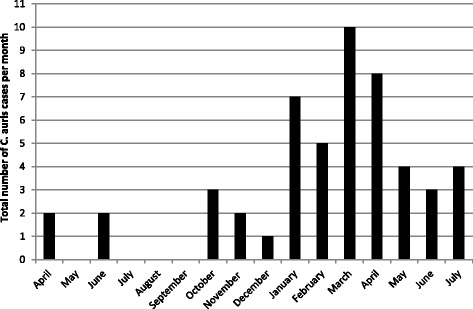
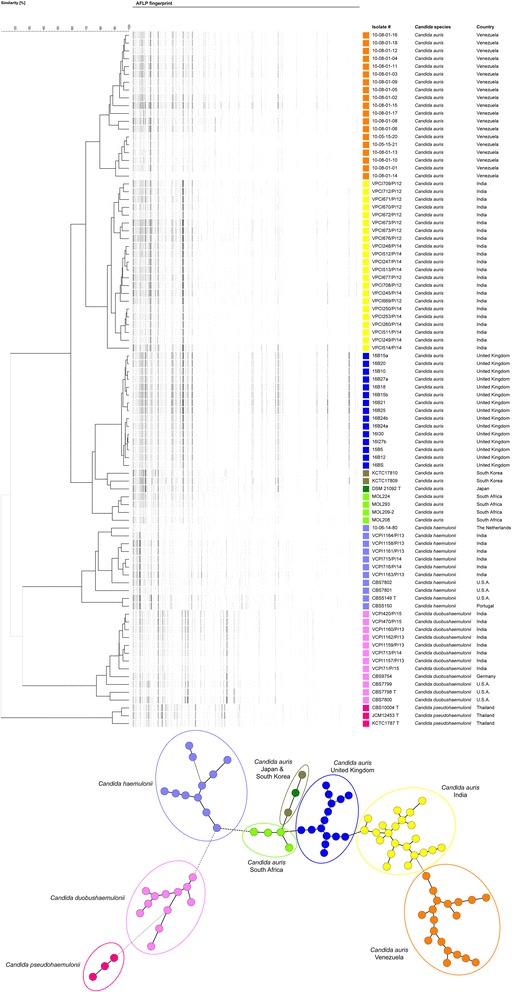
Candida auris is a globally emerging multidrug resistant fungal pathogen causing nosocomial transmission. We report an ongoing outbreak of C. auris in a London cardio-thoracic center between April 2015 and July 2016. This is the first report of C. auris in Europe and the largest outbreak so far. We describe the identification, investigation and implementation of control measures. Data on C. auris case demographics, environmental screening, implementation of infection prevention/control measures, and antifungal susceptibility of patient isolates were prospectively recorded then analysed retrospectively. Speciation of C. auris was performed by MALDI-TOF and typing of outbreak isolates performed by amplified fragment length polymorphism (AFLP). This report describes an ongoing outbreak of 50 C. auris cases over the first 16 month (April 2015 to July 2016) within a single Hospital Trust in London. A total of 44 % (n = 22/50) patients developed possible or proven C. auris infection with a candidaemia rate of 18 % (n = 9/50). Environmental sampling showed persistent presence of the yeast around bed space areas. Implementation of strict infection and prevention control measures included: isolation of cases and their contacts, wearing of personal protective clothing by health care workers, screening of patients on affected wards, skin decontamination with chlorhexidine, environmental cleaning with chorine based reagents and hydrogen peroxide vapour. Genotyping with AFLP demonstrated that C. auris isolates from the same geographic region clustered. This ongoing outbreak with genotypically closely related C. auris highlights the importance of appropriate species identification and rapid detection of cases in order to contain hospital acquired transmission.
Overview
The claims and statistics of this paper haven’t been checked yet.
Free: it reads the open-access text and checks the first 5 claims that cite a source we can check. Create a free account to check every claim.
Integrity signals
Registry
Cites
Statistics
Figures
Verification
Claims the paper makes
The claims and statistics of this paper haven’t been checked yet.
Free: it reads the open-access text and checks the first 5 claims that cite a source we can check. Create a free account to check every claim.
Claims other papers make about this one
Each is checked against this paper’s own text: does it say what the citing paper says it does?
The source backs part of the claim, not all of it — or backs it for a different population, condition or comparison.
In the citing paper
“However, there has been a worrying increase in the number of non-albicans Candida species such as C. glabrata, C. parapsilosis, C. tropicalis, C. krusei and lastly C. auris.”
From Global and Multi-National Prevalence of Fungal Diseases-Estimate Precision (2017) · cites this paper as [42]
Experimental — accuracy not yet measuredThe source backs part of the claim, not all of it — or backs it for a different population, condition or comparison.
In the citing paper
“These species are more likely to be antifungal resistant and have the potential to cause outbreaks [42].”
From Global and Multi-National Prevalence of Fungal Diseases-Estimate Precision (2017) · cites this paper as [42]
Experimental — accuracy not yet measuredThe source backs part of the claim, not all of it — or backs it for a different population, condition or comparison.
In the citing paper
“In addition to autoinfection, infections with certain species of Candida, particularly Candida auris and Candida parapsilosis, can result from transmission between patients in health care settings (14).”
From Population-Based Active Surveillance for Culture-Confirmed Candidemia — Four Sites, United States, 2012–2016 (2019) · cites this paper as [14]
Experimental — accuracy not yet measuredThe source backs part of the claim, not all of it — or backs it for a different population, condition or comparison.
In the citing paper
“There are currently no effective methods to eradicate C. auris from the skin9.”
From The emerging fungal pathogen Candida auris induces IFNγ to colonize mammalian hair follicles (2025) · cites this paper as [9]
Experimental — accuracy not yet measuredThe source backs part of the claim, not all of it — or backs it for a different population, condition or comparison.
In the citing paper
“A key factor contributing to the high transmissibility of C. auris is its ability to readily establish high level colonization on the skin and persistently present for months5,10,16,17.”
From Adhesin Als4112 promotes Candida auris skin colonization through interactions with keratinocytes and extracellular matrix proteins (2025) · cites this paper as [17]
Experimental — accuracy not yet measured
3 more claims about this paper
Create a free account to see every claim other papers make about this one.
Self-check
Percentages, sums and reported differences re-computed from the paper’s own numbers.
The self-check needs the paper’s full text.
Citations
Cites
Lockhart, S. R., Etienne, K. A., Vallabhaneni, S., Farooqi, J., Chowdhary, A., Govender, N. P., Colombo, A. L., Calvo, B., Cuomo, C. A., Desjardins, C. A., et al. (2017) · Clinical Infectious Diseases · doi:10.1093/cid/ciw691 · Cited by 1,662 · cited 2×
“auris isolates in the same geographic areas [14, 15].”
BackgroundSelf-citationSatoh, K., Makimura, K., Hasumi, Y., Nishiyama, Y., Uchida, K., & Yamaguchi, H. (2009) · Microbiology and Immunology · doi:10.1111/j.1348-0421.2008.00083.x · Cited by 1,381 · cited 2×
“auris is a globally emerging multidrug resistant fungal pathogen with the first clinical case being described in 2009 causing an ear infection in a Japanese patient [1].”
BackgroundKathuria, S., Singh, P. K., Sharma, C., Prakash, A., Masih, A., Kumar, A., Meis, J. F., & Chowdhary, A. (2015) · Journal of Clinical Microbiology · doi:10.1128/jcm.00367-15 · Cited by 532 · cited 2×
“haemulonii and accurate species identification is necessary for the administration of appropriate antifungal therapy and the control of outbreaks in hospital settings [6].”
BackgroundSelf-citationFirst Three Reported Cases of Nosocomial Fungemia Caused by Candida auris
Lee, W. G., Shin, J. H., Uh, Y., Kang, M. G., Kim, S. H., Park, K. H., & Jang, H.-C. (2011) · Journal of Clinical Microbiology · doi:10.1128/jcm.00319-11 · Cited by 523 · cited 5×
“Since its first description, reports of nosocomial outbreaks of C. auris have been reported from India [2], South Korea [3], South Africa [4] and Venezuela [5].”
BackgroundInfluentialIncidence, characteristics and outcome of ICU-acquired candidemia in India
Chakrabarti, A., Sood, P., Rudramurthy, S. M., Chen, S., Kaur, H., Capoor, M., Chhina, D., Rao, R., Eshwara, V. K., Xess, I., et al. (2015) · Intensive Care Medicine · doi:10.1007/s00134-014-3603-2 · Cited by 454 · cited 1×
“recent case series from developing countries [5, 11, 13, 16].”
Calvo, B., Melo, A. S. A., Perozo-Mena, A., Hernandez, M., Francisco, E. C., Hagen, F., Meis, J. F., & Colombo, A. L. (2016) · Journal of Infection · doi:10.1016/j.jinf.2016.07.008 · Cited by 448 · cited 6×
“Since its first description, reports of nosocomial outbreaks of C. auris have been reported from India [2], South Korea [3], South Africa [4] and Venezuela [5].”
BackgroundInfluentialSelf-citationModern technologies for improving cleaning and disinfection of environmental surfaces in hospitals
Boyce, J. M. (2016) · Antimicrobial Resistance & Infection Control · doi:10.1186/s13756-016-0111-x · Cited by 442
New Clonal Strain of Candida auris, Delhi, India
Chowdhary, A., Sharma, C., Duggal, S., Agarwal, K., Prakash, A., Singh, P. K., Jain, S., Kathuria, S., Randhawa, H. S., Hagen, F., et al. (2013) · Emerging Infectious Diseases · doi:10.3201/eid1910.130393 · Cited by 418 · cited 12×
“Since its first description, reports of nosocomial outbreaks of C. auris have been reported from India [2], South Korea [3], South Africa [4] and Venezuela [5].”
BackgroundMethodInfluentialSelf-citationMultidrug-resistant endemic clonal strain of Candida auris in India
Chowdhary, A., Anil Kumar, V., Sharma, C., Prakash, A., Agarwal, K., Babu, R., Dinesh, K. R., Karim, S., Singh, S. K., Hagen, F., et al. (2014) · European Journal of Clinical Microbiology & Infectious Diseases · doi:10.1007/s10096-013-2027-1 · Cited by 373 · cited 10×
“Since its first description, reports of nosocomial outbreaks of C. auris have been reported from India [2], South Korea [3], South Africa [4] and Venezuela [5].”
BackgroundInfluentialSelf-citationKim, M., Shin, J. H., Sung, H., Lee, K., Kim, E., Ryoo, N., Lee, J., Jung, S., Park, K. H., Kee, S. J., et al. (2009) · Clinical Infectious Diseases · doi:10.1086/597108 · Cited by 309 · cited 4×
“Since its first description, reports of nosocomial outbreaks of C. auris have been reported from India [2], South Korea [3], South Africa [4] and Venezuela [5].”
BackgroundInfluential
Cited by
Items 201–300 of 788
In vitro and in vivo Effect of Exogenous Farnesol Exposure Against Candida auris
Nagy, F., Vitális, E., Jakab, Á., Borman, A. M., Forgács, L., Tóth, Z., Majoros, L., & Kovács, R. (2020) · Frontiers in Microbiology · doi:10.3389/fmicb.2020.00957 · Cited by 58
Asadzadeh, M., Mokaddas, E., Ahmad, S., Abdullah, A. A., de Groot, T., Meis, J. F., & Shetty, S. A. (2022) · Mycoses · doi:10.1111/myc.13419 · Cited by 55
Self-citationJones, C. R., Neill, C., Borman, A. M., Budd, E. L., Cummins, M. N., Fry, C., Guy, R. L., Jeffery, K. J., Johnson, E. M., Manuel, R. J., et al. (2024) · Journal of Medical Microbiology · doi:10.1099/jmm.0.001820 · Cited by 61
“Most cases were confined to colonisation of skin sites or mucosa, and 44 % ( n = 22/50) required antifungal therapy [39].”
InfluentialSelf-citationPrevalence and Therapeutic Challenges of Fungal Drug Resistance: Role for Plants in Drug Discovery
Marquez, L., & Quave, C. L. (2020) · Antibiotics · doi:10.3390/antibiotics9040150 · Cited by 63
Filamentous growth is a general feature of Candida auris clinical isolates
Fan, S., Yue, H., Zheng, Q., Bing, J., Tian, S., Chen, J., Ennis, C. L., Nobile, C. J., Huang, G., & Du, H. (2021) · Medical Mycology · doi:10.1093/mmy/myaa116 · Cited by 55
The emerging pathogen Candida auris: A focus on the Middle-Eastern countries
Alfouzan, W., Dhar, R., Albarrag, A., & Al-Abdely, H. (2019) · Journal of Infection and Public Health · doi:10.1016/j.jiph.2019.03.009 · Cited by 52
Al-Rashdi, A., Al-Maani, A. S., Wahaibi, A. S. A., Alqayoudhi, A., Al‐Jardani, A., & Al-Abri, S. (2021) · Journal of Fungi · doi:10.3390/jof7010031 · Cited by 58
“Globally, it was under-reported, and it managed to surface as a significant AMR pathogen only in the last 5 years after several reports of health care outbreaks [16,17].”
BackgroundKim, J.-S., Lee, K.-T., Lee, M. H., Cheong, E., & Bahn, Y.-S. (2021) · mBio · doi:10.1128/mbio.02729-21 · Cited by 53
“Candida auris can survive very long time in health care environments and can be transmitted readily between patients (50, 51).”
Otomastoiditis caused by Candida auris: Case report and literature review
Choi, H. I., An, J., Hwang, J. J., Moon, S., & Son, J. S. (2017) · Mycoses · doi:10.1111/myc.12617 · Cited by 51
Stavrou, A. A., Lackner, M., Lass‐Flörl, C., & Boekhout, T. (2019) · FEMS Yeast Research · doi:10.1093/femsyr/foz037 · Cited by 57
Vatanshenassan, M., Boekhout, T., Mauder, N., Robert, V., Maier, T. H. P., Meis, J. F. G. M., Berman, J. G., Then, E., Kostrzewa, M., & Hagen, F. (2020) · Journal of Fungi · doi:10.3390/jof6030146 · Cited by 54
“auris by other genotyping techniques, such as amplified fragment length polymorphism (AFLP) fingerprinting [2,13,18] and microsatellite typing [19].”
BackgroundMethodSelf-citationHata, D. J., Humphries, R., Lockhart, S. R., & for the College of American Pathologists Microbiology Committee (2020) · Archives of Pathology & Laboratory Medicine · doi:10.5858/arpa.2018-0508-ra · Cited by 49
Deciphering the epidemiology of invasive candidiasis in the intensive care unit: is it possible?
Soulountsi, V., Schizodimos, T., & Kotoulas, S. (2021) · Infection · doi:10.1007/s15010-021-01640-7 · Cited by 59
Boyce, J. M. (2024) · Antimicrobial Resistance and Infection Control · doi:10.1186/s13756-024-01461-x · Cited by 68
Arensman, K., Miller, J. L., Chiang, A., Mai, N., Levato, J., LaChance, E., Anderson, M., Beganovic, M., & Dela Pena, J. (2020) · Emerging Infectious Diseases · doi:10.3201/eid2605.191588 · Cited by 52
“auris has been identified as the causative pathogen in various invasive fungal infections, including bloodstream infections (2,4), and is associated with outbreaks across healthcare settings (6,10).”
BackgroundThe epidemiology of Candida species in the Middle East and North Africa
Ghazi, S., Rafei, R., Osman, M., El Safadi, D., Mallat, H., Papon, N., Dabboussi, F., Bouchara, J.-P., & Hamze, M. (2019) · Journal de Mycologie Médicale · doi:10.1016/j.mycmed.2019.07.006 · Cited by 50
Outbreaks of Fungal Infections in Hospitals: Epidemiology, Detection, and Management
Douglas, A. P., Stewart, A. G., Halliday, C. L., & Chen, S. C. ‐. (2023) · Journal of Fungi · doi:10.3390/jof9111059 · Cited by 59
“One of the earliest reports involved the Royal Brampton Hospital in the U.K. in 2016, which encompassed 50 nosocomial C. auris cases over 16 months in a mixed surgical-medical ICU [92].”
BackgroundInfluentialThe Hidden Pathogenic Potential of Environmental Fungi
Araújo, G. R. D. S., de Souza, W., & Frasés, S. (2017) · Future Microbiology · doi:10.2217/fmb-2017-0124 · Cited by 54
Arıkan-Akdağlı, S., Ghannoum, M. A., & Meis, J. F. G. M. (2018) · Journal of Fungi · doi:10.3390/jof4040129 · Cited by 55
Self-citationRuiz-Gaitán, A. C., Cantón, E., Fernández-Rivero, M. E., Ramírez, P., & Pemán, J. (2019) · International Journal of Antimicrobial Agents · doi:10.1016/j.ijantimicag.2019.02.005 · Cited by 48
Candida auris in Germany and Previous Exposure to Foreign Healthcare
Hamprecht, A., Barber, A. E., Mellinghoff, S. C., Thelen, P., Walther, G., Yu, Y., Neurgaonkar, P., Dandekar, T., Cornely, O. A., Martin, R., et al. (2019) · Emerging Infectious Diseases · doi:10.3201/eid2509.190262 · Cited by 48
Arastehfar, A. A., Khodavaisy, S., Daneshnia, F., Najafzadeh, M. J., Mahmoudi, S., Charsizadeh, A., Salehi, M., Zarrinfar, H., Raeisabadi, A., Dolatabadi, S., et al. (2019) · Frontiers in Cellular and Infection Microbiology · doi:10.3389/fcimb.2019.00264 · Cited by 52
“, 2017b), Candida auris (Schelenz et al., 2016), and Aspergillus terreus (Kathuria et al.”
BackgroundSelf-citationRare fungal infectious agents: a lurking enemy
Skiada, A., Pavleas, I., & Drogari‐Apiranthitou, M. (2017) · F1000Research · doi:10.12688/f1000research.11124.1 · Cited by 54
“In addition, environmental sampling of the clinical area surrounding colonized patients demonstrated contamination of the floor around bed sites, radiators, equipment monitors, mattresses, beds, windowsills, chairs, infusion pumps, and countertops 16,17 .”
BackgroundMohsin, J., Weerakoon, S., Ahmed, S., Puts, Y., Al Balushi, Z., Meis, J. F., & Al-Hatmi, A. M. S. (2020) · Antibiotics · doi:10.3390/antibiotics9100638 · Cited by 43
Self-citationUnique Cell Surface Mannan of Yeast Pathogen Candida auris with Selective Binding to IgG
Yan, L., Xia, K., Yu, Y., Miliakos, A., Chaturvedi, S., Zhang, F., Chen, S., Chaturvedi, V., & Linhardt, R. J. (2020) · ACS Infectious Diseases · doi:10.1021/acsinfecdis.9b00450 · Cited by 47
Candida auris in the UK: Introduction, dissemination, and control
Borman, A. M., & Johnson, E. M. (2020) · PLoS Pathogens · doi:10.1371/journal.ppat.1008563 · Cited by 49
“UK Public Health responses to C. auris Following the identification of 2 English hospitals with the first heathcare-associated outbreaks of C. auris in Europe [6,10], in 2016, a national incident management team (IMT) was convened by PHE in order to develop a consistent national response to this emerging nosocomial pa…”
BackgroundInfluentialOrtiz-Roa, C., Valderrama-Ríos, M. C., Sierra-Umaña, S. F., Rodríguez, J. Y., Muñeton-López, G. A., Solórzano, C., Escandón, P., Álvarez, C., & Cortés, J. A. (2023) · Journal of Fungi · doi:10.3390/jof9070715 · Cited by 54
Dudiuk, C., Berrío, I., Leonardelli, F., Morales-López, S. E., Theill, L., Macedo, D., Rodríguez, J. Y., Salcedo, S., Marín, A., Gamarra, S. P., et al. (2019) · Journal of Antimicrobial Chemotherapy · doi:10.1093/jac/dkz178 · Cited by 55
Management of Candida auris outbreak in a tertiary-care setting in Saudi Arabia
Alshamrani, M. M., El-Saed, A., Mohammed, A., Alghoribi, M. F., Al Johani, S. M., Cabanalan, H., & Balkhy, H. H. (2021) · Infection Control & Hospital Epidemiology · doi:10.1017/ice.2020.414 · Cited by 46
Lara-Aguilar, V., Rueda, C., García-Barbazán, I., Varona, S., Monzón, S., Jiménez, P., Cuesta, I., Zaballos, Á., & Zaragoza, Ó. (2021) · Virulence · doi:10.1080/21505594.2021.1927609 · Cited by 40
Biofilm formation in clinically relevant filamentous fungi: a therapeutic challenge
Roudbary, M., Vahedi‐Shahandashti, R., dos Santos, A. L. S., Mohammadi, S. R., Aslani, P., Lass‐Flörl, C., & Rodrigues, C. F. (2021) · Critical Reviews in Microbiology · doi:10.1080/1040841x.2021.1950121 · Cited by 51
Our current clinical understanding of Candida biofilms: where are we two decades on?
Ramage, G., Borghi, E., Rodrigues, C. F., Kean, R., Williams, C., & Lopez-Ribot, J. L. (2023) · Apmis · doi:10.1111/apm.13310 · Cited by 51
“There is evidence from the emergence of C. auris that yeasts can also form resilient populations beyond the host upon hospital surfaces (21,93), such as reusable skin temperature probes that can facilitate spread within a clinical environment (94).”
Drug development challenges and strategies to address emerging and resistant fungal pathogens
McCarthy, M. W., & Walsh, T. J. (2017) · Expert Review of Anti-infective Therapy · doi:10.1080/14787210.2017.1328279 · Cited by 46
“auris in 2016 was particularly challenging because so little was known about the natural course of disease or the most appropriate method for diagnosis [10,39,40].”
MethodSingle-tube classical PCR for Candida auris and Candida haemulonii identification
Theill, L., Dudiuk, C., Morales-López, S. E., Berrío, I., Rodríguez, J. Y., Marín, A., Gamarra, S. P., & García‐Effrón, G. (2018) · Revista Iberoamericana de Micología · doi:10.1016/j.riam.2018.01.003 · Cited by 50
Augmenting the Activity of Chlorhexidine for Decolonization of Candida auris from Porcine skin
Johnson, C. J., Eix, E. F., Lam, B. C., Wartman, K. M., Meudt, J. J., Shanmuganayagam, D., & Nett, J. E. (2021) · Journal of Fungi · doi:10.3390/jof7100804 · Cited by 45
In vitro antifungal activity of a novel topical triazole PC945 against emerging yeast Candida auris
Rudramurthy, S. M., Colley, T., Abdolrasouli, A., Ashman, J., Dhaliwal, M., Kaur, H., Armstrong-James, D., Strong, P., Rapeport, G., Schelenz, S., et al. (2019) · Journal of Antimicrobial Chemotherapy · doi:10.1093/jac/dkz280 · Cited by 44
Self-citationBiofilm-Associated Candidiasis: Pathogenesis, Prevalence, Challenges and Therapeutic Options
Amann, V., Kissmann, A., Firacative, C., & Rosenau, F. (2025) · Pharmaceuticals · doi:10.3390/ph18040460 · Cited by 48
MycoSNP: A Portable Workflow for Performing Whole-Genome Sequencing Analysis of Candida auris
Bagal, U. R., Phan, J., Welsh, R. M., Misas, E., Wagner, D., Gade, L., Litvintseva, A. P., Cuomo, C. A., & Chow, N. A. (2022) · Methods in molecular biology · doi:10.1007/978-1-0716-2417-3_17 · Cited by 44
Weber, D. J., Sickbert-Bennett, E. E., Kanamori, H., & Rutala, W. A. (2019) · American Journal of Infection Control · doi:10.1016/j.ajic.2019.03.004 · Cited by 46
“The susceptibility of C auris to germicides (ie, antiseptics and disinfectants) has been studied by several investigators.(139,144,150-153) Rutala et al(153) assessed the germicidal activity of high-level disinfectants and/or chemical sterilants and reported that all agents (ie, 0.”
BackgroundSharp, A., Müller‐Pebody, B., Charlett, A., Patel, B., Gorton, R., Lambourne, J., Cummins, M. N., Alcolea-Medina, A., Wilks, M., Smith, R., et al. (2021) · Eurosurveillance · doi:10.2807/1560-7917.es.2021.26.8.1900730 · Cited by 43
“auris can persist in ward environments [5,9].”
BackgroundInfluentialSelf-citationNaicker, S. D., Maphanga, T. G., Chow, N. A., Allam, M., Kwenda, S., Ismail, A., & Govender, N. P. (2021) · Emerging Microbes & Infections · doi:10.1080/22221751.2021.1944323 · Cited by 46
“This yeast is di ffi cult to identify using standard microbiological techniques [2], is almost universally resistant to fl uconazole and variably susceptible to the echinocandins and amphotericin B [3], and causes outbreaks in healthcare settings [4].”
Successful control of Candida auris transmission in a German COVID‐19 intensive care unit
Hinrichs, C., Wiese‐Posselt, M., Graf, B., Geffers, C., Weikert, B., Enghard, P., Aldejohann, A., Schrauder, A., Knaust, A., Eckardt, K., et al. (2022) · Mycoses · doi:10.1111/myc.13443 · Cited by 41
“Epidemiologic shift in candidemia driven by candida auris, South Africa, 2016– 2017(1).”
BackgroundCandida auris outbreak involving liver transplant recipients in a surgical intensive care unit
Theodoropoulos, N. M., Bolstorff, B., Bozorgzadeh, A., Brandeburg, C., Cumming, M., Daly, J. S., Ellison, R. T., Forsberg, K., Gade, L., Gibson, L., et al. (2020) · American Journal of Transplantation · doi:10.1111/ajt.16144 · Cited by 41
Fayed, B., Jayakumar, M. N., & Soliman, S. S. M. (2021) · Medical Mycology · doi:10.1093/mmy/myab059 · Cited by 41
Eix, E. F., Johnson, C. J., Wartman, K. M., Kernien, J. F., Meudt, J. J., Shanmuganayagam, D., Gibson, A. L. F., & Nett, J. E. (2022) · The Journal of Infectious Diseases · doi:10.1093/infdis/jiac094 · Cited by 41
Use of Hydrogen Peroxide Vapour for Microbiological Disinfection in Hospital Environments: A Review
Ayub, A., Cheong, Y. K., Castro, J. C., Cumberlege, O., & Chrysanthou, A. (2024) · Bioengineering · doi:10.3390/bioengineering11030205 · Cited by 38
“The authors [90] demonstrated a successful outcome through the use of a new infection control method that applied a high-strength chlorine-based agent, followed by hydrogen peroxide vaporisation.”
Antifungal susceptibility profiles of rare ascomycetous yeasts
Hansen, A. P., Lass‐Flörl, C., Lackner, M., Rare Yeast Study Group, Aigner, M., Alastruey‐Izquierdo, A., Arıkan-Akdağlı, S., Bader, O., Becker, K., Boekhout, T., et al. (2019) · Journal of Antimicrobial Chemotherapy · doi:10.1093/jac/dkz231 · Cited by 43
Self-citationIyer, K. R., Whitesell, L. J., Porco, J. A. J., Henkel, T. O., Brown, L. E., Robbins, N., & Cowen, L. E. (2020) · mBio · doi:10.1128/mbio.03329-19 · Cited by 48
Ghannoum, M., Isham, N., Angulo, D., Borroto-Esoda, K., Barat, S., & Long, L. (2020) · Antimicrobial Agents and Chemotherapy · doi:10.1128/aac.00854-20 · Cited by 41
“auris colonization only, a significant percentage (44%, 22/50) required the use of a systemic antifungal treatment because of clinical manifestations of infection, including candidemia in eight patients (1).”
BackgroundAn investigation of antifungal stewardship programmes in England
Micallef, C., Ashiru-Oredope, D. A. I., Hansraj, S., Denning, D. W., Agrawal, S. G., Manuel, R. J., Schelenz, S., Guy, R. L., Müller‐Pebody, B., Patel, R., et al. (2017) · Journal of Medical Microbiology · doi:10.1099/jmm.0.000612 · Cited by 41
Self-citationFungicidal Potency and Mechanisms of θ-Defensins against Multidrug-Resistant Candida Species
Basso, V., Garcia, A., Tran, D. Q., Schaal, J. B., Tran, P. A., Ngole, D., Aqeel, Y., Tongaonkar, P., Ouellette, A. J., & Selsted, M. E. (2018) · Antimicrobial Agents and Chemotherapy · doi:10.1128/aac.00111-18 · Cited by 44
Candida auris:a fungus with identity crisis
Vila, T. V. M., Sultan, A. S., Montelongo‐Jauregui, D., & Jabra‐Rizk, M. A. (2020) · Pathogens and Disease · doi:10.1093/femspd/ftaa034 · Cited by 42
Candida auris Urinary Tract Infections and Possible Treatment
Griffith, N. C., & Danziger, L. H. (2020) · Antibiotics · doi:10.3390/antibiotics9120898 · Cited by 49
“One potential urinary catheter infection (based on positive urine culture and signs and symptoms of infection requiring treatment) was identified among 50 infections in another study [26].”
BackgroundMirhendi, H., Charsizadeh, A., Aboutalebian, S., Mohammadpour, M., Nikmanesh, B., de Groot, T., Meis, J. F. G. M., & Badali, H. (2021) · Mycoses · doi:10.1111/myc.13396 · Cited by 47
Self-citationOverview about Candida auris: What's up 12 years after its first description?
Désoubeaux, G., Coste, A. T., Imbert, C., & Hennequin, C. (2022) · Journal de Mycologie Médicale · doi:10.1016/j.mycmed.2022.101248 · Cited by 43
Ponnachan, P., Vinod, V., Pullanhi, U., Varma, P. K., Singh, S. K., Biswas, R., & Kumar, A. (2018) · Journal of Hospital Infection · doi:10.1016/j.jhin.2018.09.008 · Cited by 41
Kurt, A. F., Kuşkucu, M. A., Balkan, I. I., Barış, A., Yazgan, Z., Oz, A. S., Tosun, A. İ., Mete, B., Tabak, F., & Aygün, G. (2021) · Indian Journal of Medical Microbiology · doi:10.1016/j.ijmmb.2021.03.007 · Cited by 42
Govender, N. P., Avenant, T., Brink, A. J., Chibabhai, V., Cleghorn, J., du Toit, B., Govind, C., Lewis, E., Lowman, W., Mahlangu, H., et al. (2019) · Southern African Journal of Infectious Diseases · doi:10.4102/sajid.v34i1.163 · Cited by 47
Potential Environmental Reservoirs of Candida auris: A Systematic Review
da Silva, I. C. B., Miranda, I. M., & Costa‐de‐Oliveira, S. (2024) · Journal of Fungi · doi:10.3390/jof10050336 · Cited by 43
First case of Candida auris in Switzerland: discussion about preventive strategies
Riat, A., Neofytos, D., Coste, A. T., Harbarth, S., Bizzini, A., Grandbastien, B., Pugin, J., & Lamoth, F. (2018) · Swiss Medical Weekly · doi:10.4414/smw.2018.14622 · Cited by 37
Candida Pathogenicity and Interplay with the Immune System
Valand, N., & Girija, U. V. (2021) · Advances in experimental medicine and biology · doi:10.1007/978-3-030-67452-6_11 · Cited by 43
Candida auris infections in China
Du, H., Bing, J., Nobile, C. J., & Huang, G. (2022) · Virulence · doi:10.1080/21505594.2022.2054120 · Cited by 40
Isolation of Candida auris from Ear of Otherwise Healthy Patient, Austria, 2018
Pekard-Amenitsch, S., Schriebl, A., Posawetz, W., Willinger, B., Kölli, B., & Buzina, W. (2018) · Emerging Infectious Diseases · doi:10.3201/eid2408.180495 · Cited by 37
“Reports from all continents except Australia (2) exist, but an outbreak in Europe was reported only recently, from a hospital in London (3).”
Role of lipid transporters in fungal physiology and pathogenicity
Rizzo, J., Stanchev, L. D., Silva, V. K. A., Nimrichter, L., Pomorski, T. G., & Rodrigues, M. L. (2019) · Computational and Structural Biotechnology Journal · doi:10.1016/j.csbj.2019.09.001 · Cited by 41
NO Candida auris: Nitric Oxide in Nanotherapeutics to Combat Emerging Fungal Pathogen Candida auris
Cleare, L. G., Li, K. L., Abuzeid, W. M., Nacharaju, P., Friedman, J. M., & Nosanchuk, J. D. (2020) · Journal of Fungi · doi:10.3390/jof6020085 · Cited by 36
AlJindan, R. Y., AlEraky, D. M., Mahmoud, N., Abdalhamid, B. A., Almustafa, M., AbdulAzeez, S., & Borgio, J. F. (2020) · Journal of Fungi · doi:10.3390/jof7010018 · Cited by 39
“auris included colonization followed by candidemia, wound infections, urinary catheter infections, and others [25].”
BackgroundNovel Therapeutic Approaches to Invasive Candidiasis: Considerations for the Clinician
Lamoth, F. (2023) · Infection and Drug Resistance · doi:10.2147/idr.s375625 · Cited by 43
High-Throughput Profiling of Candida auris Isolates Reveals Clade-Specific Metabolic Differences
Brandt, P., Mirhakkak, M. H., Wagner, L., Driesch, D., Möslinger, A., Fänder, P., Schäuble, S., Panagiotou, G., & Vylkova, S. (2023) · Microbiology Spectrum · doi:10.1128/spectrum.00498-23 · Cited by 39
“persist on medical equipment, hospital bed space areas, and human skin (2, 13, 32, 33).”
BackgroundBayona, J. V. M., García, C. S., Tormo, N., Martín, A. V., Padrón, C. G., Rodríguez, J. C., Pemán, J., & Cardona, C. G. (2022) · Journal of Fungi · doi:10.3390/jof8030281 · Cited by 39
“auris can persist on surfaces for days, suggesting that contaminated surfaces may be a relevant source of acquisition [9,17,18].”
BackgroundCandida auris from colonisation to candidemia: A four‐year study
Mulet Bayona, J. V., Tormo Palop, N., Salvador García, C., Guna Serrano, M. D. R., & Gimeno Cardona, C. (2023) · Mycoses · doi:10.1111/myc.13626 · Cited by 35
Candida auris Blood stream infection- a descriptive study from Qatar
Koleri, J., Petkar, H. M., Soub, H. A. R. S. A., & Almaslamani, M. (2023) · BMC Infectious Diseases · doi:10.1186/s12879-023-08477-5 · Cited by 42
“Its ability to survive on dry surfaces outside the host contributes to outbreaks in hospitals [4, 5].”
BackgroundKovács, R., Nagy, F., Tóth, Z., Forgács, L., Tóth, L., Váradi, G., Tóth, G. K., Vadászi, K., Borman, A. M., Majoros, L., et al. (2021) · International Journal of Molecular Sciences · doi:10.3390/ijms22020771 · Cited by 36
Salah, H., Sundararaju, S., Dalil, L., Salameh, S., Al-Wali, W., Tang, P., Abid, F. B., & Tsui, C. K. M. (2021) · Journal of Fungi · doi:10.3390/jof7030240 · Cited by 36
“auris is well known for its capability to survive and persist in the healthcare settings [32] and cause ongoing transmission within the hospital environment [4,17,33].”
BackgroundAlmaghrabi, R. S., Albalawi, R., Mutabagani, M., Atienza, E., Aljumaah, S., Gade, L., Forsberg, K., Litvintseva, A., & Althawadi, S. (2020) · Mycoses · doi:10.1111/myc.13065 · Cited by 34
Munshi, A., Almadani, F., Ossenkopp, J., Alharbi, M., Althaqafi, A., Alsaedi, A., Al-Amri, A., & Almarhabi, H. (2024) · Journal of Infection and Public Health · doi:10.1016/j.jiph.2023.11.021 · Cited by 34
Martínez-Murcia, A., Navarro, A., Bru, G., Chowdhary, A., Hagen, F., & Meis, J. F. G. M. (2018) · Mycoses · doi:10.1111/myc.12834 · Cited by 36
Self-citationThe Epidemiology and Prevention of Candida auris
Snyder, G. M., & Wright, S. B. (2019) · Current Infectious Disease Reports · doi:10.1007/s11908-019-0675-8 · Cited by 37
Kaki, R. (2023) · Mycology: An International Journal on Fungal Biology · doi:10.1080/21501203.2023.2227218 · Cited by 37
“This is also seen in other studies (Schelenz et al. 2016; Ruiz Gaitan et al. 2017; Chowdhary and Sharma 2020).”
ResultMolecular Diagnostics in the Times of Surveillance for Candida auris
Kordalewska, M., & Perlin, D. S. (2019) · Journal of Fungi · doi:10.3390/jof5030077 · Cited by 38
Fan, S., Zhan, P., Bing, J., Jiang, N., Huang, Y., Chen, D., Hu, T., Du, H., & Huang, G. (2021) · Virulence · doi:10.1080/21505594.2021.1928410 · Cited by 34
Transcriptome Signatures Predict Phenotypic Variations of Candida auris
Jenull, S., Tscherner, M., Kashko, N., Shivarathri, R., Stoiber, A., Chauhan, M., Petryshyn, A., Chauhan, N., & Kuchler, K. (2021) · Frontiers in Cellular and Infection Microbiology · doi:10.3389/fcimb.2021.662563 · Cited by 32
Zhao, G., Lyu, J., Veniaminova, N. A., Zarnowski, R., Mattos, E., Johnson, C. J., Quintanilla, D., Hautau, H., Hold, L. A., Xu, B., et al. (2025) · Nature Communications · doi:10.1038/s41467-025-60876-1 · Cited by 42
Emergence of Candida auris in Russia
Barantsevich, N. E., Orlova, O. E., Shlyakhto, E. V., Johnson, E. M., Woodford, N., Lass-Floerl, C., Churkina, I. V., Mitrokhin, S. D., Shkoda, A. S., & Barantsevich, E. P. (2019) · Journal of Hospital Infection · doi:10.1016/j.jhin.2019.02.021 · Cited by 31
Cloth Lanyards as a Source of Intermittent Transmission of Candida auris on an ICU*
Patterson, C. A., Wyncoll, D., Patel, A., Ceesay, Y., Newsholme, W., Chand, M., Mitchell, H., Tan, M., & Edgeworth, J. D. (2021) · Critical Care Medicine · doi:10.1097/ccm.0000000000004843 · Cited by 32
“One detailed sequencing and epidemiological analysis of a large outbreak implicated reusable temperature probes (4), but many studies only report environmental contamination without implicating a source (5, 6).”
BackgroundComparison of Two Commercially Available qPCR Kits for the Detection of Candida auris
Sattler, J., Noster, J., Brunke, A., Plum, G., Wiegel, P., Kurzai, O., Meis, J. F. G. M., & Hamprecht, A. G. (2021) · Journal of Fungi · doi:10.3390/jof7020154 · Cited by 33
“auris shows high transmission rates in nosocomial environments [8] regularly leading to hospital outbreaks, possibly due to effective”
BackgroundSelf-citationThe Menace of Candida auris Epidemic Amidst the COVID-19 Pandemic: A Systematic Review
Najeeb, H., Siddiqui, S. A., Anas, Z., Ali, S. H., Usmani, S. U. R., Jawed, F., & Jatoi, H. N. (2022) · Diseases · doi:10.3390/diseases10030058 · Cited by 37
“Thereafter, the number of CSF meningitis caused by C. auris increased with reports coming in from the UK, India, and Iran [62] Candida auris has been shown to cause infections in patients of all ages and genders but it has been reported to predominantly affect male patients and critically ill patients in ICUs [63].”
BackgroundInfluentialCandidemia from urinary tract source: the challenge of candiduria
Pemán, J., & Gaitán, A. C. R. (2018) · Hospital Practice · doi:10.1080/21548331.2018.1538623 · Cited by 40
Biofilms and beyond: Expanding echinocandin utility
Larkin, E. L., Dharmaiah, S., & Ghannoum, M. A. (2018) · Journal of Antimicrobial Chemotherapy · doi:10.1093/jac/dkx451 · Cited by 31
Pathogenesis, Prophylaxis, and Treatment of Candida auris
Preda, M., Chivu, R. D., Diţu, L.-M., Popescu, O., & Manolescu, L. S. C. (2024) · Biomedicines · doi:10.3390/biomedicines12030561 · Cited by 38
“Decolo-nization procedures for contact may include chlorhexidine washes, ointments, and oral nystatin medication [51].”
InfluentialGenomic epidemiology describes introduction and outbreaks of antifungal drug-resistant Candida auris
Kappel, D., Gifford, H., Brackin, A. P., Abdolrasouli, A., Eyre, D. W., Jeffery, K. J., Schelenz, S., Aanensen, D. M., Brown, C. S., Borman, A. M., et al. (2024) · npj Antimicrobials and Resistance · doi:10.1038/s44259-024-00043-6 · Cited by 37
“Since 2015, the United Kingdom (UK) has seen several outbreaks in National Health Service (NHS) specialist and tertiary hospitals 9,13,40 .”
Self-citationDésoubeaux, G., Bailly, É., Guillaume, C., Kyvon, M. D., Tellier, A.-C., Morange, V., Bernard, L., Salamé, E., Quentin, R., & Chandenier, J. (2018) · Journal de Mycologie Médicale · doi:10.1016/j.mycmed.2018.02.011 · Cited by 32
Muñoz, J. E., Ramirez, L. M., Dias, L. D. S., Rivas, L. A., Ramos, L. S., Santos, A. L. S., Taborda, C. P., & Parra-Giraldo, C. M. (2020) · Journal of Fungi · doi:10.3390/jof6030104 · Cited by 31
“auris is able to colonize a variety of surfaces, from inert materials to multiple body parts, presenting a large range of clinical manifestations [12,13]; (C) auris infection treatment can be tough due to the high resistance index that presents to most antifungals.”
BackgroundKhan, T., Suleman, M., Ali, S. S., Sarwar, M. F., Ali, I., Ali, L., Khan, A., Rokhan, B., Wang, Y., Zhao, R., et al. (2022) · Computers in Biology and Medicine · doi:10.1016/j.compbiomed.2022.105462 · Cited by 33
“auris across health facilities, with its persistence in the human host and on surfaces [3,7,8].”
Marathe, A., Zhu, Y., Chaturvedi, V. P., & Chaturvedi, S. (2022) · Mycopathologia · doi:10.1007/s11046-022-00656-3 · Cited by 32
The skin mycobiome and intermicrobial interactions in the cutaneous niche
Tuor, M., & LeibundGut-Landmann, S. (2023) · Current Opinion in Microbiology · doi:10.1016/j.mib.2023.102381 · Cited by 30
Candida auris colonization in an immunocompetent patient: A new threat in medical ICU
Das, S., Tigga, R. A., Rai, G., Singh, P. K., Datt, S., Tyagi, A., & Singh, N. P. (2018) · Medical Mycology Case Reports · doi:10.1016/j.mmcr.2018.05.004 · Cited by 30
“auris in healthcare facilities will remain a difficult challenge [13].”
BackgroundThe First Two Cases of Candida auris in The Netherlands
Vogelzang, E. H., Weersink, A. J. L., van Mansfeld, R., Chow, N. A., Meis, J. F. G. M., & van Dijk, K. (2019) · Journal of Fungi · doi:10.3390/jof5040091 · Cited by 33
Self-citationA decade after the emergence of Candida auris: what do we know?
ElBaradei, A. (2020) · European Journal of Clinical Microbiology & Infectious Diseases · doi:10.1007/s10096-020-03886-9 · Cited by 33
Three Candida auris Case Reports from Istanbul, Turkey
Kömeç, S., Karabıçak, N., Ceylan, A. N., Gülmez, A., & Özalp, O. (2021) · Mikrobiyoloji Bulteni · doi:10.5578/mb.20219814 · Cited by 38
Antifungal stewardship in solid organ transplantation
Kriegl, L., Boyer, J., Egger, M., & Hoenigl, M. (2022) · Transplant Infectious Disease · doi:10.1111/tid.13855 · Cited by 31
Metadata
- Authors
- Schelenz, S., Hagen, F., Rhodes, J. L., Abdolrasouli, A., Chowdhary, A., Hall, A., Ryan, L., Shackleton, J., Trimlett, R., Meis, J. F., Armstrong-James, D., & Fisher, M. C.
- Affiliations
- Royal Brompton Hospital (GB)
- Canisius-Wilhelmina Ziekenhuis (NL)
- Imperial College London (GB)
- University of Delhi (IN)
- Radboud University Medical Center (NL)
- Corresponding author
- Schelenz, Silke
- ORCID
- Venue
- Antimicrobial Resistance & Infection Control
- Published
- 2016-10-19
- Volume
- 5
- Issue
- 1
- Pages
- 35-35
- ISSN
- 2047-2994 (ISSN-L)
- PMC
- PMC5069812
- OpenAlex
- W2538799985
- Cited by
- 768
- References
- 18
- Citations by year
- 2026: 58 · 2025: 65 · 2024: 78 · 2023: 79 · 2022: 62 · 2021: 81 · 2020: 103 · 2019: 99 · 2018: 74 · 2017: 65 · 2016: 4
- FWCI
- 74.50
- Type
- journal article
- Language
- en
- Open access
- gold
- doi.org
- Licence
- cc-by
- Locations
- Antimicrobial Resistance and Infection Control (publishedVersion, cc-by)
- PubMed Central (publishedVersion, cc-by)
- PubMed (publishedVersion)
- Data Archiving and Networked Services (DANS) (submittedVersion)
- DOAJ (DOAJ: Directory of Open Access Journals) (submittedVersion)
- University of Birmingham Research Portal (University of Birmingham) (submittedVersion)
- Radboud Repository (Radboud University) (submittedVersion)
- Spiral (Imperial College London) (submittedVersion, cc-by)
- Radboud Repository (Radboud University) (submittedVersion, other-oa)
- Greater South Information System
- Funders
- Wellcome Trust (RSRO_54990)
- Medical Research Council (K000373/1)
- Topics
- Health Sciences › Medicine › Infectious Diseases › Antifungal resistance and susceptibility
- Health Sciences › Medicine › Infectious Diseases › Infection Control in Healthcare
- Health Sciences › Medicine › Infectious Diseases › Fungal Infections and Studies
- Keywords
- Candida auris, hospital outbreak, nosocomial transmission, candidemia, infection control, antifungal susceptibility, environmental contamination, MALDI-TOF species identification, AFLP genotyping, hydrogen peroxide vapor, emerging fungal pathogens
About these checks
Registry, retraction, Cites and statistics results are computed, not judged, with one exception: a printed reference that no index lists is read once by a model before it counts as a citation error. Claims are extracted by a model and kept only when their quote appears verbatim in the text; each cited source is then checked, with a model’s help, for whether it says what the claim relies on. Those verdicts can be wrong — read the claim’s quote and the cited source before relying on one.
Statistics and arithmetic are recomputed, not judged.
Confidence bands are shown only for fields calibrated on our annotated test set. None is calibrated yet, so no band is shown.
What counts as a claim ›How we measure confidence ›How we check this ›
Are you an author, or do you see a problem with this page? Request a review
Data sources
Bibliographic data: Semantic Scholar, OpenAlex, Crossref.
Contains information from the Semantic Scholar Academic Graph Datasets, made available under the ODC Attribution License (ODC-BY 1.0).
Semantic Scholar’s data is described in: Kinney, R., et al. (2023). The Semantic Scholar Open Data Platform. arXiv:2301.10140.
