

First hospital outbreak of the globally emerging Candida auris in a European hospital
Open accessThe DOI matches its Crossref record; 18 of the 18 references it cites were found in a registry or an index.
Abstract
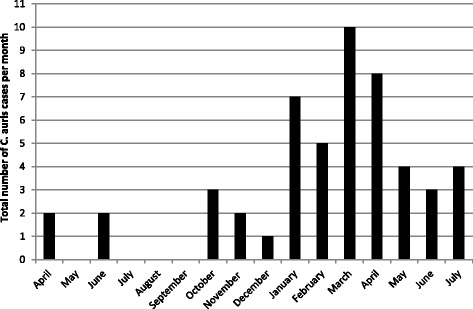
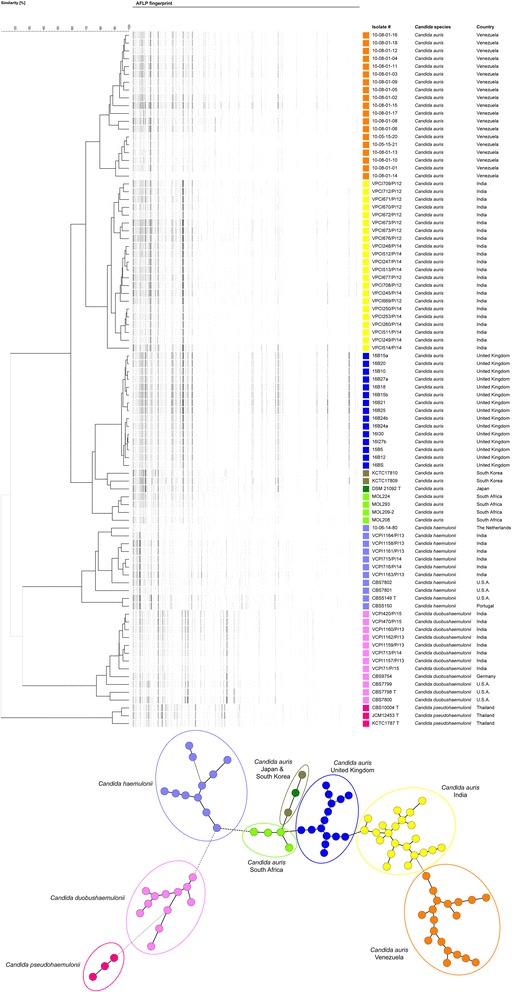
Candida auris is a globally emerging multidrug resistant fungal pathogen causing nosocomial transmission. We report an ongoing outbreak of C. auris in a London cardio-thoracic center between April 2015 and July 2016. This is the first report of C. auris in Europe and the largest outbreak so far. We describe the identification, investigation and implementation of control measures. Data on C. auris case demographics, environmental screening, implementation of infection prevention/control measures, and antifungal susceptibility of patient isolates were prospectively recorded then analysed retrospectively. Speciation of C. auris was performed by MALDI-TOF and typing of outbreak isolates performed by amplified fragment length polymorphism (AFLP). This report describes an ongoing outbreak of 50 C. auris cases over the first 16 month (April 2015 to July 2016) within a single Hospital Trust in London. A total of 44 % (n = 22/50) patients developed possible or proven C. auris infection with a candidaemia rate of 18 % (n = 9/50). Environmental sampling showed persistent presence of the yeast around bed space areas. Implementation of strict infection and prevention control measures included: isolation of cases and their contacts, wearing of personal protective clothing by health care workers, screening of patients on affected wards, skin decontamination with chlorhexidine, environmental cleaning with chorine based reagents and hydrogen peroxide vapour. Genotyping with AFLP demonstrated that C. auris isolates from the same geographic region clustered. This ongoing outbreak with genotypically closely related C. auris highlights the importance of appropriate species identification and rapid detection of cases in order to contain hospital acquired transmission.
Overview
The claims and statistics of this paper haven’t been checked yet.
Free: it reads the open-access text and checks the first 5 claims that cite a source we can check. Create a free account to check every claim.
Integrity signals
Registry
Cites
Statistics
Figures
Verification
Claims the paper makes
The claims and statistics of this paper haven’t been checked yet.
Free: it reads the open-access text and checks the first 5 claims that cite a source we can check. Create a free account to check every claim.
Claims other papers make about this one
Each is checked against this paper’s own text: does it say what the citing paper says it does?
The source backs part of the claim, not all of it — or backs it for a different population, condition or comparison.
In the citing paper
“However, there has been a worrying increase in the number of non-albicans Candida species such as C. glabrata, C. parapsilosis, C. tropicalis, C. krusei and lastly C. auris.”
From Global and Multi-National Prevalence of Fungal Diseases-Estimate Precision (2017) · cites this paper as [42]
Experimental — accuracy not yet measuredThe source backs part of the claim, not all of it — or backs it for a different population, condition or comparison.
In the citing paper
“These species are more likely to be antifungal resistant and have the potential to cause outbreaks [42].”
From Global and Multi-National Prevalence of Fungal Diseases-Estimate Precision (2017) · cites this paper as [42]
Experimental — accuracy not yet measuredThe source backs part of the claim, not all of it — or backs it for a different population, condition or comparison.
In the citing paper
“In addition to autoinfection, infections with certain species of Candida, particularly Candida auris and Candida parapsilosis, can result from transmission between patients in health care settings (14).”
From Population-Based Active Surveillance for Culture-Confirmed Candidemia — Four Sites, United States, 2012–2016 (2019) · cites this paper as [14]
Experimental — accuracy not yet measuredThe source backs part of the claim, not all of it — or backs it for a different population, condition or comparison.
In the citing paper
“There are currently no effective methods to eradicate C. auris from the skin9.”
From The emerging fungal pathogen Candida auris induces IFNγ to colonize mammalian hair follicles (2025) · cites this paper as [9]
Experimental — accuracy not yet measuredThe source backs part of the claim, not all of it — or backs it for a different population, condition or comparison.
In the citing paper
“A key factor contributing to the high transmissibility of C. auris is its ability to readily establish high level colonization on the skin and persistently present for months5,10,16,17.”
From Adhesin Als4112 promotes Candida auris skin colonization through interactions with keratinocytes and extracellular matrix proteins (2025) · cites this paper as [17]
Experimental — accuracy not yet measured
3 more claims about this paper
Create a free account to see every claim other papers make about this one.
Self-check
Percentages, sums and reported differences re-computed from the paper’s own numbers.
The self-check needs the paper’s full text.
Citations
Cites
Lockhart, S. R., Etienne, K. A., Vallabhaneni, S., Farooqi, J., Chowdhary, A., Govender, N. P., Colombo, A. L., Calvo, B., Cuomo, C. A., Desjardins, C. A., et al. (2017) · Clinical Infectious Diseases · doi:10.1093/cid/ciw691 · Cited by 1,662 · cited 2×
“auris isolates in the same geographic areas [14, 15].”
BackgroundSelf-citationSatoh, K., Makimura, K., Hasumi, Y., Nishiyama, Y., Uchida, K., & Yamaguchi, H. (2009) · Microbiology and Immunology · doi:10.1111/j.1348-0421.2008.00083.x · Cited by 1,381 · cited 2×
“auris is a globally emerging multidrug resistant fungal pathogen with the first clinical case being described in 2009 causing an ear infection in a Japanese patient [1].”
BackgroundKathuria, S., Singh, P. K., Sharma, C., Prakash, A., Masih, A., Kumar, A., Meis, J. F., & Chowdhary, A. (2015) · Journal of Clinical Microbiology · doi:10.1128/jcm.00367-15 · Cited by 532 · cited 2×
“haemulonii and accurate species identification is necessary for the administration of appropriate antifungal therapy and the control of outbreaks in hospital settings [6].”
BackgroundSelf-citationFirst Three Reported Cases of Nosocomial Fungemia Caused by Candida auris
Lee, W. G., Shin, J. H., Uh, Y., Kang, M. G., Kim, S. H., Park, K. H., & Jang, H.-C. (2011) · Journal of Clinical Microbiology · doi:10.1128/jcm.00319-11 · Cited by 523 · cited 5×
“Since its first description, reports of nosocomial outbreaks of C. auris have been reported from India [2], South Korea [3], South Africa [4] and Venezuela [5].”
BackgroundInfluentialIncidence, characteristics and outcome of ICU-acquired candidemia in India
Chakrabarti, A., Sood, P., Rudramurthy, S. M., Chen, S., Kaur, H., Capoor, M., Chhina, D., Rao, R., Eshwara, V. K., Xess, I., et al. (2015) · Intensive Care Medicine · doi:10.1007/s00134-014-3603-2 · Cited by 454 · cited 1×
“recent case series from developing countries [5, 11, 13, 16].”
Calvo, B., Melo, A. S. A., Perozo-Mena, A., Hernandez, M., Francisco, E. C., Hagen, F., Meis, J. F., & Colombo, A. L. (2016) · Journal of Infection · doi:10.1016/j.jinf.2016.07.008 · Cited by 448 · cited 6×
“Since its first description, reports of nosocomial outbreaks of C. auris have been reported from India [2], South Korea [3], South Africa [4] and Venezuela [5].”
BackgroundInfluentialSelf-citationModern technologies for improving cleaning and disinfection of environmental surfaces in hospitals
Boyce, J. M. (2016) · Antimicrobial Resistance & Infection Control · doi:10.1186/s13756-016-0111-x · Cited by 442
New Clonal Strain of Candida auris, Delhi, India
Chowdhary, A., Sharma, C., Duggal, S., Agarwal, K., Prakash, A., Singh, P. K., Jain, S., Kathuria, S., Randhawa, H. S., Hagen, F., et al. (2013) · Emerging Infectious Diseases · doi:10.3201/eid1910.130393 · Cited by 418 · cited 12×
“Since its first description, reports of nosocomial outbreaks of C. auris have been reported from India [2], South Korea [3], South Africa [4] and Venezuela [5].”
BackgroundMethodInfluentialSelf-citationMultidrug-resistant endemic clonal strain of Candida auris in India
Chowdhary, A., Anil Kumar, V., Sharma, C., Prakash, A., Agarwal, K., Babu, R., Dinesh, K. R., Karim, S., Singh, S. K., Hagen, F., et al. (2014) · European Journal of Clinical Microbiology & Infectious Diseases · doi:10.1007/s10096-013-2027-1 · Cited by 373 · cited 10×
“Since its first description, reports of nosocomial outbreaks of C. auris have been reported from India [2], South Korea [3], South Africa [4] and Venezuela [5].”
BackgroundInfluentialSelf-citationKim, M., Shin, J. H., Sung, H., Lee, K., Kim, E., Ryoo, N., Lee, J., Jung, S., Park, K. H., Kee, S. J., et al. (2009) · Clinical Infectious Diseases · doi:10.1086/597108 · Cited by 309 · cited 4×
“Since its first description, reports of nosocomial outbreaks of C. auris have been reported from India [2], South Korea [3], South Africa [4] and Venezuela [5].”
BackgroundInfluential
Cited by
Items 301–400 of 788
Bandara, N., & Samaranayake, L. P. (2022) · Journal of Medical Microbiology · doi:10.1099/jmm.0.001548 · Cited by 34
Candida auris: descripción de un brote
García, C. S., Tormo, N., Bayona, J. V. M., García, M. M. M., Rodríguez, D. N., Álvarez, M. B., Serrano, M. D. R. G., & Cardona, C. G. (2020) · Enfermedades Infecciosas y Microbiología Clínica · doi:10.1016/j.eimc.2020.02.007 · Cited by 39
Garcia-Bustos, V., Pemán, J., Ruiz-Gaitán, A., Cabañero-Navalon, M. D., Cabanilles-Boronat, A., Fernández-Calduch, M., Marcilla-Barreda, L., Sigona-Giangreco, I. A., Salavert, M., Tormo-Mas, M. Á., et al. (2022) · Emerging Microbes & Infections · doi:10.1080/22221751.2021.2017756 · Cited by 30
Transcriptional and translational landscape of Candida auris in response to caspofungin
Zamith-Miranda, D., Amatuzzi, R. F., Munhoz da Rocha, I. F., Martins, S. T., Lucena, A. C. R., Vieira, A. Z., Trentin, G., Almeida, F., Rodrigues, M. L., Nakayasu, E. S., et al. (2021) · Computational and Structural Biotechnology Journal · doi:10.1016/j.csbj.2021.09.007 · Cited by 29
“The non-albicans species commonly display multidrug resistance, representing a major problem of public health globally, particularly in immunocompromised, hospitalized patients [4,5].”
BackgroundNative human and mouse skin infection models to study Candida auris-host interactions
Seiser, S., Arzani, H., Ayub, T., Phan-Canh, T., Staud, C., Worda, C., Kuchler, K., & Elbe-Bürger, A. (2024) · Microbes and Infection · doi:10.1016/j.micinf.2023.105234 · Cited by 29
Skin and hard surface disinfection against Candida auris – What we know today
Omardien, S., & Teska, P. J. (2024) · Frontiers in Medicine · doi:10.3389/fmed.2024.1312929 · Cited by 38
“Hydrogen peroxide vapor was also combined with a chlorine-based cleaner (1,000 ppm) as part of a regular disinfection regime, and it was observed to aid the controlling of C. auris during an outbreak in a UK-based hospital (64).”
BackgroundMethodUniqueness of Candida auris cell wall in morphogenesis, virulence, resistance, and immune evasion
Dakalbab, S., Hamdy, R., Holigová, P., Abuzaid, E. J., Abu-Qiyas, A., Lashine, Y., Mohammad, M. G., & Soliman, S. S. M. (2024) · Microbiological Research · doi:10.1016/j.micres.2024.127797 · Cited by 31
Methods for identification of Candida auris, the yeast of global public health concern: A review
Mahmoudi, S., Afshari, S. A. K., Gharehbolagh, S. A., Mirhendi, H., & Makimura, K. (2019) · Journal de Mycologie Médicale · doi:10.1016/j.mycmed.2019.04.004 · Cited by 33
Pla, L., Santiago‐Felipe, S., Tormo‐Más, M. Á., Gaitán, A. C. R., Pemán, J., Valentín, E., Sancenón, F., Aznar, E., & Martínez‐Máñez, R. (2020) · Emerging Microbes & Infections · doi:10.1080/22221751.2020.1870411 · Cited by 31
“and biochemical tests, have resulted inappropriate for accurate recognition of this fungus in clinical laboratories as it is usually misidentified as Rhodotorula glutinis, Candida haemoulonii, Saccharomyces cerevisiae, or Candida sake [5].”
BackgroundRosario-Colon, J., EBERLE, K. E., Adams, A., Courville, E., & Xin, H. (2021) · International Journal of Molecular Sciences · doi:10.3390/ijms22116162 · Cited by 31
“auris has a propensity to colonize abiotic surfaces as well as the human skin [3].”
BackgroundFirst Case of COVID-19 Positive Candida auris Fungemia in Turkey
Bölükbaşı, Y., Genç, G. E., Orhun, G., Kuşkucu, M. A., Çağatay, A., Önel, M., Öngen, B., Ağaçfidan, A., Esen, F., & Erturan, Z. (2021) · Mikrobiyoloji Bulteni · doi:10.5578/mb.20219716 · Cited by 35
Roberto, T. N., de Carvalho, J. A., Beale, M. A., Hagen, F., Fisher, M. C., Hahn, R. C., Camargo, Z. P. D., & Rodrigues, A. M. (2021) · Studies in Mycology · doi:10.1016/j.simyco.2021.100131 · Cited by 39
“Convergence between fingerprints and genomic methods has already been demonstrated for Candida auris using AFLP (Schelenz et al. 2016), short tandem repeat typing (de Groot et al.”
Self-citationEmergence and Genomic Characterization of Multidrug Resistant Candida auris in Nigeria, West Africa
Oladele, R. O., Uwanibe, J. N., Olawoye, I. B., Ettu, A.-W. O.-O., Meis, J. F. G. M., & Happi, C. T. (2022) · Journal of Fungi · doi:10.3390/jof8080787 · Cited by 36
Self-citationIntestinal bacteria—a powerful weapon for fungal infections treatment
Cong, L., Chen, C., Mao, S., Han, Z., Zhu, Z., & Li, Y. (2023) · Frontiers in Cellular and Infection Microbiology · doi:10.3389/fcimb.2023.1187831 · Cited by 31
“Frontiers in Cellular and Infection Microbiology 02 persistently (Schelenz et al., 2016; Lockhart et al., 2017; Vallabhaneni et al., 2017).”
BackgroundCandida auris Biofilm Colonization on Skin Niche Conditions
Uppuluri, P. (2020) · mSphere · doi:10.1128/msphere.00972-19 · Cited by 30
“auris can form a community of cells called biofilms on surfaces recovered from hospital rooms during outbreaks (9, 11).”
BackgroundFuture Research Priorities in Fungal Resistance
McCarthy, M. W., Denning, D. W., & Walsh, T. J. (2017) · The Journal of Infectious Diseases · doi:10.1093/infdis/jix103 · Cited by 32
“auris has served as a reminder of the need for enhanced surveillance and novel therapeutic strategies [106, 107].”
BackgroundMüller, P., Tan, C., Ißleib, U., Paßvogel, L., Eilts, B., & Steinhauer, K. (2020) · Journal of Hospital Infection · doi:10.1016/j.jhin.2020.05.026 · Cited by 31
Desnos‐Ollivier, M., Fekkar, A., & Bretagne, S. (2021) · Journal de Mycologie Médicale · doi:10.1016/j.mycmed.2021.101139 · Cited by 30
“However, the first European 31 outbreaks date from spring 2015 [5, 6].”
BackgroundMolecular Characterization of Candida auris Isolates at a Major Tertiary Care Center in Lebanon
Reslan, L., Araj, G. F., Finianos, M., Asmar, R. G., Hrabák, J., Dbaibo, G. S., & Bitar, I. (2022) · Frontiers in Microbiology · doi:10.3389/fmicb.2021.770635 · Cited by 29
Alanio, A., Snell, H. M., Cordier, C., Desnos-Olivier, M., Dellière, S., Aissaoui, N., Sturny-Leclère, A., Da Silva, E., Eblé, C., Rouveau, M., et al. (2022) · Microbiology Spectrum · doi:10.1128/spectrum.01833-22 · Cited by 28
“Transmission to patients through health care personnel is also plausible (9, 12).”
BackgroundMethodBreda, G. L., Tuon, F. F., Meis, J. F. G. M., Herkert, P. F., Hagen, F., de Oliveira, L. Z., Dias, V. D. C., da Cunha, C. A., & Queiroz‐Telles, F. (2017) · Medical Mycology · doi:10.1093/mmy/myx077 · Cited by 29
Self-citationCandida auris, what do paediatricians need to know?
Warris, A. (2018) · Archives of Disease in Childhood · doi:10.1136/archdischild-2017-313960 · Cited by 31
Candida auris Bloodstream Infections in Russia
Barantsevich, N. E., Ветохина, А. В., Ayushinova, N. I., Oe, O., & Barantsevich, E. P. (2020) · Antibiotics · doi:10.3390/antibiotics9090557 · Cited by 33
Junker, K., Bravo Ruiz, G., Lorenz, A., Walker, L., Gow, N. A. R., & Wendland, J. (2018) · Scientific Reports · doi:10.1038/s41598-018-33199-z · Cited by 27
Silva, L. N., de Mello, T. P., Ramos, L. S., Branquinha, M. H., & dos Santos, A. L. S. (2019) · Current Topics in Medicinal Chemistry · doi:10.2174/1568026619666191025152412 · Cited by 29
Babiker, A. Y. M., Lutgring, J. D., Fridkin, S. K., & Hayden, M. K. (2020) · Clinical Infectious Diseases · doi:10.1093/cid/ciaa1103 · Cited by 32
Zatorska, B., Moser, D., Diab‐Elschahawi, M., Ebner, J., Lusignani, L. S., & Presterl, E. (2021) · Journal de Mycologie Médicale · doi:10.1016/j.mycmed.2021.101178 · Cited by 27
Du, M., Hu, W., Tamura, T., Alshahni, M. M., Satoh, K., Yamanishi, C., Naito, T., & Makimura, K. (2021) · Mycopathologia · doi:10.1007/s11046-020-00526-w · Cited by 28
Inhibitory Effects of Photodynamic Inactivation on Planktonic Cells and Biofilms of Candida auris
Tan, J., Liu, Z., Sun, Y., Yang, L., & Gao, L. (2019) · Mycopathologia · doi:10.1007/s11046-019-00352-9 · Cited by 29
Ennis, C. L., Hernday, A. D., & Nobile, C. J. (2021) · Microbiology Spectrum · doi:10.1128/spectrum.01820-21 · Cited by 23
Small molecules for combating multidrug-resistant superbug Candida auris infections
Tu, J., Liu, N., Huang, Y., Yang, W., & Sheng, C. (2022) · Acta Pharmaceutica Sinica B · doi:10.1016/j.apsb.2022.08.001 · Cited by 29
“Currently, several new antifungals have entered into the clinical research, including VT-1598 (11), PC945 (12), rezafungin (13), ibrexafungerp (14), SCY-247 (15), fosmanogepix (16), manogepix (17) and T-2307 (18), which have demonstrated promising results against C.”
BackgroundSatała, D., Juszczak, M., Wronowska, E., Surowiec, M., Kulig, K., Kozik, A., Rąpała‐Kozik, M., & Karkowska‐Kuleta, J. (2022) · Cellular Microbiology · doi:10.1155/2022/2599136 · Cited by 28
Bayona, J. V. M., García, C. S., Tormo, N., & Cardona, C. G. (2021) · Mycoses · doi:10.1111/myc.13250 · Cited by 28
Thomsen, J., Abdulrazzaq, N. M., Oulhaj, A., Nyasulu, P. S., Alatoom, A. A., Denning, D. W., Dhaheri, F. A. A., Menezes, G. A., Moubareck, C. A., Senok, A. C., et al. (2024) · Frontiers in Public Health · doi:10.3389/fpubh.2023.1244358 · Cited by 30
Epidemiología de las micosis invasoras: un paisaje en continuo cambio
Quindós, G. (2018) · Revista Iberoamericana de Micología · doi:10.1016/j.riam.2018.07.002 · Cited by 28
ECMM CandiReg—A ready to use platform for outbreaks and epidemiological studies
Koehler, P. A., Arendrup, M. C., Arıkan-Akdağlı, S., Bassetti, M., Bretagne, S., Klingspor, L., Lagrou, K., Meis, J. F. G. M., Rautemaa‐Richardson, R., Schelenz, S., et al. (2019) · Mycoses · doi:10.1111/myc.12963 · Cited by 30
“The emergence of C auris, a novel, usually fluconazole resistant and often multidrug‐resistant Candida species has caused outbreaks worldwide and led to clinical alerts to United States and European healthcare facilities.5‐8 In an Indian hospital, C auris has become the second most common cause of candidemia after C t…”
BackgroundSelf-citationBiswas, C., Wang, Q., van Hal, S. J., Eyre, D. W., Hudson, B. J., Halliday, C. L., Mazsewska, K., Gordon, A. K., Lee, A. S., Irinyi, L., et al. (2020) · Open Forum Infectious Diseases · doi:10.1093/ofid/ofaa158 · Cited by 29
“auris outbreaks where intraclade diversity between isolates from any 1 individual was low (<3 SNPs) [1, 2, 21] although 1 study showed less spatiotemporal clustering [4].”
BackgroundNarayanan, A., Vadnala, R. N., Ganguly, P., Selvakumar, P., Rudramurthy, S. M., Prasad, R., Chakrabarti, A., Siddharthan, R., & Sanyal, K. (2021) · mBio · doi:10.1128/mbio.00905-21 · Cited by 28
Voorn, M. G., Kelley, A. M., Chaggar, G. K., Li, X., Teska, P. J., & Oliver, H. F. (2023) · Scientific Reports · doi:10.1038/s41598-023-32876-y · Cited by 25
Lemons, A. R., McClelland, T. L., Martin, S. B., Lindsley, W. G., & Green, B. J. (2020) · Journal of Hospital Infection · doi:10.1016/j.jhin.2020.04.011 · Cited by 26
“auris cases have shown that the yeast can be recovered from a broad variety of environmental surfaces [6,7], and may retain metabolic activity for up to 1 month on hard, non-porous surfaces [8].”
BackgroundTaori, S. K., Rhodes, J. L., Khonyongwa, K., Szendrôi, A., Smith, M. H., Borman, A. M., Kumarage, J., Brown, C. S., Moore, G., & Desai, N. (2022) · Journal of Hospital Infection · doi:10.1016/j.jhin.2022.06.009 · Cited by 25
Self-citationAshkenazi‐Hoffnung, L., & Danziger, C. R. (2023) · Journal of Fungi · doi:10.3390/jof9020176 · Cited by 29
“, the genitourinary tract and the gastrointestinal and respiratory tracts (oropharynx, nose, ears) [4,5,65,95,96].”
BackgroundCandida auris : An emerging multidrug-resistant pathogen of global significance
Khan, Z., & Ahmad, S. (2017) · Current Medicine Research and Practice · doi:10.1016/j.cmrp.2017.11.004 · Cited by 28
Asadzadeh, M., Ahmad, S., Al‐Sweih, N., & Khan, Z. (2017) · Frontiers in Microbiology · doi:10.3389/fmicb.2017.00247 · Cited by 23
“exhibit >95% identity in AFLP patterns (Chowdhary et al., 2014; Asadzadeh et al., 2015; Schelenz et al., 2016).”
Rawson, T. M., Antcliffe, D. B., Wilson, R. C., Abdolrasouli, A., & Moore, L. S. P. (2023) · Infection and Drug Resistance · doi:10.2147/idr.s390946 · Cited by 26
Self-citationJung, J., Kim, M. J., Kim, J., Lee, J.-Y., Kwak, S. H., Hong, M. J., Chong, Y. P., Lee, S., Choi, S., Kim, Y. S., et al. (2019) · Medical Mycology · doi:10.1093/mmy/myz020 · Cited by 27
The efficacy of pulsed-xenon ultraviolet light technology on Candida auris
Maslo, C., du Plooy, M., & Coetzee, J. (2019) · BMC Infectious Diseases · doi:10.1186/s12879-019-4137-6 · Cited by 24
Isolation of Candida auris from cystic fibrosis patient, Greece, April 2019
Stathi, A., Loukou, I., Kirikou, H., Petrocheilou, A., Moustaki, M., Velegraki, A., & Zachariadou, L. (2019) · Eurosurveillance · doi:10.2807/1560-7917.es.2019.24.29.1900400 · Cited by 24
“auris spreads rapidly among critically ill patients [3-5].”
BackgroundCandida auris and COVID-19: A health threatening combination
Khojasteh, S., Jafarzdeh, J., Hosseini, S. A., Haghani, I., Turki, H., Gharehbolagh, S. A., Abastabar, M., & Mahmoudi, S. (2022) · Current Medical Mycology · doi:10.18502/cmm.8.3.11211 · Cited by 35
“auris has been reported from at least 40 countries; therefore, it has a global distribution [11, 20, 21].”
BackgroundLong-range air dispersion of Candida auris in a cardiothoracic unit outbreak in Hong Kong
Didik, T., Yau, A. P.-Y., Cheung, H. L., Lee, S.-Y., Chan, N.-H., Wah, Y.-T., Luk, H. K. Y., Choi, G. K.-Y., Cheng, N. H.-Y., Tse, H., et al. (2023) · Journal of Hospital Infection · doi:10.1016/j.jhin.2023.09.019 · Cited by 22
Akinbobola, A., Kean, R., & Quilliam, R. S. (2023) · Marine Pollution Bulletin · doi:10.1016/j.marpolbul.2023.115841 · Cited by 25
Use of AFLP for the study of eukaryotic pathogens affecting humans
Restrepo, C. M., Llanes, A., & Lleonart, R. (2017) · Infection Genetics and Evolution · doi:10.1016/j.meegid.2017.09.017 · Cited by 22
Boren, K. E., Crown, A., & Carlson, R. (2020) · Natural Product Communications · doi:10.1177/1934578x20962595 · Cited by 29
Efficacy of relatively low-cost ultraviolet-C light devices against Candida auris
Pearlmutter, B. S., Haq, M. F., Cadnum, J. L., Jencson, A. L., Carlisle, M. G., & Donskey, C. J. (2021) · Infection Control and Hospital Epidemiology · doi:10.1017/ice.2021.206 · Cited by 21
Baz, A., Bakri, A., Butcher, M. C., Short, B., Ghimire, B., Gaur, N., Jenkins, A. T. A., Short, R. D., Riggio, M. P., Williams, C., et al. (2023) · Biofilm · doi:10.1016/j.bioflm.2023.100123 · Cited by 24
“Since its emergence in 2009, C. auris outbreaks have been reported in several countries globally [30 – 32].”
Program, C. N. I. S. (2023) · Canada Communicable Disease Report · doi:10.14745/ccdr.v49i05a09 · Cited by 28
Gugsch, F., Tan, C., Oh, D. Y., Paßvogel, L., & Steinhauer, K. (2023) · Journal of Hospital Infection · doi:10.1016/j.jhin.2023.10.018 · Cited by 22
First case of Candida auris infection in Belgium in a surgical patient from Kuwait
Dewaele, K., Frans, J., Smismans, A., Ho, E., Tollens, T., & Lagrou, K. (2018) · Acta Clinica Belgica · doi:10.1080/17843286.2018.1555114 · Cited by 27
“colonization of the patient’s direct environment (including the mattress, chairs, trollies, radiators, window sills) was documented in several cases [9,11].”
BackgroundInvasive fungal infection in crtically ill patients: hurdles and next challenges
Peral, J. M. A., Álvarez-Lerma, F., Maseda, E., Olaechea, P., Pemán, J., Soriano, C., & Zaragoza, R. (2019) · Journal of Chemotherapy · doi:10.1080/1120009x.2018.1557799 · Cited by 25
Free‐living amoebae promote Candida auris survival and proliferation in water
Hubert, F., Rodier, M., Minoza, A., Sulla, V. P., Cateau, E., & Brunet, K. (2020) · Letters in Applied Microbiology · doi:10.1111/lam.13395 · Cited by 22
Ume6-dependent pathways of morphogenesis and biofilm formation in Candida auris
Louvet, M., Li, J., Brandalise, D., Bachmann, D., Sala de Oyanguren, F., Labes, D., Jacquier, N., Genoud, C., Mucciolo, A., Coste, A. T., et al. (2024) · Microbiology Spectrum · doi:10.1128/spectrum.01531-24 · Cited by 25
Arrival of Candida auris Fungus in Singapore: Report of the First 3 Cases
Tan, Y. E., & Tan, A. L. (2018) · Annals of the Academy of Medicine Singapore · doi:10.47102/annals-acadmedsg.v47n7p260 · Cited by 20
Eradication of Fungi Using MoSe2/Chitosan Nanosheets
Saha, S., Gilliam, M. S., Wang, Q. H., & Green, A. A. (2022) · ACS Applied Nano Materials · doi:10.1021/acsanm.1c01013 · Cited by 20
Drug repurposing against Candida auris: A systematic review
Izadi, A., Gharehbolagh, S. A., Sadeghi, F., Talebi, M., Darmiani, K., Zarrinnia, A., Zarei, F., Peymaeei, F., Khojasteh, S., Borman, A. M., et al. (2022) · Mycoses · doi:10.1111/myc.13477 · Cited by 23
Modeling Candida auris skin colonization: Mice, swine, and humans
Eix, E. F., & Nett, J. E. (2022) · PLoS Pathogens · doi:10.1371/journal.ppat.1010730 · Cited by 21
“auris persists on the skin of patients despite routine bathing and decolonization attempts [2,12,26].”
BackgroundInfluentialThe first case of clade I Candida auris candidemia in a patient with COVID-19 in Japan
Ohashi, Y., Matono, T., Suzuki, S., Yoshino, S., Alshahni, M. M., Komori, A., & Makimura, K. (2023) · Journal of Infection and Chemotherapy · doi:10.1016/j.jiac.2023.03.018 · Cited by 21
Кольцов, И. П., Strelnikova, N. V., Vitko, E. V., Vitko, L. G., & Savlyuk, O. E. (2023) · Pacific Medical Journal · doi:10.34215/1609-1175-2023-1-19-26 · Cited by 22
Lee, E. H., Choi, M. H., Lee, K. H., Kim, D., Jeong, S. H., Song, Y. G., & Han, S. H. (2023) · Journal of Hospital Infection · doi:10.1016/j.jhin.2023.10.017 · Cited by 21
Identification of Antifungal Targets Based on Computer Modeling
Bencúrová, E., Gupta, S. K., Sarukhanyan, E., & Dandekar, T. (2018) · Journal of Fungi · doi:10.3390/jof4030081 · Cited by 26
Multilocus sequence typing of azole-resistant Candida auris strains, South Africa
Magobo, R. E., Mhlanga, M., Corcoran, C., & Govender, N. P. (2020) · Southern African Journal of Infectious Diseases · doi:10.4102/sajid.v35i1.116 · Cited by 22
Lima, S. L., Rossato, L. L., & Melo, A. S. D. A. (2020) · Microbial Pathogenesis · doi:10.1016/j.micpath.2020.104461 · Cited by 20
Tamura, T., Alshahni, M. M., & Makimura, K. (2022) · Microbiology and Immunology · doi:10.1111/1348-0421.12973 · Cited by 26
Candida auris in Austria—What Is New and What Is Different
Spettel, K., Kriz, R., Wu, C. C., Achter, L., Schmid, S., Galazka, S., Selitsch, B., Camp, I., Makristathis, A., Lagler, H., et al. (2023) · Journal of Fungi · doi:10.3390/jof9020129 · Cited by 21
Toepfer, S., Lackner, M., Keniya, M. V., & Monk, B. C. (2023) · Journal of Fungi · doi:10.3390/jof9020168 · Cited by 20
Challenges in the diagnosis and treatment of candidemia due to multidrug-resistant Candida auris
Giacobbe, D. R., Mikulska, M., Vena, A., Pilato, V. D., Magnasco, L., Marchese, A. E., & Bassetti, M. (2023) · Frontiers in Fungal Biology · doi:10.3389/ffunb.2023.1061150 · Cited by 20
Description of Candida auris Occurrence in a Tertiary Health Institution in Riyadh, Saudi Arabia
Alshahrani, F. S., Elgujja, A. A., Alsubaie, S., Ezreqat, S., Albarraq, A. M., Barry, M. A., Binkhamis, K. M., & Alabdan, L. I. (2023) · Healthcare · doi:10.3390/healthcare11243150 · Cited by 21
“As C. auris is spread rapidly within healthcare settings, it has become imperative to monitor its virulence and devise appropriate treatment approaches [9] in view of the several hospital-associated transmissions reported globally [35–37].”
BackgroundCandida auris in critically ill patients: Emerging threat in intensive care unit of hospitals
Das, S., Rai, G., Tigga, R. A., Srivastava, S., Singh, P. K., Sharma, R. K., Datt, S., Singh, N. P., & Dar, S. A. (2018) · Journal de Mycologie Médicale · doi:10.1016/j.mycmed.2018.06.005 · Cited by 24
Ninan, M. M., Sahni, R. D., Chacko, B., Veeraraghavan, B., & Michael, J. S. (2019) · Journal of Global Antimicrobial Resistance · doi:10.1016/j.jgar.2019.10.018 · Cited by 20
Emerging Microbiology Diagnostics for Transplant Infections: On the Cusp of a Paradigm Shift
Azar, M. M., Gaston, D. C., Kotton, C. N., & Malinis, M. F. (2020) · Transplantation · doi:10.1097/tp.0000000000003123 · Cited by 19
Marena, G. D., Gaitán, A. C. R., García-Bustos, V., Tormo‐Más, M. Á., Pérez-Royo, J. M., López, A., Bernarbe, P., Ruiz, M. D. P., Macián, L. Z., Saez, C. V., et al. (2023) · Microorganisms · doi:10.3390/microorganisms11071626 · Cited by 20
Chow, E. W. L., Song, Y., Chen, J., Xu, X., Wang, J., Chen, K., Gao, J., & Wang, Y. (2023) · mBio · doi:10.1128/mbio.02688-23 · Cited by 22
“The problem is exacerbated by the patient-to-patient transmission of C. auris through direct contact or exposure to contaminated surfaces and fomites when shed from infected or colonized patient (3, 17, 18).”
BackgroundProgram, C. N. I. S. (2024) · Canada Communicable Disease Report · doi:10.14745/ccdr.v50i06a02 · Cited by 26
Wild Boar (Sus scrofa) as Reservoir of Zoonotic Yeasts: Bioindicator of Environmental Quality
Rhimi, W., Sgroi, G., Aneke, C. I., Annoscia, G., Latrofa, M. S., Mosca, A., Veneziano, V., Otranto, D., Alastruey‐Izquierdo, A., & Cafarchia, C. (2022) · Mycopathologia · doi:10.1007/s11046-021-00613-6 · Cited by 18
“In the last years, an increasing number of non-albicans Candida species (Candida glabrata, Candida parapsilosis, Candida tropicalis, Candida krusei, Candida auris) associated with exogenously acquired infections has been recorded in humans and domestic animals and their low antifungal drug susceptibly has been conside…”
BackgroundLiposomal amphotericin B—the future
Hoenigl, M., Lewis, R. E., van de Veerdonk, F. L., Verweij, P. E., & Cornely, O. A. (2022) · Journal of Antimicrobial Chemotherapy · doi:10.1093/jac/dkac353 · Cited by 20
Malczynski, M., Dowllow, N., Rezaeian, S., Rios, J., Dirnberger, L., Zembower, J. A., Zhu, A. M., & Qi, C. (2020) · Journal of Medical Microbiology · doi:10.1099/jmm.0.001207 · Cited by 18
Barbian, H. J., Lie, L., Kittner, A., Harrington, A., Carson, J. S., Frias, M., Slade, D. H., Kim, D. Y., Black, S. R., Parada, J. P., et al. (2025) · Emerging infectious diseases · doi:10.3201/eid3103.241195 · Cited by 19
“Intensive care units (ICUs) are particularly vulnerable to C. auris outbreaks because of prolonged patient stays, high medical acuity, and extensive use of medical devices that can encourage pathogen spread ( 9 – 12 ).”
Detection of Candida auris and its antifungal susceptibility: first report from Bangladesh
Dutta, S., Rahman, M. H., Hossain, K. S., & Haq, J. A. (2020) · IMC Journal of Medical Science · doi:10.3329/imcjms.v13i2.45276 · Cited by 20
“auris outbreak in Europe was in 2016 [20].”
BackgroundOutbreak investigation of Candida auris at a tertiary care hospital in Karachi, Pakistan
Farooqi, J. Q., Soomro, A. S., Baig, M. A., Sajjad, S. F., Hamid, K., Jabeen, K., Naqvi, M., Nasir, N., Roshan, R., Mahmood, S. F., et al. (2020) · Journal of Infection Prevention · doi:10.1177/1757177420935639 · Cited by 21
Candida auris – recommendations on infection prevention and control measures in Switzerland
Vuichard‐Gysin, D., Sommerstein, R., Martischang, R., Harbarth, S., Kuster, S. P., Senn, L., & Widmer, A. F. (2020) · Swiss Medical Weekly · doi:10.4414/smw.2020.20297 · Cited by 19
First report of Candida auris in Romania: clinical and molecular aspects
Stanciu, A. M., Florea, D., Surleac, M. D., Paraschiv, S., Oţelea, D., Tălăpan, D., & Popescu, G. A. (2023) · Antimicrobial Resistance and Infection Control · doi:10.1186/s13756-023-01297-x · Cited by 18
“The first hospital outbreak in Europe was reported in 2016 in a cardio-thoracic center in London, UK, with 50 C.auris cases identified between April 2015 and July 2016 [5].”
BackgroundHong, H., Ximing, Y., Jinghan, M., Al-Danakh, A., Shujuan, P., Ying, L., Yang, Y., Yuehong, L., & Xingwei, Y. (2023) · Frontiers in Cellular and Infection Microbiology · doi:10.3389/fcimb.2023.1211626 · Cited by 18
Are we ready for the global emergence of multidrug-resistant Candida auris in Taiwan?
Lu, P., Liu, W., Lo, H., Wang, F., Ko, W., Hsueh, P., Ho, M., Liu, C.-E., Chen, Y., Chen, Y., et al. (2017) · Journal of the Formosan Medical Association · doi:10.1016/j.jfma.2017.10.005 · Cited by 19
A Comparative Transcriptome Between Anti-drug Sensitive and Resistant Candida auris in China
Zhou, W., Li, X., Lin, Y., Yan, W., Jiang, S., Huang, X., Yang, X., Qiao, D., & Li, N. (2021) · Frontiers in Microbiology · doi:10.3389/fmicb.2021.708009 · Cited by 16
“What makes this species so important is its ability to spread and cause nosocomial outbreaks in hospitals and healthcare facilities in a similar manner to bacteria (Schelenz et al., 2016; Adams et al., 2018; Eyre et al., 2018; Ruiz-Gaitan et al., 2018, 2019; Armstrong et al., 2019; O’Connor et al., 2019).”
BackgroundZhu, Y., Hager, K. M., Manjari, S. R., Banavali, N. K., Chaturvedi, V. P., & Chaturvedi, S. (2023) · Journal of Clinical Microbiology · doi:10.1128/jcm.01767-22 · Cited by 17
“Candida auris is typically acquired in nosocomial settings and is the cause of bloodstream, wound, and ear infections (5, 6).”
BackgroundThe Gordian Knot of C. auris: If You Cannot Cut It, Prevent It
Rapti, V., Iliopoulou, K., & Poulakou, G. (2023) · Pathogens · doi:10.3390/pathogens12121444 · Cited by 20
Comparative fitness trade-offs associated with azole resistance in Candida auris clinical isolates
Das, S. K., Singh, S., Tawde, Y., Dutta, T. K., Rudramurthy, S. M., Kaur, H., Shaw, T., & Ghosh, A. K. (2024) · Heliyon · doi:10.1016/j.heliyon.2024.e32386 · Cited by 17
Candida auris: A focused review for emergency clinicians
Long, B., Lacy, A. J., Koyfman, A., & Liang, S. Y. (2024) · The American Journal of Emergency Medicine · doi:10.1016/j.ajem.2024.07.062 · Cited by 18
Exploration of novel mechanisms of azole resistance in Candida auris
Li, J., Brandalise, D., Coste, A. T., Sanglard, D., & Lamoth, F. (2024) · Antimicrobial Agents and Chemotherapy · doi:10.1128/aac.01265-24 · Cited by 19
Parak, A., Stacey, S. L., & Chibabhai, V. (2022) · The Journal of Infection in Developing Countries · doi:10.3855/jidc.14917 · Cited by 16
Bal, A. M., & McGill, M. (2018) · The Journal of the Royal College of Physicians of Edinburgh · doi:10.4997/jrcpe.2018.203 · Cited by 17
Metadata
- Authors
- Schelenz, S., Hagen, F., Rhodes, J. L., Abdolrasouli, A., Chowdhary, A., Hall, A., Ryan, L., Shackleton, J., Trimlett, R., Meis, J. F., Armstrong-James, D., & Fisher, M. C.
- Affiliations
- Royal Brompton Hospital (GB)
- Canisius-Wilhelmina Ziekenhuis (NL)
- Imperial College London (GB)
- University of Delhi (IN)
- Radboud University Medical Center (NL)
- Corresponding author
- Schelenz, Silke
- ORCID
- Venue
- Antimicrobial Resistance & Infection Control
- Published
- 2016-10-19
- Volume
- 5
- Issue
- 1
- Pages
- 35-35
- ISSN
- 2047-2994 (ISSN-L)
- PMC
- PMC5069812
- OpenAlex
- W2538799985
- Cited by
- 768
- References
- 18
- Citations by year
- 2026: 58 · 2025: 65 · 2024: 78 · 2023: 79 · 2022: 62 · 2021: 81 · 2020: 103 · 2019: 99 · 2018: 74 · 2017: 65 · 2016: 4
- FWCI
- 74.50
- Type
- journal article
- Language
- en
- Open access
- gold
- doi.org
- Licence
- cc-by
- Locations
- Antimicrobial Resistance and Infection Control (publishedVersion, cc-by)
- PubMed Central (publishedVersion, cc-by)
- PubMed (publishedVersion)
- Data Archiving and Networked Services (DANS) (submittedVersion)
- DOAJ (DOAJ: Directory of Open Access Journals) (submittedVersion)
- University of Birmingham Research Portal (University of Birmingham) (submittedVersion)
- Radboud Repository (Radboud University) (submittedVersion)
- Spiral (Imperial College London) (submittedVersion, cc-by)
- Radboud Repository (Radboud University) (submittedVersion, other-oa)
- Greater South Information System
- Funders
- Wellcome Trust (RSRO_54990)
- Medical Research Council (K000373/1)
- Topics
- Health Sciences › Medicine › Infectious Diseases › Antifungal resistance and susceptibility
- Health Sciences › Medicine › Infectious Diseases › Infection Control in Healthcare
- Health Sciences › Medicine › Infectious Diseases › Fungal Infections and Studies
- Keywords
- Candida auris, hospital outbreak, nosocomial transmission, candidemia, infection control, antifungal susceptibility, environmental contamination, MALDI-TOF species identification, AFLP genotyping, hydrogen peroxide vapor, emerging fungal pathogens
About these checks
Registry, retraction, Cites and statistics results are computed, not judged, with one exception: a printed reference that no index lists is read once by a model before it counts as a citation error. Claims are extracted by a model and kept only when their quote appears verbatim in the text; each cited source is then checked, with a model’s help, for whether it says what the claim relies on. Those verdicts can be wrong — read the claim’s quote and the cited source before relying on one.
Statistics and arithmetic are recomputed, not judged.
Confidence bands are shown only for fields calibrated on our annotated test set. None is calibrated yet, so no band is shown.
What counts as a claim ›How we measure confidence ›How we check this ›
Are you an author, or do you see a problem with this page? Request a review
Data sources
Bibliographic data: Semantic Scholar, OpenAlex, Crossref.
Contains information from the Semantic Scholar Academic Graph Datasets, made available under the ODC Attribution License (ODC-BY 1.0).
Semantic Scholar’s data is described in: Kinney, R., et al. (2023). The Semantic Scholar Open Data Platform. arXiv:2301.10140.
