

First hospital outbreak of the globally emerging Candida auris in a European hospital
Open accessThe DOI matches its Crossref record; 18 of the 18 references it cites were found in a registry or an index.
Abstract
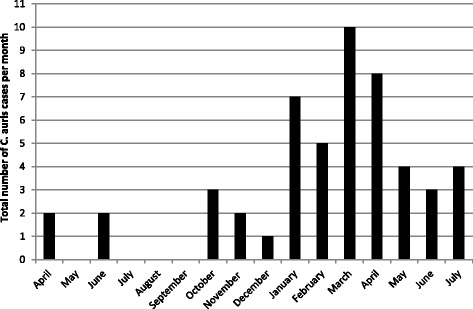
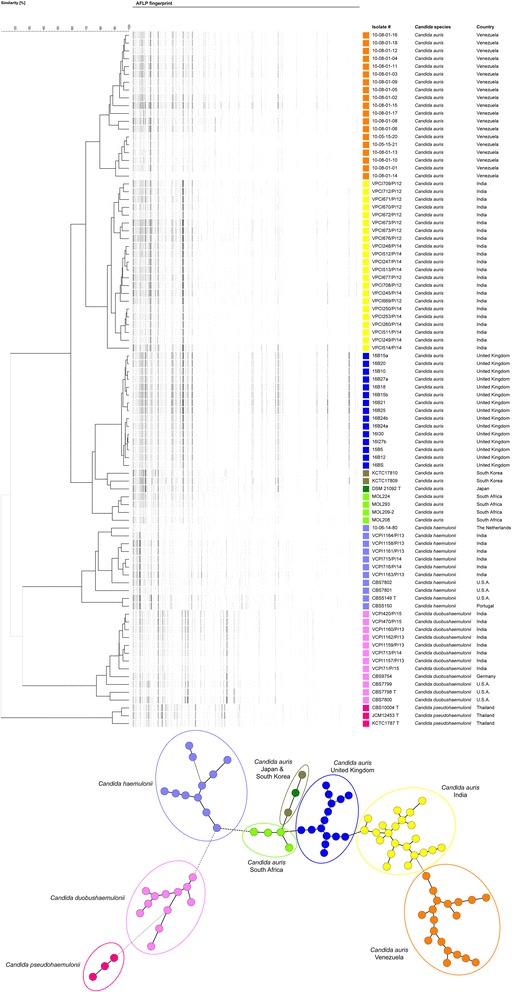
Candida auris is a globally emerging multidrug resistant fungal pathogen causing nosocomial transmission. We report an ongoing outbreak of C. auris in a London cardio-thoracic center between April 2015 and July 2016. This is the first report of C. auris in Europe and the largest outbreak so far. We describe the identification, investigation and implementation of control measures. Data on C. auris case demographics, environmental screening, implementation of infection prevention/control measures, and antifungal susceptibility of patient isolates were prospectively recorded then analysed retrospectively. Speciation of C. auris was performed by MALDI-TOF and typing of outbreak isolates performed by amplified fragment length polymorphism (AFLP). This report describes an ongoing outbreak of 50 C. auris cases over the first 16 month (April 2015 to July 2016) within a single Hospital Trust in London. A total of 44 % (n = 22/50) patients developed possible or proven C. auris infection with a candidaemia rate of 18 % (n = 9/50). Environmental sampling showed persistent presence of the yeast around bed space areas. Implementation of strict infection and prevention control measures included: isolation of cases and their contacts, wearing of personal protective clothing by health care workers, screening of patients on affected wards, skin decontamination with chlorhexidine, environmental cleaning with chorine based reagents and hydrogen peroxide vapour. Genotyping with AFLP demonstrated that C. auris isolates from the same geographic region clustered. This ongoing outbreak with genotypically closely related C. auris highlights the importance of appropriate species identification and rapid detection of cases in order to contain hospital acquired transmission.
Overview
The claims and statistics of this paper haven’t been checked yet.
Free: it reads the open-access text and checks the first 5 claims that cite a source we can check. Create a free account to check every claim.
Integrity signals
Registry
Cites
Statistics
Figures
Verification
Claims the paper makes
The claims and statistics of this paper haven’t been checked yet.
Free: it reads the open-access text and checks the first 5 claims that cite a source we can check. Create a free account to check every claim.
Claims other papers make about this one
Each is checked against this paper’s own text: does it say what the citing paper says it does?
The source backs part of the claim, not all of it — or backs it for a different population, condition or comparison.
In the citing paper
“However, there has been a worrying increase in the number of non-albicans Candida species such as C. glabrata, C. parapsilosis, C. tropicalis, C. krusei and lastly C. auris.”
From Global and Multi-National Prevalence of Fungal Diseases-Estimate Precision (2017) · cites this paper as [42]
Experimental — accuracy not yet measuredThe source backs part of the claim, not all of it — or backs it for a different population, condition or comparison.
In the citing paper
“These species are more likely to be antifungal resistant and have the potential to cause outbreaks [42].”
From Global and Multi-National Prevalence of Fungal Diseases-Estimate Precision (2017) · cites this paper as [42]
Experimental — accuracy not yet measuredThe source backs part of the claim, not all of it — or backs it for a different population, condition or comparison.
In the citing paper
“In addition to autoinfection, infections with certain species of Candida, particularly Candida auris and Candida parapsilosis, can result from transmission between patients in health care settings (14).”
From Population-Based Active Surveillance for Culture-Confirmed Candidemia — Four Sites, United States, 2012–2016 (2019) · cites this paper as [14]
Experimental — accuracy not yet measuredThe source backs part of the claim, not all of it — or backs it for a different population, condition or comparison.
In the citing paper
“There are currently no effective methods to eradicate C. auris from the skin9.”
From The emerging fungal pathogen Candida auris induces IFNγ to colonize mammalian hair follicles (2025) · cites this paper as [9]
Experimental — accuracy not yet measuredThe source backs part of the claim, not all of it — or backs it for a different population, condition or comparison.
In the citing paper
“A key factor contributing to the high transmissibility of C. auris is its ability to readily establish high level colonization on the skin and persistently present for months5,10,16,17.”
From Adhesin Als4112 promotes Candida auris skin colonization through interactions with keratinocytes and extracellular matrix proteins (2025) · cites this paper as [17]
Experimental — accuracy not yet measured
3 more claims about this paper
Create a free account to see every claim other papers make about this one.
Self-check
Percentages, sums and reported differences re-computed from the paper’s own numbers.
The self-check needs the paper’s full text.
Citations
Cites
Lockhart, S. R., Etienne, K. A., Vallabhaneni, S., Farooqi, J., Chowdhary, A., Govender, N. P., Colombo, A. L., Calvo, B., Cuomo, C. A., Desjardins, C. A., et al. (2017) · Clinical Infectious Diseases · doi:10.1093/cid/ciw691 · Cited by 1,662 · cited 2×
“auris isolates in the same geographic areas [14, 15].”
BackgroundSelf-citationSatoh, K., Makimura, K., Hasumi, Y., Nishiyama, Y., Uchida, K., & Yamaguchi, H. (2009) · Microbiology and Immunology · doi:10.1111/j.1348-0421.2008.00083.x · Cited by 1,381 · cited 2×
“auris is a globally emerging multidrug resistant fungal pathogen with the first clinical case being described in 2009 causing an ear infection in a Japanese patient [1].”
BackgroundKathuria, S., Singh, P. K., Sharma, C., Prakash, A., Masih, A., Kumar, A., Meis, J. F., & Chowdhary, A. (2015) · Journal of Clinical Microbiology · doi:10.1128/jcm.00367-15 · Cited by 532 · cited 2×
“haemulonii and accurate species identification is necessary for the administration of appropriate antifungal therapy and the control of outbreaks in hospital settings [6].”
BackgroundSelf-citationFirst Three Reported Cases of Nosocomial Fungemia Caused by Candida auris
Lee, W. G., Shin, J. H., Uh, Y., Kang, M. G., Kim, S. H., Park, K. H., & Jang, H.-C. (2011) · Journal of Clinical Microbiology · doi:10.1128/jcm.00319-11 · Cited by 523 · cited 5×
“Since its first description, reports of nosocomial outbreaks of C. auris have been reported from India [2], South Korea [3], South Africa [4] and Venezuela [5].”
BackgroundInfluentialIncidence, characteristics and outcome of ICU-acquired candidemia in India
Chakrabarti, A., Sood, P., Rudramurthy, S. M., Chen, S., Kaur, H., Capoor, M., Chhina, D., Rao, R., Eshwara, V. K., Xess, I., et al. (2015) · Intensive Care Medicine · doi:10.1007/s00134-014-3603-2 · Cited by 454 · cited 1×
“recent case series from developing countries [5, 11, 13, 16].”
Calvo, B., Melo, A. S. A., Perozo-Mena, A., Hernandez, M., Francisco, E. C., Hagen, F., Meis, J. F., & Colombo, A. L. (2016) · Journal of Infection · doi:10.1016/j.jinf.2016.07.008 · Cited by 448 · cited 6×
“Since its first description, reports of nosocomial outbreaks of C. auris have been reported from India [2], South Korea [3], South Africa [4] and Venezuela [5].”
BackgroundInfluentialSelf-citationModern technologies for improving cleaning and disinfection of environmental surfaces in hospitals
Boyce, J. M. (2016) · Antimicrobial Resistance & Infection Control · doi:10.1186/s13756-016-0111-x · Cited by 442
New Clonal Strain of Candida auris, Delhi, India
Chowdhary, A., Sharma, C., Duggal, S., Agarwal, K., Prakash, A., Singh, P. K., Jain, S., Kathuria, S., Randhawa, H. S., Hagen, F., et al. (2013) · Emerging Infectious Diseases · doi:10.3201/eid1910.130393 · Cited by 418 · cited 12×
“Since its first description, reports of nosocomial outbreaks of C. auris have been reported from India [2], South Korea [3], South Africa [4] and Venezuela [5].”
BackgroundMethodInfluentialSelf-citationMultidrug-resistant endemic clonal strain of Candida auris in India
Chowdhary, A., Anil Kumar, V., Sharma, C., Prakash, A., Agarwal, K., Babu, R., Dinesh, K. R., Karim, S., Singh, S. K., Hagen, F., et al. (2014) · European Journal of Clinical Microbiology & Infectious Diseases · doi:10.1007/s10096-013-2027-1 · Cited by 373 · cited 10×
“Since its first description, reports of nosocomial outbreaks of C. auris have been reported from India [2], South Korea [3], South Africa [4] and Venezuela [5].”
BackgroundInfluentialSelf-citationKim, M., Shin, J. H., Sung, H., Lee, K., Kim, E., Ryoo, N., Lee, J., Jung, S., Park, K. H., Kee, S. J., et al. (2009) · Clinical Infectious Diseases · doi:10.1086/597108 · Cited by 309 · cited 4×
“Since its first description, reports of nosocomial outbreaks of C. auris have been reported from India [2], South Korea [3], South Africa [4] and Venezuela [5].”
BackgroundInfluential
Cited by
Global and Multi-National Prevalence of Fungal Diseases-Estimate Precision
Bongomin, F., Gago, S., Oladele, R., & Denning, D. (2017) · Journal of Fungi · doi:10.3390/jof3040057 · Cited by 2,953
Worldwide emergence of resistance to antifungal drugs challenges human health and food security
Fisher, M. C., Hawkins, N. J., Sanglard, D., & Gurr, S. J. (2018) · Science · doi:10.1126/science.aap7999 · Cited by 1,555
Self-citationChowdhary, A., Sharma, C., & Meis, J. F. (2017) · PLOS Pathogens · doi:10.1371/journal.ppat.1006290 · Cited by 750
Self-citationMultidrug-Resistant Candida: Epidemiology, Molecular Mechanisms, and Treatment
Arendrup, M. C., & Patterson, T. F. (2017) · The Journal of Infectious Diseases · doi:10.1093/infdis/jix131 · Cited by 707
Resistance of Candida to azoles and echinocandins worldwide
Pristov, K. E., & Ghannoum, M. A. (2019) · Clinical Microbiology and Infection · doi:10.1016/j.cmi.2019.03.028 · Cited by 706
Candida auris: a Review of the Literature
Jeffery-Smith, A., Taori, S. K., Schelenz, S., Jeffery, K., Johnson, E. M., Borman, A., Candida auris Incident Management Team, Manuel, R., & Brown, C. S. (2018) · Clinical Microbiology Reviews · doi:10.1128/cmr.00029-17 · Cited by 595
“Typing by amplified fragment length polymorphism (AFLP) analysis suggested that isolates from one United Kingdom hospital are somewhat distinct from those of previously identified geographical clades (10), although RNA sequencing places them within the South Asian clade, the East Asian clade, and the South African cla…”
BackgroundInfluentialSelf-citationCandida auris: Epidemiology, biology, antifungal resistance, and virulence
Du, H., Bing, J., Hu, T., Ennis, C. L., Nobile, C. J., & Huang, G. (2020) · PLOS Pathogens · doi:10.1371/journal.ppat.1008921 · Cited by 609
Chowdhary, A., Prakash, A., Sharma, C., Kordalewska, M., Kumar, A., Sarma, S., Tarai, B., Singh, A., Upadhyaya, G., Upadhyay, S., et al. (2018) · Journal of Antimicrobial Chemotherapy · doi:10.1093/jac/dkx480 · Cited by 577
Self-citationChanges in the epidemiological landscape of invasive candidiasis
Lamoth, F., Lockhart, S. R., Berkow, E. L., & Calandra, T. (2018) · Journal of Antimicrobial Chemotherapy · doi:10.1093/jac/dkx444 · Cited by 547
Fluconazole resistance in Candida species: a current perspective
Berkow, E., & Lockhart, S. (2017) · Infection and Drug Resistance · doi:10.2147/idr.s118892 · Cited by 542
“auris as other species of Candida – and difficulties in eradicating this organism from health care facilities.(15,16)”
BackgroundA Candida auris Outbreak and Its Control in an Intensive Care Setting
Eyre, D. W., Sheppard, A. E., Madder, H., Moir, I., Moroney, R., Quan, T. P., Griffiths, D., George, S., Butcher, L., Morgan, M., et al. (2018) · New England Journal of Medicine · doi:10.1056/nejmoa1714373 · Cited by 517
Welsh, R. M., Bentz, M. L., Shams, A., Houston, H., Lyons, A., Rose, L. J., & Litvintseva, A. P. (2017) · Journal of Clinical Microbiology · doi:10.1128/jcm.00921-17 · Cited by 499
“auris have been reported in Colombia (5), Venezuela (6), Israel (7), and the United Kingdom (8).”
BackgroundChow, N. A., Muñoz, J. F., Gade, L., Berkow, E., Li, X., Welsh, R. M., Forsberg, K., Lockhart, S. R., Adam, R., Alanio, A., et al. (2020) · doi:10.1101/2020.01.06.896548 · Cited by 463
“Primarily a skin colonizer, this pathogenic yeast can cause 86 bloodstream infections and other infections (2), is often resistant to multiple classes of antifungal drugs 87 (3, 4), and can spread via nosocomial transmission causing outbreaks of invasive infections (5-12).”
BackgroundMuñoz, J. F., Gade, L., Chow, N. A., Loparev, V. N., Juieng, P., Berkow, E. L., Farrer, R. A., Litvintseva, A. P., & Cuomo, C. A. (2018) · Nature Communications · doi:10.1038/s41467-018-07779-6 · Cited by 458
Candida auris : The recent emergence of a multidrug-resistant fungal pathogen
Forsberg, K., Woodworth, K., Walters, M., Berkow, E. L., Jackson, B., Chiller, T., & Vallabhaneni, S. (2019) · Medical Mycology · doi:10.1093/mmy/myy054 · Cited by 421
“11,13 Transmission of C. auris has also been documented through solid organ transplantation.”
BackgroundLarkin, E., Hager, C., Chandra, J., Mukherjee, P. K., Retuerto, M., Salem, I., Long, L., Isham, N., Kovanda, L., Borroto-Esoda, K., et al. (2017) · Antimicrobial Agents and Chemotherapy · doi:10.1128/aac.02396-16 · Cited by 395
Candida auris: an Emerging Fungal Pathogen
Spivak, E. S., & Hanson, K. E. (2018) · Journal of Clinical Microbiology · doi:10.1128/jcm.01588-17 · Cited by 393
“Skin or mucosal colonization of affected patients appears to be common, and the organism has been recovered from a variety of patient contact points, such as mattresses, furniture, sinks, and medical equipment (17, 18).”
BackgroundCandida auris candidaemia in Indian ICUs: analysis of risk factors
Rudramurthy, S. M., Chakrabarti, A., Paul, R. A., Sood, P., Kaur, H., Capoor, M. R., Kindo, A. J., Marak, R. S. K., Arora, A., Sardana, R., et al. (2017) · Journal of Antimicrobial Chemotherapy · doi:10.1093/jac/dkx034 · Cited by 357
Suleyman, G., Alangaden, G., & Bardossy, A. C. (2018) · Current Infectious Disease Reports · doi:10.1007/s11908-018-0620-2 · Cited by 316
Dadar, M., Tiwari, R., Karthik, K., Chakraborty, S., Shahali, Y., & Dhama, K. (2018) · Microbial Pathogenesis · doi:10.1016/j.micpath.2018.02.028 · Cited by 332
Ruiz‐Gaitán, A., Moret, A. M., Tasias‐Pitarch, M., Aleixandre‐López, A. I., Martínez‐Morel, H., Calabuig, E., Salavert‐Lletí, M., Ramírez, P., López‐Hontangas, J. L., Hagen, F., et al. (2018) · Mycoses · doi:10.1111/myc.12781 · Cited by 343
Self-citationEpidemiology, clinical characteristics, resistance, and treatment of infections by Candida auris
Cortegiani, A., Misseri, G., Fasciana, T., Giammanco, A., Giarratano, A., & Chowdhary, A. (2018) · Journal of Intensive Care · doi:10.1186/s40560-018-0342-4 · Cited by 329
Self-citationMorbidity and mortality of candidaemia in Europe: an epidemiologic meta-analysis
Koehler, P., Stecher, M., Cornely, O. A., Koehler, D., Vehreschild, M. J. G. T., Bohlius, J., Wisplinghoff, H., & Vehreschild, J. J. (2019) · Clinical Microbiology and Infection · doi:10.1016/j.cmi.2019.04.024 · Cited by 336
The rapid emergence of antifungal-resistant human-pathogenic fungi
Lockhart, S. R., Chowdhary, A., & Gold, J. A. W. (2023) · Nature Reviews Microbiology · doi:10.1038/s41579-023-00960-9 · Cited by 308
“…not been performed, but two studies that looked for colonization of health-care workers have failed to detect colonization, which implies that an intact skin microbiome may be a barrier to C. auris colonization, although it has been shown to be transient on the hands of health-care workers 41–43 .”
BackgroundSelf-citationOsei Sekyere, J. (2018) · MicrobiologyOpen · doi:10.1002/mbo3.578 · Cited by 300
“Moreover, the Japanese isolate was later found to be very closely related phylogenetically to some of the isolates from South Korea (Ben- Ami et al., 2017; Mohsin et al., 2017; Schelenz et al., 2016) and they all assimilated NAG while those from other countries did not (Table 1) (Prakash et al., 2016); thus, the possi…”
BackgroundInfluentialGlobal epidemiology of emerging Candida auris
Rhodes, J., & Fisher, M. C. (2019) · Current Opinion in Microbiology · doi:10.1016/j.mib.2019.05.008 · Cited by 315
Self-citationVallabhaneni, S., Kallen, A., Tsay, S., Chow, N., Welsh, R., Kerins, J., Kemble, S. K., Pacilli, M., Black, S. R., Landon, E., et al. (2016) · MMWR. Morbidity and Mortality Weekly Report · doi:10.15585/mmwr.mm6544e1 · Cited by 302
Key takeaways from the U.S. CDC’s 2019 antibiotic resistance threats report for frontline providers
Kadri, S. S. (2020) · Critical Care Medicine · doi:10.1097/ccm.0000000000004371 · Cited by 292
“Critical care providers must keep a close eye out for this deadly pathogen that has resulted in outbreaks (22) with unmanageable spread even warranting ICUs to shut down.”
BackgroundChow, N. A., Gade, L., Tsay, S. V., Forsberg, K., Greenko, J. A., Southwick, K. L., Barrett, P. M., Kerins, J. L., Lockhart, S. R., Chiller, T. M., et al. (2018) · The Lancet Infectious Diseases · doi:10.1016/s1473-3099(18)30597-8 · Cited by 289
Worsening Spread of Candida auris in the United States, 2019 to 2021
Lyman, M., Forsberg, K., Sexton, D. J., Chow, N. A., Lockhart, S. R., Jackson, B. R., & Chiller, T. (2023) · Annals of Internal Medicine · doi:10.7326/m22-3469 · Cited by 287
Candida auris in Healthcare Facilities, New York, USA, 2013–2017
Adams, E., Quinn, M., Tsay, S., Poirot, E., Chaturvedi, S., Southwick, K., Greenko, J., Fernandez, R., Kallen, A., Vallabhaneni, S., et al. (2018) · Emerging Infectious Diseases · doi:10.3201/eid2410.180649 · Cited by 284
Ahmad, S., & Alfouzan, W. (2021) · Microorganisms · doi:10.3390/microorganisms9040807 · Cited by 269
“In an earlier study, C. auris was isolated from the nares of a nurse who provided care to a heavily colonized patient during an outbreak in the United Kingdom [48], and from the hands of two healthcare workers and the groin of another healthcare worker during outbreak investigation in Colombia [176].”
BackgroundInfluentialUnderstanding Echinocandin Resistance in the Emerging Pathogen Candida auris
Kordalewska, M., Lee, A., Park, S., Berrio, I., Chowdhary, A., Zhao, Y., & Perlin, D. S. (2018) · Antimicrobial Agents and Chemotherapy · doi:10.1128/aac.00238-18 · Cited by 247
Self-citationVallabhaneni, S., Kallen, A., Tsay, S., Chow, N., Welsh, R., Kerins, J., Kemble, S. K., Pacilli, M., Black, S. R., Landon, E., et al. (2017) · American Journal of Transplantation · doi:10.1111/ajt.14121 · Cited by 247
“Finally, C. auris has caused outbreaks in health care settings ( 10 ).”
BackgroundGenomic epidemiology of the UK outbreak of the emerging human fungal pathogen Candida auris
Rhodes, J., Abdolrasouli, A., Farrer, R. A., Cuomo, C. A., Aanensen, D. M., Armstrong-James, D., Fisher, M. C., & Schelenz, S. (2018) · Emerging Microbes & Infections · doi:10.1038/s41426-018-0045-x · Cited by 246
“Details of the C. auris outbreak are reported in Schelenz et al.11 Echinocandin treatment was prescribed in suspected C. auris infections.”
BackgroundSelf-citationBiswal, M., Rudramurthy, S. M., Jain, N., Shamanth, A. S., Sharma, D., Jain, K., Yaddanapudi, L. N., & Chakrabarti, A. (2017) · Journal of Hospital Infection · doi:10.1016/j.jhin.2017.09.009 · Cited by 223
Persistence of Pathogens on Inanimate Surfaces: A Narrative Review
Wißmann, J. E., Kirchhoff, L., Brüggemann, Y., Todt, D., Steinmann, J., & Steinmann, E. (2021) · Microorganisms · doi:10.3390/microorganisms9020343 · Cited by 205
Review on Antifungal Resistance Mechanisms in the Emerging Pathogen Candida auris
Chaabane, F., Graf, A., Jequier, L., & Coste, A. T. (2019) · Frontiers in Microbiology · doi:10.3389/fmicb.2019.02788 · Cited by 223
“auris is capable to persist on nosocomial surfaces (Schelenz et al., 2016), in contrast to other Candida species.”
ResultEscandón, P., Chow, N. A., Caceres, D. H., Gade, L., Berkow, E. L., Armstrong, P., Rivera, S., Misas, E., Duarte, C., Moulton-Meissner, H., et al. (2019) · Clinical Infectious Diseases · doi:10.1093/cid/ciy411 · Cited by 222
“auris into their close environment, thereby becoming a risk for continuous transmission [5].”
BackgroundKean, R., Delaney, C., Sherry, L., Borman, A., Johnson, E. M., Richardson, M. D., Rautemaa-Richardson, R., Williams, C., & Ramage, G. (2018) · mSphere · doi:10.1128/msphere.00334-18 · Cited by 220
Effectiveness of Disinfectants Against Candida auris and Other Candida Species
Cadnum, J. L., Shaikh, A. A., Piedrahita, C. T., Sankar, T., Jencson, A. L., Larkin, E. L., Ghannoum, M. A., & Donskey, C. J. (2017) · Infection Control & Hospital Epidemiology · doi:10.1017/ice.2017.162 · Cited by 206
“auris has been recovered from the hospital environment, suggesting that contaminated surfaces may be a source of transmission.(1,2) The Centers for Disease Control and Prevention (CDC) has therefore recommended daily and postdischarge disinfection of surfaces in rooms of patients with C.”
BackgroundMellinghoff, S. C., Panse, J., Alakel, N., Behre, G., Buchheidt, D., Christopeit, M., Hasenkamp, J., Kiehl, M., Koldehoff, M., Krause, S. W., et al. (2018) · Annals of Hematology · doi:10.1007/s00277-017-3196-2 · Cited by 209
“can be key vectors in the transmission of yeasts [89].”
BackgroundCandida auris—the growing menace to global health
Lone, S. A., & Ahmad, A. (2019) · Mycoses · doi:10.1111/myc.12904 · Cited by 208
Candida auris and multidrug resistance: Defining the new normal
Lockhart, S. R. (2019) · Fungal Genetics and Biology · doi:10.1016/j.fgb.2019.103243 · Cited by 205
Kordalewska, M., Zhao, Y., Lockhart, S. R., Chowdhary, A., Berrio, I., & Perlin, D. S. (2017) · Journal of Clinical Microbiology · doi:10.1128/jcm.00630-17 · Cited by 195
“priate use of antifungal treatment but also the implementation of effective infection control measures (12, 26).”
BackgroundSelf-citationToda, M., Williams, S. R., Berkow, E. L., Farley, M. M., Harrison, L. H., Bonner, L., Marceaux, K. M., Hollick, R., Zhang, A. Y., Schaffner, W., et al. (2019) · MMWR Surveillance Summaries · doi:10.15585/mmwr.ss6808a1 · Cited by 198
Proctor, D. M., Dangana, T., Sexton, D. J., Fukuda, C., Yelin, R. D., Stanley, M., Bell, P. B., Baskaran, S., Deming, C., Chen, Q., et al. (2021) · Nature Medicine · doi:10.1038/s41591-021-01383-w · Cited by 198
Glowicz, J. B., Landon, E., Sickbert-Bennett, E. E., Aiello, A. E., deKay, K., Hoffmann, K. K., Maragakis, L., Olmsted, R. N., Polgreen, P. M., Trexler, P. A., et al. (2023) · Infection Control & Hospital Epidemiology · doi:10.1017/ice.2022.304 · Cited by 160
“Those directing hand hygiene programs should do the following: (1) help HCP remain aware of organisms with biocide resistance that are circulating in the facility; (2) emphasize the importance of reducing hand contamination through the use of gloves according to standard and contact precautions; (3) maintain the avail…”
Suphavilai, C., Ko, K. K. K., Lim, K. M., Tan, M. G., Boonsimma, P., Chu, J. J. K., Goh, S. S., Rajandran, P., Lee, L. C., Tan, K. Y., et al. (2024) · The Lancet Microbe · doi:10.1016/s2666-5247(24)00101-0 · Cited by 174
Self-citationAdeme, M. (2020) · doi:10.2147/idr.s249864 · Cited by 182
Invasive candidiasis in critical care: challenges and future directions
Logan, C., Martin-Loeches, I., & Bicanic, T. (2020) · Intensive Care Medicine · doi:10.1007/s00134-020-06240-x · Cited by 180
Emerging multidrug-resistant Candida species
Colombo, A. L., Júnior, J. N. D. A., & Guinea, J. (2017) · Current Opinion in Infectious Diseases · doi:10.1097/qco.0000000000000411 · Cited by 177
Candida auris: Disinfectants and Implications for Infection Control
Ku, T. S. N., Walraven, C. J., & Lee, S. A. (2018) · Frontiers in Microbiology · doi:10.3389/fmicb.2018.00726 · Cited by 177
“auris in healthcare settings has been well documented (Calvo et al., 2016; Schelenz et al., 2016; Vallabhaneni et al., 2016; Biswal et al., 2017; Araúz et al., 2018).”
BackgroundMethodInfluentialYue, H., Bing, J., Zheng, Q., Zhang, Y., Hu, T., Du, H., Wang, H., & Huang, G. (2018) · Emerging Microbes & Infections · doi:10.1038/s41426-018-0187-x · Cited by 176
Zhu, Y., O’Brien, B., Leach, L., Clarke, A., Bates, M., Adams, E., Ostrowsky, B., Quinn, M., Dufort, E., Southwick, K., et al. (2020) · Journal of Clinical Microbiology · doi:10.1128/jcm.01503-19 · Cited by 162
“auris recovery from the patient’s skin and healthcare environment have been established previously (8, 9, 16), in this report, we have used a quantitative approach to”
MethodEmerging and reemerging fungal infections
Lockhart, S. R., & Guarner, J. (2019) · Seminars in Diagnostic Pathology · doi:10.1053/j.semdp.2019.04.010 · Cited by 169
Aslam, S., Rotstein, C., & Practice, T. A. I. D. C. O. (2019) · Clinical Transplantation · doi:10.1111/ctr.13623 · Cited by 160
On the Origins of a Species: What Might Explain the Rise of Candida auris?
Jackson, B. R., Chow, N., Forsberg, K., Litvintseva, A. P., Lockhart, S. R., Welsh, R., Vallabhaneni, S., & Chiller, T. (2019) · Journal of Fungi · doi:10.3390/jof5030058 · Cited by 162
Tsay, S., Kallen, A., Jackson, B. R., Chiller, T. M., & Vallabhaneni, S. (2018) · Clinical Infectious Diseases · doi:10.1093/cid/cix744 · Cited by 155
“Systematic sampling of the hands, nose, axilla, groin, and throat of 258 HCP was conducted as part of the U.K. investigation and identified a single HCP with a positive nares swab who later tested negative from the same site, suggesting transient carriage [15].”
InfluentialCandida auris Forms High-Burden Biofilms in Skin Niche Conditions and on Porcine Skin
Horton, M. V., Johnson, C. J., Kernien, J. F., Patel, T. D., Lam, B. C., Cheong, J. Z. A., Meudt, J. J., Shanmuganayagam, D., Kalan, L. R., & Nett, J. E. (2020) · mSphere · doi:10.1128/msphere.00910-19 · Cited by 159
“auris efficiently colonizes the skin, persists on hospital surfaces, and rapidly spreads among patients (1, 3, 4).”
BackgroundChen, J., Tian, S., Han, X., Chu, Y., Wang, Q., Zhou, B., & Shang, H. (2020) · BMC Infectious Diseases · doi:10.1186/s12879-020-05543-0 · Cited by 159
Combined Antifungal Resistance and Biofilm Tolerance: the Global Threat of Candida auris
Kean, R., & Ramage, G. (2019) · mSphere · doi:10.1128/msphere.00458-19 · Cited by 152
“such as axillary temperature probes (13, 51).”
Emerging fungal pathogen Candida auris evades neutrophil attack
Johnson, C. J., Davis, J. M., Huttenlocher, A., Kernien, J. F., & Nett, J. E. (2018) · mBio · doi:10.1128/mbio.01403-18 · Cited by 157
The world’s ten most feared fungi
Hyde, K. D., Al‐Hatmi, A. M. S., Andersen, B., Boekhout, T., Buzina, W., Dawson, T. L., Eastwood, D. C., Jones, E. B. G., de Hoog, S., Kang, Y., et al. (2018) · Fungal Diversity · doi:10.1007/s13225-018-0413-9 · Cited by 168
“auris of hospital environments, equipment and multiple patient body-sites, was responsible for protracted outbreaks (Schelenz et al. 2016; Eyre et al. 2018; RuizGaitán et al. 2018).”
BackgroundInfluentialSelf-citationCurrent perspective on emergence, diagnosis and drug resistance in Candida auris
Sarma, S., & Upadhyay, S. (2017) · Infection and Drug Resistance · doi:10.2147/idr.s116229 · Cited by 146
Abdolrasouli, A., Armstrong‐James, D., Ryan, L., & Schelenz, S. (2017) · Mycoses · doi:10.1111/myc.12699 · Cited by 150
Self-citationHagen, F., Lumbsch, H. T., Arsic Arsenijevic, V., Badali, H., Bertout, S., Billmyre, R. B., Bragulat, M. R., Cabañes, F. J., Carbia, M., Chakrabarti, A., et al. (2017) · mSphere · doi:10.1128/msphere.00238-17 · Cited by 143
Self-citationCandida auris : An emerging multidrug-resistant pathogen
Sears, D., & Schwartz, B. S. (2017) · International Journal of Infectious Diseases · doi:10.1016/j.ijid.2017.08.017 · Cited by 146
Bruno, M., Kersten, S., Bain, J. M., Jaeger, M., Rosati, D., Kruppa, M. D., Lowman, D. W., Rice, P. J., Graves, B., Ma, Z., et al. (2020) · Nature Microbiology · doi:10.1038/s41564-020-0780-3 · Cited by 145
Self-citationBriano, F., Magnasco, L., Sepulcri, C., Dettori, S., Dentone, C., Mikulska, M., Ball, L., Vena, A., Robba, C., Patroniti, N., et al. (2022) · Infectious Diseases and Therapy · doi:10.1007/s40121-022-00625-9 · Cited by 136
“auris isolation in a cardiothoracic surgery center in London over a 16-month period [17].”
BackgroundHuang, X., Hurabielle, C., Drummond, R. A., Bouladoux, N., Desai, J. V., Sim, C. K., Belkaid, Y., Lionakis, M. S., & Segre, J. A. (2021) · Cell Host & Microbe · doi:10.1016/j.chom.2020.12.002 · Cited by 144
“auris in our translational model and the early clinical reports are suggestive of such a reservoir in humans (Schelenz et al., 2016).”
BackgroundIn Vitro and In Vivo Evaluation of the Antifungal Activity of APX001A/APX001 against Candida auris
Hager, C. L., Larkin, E. L., Long, L., Zohra Abidi, F., Shaw, K. J., & Ghannoum, M. A. (2018) · Antimicrobial Agents and Chemotherapy · doi:10.1128/aac.02319-17 · Cited by 139
Candida auris: Epidemiology, risk factors, virulence, resistance, and therapeutic options
de Cássia Orlandi Sardi, J., Silva, D. R., Soares Mendes-Giannini, M. J., & Rosalen, P. L. (2018) · Microbial Pathogenesis · doi:10.1016/j.micpath.2018.09.014 · Cited by 134
Epidemiologic Shift in Candidemia Driven by Candida auris, South Africa, 2016–20171
van Schalkwyk, E., Mpembe, R. S., Thomas, J., Shuping, L., Ismail, H., Lowman, W., Karstaedt, A. S., Chibabhai, V., Wadula, J., Avenant, T., et al. (2019) · Emerging Infectious Diseases · doi:10.3201/eid2509.190040 · Cited by 137
Identification of Drug Resistant Candida auris
Kordalewska, M., & Perlin, D. S. (2019) · Frontiers in Microbiology · doi:10.3389/fmicb.2019.01918 · Cited by 124
Chakrabarti, A., & Sood, P. (2021) · Journal of Medical Microbiology · doi:10.1099/jmm.0.001318 · Cited by 133
“In a large-scale preadmission screening in the UK, only one patient was found colonized out of 2200 [9].”
InfluentialEmergence of Candida auris: An International Call to Arms
Clancy, C. J., & Nguyen, M. H. (2017) · Clinical Infectious Diseases · doi:10.1093/cid/ciw696 · Cited by 129
Sabino, R., Veríssimo, C., Pereira, Á. A., & Antunes, F. (2020) · Microorganisms · doi:10.3390/microorganisms8020181 · Cited by 133
“auris isolates from an outbreak in a cardio‐thoracic center located in the United Kingdom with other isolates from other countries in order to identify a geographic origin of the ongoing outbreak [39].”
BackgroundInfluentialCandida auris Infection and Biofilm Formation: Going Beyond the Surface
Horton, M. V., & Nett, J. E. (2020) · Current Clinical Microbiology Reports · doi:10.1007/s40588-020-00143-7 · Cited by 132
Isolates of the emerging pathogen Candida auris present in the UK have several geographic origins
Borman, A. M., Szekely, A., & Johnson, E. M. (2017) · Medical Mycology · doi:10.1093/mmy/myw147 · Cited by 132
Weinberg, S. E., Villedieu, A., Bagdasarian, N., Karah, N., Teare, L., & Elamin, W. F. (2020) · Infection Prevention in Practice · doi:10.1016/j.infpip.2020.100077 · Cited by 132
“…MDR A. baumannii from wounds is through contact with contaminated environmental surfaces [15] such as around bed sites, trollies, radiators, window sills [16], ultrasound equipment, portable radiograph equipment, medical charts, stethoscopes, shower heads [17], and even mobile phones [18].”
Lionakis, M. S., & Chowdhary, A. (2024) · New England Journal of Medicine · doi:10.1056/nejmra2402635 · Cited by 130
Self-citationUse of RNA-Protein Complexes for Genome Editing in Non- albicans Candida Species
Grahl, N., Demers, E. G., Crocker, A. W., & Hogan, D. A. (2017) · mSphere · doi:10.1128/msphere.00218-17 · Cited by 133
“tiple times and caused hospital-associated outbreaks (15, 17, 29, 30), and C.”
Surface disinfection challenges for Candida auris: an in-vitro study
Kean, R., Sherry, L., Townsend, E., McKloud, E., Short, B., Akinbobola, A., Mackay, W. G., Williams, C., Jones, B. L., & Ramage, G. (2018) · Journal of Hospital Infection · doi:10.1016/j.jhin.2017.11.015 · Cited by 125
Fakhim, H., Vaezi, A., Dannaoui, E., Chowdhary, A., Nasiry, D., Faeli, L., Meis, J. F., & Badali, H. (2018) · Mycoses · doi:10.1111/myc.12754 · Cited by 122
Self-citationRossow, J., Ostrowsky, B., Adams, E., Greenko, J., McDonald, R., Vallabhaneni, S., Forsberg, K., Perez, S., Lucas, T., Alroy, K. A., et al. (2021) · Clinical Infectious Diseases · doi:10.1093/cid/ciaa1462 · Cited by 125
“Colonization puts patients at risk for invasive infection; ~5–10% of known colonized patients develop invasive infections [8, 9].”
BackgroundCandida auris: What Have We Learned About Its Mechanisms of Pathogenicity?
Rossato, L., & Colombo, A. L. (2018) · Frontiers in Microbiology · doi:10.3389/fmicb.2018.03081 · Cited by 121
“The complete genome sequence of C. auris is available (Chatterjee et al., 2015; Sharma et al., 2015; Lockhart et al., 2017), and it is currently possible to design experiments to better characterize the molecular mechanisms responsible for the capability of this pathogen to readily become resistant…”
Backgroundvan Rhijn, N., & Bromley, M. (2021) · Journal of Fungi · doi:10.3390/jof7050367 · Cited by 132
Hog1 regulates stress tolerance and virulence in the emerging fungal pathogen Candida auris
Day, A. M., McNiff, M. M., da Silva Dantas, A., Gow, N. A. R., & Quinn, J. (2018) · mSphere · doi:10.1128/msphere.00506-18 · Cited by 116
“skin, nose, axilla, groin, and rectum (3), there are no reports of gut colonization.”
BackgroundQuindós, G., Marcos‐Arias, C., San-Millán, R., Mateo, E., & Eraso, E. (2018) · International Microbiology · doi:10.1007/s10123-018-0014-1 · Cited by 132
Candida auris: A Review of Recommendations for Detection and Control in Healthcare Settings
Caceres, D. H., Forsberg, K., Welsh, R. M., Sexton, D. J., Lockhart, S. R., Jackson, B. R., & Chiller, T. (2019) · Journal of Fungi · doi:10.3390/jof5040111 · Cited by 109
“auris in the United Kingdom, bathing with singleuse wipes of 2% chlorhexidine gluconate (twice daily), or aqueous 4% chlorhexidine formulation were used on cases [65].”
MethodHigh-touch surfaces: microbial neighbours at hand
Cobrado, L., Silva-Dias, A., Azevedo, M. M., & Rodrigues, A. G. (2017) · European Journal of Clinical Microbiology & Infectious Diseases · doi:10.1007/s10096-017-3042-4 · Cited by 136
“tamination with chlorhexidine, environmental cleaning with chlorine-based disinfectants and hydrogen peroxide vapour [62].”
Review on Current Status of Echinocandins Use
Mroczyńska, M., & Brillowska‐Dąbrowska, A. (2020) · Antibiotics · doi:10.3390/antibiotics9050227 · Cited by 128
An Overview on Candida auris in Healthcare Settings
Cristina, M. L., Spagnolo, A. M., Sartini, M., Carbone, A., Oliva, M., Schinca, E., Boni, S., & Pontali, E. (2023) · Journal of Fungi · doi:10.3390/jof9090913 · Cited by 124
“…a London hospital, environmental sampling of the clinical area surrounding colonized patients demonstrated the contamination with C. auris of horizontal surfaces, such as the floor around bed sites, trollies, radiators, windowsills, equipment monitors and keypads, in addition to one air sample [25].”
BackgroundYeasticidal activity of chemical disinfectants and antiseptics against Candida auris
Moore, G., Schelenz, S., Borman, A. M., Johnson, E. M., & Brown, C. S. (2017) · Journal of Hospital Infection · doi:10.1016/j.jhin.2017.08.019 · Cited by 122
Self-citationYadav, A., Singh, A., Wang, Y., Haren, M. H. V., Singh, A., de Groot, T., Meis, J. F., Xu, J., & Chowdhary, A. (2021) · Journal of Fungi · doi:10.3390/jof7020081 · Cited by 111
“Since its first report in 2009, C. auris has caused major outbreaks in healthcare facilities in Colombia, India, Kenya, Kuwait, Oman, Pakistan, South Africa, Spain, United Kingdom, United States, and Venezuela [1–13].”
BackgroundInfluentialSelf-citationKhan, Z., Ahmad, S., Al-Sweih, N., Joseph, L., Alfouzan, W., & Asadzadeh, M. (2018) · PLOS ONE · doi:10.1371/journal.pone.0195743 · Cited by 109
Candida auris otomycosis in Iran and review of recent literature
Abastabar, M., Haghani, I., Ahangarkani, F., Rezai, M. S., Taghizadeh Armaki, M., Roodgari, S., Kiakojuri, K., Al‐Hatmi, A. M. S., Meis, J. F., & Badali, H. (2019) · Mycoses · doi:10.1111/myc.12886 · Cited by 107
Self-citationSusceptibility of Candida auris and Candida albicans to 21 germicides used in healthcare facilities
Rutala, W. A., Kanamori, H., Gergen, M. F., Sickbert-Bennett, E. E., & Weber, D. J. (2019) · Infection Control & Hospital Epidemiology · doi:10.1017/ice.2019.1 · Cited by 106
“25% sodium hypochlorite (∼1,245 ppm chlorine; Chlorine Test Kit, Model CN-21P, Hach, Loveland, CO); (2) a diluted, water-based quaternary ammonium compound (QAC); and (3) a 0.”
BackgroundIn Vitro Interactions of Echinocandins with Triazoles against Multidrug-Resistant Candida auris
Fakhim, H., Chowdhary, A., Prakash, A., Vaezi, A., Dannaoui, E., Meis, J. F., & Badali, H. (2017) · Antimicrobial Agents and Chemotherapy · doi:10.1128/aac.01056-17 · Cited by 102
Self-citation
Metadata
- Authors
- Schelenz, S., Hagen, F., Rhodes, J. L., Abdolrasouli, A., Chowdhary, A., Hall, A., Ryan, L., Shackleton, J., Trimlett, R., Meis, J. F., Armstrong-James, D., & Fisher, M. C.
- Affiliations
- Royal Brompton Hospital (GB)
- Canisius-Wilhelmina Ziekenhuis (NL)
- Imperial College London (GB)
- University of Delhi (IN)
- Radboud University Medical Center (NL)
- Corresponding author
- Schelenz, Silke
- ORCID
- Venue
- Antimicrobial Resistance & Infection Control
- Published
- 2016-10-19
- Volume
- 5
- Issue
- 1
- Pages
- 35-35
- ISSN
- 2047-2994 (ISSN-L)
- PMC
- PMC5069812
- OpenAlex
- W2538799985
- Cited by
- 768
- References
- 18
- Citations by year
- 2026: 58 · 2025: 65 · 2024: 78 · 2023: 79 · 2022: 62 · 2021: 81 · 2020: 103 · 2019: 99 · 2018: 74 · 2017: 65 · 2016: 4
- FWCI
- 74.50
- Type
- journal article
- Language
- en
- Open access
- gold
- doi.org
- Licence
- cc-by
- Locations
- Antimicrobial Resistance and Infection Control (publishedVersion, cc-by)
- PubMed Central (publishedVersion, cc-by)
- PubMed (publishedVersion)
- Data Archiving and Networked Services (DANS) (submittedVersion)
- DOAJ (DOAJ: Directory of Open Access Journals) (submittedVersion)
- University of Birmingham Research Portal (University of Birmingham) (submittedVersion)
- Radboud Repository (Radboud University) (submittedVersion)
- Spiral (Imperial College London) (submittedVersion, cc-by)
- Radboud Repository (Radboud University) (submittedVersion, other-oa)
- Greater South Information System
- Funders
- Wellcome Trust (RSRO_54990)
- Medical Research Council (K000373/1)
- Topics
- Health Sciences › Medicine › Infectious Diseases › Antifungal resistance and susceptibility
- Health Sciences › Medicine › Infectious Diseases › Infection Control in Healthcare
- Health Sciences › Medicine › Infectious Diseases › Fungal Infections and Studies
- Keywords
- Candida auris, hospital outbreak, nosocomial transmission, candidemia, infection control, antifungal susceptibility, environmental contamination, MALDI-TOF species identification, AFLP genotyping, hydrogen peroxide vapor, emerging fungal pathogens
About these checks
Registry, retraction, Cites and statistics results are computed, not judged, with one exception: a printed reference that no index lists is read once by a model before it counts as a citation error. Claims are extracted by a model and kept only when their quote appears verbatim in the text; each cited source is then checked, with a model’s help, for whether it says what the claim relies on. Those verdicts can be wrong — read the claim’s quote and the cited source before relying on one.
Statistics and arithmetic are recomputed, not judged.
Confidence bands are shown only for fields calibrated on our annotated test set. None is calibrated yet, so no band is shown.
What counts as a claim ›How we measure confidence ›How we check this ›
Are you an author, or do you see a problem with this page? Request a review
Data sources
Bibliographic data: Semantic Scholar, OpenAlex, Crossref.
Contains information from the Semantic Scholar Academic Graph Datasets, made available under the ODC Attribution License (ODC-BY 1.0).
Semantic Scholar’s data is described in: Kinney, R., et al. (2023). The Semantic Scholar Open Data Platform. arXiv:2301.10140.
