

First hospital outbreak of the globally emerging Candida auris in a European hospital
Open accessThe DOI matches its Crossref record; 18 of the 18 references it cites were found in a registry or an index.
Abstract
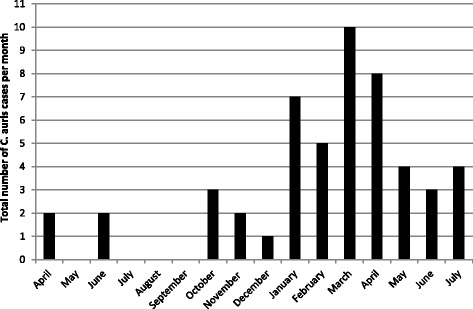
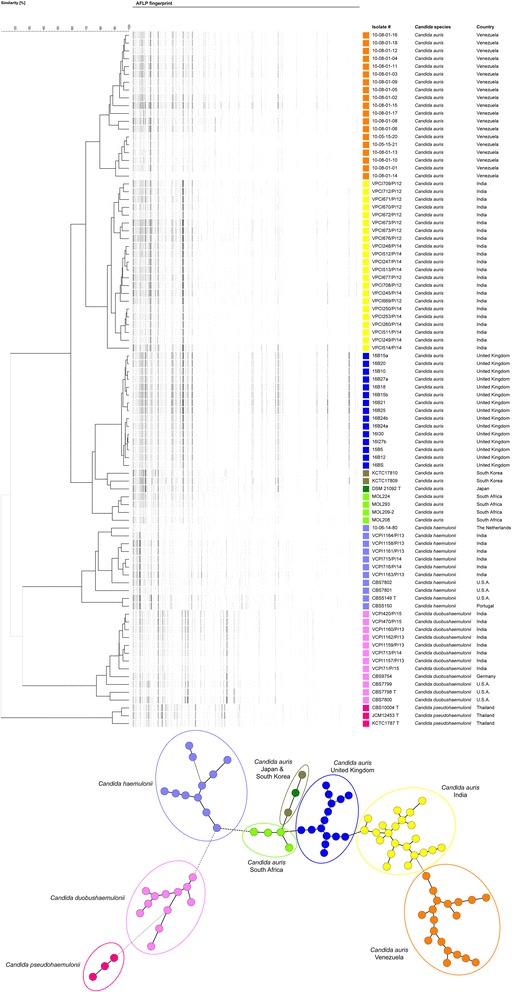
Candida auris is a globally emerging multidrug resistant fungal pathogen causing nosocomial transmission. We report an ongoing outbreak of C. auris in a London cardio-thoracic center between April 2015 and July 2016. This is the first report of C. auris in Europe and the largest outbreak so far. We describe the identification, investigation and implementation of control measures. Data on C. auris case demographics, environmental screening, implementation of infection prevention/control measures, and antifungal susceptibility of patient isolates were prospectively recorded then analysed retrospectively. Speciation of C. auris was performed by MALDI-TOF and typing of outbreak isolates performed by amplified fragment length polymorphism (AFLP). This report describes an ongoing outbreak of 50 C. auris cases over the first 16 month (April 2015 to July 2016) within a single Hospital Trust in London. A total of 44 % (n = 22/50) patients developed possible or proven C. auris infection with a candidaemia rate of 18 % (n = 9/50). Environmental sampling showed persistent presence of the yeast around bed space areas. Implementation of strict infection and prevention control measures included: isolation of cases and their contacts, wearing of personal protective clothing by health care workers, screening of patients on affected wards, skin decontamination with chlorhexidine, environmental cleaning with chorine based reagents and hydrogen peroxide vapour. Genotyping with AFLP demonstrated that C. auris isolates from the same geographic region clustered. This ongoing outbreak with genotypically closely related C. auris highlights the importance of appropriate species identification and rapid detection of cases in order to contain hospital acquired transmission.
Overview
The claims and statistics of this paper haven’t been checked yet.
Free: it reads the open-access text and checks the first 5 claims that cite a source we can check. Create a free account to check every claim.
Integrity signals
Registry
Cites
Statistics
Figures
Verification
Claims the paper makes
The claims and statistics of this paper haven’t been checked yet.
Free: it reads the open-access text and checks the first 5 claims that cite a source we can check. Create a free account to check every claim.
Claims other papers make about this one
Each is checked against this paper’s own text: does it say what the citing paper says it does?
The source backs part of the claim, not all of it — or backs it for a different population, condition or comparison.
In the citing paper
“However, there has been a worrying increase in the number of non-albicans Candida species such as C. glabrata, C. parapsilosis, C. tropicalis, C. krusei and lastly C. auris.”
From Global and Multi-National Prevalence of Fungal Diseases-Estimate Precision (2017) · cites this paper as [42]
Experimental — accuracy not yet measuredThe source backs part of the claim, not all of it — or backs it for a different population, condition or comparison.
In the citing paper
“These species are more likely to be antifungal resistant and have the potential to cause outbreaks [42].”
From Global and Multi-National Prevalence of Fungal Diseases-Estimate Precision (2017) · cites this paper as [42]
Experimental — accuracy not yet measuredThe source backs part of the claim, not all of it — or backs it for a different population, condition or comparison.
In the citing paper
“In addition to autoinfection, infections with certain species of Candida, particularly Candida auris and Candida parapsilosis, can result from transmission between patients in health care settings (14).”
From Population-Based Active Surveillance for Culture-Confirmed Candidemia — Four Sites, United States, 2012–2016 (2019) · cites this paper as [14]
Experimental — accuracy not yet measuredThe source backs part of the claim, not all of it — or backs it for a different population, condition or comparison.
In the citing paper
“There are currently no effective methods to eradicate C. auris from the skin9.”
From The emerging fungal pathogen Candida auris induces IFNγ to colonize mammalian hair follicles (2025) · cites this paper as [9]
Experimental — accuracy not yet measuredThe source backs part of the claim, not all of it — or backs it for a different population, condition or comparison.
In the citing paper
“A key factor contributing to the high transmissibility of C. auris is its ability to readily establish high level colonization on the skin and persistently present for months5,10,16,17.”
From Adhesin Als4112 promotes Candida auris skin colonization through interactions with keratinocytes and extracellular matrix proteins (2025) · cites this paper as [17]
Experimental — accuracy not yet measured
3 more claims about this paper
Create a free account to see every claim other papers make about this one.
Self-check
Percentages, sums and reported differences re-computed from the paper’s own numbers.
The self-check needs the paper’s full text.
Citations
Cites
Lockhart, S. R., Etienne, K. A., Vallabhaneni, S., Farooqi, J., Chowdhary, A., Govender, N. P., Colombo, A. L., Calvo, B., Cuomo, C. A., Desjardins, C. A., et al. (2017) · Clinical Infectious Diseases · doi:10.1093/cid/ciw691 · Cited by 1,662 · cited 2×
“auris isolates in the same geographic areas [14, 15].”
BackgroundSelf-citationSatoh, K., Makimura, K., Hasumi, Y., Nishiyama, Y., Uchida, K., & Yamaguchi, H. (2009) · Microbiology and Immunology · doi:10.1111/j.1348-0421.2008.00083.x · Cited by 1,381 · cited 2×
“auris is a globally emerging multidrug resistant fungal pathogen with the first clinical case being described in 2009 causing an ear infection in a Japanese patient [1].”
BackgroundKathuria, S., Singh, P. K., Sharma, C., Prakash, A., Masih, A., Kumar, A., Meis, J. F., & Chowdhary, A. (2015) · Journal of Clinical Microbiology · doi:10.1128/jcm.00367-15 · Cited by 532 · cited 2×
“haemulonii and accurate species identification is necessary for the administration of appropriate antifungal therapy and the control of outbreaks in hospital settings [6].”
BackgroundSelf-citationFirst Three Reported Cases of Nosocomial Fungemia Caused by Candida auris
Lee, W. G., Shin, J. H., Uh, Y., Kang, M. G., Kim, S. H., Park, K. H., & Jang, H.-C. (2011) · Journal of Clinical Microbiology · doi:10.1128/jcm.00319-11 · Cited by 523 · cited 5×
“Since its first description, reports of nosocomial outbreaks of C. auris have been reported from India [2], South Korea [3], South Africa [4] and Venezuela [5].”
BackgroundInfluentialIncidence, characteristics and outcome of ICU-acquired candidemia in India
Chakrabarti, A., Sood, P., Rudramurthy, S. M., Chen, S., Kaur, H., Capoor, M., Chhina, D., Rao, R., Eshwara, V. K., Xess, I., et al. (2015) · Intensive Care Medicine · doi:10.1007/s00134-014-3603-2 · Cited by 454 · cited 1×
“recent case series from developing countries [5, 11, 13, 16].”
Calvo, B., Melo, A. S. A., Perozo-Mena, A., Hernandez, M., Francisco, E. C., Hagen, F., Meis, J. F., & Colombo, A. L. (2016) · Journal of Infection · doi:10.1016/j.jinf.2016.07.008 · Cited by 448 · cited 6×
“Since its first description, reports of nosocomial outbreaks of C. auris have been reported from India [2], South Korea [3], South Africa [4] and Venezuela [5].”
BackgroundInfluentialSelf-citationModern technologies for improving cleaning and disinfection of environmental surfaces in hospitals
Boyce, J. M. (2016) · Antimicrobial Resistance & Infection Control · doi:10.1186/s13756-016-0111-x · Cited by 442
New Clonal Strain of Candida auris, Delhi, India
Chowdhary, A., Sharma, C., Duggal, S., Agarwal, K., Prakash, A., Singh, P. K., Jain, S., Kathuria, S., Randhawa, H. S., Hagen, F., et al. (2013) · Emerging Infectious Diseases · doi:10.3201/eid1910.130393 · Cited by 418 · cited 12×
“Since its first description, reports of nosocomial outbreaks of C. auris have been reported from India [2], South Korea [3], South Africa [4] and Venezuela [5].”
BackgroundMethodInfluentialSelf-citationMultidrug-resistant endemic clonal strain of Candida auris in India
Chowdhary, A., Anil Kumar, V., Sharma, C., Prakash, A., Agarwal, K., Babu, R., Dinesh, K. R., Karim, S., Singh, S. K., Hagen, F., et al. (2014) · European Journal of Clinical Microbiology & Infectious Diseases · doi:10.1007/s10096-013-2027-1 · Cited by 373 · cited 10×
“Since its first description, reports of nosocomial outbreaks of C. auris have been reported from India [2], South Korea [3], South Africa [4] and Venezuela [5].”
BackgroundInfluentialSelf-citationKim, M., Shin, J. H., Sung, H., Lee, K., Kim, E., Ryoo, N., Lee, J., Jung, S., Park, K. H., Kee, S. J., et al. (2009) · Clinical Infectious Diseases · doi:10.1086/597108 · Cited by 309 · cited 4×
“Since its first description, reports of nosocomial outbreaks of C. auris have been reported from India [2], South Korea [3], South Africa [4] and Venezuela [5].”
BackgroundInfluential
Cited by
Items 701–788 of 788
COMPARAÇÃO DE TRÊS TÉCNICAS DE DIAGNÓSTICO DA DOENÇA DE HIRSCHSPRUNG
Lopes, C. C. C., Bertuci, J. V. F., Lopes, E. B., Lopes, L. C., Barros, V. D. S., Zanatta, L., dos Santos, D. L., da Costa, M. M., Dias, T. G., Adami, E. R., et al. (2021) · doi:10.22533/at.ed.77221091111
Candida Infections in Solid Organ Transplantation
Barros, N., & Mansour, M. K. (2020) · Springer eBooks · doi:10.1007/978-3-030-01751-4_43-1 · Cited by 2
Walsh, T. J., Hayden, R. T., & Larone, D. H. (2018) · ASM Press eBooks · doi:10.1128/9781555819880.biblio
Monoclonal Antibodies and Their Functional Fragments in Research, Diagnosis and Therapy 2.0
Ruvo, M., & Sandomenico, A. (2022) · MDPI eBooks · doi:10.3390/books978-3-0365-3164-9
Duarte, R. F., Sánchez‐Ortega, I., & Sheppard, D. C. (2020) · Hematologic malignancies · doi:10.1007/978-3-030-57317-1_3
Candida biofilms properties and where we are now?
(2019) · Journal of Applied Sciences Research · doi:10.22587/jasr.2019.15.5.7
Trentin, G. (2022) · Digital Library of Theses and Dissertations (Universidade de São Paulo) · doi:10.11606/d.17.2022.tde-20062022-161952
(2023) · Microbiology Australia · doi:10.1071/mav43n4
Candida Auris : What do We Know about the Most Enigmatic Pathogen of the 21 st Century?
Bogut, A. (2023) · Postępy Mikrobiologii - Advancements of Microbiology · doi:10.2478/am-2023-0003
Sahoo, A., Malhotra, S., Mehta, N., Sharma, S., Kaur, N., Kaur, A., & Duggal, N. (2023) · CHRISMED Journal of Health and Research · doi:10.4103/cjhr.cjhr_22_22
Witthohn, M., Strieth, D., Ulber, R., & Muffler, K. (2023) · Algal Research · doi:10.1016/j.algal.2023.103193 · Cited by 1
Antifungal susceptibility testing of Candida isolates from PLHIV patients
Chavan, S., Kagal, A., & Bharadwaj, R. R. (2023) · World Journal of Biology Pharmacy and Health Sciences · doi:10.30574/wjbphs.2023.15.1.0290
“An emergence and rapid spread of this pathogen among different countries has created a global threat to public health [17,18].”
BackgroundPál, S. E. (2022) · SZTE Repository of Dissertations (University of Szeged) · doi:10.14232/phd.11334
Retraction: Candida auris: Virulence and antifungal drugs resistance
Al-Garawi, N. A.-H. D., Meri, M. A., & Sahib, R. A. (2023) · AIP conference proceedings · doi:10.1063/5.0181986
RetractedA Review of Healthcare-Associated Fungal Outbreaks in Children
Ibanes-Gutiérrez, C., Atri, A. E., & Carbajal-César, A. C. (2024) · Current Fungal Infection Reports · doi:10.1007/s12281-024-00491-7 · Cited by 1
“Most of C. auris infections are healthcare-associated due to its ability to contaminate the patient’s surrounding environment and equipment, facilitating cross-transmission [20, 21].”
Emerging Saccharomycotina yeast pathogens: Detection and susceptibility profiles
Stavrou, A. A. (2021) · UvA-DARE (University of Amsterdam) · doi:10.5281/zenodo.5558633
Wang, H., Li, D., Jiang, Y., Liang, J., Yu, Q., Kuang, L., Huang, Y., Qin, D., Li, P., He, J., et al. (2024) · Naunyn-Schmiedeberg s Archives of Pharmacology · doi:10.1007/s00210-024-03184-7
“Though the increasing prevalence of Candida spp. with decreased susceptibility to fluconazole is observed (Sarvikivi et al. 2005; Schelenz et al. 2016), it is still recommended as one of the first-line options for treatment of neonatal IC (Pappas et al. 2016 ; Cuenca-Estrella et al. 2012).”
Chheda, P., Gupta, N., Shivaprakash, S., & Dama, T. (2024) · Journal of The Academy of Clinical Microbiologists · doi:10.5005/jacm-11020-0005
Erganiş, S., Şahin, E. A., Öztürk, A., Yıldız, P. A., Şahin, C., Top, Ö. Ö., & Tunçcan, Ö. G. (2024) · Akademisyen Kitabevi eBooks · doi:10.37609/akya.3202
Invasive Fungal Disease in an Intensive Care Unit of Tertiary Care Hospital of Bangladesh
Rahman, A. K. M. F., Kafi, S. A., & Pammi, F. J. (2024) · Saudi Journal of Medical and Pharmaceutical Sciences · doi:10.36348/sjmps.2024.v10i08.008
Candida auris — a New Pathogen of Nosocomial Infections
Chernenkaya, T. V. (2024) · Russian Sklifosovsky Journal Emergency Medical Care · doi:10.23934/2223-9022-2024-13-2-258-263
Is routine screening for Candida auris necessary in ICU?
Sachu, A., Sudersanan, H., Sunny, S., Mathew, P., Kumar, A., & David, A. (2024) · Iranian Journal of Microbiology · doi:10.18502/ijm.v16i5.16807 · Cited by 1
Humadi, A. A., Sabeeh, S. I., Aldossary, A. T. Y., & Al-Kaisei, B. I. (2024) · Journal of Animal Health and Production · doi:10.17582/journal.jahp/2024/12.s1.61.66
The Effects of COVID-19 on Antifungal Prescribing in the UK—Lessons to Learn
Pates, K. M., Shang, Z., Jabbar, R., Armstrong-James, D. P. H., Schelenz, S., Periselneris, J. N., Arcucci, R., & Shah, A. (2024) · Journal of Fungi · doi:10.3390/jof10110787
Self-citationFirst Report of Candida auris Isolated from a Patient with Severe Pneumonia in Zhejiang, China
Chen, K., Zhu, Y., Shan, X., Shi, J., & Deng, H. (2024) · Jundishapur Journal of Microbiology · doi:10.5812/jjm-154207 · Cited by 1
Bohner, F. (2024) · SZTE Repository of Dissertations (University of Szeged) · doi:10.14232/phd.12031
Dan, M., Zhang, J., Bai, X., Nam, K. H., & Xu, Y. (2025) · Biochemical and Biophysical Research Communications · doi:10.1016/j.bbrc.2025.151573
Takács, T. (2024) · SZTE Repository of Dissertations (University of Szeged) · doi:10.14232/phd.12257
Afolabi, K. O., Igere, B. E., Bello-Akinosho, M., Pohl‐Albertyn, C., & Onohuean, H. (2025) · Archives of Case Reports · doi:10.29328/journal.acr.1001139
Multidrug resistance mechanisms and therapeutic strategies in Candida auris
Alkaabi, S. (2025) · International Journal of Research in Medical Sciences · doi:10.18203/2320-6012.ijrms20252187
Mofokeng, R., Bezuidenhout, C. C., & van Wyk, D. A. B. (2025) · Total Environment Microbiology · doi:10.1016/j.temicr.2025.100038 · Cited by 1
Infectious Disease in the UAE Health System
Hammadi, A. A., Dhaheri, F. A. A., Aldhanhani, H., & Thomsen, J. (2025) · Springer eBooks · doi:10.1007/978-981-96-0523-1_40
Schroeder, M. L., Weber, T., Denker, T., Winterland, S., Wichmann, D., Rohde, H., Ozga, A.-K., Fischer, M., & Kluge, S. (2020) · Figshare · doi:10.6084/m9.figshare.13106465
Schroeder, M. L., Weber, T., Denker, T., Winterland, S., Wichmann, D., Rohde, H., Ozga, A.-K., Fischer, M., & Kluge, S. (2020) · Figshare · doi:10.6084/m9.figshare.13106456
Production, purification and analysis of novel peptide antibiotics from terrestrial cyanobacteria
Witthohn, M. (2024) · Publication Server of Kaiserslautern University of Technology (Kaiserslautern University of Technology) · doi:10.26204/kluedo/7620
Schroeder, M. L., Weber, T., Denker, T., Winterland, S., Wichmann, D., Rohde, H., Ozga, A.-K., Fischer, M., & Kluge, S. (2020) · Figshare · doi:10.6084/m9.figshare.13106462
Schroeder, M. L., Weber, T., Denker, T., Winterland, S., Wichmann, D., Rohde, H., Ozga, A.-K., Fischer, M., & Kluge, S. (2020) · Figshare · doi:10.6084/m9.figshare.13106453
Schroeder, M. L., Weber, T., Denker, T., Winterland, S., Wichmann, D., Rohde, H., Ozga, A.-K., Fischer, M., & Kluge, S. (2020) · Figshare · doi:10.6084/m9.figshare.13106459
Ismail, S. A., Fayed, B., Abdelhameed, R. M., & Hassan, A. A. (2024) · Figshare · doi:10.6084/m9.figshare.26752036
Gaitán, A. C. R. (2020) · Repository of Digital Objects for Teaching Research and Culture (University of Valencia)
Krzyżaniak, M., Brynczka, I., Patrzykąt, K. M., Gorzoch-Burduk, Z., Puzio, J., Marcinkowska, P., Jezierski, M., Popielarska, K., Nowicka, E., & Wróblewska, K. (2026) · Quality in Sport · doi:10.12775/qs.2025.49.67356
Imunologia & Doenças Infecciosas e Parasitárias - Ed IX
de Almeida, C. C., Freitas, G. B. L. D., Lopes, J. F. L., Lobato, G. C., Pereira, A. C. M., Silva, D. C. E., & de Oliveira, K. L. (2026) · Editora Pasteur eBooks · doi:10.59290/978-65-6029-315-1
Candida auris: vigilância, prevenção e manejo terapêutico frente à resistência emergente
PIRES, A. C., LIMA, C. B. D., Vicenzi, F. J., & RODRIGUES, R. S. D. A. (2026) · Editora Pasteur eBooks · doi:10.59290/5020619424
Bolsenbroek, A., Bisschoff, E., Kemp, G., Sebolai, O. M., Pohl, C. H., & Albertyn, J. (2026) · Microbiology Spectrum · doi:10.1128/spectrum.02323-25
“It is highly persistent in healthcare facilities, causing multiple nosocomial outbreaks, and the rapid develop ment of antifungal resistance limits the treatment options (20).”
Leah, O.-M., Constantinescu, A. C., & Constantinescu, E.-M. (2026) · Jurnal Medical Brasovean · doi:10.31926/jmb.2025.1.3
“Trebuie abordată și importanța curățării și dezinfecției terminale la externarea sau transferul pacienților confirmați (Schelenz S, 2016).”
Kumar, P., Kumar, M., Saini, A., Mohamad, S. O., Ali, B., Esquivel, B. D., Banerjee, A., White, T. C., Gaur, N. A., Shah, A. H., et al. (2026) · Journal of Fungi · doi:10.3390/jof12020094
“Human fungal infections range from common superficial conditions to life-threatening invasive diseases caused by pathogens like Candida albicans , Aspergillus fumigatus , Cryptococcus neoformans , and the emerging multidrug-resistant C. auris [1,2].”
Jordan, V. S., Perera, M., Unsworth, A., Basile, K., Halliday, C., & Chen, S. C.-A. (2026) · Future Microbiology · doi:10.1080/17460913.2026.2634539
Methods for skin load reduction of Candida auris: a systematic review
Du, Y., Lu, Y., Qiao, F., Jin, H., Lin, S., Wang, Z., Mandizadza, O. O., Ji, C., & Gan, T. (2026) · Antimicrobial Resistance and Infection Control · doi:10.1186/s13756-026-01719-6 · Cited by 1
Forte, T. M. (2020) · e_Buah · Cited by 1
Xiao, M., Zhang, L., Wang, H., Fan, X., Zhou, M., Lin, J., Zhang, L., Xia, J., Zong, Z., Sun, W., et al. (2026) · Journal of Microbiology Immunology and Infection · doi:10.1016/j.jmii.2026.03.003
Epidémiologie des infections à Candida auris chez les patients COVID-19.
Radi, C., & Khalkhali, H. (2022) · Dépôt Institutionnel de lUniversité de Tlemcen
van Hofwegen, L. S., Hassnain, M., Balraadjsing, P. P. S., van Dijk, K., Hagen, F., Nizamoğlu, S., & Zaat, S. A. J. (2026) · Journal of Fungi · doi:10.3390/jof12030216
“Besides the difficulty of treating CRBSIs due to antifungal resistance, these yeasts also have a strong ability to colonize the skin and form persistent biofilms on a variety of surfaces, including surfaces in hospital environments [7,8].”
Self-citationKemmerich, K. K., Alves, L. R., de Almeida, J. N., Colombo, A. L., & Alves, L. R. (2026) · Journal of Medical Microbiology · doi:10.1099/jmm.0.002135
“Hydrogen peroxide, alone or in conjunction with a chlorine-based product (1,000 p.p.m.), is active against dehydrated C. auris cells [105] and helped control a C. auris outbreak in a hospital in the UK [106].”
Développement d'outils moléculaires standardisés pour les espèces levuriformes du clade CTG
Defosse, T. A. (2017) · theses.fr (ABES) · doi:10.70675/0b0be3fczcf6fz4a4dza200zd3ff62d249ab
Developing a novel antifungal strategy against a deadly emerging fungal superbug
Dawi, H. (2024) · theses.fr (ABES) · doi:10.70675/4a0e5589z5b0fz4fcczbabez67f52392108d
Yadav, S. K., Dandu, H. R., Bandamaravuri, K. B., Gupta, P., Nischal, A., Atam, V., Ali, W., & Yadav, A. (2026) · Cureus · doi:10.7759/cureus.107142
“…forms of invasive candidiasis and include recent surgery, central venous catheterization, use of broad-spectrum antibiotics or antifungals, diabetes, neutropenia or immunosuppression, prolonged hospital or ICU stays, and use of indwelling devices like urinary catheters or endotracheal tubes [4,5].”
Combating a Resistant Pathogen: Candida Auris Infections and Mortality in Palliative CarePreprint
YALÇIN, F. S., & ÖZTİN², H. (2026) · Research Square · doi:10.21203/rs.3.rs-9130413/v1
Development of a Loop-Mediated Isothermal Amplification (LAMP) for the screening of Candida auris
Jang, W. S., Choe, Y. L., Yoon, S. Y., Lim, C. S., & Cho, M. (2026) · PLoS ONE · doi:10.1371/journal.pone.0348003
“In particular, false ‐ negative C. auris results may fail to identify colonized or early-infection patients, allowing them to remain in general wards and thereby increasing the risk of ongoing hospital transmission [20,26].”
Gökmen, R., Erdoğan, A., & Cunetoglu, B. (2026) · Cureus · doi:10.7759/cureus.107778
“Hospital outbreaks have been reported in countries such as the United Kingdom, Spain, Italy, and Germany, while sporadic cases have been documented in several other European countries [25-29].”
Antifungal meroterpenoids from deep-sea-derived fungus Acremonium sclerotigenum
Huo, R., Wang, Y., Zi, G., Feng, S., Cai, L., & Liu, L. (2026) · Phytochemistry · doi:10.1016/j.phytochem.2026.114987
Program, C. N. I. S. (2026) · Canada Communicable Disease Report · doi:10.14745/ccdr.v52i05a05 · Cited by 2
Kuntal, K., Singh, N., & Kumar, A. (2026) · Journal of Laboratory Physicians · doi:10.25259/jlp_345_2025
Timur, D., & Demir, C. (2026) · BMC Infectious Diseases · doi:10.1186/s12879-026-13689-6
“Similar trends have been reported elsewhere, where growing colonization/screening positivity is followed by improved infection prevention and control practices and a subsequent decline in detections [12, 29].”
Validation of molecular detection of Candida auris from wastewater
Stewart, R. M. R., Litvintseva, A. P., Chavez, J., Sexton, D. J., & Lockhart, S. R. (2026) · Microbiology Spectrum · doi:10.1128/spectrum.02508-25
“Controlling spread can be difficult because C. auris can persist on surfaces for weeks (14–17) and can also colonize patients’ skin (17, 18).”
Gharieb, M. M., Mabrouk, A. S., & Syame, S. M. (2026) · Research Square · doi:10.21203/rs.3.rs-9874889/v1
Zmarlak, N. M., Finke, A., Konrat, K., Schaudinn, C., Arvand, M., & Richter, A. M. (2026) · Microbiology Spectrum · doi:10.1128/spectrum.03582-25 · Cited by 1
Awadh, A. A., Alsharif, A. A., Alahmari, S., Bannani, A. A., Albogami, M. F., Alzahrani, A. A., & Ghazali, A. Y. (2026) · Open Forum Infectious Diseases · doi:10.1093/ofid/ofag403
“Most prior infections were bacterial, including multidrug-resistant organisms, consistent with reports linking multidrug resistant organism co-colonization to C. auris acquisition [22, 23].”
Candida auris in Europe: Epidemiology and antifungal resistance. A systematic review
Rodríguez‐Cerdeira, C., Martínez-Herrera, E. O., Saunte, D. M. L., Vite-Garín, T., Fuentes‐Venado, C. E., Hay, R. J., Zárate-Segura, P. B., Szepietowski, J. C., Prohić, A., Arabatzis, M., et al. (2026) · Journal of the European Academy of Dermatology and Venereology · doi:10.1111/jdv.70600
Wang, J., Chen, H., & Tang, J. (2026) · Microbiological Research · doi:10.1016/j.micres.2026.128654
Wei, M., Xue, Y., Mei, Y., Zhu, J., Li, L., Ma, X., Chen, G., & Zhu, M. (2026) · Frontiers in Cellular and Infection Microbiology · doi:10.3389/fcimb.2026.1860369
“One outbreak investigation reported that after three consecutive negative screenings, decolonization of close contacts still resulted in one contact testing positive again, leading to a subsequent strategy of weekly screening until discharge (Schelenz et al., 2016).”
Lagojda, L., Chambers, D., Cantrell, A. J., Bastounis, A., Booth, A., van Leeuwen, E., Mirfenderesky, M., & Manuel, R. J. (2026) · NIHR Open Research · doi:10.3310/nihropenres.14366.1
Ma, E. S.-K., Lai, R. W., Chuang, V. W., Shing, B. S.-Y., Lui, L., Hsu, E. K., Kiu, E., Chen, H., & Tsui, E. (2026) · Frontiers in Public Health · doi:10.3389/fpubh.2026.1899016
Du, X., Meng, Q., Wang, L., & Zhang, Z. (2026) · Infection and Drug Resistance · doi:10.2147/idr.s619168
“9 Environmental surveillance identified C. auris on a single surface (the suction bottle; 1 of 93 quality-compliant samples, 1.1%); no C. auris was detected in subsequent surveillance after targeted disinfection.”
InfluentialHerrada, J., Long, L., Valentin, E. M. D. S., Samiksha, F., Byrnes-Shaver, N., Harding, L., McCormick, T. S., & Ghannoum, M. A. (2026) · Antimicrobial Agents and Chemotherapy · doi:10.1128/aac.00713-26
“Given the popularity of hypochlorous acid as a biocompatible skin cleanser and the similarity in oxidative chemistry to povidone iodine, we hypothesize that AVA-003 could achieve decoloniza tion of C. auris on the skin (20).”
Uzun, S. (2026) · Türk tıp dergisi. · doi:10.70852/tmj.1816493
O’Hara, L. M., Sansom, S. E., Hayden, M. K., Calfee, D. P., Huang, S. S., Bahr-Robertson, M. K., Pineles, L. L., Johnson, J. K., NEWMAN, M., Singh, R. D., et al. (2026) · Open Forum Infectious Diseases · doi:10.1093/ofid/ofag582
Penezoğlu, D. N., Arga, G., İnceli, B. H., Akat, H., Havan, M., ÖCAL, D. N., Karahan, Z. C., Özdemir, H., Kendirli, T., & Çiftçi, E. (2026) · Mycopathologia · doi:10.1007/s11046-026-01106-0
“Similarly, an outbreak investigation from London demonstrated that prolonged exposure (≥ 4 hours) to colonized patients or contaminated environments was associated with transmission [14].”
Dabi, K. C., Haridas, H., Sayed, S. E. H., Talwar, V., & Gaind, R. (2026) · American Journal of Infection Control · doi:10.1016/j.ajic.2026.09.012
Инвазивные грибковые инфекции: эпидемиология, экология и микология
Мартынова, А. В., Сидоренко, В., Сидоренко, М. Л., & Аленицкая, М. В. (2026) · doi:10.24866/7444-6180-5
Wang, H., Zhang, K., 廖天芬, Cao, H., & Wang, P. (2026) · Frontiers in Cellular and Infection Microbiology · doi:10.3389/fcimb.2026.1955493
“Among the 32 included studies (Schelenz et al., 2016; Biswal et al., 2017; Adams et al., 2018; Eyre et al., 2018; Lesho et al., 2018; Al Maani et al., 2019; Escando ́ n et al., 2019; Kumar et al., 2019; Ruiz-Gaita ́ n et al., 2019; Alfouzan et al., 2020; Jung et al., 2020; Pacilli et al., 2020;…”
Candida auris: แคนดิดาดื้อยาหลายขนานตัวแรก
ตันติมาวานิช, ศ. (2019) · Journal of the Medical Technologist Association of Thailand
Kayabaşı, R., ERKAN, M. A., Durman, N., Benli, H., Per, S., Özdemir, H., Gün, İ., Günaydin, E., Bayrak, M., Kaplan, A., et al. (2026) · Akademisyen Kitabevi eBooks · doi:10.37609/akya.4352
Khalid, M., Li, X., Lei, L., Xiao, Y., Huang, H., & He, B. (2026) · Infection and Drug Resistance · doi:10.2147/idr.s625639
“12,16 This case therefore reinforces the importance of obtaining timely blood cultures and considering invasive fungal infection when postoperative fever persists despite appropriate antibacterial therapy.”
Caggiano, G., Triggiano, F., Fioriti, S., D’Achille, G., Rochira, N., Diella, G., Spagnuolo, V., Lopuzzo, M., Dalfino, L., Stufano, M., et al. (2026) · Journal of Infection and Public Health · doi:10.1016/j.jiph.2026.103404
Clinical characteristics of ICU patients with gastrointestinal colonisation by Candida auris
Fang, L., Duan, Y., Cai, D., Mei, C., Hong, X., & Li, X. (2026) · Frontiers in Cellular and Infection Microbiology · doi:10.3389/fcimb.2026.1944762
Koizumi, A., Oiki, S., Otani, A., Shinohara, T., Miyazawa, K., Ueno, K., Hirasawa, A., Kobayashi, H., Abe, M., & Miyazaki, Y. (2026) · Frontiers in Fungal Biology · doi:10.3389/ffunb.2026.1900659
Metadata
- Authors
- Schelenz, S., Hagen, F., Rhodes, J. L., Abdolrasouli, A., Chowdhary, A., Hall, A., Ryan, L., Shackleton, J., Trimlett, R., Meis, J. F., Armstrong-James, D., & Fisher, M. C.
- Affiliations
- Royal Brompton Hospital (GB)
- Canisius-Wilhelmina Ziekenhuis (NL)
- Imperial College London (GB)
- University of Delhi (IN)
- Radboud University Medical Center (NL)
- Corresponding author
- Schelenz, Silke
- ORCID
- Venue
- Antimicrobial Resistance & Infection Control
- Published
- 2016-10-19
- Volume
- 5
- Issue
- 1
- Pages
- 35-35
- ISSN
- 2047-2994 (ISSN-L)
- PMC
- PMC5069812
- OpenAlex
- W2538799985
- Cited by
- 768
- References
- 18
- Citations by year
- 2026: 58 · 2025: 65 · 2024: 78 · 2023: 79 · 2022: 62 · 2021: 81 · 2020: 103 · 2019: 99 · 2018: 74 · 2017: 65 · 2016: 4
- FWCI
- 74.50
- Type
- journal article
- Language
- en
- Open access
- gold
- doi.org
- Licence
- cc-by
- Locations
- Antimicrobial Resistance and Infection Control (publishedVersion, cc-by)
- PubMed Central (publishedVersion, cc-by)
- PubMed (publishedVersion)
- Data Archiving and Networked Services (DANS) (submittedVersion)
- DOAJ (DOAJ: Directory of Open Access Journals) (submittedVersion)
- University of Birmingham Research Portal (University of Birmingham) (submittedVersion)
- Radboud Repository (Radboud University) (submittedVersion)
- Spiral (Imperial College London) (submittedVersion, cc-by)
- Radboud Repository (Radboud University) (submittedVersion, other-oa)
- Greater South Information System
- Funders
- Wellcome Trust (RSRO_54990)
- Medical Research Council (K000373/1)
- Topics
- Health Sciences › Medicine › Infectious Diseases › Antifungal resistance and susceptibility
- Health Sciences › Medicine › Infectious Diseases › Infection Control in Healthcare
- Health Sciences › Medicine › Infectious Diseases › Fungal Infections and Studies
- Keywords
- Candida auris, hospital outbreak, nosocomial transmission, candidemia, infection control, antifungal susceptibility, environmental contamination, MALDI-TOF species identification, AFLP genotyping, hydrogen peroxide vapor, emerging fungal pathogens
About these checks
Registry, retraction, Cites and statistics results are computed, not judged, with one exception: a printed reference that no index lists is read once by a model before it counts as a citation error. Claims are extracted by a model and kept only when their quote appears verbatim in the text; each cited source is then checked, with a model’s help, for whether it says what the claim relies on. Those verdicts can be wrong — read the claim’s quote and the cited source before relying on one.
Statistics and arithmetic are recomputed, not judged.
Confidence bands are shown only for fields calibrated on our annotated test set. None is calibrated yet, so no band is shown.
What counts as a claim ›How we measure confidence ›How we check this ›
Are you an author, or do you see a problem with this page? Request a review
Data sources
Bibliographic data: Semantic Scholar, OpenAlex, Crossref.
Contains information from the Semantic Scholar Academic Graph Datasets, made available under the ODC Attribution License (ODC-BY 1.0).
Semantic Scholar’s data is described in: Kinney, R., et al. (2023). The Semantic Scholar Open Data Platform. arXiv:2301.10140.
