

Kisspeptin Overcomes GnRH Neuronal Suppression Secondary to Hyperprolactinemia in Humans
Open accessThe DOI matches its Crossref record; 45 of the 45 references it cites were found in a registry or an index; 16 of the 39 sources its claims cite were checked for support.
Abstract
Context: Hyperprolactinemia suppresses gonadotropin-releasing hormone (GnRH)-induced luteinizing hormone (LH) pulses. The hypothalamic neuropeptide kisspeptin potently stimulates the secretion of GnRH. The effects of exogenous kisspeptin administration on GnRH pulse generation in the setting of hyperprolactinemia have not previously been explored. Objective: This work aimed to examine the effects of kisspeptin on GnRH secretion, as reflected by LH secretion, in women with hyperprolactinemia. Methods: Women with hyperprolactinemia (n = 11) participated in two 12-hour visits. Before study visits, participants underwent washout of dopamine agonist and/or combined oral contraceptive. Frequent blood sampling was performed (1 sample was collected every 10 minutes). Visit 1 involved no intervention, to examine baseline LH pulsatility. During visit 2, kisspeptin 112–121 (0.24 nmol/kg) was administered every 1 hour, for 10 hours. At hour 11, one intravenous bolus of GnRH (75 ng/kg) was administered. Results: Repetitive intravenous bolus kisspeptin administration increased the total number of LH pulses in the setting of hyperprolactinemia. The interpulse interval declined during the same time frames. LH pulse amplitude did not change, but the mean LH rose. In 6 participants with progesterone levels suggestive of an anovulatory state, mean LH and estradiol levels increased significantly at visit 2. In the entire cohort, follicle-stimulating hormone and prolactin levels did not change significantly across the 2 visits. A total of 73% of subjects exhibited an LH pulse within 30 minutes of first kisspeptin dose. Conclusion: Kisspeptin is capable of stimulating hypothalamic GnRH-induced LH pulses in the setting of hyperprolactinemia.
Overview
CoChat Summary
TL;DR
In women with hyperprolactinemia, hourly IV bolus kisspeptin 112–121 increased LH pulse frequency and mean LH without changing LH pulse amplitude, and 73% had an LH pulse within 30 minutes of the first dose. These findings suggest kisspeptin can overcome prolactin-mediated GnRH neuronal suppression, with estradiol also rising in an anovulatory subset.
Key findings
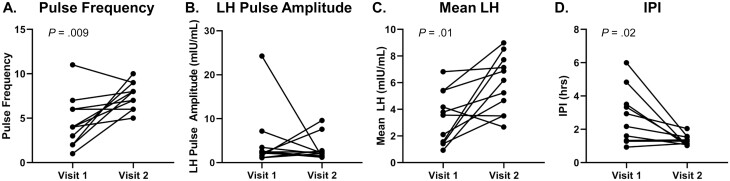
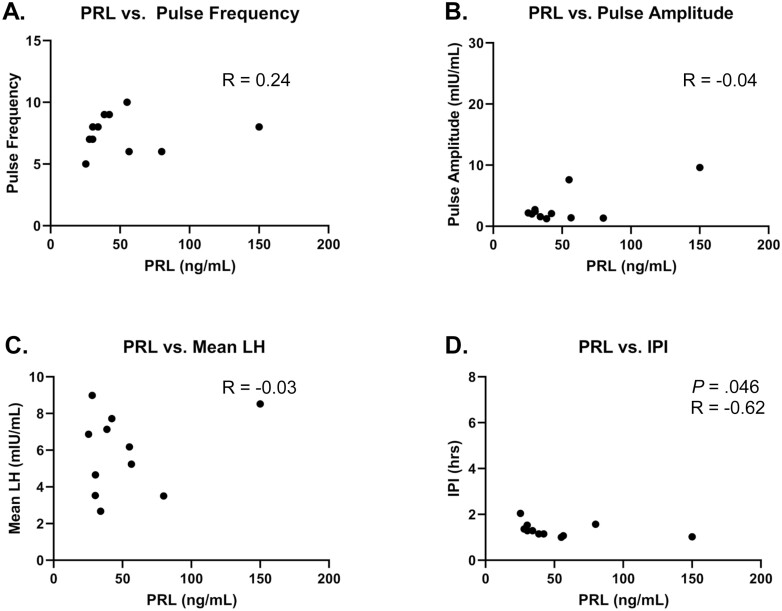
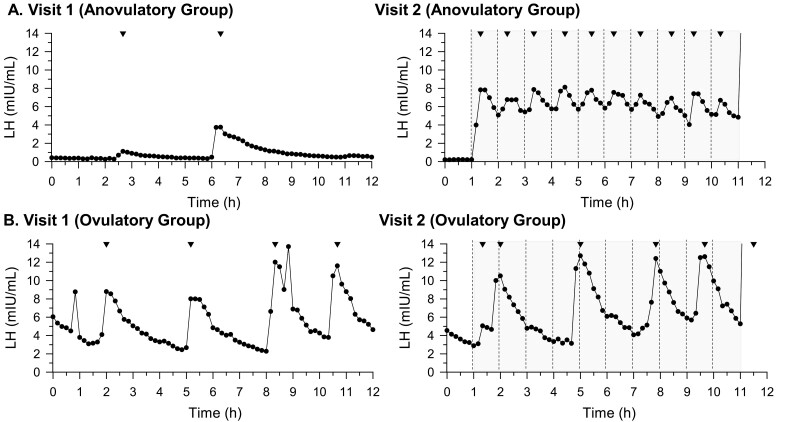
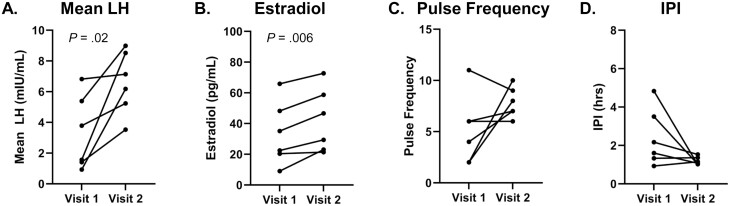
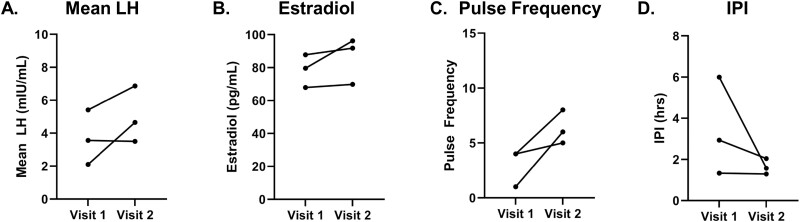
- Repetitive IV kisspeptin increased LH pulse number (visit 1: 4.5 ± 0.9 pulses vs visit 2: 7.5 ± 0.5 pulses; P = .009) and decreased interpulse interval (visit 1: 2.7 ± 0.5 h vs visit 2: 1.3 ± 0.1 h; P = .02).
- Mean LH rose during kisspeptin administration (visit 1: 3.32 ± 0.60 mIU/mL vs visit 2: 5.91 ± 0.65 mIU/mL; P = .01), while LH pulse amplitude did not change significantly (visit 1: 4.60 ± 2.03 mIU/mL vs visit 2 first kisspeptin bolus: 3.11 ± 0.84 mIU/mL; P = .8).
- A total of 73% of subjects exhibited an LH pulse within 30 minutes of the first kisspeptin dose; all participants had robust LH responses to exogenous GnRH.
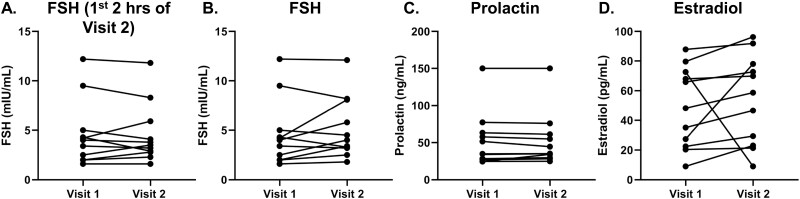
- In the anovulatory subset (n = 6), mean LH increased (visit 1: 3.32 ± 0.99 mIU/mL vs visit 2: 6.60 ± 0.84 mIU/mL; P = .02) and estradiol increased (visit 1: 33.5 ± 8.5 pg/mL vs visit 2: 42.0 ± 8.5 pg/mL; P = .006); FSH and prolactin did not change significantly across visits in the entire cohort.
Methods
- Eleven women with hyperprolactinemia completed two 12-hour frequent-sampling visits; participants underwent dopamine agonist (≥ 2 weeks) and/or combined oral contraceptive (≥ 8 weeks) washout before visits.
- Visit 1 was baseline; during visit 2, kisspeptin 112–121 (0.24 nmol/kg) was given as an IV bolus hourly from hour 1 to hour 10, followed by one IV bolus of GnRH (75 ng/kg) at hour 11. Blood was sampled every 10 minutes.
- LH pulses were identified using a modification of Santen and Bardin criteria; analyses used paired two-tailed t-tests or Wilcoxon matched-pairs signed rank tests, with subset analyses of anovulatory and ovulatory groups performed without correction.
Limitations
- Stated: repeated neuroendocrine assessments were not possible, particularly once patients achieved hyperprolactinemia off dopamine agonist therapy; studies could not be anchored to the early follicular phase; 2 of 11 patients (18%) had discordant progesterone levels between admissions, so not all had the same sex hormone milieu across visits.
- Stated: subset analyses of anovulatory and ovulatory groups were performed without correction because the authors considered them distinct scientific questions rather than multiple comparisons.
- Evident: the sample was small (n = 11; anovulatory subset n = 6, ovulatory subset n = 3), there was no placebo/control arm, and the sampling window was limited to 12 hours.
Model-written summary. Check it against the paper before relying on it.
Integrity signals
Registry
Cites
Statistics
Figures
Verification
Claims the paper makes
12 Valid · 1 Not valid · 9 Not checked · 78 Own results and interpretations
Some cited sources support this claim and some don’t — read each source’s verdict below.
In the paper
“Repetitive bolus administration of kisspeptin at a physiologic dose (30, 32) and at a frequency of 1 bolus/hour increased mean LH levels and LH pulse frequency in the entire cohort (n = 11) of hyperprolactinemic women.”
§ Kisspeptin Overcomes GnRH Neuronal Suppression Secondary to Hyperprolactinemia in Humans > Discussion
What the sources say
- Disputedcites [30] Chan YM, Butler JP, Pinnell NE, et al Kisspeptin resets the hypothalamic GnRH clock in men. J Clin Endocrinol Metab. 2011; 96(6): E908- E915. 21470997 PMC3100758 sourceExperimental — accuracy not yet measured
Our copy of Chan et al. (2011) is a study of thirteen healthy adult men who received a SINGLE iv bolus of kisspeptin 112-121 (0.24 nmol/kg) at the 6-h time point of one 12-h frequent-sampling session (Abstract; 'Kisspeptin administration and frequent blood sampling'; 'Kisspeptin immediately induces a single, large LH pulse in men'). Nothing in it involves hyperprolactinemic women, an n = 11 cohort, repetitive 1-bolus/hour dosing, or a rise in LH pulse frequency across such a cohort; its LH findings are pulse amplitude/AUC increases after one bolus in men, with LH returning to baseline by 4 h. The Discussion also notes the dose was taken from another work (ref. 14) and produced responses 'ranged from physiological to supraphysiological', so the 'physiologic dose' framing is likewise not this paper's conclusion. No hyperprolactinemia study is named in our copy, so the true source cannot be identified from it. (LLM, conf=0.80)
Checked by a reasoning model — may be wrong.
- Partly supportedcites [32] Chan YM, Butler JP, Sidhoum VF, Pinnell NE, Seminara SB. Kisspeptin administration to women: a window into endogenous kisspeptin secretion and GnRH responsiveness across the menstrual cycle. J Clin Endocrinol Metab. 2012; 97(8): E1458- E1467. 22577171 PMC3410261 sourceExperimental — accuracy not yet measured
The Methods report a single kisspeptin bolus in healthy women, and the early-follicular Results report increased mean LH afterward. The cited paper does not establish the claimed effect of hourly boluses on LH pulse frequency in 11 hyperprolactinemic women, nor does the identified passage describe the dose as physiologic. (LLM, conf=0.88)
plainstates a causen = 11- Asserted: passes — The authors put it forward as true.
- Checkable: passes — It can be checked against evidence.
- Load-bearing: passes — The paper’s conclusions depend on it.
- Based: passes — The paper gives a reason why it holds.
- Disputed
Every source the paper cites for this claim was checked and supports it.
In the paper
“Moreover, the mean LH amplitude in response to the first kisspeptin IVB in hyperprolactinemic women was comparable to that observed in normoprolactinemic female volunteers in the midluteal phase (32).”
§ Kisspeptin Overcomes GnRH Neuronal Suppression Secondary to Hyperprolactinemia in Humans > Discussion
What the sources say
- Supportedcites [32] Chan YM, Butler JP, Sidhoum VF, Pinnell NE, Seminara SB. Kisspeptin administration to women: a window into endogenous kisspeptin secretion and GnRH responsiveness across the menstrual cycle. J Clin Endocrinol Metab. 2012; 97(8): E1458- E1467. 22577171 PMC3410261 source
The Results section ('Responses in the midluteal phase'; page unavailable) reports an immediate LH pulse after IV kisspeptin in all 14 midluteal-phase women, with mean LH rising from 3.39 to 7.13 mIU/mL. This supports the reference response used in the citing authors’ comparison; the comparison with their hyperprolactinemic group is their own, not a finding attributed to this source. (LLM, conf=0.86)
plain- Asserted: passes — The authors put it forward as true.
- Checkable: passes — It can be checked against evidence.
- Load-bearing: passes — The paper’s conclusions depend on it.
- Based: passes — The paper gives a reason why it holds.
- Supported
Every source the paper cites for this claim was checked and supports it.
In the paper
“This value is comparable to the estradiol levels observed in healthy volunteers in the early follicular phase of the menstrual cycle undergoing a similar protocol (35 ± 3 pg/mL) (32).”
§ Kisspeptin Overcomes GnRH Neuronal Suppression Secondary to Hyperprolactinemia in Humans > Discussion
What the sources say
- Supportedcites [32] Chan YM, Butler JP, Sidhoum VF, Pinnell NE, Seminara SB. Kisspeptin administration to women: a window into endogenous kisspeptin secretion and GnRH responsiveness across the menstrual cycle. J Clin Endocrinol Metab. 2012; 97(8): E1458- E1467. 22577171 PMC3410261 source
Table 2 reports estradiol of 35 ± 3 pg/mL in the early-follicular group before kisspeptin administration. The Subject characteristics section identifies the participants as healthy adult women studied with frequent blood sampling and a kisspeptin bolus. No page number is available in our copy. (LLM, conf=0.94)
plain- Asserted: passes — The authors put it forward as true.
- Checkable: passes — It can be checked against evidence.
- Load-bearing: passes — The paper’s conclusions depend on it.
- Based: passes — The paper gives a reason why it holds.
- Supported
Every source the paper cites for this claim was checked and supports it.
In the paper
“This stands in contrast to patients with idiopathic hypogonadotropic hypogonadism (IHH), in which the same weight-based dose of IV kisspeptin failed to stimulate an LH response (37).”
- Also stated in: § Discussion · hedged
“These observations differ from those observed in individuals with congenital hypogonadotropic hypogonadism, who, by and large, are unable to respond to the same weight-based dose of kisspeptin.”
§ Kisspeptin Overcomes GnRH Neuronal Suppression Secondary to Hyperprolactinemia in Humans > Discussion
What the sources say
- Supportedcites [37] Chan YM, Lippincott MF, Butler JP, et al Exogenous kisspeptin administration as a probe of GnRH neuronal function in patients with idiopathic hypogonadotropic hypogonadism. J Clin Endocrinol Metab. 2014; 99(12): E2762- E2771. 25226293 PMC4255107 source
The Results report that no subject with abiding IHH had an LH pulse after a weight-based IV kisspeptin bolus of 0.24 nmol/kg; the same dose produced an LH pulse in healthy men. The paper notes an exception: one patient whose IHH had reversed responded to kisspeptin. (LLM, conf=0.94)
plain- Asserted: passes — The authors put it forward as true.
- Checkable: passes — It can be checked against evidence.
- Load-bearing: passes — The paper’s conclusions depend on it.
- Based: passes — The paper gives a reason why it holds.
- Also stated in: § Discussion · hedged
A result the paper reports from its own data — it cites no other source for it, so there is none to check. The quote shows it is in the paper.
In the paper
“All participants exhibited robust LH responses to a single bolus of exogenous GnRH, demonstrating normal pituitary gonadotroph function (Fig. 5).”
§ Kisspeptin Overcomes GnRH Neuronal Suppression Secondary to Hyperprolactinemia in Humans > Results > Response to Exogenous Gonadotropin-releasing Hormone
boostedstates a cause- Asserted: passes — The authors put it forward as true.
- Checkable: passes — It can be checked against evidence.
- Load-bearing: passes — The paper’s conclusions depend on it.
- Based: passes — The paper gives a reason why it holds.
46 more claims
Create a free account to see all 100 claims and to verify the 1 reference still open.
- It may state two separate claims as one. 22
- Probably not a substantial claim. 41
- The quote only partly states this claim. 1
Self-check
Percentages, sums and reported differences re-computed from the paper’s own numbers.
Each contradiction between two passages listed here was confirmed by an independent check.
Rated minor: it would not touch a result — a value no result rests on, a p-value that stays on the same side of the significance level, or a conflict that is clerical, resolved elsewhere in the paper, or outside its own findings.
In the paper
§ Kisspeptin Overcomes GnRH Neuronal Suppression Secondary to Hyperprolactinemia in Humans > Materials and Methods > Laboratory Assays
“Estradiol assays were determined using liquid chromatography–mass spectrometry (LC/MS, limit of detection: 1 ng/mL, in-house methods) by the Brigham Research Assay Core (BRAC).”
§ Kisspeptin Overcomes GnRH Neuronal Suppression Secondary to Hyperprolactinemia in Humans > Results > Neuroendocrine Profile of Study Cohort at Baseline (Visit 1)
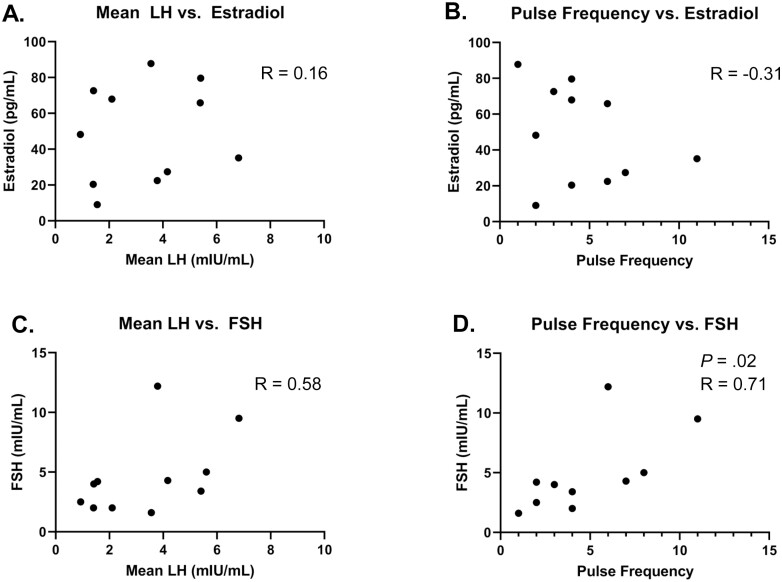
“During the baseline frequent sampling period (“visit 1”), the mean estradiol levels of individual patients ranged from 9 to 87.8 pg/mL.”
Rated minor: it would not touch a result — a value no result rests on, a p-value that stays on the same side of the significance level, or a conflict that is clerical, resolved elsewhere in the paper, or outside its own findings.
In the paper
§ Kisspeptin Overcomes GnRH Neuronal Suppression Secondary to Hyperprolactinemia in Humans > Results > Characteristics of Participant Cohort at Initial Clinical Presentation With Hyperprolactinemia
“all 11 participants were found to have a pituitary lesion smaller than 10 mm (mean of largest dimension: 4.4 ± 0.8 mm; ranging from no discrete mass to 8 mm), consistent with a microadenoma (Tables 1 and 2).”
§ Kisspeptin Overcomes GnRH Neuronal Suppression Secondary to Hyperprolactinemia in Humans > Discussion
“Brain magnetic resonance imaging scans revealed either pituitary microadenomas (< 10 mm) or normal pituitary glands without any visible lesion.”
Rated minor: it would not touch a result — a value no result rests on, a p-value that stays on the same side of the significance level, or a conflict that is clerical, resolved elsewhere in the paper, or outside its own findings.
In the paper
§ Kisspeptin Overcomes GnRH Neuronal Suppression Secondary to Hyperprolactinemia in Humans > Materials and Methods > Dopamine Agonist and Oral Contraceptive Pill Washout
“Before admission to the Translational Clinical Research Center, if necessary, eligible individuals underwent DA (≥ 2 weeks) and combined oral contraceptive (COC; ≥ 8 weeks) washout.”
§ Kisspeptin Overcomes GnRH Neuronal Suppression Secondary to Hyperprolactinemia in Humans > Results > Characteristics of Participant Cohort at Initial Clinical Presentation With Hyperprolactinemia
“| 2 | 38 | 7.7b | n/a | 61.2 | 24.6 | 34.3 | 0.20 | 11.3 |”
Citations
Cites
The GPR54 Gene as a Regulator of Puberty
Seminara, S. B., Messager, S., Chatzidaki, E. E., Thresher, R. R., Acierno, J. S., Shagoury, J. K., Bo-Abbas, Y., Kuohung, W., Schwinof, K. M., Hendrick, A. G., et al. (2003) · New England Journal of Medicine · doi:10.1056/nejmoa035322 · Cited by 2,557
Self-citationHypogonadotropic hypogonadism due to loss of function of the KiSS1-derived peptide receptor GPR54
de Roux, N., Genin, E., Carel, J.-C., Matsuda, F., Chaussain, J.-L., & Milgrom, E. (2003) · Proceedings of the National Academy of Sciences · doi:10.1073/pnas.1834399100 · Cited by 2,431
Dynamics of gonadotropin-releasing hormone release during a pulse.
Moenter, S. M., Brand, R. M., Midgley, A. R., & Karsch, F. J. (1992) · Endocrinology · doi:10.1210/endo.130.1.1727719 · Cited by 1,244
A role for kisspeptins in the regulation of gonadotropin secretion in the mouse
Gottsch, M. L., Cunningham, M. J., Smith, J. T., Popa, S. M., Acohido, B. V., Crowley, W. F., Seminara, S., Clifton, D. K., & Steiner, R. A. (2004) · Endocrinology · doi:10.1210/en.2004-0431 · Cited by 1,161
Self-citationIncreased hypothalamic GPR54 signaling: A potential mechanism for initiation of puberty in primates
Shahab, M., Mastronardi, C., Seminara, S. B., Crowley, W. F., Ojeda, S. R., & Plant, T. M. (2005) · Proceedings of the National Academy of Sciences · doi:10.1073/pnas.0409822102 · Cited by 876
Self-citationSanten, R. J., & Bardin, C. W. (1973) · Journal of Clinical Investigation · doi:10.1172/jci107454 · Cited by 706
Kisspeptin-54 stimulates the hypothalamic-pituitary gonadal axis in human males
Dhillo, W. S., Chaudhri, O. B., Patterson, M., Thompson, E. L., Murphy, K. G., Badman, M. K., McGowan, B. M., Amber, V., Patel, S., Ghatei, M. A., et al. (2005) · The Journal of Clinical Endocrinology & Metabolism · doi:10.1210/jc.2005-1468 · Cited by 656
Peripheral administration of metastin induces marked gonadotropin release and ovulation in the rat
Matsui, H., Takatsu, Y., Kumano, S., Matsumoto, H., & Ohtaki, T. (2004) · Biochemical and Biophysical Research Communications · doi:10.1016/j.bbrc.2004.05.185 · Cited by 520
Kinoshita, M., Tsukamura, H., Adachi, S., Matsui, H., Uenoyama, Y., Iwata, K., Yamada, S., Inoue, K., Ohtaki, T., Matsumoto, H., et al. (2005) · Endocrinology · doi:10.1210/en.2005-0195 · Cited by 507
FILICORI, M., SANTORO, N., MERRIAM, G. R., & CROWLEY, W. F. (1986) · The Journal of Clinical Endocrinology & Metabolism · doi:10.1210/jcem-62-6-1136 · Cited by 489
Pituitary Disease in MEN Type 1 (MEN1): Data from the France-Belgium MEN1 Multicenter Study
Vergès, B., Boureille, F., Goudet, P., Murat, A., Beckers, A., Sassolas, G., Cougard, P., Chambe, B., Montvernay, C., & Calender, A. (2002) · The Journal of Clinical Endocrinology & Metabolism · doi:10.1210/jcem.87.2.8145 · Cited by 483
Inactivating KISS1 Mutation and Hypogonadotropic Hypogonadism
Topaloglu, A. K., Tello, J. A., Kotan, L. D., Ozbek, M. N., Yilmaz, M. B., Erdogan, S., Gurbuz, F., Temiz, F., Millar, R. P., & Yuksel, B. (2012) · New England Journal of Medicine · doi:10.1056/nejmoa1111184 · Cited by 467
Navarro, V. M., Castellano, J. M., Fernández-Fernández, R., Tovar, S., Roa, J., Mayen, A., Nogueiras, R., Vazquez, M. J., Barreiro, M. L., Magni, P., et al. (2005) · Endocrinology · doi:10.1210/en.2004-0836 · Cited by 449
Definition of the hypothalamic GnRH pulse generator in mice
Clarkson, J., Han, S. Y., Piet, R., McLennan, T., Kane, G. M., Ng, J., Porteous, R. W., Kim, J. S., Colledge, W. H., Iremonger, K. J., et al. (2017) · Proceedings of the National Academy of Sciences · doi:10.1073/pnas.1713897114 · Cited by 392
Roseweir, A. K., Kauffman, A. S., Smith, J. T., Guerriero, K. A., Morgan, K., Pielecka-Fortuna, J., Pineda, R., Gottsch, M. L., Tena-Sempere, M., Moenter, S. M., et al. (2009) · The Journal of Neuroscience · doi:10.1523/jneurosci.5740-08.2009 · Cited by 379
Caraty, A., Smith, J. T., Lomet, D., Ben Saïd, S., Morrissey, A., Cognie, J., Doughton, B., Baril, G., Briant, C., & Clarke, I. J. (2007) · Endocrinology · doi:10.1210/en.2007-0554 · Cited by 313
Clinical spectrum of impulse control disorders in Parkinson’s disease
Weintraub, D., David, A. S., Evans, A. H., Grant, J. E., & Stacy, M. (2015) · Movement Disorders · doi:10.1002/mds.26016 · Cited by 311
Keen, K. L., Wegner, F. H., Bloom, S. R., Ghatei, M. A., & Terasawa, E. (2008) · Endocrinology · doi:10.1210/en.2008-0231 · Cited by 273
Prolactinomas resistant to standard doses of cabergoline: a multicenter study of 92 patients
Vroonen, L., Jaffrain-Rea, M.-L., Petrossians, P., Tamagno, G., Chanson, P., Vilar, L., Borson-Chazot, F., Naves, L. A., Brue, T., Gatta, B., et al. (2012) · European Journal of Endocrinology · doi:10.1530/eje-12-0236 · Cited by 209
Hyperprolactinemia-induced ovarian acyclicity is reversed by kisspeptin administration
Sonigo, C., Bouilly, J., Carré, N., Tolle, V., Caraty, A., Tello, J., Simony-Conesa, F.-J., Millar, R., Young, J., & Binart, N. (2012) · Journal of Clinical Investigation · doi:10.1172/jci63937 · Cited by 197
Pharmacologic Resistance in Prolactinoma Patients
Molitch, M. E. (2005) · Pituitary · doi:10.1007/s11102-005-5085-2 · Cited by 194
Delgrange, E., Daems, T., Verhelst, J., Abs, R., & Maiter, D. (2009) · European Journal of Endocrinology · doi:10.1530/eje-09-0012 · Cited by 194
SPRATT, D. I., CARR, D. B., MERRIAM, G. R., SCULLY, R. E., RAO, P. N., & CROWLEY, W. F. (1987) · The Journal of Clinical Endocrinology & Metabolism · doi:10.1210/jcem-64-2-283 · Cited by 153
Grattan, D. R., Jasoni, C. L., Liu, X., Anderson, G. M., & Herbison, A. E. (2007) · Endocrinology · doi:10.1210/en.2007-0403 · Cited by 145
Kokay, I. C., Petersen, S. L., & Grattan, D. R. (2011) · Endocrinology · doi:10.1210/en.2010-0668 · Cited by 131
Yang, B., Jiang, Q., Chan, T., Ko, W. K. W., & Wong, A. O. L. (2010) · General and Comparative Endocrinology · doi:10.1016/j.ygcen.2009.06.001 · Cited by 126
Araujo-Lopes, R., Crampton, J. R., Aquino, N. S. S., Miranda, R. M., Kokay, I. C., Reis, A. M., Franci, C. R., Grattan, D. R., & Szawka, R. E. (2014) · Endocrinology · doi:10.1210/en.2013-1889 · Cited by 119
Kisspeptin resets the hypothalamic GnRH clock in men
Chan, Y.-M., Butler, J. P., Pinnell, N. E., Pralong, F. P., Crowley, W. F., Ren, C., Chan, K. K., & Seminara, S. B. (2011) · The Journal of Clinical Endocrinology & Metabolism · doi:10.1210/jc.2010-3046 · Cited by 114
Self-citationChan, Y.-M., Butler, J. P., Sidhoum, V. F., Pinnell, N. E., & Seminara, S. B. (2012) · The Journal of Clinical Endocrinology & Metabolism · doi:10.1210/jc.2012-1282 · Cited by 100
Kisspeptin regulates prolactin release through hypothalamic dopaminergic neurons
Szawka, R. E., Ribeiro, A. B., Leite, C. M., Helena, C. V. V., Franci, C. R., Anderson, G. M., Hoffman, G. E., & Anselmo-Franci, J. A. (2010) · Endocrinology · doi:10.1210/en.2009-1414 · Cited by 97
Kadokawa, H., Suzuki, S., & Hashizume, T. (2008) · Animal Reproduction Science · doi:10.1016/j.anireprosci.2007.11.005 · Cited by 91
Brown, R. S. E., Piet, R., Herbison, A. E., & Grattan, D. R. (2012) · Endocrinology · doi:10.1210/en.2011-2005 · Cited by 91
Millar, R. P., Sonigo, C., Anderson, R. A., George, J. T., Maione, L., Brailly‐Tabard, S., Chanson, P., Binart, N., & Young, J. (2017) · Journal of the Endocrine Society · doi:10.1210/js.2017-00328 · Cited by 68
Matsuzaki, T., Azuma, K., Irahara, M., Yasui, T., & Aono, T. (1994) · Fertility and Sterility · doi:10.1016/s0015-0282(16)57176-3 · Cited by 66
Brown, R. S. E., Khant Aung, Z., Phillipps, H. R., Barad, Z., Lein, H.-J., Boehm, U., Szawka, R. E., & Grattan, D. R. (2019) · Endocrinology · doi:10.1210/en.2019-00038 · Cited by 62
Fox, S. R., Hoefer, M. T., Bartke, A., & Smith, M. S. (2008) · Neuroendocrinology · doi:10.1159/000124844 · Cited by 54
Seasonal and cyclical change in the luteinizing hormone response to kisspeptin in the ewe
Smith, J. T., Saleh, S. N. H., & Clarke, I. J. (2009) · Neuroendocrinology · doi:10.1159/000227806 · Cited by 49
On the mechanism of lactational anovulation in the rhesus monkey
Ördög, T., Chen, M.-D., O’Byrne, K. T., Goldsmith, J. R., Connaughton, M. A., Hotchkiss, J., & Knobil, E. (1998) · American Journal of Physiology-Endocrinology and Metabolism · doi:10.1152/ajpendo.1998.274.4.e665 · Cited by 41
Self-citationPOLSON, D. W., SAGLE, M., MASON, H. D., ADAMS, J., JACOBS, H. S., & FRANKS, S. (1986) · Clinical Endocrinology · doi:10.1111/j.1365-2265.1986.tb03282.x · Cited by 40
Chan, Y.-M., Lippincott, M. F., Butler, J. P., Sidhoum, V. F., Li, C. X., Plummer, L., & Seminara, S. B. (2014) · The Journal of Clinical Endocrinology & Metabolism · doi:10.1210/jc.2014-2233 · Cited by 39
Lecomte, P., Lecomte, C., Lansac, J., Gallier, J., Sonier, C. B., & Simonetta, C. (1997) · European Journal of Obstetrics & Gynecology and Reproductive Biology · doi:10.1016/s0301-2115(97)00091-2 · Cited by 35
Jayasena, C. N., Comninos, A. N., Narayanaswamy, S., Bhalla, S., Abbara, A., Ganiyu‐Dada, Z., Busbridge, M., Ghatei, M. A., Bloom, S. R., & Dhillo, W. S. (2014) · Clinical Endocrinology · doi:10.1111/cen.12512 · Cited by 35
Klibanski, A., Beitins, I. Z., Zervas, N. T., McArthur, J. W., & Ridgway, E. C. (1983) · The Journal of Clinical Endocrinology & Metabolism · doi:10.1210/jcem-56-4-774 · Cited by 11
COHEN-BECKER, I. R., SELMANOFF, M., & WISE, P. M. (1986) · Endocrinology · doi:10.1210/endo-119-4-1718 · Cited by 10
Plant, T. M., Ramaswamy, S., Bhat, G. K., Stah, C. D., Pohl, C. R., & Mann, D. R. (2008) · Journal of Neuroendocrinology · doi:10.1111/j.1365-2826.2008.01773.x · Cited by 4
Cited by
The Role of Kisspeptin in the Control of the Hypothalamic-Pituitary-Gonadal Axis and Reproduction
Xie, Q., Kang, Y., Zhang, C., Xie, Y., Wang, C., Liu, J., Yu, C., Zhao, H., & Huang, D. (2022) · Frontiers in Endocrinology · doi:10.3389/fendo.2022.925206 · Cited by 232
Metabolic effects of prolactin and the role of dopamine agonists: A review
Kirsch, P. M., Kunadia, J., Shah, S., & Agrawal, N. (2022) · Frontiers in Endocrinology · doi:10.3389/fendo.2022.1002320 · Cited by 88
“Kisspeptin may be used to stimulate GnRH secretion and restore ovarian function (42, 43).”
BackgroundCurrent Insights in Prolactin Signaling and Ovulatory Function
Szukiewicz, D. (2024) · International Journal of Molecular Sciences · doi:10.3390/ijms25041976 · Cited by 94
“It has been demonstrated that the administration of kisspeptin in hyperprolactinemia induces hypothalamic pulsatile GnRH secretion with subsequent pulsatile LH secretion from the adenohypophysis [326].”
BackgroundKNDy Neurons of the Hypothalamus and Their Role in GnRH Pulse Generation: an Update
Moore, A. M., Novak, A. G., & Lehman, M. N. (2023) · Endocrinology · doi:10.1210/endocr/bqad194 · Cited by 70
The Emerging Therapeutic Potential of Kisspeptin and Neurokinin B
Patel, B., Koysombat, K., Mills, E., Tsoutsouki, J., Comninos, A. N., Abbara, A., & Dhillo, W. S. (2023) · Endocrine Reviews · doi:10.1210/endrev/bnad023 · Cited by 72
Metadata
- Authors
- Hoskova, K., Kayton Bryant, N., Chen, M. E., Nachtigall, L. B., Lippincott, M. F., Balasubramanian, R., & Seminara, S. B.
- Affiliations
- Massachusetts General Hospital (US)
- Reproductive Endocrine Unit, Department of Medicine, Massachusetts General Hospital , Boston, Massachusetts 02114 , USA
- Corresponding author
- Seminara, Stephanie B
- Venue
- The Journal of Clinical Endocrinology & Metabolism
- Publisher
- The Endocrine Society
- Published
- 2022-03-22
- Volume
- 107
- Issue
- 8
- Pages
- e3515-e3525
- ISSN
- 0021-972X (ISSN-L)
- 1945-7197
- PMC
- PMC9282259
- OpenAlex
- W4220668273
- Cited by
- 39
- References
- 45
- Citations by year
- 2026: 7 · 2025: 10 · 2024: 6 · 2023: 11 · 2022: 5
- FWCI
- 6.74
- Type
- journal article
- Language
- en
- Open access
- hybrid
- doi.org
- Licence
- Locations
- The Journal of Clinical Endocrinology & Metabolism (publishedVersion, cc-by-nc-nd)
- PubMed Central (publishedVersion, cc-by-nc-nd)
- PubMed (publishedVersion)
- Funders
- Eunice Kennedy Shriver National Institute of Child Health and Human Development (R37 HD043341-19, K23HD097296-03, P50HD104224-01)
- U.S. Food and Drug Administration (R01 FD005712-04)
- Harvard Catalyst/Harvard Clinical and Translational Science Center (1UL1TR002541-01, 1UL1TR001102)
- Topics
- Health Sciences › Medicine › Reproductive Medicine › Hypothalamic control of reproductive hormones
- Health Sciences › Medicine › Endocrinology, Diabetes and Metabolism › Growth Hormone and Insulin-like Growth Factors
- Life Sciences › Neuroscience › Cellular and Molecular Neuroscience › Neuropeptides and Animal Physiology
- Keywords
- kisspeptin, hyperprolactinemia, gonadotropin-releasing hormone, luteinizing hormone pulsatility, hypothalamic-pituitary-gonadal axis, LH pulse amplitude, interpulse interval, anovulation, estradiol, prolactin
- MeSH terms
- Female, Follicle Stimulating Hormone, Humans, Hyperprolactinemia, Luteinizing Hormone, Gonadotropin-Releasing Hormone, Kisspeptins
About these checks
Registry, retraction, Cites and statistics results are computed, not judged, with one exception: a printed reference that no index lists is read once by a model before it counts as a citation error. Claims are extracted by a model and kept only when their quote appears verbatim in the text; each cited source is then checked, with a model’s help, for whether it says what the claim relies on. Those verdicts can be wrong — read the claim’s quote and the cited source before relying on one.
The claim verdicts this report counts are experimental: their accuracy is not yet measured.
A language model drew the claims from the paper on 2026-10-10, under version 3 of the claim definition (model deepseek-v4.1-flash, prompt extract-v3).
A second model labelled each claim on 2026-10-10 (model jev-1.13-20260917, definition revision gold-guideline-v0.2).
Cited sources are checked with a language model’s help (qwen3.8-omni-flash and gpt-6-sol).
Statistics and arithmetic are recomputed, not judged.
Confidence bands are shown only for fields calibrated on our annotated test set. None is calibrated yet, so no band is shown.
What counts as a claim ›How we measure confidence ›How we check this ›
Are you an author, or do you see a problem with this page? Request a review
Data sources
Bibliographic data: Semantic Scholar, OpenAlex, Crossref.
Contains information from the Semantic Scholar Academic Graph Datasets, made available under the ODC Attribution License (ODC-BY 1.0).
Semantic Scholar’s data is described in: Kinney, R., et al. (2023). The Semantic Scholar Open Data Platform. arXiv:2301.10140.
