

The DOI matches its Crossref record; 24 of the 24 references it cites were found in a registry or an index.
Associations of Cognitive Function Scores with Carbon Dioxide, Ventilation, and Volatile Organic Compound Exposures in Office Workers: A Controlled Exposure Study of Green and Conventional Office Environments
Open accessAbstract
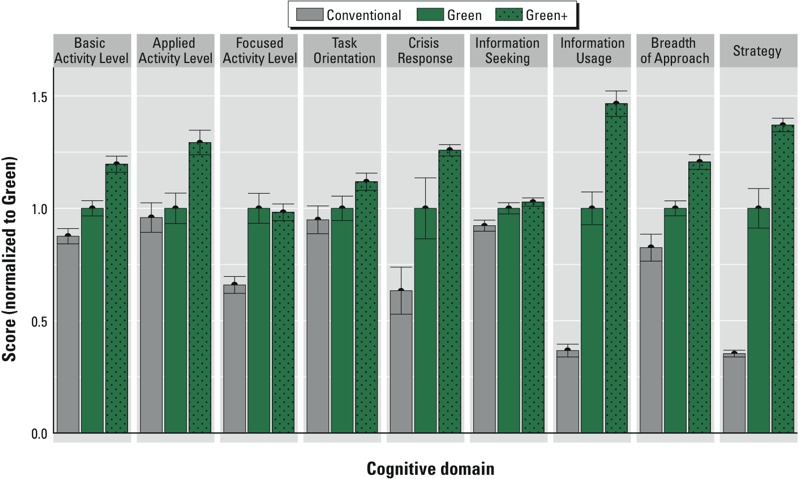
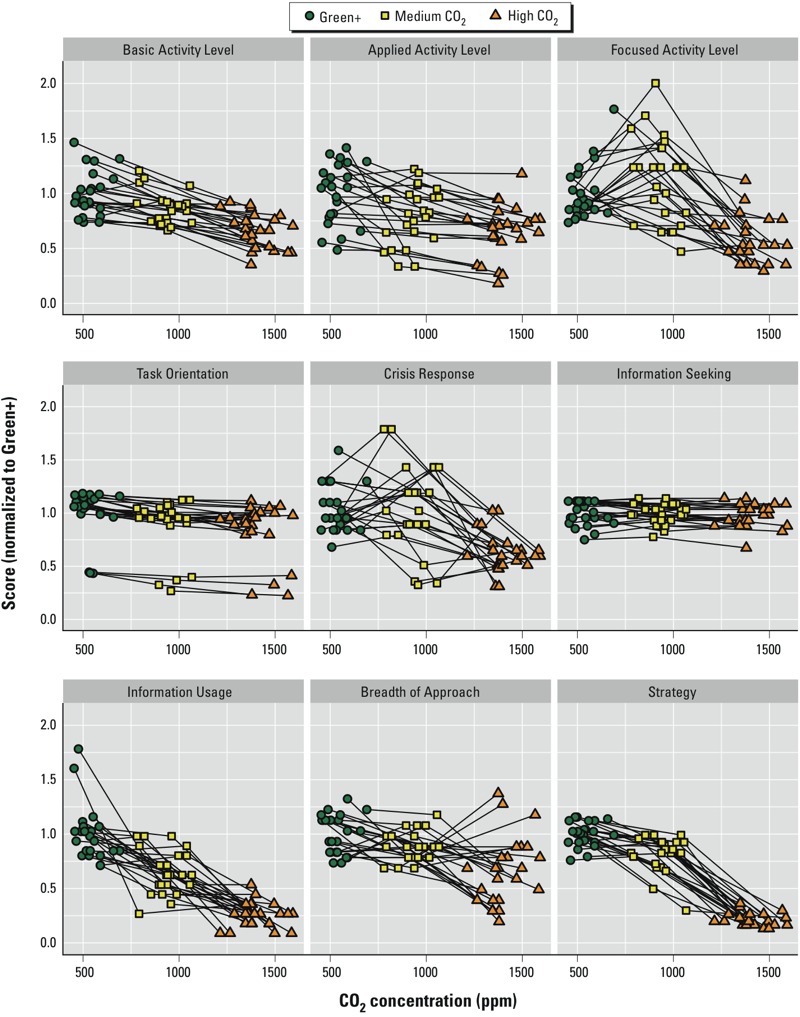
Background: The indoor built environment plays a critical role in our overall well-being because of both the amount of time we spend indoors (~90%) and the ability of buildings to positively or negatively influence our health. The advent of sustainable design or green building strategies reinvigorated questions regarding the specific factors in buildings that lead to optimized conditions for health and productivity. Objective: We simulated indoor environmental quality (IEQ) conditions in “Green” and “Conventional” buildings and evaluated the impacts on an objective measure of human performance: higher-order cognitive function. Methods: Twenty-four participants spent 6 full work days (0900–1700 hours) in an environmentally controlled office space, blinded to test conditions. On different days, they were exposed to IEQ conditions representative of Conventional [high concentrations of volatile organic compounds (VOCs)] and Green (low concentrations of VOCs) office buildings in the United States. Additional conditions simulated a Green building with a high outdoor air ventilation rate (labeled Green+) and artificially elevated carbon dioxide (CO2) levels independent of ventilation. Results: On average, cognitive scores were 61% higher on the Green building day and 101% higher on the two Green+ building days than on the Conventional building day (p < 0.0001). VOCs and CO2 were independently associated with cognitive scores. Conclusions: Cognitive function scores were significantly better under Green+ building conditions than in the Conventional building conditions for all nine functional domains. These findings have wide-ranging implications because this study was designed to reflect conditions that are commonly encountered every day in many indoor environments. Citation: Allen JG, MacNaughton P, Satish U, Santanam S, Vallarino J, Spengler JD. 2016. Associations of cognitive function scores with carbon dioxide, ventilation, and volatile organic compound exposures in office workers: a controlled exposure study of green and conventional office environments. Environ Health Perspect 124:805–812; http://dx.doi.org/10.1289/ehp.1510037
Overview
The claims and statistics of this paper haven’t been checked yet.
Run the check — free, no account needed. It reads the open-access text and checks the sources it cites.
Integrity signals
Registry
Cites
Statistics
Figures
Verification
Claims the paper makes
The claims and statistics of this paper haven’t been checked yet.
Run the check — free, no account needed. It reads the open-access text and checks the sources it cites.
Claims other papers make about this one
Each is checked against this paper’s own text: does it say what the citing paper says it does?
The cited source says what the claim attributes to it.
In the citing paper
“Low ventilation rates and CO2 concentrations normally found in office buildings (approximately 1,000 ppm) have been recently associated with impairment in multiple domains of high-order cognitive function [45,46].”
From Reduced cognitive function during a heat wave among residents of non-air-conditioned buildings: An observational study of young adults in the summer of 2016 (2018) · cites this paper as [46]
Self-check
Percentages, sums and reported differences re-computed from the paper’s own numbers.
The self-check needs the paper’s full text.
Citations
Cites
Ventilation for Acceptable Indoor Air Quality
Falih, M. (2019) · Cited by 2,497
Satish, U., Mendell, M. J., Shekhar, K., Hotchi, T., Sullivan, D., Streufert, S., & Fisk, W. J. (2012) · Environmental Health Perspectives · doi:10.1289/ehp.1104789 · Cited by 1,064 · cited 4×
“However, this conventional thinking is being challenged as the evidence mounts for CO2 as a direct pollutant, not just a marker for other pollutants (Satish et al. 2012).”
BackgroundMethodInfluentialSelf-citationWargocki, P. L., Wyon, D. P., Sundell, J., Clausen, G., & Fanger, P. O. (2000) · Indoor Air · doi:10.1034/j.1600-0668.2000.010004222.x · Cited by 693 · cited 1×
“…building factors, such as ventilation rate; workspace factors, such as the presence of chemical-emitting materials; and personal factors, such as job stress, allergies, and sex (Mendell 1993; Wargocki et al. 2000; Bornehag et al. 2005; Hedge 2009; Hedge and Gaygen 2010; Nishihara et al. 2014).”
Estimates of Improved Productivity and Health from Better Indoor Environments
Fisk, W. J., & Rosenfeld, A. H. (1997) · Indoor Air · doi:10.1111/j.1600-0668.1997.t01-1-00002.x · Cited by 551
Associations between classroom CO2 concentrations and student attendance in Washington and Idaho
Shendell, D. G., Prill, R., Fisk, W. J., Apte, M. G., Blake, D., & Faulkner, D. (2004) · Indoor Air · doi:10.1111/j.1600-0668.2004.00251.x · Cited by 462 · cited 1×
“Corsi et al. (2002) reported CO 2 concentrations > 1,000 ppm in 66% of 120 classrooms in Texas, and Shendell et al. (2004) measured CO 2 concentrations > 1,000 ppm in 45% of 435 classrooms in Washington and Idaho and reported that elevated CO 2 concentrations were associated with increases in…”
BackgroundEffects of Green Buildings on Employee Health and Productivity
Singh, A., Syal, M., Grady, S. C., & Korkmaz, S. (2010) · American Journal of Public Health · doi:10.2105/ajph.2009.180687 · Cited by 320
Non-Specific Symptoms In Office Workers: A Review And Summary Of The Epidemiologic Literature
Mendell, M. J. (1993) · Indoor Air · doi:10.1111/j.1600-0668.1993.00003.x · Cited by 282
Allen, J. G., MacNaughton, P., Laurent, J. G. C., Flanigan, S. S., Eitland, E. S., & Spengler, J. D. (2015) · Current Environmental Health Reports · doi:10.1007/s40572-015-0063-y · Cited by 281 · cited 1×
“To date, we know of no studies that have been conducted in green buildings where participants were blinded to their building condition (Allen et al. 2015).”
Self-citationPersily, A. (2015) · Building and Environment · doi:10.1016/j.buildenv.2015.02.026 · Cited by 249 · cited 2×
“The > 100-year story of ventilation in buildings is complicated and was neatly summarized recently by Persily (2015).”
Hodgson, A. T., Rudd, A., Beal, D., & Chandra, S. (2000) · Indoor Air · doi:10.1034/j.1600-0668.2000.010003178.x · Cited by 240
Research works printed but not linked: 4
- ACGIH (American Conference of Governmental Industrial Hygienists), 2015, 2015 Guide to Occupational Exposure Values.
- Breuer K, Satish U, 2003, Emergency management simulations: an approach to the assessment of decision-making processes in complex dynamic crisis environments., 145
- Corsi RL, Torres VM, Sanders M, Kinney KA, 2002, Carbon dioxide levels and dynamics in elementary schools: results from the TESIAS study., 74
- Swezey, 1998, Preliminary development of a computer-based team performance assessment simulation., Int J Cogn Ergonomics, 2, 163
Cited by
Sorted by citations
Items 201–300 of 976
Personal CO2 bubble: Context-dependent variations and wearable sensors usability
Ghahramani, A., Pantelic, J., Vannucci, M., Pistore, L., Liu, S., Gilligan, B., Alyasin, S. S., Arens, E. A., Kampshire, K., & STERNBERG, E. M. (2018) · Journal of Building Engineering · doi:10.1016/j.jobe.2018.11.015 · Cited by 33
“Their results show that a 400 ppm increase in CO2 is associated with a 21% decrease in a typical participant’s cognitive scores across a variety of tests [11].”
Moving to productivity: The benefits of healthy buildings
Palacios, J., Eichholtz, P. M. A., & Kok, N. (2020) · PLoS ONE · doi:10.1371/journal.pone.0236029 · Cited by 32
Masri, S., Miller, C. S., Palmer, R. F., & Ashford, N. A. (2021) · Environmental Sciences Europe · doi:10.1186/s12302-021-00504-z · Cited by 30
Davey, A. K., Gao, X., Xia, Y., Li, Z., Dods, M. N., DelaCruz, S., Pan, A., Swamy, S., Gardner, D. W., Carraro, C., et al. (2021) · Sensors and Actuators B Chemical · doi:10.1016/j.snb.2021.130313 · Cited by 33
Guo, P., Lin, E. Z., Koelmel, J. P., Ding, E., Gao, Y., Deng, F., Dong, H., Liu, Y., Cha, Y., Fang, J., et al. (2021) · Environment International · doi:10.1016/j.envint.2021.106709 · Cited by 33
Zhang, X., Zhang, Y., Wang, J., Liu, S., Liang, Z., Hussain, S., Wang, M., Liu, G., & Qiao, G. (2023) · Sensors and Actuators A Physical · doi:10.1016/j.sna.2023.114590 · Cited by 33
Awada, M., Becerik-Gerber, B., Lucas, G., & Roll, S. C. (2021) · ASME Journal of Engineering for Sustainable Buildings and Cities · doi:10.1115/1.4052822 · Cited by 34
Hattori, S., Iwamatsu, T., Miura, T., Tsutsumi, F., & Tanaka, N. (2022) · Sensors · doi:10.3390/s22197331 · Cited by 32
Pantelic, J., Rysanek, A., Miller, C. C., Peng, Y., Teitelbaum, E., Meggers, F., & Schlueter, A. (2017) · Building and Environment · doi:10.1016/j.buildenv.2017.11.026 · Cited by 32
Cao, X., Li, P., Zhang, J., & Pang, L. (2022) · Atmosphere · doi:10.3390/atmos13060891 · Cited by 36
“using the open-source statistical package R version 3.6.1 (R Project for Statistical Generalized additive mixed effect model (GAMM) analyses [8–11, 13 the fixed intercepts; β 2 and β 3 are the fixed effects of medium CO 2 and high CO 2 compared to low CO 2 , respectively; 3 fixed effect of high CO 2…”
InfluentialRossi, A., Fabbri, B., Spagnoli, E., Gaiardo, A., Valt, M., Ferroni, M., Ardit, M., Krik, S., Pedrielli, A., Vanzetti, L., et al. (2023) · ACS Applied Materials & Interfaces · doi:10.1021/acsami.3c04789 · Cited by 31
Basner, M., Nasrini, J., Hermosillo, E., McGuire, S., Dinges, D. F., Moore, T. M., Gur, R. C., Rittweger, J., Mulder, E. R., Wittkowski, M., et al. (2018) · Journal of Applied Physiology · doi:10.1152/japplphysiol.00855.2017 · Cited by 29
Coleman, J. R., & Meggers, F. (2018) · Frontiers in Built Environment · doi:10.3389/fbuil.2018.00028 · Cited by 31
Huangfu, Y., Lima, N. M., O'Keeffe, P. T., Kirk, W. M., Lamb, B., Pressley, S. N., Lin, B., Cook, D. J., Walden, V. P., & Jobson, B. T. (2019) · Building and Environment · doi:10.1016/j.buildenv.2019.05.031 · Cited by 34
Comparing energy and comfort metrics for building benchmarking
Guillén, E. E., Samuelson, H. W., & Laurent, J. G. C. (2019) · Energy and Buildings · doi:10.1016/j.enbuild.2019.109539 · Cited by 31
“These were all selected and adapted from thresholds used in literature [6,50], international standards [28,51], and voluntary rating systems [52,53].”
BackgroundMethodConstantinides, M., Šćepanović, S., Quercia, D., Li, H., Sassi, U., & Eggleston, M. (2020) · Proceedings of the ACM on Interactive Mobile Wearable and Ubiquitous Technologies · doi:10.1145/3432234 · Cited by 32
“A prolonged exposure to poor indoor environmental conditions has been found to impact people’s health [73], cognitive functions [6] and decision-making [45], and eventually lead to increased levels of absenteeism [28, 71, 78].”
BackgroundResultInfluentialWu, J., Weng, J., Xia, B., Zhao, Y., & Song, Q. (2021) · International Journal of Environmental Research and Public Health · doi:10.3390/ijerph18084109 · Cited by 31
“(2016) found that cognitive performance is much better in green buildings than in conventional buildings and that high concentrations of VOCs and CO2 have a negative impact on work productivity [28].”
BackgroundInfluentialVolatile Organic Compounds Emission from Building Sector and Its Adverse Effects on Human Health
Rouf, Z., Dar, I. Y., Javaid, M., Dar, M. Y., & Jehangir, A. (2021) · Springer eBooks · doi:10.1007/978-3-030-76073-1_5 · Cited by 31
Experimental and numerical investigations of a new ventilation supply device based on confluent jets
Andersson, H., Cehlin, M., & Moshfegh, B. (2018) · Building and Environment · doi:10.1016/j.buildenv.2018.03.038 · Cited by 31
Human responses to high levels of carbon dioxide and air temperature
Tu, Z., Li, Y., Geng, S., Zhou, K., Wang, R., & Dong, X. M. (2020) · Indoor Air · doi:10.1111/ina.12769 · Cited by 30
Ahmed, R., Mumovic, D., Bagkeris, E., & Ucci, M. (2022) · Indoor Air · doi:10.1111/ina.13004 · Cited by 30
Chen, D., Huebner, G. M., Bagkeris, E., Ucci, M., & Mumovic, D. (2023) · Building and Environment · doi:10.1016/j.buildenv.2023.110967 · Cited by 33
“…[67], thermal sensation [68], perceived air quality [69], perceived lighting quality [70], perceived noise level [70,71], acute health symptoms [72 – 75], personal impacts, menstrual period [76], clothing level, perceived difficulty level [77], exit, TVOC concentration [15,78] and PM levels [79].”
InfluentialEffects of head-down tilt bed rest plus elevated CO2 on cognitive performance
Basner, M., Stahn, A. C., Nasrini, J., Dinges, D. F., Moore, T. M., Gur, R. C., Mühl, C., Macias, B. R., & Laurie, S. S. (2021) · Journal of Applied Physiology · doi:10.1152/japplphysiol.00865.2020 · Cited by 31
The impact of emissions from an essential oil diffuser on cognitive performance
Du, B., Schwartz‐Narbonne, H., Tandoc, M. C., Heffernan, E., Mack, M. L., & Siegel, J. A. (2021) · Indoor Air · doi:10.1111/ina.12919 · Cited by 29
Kalantzis, F., & Niczyporuk, H. (2022) · Energy · doi:10.1016/j.energy.2022.123878 · Cited by 30
Investigating CO2 removal by Ca- and Mg-based sorbents with application to indoor air treatment
Gall, E. T., Sonat, C., Nazaroff, W. W., & Unluer, C. (2016) · Building and Environment · doi:10.1016/j.buildenv.2016.10.008 · Cited by 29
Indoor environment perception of people with autism spectrum condition: A scoping review
Zaniboni, L., & Toftum, J. (2023) · Building and Environment · doi:10.1016/j.buildenv.2023.110545 · Cited by 30
Kaduwela, A. P., Kaduwela, A. P., Jrade, E., Brusseau, M., Morris, S., Morris, J., & Risk, V. (2019) · Journal of the Air & Waste Management Association · doi:10.1080/10962247.2019.1629362 · Cited by 29
“A follow-up to the study by Satish et al. (2012) found that a 15% decline of cognitive ability scores among office workers at 950 ppm and 50% declines at 1400 ppm of CO2 (Allen et al. 2016).”
BackgroundQiu, Y., Wang, Y., & Ya, T. (2020) · Building Simulation · doi:10.1007/s12273-020-0663-9 · Cited by 28
Nunayon, S. S., & Zhong, L. (2025) · Sustainable Cities and Society · doi:10.1016/j.scs.2025.106535 · Cited by 31
Liu, Y., Li, S., Xiao, S., & Du, K. (2022) · Colloids and Surfaces A Physicochemical and Engineering Aspects · doi:10.1016/j.colsurfa.2022.129435 · Cited by 27
Scientometric analysis of post-occupancy evaluation research: Development, frontiers and main themes
Jiang, H., Wang, M., & Shu, X. (2022) · Energy and Buildings · doi:10.1016/j.enbuild.2022.112307 · Cited by 27
Felgueiras, F., Cunha, L., Mourão, Z. S., Moreira, A. M., & Gabriel, M. F. (2022) · Atmospheric Pollution Research · doi:10.1016/j.apr.2022.101513 · Cited by 28
Investigation of indoor air quality in university residences using low-cost sensors
Afroz, R., Guo, X., Cheng, C.-W., Delorme, A., Duruisseau-Kuntz, R., & Zhao, R. (2023) · Environmental Science Atmospheres · doi:10.1039/d2ea00149g · Cited by 27
Limitations and requirements for measuring metabolic rates: a mini review
Lighton, J. R. B. (2017) · European Journal of Clinical Nutrition · doi:10.1038/ejcn.2016.265 · Cited by 27
Nagasawa, K., Rhodes, J. D., & Webber, M. E. (2018) · Energy and Buildings · doi:10.1016/j.enbuild.2018.07.057 · Cited by 27
Ventilatory and integrated physiological responses to chronic hypercapnia in goats
Burgraff, N. J., Neumueller, S., Buchholz, K. J., Länger, T., Hodges, M. R., Pan, L., & Forster, H. V. (2018) · The Journal of Physiology · doi:10.1113/jp276666 · Cited by 28
Siddique, A., Al-Shamlan, M. Y. M., Al-Romaihi, H. E., & Khwaja, H. A. (2023) · Reviews on Environmental Health · doi:10.1515/reveh-2023-0150 · Cited by 29
Sørensen, S. B., & Kristensen, K. V. (2024) · Building and Environment · doi:10.1016/j.buildenv.2024.111369 · Cited by 26
Young, A. S., Parikh, S., Dedesko, S., Bliss, M., Xu, J., Zanobetti, A., Miller, S. L., & Allen, J. G. (2024) · Building and Environment · doi:10.1016/j.buildenv.2024.111551 · Cited by 29
Self-citationSood, D., Alhindawi, I., Ali, U., Finn, D., McGrath, J. A., Byrne, M. A., & O’Donnell, J. (2024) · Building and Environment · doi:10.1016/j.buildenv.2024.112255 · Cited by 26
Smart Thermostats for a Campus Microgrid: Demand Control and Improving Air Quality
Correia, A. F. M., Ferreira, L. M., Coimbra, A. P., Moura, P., & de Almeida, A. T. (2022) · Energies · doi:10.3390/en15041359 · Cited by 26
Zhang, S., Tang, H., Zhou, M., & Pan, L. (2024) · Environmental Research · doi:10.1016/j.envres.2024.119426 · Cited by 25
Biophilic Design Strategies and Indoor Environmental Quality: A Case Study
Asojo, A. O., & Hazazi, F. (2025) · Sustainability · doi:10.3390/su17051816 · Cited by 41
City design for health and resilience in hot and dry climates
Negev, M., Khreis, H., Rogers, B., Shaheen, M., & Erell, E. (2020) · BMJ · doi:10.1136/bmj.m3000 · Cited by 25
Larcombe, A. N., Papini, M. G., Chivers, E. K., Berry, L. J., Lucas, R. M., & Wyrwoll, C. S. (2021) · Environmental Health Perspectives · doi:10.1289/ehp7305 · Cited by 25
“…in a range of adverse health e ff ects, including in fl ammation (Schneberger et al. 2017; Thom et al. 2017a, 2017b) and cognitive impairment (Kajtár and Herczeg 2012; Satish et al. 2012; Allen et al. 2016; Snow et al. 2019), with some e ff ects manifesting after as little as a few hours of exposure.”
Wang, Y., Tahmasebi, F., Cooper, E., Stamp, S., Chalabi, Z., Burman, E., & Mumovic, D. (2022) · Journal of Building Engineering · doi:10.1016/j.jobe.2022.103997 · Cited by 25
Wang, W., Chen, J., Jin, X., Ping, Y., & Wu, C. (2022) · BMC Geriatrics · doi:10.1186/s12877-022-02805-1 · Cited by 25
“Their results showed that a high air ventilation rate combined with high concentrations of VOCs was associated with better cognitive performance [15].”
BackgroundResultInfluentialHigh-Throughput Remote Sensing of Vertical Green Living Walls (VGWs) in Workplaces
Helman, D., Yungstein, Y., Mulero, G., & Michael, Y. (2022) · Remote Sensing · doi:10.3390/rs14143485 · Cited by 27
“Chan School of Public Health showed that office workers increased their cognitive performance when exposed to a more ventilated room with lower carbon dioxide levels [21].”
BackgroundEconomic benefits of the effects of office environment on perceived work efficiency and presenteeism
Arata, S., Sugiuchi, M., Ikaga, T., Shiraishi, Y., Hayashi, T., Ando, S., & Kawakubo, S. (2023) · Building and Environment · doi:10.1016/j.buildenv.2023.110712 · Cited by 25
As, M., & Bilir, T. (2023) · Journal of Building Engineering · doi:10.1016/j.jobe.2023.107792 · Cited by 25
Zhang, N., Liu, C., Hou, C., Wang, W., Yuan, Q., & Gao, W. (2024) · Building and Environment · doi:10.1016/j.buildenv.2024.111687 · Cited by 24
Chen, K. W., Teitelbaum, E., Meggers, F., Pantelic, J., & Rysanek, A. (2020) · Building Research & Information · doi:10.1080/09613218.2020.1847025 · Cited by 25
“Studies have shown that a decrease in IAQ (increase level of CO2 and volatile organic compound) can significantly reduce the occupants’ cognitive performance (Allen et al., 2016, 2019).”
BackgroundDeng, S., Bin, Z., & Lau, J. (2021) · International Journal of Environmental Research and Public Health · doi:10.3390/ijerph18041500 · Cited by 24
“Noted that a greater VR is associated with increased academic performance, regardless of the seasons [5,13,14].”
BackgroundHuang, Z., & Du, X. (2021) · Real Estate Economics · doi:10.1111/1540-6229.12344 · Cited by 24
Alonso, M. J., Wolf, S., Jørgensen, R. B., Madsen, H., & Mathisen, H. M. (2021) · Building and Environment · doi:10.1016/j.buildenv.2021.108668 · Cited by 28
Source apportionment and health risk assessment of indoor volatile organic compounds
Bai, L. M., Dai, H., Wang, J., & Li, G. (2022) · Indoor and Built Environment · doi:10.1177/1420326x211065043 · Cited by 24
“Both the time that people stay indoors and attributes of buildings can have an impact on our health.(4) Harmful substances in indoor air include respiratory particles, bioaerosols and toxic chemicals.”
BackgroundKaraiskos, P., Munian, Y., Martínez-Molina, A., & Alamaniotis, M. (2024) · Smart and Sustainable Built Environment · doi:10.1108/sasbe-10-2023-0308 · Cited by 24
Predictive analytics in facilities management
Roskams, M., & Haynes, B. (2019) · Journal of Facilities Management · doi:10.1108/jfm-03-2019-0008 · Cited by 24
AI-enabled prediction of video game player performance using the data from heterogeneous sensors
Smerdov, A., Somov, A., Burnaev, E. V., & Stepanov, A. (2022) · Multimedia Tools and Applications · doi:10.1007/s11042-022-13464-0 · Cited by 32
“High CO2 level results in the reduction of cognitive abilities [4], thus directly affect the gaming process.”
BackgroundHealth and Exposure to VOCs From Pinewood in Indoor Environments
Skulberg, K. R., Nyrud, A. Q., Goffeng, L. O., & Wisthaler, A. (2019) · Frontiers in Built Environment · doi:10.3389/fbuil.2019.00107 · Cited by 25
Crosby, S., & Rysanek, A. (2020) · Journal of Building Engineering · doi:10.1016/j.jobe.2020.102051 · Cited by 26
Air pollution and behavioral biases: Evidence from stock market anomalies
Nguyen, H. T., & Pham, M. H. (2020) · Journal of Behavioral and Experimental Finance · doi:10.1016/j.jbef.2020.100441 · Cited by 24
Hands as Agents of Chemical Transport in the Indoor Environment
Diamond, M. L., Okeme, J. O., & Melymuk, L. E. (2021) · Environmental Science & Technology Letters · doi:10.1021/acs.estlett.0c01006 · Cited by 23
Fu, Y., O’Neill, Z. D., & Adetola, V. (2021) · Energy and Buildings · doi:10.1016/j.enbuild.2021.111263 · Cited by 23
Maniscalco, J., Hoffmeyer, F., Monsé, C., Jettkant, B., Marek, E. M., Brüning, T., Bünger, J., & Sucker, K. (2021) · Indoor Air · doi:10.1111/ina.12939 · Cited by 23
Integration of Indoor Air Quality Prediction into Healthy Building Design
Shen, Y., Mahecha, S. D., Moreno, S. A., & Licina, D. (2022) · Sustainability · doi:10.3390/su14137890 · Cited by 23
“Although the health effect of CO 2 within a common indoor concentration range remains unclear, the association between elevated CO 2 level and decreased human productivity and cognitive performance has been well documented [15–18].”
BackgroundAdvanced buffer materials for indoor air CO2control in commercial buildings
Rajan, P. E., Krishnamurthy, A., Morrison, G., & Rezaei, F. (2017) · Indoor Air · doi:10.1111/ina.12386 · Cited by 24
Weng, J., Zhang, Y., Chen, Z., Ying, X., Zhu, W. D., & Sun, Y. (2022) · International Journal of Environmental Research and Public Health · doi:10.3390/ijerph20010554 · Cited by 22
“A comparison study suggested that occupants’ cognitive scores were higher on the green building day than on the conventional building day and that VOCs and CO2 were independently associated with cognitive scores [18].”
BackgroundKhobragade, P. Y., Petrosyan, S., Dey, S., Dey, A. B., Lee, J., & the LASI‐DAD Authorship Team (2024) · Journal of the American Geriatrics Society · doi:10.1111/jgs.19252 · Cited by 23
Beyond Sustainability: The Role of Regenerative Design in Optimizing Indoor Environmental Quality
Kumar, S., Sakagami, K., & Lee, H. P. (2025) · Sustainability · doi:10.3390/su17062342 · Cited by 22
Gupta, R., Howard, A., & Zahiri, S. (2019) · Building Services Engineering Research and Technology · doi:10.1177/0143624419891568 · Cited by 22
“and Allen et al.(19)) was the discrepancy between the temperature range for optimum thermal comfort and that for optimum productivity – i.”
BackgroundResultHilo-wear: Exploring Wearable Interaction with Indoor Air Quality Forecast
Zhong, S., Alavi, H. S., & Lalanne, D. (2020) · CHI Conference Extended Abstracts on Human Factors in Computing Systems (CHI EA) · doi:10.1145/3334480.3382813 · Cited by 22
“This is while even relatively high levels of carbon dioxide (600-1000 ppm) could lead to problems such as fatigue, lethargy, headache, and cardiac arrhythmia as well as difficulty in retaining cognitive performance [4, 8, 7, 11, 9, 5, 15].”
BackgroundPer-Person and Whole-Building VOC Emission Factors in an Occupied School with Gas-Phase Air Cleaning
Stinson, B. W., Laguerre, A., & Gall, E. T. (2022) · Environmental Science & Technology · doi:10.1021/acs.est.1c06767 · Cited by 22
Abboushi, B., Safranek, S., Bermudez, E. R.-F., Pratoomratana, S., Chen, Y., Poplawski, M. E., & Davis, R. G. (2022) · Frontiers in Built Environment · doi:10.3389/fbuil.2022.787289 · Cited by 28
Ghica, C., Mihalcea, C. G., Simion, C. E., Vlaicu, I. D., Ghica, D., Dinu, I. V., Florea, O. G., & Stănoiu, A. (2022) · Sensors and Actuators B Chemical · doi:10.1016/j.snb.2022.132130 · Cited by 22
Human personal air pollution clouds in a naturally ventilated office during the COVID-19 pandemic
Shen, Y., Muthalagu, A., Serrano, V. G., & Licina, D. (2023) · Building and Environment · doi:10.1016/j.buildenv.2023.110280 · Cited by 22
The clinical, mechanistic, and social impacts of air pollution on atopic dermatitis
Zeldin, J., Ratley, G., Shobnam, N., & Myles, I. A. (2024) · Journal of Allergy and Clinical Immunology · doi:10.1016/j.jaci.2024.07.027 · Cited by 23
Defining and measuring the productive office
Harris, R. (2019) · Journal of Corporate Real Estate · doi:10.1108/jcre-05-2018-0016 · Cited by 22
Dhamodharan, P., & Ayalur, B. K. (2019) · Building and Environment · doi:10.1016/j.buildenv.2019.106321 · Cited by 22
Guarneros, M., López‐Rivera, C., Gonsebatt, M. E., Alcaraz-Zubeldia, M., Hummel, T. R., Schriever, V. A., Valdez, B., & Hudson, R. (2019) · Chemical Senses · doi:10.1093/chemse/bjz071 · Cited by 22
Gupta, R., Howard, A., & Zahiri, S. (2020) · Architectural Science Review · doi:10.1080/00038628.2019.1709788 · Cited by 22
“Several studies (Lan et al. 2011; Allen et al. 2015) found a discrepancy between the temperature ranges for optimal thermal comfort and optimum productivity, the temperature range identified as thermally comfortable being different to the range that produced the best productivity.”
BackgroundImpact of Cognitive Tasks on CO2 and Isoprene Emissions from Humans
Gall, E. T., Mishra, A. K., Li, J., Schiavon, S., & Laguerre, A. (2020) · Environmental Science & Technology · doi:10.1021/acs.est.0c03850 · Cited by 22
Roskams, M., McNeely, E., Węziak‐Białowolska, D., & Białowolski, P. (2021) · Routledge eBooks · doi:10.1201/9781003128830-3 · Cited by 28
The importance of air quality for underground spaces: An international survey of public attitudes
Yap, H. S., Roberts, A. C., Luo, C., Tan, Z., Lee, E. H., Thach, T., Kwok, K. W., Car, J., Soh, C. K., & Christopoulos, G. I. (2021) · Indoor Air · doi:10.1111/ina.12863 · Cited by 21
Wang, Y., Tahmasebi, F., Cooper, E., Stamp, S., Chalabi, Z., Burman, E., & Mumovic, D. (2021) · Building and Environment · doi:10.1016/j.buildenv.2021.108260 · Cited by 22
Constantinides, M., & Quercia, D. (2022) · Annual Symposium on Human-Computer Interaction for Work (CHIWORK) · doi:10.1145/3533406.3533415 · Cited by 25
“For example, a recent survey found that light and outdoor views were among the most popular perks employees craved for [28], whereas stuffy and stale air offices tended to reduce productivity [3, 4, 41].”
BackgroundAssessing metabolic rate and indoor air quality with passive environmental sensors
Ruiz, I., Sprowls, M., Deng, Y. C., Kulick, D., Destaillats, H., & Forzani, E. (2018) · Journal of Breath Research · doi:10.1088/1752-7163/aaaec9 · Cited by 21
Monitored Indoor Environmental Quality of a Mass Timber Office Building: A Case Study
Stenson, J., Ishaq, S. L., Laguerre, A., Loia, A., MacCrone, G., Mugabo, I., Northcutt, D., Riggio, M., Barbosa, A. R., Gall, E. T., et al. (2019) · Buildings · doi:10.3390/buildings9060142 · Cited by 21
“It has been shown that CO2 concentrations as low as 1000 ppm impact occupant decision making performance [36] and demonstrated declines in cognitive test scores of office workers [37].”
BackgroundBringing Nature Indoors With Virtual Reality: Human Reponses to Biophilic Design in Buildings
Yin, J. (2019) · Digital Access to Scholarship at Harvard (DASH) (Harvard University) · Cited by 20
Data fusion in buildings: Synthesis of high-resolution IEQ and occupant tracking data
Pollard, B., Held, F. P., Engelen, L., Powell, L., & de Dear, R. (2021) · The Science of The Total Environment · doi:10.1016/j.scitotenv.2021.146047 · Cited by 20
Bain-Reguis, N., Smith, A., Martin, C. J. H., & Currie, J. I. (2022) · Pollutants · doi:10.3390/pollutants2020014 · Cited by 21
Deng, M., Wang, X., & Menassa, C. C. (2022) · Building and Environment · doi:10.1016/j.buildenv.2022.109346 · Cited by 20
Domhagen, F., Langer, S., & Kalagasidis, A. S. (2023) · Building and Environment · doi:10.1016/j.buildenv.2023.110337 · Cited by 20
A review of phyto- and microbial-remediation of indoor volatile organic compounds
Yuan, M.-H., Kang, S., & Cho, K. (2024) · Chemosphere · doi:10.1016/j.chemosphere.2024.142120 · Cited by 20
Ma, N., Chau, H.-W., Zhou, J. Z., & Noguchi, M. (2017) · Sustainability · doi:10.3390/su9122172 · Cited by 20
“(1) CO2 concentrations The elevated concentration of CO2 has been associated with negative impacts on human cognition and decision-making [26,27].”
BackgroundYauk, M., Stenson, J., Donor, M. T., & Wymelenberg, K. G. V. D. (2020) · Buildings · doi:10.3390/buildings10110191 · Cited by 20
Yuan, F., Li, C., Yang, R., Tan, Y., Ma, R., Zhang, X., Zheng, S., & Sun, Z. (2022) · Journal of Colloid and Interface Science · doi:10.1016/j.jcis.2022.06.007 · Cited by 19
Indoor environmental quality (IEQ) in the home workplace in relation to mental well-being
Boegheim, B. L., Appel‐Meulenbroek, R., Yang, D., & Loomans, M. G. L. C. (2022) · Facilities · doi:10.1108/f-05-2022-0070 · Cited by 19
Estimating Indoor Pollutant Loss Using Mass Balances and Unsupervised Clustering to Recognize Decays
Du, B., & Siegel, J. A. (2023) · Environmental Science & Technology · doi:10.1021/acs.est.3c00756 · Cited by 19
Metadata
- Authors
- Allen, J. G., MacNaughton, P., Satish, U., Santanam, S., Vallarino, J., & Spengler, J. D.
- Affiliations
- Harvard University (US)
- SUNY Upstate Medical University (US)
- Syracuse University (US)
- Corresponding author
- Allen, Joseph G.
- Venue
- Environmental Health Perspectives
- Publisher
- American Chemical Society (ACS)
- Published
- 2015-10-26
- Volume
- 124
- Issue
- 6
- Pages
- 805-812
- ISSN
- 0091-6765 (ISSN-L)
- 1552-9924
- PMC
- PMC4892924
- OpenAlex
- W2412131385
- Cited by
- 977
- References
- 24
- Citations by year
- 2026: 138 · 2025: 121 · 2024: 121 · 2023: 88 · 2022: 103 · 2021: 107 · 2020: 86 · 2019: 84 · 2018: 66 · 2017: 36 · 2016: 25 · 2015: 1
- FWCI
- 26.76
- Type
- journal article
- Language
- en
- Open access
- gold
- doi.org
- Licence
- public-domain
- creativecommons.org/licenses/by/4.0/ (vor, 795 d)
- Locations
- Environmental Health Perspectives (publishedVersion, public-domain)
- PubMed Central (publishedVersion, public-domain)
- PubMed (publishedVersion)
- Digital Access to Scholarship at Harvard (DASH) (Harvard University) (submittedVersion, cc-by)
- Funders
- Harvard T.H. Chan School of Public Health
- National Institute of Environmental Health Sciences (T32ES007069)
- Topics
- Physical Sciences › Environmental Science › Health, Toxicology and Mutagenesis › Indoor Air Quality and Microbial Exposure
- Physical Sciences › Engineering › Architecture › Facilities and Workplace Management
- Physical Sciences › Engineering › Building and Construction › Sustainable Building Design and Assessment
- Keywords
- cognitive function, carbon dioxide exposure, indoor ventilation, volatile organic compounds, sustainable construction, indoor environmental quality, office workers, higher-order cognition
- MeSH terms
- Air Pollutants, Occupational, Carbon Dioxide, Cognition, Humans, United States, Ventilation, Occupational Exposure, Air Pollution, Indoor, Volatile Organic Compounds
About these checks
Registry, retraction, Cites and statistics results are computed, not judged, with one exception: a printed reference that no index lists is read once by a model before it counts as a citation error. Claims are extracted by a model and kept only when their quote appears verbatim in the text; each cited source is then checked, with a model’s help, for whether it says what the claim relies on. Those verdicts can be wrong — read the claim’s quote and the cited source before relying on one.
Statistics and arithmetic are recomputed, not judged.
Confidence bands are shown only for fields calibrated on our annotated test set. None is calibrated yet, so no band is shown.
What counts as a claim ›How we measure confidence ›How we check this ›
Are you an author, or do you see a problem with this page? Request a review
