

The DOI matches its Crossref record; 24 of the 24 references it cites were found in a registry or an index.
Associations of Cognitive Function Scores with Carbon Dioxide, Ventilation, and Volatile Organic Compound Exposures in Office Workers: A Controlled Exposure Study of Green and Conventional Office Environments
Open accessAbstract
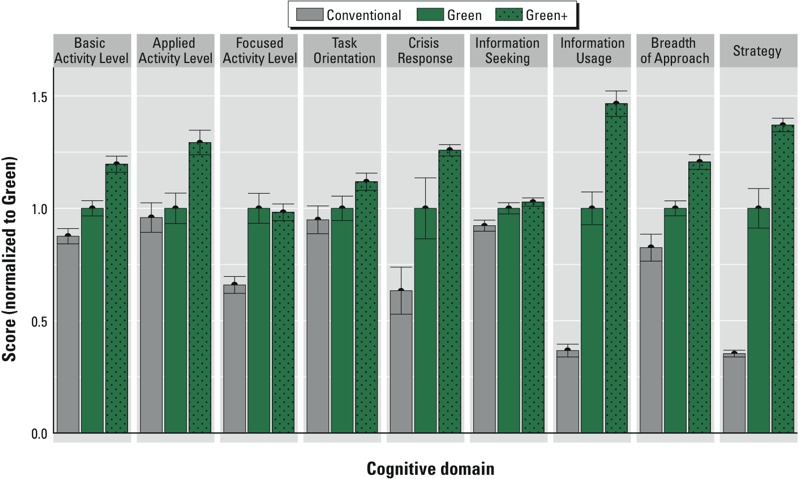
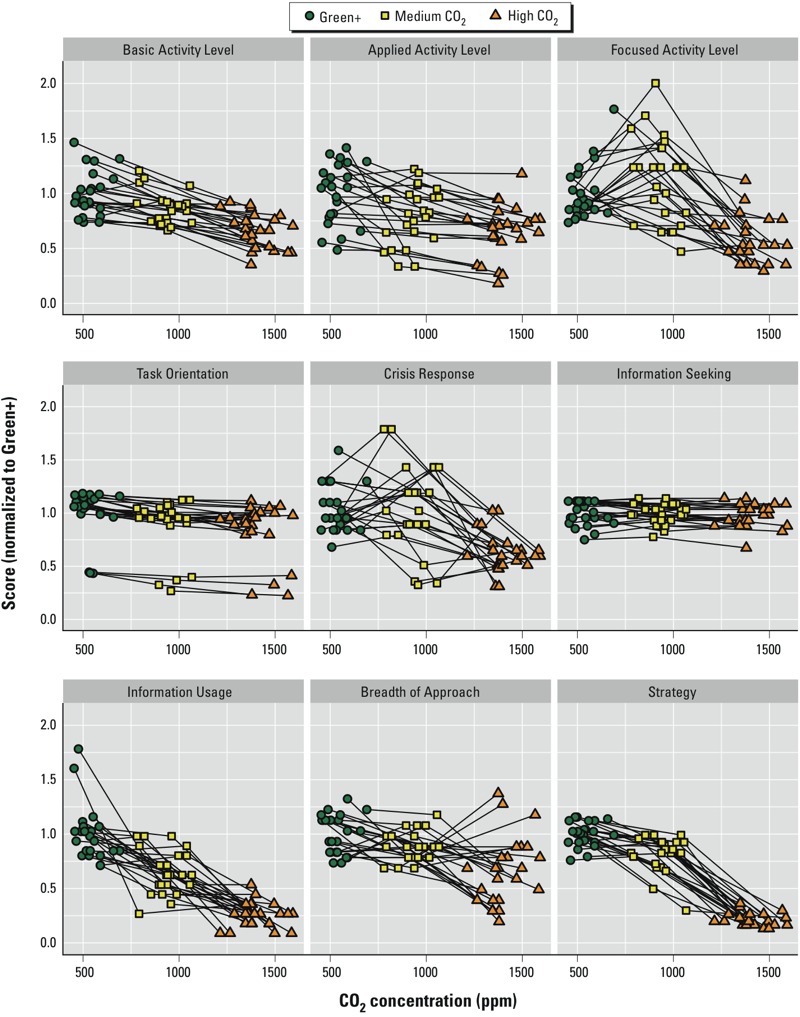
Background: The indoor built environment plays a critical role in our overall well-being because of both the amount of time we spend indoors (~90%) and the ability of buildings to positively or negatively influence our health. The advent of sustainable design or green building strategies reinvigorated questions regarding the specific factors in buildings that lead to optimized conditions for health and productivity. Objective: We simulated indoor environmental quality (IEQ) conditions in “Green” and “Conventional” buildings and evaluated the impacts on an objective measure of human performance: higher-order cognitive function. Methods: Twenty-four participants spent 6 full work days (0900–1700 hours) in an environmentally controlled office space, blinded to test conditions. On different days, they were exposed to IEQ conditions representative of Conventional [high concentrations of volatile organic compounds (VOCs)] and Green (low concentrations of VOCs) office buildings in the United States. Additional conditions simulated a Green building with a high outdoor air ventilation rate (labeled Green+) and artificially elevated carbon dioxide (CO2) levels independent of ventilation. Results: On average, cognitive scores were 61% higher on the Green building day and 101% higher on the two Green+ building days than on the Conventional building day (p < 0.0001). VOCs and CO2 were independently associated with cognitive scores. Conclusions: Cognitive function scores were significantly better under Green+ building conditions than in the Conventional building conditions for all nine functional domains. These findings have wide-ranging implications because this study was designed to reflect conditions that are commonly encountered every day in many indoor environments. Citation: Allen JG, MacNaughton P, Satish U, Santanam S, Vallarino J, Spengler JD. 2016. Associations of cognitive function scores with carbon dioxide, ventilation, and volatile organic compound exposures in office workers: a controlled exposure study of green and conventional office environments. Environ Health Perspect 124:805–812; http://dx.doi.org/10.1289/ehp.1510037
Overview
The claims and statistics of this paper haven’t been checked yet.
Run the check — free, no account needed. It reads the open-access text and checks the sources it cites.
Integrity signals
Registry
Cites
Statistics
Figures
Verification
Claims the paper makes
The claims and statistics of this paper haven’t been checked yet.
Run the check — free, no account needed. It reads the open-access text and checks the sources it cites.
Claims other papers make about this one
Each is checked against this paper’s own text: does it say what the citing paper says it does?
The cited source says what the claim attributes to it.
In the citing paper
“Low ventilation rates and CO2 concentrations normally found in office buildings (approximately 1,000 ppm) have been recently associated with impairment in multiple domains of high-order cognitive function [45,46].”
From Reduced cognitive function during a heat wave among residents of non-air-conditioned buildings: An observational study of young adults in the summer of 2016 (2018) · cites this paper as [46]
Self-check
Percentages, sums and reported differences re-computed from the paper’s own numbers.
The self-check needs the paper’s full text.
Citations
Cites
Ventilation for Acceptable Indoor Air Quality
Falih, M. (2019) · Cited by 2,497
Satish, U., Mendell, M. J., Shekhar, K., Hotchi, T., Sullivan, D., Streufert, S., & Fisk, W. J. (2012) · Environmental Health Perspectives · doi:10.1289/ehp.1104789 · Cited by 1,064 · cited 4×
“However, this conventional thinking is being challenged as the evidence mounts for CO2 as a direct pollutant, not just a marker for other pollutants (Satish et al. 2012).”
BackgroundMethodInfluentialSelf-citationWargocki, P. L., Wyon, D. P., Sundell, J., Clausen, G., & Fanger, P. O. (2000) · Indoor Air · doi:10.1034/j.1600-0668.2000.010004222.x · Cited by 693 · cited 1×
“…building factors, such as ventilation rate; workspace factors, such as the presence of chemical-emitting materials; and personal factors, such as job stress, allergies, and sex (Mendell 1993; Wargocki et al. 2000; Bornehag et al. 2005; Hedge 2009; Hedge and Gaygen 2010; Nishihara et al. 2014).”
Estimates of Improved Productivity and Health from Better Indoor Environments
Fisk, W. J., & Rosenfeld, A. H. (1997) · Indoor Air · doi:10.1111/j.1600-0668.1997.t01-1-00002.x · Cited by 551
Associations between classroom CO2 concentrations and student attendance in Washington and Idaho
Shendell, D. G., Prill, R., Fisk, W. J., Apte, M. G., Blake, D., & Faulkner, D. (2004) · Indoor Air · doi:10.1111/j.1600-0668.2004.00251.x · Cited by 462 · cited 1×
“Corsi et al. (2002) reported CO 2 concentrations > 1,000 ppm in 66% of 120 classrooms in Texas, and Shendell et al. (2004) measured CO 2 concentrations > 1,000 ppm in 45% of 435 classrooms in Washington and Idaho and reported that elevated CO 2 concentrations were associated with increases in…”
BackgroundEffects of Green Buildings on Employee Health and Productivity
Singh, A., Syal, M., Grady, S. C., & Korkmaz, S. (2010) · American Journal of Public Health · doi:10.2105/ajph.2009.180687 · Cited by 320
Non-Specific Symptoms In Office Workers: A Review And Summary Of The Epidemiologic Literature
Mendell, M. J. (1993) · Indoor Air · doi:10.1111/j.1600-0668.1993.00003.x · Cited by 282
Allen, J. G., MacNaughton, P., Laurent, J. G. C., Flanigan, S. S., Eitland, E. S., & Spengler, J. D. (2015) · Current Environmental Health Reports · doi:10.1007/s40572-015-0063-y · Cited by 281 · cited 1×
“To date, we know of no studies that have been conducted in green buildings where participants were blinded to their building condition (Allen et al. 2015).”
Self-citationPersily, A. (2015) · Building and Environment · doi:10.1016/j.buildenv.2015.02.026 · Cited by 249 · cited 2×
“The > 100-year story of ventilation in buildings is complicated and was neatly summarized recently by Persily (2015).”
Hodgson, A. T., Rudd, A., Beal, D., & Chandra, S. (2000) · Indoor Air · doi:10.1034/j.1600-0668.2000.010003178.x · Cited by 240
Research works printed but not linked: 4
- ACGIH (American Conference of Governmental Industrial Hygienists), 2015, 2015 Guide to Occupational Exposure Values.
- Breuer K, Satish U, 2003, Emergency management simulations: an approach to the assessment of decision-making processes in complex dynamic crisis environments., 145
- Corsi RL, Torres VM, Sanders M, Kinney KA, 2002, Carbon dioxide levels and dynamics in elementary schools: results from the TESIAS study., 74
- Swezey, 1998, Preliminary development of a computer-based team performance assessment simulation., Int J Cogn Ergonomics, 2, 163
Cited by
Sorted by citations
Items 501–600 of 976
Kavanagh, K. T., & Cormier, L. E. (2023) · Medicine · doi:10.1097/md.0000000000035095 · Cited by 8
“[18] It is reasonable to set a ventilation goal below 700 ppm. Installation of upper room Ultraviolet C germicidal lighting has been used for over 70 years and is an economical low maintenance method for improving air quality.”
He, H., Sun, Z., Chen, X., Tao, X., Tao, M., Dong, D., Liu, Z., Xu, Y. H., & Qu, C. (2025) · Journal of Affective Disorders · doi:10.1016/j.jad.2025.03.049 · Cited by 6
GASEOUS AND THERMAL ANALYSIS OF WINTER GARDEN USED FOR AIR REGENERATION THROUGHOUT OFFICE BUILDINGS
Rymarov, A. G., Parfentieva, N., Valančius, K., Paulauskaitė, S., & Misevičiūtė, V. (2018) · Journal of Environmental Engineering and Landscape Management · doi:10.3846/jeelm.2018.5381 · Cited by 5
On Implementation of Plants in the Indoor Environment in Intelligent Buildings
Franek, O., & Jarský, Č. (2021) · Environmental Research Engineering and Management · doi:10.5755/j01.erem.77.3.28928 · Cited by 5
Muhič, S., & Muhič, T. (2022) · Strojniški vestnik – Journal of Mechanical Engineering · doi:10.5545/sv-jme.2022.13 · Cited by 5
“291 Measurements of Air Quality in Kindergartens and Schools in the Republic of Slovenia before the COVID-19 Epidemic exposure to low concentrations of CO2 (1000 ppm) already has a direct impact on the cognitive abilities of individuals [17].”
BackgroundHasan, S. S., Jamrozik, A., Campanella, C., Aristizabal, S., Zhang, R., & Clements, N. S. (2018) · CHI Conference Extended Abstracts on Human Factors in Computing Systems (CHI EA) · doi:10.1145/3170427.3170627 · Cited by 5
“The indoor environment can have a profound impact on people’s behaviors [1,6,8,10,14,17], health [4,5,21], and general wellbeing [2,7,9,13,18,20].”
BackgroundLuchnikov, I. A., Métivier, D., Ouerdane, H., & Chertkov, M. (2021) · Applied Energy · doi:10.1016/j.apenergy.2020.116419 · Cited by 5
CO2 MEASUREMENTS FOR UNCONVENTIONAL MANAGEMENT OF INDOOR AIR QUALITY
Ragazzi, M., Albatici, R., Schiavon, M., Ferronato, N., & Torretta, V. (2019) · WIT transactions on ecology and the environment · doi:10.2495/air190271 · Cited by 5
Indoor Air Quality and Wellbeing - Enabling Awareness and Sensitivity with Ambient IoT Displays
Seiderer, A., Aslan, I., Dang, C. T., & André, E. (2019) · Lecture notes in computer science · doi:10.1007/978-3-030-34255-5_18 · Cited by 5
“[12] in their controlled study with a CO2 concentration of about 950 ppm.”
Fossil fuel combustion is driving indoor CO2 toward levels harmful to human cognitionPreprint
Karnauskas, K. B., Miller, S. L., & Schapiro, A. C. (2019) · doi:10.31223/osf.io/b8umq · Cited by 5
Ezeamii, V. C., Egbuchiem, A. N., Obianyo, C. M., Nwoke, P., & Obioma, L. O. (2025) · Cureus · doi:10.7759/cureus.83306 · Cited by 4
“…(VOCs) has also been linked to neuroinflammation and oxidative stress, both of which can disrupt neural pathways involved in cognition [38, 39] Neurotoxic pollutants such as nitrogen dioxide (NO₂) and polycyclic aromatic hydrocarbons (PAHs) have been associated with impaired executive…”
Lerner, A., Mainelis, G., Hallman, W. K., Kipen, H. M., Magalhães, M., Buckley, B., Laurent, J. G. C., & Eyal, N. (2025) · Risk Analysis · doi:10.1111/risa.70054 · Cited by 4
“In addition, it will reduce the buildup of CO 2 and other pollutants (Lee et al., 2023), which may have cognitive benefits for occupants (Allen et al., 2016; Wargocki, 2000).”
Green-Certified Healthcare Facilities from a Global Perspective: Advanced and Developing Countries
Büyükçınar, R. A., Kömürlü, R., & Arditi, D. (2025) · Sustainability · doi:10.3390/su17229974 · Cited by 4
Labib, R. (2025) · Sustainable Cities and Society Advances · doi:10.1016/j.scsadv.2025.100009 · Cited by 5
Indoor environmental quality and the brain: A systematic review of physiological and neural evidence
Rad, P. N., Behzadi, F., Kalantarifard, A., Nazemi, N., & Djebbara, Z. (2026) · Building and Environment · doi:10.1016/j.buildenv.2026.114405 · Cited by 7
Arango-Díaz, L., Flórez, O. L. M., Gaviria, L. R., Vega, L. M. T., & Rueda, C. M. Z. (2021) · Journal of Green Building · doi:10.3992/jgb.16.4.135 · Cited by 4
Building age is a determining factor of indoor CO2 levels in a University setting
Broadway, L. A., Aycock, H., Broadway, A., Russell, T., Endsley, A., Harley, B., Colmorgan, A., Drafts, T., Estey, D., & Syfert, T. (2025) · Indoor Environments · doi:10.1016/j.indenv.2025.100100 · Cited by 4
The Social Contexts of Resilient Architecture
Peters, T. (2021) · doi:10.1093/oso/9780190095888.003.0033 · Cited by 4
“For example, a series of studies led by researchers at Harvard show a measurable link between fresh air and enhanced mechanical ventilation and better cognitive performance at work (Allen et al., 2016; MacNaughton et al., 2017).”
BackgroundPollard, B., Buskirk, J. V., Engelen, L., Held, F. P., & de Dear, R. (2022) · Applied Ergonomics · doi:10.1016/j.apergo.2022.103915 · Cited by 4
McCue, M. D. (2023) · Rapid Communications in Mass Spectrometry · doi:10.1002/rcm.9639 · Cited by 4
Statistical Analysis and Modeling of the CO2 Series Emitted by Thirty European Countries
Bărbulescu, A. (2024) · Climate · doi:10.3390/cli12030034 · Cited by 4
Predictive Heating Control and Perceived Thermal Comfort in a Norwegian Office Building
Lolli, N., Gorantonaki, E., & Clauß, J. (2024) · Energies · doi:10.3390/en17153719 · Cited by 4
Room Temperature Sensing Properties of In 2 O 3 -MXene Composites to NO 2
Zhang, T., Li, Y., Xu, T., Zhang, H., Yuan, Z., Wang, H.-T., & Zhuo, K. (2024) · ACS Applied Electronic Materials · doi:10.1021/acsaelm.4c01335 · Cited by 4
Designing LTC Physical Work Environments to Support Worker Well-being: A Review and Recommendations
Goldman, C. M., Rider, T. R., Fisher, G. G., Loder, A., Schwatka, N. V., & Dyke, M. V. V. (2024) · Journal of the American Medical Directors Association · doi:10.1016/j.jamda.2024.105326 · Cited by 4
Wassmer, R. W., & Turgeon, M. D. (2024) · Environmental Health Insights · doi:10.1177/11786302241293292 · Cited by 4
The role of excess charge mitigation in electromagnetic hygiene: An integrative review
Jamieson, I. A., Bell, J. N. B., & Holdstock, P. (2024) · Biomedical Journal · doi:10.1016/j.bj.2024.100801 · Cited by 4
“Enhanced indoor air quality can significantly improve individuals ’ cognitive response with regard to crisis response, information usage, and decision-making abilities [73]. lmproved air renewal rates and air quality can help reduce the likelihood of infection [74].”
Chen, K., Xie, M., Deng, M., & Pan, Q. (2025) · Journal of Building Engineering · doi:10.1016/j.jobe.2025.112159 · Cited by 4
An, S.-M., & Kim, H.-H. (2025) · Brain Sciences · doi:10.3390/brainsci15080868 · Cited by 4
Czy zwiększona zawartość dwutlenku węgla w powietrzu ma wpływ na sprawność intelektualną człowieka
Murkowski, A., & Skórska, E. (2016) · Cited by 4
Qiu, Y., & Ya, T. (2019) · IOP Conference Series Materials Science and Engineering · doi:10.1088/1757-899x/609/4/042032 · Cited by 4
Indoor Climate as a Service: a digitalized approach to building performance management
Hälleberg, D., & Martinac, I. (2020) · IOP Conference Series Earth and Environmental Science · doi:10.1088/1755-1315/588/3/032013 · Cited by 4
Perlikowski, I., Zielony, E., Özdal, T., & Kavak, H. (2021) · Energies · doi:10.3390/en14165182 · Cited by 4
“As recent research shows, increasing CO2 concentrations not only affect the Earth’s climate, but also result in the worsening of brain performance [3].”
BackgroundThe Internet of things and indoor air quality on ship
Metreveli, Y. (2021) · IOP Conference Series Earth and Environmental Science · doi:10.1088/1755-1315/872/1/012015 · Cited by 4
A Statistical Evaluation of Combining Human Productivity Metrics in the Indoor Environment
Keene, K., & Jung, W. (2021) · ASME Journal of Engineering for Sustainable Buildings and Cities · doi:10.1115/1.4052872 · Cited by 4
Adaptive Virtual Neuroarchitecture
Jain, A., Maes, P., & Sra, M. (2023) · Human-computer interaction series · doi:10.1007/978-3-031-05804-2_9 · Cited by 6
Hussain, I., Friday, A., & Booker, D. (2023) · CHI Conference Extended Abstracts on Human Factors in Computing Systems (CHI EA) · doi:10.1145/3544549.3585898 · Cited by 4
“These concerns from Teacher G are understandable: the shortterm efects of brain fog, headaches, nausea, and difculty concentrating have a direct, measurable, efect on cognitive abilities [3].”
BackgroundChemistry of Indoor Air Pollution
Eftekhari, A., Won, Y., Morrison, G., & Ng, N. L. (2023) · ACS in focus · doi:10.1021/acsinfocus.7e7018 · Cited by 4
Data-driven modeling techniques for indoor CO2 estimation
Vergauwen, B., Agudelo, O. M., Rajan, R. T., Pasveer, F., & Moor, B. D. (2017) · Proceedings of IEEE Sensors/Proceedings of IEEE Sensors ... · doi:10.1109/icsens.2017.8234156 · Cited by 4
“In recent studies it has been shown that in high concentration, CO2 has a negative effect on the cognitive function of the people inside a building [1].”
BackgroundDeng, Y., Sprowls, M., Mora, S. J., Kulick, D., Tao, N. J., Destaillats, H., & Forzani, E. (2020) · Sensors · doi:10.3390/s20247202 · Cited by 4
Lakušić, S. (2019) · Journal of the Croatian Association of Civil Engineers · doi:10.14256/jce.2733.2019 · Cited by 4
The office experiment: Can science build the perfect workspace?
Anthes, E. (2016) · Nature · doi:10.1038/537294a · Cited by 6
Planten voor een prima binnenklimaat : Industriele spoor
Hermans, T., de Vries, S., Jeurissen, L., Kraan, J., Oppedijk, B. J., & van Duijn, B. (2019) · doi:10.18174/494867 · Cited by 4
Satre-Meloy, A., Webster, B., Toffoli, L., Campbell, M., Badger, L., Donnovan, A., Lane, D., McGrath, K. P., Wilson, E. J. H., Reyna, J., et al. (2024) · Lawrence Berkeley National Laboratory · doi:10.2172/2335724 · Cited by 4
Pisaniello, D., & Nitschke, M. (2024) · International Journal of Environmental Research and Public Health · doi:10.3390/ijerph21081089 · Cited by 3
“High health-related costs from infectious and chronic respiratory disease and human performance loss associated with a variety of indoor air contaminants were already being discussed prior to the COVID-19 pandemic [1].”
BackgroundJung, Y., Wilson, A. M., & Wilson, A. M. (2025) · Building and Environment · doi:10.1016/j.buildenv.2025.112878 · Cited by 3
Ogundiran, J., Nyembwe, J.-P. K. B., Ogundiran, J. O., Santos, R. A. D. S., Pereira, L. D., & da Silva, M. G. (2025) · Atmosphere · doi:10.3390/atmos16050584 · Cited by 3
Occurrence and Mitigation of PM2.5, NO2, CO and CO2 in Homes Due to Cooking and Gas Stoves
Jaffe, D. A., Nirschl, D., & Birman, S. (2025) · Atmosphere · doi:10.3390/atmos16070882 · Cited by 3
Malta, G., Montana, A., Argo, A., Zerbo, S., Plescia, F., & Cannizzaro, E. (2025) · Children · doi:10.3390/children12101287 · Cited by 4
“Research has demonstrated that simulated indoor environmental quality conditions in green buildings have an impact on cognitive function [29].”
Greener Cities, Brighter Future
Angelaki, E., Garefalakis, A. E., Sitzimis, I., Rompogiannakis, I., & Passas, I. (2025) · IGI Global eBooks · doi:10.4018/979-8-3373-2327-5.ch005 · Cited by 5
Saha, T., Saini, M. S., & Bigith, V. B. (2025) · Multidisciplinary Reviews · doi:10.31893/multirev.2026222 · Cited by 4
Pellegatti, M., Visentin, C., Torresin, S., Babich, F., Wargocki, P. L., & Prodi, N. (2025) · Building and Environment · doi:10.1016/j.buildenv.2025.114005 · Cited by 3
Sahu, S. R., Vishwakarma, N., Kumar, M., Singh, P. P., Prasher, S., Vo, D. N., & Sharma, A. K. (2025) · ACS Applied Electronic Materials · doi:10.1021/acsaelm.5c01833 · Cited by 3
Varnosfaderani, M. P., & Heydarian, A. (2025) · Building and Environment · doi:10.1016/j.buildenv.2025.114134 · Cited by 3
Wang, X., Wang, Y., Fan, W., Sang, C., & Lai, X. (2026) · Building and Environment · doi:10.1016/j.buildenv.2026.114246 · Cited by 3
Natural Ventilation Reduces Cooking-Related PM 2.5 Peaks Indoors
Su, Y., Dai, Y., Shi, Z., Jiang, Y., Kong, L., & Pfrang, C. (2026) · ACS ES&T Air · doi:10.1021/acsestair.5c00427 · Cited by 3
Zhaurova, M., Horttanainen, M., Child, M., & Soukka, R. (2026) · Energy and Buildings · doi:10.1016/j.enbuild.2026.117133 · Cited by 3
Characterizing Indoor Surface VOC Contamination after the 2025 Los Angeles Fires
Stinson, B. W., Lei, E., & Gall, E. T. (2026) · Environmental Science & Technology Letters · doi:10.1021/acs.estlett.5c01015 · Cited by 3
Pollutions of Cooking Oil Fume and Health Risks
Li, A., & Kosonen, R. (2019) · Springer eBooks · doi:10.1007/978-981-13-6496-9_3 · Cited by 3
García-Martín, G., Romero-Lara, F., Campano, M. Á., Acosta, I., & Bustamante, P. (2025) · Applied Sciences · doi:10.3390/app15031217 · Cited by 5
Next-generation smart homes: CO2 monitoring with Matter protocol to support indoor air quality
Mota, A., Serôdio, C., Briga-Sá, A., & Valente, A. L. G. (2025) · Internet of Things · doi:10.1016/j.iot.2025.101649 · Cited by 3
IoT Based Ambient Monitoring System for Intelligent Buildings
Diaz-Resendiz, J. L., Guerrero-Sánchez, A. E., Toledano‐Ayala, M., & Rivas-Araiza, E. A. (2018) · IEEE International Conference on Automatica · doi:10.1109/ica-acca.2018.8609862 · Cited by 3
“Por otra parte, se muestran los efectos adversos de la concentración de dióxido de carbono en el desempeño en el trabajo de los ocupantes de un edificio [9], [10].”
BackgroundValidity of the strategic management simulations to predict real‐world productivity
MacNaughton, P., & Cockerill, A. P. (2021) · Journal of Applied Social Psychology · doi:10.1111/jasp.12771 · Cited by 3
Self-citationKrusaa, M. R., & Hviid, C. A. (2022) · Energies · doi:10.3390/en15041319 · Cited by 3
Effects of IAQ on Office Work Performance
Porras-Salazar, J. A., Schiavon, S., & Tham, K. W. (2022) · Handbook of Indoor Air Quality · doi:10.1007/978-981-10-5155-5_64-1 · Cited by 3
Exploring the effects of indoor air quality on sleep and sleep quality of older people
Kort, H. S. M., & Loomans, M. G. L. C. (2022) · Gerontechnology · doi:10.4017/gt.2022.21.s.593.2.sp3 · Cited by 3
Multivariate and multi-output indoor air quality prediction using bidirectional LSTM
Fernandes, N., & Gonçalves, J. J. (2023) · International Symposium on Digital Forensics and Security (ISDFS) · doi:10.1109/isdfs58141.2023.10131695 · Cited by 3
“Studies show that with levels of CO 2 at 1000 ppm there is a 15% decrease in cognitive function and the percentage rises to 50% at 1400 ppm [3], [4].”
BackgroundEvolution of interior space design criteria on the quality of urban environment: Literature review
Tolacı, S. Ş., Erkan, İ., Diker, F., & Şahin, A. Ş. (2023) · Journal of Design for Resilience in Architecture and Planning · doi:10.47818/drarch.2023.v4i3097 · Cited by 3
“5) concentrations by up to 40% (Allen et al., 2016).”
Indoor environmental quality in architecture: A Review
Li, G. (2025) · Building Engineering · doi:10.59400/be2375 · Cited by 3
“Another strategy is to use low-emitting building materials and furnishings that do not release harmful pollutants into the indoor environment [52].”
Wang, H., Cui, Z., Wang, M., & Li, C. (2025) · Indoor and Built Environment · doi:10.1177/1420326x251320533 · Cited by 3
Cribb, J. (2016) · Springer eBooks · doi:10.1007/978-3-319-41270-2_6 · Cited by 3
Examining Architectural Air and Temperature with Novel Sensing Techniques
Coleman, J. R., Teitelbaum, E., Guo, H., Read, J. R., & Meggers, F. (2017) · Energy Procedia · doi:10.1016/j.egypro.2017.07.442 · Cited by 3
Monitorização e controlo de qualidade do ar interior em gabinetes de edifícios escolares
Fernandes, S., Igrejas, G., & Feliciano, M. (2017) · Revista de Ciências Agrárias · doi:10.19084/rca16192 · Cited by 3
Creating a green index based on tenant demand for sustainable office buildings and features
Robinson, S., & Simons, R. A. (2018) · Routledge eBooks · doi:10.1201/9781315622750-19 · Cited by 3
Walking Outdoors Increases Heart Rate but Not Perceived Exertion
Fuegen, K., & BREITENBECHER, K. H. (2022) · Ecopsychology · doi:10.1089/eco.2021.0043 · Cited by 5
“More research is needed documenting how differences in air quality between indoor and outdoor environments influence emotional well-being (Allen et al., 2016).”
de Araújo, T., Silva, L. T., & Moreira, A. J. C. (2020) · International Conference on Sensor Networks · doi:10.5220/0008968400410051 · Cited by 3
“In an indoor scenario, they can also be used for air-quality assessment by monitoring the levels of CO 2 , once it has relevant consequences on cognitive performance of the occupants, as described by (Allen et al., 2016; Satish et al., 2012).”
BackgroundSmerdov, A., Zhou, B., Lukowicz, P., & Somov, A. (2020) · arXiv (Cornell University) · Cited by 3
Air quality and mental health: evidence, challenges and future directionsPreprint
Bhui, K. S., Newbury, J. B., Latham, R. M., Ucci, M., Nasir, Z. A., Turner, B., O’Leary, C., Fisher, H. L., Marczylo, E. L., Douglas, P., et al. (2021) · doi:10.31234/osf.io/su7h4 · Cited by 3
INDOOR AIR QUALITY IN NONINDUSTRIAL OCCUPATIONAL ENVIRONMENTS
Morey, P. R., & Shaughnessy, R. J. (2019) · doi:10.1002/9781119581482.ch8 · Cited by 3
Ashayeri, M., Piri, S., & Abbasabadi, N. (2023) · Research Square · doi:10.21203/rs.3.rs-2481649/v1 · Cited by 3
Brown, J. K., Yeung, J., Rezgui, Y., & Beach, T. (2021) · IEEE International Conference on Engineering, Technology and Innovation (ICE/ITMC) · doi:10.1109/ice/itmc52061.2021.9570228 · Cited by 2
R.H. Board, Barrow, J., Whelton, C., & Tim Board (2024) · Journal of Orthopaedics · doi:10.1016/j.jor.2024.06.007 · Cited by 2
Bain-Reguis, N., Smith, A., Martin, C. J. H., & Currie, J. I. (2024) · The Science of The Total Environment · doi:10.1016/j.scitotenv.2024.177808 · Cited by 3
Ramezani, N., Tamošaitienė, J., Sarvari, H., & Golestanizadeh, M. (2025) · Sustainability · doi:10.3390/su17083389 · Cited by 2
Experimental Study on the Investigation of Thermal Comfort in Night Sleep Conditions
Mazandarani, M., & Heidari, S. (2025) · Indoor Air · doi:10.1155/ina/1452584 · Cited by 2
Mixture of organic pollutants is associated with cognitive aging
Kalia, V., Manz, K. E., Benavides, J., Song, S., Vollmer, B. L., Yan, B., Goldsmith, J., Pennell, K. D., Stern, Y., Kioumourtzoglou, M., et al. (2026) · Alzheimer s & Dementia · doi:10.1002/alz.71399 · Cited by 2
Schreiber, L., Schuh, B., Shchegelskiy, K., Wardah, W., Büyüktaş, T. M. K., Möller, S., & Spang, R. P. (2025) · International Conference on Quality of Multimedia Experience (QoMEX) · doi:10.1109/qomex65720.2025.11219970 · Cited by 2
“…which raises questions about whether degraded air quality might influence perceptual judgments. a) Air Quality and Cognitive Performance: Previous research has shown that even moderate CO 2 levels around 1,000 ppm can impair cognitive functions such as decision-making and attention [1], [2].”
Yu, H., Zhang, J., Liu, Q., Li, D., Pan, R., Miao, G., Chen, Y., Kou, Z., Qu, G., Zhang, R., et al. (2025) · Advanced Science · doi:10.1002/advs.202512663 · Cited by 2
Beryozkina, S., & Zicmane, I. (2025) · Symmetry · doi:10.3390/sym17122048 · Cited by 2
Mapping the Knowledge Frontier in Environmental Health and Sustainability in Construction
Emere, C. E., & Oguntona, O. A. (2026) · Eng—Advances in Engineering · doi:10.3390/eng7010029 · Cited by 3
“Additionally, sustainable architectural design and energy-efficient buildings improve indoor environmental quality by improving ventilation, enhancing thermal comfort, and reducing exposure to hazardous pollutants, thereby boosting occupant health and productivity [21,143].”
Li, Y., Zhao, H. Q., Su, G., Meng, Y., Zhang, Y., Li, Y., Ding, R., Chen, Z., & Yan, J. (2026) · Building and Environment · doi:10.1016/j.buildenv.2026.114586 · Cited by 2
Zang, T., Awada, M., Becerik-Gerber, B., Roll, S. C., Lucas, G., & Narayanan, S. (2026) · Indoor Environments · doi:10.1016/j.indenv.2026.100171 · Cited by 2
Pellegrino, N., Eliasziw, M., Fortinsky, R. H., Gates, H., & Brugge, D. (2026) · Scientific Reports · doi:10.1038/s41598-026-48063-8 · Cited by 2
“Other crossover trials of air filtration that examined the effect of air pollution on cognition have also reported that higher exposure to particulate matter was associated with worse executive function and attention switching 7,25,26 .”
Jiang, J., Zhang, J., Nie, H., Jiang, Z., Li, J., & Ma, C. (2026) · Building and Environment · doi:10.1016/j.buildenv.2026.114709 · Cited by 2
Chikamoto, T., & MIMURA, R. (2019) · E3S Web of Conferences · doi:10.1051/e3sconf/201911102068 · Cited by 2
Prentice, S. B., & Waliczek, T. M. (2021) · HortTechnology · doi:10.21273/horttech04883-21 · Cited by 2
Oye, T. T., Gupta, N. K., Goh, K. B., & Oye, T. K. (2021) · Environmental Management and Sustainable Development · doi:10.5296/emsd.v11i1.19027 · Cited by 2
“Research study by Altinten et al. (2006) anticipated a structured fuzzy control utilising GA as offered in Figure 2 for the control of temperature.”
BackgroundInfluentialChristensen, L. E., Mansour, K., Pleil, J. D., & Troy, R. F. (2022) · Journal of Breath Research · doi:10.1088/1752-7163/ac740e · Cited by 2
“Studies suggest that individuals breathing inspired air with CO2 > 1000 ppm over a sufficiently long time (many hours) can experience impaired cognition [21, 22].”
BackgroundExperimental Prototype and Measurement Driven Study of Indoor Air Quality
Alkaabi, S., Suhail, F. S., Almansoori, H., Alhammadi, A., Kulkarni, S., Pradeep, B., & Kulkarni, P. (2023) · IEEE International Workshop on Metrology for Living Environment (MetroLivEnv) · doi:10.1109/metrolivenv56897.2023.10164064 · Cited by 2
“Results from [3] support this possibility – low ventilation rates and CO2 levels above 900 ppm were found to be associated with significantly lower test scores.”
BackgroundInfluentialChen, Q., Kim, S.-K., Han, J., & Kim, C. (2023) · Journal of Green Building · doi:10.3992/jgb.18.4.169 · Cited by 2
Integrating the Physical Environment Within a Population Neuroscience Perspective
Smith, L. (2024) · Current topics in behavioral neurosciences · doi:10.1007/7854_2024_477 · Cited by 2
Metadata
- Authors
- Allen, J. G., MacNaughton, P., Satish, U., Santanam, S., Vallarino, J., & Spengler, J. D.
- Affiliations
- Harvard University (US)
- SUNY Upstate Medical University (US)
- Syracuse University (US)
- Corresponding author
- Allen, Joseph G.
- Venue
- Environmental Health Perspectives
- Publisher
- American Chemical Society (ACS)
- Published
- 2015-10-26
- Volume
- 124
- Issue
- 6
- Pages
- 805-812
- ISSN
- 0091-6765 (ISSN-L)
- 1552-9924
- PMC
- PMC4892924
- OpenAlex
- W2412131385
- Cited by
- 977
- References
- 24
- Citations by year
- 2026: 138 · 2025: 121 · 2024: 121 · 2023: 88 · 2022: 103 · 2021: 107 · 2020: 86 · 2019: 84 · 2018: 66 · 2017: 36 · 2016: 25 · 2015: 1
- FWCI
- 26.76
- Type
- journal article
- Language
- en
- Open access
- gold
- doi.org
- Licence
- public-domain
- creativecommons.org/licenses/by/4.0/ (vor, 795 d)
- Locations
- Environmental Health Perspectives (publishedVersion, public-domain)
- PubMed Central (publishedVersion, public-domain)
- PubMed (publishedVersion)
- Digital Access to Scholarship at Harvard (DASH) (Harvard University) (submittedVersion, cc-by)
- Funders
- Harvard T.H. Chan School of Public Health
- National Institute of Environmental Health Sciences (T32ES007069)
- Topics
- Physical Sciences › Environmental Science › Health, Toxicology and Mutagenesis › Indoor Air Quality and Microbial Exposure
- Physical Sciences › Engineering › Architecture › Facilities and Workplace Management
- Physical Sciences › Engineering › Building and Construction › Sustainable Building Design and Assessment
- Keywords
- cognitive function, carbon dioxide exposure, indoor ventilation, volatile organic compounds, sustainable construction, indoor environmental quality, office workers, higher-order cognition
- MeSH terms
- Air Pollutants, Occupational, Carbon Dioxide, Cognition, Humans, United States, Ventilation, Occupational Exposure, Air Pollution, Indoor, Volatile Organic Compounds
About these checks
Registry, retraction, Cites and statistics results are computed, not judged, with one exception: a printed reference that no index lists is read once by a model before it counts as a citation error. Claims are extracted by a model and kept only when their quote appears verbatim in the text; each cited source is then checked, with a model’s help, for whether it says what the claim relies on. Those verdicts can be wrong — read the claim’s quote and the cited source before relying on one.
Statistics and arithmetic are recomputed, not judged.
Confidence bands are shown only for fields calibrated on our annotated test set. None is calibrated yet, so no band is shown.
What counts as a claim ›How we measure confidence ›How we check this ›
Are you an author, or do you see a problem with this page? Request a review
