

The DOI matches its Crossref record; 24 of the 24 references it cites were found in a registry or an index.
Associations of Cognitive Function Scores with Carbon Dioxide, Ventilation, and Volatile Organic Compound Exposures in Office Workers: A Controlled Exposure Study of Green and Conventional Office Environments
Open accessAbstract
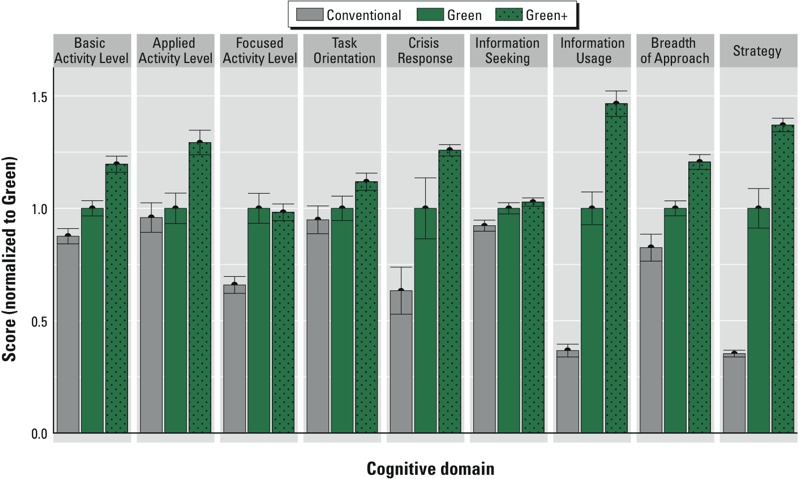
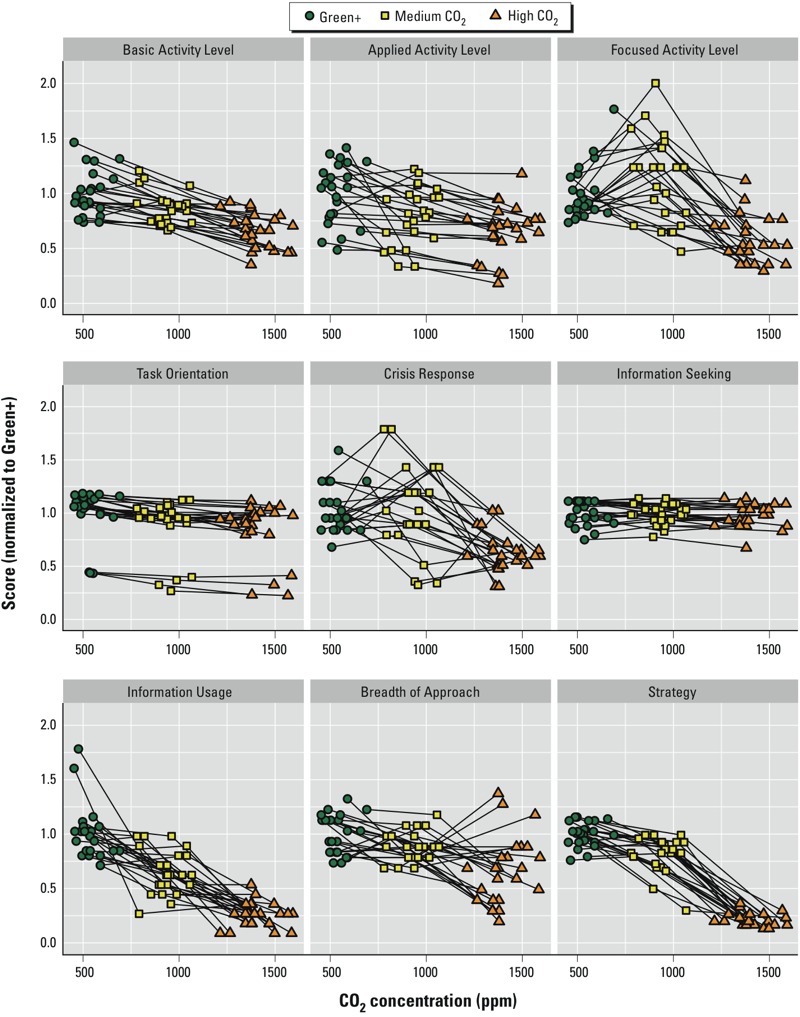
Background: The indoor built environment plays a critical role in our overall well-being because of both the amount of time we spend indoors (~90%) and the ability of buildings to positively or negatively influence our health. The advent of sustainable design or green building strategies reinvigorated questions regarding the specific factors in buildings that lead to optimized conditions for health and productivity. Objective: We simulated indoor environmental quality (IEQ) conditions in “Green” and “Conventional” buildings and evaluated the impacts on an objective measure of human performance: higher-order cognitive function. Methods: Twenty-four participants spent 6 full work days (0900–1700 hours) in an environmentally controlled office space, blinded to test conditions. On different days, they were exposed to IEQ conditions representative of Conventional [high concentrations of volatile organic compounds (VOCs)] and Green (low concentrations of VOCs) office buildings in the United States. Additional conditions simulated a Green building with a high outdoor air ventilation rate (labeled Green+) and artificially elevated carbon dioxide (CO2) levels independent of ventilation. Results: On average, cognitive scores were 61% higher on the Green building day and 101% higher on the two Green+ building days than on the Conventional building day (p < 0.0001). VOCs and CO2 were independently associated with cognitive scores. Conclusions: Cognitive function scores were significantly better under Green+ building conditions than in the Conventional building conditions for all nine functional domains. These findings have wide-ranging implications because this study was designed to reflect conditions that are commonly encountered every day in many indoor environments. Citation: Allen JG, MacNaughton P, Satish U, Santanam S, Vallarino J, Spengler JD. 2016. Associations of cognitive function scores with carbon dioxide, ventilation, and volatile organic compound exposures in office workers: a controlled exposure study of green and conventional office environments. Environ Health Perspect 124:805–812; http://dx.doi.org/10.1289/ehp.1510037
Overview
The claims and statistics of this paper haven’t been checked yet.
Run the check — free, no account needed. It reads the open-access text and checks the sources it cites.
Integrity signals
Registry
Cites
Statistics
Figures
Verification
Claims the paper makes
The claims and statistics of this paper haven’t been checked yet.
Run the check — free, no account needed. It reads the open-access text and checks the sources it cites.
Claims other papers make about this one
Each is checked against this paper’s own text: does it say what the citing paper says it does?
The cited source says what the claim attributes to it.
In the citing paper
“Low ventilation rates and CO2 concentrations normally found in office buildings (approximately 1,000 ppm) have been recently associated with impairment in multiple domains of high-order cognitive function [45,46].”
From Reduced cognitive function during a heat wave among residents of non-air-conditioned buildings: An observational study of young adults in the summer of 2016 (2018) · cites this paper as [46]
Self-check
Percentages, sums and reported differences re-computed from the paper’s own numbers.
The self-check needs the paper’s full text.
Citations
Cites
Ventilation for Acceptable Indoor Air Quality
Falih, M. (2019) · Cited by 2,497
Satish, U., Mendell, M. J., Shekhar, K., Hotchi, T., Sullivan, D., Streufert, S., & Fisk, W. J. (2012) · Environmental Health Perspectives · doi:10.1289/ehp.1104789 · Cited by 1,064 · cited 4×
“However, this conventional thinking is being challenged as the evidence mounts for CO2 as a direct pollutant, not just a marker for other pollutants (Satish et al. 2012).”
BackgroundMethodInfluentialSelf-citationWargocki, P. L., Wyon, D. P., Sundell, J., Clausen, G., & Fanger, P. O. (2000) · Indoor Air · doi:10.1034/j.1600-0668.2000.010004222.x · Cited by 693 · cited 1×
“…building factors, such as ventilation rate; workspace factors, such as the presence of chemical-emitting materials; and personal factors, such as job stress, allergies, and sex (Mendell 1993; Wargocki et al. 2000; Bornehag et al. 2005; Hedge 2009; Hedge and Gaygen 2010; Nishihara et al. 2014).”
Estimates of Improved Productivity and Health from Better Indoor Environments
Fisk, W. J., & Rosenfeld, A. H. (1997) · Indoor Air · doi:10.1111/j.1600-0668.1997.t01-1-00002.x · Cited by 551
Associations between classroom CO2 concentrations and student attendance in Washington and Idaho
Shendell, D. G., Prill, R., Fisk, W. J., Apte, M. G., Blake, D., & Faulkner, D. (2004) · Indoor Air · doi:10.1111/j.1600-0668.2004.00251.x · Cited by 462 · cited 1×
“Corsi et al. (2002) reported CO 2 concentrations > 1,000 ppm in 66% of 120 classrooms in Texas, and Shendell et al. (2004) measured CO 2 concentrations > 1,000 ppm in 45% of 435 classrooms in Washington and Idaho and reported that elevated CO 2 concentrations were associated with increases in…”
BackgroundEffects of Green Buildings on Employee Health and Productivity
Singh, A., Syal, M., Grady, S. C., & Korkmaz, S. (2010) · American Journal of Public Health · doi:10.2105/ajph.2009.180687 · Cited by 320
Non-Specific Symptoms In Office Workers: A Review And Summary Of The Epidemiologic Literature
Mendell, M. J. (1993) · Indoor Air · doi:10.1111/j.1600-0668.1993.00003.x · Cited by 282
Allen, J. G., MacNaughton, P., Laurent, J. G. C., Flanigan, S. S., Eitland, E. S., & Spengler, J. D. (2015) · Current Environmental Health Reports · doi:10.1007/s40572-015-0063-y · Cited by 281 · cited 1×
“To date, we know of no studies that have been conducted in green buildings where participants were blinded to their building condition (Allen et al. 2015).”
Self-citationPersily, A. (2015) · Building and Environment · doi:10.1016/j.buildenv.2015.02.026 · Cited by 249 · cited 2×
“The > 100-year story of ventilation in buildings is complicated and was neatly summarized recently by Persily (2015).”
Hodgson, A. T., Rudd, A., Beal, D., & Chandra, S. (2000) · Indoor Air · doi:10.1034/j.1600-0668.2000.010003178.x · Cited by 240
Research works printed but not linked: 4
- ACGIH (American Conference of Governmental Industrial Hygienists), 2015, 2015 Guide to Occupational Exposure Values.
- Breuer K, Satish U, 2003, Emergency management simulations: an approach to the assessment of decision-making processes in complex dynamic crisis environments., 145
- Corsi RL, Torres VM, Sanders M, Kinney KA, 2002, Carbon dioxide levels and dynamics in elementary schools: results from the TESIAS study., 74
- Swezey, 1998, Preliminary development of a computer-based team performance assessment simulation., Int J Cogn Ergonomics, 2, 163
Cited by
Sorted by citations
Items 101–200 of 976
Kallio, J., Vildjiounaite, E., Koivusaari, J., Räsänen, P., Similä, H., Kyllönen, V., Muuraiskangas, S., Ronkainen, J. K., Rehu, J., & Vehmas, K. (2020) · Building and Environment · doi:10.1016/j.buildenv.2020.106787 · Cited by 71
Cement Industry Pollution and Its Impact on the Environment and Population Health: A Review
Bărbulescu, A., & Hosen, K. (2025) · Toxics · doi:10.3390/toxics13070587 · Cited by 95
A fog-computing architecture for preventive healthcare and assisted living in smart ambients
Cerina, L., Notargiacomo, S., Paccanit, M. G., & Santambrogio, M. D. (2017) · IEEE International Forum on Research and Technology for Society and Industry (RTSI) · doi:10.1109/rtsi.2017.8065939 · Cited by 70
“However, according to [19], human cognitive functions decline by 15% for a moderate CO2 daily amount (∼945 ppm) and by 50% with CO2 concentrations of ∼1,400 ppm.”
BackgroundKyritsi, E., & Michael, A. (2019) · Building and Environment · doi:10.1016/j.buildenv.2019.106384 · Cited by 69
A Scoping Review of Technological Approaches to Environmental Monitoring
Coulby, G., Clear, A. K., Jones, O., & Godfrey, A. (2020) · International Journal of Environmental Research and Public Health · doi:10.3390/ijerph17113995 · Cited by 69
“Many air quality studies [20,23,26,34,38,39] measured IAQ from particulate matter and/or VOCs but the most commonly measured factor of air quality across the literature is CO2 (Tables 3 and 4).”
BackgroundMethodInfluentialVentilation strategies and indoor air quality in Swedish primary school classrooms
Cabovská, B., Bekö, G., Teli, D., Ekberg, L. E., Dalenbäck, J.-O., Wargocki, P. L., Psomas, T., & Langer, S. (2022) · Building and Environment · doi:10.1016/j.buildenv.2022.109744 · Cited by 65
Franke, M., & Nadler, C. (2020) · Building Research & Information · doi:10.1080/09613218.2020.1788917 · Cited by 65
“have shown that subjects work significantly more slowly because of higher CO2 concentrations (Allen et al., 2016).”
BackgroundMethodInfluentialReal-Time In-Vehicle Air Quality Monitoring System Using Machine Learning Prediction Algorithm
Cheik, G. C., Kamarudin, L. M., Zakaria, A., Nishizaki, H., Ramli, N., Mao, X., Zakaria, S. M. M. S., Kanagaraj, E., Sukor, A. S. A., & Elham, M. F. (2021) · Sensors · doi:10.3390/s21154956 · Cited by 64
“The literature studies have shown that humans spend up to 70%–90% of the time inside an environment with closed air circulation daily, including vehicle cabins [16,17].”
BackgroundInfluentialGillooly, S. E., Zhou, Y., Vallarino, J., Chu, M. T., Michanowicz, D. R., Levy, J. I., & Adamkiewicz, G. (2018) · Environmental Pollution · doi:10.1016/j.envpol.2018.10.064 · Cited by 63
Self-citationHeebøll, A., Wargocki, P. L., & Toftum, J. (2018) · Science and Technology for the Built Environment · doi:10.1080/23744731.2018.1432938 · Cited by 63
“2016, 2017), although demanding cognitive tasks have been shown to be affected (Allen et al. 2016; Satish et al. 2012).”
BackgroundEffect of Absorbed Sulfate Poisoning on the Performance of Catalytic Oxidation of VOCs over MnO2
Wu, P. F., Zhao, S., Yu, J., Jin, X., Ye, D., Yang, S., & Qiu, Y. (2020) · ACS Applied Materials & Interfaces · doi:10.1021/acsami.0c17042 · Cited by 63
High-Resolution Exposure Assessment for Volatile Organic Compounds in Two California Residences
Lunderberg, D. M., Misztal, P. K., Liu, Y. J., Arata, C. M., Tian, Y., Kristensen, K. V., Weber, R. J., Nazaroff, W. W., & Goldstein, A. H. (2021) · Environmental Science & Technology · doi:10.1021/acs.est.0c08304 · Cited by 64
Zhang, G., Wu, G., & Yang, J. (2022) · Journal of Environmental Management · doi:10.1016/j.jenvman.2022.116830 · Cited by 63
A New Era for Space Life Science: International Standards for Space Omics Processing
Rutter, L. A., Barker, R. J., Bezdan, D., Cope, H., Costes, S. V., Degoricija, L., Fisch, K. M., Gabitto, M. I., Gebre, S., Giacomello, S., et al. (2020) · Patterns · doi:10.1016/j.patter.2020.100148 · Cited by 69
“Importantly, increased CO2 levels may cause a decrease in cognitive scores and an increase in headaches in humans.(51,52) Overall, this study underlined the critical need for well-designed ground control”
Beheshti, A., Cekanaviciute, E., Smith, D. J., & Costes, S. V. (2018) · Scientific Reports · doi:10.1038/s41598-018-22613-1 · Cited by 59
Laurent, J. G. C., MacNaughton, P., Jones, E. R., Young, A. S., Bliss, M., Flanigan, S. S., Vallarino, J., Chen, L., Cao, X., & Allen, J. G. (2021) · Environmental Research Letters · doi:10.1088/1748-9326/ac1bd8 · Cited by 61
Self-citationControl of airborne infectious disease in buildings: Evidence and research priorities
de Mesquita, P. J. B., Delp, W. W., Chan, W. R., Bahnfleth, W. P., & Singer, B. C. (2021) · Indoor Air · doi:10.1111/ina.12965 · Cited by 64
Occupant perception of “green” buildings: Distinguishing physical and psychological factors
Holmgren, M., Kabanshi, A., & Sörqvist, P. (2016) · Building and Environment · doi:10.1016/j.buildenv.2016.12.017 · Cited by 61
Lee, J. K., Dios, Y. E. D., Kofman, I. S., Mulavara, A. P., Bloomberg, J. J., & Seidler, R. D. (2019) · Frontiers in Human Neuroscience · doi:10.3389/fnhum.2019.00355 · Cited by 59
Cao, Y., Xu, C., Kamaruzzaman, S. N., & Aziz, N. M. (2022) · Sustainability · doi:10.3390/su141912293 · Cited by 67
Thom, S. R., Bhopale, V. M., Hu, J., & Yang, M. (2017) · Free Radical Biology and Medicine · doi:10.1016/j.freeradbiomed.2017.03.005 · Cited by 60
Indoor air quality investigation before and after relocation to WELL-certified office buildings
Licina, D., & Langer, S. (2021) · Building and Environment · doi:10.1016/j.buildenv.2021.108182 · Cited by 57
“Air pollutant exposures indoors and occupant satisfaction with the quality of indoor air are not only associated to health outcomes, but also to overall human well-being, cognitive performance and learning [7 – 12].”
BackgroundTemperature and indoor environments
Salthammer, T., & Morrison, G. (2022) · Indoor Air · doi:10.1111/ina.13022 · Cited by 62
Impact of indoor aroma on students’ mood and learning performance
Choi, N., Yamanaka, T., Takemura, A., Kobayashi, T., Eto, A., & Hirano, M. (2022) · Building and Environment · doi:10.1016/j.buildenv.2022.109490 · Cited by 57
Rai, P. K. (2022) · Cleaner Materials · doi:10.1016/j.clema.2022.100054 · Cited by 62
Makaremi, N., Yildirim, S., Morgan, G. T., Touchie, M. F., Jakubiec, J. A., & Robinson, J. (2024) · Building and Environment · doi:10.1016/j.buildenv.2024.111958 · Cited by 86
Potentials and limitations of direct air capturing in the built environment
Baus, L., & Nehr, S. (2021) · Building and Environment · doi:10.1016/j.buildenv.2021.108629 · Cited by 60
Militello-Hourigan, R. E., & Miller, S. L. (2018) · Building and Environment · doi:10.1016/j.buildenv.2018.08.044 · Cited by 54
Co-benefits of energy efficiency in residential buildings
Baniassadi, A., Heusinger, J., González, P. I., Weber, S., & Samuelson, H. W. (2021) · Energy · doi:10.1016/j.energy.2021.121768 · Cited by 53
Douglas, I. P., Murnane, E. L., Bencharit, L. Z., Altaf, B., Costa, J. M. D. R., Yang, J., Ackerson, M., Srivastava, C., Cooper, M., Douglas, K., et al. (2022) · Building and Environment · doi:10.1016/j.buildenv.2022.109516 · Cited by 53
“Overall, optimizing IEQ can have a positive impact on occupants, for example, better air quality can double workers’ cognitive scores [29].”
BackgroundFan, Y., Cao, X., Zhang, J., Lai, D., & Pang, L. (2023) · Building and Environment · doi:10.1016/j.buildenv.2023.110331 · Cited by 64
Pantelic, J., Liu, S., Pistore, L., Licina, D., Vannucci, M., Sadrizadeh, S., Ghahramani, A., Gilligan, B., STERNBERG, E. M., Kampschroer, K., et al. (2019) · Journal of Exposure Science & Environmental Epidemiology · doi:10.1038/s41370-019-0179-5 · Cited by 54
Lowe, R., Huebner, G. M., & Oreszczyn, T. (2018) · Building Services Engineering Research and Technology · doi:10.1177/0143624418790129 · Cited by 52
“Allen et al.(28) N1⁄4 24 Professionalgrade”
BackgroundInfluentialBen-David, T., Rackes, A., & Waring, M. S. (2017) · Building and Environment · doi:10.1016/j.buildenv.2017.02.004 · Cited by 53
Miniature Low-Cost Carbon Dioxide Sensor for Mobile Devices
Scholz, L., Pérez, A. O., Bierer, B., Eaksen, P., Wöllenstein, J., & Palzer, S. (2017) · IEEE Sensors Journal · doi:10.1109/jsen.2017.2682638 · Cited by 51
“Sufferings such as headache and fatigue are frequently connected to high levels of CO2 exceeding concentrations of 1,000 ppm [1].”
BackgroundThe NASA human system risk mitigation process for space exploration
Romero, E., & Francisco, D. (2020) · Acta Astronautica · doi:10.1016/j.actaastro.2020.04.046 · Cited by 50
Particle Pollution and Cognition: Evidence from Sensitive Cognitive Tests in Brazil
Bedi, A. S., Nakaguma, M. Y., Restrepo, B., & Rieger, M. (2020) · Journal of the Association of Environmental and Resource Economists · doi:10.1086/711592 · Cited by 47
Tran, P. T. M., Adam, M. G., Tham, K. W., Schiavon, S., Pantelic, J., Linden, P. F., Sofianopoulou, E., Sekhar, C., Cheong, D. K. W., & Balasubramanian, R. (2021) · Sustainable Cities and Society · doi:10.1016/j.scs.2021.103052 · Cited by 50
Rodrı́guez, D., Urbieta, I. R., Velasco, Á., Campano, M. Á., & Jiménez, E. (2022) · Building and Environment · doi:10.1016/j.buildenv.2022.109717 · Cited by 51
Horvat, T., Pehnec, G., & Jakovljević, I. (2025) · Toxics · doi:10.3390/toxics13050344 · Cited by 57
“Research has indicated that human exposure to VOCs raises the risk of respiratory disorders, leukaemia [117,118], birth abnormalities [119], neurocognitive impairment [120], dermatitis [121] and cancer [122].”
Yang, G., Lin, B., & Zhu, Y. (2019) · Building and Environment · doi:10.1016/j.buildenv.2019.106482 · Cited by 50
Cao, X., Zevitas, C. D., Spengler, J. D., Coull, B. A., McNeely, E., Jones, B., Loo, S. M., MacNaughton, P., & Allen, J. G. (2018) · Indoor and Built Environment · doi:10.1177/1420326x18793997 · Cited by 48
Self-citationSurface touch and its network growth in a graduate student office
Zhang, N., Li, Y., & Huang, H. (2018) · Indoor Air · doi:10.1111/ina.12505 · Cited by 48
Multisensor IoT Platform for Optimising IAQ Levels in Buildings through a Smart Ventilation System
Chiesa, G., Cesari, S., García, M., Issa, M., & Li, S. (2019) · Sustainability · doi:10.3390/su11205777 · Cited by 48
Zhang, K., Chang, S., Fu, Q., Sun, X., Fan, Y., Zhang, M., Tu, X., & Qadeer, A. (2021) · Ecotoxicology and Environmental Safety · doi:10.1016/j.ecoenv.2021.112741 · Cited by 47
The future of IEQ in green building certifications
Licina, D., Wargocki, P. L., Pyke, C. R., & Altomonte, S. (2021) · Buildings and Cities · doi:10.5334/bc.148 · Cited by 47
Dry eye symptoms in offices and deteriorated work performance – A perspective
Wolkoff, P. (2020) · Building and Environment · doi:10.1016/j.buildenv.2020.106704 · Cited by 48
Kim, M. K., Cremers, B., Liu, J., Zhang, J., & Wang, J. (2022) · Sustainable Cities and Society · doi:10.1016/j.scs.2022.103981 · Cited by 46
“However, recent works of literature have described that CO 2 could be a direct air pollutant and a small CO 2 level increase affect occupants ’ cognitive decision-making (Allen et al., 2016; Fu et al., 2021a, 2021b; Kim et al., 2020a; Kim and Choi, 2019b; Satish et al., 2012; William et al., 2013).”
BackgroundAldekheel, M., Altuwayjiri, A. H., Tohidi, R., Farahani, V. J., & Sioutas, C. (2022) · International Journal of Environmental Research and Public Health · doi:10.2139/ssrn.4151658 · Cited by 46
Kim, J., Kong, M., Hong, T., Jeong, K., & Lee, M. (2018) · Building and Environment · doi:10.1016/j.buildenv.2018.09.018 · Cited by 47
Zhong, L., Yuan, J., & Fleck, B. A. (2019) · Sustainability · doi:10.3390/su11236591 · Cited by 46
LSTM-Based IoT-Enabled CO2 Steady-State Forecasting for Indoor Air Quality Monitoring
Zhu, Y., Al-Ahmed, S. A., Shakir, M. Z., & Olszewska, J. I. (2022) · Electronics · doi:10.3390/electronics12010107 · Cited by 45
Real-time monitoring of personal exposures to carbon dioxide
Gall, E. T., Cheung, T. C. T., Luhung, I., Schiavon, S., & Nazaroff, W. W. (2016) · Building and Environment · doi:10.1016/j.buildenv.2016.04.021 · Cited by 45
Smart Desks to Promote Comfort, Health, and Productivity in Offices: A Vision for Future Workplaces
Aryal, A., Becerik-Gerber, B., Anselmo, F., Roll, S. C., & Lucas, G. (2019) · Frontiers in Built Environment · doi:10.3389/fbuil.2019.00076 · Cited by 49
“1, which provides ventilation guidelines for acceptable indoor air quality (Allen et al., 2016).”
BackgroundDouble skin façade with Azolla; ventilation, Indoor Air Quality and Thermal Performance Assessment
Parhizkar, H., Khoraskani, R. A., & Tahbaz, M. (2019) · Journal of Cleaner Production · doi:10.1016/j.jclepro.2019.119313 · Cited by 46
Coulby, G., Clear, A., Jones, O., Young, F., Stuart, S., & Godfrey, A. (2020) · BioMedical Engineering OnLine · doi:10.1186/s12938-020-00825-9 · Cited by 45
“The western world spends > 80% of their time indoors often exposed to poor indoor environmental conditions, which can be detrimental to health and wellbeing [1].”
BackgroundA green approach towards sorption of CO2 on waste derived biochar
Kumar, A., Singh, E., Mishra, R., Lo, S., & Kumar, S. (2022) · Environmental Research · doi:10.1016/j.envres.2022.113954 · Cited by 44
On-Chip Non-Dispersive Infrared CO2 Sensor Based on an Integrating Cylinder †
Jia, X., Roels, J., Baets, R., & Roelkens, G. (2019) · Sensors · doi:10.3390/s19194260 · Cited by 44
“5 h can lead to decline in cognitive abilities and basic activity level [9,10].”
BackgroundThe health consequences of greenhouse gas emissions: a potential pathway
Tan, X., Liu, Y., Dong, H., Xiao, Y., & Zhao, Z. (2022) · Environmental Geochemistry and Health · doi:10.1007/s10653-021-01142-3 · Cited by 44
“Numerous studies have confirmed that humans will experience cognitive decline, dizziness, headaches, and other symptoms when exposed to higher concentrations of CO2 for a short time (Allen et al., 2016; Law et al., 2014).”
BackgroundHuangfu, Y., Lima, N. M., O'Keeffe, P. T., Kirk, W. M., Lamb, B., Walden, V. P., & Jobson, B. T. (2020) · Environmental Science & Technology · doi:10.1021/acs.est.9b05594 · Cited by 44
Modeling and evaluation of cyber-attacks on grid-interactive efficient buildings
Fu, Y., O’Neill, Z. D., Yang, Z., Adetola, V., Wen, J., Ren, L., Wagner, T., Zhu, Q., & Wu, T. (2021) · Applied Energy · doi:10.1016/j.apenergy.2021.117639 · Cited by 43
Gordon, J., Bilsback, K. R., Fiddler, M. N., Pokhrel, R. P., Fischer, E. V., Pierce, J. R., & Bililign, S. (2023) · GeoHealth · doi:10.1029/2022gh000673 · Cited by 54
Housing providers' insights on the benefits of sustainable affordable housing
Olanrewaju, A., Tan, S. Y., & Aziz, A. (2018) · Sustainable Development · doi:10.1002/sd.1854 · Cited by 42
Cooling, CO2 reduction, and energy-saving benefits of a green-living wall in an actual workplace
Yungstein, Y., & Helman, D. (2023) · Building and Environment · doi:10.1016/j.buildenv.2023.110220 · Cited by 41
Impact of workplace design on perceived work performance and well-being: Home versus office
Srivastava, C., Murnane, E. L., Billington, S. L., & Samuelson, H. W. (2024) · Journal of Environmental Psychology · doi:10.1016/j.jenvp.2024.102274 · Cited by 46
Biophilic Design in the Built Environment: Trends, Gaps and Future Directions
Tekin, B. H., Tunahan, G. I., Disci, Z. N., & Ozer, H. S. (2025) · Buildings · doi:10.3390/buildings15142516 · Cited by 57
Clements, N. S., Zhang, R., Jamrozik, A., Campanella, C., & Bauer, B. A. (2019) · Buildings · doi:10.3390/buildings9030062 · Cited by 41
“Indoor Environmental Quality lab at the University of Syracuse approaches the realism of the office environment and is capable of precise thermal and air quality control for human-subject research [57].”
BackgroundKim, M. K., & Choi, J.-H. (2019) · Atmospheric Environment · doi:10.1016/j.atmosenv.2019.04.015 · Cited by 41
Zhang, J., Pang, L., Cao, X., Wanyan, X., Wang, X., Liang, J., & Zhang, L. (2020) · Building and Environment · doi:10.1016/j.buildenv.2020.106938 · Cited by 41
Roskams, M., & Haynes, B. (2020) · Building Research & Information · doi:10.1080/09613218.2020.1775065 · Cited by 43
“…the 800 ppm threshold is also approximately consistent with research demonstrating that cognitive performance and decision-making abilities are highest when CO2 concentrations are at 600 ppm, and progressively deteriorate at higher concentrations (Allen et al., 2016; Satish et al., 2012).”
BackgroundAmeen, A., Cehlin, M., Larsson, U., & Karimipanah, T. (2019) · Energies · doi:10.3390/en12071354 · Cited by 41
“Whether we are at home, at the office, or at school, a good indoor climate is important for several reasons, such as having fresh air, maintaining a high work performance [1] and a good cognitive function [2], and complying with state and local regulations.”
BackgroundMultiple chemical sensitivity: It's time to catch up to the science
Molot, J., Sears, M., & Anisman, H. (2023) · Neuroscience & Biobehavioral Reviews · doi:10.1016/j.neubiorev.2023.105227 · Cited by 40
Ventilation, thermal and luminous autonomy metrics for an integrated design process
Ko, W. H., Schiavon, S., Brager, G. S., & Levitt, B. (2018) · Building and Environment · doi:10.1016/j.buildenv.2018.08.038 · Cited by 40
Zhang, J., Cao, X., Wang, X., Pang, L., Liang, J., & Zhang, L. (2021) · Building and Environment · doi:10.1016/j.buildenv.2021.107752 · Cited by 39
Lee, J., Kim, T. W., Chan-Sik, L., & Koo, C. (2021) · Journal of Management in Engineering · doi:10.1061/(asce)me.1943-5479.0000993 · Cited by 40
de Araújo, T., Silva, L. T., Aguiar, A., & Moreira, A. J. C. (2023) · Sensors · doi:10.3390/s23136153 · Cited by 39
Indoor Air Quality and Cognitive PerformancePreprint
Künn, S., Palacios, J., & Pestel, N. (2019) · SSRN Electronic Journal · doi:10.2139/ssrn.3460848 · Cited by 40
“These levels are above critical thresholds presented in the literature as detrimental for human cognition, for example, 1,000 or 1,500 ppm (Allen et al., 2016).”
BackgroundMethodChen, J., Augenbroe, G., & Song, X. (2017) · Energy and Buildings · doi:10.1016/j.enbuild.2017.12.004 · Cited by 38
Using LEED green rating systems to promote population health
Worden, K., Hazer, M., Pyke, C. R., & Trowbridge, M. (2019) · Building and Environment · doi:10.1016/j.buildenv.2019.106550 · Cited by 38
Influence of Indoor Climate on Employees in Office Buildings—A Case Study
Kapalo, P., Vilčeková, S., Mečiarová, Ľ., Domniţa, F. V., & Adamski, M. (2020) · Sustainability · doi:10.3390/su12145569 · Cited by 38
Chen, J., Augenbroe, G., & Song, X. (2018) · Automation in Construction · doi:10.1016/j.autcon.2018.02.014 · Cited by 38
Woo, M. K., MacNaughton, P., Lee, J., Tinianov, B. D., Satish, U., & Boubekri, M. (2021) · Frontiers in Sustainable Cities · doi:10.3389/frsc.2021.690055 · Cited by 49
Self-citationManu, S., Burgholz, T. M., Nabilou, F., Rewitz, K., El-Mokadem, M., Yadav, M., Chinazzo, G., Rupp, R. F., Azar, E., Syndicus, M., et al. (2024) · Building and Environment · doi:10.1016/j.buildenv.2024.111652 · Cited by 37
“Indoor environmental quality (IEQ) is known to impact productivity and well-being [31,32].”
BackgroundGrant, A. M., O’Connor, S., & Studholme, I. (2019) · International Journal of Applied Positive Psychology · doi:10.1007/s41042-019-00019-2 · Cited by 43
Indoor CO2 direct air capture and utilization: Key strategies towards carbon neutrality
López, L. R., Dessì, P., Cabrera‐Codony, A., Rocha-Melogno, L., Kraakman, N. J. R., Balaguer, M. D., & Puig, S. (2024) · Cleaner Engineering and Technology · doi:10.1016/j.clet.2024.100746 · Cited by 38
Palacios, J., Eichholtz, P. M. A., Willeboordse, M., & Kok, N. (2020) · BMJ Open · doi:10.1136/bmjopen-2019-031233 · Cited by 36
“Using a similar study design, Allen et al 24 document a 50% reduction in cognitive performance after being exposed for 6 hours to CO 2 levels of 1400 ppm (relative to 550 ppm).”
Pang, L., Zhang, J., Cao, X., Wang, X., Liang, J., Zhang, L., & Guo, L. (2020) · Indoor Air · doi:10.1111/ina.12746 · Cited by 36
Du, C., Yu, W., Yanjiong, M., Cai, Q., Li, B., Li, N., Wang, W., & Yao, R. (2020) · Energy and Buildings · doi:10.1016/j.enbuild.2020.110522 · Cited by 36
Sheu, R., Fortenberry, C. F., Walker, M. J., Eftekhari, A., Stönner, C., Bakker, A., Peccia, J., Williams, J., Morrison, G., Williams, B. J., et al. (2021) · Environmental Science & Technology · doi:10.1021/acs.est.1c01337 · Cited by 40
Improving Indoor Air Quality through Standardization
Saffell, J. R., & Nehr, S. (2023) · Standards · doi:10.3390/standards3030019 · Cited by 39
Inflammatory responses to acute elevations of carbon dioxide in mice
Thom, S. R., Bhopale, V. M., Hu, J., & Yang, M. (2017) · Journal of Applied Physiology · doi:10.1152/japplphysiol.00343.2017 · Cited by 36
“Breathing CO2 at ~1,000 ppm for 8 h, or higher concentrations for 2–3 h, causes cognitive dysfunction (2, 17, 33) and may cause subtle cardiovascular effects (17).”
BackgroundAmeen, A., Cehlin, M., Larsson, U., & Karimipanah, T. (2019) · Energies · doi:10.3390/en12101835 · Cited by 36
Spatial distribution of CO2 Impact on the indoor air quality of classrooms within a University
Mahyuddin, N., & Essah, E. (2024) · Journal of Building Engineering · doi:10.1016/j.jobe.2024.109246 · Cited by 35
Respiratory performance of humans exposed to moderate levels of carbon dioxide
Mishra, A. K., Schiavon, S., Wargocki, P. L., & Tham, K. W. (2021) · Indoor Air · doi:10.1111/ina.12823 · Cited by 35
Detecting Video Game Player Burnout With the Use of Sensor Data and Machine Learning
Smerdov, A., Somov, A., Burnaev, E., Zhou, B., & Lukowicz, P. (2021) · IEEE Internet of Things Journal · doi:10.1109/jiot.2021.3074740 · Cited by 34
“Uncomfortable environmental conditions were shown to affect human cognitive abilities [47]– [49].”
BackgroundValone, T. F. (2021) · Journal of Geoscience and Environment Protection · doi:10.4236/gep.2021.93007 · Cited by 39
Kuga, K., Ito, K., & Wargocki, P. L. (2021) · Indoor Air · doi:10.1111/ina.12852 · Cited by 34
Zhou, J., Wang, H., Huebner, G. M., Zeng, Y., Pei, Z., & Ucci, M. (2023) · Building and Environment · doi:10.1016/j.buildenv.2023.110078 · Cited by 36
The New NABERS Indoor Environment tool – the Next Frontier for Australian Buildings
Residovic, C. (2017) · Procedia Engineering · doi:10.1016/j.proeng.2017.04.189 · Cited by 33
Chifley Passive House: A Case Study in Energy Efficiency and Comfort
Truong, H., & Garvie, A. M. (2017) · Energy Procedia · doi:10.1016/j.egypro.2017.08.020 · Cited by 33
Metadata
- Authors
- Allen, J. G., MacNaughton, P., Satish, U., Santanam, S., Vallarino, J., & Spengler, J. D.
- Affiliations
- Harvard University (US)
- SUNY Upstate Medical University (US)
- Syracuse University (US)
- Corresponding author
- Allen, Joseph G.
- Venue
- Environmental Health Perspectives
- Publisher
- American Chemical Society (ACS)
- Published
- 2015-10-26
- Volume
- 124
- Issue
- 6
- Pages
- 805-812
- ISSN
- 0091-6765 (ISSN-L)
- 1552-9924
- PMC
- PMC4892924
- OpenAlex
- W2412131385
- Cited by
- 977
- References
- 24
- Citations by year
- 2026: 138 · 2025: 121 · 2024: 121 · 2023: 88 · 2022: 103 · 2021: 107 · 2020: 86 · 2019: 84 · 2018: 66 · 2017: 36 · 2016: 25 · 2015: 1
- FWCI
- 26.76
- Type
- journal article
- Language
- en
- Open access
- gold
- doi.org
- Licence
- public-domain
- creativecommons.org/licenses/by/4.0/ (vor, 795 d)
- Locations
- Environmental Health Perspectives (publishedVersion, public-domain)
- PubMed Central (publishedVersion, public-domain)
- PubMed (publishedVersion)
- Digital Access to Scholarship at Harvard (DASH) (Harvard University) (submittedVersion, cc-by)
- Funders
- Harvard T.H. Chan School of Public Health
- National Institute of Environmental Health Sciences (T32ES007069)
- Topics
- Physical Sciences › Environmental Science › Health, Toxicology and Mutagenesis › Indoor Air Quality and Microbial Exposure
- Physical Sciences › Engineering › Architecture › Facilities and Workplace Management
- Physical Sciences › Engineering › Building and Construction › Sustainable Building Design and Assessment
- Keywords
- cognitive function, carbon dioxide exposure, indoor ventilation, volatile organic compounds, sustainable construction, indoor environmental quality, office workers, higher-order cognition
- MeSH terms
- Air Pollutants, Occupational, Carbon Dioxide, Cognition, Humans, United States, Ventilation, Occupational Exposure, Air Pollution, Indoor, Volatile Organic Compounds
About these checks
Registry, retraction, Cites and statistics results are computed, not judged, with one exception: a printed reference that no index lists is read once by a model before it counts as a citation error. Claims are extracted by a model and kept only when their quote appears verbatim in the text; each cited source is then checked, with a model’s help, for whether it says what the claim relies on. Those verdicts can be wrong — read the claim’s quote and the cited source before relying on one.
Statistics and arithmetic are recomputed, not judged.
Confidence bands are shown only for fields calibrated on our annotated test set. None is calibrated yet, so no band is shown.
What counts as a claim ›How we measure confidence ›How we check this ›
Are you an author, or do you see a problem with this page? Request a review
