

The DOI matches its Crossref record; 24 of the 24 references it cites were found in a registry or an index.
Associations of Cognitive Function Scores with Carbon Dioxide, Ventilation, and Volatile Organic Compound Exposures in Office Workers: A Controlled Exposure Study of Green and Conventional Office Environments
Open accessAbstract
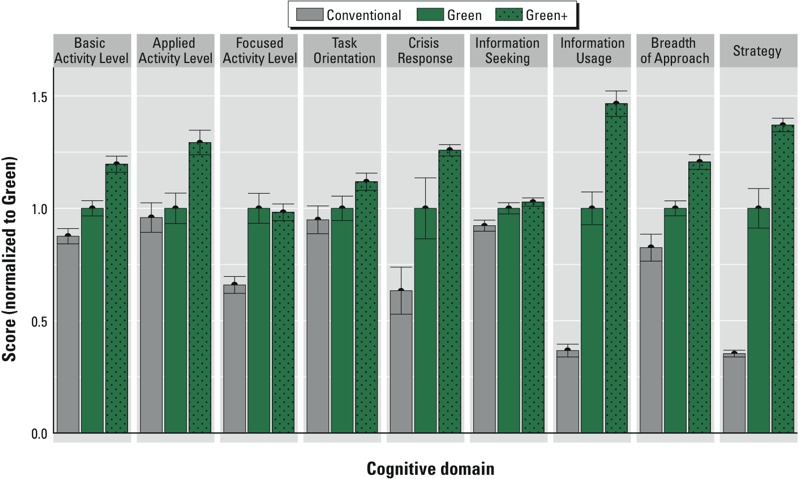
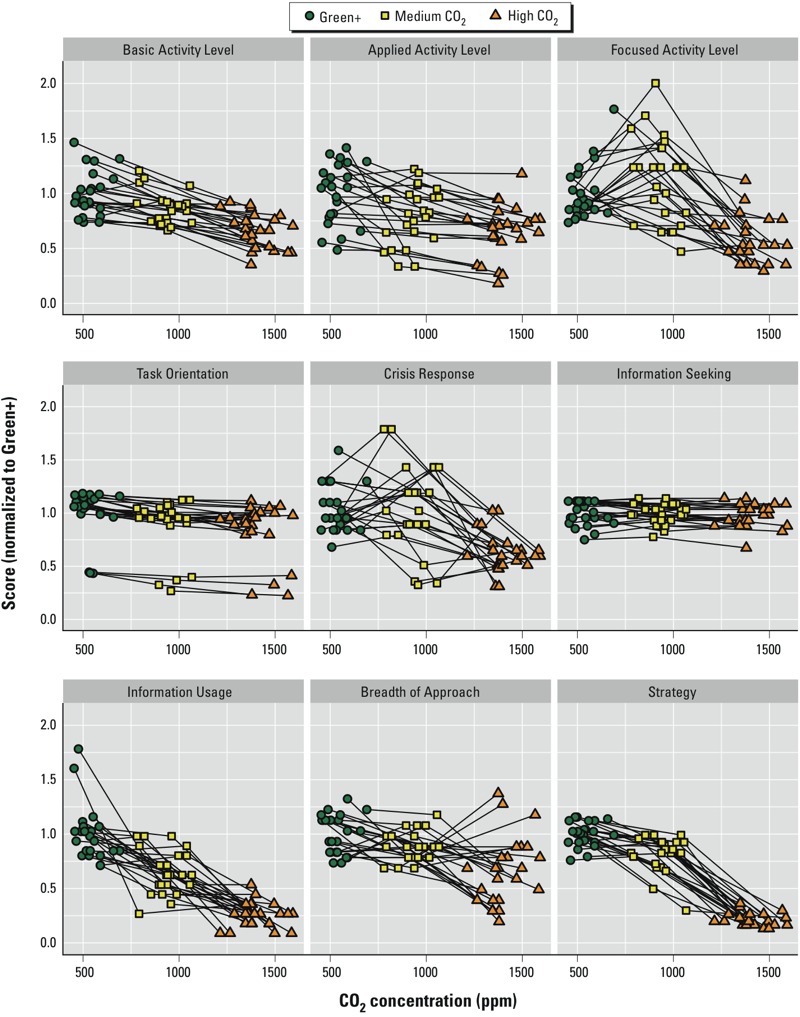
Background: The indoor built environment plays a critical role in our overall well-being because of both the amount of time we spend indoors (~90%) and the ability of buildings to positively or negatively influence our health. The advent of sustainable design or green building strategies reinvigorated questions regarding the specific factors in buildings that lead to optimized conditions for health and productivity. Objective: We simulated indoor environmental quality (IEQ) conditions in “Green” and “Conventional” buildings and evaluated the impacts on an objective measure of human performance: higher-order cognitive function. Methods: Twenty-four participants spent 6 full work days (0900–1700 hours) in an environmentally controlled office space, blinded to test conditions. On different days, they were exposed to IEQ conditions representative of Conventional [high concentrations of volatile organic compounds (VOCs)] and Green (low concentrations of VOCs) office buildings in the United States. Additional conditions simulated a Green building with a high outdoor air ventilation rate (labeled Green+) and artificially elevated carbon dioxide (CO2) levels independent of ventilation. Results: On average, cognitive scores were 61% higher on the Green building day and 101% higher on the two Green+ building days than on the Conventional building day (p < 0.0001). VOCs and CO2 were independently associated with cognitive scores. Conclusions: Cognitive function scores were significantly better under Green+ building conditions than in the Conventional building conditions for all nine functional domains. These findings have wide-ranging implications because this study was designed to reflect conditions that are commonly encountered every day in many indoor environments. Citation: Allen JG, MacNaughton P, Satish U, Santanam S, Vallarino J, Spengler JD. 2016. Associations of cognitive function scores with carbon dioxide, ventilation, and volatile organic compound exposures in office workers: a controlled exposure study of green and conventional office environments. Environ Health Perspect 124:805–812; http://dx.doi.org/10.1289/ehp.1510037
Overview
The claims and statistics of this paper haven’t been checked yet.
Run the check — free, no account needed. It reads the open-access text and checks the sources it cites.
Integrity signals
Registry
Cites
Statistics
Figures
Verification
Claims the paper makes
The claims and statistics of this paper haven’t been checked yet.
Run the check — free, no account needed. It reads the open-access text and checks the sources it cites.
Claims other papers make about this one
Each is checked against this paper’s own text: does it say what the citing paper says it does?
The cited source says what the claim attributes to it.
In the citing paper
“Low ventilation rates and CO2 concentrations normally found in office buildings (approximately 1,000 ppm) have been recently associated with impairment in multiple domains of high-order cognitive function [45,46].”
From Reduced cognitive function during a heat wave among residents of non-air-conditioned buildings: An observational study of young adults in the summer of 2016 (2018) · cites this paper as [46]
Self-check
Percentages, sums and reported differences re-computed from the paper’s own numbers.
The self-check needs the paper’s full text.
Citations
Cites
Ventilation for Acceptable Indoor Air Quality
Falih, M. (2019) · Cited by 2,497
Satish, U., Mendell, M. J., Shekhar, K., Hotchi, T., Sullivan, D., Streufert, S., & Fisk, W. J. (2012) · Environmental Health Perspectives · doi:10.1289/ehp.1104789 · Cited by 1,064 · cited 4×
“However, this conventional thinking is being challenged as the evidence mounts for CO2 as a direct pollutant, not just a marker for other pollutants (Satish et al. 2012).”
BackgroundMethodInfluentialSelf-citationWargocki, P. L., Wyon, D. P., Sundell, J., Clausen, G., & Fanger, P. O. (2000) · Indoor Air · doi:10.1034/j.1600-0668.2000.010004222.x · Cited by 693 · cited 1×
“…building factors, such as ventilation rate; workspace factors, such as the presence of chemical-emitting materials; and personal factors, such as job stress, allergies, and sex (Mendell 1993; Wargocki et al. 2000; Bornehag et al. 2005; Hedge 2009; Hedge and Gaygen 2010; Nishihara et al. 2014).”
Estimates of Improved Productivity and Health from Better Indoor Environments
Fisk, W. J., & Rosenfeld, A. H. (1997) · Indoor Air · doi:10.1111/j.1600-0668.1997.t01-1-00002.x · Cited by 551
Associations between classroom CO2 concentrations and student attendance in Washington and Idaho
Shendell, D. G., Prill, R., Fisk, W. J., Apte, M. G., Blake, D., & Faulkner, D. (2004) · Indoor Air · doi:10.1111/j.1600-0668.2004.00251.x · Cited by 462 · cited 1×
“Corsi et al. (2002) reported CO 2 concentrations > 1,000 ppm in 66% of 120 classrooms in Texas, and Shendell et al. (2004) measured CO 2 concentrations > 1,000 ppm in 45% of 435 classrooms in Washington and Idaho and reported that elevated CO 2 concentrations were associated with increases in…”
BackgroundEffects of Green Buildings on Employee Health and Productivity
Singh, A., Syal, M., Grady, S. C., & Korkmaz, S. (2010) · American Journal of Public Health · doi:10.2105/ajph.2009.180687 · Cited by 320
Non-Specific Symptoms In Office Workers: A Review And Summary Of The Epidemiologic Literature
Mendell, M. J. (1993) · Indoor Air · doi:10.1111/j.1600-0668.1993.00003.x · Cited by 282
Allen, J. G., MacNaughton, P., Laurent, J. G. C., Flanigan, S. S., Eitland, E. S., & Spengler, J. D. (2015) · Current Environmental Health Reports · doi:10.1007/s40572-015-0063-y · Cited by 281 · cited 1×
“To date, we know of no studies that have been conducted in green buildings where participants were blinded to their building condition (Allen et al. 2015).”
Self-citationPersily, A. (2015) · Building and Environment · doi:10.1016/j.buildenv.2015.02.026 · Cited by 249 · cited 2×
“The > 100-year story of ventilation in buildings is complicated and was neatly summarized recently by Persily (2015).”
Hodgson, A. T., Rudd, A., Beal, D., & Chandra, S. (2000) · Indoor Air · doi:10.1034/j.1600-0668.2000.010003178.x · Cited by 240
Research works printed but not linked: 4
- ACGIH (American Conference of Governmental Industrial Hygienists), 2015, 2015 Guide to Occupational Exposure Values.
- Breuer K, Satish U, 2003, Emergency management simulations: an approach to the assessment of decision-making processes in complex dynamic crisis environments., 145
- Corsi RL, Torres VM, Sanders M, Kinney KA, 2002, Carbon dioxide levels and dynamics in elementary schools: results from the TESIAS study., 74
- Swezey, 1998, Preliminary development of a computer-based team performance assessment simulation., Int J Cogn Ergonomics, 2, 163
Cited by
Sorted by citations
Items 401–500 of 976
Costs and Pricing of Green Buildings
Jiang, Y., Zhao, D., Xu, Z., Zhang, Y., Men, Z., & Hu, T. (2024) · Sustainable development goals series · doi:10.1007/978-3-031-56241-9_12 · Cited by 11
Clearing the air on EU guidance projects for school buildings
Camacho-Montano, S. C., Wagner, A., Erhorn‐Kluttig, H., Mumovic, D., & Summerfield, A. J. (2018) · Building Research & Information · doi:10.1080/09613218.2018.1448961 · Cited by 10
“In a recent double-blind study design of office workers, Allen et al. (2016) found a dose–response whereby most domains of cognitive function declined substantially as CO2 levels were raised from 550 to 945 ppm and then to 1400 ppm.”
BackgroundPruning chemicals from the green building landscape
Robbins, L. J. G., Rodgers, K. M., Walsh, B., Ain, R., & Dodson, R. E. (2019) · Journal of Exposure Science & Environmental Epidemiology · doi:10.1038/s41370-019-0174-x · Cited by 11
Härkönen, K., Hannola, L., Lassila, J., & Luoranen, M. (2021) · Sustainable Cities and Society · doi:10.1016/j.scs.2021.103460 · Cited by 10
Kalmár, T., Szodrai, F., & Kalmár, F. (2021) · Energy · doi:10.1016/j.energy.2021.122619 · Cited by 10
Carbon Dioxide Monitoring inside an Australian Brewery Using an Internet-of-Things Sensor Network
Hawchar, A., Ould, S., & Bennett, N. S. (2022) · Sensors · doi:10.3390/s22249752 · Cited by 9
Impact of green building certification on the rent of commercial properties: A review
Jayakody, T. A. C. H., & Vaz, A. (2023) · Journal of Informatics and Web Engineering · doi:10.33093/jiwe.2023.2.2.2 · Cited by 10
Akamatsu, N., Sugano, S., Amada, K., Tomita, N., Iwaizumi, H., Takeda, Y., Wargocki, P. L., Olesen, B. W., & Tanabe, S. (2024) · Building and Environment · doi:10.1016/j.buildenv.2024.111540 · Cited by 9
“Several other studies have also established this relationship[6,7].”
BackgroundMethodWen, Q., Zhou, Q., Ye, H., Guo, Q., Shan, J., & Huang, Z. (2024) · Buildings · doi:10.3390/buildings14061790 · Cited by 14
Assessments and application of low-cost sensors to study indoor air quality in layer facilities
Afroz, R., Guo, X., Cheng, C.-W., Omar, S., Carney, V. L., Zuidhof, M. J., & Zhao, R. (2024) · Environmental Technology & Innovation · doi:10.1016/j.eti.2024.103773 · Cited by 9
Onivefu, A. P., & Imarhiagbe, O. (2024) · The handbook of environmental chemistry · doi:10.1007/698_2024_1128 · Cited by 11
D’Amico, F., Calidonna, C. R., Ammoscato, I., Gullì, D., Malacaria, L., Sinopoli, S., Benedetto, G. D., & Feudo, T. L. (2024) · Sustainability · doi:10.3390/su162310175 · Cited by 9
Dedesko, S., Pendleton, J., Petrov, J., Coull, B. A., Spengler, J. D., & Allen, J. G. (2025) · Building and Environment · doi:10.1016/j.buildenv.2025.112531 · Cited by 9
Self-citationEnhancing stakeholder engagement and performance evaluation in building design using BIM and VR
Li, H., Fang, S., Shi, T., Wales, N., & Skitmore, M. (2025) · Automation in Construction · doi:10.1016/j.autcon.2025.106191 · Cited by 9
Lima, E. C. D. S., Ferreira, H., Mateus, L. M. C., & de Arruda, A. J. V. (2025) · Energy and Buildings · doi:10.1016/j.enbuild.2025.116141 · Cited by 9
Zheng, J., Guo, X., Hu, S., Wu, F., Lao, C., Ma, H., Liu, R., & Xu, G. (2021) · Energy and Buildings · doi:10.1016/j.enbuild.2021.111760 · Cited by 9
Indoor Air Quality (IAQ) Evaluation of Higher Education Learning Environments
Lama, S., Fu, C., & Lee, A. H.-C. (2022) · Journal of Smart Buildings and Construction Technology · doi:10.30564/jsbct.v4i1.4042 · Cited by 9
Lewinski, N. A., Secondo, L. E., & Ferri, J. K. (2019) · Process Safety Progress · doi:10.1002/prs.12030 · Cited by 9
Optimization of Ge substrates for ZnO deposition and their application for CO2 detection
Hernandez, A. G., Kudriavtsev, Y., Karthik, T. V. K., & Asomoza, R. (2019) · Journal of Materials Science Materials in Electronics · doi:10.1007/s10854-019-00975-0 · Cited by 9
Indoor air quality and thermal comfort for elderly residents in Houston TX—a case study
Baniassadi, A., Sailor, D. J., & O’Lenick, C. R. (2018) · Healthy, Intelligent and Resilient Buildings and Urban Environments · doi:10.14305/ibpc.2018.ie-2.04 · Cited by 9
“For example, exposure to moderate to high levels of carbon dioxide (CO2), with its welldocumented negative impacts on cognitive function (Allen et al., 2016; Satish et al., 2012), may be more detrimental to the elderly than other age groups.”
BackgroundFernandes, R., Carey, D., Bortoluzzi, B. S. K., & McArthur, J. J. (2019) · Intelligent Buildings International · doi:10.1080/17508975.2019.1674625 · Cited by 9
“2012), air quality (Fisk and Rosenfeld 1997; Wyon 2004; Allen et al. 2015; Byrd and Rasheed 2016), and noise (Roelofsen 2008; Wiik 2011; INTELLIGENT BUILDINGS INTERNATIONAL 229”
BackgroundAmeen, A., Mattsson, M., Boström, H., & Lindelöw, H. (2023) · Buildings · doi:10.3390/buildings13010156 · Cited by 9
“Humans spend roughly 90 % of their time indoors, and studies have shown that thermal comfort and indoor air quality have an impact on work performance and cognitive function [1,2].”
Westermann, S., Niblock, S. J., & Kortt, M. A. (2018) · Economic Papers A journal of applied economics and policy · doi:10.1111/1759-3441.12201 · Cited by 9
“…the benefits from an enhanced reputation due to the projection of a social and environmental awareness by occupying a green building and the reduction in CO2 emissions (Allen et al., 2015; Allen et al., 2016; Eichholtz, Kok and Quigley, 2010, 2013; Fuerst and McAllister, 2011; Miller et al., 2009).”
BackgroundEducational restoration: a foundational model inspired by ecological restoration
Kensler, L. A. W., & Uline, C. L. (2019) · International Journal of Educational Management · doi:10.1108/ijem-03-2018-0095 · Cited by 11
Environmental Monitoring of PM2.5 and CO2 in Indoor Office Spaces of Delhi, India
Gupta, A., Goyal, R., Kulshreshtha, P., & Jain, A. (2020) · Lecture notes in civil engineering · doi:10.1007/978-981-15-1334-3_8 · Cited by 9
Waar, Z. A., & Moustafa, M. O. (2024) · Journal of Electronic Materials · doi:10.1007/s11664-024-11282-8 · Cited by 8
Does working from home work? That depends on the home
Stroom, M., Eichholtz, P. M. A., & Kok, N. (2024) · PLoS ONE · doi:10.1371/journal.pone.0306475 · Cited by 11
“As such, this paper reaffirms that the effect of a healthy indoor climate affects productivity, related to previous research that shows significant health effects of indoor climate [33, 34, 59, 60].”
BackgroundZhang, X., Ma, L., Chen, J., Fu, J., Wang, J., Wang, Y., Zhu, M., Yu, M., & Chen, D. (2025) · Displays · doi:10.1016/j.displa.2025.103038 · Cited by 8
Fu, H., Hao, Y., Wu, Z., Xu, H., & Zuo, J. (2026) · Renewable and Sustainable Energy Reviews · doi:10.1016/j.rser.2026.116772 · Cited by 9
Occupant centric indoor environmental quality assessment within institutional settings
Wani, F. A., Sharma, V., Pal, A., Mathur, S., & Mathur, J. (2026) · Smart and Sustainable Built Environment · doi:10.1108/sasbe-05-2025-0238 · Cited by 8
Martínez-Soto, A., Jimenez-Gallardo, C., Villarroel-Lopez, A., Reyes-Riveros, A., & Höhl, J. (2024) · Sustainability · doi:10.3390/su16020547 · Cited by 10
“Among the pollutants, carbon dioxide (CO 2 ) is included, which in high concentrations (>1000 ppm) can lead to reduced concentration, affect sleep, and increase the risk of respiratory diseases [17–19].”
Manu, S., & Rysanek, A. (2024) · Buildings · doi:10.3390/buildings14092965 · Cited by 10
“Similarly, increased ventilation can reduce the concentration of indoor pollutants, thereby lowering the incidence of respiratory infections [5], and improved air quality can lead to better cognitive performance and decision-making abilities [6].”
Think circular–Reducing embodied carbon through materials selection
Cousins, F., Yost, T. B., & Bender, G. (2018) · MRS Energy & Sustainability · doi:10.1557/mre.2018.3 · Cited by 8
Retaining a healthy indoor environment in on-demand mixed-mode classrooms
Cerri, S., Maskrey, A., & Peppard, E. (2020) · Developments in the Built Environment · doi:10.1016/j.dibe.2020.100031 · Cited by 8
Sarnosky, K., Benden, M. E., Cizmas, L. H., Regan, A. K., & Sansom, G. (2021) · International Journal of Environmental Monitoring and Analysis · doi:10.11648/j.ijema.20210902.12 · Cited by 8
“Levels of carbon dioxide (CO2) was likewise collected due to it’s, and VOCs, association with lower cognitive scores in the workplace [17].”
BackgroundAre Mental Biases Responsible for the Perceived Comfort Advantage in “Green” Buildings?
Holmgren, M., & Sörqvist, P. (2018) · Buildings · doi:10.3390/buildings8020020 · Cited by 9
“[23] showed, for example, that occupants obtain higher scores on cognitive tasks when the tasks are conducted in “green” buildings compared to in conventional buildings, even when the participants were blinded to what condition they were in (i.”
BackgroundConducting Human-Centered Building Science at the Well Living Lab
Aristizabal, S., Porter, P., Clements, N. S., Campanella, C., Zhang, R., Hovde, K., & Lam, C. (2019) · Technology|Architecture + Design · doi:10.1080/24751448.2019.1640535 · Cited by 8
“1999), or simulated management decision making (Allen et al. 2016; MacNaughton et al. 2017; Satish et al. 2012).”
BackgroundRethinking ventilation: A benefit-cost analysis of carbon-offset increased outdoor air provision
McArthur, J. J. (2019) · Building and Environment · doi:10.1016/j.buildenv.2019.106551 · Cited by 8
Katsikantami, I., & Tzatzarakis, M. N. (2022) · Elsevier eBooks · doi:10.1016/b978-0-12-824315-2.00095-6 · Cited by 8
Recommitting to Ventilation Standards for Healthy Indoor Air Quality
Allen, J. G. (2024) · American Journal of Public Health · doi:10.2105/ajph.2024.307809 · Cited by 8
Self-citationEl individualismo como política pública: la vivienda incremental amenazada por la pobreza energética
Encinas, F., Freed, C., Aguirre, C., Schueftan, A., Vergara‐Perucich, F., & Orellana, S. I. C. (2023) · Revista INVI · doi:10.5354/0718-8358.2023.70681 · Cited by 7
Hurley, R. F., Belyamani, M. A., Djamasbi, S., Somasse, G. B., Strauß, S., Zhang, H., Zhang, J. “., & Liu, S. (2024) · Energy and Built Environment · doi:10.1016/j.enbenv.2024.05.005 · Cited by 7
van der Walt, R. E., Grobbelaar, S. S. S., & Booysen, M. J. (2024) · Journal of Cleaner Production · doi:10.1016/j.jclepro.2024.143120 · Cited by 7
Andersen, A. H., & Jradi, M. (2025) · Applied Sciences · doi:10.3390/app15010451 · Cited by 10
Huang, X., Zheng, X., Xu, Y., Zhai, J., Wang, D., & Qian, H. (2025) · Building and Environment · doi:10.1016/j.buildenv.2025.113021 · Cited by 8
Hamadah, M., Elseragy, A., & Eldeeb, S. (2023) · F1000Research · doi:10.12688/f1000research.133199.1 · Cited by 7
Rackes, A., Ben-David, T., & Waring, M. S. (2018) · Indoor Air · doi:10.1111/ina.12466 · Cited by 7
Gupta, R., & Howard, A. (2020) · Building Simulation · doi:10.1007/s12273-020-0675-5 · Cited by 7
Exploring Ambient Air Quality Notifications for Smart Rooms
Dang, C. T., Aslan, I., Seiderer, A., & André, E. (2020) · EAI International Conference on Smart Objects and Technologies for Social Good (GOODTECHS) · doi:10.1145/3411170.3411229 · Cited by 7
Sustainable Housing in Developing Countries: A Reality or a Mirage
Saliu, I., & Akiomon, E. (2022) · IntechOpen eBooks · doi:10.5772/intechopen.99060 · Cited by 7
Dott, A., Gavrilis, D. G., Drews, A., & Werner, A. (2023) · Chemical Engineering & Technology · doi:10.1002/ceat.202200430 · Cited by 7
Quan, F., Wu, B., Guo, Y., Zhang, X., Shen, W., Jia, F., Liu, X., Ai, Z., & Zhang, L. (2023) · Journal of Colloid and Interface Science · doi:10.1016/j.jcis.2023.04.160 · Cited by 7
Histoire et courants architecturaux du bâtiment scolaire, une nouvelle ère à venir ?
Barthelemy, S., & Jeannin, L. (2019) · Tréma · doi:10.4000/trema.5416 · Cited by 7
Cushing, D. F., & Miller, E. (2019) · Routledge eBooks · doi:10.4324/9780429289637-8 · Cited by 7
Tang, X., de l’Aulnoit, S. H., Buelow, M. T., Slack, J. L., Singer, B. C., & Destaillats, H. (2020) · Indoor Air · doi:10.1111/ina.12695 · Cited by 7
Energy Efficiency Improvement in K-12 Schools: A Case Study in Florida
Doiphode, G., Najafi, H., & Migliori, M. (2020) · ASME Journal of Engineering for Sustainable Buildings and Cities · doi:10.1115/1.4048894 · Cited by 7
Stratigou, E., Dusanter, S., de Brito, J. F., Tison, E., & Riffault, V. (2022) · Toxics · doi:10.3390/toxics10040161 · Cited by 7
Newell, T. A. (2020) · medRxiv · doi:10.1101/2020.07.20.20158238 · Cited by 7
Human health and productivity outcomes associated with indoor air quality: a systematic reviewPreprint
Palacios, J., Steele, K. S., & Zheng, S. (2021) · SSRN Electronic Journal · doi:10.2139/ssrn.3881998 · Cited by 7
Dedesko, S., Pendleton, J., Young, A. S., Coull, B. A., Spengler, J. D., & Allen, J. G. (2025) · Journal of Exposure Science & Environmental Epidemiology · doi:10.1038/s41370-025-00770-6 · Cited by 7
Self-citationRu, Z., Guo, L., Qi, J., & An, T. (2025) · Building and Environment · doi:10.1016/j.buildenv.2025.113056 · Cited by 6
Ten questions concerning the economics of indoor environmental quality in buildings
Flagner, S., Schiavon, S., Kok, N., Fuerst, F., Licina, D., Loder, A., Rahman, S. A., Scheer, F. A. J. L., Wang, L. M., Weeldreyer, G. S., et al. (2025) · Building and Environment · doi:10.1016/j.buildenv.2025.113227 · Cited by 7
Rebreathing during CPAP therapy and its implications in obstructive sleep apnea
Noah, W. H., White, D. P., Hete, B., & Messineo, L. (2025) · Journal of Clinical Sleep Medicine · doi:10.5664/jcsm.11802 · Cited by 6
“Yet, several other studies described a direct causal effect of CO 2 on health outcomes in humans, including worse concentration, 41 decreased decision-making performance or learning, 32,42 – 44 dete-riorating cognition, 45 and onset of sick building syndrome-like symptoms.”
McCormick, E. L., & Rider, T. R. (2025) · Indoor Air · doi:10.1155/ina/5706819 · Cited by 7
Real-Time Insights into Indoor Air Quality in University Environments: PM and CO2 Monitoring
Mustață, D.-M., Bisorca, D., Ionel, I., Adjal, A., & Balogh, R.-M. (2025) · Atmosphere · doi:10.3390/atmos16080972 · Cited by 6
Bolognesi, S., López, L. R., Perona-Vico, E., Bañeras, L., Balaguer, M. D., & Puig, S. (2025) · Chemical Engineering Journal · doi:10.1016/j.cej.2025.167426 · Cited by 6
Bashir, M. T., Alrowais, R., Lal, R., Bashir, M., Sikandar, M. A., Zahid, N., Khan, M. M. H., Saad, S., Abbas, M. I., Khan, M. W., et al. (2025) · Indoor Air · doi:10.1155/ina/1281155 · Cited by 9
Larcombe, A. N., & Bierwirth, P. N. (2026) · Air Quality Atmosphere & Health · doi:10.1007/s11869-026-01918-5 · Cited by 6
“…physiology in many species ranging from gastropods (Mardones et al., 2022; Navarro et al., 2022), to rodents (Kiray et al., 2014; Larcombe et al., 2021; Mar-trette et al., 2017; Wyrwoll et al., 2022) and humans (Allen et al., 2016; Lu et al., 2015; Satish et al., 2012; Seppänen et al., 1999).”
Simulation of IAQ and thermal comfort of a classroom at various ventilation strategies
Zemītis, J., Borodiņecs, A., Sidenko, N., & Zajacs, A. (2023) · E3S Web of Conferences · doi:10.1051/e3sconf/202339603005 · Cited by 6
Cognition, economic decision-making, and physiological response to carbon dioxide
Flagner, S., Meißner, T., Künn, S., Eichholtz, P. M. A., Kok, N., Kramer, R. P., Lichtenbelt, W. D. V. M., Ly, C., & Plasqui, G. (2025) · Indoor Environments · doi:10.1016/j.indenv.2025.100074 · Cited by 6
Carnieletto, L., Marigo, M., Arcelli, T., Moro, C., Turchi, G. P., Carli, M. D., & Bella, A. D. (2025) · Building and Environment · doi:10.1016/j.buildenv.2025.112893 · Cited by 6
Chang, Y.-S., Ho, M.-Y., Wu, C.-W., & Chang, Y. (2025) · Process Safety and Environmental Protection · doi:10.1016/j.psep.2025.107419 · Cited by 6
Ionic-Liquid-Based Contactors for Carbon Dioxide Removal from Simulated Spacecraft Cabin Atmospheres
Nabity, J., Killelea, J. V., Shaffer, B., Arquilla, K. S., Rundle, T. J., Fritz, T., & Phillips, D. D. (2020) · Journal of Spacecraft and Rockets · doi:10.2514/1.a34750 · Cited by 6
Assessment of personal exposure to infectious contaminant under the effect of indoor air stability
Deng, X., Gong, G., Chen, S., He, X., Ou, Y., & Wang, Y. (2021) · Environmental Science and Pollution Research · doi:10.1007/s11356-021-13443-2 · Cited by 6
“This emphasizes the importance of maintaining good indoor environment quality, especially good indoor air quality, as it is closely associated with people’s health conditions (Allen et al. 2016; Spengler and Sexton 1983; Fisk 2018; Fisk et al. 2009).”
BackgroundEnhancing crop growth in rooftop farms by repurposing CO2 from human respiration inside buildings
Buckley, S., Sparks, R., Cowdery, E. M., Stirling, F., Marsching, J., & Phillips, N. G. (2022) · Frontiers in Sustainable Food Systems · doi:10.3389/fsufs.2022.918027 · Cited by 8
“, 2018) even when as low as 1,000 ppm CO2 (Satish et al., 2012; Allen et al., 2016; Persily and de Jonge, 2017).”
Mohamed, R. M., & Ali, M. A. M. (2023) · Designs · doi:10.3390/designs7010030 · Cited by 5
Chang, L.-Y., & Chang, T. (2023) · Energies · doi:10.3390/en16052493 · Cited by 6
Exposure of Elderly People to Indoor Air Pollutants in Wanxia Nursing Home
Zong, H., Tian, L., Cao, Z., & Luo, M. (2023) · Buildings · doi:10.3390/buildings13092135 · Cited by 6
Experimental study on the impact of indoor air quality on creativity by Serious Brick Play method
Arikrishnan, S., Roberts, A. C., Lau, W. S., Wan, M. P., & Ng, B. F. (2023) · Scientific Reports · doi:10.1038/s41598-023-42355-z · Cited by 10
Shukla, P., Mishra, S. S., & Goswami, S. (2024) · Journal of Building Engineering · doi:10.1016/j.jobe.2024.108648 · Cited by 6
Corona, J., Tondini, S., Nottiani, D. G., Scilla, R., Gambaro, A., Pasut, W., Babich, F., & Lollini, R. (2024) · Sensors · doi:10.3390/s24072176 · Cited by 6
Air Quality in Sport Facilities
Grande, M. S., & Cao, G. (2019) · E3S Web of Conferences · doi:10.1051/e3sconf/201911102023 · Cited by 6
Can plants be considered a building service?
Gubb, C., Blanuša, T., Griffiths, A., & Pfrang, C. (2020) · Building Services Engineering Research and Technology · doi:10.1177/0143624419899519 · Cited by 6
“Concentrations of CO2 > 800ppm are more likely to cause eye irritation, and upper respiratory symptoms(79) and CO2 concentrations of 950ppm reduce cognitive function.(29) Additionally, it has been determined that an increase in 100ppm of CO2 in a school environment is associated with a reduced annual attendance of hal…”
BackgroundCan We Sustain Sustainability? A Critical Synthesis of Pertinent Literature
Brand, J. L., & Augustin, S. (2021) · Sustainability · doi:10.3390/su132212753 · Cited by 6
“Furthermore, by studying people who worked in a green environment for six full days, Allen and colleagues [33] learned that higher-order cognitive function was enhanced in the environmentally responsible structure.”
BackgroundA Literature Review on Healthy Buildings Based on Various Perspectives
Amatkasmin, L. R., Berawi, M. A., & Sari, M. (2022) · Lecture notes in civil engineering · doi:10.1007/978-981-16-7949-0_51 · Cited by 6
Du, X., Gao, G., Gao, F., & Zhou, Z. (2023) · Sustainability · doi:10.3390/su151914200 · Cited by 6
An outline to futureproofing cities with ten immediate steps
Wilson, B. D. (2018) · Proceedings of the Institution of Civil Engineers - Urban Design and Planning · doi:10.1680/jurdp.18.00004 · Cited by 6
“Specific conditions integrated into the architecture and landscape design of spaces can achieve improved human happiness, learning and productivity leading to heightened employee attraction and retention (Allen et al., 2015; Jones and Laquidara-Carr, 2016).”
BackgroundEvidence-Based Design for Indoor Environmental Quality and Health
Bayer, C. W. (2020) · Springer eBooks · doi:10.1007/978-1-0716-0684-1_604 · Cited by 6
(2019) · Elsevier eBooks · doi:10.1016/b978-0-12-816774-8.00004-9 · Cited by 6
Smart Ventilation Controls for Occupancy and Auxiliary Fan Use Across U.S. Climates
Less, B. D., & Walker, I. S. (2022) · Lawrence Berkeley National Laboratory · doi:10.2172/1843195 · Cited by 6
“One of the sole exceptions was an experimental study by Allen et al. (2015) on 24 human subjects that suggested an effect on psychomotricity performance above 1,000 ppm attributable to CO2, but which must still be investigated further according to the authors. A more recent study by Zhang, Wargocki, & Lian (2017) was…”
BackgroundInfluentialJones, R. V., Fuertes, A., & Bilverstone, P. A. (2025) · Journal of Building Engineering · doi:10.1016/j.jobe.2025.113476 · Cited by 5
Synergistic Air Quality and Cooling Efficiency in Office Space with Indoor Green Walls
Alsadun, I. S. R., Bashir, F. M., Andleeb, Z., Houria, Z. B., Said, M. A., & Agboola, O. (2025) · Buildings · doi:10.3390/buildings15203656 · Cited by 5
Yu, J., Wang, T., Quan, S., Zhang, J., & Zhao, C. (2026) · Energy and Buildings · doi:10.1016/j.enbuild.2026.117503 · Cited by 5
Retirement Village Design Features: Generation X’s Expectation
Bohari, A. A. M., Julaihi, F. A., Kipli, K., Azman, M. A., Amirul, S. R., & Hu, X. (2024) · Pertanika journal of social science & humanities · doi:10.47836/pjssh.32.2.15 · Cited by 5
Integrated Intelligent Educational Environment – Opportunities for STEM Education
Terzieva, V. T., Ilchev, S., & Djambazova, E. (2024) · IFAC-PapersOnLine · doi:10.1016/j.ifacol.2024.07.132 · Cited by 5
Domjan, S., Fink, R., & Medved, S. (2025) · Energy and Buildings · doi:10.1016/j.enbuild.2025.115354 · Cited by 5
Hawkins, V. R., Marcham, C. L., Springston, J. P., Miller, J. D., Braybrooke, G., Maunder, C., Feng, L. G. H., & Kollmeyer, B. (2020) · Scholarly Commons (Embry–Riddle Aeronautical University) · Cited by 5
Assessing human performance and human reliability: a review
Raju, G. Y., Gupta, S., & Singh, L. K. (2023) · International Journal of Systems Assurance Engineering and Management · doi:10.1007/s13198-023-01893-5 · Cited by 5
“The most used characteristics to assess human performance in are cognition (Allen et al. 2016), sustained cognitive performance (Muto et al.”
BackgroundBuckley, S., Connolly, C. L., Levy, J. I., Templer, P. H., Ashmore, J., Carvalho, L. E., Phillips, N. G., & Fabian, M. P. (2023) · Sustainable Cities and Society · doi:10.1016/j.scs.2023.104792 · Cited by 5
Court Decisions and Air Pollution: Evidence from Ten Million Penal Cases in India
Sarmiento, L., & Nowakowski, A. (2023) · Environmental and Resource Economics · doi:10.1007/s10640-023-00805-2 · Cited by 5
“Results from randomized control trials substantiate the above evidence, wherein people score higher in cognitive function tests if randomly allocated to better air quality (Allen et al. 2016).”
BackgroundResult
Metadata
- Authors
- Allen, J. G., MacNaughton, P., Satish, U., Santanam, S., Vallarino, J., & Spengler, J. D.
- Affiliations
- Harvard University (US)
- SUNY Upstate Medical University (US)
- Syracuse University (US)
- Corresponding author
- Allen, Joseph G.
- Venue
- Environmental Health Perspectives
- Publisher
- American Chemical Society (ACS)
- Published
- 2015-10-26
- Volume
- 124
- Issue
- 6
- Pages
- 805-812
- ISSN
- 0091-6765 (ISSN-L)
- 1552-9924
- PMC
- PMC4892924
- OpenAlex
- W2412131385
- Cited by
- 977
- References
- 24
- Citations by year
- 2026: 138 · 2025: 121 · 2024: 121 · 2023: 88 · 2022: 103 · 2021: 107 · 2020: 86 · 2019: 84 · 2018: 66 · 2017: 36 · 2016: 25 · 2015: 1
- FWCI
- 26.76
- Type
- journal article
- Language
- en
- Open access
- gold
- doi.org
- Licence
- public-domain
- creativecommons.org/licenses/by/4.0/ (vor, 795 d)
- Locations
- Environmental Health Perspectives (publishedVersion, public-domain)
- PubMed Central (publishedVersion, public-domain)
- PubMed (publishedVersion)
- Digital Access to Scholarship at Harvard (DASH) (Harvard University) (submittedVersion, cc-by)
- Funders
- Harvard T.H. Chan School of Public Health
- National Institute of Environmental Health Sciences (T32ES007069)
- Topics
- Physical Sciences › Environmental Science › Health, Toxicology and Mutagenesis › Indoor Air Quality and Microbial Exposure
- Physical Sciences › Engineering › Architecture › Facilities and Workplace Management
- Physical Sciences › Engineering › Building and Construction › Sustainable Building Design and Assessment
- Keywords
- cognitive function, carbon dioxide exposure, indoor ventilation, volatile organic compounds, sustainable construction, indoor environmental quality, office workers, higher-order cognition
- MeSH terms
- Air Pollutants, Occupational, Carbon Dioxide, Cognition, Humans, United States, Ventilation, Occupational Exposure, Air Pollution, Indoor, Volatile Organic Compounds
About these checks
Registry, retraction, Cites and statistics results are computed, not judged, with one exception: a printed reference that no index lists is read once by a model before it counts as a citation error. Claims are extracted by a model and kept only when their quote appears verbatim in the text; each cited source is then checked, with a model’s help, for whether it says what the claim relies on. Those verdicts can be wrong — read the claim’s quote and the cited source before relying on one.
Statistics and arithmetic are recomputed, not judged.
Confidence bands are shown only for fields calibrated on our annotated test set. None is calibrated yet, so no band is shown.
What counts as a claim ›How we measure confidence ›How we check this ›
Are you an author, or do you see a problem with this page? Request a review
