

Dynamic Assignment and Maintenance of Positional Identity in the Ventral Neural Tube by the Morphogen Sonic Hedgehog
Open accessThe DOI matches its Crossref record; 84 of the 85 references it cites were found in a registry or an index.
Abstract
Morphogens are secreted signalling molecules that act in a graded manner to control the pattern of cellular differentiation in developing tissues. An example is Sonic hedgehog (Shh), which acts in several developing vertebrate tissues, including the central nervous system, to provide positional information during embryonic patterning. Here we address how Shh signalling assigns the positional identities of distinct neuronal subtype progenitors throughout the ventral neural tube. Assays of intracellular signal transduction and gene expression indicate that the duration as well as level of signalling is critical for morphogen interpretation. Progenitors of the ventral neuronal subtypes are established sequentially, with progressively more ventral identities requiring correspondingly higher levels and longer periods of Shh signalling. Moreover, cells remain sensitive to changes in Shh signalling for an extended time, reverting to antecedent identities if signalling levels fall below a threshold. Thus, the duration of signalling is important not only for the assignment but also for the refinement and maintenance of positional identity. Together the data suggest a dynamic model for ventral neural tube patterning in which positional information corresponds to the time integral of Shh signalling. This suggests an alternative to conventional models of morphogen action that rely solely on the level of signalling.
Overview
The claims and statistics of this paper haven’t been checked yet.
Free: it reads the open-access text and checks the first 5 claims that cite a source we can check. Create a free account to check every claim.
Integrity signals
Registry
Cites
Statistics
Figures
Verification
Claims the paper makes
The claims and statistics of this paper haven’t been checked yet.
Free: it reads the open-access text and checks the first 5 claims that cite a source we can check. Create a free account to check every claim.
Claims other papers make about this one
Each is checked against this paper’s own text: does it say what the citing paper says it does?
The cited source says what the claim attributes to it.
In the citing paper
“it emerged that the successive ventral to dorsal transcriptional domains are defined by the integrals over duration and intensity of Hh signalling, rather than simply on ‘morphogen concentration’, as always assumed previously.”
From Emerging properties of animal gene regulatory networks (2010) · cites this paper as [77]
Self-check
Percentages, sums and reported differences re-computed from the paper’s own numbers.
The self-check needs the paper’s full text.
Citations
Cites
Generalized lacZ expression with the ROSA26 Cre reporter strain
Soriano, P. (1999) · Nature Genetics · doi:10.1038/5007 · Cited by 4,859 · cited 2×
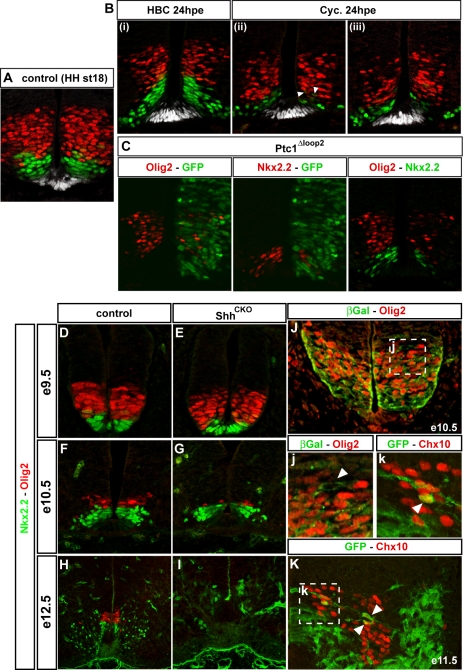
“5 mice embryos harbouring the Olig2cre allele and the ROSA26-flox-STOP-flox-lacZ or the ROSA26-floxSTOP-flox-GFP lineage tracers [51] revealed cells expressing the lineage marker within the pMN domain and their MN progeny (Figure 5J, 5K).”
BackgroundCre reporter strains produced by targeted insertion of EYFP and ECFP into the ROSA26 locus
Srinivas, S., Watanabe, T., Lin, C.-S., William, C. M., Tanabe, Y., Jessell, T. M., & Costantini, F. (2001) · BMC Developmental Biology · doi:10.1186/1471-213x-1-4 · Cited by 3,121 · cited 4×
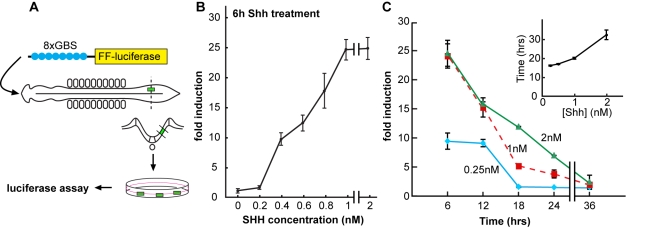
“PLoS Biology | www.plosbiology.org 2 June 2010 | Volume 8 | Issue 6 | e1000382 Hamilton (HH) stage 10 chick embryos in ovo electroporated with a Gli reporter (GBS-luc; Figure 1A; see Materials and Methods; [24]) and normalization plasmids were cultured in the presence of 0.1–2 nM Shh.”
BackgroundMethodInfluentialSonic hedgehog mediates the polarizing activity of the ZPA
Riddle, R. D., Johnson, R. L., Laufer, E., & Tabin, C. (1993) · Cell · doi:10.1016/0092-8674(93)90626-2 · Cited by 2,307 · cited 1×
“tube and underlying notochord [8,9,10,11,12,13] and spreads to”
Echelard, Y., Epstein, D. J., St-Jacques, B., Shen, L., Mohler, J., McMahon, J. A., & McMahon, A. P. (1993) · Cell · doi:10.1016/0092-8674(93)90627-3 · Cited by 2,154 · cited 1×
“tube and underlying notochord [8,9,10,11,12,13] and spreads to”
Neuronal specification in the spinal cord: inductive signals and transcriptional codes
Jessell, T. M. (2000) · Nature Reviews Genetics · doi:10.1038/35049541 · Cited by 2,089
Structure and function of the feed-forward loop network motif
Mangan, S., & Alon, U. (2003) · Proceedings of the National Academy of Sciences · doi:10.1073/pnas.2133841100 · Cited by 1,827 · cited 1×
“This strategy for morphogen dependent gene regulation has been referred to as ‘‘sequential cell context’’ [73] and represents an example of a feedforward loop [74].”
BackgroundAltered Neural Cell Fates and Medulloblastoma in Mouse patched Mutants
Goodrich, L. V., Milenković, L., Higgins, K. M., & Scott, M. P. (1997) · Science · doi:10.1126/science.277.5329.1109 · Cited by 1,696 · cited 1×
“The gradual adaptation of cells to Shh is controlled, at least in part, by the Shh mediated upregulation of Ptc1, the receptor for Shh that is also a negative regulator of the pathway [26,27,28,29,30,31].”
BackgroundEffects of oncogenic mutations in Smoothened and Patched can be reversed by cyclopamine
Taipale, J., Chen, J. K., Cooper, M. K., Wang, B., Mann, R. K., Milenkovic, L., Scott, M. P., & Beachy, P. A. (2000) · Nature · doi:10.1038/35023008 · Cited by 1,311 · cited 2×
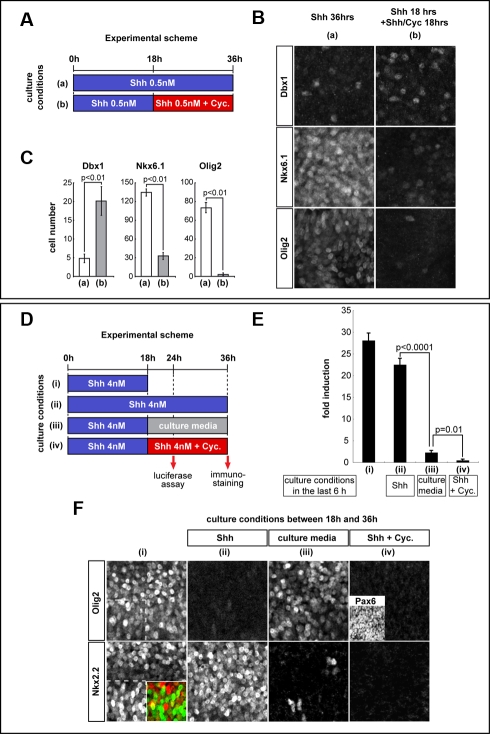
“To test this, we blocked Shh signalling in explants at different time points using the inhibitor cyclopamine [32,44], an antagonist of Smoothened, the essential intracellular transducer of the pathway [45,46].”
BackgroundMethodRobustness in bacterial chemotaxis
Alon, U., Surette, M. G., Barkai, N., & Leibler, S. (1999) · Nature · doi:10.1038/16483 · Cited by 1,129 · cited 1×
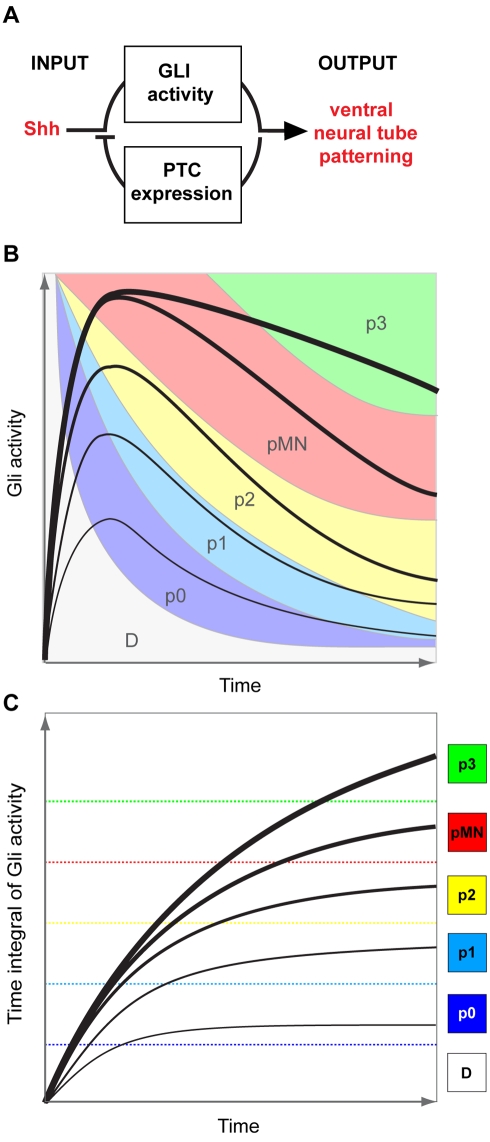
“The use of integral feedback control has been noted in several biological systems where it can act as a ‘‘gain’’ control to allow sensing over large concentration ranges or as a means to re-establish homeostasis after a system is disturbed [75,76,77].”
BackgroundBriscoe, J., Pierani, A., Jessell, T. M., & Ericson, J. (2000) · Cell · doi:10.1016/s0092-8674(00)80853-3 · Cited by 1,112
Self-citationThe tumour-suppressor gene patched encodes a candidate receptor for Sonic hedgehog
Stone, D. M., Hynes, M., Armanini, M., Swanson, T. A., Gu, Q., Johnson, R. L., Scott, M. P., Pennica, D., Goddard, A., Phillips, H., et al. (1996) · Nature · doi:10.1038/384129a0 · Cited by 1,106 · cited 1×
“The gradual adaptation of cells to Shh is controlled, at least in part, by the Shh mediated upregulation of Ptc1, the receptor for Shh that is also a negative regulator of the pathway [26,27,28,29,30,31].”
BackgroundKrauss, S., Concordet, J.-P., & Ingham, P. W. (1993) · Cell · doi:10.1016/0092-8674(93)90628-4 · Cited by 1,070 · cited 1×
“tube and underlying notochord [8,9,10,11,12,13] and spreads to”
Hedgehog Signaling in Development and Cancer
Jiang, J., & Hui, C.-C. (2008) · Developmental Cell · doi:10.1016/j.devcel.2008.11.010 · Cited by 1,063 · cited 1×
“Intracellular signal transduction by Shh results in increased transcriptional activity of the Gli family of zinc finger transcription factors [19].”
BackgroundPax6 Controls Progenitor Cell Identity and Neuronal Fate in Response to Graded Shh Signaling
Ericson, J., Rashbass, P., Schedl, A., Brenner-Morton, S., Kawakami, A., van Heyningen, V, Jessell, T. M., & Briscoe, J. (1997) · Cell · doi:10.1016/s0092-8674(00)80323-2 · Cited by 1,043 · cited 2×
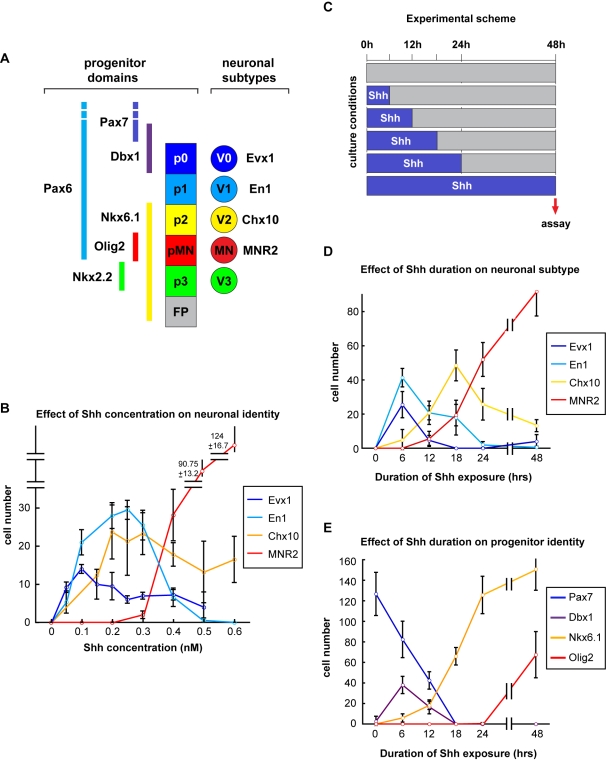
“Importantly, the order of appearance and the final position of these progenitor domains correspond to their requirement for increasing concentrations of Shh [21,24,25]—the more ventrally located progenitor domain emerges later and requires higher Shh concentrations.”
BackgroundSelf-citationRobust perfect adaptation in bacterial chemotaxis through integral feedback control
Yi, T.-M., Huang, Y., Simon, M. I., & Doyle, J. (2000) · Proceedings of the National Academy of Sciences · doi:10.1073/pnas.97.9.4649 · Cited by 1,036 · cited 2×
“The use of integral feedback control has been noted in several biological systems where it can act as a ‘‘gain’’ control to allow sensing over large concentration ranges or as a means to re-establish homeostasis after a system is disturbed [75,76,77].”
BackgroundEvidence for an Expansion-Based Temporal Shh Gradient in Specifying Vertebrate Digit Identities
Harfe, B. D., Scherz, P. J., Nissim, S., Tian, H., McMahon, A. P., & Tabin, C. J. (2004) · Cell · doi:10.1016/j.cell.2004.07.024 · Cited by 970 · cited 1×
“Notably, anteriorposterior patterning of the developing limb appears to depend on both a concentration and temporal gradient of Shh signalling [62,63,64] and, analogous to the neural tube, the specification of digit identity is progressive with the sequential induction of more posterior identities [65].”
BackgroundDual Roles for Patched in Sequestering and Transducing Hedgehog
Chen, Y., & Struhl, G. (1996) · Cell · doi:10.1016/s0092-8674(00)81374-4 · Cited by 900 · cited 2×
“It takes a longer time for the Shh gradient to extend to these positions [14] and then the growth of the neural tube and the sequestration of Shh ventrally might limit the period of time for which significant concentrations of Shh are maintained at this distance [23,26,47].”
BackgroundRoelink, H., Porter, J. A., Chiang, C., Tanabe, Y., Chang, D. T., Beachy, P. A., & Jessell, T. M. (1995) · Cell · doi:10.1016/0092-8674(95)90397-6 · Cited by 887 · cited 1×
“tube and underlying notochord [8,9,10,11,12,13] and spreads to”
Ericson, J., Morton, S., Kawakami, A., Roelink, H., & Jessell, T. M. (1996) · Cell · doi:10.1016/s0092-8674(00)81386-0 · Cited by 870
Sonic hedgehog regulates growth and morphogenesis of the tooth
Dassule, H. R., Lewis, P., Bei, M., Maas, R., & McMahon, A. P. (2000) · Development · doi:10.1242/dev.127.22.4775 · Cited by 807
Morphogen gradient interpretation
Gurdon, J. B., & Bourillot, P.-Y. (2001) · Nature · doi:10.1038/35101500 · Cited by 748 · cited 5×
“This emphasizes a second important difference between the mechanisms of Shh interpretation and standard morphogen models, which assert that positional identity of cells can ascend but not descend a gradient [3,53].”
BackgroundResultInfluentialDessaud, E., McMahon, A. P., & Briscoe, J. (2008) · Development · doi:10.1242/dev.009324 · Cited by 734 · cited 1×
“. One example where progress has been made in understanding the mechanism of morphogen action is Sonic Hedgehog (Shh) signalling in the vertebrate central nervous system”
BackgroundSelf-citationSasaki, H., Nishizaki, Y., Hui, C.-C., Nakafuku, M., & Kondoh, H. (1999) · Development · doi:10.1242/dev.126.17.3915 · Cited by 715
Sasaki, H., Hui, C.-C., Nakafuku, M., & Kondoh, H. (1997) · Development · doi:10.1242/dev.124.7.1313 · Cited by 674
The teratogenic Veratrum alkaloid cyclopamine inhibits Sonic hedgehog signal transduction
Incardona, J. P., Gaffield, W., Kapur, R. P., & Roelink, H. (1998) · Development · doi:10.1242/dev.125.18.3553 · Cited by 656
Gli1 is a target of Sonic hedgehog that induces ventral neural tube development
Lee, J., Platt, K. A., Censullo, P., & Altaba, A. R. (1997) · Development · doi:10.1242/dev.124.13.2537 · Cited by 634
Novitch, B. G., Chen, A. I., & Jessell, T. M. (2001) · Neuron · doi:10.1016/s0896-6273(01)00407-x · Cited by 615 · cited 1×
“, mouse anti-En1 (DSHB), mouse anti-Evx1 (DSHB), sheep anti-GFP (Biogenesis), mouse anti-MNR2 (DSHB), rabbit anti-Nkx2.2 (a gift from T. Jessell), mouse anti-Nkx2.2 (DSHB), mouse anti-Nkx6.1 (DSHB), guinea-pig anti-Olig2”
Self-citationInterpretation of the sonic hedgehog morphogen gradient by a temporal adaptation mechanism
Dessaud, E., Yang, L. L., Hill, K., Cox, B., Ulloa, F., Ribeiro, A., Mynett, A., Novitch, B. G., & Briscoe, J. (2007) · Nature · doi:10.1038/nature06347 · Cited by 613 · cited 12×
“Hamilton (HH) stage 10 chick embryos in ovo electroporated with a Gli reporter (GBS-luc; Figure 1A; see Materials and Methods; [24]) and normalization plasmids were cultured in the presence of 0.”
BackgroundMethodResultSelf-citationAlcedo, J., Ayzenzon, M., Von Ohlen, T., Noll, M., & Hooper, J. E. (1996) · Cell · doi:10.1016/s0092-8674(00)80094-x · Cited by 598 · cited 1×
“, an antagonist of Smoothened, the essential intracellular transducer of the pathway”
BackgroundStability and Nuclear Dynamics of the Bicoid Morphogen Gradient
Gregor, T., Wieschaus, E. F., McGregor, A. P., Bialek, W., & Tank, D. W. (2007) · Cell · doi:10.1016/j.cell.2007.05.026 · Cited by 514 · cited 1×
“Similarly, the graded response of cells to Dpp in Drosophila appears to correlate with the amount of activated Mad transcription factor [57,58,59] and the anterior-posterior patterning of Drosophila embryos depends on the amount of Bcd protein in each nucleus [60,61].”
BackgroundMarti, E., Bumcrot, D. A., Takada, R., & McMahon, A. P. (1995) · Nature · doi:10.1038/375322a0 · Cited by 491 · cited 1×
“tube and underlying notochord [8,9,10,11,12,13] and spreads to”
BackgroundMatise, M. P., Epstein, D. J., Park, H. L., Platt, K. A., & Joyner, A. L. (1998) · Development · doi:10.1242/dev.125.15.2759 · Cited by 489
smoothened encodes a receptor-like serpentine protein required for hedgehog signalling
van den Heuvel, M., & Ingham, P. W. (1996) · Nature · doi:10.1038/382547a0 · Cited by 474
Multiple origins of Cajal-Retzius cells at the borders of the developing pallium
Bielle, F., Griveau, A., Narboux-Nême, N., Vigneau, S., Sigrist, M., Arber, S., Wassef, M., & Pierani, A. (2005) · Nature Neuroscience · doi:10.1038/nn1511 · Cited by 459 · cited 2×
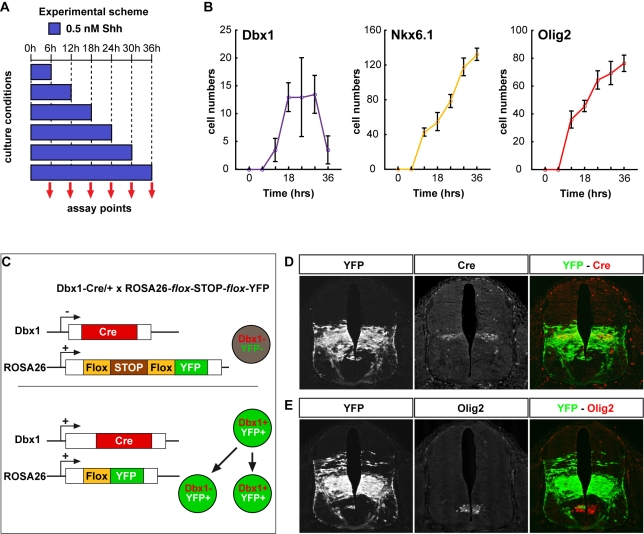
“To test this, we took advantage of a Dbx1-Cre mouse line [42] and the inducible reporter allele ROSA26STOPYFP (Figure 3C; Materials and Methods; [43]).”
BackgroundMethodSelf-citationMorphogens, their identification and regulation
Tabata, T., & Takei, Y. (2004) · Development · doi:10.1242/dev.01043 · Cited by 445 · cited 1×
“development [2,4].”
Bai, C. B., Stephen, D., & Joyner, A. L. (2004) · Developmental Cell · doi:10.1016/s1534-5807(03)00394-0 · Cited by 440 · cited 1×
“Shh induced intracellular Gli activity is required for the patterning of progenitors [22,52].”
BackgroundHedgehog Creates a Gradient of DPP Activity in Drosophila Wing Imaginal Discs
Tanimoto, H., Itoh, S., ten Dijke, P., & Tabata, T. (2000) · Molecular Cell · doi:10.1016/s1097-2765(00)80403-7 · Cited by 415 · cited 1×
“Similarly, the graded response of cells to Dpp in Drosophila appears to correlate with the amount of activated Mad transcription factor [57,58,59] and the anterior-posterior patterning of Drosophila embryos depends on the amount of Bcd protein in each nucleus [60,61].”
BackgroundSonic hedgehog Differentially Regulates Expression ofGLIandGLI3during Limb Development
Marigo, V., Johnson, R. L., Vortkamp, A., & Tabin, C. J. (1996) · Developmental Biology · doi:10.1006/dbio.1996.0300 · Cited by 382 · cited 1×
“The gradual adaptation of cells to Shh is controlled, at least in part, by the Shh mediated upregulation of Ptc1, the receptor for Shh that is also a negative regulator of the pathway [26,27,28,29,30,31].”
BackgroundControl of Interneuron Fate in the Developing Spinal Cord by the Progenitor Homeodomain Protein Dbx1
Pierani, A., Moran-Rivard, L., Sunshine, M. J., Littman, D. R., Goulding, M., & Jessell, T. M. (2001) · Neuron · doi:10.1016/s0896-6273(01)00212-4 · Cited by 379 · cited 1×
“Whether this mechanism is relevant for the provision of positional information throughout the concentration range of Shh in the ventral neural tube remains an open question. Moreover, the kinetics of Shh signalling that assign positional identity are unclear, as is the length of time that Shh signalling is required to…”
BackgroundSelf-citationHedgehog–GLI signaling and the growth of the brain
Ruiz i Altaba, A., Palma, V., & Dahmane, N. (2002) · Nature Reviews Neuroscience · doi:10.1038/nrn704 · Cited by 376
Briscoe, J., Chen, Y., Jessell, T. M., & Struhl, G. (2001) · Molecular Cell · doi:10.1016/s1097-2765(01)00271-4 · Cited by 363 · cited 11×
“Embryos transfected with Ptc1Dloop2 at HH st.18 were assayed for the expression of progenitor markers of the ventral neural tube 24 h later, at ,HH st.22.”
BackgroundMethodSelf-citationA Sonic Hedgehog–Independent, Retinoid-Activated Pathway of Neurogenesis in the Ventral Spinal Cord
Pierani, A., Brenner-Morton, S., Chiang, C., & Jessell, T. M. (1999) · Cell · doi:10.1016/s0092-8674(00)80802-8 · Cited by 363
Self-citationSpecification of Motor Neuron Identity by the MNR2 Homeodomain Protein
Tanabe, Y., William, C., & Jessell, T. M. (1998) · Cell · doi:10.1016/s0092-8674(00)81783-3 · Cited by 345
Distribution of Sonic hedgehog peptides in the developing chick and mouse embryo
Martí, E., Takada, R., Bumcrot, D. A., Sasaki, H., & McMahon, A. P. (1995) · Development · doi:10.1242/dev.121.8.2537 · Cited by 336
Morpheus Unbound: Reimagining the Morphogen Gradient
Lander, A. D. (2007) · Cell · doi:10.1016/j.cell.2007.01.004 · Cited by 331 · cited 2×
“the deployment of morphogens [1,2,3].”
Regulation of patched by sonic hedgehog in the developing neural tube.
Marigo, V, & Tabin, C. J. (1996) · Proceedings of the National Academy of Sciences · doi:10.1073/pnas.93.18.9346 · Cited by 327 · cited 1×
“The gradual adaptation of cells to Shh is controlled, at least in part, by the Shh mediated upregulation of Ptc1, the receptor for Shh that is also a negative regulator of the pathway [26,27,28,29,30,31].”
BackgroundTGF-β Family Signal Transduction in Drosophila Development: From Mad to Smads
Raftery, L. A., & Sutherland, D. J. (1999) · Developmental Biology · doi:10.1006/dbio.1999.9282 · Cited by 321 · cited 1×
“Similarly, the graded response of cells to Dpp in Drosophila appears to correlate with the amount of activated Mad transcription factor [57,58,59] and the anterior-posterior patterning of Drosophila embryos depends on the amount of Bcd protein in each nucleus [60,61].”
BackgroundYang, Y., Drossopoulou, G., Chuang, P.-T., Duprez, D., Marti, E., Bumcrot, D., Vargesson, N., Clarke, J., Niswander, L., McMahon, A., et al. (1997) · Development · doi:10.1242/dev.124.21.4393 · Cited by 314
Cell Lineages and the Logic of Proliferative Control
Lander, A. D., Gokoffski, K. K., Wan, F. Y. M., Nie, Q., & Calof, A. L. (2009) · PLoS Biology · doi:10.1371/journal.pbio.1000015 · Cited by 299 · cited 1×
“The use of integral feedback control has been noted in several biological systems where it can act as a ‘‘gain’’ control to allow sensing over large concentration ranges or as a means to re-establish homeostasis after a system is disturbed [75,76,77].”
BackgroundA Hedgehog activity gradient contributes to AP axial patterning of the Drosophila wing
Strigini, M., & Cohen, S. M. (1997) · Development · doi:10.1242/dev.124.22.4697 · Cited by 297 · cited 1×
“Likewise, Hh signalling in the wing disc of Drosophila embryos results in the induction of higher response genes later than lower response genes [66].”
BackgroundSander, M., Paydar, S., Ericson, J., Briscoe, J., Berber, E., German, M., Jessell, T. M., & Rubenstein, J. L. R. (2000) · Genes & Development · doi:10.1101/gad.820400 · Cited by 265 · cited 1×
“1 but not Olig2 (Figure 2A; [41]).”
Self-citationA gradient of Gli activity mediates graded Sonic Hedgehog signaling in the neural tube
Stamataki, D., Ulloa, F., Tsoni, S. V., Mynett, A., & Briscoe, J. (2005) · Genes & Development · doi:10.1101/gad.325905 · Cited by 262 · cited 2×
“Shh induced intracellular Gli activity is required for the patterning of progenitors [22,52].”
BackgroundSelf-citationEvx1 Is a Postmitotic Determinant of V0 Interneuron Identity in the Spinal Cord
Moran-Rivard, L., Kagawa, T., Saueressig, H., Gross, M. K., Burrill, J., & Goulding, M. (2001) · Neuron · doi:10.1016/s0896-6273(01)00213-6 · Cited by 261 · cited 1×
“[35,36,37,38]).”
Chamberlain, C. E., Jeong, J., Guo, C., Allen, B. L., & McMahon, A. P. (2008) · Development · doi:10.1242/dev.013086 · Cited by 250
Jeong, J., & McMahon, A. P. (2005) · Development · doi:10.1242/dev.01566 · Cited by 223
Mechanisms of ventral patterning in the vertebrate nervous system
Lupo, G., Harris, W. A., & Lewis, K. E. (2006) · Nature Reviews Neuroscience · doi:10.1038/nrn1843 · Cited by 221 · cited 2×
“Members of the BMP and Wnt families as well as Notch and retinoic acid signalling have been implicated in aspects of neural tube development and cell fate allocation [6,40].”
BackgroundIntegration of growth and specification in chick wing digit-patterning
Towers, M., Mahood, R., Yin, Y., & Tickle, C. (2008) · Nature · doi:10.1038/nature06718 · Cited by 201 · cited 1×
“Notably, anteriorposterior patterning of the developing limb appears to depend on both a concentration and temporal gradient of Shh signalling [62,63,64] and, analogous to the neural tube, the specification of digit identity is progressive with the sequential induction of more posterior identities [65].”
BackgroundCombinatorial Gli gene function in floor plate and neuronal inductions by Sonic hedgehog
Altaba, A. R. I. (1998) · Development · doi:10.1242/dev.125.12.2203 · Cited by 199
Pre-Steady-State Decoding of the Bicoid Morphogen Gradient
Bergmann, S., Sandler, O., Sberro, H., Shnider, S., Schejter, E., Shilo, B.-Z., & Barkai, N. (2007) · PLoS Biology · doi:10.1371/journal.pbio.0050046 · Cited by 195
Lecuit, T., & Cohen, S. M. (1998) · Development · doi:10.1242/dev.125.24.4901 · Cited by 193
Engrailed-1 Expression Marks a Primitive Class of Inhibitory Spinal Interneuron
Higashijima, S.-I., Masino, M. A., Mandel, G., & Fetcho, J. R. (2004) · The Journal of Neuroscience · doi:10.1523/jneurosci.5342-03.2004 · Cited by 187 · cited 1×
“[35,36,37,38]).”
Miura, H., Yanazawa, M., Kato, K., & Kitamura, K. (1997) · Mechanisms of Development · doi:10.1016/s0925-4773(97)00062-2 · Cited by 179 · cited 1×
“2 (green), and Arx (which marks specifically floor plate cells; white) [84] in HH st.”
BackgroundChen, Y., & Struhl, G. (1998) · Development · doi:10.1242/dev.125.24.4943 · Cited by 178
Regulatory Principles of Developmental Signaling
Freeman, M., & Gurdon, J. B. (2002) · Annual Review of Cell and Developmental Biology · doi:10.1146/annurev.cellbio.18.012502.083458 · Cited by 155 · cited 1×
“Furthermore, since negative feedback is a general feature of most signal transduction pathways [67], the graded response of cells to other morphogens might result in similar temporal dynamics and exploit analogous mechanisms.”
BackgroundScherz, P., McGlinn, E., Nissim, S., & Tabin, C. J. (2007) · Developmental Biology · doi:10.1016/j.ydbio.2007.05.030 · Cited by 147 · cited 1×
“Notably, anteriorposterior patterning of the developing limb appears to depend on both a concentration and temporal gradient of Shh signalling [62,63,64] and, analogous to the neural tube, the specification of digit identity is progressive with the sequential induction of more posterior identities [65].”
BackgroundDirect and continuous assessment by cells of their position in a morphogen gradient
Gurdon, J. B., Mitchell, A., & Mahony, D. (1995) · Nature · doi:10.1038/376520a0 · Cited by 147 · cited 4×
“In the case of mesoderm induction by Activin [53] and BMP signalling in the telencephalon [71] cells maintain the gene expression profile associated with the highest concentration of morphogen to which they have been exposed, even if the ligand exposure is limited to as little as 20 min [53].”
BackgroundInfluentialTime-dependent patterning of the mesoderm and endoderm by Nodal signals in zebrafish
Hagos, E. G., & Dougan, S. T. (2007) · BMC Developmental Biology · doi:10.1186/1471-213x-7-22 · Cited by 135 · cited 1×
“For example, a correspondence between the activation of target genes and duration of signalling has been noted for Nodal in zebrafish embryos [79] and Dpp in the Drosophila wing disc [80].”
BackgroundFundamental Limits to Position Determination by Concentration Gradients
Tostevin, F., ten Wolde, P. R., & Howard, M. (2005) · PLoS Computational Biology · doi:10.1371/journal.pcbi.0030078 · Cited by 135 · cited 1×
“concentrations of an extrinsic ligand [78].”
Bollenbach, T., Pantazis, P., Kicheva, A., Bökel, C., González-Gaitán, M., & Jülicher, F. (2008) · Development · doi:10.1242/dev.012062 · Cited by 131 · cited 1×
“. Similarly, the graded response of cells to Dpp in Drosophila appears to correlate with the amount of activated Mad transcription factor”
BackgroundSelf-citationGATA Proteins Identify a Novel Ventral Interneuron Subclass in the Developing Chick Spinal Cord
Karunaratne, A., Hargrave, M. R., Poh, A. M., & Yamada, T. (2002) · Developmental Biology · doi:10.1006/dbio.2002.0754 · Cited by 123 · cited 1×
“[35,36,37,38]).”
The emergent design of the neural tube: prepattern, SHH morphogen and GLI code
Ruiz i Altaba, A., Nguyên, V., & Palma, V. (2003) · Current Opinion in Genetics & Development · doi:10.1016/j.gde.2003.08.005 · Cited by 118
Reading the Hedgehog morphogen gradient by measuring the ratio of bound to unbound Patched protein
Casali, A., & Struhl, G. (2004) · Nature · doi:10.1038/nature02835 · Cited by 112 · cited 1×
“High Shh concentrations bind to and suppress more Ptc1 than lower Shh concentrations, thereby sustaining intracellular signal transduction for longer [32,33].”
BackgroundVisualisation and Quantification of Morphogen Gradient Formation in the Zebrafish
Harvey, S. A., & Smith, J. C. (2009) · PLoS Biology · doi:10.1371/journal.pbio.1000101 · Cited by 91 · cited 1×
“For example, different levels of nuclear Smad activity, the transcriptional mediator of TGFb signalling, have been proposed to be sufficient to mediate the graded response necessary for mesoderm patterning [54,55,56].”
BackgroundShimizu, K., & Gurdon, J. B. (1999) · Proceedings of the National Academy of Sciences · doi:10.1073/pnas.96.12.6791 · Cited by 87 · cited 1×
“For example, different levels of nuclear Smad activity, the transcriptional mediator of TGFb signalling, have been proposed to be sufficient to mediate the graded response necessary for mesoderm patterning [54,55,56].”
BackgroundDynamic Interpretation of Hedgehog Signaling in the Drosophila Wing Disc
Nahmad, M., & Stathopoulos, A. (2009) · PLoS Biology · doi:10.1371/journal.pbio.1000202 · Cited by 86
Temporal dynamics of patterning by morphogen gradients
Kutejova, E., Briscoe, J., & Kicheva, A. (2009) · Current Opinion in Genetics & Development · doi:10.1016/j.gde.2009.05.004 · Cited by 81 · cited 1×
“One explanation for this, which would accord with the conventional model for morphogen interpretation [1,3], is that Shh concentration increases over time [14].”
ResultSelf-citationMarklund, U., Hansson, E. M., Sundström, E., de Angelis, M. H., Przemeck, G. K. H., Lendahl, U., Muhr, J., & Ericson, J. (2010) · Development · doi:10.1242/dev.036806 · Cited by 64 · cited 1×
“Both retinoic acid and Notch signalling have been implicated in the generation of these neuronal subtypes and it is possible that one or both of these signals are involved in the spatially segregated generation of these interneurons in vivo [40,69].”
BackgroundInterpretation of the Wingless Gradient Requires Signaling-Induced Self-Inhibition
Piddini, E., & Vincent, J. (2009) · Cell · doi:10.1016/j.cell.2008.11.036 · Cited by 61 · cited 1×
“In addition, brief exposure to Wg signalling is sufficient to induce low but not high responses in the wing disc [81].”
BackgroundLineage-tracing cells born in different domains along the PD axis of the developing Drosophila leg
Weigmann, K., & Cohen, S. M. (1999) · Development · doi:10.1242/dev.126.17.3823 · Cited by 58
Pagès, F., & Kerridge, S. (2000) · Trends in Genetics · doi:10.1016/s0168-9525(99)01880-6 · Cited by 46 · cited 2×
“This strategy for morphogen dependent gene regulation has been referred to as ‘‘sequential cell context’’ [73] and represents an example of a feedforward loop [74].”
BackgroundPeak levels of BMP in the Drosophila embryo control target genes by a feed-forward mechanism
Xu, M., Kirov, N., & Rushlow, C. (2005) · Development · doi:10.1242/dev.01722 · Cited by 46 · cited 1×
“A well-described example of this strategy is found in the Dpp response of cells of the dorsal ectoderm of Drosophila embryos [72].”
BackgroundBorder formation in a Bmp gradient reduced to single dissociated cells
Hu, J. S., Doan, L. T., Currle, D. S., Paff, M. R., Rheem, J. Y., Schreyer, R., Robert, B., & Monuki, E. S. (2008) · Proceedings of the National Academy of Sciences · doi:10.1073/pnas.0709100105 · Cited by 34 · cited 1×
“In the case of mesoderm induction by Activin [53] and BMP signalling in the telencephalon [71] cells maintain the gene expression profile associated with the highest concentration of morphogen to which they have been exposed, even if the ligand exposure is limited to as little as 20 min [53].”
BackgroundHeydemann, A., Nguyen, L.-C., & Crenshaw, E. B. (2001) · Developmental Brain Research · doi:10.1016/s0165-3806(01)00137-7 · Cited by 27 · cited 2×
“Mice containing a conditional null allele for Shh (Shh; [48]) and a Brn4cre transgene (Bcre32 [Tg(Pou3f4cre)32Cre]; [49]), which directs cre expression to neural progenitors from ,e9.”
BackgroundUnderstanding how morphogens work
Smith, J. C., Hagemann, A. I. H., Saka, Y., & Williams, P. (2008) · Philosophical Transactions of the Royal Society B Biological Sciences · doi:10.1098/rstb.2007.2256 · Cited by 22 · cited 1×
“For example, different levels of nuclear Smad activity, the transcriptional mediator of TGFb signalling, have been proposed to be sufficient to mediate the graded response necessary for mesoderm patterning [54,55,56].”
Background
Cited by
Positional Information and Pattern Formation
Wolpert, L. (2016) · Current Topics in Developmental Biology · doi:10.1016/bs.ctdb.2015.11.008 · Cited by 649
Morphogen Gradients: From Generation to Interpretation
Rogers, K. W., & Schier, A. F. (2011) · Annual Review of Cell and Developmental Biology · doi:10.1146/annurev-cellbio-092910-154148 · Cited by 626
“…factors: (a) the concentration of Shh, (b) the length of exposure to Shh, (c) feedback loops between the pathway and target genes, and (d ) complex cross-regulatory interactions between target genes (Chamberlain et al. 2008; Dessaud et al. 2007, 2008, 2010; Lek et al. 2010; Ribes & Briscoe 2009).”
BackgroundInfluentialEmerging properties of animal gene regulatory networks
Davidson, E. H. (2010) · Nature · doi:10.1038/nature09645 · Cited by 579
Morphogen rules: design principles of gradient-mediated embryo patterning
Briscoe, J., & Small, S. (2015) · Development · doi:10.1242/dev.129452 · Cited by 490
Self-citationBalaskas, N., Ribeiro, A., Panovska, J., Dessaud, E., Sasai, N., Page, K. M., Briscoe, J., & Ribes, V. (2012) · Cell · doi:10.1016/j.cell.2011.10.047 · Cited by 463
“Previous in vitro studies predict that neural cells adapt to continuous exposure to Shh by progressively becoming less responsive (Dessaud et al., 2007; 2010; Jeong and McMahon, 2005).”
BackgroundResultInfluentialSelf-citation
Metadata
- Authors
- Dessaud, E., Ribes, V., Balaskas, N., Yang, L. L., Pierani, A., Kicheva, A., Novitch, B. G., Briscoe, J., & Sasai, N.
- Affiliations
- National Institute for Medical Research (GB)
- University of California, Los Angeles (US)
- Institut Jacques Monod (FR)
- Corresponding author
- Briscoe, James
- ORCID
- Venue
- PLoS Biology
- Publisher
- Public Library of Science (PLoS)
- Published
- 2010-06-01
- Volume
- 8
- Issue
- 6
- Pages
- e1000382
- ISSN
- 1544-9173 (ISSN-L)
- 1545-7885
- PMC
- PMC2879390
- OpenAlex
- W1975129643
- Cited by
- 203
- References
- 85
- Citations by year
- 2026: 4 · 2025: 8 · 2024: 7 · 2023: 7 · 2022: 9 · 2021: 10 · 2020: 15 · 2019: 10 · 2018: 9 · 2017: 13 · 2016: 12 · 2015: 23 · 2014: 13 · 2013: 15 · 2012: 23
- FWCI
- 8.20
- Type
- journal article
- Language
- en
- Open access
- gold
- doi.org
- Locations
- PLoS Biology (publishedVersion, cc-by)
- Europe PMC (PubMed Central) (publishedVersion, cc-by)
- PubMed Central (publishedVersion, cc-by)
- PubMed (publishedVersion)
- DOAJ (DOAJ: Directory of Open Access Journals) (submittedVersion, cc-by-sa)
- eScholarship (California Digital Library) (submittedVersion)
- eScholarship (California Digital Library) (submittedVersion, cc-by)
- Figshare (submittedVersion, cc-by)
- Funders
- March of Dimes Foundation
- Whitehall Foundation
- Muscular Dystrophy Association
- Association pour la Recherche sur le Cancer
- Wellcome Trust (219939, 080630)
- Centre National de la Recherche Scientifique
- Mochida Memorial Foundation for Medical and Pharmaceutical Research
- Medical Research Council
- National Institute of Neurological Disorders and Stroke (R01NS053976, NS053976)
- Topics
- Life Sciences › Biochemistry, Genetics and Molecular Biology › Molecular Biology › Hedgehog Signaling Pathway Studies
- Life Sciences › Biochemistry, Genetics and Molecular Biology › Molecular Biology › Developmental Biology and Gene Regulation
- Life Sciences › Neuroscience › Developmental Neuroscience › Neurogenesis and neuroplasticity mechanisms
- Keywords
- Sonic hedgehog, morphogen signalling, ventral neural tube, positional identity, embryonic patterning, signal duration, signal level, signal transduction, central nervous system development
- MeSH terms
- Animals, Vertebrates, Signal Transduction, Hedgehog Proteins, Neural Tube
About these checks
Registry, retraction, Cites and statistics results are computed, not judged, with one exception: a printed reference that no index lists is read once by a model before it counts as a citation error. Claims are extracted by a model and kept only when their quote appears verbatim in the text; each cited source is then checked, with a model’s help, for whether it says what the claim relies on. Those verdicts can be wrong — read the claim’s quote and the cited source before relying on one.
Statistics and arithmetic are recomputed, not judged.
Confidence bands are shown only for fields calibrated on our annotated test set. None is calibrated yet, so no band is shown.
What counts as a claim ›How we measure confidence ›How we check this ›
Are you an author, or do you see a problem with this page? Request a review
Data sources
Bibliographic data: Semantic Scholar, OpenAlex, Crossref.
Contains information from the Semantic Scholar Academic Graph Datasets, made available under the ODC Attribution License (ODC-BY 1.0).
Semantic Scholar’s data is described in: Kinney, R., et al. (2023). The Semantic Scholar Open Data Platform. arXiv:2301.10140.
