

The DOI matches its Crossref record; 60 of the 60 references it cites were found in a registry or an index.
Is My Network Module Preserved and Reproducible?
Open accessAbstract
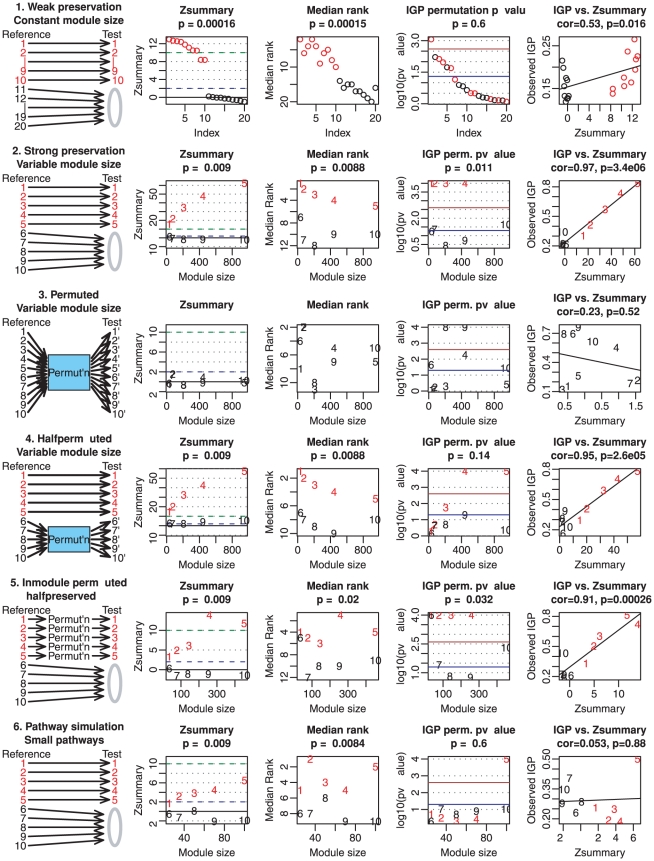
In many applications, one is interested in determining which of the properties of a network module change across conditions. For example, to validate the existence of a module, it is desirable to show that it is reproducible (or preserved) in an independent test network. Here we study several types of network preservation statistics that do not require a module assignment in the test network. We distinguish network preservation statistics by the type of the underlying network. Some preservation statistics are defined for a general network (defined by an adjacency matrix) while others are only defined for a correlation network (constructed on the basis of pairwise correlations between numeric variables). Our applications show that the correlation structure facilitates the definition of particularly powerful module preservation statistics. We illustrate that evaluating module preservation is in general different from evaluating cluster preservation. We find that it is advantageous to aggregate multiple preservation statistics into summary preservation statistics. We illustrate the use of these methods in six gene co-expression network applications including 1) preservation of cholesterol biosynthesis pathway in mouse tissues, 2) comparison of human and chimpanzee brain networks, 3) preservation of selected KEGG pathways between human and chimpanzee brain networks, 4) sex differences in human cortical networks, 5) sex differences in mouse liver networks. While we find no evidence for sex specific modules in human cortical networks, we find that several human cortical modules are less preserved in chimpanzees. In particular, apoptosis genes are differentially co-expressed between humans and chimpanzees. Our simulation studies and applications show that module preservation statistics are useful for studying differences between the modular structure of networks. Data, R software and accompanying tutorials can be downloaded from the following webpage: http://www.genetics.ucla.edu/labs/horvath/CoexpressionNetwork/ModulePreservation.
Overview
The claims and statistics of this paper haven’t been checked yet.
Run the check — free, no account needed. It reads the open-access text and checks the sources it cites.
Integrity signals
Registry
Cites
Statistics
Figures
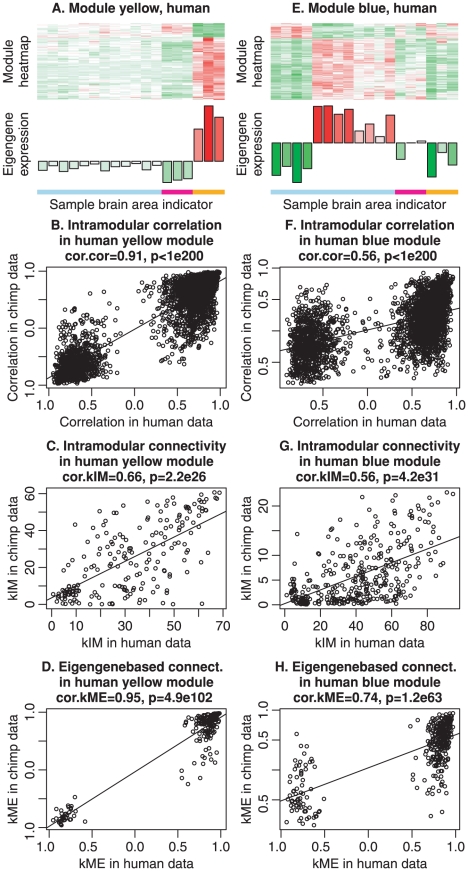
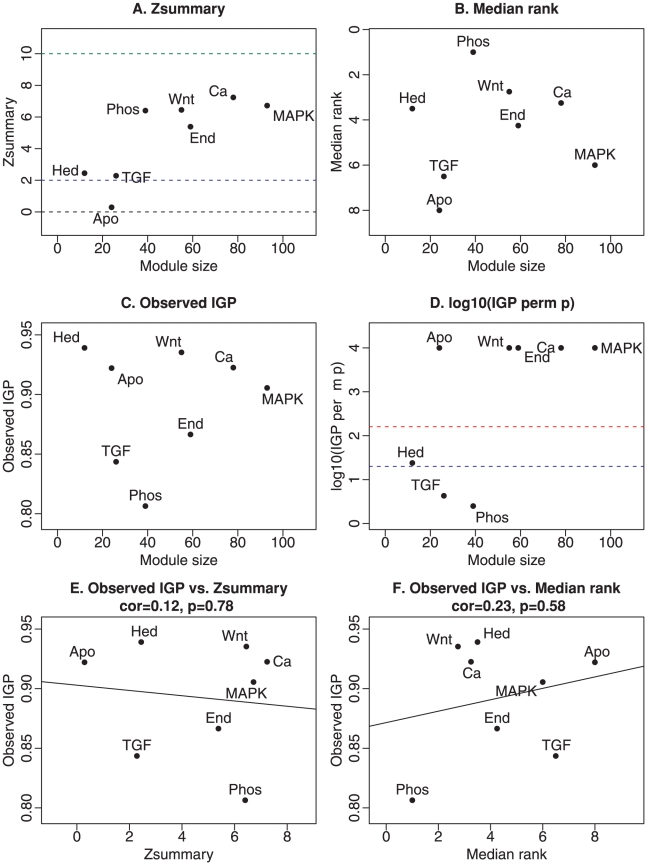
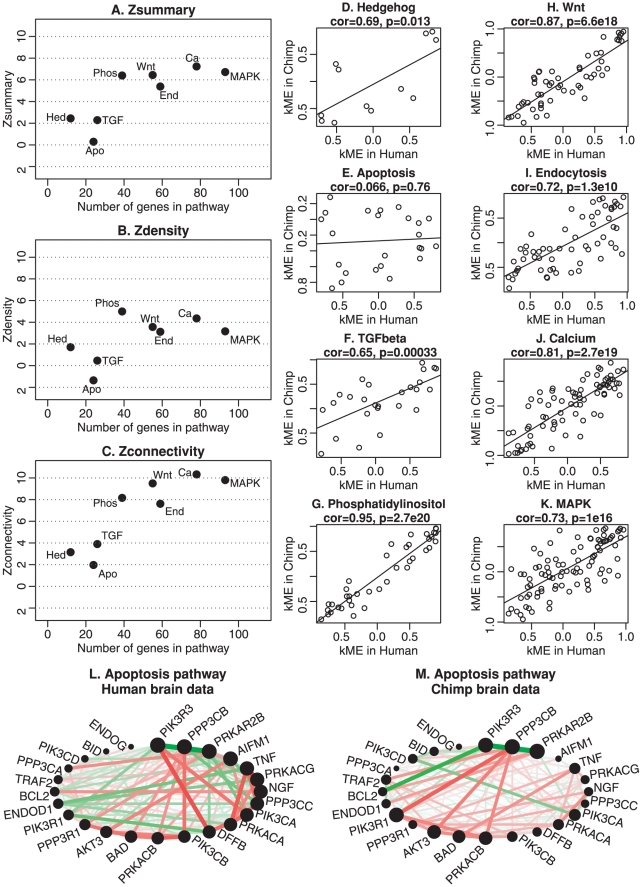
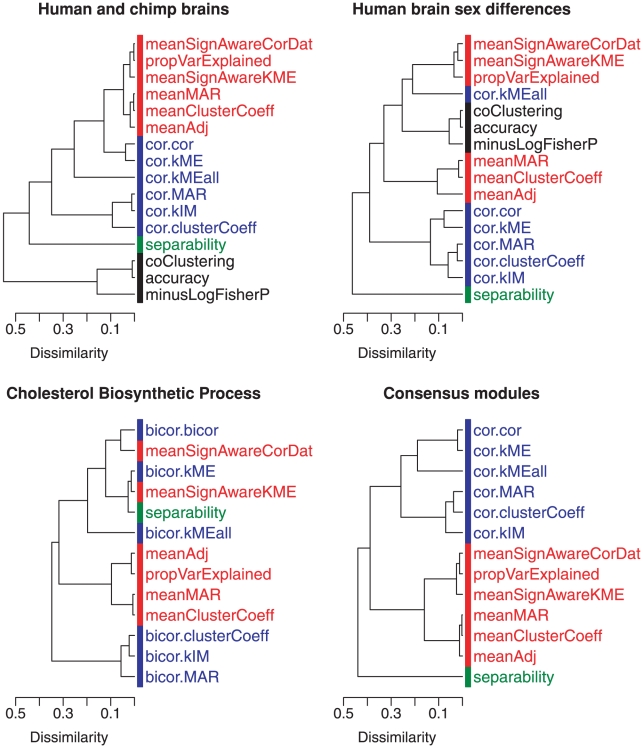
Verification
Claims the paper makes
The claims and statistics of this paper haven’t been checked yet.
Run the check — free, no account needed. It reads the open-access text and checks the sources it cites.
Claims other papers make about this one
Each is checked against this paper’s own text: does it say what the citing paper says it does?
The source backs part of the claim, not all of it — or backs it for a different population, condition or comparison.
In the citing paper
“At currently available sample sizes, networks are most reproducible at a module level35,38,39, then at the hub gene level41,223 and, last, at the level of precise gene connectivity rankings or precise module memberships of genes40,49.”
From Systems biology and gene networks in neurodevelopmental and neurodegenerative disorders (2015) · cites this paper as [35]
Experimental — accuracy not yet measuredThe cited source says what the claim attributes to it.
In the citing paper
“we performed module preservation analysis20 to test the reproducibility of these modules in an independent dataset12 and found that all of the ODC-specific modules were significantly preserved (Z summary preservation ≥5).”
From hdWGCNA identifies co-expression networks in high-dimensional transcriptomics data (2023) · cites this paper as [20]
In the citing paper
“The gene modules identified in Brain 1 were well conserved in Brain 2 as a whole (Fig. 3b), both at the level of regional gene expression patterns (third row) and as measured by a module preservation index (fourth row) using a summary Z-statistic as described previously20.”
From An anatomically comprehensive atlas of the adult human brain transcriptome (2012) · cites this paper as [20]
In the citing paper
“We note that the clustering assignment identified by the SpeakEasy algorithm overlapped significantly with those proposed by the frequently used WGCNA algorithm22 (Supplementary methods; Table S4)”
From A molecular network of the aging human brain provides insights into the pathology and cognitive decline of Alzheimer’s disease (2018) · cites this paper as [22]
In the citing paper
“Importantly, 13 of the 16 modules in the BLSA network (Fig. 4A) were preserved in the Emory network, with Zsummary scores above 2 (p<0.05) (Fig. 4A) (Langfelder et al., 2011).”
From A Multi-network Approach Identifies Protein-Specific Co-expression in Asymptomatic and Symptomatic Alzheimer’s Disease (2017) · cites this paper as Langfelder et al., 2011
In the citing paper
“Using the six brains now available, we identified a consensus network22 common to all brains (Fig. 3a, panel 1), using the 50% highest DS genes (ΔBR>0.5284, g=8674, Supplementary Methods).”
From Canonical genetic signatures of the adult human brain (2015) · cites this paper as [22]
In the citing paper
“Network analyses of AD brain tissue demonstrate the most reproducibility at the module level, followed by the hub protein level, and then finally at the level of precise protein connectivity rankings and module protein membership [61, 89–94].”
From Systems-based proteomics to resolve the biology of Alzheimer’s disease beyond amyloid and tau (2021) · cites this paper as [89]
Self-check
Percentages, sums and reported differences re-computed from the paper’s own numbers.
The self-check needs the paper’s full text.
Citations
Cites
Collective dynamics of ‘small-world’ networks
Watts, D. J., & Strogatz, S. H. (1998) · Nature · doi:10.1038/30918 · Cited by 43,060
KEGG: Kyoto Encyclopedia of Genes and Genomes
Kanehisa, M. (2000) · Nucleic Acids Research · doi:10.1093/nar/28.1.27 · Cited by 37,077
KEGG: Kyoto Encyclopedia of Genes and Genomes
Ogata, H., Goto, S., Sato, K., Fujibuchi, W., Bono, H., & Kanehisa, M. (1999) · Nucleic Acids Research · doi:10.1093/nar/27.1.29 · Cited by 31,232
WGCNA: an R package for weighted correlation network analysis
Langfelder, P., & Horvath, S. (2008) · BMC Bioinformatics · doi:10.1186/1471-2105-9-559 · Cited by 27,252
Self-citationSilhouettes: A graphical aid to the interpretation and validation of cluster analysis
Rousseeuw, P. J. (1987) · Journal of Computational and Applied Mathematics · doi:10.1016/0377-0427(87)90125-7 · Cited by 21,392
Finding groups in data: an introduction to cluster analysis
(1991) · Choice Reviews Online · doi:10.5860/choice.28-4558 · Cited by 10,537
Finding Groups in Data: An Introduction to Cluster Analysis
Kaufman, L., & Rousseeuw, P. J. (1990) · Wiley Series in Probability and Statistics · doi:10.1002/9780470316801 · Cited by 7,344 · cited 1×
“For example, the mean intramodular adjacency meanAdj1⁄2test (q) (Equation 8) is oppositely related to the within-module scatter used in assessing the quality of clusters based on a dissimilarity [55].”
BackgroundObjective Criteria for the Evaluation of Clustering Methods
Rand, W. M. (1971) · Journal of the American Statistical Association · doi:10.1080/01621459.1971.10482356 · Cited by 6,493
A General Framework for Weighted Gene Co-Expression Network Analysis
Zhang, B., & Horvath, S. (2005) · Statistical Applications in Genetics and Molecular Biology · doi:10.2202/1544-6115.1128 · Cited by 5,684
Self-citationA Gene-Coexpression Network for Global Discovery of Conserved Genetic Modules
Stuart, J. M., Segal, E., Koller, D., & Kim, S. K. (2003) · Science · doi:10.1126/science.1087447 · Cited by 2,274
Cited by
Sorted by citations
An anatomically comprehensive atlas of the adult human brain transcriptome
Hawrylycz, M. J., Lein, E. S., Guillozet-Bongaarts, A. L., Shen, E. H., Ng, L., Miller, J. A., van de Lagemaat, L. N., Smith, K. A., Ebbert, A., Riley, Z. L., et al. (2012) · Nature · doi:10.1038/nature11405 · Cited by 3,083
Self-citationFunctional genomic landscape of acute myeloid leukaemia
Tyner, J. W., Tognon, C. E., Bottomly, D., Wilmot, B., Kurtz, S. E., Savage, S. L., Long, N., Schultz, A. R., Traer, E. A., Abel, M. L., et al. (2018) · Nature · doi:10.1038/s41586-018-0623-z · Cited by 1,359
The human transcriptome across tissues and individuals
Melé, M., Ferreira, P. G., Reverter, F., DeLuca, D. S., Monlong, J., Sammeth, M., Young, T. R., Goldmann, J. M., Pervouchine, D. D., Sullivan, T. J., et al. (2015) · Science · doi:10.1126/science.aaa0355 · Cited by 1,304
Gene expression elucidates functional impact of polygenic risk for schizophrenia
Fromer, M., Roussos, P., Sieberts, S. K., Johnson, J. S., Kavanagh, D. H., Perumal, T. M., Ruderfer, D. M., Oh, E. C., Topol, A., Shah, H. R., et al. (2016) · Nature Neuroscience · doi:10.1038/nn.4399 · Cited by 1,091
Gene co-expression analysis for functional classification and gene–disease predictions
van Dam, S., Võsa, U., van der Graaf, A., Franke, L., & de Magalhães, J. P. (2017) · Briefings in Bioinformatics · doi:10.1093/bib/bbw139 · Cited by 995
Integrative functional genomic analyses implicate specific molecular pathways and circuits in autism
Parikshak, N. N., Luo, R., Zhang, A., Won, H., Lowe, J. K., Chandran, V., Horvath, S., & Geschwind, D. H. (2013) · Cell · doi:10.1016/j.cell.2013.10.031 · Cited by 1,039
Self-citationJohnson, E. C. B., Dammer, E. B., Duong, D. M., Ping, L., Zhou, M., Yin, L., Higginbotham, L. A., Guajardo, A., White, B., Troncoso, J. C., et al. (2020) · Nature Medicine · doi:10.1038/s41591-020-0815-6 · Cited by 1,001
Genetic programs in human and mouse early embryos revealed by single-cell RNA sequencing
Xue, Z., Huang, K., Cai, C., Cai, L., Jiang, C.-Y., Feng, Y., Liu, Z., Zeng, Q., Cheng, L., Sun, Y. E., et al. (2013) · Nature · doi:10.1038/nature12364 · Cited by 963
Self-citationStructure and dynamics of molecular networks: A novel paradigm of drug discovery
Csermely, P., Korcsmáros, T., Kiss, H., London, G., & Nussinov, R. (2013) · Pharmacology & Therapeutics · doi:10.1016/j.pharmthera.2013.01.016 · Cited by 911
hdWGCNA identifies co-expression networks in high-dimensional transcriptomics data
Morabito, S., Reese, F., Rahimzadeh, N., Miyoshi, E., & Swarup, V. (2023) · Cell Reports Methods · doi:10.1016/j.crmeth.2023.100498 · Cited by 773
Sex-specific transcriptional signatures in human depression
Labonté, B., Engmann, O., Purushothaman, I., Menard, C., Wang, J., Tan, C., Scarpa, J. R., Moy, G., Loh, Y.-H. E., Cahill, M., et al. (2017) · Nature Medicine · doi:10.1038/nm.4386 · Cited by 748
Co-regulatory networks of human serum proteins link genetics to disease
Emilsson, V., Ilkov, M., Lamb, J. R., Finkel, N., Gudmundsson, E. F., Pitts, R., Hoover, H., Gudmundsdottir, V., Horman, S. R., Aspelund, T., et al. (2018) · Science · doi:10.1126/science.aaq1327 · Cited by 680
Canonical genetic signatures of the adult human brain
Hawrylycz, M., Miller, J. A., Menon, V., Feng, D., Dolbeare, T., Guillozet-Bongaarts, A. L., Jegga, A. G., Aronow, B. J., Lee, C.-K., Bernard, A., et al. (2015) · Nature Neuroscience · doi:10.1038/nn.4171 · Cited by 663
Aging effects on DNA methylation modules in human brain and blood tissue
Horvath, S., Zhang, Y., Langfelder, P., Kahn, R. S., Boks, M. P., van Eijk, K. R., van den Berg, L. H., & Ophoff, R. A. (2012) · Genome biology · doi:10.1186/gb-2012-13-10-r97 · Cited by 652
Self-citationJohnson, E. C. B., Carter, E. K., Dammer, E. B., Duong, D. M., Gerasimov, E. S., Liu, Y., Liu, J., Betarbet, R., Ping, L., Yin, L., et al. (2022) · Nature Neuroscience · doi:10.1038/s41593-021-00999-y · Cited by 561
HIV-1 infection accelerates age according to the epigenetic clock
Horvath, S., & Levine, A. J. (2015) · Journal of Infectious Diseases · doi:10.1093/infdis/jiv277 · Cited by 556
Self-citationDoering, T. A., Crawford, A., Angelosanto, J., Paley, M., Ziegler, C. G. K., & Wherry, E. J. (2012) · Immunity · doi:10.1016/j.immuni.2012.08.021 · Cited by 560
Mostafavi, S., Gaiteri, C., Sullivan, S. E., White, C. C., Tasaki, S., Xu, J., Taga, M., Klein, H.-U., Patrick, E., Komashko, V., et al. (2018) · Nature Neuroscience · doi:10.1038/s41593-018-0154-9 · Cited by 509
Gupta, S., Ellis, S. E., Ashar, F. N., Moes, A., Bader, J. S., Zhan, J., West, A. B., & Arking, D. E. (2014) · Nature Communications · doi:10.1038/ncomms6748 · Cited by 504
Seyfried, N. T., Dammer, E. B., Swarup, V., Nandakumar, D., Duong, D. M., Yin, L., Deng, Q., Nguyen, T., Hales, C. M., Wingo, T., et al. (2017) · Cell Systems · doi:10.1016/j.cels.2016.11.006 · Cited by 477
Systems biology and gene networks in neurodevelopmental and neurodegenerative disorders
Parikshak, N. N., Gandal, M. J., & Geschwind, D. H. (2015) · Nature Reviews Genetics · doi:10.1038/nrg3934 · Cited by 430
Watanabe, M., Buth, J. E., Vishlaghi, N., de la Torre-Ubieta, L., Taxidis, J., Khakh, B. S., Coppola, G., Pearson, C. A., Yamauchi, K., Gong, D., et al. (2017) · Cell Reports · doi:10.1016/j.celrep.2017.09.047 · Cited by 401
Cerebral Organoids Recapitulate Epigenomic Signatures of the Human Fetal Brain
Luo, C., Lancaster, M. A., Castanon, R., Nery, J. R., Knoblich, J. A., & Ecker, J. R. (2016) · Cell Reports · doi:10.1016/j.celrep.2016.12.001 · Cited by 370
Long-term maturation of human cortical organoids matches key early postnatal transitions
Gordon, A., Yoon, S., Tran, S. S., Makinson, C. D., Park, J. Y., Andersen, J., Valencia, A. M., Horvath, S., Xiao, X. G., Huguenard, J. R., et al. (2021) · Nature Neuroscience · doi:10.1038/s41593-021-00802-y · Cited by 361
Self-citationOrg, E., Blum, Y., Kasela, S., Mehrabian, M., Kuusisto, J., Kangas, A. J., Soininen, P., Wang, Z., Ala‐Korpela, M., Hazen, S. L., et al. (2017) · Genome biology · doi:10.1186/s13059-017-1194-2 · Cited by 337
Using networks to measure similarity between genes: association index selection
Bass, J. I. F., Diallo, A., Nelson, J., Soto, J. M., Myers, C. L., & Walhout, A. J. M. (2013) · Nature Methods · doi:10.1038/nmeth.2728 · Cited by 319
When is hub gene selection better than standard meta-analysis?
Langfelder, P., Mischel, P. S., & Horvath, S. (2013) · PLoS ONE · doi:10.1371/journal.pone.0061505 · Cited by 313
Self-citationXu, M., Zhang, D., Luo, R., Wu, Y., Zhou, H., Kong, L., Bi, R., & Yao, Y. (2017) · Alzheimer s & Dementia · doi:10.1016/j.jalz.2017.08.012 · Cited by 296
Self-citationGaiteri, C., Ding, Y., French, B., Tseng, G. C., & Sibille, E. (2014) · Genes, Brain and Behavior · doi:10.1111/gbb.12106 · Cited by 289
The United Kingdom Brain Expression Consortium, Botía, J. A., Vandrovcova, J., Forabosco, P., Guelfi, S., D’Sa, K., Hardy, J., Lewis, C. M., Ryten, M., & Weale, M. E. (2017) · BMC Systems Biology · doi:10.1186/s12918-017-0420-6 · Cited by 289
Broad transcriptomic dysregulation occurs across the cerebral cortex in ASD
Gandal, M. J., Haney, J. R., Wamsley, B., Yap, C. X., Parhami, S., Emani, P. S., Chang, N., Chen, G. T., Hoftman, G. D., de Alba, D., et al. (2022) · Nature · doi:10.1038/s41586-022-05377-7 · Cited by 283
Nomura, S., Satoh, M., Fujita, T., Higo, T., Sumida, T. S., Ko, T., Yamaguchi, T., Tobita, T., Naito, A. T., Ito, M., et al. (2018) · Nature Communications · doi:10.1038/s41467-018-06639-7 · Cited by 267
Human-Specific Transcriptional Networks in the Brain
Konopka, G., Friedrich, T., Davis‐Turak, J., Winden, K. D., Oldham, M. C., Gao, F., Chen, L., Wang, G.-Z., Luo, R., Preuss, T. M., et al. (2012) · Neuron · doi:10.1016/j.neuron.2012.05.034 · Cited by 268
Self-citationMolecular and cellular reorganization of neural circuits in the human lineage
Sousa, A. M. M., Zhu, Y., Raghanti, M. A., Kitchen, R. R., Onorati, M., Tebbenkamp, A. T. N., Stutz, B., Meyer, K. A., Li, M., Kawasawa, Y. I., et al. (2017) · Science · doi:10.1126/science.aan3456 · Cited by 253
DGCA: A comprehensive R package for Differential Gene Correlation Analysis
McKenzie, A. T., Katsyv, I., Song, W.-M., Wang, M., & Zhang, B. (2016) · BMC Systems Biology · doi:10.1186/s12918-016-0349-1 · Cited by 254
Ritchie, S. C., Würtz, P., Nath, A. P., Abraham, G., Havulinna, A. S., Fearnley, L. G., Sarin, A., Kangas, A. J., Soininen, P., Aalto, K., et al. (2015) · Cell Systems · doi:10.1016/j.cels.2015.09.007 · Cited by 255
Pfisterer, U., Petukhov, V., Demharter, S., Meichsner, J., Thompson, J. J., Batiuk, M. Y., Asenjo-Martínez, A., Vasistha, N. A., Thakur, A., Mikkelsen, J. D., et al. (2020) · Nature Communications · doi:10.1038/s41467-020-18752-7 · Cited by 238
van Eijk, K. R., de Jong, S., Boks, M. P., Langeveld, T., Colas, F., Veldink, J. H., de Kovel, C. G. F., Janson, E., Strengman, E., Langfelder, P., et al. (2012) · BMC Genomics · doi:10.1186/1471-2164-13-636 · Cited by 230
Self-citationTranscriptional profiles of bovine in vivo pre-implantation development
Jiang, Z., Sun, J., Dong, H., Luo, O. J., Zheng, X., Obergfell, C. J., Tang, Y., Bi, J., O'Neill, R. J. W., Ruan, Y., et al. (2014) · BMC Genomics · doi:10.1186/1471-2164-15-756 · Cited by 215
A Quantitative Framework to Evaluate Modeling of Cortical Development by Neural Stem Cells
Stein, J. L., de la Torre-Ubieta, L., Tian, Y., Parikshak, N. N., Hernández, I. A., Marchetto, M. C., Baker, D. K., Lu, D., Hinman, C. R., Lowe, J. K., et al. (2014) · Neuron · doi:10.1016/j.neuron.2014.05.035 · Cited by 201
Lombardo, M. V., Moon, H. M., Su, J., Palmer, T. D., Courchesne, E., & Pramparo, T. (2018) · Molecular Psychiatry · doi:10.1038/mp.2017.15 · Cited by 201
Genome-wide, integrative analysis implicates microRNA dysregulation in autism spectrum disorder
Wu, Y. E., Parikshak, N. N., Belgard, T. G., & Geschwind, D. H. (2016) · Nature Neuroscience · doi:10.1038/nn.4373 · Cited by 195
Decoding critical long non-coding RNA in ovarian cancer epithelial-to-mesenchymal transition
Mitra, R., Chen, X., Greenawalt, E. J., Maulik, U., Jiang, W., Zhao, Z., & Eischen, C. M. (2017) · Nature Communications · doi:10.1038/s41467-017-01781-0 · Cited by 187
Wang, M., Li, A., Sekiya, M., Beckmann, N. D., Quan, X., Schrode, N., Fernando, M. B., Yu, A., Zhu, L., Cao, J., et al. (2021) · Neuron · doi:10.1016/j.neuron.2020.11.002 · Cited by 185
Insights into TREM2 biology by network analysis of human brain gene expression data
Forabosco, P., Ramasamy, A., Trabzuni, D., Walker, R., Smith, C., Bras, J., Levine, A. P., Hardy, J., Pocock, J. M., Guerreiro, R., et al. (2013) · Neurobiology of Aging · doi:10.1016/j.neurobiolaging.2013.05.001 · Cited by 180
Sex-chromosome dosage effects on gene expression in humans
Raznahan, A., Parikshak, N. N., Chandran, V., Blumenthal, J. D., Clasen, L. S., Alexander-Bloch, A. F., Zinn, A. R., Wangsa, D., Wise, J., Murphy, D. G. M., et al. (2018) · Proceedings of the National Academy of Sciences · doi:10.1073/pnas.1802889115 · Cited by 179
Mine, A., Seyfferth, C., Kracher, B., Berens, M. L., Becker, D., & Tsuda, K. (2018) · The Plant Cell · doi:10.1105/tpc.17.00970 · Cited by 180
Hughes, C. D., Choi, M. L., Ryten, M., Hopkins, L., Drews, A., Botía, J. A., Iljina, M., Rodrigues, M., Gagliano, S. A., Gandhi, S., et al. (2019) · Acta Neuropathologica · doi:10.1007/s00401-018-1907-y · Cited by 177
Tong, M., Li, X., Parfrey, L. W., Roth, B. E., Ippoliti, A., Wei, B., Borneman, J., McGovern, D. P. B., Frank, D. N., Li, E., et al. (2013) · PLoS ONE · doi:10.1371/journal.pone.0080702 · Cited by 184
Self-citationTwo gene co-expression modules differentiate psychotics and controls
Chen, C., Cheng, L., Grennan, K., Pibiri, F., Zhang, C., Badner, J. A., Members of the Bipolar Disorder Genome Study (BiGS) Consortium, Gershon, E. S., & Liu, C. (2013) · Molecular Psychiatry · doi:10.1038/mp.2012.146 · Cited by 157
Zhou, X., Huang, X., Liang, S., Tang, S., Wu, S., Huang, T., Mo, Z., & Wang, Q. (2018) · OncoTargets and Therapy · doi:10.2147/ott.s163891 · Cited by 154
LncRNA co-expression network analysis reveals novel biomarkers for pancreatic cancer
Giulietti, M., Righetti, A., Principato, G., & Piva, F. (2018) · Carcinogenesis · doi:10.1093/carcin/bgy069 · Cited by 152
C9orf72 deficiency promotes microglial-mediated synaptic loss in aging and amyloid accumulation
Lall, D., Lorenzini, I., Mota, T. A., Bell, S., Mahan, T. E., Ulrich, J. D., Davtyan, H., Rexach, J. E., Muhammad, A. K. M. G., Shelest, O., et al. (2021) · Neuron · doi:10.1016/j.neuron.2021.05.020 · Cited by 147
A Missense Mutation in KCTD17 Causes Autosomal Dominant Myoclonus-Dystonia
Mencacci, N. E., Rubio‐Agusti, I., Zdebik, A. A., Asmus, F., Ludtmann, M. H. R., Ryten, M., Plagnol, V., Hauser, A., Bandrés‐Ciga, S., Bettencourt, C., et al. (2015) · The American Journal of Human Genetics · doi:10.1016/j.ajhg.2015.04.008 · Cited by 149
Sun, Q., Chen, Y., Liang, C., Zhao, Y., Lv, X., Zou, Y., Yan, K., Zheng, H., Liang, D., & Li, Z. (2021) · Radiology · doi:10.1148/radiol.2021203281 · Cited by 146
Mitochondrial Dysfunction and Immune Activation are Detectable in Early Alzheimer's Disease Blood
Lunnon, K., Ibrahim, Z. M., Proitsi, P., Lourdusamy, A., Newhouse, S., Sattlecker, M., Furney, S. J., Saleem, M., Soininen, H. S., Kłoszewska, I., et al. (2012) · Journal of Alzheimer s Disease · doi:10.3233/jad-2012-111592 · Cited by 145
de Jong, S., Boks, M. P., Fuller, T. F., Strengman, E., Janson, E., de Kovel, C. G. F., Ori, A. P. S., Vi, N., Mulder, F., Blom, J. D., et al. (2012) · PLoS ONE · doi:10.1371/journal.pone.0039498 · Cited by 144
Self-citationColli, M. L., Ramos-Rodríguez, M., Nakayasu, E. S., Alvelos, M. I., Lopes, M., Hill, J. L. E., Turatsinze, J., de Brachène, A. C., Russell, M. A., Raurell‐Vila, H., et al. (2020) · Nature Communications · doi:10.1038/s41467-020-16327-0 · Cited by 143
Hepatic circadian clock oscillators and nuclear receptors integrate microbiome-derived signals
Montagner, A., Korecka, A., Polizzi, A., Lippi, Y., Blum, Y., Canlet, C., Tremblay-Franco, M., Gautier-Stein, A., Burcelin, R., Yen, Y.-C., et al. (2016) · Scientific Reports · doi:10.1038/srep20127 · Cited by 137
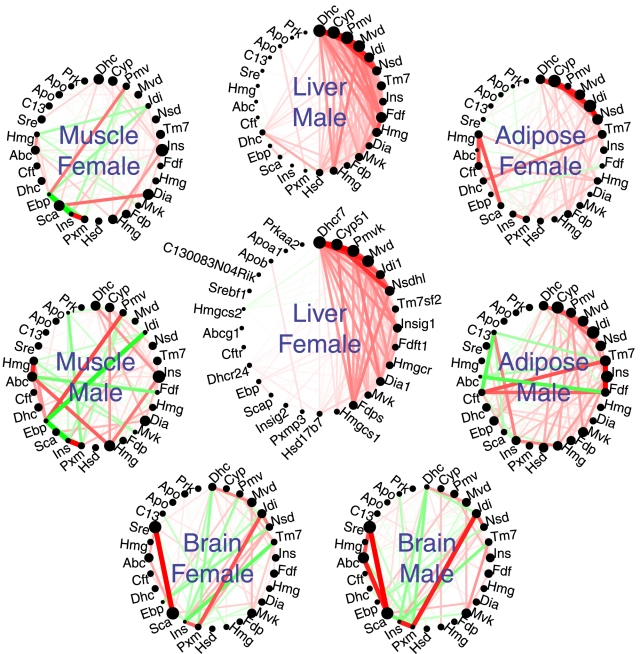
“Networks of the 50 genes having the highest absolute correlation (Pearson-correlation) with a transcription factor of interest (red node) in SPF mice were displayed using the R function circlePlot 54 .”
Identification of evolutionarily conserved gene networks mediating neurodegenerative dementia
Swarup, V., Hinz, F. I., Rexach, J. E., Noguchi, K.-I., Toyoshiba, H., Oda, A., Hirai, K., Sarkar, A., Seyfried, N. T., Cheng, C., et al. (2019) · Nature Medicine · doi:10.1038/s41591-018-0223-3 · Cited by 136
Liu, F., Smith, A. D., Solano-Aguilar, G. I., Wang, T. T. Y., Pham, Q., Beshah, E., Tang, Q., Urban, J. F., Xue, C., & Li, R. W. (2020) · Microbiome · doi:10.1186/s40168-020-00843-8 · Cited by 138
Werling, D. M., Pochareddy, S., Choi, J., An, J., Sheppard, B. K., Peng, M., Li, Z., Dastmalchi, C., Santpere, G., Sousa, A. M. M., et al. (2020) · Cell Reports · doi:10.1016/j.celrep.2020.03.053 · Cited by 134
Seney, M. L., Kim, S.-M., Glausier, J. R., Hildebrand, M. A., Xue, X., Zong, W., Wang, J., Shelton, M. A., Phan, B. N., Srinivasan, C., et al. (2021) · Biological Psychiatry · doi:10.1016/j.biopsych.2021.06.007 · Cited by 135
More than Skin Deep: Functional Genomic Basis for Resistance to Amphibian Chytridiomycosis
Ellison, A., Tunstall, T. S., DiRenzo, G. V., Hughey, M. C., Rebollar, E. A., Belden, L. K., Harris, R. N., Ibáñez, R., Lips, K. R., & Zamudio, K. R. (2014) · Genome Biology and Evolution · doi:10.1093/gbe/evu285 · Cited by 131
DNA methylation networks underlying mammalian traits
Haghani, A., Li, C. Z., Robeck, T. R., Zhang, J., Lu, A. T., Ablaeva, J., Acosta-Rodríguez, V. A., Adams, D. M., Alagaili, A. N., Almunia, J., et al. (2023) · Science · doi:10.1126/science.abq5693 · Cited by 128
Serum Metabolomics of Slow vs. Rapid Motor Progression Parkinson’s Disease: a Pilot Study
Roede, J. R., Uppal, K., Park, Y. H., Lee, K., Tran, V., Walker, D. I., Strobel, F. H., Rhodes, S. L., Ritz, B. R., & Jones, D. P. (2013) · PLoS ONE · doi:10.1371/journal.pone.0077629 · Cited by 128
A Single-Cell Roadmap of Lineage Bifurcation in Human ESC Models of Embryonic Brain Development
Yao, Z., Mich, J. K., Ku, S., Menon, V., Krostag, A.-R., Martinez, R. A., Furchtgott, L., Mulholland, H., Bort, S. J., Fuqua, M. A., et al. (2016) · Cell stem cell · doi:10.1016/j.stem.2016.09.011 · Cited by 130
Greenham, K., Guadagno, C. R., Gehan, M. A., Mockler, T. C., Weinig, C., Ewers, B. E., & McClung, C. R. (2017) · eLife · doi:10.7554/elife.29655 · Cited by 126
Wang, M., Gong, Q., Zhang, J., Chen, L., Zhang, Z., Lu, L., Yu, D., Han, Y., Zhang, D., Chen, P., et al. (2017) · Scientific Reports · doi:10.1038/srep43446 · Cited by 125
Transcriptomic analysis of probable asymptomatic and symptomatic alzheimer brains
Patel, H., Hodges, A., Curtis, C. J. C., Lee, S. H., Troakes, C., Dobson, R., & Newhouse, S. (2019) · Brain Behavior and Immunity · doi:10.1016/j.bbi.2019.05.009 · Cited by 125
Giulietti, M., Occhipinti, G., Principato, G., & Piva, F. (2016) · Cellular Oncology · doi:10.1007/s13402-016-0283-7 · Cited by 120
Systems-based proteomics to resolve the biology of Alzheimer’s disease beyond amyloid and tau
Rayaprolu, S., Higginbotham, L., Bagchi, P., Watson, C. M., Zhang, T., Levey, A. I., Rangaraju, S., & Seyfried, N. T. (2021) · Neuropsychopharmacology · doi:10.1038/s41386-020-00840-3 · Cited by 118
Breen, M. S., Tylee, D. S., Maihofer, A. X., Neylan, T. C., Mehta, D., Binder, E. B., Chandler, S. D., Hess, J., Kremen, W. S., Risbrough, V. B., et al. (2017) · Neuropsychopharmacology · doi:10.1038/npp.2017.220 · Cited by 119
Miyoshi, E., Morabito, S., Henningfield, C. M., Das, S., Rahimzadeh, N., Shabestari, S. K., Michael, N., Emerson, N., Reese, F., Shi, Z., et al. (2024) · Nature Genetics · doi:10.1038/s41588-024-01961-x · Cited by 115
Acceleration of Age-Associated Methylation Patterns in HIV-1-Infected Adults
Rickabaugh, T. M., Baxter, R. M., Sehl, M. E., Sinsheimer, J. S., Hultin, P. M., Hultin, L. E., Quach, A., Martı́nez-Maza, O., Horvath, S., Vilain, E. J. N., et al. (2015) · PLoS ONE · doi:10.1371/journal.pone.0119201 · Cited by 118
Self-citationUtilizing RNA-Seq data for de novo coexpression network inference
Iancu, O. D., Kawane, S., Bottomly, D., Searles, R., Hitzemann, R., & McWeeney, S. (2012) · Bioinformatics · doi:10.1093/bioinformatics/bts245 · Cited by 114
Jansen, I. E., Ye, H., Heetveld, S., Lechler, M. C., Michels, H., Seinstra, R. I., Lubbe, S. J., Drouet, V., Lesage, S., Majounie, E., et al. (2017) · Genome biology · doi:10.1186/s13059-017-1147-9 · Cited by 115
FoxP1 orchestration of ASD-relevant signaling pathways in the striatum
Araujo, D. J., Anderson, A. G., Berto, S., Runnels, W., Harper, M., Ammanuel, S., Rieger, M. A., Huang, H.-C., Rajkovich, K., Loerwald, K. W., et al. (2015) · Genes & Development · doi:10.1101/gad.267989.115 · Cited by 111
Transcriptome organization for chronic alcohol abuse in human brain
Farris, S. P., Arasappan, D., Hunicke-Smith, S., Harris, R. A., & Mayfield, R. D. (2015) · Molecular Psychiatry · doi:10.1038/mp.2014.159 · Cited by 111
Gene Coexpression Networks Reveal Key Drivers of Phenotypic Divergence in Lake Whitefish
Filteau, M., Pavey, S. A., St‐Cyr, J., & Bernatchez, L. (2013) · Molecular Biology and Evolution · doi:10.1093/molbev/mst053 · Cited by 114
Baglietto‐Vargas, D., Forner, S., Cai, L., Martini, A. C., Trujillo‐Estrada, L., Swarup, V., Nguyen, M. M. T., Huynh, K. D., Javonillo, D. I., Tran, K. M., et al. (2021) · Nature Communications · doi:10.1038/s41467-021-22624-z · Cited by 120
Radulescu, E., Jaffe, A. E., Straub, R. E., Chen, Q., Shin, J. H., Hyde, T. M., Kleinman, J. E., & Weinberger, D. R. (2018) · Molecular Psychiatry · doi:10.1038/s41380-018-0304-1 · Cited by 110
Chen, C., Meng, Q., Xia, Y., Ding, C., Wang, L., Dai, R., Cheng, L., Gunaratne, P. H., Gibbs, R. A., Min, S., et al. (2018) · Science Translational Medicine · doi:10.1126/scitranslmed.aat8178 · Cited by 106
Kugler, K., Siegwart, G., Nußbaumer, T., Ametz, C., Spannagl, M., Steiner, B., Lemmens, M., Mayer, K., Buerstmayr, H., & Schweiger, W. (2013) · BMC Genomics · doi:10.1186/1471-2164-14-728 · Cited by 107
Hilliard, A. T., Miller, J. E., Fraley, E., Horvath, S., & White, S. A. (2012) · Neuron · doi:10.1016/j.neuron.2012.01.005 · Cited by 111
Self-citationMultiomic disease signatures converge to cytotoxic CD8 T cells in primary Sjögren's syndrome
Tasaki, S., Suzuki, K., Nishikawa, A., Kassai, Y., Takiguchi, M., Kurisu, R., Okuzono, Y., Miyazaki, T., Takeshita, M., Yoshimoto, K., et al. (2017) · Annals of the Rheumatic Diseases · doi:10.1136/annrheumdis-2016-210788 · Cited by 105
Single cell transcriptomic analysis of human mesenchymal stem cells reveals limited heterogeneity
Huang, Y., Li, Q., Zhang, K., Hu, M., Wang, Y., Du, L., Li, S., Li, S., Sorokin, L. M., Melino, G., et al. (2019) · Cell Death and Disease · doi:10.1038/s41419-019-1583-4 · Cited by 104
Wheelwright, M., Kim, E. W., Inkeles, M. S., Leon, A. A. D., Pellegrini, M. A., Krutzik, S. R., & Liu, P. T. (2014) · The Journal of Immunology · doi:10.4049/jimmunol.1301686 · Cited by 104
He, D., Liu, Z., Honda, M., Kaneko, S., & Chen, L. (2012) · Journal of Molecular Cell Biology · doi:10.1093/jmcb/mjs011 · Cited by 101
ALS disrupts spinal motor neuron maturation and aging pathways within gene co-expression networks
Ho, R., Sances, S., Gowing, G., Mathis, M. W., O’Rourke, J. G., Sahabian, A., Wichterle, H., Baloh, R. H., Sareen, D., & Svendsen, C. N. (2016) · Nature Neuroscience · doi:10.1038/nn.4345 · Cited by 103
Reynolds, R. H., Botía, J. A., Nalls, M. A., Noyce, A. J., Nicolas, A., Cookson, M., Bandrés‐Ciga, S., Gibbs, J. R., Hernandez, D. G., Singleton, A., et al. (2019) · npj Parkinson s Disease · doi:10.1038/s41531-019-0076-6 · Cited by 101
Auwul, M. R., Rahman, M. R., Göv, E., Shahjaman, M., & Moni, M. A. (2021) · Briefings in Bioinformatics · doi:10.1093/bib/bbab120 · Cited by 102
Oh, Y. M., Lee, S. W., Kim, W. K., Chen, S., Church, V. A., Cates, K., Li, T., Zhang, B., Dolle, R. E., Dahiya, S., et al. (2022) · Nature Neuroscience · doi:10.1038/s41593-022-01185-4 · Cited by 100
Hughes, C. D., Choi, M. L., Ryten, M., Hopkins, L., Drews, A., Botía, J. A., Iljina, M., Rodrigues, M., Taliun, S. A. G., Gandhi, S., et al. (2018) · Acta Neuropathologica · doi:10.1007/s00401-018-1919-7 · Cited by 99
Morandin, C., Tin, M. M. Y., Abril, S., Gómez, C., Pontieri, L., Schiøtt, M., Sundström, L., Tsuji, K., Pedersen, J. S., Helanterä, H., et al. (2016) · Genome biology · doi:10.1186/s13059-016-0902-7 · Cited by 102
Comparative transcriptome meta-analysis of Arabidopsis thaliana under drought and cold stress
Sharma, R., Singh, G., Bhattacharya, S., & Singh, A. (2018) · PLoS ONE · doi:10.1371/journal.pone.0203266 · Cited by 98
Piras, I. S., Krate, J., Delvaux, E., Nolz, J., Mastroeni, D., Persico, A. M., Jepsen, W. M., Beach, T. G., Huentelman, M. J., & Coleman, P. D. (2019) · Journal of Alzheimer s Disease · doi:10.3233/jad-181113 · Cited by 100
Ottensmeier, C. H. H., Perry, K. L., Harden, E. L., Stasakova, J., Jenei, V., Fleming, J. C., Wood, O., Woo, J., Woelk, C. H., Thomas, G. J., et al. (2016) · Cancer Research · doi:10.1158/0008-5472.can-15-3121 · Cited by 98
Lombardo, M. V., Pramparo, T., Gazestani, V., Warrier, V., Bethlehem, R. A. I., Barnes, C. C., Lopez, L., Lewis, N. E., Eyler, L. T., Pierce, K., et al. (2018) · Nature Neuroscience · doi:10.1038/s41593-018-0281-3 · Cited by 96
Dysfunction of the CNS-Heart Axis in Mouse Models of Huntington's Disease
Mielcarek, M., Inuabasi, L., Bondulich, M. K., Muller, T., Osborne, G. F., Franklin, S., Smith, D. L., Neueder, A., Rosinski, J., Rattray, I., et al. (2014) · PLoS Genetics · doi:10.1371/journal.pgen.1004550 · Cited by 94
Metadata
- Authors
- Langfelder, P., Luo, R., Oldham, M. C., & Horvath, S.
- Affiliations
- University of California, Los Angeles (US)
- Corresponding author
- Horvath, Steve
- Venue
- PLoS Computational Biology
- Publisher
- Public Library of Science (PLoS)
- Published
- 2011-01-20
- Volume
- 7
- Issue
- 1
- Pages
- e1001057
- ISSN
- 1553-734X (ISSN-L)
- 1553-7358
- PMC
- PMC3024255
- OpenAlex
- W1974033269
- Cited by
- 1,012
- References
- 60
- Citations by year
- 2026: 83 · 2025: 74 · 2024: 77 · 2023: 97 · 2022: 78 · 2021: 119 · 2020: 99 · 2019: 77 · 2018: 73 · 2017: 61 · 2016: 56 · 2015: 30 · 2014: 28 · 2013: 26 · 2012: 24
- FWCI
- 11.23
- Type
- journal article
- Language
- en
- Open access
- gold
- doi.org
- Locations
- PLoS Computational Biology (publishedVersion, cc-by)
- PubMed Central (publishedVersion, cc-by)
- PubMed (publishedVersion)
- RePEc: Research Papers in Economics (submittedVersion)
- DOAJ (DOAJ: Directory of Open Access Journals) (submittedVersion, cc-by-sa)
- eScholarship (California Digital Library) (submittedVersion)
- eScholarship (California Digital Library) (submittedVersion, cc-by)
- Figshare (submittedVersion, cc-by)
- Funders
- National Cancer Institute (P50CA092131, P30CA016042)
- National Institute of Allergy and Infectious Diseases (U19AI063603)
- National Institute of Diabetes and Digestive and Kidney Diseases (R01DK072206, DK-072206)
- Topics
- Life Sciences › Biochemistry, Genetics and Molecular Biology › Molecular Biology › Bioinformatics and Genomic Networks
- Life Sciences › Biochemistry, Genetics and Molecular Biology › Molecular Biology › Gene Regulatory Network Analysis
- Life Sciences › Biochemistry, Genetics and Molecular Biology › Molecular Biology › Gene expression and cancer classification
- Keywords
- reproducibility, gene co-expression network, correlation networks, cholesterol biosynthesis, apoptosis-related genes
- MeSH terms
- Animals, Brain, Female, Humans, Male, Reproducibility of Results, Gene Expression, Mice
About these checks
Registry, retraction, Cites and statistics results are computed, not judged, with one exception: a printed reference that no index lists is read once by a model before it counts as a citation error. Claims are extracted by a model and kept only when their quote appears verbatim in the text; each cited source is then checked, with a model’s help, for whether it says what the claim relies on. Those verdicts can be wrong — read the claim’s quote and the cited source before relying on one.
Statistics and arithmetic are recomputed, not judged.
Confidence bands are shown only for fields calibrated on our annotated test set. None is calibrated yet, so no band is shown.
What counts as a claim ›How we measure confidence ›How we check this ›
Are you an author, or do you see a problem with this page? Request a review
