

The Population Genetics of dN/dS
Open accessThe DOI matches its Crossref record; 63 of the 64 references it cites were found in a registry or an index.
Abstract
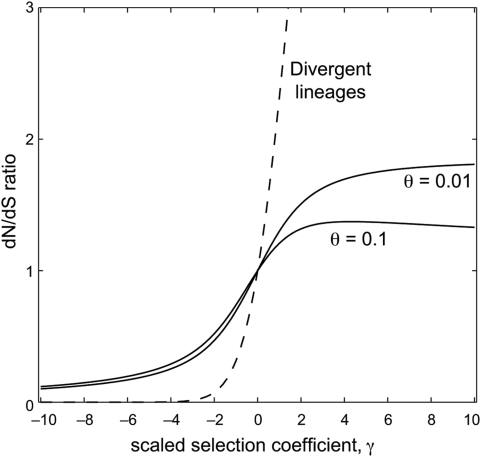
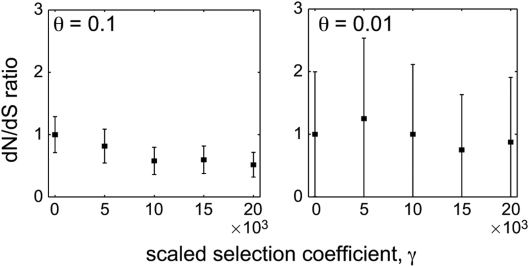
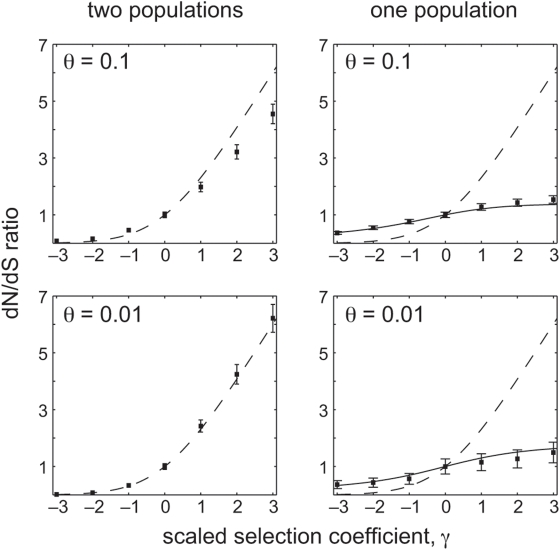
Evolutionary pressures on proteins are often quantified by the ratio of substitution rates at non-synonymous and synonymous sites. The dN/dS ratio was originally developed for application to distantly diverged sequences, the differences among which represent substitutions that have fixed along independent lineages. Nevertheless, the dN/dS measure is often applied to sequences sampled from a single population, the differences among which represent segregating polymorphisms. Here, we study the expected dN/dS ratio for samples drawn from a single population under selection, and we find that in this context, dN/dS is relatively insensitive to the selection coefficient. Moreover, the hallmark signature of positive selection over divergent lineages, dN/dS>1, is violated within a population. For population samples, the relationship between selection and dN/dS does not follow a monotonic function, and so it may be impossible to infer selection pressures from dN/dS. These results have significant implications for the interpretation of dN/dS measurements among population-genetic samples.
Overview
The claims and statistics of this paper haven’t been checked yet.
Free: it reads the open-access text and checks the first 5 claims that cite a source we can check. Create a free account to check every claim.
Integrity signals
Registry
Cites
Statistics
Figures
Verification
Claims the paper makes
The claims and statistics of this paper haven’t been checked yet.
Free: it reads the open-access text and checks the first 5 claims that cite a source we can check. Create a free account to check every claim.
Claims other papers make about this one
Each is checked against this paper’s own text: does it say what the citing paper says it does?
The check wasn’t confident either way, so it gives no verdict — never disputed.
In the citing paper
“This characteristic is consistent with the higher biodiversity observed in non-Westernized settings, where more heterogeneous dietary and environmental exposures may allow a broader range of accessory gene content to persist than is usually observed in genomes from industrialized populations [73-75] .”
From Genome-scale insights into the metabolic landscape and evolutionary development of Bifidobacterium bifidum (2026) · cites this paper as [73]
Experimental — accuracy not yet measured
Self-check
Percentages, sums and reported differences re-computed from the paper’s own numbers.
The self-check needs the paper’s full text.
Citations
Cites
MEGA4: Molecular Evolutionary Genetics Analysis (MEGA) Software Version 4.0
Tamura, K., Dudley, J., Nei, M., & Kumar, S. (2007) · Molecular Biology and Evolution · doi:10.1093/molbev/msm092 · Cited by 28,730 · cited 1×
“Theoretical work on the relationship between dN/dS and selection likewise assumes that sequences are sampled from independent, divergent species [3], as do computer packages used to estimate dN/dS from data [6,7].”
MethodStatistical method for testing the neutral mutation hypothesis by DNA polymorphism.
Tajima, F. (1989) · Genetics · doi:10.1093/genetics/123.3.585 · Cited by 13,941
PAML 4: Phylogenetic Analysis by Maximum Likelihood
Yang, Z. (2007) · Molecular Biology and Evolution · doi:10.1093/molbev/msm088 · Cited by 13,879 · cited 4×
“Theoretical work on the relationship between dN/dS and selection likewise assumes that sequences are sampled from independent, divergent species [3],as do computer packages used to estimate dN/dS from data [6, 7 ].”
MethodInfluentialEVOLUTION IN MENDELIAN POPULATIONS
Wright, S. (1931) · Genetics · doi:10.1093/genetics/16.2.97 · Cited by 8,916
Statistical tests of neutrality of mutations.
Fu, Y. X., & Li, W. H. (1993) · Genetics · doi:10.1093/genetics/133.3.693 · Cited by 4,034
Adaptive protein evolution at the Adh locus in Drosophila
McDonald, J. H., & Kreitman, M. (1991) · Nature · doi:10.1038/351652a0 · Cited by 3,283 · cited 1×
“geneticists [23,45].”
Codon-substitution models for heterogeneous selection pressure at amino acid sites
Yang, Z., Nielsen, R., Goldman, N., & Pedersen, A.-M. K. (2000) · Genetics · doi:10.1093/genetics/155.1.431 · Cited by 2,286
A codon-based model of nucleotide substitution for protein-coding DNA sequences.
(1994) · Molecular Biology and Evolution · doi:10.1093/oxfordjournals.molbev.a040153 · Cited by 1,960 · cited 20×
“We performed Wright-Fisher simulations of a population of constant size N evolving under positive or negative selection sensu Yang, in discrete time.”
BackgroundMethodInfluentialHitchhiking Under Positive Darwinian Selection
Fay, J. C., & Wu, C.-I. (2000) · Genetics · doi:10.1093/genetics/155.3.1405 · Cited by 1,819
Statistical methods for detecting molecular adaptation
Yang, Z., & Bielawski, J. P. (2000) · Trends in Ecology & Evolution · doi:10.1016/s0169-5347(00)01994-7 · Cited by 1,806 · cited 1×
“The instantaneous rate of change from codon i to codon j depends principally on the parameter v, defined as the relative rate of non-silent versus silent substitutions [2].”
Background
Cited by
Items 101–200 of 995
Comparative genome analysis of two Cryptosporidium parvum isolates with different host range
Widmer, G., Lee, Y., Hunt, P., Martinelli, A., Tolkoff, M., & Bodi, K. L. (2012) · Infection Genetics and Evolution · doi:10.1016/j.meegid.2012.03.027 · Cited by 76
Sequencing and Analysis of Globally Obtained Human Respiratory Syncytial Virus A and B Genomes
Bose, M. E., He, J., Shrivastava, S., Nelson, M. I., Bera, J., Halpin, R., Town, C. D., Lorenzi, H., Noyola, D. E., Falcone, V., et al. (2015) · PLoS ONE · doi:10.1371/journal.pone.0120098 · Cited by 81
“Since these algorithms were designed for sequences from divergent populations [34], Kryazhimskiy and Plotkin 2008 recommend that caution be taken when interpreting results from using these algorithms with closely related sequences belonging to the same species.”
BackgroundGenomic Analysis of Viral Outbreaks
Wohl, S., Schaffner, S. F., & Sabeti, P. C. (2016) · Annual Review of Virology · doi:10.1146/annurev-virology-110615-035747 · Cited by 81
Young proteins experience more variable selection pressures than old proteinsPreprint
Vishnoi, A., Kryazhimskiy, S., Bazykin, G. A., Hannenhalli, S. S., & Plotkin, J. B. (2010) · Genome Research · doi:10.1101/gr.109595.110 · Cited by 76
“The species were chosen so as to ensure appropriate divergence along all branches in the five-species phylogenetic tree in order to obtain reliable estimates of branch-specific dN/dS ratios (Kryazhimskiy and Plotkin 2008).”
BackgroundMethodSelf-citationDiversity of Mycobacterium tuberculosis across Evolutionary Scales
O’Neill, M. B., Mortimer, T. D., & Pepperell, C. S. (2015) · PLoS Pathogens · doi:10.1371/journal.ppat.1005257 · Cited by 85
“Ratios of non-synonymous to synonymous variation are an imperfect measure of selection strength for within-population (as opposed to between-species) comparisons [41]: values may be flat over a range of selection coefficients.”
BackgroundImmune selection determines tumor antigenicity and influences response to checkpoint inhibitors
Zapata, L., Caravagna, G., Williams, M. J., Lakatos, E., AbdulJabbar, K., Werner, B., Chowell, D., James, C. T., Gourmet, L. E., Milite, S., et al. (2023) · Nature Genetics · doi:10.1038/s41588-023-01313-1 · Cited by 83
The quasispecies nature and biological implications of the hepatitis C virus
Fishman, S. L., & Branch, A. D. (2009) · Infection Genetics and Evolution · doi:10.1016/j.meegid.2009.07.011 · Cited by 85
“However, dn/ ds ratios calculated from sequence samples drawn from a single population (for example, a quasispecies) are not an indicator of the type of selection (Kryazhimskiy and Plotkin, 2008).”
BackgroundGenomic signatures of adaptation to wine biological ageing conditions in biofilm‐forming flor yeasts
Coi, A. L., Bigey, F., Mallet, S., Marsit, S., Zara, G., Gladieux, P., Galéote, V., Budroni, M. A., Dequin, S., & Legras, J. (2017) · Molecular Ecology · doi:10.1111/mec.14053 · Cited by 78
“This approach is inaccurate for intrapopulation studies (Kryazhimskiy & Plotkin 2008), but it may be applied here given the isolation of wine and flor populations, which probably occurred after more than Ne generations according to our demographic inferences (Kryazhimskiy & Plotkin 2008).”
BackgroundGeller, R., Pechmann, S., Acevedo, A., Andino, R., & Frydman, J. (2018) · Nature Communications · doi:10.1038/s41467-018-04203-x · Cited by 74
Vainio, E. J., Hyder, R., Kaya, A. G. A., Hansen, E. M., Piri, T., Doğmuş-Lehtijärvi, T., Lehtıjärvı, A., Korhonen, K. T., & Hantula, J. (2011) · Virology · doi:10.1016/j.virol.2011.10.032 · Cited by 73
“We estimated potential selection pressures using the ratio of substitution rates at non-synonymous and synonymous sites, assuming dN/dSb1 and dN/dS>1 as hallmark signatures of purifying and positive selection, respectively (Kryazhimskiy and Plotkin, 2008).”
BackgroundMarques, D. A., Taylor, J. S., Jones, F. C., Palma, F. D., Kingsley, D. M., & Reimchen, T. E. (2017) · PLoS Biology · doi:10.1371/journal.pbio.2001627 · Cited by 84
Ahrens, C. W., Byrne, M. M., & Rymer, P. D. (2019) · Molecular Ecology · doi:10.1111/mec.15092 · Cited by 82
“…of complete, annotated, genome sequences can then enhance our understanding of the genetics of local adaptation with functional gene annotation linked with SNPs that may result in amino acid changes (nonsynonymous [NS] SNPs) and/or changes within regulatory regions (Kryazhimskiy & Plotkin, 2008).”
BackgroundBovine immunity – a driver for diversity in Theileria parasites?
McKeever, D. J. (2009) · Trends in Parasitology · doi:10.1016/j.pt.2009.03.005 · Cited by 85
Dissecting the molecular evolution of fluoroquinolone-resistant Shigella sonnei
The, H. C., Boinett, C. J., Thanh, D. P., Jenkins, C., Weill, F., Howden, B. P., Valcanis, M., Lappe, N. D., Cormican, M., Wangchuk, S., et al. (2019) · Nature Communications · doi:10.1038/s41467-019-12823-0 · Cited by 78
Genomic signatures of domestication in Old World camels
Fitak, R. R., Mohandesan, E., Corander, J., Yadamsuren, A., Battsetseg, C., Abdelhadi, O., Raziq, A., Nagy, P., Walzer, C., Faye, B., et al. (2020) · Communications Biology · doi:10.1038/s42003-020-1039-5 · Cited by 79
Pneumococcal within-host diversity during colonization, transmission and treatment
Tonkin‐Hill, G. Q., Ling, C. L., Chaguza, C., Salter, S. J., Hinfonthong, P., Nikolaou, E., Tate, N., Pastusiak, A., Turner, C., Chewapreecha, C., et al. (2022) · Nature Microbiology · doi:10.1038/s41564-022-01238-1 · Cited by 80
“Care is needed when interpreting dN/dS ratios estimated from polymorphism data as they can be both time dependent, providing weaker signals of selection for more recent changes and can be biased by the impacts of recombination (111, 112).”
MethodGrad, Y. H., Newman, R. M., Zody, M. C., Yang, X. Q., Murphy, R., Qu, J., Malboeuf, C. M., Levin, J. Z., Lipsitch, M., & DeVincenzo, J. P. (2014) · Journal of Virology · doi:10.1128/jvi.00038-14 · Cited by 70
Microdiversity of the vaginal microbiome is associated with preterm birth
Liao, J., Shenhav, L., Urban, J. A., Serrano, M. G., Zhu, B., Buck, G. A., & Korem, T. (2023) · Nature Communications · doi:10.1038/s41467-023-40719-7 · Cited by 75
“…into the type of selection, with values close to zero indicating purifying selection, and values higher than one indicating positive selection 42 . dN/dS is calculated in relation to the reference, and can therefore detect selection on mutations that have already been fi xed within the…”
Ghafari, M., du Plessis, L., Raghwani, J., Bhatt, S., Xu, B., Pybus, O. G., & Katzourakis, A. (2022) · Molecular Biology and Evolution · doi:10.1093/molbev/msac009 · Cited by 74
“The former has been shown to produce very different estimates of the dN/dS ratio over time (Rocha et al. 2006; Kryazhimskiy and Plotkin 2008).”
BackgroundLi, Y., Haseneyer, G., Schön, C., Ankerst, D. P., Korzun, V. N., Wilde, P., & Bauer, E. (2011) · BMC Plant Biology · doi:10.1186/1471-2229-11-6 · Cited by 81
“polymorphisms rather than fixed substitutions are observed [53,58,59].”
Cutter, A. D. (2013) · Molecular Phylogenetics and Evolution · doi:10.1016/j.ympev.2013.06.006 · Cited by 80
“For example, dN/dS ratios are most appropriate at timescales for which it may safely be assumed that fixed substitutions greatly outweigh polymorphisms within the species under consideration, but have not saturated; this approach is inappropriate for analyzing intraspecies polymorphism (Rocha et al., 2006; Kryazhimski…”
BackgroundEvolution of Viral Genomes: Interplay Between Selection, Recombination, and Other Forces
Pond, S. L. K., Murrell, B., & Poon, A. F. Y. (2012) · Methods in molecular biology · doi:10.1007/978-1-61779-585-5_10 · Cited by 72
Natural Selection Promotes Antigenic Evolvability
Graves, C. J., Ros, V. I. D., Stevenson, B., Sniegowski, P., & Brisson, D. (2013) · PLoS Pathogens · doi:10.1371/journal.ppat.1003766 · Cited by 71
“Importantly, these signatures of selection were strong enough to overcome acknowledged detection limitations resulting from averaging frequencies of non-synonymous polymorphisms over both antigenic loop and conserved alpha helical regions, using samples from a single species [40], and using analytical methods which yi…”
BackgroundA “Developmental Hourglass” in Fungi
Cheng, X., Hui, J. H. L., Lee, Y. Y., Law, P. T. W., & Kwan, H. S. (2015) · Molecular Biology and Evolution · doi:10.1093/molbev/msv047 · Cited by 72
Harpur, B. A., & Zayed, A. (2013) · Molecular Biology and Evolution · doi:10.1093/molbev/mst061 · Cited by 73
Goettel, W., Xia, E., Upchurch, R. G., Wang, M.-L., Chen, P., & An, Y. C. (2014) · BMC Genomics · doi:10.1186/1471-2164-15-299 · Cited by 69
“Therefore, in this situation, N/S ratios may not be used to accurately infer selection pressure [64].”
Subsets of NLR genes show differential signatures of adaptation during colonization of new habitats
Stam, R., Silva‐Arias, G. A., & Tellier, A. (2019) · New Phytologist · doi:10.1111/nph.16017 · Cited by 66
“We calculated synonymous and nonsynonymous polymorphism statistics to assess possible selection on the NLRs. dN/dS ratios can be used to assess divergence of genes between species, and pN/pS is the preferred statistic within species (Kryazhimskiy & Plotkin, 2008).”
BackgroundGarvin, M. R., Prates, E. T., Pavicic, M., Jones, P. C., Amos, B. K., Geiger, A., Shah, M. B., Streich, J., Gazolla, J. G. F. M., Kainer, D., et al. (2020) · Genome biology · doi:10.1186/s13059-020-02191-0 · Cited by 66
“Under this model, a ratio of one indicates neutral evolution, less than one indicates purifying selection, and greater than one is suggestive of positive selection [53].”
BackgroundGreene, J. S., Dobosiewicz, M., Butcher, R. A., McGrath, P. T., & Bargmann, C. I. (2016) · eLife · doi:10.7554/elife.21454 · Cited by 70
Mutation–selection balance and compensatory mechanisms in tumour evolution
Persi, E., Wolf, Y. I., Horn, D., Ruppin, E., Demichelis, F., Gatenby, R. A., Gillies, R. J., & Koonin, E. V. (2020) · Nature Reviews Genetics · doi:10.1038/s41576-020-00299-4 · Cited by 68
Wu, N. C., Olson, C. A., Du, Y., Le, S., Tran, K., Remenyi, R., Gong, D., Al-Mawsawi, L. Q., Qi, H., Wu, T.-T., et al. (2015) · PLOS Genetics · doi:10.1371/journal.pgen.1005310 · Cited by 57
“In fact, it has been shown that when the genetic diversity is low, as is the case of PA protein sequences from type A influenza virus, dN/dS becomes less sensitive to purifying selection [68], and may not be able to identify functional residues.”
BackgroundSimulation of Molecular Data under Diverse Evolutionary Scenarios
Arenas, M. (2012) · PLoS Computational Biology · doi:10.1371/journal.pcbi.1002495 · Cited by 71
“Another challenging scenario is the simulation of coding data under natural selection, but where the signatures of natural selection directly influence the synonymous and nonsynonymous substitutions (see [64]).”
BackgroundKiran, K., Rawal, H. C., Dubey, H., Jaswal, R., Bhardwaj, S. C., Prasad, P., Pal, D., Devanna, B. N., & Sharma, T. R. (2017) · Scientific Reports · doi:10.1038/srep42419 · Cited by 71
Antagonistic pleiotropy conceals molecular adaptations in changing environments
Chen, P., & Zhang, J. (2020) · Nature Ecology & Evolution · doi:10.1038/s41559-020-1107-8 · Cited by 64
Disentangling the effects of selection and loss bias on gene dynamics
Iranzo, J., Cuesta, J. A., Manrubia, S. C., Katsnelson, M. I., & Koonin, E. V. (2017) · Proceedings of the National Academy of Sciences · doi:10.1073/pnas.1704925114 · Cited by 68
“The values of dN/dS were subsequently translated to effective population sizes by applying the expression dN dS ≈ Nesc 1−e−Nesc (2), where the selection coefficient of core genes sc was set such that the effective population size for Escherichia coli is 10(9).”
MethodGenome Plasticity of agr -Defective Staphylococcus aureus during Clinical Infection
Altman, D. R., Sullivan, M. J., Chacko, K. I., Balasubramanian, D., Pak, T. R., Sause, W. E., Kumar, K., Sebra, R., Deikus, G., Attie, O., et al. (2018) · Infection and Immunity · doi:10.1128/iai.00331-18 · Cited by 60
“which variants have not yet fixed (29).”
Stam, R., Scheikl, D., & Tellier, A. (2016) · Genome Biology and Evolution · doi:10.1093/gbe/evw094 · Cited by 60
“The assumptions that make Ka/Ks ratio a reliable estimator for selective pressure on R-genes between species, are not met when analysing data within populations (Kryazhimskiy & Plotkin 2008).”
BackgroundMa, X., Wang, Z., Li, W., Zhang, Y., Zhou, X., Liu, Y., Ren, Z., Pei, X., Zhou, K., Zhang, W., et al. (2018) · Plant Biotechnology Journal · doi:10.1111/pbi.13013 · Cited by 60
“The ratio of nonsynonymous-to-synonymous (dN/dS) SNPs was used to estimate the evolutionary direction by mutations (Kryazhimskiy and Plotkin, 2008).”
MethodReduced selection and accumulation of deleterious mutations in genes exclusively expressed in men
Gershoni, M., & Pietrokovski, S. (2014) · Nature Communications · doi:10.1038/ncomms5438 · Cited by 65
Evolution on the Biophysical Fitness Landscape of an RNA Virus
Rotem, A., Serohijos, A. W. R., Chang, C. B., Wolfe, J. T., Fischer, A. E., Mehoke, T. S., Zhang, H., Tao, Y., Ung, W. L., Choi, J., et al. (2018) · Molecular Biology and Evolution · doi:10.1093/molbev/msy131 · Cited by 60
Kim, T., Samraj, S., Jiménez, J., Gómez, C., Liu, T., & Begcy, K. (2021) · BMC Plant Biology · doi:10.1186/s12870-021-02959-x · Cited by 68
“1); however, the hallmark signature of positive selection is accepted to be dN/dS > 1 [27].”
BackgroundRecent gene selection and drug resistance underscore clinical adaptation across Candida species
Schikora-Tamarit, M. À., & Gabaldón, T. (2024) · Nature Microbiology · doi:10.1038/s41564-023-01547-z · Cited by 60
Drift, not selection, shapes toll‐like receptor variation among oceanic island populations
González‐Quevedo, C., Spurgin, L. G., Illera, J. C., & Richardson, D. S. (2015) · Molecular Ecology · doi:10.1111/mec.13437 · Cited by 64
“In general, while the dN/dS values in this study should be interpreted with caution due to the recent separation time of our species (see Kryazhimskiy & Plotkin 2008), that TLR genes are functionally important is beyond doubt.”
BackgroundHofinger, B. J., Russell, J., Bass, C., Baldwin, T. K., dos Reis, M., Hedley, P. E., Li, Y., MacAulay, M. A., Waugh, R., Hammond-Kosack, K. E., et al. (2011) · Molecular Ecology · doi:10.1111/j.1365-294x.2011.05201.x · Cited by 61
“Highly similar sequences and strong linkage among sites mean that x is usually underestimated from this type of data (Bustamante 2005; Kryazhimskiy & Plotkin 2008).”
BackgroundFulgione, A., Neto, C., Elfarargi, A. F., Tergemina, E., Ansari, S., Göktay, M., Dinis, H. A., Döring, N., Flood, P. J., Rodriguez-Pacheco, S., et al. (2022) · Nature Communications · doi:10.1038/s41467-022-28800-z · Cited by 56
“We note that it was previously shown that pairwise d sel / d neu comparisons between populations within a species (i.e., those that segregate for variation at an appreciable portion of the genome) are problematic 40 .”
BackgroundEvolution of Flux Control in the Glucosinolate Pathway in Arabidopsis thaliana
Olson-Manning, C. F., Lee, C., Rausher, M. D., & Mitchell‐Olds, T. (2012) · Molecular Biology and Evolution · doi:10.1093/molbev/mss204 · Cited by 58
Tyler, S. D., Tyson, S., Dibernardo, A., DREBOT, M. A., Feil, E. J., Graham, M., Knox, N., Lindsay, L. R., Margos, G., Mechai, S., et al. (2018) · Scientific Reports · doi:10.1038/s41598-018-28908-7 · Cited by 58
Williams, M. J., Zapata, L., Werner, B., Barnes, C. P., Sottoriva, A., & Graham, T. A. (2020) · eLife · doi:10.7554/elife.48714 · Cited by 61
Giallonardo, F. D., Geoghegan, J. L., Docherty, D. E., McLean, R. G., Zody, M. C., Qu, J., Yang, X. Q., Birren, B. W., Malboeuf, C. M., Newman, R. M., et al. (2015) · Journal of Virology · doi:10.1128/jvi.02305-15 · Cited by 60
Evolutionary and Functional Features of Copy Number Variation in the Cattle Genome1
Keel, B. N., Lindholm‐Perry, A. K., & Snelling, W. M. (2016) · Frontiers in Genetics · doi:10.3389/fgene.2016.00207 · Cited by 61
“When computed using sequences from divergent species, the dN/dS ratio is a measure of adaptive evolution in protein-coding sequences (Kryazhimskiy and Plotkin, 2008).”
MethodDrott, M. T., Rush, T. A., Satterlee, T. R., Giannone, R. J., Abraham, P. E., Greco, C., Venkatesh, N., Skerker, J. M., Glass, N. L., Labbé, J., et al. (2021) · Proceedings of the National Academy of Sciences · doi:10.1073/pnas.2021683118 · Cited by 58
Molecular Evolution of the VP1 Gene in Human Norovirus GII.4 Variants in 1974–2015
Motoya, T., Nagasawa, K., Matsushima, Y., Nagata, N., Ryo, A., Sekizuka, T., Yamashita, A., Kuroda, M., Morita, Y., Suzuki, Y., et al. (2017) · Frontiers in Microbiology · doi:10.3389/fmicb.2017.02399 · Cited by 54
“Positive selection implies that non-synonymous substitutions facilitate the survival of organisms, such as escape from the immune response of the host (Kryazhimskiy and Plotkin, 2008).”
BackgroundWeak selection on synonymous codons substantially inflates dN/dS estimates in bacteria
Rahman, S., Pond, S. L. K., Webb, A. E., & Hey, J. (2021) · Proceedings of the National Academy of Sciences · doi:10.1073/pnas.2023575118 · Cited by 61
“We can estimate the impact on estimates of N by drawing upon the relation dN dS = 2s 1−e−2Ns (50, 51).”
BackgroundFuller, Z. L., Niño, E. L., Patch, H. M., Bedoya-Reina, O. C., Baumgarten, T., Muli, E., Mumoki, F. N., Ratan, A., McGraw, J., Frazier, M. T., et al. (2015) · BMC Genomics · doi:10.1186/s12864-015-1712-0 · Cited by 65
“Recent theoretical and empirical work using modifications from the codon based phylogenetic substitution model of Goldman & Yang (1994) [61] to estimate dN/dS has demonstrated that in certain cases of positive selection, dN/dS 1 when calculated from within-species data [62, 63].”
Nunes, A., Nogueira, P., Borrego, M. J., & Gomes, J. P. (2010) · PLoS ONE · doi:10.1371/journal.pone.0013171 · Cited by 59
“1) is violated because dN/dS,1 was found to occur under both negative and positive selection [26].”
BackgroundColoniality and migration are related to selection on MHC genes in birds
Minias, P., Whittingham, L. A., & Dunn, P. O. (2016) · Evolution · doi:10.1111/evo.13142 · Cited by 54
“…along independent lineages, and 4 3 8 EVOLUTION FEBRUARY 2017 its statistical properties may change substantially when applied to sequences sampled from a single population, where differences between alleles represent segregating polymorphisms (Kryazhimskiy and Plotkin 2008; Mugal et al. 2014).”
BackgroundTao, L., Duan, H., Tao, K., Luo, Y., Li, Q., & Li, L. (2023) · BMC Genomics · doi:10.1186/s12864-023-09448-5 · Cited by 51
“The ratio of substitution rates at synonymous and nonsynonymous sites (dN/dS, ω) had been used to determine adaptive signals among species and infer the processes of evolution [68, 69].”
MethodShahmoradi, A., Sydykova, D. K., Spielman, S. J., Jackson, E. L., Dawson, E. T., Meyer, A. G., & Wilke, C. O. (2014) · Journal of Molecular Evolution · doi:10.1007/s00239-014-9644-x · Cited by 53
“It is known that polymorphisms may diminish the reliability of ω estimates (Kryazhimskiy and Plotkin, 2008).”
Parobek, C. M., Lin, J. T., Saunders, D., Barnett, E. J., Lon, C., Lanteri, C. A., Balasubramanian, S., Brazeau, N. F., DeConti, D. K., Garba, D. L., et al. (2016) · Proceedings of the National Academy of Sciences · doi:10.1073/pnas.1608828113 · Cited by 55
“, whether ancient or recent) associated with this selection (48).”
BackgroundIntrasubtype Reassortments Cause Adaptive Amino Acid Replacements in H3N2 Influenza Genes
Neverov, A. D., Lezhnina, K. V., Kondrashov, A. S., & Bazykin, G. A. (2014) · PLoS Genetics · doi:10.1371/journal.pgen.1004037 · Cited by 55
“Amino acid replacements on the terminal branches, especially in RNA viruses, tend to be more deleterious, and may follow evolutionary patterns distinct from the replacements elsewhere on the phylogeny [25–30]; thus, we chose to exclude such replacements from our analyses.”
BackgroundResultAllele dynamics plots for the study of evolutionary dynamics in viral populations
Steinbrück, L., & McHardy, A. C. (2010) · Nucleic Acids Research · doi:10.1093/nar/gkq909 · Cited by 49
“Moreover, the method is lacking in sensitivity when applied to individual sequence sites (7).”
MethodYuan, S., Liu, T., Huang, S., Wu, T., Huang, L., Liu, H., Tao, X., Yang, M., Wu, K., Yu, Y., et al. (2009) · The Journal of Immunology · doi:10.4049/jimmunol.0901537 · Cited by 51
“1 software to analyses the simple selections among these sequences by dN/dS ratio test, which is one of the most widely used statistical tests to quantify the selection pressures by comparing the rate of substitutions at synonymous sites (dS) to the rate of substitutions at nonsynonymous sites (dN) (22).”
BackgroundSibley, S. D., Lauck, M., Bailey, A. L., Hyeroba, D., Tumukunde, A., Weny, G., Chapman, C. A., O’Connor, D. H., Goldberg, T. L., & Friedrich, T. C. (2014) · PLoS ONE · doi:10.1371/journal.pone.0098569 · Cited by 56
“Among the different Kibale SPgVs, the dN/dS ratio, which estimates the relative rate of selected versus neutral changes across consensus sequences [81], varied across the polyprotein.”
BackgroundEfficient Purging of Deleterious Mutations in Plants with Haploid Selfing
Szövényi, P., Devos, N., Weston, D. J., Yang, X., Hock, Z., Shaw, J. A., Shimizu, K. K., McDaniel, S. F., & Wagner, A. (2014) · Genome Biology and Evolution · doi:10.1093/gbe/evu099 · Cited by 48
Hongo, J. A., de Castro, G. M., Cintra, L. C., Zerlotini, A., & Lobo, F. P. (2015) · BMC Genomics · doi:10.1186/s12864-015-1765-0 · Cited by 51
“…the tests implemented in codeml and used by POTION to detect positive selection are conservative [35], we decided to use an FDR of 5 % (more stringent than the one used by [33], for instance) to account for the fact we are working with population data, which increases false positive rate [36].”
BackgroundMethodThe genetics of host–virus coevolution in invertebrates
Obbard, D. J., & Dudas, G. (2014) · Current Opinion in Virology · doi:10.1016/j.coviro.2014.07.002 · Cited by 51
“First, if hosts drive global selective sweeps to fixation in the virus, then standing dN/dS within a population will not strongly reflect the impact of positive selection [53].”
BackgroundGenomic variation in Plasmodium vivax malaria reveals regions under selective pressure
Benavente, E. D., Ward, Z., Chan, W. W. M., Mohareb, F. R., Sutherland, C. J., Roper, C., Campino, S. G., & Clark, T. G. (2017) · PLoS ONE · doi:10.1371/journal.pone.0177134 · Cited by 47
“5; [18]), this method was chosen over the dN/dS approach given the latter being not fit for analysis on individual populations [22].”
MethodHorizontally transmitted symbiont populations in deep-sea mussels are genetically isolated
Picazo, D. R., Dagan, T., Ansorge, R., Petersen, J. M., Dubilier, N., & Kupczok, A. (2019) · The ISME Journal · doi:10.1038/s41396-019-0475-z · Cited by 52
Somatic selection distinguishes oncogenes and tumor suppressor genes
Chandrashekar, P. B., Ahmadinejad, N., Wang, J., Sekulić, A., Egan, J. B., Asmann, Y. W., Kumar, S., Maley, C. C., & Liu, L. (2019) · Bioinformatics · doi:10.1093/bioinformatics/btz851 · Cited by 49
“Interestingly, this feature is also related to selection, although it is not a strict evolutionary measure (Kryazhimskiy and Plotkin, 2008; Temko et al., 2018).”
BackgroundPopulation Diversity of ORFan Genes in Escherichia coli
Yu, G., & Stoltzfus, A. (2012) · Genome Biology and Evolution · doi:10.1093/gbe/evs081 · Cited by 47
“Similar results were found in Drosophila, parasitic protozoa, and rodents (Domazet-Loso and Tautz 2003; Wang et al. 2005; Kuo et al. 2008).”
BackgroundResultSpeciation in Fungal and Oomycete Plant Pathogens
Restrepo, S., Tabima, J. F., Mideros, M. F., Grünwald, N. J., & Matute, D. R. (2014) · Annual Review of Phytopathology · doi:10.1146/annurev-phyto-102313-050056 · Cited by 50
Comparative Genomics of Saccharomyces cerevisiae Natural Isolates for Bioenergy Production
Wohlbach, D. J., Rovinskiy, N., Lewis, J. A., Sardi, M., Schackwitz, W. S., Martin, J. A., Deshpande, S., Daum, C. G., Lipzen, A., Sato, T. K., et al. (2014) · Genome Biology and Evolution · doi:10.1093/gbe/evu199 · Cited by 46
“Although this analysis is complicated by short evolutionary timescales (where polymorphisms may be unique to a single lineage and not fixed in the population; Kryazhimskiy and Plotkin 2008), we nonetheless sought to identify genes subject to higher rates of coding polymorphism.”
Campanini, E. B., & de Brito, R. A. (2016) · BMC Evolutionary Biology · doi:10.1186/s12862-016-0775-0 · Cited by 49
Carratalà, A., Shim, H., Zhong, Q., Bachmann, V., Jensen, J. D., & Kohn, T. (2017) · Virus Evolution · doi:10.1093/ve/vex035 · Cited by 46
“Although this ratio is not a monotonic function of the selection coefficient, as it is in the ratio of nonsynonymous to synonymous substitutions (dN=dS) between species, it can be used as an indicator of selective pressure on protein-coding genes (Kryazhimskiy and Plotkin 2008).”
BackgroundMoulana, A., Anderson, R. E., Fortunato, C. S., & Huber, J. A. (2020) · mSystems · doi:10.1128/msystems.00673-19 · Cited by 52
“undergoing positive or negative selection (81), previous work has found that accessory”
Identifying Selection in the Within-Host Evolution of Influenza Using Viral Sequence Data
Illingworth, C. J. R., Fischer, A., & Mustonen, V. (2014) · PLoS Computational Biology · doi:10.1371/journal.pcbi.1003755 · Cited by 52
“While this approach is of great value when applied to diverged sequences, such as those collected from homologous genes in different species [39], its application to sequences from a single population gives results that may be harder to interpret [40,41].”
BackgroundHawley, D. M., & Fleischer, R. C. (2012) · PLoS ONE · doi:10.1371/journal.pone.0030222 · Cited by 46
“[55] demonstrated that house finch class II MHC is downregulated in response to experimental infection with MG.”
BackgroundGeneration of Diversity in Streptococcus mutans Genes Demonstrated by MLST
Do, T., Gilbert, S. C., Clark, D. T., Ali, F., Parolo, C. C. F., Maltz, M., Russell, R. R. B., Holbrook, P., Wade, W. G., & Beighton, D. (2010) · PLoS ONE · doi:10.1371/journal.pone.0009073 · Cited by 52
“Nonetheless, dN/dS has been used widely to analyse MLST data derived from bacterial populations although it has recently been suggested that it may be impossible to infer selective pressure from dN/dS obtained from a single population [57].”
MethodThe Abundance of Deleterious Polymorphisms in Humans
Subramanian, S. (2012) · Genetics · doi:10.1534/genetics.111.137893 · Cited by 49
“These results are in conformity with the theoretical predictions, suggesting that intraspecies v is expected to be higher than interspecies v when Nes , 0 (Kimura 1983; Kryazhimskiy and Plotkin 2008; Peterson and Masel 2009).”
ResultAn AT Mutational Bias in the Tiny GC-Rich Endosymbiont Genome of Hodgkinia
Leuven, J. T. V., & McCutcheon, J. P. (2011) · Genome Biology and Evolution · doi:10.1093/gbe/evr125 · Cited by 46
“Combined with what seems to be an AT mutational bias in bacteria lacking DNA repair enzymes (Lind and Andersson 2008), these forces are thought to shift the GC–”
Backgroundvan Schooten, B., Jiggins, C. D., Briscoe, A. D., & Papa, R. (2016) · BMC Genomics · doi:10.1186/s12864-016-2572-y · Cited by 54
Vogwill, T., Phillips, R. L., Gifford, D. R., & MacLean, R. C. (2016) · Proceedings of the Royal Society B Biological Sciences · doi:10.1098/rspb.2016.0749 · Cited by 48
“Given the difficulties associated with applying many classical tests for positive selection to bacterial populations [56], it has been suggested that parallel evolution should be used to test for positive selection [57].”
Transmission bottlenecks and RNAi collectively influence tick-borne flavivirus evolution
Grubaugh, N. D., Rückert, C., Armstrong, P. M., Bransfield, A. B., Anderson, J. F., Ebel, G. D., & Brackney, D. E. (2016) · Virus Evolution · doi:10.1093/ve/vew033 · Cited by 46
“dN/dS values>1 for divergent lineages are the hallmark of positive selection, but the power of dN/dS to detect positive selection within hosts is very low considering that the majority of the nonsynonymous mutations are under strong purifying selection (Kryazhimskiy and Plotkin 2008).”
BackgroundThe effective rate of influenza reassortment is limited during human infection
Leonard, A. S., McClain, M. T., Smith, G. J. D., Wentworth, D. E., Halpin, R., Lin, X., Ransier, A., Stockwell, T. B., Das, S. R., Gilbert, A. S., et al. (2017) · PLoS Pathogens · doi:10.1371/journal.ppat.1006203 · Cited by 50
Poczai, P., & Hyvönen, J. (2017) · PLoS ONE · doi:10.1371/journal.pone.0187199 · Cited by 48
GenomegaMap: Within-Species Genome-Wide dN/dS Estimation from over 10,000 Genomes
Wilson, D. J., Crook, D. W., Peto, T., Walker, A. S., Hoosdally, S., Cruz, A. L. G., Carter, J. J., Grazian, C., Earle, S. G., Kouchaki, S., et al. (2020) · Molecular Biology and Evolution · doi:10.1093/molbev/msaa069 · Cited by 45
Epidemiological investigation and genetic evolutionary analysis of PRRSV-1 on a pig farm in China
Li, C., Xu, H., Zhao, J., Gong, B., Sun, Q., Xiang, L., Li, W., Guo, Z., Li, J., Tang, Y., et al. (2022) · Frontiers in Microbiology · doi:10.3389/fmicb.2022.1067173 · Cited by 45
“org of increased evolutionary fitness (Kryazhimskiy and Plotkin, 2008).”
Azarian, T., Ali, A., Johnson, J. A., Mohr, D. W., Prosperi, M., Véras, N. M. C., Jubair, M., Strickland, S. L., Rashid, M. H., Alam, M. T., et al. (2014) · mBio · doi:10.1128/mbio.01824-14 · Cited by 48
“However, when applied to intraspecies (single population) data, dN/dS values tend to be insensitive to selection coefficients, and ratios of less than 1 are not necessarily a reliable indicator of negative selection (32).”
BackgroundInfluentialSingle Cells within the Puerto Rico Trench Suggest Hadal Adaptation of Microbial Lineages
León‐Zayas, R., Novotny, M. A., Podell, S. B., Shepard, C. M., Berkenpas, E., Nikolenko, S., Pevzner, P. A., Lasken, R. S., & Bartlett, D. H. (2015) · Applied and Environmental Microbiology · doi:10.1128/aem.01659-15 · Cited by 48
“This has been ascribed to the reduction in purifying selection encountered in deep-sea versus shallow-water habitats (19), although determining purifying selection for lineages that are not highly divergent can be misleading (47).”
BackgroundExtreme mito-nuclear discordance in a peninsular lizard: the role of drift, selection, and climate
Bernardo, P. H., Ramirez, S. S., Sánchez‐Pacheco, S. J., Álvarez-Castañeda, S. T., Aguilera-Miller, E. F., la Cruz, F. R. M., & Murphy, R. W. (2019) · Heredity · doi:10.1038/s41437-019-0204-4 · Cited by 51
“Simulations show that dN/ dS > 1 are rarely obtained when there is strong selection within a population (Kryazhimskiy and Plotkin 2008).”
BackgroundJanßen, T., Voss, M., Kühl, M., Semmler, T., Philipp, H.-C., & Ewers, C. (2015) · Veterinary Research · doi:10.1186/s13567-015-0216-x · Cited by 46
“The dN/dS ratio quantifies the evolutionary pressure on proteins [34] and thus indicates the presence or absence of a selective force on the locus [35].”
BackgroundAagesen, A. M., & Häse, C. C. (2012) · Microbial Ecology · doi:10.1007/s00248-012-0021-2 · Cited by 47
“population compared to divergent populations [47].”
Random genetic drift sets an upper limit on mRNA splicing accuracy in metazoans
Bénitière, F., Necşulea, A., & Duret, L. (2024) · eLife · doi:10.7554/elife.93629 · Cited by 45
Baets, G. D., Durme, J. V., Rousseau, F., & Schymkowitz, J. W. H. (2014) · Journal of Molecular Biology · doi:10.1016/j.jmb.2014.04.007 · Cited by 43
Khan, T., Douglas, G. M., Patel, P., Ba, A. N. N., & Moses, A. M. (2015) · Genome Biology and Evolution · doi:10.1093/gbe/evv105 · Cited by 46
“Because inferences of selection pressures based on nonsynonymous to synonymous substitution ratios from polymorphism data may be less sensitive (Kryazhimskiy and Plotkin 2008), we analyzed DAF spectra in yeast (fig.”
Accelerated Evolutionary Rate of Housekeeping Genes in Tunicates
Tsagkogeorga, G., Turón, X., Galtier, N., Douzery, E., & Delsuc, F. (2010) · Journal of Molecular Evolution · doi:10.1007/s00239-010-9372-9 · Cited by 47
“…obviously because of the limited gene sampling considered, but also because our estimations, of dS particularly, might suffer from the uncertainty due to the putatively confounding effects of saturation (Kryazhimskiy and Plotkin 2008) and from potential branch length effects (Wolf et al. 2009).”
BackgroundChen, J., & Sun, Y. (2011) · PLoS ONE · doi:10.1371/journal.pone.0019996 · Cited by 43
“analysis of positive selection if the compared sequences are sampled from a single population [4].”
BackgroundAnalysis of pan-genome to identify the core genes and essential genes of Brucella spp.
Yang, X., Li, Y., Zang, J., Li, Y., Bie, P., Lu, Y., & Wu, Q. (2016) · Molecular Genetics and Genomics · doi:10.1007/s00438-015-1154-z · Cited by 41
“The dN/dS ratio was based on a variety of statistical tests developed to quantify selection pressures on protein-coding regions (Kryazhimskiy and Plotkin 2008).”
MethodLong-range dispersal moved Francisella tularensis into Western Europe from the East
Dwibedi, C. K., Birdsell, D. N., Lärkeryd, A., Myrtennäs, K., Öhrman, C., Nilsson, E., Karlsson, E., Hochhalter, C. B., Rivera, A., Maltinsky, S., et al. (2016) · Microbial Genomics · doi:10.1099/mgen.0.000100 · Cited by 42
“…et al., 2015; Johansson et al., 2014; Larsson et al., 2009) and it is expected that several of these subclades will become extinct after longer evolutionary time periods, by stochastic events or because of selection forces (Kryazhimskiy & Plotkin, 2008; Rocha et al., 2006; Wolf et al., 2009).”
Backgroundde Sousa, T. N., Tarazona‐Santos, E., Wilson, D. J., Madureira, A. P., Falcão, P. R., Fontes, C. J. F., Gil, L. H. S., Ferreira, M. U., de Carvalho, L. H., & Brito, C. F. (2010) · Malaria Journal · doi:10.1186/1475-2875-9-334 · Cited by 44
“On the other hand, phylogeny-dependent methods based on maximum likelihood estimates of dN and dS [31] assume no recombination and have been developed to be applied to sequences from independent, divergent species, rather than for intraspecific analysis [32].”
Metadata
- Authors
- Kryazhimskiy, S., & Plotkin, J. B.
- Affiliations
- University of Pennsylvania (US)
- Corresponding author
- Plotkin, Joshua B.
- Venue
- PLoS Genetics
- Publisher
- Public Library of Science (PLoS)
- Published
- 2008-12-12
- Volume
- 4
- Issue
- 12
- Pages
- e1000304
- ISSN
- 1553-7390 (ISSN-L)
- 1553-7404
- PMC
- PMC2596312
- OpenAlex
- W2045641296
- Cited by
- 962
- References
- 64
- Citations by year
- 2026: 55 · 2025: 60 · 2024: 74 · 2023: 69 · 2022: 85 · 2021: 80 · 2020: 70 · 2019: 48 · 2018: 53 · 2017: 45 · 2016: 51 · 2015: 57 · 2014: 55 · 2013: 35 · 2012: 45
- FWCI
- 15.24
- Type
- journal article
- Language
- en
- Open access
- gold
- doi.org
- Locations
- PLoS Genetics (publishedVersion, cc-by)
- PubMed Central (publishedVersion, cc-by)
- PubMed (publishedVersion)
- RePEc: Research Papers in Economics (submittedVersion)
- DOAJ (DOAJ: Directory of Open Access Journals) (submittedVersion, cc-by-sa)
- Figshare (submittedVersion, cc-by)
- Funders
- Burroughs Wellcome Fund
- James S. McDonnell Foundation
- University of Pennsylvania
- Defense Advanced Research Projects Agency
- Advanced Research Projects Agency
- Topics
- Life Sciences › Biochemistry, Genetics and Molecular Biology › Genetics › Evolution and Genetic Dynamics
- Life Sciences › Biochemistry, Genetics and Molecular Biology › Molecular Biology › Genomics and Phylogenetic Studies
- Life Sciences › Biochemistry, Genetics and Molecular Biology › Genetics › Genetic diversity and population structure
- Keywords
- dN/dS ratio, nonsynonymous substitution rate, synonymous substitution rate, positive selection, selection coefficients, population genetics, protein evolution, selection signatures
- MeSH terms
- Genetics, Population, Models, Genetic, Proteins, Selection, Genetic, Genetic Variation, Models, Statistical, Evolution, Molecular, Amino Acid Substitution
About these checks
Registry, retraction, Cites and statistics results are computed, not judged, with one exception: a printed reference that no index lists is read once by a model before it counts as a citation error. Claims are extracted by a model and kept only when their quote appears verbatim in the text; each cited source is then checked, with a model’s help, for whether it says what the claim relies on. Those verdicts can be wrong — read the claim’s quote and the cited source before relying on one.
Statistics and arithmetic are recomputed, not judged.
Confidence bands are shown only for fields calibrated on our annotated test set. None is calibrated yet, so no band is shown.
What counts as a claim ›How we measure confidence ›How we check this ›
Are you an author, or do you see a problem with this page? Request a review
Data sources
Bibliographic data: Semantic Scholar, OpenAlex, Crossref.
Contains information from the Semantic Scholar Academic Graph Datasets, made available under the ODC Attribution License (ODC-BY 1.0).
Semantic Scholar’s data is described in: Kinney, R., et al. (2023). The Semantic Scholar Open Data Platform. arXiv:2301.10140.
