

The Population Genetics of dN/dS
Open accessThe DOI matches its Crossref record; 63 of the 64 references it cites were found in a registry or an index.
Abstract
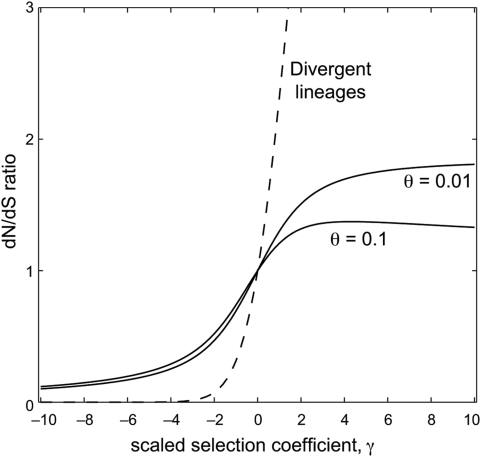
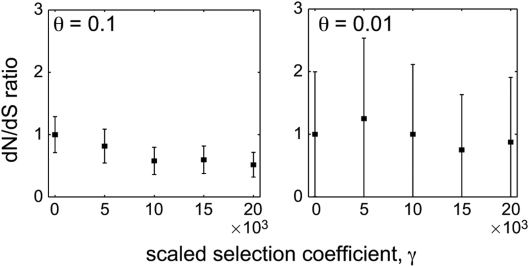
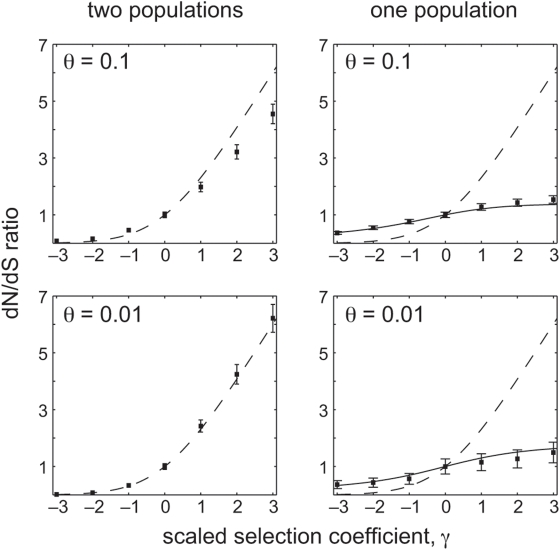
Evolutionary pressures on proteins are often quantified by the ratio of substitution rates at non-synonymous and synonymous sites. The dN/dS ratio was originally developed for application to distantly diverged sequences, the differences among which represent substitutions that have fixed along independent lineages. Nevertheless, the dN/dS measure is often applied to sequences sampled from a single population, the differences among which represent segregating polymorphisms. Here, we study the expected dN/dS ratio for samples drawn from a single population under selection, and we find that in this context, dN/dS is relatively insensitive to the selection coefficient. Moreover, the hallmark signature of positive selection over divergent lineages, dN/dS>1, is violated within a population. For population samples, the relationship between selection and dN/dS does not follow a monotonic function, and so it may be impossible to infer selection pressures from dN/dS. These results have significant implications for the interpretation of dN/dS measurements among population-genetic samples.
Overview
The claims and statistics of this paper haven’t been checked yet.
Free: it reads the open-access text and checks the first 5 claims that cite a source we can check. Create a free account to check every claim.
Integrity signals
Registry
Cites
Statistics
Figures
Verification
Claims the paper makes
The claims and statistics of this paper haven’t been checked yet.
Free: it reads the open-access text and checks the first 5 claims that cite a source we can check. Create a free account to check every claim.
Claims other papers make about this one
Each is checked against this paper’s own text: does it say what the citing paper says it does?
The check wasn’t confident either way, so it gives no verdict — never disputed.
In the citing paper
“This characteristic is consistent with the higher biodiversity observed in non-Westernized settings, where more heterogeneous dietary and environmental exposures may allow a broader range of accessory gene content to persist than is usually observed in genomes from industrialized populations [73-75] .”
From Genome-scale insights into the metabolic landscape and evolutionary development of Bifidobacterium bifidum (2026) · cites this paper as [73]
Experimental — accuracy not yet measured
Self-check
Percentages, sums and reported differences re-computed from the paper’s own numbers.
The self-check needs the paper’s full text.
Citations
Cites
MEGA4: Molecular Evolutionary Genetics Analysis (MEGA) Software Version 4.0
Tamura, K., Dudley, J., Nei, M., & Kumar, S. (2007) · Molecular Biology and Evolution · doi:10.1093/molbev/msm092 · Cited by 28,730 · cited 1×
“Theoretical work on the relationship between dN/dS and selection likewise assumes that sequences are sampled from independent, divergent species [3], as do computer packages used to estimate dN/dS from data [6,7].”
MethodStatistical method for testing the neutral mutation hypothesis by DNA polymorphism.
Tajima, F. (1989) · Genetics · doi:10.1093/genetics/123.3.585 · Cited by 13,941
PAML 4: Phylogenetic Analysis by Maximum Likelihood
Yang, Z. (2007) · Molecular Biology and Evolution · doi:10.1093/molbev/msm088 · Cited by 13,879 · cited 4×
“Theoretical work on the relationship between dN/dS and selection likewise assumes that sequences are sampled from independent, divergent species [3],as do computer packages used to estimate dN/dS from data [6, 7 ].”
MethodInfluentialEVOLUTION IN MENDELIAN POPULATIONS
Wright, S. (1931) · Genetics · doi:10.1093/genetics/16.2.97 · Cited by 8,916
Statistical tests of neutrality of mutations.
Fu, Y. X., & Li, W. H. (1993) · Genetics · doi:10.1093/genetics/133.3.693 · Cited by 4,034
Adaptive protein evolution at the Adh locus in Drosophila
McDonald, J. H., & Kreitman, M. (1991) · Nature · doi:10.1038/351652a0 · Cited by 3,283 · cited 1×
“geneticists [23,45].”
Codon-substitution models for heterogeneous selection pressure at amino acid sites
Yang, Z., Nielsen, R., Goldman, N., & Pedersen, A.-M. K. (2000) · Genetics · doi:10.1093/genetics/155.1.431 · Cited by 2,286
A codon-based model of nucleotide substitution for protein-coding DNA sequences.
(1994) · Molecular Biology and Evolution · doi:10.1093/oxfordjournals.molbev.a040153 · Cited by 1,960 · cited 20×
“We performed Wright-Fisher simulations of a population of constant size N evolving under positive or negative selection sensu Yang, in discrete time.”
BackgroundMethodInfluentialHitchhiking Under Positive Darwinian Selection
Fay, J. C., & Wu, C.-I. (2000) · Genetics · doi:10.1093/genetics/155.3.1405 · Cited by 1,819
Statistical methods for detecting molecular adaptation
Yang, Z., & Bielawski, J. P. (2000) · Trends in Ecology & Evolution · doi:10.1016/s0169-5347(00)01994-7 · Cited by 1,806 · cited 1×
“The instantaneous rate of change from codon i to codon j depends principally on the parameter v, defined as the relative rate of non-silent versus silent substitutions [2].”
Background
Cited by
Items 701–800 of 995
Genetic and Functional Characterization of HIV-1 Vpu from HIV-1-Infected North Indian Population
Singh, J., Pandey, M., Ramachandran, V. G., & Banerjea, A. C. (2020) · BioResearch open access · doi:10.1089/biores.2020.0023 · Cited by 2
“A dN/dS ratio <1 is indicative of purifying selection and amino acid conservation because of functional and structural constraints, and a dN/dS ratio >1 is indicative of diversifying and positive selection where amino acid substitutions confer an advantage.(22) Interestingly, most of Vpu variants exhibited evidence of…”
BackgroundAtlas, J., & Fu, J. (2021) · Journal of Molecular Evolution · doi:10.1007/s00239-020-09991-9 · Cited by 2
Biological and molecular characterization of eggplant infecting Carlavirus in India
Karnawar, R. B., Zore, G. B., Char, B. R., & Anandalakshmi, R. (2021) · Archives of Phytopathology and Plant Protection · doi:10.1080/03235408.2021.1899370 · Cited by 2
“The low ratio substitution calculated cistron-wise between the non-synonymous and synonymous (dN/dS) sites ranged from 0.2942 to 0.95029 for ORF1, 2, 3, 5 indicating negative selection (Kryazhimskiy and Plotkin 2008), especially in the ORF3 (0.2942) (Table 4).”
BackgroundInfluentialOu, X., Yang, Z., Zhu, D., Mao, S., Wang, M., Jia, R., Chen, S., Liu, M., Yang, Q., Wu, Y., et al. (2021) · Transboundary and Emerging Diseases · doi:10.1111/tbed.14148 · Cited by 3
“The dN/dS ratio is a classic indicator of directional selection: a ratio above 1 implies positive selection (nature), a ratio less than 1 implies negative selection (purifying), and a ratio equal to 1 indicates no selection (neutral) (Kryazhimskiy & Plotkin, 2008).”
BackgroundNeutral and adaptive protein evolution
Yang, Z. (2014) · Oxford University Press eBooks · doi:10.1093/acprof:oso/9780199602605.003.0011 · Cited by 2
Jeon, D., Lee, S., Choi, S., Kang, Y., & Kim, C. (2022) · Agronomy · doi:10.3390/agronomy12102511 · Cited by 2
“In general, the Ka/Ks ratio of orthologous genes indicates the evolutionary selection pressures of species [66].”
BackgroundKakeya, H., & Matsumoto, Y. (2022) · IPSJ Transactions on Bioinformatics · doi:10.2197/ipsjtbio.15.22 · Cited by 2
Ren, Z., Shi, Q., Xu, S., Xu, J., Yin, Y. H., Lin, Z., Xu, S., Ma, X., Liu, Y., Zhu, G., et al. (2023) · Parasites & Vectors · doi:10.1186/s13071-023-05897-9 · Cited by 2
“…to synonymous substitutions ( dN/dS or ω ) nor a dN-dS value can be used to detect positive Darwinian selection, because the differences in a set of conspecific sequences sampled from a single population just rep - resent segregating polymorphisms as opposed to fixed substitutions [36].”
BackgroundCorrelated evolution of oxidative physiology and MHC-based immunosurveillance in birds
Minias, P., Pap, P. L., Vincze, O., & Vágási, C. I. (2024) · Proceedings of the Royal Society B Biological Sciences · doi:10.1098/rspb.2024.0686 · Cited by 2
“…rates was originally developed to infer selection acting on allelic variants that represent fixation events across independent evolutionary lineages and this approach may yield reduced power to quantify positive selection across polymorphisms segregating within a single population [71].”
BackgroundMukherjee, S., Suryavanshi, M. V., Knight, J. L., Lange, D., & Miller, A. W. (2025) · mSphere · doi:10.1128/msphere.00913-24 · Cited by 2
“Calculation of the number of non-synonymous to synonymous substitutions between pairs of homologous sequences provides an estimate on whether genes are undergo ing positive, negative, or neutral selection within a community (53).”
Highly conserved Plasmodium vivax genomes in Duffy-negative individuals from Sudan
Schroeder, R. E., Ahmed, S., Ford, A., Elfaki, M. M. A., Hamad, S. O., Elfaki, T. M., Mohamed, S., Mańko, E., Clark, T. G., Campino, S. G., et al. (2025) · Scientific Reports · doi:10.1038/s41598-025-28797-7 · Cited by 2
“10 , PvMSP5 , PvRBP1a , PvRBP1b , and PvRBP2a , suggesting that these mutations may offer fitness advantages 51–53 .”
Simulating molecular evolution
Yang, Z. (2014) · Oxford University Press eBooks · doi:10.1093/acprof:oso/9780199602605.003.0012 · Cited by 2
Wallis, G. P., & Wallis, L. J. (2014) · Springer eBooks · doi:10.1007/978-3-319-07623-2_3 · Cited by 2
Wittkopp, P. J. (2013) · Genetics · doi:10.1534/genetics.112.148171 · Cited by 2
Models of Selection, Isolation, and Gene Flow in Speciation
Hart, M. W. (2014) · Biological Bulletin · doi:10.1086/bblv227n2p133 · Cited by 2
“It is well known (Kryazhimskiy and Plotkin, 2008; Anisimova and Liberles, 2012; Mugal et al., 2014) that violating this assumption may have a high associated risk of identifying false positives in analyses of positive selection (e.g., when alignments of genes under purifying selection include rare…”
BackgroundSánchez‐Gracia, A., Guirao‐Rico, S., Hinojosa‐Álvarez, S., & Rozas, J. (2017) · Journal of Neurogenetics · doi:10.1080/01677063.2017.1398241 · Cited by 2
“In addition, since the parameter x correlates very well with the strength of selection, its absolute value can be used as a measure of the intensity of selection acting on proteins (Kryazhimskiy & Plotkin, 2008).”
MethodEvolutionary rate variation among genes involved in galactomannan biosynthesis in Coffea canephora
Ogutu, C. O., Cherono, S., Ntini, C., Mollah, M. D., Zhao, L., Belal, M. A., & Han, Y. (2020) · Ecology and Evolution · doi:10.1002/ece3.6084 · Cited by 2
“Five wild and eighteen accessions representing independent, divergent species (Kryazhimskiy & Plotkin, 2008; Nielsen & Yang, 2003) were sequenced to analyze evolutionary patterns in 18 GM pathway gene copies.”
BackgroundGenomic Variation Influences Methanothermococcus Fitness in Marine Hydrothermal Systems
Hoffert, M., Anderson, R. E., Réveillaud, J., Murphy, L. G., Stepanauskas, R., & Huber, J. A. (2021) · Frontiers in Microbiology · doi:10.3389/fmicb.2021.714920 · Cited by 2
“The ratio depends on variables such as effective population size and the divergence of the microbial populations compared (Kryazhimskiy and Plotkin, 2008).”
BackgroundResultZhao, X., Hu, Y., Zhao, Y., Wang, L., Wu, Z., Soe, M. T., Kyaw, M. P., Cui, L., Zhu, X., & Cao, Y. (2022) · Parasites & Vectors · doi:10.1186/s13071-022-05523-0 · Cited by 2
“A value of dN–dS > 0 implies a positive selection, whereas dN–dS < 0 designates a purifying selection [25].”
BackgroundYang, T., Liu, Y., & Ning, Z. (2023) · Animals · doi:10.3390/ani13030362 · Cited by 2
“The nonsynonymous substitution (Ka) and synonymous substitution (Ks) of proteincoding sequences are two important parameters to quantify the selective pressure and evolutionary dynamics across closely related species [60].”
BackgroundGenomic and phenotypic analyses suggest moderate fitness differences among Zika virus lineages
Oliveira, G., Vogels, C. B. F., Zolfaghari, A., Saraf, S., Klitting, R., Weger‐Lucarelli, J., Ontiveros, C. O., Agarwal, R., Leon, K. P., Tsetsarkin, K. A., et al. (2023) · PLoS neglected tropical diseases · doi:10.1371/journal.pntd.0011055 · Cited by 3
“Selection pressures among the protein-coding portion of a genome can be analyzed by comparing the rate of nonsynonymous mutations with the rate of synonymous mutations (dN/dS) [58].”
BackgroundEvangelista, D. A., Gilchrist, M. A., Legendre, F., & O’Meara, B. C. (2025) · BMC Ecology and Evolution · doi:10.1186/s12862-025-02409-4 · Cited by 2
“…these models on single genes (see Methods section), the theoretical arguments against some complex models like the MutSel family of models [5, 38, 41, 58, 77, 92], and the demonstrated strong performance of using only GTR (Tables 1, and 2), we are not wholly convinced of the benefit to using…”
Diagnostics and epidemiology of Aleutian mink disease virus
Knuuttila, A. (2015) · Työväentutkimus Vuosikirja · Cited by 2
Radical amino acid mutations persist longer in the absence of sexPreprint
Sharbrough, J., Luse, M., Boore, J. L., Logsdon, J. M., Jr., & Neiman, M. (2016) · bioRxiv (Cold Spring Harbor Laboratory) · doi:10.1101/049924 · Cited by 2
Markell, J. A. (2017) · Carleton University's Institutional Repository (MacOdrum Library, Carleton University) · doi:10.22215/etd/2017-12007 · Cited by 2
Interpreting dN/dS under different selective regimes in cancer evolutionPreprint
Pérez‐Figueroa, A., & Posada, D. (2021) · bioRxiv (Cold Spring Harbor Laboratory) · doi:10.1101/2021.11.30.470556 · Cited by 2
“Notably, within populations, the relationship between dN/dS and the selection coefficient is not always a monotonic function, and therefore it may be unfeasible to infer selective pressures from dN/dS (Kryazhimskiy and Plotkin, 2008).”
BackgroundInfluentialAlleleomes characterize the survivors of 3.5 billion years of bacterial evolutionPreprint
Palsson, B. Ø., Catoiu, E., & Hyun, J. C. (2023) · Research Square · doi:10.21203/rs.3.rs-3168663/v1 · Cited by 2
A direct experimental test of Ohno’s hypothesisPreprint
Mihajlovic, L., Iyengar, B. R., Baier, F., Barbier, I., Iwaszkiewicz, J., Zoete, V., Wagner, A., & Schaerli, Y. (2024) · eLife · doi:10.7554/elife.97216.1 · Cited by 6
Anomalous US-wide prevalence of reversion mutants in the emergence of Omicron BA.1Preprint
Kakeya, H. (2024) · Research Square · doi:10.21203/rs.3.rs-4919461/v1 · Cited by 2
A direct experimental test of Ohno’s hypothesisPreprint
Mihajlovic, L., Iyengar, B. R., Baier, F., Barbier, I., Iwaszkiewicz, J., Zoete, V., Wagner, A., & Schaerli, Y. (2024) · eLife · doi:10.7554/elife.97216.2 · Cited by 2
Models of amino acid and codon substitution
Yang, Z. (2014) · Oxford University Press eBooks · doi:10.1093/acprof:oso/9780199602605.003.0002 · Cited by 1
Vibrio vulnificus mutation rate: an in vitro approach
Molina, F. J. R., Amaro, C., Otín, A. A., & Carro, J. (2023) · Frontiers in Microbiology · doi:10.3389/fmicb.2023.1223293 · Cited by 1
“Attending to the ratio of non-synonymous to synonymous substitutions (dN/dS), the type of selection forces on the evolution of this bacterial species can be evaluated (Kryazhimskiy and Plotkin, 2008).”
BackgroundEvans, A. B., Winkler, C. W., Anzick, S. L., Ricklefs, S., Sturdevant, D. E., & Peterson, K. E. (2023) · PLoS neglected tropical diseases · doi:10.1371/journal.pntd.0011657 · Cited by 1
Giel, A.-S., Bigge, J., Schumacher, J., Maj, C., & Dasmeh, P. (2024) · Molecular Biology and Evolution · doi:10.1093/molbev/msae115 · Cited by 1
“Our d N /d S metric relies primarily on the interspecies divergence data, making it less sensitive to identify the patterns of selection at lower levels of divergence and over short evolutionary timescales (Ho et al. 2005; Kryazhimskiy and Plotkin 2008).”
BackgroundA Short-Term View of Protein Sequence Evolution from Salmonella
Cherry, J. L. (2025) · Genome Biology and Evolution · doi:10.1093/gbe/evaf040 · Cited by 1
Kiraz, D., & Özcan, A. (2025) · Antonie van Leeuwenhoek · doi:10.1007/s10482-025-02070-3 · Cited by 1
“The dn/ds ratios for the mur C, mur E, pep N, pep X , pyr G, rec A and rpo B genes were all below 1 indicating that these genes are under purifying selection where non-synonymous mutations are generally deleterious and eliminated from the population (Kryazhimskiy and Plotkin 2008).”
Webster, C. G., Paris, M., Olivares, I., Wojciechowski, M. F., Kessler, M. R., & Sanín, M. J. (2025) · Genome Biology and Evolution · doi:10.1093/gbe/evaf130 · Cited by 1
“The d N / d S statistic is a measure of synonymous to non-synonymous substitutions in a given protein coding gene (Kimura 1977) and can be used to understand selection occurring in populations (Kryazhimskiy and Plotkin 2008).”
Applying the Classic Test dN/dS to Detect Selection in Archaea
Martínez-Gutiérrez, C. A., Douglas, G. M., & Bobay, L. (2025) · Methods in molecular biology · doi:10.1007/978-1-0716-4702-8_7 · Cited by 1
Raza, R. Z., Nazir, F., & Abbasi, A. A. (2025) · Evolutionary Biology · doi:10.1007/s11692-025-09654-x · Cited by 1
“Numerically, the site with ω value greater than 1 indicates positive selection, whereas ω less than 1 indicates negative selection (Kryazhimskiy & Plotkin, 2008).”
Viral proteins as discovery tools for cell biology: The case of the geminivirus-encoded C4
Pan, S., Wei, H., Dröst, F., Fenn, A. M., Kamal, N. M., & Lozano‐Durán, R. (2026) · PLoS Pathogens · doi:10.1371/journal.ppat.1013798 · Cited by 1
“…indicate that proteins targeted by viral effectors are frequently under strong purifying selection, showing very few amino-acid–changing mutations relative to silent ones ( ), an indicator of selective pressure on protein-coding genes [23] commonly observed at interfaces of viral interactions [4].”
Population Structure, Demographic History and Maladaptation Risk in Ponderosa Pine
Collins, S., Lincoln, A., & Torre, A. R. D. L. (2026) · Plants · doi:10.3390/plants15213280 · Cited by 1
Álvarez-Narváez, S., Sary, K., Goraichuk, I. V., Kulkarni, A., Kapczynski, D. R., & Suarez, D. L. (2025) · Avian Diseases · doi:10.1637/aviandiseases-d-25-00088 · Cited by 1
Whole-genome characteristics of isolates from recurrent Clostridioides difficile infections
Zheng, L., Lv, T., Xu, X., Bao, H., Shen, P., Zhu, D., & Chen, Y. (2026) · Microbiology Spectrum · doi:10.1128/spectrum.04087-25 · Cited by 1
“The relative ratio of non-synony mous to synonymous mutations ( d N / d S ) within the core genome is calculated to infer genetic selection pressure (33, 34).”
Variations and evolution of HIV-1 provirus in peripheral blood under the pressure of ART
Liang, Y., Deng, H., Li, Q., Zhang, C., Li, J., Kong, Q., Zou, Z., Li, L., & 陈伟烈 (2026) · Virus Evolution · doi:10.1093/ve/veag019 · Cited by 1
Karim, R., Arman, M. S., Hasan, K. M. K., & Hasan, Z. (2026) · Scientific Reports · doi:10.1038/s41598-026-49324-2 · Cited by 1
“On the other hand, a dn/ds 1 indicates negative or purifying selection 67,68 .”
Surwadinata, A., Hartono, S., Miftakhurohmah, Çelik, A., & Santosa, A. I. (2026) · The Microbe · doi:10.1016/j.microb.2026.100724 · Cited by 1
He, H., Yang, F.-S., Zhang, Y.-X., Xu, C., Ma, X. Q., Song, Y., Sun, J., & Yu, Y. (2026) · Annals of Botany · doi:10.1093/aob/mcag114 · Cited by 1
Characterizing selection signatures in coding and noncoding regions of 14,886 cancer genomes
Zheng, M., Sun, X., Hou, J., Guo, M., Liu, X., Yang, W., & Yang, J. (2026) · Journal of genetics and genomics/Journal of Genetics and Genomics · doi:10.1016/j.jgg.2026.06.008 · Cited by 1
Motyka, M., Kusy, D., Bílková, R., Jahodářová, E., & Bocák, L. (2026) · Scientific Reports · doi:10.1038/s41598-026-59230-2 · Cited by 1
Fotouhi-Ardakani, R., Sebt-Ahmadi, K., Mosawi, S. H., Zarean, M., Afgar, A., Fotouhi-Ardakani, R., Moradzadeh, Z., & Afkhami, H. (2026) · World Journal of Microbiology and Biotechnology · doi:10.1007/s11274-026-05107-5 · Cited by 1
Evolutionarily conserved short linear motifs drive actin filament binding
Paraschiakos, T., Yuan, B., Bucher, M., Sopelniak, K., Cervero, P., Simon, L. D., Zonjic, K., Eggers, D., Selle, F., Li, J., et al. (2026) · Nature Cell Biology · doi:10.1038/s41556-026-01979-9 · Cited by 1
“To accurately quantify the selective evolutionary pressure acting on these conserved positions, we calculated the non-synonymous-to-synonymous mutation ratio (dN/dS) 52 , where values of 1 indicate purifying selection within each SFM-containing gene.”
A conceptual framework to dissect emergent functions in microbial communities
Dash, S., Harshe, S., Prasad, A., Pal, S., & Kost, C. (2026) · Current Opinion in Microbiology · doi:10.1016/j.mib.2026.102790 · Cited by 1
Treiber-Kleinke, C., Göller, J. M., Liba, J., Wong, M. C.-H., Wolf, S. A., Berger, A. A., Semmler, T., Budiša, N., & Koksch, B. (2026) · Chemical Science · doi:10.1039/d6sc05637g · Cited by 1
Genome Evolution in Social Insects
Barkdull, M., & Moreau, C. S. (2026) · Genome Biology and Evolution · doi:10.1093/gbe/evag221 · Cited by 1
“…are characterized by distinct patterns of molecular evolution; however, Radford and colleagues were not able to infer the specific selective regimes that these genes experience, as dN/dS is not an appropriate metric of positive selection at the population level (Kryazhimskiy and Plotkin 2008).”
Liu, Z., & Good, B. H. (2026) · PLoS Biology · doi:10.1371/journal.pbio.3004052 · Cited by 1
“While originally developed for comparisons between species, dN/dS is also routinely applied to genomes from the same species [11,12].”
Coalescent theory and species trees
Yang, Z. (2014) · Oxford University Press eBooks · doi:10.1093/acprof:oso/9780199602605.003.0009 · Cited by 1
Castillo‐Ramírez, S., & Feil, E. J. (2013) · Social and ecological interactions in the Galapagos Islands · doi:10.1007/978-1-4614-6732-8_5 · Cited by 1
Haplotype variation of toll-like receptor 3 among pig populations
Yang, X., Zhai, C.-Y., Li, H.-T., & Liu, D. (2011) · Acta Agriculturae Scandinavica Section A – Animal Science · doi:10.1080/09064702.2011.552630 · Cited by 1
“It should also be noted that selection direction predicted by statistical methods can be influenced by many factors, such as relaxation of purifying selection, population bottlenecks, and methods used (Kryazhimskiy & Plotkin, 2008; Barreiro et al., 2009).”
MethodYang, Z. (2014) · Oxford University Press eBooks · doi:10.1093/acprof:oso/9780199602605.003.0007 · Cited by 1
Software for Characterizing the Antigenic and Genetic Evolution of Human Influenza Viruses
Reimering, S., & McHardy, A. C. (2018) · Methods in molecular biology · doi:10.1007/978-1-4939-8678-1_26 · Cited by 1
Mating system complexity and cryptic speciation in the seed bank pathogen Pyrenophora semeniperda
Coleman, C. E., Meyer, S. E., & Ricks, N. J. (2018) · Plant Pathology · doi:10.1111/ppa.12948 · Cited by 2
“…analysis was performed on the polymorphism exhibited by each idiomorph to determine whether these were under positive, purifying, or neutral selection, but as predicted by Kryazhimskiy & Plotkin (2008), there was insufficient within-idiomorph sequence variation to use this analytical approach.”
MethodDelgado-Cano, D., Mariño‐Ramírez, L., & Hernández-Fernández, J. (2021) · Mitochondrial DNA Part A · doi:10.1080/24701394.2021.1885389 · Cited by 3
Molecular Evolution of Parasitic Helminths
Thaenkham, U., Chaisiri, K., & Chan, A. H. E. (2022) · Springer eBooks · doi:10.1007/978-981-19-1786-8_4 · Cited by 1
Mamathashree, M. N., Suresh, K. P. H., Patil, S. S., Indrabalan, U. B., Beelagi, M. S., Pradeep, S., Krishnamoorthy, P., Jacob, S. S., Srinivasa, C., Kollur, S. P., et al. (2022) · International Journal of Health & Allied Sciences · doi:10.55691/2278-344x.1016 · Cited by 1
Mamathashree, M. N., Suresh, K. P. H., Patil, S. S., Indrabalan, U. B., Beelagi, M. S., Pradeep, S., Krishnamoorthy, P., Jacob, S. S., Srinivasa, C., Kollur, S. P., et al. (2022) · International Journal of Health & Allied Sciences · doi:10.55691/2278-344x.1022 · Cited by 1
Korenskaia, A. E., Matushkin, Y. G., Мустафин, З. С., Lashin, S. A., & Klimenko, A. I. (2023) · Biology · doi:10.3390/biology12101338 · Cited by 1
Gorlov, I. P., Gorlova, O. Y., Tsavachidis, S., & Amos, C. I. (2024) · Scientific Reports · doi:10.1038/s41598-024-63468-z · Cited by 1
“In this respect our approach is similar to the commonly used ratio on nonsynonymous to synonymous substitutions dN/dS 22,30,31 .”
MethodEbwanga, E. J., Wenger, J. B., Shey, R. A., Buys, N., Lavigne, R., Ghogomu, S. M., & Paeshuyse, J. (2025) · ImmunoInformatics · doi:10.1016/j.immuno.2025.100048 · Cited by 1
Xia, Y., Tao, K., Ma, D., Wang, Y., Xiao, J., Luo, Y., & Li, L. (2025) · Horticulturae · doi:10.3390/horticulturae11060641 · Cited by 1
Liu, Y., Joly, V., Sabar, M., Matton, D. P., & Morse, D. (2025) · Plant Molecular Biology · doi:10.1007/s11103-025-01608-3 · Cited by 1
Feng, Y., Cen, W., Storey, K. B., Liu, L., Yu, D., & Zhang, J. (2025) · Insects · doi:10.3390/insects16070720 · Cited by 1
“…depend on their adaptive evolution in response to environmental changes, which is predominantly manifested through physiological and biochemical characteristics within the organism, as well as adjustments in external morphology and behavioral patterns to accommodate varying environments [34–36].”
A comparison of one-rate and two-rate inference frameworks for site-specific dN/dS estimationPreprint
Spielman, S. J., Wan, S., & Wilke, C. O. (2015) · bioRxiv (Cold Spring Harbor Laboratory) · doi:10.1101/032805 · Cited by 1
Architecture and Evolution of Xylem-related Gene Coexpression Networks in Poplars
Suren, H. (2013) · VTechWorks (Virginia Tech) · Cited by 1
Reply: Neutral tumor evolution?Preprint
Heide, T., Zapata, L., Williams, M. J., Werner, B., Barnes, C. P., Graham, T. A., & Sottoriva, A. (2018) · bioRxiv (Cold Spring Harbor Laboratory) · doi:10.1101/274142 · Cited by 2
The effects of losing sex on the molecular evolution of plant defensePreprint
Carmona, D., Hollister, J. D., Greiner, S., Wright, S., Ness, R. W., & Johnson, M. T. J. (2019) · bioRxiv (Cold Spring Harbor Laboratory) · doi:10.1101/683219 · Cited by 1
“The removal of polymorphic and heterozygous sites ensured valid interpretations of dN/dS ratios because estimates of selection by PAML are based on rates of fixed differences between species (Kryazhimskiy and Plotkin 2008).”
BackgroundAlpha globin variation in the long-tailed macaque suggests malaria selectionPreprint
Faust, C. L., Rangkuti, F., Preston, S. G., Boyd, A. C., Flammer, P. G., Bia, B., Rose, N. J., Piel, F. B., Smith, A. L., Dobson, A. P., et al. (2020) · bioRxiv (Cold Spring Harbor Laboratory) · doi:10.1101/2020.10.21.344853 · Cited by 1
“Our ability to test for positive selection (i.e. dn/ds ratios) within alpha globin is currently limited by only having short read sequences from a single population (Kryazhimskiy and Plotkin 2008).”
BackgroundForni, G., Ruggeri, A. A., Piccinini, G., & Luchetti, A. (2020) · bioRxiv (Cold Spring Harbor Laboratory) · doi:10.1101/2020.11.04.367789 · Cited by 1
Lagging strand encoding promotes adaptive evolutionPreprint
Merrikh, C. N., Harris, L. A., Mangiameli, S. M., & Merrikh, H. (2020) · bioRxiv (Cold Spring Harbor Laboratory) · doi:10.1101/2020.06.23.167650 · Cited by 1
Ahmad, M. Z., Zeng, X., Dong, Q., Manan, S., Jin, H., Li, P., Wang, X., Benedito, V. A., & Zhao, J. H. (2020) · doi:10.21203/rs.2.21482/v1 · Cited by 1
“Positive and purifying selection of BAHD genes in soybean The Ka/Ks ratio is used as a measure of the direction and magnitude of gene selection [63].”
MethodAkpınar, B. A., Sharma, V., & Dunn, C. D. (2021) · bioRxiv (Cold Spring Harbor Laboratory) · doi:10.1101/2021.03.10.434614 · Cited by 1
“Other weaknesses further limit the utility of dN/dS-based approaches (Kryazhimskiy and Plotkin 2008; Spielman and Wilke 2015; Venkat et al. 2018; Wisotsky et al. 2020), including a difficulty in identifying instances of fixed adaptive substitutions subject to stabilizing selection, even though these changes are often…”
BackgroundPapa, Y. (2022) · Open Access Victoria University of Wellington | Te Herenga Waka (Figshare) · doi:10.26686/wgtn.19077938 · Cited by 1
Yang, Z. (2014) · Oxford University Press eBooks · doi:10.1093/acprof:oso/9780199602605.003.0004 · Cited by 1
Natural selection and neutral mutations through the lens of virusesPreprint
Chen, J., Li, G., Gong, H., Sun, M., Ji, Y., Chen, R.-X., Tan, S.-M., & Chen, J. (2022) · bioRxiv (Cold Spring Harbor Laboratory) · doi:10.1101/2022.10.10.511542 · Cited by 2
“The ratio ( ) of nonsynonymous versus synonymous substitution rates (dN/dS) has been frequently employed for over 20 years to examine the role of natural selection in nucleotide substitution at numerous sites in protein-coding genes 11-17 .”
Manyara, D., Sánchez‐García, M., Hiltunen, M., Montoliu-Nerin, M., Cheng, G., Bever, J. D., Johannesson, H., & Rosling, A. (2023) · bioRxiv (Cold Spring Harbor Laboratory) · doi:10.1101/2023.04.18.537338 · Cited by 1
Protein structure shapes natural genetic variation and de novo adaptationPreprint
Jakobson, C. M., Elgort, A. V., Aguilar-Rodríguez, J., & Jarosz, D. F. (2025) · bioRxiv (Cold Spring Harbor Laboratory) · doi:10.64898/2025.12.19.695599 · Cited by 1
Evolutionary origins of protein novelty across an entire yeast subphylumPreprint
Tassios, E., Πυργέλης, Ν., Rinker, D. C., Tzermpou, E. M., Hittinger, C. T., Rokas, A., Nikolaou, C., & Vakirlis, N. (2026) · bioRxiv (Cold Spring Harbor Laboratory) · doi:10.64898/2026.08.29.748005 · Cited by 1
“We next applied a similar approach for species-specific de novo genes based on intra-238 specific alignments; aware of its caveats 69,70 .”
Selleri, E., Longhi, G., Tarracchini, C., Carolis, E. D., Petraro, S., Mancabelli, L., Milani, C., Turroni, F., Ventura, M., & Lugli, G. A. (2026) · Microbiome Research Reports · doi:10.20517/mrr.2026.19
Comparative analyses of adaptive phenomena in eukaryotic systems
Bush, S. J. (2014) · The University of Bath Online Publications Store (The University of Bath)
Bitarello, B. D. (2011) · Digital Library of Theses and Dissertations (Universidade de São Paulo) · doi:10.11606/d.41.2011.tde-26102011-092404 · Cited by 2
Ecological and evolutionary processes in two southern African endemic birds
Ribeiro, Â. M. (2011) · Open University of Cape Town (University of Cape Town)
Ahlstrom, C. A. (2015) · Libraries and Cultural Resources (University of Calgary) · doi:10.11575/prism/28156
Introduction: a Personal Homage to Tom Whittam
Achtman, M. (2014) · ASM Press eBooks · doi:10.1128/9781555817114.ch1
Tipagem Molecular de Estirpes de Brucella spp.
Protásio, S. F. C. (2015) · Portuguese National Funding Agency for Science, Research and Technology (RCAAP Project by FCT)
Mechanisms of reproductive isolation in sexual Epichloë endophytes
Schirrmann, M. K. (2015) · Repository for Publications and Research Data (ETH Zurich) · doi:10.3929/ethz-a-010531497
Gilroy, D. L. (2015) · UEA Digital Repository (University of East Anglia)
Comparison of phylogenetic methods and tests on trees
Yang, Z. (2014) · Oxford University Press eBooks · doi:10.1093/acprof:oso/9780199602605.003.0005
Genetic variation of Hepatitis C Virus p7 protein in chronically infected patient cohort
Bruckner, J. J. (2012)
Nguyen, T. (2016) · cIRcle (University of British Columbia) · doi:10.14288/1.0314165
“Consequently, dN− dS alone is not a sufficient metric for quantifying the response to selection by HIV within hosts [46].”
BackgroundThe immune system and pathogen co-evolution
Hejazi, S. P. (2010) · Rice Research Repository (Rice University)
Metadata
- Authors
- Kryazhimskiy, S., & Plotkin, J. B.
- Affiliations
- University of Pennsylvania (US)
- Corresponding author
- Plotkin, Joshua B.
- Venue
- PLoS Genetics
- Publisher
- Public Library of Science (PLoS)
- Published
- 2008-12-12
- Volume
- 4
- Issue
- 12
- Pages
- e1000304
- ISSN
- 1553-7390 (ISSN-L)
- 1553-7404
- PMC
- PMC2596312
- OpenAlex
- W2045641296
- Cited by
- 962
- References
- 64
- Citations by year
- 2026: 55 · 2025: 60 · 2024: 74 · 2023: 69 · 2022: 85 · 2021: 80 · 2020: 70 · 2019: 48 · 2018: 53 · 2017: 45 · 2016: 51 · 2015: 57 · 2014: 55 · 2013: 35 · 2012: 45
- FWCI
- 15.24
- Type
- journal article
- Language
- en
- Open access
- gold
- doi.org
- Locations
- PLoS Genetics (publishedVersion, cc-by)
- PubMed Central (publishedVersion, cc-by)
- PubMed (publishedVersion)
- RePEc: Research Papers in Economics (submittedVersion)
- DOAJ (DOAJ: Directory of Open Access Journals) (submittedVersion, cc-by-sa)
- Figshare (submittedVersion, cc-by)
- Funders
- Burroughs Wellcome Fund
- James S. McDonnell Foundation
- University of Pennsylvania
- Defense Advanced Research Projects Agency
- Advanced Research Projects Agency
- Topics
- Life Sciences › Biochemistry, Genetics and Molecular Biology › Genetics › Evolution and Genetic Dynamics
- Life Sciences › Biochemistry, Genetics and Molecular Biology › Molecular Biology › Genomics and Phylogenetic Studies
- Life Sciences › Biochemistry, Genetics and Molecular Biology › Genetics › Genetic diversity and population structure
- Keywords
- dN/dS ratio, nonsynonymous substitution rate, synonymous substitution rate, positive selection, selection coefficients, population genetics, protein evolution, selection signatures
- MeSH terms
- Genetics, Population, Models, Genetic, Proteins, Selection, Genetic, Genetic Variation, Models, Statistical, Evolution, Molecular, Amino Acid Substitution
About these checks
Registry, retraction, Cites and statistics results are computed, not judged, with one exception: a printed reference that no index lists is read once by a model before it counts as a citation error. Claims are extracted by a model and kept only when their quote appears verbatim in the text; each cited source is then checked, with a model’s help, for whether it says what the claim relies on. Those verdicts can be wrong — read the claim’s quote and the cited source before relying on one.
Statistics and arithmetic are recomputed, not judged.
Confidence bands are shown only for fields calibrated on our annotated test set. None is calibrated yet, so no band is shown.
What counts as a claim ›How we measure confidence ›How we check this ›
Are you an author, or do you see a problem with this page? Request a review
Data sources
Bibliographic data: Semantic Scholar, OpenAlex, Crossref.
Contains information from the Semantic Scholar Academic Graph Datasets, made available under the ODC Attribution License (ODC-BY 1.0).
Semantic Scholar’s data is described in: Kinney, R., et al. (2023). The Semantic Scholar Open Data Platform. arXiv:2301.10140.
