

The Population Genetics of dN/dS
Open accessThe DOI matches its Crossref record; 63 of the 64 references it cites were found in a registry or an index.
Abstract
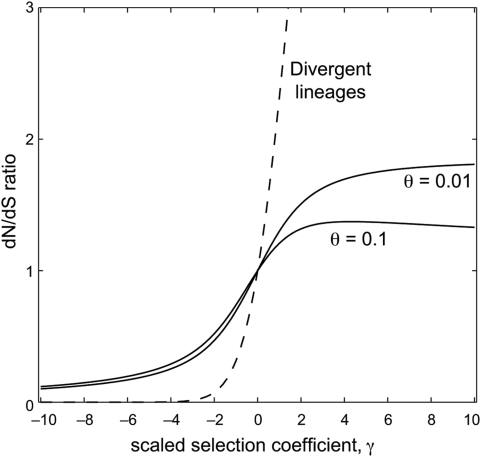
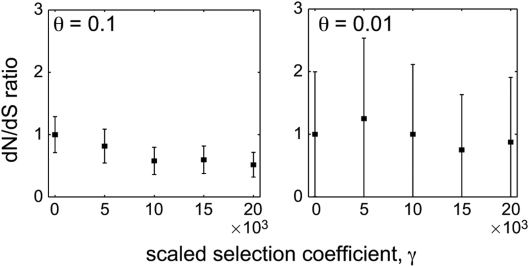
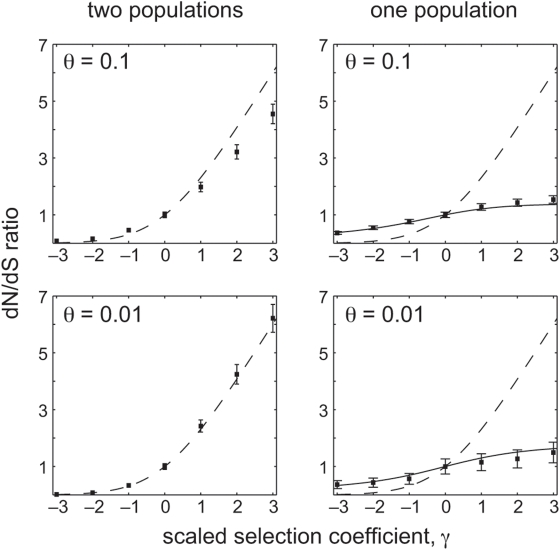
Evolutionary pressures on proteins are often quantified by the ratio of substitution rates at non-synonymous and synonymous sites. The dN/dS ratio was originally developed for application to distantly diverged sequences, the differences among which represent substitutions that have fixed along independent lineages. Nevertheless, the dN/dS measure is often applied to sequences sampled from a single population, the differences among which represent segregating polymorphisms. Here, we study the expected dN/dS ratio for samples drawn from a single population under selection, and we find that in this context, dN/dS is relatively insensitive to the selection coefficient. Moreover, the hallmark signature of positive selection over divergent lineages, dN/dS>1, is violated within a population. For population samples, the relationship between selection and dN/dS does not follow a monotonic function, and so it may be impossible to infer selection pressures from dN/dS. These results have significant implications for the interpretation of dN/dS measurements among population-genetic samples.
Overview
The claims and statistics of this paper haven’t been checked yet.
Free: it reads the open-access text and checks the first 5 claims that cite a source we can check. Create a free account to check every claim.
Integrity signals
Registry
Cites
Statistics
Figures
Verification
Claims the paper makes
The claims and statistics of this paper haven’t been checked yet.
Free: it reads the open-access text and checks the first 5 claims that cite a source we can check. Create a free account to check every claim.
Claims other papers make about this one
Each is checked against this paper’s own text: does it say what the citing paper says it does?
The check wasn’t confident either way, so it gives no verdict — never disputed.
In the citing paper
“This characteristic is consistent with the higher biodiversity observed in non-Westernized settings, where more heterogeneous dietary and environmental exposures may allow a broader range of accessory gene content to persist than is usually observed in genomes from industrialized populations [73-75] .”
From Genome-scale insights into the metabolic landscape and evolutionary development of Bifidobacterium bifidum (2026) · cites this paper as [73]
Experimental — accuracy not yet measured
Self-check
Percentages, sums and reported differences re-computed from the paper’s own numbers.
The self-check needs the paper’s full text.
Citations
Cites
MEGA4: Molecular Evolutionary Genetics Analysis (MEGA) Software Version 4.0
Tamura, K., Dudley, J., Nei, M., & Kumar, S. (2007) · Molecular Biology and Evolution · doi:10.1093/molbev/msm092 · Cited by 28,730 · cited 1×
“Theoretical work on the relationship between dN/dS and selection likewise assumes that sequences are sampled from independent, divergent species [3], as do computer packages used to estimate dN/dS from data [6,7].”
MethodStatistical method for testing the neutral mutation hypothesis by DNA polymorphism.
Tajima, F. (1989) · Genetics · doi:10.1093/genetics/123.3.585 · Cited by 13,941
PAML 4: Phylogenetic Analysis by Maximum Likelihood
Yang, Z. (2007) · Molecular Biology and Evolution · doi:10.1093/molbev/msm088 · Cited by 13,879 · cited 4×
“Theoretical work on the relationship between dN/dS and selection likewise assumes that sequences are sampled from independent, divergent species [3],as do computer packages used to estimate dN/dS from data [6, 7 ].”
MethodInfluentialEVOLUTION IN MENDELIAN POPULATIONS
Wright, S. (1931) · Genetics · doi:10.1093/genetics/16.2.97 · Cited by 8,916
Statistical tests of neutrality of mutations.
Fu, Y. X., & Li, W. H. (1993) · Genetics · doi:10.1093/genetics/133.3.693 · Cited by 4,034
Adaptive protein evolution at the Adh locus in Drosophila
McDonald, J. H., & Kreitman, M. (1991) · Nature · doi:10.1038/351652a0 · Cited by 3,283 · cited 1×
“geneticists [23,45].”
Codon-substitution models for heterogeneous selection pressure at amino acid sites
Yang, Z., Nielsen, R., Goldman, N., & Pedersen, A.-M. K. (2000) · Genetics · doi:10.1093/genetics/155.1.431 · Cited by 2,286
A codon-based model of nucleotide substitution for protein-coding DNA sequences.
(1994) · Molecular Biology and Evolution · doi:10.1093/oxfordjournals.molbev.a040153 · Cited by 1,960 · cited 20×
“We performed Wright-Fisher simulations of a population of constant size N evolving under positive or negative selection sensu Yang, in discrete time.”
BackgroundMethodInfluentialHitchhiking Under Positive Darwinian Selection
Fay, J. C., & Wu, C.-I. (2000) · Genetics · doi:10.1093/genetics/155.3.1405 · Cited by 1,819
Statistical methods for detecting molecular adaptation
Yang, Z., & Bielawski, J. P. (2000) · Trends in Ecology & Evolution · doi:10.1016/s0169-5347(00)01994-7 · Cited by 1,806 · cited 1×
“The instantaneous rate of change from codon i to codon j depends principally on the parameter v, defined as the relative rate of non-silent versus silent substitutions [2].”
Background
Cited by
Items 301–400 of 995
Correction: The Role of Selection in Shaping Diversity of Natural M. tuberculosis Populations
Pepperell, C. S., Casto, A. M., Kitchen, A., Granka, J. M., Cornejo, O. E., Holmes, E. C., Birren, B. W., Galagan, J. E., & Feldman, M. W. (2013) · PLoS Pathogens · doi:10.1371/annotation/cff22061-44d5-4301-b853-41702d160203 · Cited by 25
“identified a further property of dN/dS, namely its low power to estimate the strength of selection from patterns of polymorphism among closely related organisms [23].”
BackgroundKim, H. N., Hwang, J., Yoon, S., Lim, C. S., Cho, Y., Lee, C., & Nam, M. (2023) · PLoS ONE · doi:10.1371/journal.pone.0283873 · Cited by 24
“A dN /dS ratio >1 indicates positive selection, while a dN/dS ratio <1 indicates negative selection [27].”
Dey, S., Gaur, M., Sykes, E. M. E., Prusty, M., Elangovan, S., Dixit, S., Pati, S., Kumar, A., & Subudhi, E. (2023) · Genes · doi:10.3390/genes14051037 · Cited by 24
“Trends of positive Darwinian selection produce dN/dS > 1, whereas tendencies of negative Darwinian selection, or the selective removal of detrimental alleles, produce dN/dS < 1 [42].”
BackgroundVirulence in Newcastle disease virus: A genotyping and molecular evolution spectrum perspective
Fan, W., Wang, Y., Wang, S., Cheng, Z., Guo, H., Zhao, X., & Liu, J. (2016) · Research in Veterinary Science · doi:10.1016/j.rvsc.2016.12.001 · Cited by 24
Evolutionary Dissection of the Dot/Icm System Based on Comparative Genomics of 58 Legionella Species
Gómez-Valero, L., Chiner‐Oms, Á., Comas, I., & Buchrieser, C. (2019) · Genome Biology and Evolution · doi:10.1093/gbe/evz186 · Cited by 24
Vakirlis, N., & Kupczok, A. (2024) · Genome Research · doi:10.1101/gr.278977.124 · Cited by 24
“The reasons, as already discussed, are the technical limitations of d N / d S at the intraspecific level (Kryazhimskiy and Plotkin 2008), and that a recently originated gene can be functional without any selection signatures (Vakirlis et al. 2022; Wacholder et al. 2023) because there might not have…”
Evolution of the MHC-DQB exon 2 in marine and terrestrial mammals
Villanueva-Noriega, M. J., Baker, C. S., & Medrano‐González, L. (2012) · Immunogenetics · doi:10.1007/s00251-012-0647-8 · Cited by 23
“…distance of DQB is distributed differently among the three main taxa and also because the dN/dS ratio mismeasures selection within species (Kryazhimskiy and Plotkin 2008), the distribution of intraspecific dN values in the tree main taxa was examined with a Student's t test after…”
MethodInfluentialParallel or convergent evolution in human population genomic data revealed by genotype networks
Vahdati, A. R., & Wagner, A. (2016) · BMC Evolutionary Biology · doi:10.1186/s12862-016-0722-0 · Cited by 25
“Moreover, it has been suggested that for very closely related sequences, dN / dS is not a sensitive indicator of positive selection [59].”
BackgroundToll-like receptor variation in the bottlenecked population of the endangered Seychelles warbler
Gilroy, D. L., van Oosterhout, C., Komdeur, J., & Richardson, D. S. (2016) · Animal Conservation · doi:10.1111/acv.12307 · Cited by 23
“1 (Tamura et al., 2007) to identify selection based on dN/dS across species (Kryazhimskiy & Plotkin, 2008); first using just the OW species and then also including the SW.”
MethodCho, C. H., Park, S. I., Ciniglia, C., Yang, E. C., Graf, L., Bhattacharya, D., & Yoon, H. S. (2020) · BMC Evolutionary Biology · doi:10.1186/s12862-020-01677-6 · Cited by 24
“A total of 16 conserved mitochondrial genes were selected for alignments to calculate ratios of non-synonymous substitutions per non-synonymous sites and synonymous substitutions per synonymous sites (Ka/Ks), which have been widely used to determine the evolutionary selection on genes [95].”
BackgroundRecombination shapes African swine fever virus serotype-specific locus evolution
Нефедьева, М. В., Titov, I. A., Tsybanov, S. Z., & Malogolovkin, A. S. (2020) · Scientific Reports · doi:10.1038/s41598-020-75377-y · Cited by 23
Selection signatures for fiber production in commercial species: A review
Ghildiyal, K., Panigrahi, M., Kumar, H., Rajawat, D., Nayak, S. S., Lei, C., Bhushan, B., & Dutt, T. (2022) · Animal Genetics · doi:10.1111/age.13272 · Cited by 27
Genomic health is dependent on long‐term population demographic history
Wootton, E., Robert, C., Taillon, J., Côté, S. D., & Shafer, A. B. A. (2023) · Molecular Ecology · doi:10.1111/mec.16863 · Cited by 24
“Purifying selection should remove SNPs in functionally important regions and constrain these areas against change, which whould generate less SNPs than expected in CEs and lower dN/dS values (Cooper et al., 2005; Davydov et al., 2010; Kryazhimskiy & Plotkin, 2008).”
BackgroundThe Ka /Ks and πa /πs Ratios under Different Models of Gametophytic and Sporophytic Selection
Li, L., Xiao, Y., Wang, X., He, Z., Lv, Y., & Hu, X. (2023) · Genome Biology and Evolution · doi:10.1093/gbe/evad151 · Cited by 23
“…Ka, is calculated as Ka = 2Neu ∗ φ( p0), (7) where 2Neu is the expected number of nonsynonymous mutations (mutant allele a) entering the population per generation and φ( p0) is the fixation probability of the mutant allele with initial frequency p0 (Bustamante 2005; Kryazhimskiy and Plotkin 2008).”
Pontarp, M., Runemark, A., Friberg, M., Opedal, Ø. H., Persson, A. S., Wang, L., & Smith, H. G. (2023) · Biological reviews/Biological reviews of the Cambridge Philosophical Society · doi:10.1111/brv.13026 · Cited by 26
“…the genetic variances of the traits and the covariance among them, as represented by the genetic variance – covariance matrix G . neutral changes (Kryazhimskiy & Plotkin, 2008), and more recently also based on extended haplotype statistics, re fl ecting if linkage disequilibrium does not break…”
BackgroundWagner, A. (2014) · Proceedings of the Royal Society B Biological Sciences · doi:10.1098/rspb.2013.2763 · Cited by 23
A Recent Whole-Genome Duplication Divides Populations of a Globally Distributed Microsporidian
Williams, T. A., Nakjang, S., Campbell, S. E., Freeman, M. A., Eydal, M., Moore, K., Hirt, R. P., Embley, T. M., & Williams, B. (2016) · Molecular Biology and Evolution · doi:10.1093/molbev/msw083 · Cited by 25
“Note that these ratios are not directly comparable to standard dN/dS estimates of selective constraint, because negative selection may not yet have had time to filter out deleterious variants segregating within a population (Kryazhimskiy and Plotkin 2008).”
Paternally Expressed Imprinted Genes under Positive Darwinian Selection in Arabidopsis thaliana
Tuteja, R., McKeown, P. C., Ryan, P., Morgan, C. C., Donoghue, M. T. A., Downing, T., O’Connell, M. J., & Spillane, C. (2019) · Molecular Biology and Evolution · doi:10.1093/molbev/msz063 · Cited by 25
Naeem, A., Bakkouri, K. E., AlFaiz, A., Hamed, M. E., Alsaran, H., AlOtaiby, S., Enani, M. A., & Alosaimi, B. (2020) · Journal of Medical Virology · doi:10.1002/jmv.25759 · Cited by 24
“assessed by the ω values in which ω <1 meant that negative or purifying selection was present, ω=1 when selection pressure was neutral, and ω>1 when there was positive selection.(57) The analysis showed that the overall ω value of the coding HA1 regions of influenza A(H1N1)pdm09 was 0.”
BackgroundQuantifying bacterial evolution in the wild: A birthday problem for Campylobacter lineages
Calland, J., Pascoe, B., Bayliss, S., Mourkas, E., Berthenet, E., Thorpe, H. A., Hitchings, M. D., Feil, E. J., Corander, J., Blaser, M. J., et al. (2021) · PLoS Genetics · doi:10.1371/journal.pgen.1009829 · Cited by 28
“It is important to note that, while dN/dS comparisons have been made between closely related bacteria within the same species [48, 49], this method was originally intended for between species comparisons [50].”
BackgroundMolecular evolution of candidate genes involved in post‐mating‐prezygotic reproductive isolation
Bono, J. M., Matzkin, L. M., Hoang, K. L., & Brandsmeier, L. (2014) · Journal of Evolutionary Biology · doi:10.1111/jeb.12574 · Cited by 23
Cheng, Y., & Li, H. (2018) · BMC Evolutionary Biology · doi:10.1186/s12862-018-1318-7 · Cited by 22
“together, these results indicated that a natural selection is occurring to suppress LcDHN protein mutations and reduce the nucleotide diversity [64].”
BackgroundHu, Y., Xing, W., Song, H., Liu, G., & Hu, Z. (2019) · European Journal of Phycology · doi:10.1080/09670262.2018.1539526 · Cited by 23
“The dN/dS ratio is often used to ascertain evolutionary pressure (Kryazhimskiy & Plotkin, 2008).”
Arcangeli, C., Torricelli, M., Sebastiani, C., Lucarelli, D., Ciullo, M., Passamonti, F., Giammarioli, M., & Biagetti, M. (2022) · Viruses · doi:10.3390/v14040686 · Cited by 22
“html, accessed on 10 January 2022) [44,45].”
High allelic diversity in Arabidopsis NLRs is associated with distinct genomic features
Sutherland, C. A., Prigozhin, D. M., Monroe, J. G., & Krasileva, K. V. (2024) · EMBO Reports · doi:10.1038/s44319-024-00122-9 · Cited by 24
“The use of these dN/dS-based models on intraspecies data is problematic because the nucleotide differences do not represent substitutions fi xed by selection, but rather polymorphisms segregating within a population (Kryazhimskiy and Plotkin, 2008).”
Selection Pressure in Alternative Reading Frames
Mir, K., & Schober, S. (2014) · PLoS ONE · doi:10.1371/journal.pone.0108768 · Cited by 22
“Biologist investigate evolutionary adaption of proteins for years now, assuming that adaption requires more nucleotide mutations at positions that change an amino acid than at positions that preserve a site [32].”
BackgroundVishnoi, A., Sethupathy, P., Simola, D. F., Plotkin, J. B., & Hannenhalli, S. S. (2011) · Molecular Biology and Evolution · doi:10.1093/molbev/msr085 · Cited by 23
Self-citationBuehler, D. M., Verkuil, Y. I., Tavares, E. S., & Baker, A. J. (2012) · Immunogenetics · doi:10.1007/s00251-012-0669-2 · Cited by 23
“Hypotheses of neutrality (H0, dN0dS) versus positive selection (Ha, dN>dS) are risky when performed within species because the relationship between selection and dN/ dS does not always hold within populations (Kryazhimskiy and Plotkin 2008).”
BackgroundKahlon, P. S., & Stam, R. (2021) · Current Opinion in Plant Biology · doi:10.1016/j.pbi.2021.102040 · Cited by 22
Viral transmission and evolution dynamics of SARS-CoV-2 in shipboard quarantine
Yeh, T., & Contreras, G. P. (2020) · Bulletin of the World Health Organization · doi:10.2471/blt.20.255752 · Cited by 22
“The reasons for this exclusion were: (i) the ratio is defined to describe the relative rate of selected versus neutral fixation events over long time-scales, not transient polymorphisms over short time-scales; and (ii) dN/dS value in a single population does not follow a monotonic function in proportion to positive se…”
BackgroundAkand, E. H., & Downard, K. M. (2018) · Molecular Phylogenetics and Evolution · doi:10.1016/j.ympev.2018.01.009 · Cited by 23
West, J., Röder, J., Matrosovich, T. Y., Beicht, J., Baumann, J., Kouassi, N. M., Doedt, J., Bovin, N. V., Zamperin, G., Gastaldelli, M., et al. (2021) · PLoS Pathogens · doi:10.1371/journal.ppat.1009566 · Cited by 21
“Not including changes occurring along terminal branches we reduce the biasing effect of intra-host variation, which may be maladaptive on the population level [92], and tends to inflate dN/dS estimates [93].”
BackgroundZhou, Z., Yang, J., Lv, H., Zhou, T., Zhao, J., Bai, H., Pu, F., & Xu, P. (2023) · Genome Biology and Evolution · doi:10.1093/gbe/evad082 · Cited by 22
“PSGs were the genes that were positively selected during the evolution of the species (dN/ dS > 1) (Kryazhimskiy and Plotkin 2008).”
BackgroundMolecular Evolution of the Genomic RNA of Apple Stem Grooving Capillovirus
Liebenberg, A., Moury, B., Sabath, N., Hell, R., Kappis, A., Jarausch, W., & Wetzel, T. (2012) · Journal of Molecular Evolution · doi:10.1007/s00239-012-9518-z · Cited by 25
L-alanine-induced germination in Bacillus licheniformis -the impact of native gerA sequences
Madslien, E. H., Granum, P. E., Blatny, J. M., & Lindbäck, T. (2014) · BMC Microbiology · doi:10.1186/1471-2180-14-101 · Cited by 21
“Thus, the gerA locus, similar to the house-keeping genes, seems to be subject to purifying (stabilizing) selection [43,44].”
BackgroundEpidemiological dynamics of an urban Dengue 4 outbreak in São Paulo, Brazil
Villabona‐Arenas, C. J., de Oliveira, J. L., de Sousa-Capra, C., Balarini, K., da Fonseca, C. R. T. P., & Zanotto, P. M. D. A. (2016) · PeerJ · doi:10.7717/peerj.1892 · Cited by 26
Mozzi, A., Forni, D., Cagliani, R., Clerici, M., Pozzoli, U., & Sironi, M. (2020) · Virus Evolution · doi:10.1093/ve/veaa028 · Cited by 22
Yan, W., Qiao, Y., Qu, J., Liu, X., Zhang, Q., & Wang, X. (2021) · Frontiers in Marine Science · doi:10.3389/fmars.2020.596534 · Cited by 24
Evolutionary dynamics of sex‐biased genes expressed in cricket brains and gonads
Whittle, C. A., Kulkarni, A., & Extavour, C. G. M. (2021) · Journal of Evolutionary Biology · doi:10.1111/jeb.13889 · Cited by 28
Evidence for positive selection in the gene fruitless in Anastrephafruit flies
Sobrinho, I. S., & de Brito, R. A. (2010) · BMC Evolutionary Biology · doi:10.1186/1471-2148-10-293 · Cited by 22
“Both dN/dS and MM01 analyses require that the differences among sequences represent fixed substitutions among very well defined lineages [29,45,46].”
BackgroundMethodDescribing Genomic and Epigenomic Traits Underpinning Emerging Fungal Pathogens
Farrer, R. A., & Fisher, M. C. (2017) · Advances in genetics · doi:10.1016/bs.adgen.2017.09.009 · Cited by 25
Ocan, M., Bwanga, F., Okeng, A., Katabazi, F. A., Kigozi, E., Kyobe, S., Ogwal-Okeng, J. W., & Obua, C. (2016) · BMC Infectious Diseases · doi:10.1186/s12879-016-1777-7 · Cited by 20
Kopanke, J. H., Lee, J. S., Stenglein, M. D., & Mayo, C. E. (2020) · Viruses · doi:10.3390/v12091038 · Cited by 20
“While dN/dS provides an estimate of selection, it is considered a relatively insensitive measure for intra-host virus populations, and is therefore only interpreted as a guide towards general trends in this dataset [49].”
BackgroundMultiple epistatic DNA variants in a single gene affect gene expression in trans
Lutz, S., Dyke, K. V., Feraru, M. A., & Albert, F. W. (2021) · Genetics · doi:10.1093/genetics/iyab208 · Cited by 21
Ren, J., Tian, J., Jiang, H., Zhu, X., Mutie, F. M., Wanga, V. O., Ding, S.-X., Yang, J., Dong, X., Chen, L., et al. (2022) · Frontiers in Plant Science · doi:10.3389/fpls.2022.828467 · Cited by 20
“The dN/dS analysis was regarded as one of the most popular and reliable measures to quantify selective pressure (Kryazhimskiy and Plotkin, 2008; Mugal et al., 2014).”
MethodTen Plastomes of Crassula (Crassulaceae) and Phylogenetic Implications
Ding, H., Han, S., Ye, Y., Bi, D., Zhang, S., Yi, R., Gao, J., Yang, J., Wu, L., & Kan, X. (2022) · Biology · doi:10.3390/biology11121779 · Cited by 20
Evolution of NAC transcription factors from early land plants to domesticated crops
Kim, T., Alvarez, J., Rana, D., Preciado, J., Liu, T., & Begcy, K. (2024) · Plant and Cell Physiology · doi:10.1093/pcp/pcae133 · Cited by 22
“The dN/dS ratio is used as an indicator of gene selection pressure, with dN/dS > 1 meaning positive selection, dN/dS = 1 denoting neutral selection, and dN/dS < 1 representing negative selection (Kryazhimskiy et al. 2008).”
The influence of X chromosome variants on trait neuroticism
Luciano, M., Davies, G., SUMMERS, K. M., Hill, W. D., Hayward, C., Liewald, D. C. M., Porteous, D. J., Galé, C. R., McIntosh, A. M., & Deary, I. J. (2019) · Molecular Psychiatry · doi:10.1038/s41380-019-0388-2 · Cited by 21
Genetic and antigenic dynamics of influenza A viruses of swine on pig farms in Thailand
Mine, J., Abe, H., Parchariyanon, S., Boonpornprasert, P., Ubonyaem, N., Nuansrichay, B., Takemae, N., Tanikawa, T., Tsunekuni, R., Uchida, Y., et al. (2018) · Archives of Virology · doi:10.1007/s00705-018-4091-4 · Cited by 21
Tso, L., Bonham, K. S., Fishbein, A., Rowland, S., & Klepac‐Ceraj, V. (2021) · Nutrients · doi:10.3390/nu13082833 · Cited by 22
“A significant difference in the relative abundance of synonymous and nonsynonymous substitutions implies non-neutral selection, with a higher ratio of nonsynonymous substitutions indicating positive selection and a lower ratio indicating purifying selection [28].”
BackgroundZhang, C., Verma, A., Feng, Y., Melo, M. C. R., McQuillan, M. A., Hansen, M. E. B., Lucas, A., Park, J., Ranciaro, A., Thompson, S. R., et al. (2022) · Proceedings of the National Academy of Sciences · doi:10.1073/pnas.2123000119 · Cited by 22
“Because the above-mentioned methods are more suitable for detecting signals of natural selection acting over long timescales (25, 26), we then tested for signatures of recent positive selection at ACE2 in global populations using the integrated haplotype score (iHS) test (27) to detect extended haplotype homozygosity…”
MethodPrice, D. C., & Fonseca, D. M. (2015) · PeerJ · doi:10.7717/peerj.807 · Cited by 20
Purifying Selection in the Toll-Like Receptors of Song Sparrows Melospiza melodia
Nelson‐Flower, M. J., Germain, R. R., MacDougall‐Shackleton, E. A., Taylor, S. S., & Arcese, P. (2018) · Journal of Heredity · doi:10.1093/jhered/esy027 · Cited by 21
Meyer, F. D., Danneels, B., Acar, T., Rasolomampianina, R., Rajaonah, M. T., Jeannoda, V., & Carlier, A. L. (2019) · The ISME Journal · doi:10.1038/s41396-019-0398-8 · Cited by 21
Balick, D. J., Jordan, D. M., Sunyaev, S. R., & Do, R. (2021) · The American Journal of Human Genetics · doi:10.1016/j.ajhg.2021.12.001 · Cited by 19
Han, P., Qiao, Y., He, J., Men, Y., Liu, Y., Liu, X., & Wang, X. (2022) · Fish & Shellfish Immunology · doi:10.1016/j.fsi.2022.09.051 · Cited by 20
Coupé, S., Giantsis, I. Α., Vázquez‐Luis, M., Scarpa, F., Foulquié, M., Prévot, J., Casu, M., Lattos, A., Michaelidis, B., Sanna, D., et al. (2023) · Ecology and Evolution · doi:10.1002/ece3.10383 · Cited by 19
Stochasticity, determinism, and contingency shape genome evolution of endosymbiotic bacteria
Boyd, B. M., James, I., Johnson, K. P., Weiss, R. B., Bush, S. E., Clayton, D. H., & Dale, C. (2024) · Nature Communications · doi:10.1038/s41467-024-48784-2 · Cited by 19
“Generally, dN/dS provides an assessment of the relative contributions of selection and drift on DNA substitutions 35 .”
Bigot, D., Atyame, C. M., Weill, M., Justy, F., Herniou, E. A., & Gayral, P. (2017) · Virus Evolution · doi:10.1093/ve/vex040 · Cited by 19
“Selective pressures acting on viral coding sequences were assessed using branch-models which estimated the ratio of nonsynonymous (dN)/synonymous (dS) substitution rates (Nei and Gojobori 1986; Kryazhimskiy and Plotkin 2008) in a chosen branch or subtree, in codeml (Yang 1998; Yang and Bielawski 2000) implemented in P…”
BackgroundMethodProtein evolution depends on multiple distinct population size parameters
Platt, A., Weber, C. C., & Liberles, D. A. (2018) · BMC Evolutionary Biology · doi:10.1186/s12862-017-1085-x · Cited by 20
“These models are therefore consistent only with diversifying but not directional selection [45, 57, 58].”
BackgroundCastro, A., Zanetti, M., & Carter, H. K. (2021) · Annual Review of Biomedical Data Science · doi:10.1146/annurev-biodatasci-092820-112713 · Cited by 20
Diversity of the cell-wall associated genomic island of the archaeon Haloquadratum walsbyi
Martín-Cuadrado, A.-B., Pašić, L., & Rodríguez‐Valera, F. (2015) · BMC Genomics · doi:10.1186/s12864-015-1794-8 · Cited by 19
“phisms and not fixed differences [47].”
A genomic scale map of genetic diversity in Trypanosoma cruzi
Ackermann, A. A., Panunzi, L. G., Cosentino, R. O., Sánchez, D. O., & Agüero, F. (2012) · BMC Genomics · doi:10.1186/1471-2164-13-736 · Cited by 23
“Because SNPs identified in this work represent variation observed within a species, we decided to use the nucleotide diversity indicator π as an estimate of selection [45,46].”
BackgroundMethodNovel SNP Discovery in African Buffalo, Syncerus caffer, Using High-Throughput Sequencing
le Roex, N., Noyes, H. A., Brass, A., Bradley, D. G., Kemp, S. J., Kay, S., van Helden, P. D., & Hoal, E. G. (2012) · PLoS ONE · doi:10.1371/journal.pone.0048792 · Cited by 19
“2 per gene) means that the power to detect positive selection is very limited [35].”
BackgroundAn Evolutionary Genetic Perspective on Cancer Biology
Shpak, M., & Lu, J. (2016) · Annual Review of Ecology Evolution and Systematics · doi:10.1146/annurev-ecolsys-121415-032109 · Cited by 20
Positive selection on human gamete-recognition genes
Hart, M. W., Stover, D. A., Guerra, V. I., Mozaffari, S. V., Ober, C., Mugal, C. F., & Kaj, I. (2018) · PeerJ · doi:10.7717/peerj.4259 · Cited by 23
Genetic diversity of Cahi DRB and DQB genes of caprine MHC class II in Sirohi goat
Gowane, G. R., Akram, N., Misra, S. S., Prakash, V., & Kumar, A. (2018) · Journal of Genetics · doi:10.1007/s12041-018-0939-3 · Cited by 19
“It may be impossible to infer the selection pressure from the dN/dS measurement (Kryazhimskiy and Plotkin 2008).”
BackgroundLv, H., Zhou, T., Dong, C., Kong, S., Chen, L., Pu, F., Li, X., & Xu, P. (2019) · Fish & Shellfish Immunology · doi:10.1016/j.fsi.2019.11.032 · Cited by 19
Obara, I., Seitzer, U., Musoke, T., Spooner, P. R., Jabbar, A., Odongo, D., Kemp, S. J., da Silva, J. C. F., & Bishop, R. P. (2015) · Parasitology Research · doi:10.1007/s00436-015-4358-6 · Cited by 18
“It is possible that the high dN/dS ratio observed for several amino acids results from allelic dynamics and does not accurately reflect the effect of selection (Kryazhimskiy and Plotkin 2008).”
BackgroundTranscriptome Analysis of a North American Songbird, Melospiza melodia
Srivastava, A., Winker, K., Shaw, T. I., Jones, K. L., & Glenn, T. C. (2012) · DNA Research · doi:10.1093/dnares/dss015 · Cited by 18
Subramanian, S. (2013) · Genetics · doi:10.1534/genetics.112.147900 · Cited by 19
“Assuming neutral evolution at synonymous sites, theoretically the ratio v denotes the fraction of nonsynonymous mutations fixed in the species compared (Nielsen and Yang 2003; Kryazhimskiy and Plotkin 2008).”
BackgroundThe utility of protein structure as a predictor of site-wise dN/dSvaries widely among HIV-1 proteins
Meyer, A. G., & Wilke, C. O. (2015) · Journal of The Royal Society Interface · doi:10.1098/rsif.2015.0579 · Cited by 21
Molecular Basis of Genetic Variation of Viruses
Domingo, E. (2015) · Elsevier eBooks · doi:10.1016/b978-0-12-800837-9.00002-2 · Cited by 21
“(v) Finally, it has to be considered that ω was initially proposed to compare distantly related rather than closely related genomes as is often the case in short-term evolution of viruses (Kryazhimskiy and Plotkin, 2008).”
BackgroundMatching population diversity of rhizobial nodA and legume NFR5 genes in plant–microbe symbiosis
Igolkina, A. A., Bazykin, G. A., Chizhevskaya, E. P., Проворов, Н. А., & Andronov, E. E. (2019) · Ecology and Evolution · doi:10.1002/ece3.5556 · Cited by 18
Ecological fitting is the forerunner to diversification in a plant virus with broad host range
Peláez, A., McLeish, M., Paswan, R. R., Dubay, B., Fraile, A., & García‐Arenal, F. (2020) · Journal of Evolutionary Biology · doi:10.1111/jeb.13672 · Cited by 18
Aziz, R., Sen, P., Beura, P. K., Das, S., Tula, D., Dash, M., Namsa, N. D., Deka, R. C., Feil, E. J., Satapathy, S. S., et al. (2022) · DNA Research · doi:10.1093/dnares/dsac023 · Cited by 18
“Though dN/dS is a widely used approach to study selection on genes, various models were proposed till date with substantial evidence to justify the role of substitution on codon sites across genes.(30) But still, it is a matter of intrigue and examination because of the occurrence of certain constant or hyper-transien…”
MethodLauber, C., Kazem, S., Kravchenko, A. A., Feltkamp, M. C. W., & Gorbalenya, A. E. (2015) · Nucleic Acids Research · doi:10.1093/nar/gkv378 · Cited by 19
“Suppression and acceleration of the substitution rate is attributed to negative and positive selection, respectively, with positive selection being seen as the hallmark signature of adaptation during intra-species evolution (24).”
BackgroundGu, W., Gurguis, C. I., Zhou, J. J., Zhu, Y., Ko, E.-A., Ko, J., Wang, T., & Zhou, T. (2015) · Genome Biology and Evolution · doi:10.1093/gbe/evv191 · Cited by 20
Jaeger, C. P., Duvall, M. R., Swanson, B. J., Phillips, C. A., Dreslik, M. J., Baker, S. J., & King, R. B. (2016) · Ecology and Evolution · doi:10.1002/ece3.2159 · Cited by 21
Applying evolutionary genetics to developmental toxicology and risk assessment
Leung, M. C. K., Procter, A. C., Goldstone, J. V., Foox, J., DeSalle, R., Mattingly, C. J., Siddall, M. E., & Timme‐Laragy, A. R. (2017) · Reproductive Toxicology · doi:10.1016/j.reprotox.2017.03.003 · Cited by 19
“One test for selection is the ratio of nonsynonymous (dN) to synonymous (dS) substitutions [125,126].”
Insights into the Genetic Evolution of Duck Hepatitis A Virus in Egypt
Rohaim, M. A., Naggar, R. F. E., Abdelsabour, M. A., Ahmed, B. M., Hamoud, M. M., Ahmed, K. A., Zahran, O. K., & Munir, M. (2021) · Animals · doi:10.3390/ani11092741 · Cited by 17
“These were then adjusted for multiple hits using the Jukes–Cantor correction [23].”
MethodA direct experimental test of Ohno’s hypothesis
Mihajlovic, L., Iyengar, B. R., Baier, F., Barbier, I., Iwaszkiewicz, J., Zoete, V., Wagner, A., & Schaerli, Y. (2024) · eLife · doi:10.7554/elife.97216.3 · Cited by 18
Xie, P., Yi, S., Yao, H., Chi, W., Guo, Y., Ma, X., & Wang, H. (2019) · PLoS ONE · doi:10.1371/journal.pone.0215933 · Cited by 17
Bitarello, B. D., Francisco, R. D. S., & Meyer, D. (2015) · Journal of Molecular Evolution · doi:10.1007/s00239-015-9713-9 · Cited by 17
“Kryazhimskiy and Plotkin (2008) used analytical and simulation approaches to show that under positive selection the behavior of x within a single population is not a monotonic function of the intensity of selection, so that x within a population can be low, even under positive selection.”
MethodResultInfluentialNew Insight into the Evolution of Symbiotic Genes in Black Locust-Associated Rhizobia
Liu, Z., Chen, W., Jiao, S., Wang, X., Fan, M., Wang, E. T., & Wei, G. (2019) · Genome Biology and Evolution · doi:10.1093/gbe/evz116 · Cited by 17
A Comparison of One-Rate and Two-Rate Inference Frameworks for Site-Specific dN/ dS Estimation
Spielman, S. J., Wan, S., & Wilke, C. O. (2016) · Genetics · doi:10.1534/genetics.115.185264 · Cited by 20
“Our study additionally builds on the well-documented time-dependency of the dN/dS metric, a phenomenon studied primarily in the context of polymorphic data (Rocha et al. 2006; Kryazhimskiy and Plotkin 2008; Wolf et al. 2009; Mugal et al. 2014; Meyer et al. 2015).”
BackgroundElucidating evolutionary features and functional implications of orphan genes in Leishmania major
Mukherjee, S., Panda, A., & Ghosh, T. C. (2015) · Infection Genetics and Evolution · doi:10.1016/j.meegid.2015.03.031 · Cited by 17
“indicator of selective pressure acting on a protein-coding genes (Kryazhimskiy and Plotkin, 2008).”
BackgroundComputer Programs and Methodologies for the Simulation of DNA Sequence Data with Recombination
Arenas, M. (2013) · Frontiers in Genetics · doi:10.3389/fgene.2013.00009 · Cited by 19
“Moreover, I would expect interactions between the different evolutionary forces, such as joint influences of natural selection and recombination on dN/dS (e.g., Anisimova et al., 2003; Kryazhimskiy and Plotkin, 2008) or of structural protein energies on sequence evolution (e.”
BackgroundMuthukumarasamy, U., Preuße, M., Kordes, A., Koska, M., Schniederjans, M., Khaledi, A., & Häußler, S. (2020) · Genome Biology and Evolution · doi:10.1093/gbe/evaa059 · Cited by 19
Increased substitution rate in H5N1 avian influenza viruses during mass vaccination of poultry
Wang, Z., Jiang, W., Liu, S., Hou, G., Li, J., Wang, Z., & Chen, J. (2012) · Chinese Science Bulletin · doi:10.1007/s11434-012-5215-y · Cited by 17
Recombination Shapes Genome Architecture in an Organism from the Archaeal Domain
Krause, D. J., Didelot, X., Cadillo‐Quiroz, H., & Whitaker, R. J. (2014) · Genome Biology and Evolution · doi:10.1093/gbe/evu003 · Cited by 17
“…among genomes within the population show no significant correlation between dN/dS and polymorphism levels (supplementary table S1, Supplementary Material online), which could be due to limitations of using dN/dS over such short time scales (Rocha et al. 2006; Kryazhimskiy and Plotkin 2008).”
BackgroundPushparaj, K., Vadivalagan, C., Krishnaveni, N., Murugan, K., Nicoletti, M., Canale, A., & Benelli, G. (2016) · Journal of Asia-Pacific Entomology · doi:10.1016/j.aspen.2016.11.011 · Cited by 16
Magalis, B. R., Nolan, D. J., Lamers, S. L., Autissier, P., Burdo, T. H., Williams, K. C., & Salemi, M. (2016) · Journal of Virology · doi:10.1128/jvi.00137-16 · Cited by 18
“The analysis was restricted to only internal branches, which are assumed to capture at least one round of virus replication, to mitigate the biasing effects of transient deleterious mutations on the ratio of nonsynonymous to synonymous substitution rates estimates along terminal branches, where selection has not had t…”
BackgroundZhao, Z.-M., Campbell, M. C., Li, N., Lee, D. S. W., Zhang, Z., & Townsend, J. P. (2017) · Molecular Biology and Evolution · doi:10.1093/molbev/msx213 · Cited by 17
Rosen, M., Davison, M. R., Fisher, D. S., & Bhaya, D. (2018) · PLoS ONE · doi:10.1371/journal.pone.0205396 · Cited by 18
Helou, L., Beauclair, L., Dardente, H., Piégu, B., Tsakou-Ngouafo, L., Lecomte, T., Kentsis, A., Pontarotti, P., & Bigot, Y. (2021) · Journal of Molecular Biology · doi:10.1016/j.jmb.2021.166839 · Cited by 16
“The dN/dS ratio indicates whether a gene evolved under neutral selection (ratio close to 1), purifying selection (ratio closer to 0 than 1) or under positive selection (ratio above 1) [20].”
BackgroundLi, F., Yanhao, G., Wu, B., Qingpei, C., Pengling, Z., Weifeng, Y., Wanxuan, S., Li, X., Yang, Z., Tan, Q., et al. (2021) · Rice Science · doi:10.1016/j.rsci.2020.09.010 · Cited by 16
He, M., Lei, T., Jiang, F., Zhang, J., Zeng, H., Wang, J., Chen, M., Xue, L., Wu, S., Ye, Q., et al. (2021) · Frontiers in Microbiology · doi:10.3389/fmicb.2021.708795 · Cited by 16
Vargas, L. B., Beltrame, M. H., Ho, B., Marin, W. M., Dandekar, R., Montero-Martín, G., Fernández-Viña, M., Hurtado, A. M., Hill, K. R., Tsuneto, L. T., et al. (2021) · Molecular Biology and Evolution · doi:10.1093/molbev/msab298 · Cited by 16
Signatures of natural selection in a foundation tree along Mediterranean climatic gradients
Filipe, J. C., Rymer, P. D., Byrne, M. M., Hardy, G. E. S. J., Mazanec, R., & Ahrens, C. W. (2022) · Molecular Ecology · doi:10.1111/mec.16351 · Cited by 16
“For example, nonsynonymous mutations in coding genes result in amino acid changes, which can yield changes in gene functions (Kryazhimskiy & Plotkin, 2008), or mutations in cis- regulatory regions, which can often result in quicker adaptive processes (Wittkopp & Kalay, 2012).”
Background
Metadata
- Authors
- Kryazhimskiy, S., & Plotkin, J. B.
- Affiliations
- University of Pennsylvania (US)
- Corresponding author
- Plotkin, Joshua B.
- Venue
- PLoS Genetics
- Publisher
- Public Library of Science (PLoS)
- Published
- 2008-12-12
- Volume
- 4
- Issue
- 12
- Pages
- e1000304
- ISSN
- 1553-7390 (ISSN-L)
- 1553-7404
- PMC
- PMC2596312
- OpenAlex
- W2045641296
- Cited by
- 962
- References
- 64
- Citations by year
- 2026: 55 · 2025: 60 · 2024: 74 · 2023: 69 · 2022: 85 · 2021: 80 · 2020: 70 · 2019: 48 · 2018: 53 · 2017: 45 · 2016: 51 · 2015: 57 · 2014: 55 · 2013: 35 · 2012: 45
- FWCI
- 15.24
- Type
- journal article
- Language
- en
- Open access
- gold
- doi.org
- Locations
- PLoS Genetics (publishedVersion, cc-by)
- PubMed Central (publishedVersion, cc-by)
- PubMed (publishedVersion)
- RePEc: Research Papers in Economics (submittedVersion)
- DOAJ (DOAJ: Directory of Open Access Journals) (submittedVersion, cc-by-sa)
- Figshare (submittedVersion, cc-by)
- Funders
- Burroughs Wellcome Fund
- James S. McDonnell Foundation
- University of Pennsylvania
- Defense Advanced Research Projects Agency
- Advanced Research Projects Agency
- Topics
- Life Sciences › Biochemistry, Genetics and Molecular Biology › Genetics › Evolution and Genetic Dynamics
- Life Sciences › Biochemistry, Genetics and Molecular Biology › Molecular Biology › Genomics and Phylogenetic Studies
- Life Sciences › Biochemistry, Genetics and Molecular Biology › Genetics › Genetic diversity and population structure
- Keywords
- dN/dS ratio, nonsynonymous substitution rate, synonymous substitution rate, positive selection, selection coefficients, population genetics, protein evolution, selection signatures
- MeSH terms
- Genetics, Population, Models, Genetic, Proteins, Selection, Genetic, Genetic Variation, Models, Statistical, Evolution, Molecular, Amino Acid Substitution
About these checks
Registry, retraction, Cites and statistics results are computed, not judged, with one exception: a printed reference that no index lists is read once by a model before it counts as a citation error. Claims are extracted by a model and kept only when their quote appears verbatim in the text; each cited source is then checked, with a model’s help, for whether it says what the claim relies on. Those verdicts can be wrong — read the claim’s quote and the cited source before relying on one.
Statistics and arithmetic are recomputed, not judged.
Confidence bands are shown only for fields calibrated on our annotated test set. None is calibrated yet, so no band is shown.
What counts as a claim ›How we measure confidence ›How we check this ›
Are you an author, or do you see a problem with this page? Request a review
Data sources
Bibliographic data: Semantic Scholar, OpenAlex, Crossref.
Contains information from the Semantic Scholar Academic Graph Datasets, made available under the ODC Attribution License (ODC-BY 1.0).
Semantic Scholar’s data is described in: Kinney, R., et al. (2023). The Semantic Scholar Open Data Platform. arXiv:2301.10140.
