

The Population Genetics of dN/dS
Open accessThe DOI matches its Crossref record; 63 of the 64 references it cites were found in a registry or an index.
Abstract
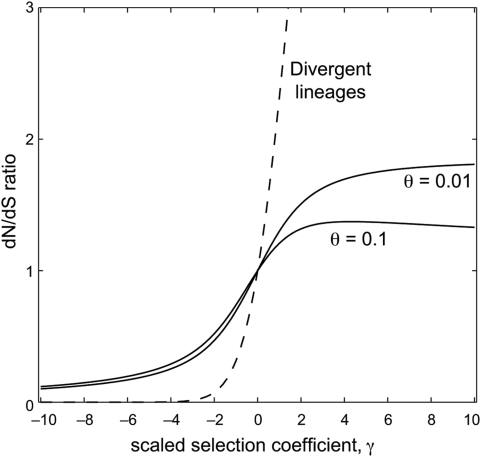
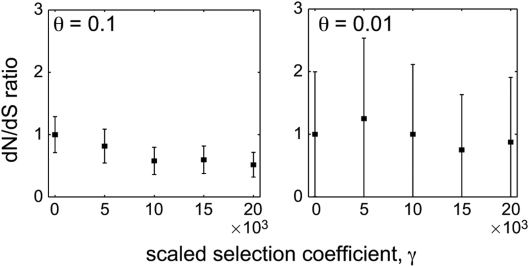
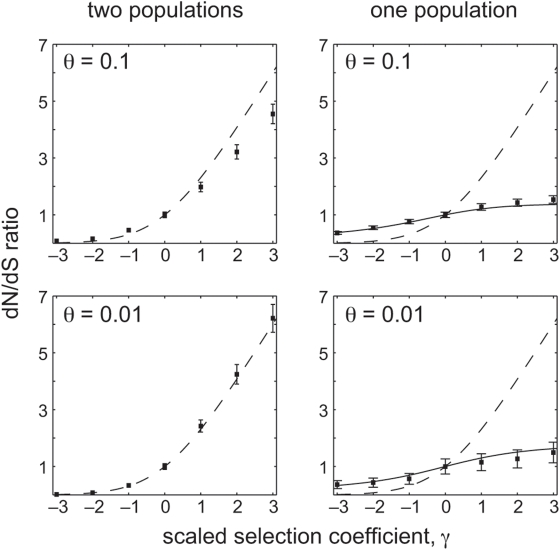
Evolutionary pressures on proteins are often quantified by the ratio of substitution rates at non-synonymous and synonymous sites. The dN/dS ratio was originally developed for application to distantly diverged sequences, the differences among which represent substitutions that have fixed along independent lineages. Nevertheless, the dN/dS measure is often applied to sequences sampled from a single population, the differences among which represent segregating polymorphisms. Here, we study the expected dN/dS ratio for samples drawn from a single population under selection, and we find that in this context, dN/dS is relatively insensitive to the selection coefficient. Moreover, the hallmark signature of positive selection over divergent lineages, dN/dS>1, is violated within a population. For population samples, the relationship between selection and dN/dS does not follow a monotonic function, and so it may be impossible to infer selection pressures from dN/dS. These results have significant implications for the interpretation of dN/dS measurements among population-genetic samples.
Overview
The claims and statistics of this paper haven’t been checked yet.
Free: it reads the open-access text and checks the first 5 claims that cite a source we can check. Create a free account to check every claim.
Integrity signals
Registry
Cites
Statistics
Figures
Verification
Claims the paper makes
The claims and statistics of this paper haven’t been checked yet.
Free: it reads the open-access text and checks the first 5 claims that cite a source we can check. Create a free account to check every claim.
Claims other papers make about this one
Each is checked against this paper’s own text: does it say what the citing paper says it does?
The check wasn’t confident either way, so it gives no verdict — never disputed.
In the citing paper
“This characteristic is consistent with the higher biodiversity observed in non-Westernized settings, where more heterogeneous dietary and environmental exposures may allow a broader range of accessory gene content to persist than is usually observed in genomes from industrialized populations [73-75] .”
From Genome-scale insights into the metabolic landscape and evolutionary development of Bifidobacterium bifidum (2026) · cites this paper as [73]
Experimental — accuracy not yet measured
Self-check
Percentages, sums and reported differences re-computed from the paper’s own numbers.
The self-check needs the paper’s full text.
Citations
Cites
MEGA4: Molecular Evolutionary Genetics Analysis (MEGA) Software Version 4.0
Tamura, K., Dudley, J., Nei, M., & Kumar, S. (2007) · Molecular Biology and Evolution · doi:10.1093/molbev/msm092 · Cited by 28,730 · cited 1×
“Theoretical work on the relationship between dN/dS and selection likewise assumes that sequences are sampled from independent, divergent species [3], as do computer packages used to estimate dN/dS from data [6,7].”
MethodStatistical method for testing the neutral mutation hypothesis by DNA polymorphism.
Tajima, F. (1989) · Genetics · doi:10.1093/genetics/123.3.585 · Cited by 13,941
PAML 4: Phylogenetic Analysis by Maximum Likelihood
Yang, Z. (2007) · Molecular Biology and Evolution · doi:10.1093/molbev/msm088 · Cited by 13,879 · cited 4×
“Theoretical work on the relationship between dN/dS and selection likewise assumes that sequences are sampled from independent, divergent species [3],as do computer packages used to estimate dN/dS from data [6, 7 ].”
MethodInfluentialEVOLUTION IN MENDELIAN POPULATIONS
Wright, S. (1931) · Genetics · doi:10.1093/genetics/16.2.97 · Cited by 8,916
Statistical tests of neutrality of mutations.
Fu, Y. X., & Li, W. H. (1993) · Genetics · doi:10.1093/genetics/133.3.693 · Cited by 4,034
Adaptive protein evolution at the Adh locus in Drosophila
McDonald, J. H., & Kreitman, M. (1991) · Nature · doi:10.1038/351652a0 · Cited by 3,283 · cited 1×
“geneticists [23,45].”
Codon-substitution models for heterogeneous selection pressure at amino acid sites
Yang, Z., Nielsen, R., Goldman, N., & Pedersen, A.-M. K. (2000) · Genetics · doi:10.1093/genetics/155.1.431 · Cited by 2,286
A codon-based model of nucleotide substitution for protein-coding DNA sequences.
(1994) · Molecular Biology and Evolution · doi:10.1093/oxfordjournals.molbev.a040153 · Cited by 1,960 · cited 20×
“We performed Wright-Fisher simulations of a population of constant size N evolving under positive or negative selection sensu Yang, in discrete time.”
BackgroundMethodInfluentialHitchhiking Under Positive Darwinian Selection
Fay, J. C., & Wu, C.-I. (2000) · Genetics · doi:10.1093/genetics/155.3.1405 · Cited by 1,819
Statistical methods for detecting molecular adaptation
Yang, Z., & Bielawski, J. P. (2000) · Trends in Ecology & Evolution · doi:10.1016/s0169-5347(00)01994-7 · Cited by 1,806 · cited 1×
“The instantaneous rate of change from codon i to codon j depends principally on the parameter v, defined as the relative rate of non-silent versus silent substitutions [2].”
Background
Cited by
Items 401–500 of 995
Mazumder, T. H., Uddin, A., & Chakraborty, S. (2016) · Genomics · doi:10.1016/j.ygeno.2016.02.001 · Cited by 16
Mishra, R., Patil, S., Patil, A., & Patil, B. L. (2019) · VirusDisease · doi:10.1007/s13337-019-00512-x · Cited by 16
Minias, P., Włodarczyk, R., Remisiewicz, M., Cobzaru, I., & Janiszewski, T. (2021) · Heredity · doi:10.1038/s41437-021-00427-8 · Cited by 18
“Following recommendations by Kryazhimskiy and Plotkin (2008), substitution rates were estimated at the inter-specific levels, both within and across all three phylogenetic clades.”
MethodEvolutionary dynamics of dengue virus populations within the mosquito vector
Lambrechts, L., & Lequime, S. (2016) · Current Opinion in Virology · doi:10.1016/j.coviro.2016.07.013 · Cited by 16
Speciation with gene flow between two Neotropical sympatric species (Pitcairnia spp.: Bromeliaceae)
Tavares, M. M., Ferro, M., Leal, B. S. S., & Palma‐Silva, C. (2022) · Ecology and Evolution · doi:10.1002/ece3.8834 · Cited by 15
Chowdhury, P., Sen, S., Kanjilal, S. D., & Sengupta, S. (2017) · Infection Genetics and Evolution · doi:10.1016/j.meegid.2017.11.006 · Cited by 15
Xie, H., Hu, J., Wang, Y., & Wang, X. (2023) · Fish & Shellfish Immunology · doi:10.1016/j.fsi.2023.108878 · Cited by 15
Genome reduction occurred in early Prochlorococcus with an unusually low effective population size
Zhang, H., Hellweger, F. L., & Luo, H. (2024) · The ISME Journal · doi:10.1093/ismejo/wrad035 · Cited by 15
“Mathematically, the d N / d S ratio gives a composite parameter, N e s [30], where s is the selection coefficient of the genes under the analysis and may vary over time and between lineages.”
BackgroundConcepts and Methods for Predicting Viral Evolution
Meijers, M., Ruchnewitz, D., Eberhardt, J., Karmakar, M., Łuksza, M., & Lässig, M. (2025) · Methods in molecular biology · doi:10.1007/978-1-0716-4326-6_14 · Cited by 18
Prioritizing genes for X-linked diseases using population exome data
Ge, X., Kwok, P., & Shieh, J. T. C. (2014) · Human Molecular Genetics · doi:10.1093/hmg/ddu473 · Cited by 17
“Our results provide evidence for the utility of intrahuman dN/dS, although the limits need further research (12).”
ResultMay, M. A., & Brown, D. R. (2009) · Journal of Bacteriology · doi:10.1128/jb.00142-09 · Cited by 18
“gallisepticum or other Firmicutes, the polymorphisms reflect variation segregating within the population of conspecifics, but not fixed substitutions (20).”
BackgroundComputational Methods for Predicting Effectors in Rust Pathogens
Sperschneider, J., Dodds, P. N., Taylor, J. M., & Duplessis, S. (2017) · Methods in molecular biology · doi:10.1007/978-1-4939-7249-4_7 · Cited by 15
Fazeli‐Nasab, B. (2021) · journal of ilam university of medical sciences · doi:10.29252/sjimu.28.6.77 · Cited by 16
Human pathogenic RNA viruses establish noncompeting lineages by occupying independent niches
Mutz, P., Rochman, N. D., Wolf, Y. I., Faure, G., Zhang, F., & Koonin, E. V. (2022) · Proceedings of the National Academy of Sciences · doi:10.1073/pnas.2121335119 · Cited by 17
“344 Intra- and inter-lineage mutational signatures 345 Gene scale dN/dS analysis is often unable to uncover positive selection acting on 346 specific sites or neighborhoods, which can occur in widely different backgrounds, from 347 neutral drift to strong purifying selection (51).”
Molecular archaeology of human cognitive traits
Kaczanowska, J., Ganglberger, F., Chernomor, O., Kargl, D., Gálik, B., Heß, A., Moodley, Y., von Haeseler, A., Bühler, K., & Haubensak, W. E. (2022) · Cell Reports · doi:10.1016/j.celrep.2022.111287 · Cited by 16
“Polymorphisms may lead to smaller u values (Kryazhimskiy and Plotkin, 2008), thereby underestimating positive selection within some genes.”
BackgroundBrieuc, M. S. O., & Naish, K. A. (2011) · Molecular Ecology Resources · doi:10.1111/j.1755-0998.2010.02948.x · Cited by 15
“This method therefore has more power when divergence is greater between individual short sequences, which is more likely between populations and species rather than within populations (Kryazhimskiy & Plotkin 2008).”
Methodvan de Klundert, M. A. A., Cremer, J., Kootstra, N. A., Boot, H. J., & Zaaijer, H. L. (2011) · Journal of Viral Hepatitis · doi:10.1111/j.1365-2893.2011.01506.x · Cited by 15
Bergman, I.-M. (2011) · Upsala Journal of Medical Sciences · doi:10.3109/03009734.2010.545494 · Cited by 18
“Even though it is traditionally used to quantify selection pressure within populations, it has been shown to be inadequate when applied in this manner or for closely related taxa (60,61).”
Wang, J., Yu, X., Hu, B., Zheng, J., Xiao, W., Hao, Y., Liu, W., & Wang, D. (2015) · Scientific Reports · doi:10.1038/srep08795 · Cited by 16
Detecting Past Positive Selection through Ongoing Negative Selection
Bazykin, G. A., & Kondrashov, A. S. (2011) · Genome Biology and Evolution · doi:10.1093/gbe/evr086 · Cited by 16
“3:1006–1013. doi:10.1093/gbe/evr086 Advance Access publication August 22, 2011 immediately after an allele replacement is accomplished and stays such for a while (e.g., Kryazhimskiy and Plotkin 2008; Mustonen and Lässig 2009).”
BackgroundInfluentialPreliminary evidence of different selection pressures on cancer cells as compared to normal tissues
Ovens, K. L., & Naugler, C. T. (2012) · Theoretical Biology and Medical Modelling · doi:10.1186/1742-4682-9-44 · Cited by 19
“As new databases of cancer genomes become available [14,17-27], a future direction for this work will be to apply these techniques to whole genome sequences of cancer cells.”
BackgroundMethodSpermBindinDivergence under Sexual Selection and Concerted Evolution in Sea Stars
Patiño, S., Keever, C. C., Sunday, J. M., Popovic, I., Byrne, M., & Hart, M. W. (2016) · Molecular Biology and Evolution · doi:10.1093/molbev/msw081 · Cited by 16
Evolutionary history of the SARS-CoV-2 Gamma variant of concern (P.1): a perfect storm
Yépez, Y., Marcano-Ruiz, M., Bezerra, R. S., Fam, B., Ximenez, J. P., Silva, W. A., Jr., & Bortolini, M. C. (2022) · Genetics and Molecular Biology · doi:10.1590/1678-4685-gmb-2021-0309 · Cited by 16
Dai, Z., Qi, S., Miao, S., Liu, Y., Tian, Y.-F., Zhai, D., Huang, P., & Du, D. (2015) · Biochemical Systematics and Ecology · doi:10.1016/j.bse.2015.05.004 · Cited by 15
Lo, T., Coombe, L., Gagalova, K., Marr, A. R., Warren, R. L., Kirk, H., Pandoh, P. K., Zhao, Y., Moore, R. A., Mungall, A. J. J., et al. (2023) · G3 Genes Genomes Genetics · doi:10.1093/g3journal/jkad247 · Cited by 15
“We used the ratio of nonsynonymous to synonymous substitutions ( ω = d N /d S ) to detect signatures of positive selection (Kimura 1977; Kryazhimskiy and Plotkin 2008).”
MethodLáruson, Á. J. (2017) · Ecology and Evolution · doi:10.1002/ece3.3042 · Cited by 15
“Values of ω close to 1 suggest neutrality, values much less than 1 suggest the action of purifying selection in removing amino acid substitutions, and values much greater than 1 pointing to positive selection on amino acid change (Kryazhimskiy & Plotkin, 2008; Nielsen & Yang, 2003).”
BackgroundThe Molecular Mechanisms of Gametic Incompatibility in Invertebrates
Lobov, A. A., Maltseva, A. L., Mikhailova, N., & Granovitch, A. I. (2019) · Acta Naturae · doi:10.32607/20758251-2019-11-3-4-15 · Cited by 14
Widespread introgression of MHC genes in Iberian Podarcis lizards
Gaczorek, T. S., Chechetkin, M., Dudek, K., Caeiro‐Dias, G., Crochet, P., Géniez, P., Pinho, C., & Babik, W. (2023) · Molecular Ecology · doi:10.1111/mec.16974 · Cited by 14
“It is, however, essential to note that these tests reflect mostly more distant evolutionary history and are poorly suited for the short- term dynamics expected under strong balancing selection (Kryazhimskiy & Plotkin, 2008; Mugal et al., 2014).”
BackgroundGenome-wide scans for selective sweeps using convolutional neural networks
Zhao, H., Souilljee, M., Pavlidis, P., & Alachiotis, N. (2023) · Bioinformatics · doi:10.1093/bioinformatics/btad265 · Cited by 15
Developmental Selection and the Perception of Mutation Bias
Majic, P., & Payne, J. L. (2023) · Molecular Biology and Evolution · doi:10.1093/molbev/msad179 · Cited by 15
“…way of quantifying the selective pressure acting on genes, it is known that measurements such as dN/dS are problematic for evaluating selection within populations of related individuals (Kryazhimskiy and Plotkin 2008) and cases of recent accumulation of de novo mutations (Rocha et al. 2006).”
García, J. F., Morales‐Cruz, A., Cochetel, N., Minio, A., Figueroa-Balderas, R. E., Rolshausen, P. E., Baumgartner, K., & Cantù, D. (2023) · Molecular Plant-Microbe Interactions · doi:10.1094/mpmi-09-23-0129-r · Cited by 14
Genetic diversity of Mycoplasma arginini isolates based on multilocus sequence typing
Olaogun, O. M., Kanci, A., Barber, S., Tivendale, K. A., Markham, P. F., Marenda, M. S., & Browning, G. F. (2015) · Veterinary Microbiology · doi:10.1016/j.vetmic.2015.07.028 · Cited by 14
Mbenda, H. G. N., & Das, A. (2016) · Infection Genetics and Evolution · doi:10.1016/j.meegid.2016.07.003 · Cited by 15
Brown, T. S., Narechania, A., Walker, J. R., Planet, P. J., Bifani, P. J., Kolokotronis, S., Kreiswirth, B. N., & Mathema, B. (2016) · BMC Genomics · doi:10.1186/s12864-016-3298-6 · Cited by 15
“The dN/dS ratio has limited power to detect positive selection in recently diverged intraspecific sequences and may underestimate the magnitude of negative selection in genes under strong purifying selection [66].”
BackgroundInvestigating the mechanism of action of aggregation-inducing antimicrobial Pept-ins
Wu, G., Khodaparast, L., Khodaparast, L., Vleeschouwer, M. D., Housmans, J. A. J., Houben, B., Schymkowitz, J. W. H., & Rousseau, F. (2021) · Cell chemical biology · doi:10.1016/j.chembiol.2020.12.008 · Cited by 14
Shropshire, J. D., Conner, W. R., Vanderpool, D., Hoffmann, A. A., Turelli, M., & Cooper, B. S. (2026) · Genetics · doi:10.1093/genetics/iyag097 · Cited by 16
Naggar, R. F. E., Rohaim, M. A., & Munir, M. (2020) · Virus Genes · doi:10.1007/s11262-020-01793-x · Cited by 13
Evolution during primary HIV infection does not require adaptive immune selection
Swan, D. A., Rolland, M., Herbeck, J. T., Schiffer, J. T., & Reeves, D. B. (2022) · Proceedings of the National Academy of Sciences · doi:10.1073/pnas.2109172119 · Cited by 13
“However, dN/dS can be tricky to interpret for nonequilibrium scenarios (66) and dN/dS > 1, which implies mutations that meaningfully change proteins (nonsynonymous mutations) are more likely to survive, is not obvious in the first years of HIV infection (32).”
BackgroundAncient duplication, coevolution, and selection at the MHC class IIA and IIB genes of birds
Minias, P., Edwards, S. V., & Babik, W. (2023) · Frontiers in Immunology · doi:10.3389/fimmu.2023.1250824 · Cited by 14
Extensive polymorphism in the porcine Toll‐like receptor 10 gene
Bergman, I.-M., Edman, K., Ekdahl, K. N., Rosengren, K. J., & Edfors, I. (2011) · International Journal of Immunogenetics · doi:10.1111/j.1744-313x.2011.01057.x · Cited by 15
“Even though it is traditionally used to quantify ª 2011 Blackw selection pressure within populations, it has been shown to be inadequate when applied in this manner or for closely related taxa (Kryazhimskiy & Plotkin, 2008; Wolf et al., 2009).”
MethodŽučko, J., Cullum, J., Hranueli, D., & Long, P. F. (2010) · The Journal of Antibiotics · doi:10.1038/ja.2010.141 · Cited by 13
Evolutionary Traits and Genomic Surveillance of SARS-CoV-2 in South America
Ortíz-Pineda, P. A., & Sierra-Torres, C. H. (2022) · Global Health · doi:10.1155/2022/8551576 · Cited by 15
Quantifying evolutionary dynamics from variant-frequency time series
Khatri, B. S. (2016) · Scientific Reports · doi:10.1038/srep32497 · Cited by 15
“2 ((1 2 ( )) 1 2 2 ( ) 2 cos( )) (13) 1 2 2”
Characterization of Anti-Müllerian Hormone (AMH) Gene in Buffaloes and Goats
Gautam, D., Vats, A., Pal, P., Haldar, A., & De, S. (2021) · Frontiers in Veterinary Science · doi:10.3389/fvets.2021.627094 · Cited by 12
“The dN/dS ratio of this gene did not show either positive or negative selection pressure, and it therefore can be assumed that the function of AMH across species was retained (31).”
BackgroundZhou, D., Wang, X., Li, H., Tao, Z., Duan, Z., & Yu, H. (2023) · Fish & Shellfish Immunology · doi:10.1016/j.fsi.2023.108950 · Cited by 12
Dong, P., Song, L., Bendl, J. M., Misir, R., Shao, Z., Edelstien, J., Davis, D. A., Haroutunian, V. H., Scott, W. K., Acker, S., et al. (2024) · Nature Communications · doi:10.1038/s41467-024-54448-y · Cited by 15
Han, W., Zeng, J., Shi, J., Feng, J., Chen, Y., Zheng, J., Cheng, P., Zhai, K., Zhang, C., Qiu, Z., et al. (2025) · Nature Communications · doi:10.1038/s41467-025-65396-6 · Cited by 12
“Third, the interpretation of the d N = d S ratios reported here should be made with caution, as for in fl uenza viruses, the ratio may not directly re fl ect the underlying selection coef fi cient due to the interplay of within-population and between-population variation 55 .”
Liu, R., Jin, L. G., Long, K., Chai, J., Ma, J., Tang, Q., Tian, S., Hu, Y., Lin, L., Wang, X., et al. (2015) · Gene · doi:10.1016/j.gene.2015.09.032 · Cited by 12
“…for samples within a population is radically different than the relationship for samples from divergent populations because dN/dS is relatively insensitive to the selection in a single population and dN/dS b 1 can occur under both negative and positive selection (Kryazhimskiy and Plotkin, 2008).”
BackgroundProtein-based signatures of functional evolution in Plasmodium falciparum
Gardner, K. B., Sinha, I., Bustamante, L. Y., Day, N., White, N. J., & Woodrow, C. J. (2011) · BMC Evolutionary Biology · doi:10.1186/1471-2148-11-257 · Cited by 12
“falciparum (where interpretation of dN/dS is less straightforward [20]), non-significant trends of the same form were seen (Figure 1b).”
BackgroundYan, W., Qiao, Y., He, J., Wang, Q., Chen, Z., Ni, F., Liu, Y., Liu, X., Zhang, Q., & Wang, X. (2020) · Aquaculture · doi:10.1016/j.aquaculture.2020.735722 · Cited by 13
Spies, I., Drinan, D. P., Petrou, E. L., Spurr, R., Tarpey, C. M., Hartinger, T., Larson, W. A., & Hauser, L. (2021) · Ecology and Evolution · doi:10.1002/ece3.8284 · Cited by 12
“97 3* * 9 −1 .9 08 (0 .0 72 ) N ot e: D as h (– ) i nd ic at es n ot a pp lic ab le . lineages (Kryazhimskiy & Plotkin, 2008).”
Viehweger, A., Blumenscheit, C., Lippmann, N., Wyres, K. L., Brandt, C., Hans, J. B., Hölzer, M., Irber, L. C., Gatermann, S. G., Lübbert, C., et al. (2021) · Microbial Genomics · doi:10.1099/mgen.0.000741 · Cited by 16
Drott, M. T., Park, S. C., Wang, Y., Harrow, L., Keller, N. P., & Pringle, A. (2023) · The ISME Journal · doi:10.1038/s41396-023-01432-x · Cited by 12
“Moreover, MSDIN sequences encoded at physically clustered loci are more closely related to each other than to sequences at more distant loci, i.e., we fi nd a signi fi cant correlation between genetic and physical distances using both full coding sequences ( p 0.001 r = 0.6) and the intron…”
InfluentialCatto, M. A., Labadie, P. E., Jacobson, A. L., Kennedy, G. G., Srinivasan, R., & Hunt, B. G. (2023) · BMC Genomics · doi:10.1186/s12864-023-09375-5 · Cited by 13
“Determination of dN/dS [93] was conducted for orthologous gene pairs between F.”
BackgroundChen, L., Gan, Q., Zhang, D. Q., Yao, L., Lin, R., Li, Q., Lin, H.-T., Yu, D., Zhang, X. X., & Pan, C. (2015) · Clinical Microbiology and Infection · doi:10.1016/j.cmi.2015.10.007 · Cited by 14
Genetic diversity of Toll-like receptor 5 among pig populations
Yang, X., Li, H., Guan, Q.-Z., & Liu, D. (2013) · Genetics and Molecular Biology · doi:10.1590/s1415-47572013005000004 · Cited by 12
“Studies have shown that selection direction in TLRs may differ among species, and many factors can influence their prediction by statistical methods, such as relaxation of purifying selection and the analytical methods used (Kryazhimskiy and Plotkin, 2008; Barreiro et al., 2009).”
Murillo, T., Ramírez-Vargas, G., Riedel, T., Overmann, J., Andersen, J. M., Guzmán‐Verri, C., Chaves‐Olarte, E., & Rodríguez, C. (2018) · Genome Biology and Evolution · doi:10.1093/gbe/evy059 · Cited by 12
Chloroplast genome sequences of Carya illinoinensis from two distinct geographic populations
Wang, X., Rhein, H. S., Jenkins, J. W., Schmutz, J., Grimwood, J., Grauke, L. J., & Randall, J. J. (2020) · Tree Genetics & Genomes · doi:10.1007/s11295-020-01436-0 · Cited by 12
“The ratio of Ka/Ks, also known as dN/dS, was used to estimate the selection pressure a given protein or section of DNA experiences (Rocha et al. 2006; Kryazhimskiy and Plotkin 2008).”
MethodAnalysis of Stop Codons within Prokaryotic Protein-Coding Genes Suggests Frequent Readthrough Events
Belinky, F., Ganguly, I., Poliakov, E., Yurchenko, V., & Rogozin, I. B. (2021) · International Journal of Molecular Sciences · doi:10.3390/ijms22041876 · Cited by 21
“Nevertheless, the dN/dS values are fairly high, suggesting that either a fraction of sequences are true pseudogenes or in-frame codons represent single nucleotide polymorphisms (SNPs): dN/dS values for negatively selected genes are typically closer to 1 when comparing intra-specific samples, as opposed to inter-specif…”
BackgroundInfluentialMinias, P., He, K., & Dunn, P. O. (2021) · BMC Ecology and Evolution · doi:10.1186/s12862-021-01812-x · Cited by 12
“14 [SE] sequences per species, > 50% species with 1–2 sequences) and sequence variants sampled within the same population may represent segregating polymorphisms, leading to biases in selection inference [41].”
BackgroundIsolation and Genetic Characterization of Canine Parvovirus in a Malayan Tiger
Nur-Farahiyah, A. N., Kumar, K., Yasmin, A. R., Omar, A. R., & Camalxaman, S. N. (2021) · Frontiers in Veterinary Science · doi:10.3389/fvets.2021.660046 · Cited by 12
“This ratio will measure the selection pressures by equating the rate of substitutions at silent sites (dS), which are assumed neutral, to the rate of substitutions at non-silent sites (dN), which are probably involved in selection (22).”
BackgroundChialvo, C. H. S., Cashner, M. F., Grossman, G. D., & Wares, J. P. (2009) · Ecology Of Freshwater Fish · doi:10.1111/j.1600-0633.2009.00368.x · Cited by 12
“For example, comparisons of the Altamaha sequence data with those from other populations produced a kA:kS ratio close to 1, a result consistent with neutral evolution (Wayne & Simonsen 1998; but see Kryazhimskiy & Plotkin 2008).”
ResultPlacenta-Specific Protein 1 Is Conserved throughout the Placentalia under Purifying Selection
Devor, E. J. (2014) · The Scientific World JOURNAL · doi:10.1155/2014/537356 · Cited by 12
“0 is an indicator of purifying selection [20, 21].”
BackgroundMcElroy, K., Black, A. B., Dolman, G., Horton, P., Pedler, L. P., Campbell, C. D., Drew, A., & Joseph, L. (2020) · Ecology and Evolution · doi:10.1002/ece3.6403 · Cited by 12
“Population genetics-based tests such as dN/dS ratios are a cautious starting point here (but see Kryazhimskiy & Plotkin, 2008).”
BackgroundTheoretical Aspects of Immunity
Deem, M. W., & Hejazi, P. (2010) · Annual Review of Chemical and Biomolecular Engineering · doi:10.1146/annurev-chembioeng-073009-100952 · Cited by 14
“The sequence data of influenza are consistent with large selection pressure (97).”
BackgroundCellular age explains variation in age-related cell-to-cell transcriptome variability
Yang, M., Harrison, B. R., & Promislow, D. E. L. (2023) · Genome Research · doi:10.1101/gr.278144.123 · Cited by 11
“S13; Kryazhimskiy and Plotkin 2008), and was also observed using d N / d S ratios based on the more distant mouse – human orthologs (Pearsons ’ s r < − 0.63, P <1.6×10 − 3 ) (Supplemental Fig.”
InfluentialGenomic diversity in time and space in the toxic diatom Pseudo-nitzschia multistriata
Mager, S., Manfellotto, F., Ruggiero, A., Tuccio, V. D., Cerino, F., Accoroni, S., Nishimura, T., Mikhno, M., Fattorini, N., Dermastia, T. T., et al. (2024) · Harmful Algae · doi:10.1016/j.hal.2024.102791 · Cited by 11
Tao, K., Tang, L., Luo, Y., & Li, L. (2025) · BMC Plant Biology · doi:10.1186/s12870-024-06040-1 · Cited by 11
“In this study, the analysis The utilization of substitution rate ratios (dN/dS, ω) for synonymous and non-synonymous sites was essential for discriminating adaptive signals between species and inferring evolutionary processes [54, 55].”
Heterogeneity and evolution of DNA mutation rates in microsatellite stable colorectal cancer
Grassi, E., Vurchio, V., Cresswell, G. D., Catalano, I., Lupo, B., Sassi, F. P., Galimi, F., Borgato, S., Ferri, M., Viviani, M., et al. (2025) · Science Translational Medicine · doi:10.1126/scitranslmed.ado1641 · Cited by 12
Genome-wide sweeps create ecological units in the human gut microbiome
Yu, X. A., Strachan, C. R., Herbold, C. W., Lang, M., Gasché, C., Makristathis, A., Segata, N., Pollak, S., Tett, A., & Polz, M. F. (2026) · Nature · doi:10.1038/s41586-026-10476-w · Cited by 12
Abdussamad, J., & Aris‐Brosou, S. (2011) · BMC Evolutionary Biology · doi:10.1186/1471-2148-11-6 · Cited by 12
“This is known to render the use of non-synonymous to synonymous rate ratios (ω’s) potentially problematic, as estimated ω ratios can take values < 1 within a population even in the presence of very strong positive selection [21].”
BackgroundThe transcriptome of the invasive eel swimbladder nematode parasite Anguillicola crassus
Heitlinger, E. G., Bridgett, S., Montazam, A., Taraschewski, H. H., & Blaxter, M. (2013) · BMC Genomics · doi:10.1186/1471-2164-14-87 · Cited by 11
“While interpretation of dn/ds ratios within populations is not unproblematic [75], the assumption of negative (purifying) selection on most protein coding genes makes lower mean values seem more plausible.”
BackgroundOrtíz-Rojas, L. Y., & Chaves-Bedoya, G. (2017) · European Journal of Plant Pathology · doi:10.1007/s10658-016-1143-z · Cited by 11
Catania, F., Újvári, B., Roche, B., Capp, J., & Thomas, F. (2021) · Frontiers in Oncology · doi:10.3389/fonc.2021.732081 · Cited by 11
Luchetti, A., Forni, G., Martelossi, J., Savojardo, C., Martelli, P. L., Casadio, R., Skaist, A. M., Wheelan, S. J., & Mantovani, B. (2021) · Genomics · doi:10.1016/j.ygeno.2021.11.001 · Cited by 13
Liu, A., Manuel, A. M., Dai, Y., & Zhao, Z. (2022) · BMC Genomics · doi:10.1186/s12864-022-08580-y · Cited by 12
“The evolutionary selective pressure is defined as the ratio of the number of nonsynonymous substitutions per nonsynonymous site to the number of synonymous substitutions per synonymous site (dN/ dS) [32].”
Vendrami, D. L. J., Gossmann, T. I., Chakarov, N., Paijmans, A. J., Litzke, V., Eyre‐Walker, A., Forcada, J., & Hoffman, J. I. (2022) · Genome Biology and Evolution · doi:10.1093/gbe/evac104 · Cited by 12
“This was implemented using the MUSCLE algorithm in MEGA (Kumar et al. 2018).”
MethodTao, K., Tao, L., Huang, J., Duan, H., Luo, Y., & Li, L. (2024) · BMC Genomics · doi:10.1186/s12864-024-10458-0 · Cited by 11
“The utilization of the substitution rate ratio at synonymous and nonsynonymous sites (dN/dS, ω) has been pivotal in discerning adaptive signals among species and inferring evolutionary processes [45, 46].”
BackgroundXiang, R., Fang, L., Liu, S., Liu, G. E., Tenesa, A., Gao, Y., Mason, B., Chamberlain, A. J., Goddard, M. E., Liu, S., et al. (2025) · PNAS Nexus · doi:10.1093/pnasnexus/pgaf208 · Cited by 11
Genetic variability of Papaya ringspot virus isolates in Norte de Santander - Colombia
Chaves-Bedoya, G., & Ortíz-Rojas, L. Y. (2015) · Agronomía Colombiana · doi:10.15446/agron.colomb.v33n2.50095 · Cited by 11
Intraseasonal Dynamics and Dominant Sequences in H3N2 Influenza
Creanza, N., Schwarz, J. S., & Cohen, J. E. (2009) · PLoS ONE · doi:10.1371/journal.pone.0008544 · Cited by 11
“Analysis of dN/dS ratios between periods was inconclusive, but these small groups of closely related sequences were not particularly amenable to analysis by dN/dS [12].”
BackgroundJones, M. R., Cheviron, Z. A., & Carling, M. D. (2014) · Immunogenetics · doi:10.1007/s00251-014-0800-7 · Cited by 11
Winnicka, K., & Melosik, I. (2019) · Perspectives in Plant Ecology Evolution and Systematics · doi:10.1016/j.ppees.2019.02.004 · Cited by 11
Son, S., Lee, R. H., Park, S.-M., Lee, S. H., Lee, H., Kim, Y., & Shin, D. (2021) · Journal of Animal Science and Technology · doi:10.5187/jast.2021.e126 · Cited by 12
“acidophilus strains were significant in the evolutionary process and could explain the adaption process of the C5 strain using the evolutionary statistical method (dN/dS) [32].”
MethodVidal‐Villarejo, M., Freund, F., Hanekamp, H., von Tiedemann, A., & Schmid, K. (2023) · Genome Biology and Evolution · doi:10.1093/gbe/evad130 · Cited by 11
Hamada, N., Hara, K., Kashiwagi, T., Imamura, Y., Nakazono, Y., Watanabe, H., Imamura, Y., & Chijiwa, K. (2012) · Journal of Infection and Chemotherapy · doi:10.1007/s10156-012-0429-0 · Cited by 11
“It is likely that case 1 might have been infected primarily with the oseltamivir-sensitive virus and that long-term administration of oseltamivir seems to have induced the generation of the H275Y mutant.”
Yang, E., Hulse‐Kemp, A. M., & Cai, J. J. (2012) · Evolutionary Bioinformatics · doi:10.4137/ebo.s10372 · Cited by 11
Comparative Sequence Analysis of TRI1 of Fusarium
Ramdass, A. C., Villafana, R. T., & Rampersad, S. N. (2019) · Toxins · doi:10.3390/toxins11120689 · Cited by 11
“DnaSP 6 [65] was used out to determine if TRI1 gene sequences were under positive selection by assessing the ratio of non-synonymous to synonymous substitutions (dN/dS) [66] by using Fu and Li’s D* test statistic at p < 0.”
Evolution of Immune Proteins in Insects
Bulmer, M. S. (2010) · Wiley eBooks · doi:10.1002/9780470015902.a0022889 · Cited by 11
Respiratory disease complex due to mixed viral infections in chicken in Jordan
Al‐Natour, M. Q., Rohaim, M. A., Naggar, R. F. E., Abdelsabour, M. A., Afify, A. F., Madbouly, Y. M., & Munir, M. (2024) · Poultry Science · doi:10.1016/j.psj.2024.103565 · Cited by 10
“The Synony-mous-Non-Synonymous Analysis Program (SNAP) was utilised to gauge gene-speci fi c dN/dS ratios for the S1 and HA genes (Kryazhimskiy and Plotkin, 2008).”
MethodGlobal identification of LIM genes in response to different heat stress regimes in Lactuca sativa
Kim, T., Egesa, A. O., Qin, C., Mather, H., Sandoya, G. V., & Begcy, K. (2024) · BMC Plant Biology · doi:10.1186/s12870-024-05466-x · Cited by 10
“2D; Additional File 3: Table S3), due to the fact that the hallmark signature of positive selection is accepted to be dN/dS > 1 [23].”
Immunological surveillance against cancer across mammals
Vincze, O., Minias, P., Corthay, A., Colchero, F., Lemaître, J., Maille, L., Malkócs, T., Hagemann, J., Conde, D. A., Pavard, S., et al. (2025) · Nature Communications · doi:10.1038/s41467-025-65286-x · Cited by 10
“Therefore, we estimated selection for MHC diversity as the ratio of non-synonymous (dN) to synonymous (dS) nucleotide substitution rates, a widely used measure of evolutionary pressure on the coded proteins 36 .”
Palmateer, N. C., Tretina, K., Orvis, J., Ifeonu, O. O., Crabtree, J., Drábek, E. F., Pellé, R., Awino, E., Gotia, H. T., Munro, J. B., et al. (2020) · PLoS neglected tropical diseases · doi:10.1371/journal.pntd.0008781 · Cited by 10
“Even though estimates of πN and πS (within species polymorphism)are not reliable estimators of the substitutions rates quantified by dN and dS [68], especially for very small values of π, the relative magnitude of πN across genes and the ratio πN/πS, when defined, may still be informative for the identification of rap…”
Backgrounddo Lago, B. V., Portilho, M. M., Mello, V. M., de Sousa, P. S. F., Angelice, G. P., Marques, B. C. L., Andrade, L. T. D. S., Marques, V. A., Lewis‐Ximenez, L. L., Mello, F. C. D. A., et al. (2024) · Scientific Reports · doi:10.1038/s41598-024-60900-2 · Cited by 10
“PCR products were purified with QIAquick gel extraction kit (Qiagen, Hilden, Germany) and direct nucleotide sequencing reaction was done using Big Dye Terminator kit version 3.1 (Applied Biosystems, Foster City, CA, USA) with external and internal primers described by Mallory et al. 43 and Kryazhimskiy and Plotkin 20 .”
MethodInfluentialCutoiu, A., & Boda, D. (2024) · Biomedical Reports · doi:10.3892/br.2024.1807 · Cited by 10
Wang, Z., Peng, X., Hülpüsch, C., Mirzaei, M. K., Reiger, M., Traidl‐Hoffmann, C., Deng, L., & Schloter, M. (2024) · Microbiology Spectrum · doi:10.1128/spectrum.00915-24 · Cited by 12
Insights into the Evolutionary Features of Human Neurodegenerative Diseases
Panda, A., Begum, T., & Ghosh, T. C. (2012) · PLoS ONE · doi:10.1371/journal.pone.0048336 · Cited by 10
“Thus, we used Homo sapiens as model organism to assess the molecular divergence of neurodegenerative diseases by computing the ratio of number of non-synonymous substitution per site (dN) to the number of synonymous substitution per site (dS) against nondisease genes as the control parameter [1].”
MethodDetection of homologous recombination events in SARS-CoV-2
Lohrasbi‐Nejad, A. (2022) · Biotechnology Letters · doi:10.1007/s10529-021-03218-7 · Cited by 10
“The CoVs genome is the secondlargest RNA among viruses, 26 to 32 kbp (Lai 1990).”
BackgroundPonnuvel, K. M., de Miranda, J. R., Terenius, O., Li, W., Ito, K., Khajje, D., Shamitha, G., Jagadish, A., Dubey, H., & Mishra, R. K. (2022) · Virus Research · doi:10.1016/j.virusres.2022.198703 · Cited by 10
The pace of mitochondrial molecular evolution varies with seasonal migration distance
Pegan, T. M., Berv, J. S., Gulson‐Castillo, E. R., Kimmitt, A. A., & Winger, B. M. (2023) · Evolution · doi:10.1093/evolut/qpad200 · Cited by 12
Metadata
- Authors
- Kryazhimskiy, S., & Plotkin, J. B.
- Affiliations
- University of Pennsylvania (US)
- Corresponding author
- Plotkin, Joshua B.
- Venue
- PLoS Genetics
- Publisher
- Public Library of Science (PLoS)
- Published
- 2008-12-12
- Volume
- 4
- Issue
- 12
- Pages
- e1000304
- ISSN
- 1553-7390 (ISSN-L)
- 1553-7404
- PMC
- PMC2596312
- OpenAlex
- W2045641296
- Cited by
- 962
- References
- 64
- Citations by year
- 2026: 55 · 2025: 60 · 2024: 74 · 2023: 69 · 2022: 85 · 2021: 80 · 2020: 70 · 2019: 48 · 2018: 53 · 2017: 45 · 2016: 51 · 2015: 57 · 2014: 55 · 2013: 35 · 2012: 45
- FWCI
- 15.24
- Type
- journal article
- Language
- en
- Open access
- gold
- doi.org
- Locations
- PLoS Genetics (publishedVersion, cc-by)
- PubMed Central (publishedVersion, cc-by)
- PubMed (publishedVersion)
- RePEc: Research Papers in Economics (submittedVersion)
- DOAJ (DOAJ: Directory of Open Access Journals) (submittedVersion, cc-by-sa)
- Figshare (submittedVersion, cc-by)
- Funders
- Burroughs Wellcome Fund
- James S. McDonnell Foundation
- University of Pennsylvania
- Defense Advanced Research Projects Agency
- Advanced Research Projects Agency
- Topics
- Life Sciences › Biochemistry, Genetics and Molecular Biology › Genetics › Evolution and Genetic Dynamics
- Life Sciences › Biochemistry, Genetics and Molecular Biology › Molecular Biology › Genomics and Phylogenetic Studies
- Life Sciences › Biochemistry, Genetics and Molecular Biology › Genetics › Genetic diversity and population structure
- Keywords
- dN/dS ratio, nonsynonymous substitution rate, synonymous substitution rate, positive selection, selection coefficients, population genetics, protein evolution, selection signatures
- MeSH terms
- Genetics, Population, Models, Genetic, Proteins, Selection, Genetic, Genetic Variation, Models, Statistical, Evolution, Molecular, Amino Acid Substitution
About these checks
Registry, retraction, Cites and statistics results are computed, not judged, with one exception: a printed reference that no index lists is read once by a model before it counts as a citation error. Claims are extracted by a model and kept only when their quote appears verbatim in the text; each cited source is then checked, with a model’s help, for whether it says what the claim relies on. Those verdicts can be wrong — read the claim’s quote and the cited source before relying on one.
Statistics and arithmetic are recomputed, not judged.
Confidence bands are shown only for fields calibrated on our annotated test set. None is calibrated yet, so no band is shown.
What counts as a claim ›How we measure confidence ›How we check this ›
Are you an author, or do you see a problem with this page? Request a review
Data sources
Bibliographic data: Semantic Scholar, OpenAlex, Crossref.
Contains information from the Semantic Scholar Academic Graph Datasets, made available under the ODC Attribution License (ODC-BY 1.0).
Semantic Scholar’s data is described in: Kinney, R., et al. (2023). The Semantic Scholar Open Data Platform. arXiv:2301.10140.
