

The Population Genetics of dN/dS
Open accessThe DOI matches its Crossref record; 63 of the 64 references it cites were found in a registry or an index.
Abstract
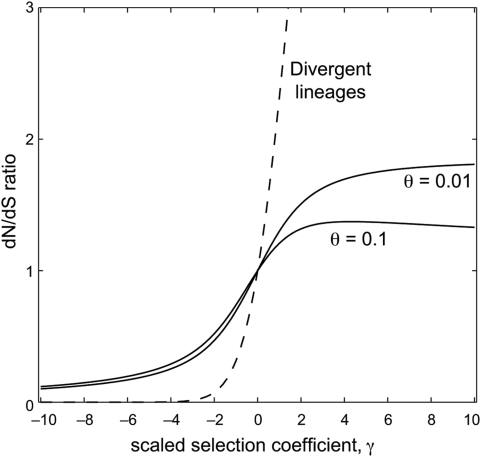
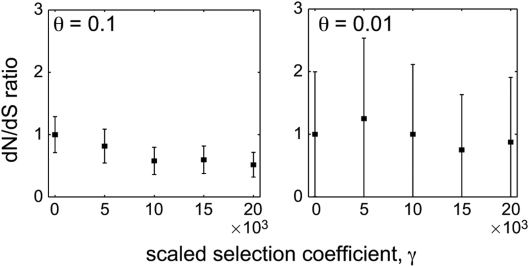
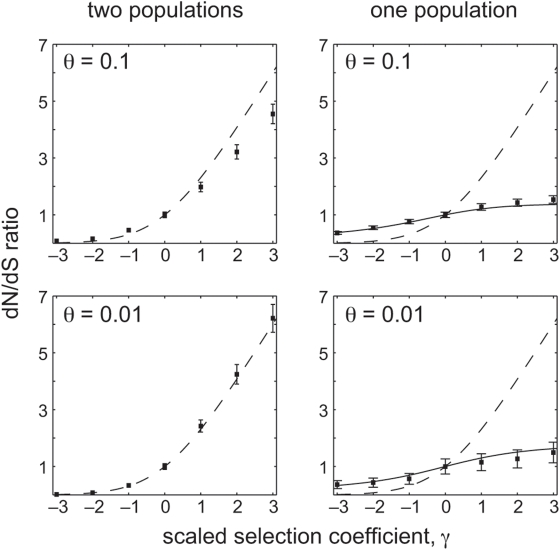
Evolutionary pressures on proteins are often quantified by the ratio of substitution rates at non-synonymous and synonymous sites. The dN/dS ratio was originally developed for application to distantly diverged sequences, the differences among which represent substitutions that have fixed along independent lineages. Nevertheless, the dN/dS measure is often applied to sequences sampled from a single population, the differences among which represent segregating polymorphisms. Here, we study the expected dN/dS ratio for samples drawn from a single population under selection, and we find that in this context, dN/dS is relatively insensitive to the selection coefficient. Moreover, the hallmark signature of positive selection over divergent lineages, dN/dS>1, is violated within a population. For population samples, the relationship between selection and dN/dS does not follow a monotonic function, and so it may be impossible to infer selection pressures from dN/dS. These results have significant implications for the interpretation of dN/dS measurements among population-genetic samples.
Overview
The claims and statistics of this paper haven’t been checked yet.
Free: it reads the open-access text and checks the first 5 claims that cite a source we can check. Create a free account to check every claim.
Integrity signals
Registry
Cites
Statistics
Figures
Verification
Claims the paper makes
The claims and statistics of this paper haven’t been checked yet.
Free: it reads the open-access text and checks the first 5 claims that cite a source we can check. Create a free account to check every claim.
Claims other papers make about this one
Each is checked against this paper’s own text: does it say what the citing paper says it does?
The check wasn’t confident either way, so it gives no verdict — never disputed.
In the citing paper
“This characteristic is consistent with the higher biodiversity observed in non-Westernized settings, where more heterogeneous dietary and environmental exposures may allow a broader range of accessory gene content to persist than is usually observed in genomes from industrialized populations [73-75] .”
From Genome-scale insights into the metabolic landscape and evolutionary development of Bifidobacterium bifidum (2026) · cites this paper as [73]
Experimental — accuracy not yet measured
Self-check
Percentages, sums and reported differences re-computed from the paper’s own numbers.
The self-check needs the paper’s full text.
Citations
Cites
MEGA4: Molecular Evolutionary Genetics Analysis (MEGA) Software Version 4.0
Tamura, K., Dudley, J., Nei, M., & Kumar, S. (2007) · Molecular Biology and Evolution · doi:10.1093/molbev/msm092 · Cited by 28,730 · cited 1×
“Theoretical work on the relationship between dN/dS and selection likewise assumes that sequences are sampled from independent, divergent species [3], as do computer packages used to estimate dN/dS from data [6,7].”
MethodStatistical method for testing the neutral mutation hypothesis by DNA polymorphism.
Tajima, F. (1989) · Genetics · doi:10.1093/genetics/123.3.585 · Cited by 13,941
PAML 4: Phylogenetic Analysis by Maximum Likelihood
Yang, Z. (2007) · Molecular Biology and Evolution · doi:10.1093/molbev/msm088 · Cited by 13,879 · cited 4×
“Theoretical work on the relationship between dN/dS and selection likewise assumes that sequences are sampled from independent, divergent species [3],as do computer packages used to estimate dN/dS from data [6, 7 ].”
MethodInfluentialEVOLUTION IN MENDELIAN POPULATIONS
Wright, S. (1931) · Genetics · doi:10.1093/genetics/16.2.97 · Cited by 8,916
Statistical tests of neutrality of mutations.
Fu, Y. X., & Li, W. H. (1993) · Genetics · doi:10.1093/genetics/133.3.693 · Cited by 4,034
Adaptive protein evolution at the Adh locus in Drosophila
McDonald, J. H., & Kreitman, M. (1991) · Nature · doi:10.1038/351652a0 · Cited by 3,283 · cited 1×
“geneticists [23,45].”
Codon-substitution models for heterogeneous selection pressure at amino acid sites
Yang, Z., Nielsen, R., Goldman, N., & Pedersen, A.-M. K. (2000) · Genetics · doi:10.1093/genetics/155.1.431 · Cited by 2,286
A codon-based model of nucleotide substitution for protein-coding DNA sequences.
(1994) · Molecular Biology and Evolution · doi:10.1093/oxfordjournals.molbev.a040153 · Cited by 1,960 · cited 20×
“We performed Wright-Fisher simulations of a population of constant size N evolving under positive or negative selection sensu Yang, in discrete time.”
BackgroundMethodInfluentialHitchhiking Under Positive Darwinian Selection
Fay, J. C., & Wu, C.-I. (2000) · Genetics · doi:10.1093/genetics/155.3.1405 · Cited by 1,819
Statistical methods for detecting molecular adaptation
Yang, Z., & Bielawski, J. P. (2000) · Trends in Ecology & Evolution · doi:10.1016/s0169-5347(00)01994-7 · Cited by 1,806 · cited 1×
“The instantaneous rate of change from codon i to codon j depends principally on the parameter v, defined as the relative rate of non-silent versus silent substitutions [2].”
Background
Cited by
Items 201–300 of 995
Watanabe, T., Nozawa, T., Aikawa, C., Amano, A., Maruyama, F., & Nakagawa, I. (2013) · Genome Biology and Evolution · doi:10.1093/gbe/evt075 · Cited by 42
Effects of life history and ecology on virus evolutionary potential
Chisholm, P. J., Busch, J. W., & Crowder, D. W. (2019) · Virus Research · doi:10.1016/j.virusres.2019.02.018 · Cited by 43
Caballero, S. J., Duchêne, S., Garavito, M. F., Slikas, B., & Baker, C. S. (2015) · PLoS ONE · doi:10.1371/journal.pone.0123543 · Cited by 39
“We chose this approach over other methods, because it includes a very comprehensive set of candidate codon models, including those available in other popular packages, such as PAML[43], Importantly, these models have sufficient statistical power to detect differences in selective constraints, even for intra-population…”
MethodThe origins and functional effects of postzygotic mutations throughout the human life span
Rockweiler, N. B., Ramu, A., Nagirnaja, L., Wong, W., Noordam, M. J., Drubin, C. W., Huang, N., Miller, B., Todres, E. Z., Vigh‐Conrad, K. A., et al. (2023) · Science · doi:10.1126/science.abn7113 · Cited by 39
Ren, J., Hou, Z., Wang, H., Sun, M.-A., Liu, X., Liu, B., & Guo, X. (2016) · Marine Biotechnology · doi:10.1007/s10126-016-9686-8 · Cited by 39
Detecting and understanding natural selection
Anisimova, M. O., & Liberles, D. A. (2012) · Oxford University Press eBooks · doi:10.1093/acprof:osobl/9780199601165.003.0006 · Cited by 48
Zhao, L., Svetec, N., & Begun, D. J. (2024) · Annual Review of Genetics · doi:10.1146/annurev-genet-111523-102413 · Cited by 38
“However, as noted above for dN/dS ratios, pN/pS ≈ 1 for short genes should not be taken as strong evidence for the absence of selection (71).”
Forces shaping major histocompatibility complex evolution in two hyena species
Califf, K. J., Ratzloff, E. K., Wagner, A. P., Holekamp, K. E., & Williams, B. L. (2013) · Journal of Mammalogy · doi:10.1644/12-mamm-a-054.1 · Cited by 38
McWhite, C. D., Meyer, A. G., & Wilke, C. O. (2016) · Virus Evolution · doi:10.1093/ve/vew026 · Cited by 47
“Passaging adaptations could reasonably be expected to only affect peripheral clades of influenza virus evolutionary trees, as they represent recent signals of adaptation that should not penetrate far into the tree or significantly affect tree structure (Kryazhimskiy and Plotkin, 2008; Strelkowa and L€ assig, 2012).”
BackgroundThe discovery of Halictivirus resolves the Sinaivirus phylogeny
Bigot, D., Dalmon, A., Roy, B., Hou, C., Germain, M., Romary, M., Deng, S., Diao, Q., Weinert, L. A., Cook, J. M., et al. (2017) · Journal of General Virology · doi:10.1099/jgv.0.000957 · Cited by 41
Analysis of selection in protein-coding sequences accounting for common biases
Amparo, R. D., Branco, C., Arenas, J., Vicens, A., & Arenas, M. (2021) · Briefings in Bioinformatics · doi:10.1093/bib/bbaa431 · Cited by 46
Perez, M., & Juniper, S. K. (2016) · Applied and Environmental Microbiology · doi:10.1128/aem.00953-16 · Cited by 38
“protein), but the divergence between the two populations was too small for detection of the signature of positive selection (48).”
BackgroundGontijo, A. M., Miguela, V., Whiting, M. F., Woodruff, R. C., & Domínguez, M. (2011) · Nature Communications · doi:10.1038/ncomms1328 · Cited by 39
“Furthermore, a difference between intron2 groups was also evident when the average ratio between nonsynonymous and synonymous substitution rates (d N /d S ) on the coding regions of each group was calculated, revealing a complete absence of nucleotide substitution in the coding regions of intron2b group allele”
BackgroundMugal, C. F., Kutschera, V. E., Botero-Castro, F., Wolf, J. B. W., & Kaj, I. (2019) · Molecular Biology and Evolution · doi:10.1093/molbev/msz203 · Cited by 49
Roy, C., Mandal, S. M., Mondal, S. K., Mukherjee, S., Mapder, T., Ghosh, W., & Chakraborty, R. (2020) · Genomics · doi:10.1016/j.ygeno.2020.11.003 · Cited by 40
“For any genetic locus, trends of positive Darwinian selection yield dN/dS >1, whereas tendencies of negative selection, or selective removal of alleles that are deleterious, result in dN/dS <1 [28].”
Climate‐specific biosynthetic gene clusters in populations of a lichen‐forming fungus
Singh, G., Calchera, A., Schulz, M., Drechsler, M., Bode, H. B., Schmitt, I., & Grande, F. D. (2021) · Environmental Microbiology · doi:10.1111/1462-2920.15605 · Cited by 41
“However, this measure is not suitable for inferring selection from population data such as the Pool-seq data used in our study, as the typical signature of positive selection, dN/dS >1, is violated within a population (Kryazhimskiy and Plotkin, 2008).”
MethodPassarelli‐Araujo, H., Palmeiro, J. K., Moharana, K. C., Pedrosa‐Silva, F., Dalla-Costa, L. M., & Venâncio, T. M. (2019) · FEBS Journal · doi:10.1111/febs.15005 · Cited by 40
“According to the ranges determined in a previous study [20], our 155 results indicate that K.”
BackgroundResultInfluentialKlingen, T. R., Reimering, S., Loers, J. U., Mooren, K., Klawonn, F., Krey, T., Gabriel, G., & McHardy, A. C. (2018) · Scientific Reports · doi:10.1038/s41598-017-18791-z · Cited by 36
Manlik, O., Krützen, M., Kopps, A. M., Mann, J., Bejder, L., Allen, S. J., Frère, C., Connor, R. C., & Sherwin, W. B. (2019) · Ecology and Evolution · doi:10.1002/ece3.5265 · Cited by 41
“These patterns were originally proposed for differentiation between species, but the same patterns are expected for variation within a single population, though weaker (Kryazhimskiy & Plotkin, 2008).”
BackgroundWan, Y., Mills, E. A., Leung, R. C.-Y., Vieira, A., Zhi, X., Croucher, N. J., Woodford, N., Jauneikaite, E., Ellington, M. J., & Sriskandan, S. (2021) · Microbial Genomics · doi:10.1099/mgen.0.000702 · Cited by 41
“The nucleotide nonsynonymoussubstitution rate (dN) over synonymoussubstitution rate (dS), denoted as ω=dN/dS, was used to reflect the direction and pressure of natural selection on each of the genes nfsA, nfsB, and ribE [61].”
MethodEcological and evolutionary dynamics of multi-strain RNA viruses
Makau, D. N., Lycett, S., Smith, M. J., Paploski, I. A. D., Cheeran, M. C. ‐., Craft, M. E., Kao, R. R., Schroeder, D. C., Doeschl‐Wilson, A., & VanderWaal, K. L. (2022) · Nature Ecology & Evolution · doi:10.1038/s41559-022-01860-6 · Cited by 40
Pellissier, L. (2015) · Frontiers in Ecology and Evolution · doi:10.3389/fevo.2015.00052 · Cited by 38
“As the effective population size decreases, the influence of drift increases, resulting in a higher ratio of non-synonymous to synonymous substitutions (dN/dS) (Kryazhimskiy and Plotkin, 2008).”
BackgroundYoungblut, N. D., Wirth, J. S., Henriksen, J. R., Smith, M. W., Simon, H. M., Metcalf, W. W., & Whitaker, R. J. (2015) · The ISME Journal · doi:10.1038/ismej.2015.31 · Cited by 42
Genomic analysis of Grapevine leafroll associated virus-5 and related viruses
Thompson, J. R., Fuchs, M., & Perry, K. L. (2011) · Virus Research · doi:10.1016/j.virusres.2011.08.006 · Cited by 37
Sequencing and analysis of a South Asian-Indian personal genome
Gupta, R. K., Ratan, A., Rajesh, C., Chen, R., Kim, H. L., Burhans, R. C., Miller, W., Santhosh, S., Davuluri, R. V., Butte, A. J., et al. (2012) · BMC Genomics · doi:10.1186/1471-2164-13-440 · Cited by 37
“This is consistent with a non-syn:syn (dN/dS) ratio of ~1 expected of a normal genome [26].”
BackgroundEvidence for a novel gene associated with human influenza A viruses
Clifford, M., Twigg, J., & Upton, C. (2009) · Virology Journal · doi:10.1186/1743-422x-6-198 · Cited by 40
“Considerable work has been performed to try and predict the significance of open reading frames and the likelihood of them being protein-coding; much of this has focused on the ratio of substitution rates at non-synonymous and synonymous sites [33].”
BackgroundLopes, J. S., Arenas, M., Posada, D., & Beaumont, M. (2013) · Heredity · doi:10.1038/hdy.2013.101 · Cited by 35
Criticality in tumor evolution and clinical outcome
Persi, E., Wolf, Y. I., Leiserson, M. D. M., Koonin, E. V., & Ruppin, E. (2018) · Proceedings of the National Academy of Sciences · doi:10.1073/pnas.1807256115 · Cited by 40
“During cancer evolution, however, the likelihood for a particular locus to mutate more than once is low (9) and a considerable number of mutations might not be fixed, such that estimates of selections should be based on the integration of mutation counts rather than rates (64).”
Prochlorococcus have low global mutation rate and small effective population size
Chen, Z., Wang, X., Song, Y., Zeng, Q., Zhang, Y., & Luo, H. (2021) · Nature Ecology & Evolution · doi:10.1038/s41559-021-01591-0 · Cited by 35
Factors Influencing the Diversity of Iron Uptake Systems in Aquatic Microorganisms
Desai, D., Desai, F. D., & LaRoche, J. (2012) · Frontiers in Microbiology · doi:10.3389/fmicb.2012.00362 · Cited by 34
Renaut, S., Grassa, C. J., Moyers, B. T., Kane, N. C., & Rieseberg, L. H. (2012) · Biology · doi:10.3390/biology1030575 · Cited by 37
“A robust and simple way to quantify rates of gene evolution at the protein levels comes from dN/dS ratio measurements [4].”
MethodShifting Balance on a Static Mutation–Selection Landscape: A Novel Scenario of Positive Selection
Jones, C. T., Youssef, N., Susko, E., & Bielawski, J. P. (2016) · Molecular Biology and Evolution · doi:10.1093/molbev/msw237 · Cited by 34
Within-Host Evolution of Bacterial Pathogens in Acute and Chronic Infection
Dekker, J. P. (2023) · Annual Review of Pathology Mechanisms of Disease · doi:10.1146/annurev-pathmechdis-051122-111408 · Cited by 39
Evolutionary insights from de novo transcriptome assembly and SNP discovery in California white oaks
Cokus, S. J., Gugger, P. F., & Sork, V. L. (2015) · BMC Genomics · doi:10.1186/s12864-015-1761-4 · Cited by 36
“This fact has the potential to render dN/ dS less sensitive to selection intensity making it a conservative test for positive selection, especially in the most extreme case of a single population [104, 105].”
BackgroundDerbyshire, M. C. (2020) · Frontiers in Microbiology · doi:10.3389/fmicb.2020.00644 · Cited by 36
“This is because the same favorable allele has been passed through most individuals in the population, bringing with it all alleles either side that are too close to be lost through recombination (Kryazhimskiy and Plotkin, 2008).”
BackgroundHelmstetter, N., Chybowska, A. D., Delaney, C., Dantas, A. D. S., Gifford, H., Wacker, T., Munro, C. A., Warris, A., Jones, B. L., Cuomo, C. A., et al. (2022) · Genetics · doi:10.1093/genetics/iyac031 · Cited by 33
“Between 61 and 85 genes with a signature of positive selection [ dN / dS ¼ x , and x > 1 (Kryazhimskiy and Plotkin 2008)] were found in each ST apart from the reference ST (ST15 CG151), for which only a single gene with x > 1 ( x ¼ 1.0019) was identified (Supplementary Table 5).”
InfluentialHighly Abundant Proteins Favor More Stable 3D Structures in Yeast
Serohijos, A. W. R., Lee, S. Y. R., & Shakhnovich, E. I. (2013) · Biophysical Journal · doi:10.1016/j.bpj.2012.11.3838 · Cited by 33
Zhang, W., Kunte, K. K., & Kronforst, M. R. (2013) · Genome Biology and Evolution · doi:10.1093/gbe/evt090 · Cited by 35
Nizovoy, P., Bellora, N., Haridas, S., Sun, H., Daum, C. G., Barry, K., Grigoriev, I. V., Libkind, D., Connell, L. B., & Moliné, M. (2020) · FEMS Yeast Research · doi:10.1093/femsyr/foaa056 · Cited by 38
Evolution of the orthopoxvirus core genome
Molteni, C., Forni, D., Cagliani, R., Mozzi, A., Clerici, M., & Sironi, M. (2022) · Virus Research · doi:10.1016/j.virusres.2022.198975 · Cited by 32
“First, the limited number of sequences affords low power to detect positive selection and the power of the dN/dS statistic is further reduced when the majority of sites in the protein evolve under purifying selection (Kryazhimskiy and Plotkin, 2008).”
BackgroundInfluentialIllingworth, C. J. R., & Mustonen, V. (2012) · PLoS Pathogens · doi:10.1371/journal.ppat.1003091 · Cited by 36
“We note that, where sequences are taken from a single population, the interpretation of values of dN/dS is not always straightforward [40].”
Time dependence of evolutionary metrics during the 2009 pandemic influenza virus outbreak
Meyer, A. G., Spielman, S. J., Bedford, T., & Wilke, C. O. (2015) · Virus Evolution · doi:10.1093/ve/vev006 · Cited by 35
Evolutionary Biology and Gene Editing of Cat Allergen, Fel d 1
Brackett, N. F., Davis, B. W., Adli, M., Pomés, A., & Chapman, M. D. (2022) · The CRISPR Journal · doi:10.1089/crispr.2021.0101 · Cited by 31
“34 The ratio of the nonsynonymous and synonymous substitution rates ( x = dN/dS) was determined for each exotic species (Supplementary Table S3).”
Sharko, F. S., Boulygina, E. S., Tsygankova, S. V., Slobodova, N. V., Alekseev, D. A., Krasivskaya, A. A., Rastorguev, S. M., Tikhonov, A. N., & Nedoluzhko, A. V. (2021) · Nature Communications · doi:10.1038/s41467-021-22567-5 · Cited by 31
Detecting Patches of Protein Sites of Influenza A Viruses under Positive Selection
Tusche, C., Steinbrück, L., & McHardy, A. C. (2012) · Molecular Biology and Evolution · doi:10.1093/molbev/mss095 · Cited by 38
“This requires the composition of the seasonal influenza A virus vaccine to be updated almost annually to ensure its continued effectiveness (Russell et al. 2008).”
BackgroundValesano, A. L., Taniuchi, M., Fitzsimmons, W. J., Islam, M. O., Ahmed, T., Zaman, K., Haque, R., Wong, W., Famulare, M., & Lauring, A. S. (2020) · Cell Host & Microbe · doi:10.1016/j.chom.2020.10.011 · Cited by 35
Detecting natural selection in RNA virus populations using sequence summary statistics
Bhatt, S., Katzourakis, A., & Pybus, O. G. (2009) · Infection Genetics and Evolution · doi:10.1016/j.meegid.2009.06.001 · Cited by 32
“However, the interpretation of dn/ds can be potentially misleading when recombination has been operating (Wilson and McVean, 2006) and the application of phylogenetic dn/ds methods to within-population data sets has recently been criticised (Kryazhimskiy and Plotkin, 2008).”
MethodGenetic Diversity of a Natural Population of Apple stem pitting virus Isolated from Apple in Korea
Yoon, J. Y., Joa, J. H., Choi, K. S., Do, K. S., Lim, H. C., & Chung, B. N. (2014) · The Plant Pathology Journal · doi:10.5423/ppj.nt.02.2014.0015 · Cited by 31
Wang, P., Cheng, T., Lu, M., Liu, G., Li, M., Shi, J., Lu, Y., Laux, T., & Chen, J. (2016) · Frontiers in Plant Science · doi:10.3389/fpls.2016.01383 · Cited by 33
“One criterion for assessing the type of selective pressure at the protein level is to calculate ω, i.e., dN/dS, for proteincoding genes (Seo et al., 2004; Kryazhimskiy and Plotkin, 2008) .”
BackgroundFarrer, R. A., Voelz, K., Henk, D. A., Johnston, S. A., Fisher, M. C., May, R. C., & Cuomo, C. A. (2016) · Philosophical Transactions of the Royal Society B Biological Sciences · doi:10.1098/rstb.2016.0021 · Cited by 33
“We complimented the comparison of two closely related isolates with selection analysis across fixed variants, for which dN/dS ratios were originally developed [50].”
MethodThe Influence of HIV on the Evolution of Mycobacterium tuberculosis
Koch, A. S., Brites, D., Stucki, D., Evans, J. C., Seldon, R., Heekes, A., Mulder, N., Nicol, M. P., Oni, T., Mizrahi, V., et al. (2017) · Molecular Biology and Evolution · doi:10.1093/molbev/msx107 · Cited by 34
Meng, P., Lu, C., Zhang, Q., Lin, J., & Chen, F. (2017) · Current Microbiology · doi:10.1007/s00284-017-1305-z · Cited by 36
Stam, R., Münsterkötter, M., Pophaly, S. D., Fokkens, L., Sghyer, H., Güldener, U., Hückelhoven, R., & Heß, M. (2018) · Genome Biology and Evolution · doi:10.1093/gbe/evy240 · Cited by 34
Genomic Analysis of Colombian Leishmania panamensis strains with different level of virulence
Urrea, D. A., Duitama, J., Imamura, H., Álzate, J. F., Gil, J., Muñoz, N., Villa-Pulgarín, J. A., Dujardin, J., Ramírez‐Pineda, J. R., & Triana‐Chávez, O. (2018) · Scientific Reports · doi:10.1038/s41598-018-35778-6 · Cited by 33
Strong Purifying Selection Is Associated with Genome Streamlining in Epipelagic Marinimicrobia
Martínez-Gutiérrez, C. A., & Aylward, F. O. (2019) · Genome Biology and Evolution · doi:10.1093/gbe/evz201 · Cited by 32
Dettman, J. R., & Kassen, R. (2020) · Molecular Biology and Evolution · doi:10.1093/molbev/msaa226 · Cited by 35
Antigenic variation of SARS‐CoV‐2 in response to immune pressure
Forni, D., Cagliani, R., Pontremoli, C., Mozzi, A., Pozzoli, U., Clerici, M., & Sironi, M. (2020) · Molecular Ecology · doi:10.1111/mec.15730 · Cited by 33
Targeting Fks1 proteins for novel antifungal drug discovery
Kumar, V., Huang, J., Dong, Y., & Hao, G. (2024) · Trends in Pharmacological Sciences · doi:10.1016/j.tips.2024.02.007 · Cited by 32
Positive selection underlies repeated knockout of ORF8 in SARS-CoV-2 evolution
Wagner, C., Kistler, K. E., Perchetti, G. A., Baker, N., Frisbie, L. A., Torres, L. M., Aragona, F., Yun, C., Figgins, M. D., Greninger, A. L., et al. (2024) · Nature Communications · doi:10.1038/s41467-024-47599-5 · Cited by 34
“…treeasopposed toasmaller global phylogeny is weakened since the number of segregating polymorphisms in the population is greatly increased 52 , our analysis focused on comparing the relative differences in dN/dS by mutation type across genes rather than the absolute magnitude of dN/dS…”
InfluentialBergman, I.-M., Rosengren, K. J., Edman, K., & Edfors, I. (2009) · Immunogenetics · doi:10.1007/s00251-009-0409-4 · Cited by 30
“Our data indicate that taken as a whole, all three genes studied evolve under purifying selection, since the dN/dS ratios are lower than 1 (Table 3). However, the dN/dS statistic ought to be treated with caution: it is relatively insensitive to the selection coefficient when applied within populations ( Kryazhimskiy a…”
BackgroundSmith, S. A., Burton, S. L., Kilembe, W., Lakhi, S., Karita, E., Price, M. A., Allen, S. A., Hunter, E., & Derdeyn, C. A. (2016) · PLoS Pathogens · doi:10.1371/journal.ppat.1005989 · Cited by 34
“dN/dS analyses are problematic when resampling the same population over short periods of time [83], and do not fully reflect the range of diversity that occurs within Env at the amino acid level (conservative vs.”
BackgroundBoujemaa, S., Allaya, A. B., Mlik, B., Mardassi, H., & Mardassi, B. B. A. (2018) · Scientific Reports · doi:10.1038/s41598-018-33260-x · Cited by 30
Coupling adaptive molecular evolution to phylodynamics using fitness-dependent birth-death models
Rasmussen, D. A., & Stadler, T. (2019) · eLife · doi:10.7554/elife.45562 · Cited by 31
The Nature and Extent of Plasmid Variation in Chlamydia trachomatis
Jones, C. A., Hadfield, J., Thomson, N. R., Cleary, D. W., Marsh, P., Clarke, I. N., & O’Neill, C. (2020) · Microorganisms · doi:10.3390/microorganisms8030373 · Cited by 32
“As a result, the test is too conservative and results may be misleading [76,77].”
BackgroundMethodKhademi, S. M. H., Gabrielaitė, M., Paulsson, M., Knulst, M., Touriki, E., Marvig, R. L., & Påhlman, L. I. (2021) · mSystems · doi:10.1128/msystems.00523-21 · Cited by 31
“polymorphisms that are not yet fixed in the population (26).”
BackgroundBaker, L. J., Reich, H. G., Kitchen, S. A., Klinges, J. G., Koch, H. R., Baums, I. B., Muller, E. M., & Thurber, R. L. V. (2021) · The ISME Journal · doi:10.1038/s41396-021-01077-8 · Cited by 29
Global Patterns of Subgenome Evolution in Organelle-Targeted Genes of Six Allotetraploid Angiosperms
Sharbrough, J., Conover, J. L., Gyorfy, M. F., Grover, C. E., Miller, E. R., Wendel, J. F., & Sloan, D. B. (2022) · Molecular Biology and Evolution · doi:10.1093/molbev/msac074 · Cited by 33
Analysis of SARS-CoV-2 genome evolutionary patterns
Gupta, S., Gupta, D., & Bhatnagar, S. (2024) · Microbiology Spectrum · doi:10.1128/spectrum.02654-23 · Cited by 29
“…under positive selec tion which promotes the accumulation of beneficial mutations, whereas if d N /d S ratio is below unity (d N /d S 1), the mutations are said to be occurring under negative selection that promotes mutations that are favouring selective removal of deleterious alleles (37, 38).”
BackgroundImpact of recurrent gene duplication on adaptation of plant genomes
Fischer, I., Dainat, J., Ranwez, V., Glémin, S., Dufayard, J.-F., & Chantret, N. (2014) · BMC Plant Biology · doi:10.1186/1471-2229-14-151 · Cited by 30
“Our LSE dataset may include genes where differences are still polymorphic which can lead to an overestimation of positive selection [59,60].”
BackgroundMethodJiang, J., Gwee, J., Fang, J., Leichter, S. M., Sanders, D., Ji, X., Song, J., & Zhong, X. (2024) · Science Advances · doi:10.1126/sciadv.adr2222 · Cited by 28
“The data were interpreted according to the principles found previously ( 67 ).”
MethodGoodswen, S. J., Kennedy, P. J., & Ellis, J. (2018) · Frontiers in Genetics · doi:10.3389/fgene.2018.00332 · Cited by 29
“Furthermore, fixed substitutions are expected to occur over long time-scales (Kryazhimskiy and Plotkin, 2008) and it is difficult to know the appropriate time-scale associated with each contributing strain.”
BackgroundInfluentialHarris, K. B., Flynn, K. M., & Cooper, V. S. (2021) · Molecular Biology and Evolution · doi:10.1093/molbev/msab248 · Cited by 33
“A phenomenon associated with positive selection is an increase in nonsynonymous (NS) mutations over synonymous (S) mutations (McDonald and Kreitman 1991; Kryazhimskiy and Plotkin 2008; Lieberman et al. 2011).”
Shishir, T. A., Saha, O., Rajia, S., Mondol, S. M., Masum, M. H. U., Rahaman, M. M., Hossen, F., Bahadur, N. M., Ahmed, F., Naser, I. B., et al. (2023) · Scientific Reports · doi:10.1038/s41598-023-40760-y · Cited by 30
MLST scheme of Ehrlichia ruminantium: Genomic stasis and recombination in strains from Burkina-Faso
Adakal, H., Meyer, D. F., Carasco-Lacombe, C., Pinarello, V., Allègre, F., Huber, K., Stachurski, F., Morand, S., Martinez, D., Lefrançois, T., et al. (2009) · Infection Genetics and Evolution · doi:10.1016/j.meegid.2009.08.003 · Cited by 28
“The rationale behind this was a molecular clock associated to the Ka/Ks ratio and the assumption that accumulation and fixation of mutations through time is representative of the segregating polymorphisms and genetic distances.”
BackgroundInfluentialCompositional dynamics and codon usage pattern of BRCA1 gene across nine mammalian species
Chakraborty, S., Mazumder, T. H., & Uddin, A. (2018) · Genomics · doi:10.1016/j.ygeno.2018.01.013 · Cited by 30
Past and ongoing adaptation of human cytomegalovirus to its host
Mozzi, A., Biolatti, M., Cagliani, R., Forni, D., Dell’Oste, V., Pontremoli, C., Vantaggiato, C., Pozzoli, U., Clerici, M., Landolfo, S., et al. (2020) · PLoS Pathogens · doi:10.1371/journal.ppat.1008476 · Cited by 30
“, long-term evolutionary processes [40]), or used population genetics approaches to focus on within-host selection [39].”
BackgroundBacker, M. W. A. M.-D., Lukashov, V. V., van Binnendijk, R. S., Boot, H. J., & Zaaijer, H. L. (2012) · PLoS ONE · doi:10.1371/journal.pone.0043206 · Cited by 27
“However, the dS/dN ratio should be interpreted with care since this analysis was performed in one species and the dS/dN was originally developed to compare sequences from divergent species [26].”
MethodIkeda, H., Fujii, N., & Setoguchi, H. (2009) · Genetics · doi:10.1534/genetics.109.102152 · Cited by 28
“Because the model assumes that sequences were sampled from divergent species, applying it to intraspecific data, as well as data from a single population, may not correctly evaluate the natural selection correctly (Kryazhimskiy and Plotkin 2008).”
BackgroundRoadmap to the study of gene and protein phylogeny and evolution—A practical guide
Jacques, F., Bolívar, P., Pietras, K., & Hammarlund, E. U. (2023) · PLoS ONE · doi:10.1371/journal.pone.0279597 · Cited by 32
Within-host evolutionary dynamics and tissue compartmentalization during acute SARS-CoV-2 infection
Farjo, M., Koelle, K., Martin, M. A., Gibson, L. L., Walden, K. K. O., Rendon, G., Fields, C. J., Alnaji, F. G., Gallagher, N., Luo, C. H., et al. (2024) · Journal of Virology · doi:10.1128/jvi.01618-23 · Cited by 27
Genetic Profiling of the Isoprenoid and Sterol Biosynthesis Pathway Genes of Trypanosoma cruzi
Cosentino, R. O., & Agüero, F. (2014) · PLoS ONE · doi:10.1371/journal.pone.0096762 · Cited by 28
“Although appealing because it normalizes substitutions over silent vs non-silent sites, the dN/dS ratio is extremely sensitive to violation of a number of assumptions, such as the need to use data from divergent lineages, and is also affected by differences in the time since divergence and/or effective population size…”
BackgroundRutledge, L. Y., Patterson, B. R., & White, B. N. (2010) · BMC Evolutionary Biology · doi:10.1186/1471-2148-10-215 · Cited by 27
Pavy, N., Deschênes, A., Blais, S., Lavigne, P., Beaulieu, J., Isabel, N., MacKay, J. J., & Bousquet, J. (2013) · Genome Biology and Evolution · doi:10.1093/gbe/evt143 · Cited by 29
“Multi-allelic SNPs were excluded from analyses. A python script was developed to calculate numbers of nonsynonymous and synonymous sites in each cds for sites with a depth of 10 reads or more, with the method of Hartl and Clark (2007) (as Novaes et al, 2008).”
BackgroundMethodInfluentialGenomic Comparisons Reveal Microevolutionary Differences in Mycobacterium abscessus Subspecies
Tan, J. L., Ng, K. P., Ong, C. S., & Ngeow, Y. F. (2017) · Frontiers in Microbiology · doi:10.3389/fmicb.2017.02042 · Cited by 28
“It has been said that the dN/dS ratio is not sensitive enough to detect gene sets that have undergone positive selection among closely related species (Kryazhimskiy and Plotkin, 2008).”
BackgroundBrown, A. P. C., Arias‐Rodríguez, L., Yee, M., Tobler, M., & Kelley, J. L. (2018) · Genome Biology and Evolution · doi:10.1093/gbe/evy198 · Cited by 31
“This analysis was designed for analyzing sequence differences between divergent species, and this ratio is highly sensitive to violations of this principle, for example, when applied to population data (Kryazhimskiy and Plotkin 2008).”
MethodWheeler, N. E., Barquist, L., Kingsley, R. A., & Gardner, P. P. (2016) · Bioinformatics · doi:10.1093/bioinformatics/btw518 · Cited by 30
“Other studies have shown that dN/dS can provide inaccurate, even contradictory, results depending on the structure of the population being sampled (Kryazhimskiy and Plotkin, 2008).”
Molecular basis of genetic variation of viruses
Domingo, E. (2019) · Elsevier eBooks · doi:10.1016/b978-0-12-816331-3.00002-7 · Cited by 31
“(v) Finally, uwas initially proposed to compare distantly related rather than closely related genomes, as is often the case in the short-term evolution of viruses (Kryazhimskiy and Plotkin, 2008).”
Zhang, D., Ren, J., Jiang, H., Wanga, V. O., Dong, X., & Hu, G. (2023) · Scientific Reports · doi:10.1038/s41598-023-34083-1 · Cited by 27
Genetic structure of community acquired methicillin-resistant Staphylococcus aureus USA300
Tewhey, R., Cannavino, C. R., Leake, J. A. D., Bansal, V., Topol, E. J., Torkamani, A., Bradley, J. S., & Schork, N. J. (2012) · BMC Genomics · doi:10.1186/1471-2164-13-508 · Cited by 27
“However, we are cautious of any classical interpretation of the dN/dS given the highly clonal nature of the samples and the small population size; both of which have been shown to cause fluctuation in the dN/dS calculations [18,19].”
Ramazzotti, M., Berná, L., Stefanini, I., & Cavalieri, D. (2012) · Nucleic Acids Research · doi:10.1093/nar/gks005 · Cited by 26
“Since it has been suggested that in this context the dN/dS is relatively insensitive to the selection pressure (32,33), we cannot exclude that the two genes are under a positive, rather undetectable selection.”
BackgroundPerdriel, J. L. (2012) · Cited by 27
Microevolution, speciation and macroevolution in rhizobia: Genomic mechanisms and selective patterns
Проворов, Н. А., Andronov, E. E., Kimeklis, A. K., Онищук, О. П., Igolkina, A. A., & Karasev, E. S. (2022) · Frontiers in Plant Science · doi:10.3389/fpls.2022.1026943 · Cited by 27
“With respect to gene structure, selective pressures may be differentiated into the purifying (stabilizing) and driving ones using the ratio of non-synonymous (dN) to synonymous (dS) substitutions: at dN/dS<1, selection is purifying, at dN/dS >1 it is driving while at dN/dS ≈ 1, the neutral, selection-independent evolu…”
BackgroundZhan, X.-Y., Zha, G., & He, Y. (2023) · Frontiers in Cellular and Infection Microbiology · doi:10.3389/fcimb.2022.1083234 · Cited by 25
“The ratio of substitution rates, denoted dN/dS, is still a reliable measure to detect proteins undergoing adaptation, which is used to infer the direction and magnitude of natural selection acting on protein-coding genes (Kryazhimskiy and Plotkin, 2008).”
BackgroundPseudogenes act as a neutral reference for detecting selection in prokaryotic pangenomes
Douglas, G. M., & Shapiro, B. J. (2024) · Nature Ecology & Evolution · doi:10.1038/s41559-023-02268-6 · Cited by 27
“However, the dependence structure may be more complex because recently diverged strains are biased towards higher d N /d S ratios due to insufficient time for purifying selection to purge deleterious non-synonymous mutations 14,15 .”
Quantifying harmful mutations in human populations
Subramanian, S. (2012) · European Journal of Human Genetics · doi:10.1038/ejhg.2012.68 · Cited by 25
McCairns, R. J. S., Bourget, S., & Bernatchez, L. (2010) · Molecular Ecology · doi:10.1111/j.1365-294x.2010.04950.x · Cited by 29
“Additionally, this ratio falls within the range of predicted values from simulations of divergent lineages under differing selection pressures (Kryazhimskiy & Plotkin 2008).”
BackgroundOmetto, L., Li, M., Bresadola, L., & Varotto, C. (2012) · BMC Evolutionary Biology · doi:10.1186/1471-2148-12-7 · Cited by 27
“Additional studies, including analyses on intraspecific polymorphism, will be certainly necessary to disentangle the neutral and selective forces that have shaped such patterns [62,63].”
BackgroundGoeury, T., Creary, L. E., Brunet, L., Galan, M., Pasquier, M., Kervaire, B., Langaney, A., Tiercy, J. ‐., Fernández-Viña, M., Nunes, J. M., et al. (2017) · HLA · doi:10.1111/tan.13180 · Cited by 26
Crease, T. J., Floyd, R., Cristescu, M. E., & Innes, D. J. (2011) · BMC Evolutionary Biology · doi:10.1186/1471-2148-11-212 · Cited by 28
“It is extremely difficult to detect positive selection on individual amino acid sites by applying standard statistical tests to sequences from one species or closely related species [46,47].”
BackgroundCytochrome P450 2B Diversity and Dietary Novelty in the Herbivorous, Desert Woodrat (Neotoma lepida)
Malenke, J. R., Magnanou, É., Thomas, K. R., & Dearing, M. D. (2012) · PLoS ONE · doi:10.1371/journal.pone.0041510 · Cited by 26
“It is rare, in fact, to find reliable evidence of positive selection for variation within a species, especially for ‘‘higher’’ eukaryotes, such as mammals [56].”
Background
Metadata
- Authors
- Kryazhimskiy, S., & Plotkin, J. B.
- Affiliations
- University of Pennsylvania (US)
- Corresponding author
- Plotkin, Joshua B.
- Venue
- PLoS Genetics
- Publisher
- Public Library of Science (PLoS)
- Published
- 2008-12-12
- Volume
- 4
- Issue
- 12
- Pages
- e1000304
- ISSN
- 1553-7390 (ISSN-L)
- 1553-7404
- PMC
- PMC2596312
- OpenAlex
- W2045641296
- Cited by
- 962
- References
- 64
- Citations by year
- 2026: 55 · 2025: 60 · 2024: 74 · 2023: 69 · 2022: 85 · 2021: 80 · 2020: 70 · 2019: 48 · 2018: 53 · 2017: 45 · 2016: 51 · 2015: 57 · 2014: 55 · 2013: 35 · 2012: 45
- FWCI
- 15.24
- Type
- journal article
- Language
- en
- Open access
- gold
- doi.org
- Locations
- PLoS Genetics (publishedVersion, cc-by)
- PubMed Central (publishedVersion, cc-by)
- PubMed (publishedVersion)
- RePEc: Research Papers in Economics (submittedVersion)
- DOAJ (DOAJ: Directory of Open Access Journals) (submittedVersion, cc-by-sa)
- Figshare (submittedVersion, cc-by)
- Funders
- Burroughs Wellcome Fund
- James S. McDonnell Foundation
- University of Pennsylvania
- Defense Advanced Research Projects Agency
- Advanced Research Projects Agency
- Topics
- Life Sciences › Biochemistry, Genetics and Molecular Biology › Genetics › Evolution and Genetic Dynamics
- Life Sciences › Biochemistry, Genetics and Molecular Biology › Molecular Biology › Genomics and Phylogenetic Studies
- Life Sciences › Biochemistry, Genetics and Molecular Biology › Genetics › Genetic diversity and population structure
- Keywords
- dN/dS ratio, nonsynonymous substitution rate, synonymous substitution rate, positive selection, selection coefficients, population genetics, protein evolution, selection signatures
- MeSH terms
- Genetics, Population, Models, Genetic, Proteins, Selection, Genetic, Genetic Variation, Models, Statistical, Evolution, Molecular, Amino Acid Substitution
About these checks
Registry, retraction, Cites and statistics results are computed, not judged, with one exception: a printed reference that no index lists is read once by a model before it counts as a citation error. Claims are extracted by a model and kept only when their quote appears verbatim in the text; each cited source is then checked, with a model’s help, for whether it says what the claim relies on. Those verdicts can be wrong — read the claim’s quote and the cited source before relying on one.
Statistics and arithmetic are recomputed, not judged.
Confidence bands are shown only for fields calibrated on our annotated test set. None is calibrated yet, so no band is shown.
What counts as a claim ›How we measure confidence ›How we check this ›
Are you an author, or do you see a problem with this page? Request a review
Data sources
Bibliographic data: Semantic Scholar, OpenAlex, Crossref.
Contains information from the Semantic Scholar Academic Graph Datasets, made available under the ODC Attribution License (ODC-BY 1.0).
Semantic Scholar’s data is described in: Kinney, R., et al. (2023). The Semantic Scholar Open Data Platform. arXiv:2301.10140.
