

The Population Genetics of dN/dS
Open accessThe DOI matches its Crossref record; 63 of the 64 references it cites were found in a registry or an index.
Abstract
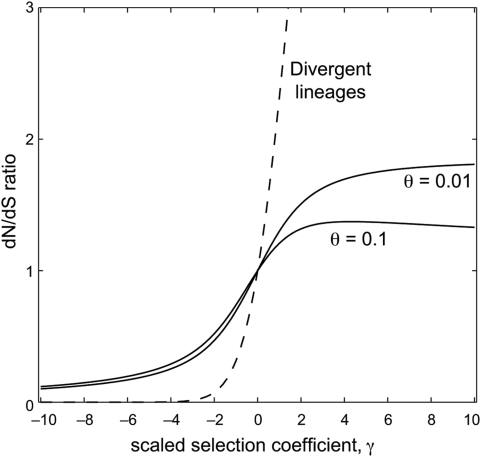
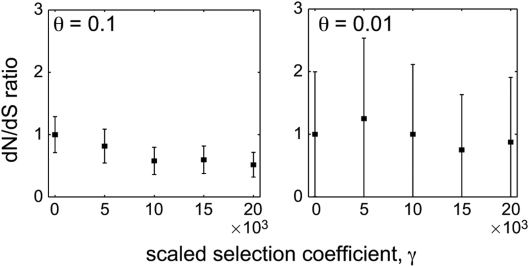
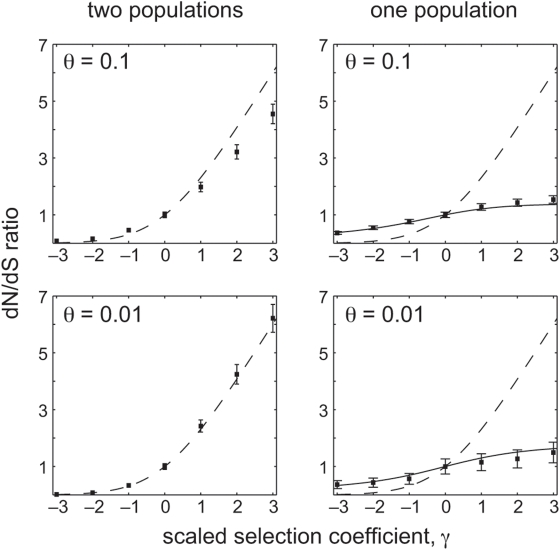
Evolutionary pressures on proteins are often quantified by the ratio of substitution rates at non-synonymous and synonymous sites. The dN/dS ratio was originally developed for application to distantly diverged sequences, the differences among which represent substitutions that have fixed along independent lineages. Nevertheless, the dN/dS measure is often applied to sequences sampled from a single population, the differences among which represent segregating polymorphisms. Here, we study the expected dN/dS ratio for samples drawn from a single population under selection, and we find that in this context, dN/dS is relatively insensitive to the selection coefficient. Moreover, the hallmark signature of positive selection over divergent lineages, dN/dS>1, is violated within a population. For population samples, the relationship between selection and dN/dS does not follow a monotonic function, and so it may be impossible to infer selection pressures from dN/dS. These results have significant implications for the interpretation of dN/dS measurements among population-genetic samples.
Overview
The claims and statistics of this paper haven’t been checked yet.
Free: it reads the open-access text and checks the first 5 claims that cite a source we can check. Create a free account to check every claim.
Integrity signals
Registry
Cites
Statistics
Figures
Verification
Claims the paper makes
The claims and statistics of this paper haven’t been checked yet.
Free: it reads the open-access text and checks the first 5 claims that cite a source we can check. Create a free account to check every claim.
Claims other papers make about this one
Each is checked against this paper’s own text: does it say what the citing paper says it does?
The check wasn’t confident either way, so it gives no verdict — never disputed.
In the citing paper
“This characteristic is consistent with the higher biodiversity observed in non-Westernized settings, where more heterogeneous dietary and environmental exposures may allow a broader range of accessory gene content to persist than is usually observed in genomes from industrialized populations [73-75] .”
From Genome-scale insights into the metabolic landscape and evolutionary development of Bifidobacterium bifidum (2026) · cites this paper as [73]
Experimental — accuracy not yet measured
Self-check
Percentages, sums and reported differences re-computed from the paper’s own numbers.
The self-check needs the paper’s full text.
Citations
Cites
MEGA4: Molecular Evolutionary Genetics Analysis (MEGA) Software Version 4.0
Tamura, K., Dudley, J., Nei, M., & Kumar, S. (2007) · Molecular Biology and Evolution · doi:10.1093/molbev/msm092 · Cited by 28,730 · cited 1×
“Theoretical work on the relationship between dN/dS and selection likewise assumes that sequences are sampled from independent, divergent species [3], as do computer packages used to estimate dN/dS from data [6,7].”
MethodStatistical method for testing the neutral mutation hypothesis by DNA polymorphism.
Tajima, F. (1989) · Genetics · doi:10.1093/genetics/123.3.585 · Cited by 13,941
PAML 4: Phylogenetic Analysis by Maximum Likelihood
Yang, Z. (2007) · Molecular Biology and Evolution · doi:10.1093/molbev/msm088 · Cited by 13,879 · cited 4×
“Theoretical work on the relationship between dN/dS and selection likewise assumes that sequences are sampled from independent, divergent species [3],as do computer packages used to estimate dN/dS from data [6, 7 ].”
MethodInfluentialEVOLUTION IN MENDELIAN POPULATIONS
Wright, S. (1931) · Genetics · doi:10.1093/genetics/16.2.97 · Cited by 8,916
Statistical tests of neutrality of mutations.
Fu, Y. X., & Li, W. H. (1993) · Genetics · doi:10.1093/genetics/133.3.693 · Cited by 4,034
Adaptive protein evolution at the Adh locus in Drosophila
McDonald, J. H., & Kreitman, M. (1991) · Nature · doi:10.1038/351652a0 · Cited by 3,283 · cited 1×
“geneticists [23,45].”
Codon-substitution models for heterogeneous selection pressure at amino acid sites
Yang, Z., Nielsen, R., Goldman, N., & Pedersen, A.-M. K. (2000) · Genetics · doi:10.1093/genetics/155.1.431 · Cited by 2,286
A codon-based model of nucleotide substitution for protein-coding DNA sequences.
(1994) · Molecular Biology and Evolution · doi:10.1093/oxfordjournals.molbev.a040153 · Cited by 1,960 · cited 20×
“We performed Wright-Fisher simulations of a population of constant size N evolving under positive or negative selection sensu Yang, in discrete time.”
BackgroundMethodInfluentialHitchhiking Under Positive Darwinian Selection
Fay, J. C., & Wu, C.-I. (2000) · Genetics · doi:10.1093/genetics/155.3.1405 · Cited by 1,819
Statistical methods for detecting molecular adaptation
Yang, Z., & Bielawski, J. P. (2000) · Trends in Ecology & Evolution · doi:10.1016/s0169-5347(00)01994-7 · Cited by 1,806 · cited 1×
“The instantaneous rate of change from codon i to codon j depends principally on the parameter v, defined as the relative rate of non-silent versus silent substitutions [2].”
Background
Cited by
Universal Patterns of Selection in Cancer and Somatic Tissues
Martincorena, I., Raine, K. M., Gerstung, M., Dawson, K. J., Haase, K., Van Loo, P., Davies, H., Stratton, M. R., & Campbell, P. J. (2017) · Cell · doi:10.1016/j.cell.2017.09.042 · Cited by 1,523
“Second, while some concerns exist regarding the use of dN/dS within a highly-recombining population (Kryazhimskiy and Plotkin, 2008), these considerations do not apply to somatic mutations accumulated in a cancer sample.”
Eleven grand challenges in single-cell data science
Lähnemann, D., Köster, J., Szczurek, E., McCarthy, D. J., Hicks, S. C., Robinson, M. D., Vallejos, C. A., Campbell, K. R., Beerenwinkel, N., Mahfouz, A., et al. (2020) · Genome Biology · doi:10.1186/s13059-020-1926-6 · Cited by 1,327
Domingo, E., Sheldon, J., & Perales, C. (2012) · Microbiology and Molecular Biology Reviews · doi:10.1128/mmbr.05023-11 · Cited by 1,009
Horizontal gene transfer and adaptive evolution in bacteria.
Arnold, B. J., Huang, I.-T., & Hanage, W. P. (2022) · Nature Reviews Microbiology · doi:10.1038/s41579-021-00650-4 · Cited by 869
Resolving genetic heterogeneity in cancer
Turajlic, S., Sottoriva, A., Graham, T., & Swanton, C. (2019) · Nature Reviews Genetics · doi:10.1038/s41576-019-0114-6 · Cited by 653
Persistent HIV-1 replication maintains the tissue reservoir during therapy
Lorenzo-Redondo, R., Fryer, H. R., Bedford, T., Kim, E.-Y., Archer, J., Kosakovsky Pond, S. L., Chung, Y.-S., Penugonda, S., Chipman, J. G., Fletcher, C. V., et al. (2016) · Nature · doi:10.1038/nature16933 · Cited by 627
Evolutionary analysis of the dynamics of viral infectious disease
Pybus, O. G., & Rambaut, A. (2009) · Nature Reviews Genetics · doi:10.1038/nrg2583 · Cited by 620
Single-Cell Genomics Reveals Hundreds of Coexisting Subpopulations in Wild Prochlorococcus
Kashtan, N., Roggensack, S. E., Rodrigue, S., Thompson, J. W., Biller, S. J., Coe, A., Ding, H., Marttinen, P., Malmstrom, R. R., Stocker, R., et al. (2014) · Science · doi:10.1126/science.1248575 · Cited by 537
Deep learning-based kcat prediction enables improved enzyme-constrained model reconstruction
Li, F., Yuan, L., Lu, H., Li, G., Chen, Y., Engqvist, M. K. M., Kerkhoven, E. J., & Nielsen, J. (2022) · Nature Catalysis · doi:10.1038/s41929-022-00798-z · Cited by 466
“Sequence conservation also trended with predicted k cat values, where the ratio of non-synonymous over synonymous substitutions (d N /d S ) is commonly used to detect proteins undergoing adaptation 30 .”
MethodFarhat, M. R., Shapiro, B. J., Kieser, K. J., Sultana, R., Jacobson, K. R., Victor, T. C., Warren, R. M., Streicher, E. M., Calver, A., Sloutsky, A., et al. (2013) · Nature Genetics · doi:10.1038/ng.2747 · Cited by 440
Tun, K. M., Imwong, M., Lwin, K. M., Win, A. A., Hlaing, T. M., Hlaing, T., Lin, K., Kyaw, M. P., Plewes, K., Faiz, M. A., et al. (2015) · The Lancet Infectious Diseases · doi:10.1016/s1473-3099(15)70032-0 · Cited by 414
Evolutionary dynamics of Clostridium difficile over short and long time scales
He, M., Sebaihia, M., Lawley, T. D., Stabler, R. A., Dawson, L. F., Martin, M. J., Holt, K. E., Seth-Smith, H. M. B., Quail, M. A., Rance, R., et al. (2010) · Proceedings of the National Academy of Sciences · doi:10.1073/pnas.0914322107 · Cited by 359
“However, it has been shown that for very closely related genomes, dN/dS can be close to 1 (29), either because time has been too short for selection to act (29) or because nucleotide substitutions within a species may represent segregating polymorphisms rather than fixed differences (30).”
BackgroundThe Discovery, Distribution, and Evolution of Viruses Associated with Drosophila melanogaster
Webster, C. L., Waldron, F. M., Robertson, S., Crowson, D., Ferrari, G., Quintana, J. F., Brouqui, J.-M., Bayne, E. H., Longdon, B., Buck, A. H., et al. (2015) · PLOS Biology · doi:10.1371/journal.pbio.1002210 · Cited by 329
“Nevertheless, within-species sampling may be unlikely to detect species-wide selective pressure [98] and the disparity in evolutionary timescales of host and virus may mean that even strong reciprocal arms races are not reflected in elevated viral dN/dS ratios (i.”
BackgroundUrea Cycle Dysregulation Generates Clinically Relevant Genomic and Biochemical Signatures
Lee, J. S., Adler, L., Karathia, H., Carmel, N., Rabinovich, S., Auslander, N., Keshet, R., Stettner, N., Silberman, A., Agemy, L., et al. (2018) · Cell · doi:10.1016/j.cell.2018.07.019 · Cited by 296
“However, because during tumor evolution the probability that a single site is mutated more than once is low (Beerenwinkel et al., 2015; Kryazhimskiy and Plotkin, 2008), we approximate the rates dN, dS by pN and pS, respectively.”
Diversity and Evolution in the Genome of Clostridium difficile
Knight, D. R., Elliott, B., Chang, B. J., Perkins, T. T., & Riley, T. V. (2015) · Clinical Microbiology Reviews · doi:10.1128/cmr.00127-14 · Cited by 286
“Clonal diversification is influenced by the process of natural selection, whereby synonymous nucleotide changes in CDSs evolve under a neutral model of selection, while mutations that provide a reproductive advantage or “fitness” are fixed in a bacterial lineage by positive or Darwinian selection, and deleterious muta…”
BackgroundMolecular Evolution: A Statistical Approach
Yang, Z. (2014) · doi:10.1093/acprof:oso/9780199602605.001.0001 · Cited by 273
The landscape of sex-differential transcriptome and its consequent selection in human adults
Gershoni, M., & Pietrokovski, S. (2017) · BMC Biology · doi:10.1186/s12915-017-0352-z · Cited by 266
“Similar to dN/dS, these ratios are selection indicators [42, 43].”
BackgroundDetecting balancing selection in genomes: limits and prospects
Fijarczyk, A., & Babik, W. (2015) · Molecular Ecology · doi:10.1111/mec.13226 · Cited by 259
“…the use of the dN/dS tests on variation segregating within species is not warranted, as statistical properties of the ratio of nonsynonymous to synonymous polymorphisms differ dramatically from the properties of dN/ dS, where fixed substitutions are considered (Kryazhimskiy & Plotkin 2008).”
BackgroundPopulation genomics of bacterial host adaptation
Sheppard, S. K., Guttman, D. S., & Fitzgerald, J. R. (2018) · Nature Reviews Genetics · doi:10.1038/s41576-018-0032-z · Cited by 250
Microbial genome-enabled insights into plant–microorganism interactions
Guttman, D. S., McHardy, A. C., & Schulze-Lefert, P. (2014) · Nature Reviews Genetics · doi:10.1038/nrg3748 · Cited by 234
The phylogenomics of evolving virus virulence
Geoghegan, J. L., & Holmes, E. C. (2018) · Nature Reviews Genetics · doi:10.1038/s41576-018-0055-5 · Cited by 232
Beginner's Guide on the Use of PAML to Detect Positive Selection
Álvarez-Carretero, S., Kapli, P., & Yang, Z. (2023) · Molecular Biology and Evolution · doi:10.1093/molbev/msad041 · Cited by 208
“Tests based on d N / d S may be less effective when applied to data from the same species because of lack of sequence divergences and because of complications in the interpretation of the d N / d S ratio (Kryazhimskiy and Plotkin 2008).”
MethodPhylogenetic background and habitat drive the genetic diversification of Escherichia coli
Touchon, M., Perrin, A., de Sousa, J. A. M., Vangchhia, B., Burn, S., O’Brien, C. L., Denamur, E., Gordon, D., & Rocha, E. P. (2020) · PLOS Genetics · doi:10.1371/journal.pgen.1008866 · Cited by 224
Mancini, E., Tammaro, F., Baldini, F., Via, A., Raimondo, D., George, P., Audisio, P., Sharakhov, I. V., Tramontano, A., Catteruccia, F., et al. (2011) · BMC Evolutionary Biology · doi:10.1186/1471-2148-11-72 · Cited by 230
“As argued by some authors, ω estimates from a set of conspecific sequences are not appropriate to detect patterns of selection, because the observed differences at this level represent segregating polymorphisms as opposed to fixed substitutions [21].”
BackgroundMutation rate of SARS-CoV-2 and emergence of mutators during experimental evolution
Amicone, M., Borges, V., Alves, M. J., Isidro, J., Zé-Zé, L., Duarte, S., Vieira, L., Guiomar, R., Gomes, J. P., & Gordo, I. (2022) · Evolution, Medicine, and Public Health · doi:10.1093/emph/eoac010 · Cited by 208
“372 Due to the limited number of mutations within each gene and the fact that we are 373 comparing evolving populations (rather than divergent species), the pN/pS may lack the 374 power to identify additional regions under selection[36].”
BackgroundGenetic Costs of Domestication and Improvement
Moyers, B. T., Morrell, P. L., & McKay, J. K. (2018) · Journal of Heredity · doi:10.1093/jhered/esx069 · Cited by 216
A SARS-CoV-2 vaccine candidate would likely match all currently circulating variants
Dearlove, B., Lewitus, E., Bai, H., Li, Y., Reeves, D. B., Joyce, M. G., Scott, P. T., Amare, M. F., Vasan, S., Michael, N. L., et al. (2020) · Proceedings of the National Academy of Sciences · doi:10.1073/pnas.2008281117 · Cited by 200
“Known biases associated with calculating dN/dS on exponentially growing populations (59) were counterbalanced by subsampling phylogenies, as the typical approach to address this bias, which is to ignore terminal branches, would considerably diminish the power of the analysis to detect any significant result.”
BackgroundPrevalence of Epistasis in the Evolution of Influenza A Surface Proteins
Kryazhimskiy, S., Dushoff, J., Bazykin, G. A., & Plotkin, J. B. (2011) · PLoS Genetics · doi:10.1371/journal.pgen.1001301 · Cited by 198
“Thus, an average dN/dS value at a site may be well below 1 even if this site occasionally evolves under strong immune selection [78].”
BackgroundSelf-citationNübel, U., Dordel, J., Kurt, K., Strommenger, B., Westh, H., Shukla, S. K., Žemličková, H., Leblois, R., Wirth, T., Jombart, T., et al. (2010) · PLoS Pathogens · doi:10.1371/journal.ppat.1000855 · Cited by 183
“, evolution which occurs within a few years, see below) [11,24,25].”
BackgroundModeling Evolution Using the Probability of Fixation: History and Implications
McCandlish, D. M., & Stoltzfus, A. (2014) · The Quarterly Review of Biology · doi:10.1086/677571 · Cited by 186
Human papillomavirus genomics: Understanding carcinogenicity
Nelson, C. W., & Mirabello, L. J. (2023) · Tumour Virus Research · doi:10.1016/j.tvr.2023.200258 · Cited by 206
The Genomic Rate of Molecular Adaptation of the Human Influenza A Virus
Bhatt, S., Holmes, E. C., & Pybus, O. G. (2011) · Molecular Biology and Evolution · doi:10.1093/molbev/msr044 · Cited by 175
Trends in substitution models of molecular evolution
Arenas, M. (2015) · Frontiers in Genetics · doi:10.3389/fgene.2015.00319 · Cited by 170
“…frequencies vary across sites (Arenas and Posada, 2014b) and dN/dS should be estimated from samples of different populations (Kryazhimskiy and Plotkin, 2008; Pellissier, 2015)], dN/dS is commonly estimated in evolutionary biology for testing hypothesis related to selective pressure (e.g.,…”
BackgroundThe Evolution of Bacterial Genome Architecture
Bobay, L., & Ochman, H. (2017) · Frontiers in Genetics · doi:10.3389/fgene.2017.00072 · Cited by 185
“…Ne is based on assessment of Ka/Ks or dN /dS ratios, which represent the effectiveness of selection and scale negatively with Ne, since smaller populations promote the fixation of slightly deleterious mutations thereby increasing Ka (or dN) (Daubin and Moran, 2004; Kryazhimskiy and Plotkin, 2008).”
BackgroundInfluentialTheory of prokaryotic genome evolution
Sela, I., Wolf, Y. I., & Koonin, E. V. (2016) · Proceedings of the National Academy of Sciences · doi:10.1073/pnas.1614083113 · Cited by 166
Zwick, M. E., Joseph, S. J., Didelot, X., Chen, P. E., Bishop-Lilly, K. A., Stewart, A. C., Willner, K., Nolan, N., Lentz, S., Thomason, M. K., et al. (2012) · Genome Research · doi:10.1101/gr.134437.111 · Cited by 167
“With the proviso that screens for positive selection can have multiple interpretations (Kryazhimskiy and Plotkin 2008), two basic trends emerged from this analysis.”
BackgroundSelection signatures in livestock genome: A review of concepts, approaches and applications
Saravanan, K. A., Panigrahi, M., Kumar, H., Bhushan, B., Dutt, T., & Mishra, B. P. (2020) · Livestock Science · doi:10.1016/j.livsci.2020.104257 · Cited by 194
Plant pangenomes for crop improvement, biodiversity and evolution
Schreiber, M., Jayakodi, M., Stein, N., & Mascher, M. (2024) · Nature Reviews Genetics · doi:10.1038/s41576-024-00691-4 · Cited by 185
“Analysis methods may differ according to whether sequence variants are fixed between reproductively isolated species or segregate in mutually interfertile populations connected by gene flow 80 .”
Why Time Matters: Codon Evolution and the Temporal Dynamics of dN/dS
Mugal, C. F., Wolf, J. B. W., & Kaj, I. (2014) · Molecular Biology and Evolution · doi:10.1093/molbev/mst192 · Cited by 162
Patterns of within-host genetic diversity in SARS-CoV-2
Tonkin-Hill, G., Martincorena, I., Amato, R., Lawson, A. R., Gerstung, M., Johnston, I., Jackson, D. K., Park, N., Lensing, S. V., Quail, M. A., et al. (2021) · eLife · doi:10.7554/elife.66857 · Cited by 161
“…providing weaker signals of selection for more recent changes, and because dN/dS ratios can also behave non-monotonically with respect to selection coefficients under idealised conditions of free recombination when using nucleotide diversity within a population ( Kryazhimskiy and Plotkin, 2008 ).”
Karasov, T. L., Almario, J., Friedemann, C., Ding, W., Giolai, M., Heavens, D., Kersten, S., Lundberg, D. S., Neumann, M., Regalado, J., et al. (2018) · Cell Host & Microbe · doi:10.1016/j.chom.2018.06.011 · Cited by 168
“Furthermore, the shortterm substitution rate in the kiwi pathogen is likely higher than the long-term substitution rate relevant to OTU5 (ExpositoAlonso et al., 2018; Kryazhimskiy and Plotkin, 2008; Rocha et al., 2006).”
BackgroundTracking Cancer Evolution through the Disease Course
Bailey, C., Black, J. R. M., Reading, J. L., Litchfield, K., Turajlic, S., McGranahan, N., Jamal-Hanjani, M., & Swanton, C. (2021) · Cancer Discovery · doi:10.1158/2159-8290.cd-20-1559 · Cited by 158
“In a subsequent pan-cancer analysis of multi-region data, enabling phasing of SCNAs, from 394 tumours, we explored this in greater detail revealing extensive heterogeneity of SCNAs in primary and metastatic tumours, reflective of ongoing CIN during tumour evolution (28).”
Microevolution of Helicobacter pylori during Prolonged Infection of Single Hosts and within Families
Morelli, G., Didelot, X., Kušećek, B., Schwarz, S., Bahlawane, C., Falush, D., Suerbaum, S., & Achtman, M. (2010) · PLoS Genetics · doi:10.1371/journal.pgen.1001036 · Cited by 171
“Plotkin, the sequence differences we have analyzed correspond to segregating polymorphisms, which might have implications for our estimated mutation rates [16,17,62].”
BackgroundFactors driving effective population size and pan-genome evolution in bacteria
Bobay, L.-M., & Ochman, H. (2018) · BMC Evolutionary Biology · doi:10.1186/s12862-018-1272-4 · Cited by 148
Climate shaped the worldwide distribution of human mitochondrial DNA sequence variation
Balloux, F., Handley, L. L., Jombart, T., Liu, H., & Manica, A. (2009) · Proceedings of the Royal Society B Biological Sciences · doi:10.1098/rspb.2009.0752 · Cited by 167
“30 April 2009 16 June 2009 3447 within populations (Kryazhimskiy & Plotkin 2008).”
BackgroundEvolutionary trajectory of SARS-CoV-2 and emerging variants
Singh, J., Pandit, P., McArthur, A. G., Banerjee, A., & Mossman, K. L. (2021) · Virology Journal · doi:10.1186/s12985-021-01633-w · Cited by 170
“Ratios of the rates of non-synonymous/synonymous mutations (dN/dS) greater than one, less than one and equal to one indicate positive selection, negative (purifying) selection and neutral evolution, respectively [72].”
BackgroundGenes but Not Genomes Reveal Bacterial Domestication of Lactococcus Lactis
Passerini, D., Beltramo, C., Coddeville, M., Quentin, Y., Ritzenthaler, P., Daveran-Mingot, M.-L., & Le Bourgeois, P. (2010) · PLoS ONE · doi:10.1371/journal.pone.0015306 · Cited by 131
“However, it has been demonstrated that the dN/dS ratio is not appropriate for inferring selection pressures from single bacterial populations, in which most differences between sequences represent segregating polymorphism rather than fixed substitutions, as assumed by the model [58].”
Diaz Caballero, J., Clark, S. T., Coburn, B., Zhang, Y., Wang, P. W., Donaldson, S. L., Tullis, D. E., Yau, Y. C. W., Waters, V. J., Hwang, D. M., et al. (2015) · mBio · doi:10.1128/mbio.00981-15 · Cited by 132
Within-Host Evolution of Human Influenza Virus
Xue, K. S., Moncla, L. H., Bedford, T., & Bloom, J. D. (2018) · Trends in Microbiology · doi:10.1016/j.tim.2018.02.007 · Cited by 145
“However, the dN/ dS ratio was originally developed to compare fixed variation between distantly diverged lineages, and within-host population dynamics can complicate its interpretation [106,107].”
BackgroundThe Relationship between dN/dS and Scaled Selection Coefficients
Spielman, S. J., & Wilke, C. O. (2015) · Molecular Biology and Evolution · doi:10.1093/molbev/msv003 · Cited by 155
“Key words: dN/dS, mutation-selection models, scaled selection coefficients, Markov models of sequence evolution, protein evolution.”
BackgroundThe Potyviruses: An Evolutionary Synthesis Is Emerging
Gibbs, A. J., Hajizadeh, M., Ohshima, K., & Jones, R. A. (2020) · Viruses · doi:10.3390/v12020132 · Cited by 145
“, providing evidence that they are separate species [84].”
BackgroundOkoro, C. K., Barquist, L., Connor, T. R., Harris, S. R., Clare, S., Stevens, M. P., Arends, M. J., Hale, C., Kane, L., Pickard, D. J., et al. (2015) · PLOS Neglected Tropical Diseases · doi:10.1371/journal.pntd.0003611 · Cited by 131
“Thus, the dN/dS values were smaller than one but still elevated and similar to those expected for recently evolved lineages where time has been too short for purifying selection to act to a significant level [17,18].”
The Role of Selection in Shaping Diversity of Natural M. tuberculosis Populations
Pepperell, C. S., Casto, A. M., Kitchen, A., Granka, J. M., Cornejo, O. E., Holmes, E. C., Birren, B., Galagan, J., & Feldman, M. W. (2013) · PLoS Pathogens · doi:10.1371/journal.ppat.1003543 · Cited by 131
“identified a further property of dN/dS, namely its low power to estimate the strength of selection from patterns of polymorphism among closely related organisms [23].”
BackgroundTracking the establishment of local endemic populations of an emergent enteric pathogen
Holt, K. E., Nga, T. V. T., Thanh, D. P., Vinh, H., Kim, D. W., Tra, M. P. V., Campbell, J. I., Hoàng, N. V. M., Vinh, H., Minh, P. V., et al. (2013) · Proceedings of the National Academy of Sciences · doi:10.1073/pnas.1308632110 · Cited by 132
“dN/dS is most appropriately applied to assess interspecies variation rather than microevolution within species (18); however, this genome-wide dN/dS value is similar to that observed in other enteric pathogens, including Salmonella enterica (19, 20), and may result from a combination of purifying selection, diversifyi…”
ResultInsights from genomic comparisons of genetically monomorphic bacterial pathogens
Achtman, M. (2012) · Philosophical Transactions of the Royal Society B: Biological Sciences · doi:10.1098/rstb.2011.0303 · Cited by 129
Fitness effects of mutations to SARS-CoV-2 proteins
Bloom, J. D., & Neher, R. A. (2023) · Virus Evolution · doi:10.1093/ve/vead055 · Cited by 149
Origin and Evolution of the Kiwifruit Canker Pandemic
McCann, H. C., Li, L., Liu, Y., Li, D., Pan, H., Zhong, C., Rikkerink, E. H. A., Templeton, M. D., Straub, C., Colombi, E., et al. (2017) · Genome Biology and Evolution · doi:10.1093/gbe/evx055 · Cited by 134
“It is possible these patterns are the outcome of selective pressures imposed during bacterial residence within a similar host niche, but considering most of these strains have only recently diverged, it is likely neutral and deleterious mutations have not yet been purged by selection (Kryazhimskiy and Plotkin 2008) .”
BackgroundThe within-host population dynamics of Mycobacterium tuberculosis vary with treatment efficacy
Trauner, A., Liu, Q., Via, L. E., Liu, X., Ruan, X., Liang, L., Shi, H., Chen, Y., Wang, Z., Liang, R., et al. (2017) · Genome biology · doi:10.1186/s13059-017-1196-0 · Cited by 138
“Nonetheless, the qualitative inference drawn from dN/dS in single populations mirrors that calculated for separate populations [65].”
BackgroundQuantitative Prediction of Molecular Clock and Ka/Ks at Short Timescales
Peterson, G. I., & Masel, J. (2009) · Molecular Biology and Evolution · doi:10.1093/molbev/msp175 · Cited by 133
“Still, because the absolute difference between a Ka/Ks ratio at a given time and its asymptotic rate are quite small, Ka/Ks performs reasonably well between populations whose divergence is separated by a nominal length of time.”
BackgroundResultInfluentialMcEvoy, C. R. E., Cloete, R. E. A., Müller, B., Schürch, A. C., van Helden, P. D., Gagneux, S., Warren, R. M., & van Pittius, N. C. G. (2012) · PLoS ONE · doi:10.1371/journal.pone.0030593 · Cited by 122
“1) does not hold for comparisons within a population [69].”
BackgroundWhy Genes Evolve Faster on Secondary Chromosomes in Bacteria
Cooper, V. S., Vohr, S. H., Wrocklage, S. C., & Hatcher, P. J. (2010) · PLoS Computational Biology · doi:10.1371/journal.pcbi.1000732 · Cited by 120
“2, Table S2), even as the total number of panorthologs decreased and as the noise inherent to dN and dS estimates [18] increased.”
BackgroundBloemendaal, A. L. A., Brouwer, E. C., & Fluit, A. C. (2010) · PLoS ONE · doi:10.1371/journal.pone.0011841 · Cited by 118
“6 is not possible, because it may indicate negative or positive selection or no selection at all in intraspecies analysis of selective pressure [13].”
BackgroundTemporal Dynamics of Co-circulating Lineages of Porcine Reproductive and Respiratory Syndrome Virus
Paploski, I. A. D., Corzo, C. A., Rovira, A., Murtaugh, M. P., Sanhueza, J. M., Vilalta, C., Schroeder, D. C., & VanderWaal, K. L. (2019) · Frontiers in Microbiology · doi:10.3389/fmicb.2019.02486 · Cited by 133
“The identification of point mutations that are undergoing positive selective pressure is often interpreted as evidence of increased evolutionary fitness (Kryazhimskiy and Plotkin, 2008).”
BackgroundMolecular evolution and the latitudinal biodiversity gradient
Dowle, E., Morgan‐Richards, M., & Trewick, S. A. (2013) · Heredity · doi:10.1038/hdy.2013.4 · Cited by 125
Hoehn, K. B., Heiden, J. A. V., Zhou, J. Q., Lunter, G. A., Pybus, O. G., & Kleinstein, S. H. (2019) · Proceedings of the National Academy of Sciences · doi:10.1073/pnas.1906020116 · Cited by 123
“64 are less of a problem for B cell lineages because their ancestral (i.e., germline) states are knowable a priori, which makes it possible to distinguish between conserved ancestral positions and fixed derived sites resulting from selective sweeps.”
The worm in the fruit of the mitochondrial DNA tree
Balloux, F. (2009) · Heredity · doi:10.1038/hdy.2009.122 · Cited by 113
Shao, Y., Chen, C., Shen, H., He, B., Yu, D., Jiang, S., Zhao, S., Gao, Z., Zhu, Z., Chen, X. X., et al. (2019) · Genome Research · doi:10.1101/gr.238733.118 · Cited by 123
“This low fraction is unsurprising given that the polymorphism-based test is known to have low power to detect the signals of selection, because deleterious mutations can segregate at low frequencies before being removed by selection (Kryazhimskiy and Plotkin 2008).”
BackgroundKÜNSTNER, A., WOLF, J. B. W., BACKSTRÖM, N., WHITNEY, O., BALAKRISHNAN, C. N., DAY, L., EDWARDS, S. V., JANES, D. E., SCHLINGER, B. A., WILSON, R. K., et al. (2010) · Molecular Ecology · doi:10.1111/j.1365-294x.2009.04487.x · Cited by 106
“Recently, there have been theoretical and empirical claims that mean dN ⁄ dS may not be independent of mean dS (Rocha et al. 2006; Kryazhimskiy & Plotkin 2008; Wolf et al. 2009).”
Cancer in Light of Experimental Evolution
Sprouffske, K., Merlo, L. M. F., Gerrish, P. J., Maley, C. C., & Sniegowski, P. (2012) · Current Biology · doi:10.1016/j.cub.2012.06.065 · Cited by 118
Wolf, J. B. W., Künstner, A., Nam, K., Jakobsson, M., & Ellegren, H. (2009) · Genome Biology and Evolution · doi:10.1093/gbe/evp030 · Cited by 110
Within-Host Viral Diversity: A Window into Viral Evolution
Lauring, A. S. (2020) · Annual Review of Virology · doi:10.1146/annurev-virology-010320-061642 · Cited by 118
Genetic load in marine animals: a review
Plough, L. V. (2016) · Current Zoology · doi:10.1093/cz/zow096 · Cited by 114
“In a population genetics context, where polymorphisms may not be fixed among populations, the interpretation of the dn/ds ratio is not straightforward for inferring selection at a particular gene (e.g., Kryazhimskiy and Plotkin 2008; Mugal et al. 2014).”
BackgroundThe role of GC-biased gene conversion in shaping the fastest evolving regions of the human genome
Kostka, D., Hubisz, M. J., Siepel, A., & Pollard, K. S. (2012) · Molecular Biology and Evolution · doi:10.1093/molbev/msr279 · Cited by 102
Sperschneider, J., Gardiner, D. M., Thatcher, L. F., Lyons, R., Singh, K. B., Manners, J. M., & Taylor, J. M. (2015) · Genome Biology and Evolution · doi:10.1093/gbe/evv092 · Cited by 115
“Adaptive evolution can either be measured on the short time-scale of population variation or the long time-scale of divergent species (Kryazhimskiy and Plotkin 2008).”
BackgroundGlobal Biodiversity of Aquatic Ammonia-Oxidizing Archaea is Partitioned by Habitat
Biller, S. J., Mosier, A. C., Wells, G., & Francis, C. A. (2012) · Frontiers in Microbiology · doi:10.3389/fmicb.2012.00252 · Cited by 108
“…2012 | Volume 3 | Article 252 | 2 by MOTHUR; this was done both due to computational limitations and to increase the likelihood that the sequences being analyzed represented fixed lineages from distinct populations, and not simply polymorphisms within a population (Kryazhimskiy and Plotkin, 2008).”
BackgroundA selective sweep in the Spike gene has driven SARS-CoV-2 human adaptation
Kang, L., He, G., Sharp, A. K., Wang, X., Brown, A. M., Michalak, P., & Weger-Lucarelli, J. (2021) · Cell · doi:10.1016/j.cell.2021.07.007 · Cited by 105
“However, these results are based on dN/dS tests that are traditionally designed for eukaryotic interspecies comparisons and, thus, ill equipped to detect hallmark signatures of positive selection in viral lineages with limited sequence divergence (Kryazhimskiy and Plotkin, 2008).”
De novo evolution of macroscopic multicellularity
Bozdag, G. O., Zamani-Dahaj, S. A., Day, T. C., Kahn, P. C., Burnetti, A., Lac, D. T., Tong, K., Conlin, P. L., Balwani, A., Dyer, E. L., et al. (2023) · Nature · doi:10.1038/s41586-023-06052-1 · Cited by 106
“Because analyses 442 of dN/dS ratios typically use mutations that are fixed in the population (67), we examined 443”
BackgroundEpidemiological and clinical consequences of within-host evolution
Alizon, S., Luciani, F., & Regoes, R. R. (2010) · Trends in Microbiology · doi:10.1016/j.tim.2010.09.005 · Cited by 101
Population genomics of human adaptation
Lachance, J., & Tishkoff, S. A. (2013) · Annual Review of Ecology, Evolution, and Systematics · doi:10.1146/annurev-ecolsys-110512-135833 · Cited by 95
“Another limitation is that dN/dS ratios are relatively insensitive to the strength of selection when samples are drawn from a single population under selection (Kryazhimskiy & Plotkin 2008).”
BackgroundThe genomic footprint of sexual conflict
Sayadi, A., Barrio, Á. M., Immonen, E., Dainat, J., Berger, D., Tellgren‐Roth, C., Nystedt, B., & Arnqvist, G. (2019) · Nature Ecology & Evolution · doi:10.1038/s41559-019-1041-9 · Cited by 99
Detecting ancient positive selection in humans using extended lineage sorting
Peyrégne, S., Boyle, M. J., Dannemann, M., & Prüfer, K. (2017) · Genome Research · doi:10.1101/gr.219493.116 · Cited by 93
Moury, B., & Simon, V. (2011) · Molecular Biology and Evolution · doi:10.1093/molbev/msr105 · Cited by 106
The Impact of Recombination on dN/dS within Recently Emerged Bacterial Clones
Castillo-Ramírez, S., Harris, S. R., Holden, M. T. G., He, M., Parkhill, J., Bentley, S. D., & Feil, E. J. (2011) · PLoS Pathogens · doi:10.1371/journal.ppat.1002129 · Cited by 91
“level of non-synonymous change among very recently emerged mutations, and a commensurate decrease in dN/dS over divergence time [18,34,37,38,56,57,58,59].”
BackgroundHarris, S. E., Munshi‐South, J., Obergfell, C. J., & O'Neill, R. J. W. (2013) · PLoS ONE · doi:10.1371/journal.pone.0074938 · Cited by 105
Workman, R. E., Myrka, A. M., Wong, G. W., Tseng, E., Welch, K. C., & Timp, W. (2018) · GigaScience · doi:10.1093/gigascience/giy009 · Cited by 89
“This type of analysis is ideal for very divergent sequences but less informative for pairs of sequences that are highly similar [46].”
Looking for Darwin's footprints in the microbial world
Shapiro, B. J., David, L. A., Friedman, J., & Alm, E. J. (2009) · Trends in Microbiology · doi:10.1016/j.tim.2009.02.002 · Cited by 98
Lemey, P., Minin, V. N., Bielejec, F., Pond, S. L. K., & Suchard, M. A. (2012) · Bioinformatics · doi:10.1093/bioinformatics/bts580 · Cited by 92
“Moreover, although divergent sequences can yield considerable information to estimate nonsynonymous and synonymous substitution rates, the ratio of these rates may offer little insight when inferred from segregating polymorphisms within a single population (Kryazhimskiy and Plotkin, 2008).”
A Population Genetics-Phylogenetics Approach to Inferring Natural Selection in Coding Sequences
Wilson, D. J., Hernandez, R. D., Andolfatto, P., & Przeworski, M. (2011) · PLoS Genetics · doi:10.1371/journal.pgen.1002395 · Cited by 85
“This is important because top-down applications of phylogenetic models to polymorphism data [31,35] can give the misleading impression of a relaxation of functional constraint in contemporary diversity [48,49].”
BackgroundA global analysis of selection at the avian MHC
Minias, P., Pikus, E., Whittingham, L. A., & Dunn, P. O. (2018) · Evolution · doi:10.1111/evo.13490 · Cited by 88
“The dN/dS ratio was developed to infer selection across distantly diverged sequences, in which the differences represent substitutions that have become fixed in different lineages (Kryazhimskiy and Plotkin 2008).”
BackgroundMeasuring Clonal Evolution in Cancer with Genomics
Williams, M. J., Sottoriva, A., & Graham, T. A. (2019) · Annual Review of Genomics and Human Genetics · doi:10.1146/annurev-genom-083117-021712 · Cited by 103
Kumar, R., Verma, H., Singhvi, N., Sood, U., Gupta, V., Singh, M., KUMARI, R. R., Hira, P., Nagar, S., Talwar, C., et al. (2020) · mSystems · doi:10.1128/msystems.00505-20 · Cited by 84
Wu, M., Kostyun, J. L., Hahn, M. W., & Moyle, L. C. (2018) · Molecular Ecology · doi:10.1111/mec.14780 · Cited by 86
“Because deleterious mutations are more likely to be sampled as polymorphisms than as fixed differences between species, analyses of this type may be misleading (e.g., Kryazhimskiy & Plotkin, 2008; Li, Costello, Holloway, & Hahn, 2008; Peterson & Masel, 2009).”
BackgroundShang, L., Smith, J. A., Zhao, W., Kho, M., Turner, S. T., Mosley, T. H., Kardia, S. L. R., & Zhou, X. (2020) · The American Journal of Human Genetics · doi:10.1016/j.ajhg.2020.03.002 · Cited by 80
“Conservation Scores We obtained three types of conservation scores: phyloP score,(41) phastCons score,(42) and dN/dS ratio.(43) The phyloP score measures”
MethodEvolution of Viral Genomes: Interplay Between Selection, Recombination, and Other Forces
Spielman, S. J., Weaver, S., Shank, S. D., Magalis, B. R., Li, M., & Pond, S. L. K. (2019) · Methods in molecular biology · doi:10.1007/978-1-4939-9074-0_14 · Cited by 84
Duchêne, S., Ho, S. Y. W., & Holmes, E. C. (2015) · BMC Evolutionary Biology · doi:10.1186/s12862-015-0312-6 · Cited by 91
“However, the precise threshold value to detect positive or negative (purifying) selection depends on the demographic process [20] and on the level of sequence divergence [21].”
BackgroundJoseph, B., Schwarz, R. F., Linke, B., Blom, J., Becker, A., Claus, H., Goesmann, A., Frosch, M., Müller, T., Vogel, U. F., et al. (2011) · PLoS ONE · doi:10.1371/journal.pone.0018441 · Cited by 95
“However, it was recently shown that dN/dS is time dependent for closely related bacterial genomes [45] and that it might even be impossible to infer selection pressures from such data for population samples from the same species [46].”
BackgroundAssessing Antigenic Drift of Seasonal Influenza A(H3N2) and A(H1N1)pdm09 Viruses
Tewawong, N., Prachayangprecha, S., Vichiwattana, P., Korkong, S., Klinfueng, S., Vongpunsawad, S., Thongmee, T., Theamboonlers, A., & Poovorawan, Y. (2015) · PLoS ONE · doi:10.1371/journal.pone.0139958 · Cited by 90
“Assuming that the influenza HA protein is subjected to selection pressure in order to evade the host cell recognition, the rate of change was assessed by the ω values in which ω< 1 meant that negative or purifying selection was present, ω = 1 when selection pressure was neutral, and ω >1 when there was positive select…”
BackgroundBiessy, A., Novinscak, A., Blom, J., Léger, G., Thomashow, L. S., Cazorla, F. M., Jošić, D., & Filion, M. (2018) · Environmental Microbiology · doi:10.1111/1462-2920.14476 · Cited by 86
Molecular Evolutionary Consequences of Island Colonization
James, J., Lanfear, R., & Eyre‐Walker, A. (2016) · Genome Biology and Evolution · doi:10.1093/gbe/evw120 · Cited by 82
“Key words: effective population size, genetic diversity, bottlenecks, polymorphism, substitution.”
BackgroundHow clonal are bacteria over time?
Shapiro, B. J. (2016) · Current Opinion in Microbiology · doi:10.1016/j.mib.2016.03.013 · Cited by 77
Metadata
- Authors
- Kryazhimskiy, S., & Plotkin, J. B.
- Affiliations
- University of Pennsylvania (US)
- Corresponding author
- Plotkin, Joshua B.
- Venue
- PLoS Genetics
- Publisher
- Public Library of Science (PLoS)
- Published
- 2008-12-12
- Volume
- 4
- Issue
- 12
- Pages
- e1000304
- ISSN
- 1553-7390 (ISSN-L)
- 1553-7404
- PMC
- PMC2596312
- OpenAlex
- W2045641296
- Cited by
- 962
- References
- 64
- Citations by year
- 2026: 55 · 2025: 60 · 2024: 74 · 2023: 69 · 2022: 85 · 2021: 80 · 2020: 70 · 2019: 48 · 2018: 53 · 2017: 45 · 2016: 51 · 2015: 57 · 2014: 55 · 2013: 35 · 2012: 45
- FWCI
- 15.24
- Type
- journal article
- Language
- en
- Open access
- gold
- doi.org
- Locations
- PLoS Genetics (publishedVersion, cc-by)
- PubMed Central (publishedVersion, cc-by)
- PubMed (publishedVersion)
- RePEc: Research Papers in Economics (submittedVersion)
- DOAJ (DOAJ: Directory of Open Access Journals) (submittedVersion, cc-by-sa)
- Figshare (submittedVersion, cc-by)
- Funders
- Burroughs Wellcome Fund
- James S. McDonnell Foundation
- University of Pennsylvania
- Defense Advanced Research Projects Agency
- Advanced Research Projects Agency
- Topics
- Life Sciences › Biochemistry, Genetics and Molecular Biology › Genetics › Evolution and Genetic Dynamics
- Life Sciences › Biochemistry, Genetics and Molecular Biology › Molecular Biology › Genomics and Phylogenetic Studies
- Life Sciences › Biochemistry, Genetics and Molecular Biology › Genetics › Genetic diversity and population structure
- Keywords
- dN/dS ratio, nonsynonymous substitution rate, synonymous substitution rate, positive selection, selection coefficients, population genetics, protein evolution, selection signatures
- MeSH terms
- Genetics, Population, Models, Genetic, Proteins, Selection, Genetic, Genetic Variation, Models, Statistical, Evolution, Molecular, Amino Acid Substitution
About these checks
Registry, retraction, Cites and statistics results are computed, not judged, with one exception: a printed reference that no index lists is read once by a model before it counts as a citation error. Claims are extracted by a model and kept only when their quote appears verbatim in the text; each cited source is then checked, with a model’s help, for whether it says what the claim relies on. Those verdicts can be wrong — read the claim’s quote and the cited source before relying on one.
Statistics and arithmetic are recomputed, not judged.
Confidence bands are shown only for fields calibrated on our annotated test set. None is calibrated yet, so no band is shown.
What counts as a claim ›How we measure confidence ›How we check this ›
Are you an author, or do you see a problem with this page? Request a review
Data sources
Bibliographic data: Semantic Scholar, OpenAlex, Crossref.
Contains information from the Semantic Scholar Academic Graph Datasets, made available under the ODC Attribution License (ODC-BY 1.0).
Semantic Scholar’s data is described in: Kinney, R., et al. (2023). The Semantic Scholar Open Data Platform. arXiv:2301.10140.
