

The Population Genetics of dN/dS
Open accessThe DOI matches its Crossref record; 63 of the 64 references it cites were found in a registry or an index.
Abstract
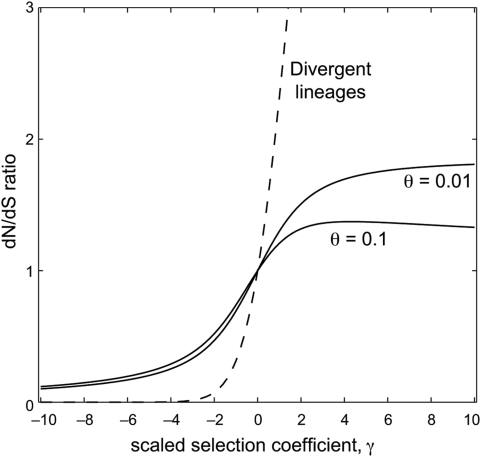
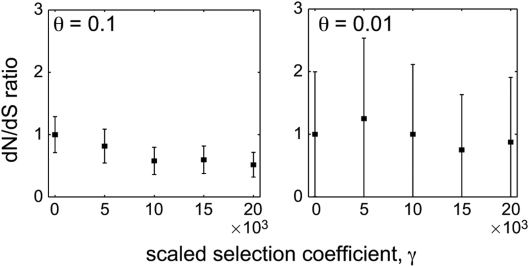
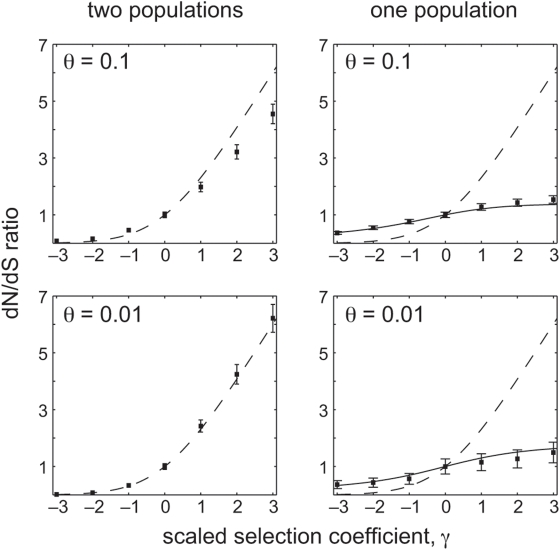
Evolutionary pressures on proteins are often quantified by the ratio of substitution rates at non-synonymous and synonymous sites. The dN/dS ratio was originally developed for application to distantly diverged sequences, the differences among which represent substitutions that have fixed along independent lineages. Nevertheless, the dN/dS measure is often applied to sequences sampled from a single population, the differences among which represent segregating polymorphisms. Here, we study the expected dN/dS ratio for samples drawn from a single population under selection, and we find that in this context, dN/dS is relatively insensitive to the selection coefficient. Moreover, the hallmark signature of positive selection over divergent lineages, dN/dS>1, is violated within a population. For population samples, the relationship between selection and dN/dS does not follow a monotonic function, and so it may be impossible to infer selection pressures from dN/dS. These results have significant implications for the interpretation of dN/dS measurements among population-genetic samples.
Overview
The claims and statistics of this paper haven’t been checked yet.
Free: it reads the open-access text and checks the first 5 claims that cite a source we can check. Create a free account to check every claim.
Integrity signals
Registry
Cites
Statistics
Figures
Verification
Claims the paper makes
The claims and statistics of this paper haven’t been checked yet.
Free: it reads the open-access text and checks the first 5 claims that cite a source we can check. Create a free account to check every claim.
Claims other papers make about this one
Each is checked against this paper’s own text: does it say what the citing paper says it does?
The check wasn’t confident either way, so it gives no verdict — never disputed.
In the citing paper
“This characteristic is consistent with the higher biodiversity observed in non-Westernized settings, where more heterogeneous dietary and environmental exposures may allow a broader range of accessory gene content to persist than is usually observed in genomes from industrialized populations [73-75] .”
From Genome-scale insights into the metabolic landscape and evolutionary development of Bifidobacterium bifidum (2026) · cites this paper as [73]
Experimental — accuracy not yet measured
Self-check
Percentages, sums and reported differences re-computed from the paper’s own numbers.
The self-check needs the paper’s full text.
Citations
Cites
MEGA4: Molecular Evolutionary Genetics Analysis (MEGA) Software Version 4.0
Tamura, K., Dudley, J., Nei, M., & Kumar, S. (2007) · Molecular Biology and Evolution · doi:10.1093/molbev/msm092 · Cited by 28,730 · cited 1×
“Theoretical work on the relationship between dN/dS and selection likewise assumes that sequences are sampled from independent, divergent species [3], as do computer packages used to estimate dN/dS from data [6,7].”
MethodStatistical method for testing the neutral mutation hypothesis by DNA polymorphism.
Tajima, F. (1989) · Genetics · doi:10.1093/genetics/123.3.585 · Cited by 13,941
PAML 4: Phylogenetic Analysis by Maximum Likelihood
Yang, Z. (2007) · Molecular Biology and Evolution · doi:10.1093/molbev/msm088 · Cited by 13,879 · cited 4×
“Theoretical work on the relationship between dN/dS and selection likewise assumes that sequences are sampled from independent, divergent species [3],as do computer packages used to estimate dN/dS from data [6, 7 ].”
MethodInfluentialEVOLUTION IN MENDELIAN POPULATIONS
Wright, S. (1931) · Genetics · doi:10.1093/genetics/16.2.97 · Cited by 8,916
Statistical tests of neutrality of mutations.
Fu, Y. X., & Li, W. H. (1993) · Genetics · doi:10.1093/genetics/133.3.693 · Cited by 4,034
Adaptive protein evolution at the Adh locus in Drosophila
McDonald, J. H., & Kreitman, M. (1991) · Nature · doi:10.1038/351652a0 · Cited by 3,283 · cited 1×
“geneticists [23,45].”
Codon-substitution models for heterogeneous selection pressure at amino acid sites
Yang, Z., Nielsen, R., Goldman, N., & Pedersen, A.-M. K. (2000) · Genetics · doi:10.1093/genetics/155.1.431 · Cited by 2,286
A codon-based model of nucleotide substitution for protein-coding DNA sequences.
(1994) · Molecular Biology and Evolution · doi:10.1093/oxfordjournals.molbev.a040153 · Cited by 1,960 · cited 20×
“We performed Wright-Fisher simulations of a population of constant size N evolving under positive or negative selection sensu Yang, in discrete time.”
BackgroundMethodInfluentialHitchhiking Under Positive Darwinian Selection
Fay, J. C., & Wu, C.-I. (2000) · Genetics · doi:10.1093/genetics/155.3.1405 · Cited by 1,819
Statistical methods for detecting molecular adaptation
Yang, Z., & Bielawski, J. P. (2000) · Trends in Ecology & Evolution · doi:10.1016/s0169-5347(00)01994-7 · Cited by 1,806 · cited 1×
“The instantaneous rate of change from codon i to codon j depends principally on the parameter v, defined as the relative rate of non-silent versus silent substitutions [2].”
Background
Cited by
Items 601–700 of 995
Evolutionary Trajectories of Avian Avulaviruses and Vaccines Compatibilities in Poultry
Rohaim, M. A., Al‐Natour, M. Q., Naggar, R. F. E., Abdelsabour, M. A., Madbouly, Y. M., Ahmed, K. A., & Munir, M. (2022) · Vaccines · doi:10.3390/vaccines10111862 · Cited by 6
“The Synonymous-NonSynonymous Analysis Program (SNAP) was used to predict the F gene-specific estimates of dN/dS [41].”
Microbial interactions affect the tempo and mode of antibiotic resistance evolutionPreprint
Zandbergen, L. E., van den Heuvel, J., Farr, A. D., Zwaan, B. J., de Visser, J. A. G. M., & de Vos, M. G. J. (2024) · bioRxiv (Cold Spring Harbor Laboratory) · doi:10.1101/2024.06.06.597700 · Cited by 6
“To quantify the impact of natural selection in our populations, we measured the dN/dS ratio (41).”
MethodPredicting the antigenic evolution of seasonal influenza viruses using phylogenetic convergencePreprint
Turner, S. A., Pattinson, D., Fouchier, R. A. M., & Smith, D. J. (2026) · bioRxiv (Cold Spring Harbor Laboratory) · doi:10.64898/2026.04.10.717627 · Cited by 6
Ghasemian, E., Ramadhani, A. M., Harte, A. J., Mafuru, E., Derrick, T. R., Mtuy, T. B., Massae, P., Malisa, A., Breuer, J., Pickering, H. C., et al. (2025) · Microbial Genomics · doi:10.1099/mgen.0.001431 · Cited by 5
Genome-level selection in tumors as a universal marker of resistance to therapy
Persi, E., Sudalagunta, P. R., Wolf, Y. I., Canevarolo, R. R., Damaghi, M., Shain, K. H., Silva, A. S., & Koonin, E. V. (2025) · Nature Communications · doi:10.1038/s41467-025-61709-x · Cited by 7
“Further, dN/dS is directly related to the scaled (by population size) selection coef fi cient of a mutation 84 .”
Molecular Aspects of the Emergence of Monkeypox Virus Clades
Babkin, I. V., Babkina, I. N., & Викторовна, Т. Н. (2025) · Viruses · doi:10.3390/v17121549 · Cited by 5
Abbot, B., Field, S., Carneal, L., White, R. A., III, Buchan, A., West, C., Lee, L., & Carter, M. (2025) · Genome Biology and Evolution · doi:10.1093/gbe/evaf231 · Cited by 6
“As the differential amount of gene cluster conservation suggests differential rates of evolution, we estimated the accumulation of non-synonymous (dN) to synonymous (dS) mutations in these replicons (Kryazhimskiy and Plotkin 2008).”
Epistasis and co-adaptation in bacterial genome evolution
Cummins, E., Raikwar, P. S., Hallett, E., & Sheppard, S. K. (2026) · Nature Reviews Genetics · doi:10.1038/s41576-026-00941-7 · Cited by 11
“…includes widespread purifying selection , with more synonymous mutations (dS) than non-synonymous mutations (dN) for most genes (dN/dS <1) 53,54 ; selection on genomic base composition and GC content 55 ; conservation of essential genes, synteny and gene order 56 ; bias in the distribution…”
The site frequency spectrum of dispensable genes
Baumdicker, F. (2014) · Theoretical Population Biology · doi:10.1016/j.tpb.2014.12.001 · Cited by 5
“ach to compare Tajima’s D between dispensable genes. Another frequently used statistic to detect genes under selection is the ratio of non-synonymous and synonymous SNPs Yang and Bielawski (2000). In Kryazhimskiy and Plotkin (2008) and Rocha et al. (2006) an eect occurring in closely related datasets is elaborated. If…”
BackgroundЗахарова, Г. С., Modestov, A., Pugacheva, P. A., Mekic, R., Savina, E. A., Guryanova, A., Rachkova, A. A., Yakushov, S., Alimov, A. A., Kulaeva, E. D., et al. (2023) · Cells · doi:10.3390/cells12091299 · Cited by 5
“The structural component can be quantitated by measuring the ratio of non-synonymous to synonymous nucleotide substitutions in the protein-coding sequence, called the dN/dS approach [7].”
BackgroundA Community-Based Framework Integrates Interspecific Interactions into Forest Genetic Conservation
Wang, X., Xiao, Y., Lv, Y., He, Z., Yeh, F. C., & Hu, X. (2024) · Plants · doi:10.3390/plants13030435 · Cited by 5
“However, this benefits the species vulnerable to survival, which can be analogously implied from the population genetics theory [121–124].”
BackgroundPatterns of Change in Nucleotide Diversity Over Gene Length
Ali, F. (2024) · Genome Biology and Evolution · doi:10.1093/gbe/evae078 · Cited by 6
“…of substitution rates (Young et al. 2017; López-Pérez et al. 2020; Moulana et al. 2020), or the method is used for intraspecific comparisons (Chen et al. 2006; Wilson and The CRyPTIC Consortium 2020), both of which can be misleading in their own (Kryazhimskiy and Plotkin 2008; Loo et al. 2020).”
Hopken, M. W., Piaggio, A. J., Pabilonia, K. L., Pierce, J. C., Anderson, T. D., Pierce, C. F., & Abdo, Z. (2020) · Infection Genetics and Evolution · doi:10.1016/j.meegid.2020.104505 · Cited by 5
A drift‐barrier model drives the genomic landscape of a structured bacterial population
Gardon, H., Biderre‐Petit, C., Jouan‐Dufournel, I., & Bronner, G. (2020) · Molecular Ecology · doi:10.1111/mec.15628 · Cited by 5
“Thus, the C1 and C2 clade comparison was not considered because of their low mean dS (±SD 0.05 ± 0.07; Kryazhimskiy & Plotkin, 2008).”
BackgroundInfluentialZou, X., Chen, L., Li, B., Xiao, J., & Xu, P. (2022) · Scientific Reports · doi:10.1038/s41598-022-13587-2 · Cited by 5
Onasanya, A. E., El-Hage, C. M., Diaz-Méndez, A., Vaz, P. K., Legione, A. R., Browning, G. F., Devlin, J. M., & Hartley, C. A. (2022) · BMC Genomics · doi:10.1186/s12864-022-08789-x · Cited by 5
“The Ka parameter has been suggested to be relatively consistent for defining gene divergence [46, 97].”
BackgroundThe Clinical Significance of Genetic Variation in Ovarian Cancer
Ban, D., Housley, S. N., & McDonald, J. F. (2023) · International Journal of Molecular Sciences · doi:10.3390/ijms241310823 · Cited by 5
“To look for evidence of the selection for newly acquired nucleotide mutations in cancer driver genes, we utilized a method long-employed in the field of population genetics [50] that has been modified to identify nucleotide-level genetic variants selectively favored during cancer onset and development [34].”
MethodGhasemian, E., Faal, N., Pickering, H. C., Sillah, A., Breuer, J., Bailey, R. L., Mabey, D. C. W., & Holland, M. J. (2024) · Microbial Genomics · doi:10.1099/mgen.0.001210 · Cited by 5
“Variations causing amino acid substitutions are classified as non-synonymous, whereas those that do not affect the amino acid sequence are termed synonymous [48, 49].”
BackgroundCobble, K. R., Califf, K. J., Stone, N. E., Shuey, M. M., Birdsell, D. N., Colman, R. E., Schupp, J. M., Aziz, M., Andel, R. V., Rocke, T. E., et al. (2016) · Ecology and Evolution · doi:10.1002/ece3.2077 · Cited by 7
Li, Q., Xu, Y., Zhu, M., Dong, Y., Hu, J., LI, Y., & Liu, Y. (2017) · Acta Virologica · doi:10.4149/av_2017_01_116 · Cited by 5
Wang, X., Branciamore, S., Gogoshin, G., & Rodin, A. S. (2019) · Journal of Molecular Evolution · doi:10.1007/s00239-019-09899-z · Cited by 5
Ferwerda, B., Maury, M. M., Brouwer, M. C., Hafner, L., ENDE, A. V. D., Bentley, S. D., Lecuit, M., & van de Beek, D. (2019) · Frontiers in Microbiology · doi:10.3389/fmicb.2019.02702 · Cited by 5
Autobiography, Biography, and Narrative Ethics
Nelson, H. L. (2014) · Routledge eBooks · doi:10.4324/9781315822167-10 · Cited by 5
Models of nucleotide substitution
Yang, Z. (2014) · Oxford University Press eBooks · doi:10.1093/acprof:oso/9780199602605.003.0001 · Cited by 5
CoVigator—A Knowledge Base for Navigating SARS-CoV-2 Genomic Variants
Bukur, T., Riesgo-Ferreiro, P., Sorn, P., Gudimella, R., Hausmann, J., Rösler, T., Löwer, M., Schrörs, B., & Şahin, U. (2023) · Viruses · doi:10.3390/v15061391 · Cited by 5
“This metric, although originally developed for assessing diverging species, is an imperfect but simple estimation of the evolutionary pressure within the same species [62,63], in this case, SARS-CoV-2.”
BackgroundWallis, L., & Wallis, G. P. (2010) · Molecular Biology and Evolution · doi:10.1093/molbev/msq208 · Cited by 5
Sims, R., Vandergon, V., & Malone, C. (2011) · Molecular Biology Reports · doi:10.1007/s11033-011-1085-7 · Cited by 5
“Neutral selection suggests that neither positive nor negative selection occurred and mutations happened randomly throughout the gene in about equal number at synonymous versus nonsynonymous sites [97–99].”
Co-translational assembly promotes functional diversification of paralogous proteinsPreprint
Mallik, S., Cisneros, A. F., Landry, C. R., & Levy, E. D. (2025) · bioRxiv (Cold Spring Harbor Laboratory) · doi:10.1101/2025.01.22.634331 · Cited by 6
Tao, Y., Chen, L., Jiang, M., Jin, J., Sun, Z.-S., Cai, C., Lin, H., Kwok, A., Li, J., & van Kleunen, M. (2024) · Frontiers in Plant Science · doi:10.3389/fpls.2024.1498543 · Cited by 4
“To detect signs of adaptive evolution among species, the ratio of substitution rates at synonymous and non-synonymous sites is frequently used (Kryazhimskiy and Plotkin, 2008; Williams et al., 2020).”
Wei, Y., Zhang, T., Li, Z., Hua, Q., Yin, L., Lei, M., Zhao, S., Gu, S., Zhang, X., He, H., et al. (2025) · Journal of genetics and genomics/Journal of Genetics and Genomics · doi:10.1016/j.jgg.2025.04.019 · Cited by 4
Yang, F., Li, M., Wu, H., Yu, C., Liu, W., & Chen, H. (2025) · Applied and Environmental Microbiology · doi:10.1128/aem.00329-25 · Cited by 5
The heterogeneous selection landscape of genome evolution in prokaryotes
Kogay, R., Karamycheva, S. A., Rochman, N. D., Wolf, Y. I., & Koonin, E. V. (2026) · Proceedings of the National Academy of Sciences · doi:10.1073/pnas.2605871123 · Cited by 4
“Genome streamlining, selection for functional diversity and drift in small populations are all important factors of evolution, with their relative contributions depending on the population genetics and ecology of a given lineage.”
Dynamic changes of HCV genomes under selective pressure from DAAs therapy in relapsed patients
Deng, H., Guo, F., Yu, W., Li, L., Xia, Y., Guan, Y., & Li, J. (2021) · Virus Research · doi:10.1016/j.virusres.2021.198453 · Cited by 4
Zhang, Y., Wang, M., Cheng, R., Luo, Y., Li, Y., Liu, Z., Chen, Q.-L., & Shen, Y. (2022) · Zoosystematics and Evolution · doi:10.3897/zse.98.66578 · Cited by 4
“Values of ω > 1, ω = 0, and ω = 1 indicate that the effect of natural selection on the change of PCGs is positive, neutral, and negative, respectively (Kryazhimskiy and Plotkin 2008).”
BackgroundWłodarczyk, R., Těšičký, M., Vinkler, M., Novotný, M., Remisiewicz, M., Janiszewski, T., & Minias, P. (2023) · Developmental & Comparative Immunology · doi:10.1016/j.dci.2023.104704 · Cited by 4
Genomic stasis over millions of years in subseafloor sediment
Garber, A. I., Ramírez, G. A., & D'Hondt, S. L. (2024) · Environmental Microbiology · doi:10.1111/1462-2920.16674 · Cited by 6
Mouri, I. J., & Islam, M. S. (2025) · Journal of Genetic Engineering and Biotechnology · doi:10.1016/j.jgeb.2025.100461 · Cited by 4
Xingyu, H., Chen, Y., & Lu, L. (2025) · BMC Genomics · doi:10.1186/s12864-025-11463-7 · Cited by 4
“A gene with dN/dS ratio less than 1 indicates purifying selection, suggesting that the gene is actively eliminating harmful mutations throughout its evolutionary history and could play a crucial role during infection [80].”
Hierarchical genotype networks and incipient ecological speciation in Qβ phage quasispecies
Seoane, L. F., Secaira-Morocho, H., Somovilla, P., Lázaro, E., & Manrubia, S. C. (2026) · Proceedings of the National Academy of Sciences · doi:10.1073/pnas.2512150123 · Cited by 5
“The exhaustive sampling near the root here described, blind to the selective value of mutations, suggests a possible mechanistic origin for stochastic tunneling in evolutionary dynamics [53].”
Evolutionary Ecology of Microorganisms: From the Tamed to the Wild
Lennon, J. T., & Denef, V. J. (2015) · ASM Press eBooks · doi:10.1128/9781555818821.ch4.1.2 · Cited by 4
Podlaszczuk, P., Indykiewicz, P., Markowski, J., & Minias, P. (2020) · Immunogenetics · doi:10.1007/s00251-020-01156-8 · Cited by 4
Maiti, A. K. (2024) · International Journal of Molecular Sciences · doi:10.3390/ijms25126306 · Cited by 4
“The proportion (d n /d s , ω ) of nonsyn-onymous (d n ) to the synonymous mutation (d s ) over time indicates the level of stringency of the host immune system that the virus is encountering [1].”
BackgroundHow Big Is Big? The Effective Population Size of Marine Bacteria
Luo, H. (2024) · Annual Review of Marine Science · doi:10.1146/annurev-marine-050823-104415 · Cited by 5
Diverse patterns of intra-host genetic diversity in chronically infected SARS-CoV-2 patients
Zvi, A. B., Rutsinsky, N., Jacobi, B., Fabian, I., Segev, S., Harari, S., Meijer, S. E., Paran, Y., & Stern, A. (2025) · Virus Evolution · doi:10.1093/ve/veaf047 · Cited by 4
“First, while divN / divS (cid:5) 1 suggests selection favouring non-synonymous changes, limited sampling and stoc hastic effects can influence this estimate (Kryazhimskiy and Plotkin 2008).”
Solanaceae Evolutionary Dynamics of the I2-NBS Domain
Melito, S., Sanseverino, W., Carli, P., Luigi, M., Frusciante, L., & Ercolano, M. R. (2012) · American Journal of Plant Sciences · doi:10.4236/ajps.2012.32034 · Cited by 4
“Identification of genes going through adaptation plays a key role in understanding evolutionary biology [44].”
BackgroundMolecular variability of watermelon mosaic virus isolates from Argentina
Pozzi, E., Perotto, M. C., Bertin, S., Manglli, A., Luciani, C. E., Conci, V. C., & Tomassoli, L. (2020) · European Journal of Plant Pathology · doi:10.1007/s10658-020-01965-3 · Cited by 4
RV144 vaccine imprinting constrained HIV-1 evolution following breakthrough infection
Lewitus, É., Sanders‐Buell, E., Bose, M., O’Sullivan, A. M., Poltavee, K., Li, Y., Bai, H., Mdluli, T., Donofrio, G. C., Slike, B. M., et al. (2021) · Virus Evolution · doi:10.1093/ve/veab057 · Cited by 4
“We did not use gene-wide non-synonymous/synonymous rates, because these can lack power (Kryazhimskiy and Plotkin 2008) and produce erroneous results particularly among closely related sequences (Anisimova, Bielawski, and Yang 2002).”
BackgroundDivergent connectomic organization delineates genetic evolutionary traits in the human brain
Bueichekú, E., Gónzalez‐de‐Echávarri, J. M., Ortiz-Terán, L., Montal, V., Uquillas, F. D., de Marcos, L., Orwig, W., Kim, C. M., Ortiz-Terán, E., Basaia, S., et al. (2021) · Scientific Reports · doi:10.1038/s41598-021-99082-6 · Cited by 5
LingLing, L. I., Wang, X., Xiao, Y., Cheng, X. C., Chen, X., & Hu, X. (2021) · Scientia Sinica Vitae · doi:10.1360/ssv-2021-0106 · Cited by 4
Viana, M. V. C., Profeta, R., Cerqueira, J. C., Wattam, A. R., Barh, D., Silva, A., & Azevedo, V. (2022) · PeerJ · doi:10.7717/peerj.12662 · Cited by 8
“This test is more appropriate for inter-speci fi c samples, because it assumes that the observed mutations have already been fi xed by selection ( Kryazhimskiy & Plotkin, 2008 ; Anisimova & Liberles, 2012 ; Kosiol & Anisimova, 2012 ), and one genome could represent a species.”
The Fast and the Furriest: Investigating the Rate of Selection on Mammalian Toxins
Fitzpatrick, L. L. J., Nijman, V., Ligabue‐Braun, R., & Nekaris, K. A. I. (2022) · Toxins · doi:10.3390/toxins14120842 · Cited by 5
“, predation, sexual selection or availability of resources) [5].”
BackgroundLeonard, A. S., Mendoza, L. M., McFarland, A. G., Marques, A. D., Everett, J. K., Moncla, L. H., Bushman, F. D., John, A. R. O., & Hensley, S. E. (2024) · Virus Evolution · doi:10.1093/ve/veae034 · Cited by 4
“…the type of selective pressure acting on a population, as this metric assumes that the population has had time to equilibrate, and may be neither sensitive nor specific for identifying diversifying selection in within-host viral populations (Kryazhimskiy, Plotkin, and Gojobori 2008; Lauring 2020).”
BackgroundEvidence for Positive Selection within the PgiC1 Locus in the Grass Festuca ovina
Li, Y., Canbäck, B., Johansson, T., Tunlid, A., & Prentice, H. C. (2015) · PLoS ONE · doi:10.1371/journal.pone.0125831 · Cited by 4
“Kryazhimskiy and Plotkin [51] and Mugal, Wolf and Kaj [50] show that the ω-ratio test may cause bias when analyzing closely related (e.”
BackgroundNatural Selection on Human Mitochondrial DNA
Huang, S., Huang, Chuan-Chao, Wang, Hui, & Li (2014) · Cited by 5
Information Theory and Population GeneticsPreprint
Smith, R. D. (2011) · arXiv (Cornell University) · doi:10.48550/arxiv.1103.5625 · Cited by 5
“…substitutions and how this can be used both as a molecular clock between species or to identify positively or negatively selected genes [8], coalescent theory which addresses the distance between populations separated by time but linked due to a recent common ancestor [9], and gene flow…”
BackgroundRoy, C., Mandal, S. M., Mondol, S. K., Mukherjee, S., Ghosh, W., & Chakraborty, R. (2020) · Preprints.org · doi:10.20944/preprints202005.0463.v3 · Cited by 4
Molecular signature of domestication in the arboviral vector Aedes aegyptiPreprint
Lozada‐Chávez, A. N., Lozada-Chávez, I., Alfano, N., Palatini, U., Sogliani, D., Elfékih, S., Degefa, T., Sharakhova, M. V., Badolo, A., Sriwichai, P., et al. (2023) · bioRxiv (Cold Spring Harbor Laboratory) · doi:10.1101/2023.03.13.532092 · Cited by 5
Das, D., Chaudhary, A. A., Ali, M. A. M., Alawam, A. S., Sarkar, H., & Podder, S. (2023) · FEBS Open Bio · doi:10.1002/2211-5463.13728 · Cited by 3
“It is known that the genes having this ratio lower than one ( ω < 1), are undergoing purifying selection, while ω = 1 and ω > 1 indicate neutral evolution, and positive selection, respectively [46].”
BackgroundLiu, X., Blomme, J., Bogaert, K. A., D’hondt, S., Vandelannoote, E. C., Wichard, T., & Clerck, O. D. (2025) · BMC Ecology and Evolution · doi:10.1186/s12862-025-02382-y · Cited by 3
“Additionally, if the higher d N /d S ratios in SBGs were due to codon usage bias, we would expect lower d S rates in SBGs compared to UBGs, because selective constraints at syn-onymous sites would reduce synonymous codon replacements [44].”
Nikelski, E., & Weir, J. T. (2025) · Molecular Ecology · doi:10.1111/mec.17802 · Cited by 3
“…the robustness of our codon evolution model re-sults, we repeated these analyses using subsets of our sequence data where each Pipra lineage was represented by a single individual to avoid potential bias caused by intraspecific polymorphism (Kryazhimskiy and Plotkin 2008; Tables S26–S31).”
Aloryi, K. D., Sandoya, G. V., & Begcy, K. (2025) · BMC Plant Biology · doi:10.1186/s12870-025-07639-8 · Cited by 3
“This result indicates that USP genes have likely undergone strong purifying selection pressure throughout their evolutionary history, based on the fact that the signature of positive selection is accepted to be dN/dS >1 [25].”
The Use of dN/dS Ratios to Investigate Types of Selection in Related Sexual and Asexual Lineages
Klemp, F. L., Hörandl, E., Maraun, M., Scheu, S., & Heimburger, B. (2026) · Genome Biology and Evolution · doi:10.1093/gbe/evag096 · Cited by 4
“Consequently, a dN/dS ratio below one is typically interpreted as evidence for purifying selection, whereas a ratio above one indicates positive or diversifying selection (Yang and Bielawski 2000; Kryazhimskiy and Plotkin 2008).”
InfluentialYan, W., Liu, X., & Wang, X. (2023) · Aquatic Toxicology · doi:10.1016/j.aquatox.2023.106700 · Cited by 3
A dynamical limit to evolutionary adaptation
Melissa, M. J., & Desai, M. M. (2024) · Proceedings of the National Academy of Sciences · doi:10.1073/pnas.2312845121 · Cited by 4
Potential role of peste des petits ruminants virus in small ruminant abortions
Şevik, M. (2024) · The Veterinary Journal · doi:10.1016/j.tvjl.2024.106185 · Cited by 3
Mekic, R., Zolotovskaia, M., Sorokin, M., Mohammad, T., Shaban, N., Musatov, I., Tkachev, V., Modestov, A., Simonov, A., Kuzmin, D., et al. (2024) · Frontiers in Genetics · doi:10.3389/fgene.2024.1472638 · Cited by 3
NOD-Like Receptor Genes Undergo Diversity-Enhancing Evolution in a Fungal Species Complex
Ament‐Velásquez, S. L., & Saupe, S. J. (2026) · Genome Biology and Evolution · doi:10.1093/gbe/evag185 · Cited by 3
“We also turned to between-species comparisons because it has been reported that the within-species π N / π S metric may not be a reliable indicator of selection (Kryazhimskiy and Plotkin 2008).”
Molecular Convergent Evolution of the MYBPC2 Gene Among Three High-Elevation Amphibian Species
Yang, W., Lu, B., & Fu, J. (2017) · Journal of Molecular Evolution · doi:10.1007/s00239-017-9782-z · Cited by 12
Rowe, K., Minaya, M., Belshe, R. B., & Morrison, L. A. (2019) · PLoS ONE · doi:10.1371/journal.pone.0212877 · Cited by 3
Plant, E. P., Manukyan, H., Laassri, M., & Ye, Z. (2020) · PLoS ONE · doi:10.1371/journal.pone.0239015 · Cited by 3
“The dN/dS ratio is sometimes used to detect selection but that is more suited to distantly diverged sequences [51] and is also sensitive to reselection [52].”
MethodMikhaylova, Y. V., Gordon, M. L., Maslova, A. R., Polev, D. E., Punina, E. O., & Rodionov, A. V. (2020) · Plant Molecular Biology Reporter · doi:10.1007/s11105-020-01246-7 · Cited by 3
Liu, B., Zhu, H., Dong, X., Yan, Q., Liu, G., & Hu, Z. (2021) · Journal of Eukaryotic Microbiology · doi:10.1111/jeu.12858 · Cited by 4
“The Ka value can cause change in amino acids, whereas Ks do not cause any changes in amino acids, and the Ka/Ks ratio is often used to ascertain evolutionary pressure (Kryazhimskiy & Plotkin, 2008).”
Yan, W., Qiao, Y., Liu, Y., Liu, X., Zhang, Q., & Wang, X. (2021) · Journal of Ocean University of China · doi:10.1007/s11802-021-4662-y · Cited by 3
“…of non-synonymous substitutions (dN) and synonymous substitutions (dS) were used to represent the natural selective pressure of eight different teleosts, including Japanese flounder, zebrafish, medaka, tilapia, channel catfish, yellow catfish, spotted gar and fugu (Kryazhimskiy and Plotkin, 2008).”
BackgroundLiu, B., Ge, J., Zhu, H., Li, S., Dong, X., Liu, G., & Hu, Z. (2021) · European Journal of Phycology · doi:10.1080/09670262.2021.1923809 · Cited by 3
Niche adaptation of Frankia do not drastically influence their metabolic profiling
Sarkar, I., & Sen, A. (2022) · Journal of Forest Research · doi:10.1080/13416979.2022.2028707 · Cited by 3
“Genes subject to natural selection show dN/dS values closer to 0, and genes subject to mutational pressure show values closer to 1 (Kryazhimskiy and Plotkin 2008).”
BackgroundContrasting Patterns in the Early Stage of SARS-CoV-2 Evolution between Humans and Minks
Tai, J., Sun, H.-Y., Tseng, Y.-C., Li, G., Chang, S., Yeh, S., Chen, P., Chaw, S., & Wang, H. (2022) · Molecular Biology and Evolution · doi:10.1093/molbev/msac156 · Cited by 3
Wang, G., Zhang, G., Lv, X., Wang, Y., Long, Y., Wang, X., & Liu, H. (2023) · Scientific Reports · doi:10.1038/s41598-023-49822-7 · Cited by 3
Liu, L., Fu, D., Tao, Z., & Luo, Y. (2025) · Journal of Systematics and Evolution · doi:10.1111/jse.13198 · Cited by 3
“A K a / K s value exceeding 1 indicates positive natural selection e ff ects on gene changes, while a K a / K s value below 1 suggests negative natural selection in fl uence on gene sequence changes (Kryazhimskiy & Plotkin, 2008).”
Pan-genomics analysis of 30 Escherichia coli genomes
Fu, J., & Qin, Q. (2012) · Hereditas (Beijing) · doi:10.3724/sp.j.1005.2012.00765 · Cited by 3
“在进化上, dn/ds<1意味着这个基因受到强的纯 化选择作用(稳定性选择), 而dn/ds>1 意味着这个基 因受到强的多样性选择作用(正向选择)([27])。因此通”
Fitzpatrick, D. A., & O’Halloran, D. M. (2012) · International Journal of Evolutionary Biology · doi:10.1155/2012/548081 · Cited by 5
“One of our goals in this study was to compare selective pressures across the nodes of the odor network by comparing substitutions at silent sites to that of nonsilent sites; this analysis is best done using more divergent sequences [11].”
BackgroundBrunelle, B. W., O’Grady, A. M., Nicholson, E. M., & Seabury, C. M. (2016) · PLoS ONE · doi:10.1371/journal.pone.0155924 · Cited by 3
“Though the direction of selection cannot accurately be determined within a population by the absolute value of the dN/dS ratio relative to one [35], differences in the magnitude of selective constraint(s) between the two genes may still be highlighted by the dN/dS ratio (i.”
BackgroundWhole genome variant analysis in three ethnically diverse Indians
Malhotra, S., Singh, S., & Sarkar, S. (2018) · Genes & Genomics · doi:10.1007/s13258-018-0650-z · Cited by 4
Robert, R., Rodrigues, K. F., Waheed, Z., & Subbiah, V. K. (2018) · Mitochondrial DNA Part A · doi:10.1080/24701394.2018.1448080 · Cited by 3
“A coding region is under selection if the dN/dS 6¼ 1; a dN/dS< 1 is interpreted as signature of negative (purifying) selection while a dN/dS> 1 indicates positive (diversifying) selection (Kryazhimskiy and Plotkin 2008).”
BackgroundDiversity of Mycobacterium tuberculosis across evolutionary scalesPreprint
O’Neill, M. B., Mortimer, T. D., & Pepperell, C. S. (2015) · bioRxiv (Cold Spring Harbor Laboratory) · doi:10.1101/014217 · Cited by 4
Coconut lethal yellowing phytoplasma disease in Mozambique
Bila, J. (2016) · Epsilon Open Archive (Sveriges lantbruksuniversitet biblioteket (Swedish University of Agricultural Sciences)) · Cited by 3
The evolutionary history of the current global Ramularia collo-cygni epidemicPreprint
Stam, R., Sghyer, H., Münsterkötter, M., Pophaly, S. D., Tellier, A., Güldener, U., Hückelhoven, R., & Heß, M. (2017) · bioRxiv (Cold Spring Harbor Laboratory) · doi:10.1101/215418 · Cited by 3
“The dN/dS ratio has a simple and intuitive interpretation of selection pressure, but comes with a large number of limitations, especially when dS is high [53].”
BackgroundLi, Y., Wang, Y., Qiu, Y., Gong, Z. H., Deng, L., Pan, M., Yang, H., Xu, J., Li, Y., & Li, J. (2020) · bioRxiv (Cold Spring Harbor Laboratory) · doi:10.1101/2020.05.04.077842 · Cited by 3
“We analyzed the ratios of the rates of non-synonymous to synonymous changes (dN/dS) [26] for three coronaviruses with a focus on spike protein and spike RBD.”
BackgroundEvolutionary rates of testes-expressed genes differ in monogamous and promiscuous Peromyscus speciesPreprint
Gozashti, L., Corbett-Detig, R. B., & Roy, S. W. (2021) · bioRxiv (Cold Spring Harbor Laboratory) · doi:10.1101/2021.04.21.440792 · Cited by 3
Ahmad, M. Z., Zeng, X., Dong, Q., Manan, S., Jin, H., Li, P., Wang, X., Benedito, V. A., & Zhao, J. H. (2020) · Research Square · doi:10.21203/rs.2.21482/v2 · Cited by 6
Evolutionary analysis of THAP9 transposase: conserved regions, novel motifsPreprint
Rashmi, R., Nandi, C., & Majumdar, S. (2021) · Authorea · doi:10.22541/au.170670608.85965223/v1 · Cited by 4
Landscape of human protein-coding somatic mutations across tissues and individualsPreprint
Xu, H., Bierman, R., Akey, D. T., Koers, C., Comi, T. J., McWhite, C. D., & Akey, J. M. (2025) · bioRxiv (Cold Spring Harbor Laboratory) · doi:10.1101/2025.01.07.631808 · Cited by 3
A new scenario for the early evolution of Mycobacterium tuberculosis
Blouin, Y. (2014) · theses.fr (ABES) · doi:10.70675/a43fdb2ez0552z4a33za7b1z54cd067992b3 · Cited by 5
Singh, P., & Dass, J. F. P. (2018) · Progress in Biophysics and Molecular Biology · doi:10.1016/j.pbiomolbio.2018.05.004 · Cited by 2
Tancos, M. A., & Fulcher, M. R. (2023) · PhytoFrontiers™ · doi:10.1094/phytofr-10-23-0138-sc · Cited by 3
Su, W.-C., & Xia, Y. (2025) · Cell Systems · doi:10.1016/j.cels.2025.101202 · Cited by 3
Février, P. J., & Barraclough, T. G. (2025) · Evolution Letters · doi:10.1093/evlett/qraf005 · Cited by 2
“…indicates that positive selection is driving a faster rate of amino acid change than the expected rate of neutral changes, a ratio of 1 is consistent with neutral evolution and a ratio <1 indicates purifying selection against amino acid changes (Jeffares et al., 2015; Kryazhimskiy & Plotkin, 2008).”
Mendonça, A., Sabino, R., Veríssimo, C., Sampaio, P. C., & Franco‐Duarte, R. (2026) · Fungal Genetics and Biology · doi:10.1016/j.fgb.2026.104076 · Cited by 2
Panigrahi, M., Nayak, S. S., Rajawat, D., & Verma, S. K. (2026) · Molecular Biology Reports · doi:10.1007/s11033-026-12182-2 · Cited by 2
Marin, M. G., Quinones‐Olvera, N., Jin, H., Harris, M. A., Jeffrey, B. M., Rosenthal, A., Murphy, K. C., Sassetti, C. M., Li, H., & Farhat, M. R. (2026) · Proceedings of the National Academy of Sciences · doi:10.1073/pnas.2607261123 · Cited by 4
The diffusion equation of random genetic drift – biology’s analogue of the Schrödinger equation?
Waxman, D. (2017) · Contemporary Physics · doi:10.1080/00107514.2017.1349370 · Cited by 2
“Indeed, the observed patterns have led to the formulation of theories for this phenomenon along with tests of systematic properties of the genes that are fixed (for a recent reference, see [5]).”
Background
Metadata
- Authors
- Kryazhimskiy, S., & Plotkin, J. B.
- Affiliations
- University of Pennsylvania (US)
- Corresponding author
- Plotkin, Joshua B.
- Venue
- PLoS Genetics
- Publisher
- Public Library of Science (PLoS)
- Published
- 2008-12-12
- Volume
- 4
- Issue
- 12
- Pages
- e1000304
- ISSN
- 1553-7390 (ISSN-L)
- 1553-7404
- PMC
- PMC2596312
- OpenAlex
- W2045641296
- Cited by
- 962
- References
- 64
- Citations by year
- 2026: 55 · 2025: 60 · 2024: 74 · 2023: 69 · 2022: 85 · 2021: 80 · 2020: 70 · 2019: 48 · 2018: 53 · 2017: 45 · 2016: 51 · 2015: 57 · 2014: 55 · 2013: 35 · 2012: 45
- FWCI
- 15.24
- Type
- journal article
- Language
- en
- Open access
- gold
- doi.org
- Locations
- PLoS Genetics (publishedVersion, cc-by)
- PubMed Central (publishedVersion, cc-by)
- PubMed (publishedVersion)
- RePEc: Research Papers in Economics (submittedVersion)
- DOAJ (DOAJ: Directory of Open Access Journals) (submittedVersion, cc-by-sa)
- Figshare (submittedVersion, cc-by)
- Funders
- Burroughs Wellcome Fund
- James S. McDonnell Foundation
- University of Pennsylvania
- Defense Advanced Research Projects Agency
- Advanced Research Projects Agency
- Topics
- Life Sciences › Biochemistry, Genetics and Molecular Biology › Genetics › Evolution and Genetic Dynamics
- Life Sciences › Biochemistry, Genetics and Molecular Biology › Molecular Biology › Genomics and Phylogenetic Studies
- Life Sciences › Biochemistry, Genetics and Molecular Biology › Genetics › Genetic diversity and population structure
- Keywords
- dN/dS ratio, nonsynonymous substitution rate, synonymous substitution rate, positive selection, selection coefficients, population genetics, protein evolution, selection signatures
- MeSH terms
- Genetics, Population, Models, Genetic, Proteins, Selection, Genetic, Genetic Variation, Models, Statistical, Evolution, Molecular, Amino Acid Substitution
About these checks
Registry, retraction, Cites and statistics results are computed, not judged, with one exception: a printed reference that no index lists is read once by a model before it counts as a citation error. Claims are extracted by a model and kept only when their quote appears verbatim in the text; each cited source is then checked, with a model’s help, for whether it says what the claim relies on. Those verdicts can be wrong — read the claim’s quote and the cited source before relying on one.
Statistics and arithmetic are recomputed, not judged.
Confidence bands are shown only for fields calibrated on our annotated test set. None is calibrated yet, so no band is shown.
What counts as a claim ›How we measure confidence ›How we check this ›
Are you an author, or do you see a problem with this page? Request a review
Data sources
Bibliographic data: Semantic Scholar, OpenAlex, Crossref.
Contains information from the Semantic Scholar Academic Graph Datasets, made available under the ODC Attribution License (ODC-BY 1.0).
Semantic Scholar’s data is described in: Kinney, R., et al. (2023). The Semantic Scholar Open Data Platform. arXiv:2301.10140.
