

The Population Genetics of dN/dS
Open accessThe DOI matches its Crossref record; 63 of the 64 references it cites were found in a registry or an index.
Abstract
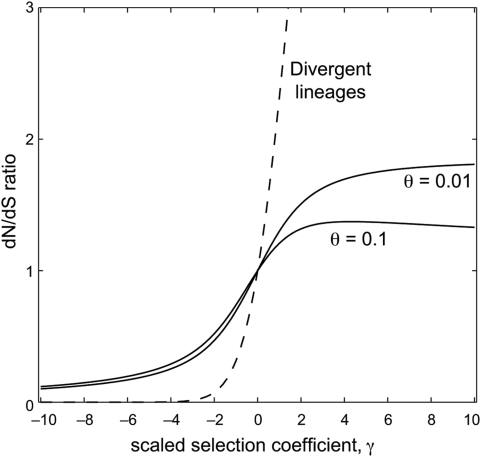
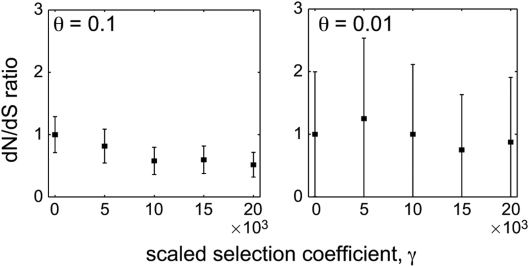
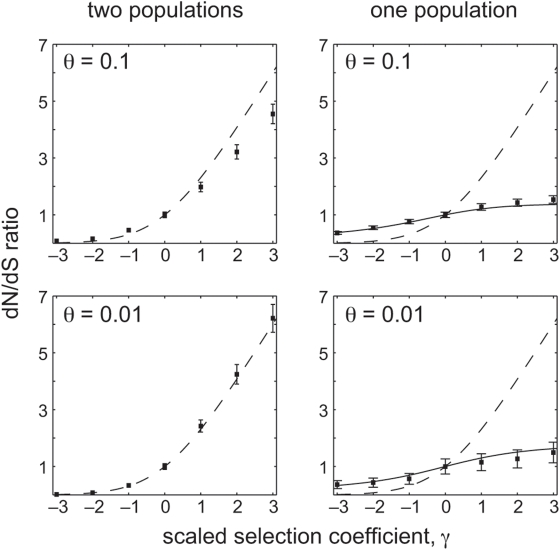
Evolutionary pressures on proteins are often quantified by the ratio of substitution rates at non-synonymous and synonymous sites. The dN/dS ratio was originally developed for application to distantly diverged sequences, the differences among which represent substitutions that have fixed along independent lineages. Nevertheless, the dN/dS measure is often applied to sequences sampled from a single population, the differences among which represent segregating polymorphisms. Here, we study the expected dN/dS ratio for samples drawn from a single population under selection, and we find that in this context, dN/dS is relatively insensitive to the selection coefficient. Moreover, the hallmark signature of positive selection over divergent lineages, dN/dS>1, is violated within a population. For population samples, the relationship between selection and dN/dS does not follow a monotonic function, and so it may be impossible to infer selection pressures from dN/dS. These results have significant implications for the interpretation of dN/dS measurements among population-genetic samples.
Overview
The claims and statistics of this paper haven’t been checked yet.
Free: it reads the open-access text and checks the first 5 claims that cite a source we can check. Create a free account to check every claim.
Integrity signals
Registry
Cites
Statistics
Figures
Verification
Claims the paper makes
The claims and statistics of this paper haven’t been checked yet.
Free: it reads the open-access text and checks the first 5 claims that cite a source we can check. Create a free account to check every claim.
Claims other papers make about this one
Each is checked against this paper’s own text: does it say what the citing paper says it does?
The check wasn’t confident either way, so it gives no verdict — never disputed.
In the citing paper
“This characteristic is consistent with the higher biodiversity observed in non-Westernized settings, where more heterogeneous dietary and environmental exposures may allow a broader range of accessory gene content to persist than is usually observed in genomes from industrialized populations [73-75] .”
From Genome-scale insights into the metabolic landscape and evolutionary development of Bifidobacterium bifidum (2026) · cites this paper as [73]
Experimental — accuracy not yet measured
Self-check
Percentages, sums and reported differences re-computed from the paper’s own numbers.
The self-check needs the paper’s full text.
Citations
Cites
MEGA4: Molecular Evolutionary Genetics Analysis (MEGA) Software Version 4.0
Tamura, K., Dudley, J., Nei, M., & Kumar, S. (2007) · Molecular Biology and Evolution · doi:10.1093/molbev/msm092 · Cited by 28,730 · cited 1×
“Theoretical work on the relationship between dN/dS and selection likewise assumes that sequences are sampled from independent, divergent species [3], as do computer packages used to estimate dN/dS from data [6,7].”
MethodStatistical method for testing the neutral mutation hypothesis by DNA polymorphism.
Tajima, F. (1989) · Genetics · doi:10.1093/genetics/123.3.585 · Cited by 13,941
PAML 4: Phylogenetic Analysis by Maximum Likelihood
Yang, Z. (2007) · Molecular Biology and Evolution · doi:10.1093/molbev/msm088 · Cited by 13,879 · cited 4×
“Theoretical work on the relationship between dN/dS and selection likewise assumes that sequences are sampled from independent, divergent species [3],as do computer packages used to estimate dN/dS from data [6, 7 ].”
MethodInfluentialEVOLUTION IN MENDELIAN POPULATIONS
Wright, S. (1931) · Genetics · doi:10.1093/genetics/16.2.97 · Cited by 8,916
Statistical tests of neutrality of mutations.
Fu, Y. X., & Li, W. H. (1993) · Genetics · doi:10.1093/genetics/133.3.693 · Cited by 4,034
Adaptive protein evolution at the Adh locus in Drosophila
McDonald, J. H., & Kreitman, M. (1991) · Nature · doi:10.1038/351652a0 · Cited by 3,283 · cited 1×
“geneticists [23,45].”
Codon-substitution models for heterogeneous selection pressure at amino acid sites
Yang, Z., Nielsen, R., Goldman, N., & Pedersen, A.-M. K. (2000) · Genetics · doi:10.1093/genetics/155.1.431 · Cited by 2,286
A codon-based model of nucleotide substitution for protein-coding DNA sequences.
(1994) · Molecular Biology and Evolution · doi:10.1093/oxfordjournals.molbev.a040153 · Cited by 1,960 · cited 20×
“We performed Wright-Fisher simulations of a population of constant size N evolving under positive or negative selection sensu Yang, in discrete time.”
BackgroundMethodInfluentialHitchhiking Under Positive Darwinian Selection
Fay, J. C., & Wu, C.-I. (2000) · Genetics · doi:10.1093/genetics/155.3.1405 · Cited by 1,819
Statistical methods for detecting molecular adaptation
Yang, Z., & Bielawski, J. P. (2000) · Trends in Ecology & Evolution · doi:10.1016/s0169-5347(00)01994-7 · Cited by 1,806 · cited 1×
“The instantaneous rate of change from codon i to codon j depends principally on the parameter v, defined as the relative rate of non-silent versus silent substitutions [2].”
Background
Cited by
Items 501–600 of 995
Gonçalves, V. R. M., Sobrinho, I. S., Malagó, W., Henrique‐Silva, F., & de Brito, R. A. (2013) · Insect Molecular Biology · doi:10.1111/imb.12045 · Cited by 10
“Because these analyses are inadequate for investigating short evolutionary branches (Kryazhimskiy & Plotkin, 2008), only one randomly sampled sequence from each species was considered for these tests, except when Anastrepha sequences were very divergent among themselves, in which case, we…”
BackgroundMagalis, B. R., Nolan, D. J., Autissier, P., Burdo, T. H., Williams, K. C., & Salemi, M. (2017) · Journal of Virology · doi:10.1128/jvi.01162-17 · Cited by 11
“The analysis was restricted to internal branches, which are assumed to capture at least one round of virus replication, to mitigate the biasing effects of transient deleterious mutations on the ratio of nonsynonymous to synonymous substitution rate estimates along terminal branches, where selection has not had time to…”
BackgroundPontremoli, C., Forni, D., Cagliani, R., & Sironi, M. (2018) · Infection Genetics and Evolution · doi:10.1016/j.meegid.2018.06.031 · Cited by 11
Signature patterns in region V4 of small ruminant lentivirus surface protein in sheep and goats
Méndez, A. S. G., Cerón-Téllez, F., Pérez, J., Rodríguez, H. A. M., García-Flores, M. M., & Álvarez, H. R. (2020) · Virus Research · doi:10.1016/j.virusres.2020.197900 · Cited by 12
Genetic variation and linkage disequilibrium in Bacillus anthracis
Zwick, M. E., Thomason, M. K., Chen, P. E., Johnson, H. R., Sozhamannan, S., Mateczun, A. J., & Read, T. D. (2011) · Scientific Reports · doi:10.1038/srep00169 · Cited by 11
“and that the use of this statistic in population-genetic samples is relatively insensitive to the strength of natural selectio”
BackgroundTracking Microbial Evolution in the Subseafloor Biosphere
Anderson, R. E. (2021) · mSystems · doi:10.1128/msystems.00731-21 · Cited by 11
“genes or populations are under positive or purifying selection (30), or whether they”
BackgroundEvolution of innate and adaptive immune genes in a non-model waterbird, the common tern
Minias, P., Drzewińska‐Chańko, J., & Włodarczyk, R. (2021) · Infection Genetics and Evolution · doi:10.1016/j.meegid.2021.105069 · Cited by 10
Shared Evolutionary Path in Social Microbiomes
Frazão, N., & Gordo, I. (2023) · Molecular Biology and Evolution · doi:10.1093/molbev/msad153 · Cited by 9
Wang, Y., Wang, Y., Wang, H., Ma, L., Eickhoff, S. B., Madsen, K. H., Chu, C., & Fan, L. (2024) · Cell Reports · doi:10.1016/j.celrep.2024.113770 · Cited by 10
Guo, M., Jin, Y., Wang, H., Zhang, X., & Wu, Y. (2024) · Veterinary Sciences · doi:10.3390/vetsci11050208 · Cited by 9
Reversions mask the contribution of adaptive evolution in microbiomes
Torrillo, P. A., & Lieberman, T. D. (2024) · eLife · doi:10.7554/elife.93146 · Cited by 9
De Novo Gene Emergence: Summary, Classification, and Challenges of Current Methods
Grandchamp, A., Aubel, M., Eicholt, L. A., Roginski, P., Luria, V., Karger, A., & Dohmen, E. (2025) · Genome Biology and Evolution · doi:10.1093/gbe/evaf197 · Cited by 9
“Moreover, ab initio and homology-based methods do not provide evidence of selection for the identified genes (Burge and Karlin 1997; Kryazhimskiy and Plotkin 2008).”
Rapid and convergent evolution in the Glioblastoma multiforme genome
Shpak, M., Goldberg, M. M., & Cowperthwaite, M. C. (2015) · Genomics · doi:10.1016/j.ygeno.2014.12.010 · Cited by 11
“see [24] for a critique of the use of dN/dS).”
BackgroundKnafler, G. J., Fidler, A. E., Jamieson, I. G., & Robertson, B. C. (2013) · Immunogenetics · doi:10.1007/s00251-013-0750-5 · Cited by 9
High Proportions of Deleterious Polymorphisms in Constrained Human Genes
Subramanian, S. (2010) · Molecular Biology and Evolution · doi:10.1093/molbev/msq287 · Cited by 9
“P in mitochondrial genes appears to be due to the presence of weakly deleterious mutations, which is expected under standard population genetics theories (Kimura 1983; Kryazhimskiy and Plotkin 2008).”
Sharma, A., Kaur, J., Lee, S., & Park, Y. (2017) · LWT · doi:10.1016/j.lwt.2017.08.016 · Cited by 9
Le, X. T., Pham, D. T., Pham, T. A., Tran, T. T., Thanh, K. H., Le, H. Q., & Út, V. N. (2019) · Fisheries and aquatic sciences · doi:10.1186/s41240-019-0132-5 · Cited by 9
Işıdan, H., Turan, T., Atasoy, M. O., & Çoşkun, A. (2021) · Archives of Virology · doi:10.1007/s00705-021-05086-y · Cited by 10
“However, multiple factors contribute to viral evolution; therefore, the dN/dS ratio calculation alone may not be sufficient to infer selection pressure [49].”
BackgroundCheng, D., Chiu, Y.-W., Huang, S.-W., Lien, Y.-Y., Chang, C., Tsai, H., Wang, Y., & Wang, J. (2022) · Viruses · doi:10.3390/v14102306 · Cited by 9
“org (accessed on 21 September 2022)” were performed to examine non-synonymous (dN) and synonymous (dS) substitution rates for different genotypes and the selection signature in the CVA16 VP1 gene [42].”
BackgroundThe evolutionary landscape of the Mycobacterium tuberculosis genome
Wang, T.-C., & Chen, F. (2012) · Gene · doi:10.1016/j.gene.2012.11.033 · Cited by 9
“It is known that synonymous substitutions may confer fitness effects by affecting the efficiency and/or accuracy of protein translation (Kryazhimskiy and Plotkin, 2008).”
BackgroundYampolsky, L. Y., & Bouzinier, M. (2014) · Biology Direct · doi:10.1186/1745-6150-9-2 · Cited by 11
“The faster evolving member of the most asymmetric pairs also had, on average, a significantly higher Ka/Ks ratio for segregating SNPs than its slower evolving counterpart, indicating either relaxed stabilising selection or positive selection acting on these loci (with caveats, [54]).”
BackgroundReding, C., Catalán, P., Jansen, G., Bergmiller, T., Wood, E., Rosenstiel, P. C., Schulenburg, H., Gudelj, I., & Beardmore, R. (2021) · Molecular Biology and Evolution · doi:10.1093/molbev/msab025 · Cited by 9
“We determined dN/dS data for SNPs in all populations but did not find it helpful for quantifying relationships between dose and ROA (Kryazhimskiy and Plotkin 2008).”
MethodSookpongthai, P., Utayopas, K., Sitthiyotha, T., Pengsakul, T., Kaewthamasorn, M., Wangkanont, K., Harnyuttanakorn, P., Chunsrivirot, S., & Pattaradilokrat, S. (2021) · Parasites & Vectors · doi:10.1186/s13071-021-05078-6 · Cited by 10
“The dN˗dS values were calculated to investigate the evidence of natural selection, where dN˗dS values > 0 imply a positive selection (selection favors an excess of non-synonymous mutations over synonymous mutations); dN˗dS values < 0 imply a purifying selection [52]; and no difference between dN and dS (dN = dS) impli…”
MethodRody, H. V. S., & de Oliveira, L. O. (2017) · Molecular Phylogenetics and Evolution · doi:10.1016/j.ympev.2017.12.003 · Cited by 9
Sharma, A., Kaur, J., Lee, S., & Park, Y. (2018) · Applied Microbiology and Biotechnology · doi:10.1007/s00253-018-8942-4 · Cited by 11
Natural selection acts on epigenetic marksPreprint
Boukas, L., Razi, A., Bjornsson, H. T., & Hansen, K. D. (2020) · bioRxiv (Cold Spring Harbor Laboratory) · doi:10.1101/2020.07.04.187880 · Cited by 9
“Therefore, because we are considering marks occurring at multiple locations throughout the genome, we hereafter neglect this epimutation rate, in analogy with the assumption underlying the standard test for coding sequences (Nielsen, Yang, 2003; Kryazhimskiy, Plotkin, 2008).”
ResultConcepts and methods for predicting viral evolutionPreprint
Meijers, M., Ruchnewitz, D., Eberhardt, J., Karmakar, M., Łuksza, M., & Lässig, M. (2024) · bioRxiv (Cold Spring Harbor Laboratory) · doi:10.1101/2024.03.19.585703 · Cited by 10
“Previous theoretical work has highlighted potential biases and inaccuracies in dN/dS estimates [79, 80, 81, 82, 83].”
Genetic heterogeneity in the Salmonella Typhi Vi capsule locus: a population genomic study from Fiji
Strobel, A. G., Hayes, A. J., Wirth, W., Mua, M., Saumalua, T., Cabenatabua, O., Soqo, V., Rosa, V., Wang, N., Lacey, J. A., et al. (2024) · Microbial Genomics · doi:10.1099/mgen.0.001288 · Cited by 11
“The overall low rates of synonymous mutations in the dataset prevented a model-informed dn/ds ratio to be inferred [41].”
Wang, Y., Cheng, L., Li, D., Lu, Y., Wang, C., Wang, Y., Gao, C., Wang, H., Erichsen, C. T., Vanduffel, W., et al. (2025) · The Innovation · doi:10.1016/j.xinn.2024.100755 · Cited by 20
Raghwani, J., Bhatt, S., & Pybus, O. G. (2016) · PLoS Computational Biology · doi:10.1371/journal.pcbi.1004694 · Cited by 8
“However, the interpretation of dN/dS ratios obtained from within-host viral populations are not straightforward due to the presence of transient polymorphisms [10, 11] and therefore alternative approaches to studying viral adaptation are valuable.”
BackgroundPearson, S. K., Bull, C. M., & Gardner, M. (2016) · Immunogenetics · doi:10.1007/s00251-016-0947-5 · Cited by 9
Qiao, J., Shao, Z., Wu, Y., Zeng, P., & Wang, T. (2022) · Journal of Translational Medicine · doi:10.1186/s12967-022-03637-8 · Cited by 10
“which included phyloP score [72], phastCons score [73], and dN/dS ratio [74].”
Lago, D. C., Nora, L. C., Hasselmann, M., & Hartfelder, K. (2023) · Scientific Reports · doi:10.1038/s41598-023-32898-6 · Cited by 8
Valim, H. F., Grande, F. D., Wong, E. L. Y., & Schmitt, I. (2023) · Molecular Ecology · doi:10.1111/mec.17252 · Cited by 8
“Some limitations have been elucidated for dN/dS approaches, particularly if the methods are applied to intra-specific or intra-population data (Kryazhimskiy & Plotkin, 2008 ).”
MethodFixation times of de novo and standing beneficial variants in subdivided populations
Sudbrack, V., & Mullon, C. (2024) · Genetics · doi:10.1093/genetics/iyae043 · Cited by 8
Shapiro, B. J., & Alm, E. J. (2009) · The ISME Journal · doi:10.1038/ismej.2009.51 · Cited by 10
ThedJ/dSRatio Test Reveals Hundreds of Novel Putative Cancer Drivers
Chen, H., Xing, K., & He, X. (2015) · Molecular Biology and Evolution · doi:10.1093/molbev/msv083 · Cited by 8
“…a population; specifically, false negative would be generated in the case of strong positive selection, because strong positive selection may lead to a rapid fixation of nonsynonymous polymorphisms and thus an underestimation of the nonsynonymous polymorphic level (Kryazhimskiy and Plotkin 2008).”
BackgroundA Comparison of Selective Pressures in Plant X-Linked and Autosomal Genes
Krasovec, M., Nevado, B., & Filatov, D. A. (2018) · Genes · doi:10.3390/genes9050234 · Cited by 9
“The non-synonymous divergence normalised by silent divergence (dN/dS) that is often used to analyse and compare selective pressures in protein-coding regions [65] was significantly higher in X-linked than autosomal genes (Student’s test, p < 0.”
BackgroundBiswas, S., Mondal, R., Srivastava, A., Trivedi, M., Singh, S. K., & Mishra, Y. (2022) · BMC Genomics · doi:10.1186/s12864-022-08708-0 · Cited by 8
“The dN/dS ratios of LLP genes and their orthologous pairs were calculated to detect evolutionary pressure acting on these genes (Additional File 11: Table S4) according to Kryazhimskiy and Plotkint, (2008) [53].”
MethodOf Mice, Whales, Jellyfish and Men: In Pursuit of Increased Longevity
Guest, P. C. (2019) · Advances in experimental medicine and biology · doi:10.1007/978-3-030-25650-0_1 · Cited by 8
Evolutionary dynamics of sex-biased genes expressed in cricket brains and gonadsPreprint
Whittle, C. A., Kulkarni, A., & Extavour, C. G. M. (2020) · bioRxiv (Cold Spring Harbor Laboratory) · doi:10.1101/2020.07.07.192039 · Cited by 10
Extensive hybridisation throughout clownfishes evolutionary historyPreprint
Schmid, S., Micheli, B., Cortesi, F., Donati, G., & Salamin, N. (2022) · bioRxiv (Cold Spring Harbor Laboratory) · doi:10.1101/2022.07.08.499304 · Cited by 9
“A dN/dS equal to 1 means that the partition is likely evolving neutrally (Kryazhimskiy and Plotkin 2008).”
BackgroundGenetic diversity of the major cat allergen, Fel d 1
Cleveland, C. W., Davis, B. W., Khatri, K., Pomés, A., Chapman, M. D., & Brackett, N. F. (2024) · PNAS Nexus · doi:10.1093/pnasnexus/pgae447 · Cited by 7
Wu, G. C., Joron, M., & Jiggins, C. D. (2010) · BMC Evolutionary Biology · doi:10.1186/1471-2148-10-368 · Cited by 8
“Thus, what tests of positive selection assume to be substitutions reflecting fixed changes may actually be “pre-fixations” [34].”
BackgroundMinias, P., Podlaszczuk, P., Indykiewicz, P., Ledwoń, M., Nowakowski, J. J., Chyb, A., & Janiszewski, T. (2023) · Heredity · doi:10.1038/s41437-023-00645-2 · Cited by 8
“segregating within a single population (Kryazhimskiy and Plotkin 2008).”
Selection on synonymous codon usage in soybean (Glycine max) WRKY genes
Sinha, K., Jana, S., Pramanik, P., & Bera, B. (2024) · Scientific Reports · doi:10.1038/s41598-024-77156-5 · Cited by 10
“Most GmWRKY genes were located on Chromosome 6, with sparser distributions on Chromosomes 11, 12, and 20 14 .”
BackgroundGomathinayagam, S., Kanagalingam, S., Chandrasekaran, S., Thirumoorthy, K., & Muthukaliannan, G. K. (2024) · Environmental Microbiome · doi:10.1186/s40793-024-00652-8 · Cited by 7
“Similar sequences typically exhibit lower substitution rates, making estimates derived from such low rates statistically unreliable [31, 32].”
The Genetic Background Effect on Domesticated Species: A Mouse Evolutionary Perspective
Reuveni, E. (2011) · The Scientific World JOURNAL · doi:10.1100/tsw.2011.32 · Cited by 9
Cerón-Téllez, F., Méndez, A. S. G., Pérez, J., Rubio, E. L., & Álvarez, H. R. (2020) · Virus Research · doi:10.1016/j.virusres.2020.197866 · Cited by 7
Genome-wide TIFY family in Arachis hypogaea in the perspective of legume JAZs
Sen, S. (2022) · Journal of Crop Science and Biotechnology · doi:10.1007/s12892-022-00145-5 · Cited by 7
“Therefore, computation of the dN/dS ratio of intra-specific population often shows transient polymorphisms, not substitutions (Kryazhimskiy and Plotkin 2008).”
BackgroundPetersen, R. M., Bergey, C. M., Roos, C., & Higham, J. P. (2022) · Ecology and Evolution · doi:10.1002/ece3.9346 · Cited by 7
“The dN/dS method was originally proposed to identify selective pressures in distantly diverged sequences of independent lineages, and is less sensitive to identifying selective pressures in sequences derived from individuals within the same population (Kimura, 1979; Kryazhimskiy & Plotkin, 2008).”
MethodA possible genomic footprint of polygenic adaptation on population divergence in seed beetles?
Arnqvist, G., & Sayadi, A. (2022) · Ecology and Evolution · doi:10.1002/ece3.9440 · Cited by 7
“Genes showing relatively high π N/ π S ratios in both populations, consistent with lower selective constraint (Kryazhimskiy & Plotkin, 2008), were those that contributed most to overall absolute differentiation.”
Ilyasov, R. A., Rašić, S. B., Takahashi, J., Даниленко, В. Н., Proshchаlykin, M. Y., LELEJ, A. S., Sattarov, V. N., Pham, H.-T., Raffiudin, R., & Kwon, H. W. (2022) · Insects · doi:10.3390/insects13111053 · Cited by 7
“For the genes under positive selection, dN/dS > 1 [23].”
BackgroundLiu, B., Li, S.-Y., Yan, Q., Zhu, H., & Liu, G. (2023) · Gene · doi:10.1016/j.gene.2023.147287 · Cited by 7
Serological and Molecular Characterization of Small Ruminant Lentiviruses in Morocco
Colitti, B., Daif, S., Choukri, I., Scalas, D., Jerre, A., Berbri, I. E., Fihri, O. F., & Rosati, S. (2024) · Animals · doi:10.3390/ani14040550 · Cited by 7
“Moreover, considering the selection pressure for this region, the dN/dS ratio, which estimates the relative rate of selection versus neutral changes across protein-coding genes [46], confirmed the impact of purifying selection on this region as previously reported [16,47,48].”
ResultYang, L., Guo, Y., Yang, H., Li, S., Zhang, Y., Gao, C. D., Wei, T., & Hao, L. (2024) · Frontiers in Microbiology · doi:10.3389/fmicb.2024.1361883 · Cited by 8
Guo, Z., Gao, Y., Chen, Y., Zhan, L., Storey, K. B., Yu, D., & Zhang, J. (2024) · Insects · doi:10.3390/insects15050357 · Cited by 7
Phylogeny and Molecular Evolution Analysis of PIN-FORMED 1 in Angiosperm
Wang, P., Cheng, T., Wu, S., Zhao, F., Wang, G., Yang, L., Lu, M., Chen, J., & Shi, J. (2014) · PLoS ONE · doi:10.1371/journal.pone.0089289 · Cited by 7
“1 were the indicator for purifying selection, neutral evolution, and positive selection, respectively[33,34].”
BackgroundHou, L., Jiang, B., Chen, M., Ng, J., & Hurley, C. K. (2011) · Immunogenetics · doi:10.1007/s00251-011-0536-6 · Cited by 8
“While the synonymous to nonsynonymous ratios can be used to estimate evolutionary pressures on genes, because our analysis was performed only within human alleles, there are limits to inferring selection from the ratios presented in this study (Kryazhimskiy and Plotkin 2008).”
Gowane, G. R., Akram, N., Prince, L. L. L., Prakash, V., & Kumar, R. (2017) · Animal Biotechnology · doi:10.1080/10495398.2017.1285307 · Cited by 7
“selection pressure from the dN/dS measurement (35).”
Vasemägi, A., Sulku, J., Bruneaux, M., Thalmann, O., Mäkinen, H., & Ozerov, M. Y. (2017) · Ecology and Evolution · doi:10.1002/ece3.2989 · Cited by 7
“For example, Kryazhimskiy and Plotkin (2008) S5), which may further complicate the interpretation of the ratio of nonsynonymous to synonymous variants (Kryazhimskiy & Plotkin, 2008).”
Stefańczyk, E., Brylińska, M., Brurberg, M. B., Nærstad, R., Elameen, A., Sobkowiak, S., & Śliwka, J. (2018) · Plant Pathology · doi:10.1111/ppa.12875 · Cited by 7
Structures and functions linked to genome-wide adaptation of human influenza A viruses
Klingen, T. R., Loers, J. U., Stanelle‐Bertram, S., Gabriel, G., & McHardy, A. C. (2019) · Scientific Reports · doi:10.1038/s41598-019-42614-y · Cited by 9
CRBHits: From Conditional Reciprocal Best Hits to Codon Alignments and Ka/Ks in R
Ullrich, K. K. (2020) · The Journal of Open Source Software · doi:10.21105/joss.02424 · Cited by 7
“…sequence analysis and synteny Calculating synonymous (Ks) and nonsynonymous substitutions (Ka) per orthologous sequence pair is a common task for evolutionary biologists, since its ratio Ka/Ks can be used as an indicator of selective pressure acting on a protein (Kryazhimskiy & Plotkin, 2008).”
BackgroundSafdari, P., Höckerstedt, L., Brosché, M., Salojärvi, J., & Laine, A. (2021) · Frontiers in Plant Science · doi:10.3389/fpls.2021.675760 · Cited by 8
“In order to investigate potential selection pressure by a complementary method, considering the shortcomings of within population dN/dS analysis (Kryazhimskiy and Plotkin, 2008), we also calculated Fay and Wu’s H statistics for the NBARC domains.”
MethodForni, G., Ruggieri, A. A., Piccinini, G., & Luchetti, A. (2021) · Ecology and Evolution · doi:10.1002/ece3.7959 · Cited by 8
“Despite the fact that some of these assumption have been challenged (Davydov et al., 2019; He et al., 2020; Kryazhimskiy & Plotkin, 2008), analyses based on codon models have proved themselves as key approaches in comparative genomics, such as investigating positive selection connected to…”
BackgroundVlček, J., Miláček, M., Vinkler, M., & Štefka, J. (2022) · Journal of Evolutionary Biology · doi:10.1111/jeb.14121 · Cited by 7
“Despite potential biases inherent in any of the dN/dS methods (Kryazhimskiy & Plotkin, 2008; Mugal et al., 2014), we conclude that the LBRs of the three TLRs studied were substantially shaped by purifying selection.”
MethodRamaiah, A., Nayak, S., Rakshit, S., Manson, A. L., Abeel, T., Shanmugam, S., Sahoo, P. N., John, A. J. U. K., Sundaramurthi, J. C., Narayanan, S., et al. (2019) · Frontiers in Immunology · doi:10.3389/fimmu.2019.00195 · Cited by 10
“synonymous substitution changes (dn/ds) are not deemed appropriate for strain level analysis within a species, though suitable for inter-species level comparisons (72).”
BackgroundVillafana, R. T., & Rampersad, S. N. (2020) · Pathogens · doi:10.3390/pathogens9030175 · Cited by 7
“46), which suggested that the sequences were under positive selection [52].”
BackgroundCastro‐Severyn, J., Pardo-Esté, C., Araya‐Durán, I., Gariazzo, V., Cabezas, C., Valdés, J., Remonsellez, F., & Saavedra, C. P. (2022) · Frontiers in Microbiology · doi:10.3389/fmicb.2022.1047283 · Cited by 9
“The dN/dS ratio remains one of the most popular and reliable measures of evolutionary pressures on protein-coding regions, with a simple and intuitive interpretation of dN/dS < 1 as negative selection, dN/dS = 1 as neutrality, and dN/ dS > 1 as positive selection (Kryazhimskiy and Plotkin, 2008).”
BackgroundWentzel, J. F., Yuan, L., Rao, S., van Dijk, A. A., & O’Neill, H. G. (2013) · Infection Genetics and Evolution · doi:10.1016/j.meegid.2013.09.007 · Cited by 7
The Rate of Molecular Evolution When Mutation May Not Be WeakPreprint
de Koning, A. P. J., & Sanctis, B. D. (2018) · bioRxiv (Cold Spring Harbor Laboratory) · doi:10.1101/259507 · Cited by 8
Genome-wide relaxation of selection and the evolution of the island syndrome in Orkney voles
Wang, X., & Heckel, G. (2024) · Genome Research · doi:10.1101/gr.278487.123 · Cited by 7
Genome-Wide Variation Profile of the Genus Tobamovirus
Gomaa, A. E., & García-Ruíz, H. (2025) · Viruses · doi:10.3390/v17091284 · Cited by 6
“The expected and observed numbers of sites under selection were calculated using the model previously described in [31,37,38].”
Transcription start sites experience a high influx of heritable variants fueled by early development
Guzmán, M. C., Castellano, D., Colomé, C. S., Seplyarskiy, V. B., & Weghorn, D. (2025) · Nature Communications · doi:10.1038/s41467-025-66201-0 · Cited by 6
“Note that these dN/dS estimates are likely underestimating the true strength of selection, as we are considering segregating variants 66 .”
Host range expansion of asexual parasite can be explained by loss of adaptions in Muller’s Ratchet
Tichkule, S., van Oosterhout, C., Cacciò, S. M., Weisz, F., Balan, B., Nohýnková, E., Naung, M. T., Ansell, B. R. E., Emery‐Corbin, S. J., Baker, L., et al. (2025) · Nature Communications · doi:10.1038/s41467-025-65843-4 · Cited by 7
Selection and genetic diversity in the major histocompatibility complex genes of wolves and dogs
Niskanen, A. K. (2014) · Cited by 6
Evolutionary diversification of ancestral genes across vertebrates and insects
Mantica, F., & Irimia, M. (2025) · Genome biology · doi:10.1186/s13059-025-03699-z · Cited by 6
Reads meet rotamers: structural biology in the age of deep sequencing
Sethi, A., Clarke, D., Chen, J., Kumar, S., Galeev, T. R., Regan, L., & Gerstein, M. (2015) · Current Opinion in Structural Biology · doi:10.1016/j.sbi.2015.11.003 · Cited by 6
“The ratio of rates of nonsynonymous to synonymous variants (dN/dS) is commonly utilized to characterize the selection pressure on the coding regions of the genome (Figure 2) [15].”
BackgroundGenetic plasticity in RNA2 is associated with pathogenic diversification of broad bean wilt virus 2
Kim, M., Kwak, H.-R., Choi, B., Kwon, S.-J., & Seo, J. (2021) · Virus Research · doi:10.1016/j.virusres.2021.198533 · Cited by 6
Next-generation development and application of codon model in evolution
Gupta, M. K., & Vadde, R. (2023) · Frontiers in Genetics · doi:10.3389/fgene.2023.1091575 · Cited by 8
“Thus, two individuals from the same population under strong positive selection are likely to contain identical alleles at each selected site, generating ω< 1 (Kryazhimskiy and Plotkin, 2008).”
BackgroundSoni, V., Terbot, J. W., & Jensen, J. D. (2024) · Nature Communications · doi:10.1038/s41467-024-46261-4 · Cited by 6
“11,12), but they will strongly impact polymorphism-based comparisons such as the π N (cid:1) π S of Gu et al. Forthesereasons,onemustaccountforthemyriadofevolutionary forces shaping observed levels of within-patient nucleotide variation whenperformingpopulationgenomicinferenceofthissort 13,14 .”
BackgroundElkin, M. E., & Zhu, X. (2025) · Communications Biology · doi:10.1038/s42003-024-07262-7 · Cited by 7
“Synonymous mutations do not alter the amino acid sequence and are largely presumed to be neutral mutations, while non-synonymousmutations(whichalteraminoacidsequences)mayexperience selection 9 .”
Time-dependent selection pressure on two arthropod-borne RNA viruses in the same serogroup
Padhi, A., & Ma, L. (2015) · Infection Genetics and Evolution · doi:10.1016/j.meegid.2015.03.019 · Cited by 6
Estimation of universal and taxon-specific parameters of prokaryotic genome evolution
Sela, I., Wolf, Y. I., & Koonin, E. V. (2018) · PLoS ONE · doi:10.1371/journal.pone.0195571 · Cited by 6
“The effective population size NNee for each cluster is 103 deduced from the typical dNN dSS ⁄ value, using the approach developed by Kryazhimskiy and 104 Plotkin (Kryazhimskiy and Plotkin, 2008).”
MethodDong, C., Duan, X., Laghari, M. Y., Zhang, M., Ma, X., Chen, B., Li, X., & Xu, P. (2020) · Marine Biotechnology · doi:10.1007/s10126-020-09946-7 · Cited by 6
Naeem, A., Hamed, M. E., Alghoribi, M. F., Aljabr, W. A., Alsaran, H., Enani, M. A., & Alosaimi, B. (2020) · Viruses · doi:10.3390/v12050502 · Cited by 8
“The S gene was expected to be under selection pressure to escape the host immune responses; therefore, the rate of change was determined byω values where ω < 1 indicated the presence of negative or purifying selection, neutral selection pressure was indicated by ω = 1, and positive or diversifying selection was shown…”
BackgroundYi, X., Donner, D. M., Marquardt, P. E., Palmer, J. M., Jusino, M. A., Frair, J. L., Lindner, D. L., & Latch, E. K. (2020) · Ecology and Evolution · doi:10.1002/ece3.6662 · Cited by 6
“…dS ratio was probably due to the lack of power in our tests using samples from genetically admixed populations, in which case the dN/dS ratio mainly reflects short-term polymorphism segregation rather than long-term substitution during evolution (Kryazhimskiy & Plotkin, 2008; Richman et al., 2010).”
BackgroundMachuca, N. M., Pérez, J., Méndez, A. S. G., García-Camacho, A. L., Marin‐Flamand, E., & Álvarez, H. R. (2021) · Archives of Virology · doi:10.1007/s00705-021-05252-2 · Cited by 6
Mamathashree, M. N., Puttahonnappa, S. K., Indrabalan, U. B., Krishnamoorthy, P., Jacob, S. S., Subramaniam, S., Patil, S. S., Kempanna, K. S., & Goroshi, S. (2022) · Acta Tropica · doi:10.1016/j.actatropica.2022.106674 · Cited by 6
Li, N.-K., Corander, J., Grad, Y. H., & Chang, H. (2022) · Virus Evolution · doi:10.1093/ve/veac108 · Cited by 7
Zare, T., Paril, J. F., Barnett, E. M., Kaur, P., Appels, R., Ebert, B., Roessner, U., & Fournier‐Level, A. (2024) · The Plant Genome · doi:10.1002/tpg2.20430 · Cited by 6
“On the other hand, ShSAD orthologs unique to S. hispanica ( ShSAD8 , ShSAD9 , and ShSAD10 ) show diverging non-synonymous mutations and increased rate of substitution at specific sites (Kryazhimskiy & Plotkin, 2008) while showing evidence of purifying selection elsewhere.”
BackgroundMean Protein Evolutionary Distance: A Method for Comparative Protein Evolution and Its Application
Wise, M. J. (2013) · PLoS ONE · doi:10.1371/journal.pone.0061276 · Cited by 6
“1 or less , placing them in the range – according to Kryazhimskiy and Plotkin ( 2008 ) [ 11 ] – where strong purifying selection can be assumed , justifying the assumption that the evolution of proteins , at least for these viruses , is tightly constrained .”
InfluentialMitochondrial DNA hypervariable region 1 diversity in Nigerian goats
Okpeku, M., PETERS, S. O., Imumorin, I. G., Caires, K. C., Sharma, V. K., Wheto, M., Tamang, R., ADENAIKE, A. S., Ozoje, M. O., & Thangaraj, K. (2016) · Animal Genetic Resources/Ressources génétiques animales/Recursos genéticos animales · doi:10.1017/s2078633616000102 · Cited by 8
Mishra, R., & Patil, B. L. (2018) · Genome Announcements · doi:10.1128/genomea.00437-18 · Cited by 6
“Later, degenerate primers were designed at conserved regions of PRSV, and the entire PRSV-Meghalaya genome was real-time PCR (RT-PCR) amplified as 5 segments of 1.8 to 2.5 kb in size.”
BackgroundInfluentialİlhan, E. (2018) · Applied Ecology and Environmental Research · doi:10.15666/aeer/1605_54675480 · Cited by 7
“This ratio gives a worthwhile information about the selective evolutionary pressures that are acting on that gene (Yang and Swanson, 2002; Kryazhimskiy and Plotkin, 2008).”
BackgroundNonsynonymous Polymorphism Counts in Bacterial Genomes: a Comparative Examination
Loo, S. L., Ong, A., Kyaw, W., Thibaut, L. M., Lan, R., & Tanaka, M. M. (2020) · Applied and Environmental Microbiology · doi:10.1128/aem.02002-20 · Cited by 6
“Since SNPs, by definition, are not fixed, polymorphisms found in outbreaks and serial isolates are transient and, therefore, not well modeled as substitution events; their inclusion interferes with the estimation of substitution rates (21–23).”
BackgroundResultInfluentialSite-Specific Amino Acid Distributions Follow a Universal Shape
Johnson, M. M., & Wilke, C. O. (2020) · Journal of Molecular Evolution · doi:10.1007/s00239-020-09976-8 · Cited by 6
“…of protein evolution that require only a few parameters, such as dN/dS models (Goldman and Yang, 1994; Kimura, 1977; Yang and Bielawski, 2000; Kryazhimskiy and Plotkin, 2008), provide aggregate information about how sites have changed but capture little information about the distribution of…”
BackgroundDifferential Selection on Caste-Associated Genes in a Subterranean Termite
Radford, J. M., Chen, D., Chernyshova, A. M., Taylor, C., Guoth, A. W., Wu, T., Hill, K. A., & Thompson, G. (2022) · Insects · doi:10.3390/insects13030224 · Cited by 6
“Our use of this estimate here may therefore differ from its initially intended use and violate some of its assumptions regarding the nature of mutations [53], which in our case are SNVs.”
MethodMaiti, A. K. (2022) · Virus Research · doi:10.1016/j.virusres.2022.198712 · Cited by 6
“The purifying selection often could be a force for viral evolution as they proceed towards fixation by deleting the nonsynonymous and deleterious mutations (Kryazhimskiy and Plotkin 2008; Lin et al., 2019) and, it appears that SARS-CoV2 is proceeding such evolutionary trajectories towards diversifying selection.”
Metadata
- Authors
- Kryazhimskiy, S., & Plotkin, J. B.
- Affiliations
- University of Pennsylvania (US)
- Corresponding author
- Plotkin, Joshua B.
- Venue
- PLoS Genetics
- Publisher
- Public Library of Science (PLoS)
- Published
- 2008-12-12
- Volume
- 4
- Issue
- 12
- Pages
- e1000304
- ISSN
- 1553-7390 (ISSN-L)
- 1553-7404
- PMC
- PMC2596312
- OpenAlex
- W2045641296
- Cited by
- 962
- References
- 64
- Citations by year
- 2026: 55 · 2025: 60 · 2024: 74 · 2023: 69 · 2022: 85 · 2021: 80 · 2020: 70 · 2019: 48 · 2018: 53 · 2017: 45 · 2016: 51 · 2015: 57 · 2014: 55 · 2013: 35 · 2012: 45
- FWCI
- 15.24
- Type
- journal article
- Language
- en
- Open access
- gold
- doi.org
- Locations
- PLoS Genetics (publishedVersion, cc-by)
- PubMed Central (publishedVersion, cc-by)
- PubMed (publishedVersion)
- RePEc: Research Papers in Economics (submittedVersion)
- DOAJ (DOAJ: Directory of Open Access Journals) (submittedVersion, cc-by-sa)
- Figshare (submittedVersion, cc-by)
- Funders
- Burroughs Wellcome Fund
- James S. McDonnell Foundation
- University of Pennsylvania
- Defense Advanced Research Projects Agency
- Advanced Research Projects Agency
- Topics
- Life Sciences › Biochemistry, Genetics and Molecular Biology › Genetics › Evolution and Genetic Dynamics
- Life Sciences › Biochemistry, Genetics and Molecular Biology › Molecular Biology › Genomics and Phylogenetic Studies
- Life Sciences › Biochemistry, Genetics and Molecular Biology › Genetics › Genetic diversity and population structure
- Keywords
- dN/dS ratio, nonsynonymous substitution rate, synonymous substitution rate, positive selection, selection coefficients, population genetics, protein evolution, selection signatures
- MeSH terms
- Genetics, Population, Models, Genetic, Proteins, Selection, Genetic, Genetic Variation, Models, Statistical, Evolution, Molecular, Amino Acid Substitution
About these checks
Registry, retraction, Cites and statistics results are computed, not judged, with one exception: a printed reference that no index lists is read once by a model before it counts as a citation error. Claims are extracted by a model and kept only when their quote appears verbatim in the text; each cited source is then checked, with a model’s help, for whether it says what the claim relies on. Those verdicts can be wrong — read the claim’s quote and the cited source before relying on one.
Statistics and arithmetic are recomputed, not judged.
Confidence bands are shown only for fields calibrated on our annotated test set. None is calibrated yet, so no band is shown.
What counts as a claim ›How we measure confidence ›How we check this ›
Are you an author, or do you see a problem with this page? Request a review
Data sources
Bibliographic data: Semantic Scholar, OpenAlex, Crossref.
Contains information from the Semantic Scholar Academic Graph Datasets, made available under the ODC Attribution License (ODC-BY 1.0).
Semantic Scholar’s data is described in: Kinney, R., et al. (2023). The Semantic Scholar Open Data Platform. arXiv:2301.10140.
