

The DOI matches its Crossref record; 76 of the 77 references it cites were found in a registry or an index.
Ablating Adult Neurogenesis in the Rat Has No Effect on Spatial Processing: Evidence from a Novel Pharmacogenetic Model
Open accessAbstract
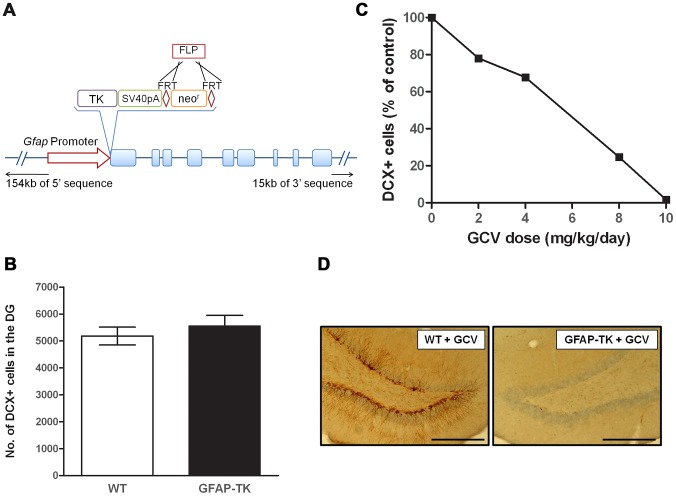
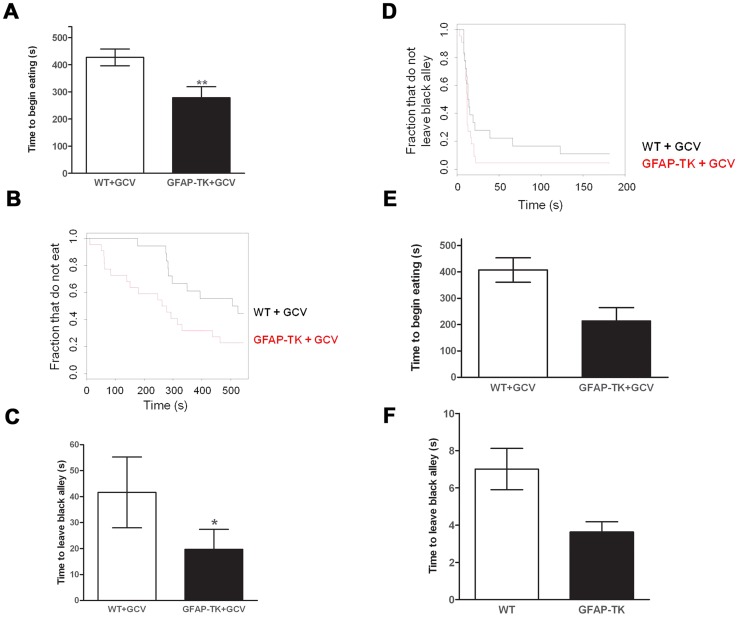
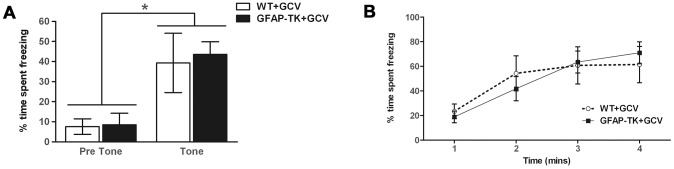
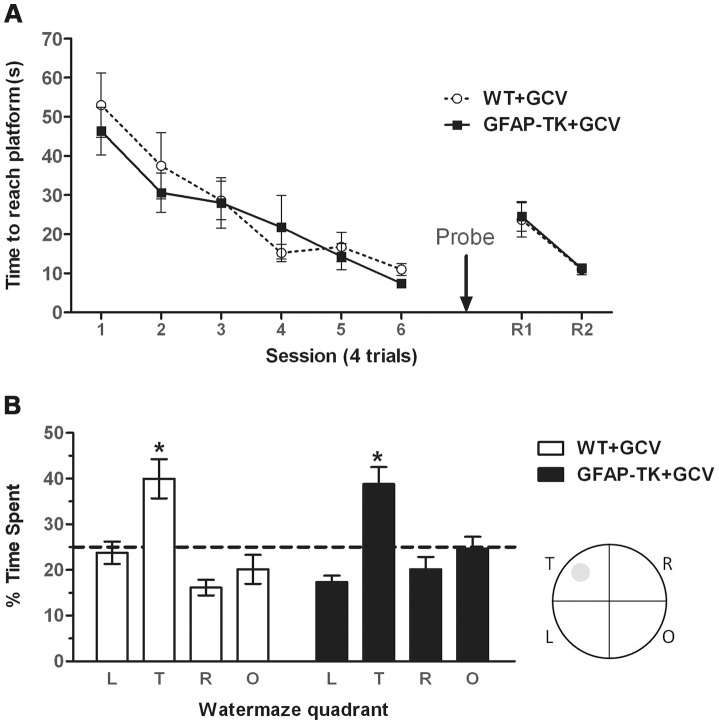
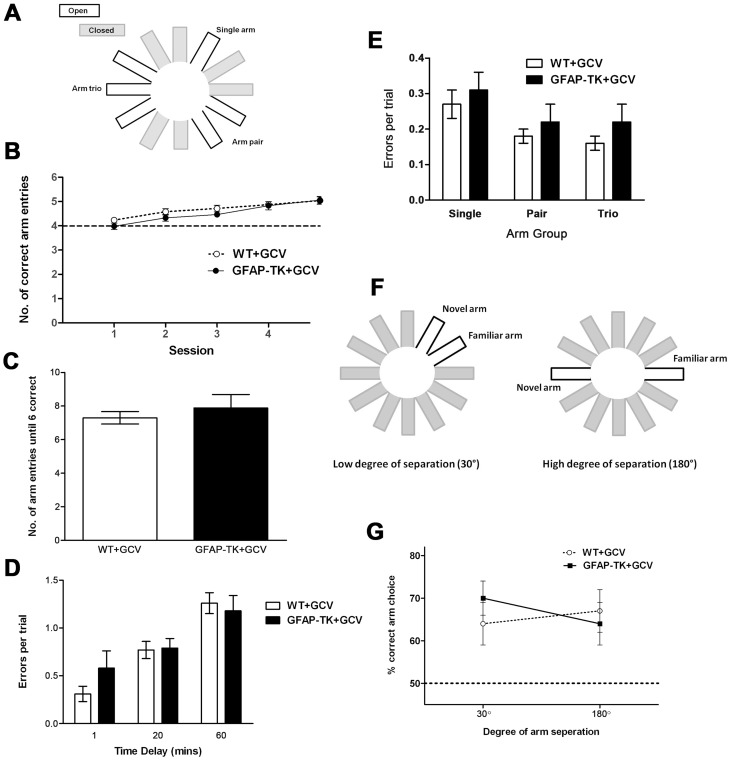
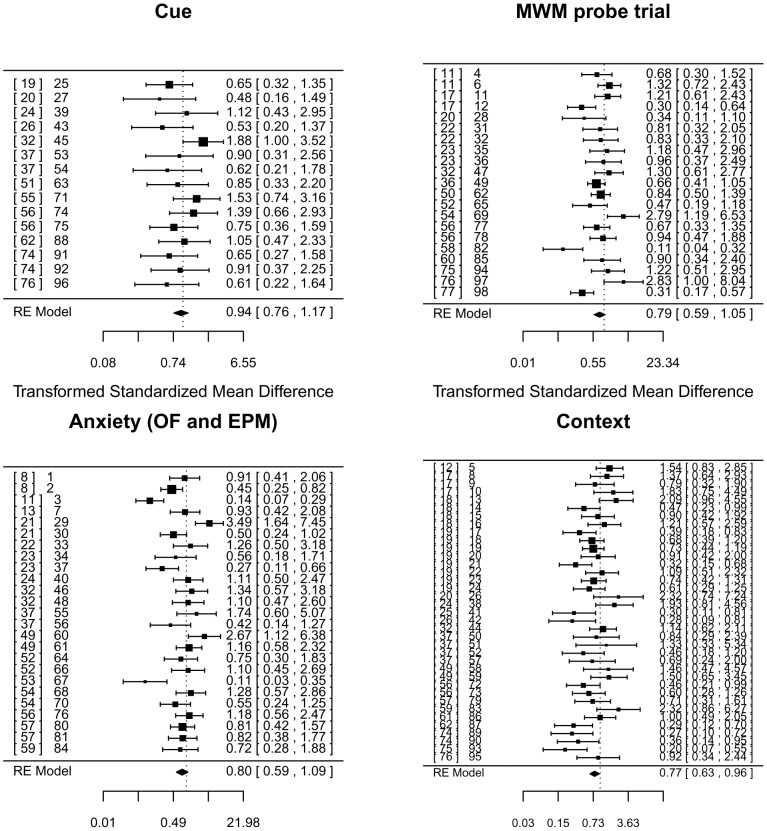
The function of adult neurogenesis in the rodent brain remains unclear. Ablation of adult born neurons has yielded conflicting results about emotional and cognitive impairments. One hypothesis is that adult neurogenesis in the hippocampus enables spatial pattern separation, allowing animals to distinguish between similar stimuli. We investigated whether spatial pattern separation and other putative hippocampal functions of adult neurogenesis were altered in a novel genetic model of neurogenesis ablation in the rat. In rats engineered to express thymidine kinase (TK) from a promoter of the rat glial fibrillary acidic protein (GFAP), ganciclovir treatment reduced new neurons by 98%. GFAP-TK rats showed no significant difference from controls in spatial pattern separation on the radial maze, spatial learning in the water maze, contextual or cued fear conditioning. Meta-analysis of all published studies found no significant effects for ablation of adult neurogenesis on spatial memory, cue conditioning or ethological measures of anxiety. An effect on contextual freezing was significant at a threshold of 5% (P = 0.04), but not at a threshold corrected for multiple testing. The meta-analysis revealed remarkably high levels of heterogeneity among studies of hippocampal function. The source of this heterogeneity remains unclear and poses a challenge for studies of the function of adult neurogenesis.
Overview
The claims and statistics of this paper haven’t been checked yet.
Run the check — free, no account needed. It reads the open-access text and checks the sources it cites.
Integrity signals
Registry
Cites
Statistics
Figures
Verification
Claims the paper makes
The claims and statistics of this paper haven’t been checked yet.
Run the check — free, no account needed. It reads the open-access text and checks the sources it cites.
Claims other papers make about this one
Each is checked against this paper’s own text: does it say what the citing paper says it does?
In the citing paper
“On the other hand, contradictory studies have found either no effect of reduced neurogenesis on hippocampal cognition (Groves et al., 2013; Saxe et al., 2006; Shors et al., 2002) or only on certain types of hippocampal cognitive tests (Shors et al., 2002). One study has even found that the absence of new neurons improves cognitive function (Saxe et al., 2007).”
From Adult neurogenesis, glia, and the extracellular matrix (2019) · cites this paper as Groves et al., 2013
Self-check
Percentages, sums and reported differences re-computed from the paper’s own numbers.
The self-check needs the paper’s full text.
Citations
Cites
Conducting Meta-Analyses in R with the metafor Package
Viechtbauer, W. (2010) · Journal of Statistical Software · doi:10.18637/jss.v036.i03 · Cited by 20,464
Requirement of hippocampal neurogenesis for the behavioral effects of antidepressants
Santarelli, L., Saxe, M., Gross, C., Surget, A., Battaglia, F., Dulawa, S., Weisstaub, N., Lee, J., Duman, R., Arancio, O., et al. (2003) · Science · doi:10.1126/science.1083328 · Cited by 4,321
Differential contribution of amygdala and hippocampus to cued and contextual fear conditioning.
Phillips, R. G., & LeDoux, J. E. (1992) · Behavioral Neuroscience · doi:10.1037/0735-7044.106.2.274 · Cited by 3,292
Kuhn, H., Dickinson-Anson, H., & Gage, F. (1996) · The Journal of Neuroscience · doi:10.1523/jneurosci.16-06-02027.1996 · Cited by 3,139
Functional neurogenesis in the adult hippocampus
van Praag, H., Schinder, A. F., Christie, B. R., Toni, N., Palmer, T. D., & Gage, F. H. (2002) · Nature · doi:10.1038/4151030a · Cited by 2,853
A gene expression atlas of the central nervous system based on bacterial artificial chromosomes
Gong, S., Zheng, C., Doughty, M. L., Losos, K., Didkovsky, N., Schambra, U. B., Nowak, N. J., Joyner, A., Leblanc, G., Hatten, M. E., et al. (2003) · Nature · doi:10.1038/nature02033 · Cited by 2,108
Remembrance of places passed: Spatial memory in rats.
Olton, D. S., & Samuelson, R. J. (1976) · Journal of Experimental Psychology Animal Behavior Processes · doi:10.1037/0097-7403.2.2.97 · Cited by 1,993
A Functional Role for Adult Hippocampal Neurogenesis in Spatial Pattern Separation
Clelland, C. D., Choi, M., Romberg, C., Clemenson, G. D., Fragniere, A., Tyers, P., Jessberger, S., Saksida, L. M., Barker, R. A., Gage, F. H., et al. (2009) · Science · doi:10.1126/science.1173215 · Cited by 1,642
Pattern Separation in the Dentate Gyrus and CA3 of the Hippocampus
Leutgeb, J. K., Leutgeb, S., Moser, M.-B., & Moser, E. I. (2007) · Science · doi:10.1126/science.1135801 · Cited by 1,601 · cited 1×
“Pattern separation is the ability to distinguish between similar, overlapping inputs [33,34].”
BackgroundIncreasing adult hippocampal neurogenesis is sufficient to improve pattern separation
Sahay, A., Scobie, K. N., Hill, A. S., O'Carroll, C. M., Kheirbek, M. A., Burghardt, N. S., Fenton, A. A., Dranovsky, A., & Hen, R. (2011) · Nature · doi:10.1038/nature09817 · Cited by 1,567
Adult hippocampal neurogenesis buffers stress responses and depressive behaviour
Snyder, J. S., Soumier, A., Brewer, M., Pickel, J., & Cameron, H. A. (2011) · Nature · doi:10.1038/nature10287 · Cited by 1,473
Irradiation induces neural precursor-cell dysfunction
Monje, M. L., Mizumatsu, S., Fike, J. R., & Palmer, T. D. (2002) · Nature Medicine · doi:10.1038/nm749 · Cited by 1,271
David, D. J., Samuels, B. A., Rainer, Q., Wang, J.-W., Marsteller, D., Mendez, I., Drew, M., Craig, D. A., Guiard, B. P., Guilloux, J.-P., et al. (2009) · Neuron · doi:10.1016/j.neuron.2009.04.017 · Cited by 1,267
Bush, T. G., Puvanachandra, N., Horner, C. H., Polito, A., Ostenfeld, T., Svendsen, C. N., Mucke, L., Johnson, M. H., & Sofroniew, M. V. (1999) · Neuron · doi:10.1016/s0896-6273(00)80781-3 · Cited by 1,116
Roles of continuous neurogenesis in the structural and functional integrity of the adult forebrain
Imayoshi, I., Sakamoto, M., Ohtsuka, T., Takao, K., Miyakawa, T., Yamaguchi, M., Mori, K., Ikeda, T., Itohara, S., & Kageyama, R. (2008) · Nature Neuroscience · doi:10.1038/nn.2185 · Cited by 1,054
Saxe, M. D., Battaglia, F., Wang, J.-W., Malleret, G., David, D. J., Monckton, J. E., Garcia, A. D. R., Sofroniew, M. V., Kandel, E. R., Santarelli, L., et al. (2006) · Proceedings of the National Academy of Sciences · doi:10.1073/pnas.0607207103 · Cited by 1,020
Garcia, A. D. R., Doan, N., Imura, T., Bush, T. G., & Sofroniew, M. V. (2004) · Nature Neuroscience · doi:10.1038/nn1340 · Cited by 1,019
Kempermann, G., Gast, D., Kronenberg, G., Yamaguchi, M., & Gage, F. H. (2002) · Development · doi:10.1242/dev.00203 · Cited by 1,003
Spatial memory and hippocampal function
Olton, D. S., & Paras, B. C. (1979) · Neuropsychologia · doi:10.1016/0028-3932(79)90042-3 · Cited by 946
Nakashiba, T., Cushman, J. D., Pelkey, K. A., Renaudineau, S., Buhl, D. L., McHugh, T. J., Barrera, V. R., Chittajallu, R., Iwamoto, K. S., McBain, C. J., et al. (2012) · Cell · doi:10.1016/j.cell.2012.01.046 · Cited by 860
A role for adult neurogenesis in spatial long-term memory
Snyder, J. S., Hong, N. S., McDonald, R. J., & Wojtowicz, J. M. (2005) · Neuroscience · doi:10.1016/j.neuroscience.2004.10.009 · Cited by 854
Neurogenesis may relate to some but not all types of hippocampal‐dependent learning
Shors, T. J., Townsend, D. A., Zhao, M., Kozorovitskiy, Y., & Gould, E. (2002) · Hippocampus · doi:10.1002/hipo.10103 · Cited by 853
In vivo clonal analysis reveals self-renewing and multipotent adult neural stem cell characteristics
Bonaguidi, M. A., Wheeler, M. A., Shapiro, J. S., Stadel, R. P., Sun, G. J., Ming, G.-L., & Song, H. (2011) · Cell · doi:10.1016/j.cell.2011.05.024 · Cited by 831
Ellis, P., Fagan, B. M., Magness, S. T., Hutton, S. R., Taranova, O., Hayashi, S., McMahon, A. P., Rao, M. S., & Pevny, L. (2004) · Developmental Neuroscience · doi:10.1159/000082134 · Cited by 756
Rola, R., Raber, J., Rizk‐Jackson, A., Otsuka, S., VandenBerg, S. R., Morhardt, D. R., & Fike, J. R. (2004) · Experimental Neurology · doi:10.1016/j.expneurol.2004.05.005 · Cited by 726
Raber, J., Rola, R., LeFevour, A., Morhardt, D. R., Curley, J., Mizumatsu, S., VandenBerg, S. R., & Fike, J. R. (2004) · Radiation Research · doi:10.1667/rr3206 · Cited by 721
Jessberger, S., Clark, R. E., Broadbent, N. J., Clemenson, G. D., Consiglio, A., Lie, D. C., Squire, L. R., & Gage, F. H. (2009) · Learning & Memory · doi:10.1101/lm.1172609 · Cited by 654
Adrenal hormones suppress cell division in the adult rat dentate gyrus
Gould, E., Cameron, H. A., Daniels, D., Woolley, C. S., & McEwen, B. (1992) · Journal of Neuroscience · doi:10.1523/jneurosci.12-09-03642.1992 · Cited by 652
Spatial Relational Memory Requires Hippocampal Adult Neurogenesis
Dupret, D., Revest, J., Koehl, M., Ichas, F., Giorgi, F. D., Costet, P., Abrous, D. N., & Piazza, P. V. (2008) · PLoS ONE · doi:10.1371/journal.pone.0001959 · Cited by 631
Inhibition of neurogenesis interferes with hippocampus‐dependent memory function
Winocur, G., Wojtowicz, J. M., Sekeres, M. J., Snyder, J. S., & Wang, S. Z. (2006) · Hippocampus · doi:10.1002/hipo.20163 · Cited by 601
Bessa, J. M., Ferreira, D., Melo, I., Marques, F., Cerqueira, J. J., Palha, J. A., Almeida, O. F. X., & Sousa, N. (2009) · Molecular Psychiatry · doi:10.1038/mp.2008.119 · Cited by 598
Adult-Generated Hippocampal Neurons Allow the Flexible Use of Spatially Precise Learning Strategies
Garthe, A., Behr, J., & Kempermann, G. (2009) · PLoS ONE · doi:10.1371/journal.pone.0005464 · Cited by 597
Running enhances spatial pattern separation in mice
Creer, D. J., Romberg, C., Saksida, L. M., van Praag, H., & Bussey, T. J. (2010) · Proceedings of the National Academy of Sciences · doi:10.1073/pnas.0911725107 · Cited by 553
Adult hippocampal neurogenesis is involved in anxiety-related behaviors
Revest, J.-M., Dupret, D., Koehl, M., Funk-Reiter, C., Grosjean, N., Piazza, P.-V., & Abrous, D. N. (2009) · Molecular Psychiatry · doi:10.1038/mp.2009.15 · Cited by 549
A role for adult TLX-positive neural stem cells in learning and behaviour
Zhang, C., Zou, Y., He, W., Gage, F. H., & Evans, R. M. (2008) · Nature · doi:10.1038/nature06562 · Cited by 523
Adult Neurogenesis Modulates the Hippocampus-Dependent Period of Associative Fear Memory
北村, 貴., Saitoh, Y., Takashima, N., Murayama, A., Niibori, Y., Ageta, H., Sekiguchi, M., Sugiyama, H., & Inokuchi, K. (2009) · Cell · doi:10.1016/j.cell.2009.10.020 · Cited by 511
Deng, W., Saxe, M. D., Gallina, I. S., & Gage, F. H. (2009) · The Journal of Neuroscience · doi:10.1523/jneurosci.3362-09.2009 · Cited by 493
Transgenic inhibition of synaptic transmission reveals role of CA3 output in hippocampal learning
Nakashiba, T., Young, J. Z., McHugh, T. J., Buhl, D. L., & Tonegawa, S. (2008) · Science · doi:10.1126/science.1151120 · Cited by 492
Hippocampal neurogenesis is not required for behavioral effects of environmental enrichment
Meshi, D., Drew, M. R., Saxe, M., Ansorge, M. S., David, D. J. P., Santarelli, L., Malapani, C., Moore, H. M., & Hen, R. (2006) · Nature Neuroscience · doi:10.1038/nn1696 · Cited by 458
Snyder, J. S., Choe, J. S., Clifford, M. A., Jeurling, S. I., Hurley, P., Brown, A., Kamhi, J. F., & Cameron, H. A. (2009) · Journal of Neuroscience · doi:10.1523/jneurosci.1768-09.2009 · Cited by 451
Evidence that granule cells generated in the dentate gyrus of adult rats extend axonal projections
Stanfield, B. B., & Trice, J. (1988) · Experimental Brain Research · doi:10.1007/bf00250261 · Cited by 431
Bergami, M., Rimondini, R., Santi, S., Blum, R., Götz, M., & Canossa, M. (2008) · Proceedings of the National Academy of Sciences · doi:10.1073/pnas.0803702105 · Cited by 415
Zhao, X., Ueba, T., Christie, B. R., Barkho, B. Z., McConnell, M. J., Nakashima, K., Lein, E. S., Eadie, B. D., Willhoite, A. R., Muotri, A. R., et al. (2003) · Proceedings of the National Academy of Sciences · doi:10.1073/pnas.1131928100 · Cited by 384
Forced and voluntary exercise differentially affect brain and behavior
Leasure, J. L., & Jones, M. (2008) · Neuroscience · doi:10.1016/j.neuroscience.2008.07.041 · Cited by 335
Holick, K. A., Lee, D. C., Hen, R., & Dulawa, S. C. (2007) · Neuropsychopharmacology · doi:10.1038/sj.npp.1301399 · Cited by 326
Adult‐born neurons are necessary for extended contextual discrimination
Tronel, S., Belnoue, L., Grosjean, N., Revest, J., Piazza, P., Koehl, M., & Abrous, D. N. (2010) · Hippocampus · doi:10.1002/hipo.20895 · Cited by 274
Fuss, J., Ben Abdallah, N. M. ‐., Vogt, M. A., Touma, C., Pacifici, P. G., Palme, R., Witzemann, V., Hellweg, R., & Gass, P. (2010) · Hippocampus · doi:10.1002/hipo.20634 · Cited by 240
Clark, P., Brzezinska, W. J., Thomas, M. W., Ryzhenko, N. A., Toshkov, S. A., & Rhodes, J. S. (2008) · Neuroscience · doi:10.1016/j.neuroscience.2008.06.051 · Cited by 236
Denny, C. A., Burghardt, N. S., Schachter, D., Hen, R., & Drew, M. R. (2011) · Hippocampus · doi:10.1002/hipo.20964 · Cited by 208
NT-3 facilitates hippocampal plasticity and learning and memory by regulating neurogenesisPreprint
Shimazu, K., Zhao, M., Sakata, K., Akbarian, S., Bates, B., Jaenisch, R., & Lu, B. (2006) · Learning & Memory · doi:10.1101/lm.76006 · Cited by 205
An Animal Model of a Behavioral Intervention for Depression
Pollak, D. D., Monje, F. J., Zuckerman, L., Denny, C. A., Drew, M. R., & Kandel, E. R. (2008) · Neuron · doi:10.1016/j.neuron.2008.07.041 · Cited by 176
Requirement of adult-born neurons for hippocampus-dependent learning
Marín‐Burgin, A., & Schinder, A. F. (2011) · Behavioural Brain Research · doi:10.1016/j.bbr.2011.07.001 · Cited by 174
Differential properties of adult rat and mouse brain-derived neural stem/progenitor cells
Ray, J., & Gage, F. H. (2006) · Molecular and Cellular Neuroscience · doi:10.1016/j.mcn.2005.11.010 · Cited by 172
Schmitt, W. B., Deacon, R. M. J., Seeburg, P. H., Rawlins, J. N. P., & Bannerman, D. M. (2003) · Journal of Neuroscience · doi:10.1523/jneurosci.23-09-03953.2003 · Cited by 164
Drew, M. R., Denny, C. A., & Hen, R. (2010) · Behavioral Neuroscience · doi:10.1037/a0020081 · Cited by 159
The effects of running and of inhibiting adult neurogenesis on learning and memory in rats.
Wojtowicz, J. M., Askew, M. L., & Winocur, G. (2008) · European Journal of Neuroscience · doi:10.1111/j.1460-9568.2008.06128.x · Cited by 158 · cited 2×
“[8,11,12,13,17,18,19,20,22,23,24,25,26,32,36,37,48,49,50,51,52,53,54,55,56,57,58,59,60,61,62] Using a random effects model and Hedge’s estimator, analysis of contextual freezing was significant at a 5% level (P = 0.”
BackgroundMethodYoung hippocampal neurons are critical for recent and remote spatial memory in adult mice
Goodman, T. H., Trouche, S. G., Massou, I., Verret, L., Zerwas, M., Roullet, P., & Rampon, C. (2010) · Neuroscience · doi:10.1016/j.neuroscience.2010.09.047 · Cited by 155
Scobie, K. N., Hall, B. J., Wilke, S. A., Klemenhagen, K. C., Fujii‐Kuriyama, Y., Ghosh, A., Hen, R., & Sahay, A. (2009) · Journal of Neuroscience · doi:10.1523/jneurosci.2260-09.2009 · Cited by 151
Dissecting spatial knowledge from spatial choice by hippocampal NMDA receptor deletion
Bannerman, D. M., Bus, T., Taylor, A. M., Sanderson, D. J., Schwarz, I., Jensen, V., Hvalby, Ø., Rawlins, J. N. P., Seeburg, P. H., & Sprengel, R. (2012) · Nature Neuroscience · doi:10.1038/nn.3166 · Cited by 149
Keuren, M. L. V., Gavrilina, G. B., Filipiak, W. E., Zeidler, M. G., & Saunders, T. L. (2009) · Transgenic Research · doi:10.1007/s11248-009-9271-2 · Cited by 141
Effect of ablated hippocampal neurogenesis on the formation and extinction of contextual fear memory
Ko, H.-G., Jang, D.-J., Son, J., Kwak, C., Choi, J.-H., Ji, Y.-H., Lee, Y.-S., Son, H., & Kaang, B. (2009) · Molecular Brain · doi:10.1186/1756-6606-2-1 · Cited by 141
Hernández‐Rabaza, V., Llorens-Martı́n, M., Velázquez-Sánchez, C., Ferragud, A., Arcusa, A., Gumus, H. G., Gómez‐Pinedo, U., Pérez‐Villalba, A., Roselló, J., Trejo, J. L., et al. (2008) · Neuroscience · doi:10.1016/j.neuroscience.2008.11.054 · Cited by 138
Jaholkowski, P. P., Kiryk, A., Jedynak, P., Abdallah, N. M. ‐. B., Knapska, E., Kowalczyk, A. E., Piechal, A., Blecharz‐Klin, K., Figiel, I., Lioudyno, V. I., et al. (2009) · Learning & Memory · doi:10.1101/lm.1459709 · Cited by 125
Fuss, J., Ben Abdallah, N. M. B., Hensley, F. W., Weber, K.-J., Hellweg, R., & Gass, P. (2010) · PLoS ONE · doi:10.1371/journal.pone.0012769 · Cited by 110 · cited 2×
“[8,11,12,13,17,18,19,20,22,23,24,25,26,32,36,37,48,49,50,51,52,53,54,55,56,57,58,59,60,61,62] Using a random effects model and Hedge’s estimator, analysis of contextual freezing was significant at a 5% level (P = 0.”
BackgroundMethodActivin in the Brain Modulates Anxiety-Related Behavior and Adult Neurogenesis
Ageta, H., Murayama, A., Suzuki-Migishima, R., Kida, S., Tsuchida, K., Yokoyama, M., & Inokuchi, K. (2008) · PLoS ONE · doi:10.1371/journal.pone.0001869 · Cited by 108
Braun, R. E., Lo, D. D., Pinkert, C. A., Widera, G., Flavell, R. A., Palmiter, R. D., & Brinster, R. L. (1990) · Biology of Reproduction · doi:10.1095/biolreprod43.4.684 · Cited by 98
Elston, G. N., Tweedale, R., & Rosa, M. G. P. (1999) · The Journal of Comparative Neurology · doi:10.1002/(sici)1096-9861(19991206)415:1 · Cited by 90
Restraint stress affects hippocampal cell proliferation differently in rats and mice
Bain, M. J., Dwyer, S. M., & Rusak, B. (2004) · Neuroscience Letters · doi:10.1016/j.neulet.2004.04.096 · Cited by 87
Johnson, W. B., Ruppe, M. D., Rockenstein, E. M., Price, J. A., Sarthy, V. P., Verderber, L. C., & Mucke, L. (1995) · Glia · doi:10.1002/glia.440130304 · Cited by 81
Warner‐Schmidt, J. L., Madsen, T. M., & Duman, R. S. (2008) · European Journal of Neuroscience · doi:10.1111/j.1460-9568.2008.06118.x · Cited by 79
Adult neurogenesis: Optimizing hippocampal function to suit the environment
Glasper, E. R., Schoenfeld, T. J., & Gould, E. (2011) · Behavioural Brain Research · doi:10.1016/j.bbr.2011.05.013 · Cited by 73
Methylazoxymethanol acetate does not fully block cell genesis in the young and aged dentate gyrus
Dupret, D., Montaron, M., Drapeau, E., Aurousseau, C., Moal, M. L., Piazza, P., & Abrous, D. N. (2005) · European Journal of Neuroscience · doi:10.1111/j.1460-9568.2005.04262.x · Cited by 73
Remembrance of places you passed: Social spatial working memory in rats.
Brown, M. F., Farley, R. F., & Lorek, E. J. (2007) · Journal of Experimental Psychology Animal Behavior Processes · doi:10.1037/0097-7403.33.3.213 · Cited by 63
Is there a role for young hippocampal neurons in adaptation to stress?
Dranovsky, A., & Leonardo, E. D. (2011) · Behavioural Brain Research · doi:10.1016/j.bbr.2011.05.007 · Cited by 37
Johnson, F. A., Dawson, A. J., & Meyer, R. L. (1999) · The Journal of Comparative Neurology · doi:10.1002/(sici)1096-9861(19990419)406:4 · Cited by 23
Day, H. E. W., Curran, E. J., Watson, S. J., & Akil, H. (1999) · The Journal of Comparative Neurology · doi:10.1002/(sici)1096-9861(19991011)413:1
Research works printed but not linked: 3
- Paxinos G, Watson C (2007) The Rat brain in sterotaxic coordinates. : Sydney: Academic Press.
- JO Groves, 2013, Ablating adult neurogenesis in the rat has no effect on spatial processing: evidence from a novel pharmacogenetic model, Plos Genetics
- I Imayoshi, 2008, Roles of continuous neurogenesis in the structural and functional integrity of the adult forebrain, Nat Neurosci, 11, 1153, 10.1038/nn.2185 · DOI · Paper page
Cited by
Sorted by citations
Hippocampal synaptic plasticity, spatial memory and anxiety
Bannerman, D. M., Sprengel, R., Sanderson, D. J., McHugh, S. B., Rawlins, J. N. P., Monyer, H., & Seeburg, P. H. (2014) · Nature Reviews Neuroscience · doi:10.1038/nrn3677 · Cited by 688
Chronic peripheral inflammation, hippocampal neurogenesis, and behavior
Chesnokova, V., Pechnick, R. N., & Wawrowsky, K. (2016) · Brain, Behavior, and Immunity · doi:10.1016/j.bbi.2016.01.017 · Cited by 299
Adult Neurogenesis: Beyond Learning and Memory
Cameron, H. A., & Glover, L. R. (2014) · Annual Review of Psychology · doi:10.1146/annurev-psych-010814-015006 · Cited by 322
Hippocampal neurogenesis: Learning to remember
Lazarov, O., & Hollands, C. (2016) · Progress in Neurobiology · doi:10.1016/j.pneurobio.2015.12.006 · Cited by 297
Hippocampal neurogenesis and forgetting
Frankland, P. W., Köhler, S., & Josselyn, S. A. (2013) · Trends in Neurosciences · doi:10.1016/j.tins.2013.05.002 · Cited by 287
Metadata
- Authors
- Groves, J. O., Leslie, I., Huang, G.-J., McHugh, S. B., Taylor, A., Mott, R., Munafò, M., Bannerman, D. M., & Flint, J.
- Affiliations
- Centre for Human Genetics (GB)
- Chang Gung University (TW)
- University of Oxford (GB)
- University of Bristol (GB)
- Corresponding author
- Bannerman, David M.
- Venue
- PLoS Genetics
- Publisher
- Public Library of Science (PLoS)
- Published
- 2013-09-05
- Volume
- 9
- Issue
- 9
- Pages
- e1003718
- ISSN
- 1553-7390 (ISSN-L)
- 1553-7404
- PMC
- PMC3764151
- OpenAlex
- W2089949016
- Cited by
- 121
- References
- 77
- Citations by year
- 2026: 3 · 2025: 6 · 2024: 3 · 2023: 1 · 2022: 5 · 2021: 7 · 2020: 8 · 2019: 11 · 2018: 7 · 2017: 18 · 2016: 18 · 2015: 22 · 2014: 10 · 2013: 2
- FWCI
- 1.86
- Type
- journal article
- Language
- en
- Open access
- gold
- doi.org
- Locations
- PLoS Genetics (publishedVersion, cc-by)
- Europe PMC (PubMed Central) (publishedVersion, cc-by)
- PubMed Central (publishedVersion, cc-by)
- PubMed (publishedVersion)
- RePEc: Research Papers in Economics (submittedVersion)
- DOAJ (DOAJ: Directory of Open Access Journals) (submittedVersion, cc-by-sa)
- UCL Discovery (University College London) (submittedVersion)
- Figshare (submittedVersion, cc-by)
- Explore Bristol Research (submittedVersion)
- Funders
- Wellcome Trust (089269, 083573, 084655, 087736, 089269/Z/09/Z, 090532, 083573/Z/07/Z, 090532/Z/09/Z, 090532/Z/09/, 083573/Z/07)
- Topics
- Life Sciences › Neuroscience › Developmental Neuroscience › Neurogenesis and neuroplasticity mechanisms
- Life Sciences › Neuroscience › Cognitive Neuroscience › Memory and Neural Mechanisms
- Life Sciences › Neuroscience › Cellular and Molecular Neuroscience › Neuroscience and Neuropharmacology Research
- Keywords
- adult neurogenesis, hippocampus, spatial pattern separation, spatial learning, spatial memory, fear conditioning, contextual fear, ganciclovir, anxiety
- MeSH terms
- Animals, Anxiety, Conditioning, Psychological, Fear, Glial Fibrillary Acidic Protein, Hippocampus, Memory, Neurons, Pharmacogenetics, Thymidine Kinase, Maze Learning, Rats, Neurogenesis, Cognitive Dysfunction
About these checks
Registry, retraction, Cites and statistics results are computed, not judged, with one exception: a printed reference that no index lists is read once by a model before it counts as a citation error. Claims are extracted by a model and kept only when their quote appears verbatim in the text; each cited source is then checked, with a model’s help, for whether it says what the claim relies on. Those verdicts can be wrong — read the claim’s quote and the cited source before relying on one.
Statistics and arithmetic are recomputed, not judged.
Confidence bands are shown only for fields calibrated on our annotated test set. None is calibrated yet, so no band is shown.
What counts as a claim ›How we measure confidence ›How we check this ›
Are you an author, or do you see a problem with this page? Request a review
