

The Effectiveness of Mobile-Health Technology-Based Health Behaviour Change or Disease Management Interventions for Health Care Consumers: A Systematic Review
Open accessThe DOI matches its Crossref record; 164 of the 165 references it cites were found in a registry or an index.
Abstract
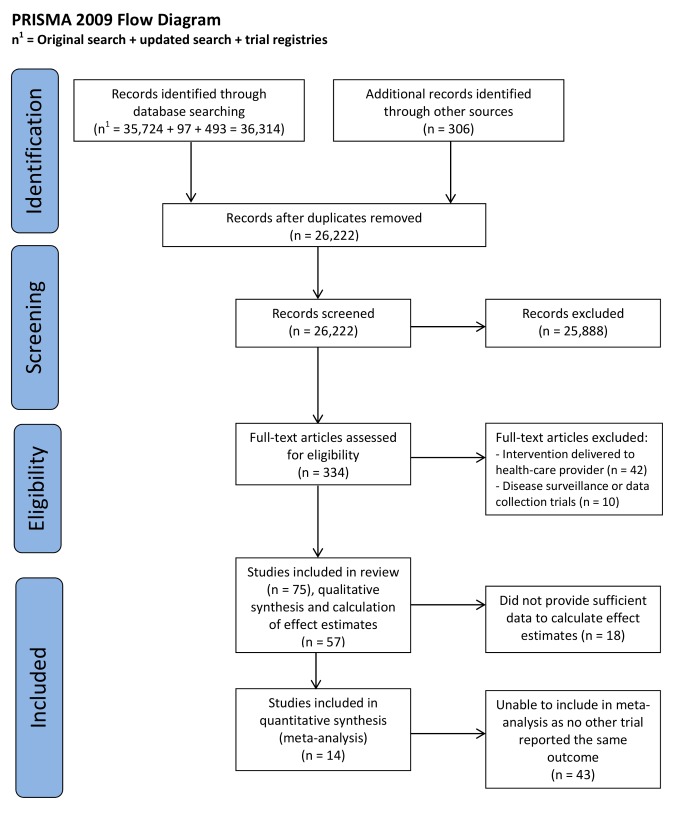
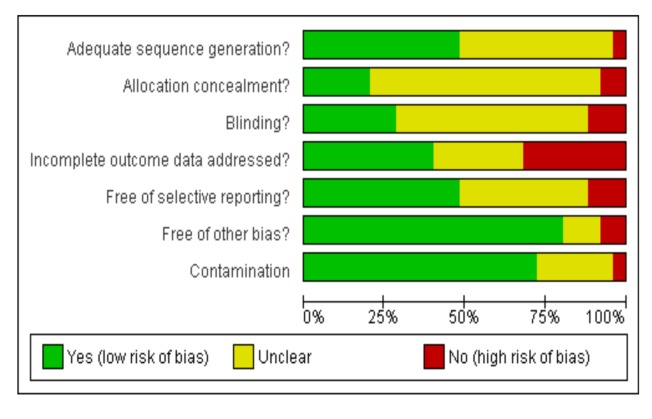
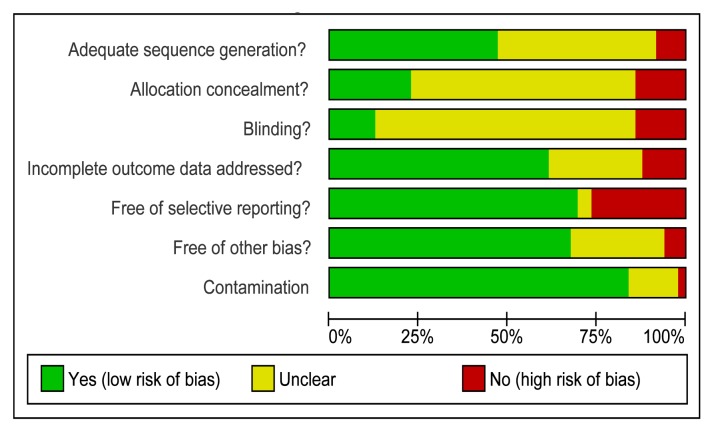
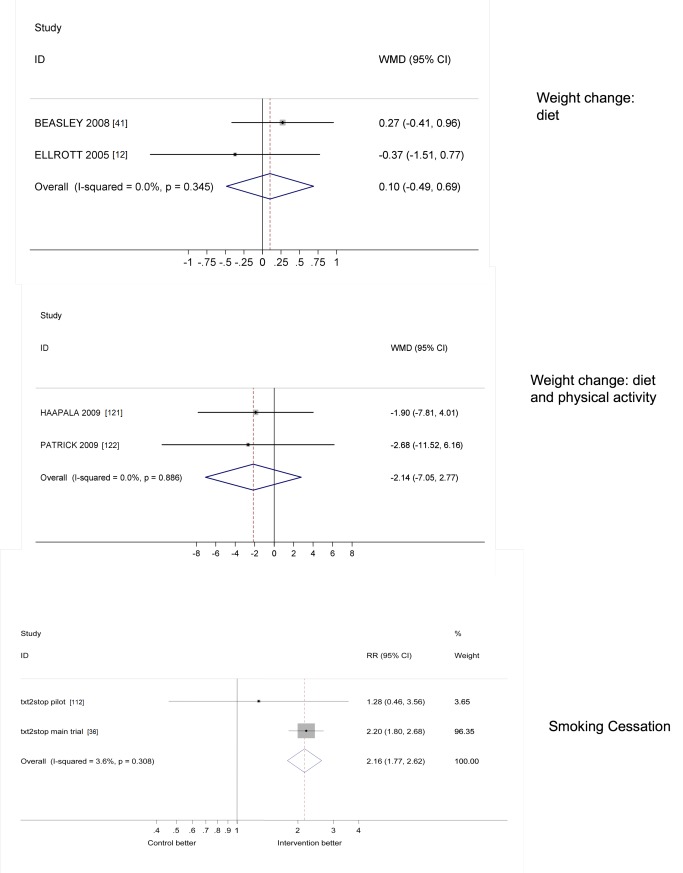
BACKGROUND: Mobile technologies could be a powerful media for providing individual level support to health care consumers. We conducted a systematic review to assess the effectiveness of mobile technology interventions delivered to health care consumers. METHODS AND FINDINGS: We searched for all controlled trials of mobile technology-based health interventions delivered to health care consumers using MEDLINE, EMBASE, PsycINFO, Global Health, Web of Science, Cochrane Library, UK NHS HTA (Jan 1990-Sept 2010). Two authors extracted data on allocation concealment, allocation sequence, blinding, completeness of follow-up, and measures of effect. We calculated effect estimates and used random effects meta-analysis. We identified 75 trials. Fifty-nine trials investigated the use of mobile technologies to improve disease management and 26 trials investigated their use to change health behaviours. Nearly all trials were conducted in high-income countries. Four trials had a low risk of bias. Two trials of disease management had low risk of bias; in one, antiretroviral (ART) adherence, use of text messages reduced high viral load (>400 copies), with a relative risk (RR) of 0.85 (95% CI 0.72-0.99), but no statistically significant benefit on mortality (RR 0.79 [95% CI 0.47-1.32]). In a second, a PDA based intervention increased scores for perceived self care agency in lung transplant patients. Two trials of health behaviour management had low risk of bias. The pooled effect of text messaging smoking cessation support on biochemically verified smoking cessation was (RR 2.16 [95% CI 1.77-2.62]). Interventions for other conditions showed suggestive benefits in some cases, but the results were not consistent. No evidence of publication bias was demonstrated on visual or statistical examination of the funnel plots for either disease management or health behaviours. To address the limitation of the older search, we also reviewed more recent literature. CONCLUSIONS: Text messaging interventions increased adherence to ART and smoking cessation and should be considered for inclusion in services. Although there is suggestive evidence of benefit in some other areas, high quality adequately powered trials of optimised interventions are required to evaluate effects on objective outcomes.
Overview
The claims and statistics of this paper haven’t been checked yet.
Free: it reads the open-access text and checks the first 5 claims that cite a source we can check. Create a free account to check every claim.
Integrity signals
Registry
Cites
Statistics
Figures
Verification
Claims the paper makes
The claims and statistics of this paper haven’t been checked yet.
Free: it reads the open-access text and checks the first 5 claims that cite a source we can check. Create a free account to check every claim.
Claims other papers make about this one
Each is checked against this paper’s own text: does it say what the citing paper says it does?
The source backs part of the claim, not all of it — or backs it for a different population, condition or comparison.
In the citing paper
“Three systematic reviews found reminders for disease monitoring improve healthcare processes but with education through voice call and text messages, both health outcomes and care processes improve.18 22 23”
From mHealth text and voice communication for monitoring people with chronic diseases in low-resource settings: a realist review (2018) · cites this paper as [23]
Experimental — accuracy not yet measuredThe source backs part of the claim, not all of it — or backs it for a different population, condition or comparison.
In the citing paper
“there are still too few high-quality, adequately powered RCTs evaluating the use of such apps [83,84].”
From Theory-Based Design and Development of a Socially Connected, Gamified Mobile App for Men About Breastfeeding (Milk Man) (2016) · cites this paper as [84]
Experimental — accuracy not yet measuredThe source backs part of the claim, not all of it — or backs it for a different population, condition or comparison.
In the citing paper
“While the use of mobile technology in public health interventions has grown significantly”
From Theory-Based Design and Development of a Socially Connected, Gamified Mobile App for Men About Breastfeeding (Milk Man) (2016) · cites this paper as [84]
Experimental — accuracy not yet measuredThe source backs part of the claim, not all of it — or backs it for a different population, condition or comparison.
In the citing paper
“Mobile phone messaging interventions are a potential cost-effective approach to promote habit formation.43–45”
From Refining and optimising a behavioural intervention to support endocrine therapy adherence (ROSETA) in UK women with breast cancer: Protocol for a pilot fractional factorial trial (2023) · cites this paper as [45]
Experimental — accuracy not yet measuredThe cited source says what the claim attributes to it.
In the citing paper
“In high-income countries, interventions have included these aspects of care.18 22 23”
From mHealth text and voice communication for monitoring people with chronic diseases in low-resource settings: a realist review (2018) · cites this paper as [23]
7 more claims about this paper
Create a free account to see every claim other papers make about this one.
Self-check
Percentages, sums and reported differences re-computed from the paper’s own numbers.
The self-check needs the paper’s full text.
Citations
Cites
2 retracted
Psychological interventions for overweight or obesity
Shaw, K. A., O'Rourke, P., Del Mar, C., & Kenardy, J. (2005) · Cochrane Database of Systematic Reviews · doi:10.1002/14651858.cd003818.pub2 · Cited by 442 · cited 1×
“Likewise, it is unsurprising that interventions delivered by mobile technologies appear to have small effects on weight, given the paucity of effective behavioural change interventions for obesity [105,106].”
RetractedZolfaghari, M., Mousavifar, S. A., Pedram, S., & Haghani, H. (2012) · Journal of Clinical Nursing · doi:10.1111/j.1365-2702.2011.03951.x · Cited by 101 · cited 1×
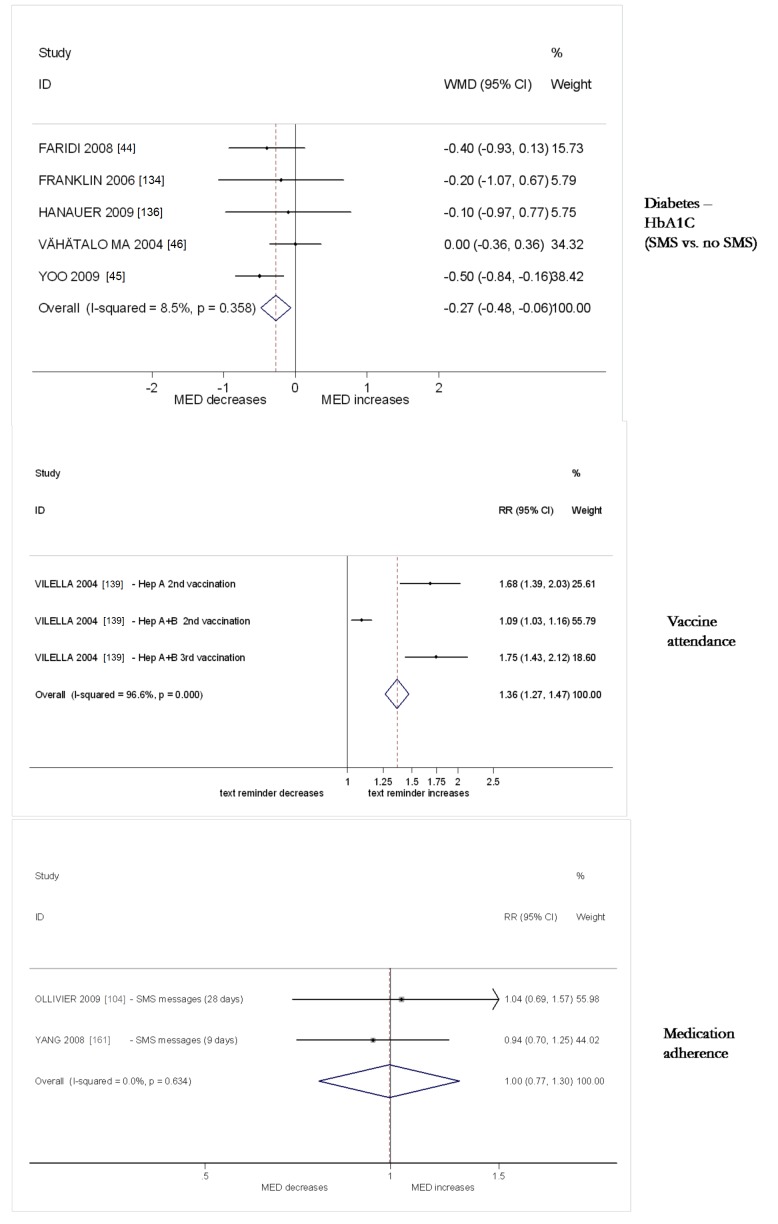
“Four trials of a diabetes care intervention, three involving text messages and the other involving video messages, reported statistically significant decreases in HBA1C, which were of borderline clinical significance [69–73].”
RetractedCochrane Handbook for Systematic Reviews of Interventions: Cochrane Book Series
(2008) · doi:10.1002/9780470712184 · Cited by 25,048 · cited 1×
“Risk of bias was assessed according to the criteria outlined by the International Cochrane Collaboration [35].”
Zhang, Q., Wang, C., Zheng, M., Li, Y., Li, J., Zhang, L., Shang, X., & Yan, C. (2015) · Cerebrovascular Diseases · doi:10.1159/000369778 · Cited by 11,533
Pharmacological interventions for somatoform disorders in adults
Kleinstäuber, M., Witthöft, M., Steffanowski, A., van Marwijk, H., Hiller, W., & Lambert, M. J. (2014) · Cochrane Database of Systematic Reviews · doi:10.1002/14651858.cd010628.pub2 · Cited by 11,335
Cochrane Handbook for Systematic Reviews of Interventions Version 5.0.1. The Cochrane Collaboration
Higgins, J. P. T., Green, S. R., & Higgins, J. P. T. (2008) · Cited by 7,226
Collaboration, A. T. (2002) · BMJ · doi:10.1136/bmj.324.7329.71 · Cited by 6,943
Mortality in relation to smoking: 40 years' observations on male British doctors
Doll, R., Peto, R., Wheatley, K., Gray, R., & Sutherland, I. (1994) · BMJ · doi:10.1136/bmj.309.6959.901 · Cited by 5,932
Update on Key Emerging Challenges in Cystic Fibrosis
Jennings, M. T., Riekert, K. A., & Boyle, M. P. (2014) · Medical Principles and Practice · doi:10.1159/000357646 · Cited by 3,648
Assessing the quality of controlled clinical trials
Jüni, P., Altman, D. G., & Egger, M. (2001) · BMJ · doi:10.1136/bmj.323.7303.42 · Cited by 3,309 · cited 2×
“A wide range of factors could influence the effectiveness of mobile technology interventions including trial quality [50]; participant factors such as demographics (gender/ age) or disease status (disease management/disease prevention interventions); the setting (low-/middle- or high-income country), intervention fact…”
Interventions for enhancing medication adherence
Nieuwlaat, R., Wilczynski, N., Navarro, T., Hobson, N., Jeffery, R., Keepanasseril, A., Agoritsas, T., Mistry, N., Iorio, A., Jack, S., et al. (2014) · Cochrane Database of Systematic Reviews · doi:10.1002/14651858.cd000011.pub4 · Cited by 2,945
A taxonomy of behavior change techniques used in interventions
Abraham, C., & Michie, S. (2008) · Health Psychology · doi:10.1037/0278-6133.27.3.379 · Cited by 2,525 · cited 2×
“The behaviour change techniques used in behaviour change interventions were classified according to Abraham and Michie’s taxonomy of behaviour change techniques [34].”
Stowman, K. (1949) · The Milbank Memorial Fund Quarterly · doi:10.2307/3348165 · Cited by 2,096
Charbonneau, D. H. (2005) · Europe PMC (PubMed Central) · Cited by 2,041
The International Telecommunication Union
Jones, R. W. (2002) · IEEE Antennas and Propagation Society International Symposium 1997. Digest · doi:10.1109/aps.1997.631791 · Cited by 1,909
beta Blockade after myocardial infarction: systematic review and meta regression analysis
Freemantle, N., Cleland, J., Young, P., Mason, J., & Harrison, J. (1999) · BMJ · doi:10.1136/bmj.318.7200.1730 · Cited by 1,509 · cited 1×
“In patients with existing coronary heart disease long term anti-platelet therapy reduces major vascular events (myocardial infarction, stroke, or vascular mortality) by about a quarter [5], ACE inhibitors reduce cardiovascular mortality by just under a fifth [6], beta blockers reduce mortality by almost a quarter [7],…”
Heron, K. E., & Smyth, J. M. (2010) · British Journal of Health Psychology · doi:10.1348/135910709x466063 · Cited by 1,438
Mortality in relation to smoking : 40 years' observations on male British doctors
Doll, H. (1994) · Medical Entomology and Zoology · Cited by 1,417
Effect of weight loss with lifestyle intervention on risk of diabetes
Hamman, R. F., Wing, R. R., Edelstein, S. L., Lachin, J. M., Bray, G. A., Delahanty, L., Hoskin, M., Kriska, A. M., Mayer-Davis, E. J., Pi-Sunyer, X., et al. (2006) · Diabetes Care · doi:10.2337/dc06-0560 · Cited by 1,344
Lester, R. T., Ritvo, P., Mills, E. J., Kariri, A., Karanja, S., Chung, M. H., Jack, W., Habyarimana, J., Sadatsafavi, M., Najafzadeh, M., et al. (2010) · The Lancet · doi:10.1016/s0140-6736(10)61997-6 · Cited by 1,278 · cited 6×
“Area Trial Intervention Outcome MD/RR LCI UCI Adherence Lester 2010 [37] SMS intervention versus no SMS Self-reported adherence (.”
InfluentialInterventions for enhancing medication adherence
Haynes, R. B., Ackloo, E., Sahota, N., McDonald, H. P., & Yao, X. (2008) · Cochrane Database of Systematic Reviews · doi:10.1002/14651858.cd000011.pub3 · Cited by 1,244
Behavior change interventions delivered by mobile telephone short message service
Fjeldsoe, B. S., Marshall, A. L., & Miller, Y. D. (2009) · American Journal of Preventive Medicine · doi:10.1016/j.amepre.2008.09.040 · Cited by 1,213 · cited 2×
“, text messaging [28–30]), or individual diseases or types of illness (e.”
Text messaging as a tool for behavior change in disease prevention and management
Cole-Lewis, H., & Kershaw, T. (2010) · Epidemiologic Reviews · doi:10.1093/epirev/mxq004 · Cited by 1,190 · cited 2×
“Our review updates earlier reviews and expands them either by using a more exhaustive search strategy, by presenting effect estimates and 95% confidence intervals for all reported outcomes [28,29,31], or by conducting meta-analysis, where sufficient trials report similar outcomes [28,29,31].”
Free, C., Phillips, G., Watson, L., Galli, L., Felix, L., Edwards, P., Patel, V., & Haines, A. (2013) · PLoS Medicine · doi:10.1371/journal.pmed.1001363 · Cited by 1,187 · cited 3×
“A cu te d is e a se B o lle 20 09 [1 33 ] U H U L L L L”
Self-citationMobile phone-based interventions for smoking cessation
Whittaker, R., McRobbie, H., Bullen, C., Rodgers, A., & Gu, Y. (2016) · Cochrane Database of Systematic Reviews · doi:10.1002/14651858.cd006611.pub4 · Cited by 1,079
Pop-Eleches, C., Thirumurthy, H., Habyarimana, J. P., Zivin, J. G., Goldstein, M. P., de Walque, D., MacKeen, L., Haberer, J., Kimaiyo, S., Sidle, J., et al. (2011) · AIDS · doi:10.1097/qad.0b013e32834380c1 · Cited by 982 · cited 1×
“Secondary outcomes were as follows: Three trials reported statistically significant increases in adherence to antiretroviral medication with text message reminders [81–83], and one trial reported increases in adherence that were not statistically significant [84].”
Exercise for overweight or obesity
Shaw, K. A., Gennat, H. C., O'Rourke, P., & Del Mar, C. (2006) · Cochrane Database of Systematic Reviews · doi:10.1002/14651858.cd003817.pub3 · Cited by 950 · cited 1×
“Likewise, it is unsurprising that interventions delivered by mobile technologies appear to have small effects on weight, given the paucity of effective behavioural change interventions for obesity [105,106].”
Healthcare via Cell Phones: A Systematic Review
Krishna, S., Boren, S. A., & Balas, E. A. (2009) · Telemedicine and e-Health · doi:10.1089/tmj.2008.0099 · Cited by 882 · cited 2×
“, mobile phones [23–27], specific mobile technology functions (e.”
Research Approaches to Mobile Use in the Developing World: A Review of the Literature
Donner, J. (2008) · The Information Society · doi:10.1080/01972240802019970 · Cited by 743 · cited 2×
“El lr o tt (2 00 5) [1 20 ] U U U U U U U”
Rodgers, A., Corbett, T., Bramley, D., Riddell, T., Wills, M., Lin, R.-B., & Jones, M. (2005) · Tobacco Control · doi:10.1136/tc.2005.011577 · Cited by 732 · cited 4×
“P at ri ck (2 00 9) [1 22 ] U U H H U L L”
InfluentialFree, C., Knight, R., Robertson, S., Whittaker, R., Edwards, P., Zhou, W., Rodgers, A., Cairns, J., Kenward, M. G., & Roberts, I. (2011) · The Lancet · doi:10.1016/s0140-6736(11)60701-0 · Cited by 728 · cited 6×
“Trials demonstrate that automated multifaceted smoking cessation support delivered by text message more than doubles biochemically verified smoking cessation [21,36].”
InfluentialSelf-citationA Text Message–Based Intervention for Weight Loss: Randomized Controlled Trial
Patrick, K., Raab, F., Adams, M. A., Dillon, L., Zabinski, M., Rock, C. L., Griswold, W. G., & Norman, G. J. (2009) · Journal of Medical Internet Research · doi:10.2196/jmir.1100 · Cited by 671
Quinn, C. C., Shardell, M. D., Terrin, M. L., Barr, E. A., Ballew, S. H., & Gruber-Baldini, A. L. (2011) · Diabetes Care · doi:10.2337/dc11-0366 · Cited by 650 · cited 1×
“Four trials of a diabetes care intervention, three involving text messages and the other involving video messages, reported statistically significant decreases in HBA1C, which were of borderline clinical significance [69–73].”
Franklin, V. L., Waller, A., Pagliari, C., & Greene, S. A. (2006) · Diabetic Medicine · doi:10.1111/j.1464-5491.2006.01989.x · Cited by 543 · cited 1×
“20 Franklin 2006 [135] SMS support system versus no SMS Health service utilisation - number of clinic visits 0.”
Free, C., Phillips, G., Felix, L., Galli, L., Patel, V., & Edwards, P. (2010) · BMC Research Notes · doi:10.1186/1756-0500-3-250 · Cited by 539 · cited 2×
“Methods We adhered to our published plan of investigation as outlined in the study protocol [32].”
Self-citationSelf-management education for patients with chronic obstructive pulmonary disease
Effing, T., Monninkhof, E. E., van der Valk, P. P. D. L. P. M., Zielhuis, G. G., Walters, E. H., van der Palen, J. J., & Zwerink, M. (2007) · Cochrane Database of Systematic Reviews · doi:10.1002/14651858.cd002990.pub2 · Cited by 536
Long-Term Adherence to Evidence-Based Secondary Prevention Therapies in Coronary Artery Disease
Newby, L. K., Allen LaPointe, N. M., Chen, A. Y., Kramer, J. M., Hammill, B. G., DeLong, E. R., Muhlbaier, L. H., & Califf, R. M. (2006) · Circulation · doi:10.1161/circulationaha.105.505636 · Cited by 505 · cited 1×
“Health care consumers decide whether to adhere to prescribed medication and determine when they seek health care [11].”
Quinn, C. C., Clough, S. S., Minor, J. M., Lender, D., Okafor, M. C., & Gruber-Baldini, A. (2008) · Diabetes Technology & Therapeutics · doi:10.1089/dia.2008.0283 · Cited by 406 · cited 1×
“28 Quinn 2008 [140] Diabetes management using mobile phone versus no device Medication errors identified 13.”
Kauer, S. D., Reid, S. C., Crooke, A. H. D., Khor, A., Hearps, S. J. C., Jorm, A. F., Sanci, L., & Patton, G. (2012) · Journal of Medical Internet Research · doi:10.2196/jmir.1858 · Cited by 404
Individual patient education for people with type 2 diabetes mellitus
Duke, S.-A. S., Colagiuri, S., & Colagiuri, R. (2009) · Cochrane Database of Systematic Reviews · doi:10.1002/14651858.cd005268.pub2 · Cited by 361 · cited 1×
“Behaviour Change Theory Number of Studies Social cognitive theory 4 [109,114,118,123] Elaboration likelihood theory 1 [123] Implementation theory/automotive model 1 [113] Protection motivation theory 1 [86] Social learning theory 1 [114] Transtheoretical model 1 [107] doi:10.”
Kharbanda, E. O. (2012) · JAMA · doi:10.1001/jama.2012.502 · Cited by 349 · cited 1×
“One trial with unclear risk of bias reported increases in receipt of vaccinations in those allocated to receive text messages reminders [74].”
Mobile Phone-Based Telemonitoring for Heart Failure Management: A Randomized Controlled Trial
Seto, E., Leonard, K. J., Cafazzo, J. A., Barnsley, J., Masino, C., & Ross, H. J. (2012) · Journal of Medical Internet Research · doi:10.2196/jmir.1909 · Cited by 339 · cited 1×
“One trial has demonstrated improved quality of life for patients with heart failure receiving a mobile phone based telemonitoring intervention [85].”
Interventions to improve adherence to lipid-lowering medication
van Driel, M. L., Morledge, M. D., Ulep, R., Shaffer, J. P., Davies, P., & Deichmann, R. (2016) · Cochrane Database of Systematic Reviews · doi:10.1002/14651858.cd004371.pub4 · Cited by 333
Petrie, K. J., Perry, K., Broadbent, E., & Weinman, J. (2012) · British Journal of Health Psychology · doi:10.1111/j.2044-8287.2011.02033.x · Cited by 330 · cited 1×
“One trial reported improved quality of life with a mobile phone-based asthma selfcare system [100], and another reported increases in self-reported adherence to asthma medication [101].”
Burke, L. E., Conroy, M. B., Sereika, S. M., Elci, O. U., Styn, M. A., Acharya, S. D., Sevick, M. A., Ewing, L. J., & Glanz, K. (2011) · Obesity · doi:10.1038/oby.2010.208 · Cited by 329 · cited 2×
“46 Burke 2010 [40] PDA plus feedback Body weight - change (.”
Distraction with a hand‐held video game reduces pediatric preoperative anxiety
PATEL, A., SCHIEBLE, T., DAVIDSON, M., TRAN, M. C. J., SCHOENBERG, C., DELPHIN, E., & BENNETT, H. (2006) · Pediatric Anesthesia · doi:10.1111/j.1460-9592.2006.01914.x · Cited by 308 · cited 1×
“52 Patel 2006 [150] Handheld video game to reduce anxiety pre-surgery versus no device Modified Yale preoperative anxiety scale 29.”
Randomised controlled trial of structured personal care of type 2 diabetes mellitus
Olivarius, N. D. F., Beck-Nielsen, H., Andreasen, A. H., Hørder, M., & Pedersen, P. A. (2001) · BMJ · doi:10.1136/bmj.323.7319.970 · Cited by 301 · cited 2×
“, insulin or asthma medications) can improve health outcomes [12–14].”
Using mHealth Technology to Enhance Self-Monitoring for Weight Loss
Burke, L. E., Styn, M. A., Sereika, S. M., Conroy, M. B., Ye, L., Glanz, K., Sevick, M. A., & Ewing, L. J. (2012) · American Journal of Preventive Medicine · doi:10.1016/j.amepre.2012.03.016 · Cited by 295 · cited 1×
“Three trials reported no statistically significant effects on weight of a diary-plus-mobile-phone daily feedback messages compared to a diary [54], a text message based intervention [55], and a twitter, podcast, and mobile phone application based intervention [56].”
A daily SMS reminder increases adherence to asthma treatment: A three-month follow-up study
Strandbygaard, U., Thomsen, S. F., & Backer, V. (2010) · Respiratory Medicine · doi:10.1016/j.rmed.2009.10.003 · Cited by 295
Schroeder, K., Fahey, T., & Ebrahim, S. (2004) · Cochrane Database of Systematic Reviews · doi:10.1002/14651858.cd004804 · Cited by 293
SMS STI: A Review of the Uses of Mobile Phone Text Messaging in Sexual Health
Lim, M. S. C., Hocking, J. S., Hellard, M. E., & Aitken, C. K. (2008) · International Journal of STD & AIDS · doi:10.1258/ijsa.2007.007264 · Cited by 293 · cited 3×
“A lc o h o l W ei tz el (2 00 7) [1 30 ] U U U L L L L”
Vermeire, E. I., Wens, J., Van Royen, P., Biot, Y., Hearnshaw, H., & Lindenmeyer, A. (2005) · Cochrane Database of Systematic Reviews · doi:10.1002/14651858.cd003638.pub2 · Cited by 290 · cited 1×
“There is a considerable body of existing research regarding effective face-toface interventions for self-management of diseases, and much of this literature suggests multifaceted interventions are required [104,109–111].”
Weight loss by mobile phone: a 1-year effectiveness study
Haapala, I., Barengo, N. C., Biggs, S., Surakka, L., & Manninen, P. (2009) · Public Health Nutrition · doi:10.1017/s1368980009005230 · Cited by 280 · cited 1×
“83 Diet and physical activity Haapala 2009 [121] SMS versus no SMS Body weight - change (percent) 0.”
Scherr, D., Kastner, P., Kollmann, A., Hallas, A., Auer, J., Krappinger, H., Schuchlenz, H., Stark, G., Grander, W., Jakl, G., et al. (2009) · Journal of Medical Internet Research · doi:10.2196/jmir.1252 · Cited by 279
Rothman, R. L., Malone, R., Bryant, B., Shintani, A. K., Crigler, B., Dewalt, D. A., Dittus, R. S., Weinberger, M., & Pignone, M. P. (2005) · The American Journal of Medicine · doi:10.1016/j.amjmed.2004.09.017 · Cited by 267 · cited 2×
“, insulin or asthma medications) can improve health outcomes [12–14].”
Kearney, N., McCann, L., Norrie, J., Taylor, L., Gray, P., McGee-Lennon, M., Sage, M., Miller, M., & Maguire, R. (2009) · Supportive Care in Cancer · doi:10.1007/s00520-008-0515-0 · Cited by 263 · cited 1×
“67 Chemotherapy monitoring Kearney 2009 [155] Questionnaire by SMS versus Paper Chemotherapy symptom - sore mouth/throat 1.”
Turner-McGrievy, G., & Tate, D. (2011) · Journal of Medical Internet Research · doi:10.2196/jmir.1841 · Cited by 263 · cited 1×
“Three trials reported no statistically significant effects on weight of a diary-plus-mobile-phone daily feedback messages compared to a diary [54], a text message based intervention [55], and a twitter, podcast, and mobile phone application based intervention [56].”
Hanauer, D. A., Wentzell, K., Laffel, N., & Laffel, L. M. (2009) · Diabetes Technology & Therapeutics · doi:10.1089/dia.2008.0022 · Cited by 261
MobileMums: A Randomized Controlled Trial of an SMS-Based Physical Activity Intervention
Fjeldsoe, B. S., Miller, Y. D., & Marshall, A. L. (2010) · Annals of Behavioral Medicine · doi:10.1007/s12160-010-9170-z · Cited by 241 · cited 1×
“Three trials reported short term increases in physical activity in those receiving a text messagebased intervention designed to increase activity [94–96].”
Armstrong, A. W., Watson, A. J., Makredes, M., Frangos, J. E., Kimball, A. B., & Kvedar, J. C. (2009) · Archives of Dermatology · doi:10.1001/archdermatol.2009.269 · Cited by 235
Lund, S., Hemed, M., Nielsen, B., Said, A., Said, K., Makungu, M., & Rasch, V (2012) · BJOG: An International Journal of Obstetrics & Gynaecology · doi:10.1111/j.1471-0528.2012.03413.x · Cited by 228 · cited 1×
“81]); the risk of bias in this trial was unclear [67].”
Faridi, Z., Liberti, L., Shuval, K., Northrup, V., Ali, A., & Katz, D. L. (2008) · Journal of Evaluation in Clinical Practice · doi:10.1111/j.1365-2753.2007.00881.x · Cited by 217 · cited 3×
“70 Faridi 2008 [44] Diabetes support using mobile phone versus no device Systolic blood pressure 27.”
InfluentialShapiro, J. R., Bauer, S., Hamer, R. M., Kordy, H., Ward, D., & Bulik, C. M. (2008) · Journal of Nutrition Education and Behavior · doi:10.1016/j.jneb.2007.09.014 · Cited by 212 · cited 2×
“Behaviour Change Theory Number of Studies Social cognitive theory 4 [109,114,118,123] Elaboration likelihood theory 1 [123] Implementation theory/automotive model 1 [113] Protection motivation theory 1 [86] Social learning theory 1 [114] Transtheoretical model 1 [107] doi:10.”
Lane, S. J., Heddle, N. M., Arnold, E., & Walker, I. (2006) · BMC Medical Informatics and Decision Making · doi:10.1186/1472-6947-6-23 · Cited by 208
Whittaker, R., Dorey, E., Bramley, D., Bullen, C., Denny, S., Elley, C. R., Maddison, R., McRobbie, H., Parag, V., Rodgers, A., et al. (2011) · Journal of Medical Internet Research · doi:10.2196/jmir.1553 · Cited by 201
Ryan, D., Price, D., Musgrave, S. D., Malhotra, S., Lee, A. J., Ayansina, D., Sheikh, A., Tarassenko, L., Pagliari, C., & Pinnock, H. (2012) · BMJ · doi:10.1136/bmj.e1756 · Cited by 197 · cited 1×
“Two trials reported no statistically significant beneficial effects of either a text message-based intervention or a mobile phone-based monitoring and feedback intervention on asthma control [78,79].”
Mobile phone-based interventions for smoking cessation
Whittaker, R., Borland, R., Bullen, C., Lin, R. B., McRobbie, H., & Rodgers, A. (2009) · Cochrane Database of Systematic Reviews · doi:10.1002/14651858.cd006611.pub2 · Cited by 196
Lim, M. S. C., Hocking, J. S., Aitken, C. K., Fairley, C. K., Jordan, L., Lewis, J. A., & Hellard, M. E. (2012) · Journal of Epidemiology and Community Health · doi:10.1136/jech.2009.100396 · Cited by 192 · cited 2×
“Er tl 20 07 [1 62 ] L U U L L L L”
Lim, S., Kang, S. M., Shin, H., Lee, H. J., Won Yoon, J., Yu, S. H., Kim, S.-Y., Yoo, S. Y., Jung, H. S., Park, K. S., et al. (2011) · Diabetes Care · doi:10.2337/dc10-1447 · Cited by 191 · cited 1×
“Four trials of a diabetes care intervention, three involving text messages and the other involving video messages, reported statistically significant decreases in HBA1C, which were of borderline clinical significance [69–73].”
Dale, O., & Hagen, K. B. (2007) · Journal of Clinical Epidemiology · doi:10.1016/j.jclinepi.2006.04.005 · Cited by 191 · cited 2×
“, mobile phones [23–27], specific mobile technology functions (e.”
Suffoletto, B., Callaway, C., Kristan, J., Kraemer, K., & Clark, D. B. (2012) · Alcoholism: Clinical and Experimental Research · doi:10.1111/j.1530-0277.2011.01646.x · Cited by 191
Hardy, H., Kumar, V., Doros, G., Farmer, E., Drainoni, M.-L., Rybin, D., Myung, D., Jackson, J., Backman, E., Stanic, A., et al. (2011) · AIDS Patient Care and STDs · doi:10.1089/apc.2010.0006 · Cited by 189 · cited 1×
“Secondary outcomes were as follows: Three trials reported statistically significant increases in adherence to antiretroviral medication with text message reminders [81–83], and one trial reported increases in adherence that were not statistically significant [84].”
da Costa, T. M., Barbosa, B. J. P., e Costa, D. A. G., Sigulem, D., de Fátima Marin, H., Filho, A. C., & Pisa, I. T. (2012) · International Journal of Medical Informatics · doi:10.1016/j.ijmedinf.2011.10.002 · Cited by 186 · cited 1×
“Secondary outcomes were as follows: Three trials reported statistically significant increases in adherence to antiretroviral medication with text message reminders [81–83], and one trial reported increases in adherence that were not statistically significant [84].”
ResultImproving Asthma Control Through Telemedicine: A Study of Short-Message Service
Ostojic, V., Cvoriscec, B., Ostojic, S. B., Reznikoff, D., Stipic-Markovic, A., & Tudjman, Z. (2005) · Telemedicine and e-Health · doi:10.1089/tmj.2005.11.28 · Cited by 183 · cited 3×
“32 Asthma Ostojic 2005 [47] Asthma monitoring using SMS versus no reminder Lung function - PEF variability 211.”
InfluentialTxt2stop: a pilot randomised controlled trial of mobile phone-based smoking cessation support
Free, C., Whittaker, R., Knight, R., Abramsky, T., Rodgers, A., & Roberts, I. G. (2009) · Tobacco Control · doi:10.1136/tc.2008.026146 · Cited by 181 · cited 6×
“Interventions can be personalised with the content tailored to the age, sex, and ethnic group of the participant or to the issues they face [21,22].”
InfluentialSelf-citationEvaluation of a mobile phone telemonitoring system for glycaemic control in patients with diabetes
Istepanian, R. S., Zitouni, K., Harry, D., Moutosammy, N., Sungoor, A., Tang, B., & Earle, K. A. (2009) · Journal of Telemedicine and Telecare · doi:10.1258/jtt.2009.003006 · Cited by 177
Sirriyeh, R., Lawton, R., & Ward, J. (2010) · British Journal of Health Psychology · doi:10.1348/135910710x486889 · Cited by 177 · cited 1×
“Three trials reported short term increases in physical activity in those receiving a text messagebased intervention designed to increase activity [94–96].”
Hou, M. Y., Hurwitz, S., Kavanagh, E., Fortin, J., & Goldberg, A. B. (2010) · Obstetrics & Gynecology · doi:10.1097/aog.0b013e3181eb6b0f · Cited by 176
Efficacy of a cell phone-based exercise programme for COPD
Liu, W.-T., Wang, C.-H., Lin, H.-C., Lin, S.-M., Lee, K.-Y., Lo, Y.-L., Hung, S.-H., Chang, Y.-M., Chung, K. F., & Kuo, H.-P. (2008) · European Respiratory Journal · doi:10.1183/09031936.00104407 · Cited by 176 · cited 1×
“03 Liu 2008 [116] Endurance exercises accompanied by music on mobile phone versus booklet and DVD Post-exercise breathlessness - Borg scale score 20.”
A randomized trial of a proactive cellular telephone intervention for smokers living with HIV/AIDS
Vidrine, D. J., Arduino, R. C., Lazev, A. B., & Gritz, E. R. (2006) · AIDS · doi:10.1097/01.aids.0000198094.23691.58 · Cited by 172 · cited 2×
“44 Vidrine 2006 [114] Counselling sessions on mobile phone versus usual care 24 hour abstinence (at 3-mo follow-up) 1.”
A mobile telephone-based interactive self-care system improves asthma control
Liu, W.-T., Huang, C.-D., Wang, C.-H., Lee, K.-Y., Lin, S.-M., & Kuo, H.-P. (2011) · European Respiratory Journal · doi:10.1183/09031936.00000810 · Cited by 171 · cited 1×
“One trial reported improved quality of life with a mobile phone-based asthma selfcare system [100], and another reported increases in self-reported adherence to asthma medication [101].”
Pilot study of a cell phone-based exercise persistence intervention post-rehabilitation for COPD
Nguyen, H. (2009) · International Journal of Chronic Obstructive Pulmonary Disease · doi:10.2147/copd.s6643 · Cited by 165
Al-Mallah, M. H., Tleyjeh, I. M., Abdel-Latif, A. A., & Weaver, W. D. (2006) · Journal of the American College of Cardiology · doi:10.1016/j.jacc.2005.11.073 · Cited by 163
Whittaker, R., Merry, S., Stasiak, K., McDowell, H., Doherty, I., Shepherd, M., Dorey, E., Parag, V., Ameratunga, S., & Rodgers, A. (2012) · Journal of Medical Internet Research · doi:10.2196/jmir.1857 · Cited by 161 · cited 1×
“Two trials reported increases in emotional self-awareness in young people receiving risk assessment and management of youth mental health problems: one reported benefits in mild depressive symptoms [86,87], and another reported that delivering cognitive behavioural therapy messages by mobile phone was feasible and acc…”
A Ubiquitous Chronic Disease Care system using cellular phones and the internet
Yoo, H. J., Park, M. S., Kim, T. N., Yang, S. J., Cho, G. J., Hwang, T. G., Baik, S. H., Choi, D. S., Park, G. H., & Choi, K. M. (2009) · Diabetic Medicine · doi:10.1111/j.1464-5491.2009.02732.x · Cited by 161 · cited 3×
“M o sn ai m 20 08 [1 45 ] L U L L L U L”
InfluentialPromoting physical activity through hand-held computer technology
King, A. C., Ahn, D. K., Oliveira, B. M., Atienza, A. A., Castro, C. M., & Gardner, C. D. (2008) · American Journal of Preventive Medicine · doi:10.1016/j.amepre.2007.09.025 · Cited by 160 · cited 1×
“60 King 2008 [115] Motivational PDA software versus standard written guidelines Exercise (minutes per week) 166.”
Effect of Daily Text Messages on Oral Contraceptive Continuation: A Randomized Controlled Trial
Castaño, P. M., Bynum, J. Y., Andrés, R., Lara, M., & Westhoff, C. (2012) · Obstetrics & Gynecology · doi:10.1097/aog.0b013e31823d4167 · Cited by 158 · cited 1×
“One trial reported that an educational package of text messages increased continuation of the combined oral contraceptive pill [90], but simple daily reminders regarding taking the combined oral contraceptive has no effect in another trials [91].”
Can implementation intentions and text messages promote brisk walking? A randomized trial.
Prestwich, A., Perugini, M., & Hurling, R. (2010) · Health Psychology · doi:10.1037/a0016993 · Cited by 158 · cited 2×
“Three trials reported short term increases in physical activity in those receiving a text messagebased intervention designed to increase activity [94–96].”
Use of handheld computers in medical education
Kho, A., Henderson, L. E., Dressler, D. D., & Kripalani, S. B. (2006) · Journal of General Internal Medicine · doi:10.1111/j.1525-1497.2006.00444.x · Cited by 157 · cited 2×
“Sh ay (2 00 9) [1 24 ] U U U U U L L”
Cho, J.-H., Lee, H.-C., Lim, D.-J., Kwon, H.-S., & Yoon, K.-H. (2009) · Journal of Telemedicine and Telecare · doi:10.1258/jtt.2008.080412 · Cited by 155
Guerriero, C., Cairns, J., Roberts, I., Rodgers, A., Whittaker, R., & Free, C. (2013) · The European Journal of Health Economics · doi:10.1007/s10198-012-0424-5 · Cited by 152
Self-citationGold, J., Lim, M. S., Hellard, M. E., Hocking, J. S., & Keogh, L. (2010) · BMC Public Health · doi:10.1186/1471-2458-10-792 · Cited by 145 · cited 1×
“One factorial trial reported a reduction in sexual partners in participants receiving safer sex text messages, but no effects of sun protection messages on hat wearing [63].”
Weitzel, J. A., Bernhardt, J. M., Usdan, S., Mays, D., & Glanz, K. (2007) · Journal of Studies on Alcohol and Drugs · doi:10.15288/jsad.2007.68.534 · Cited by 142 · cited 1×
“Duration: 1 y No treatment Alcohol Weitzel 2007 [130] Parallel group RCT; Country: USA; Device: Other handheld computer; Media: SMS 40 university/college students drinking .”
Pedometers and Text Messaging to Increase Physical Activity
Newton, K. H., Wiltshire, E. J., & Elley, C. R. (2009) · Diabetes Care · doi:10.2337/dc08-1974 · Cited by 140 · cited 5×
“94 Physical activity Newton 2009 [42] Motivational SMS versus standard care Body mass index (kg/m) 20.”
InfluentialTelemedical support to improve glycemic control in adolescents with type 1 diabetes mellitus
Rami, B., Popow, C., Horn, W., Waldhoer, T., & Schober, E. (2006) · European Journal of Pediatrics · doi:10.1007/s00431-006-0156-6 · Cited by 136
Naughton, F., Prevost, A. T., Gilbert, H., & Sutton, S. (2012) · Nicotine & Tobacco Research · doi:10.1093/ntr/ntr254 · Cited by 135 · cited 1×
“Secondary outcomes were as follows: One trial reported pregnant smokers receiving text messages were more likely to set a quit date [59].”
Shetty, A. S., Snehalatha, C., Nanditha, A., Raj, R. K. C., & Ramachandran, A. (2011) · PubMed · Cited by 131
Jareethum, R., Titapant, V., Chantra, T., Sommai, V., Chuenwattana, P., & Jirawan, C. (2008) · PubMed · Cited by 130
Can the effects of implementation intentions on exercise be enhanced using text messages?
Prestwich, A., Perugini, M., & Hurling, R. (2009) · Psychology & Health · doi:10.1080/08870440802040715 · Cited by 128 · cited 2×
“33 Prestwich 2009 [118] SMS plan reminder versus no SMS Exercise - days per week $30 min 0.”
Glynn, L. G., Murphy, A. W., Smith, S. M., Schroeder, K., & Fahey, T. (2010) · British Journal of General Practice · doi:10.3399/bjgp10x544113 · Cited by 122
Continuous individual support of smoking cessation using text messaging: A pilot experimental study
Haug, S., Meyer, C., Schorr, G., Bauer, S., & John, U. (2009) · Nicotine & Tobacco Research · doi:10.1093/ntr/ntp084 · Cited by 121 · cited 2×
“Behaviour Change Theory Number of Studies Social cognitive theory 4 [109,114,118,123] Elaboration likelihood theory 1 [123] Implementation theory/automotive model 1 [113] Protection motivation theory 1 [86] Social learning theory 1 [114] Transtheoretical model 1 [107] doi:10.”
Vidrine, D. J., Marks, R. M., Arduino, R. C., & Gritz, E. R. (2012) · Nicotine & Tobacco Research · doi:10.1093/ntr/ntr121 · Cited by 120 · cited 1×
“Primary outcomes were as follows: One trial reported increases in smoking cessation at 1 wk for mobile phone-based telephone counselling intervention [52].”
Benhamou, P.-Y., Melki, V., Boizel, R., Perreal, F., Quesada, J.-L., Bessieres-Lacombe, S., Bosson, J.-L., Halimi, S., & Hanaire, H. (2007) · Diabetes & Metabolism · doi:10.1016/j.diabet.2007.01.002 · Cited by 118 · cited 2×
“87 Benhamou 2007 [43] Diabetes management using PDA versus no device HbA1C blood concentration 20.”
Evaluation of a Telemedicine Service for the Secondary Prevention of Coronary Artery Disease
Blasco, A., Carmona, M., Fernández-Lozano, I., Salvador, C. H., Pascual, M., Sagredo, P. G., Somolinos, R., Muñoz, A., García-López, F., Escudier, J. M., et al. (2012) · Journal of Cardiopulmonary Rehabilitation and Prevention · doi:10.1097/hcr.0b013e3182343aa7 · Cited by 115 · cited 1×
“4]), but there were no statistically significant differences in LDL cholesterol or smoking [76].”
Márquez Contreras, E., de la Figuera von Wichmann, M., Gil Guillén, V., Ylla-Catalá, A., Figueras, M., Balaña, M., & Naval, J. (2004) · Atención Primaria · doi:10.1016/s0212-6567(04)78922-2 · Cited by 115
Turner-McGrievy, G. M., Campbell, M. K., Tate, D. F., Truesdale, K. P., Bowling, J. M., & Crosby, L. (2009) · American Journal of Preventive Medicine · doi:10.1016/j.amepre.2009.06.010 · Cited by 112 · cited 1×
“61 Turner-Mcgrievy 2009 [126] Weight-loss podcast Inactivity - sitting (hours per day) 21.”
Mobile Phone-Based Video Messages for Diabetes Self-Care Support
Bell, A. M., Fonda, S. J., Walker, M. S., Schmidt, V., & Vigersky, R. A. (2012) · Journal of Diabetes Science and Technology · doi:10.1177/193229681200600214 · Cited by 112 · cited 1×
“Four trials of a diabetes care intervention, three involving text messages and the other involving video messages, reported statistically significant decreases in HBA1C, which were of borderline clinical significance [69–73].”
Hussein, W. I., Hasan, K., & Jaradat, A. (2011) · Diabetes Research and Clinical Practice · doi:10.1016/j.diabres.2011.07.025 · Cited by 112 · cited 1×
“1% absolute reduction in HBA1C in the intervention group compared to control group [68].”
Pijnenborg, G. H. M., Withaar, F. K., Brouwer, W. H., Timmerman, M. E., van den Bosch, R. J., & Evans, J. J. (2010) · British Journal of Clinical Psychology · doi:10.1348/014466509x467828 · Cited by 108
Virtual Reality in the Treatment of Generalized Anxiety Disorders
Alessandra, G., Federica, P., Davide, A., Claudia, R., Andrea, G., & Giuseppe, R. (2010) · Studies in Health Technology and Informatics · doi:10.3233/978-1-60750-561-7-39 · Cited by 107
de Tolly, K., Skinner, D., Nembaware, V., & Benjamin, P. (2012) · Telemedicine and e-Health · doi:10.1089/tmj.2011.0058 · Cited by 100
Evaluation of a PDA-based dietary assessment and intervention program: a randomized controlled trial
Beasley, J. M., Riley, W. T., Davis, A., & Singh, J. (2008) · Journal of the American College of Nutrition · doi:10.1080/07315724.2008.10719701 · Cited by 99 · cited 3×
“R am i 20 06 [1 41 ] U U U L L L L”
Cocosila, M., Archer, N., Brian Haynes, R., & Yuan, Y. (2009) · International Journal of Medical Informatics · doi:10.1016/j.ijmedinf.2008.07.011 · Cited by 90 · cited 1×
“94 Cocosila 2009 [163] SMS reminder versus no SMS Percent of participants reporting increased adherence 1.”
iCPR: A new application of high-quality cardiopulmonary resuscitation training
Semeraro, F. F., Taggi, F., Tammaro, G., Imbrìaco, G., Marchetti, L., & Cerchiari, E. (2011) · Resuscitation · doi:10.1016/j.resuscitation.2010.11.023 · Cited by 88 · cited 1×
“Four trials reported benefits in cardiopulmonary resuscitation processes with mobile phone-based audio instructions [97], video instruction [98], and a feedback application [99].”
Yang, C., Wang, H.-C., Chiang, W., Hsu, C.-W., Chang, W., Yen, Z., Ko, P. C., Huei‐Ming, M., Chen, S., & Chang, S. (2009) · Critical Care Medicine · doi:10.1097/ccm.0b013e31819573a5 · Cited by 85 · cited 1×
“00 Yang 2009 [132] Interactive voice and video CPR instructions versus voice only Compression: proportion done with sufficient rate 1.”
Kalichman, S. C., Kalichman, M. O., Cherry, C., Swetzes, C., Amaral, C. M., White, D., Jones, M., Grebler, T., & Eaton, L. (2011) · AIDS Patient Care and STDs · doi:10.1089/apc.2010.0367 · Cited by 83 · cited 1×
“Secondary outcomes were as follows: Three trials reported statistically significant increases in adherence to antiretroviral medication with text message reminders [81–83], and one trial reported increases in adherence that were not statistically significant [84].”
Developing computer-assisted therapy for the treatment of obesity
Agras, W. S., Taylor, C. B., Feldman, D. E., Losch, M., & Burnett, K. F. (1990) · Behavior Therapy · doi:10.1016/s0005-7894(05)80191-1 · Cited by 83
Using Hand-Held Computer Technologies to Improve Dietary Intake
Atienza, A. A., King, A. C., Oliveira, B. M., Ahn, D. K., & Gardner, C. D. (2008) · American Journal of Preventive Medicine · doi:10.1016/j.amepre.2008.01.034 · Cited by 82 · cited 1×
“Behaviour Change Technique Number of Studies Behaviour Change Technique Number of Studies Provide feedback on performance 13 [36,105–107,109,112,115–122] Facilitate social comparison 1 [125] Provide information on consequences of behaviour in general 11 [36,86,105–107,112–113,119,122–123,125,172] Model/Demonstrate the…”
DeVito Dabbs, A., Dew, M. A., Myers, B., Begey, A., Hawkins, R., Ren, D., Dunbar‐Jacob, J., Oconnell, E., & McCurry, K. R. (2009) · Clinical Transplantation · doi:10.1111/j.1399-0012.2009.00992.x · Cited by 77
Prabhakaran, L., Chee, W. Y., Chua, K. C., Abisheganaden, J., & Wong, W. M. (2010) · Journal of Telemedicine and Telecare · doi:10.1258/jtt.2010.090809 · Cited by 77
Bolle, S. R., Scholl, J., & Gilbert, M. (2008) · Acta Anaesthesiologica Scandinavica · doi:10.1111/j.1399-6576.2008.01779.x · Cited by 73 · cited 1×
“34 Bolle 2009 [133] CPR instructions via video call versus audio call Number where there were no compressions or ventilations 0.”
Carrasco, M. P., Salvador, C. H., Sagredo, P. G., Marquez-Montes, J., de Mingo, M. A. G., Fragua, J. A., Rodriguez, M. C., Garcia-Olmos, L. M., Garcia-Lopez, F., Carrero, A. M., et al. (2008) · IEEE Transactions on Information Technology in Biomedicine · doi:10.1109/titb.2008.926429 · Cited by 72
Sharma, R., Hebbal, M., Ankola, A. V., & Murugabupathy, V. (2011) · Journal of Telemedicine and Telecare · doi:10.1258/jtt.2011.110416 · Cited by 72 · cited 1×
“There was no effect on plaque score of text message based oral health education [58].”
Comparing hand‐held computers and paper diaries for haemophilia home therapy: a randomized trial
Walker, I., Sigouin, C., Sek, J., Almonte, T., Carruthers, J., Chan, A., Pai, M., & Heddle, N. (2004) · Haemophilia · doi:10.1111/j.1365-2516.2004.01046.x · Cited by 71 · cited 1×
“30 Walker 2004 [157] Data recording on handheld computer versus Paper Number of patients with an error in the number of vials not accounted for 1.”
Merchant, R. M., Abella, B. S., Abotsi, E. J., Smith, T. M., Long, J. A., Trudeau, M. E., Leary, M., Groeneveld, P. W., Becker, L. B., & Asch, D. A. (2010) · Annals of Emergency Medicine · doi:10.1016/j.annemergmed.2010.01.020 · Cited by 70 · cited 2×
“Four trials reported benefits in cardiopulmonary resuscitation processes with mobile phone-based audio instructions [97], video instruction [98], and a feedback application [99].”
Ertl, L. M., & Christ, F. (2007) · Resuscitation · doi:10.1016/j.resuscitation.2007.01.006 · Cited by 70 · cited 1×
“68 Ertl 2007 [162] Interactive CPR instructions on PDA versus no support First aid skills score 7.”
Katz, K. S., Rodan, M. F., Milligan, R. A., Tan, S., Courtney, L., Gantz, M. G., Blake, S. M., McClain, L., Davis, M., Kiely, M., et al. (2011) · Maternal and Child Health Journal · doi:10.1007/s10995-011-0860-3 · Cited by 68 · cited 2×
“W al ke r 20 04 [1 57 ] L H H L L L L”
Cellular phone transferred self blood glucose monitoring: prerequisites for positive outcome
Vähätalo, M., Virtamo, H., Viikari, J., & Rönnemaa, T. (2004) · Practical Diabetes International · doi:10.1002/pdi.642 · Cited by 68
Shay, L. E., Seibert, D., Watts, D., Sbrocco, T., & Pagliara, C. (2009) · Eating Behaviors · doi:10.1016/j.eatbeh.2009.07.004 · Cited by 68 · cited 2×
“Clinical area Trial Intervention Outcome MD LCI UCI Shay 2009 [124] SMS versus no SMS Self efficacy for weight management score - SMD 0.”
Evaluation of M-AID®, a first aid application for mobile phones
Zanner, R., Wilhelm, D., Feußner, H., & Schneider, G. H. (2007) · Resuscitation · doi:10.1016/j.resuscitation.2007.02.004 · Cited by 66 · cited 1×
“70 Zanner 2007 [160] M-AID CPR application on mobile phone versus no support Proportion: check consciousness on unresponsive patient 0.”
Culley, C., & Evans, J. J. (2010) · Neuropsychological Rehabilitation · doi:10.1080/09602010902906926 · Cited by 65 · cited 1×
“One trial reported improved recall of goals in a trials delivering text messages to patients undergoing brain rehabilitation [89].”
Effectiveness of the new ‘Mobile AED Map’ to find and retrieve an AED: A randomised controlled trial
Sakai, T., Iwami, T., Kitamura, T., Nishiyama, C., Kawamura, T., Kajino, K., Tanaka, H., Marukawa, S., Tasaki, O., Shiozaki, T., et al. (2010) · Resuscitation · doi:10.1016/j.resuscitation.2010.09.466 · Cited by 62 · cited 1×
“retrieve an automated external defibrillator in out-of-hospital cardiac arrest victims [93].”
Yang, C., Wang, H.-C., Chiang, W., Chang, W., Yen, Z., Chen, S., Ko, P. C., Huei‐Ming, M., Chen, S., Chang, S., et al. (2008) · Resuscitation · doi:10.1016/j.resuscitation.2008.03.232 · Cited by 61
Tuberculosis treatment with mobile-phone medication reminders in northern Thailand.
Kunawararak, P., Pongpanich, S., Chantawong, S., Pokaew, P., Traisathit, P., Srithanaviboonchai, K., & Plipat, T. (2011) · PubMed · Cited by 59
Lee, J. S., Jeon, W., Ahn, J. H., Cho, Y. J., Jung, Y. S., & Kim, G. W. (2010) · Resuscitation · doi:10.1016/j.resuscitation.2010.09.467 · Cited by 58
Choa, M., Park, I., Chung, H. S., Yoo, S. K., Shim, H., & Kim, S. (2008) · Resuscitation · doi:10.1016/j.resuscitation.2007.10.023 · Cited by 57 · cited 1×
“73 Choa 2008 [159] Animation-assisted CPR instructions on mobile phone versus no assistance Compression: adequate rate 1.”
The Green Valley: The Use of Mobile Narratives for Reducing Stress in Commuters
Grassi, A., Gaggioli, A., & Riva, G. (2009) · CyberPsychology & Behavior · doi:10.1089/cpb.2008.0156 · Cited by 56 · cited 1×
“21 Grassi 2009 [153] Audio relaxation sessions versus none State trait anxiety inventory 27.”
Halpin, D. M. G., Laing-Morton, T., Spedding, S., Levy, M. L., Coyle, P. V., Lewis, J., Newbold, P., & Marno, P. (2011) · Primary Care Respiratory Journal · doi:10.4104/pcrj.2011.00057 · Cited by 56
Short message service reduces dropout in childhood obesity treatment: A randomized controlled trial
de Niet, J., Timman, R., Bauer, S., van den Akker, E., de Klerk, C., Kordy, H., & Passchier, J. (2012) · Health Psychology · doi:10.1037/a0027498 · Cited by 55
Lakkis, N. A., Atfeh, A. M. A., El-Zein, Y. R., Mahmassani, D. M., & Hamadeh, G. N. (2011) · Preventive Medicine · doi:10.1016/j.ypmed.2011.08.013 · Cited by 53 · cited 1×
“One trial found no effect of a detailed text message compared to a simple text message inviting women for mammography screening [75].”
Using a mobile phone application in youth mental health - an evaluation study.
Reid, S., Kauer, S. D., Khor, A. S., Hearps, S. J. C., Sanci, L. A., Kennedy, A. D. M., & Patton, G. C. (2012) · PubMed · Cited by 49
Ollivier, L., Romand, O., Marimoutou, C., Michel, R., Pognant, C., Todesco, A., Migliani, R., Baudon, D., & Boutin, J.-P. (2009) · Malaria Journal · doi:10.1186/1475-2875-8-236 · Cited by 48 · cited 1×
“71 Ollivier 2009 [164] SMS reminder versus no SMS Percent participants discontinuing malaria prophylaxis early 0.”
Virtual Reality on Mobile Phones to Reduce Anxiety in Outpatient Surgery
Mosso José, L., Alessandra, G., Gustavo, D. L. C., Tomas, O., Andrew, A., Dejanira, M., Nieto Jesus, J., & Giuseppe, R. (2009) · Studies in Health Technology and Informatics · doi:10.3233/978-1-58603-964-6-195 · Cited by 40
Use of MP3 players to increase asthma knowledge in inner-city African-American adolescents
Mosnaim, G. S., Cohen, M. S., Rhoads, C. H., Rittner, S. S., & Powell, L. H. (2008) · International Journal of Behavioral Medicine · doi:10.1080/10705500802365656 · Cited by 39
Enhancing Self-Efficacy for Self-Management in People with Cystic Fibrosis
Elizabeth, C., Jenny, H., Helen, C.-T., Petya, F., Melanie, J., Haydn, W. E., David, R., & Paul, T. (2011) · Studies in Health Technology and Informatics · doi:10.3233/978-1-60750-806-9-33 · Cited by 38 · cited 1×
“One trial reported an increase in self-efficacy for self-managing cystic fibrosis [92].”
Schrezenmeir, J., Dirting, K., & Papazov, P. (2002) · Computer Methods and Programs in Biomedicine · doi:10.1016/s0169-2607(02)00034-2 · Cited by 34 · cited 1×
“62 Schrezenmeir 2006 [142] Diabetes management using pocket computer Hb1AC blood concentration 211.”
Kim, C., Kim, H., Nam, J., Cho, M., Park, J., Kang, E., Ahn, C., Cha, B., Lee, E., Lim, S., et al. (2007) · Diabetes Care · doi:10.2337/dc06-2464 · Cited by 34
Exploratory Study of Web-Based Planning and Mobile Text Reminders in an Overweight Population
Soureti, A., Murray, P., Cobain, M., Chinapaw, M., van Mechelen, W., & Hurling, R. (2011) · Journal of Medical Internet Research · doi:10.2196/jmir.1773 · Cited by 33 · cited 2×
“Z an n er 20 07 [1 60 ] U U U L L L U”
Interventions to improve adherence to lipid lowering medication
Schedlbauer, A., Schroeder, K., Peters, T., & Fahey, T. (2004) · Cochrane Database of Systematic Reviews · doi:10.1002/14651858.cd004371.pub2 · Cited by 32
Hou, M. Y., Hurwitz, S., Kavanagh, E. K., Fortin, J. M., & Goldberg, A. B. (2010) · Obstetrics and Gynecology · Cited by 30
Morikawa, N., Yamasue, K., Tochikubo, O., & Mizushima, S. (2011) · Clinical and Experimental Hypertension · doi:10.3109/10641963.2011.583966 · Cited by 28 · cited 1×
“One trial with unclear risk of bias reported a statistically significant reduction in systolic and diastolic blood pressure compared to baseline in an intervention group receiving monitoring of salt excretion but no statistically significant change in the control group [77].”
Stress management using UMTS cellular phones: a controlled trial.
Riva, G., Preziosa, A., Grassi, A., & Villani, D. (2006) · PubMed · Cited by 27
Mobile Phones: An Appropriate Tool for Conservation and Development?
Burge, K. B. A. R. (2004) · Cited by 27
Soap Opera Video on Handheld Computers to Reduce Young Urban Women’s HIV Sex Risk
Jones, R. (2008) · AIDS and Behavior · doi:10.1007/s10461-008-9416-y · Cited by 26 · cited 2×
“70 Jones 2008 [128] Video based on sex-script theory viewed on handheld computer versus video on careers in healthcare Self-efficacy for negotiating contraceptive use - score 22.”
Managing exam stress using UMTS phones: the advantage of portable audio/video support.
Riva, G., Grassi, A., Villani, D., Gaggioli, A., & Preziosa, A. (2007) · PubMed · Cited by 24
Choa, M., Cho, J., Choi, Y. H., Kim, S., Sung, J. M., & Chung, H. S. (2009) · Resuscitation · doi:10.1016/j.resuscitation.2009.03.019 · Cited by 24 · cited 1×
“49 Choa 2009 [131] Animation-assisted CPR instructions on mobile phone versus no assistance Check response/call for help 0.”
Tight glucose control and diabetic complications
Wang, P. (1993) · The Lancet · doi:10.1016/0140-6736(93)91338-m · Cited by 22 · cited 1×
“Good control of diabetes reduces the onset of retinopathy by half and reduces the onset of nephropathy by two-thirds [10].”
Randomized controlled pilot trial of a hand-held patient-oriented, insulin regimen optimizer
Holman, R. R., Smale, A. D., Pemberton, E., Riefflin, A., & Nealon, J. (1996) · Medical Informatics · doi:10.3109/14639239608999292 · Cited by 21 · cited 1×
“16 Holman 1996 [137] Diabetes management using pocket computer HbA1C blood concentration 0.”
Meltzer, E. O., Kelley, N., & Hovell, M. F. (2008) · The Open Respiratory Medicine Journal · doi:10.2174/1874306400802010072 · Cited by 17
British HIV Association guidelines for antiretroviral treatment of HIV seropositive individuals
Harindra, V. (1997) · The Lancet · doi:10.1016/s0140-6736(05)61720-5 · Cited by 10 · cited 10×
“P ra b h a k a ra 2 0 1 0 [7 9 ] P ar al le l g ro u p R C T; C ou n tr y: Si n g ap o re ; D ev ic e: M o b ile te le p h o n e; M ed ia : SM S 12 0 ad u lt s ad m it te d fo r an ac u te ex ac er b at io n o f as th m a.”
InfluentialLim, M. S. C., Hocking, J. S., Aitken, C. K., Jordan, L., Fairley, C. K., Lewis, J. A., & Hellard, M. E. (2007) · Sexual Health · doi:10.1071/shv4n4ab16 · Cited by 8
Kaoaiem, H., Taneepanichskul, S., Somrongthong, R., Saengdidtha, B., & Lertmaharit, S. (2012) · PubMed · Cited by 6
Choi, J., Kim, H. B., Kim, M. J., Lee, J. S., Koh, Y. W., An, S. B., Ko, H. K., & Park, J. (2011) · European Journal of Radiology · doi:10.1016/j.ejrad.2011.06.009 · Cited by 1
Research works printed but not linked: 6
- Rodgers A, Corbett T, Bramley D, Riddell T, Wills M, et al (2005) Do u smoke after txt? Results of a randomised trial of smoking cessation using mobile phone text messaging. Tob Control 14: 255– 261. 16046689 PMC1748056 · DOI · Paper page
- Medical Research Council (2000) A framework for development and evaluation of RCTs for complex interventions to improve health. London, Medical Research Council
- Free C, Whittaker R, Knight R, Abramsky T, Rodgers A, et al (2009) Txt2stop: a pilot randomised controlled trial of mobile phone-based smoking cessation support. Tob Control 18: 88– 91. 19318534 · DOI · Paper page
- Ellrott T, Austel A, Rademacher C, Oberritter H, Benecke R, et al (2005) Self-help programme for weight reduction with and without support by a handheld nutrition computer. [German]. Ernahrungs Umschau 52.
- Delamere S, Dooley S, Harrington L, King A, Mulcahy F (2006) Safer sex text messages: Evaluating a health education intervention in an adolescent population. Sexually Transmitted Infections 82: A27– A27.
- Liu W, Wang CH, Huang CD, Kuo HP (2007) A novel mobile phone-based self-care system improves asthma control [Abstract]. American Thoracic Society International Conference, May 18–23, 2007, San Francisco, California, USA. pp. [A93].
Cited by
Whitmee, S., Haines, A., Beyrer, C., Boltz, F., Capon, A. G., de Souza Dias, B. F., Ezeh, A., Frumkin, H., Gong, P., Head, P., et al. (2015) · The Lancet · doi:10.1016/s0140-6736(15)60901-1 · Cited by 2,998
Self-citationSystematic Literature Review on the Spread of Health-related Misinformation on Social Media
Wang, Y., McKee, M., Torbica, A., & Stuckler, D. (2019) · Social Science & Medicine · doi:10.1016/j.socscimed.2019.112552 · Cited by 1,806
The impact of mHealth interventions: systematic review of systematic reviews
Marcolino, M. S., Oliveira, J. A. Q., D'Agostino, M., Ribeiro, A. L., Alkmim, M. B. M., & Novillo-Ortiz, D. (2018) · JMIR mHealth and uHealth · doi:10.2196/mhealth.8873 · Cited by 1,163
“A mobile phone-based, home glucose monitoring program study decreased HbA1c from 13.2% to 10.5% after 3-6 months [35].”
InfluentialFree, C., Phillips, G., Watson, L., Galli, L., Felix, L., Edwards, P., Patel, V., & Haines, A. (2013) · PLoS Medicine · doi:10.1371/journal.pmed.1001363 · Cited by 1,187
“Other trials identified are reported elsewhere [13].”
InfluentialSelf-citationMental Health Smartphone Apps: Review and Evidence-Based Recommendations for Future Developments
Bakker, D., Kazantzis, N., Rickwood, D., & Rickard, N. (2016) · JMIR Mental Health · doi:10.2196/mental.4984 · Cited by 886
“Apps are also capable of implementing behavior change interventions [5], which may improve users’ physical health [6], such as through promotion of physical exercise [7].”
Metadata
- Authors
- Free, C., Phillips, G., Galli, L., Watson, L., Felix, L., Edwards, P., Patel, V., & Haines, A.
- Affiliations
- London School of Hygiene & Tropical Medicine (GB)
- University of Warwick (GB)
- Imperial College London (GB)
- Corresponding author
- Free, Caroline
- Venue
- PLoS Medicine
- Publisher
- Public Library of Science (PLoS)
- Published
- 2013-01-15
- Volume
- 10
- Issue
- 1
- Pages
- e1001362
- ISSN
- 1549-1277 (ISSN-L)
- 1549-1676
- PMC
- PMC3548655
- OpenAlex
- W1975071629
- Cited by
- 1,766
- References
- 165
- Citations by year
- 2026: 66 · 2025: 91 · 2024: 73 · 2023: 91 · 2022: 107 · 2021: 135 · 2020: 160 · 2019: 172 · 2018: 190 · 2017: 205 · 2016: 171 · 2015: 153 · 2014: 107 · 2013: 43
- FWCI
- 19.02
- Type
- journal article
- Language
- en
- Open access
- gold
- doi.org
- Locations
- PLoS Medicine (publishedVersion, cc-by)
- Europe PMC (PubMed Central) (publishedVersion, cc-by)
- PubMed Central (publishedVersion, cc-by)
- PubMed (publishedVersion)
- Research Explorer (The University of Manchester) (publishedVersion)
- LSHTM Research Online (London School of Hygiene and Tropical Medicine) (acceptedVersion)
- DOAJ (DOAJ: Directory of Open Access Journals) (submittedVersion, cc-by-sa)
- Figshare (submittedVersion, cc-by)
- Funders
- Wellcome Trust (091834)
- National Institute for Health and Care Research
- Topics
- Health Sciences › Health Professions › General Health Professions › Mobile Health and mHealth Applications
- Physical Sciences › Computer Science › Information Systems › Mobile Learning in Education
- Social Sciences › Psychology › Applied Psychology › Digital Mental Health Interventions
- Keywords
- mobile health, text messaging intervention, health behavior change, disease management, antiretroviral therapy adherence, HIV, smoking cessation, health care consumers
- MeSH terms
- Clinical Trials as Topic, Community Participation, Delivery of Health Care, Diet, Humans, Motor Activity, Health Behavior, Bias, Treatment Outcome, Telemedicine, Disease Management, Biomedical Technology, Medication Adherence
About these checks
Registry, retraction, Cites and statistics results are computed, not judged, with one exception: a printed reference that no index lists is read once by a model before it counts as a citation error. Claims are extracted by a model and kept only when their quote appears verbatim in the text; each cited source is then checked, with a model’s help, for whether it says what the claim relies on. Those verdicts can be wrong — read the claim’s quote and the cited source before relying on one.
Statistics and arithmetic are recomputed, not judged.
Confidence bands are shown only for fields calibrated on our annotated test set. None is calibrated yet, so no band is shown.
What counts as a claim ›How we measure confidence ›How we check this ›
Are you an author, or do you see a problem with this page? Request a review
Data sources
Bibliographic data: Semantic Scholar, OpenAlex, Crossref.
Contains information from the Semantic Scholar Academic Graph Datasets, made available under the ODC Attribution License (ODC-BY 1.0).
Semantic Scholar’s data is described in: Kinney, R., et al. (2023). The Semantic Scholar Open Data Platform. arXiv:2301.10140.
