

How Many Scientists Fabricate and Falsify Research? A Systematic Review and Meta-Analysis of Survey Data
Open accessThe DOI matches its Crossref record; 66 of the 74 references it cites were found in a registry or an index; none of the 21 sources its claims cite is checked for support yet.
Abstract
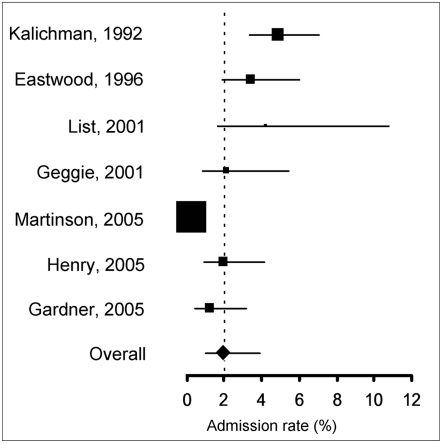
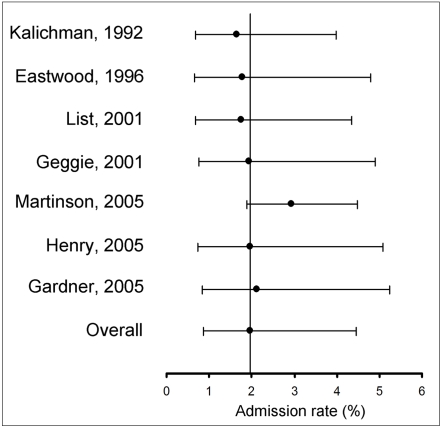
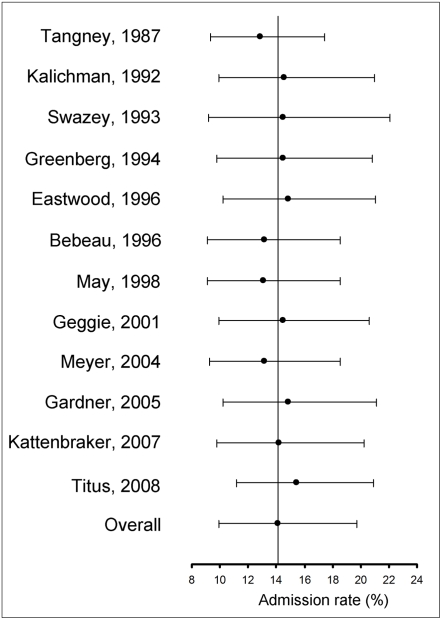
The frequency with which scientists fabricate and falsify data, or commit other forms of scientific misconduct is a matter of controversy. Many surveys have asked scientists directly whether they have committed or know of a colleague who committed research misconduct, but their results appeared difficult to compare and synthesize. This is the first meta-analysis of these surveys. To standardize outcomes, the number of respondents who recalled at least one incident of misconduct was calculated for each question, and the analysis was limited to behaviours that distort scientific knowledge: fabrication, falsification, "cooking" of data, etc... Survey questions on plagiarism and other forms of professional misconduct were excluded. The final sample consisted of 21 surveys that were included in the systematic review, and 18 in the meta-analysis. A pooled weighted average of 1.97% (N = 7, 95%CI: 0.86-4.45) of scientists admitted to have fabricated, falsified or modified data or results at least once--a serious form of misconduct by any standard--and up to 33.7% admitted other questionable research practices. In surveys asking about the behaviour of colleagues, admission rates were 14.12% (N = 12, 95% CI: 9.91-19.72) for falsification, and up to 72% for other questionable research practices. Meta-regression showed that self reports surveys, surveys using the words "falsification" or "fabrication", and mailed surveys yielded lower percentages of misconduct. When these factors were controlled for, misconduct was reported more frequently by medical/pharmacological researchers than others. Considering that these surveys ask sensitive questions and have other limitations, it appears likely that this is a conservative estimate of the true prevalence of scientific misconduct.
Overview
CoChat Summary
TL;DR
This systematic review and meta-analysis of survey data estimated that about 2% of scientists admitted to fabricating, falsifying, or modifying data or results at least once, while 14.12% reported knowing a colleague who did so. The paper argues these are conservative estimates and that methodological choices strongly shape the observed rates.
Key findings
- Across surveys explicitly asking whether scientists ever fabricated or falsified data or altered/modifed results, the pooled weighted estimate was 1.97% (95% CI 0.86–4.45; N = 7), with significant heterogeneity (Cochran’s Q = 61.7777, df = 6, P < 0.0001).
- When only questions explicitly using the words “fabrication” or “falsification” were included, the pooled estimate for self-reports was 1.06% (95% CI 0.31–3.51; N = 4).
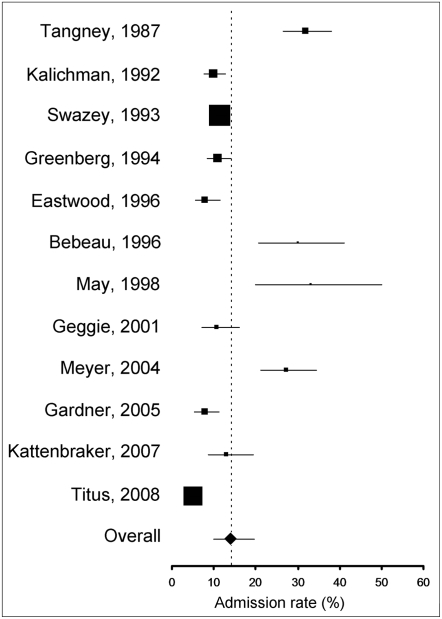
- For reports about colleagues’ misconduct, the pooled weighted estimate was 14.12% (95% CI 9.91–19.72; N = 12); restricting to questions using “fabrication” or “falsification” gave 12.34% (95% CI 8.43–17.71; N = 11).
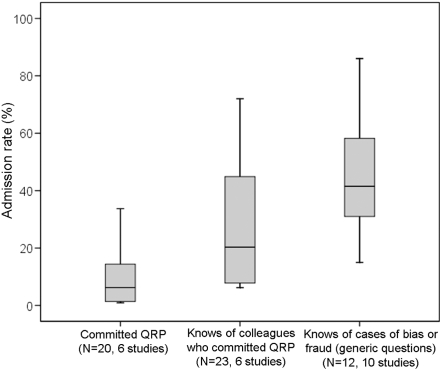
- Other questionable research practices were reported more often: up to 33.7% in self-reports and up to 72% when asking about colleagues.
Methods
- Systematic review and meta-analysis of quantitative surveys asking scientists whether they had committed or observed scientific misconduct in the past; plagiarism and other non-knowledge-distorting misconduct were excluded.
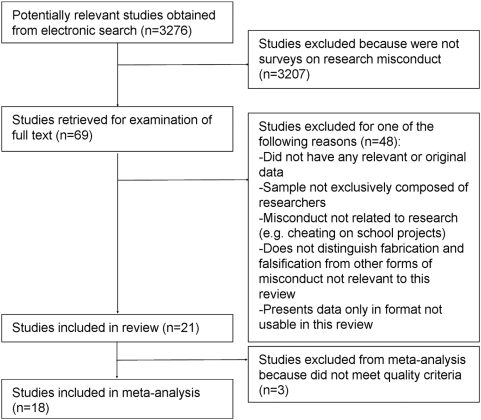
- Searches were run in the first two weeks of August 2008 across citation databases, journals, grey literature sources, and internet search engines; the final review included 21 studies, with 18 in the meta-analysis.
- Main analysis computed the proportion recalling at least one incident, logit-transformed and inverse-variance weighted in a random-effects meta-analysis; meta-regression tested methodological factors such as self vs. non-self reports, mailed vs. handed-out surveys, and use of the words “fabrication”/“falsification.”
Limitations
- The paper states that using the percentage of respondents recalling at least one incident is a rough measure of misconduct frequency; this can under- or overestimate prevalence depending on whether respondents committed multiple incidents or only one.
- The paper notes that non-response bias was recognized by most surveys as a limitation, and that the validity of self-reports may be affected by social expectations; the text also suggests self-reports likely underestimate misconduct.
- Evident from the text: the included studies were heterogeneous in methods and wording, and some outcomes were too diverse for meaningful meta-analysis, so only crude unweighted parameters were calculated for broader questionable research practices.
Model-written summary. Check it against the paper before relying on it.
Integrity signals
Registry
Cites
Statistics
Figures
Verification
Claims the paper makes
0 Valid · 0 Not valid · 14 Not checked · 61 Own results and interpretations
A result the paper reports from its own data — it cites no other source for it, so there is none to check. The quote shows it is in the paper.
In the paper
“When these factors were controlled for, misconduct was reported more frequently by medical/pharmacological researchers than others.”
§ How Many Scientists Fabricate and Falsify Research? A Systematic Review and Meta-Analysis of Survey Data > Abstract
plainstates an association- Asserted: passes — The authors put it forward as true.
- Checkable: passes — It can be checked against evidence.
- Load-bearing: passes — The paper’s conclusions depend on it.
- Based: passes — The paper gives a reason why it holds.
- Rests on 2 assumptions not shown here.
A result the paper reports from its own data — it cites no other source for it, so there is none to check. The quote shows it is in the paper.
In the paper
“A pooled weighted average of 1.97% (N = 7, 95%CI: 0.86–4.45) of scientists admitted to have fabricated, falsified or modified data or results at least once –a serious form of misconduct by any standard– and up to 33.7% admitted other questionable research practices.”
§ How Many Scientists Fabricate and Falsify Research? A Systematic Review and Meta-Analysis of Survey Data > Abstract
plainn = 7- Asserted: passes — The authors put it forward as true.
- Checkable: passes — It can be checked against evidence.
- Load-bearing: passes — The paper’s conclusions depend on it.
- Based: passes — The paper gives a reason why it holds.
- Rests on 2 assumptions not shown here.
A result the paper reports from its own data — it cites no other source for it, so there is none to check. The quote shows it is in the paper.
In the paper
“A pooled weighted average of 1.97% (N = 7, 95%CI: 0.86–4.45) of scientists admitted to have fabricated, falsified or modified data or results at least once –a serious form of misconduct by any standard– and up to 33.7% admitted other questionable research practices.”
§ How Many Scientists Fabricate and Falsify Research? A Systematic Review and Meta-Analysis of Survey Data > Abstract
plain- Asserted: passes — The authors put it forward as true.
- Checkable: passes — It can be checked against evidence.
- Load-bearing: passes — The paper’s conclusions depend on it.
- Based: passes — The paper gives a reason why it holds.
- Rests on 2 assumptions not shown here.
A result the paper reports from its own data — it cites no other source for it, so there is none to check. The quote shows it is in the paper.
In the paper
“In surveys asking about the behaviour of colleagues, admission rates were 14.12% (N = 12, 95% CI: 9.91–19.72) for falsification, and up to 72% for other questionable research practices.”
§ How Many Scientists Fabricate and Falsify Research? A Systematic Review and Meta-Analysis of Survey Data > Abstract
plainn = 12- Asserted: passes — The authors put it forward as true.
- Checkable: passes — It can be checked against evidence.
- Load-bearing: passes — The paper’s conclusions depend on it.
- Based: passes — The paper gives a reason why it holds.
- Rests on 2 assumptions not shown here.
A result the paper reports from its own data — it cites no other source for it, so there is none to check. The quote shows it is in the paper.
In the paper
“Meta-analysis yielded mean pooled estimates that are higher than most previous estimates.”
§ How Many Scientists Fabricate and Falsify Research? A Systematic Review and Meta-Analysis of Survey Data > Introduction
plain- Asserted: passes — The authors put it forward as true.
- Checkable: passes — It can be checked against evidence.
- Load-bearing: passes — The paper’s conclusions depend on it.
- Based: passes — The paper gives a reason why it holds.
- Rests on 2 assumptions not shown here.
31 more claims
Create a free account to see all 75 claims and to verify the 4 references still open.
- It may state two separate claims as one. 24
- Probably not a substantial claim. 25
Claims other papers make about this one
Each is checked against this paper’s own text: does it say what the citing paper says it does?
The cited source says what the claim attributes to it.
In the citing paper
“there are other more common sources of unreliability in the literature (41)(42)(43)(44)”
From Misconduct accounts for the majority of retracted scientific publications (2012) · cites this paper as [43]
The cited source says what the claim attributes to it.
In the citing paper
“The prevalence of researchers who have been involved in scientific misconduct is estimated to be around 2% [2]”
From Checklist to assess Trustworthiness in RAndomised Controlled Trials (TRACT checklist): concept proposal and pilot (2023) · cites this paper as [2]
The cited source says what the claim attributes to it.
In the citing paper
“This is how a small number of people 40 with flexible morals can pollute the scientific literature disproportionately.”
From Fraudulent studies are undermining the reliability of systematic reviews: on the prevalence of problematic images in preclinical depression studies (2025) · cites this paper as [40]
The cited source says what the claim attributes to it.
In the citing paper
“A meta-analysis by Fanelli, combining the results of 18 published surveys, found that 1.9% of researchers have admitted to modification, falsification, or fabrication of data (3).”
From The Prevalence of Inappropriate Image Duplication in Biomedical Research Publications (2016) · cites this paper as [3]
The cited source says what the claim attributes to it.
In the citing paper
“A systematic review and meta-analysis of survey data estimated that 1.97% of authors admitted to have fabricated, falsified, or modified data or results at least once and, in surveys asking about the behavior of colleagues, the admission rate was 14.12% for falsification [13].”
From No raw data, no science: another possible source of the reproducibility crisis (2020) · cites this paper as [13]
6 more claims about this paper
Create a free account to see every claim other papers make about this one.
Citations
Cites
(2000) · Cited by 9,198
The Sociology of Science: Theoretical and Empirical Investigations
Kaplan, N., Merton, R. K., & Storer, N. W. (1974) · Technology and Culture · doi:10.2307/3102264 · Cited by 4,005
The Normative Structure of Science
Merton, R. Κ. (1973) · Medical Entomology and Zoology · Cited by 2,315
The Hazards of Scoring the Quality of Clinical Trials for Meta-analysis
Jüni, P. (1999) · JAMA · doi:10.1001/jama.282.11.1054 · Cited by 1,981 · cited 1×
“All remaining papers were included, and were not graded on a quality scale, because the validity and use of quality measures in meta-analysis is controversial [21], [22].”
BackgroundScope and Impact of Financial Conflicts of Interest in Biomedical Research: A Systematic Review
Bekelman, J. E., Li, Y., & Gross, C. P. (2003) · JAMA · doi:10.1001/jama.289.4.454 · Cited by 1,816 · cited 1×
“This would support growing fears that the large financial interests that often drive medical research are severely biasing it [50], [51], [52].”
BackgroundTourangeau, R., & Smith, T. W. (1996) · Public Opinion Quarterly · doi:10.1086/297751 · Cited by 1,295 · cited 1×
“However, the accuracy of responses to sensitive questions is often independent of response rates, and depends strongly on respondents' perception of anonymity and confidentiality [43], [44].”
BackgroundA comparison of methods to detect publication bias in meta‐analysis
Macaskill, P., Walter, S. D., & Irwig, L. (2001) · Statistics in Medicine · doi:10.1002/sim.698 · Cited by 1,286 · cited 1×
“The popular funnel-plot-based methods to test for publication bias in meta-analysis are inappropriate and potentially misleading when the number of included studies is small and heterogeneity is large [25], [26].”
MethodMartinson, B. C., Anderson, M. S., & de Vries, R. (2005) · Nature · doi:10.1038/435737a · Cited by 1,096 · cited 9×
“All the above results were robust with respect to inclusion or exclusion of any particular study, with perhaps one exception: Martinson et al. (2005) [19], which is one of the largest and most frequently cited surveys on misconduct published to date.”
BackgroundMethodResultInfluentialAdjusting for publication bias in the presence of heterogeneity
Terrin, N., Schmid, C. H., Lau, J., & Olkin, I. (2003) · Statistics in Medicine · doi:10.1002/sim.1461 · Cited by 809 · cited 1×
“The popular funnel-plot-based methods to test for publication bias in meta-analysis are inappropriate and potentially misleading when the number of included studies is small and heterogeneity is large [25], [26].”
MethodIs Academic Medicine for Sale?
Angell, M. (2000) · New England Journal of Medicine · doi:10.1056/nejm200005183422009 · Cited by 582
Research works printed but not linked: 2
- Eastwood S Derish P Leash E Ordway S 1996 Ethical issues in biomedical research: perceptions and practices of postdoctoral research fellows responding to a survey. Science and Engineering Ethics 2 89 114 11657788 · DOI
- Kattenbraker MS 2007 Health education research and publication: ethical considerations and the response of health educators Carbondale Southern Illinois University.Doctoral dissertation
Cited by
Items 1,601–1,700 of 1,924
On the Value of Biomedical Research and Medical Care
Catillon, M. (2020) · Digital Access to Scholarship at Harvard (DASH) (Harvard University) · Cited by 1
Meta Research: Replication of Significant Results --- Modeling the Effects of p-HackingPreprint
Ulrich, R., & Miller, J. O. (2020) · PsyArXiv (OSF Preprints) · doi:10.31234/osf.io/tu7zr · Cited by 1
Psychological science from 'publish or perish' to 'trust but verify'
Keljanović, A. (2021) · Zbornik radova Filozofskog fakulteta u Pristini · doi:10.5937/zrffp51-24851
Evidence Based Practice Integration into Polygraph Practice: A suggested paradigm
Amsel, T. T., & Ginton, A. (2021) · European Polygraph · doi:10.2478/ep-2021-0001
Fourteen Crutches for Mediocrity. The logismoi that jeopardize good research and publication
Herbella, F. A. M., Sarr, M. G., & Patti, M. G. (2021) · Cirugía Española · doi:10.1016/j.ciresp.2021.05.012
MacEntee, M. I. (2012) · Gerodontology · doi:10.1111/j.1741-2358.2012.00682.x
Replik auf die Kommentare von Dirnagl, Lenz, Montag, Müller, Steins-Löber und Zimmermann
Spanagel, R. (2021) · SUCHT - Zeitschrift für Wissenschaft und Praxis / Journal of Addiction Research and Practice · doi:10.1024/0939-5911/a000724
Medical publishing: a flawed model in dire need of reform
Gupta, N., & Kapur, S. (2021) · The European Journal of Psychiatry · doi:10.1016/j.ejpsy.2020.12.001
Dealing with Failure and Stress in Academic Research
Schmidt, B. Z. (2021) · Springer eBooks · doi:10.1007/978-3-030-85571-0_6
The Quality of Randomized Controlled Trial in Cochrane Kidney and Transplant Group
Salehi‐Pourmehr, H., Mostafaei, A., Mehdizadeh, A., Hajebrahimi, S., Hosseini, L., Sheikhalipour, Z., & Abolhasanpour, N. (2021) · Journal of Urological Surgery · doi:10.4274/jus.galenos.2021.2021.0030
“The most common causes of misconduct in clinical research are financial interest, professional ambitions to become famous, complex study design, and consequently, the lack of researcher motivation or laziness and expectations of organization or government (25).”
BackgroundRoy-Vallières, M. (2021) · Canadian Journal of Education / Revue canadienne de l éducation · doi:10.53967/cje-rce.v44i4.4859
“Cet intérêt marqué pourrait être lié aux résultats d’études récentes qui laissent penser que les instances d’inconduites en recherche connaissent une augmentation dans les dernières années (Fanelli, 2009 ; Nature, 2013).”
BackgroundThe Ambit of Ethics in the South African Academic Institutions
Shange, X. M. (2022) · IGI Global eBooks · doi:10.4018/978-1-6684-4507-5.ch016
Цитируемость, показатели цитируемости и качество исследований: обзор базовых понятий и теорий
Aksnes, D. W., ЛАНГФЕЛТ, Л., & ВУТЕРС, П. (2021) · Международный форум по информации · doi:10.36535/0203-6460-2021-03-1
Wer sind die Akteure im akademischen System?
Burghardt, J. (2021) · Springer eBooks · doi:10.1007/978-3-662-63893-4_8
Forschungsbetrug und problematische Forschungspraktiken
Burghardt, J. (2021) · Springer eBooks · doi:10.1007/978-3-662-63893-4_3
Toma, C., Padureanu, L., & Toma, B. (2022) · bioRxiv (Cold Spring Harbor Laboratory) · doi:10.1101/2022.01.23.477400
“(Nath et al. 2006; Fanelli 2009; Steen 2011; Poulton 2007; Oransky et al. 2021).”
The Dynamics of Consensus and Academic Communities
Muller, S. (2021) · Debating higher education: philosophical perspectives · doi:10.1007/978-3-030-84447-9_6
On Research Integrity in Arboriculture and (Urban) Forestry: a qualitative systematic reviewPreprint
Sterken, P. (2021) · OSF Preprints (OSF Preprints) · doi:10.31219/osf.io/dzfbx
Trust, Control, and Responsibility in Research – An Accountability Perspective
Hoecht, A. (2021) · Higher education dynamics · doi:10.1007/978-3-030-87037-9_9 · Cited by 1
Subjectivity, Truth, and Theological Anthropology
Scherz, P. (2019) · Cambridge University Press eBooks · doi:10.1017/9781108593694.009
Scherz, P. (2019) · Cambridge University Press eBooks · doi:10.1017/9781108593694.001
Good, P. I., & Hardin, J. W. (2012) · Wiley eBooks · doi:10.1002/9781118360125.biblio
Haug, C. J., Hofmann, B., Irgens-Jensen, H., Nagel, A., Nydal, R., Rognstad, O.-A., Solberg, B., & Kalleberg, R. (2016) · doi:10.17585/noasp.8.26
The Practices Shaping the Entrepreneurial Subject
Scherz, P. (2019) · Cambridge University Press eBooks · doi:10.1017/9781108593694.006
Liao, T. F. (2020) · Cambridge University Press eBooks · doi:10.1017/9781108762519.004
Acquiring the Virtue of Truth-Speaking in Science
Scherz, P. (2019) · Cambridge University Press eBooks · doi:10.1017/9781108593694.008
Scherz, P. (2019) · Cambridge University Press eBooks · doi:10.1017/9781108593694.011
Teleology and the Craft of Science
Scherz, P. (2019) · Cambridge University Press eBooks · doi:10.1017/9781108593694.005
Scherz, P. (2019) · Cambridge University Press eBooks · doi:10.1017/9781108593694.004
Scherz, P. (2019) · Cambridge University Press eBooks · doi:10.1017/9781108593694.010
Reshaping the Entrepreneurial Subject of Science
Scherz, P. (2019) · Cambridge University Press eBooks · doi:10.1017/9781108593694.007
Scherz, P. (2019) · Cambridge University Press eBooks · doi:10.1017/9781108593694.002
Stewart, C. N. (2011) · Wiley eBooks · doi:10.1002/9781119978862.refs
Replication crisisPreprint
Quang-Loc, N. (2022) · OSF Preprints (OSF Preprints) · doi:10.31219/osf.io/4wd5x
Biomedical Research and Program Evaluation
Greenwald, H. P. (2022) · Wiley eBooks · doi:10.1002/9781119812234.ch8
Cohort Studies, Meta-analyses, and Clinical Trials in Childhood Hypertension
Larkins, N., & Craig, J. C. (2022) · Springer eBooks · doi:10.1007/978-3-319-31420-4_54-2
Ética en la investigación científica; más allá de normativas e indicadores
Salamanca, E. J. F., & Hernández, S. B. F. (2021) · Ustasalud · doi:10.15332/us.v21i1.2637
Transparent, Open, and Reproducible Prevention SciencePreprint
Grant, S., Wendt, K. E., Leadbeater, B. J. R., et al. (2020) · doi:10.31222/osf.io/d2y43
Ornithology from the Tree Tops
Bijlsma, R. G. (2012) · Ardea · doi:10.5253/078.100.0201
Ballantyne, N. (2019) · Oxford University Press eBooks · doi:10.1093/oso/9780190847289.003.0006
Mellenbergh, G. J. (2019) · Springer eBooks · doi:10.1007/978-3-030-12272-0_20 · Cited by 1
Kline, J. A. (2018) · Faculty Opinions – Post-Publication Peer Review of the Biomedical Literature · doi:10.3410/f.726772120.793551762
Elman, C., Gerring, J., & Mahoney, J. (2020) · Cambridge University Press eBooks · doi:10.1017/9781108762519.019
BJOHNS, E.-I.-C. (2019) · Bengal Journal of Otolaryngology and Head Neck Surgery · doi:10.47210/bjohns.2019.v27i2.274
One Possible Cause of the Recent Increase in “Fraudulent” Research
Vogel, W. H. (2018) · Biomedical Journal of Scientific & Technical Research · doi:10.26717/bjstr.2018.07.001433
Chessler, S. D. (2019) · Faculty Opinions – Post-Publication Peer Review of the Biomedical Literature · doi:10.3410/f.726772120.793557759
Les pratiques de recherche ouvertes en psychologiePreprint
Lantian, A. (2020) · doi:10.31234/osf.io/tdy62
Golemis, E. A. (2019) · Faculty Opinions – Post-Publication Peer Review of the Biomedical Literature · doi:10.3410/f.726772120.793559699
Ballantyne, N. (2019) · Oxford University Press eBooks · doi:10.1093/oso/9780190847289.003.0010
Approaches to Academic Integrity in Medical and Health Research
Braunack‐Mayer, A., & Street, J. (2015) · Springer eBooks · doi:10.1007/978-981-287-079-7_46-1
Freckelton, Q. C. I. (2019) · Springer eBooks · doi:10.1007/978-3-319-76040-7_6-1 · Cited by 1
What are these results telling me?
Scicluna, E. A. (2012) · International journal of infection control · doi:10.3396/ijic.v8i4.034.12
Bowen, R. T. (2009) · CRC Press eBooks · doi:10.1201/b10367-15
Borovečki, A. (2014) · Springer eBooks · doi:10.1007/978-3-319-05544-2_359-1
Mergny, J. (2020) · Faculty Opinions – Post-Publication Peer Review of the Biomedical Literature · doi:10.3410/f.737405003.793575646
Williams–Jones, B., Mathieu, G., & Smith, E. M. R. (2015) · Les Presses de l'Université de Montréal eBooks · doi:10.4000/books.pum.4310
Khajuria, A., Khajuria, A. K., & Whitehouse, C. (2015) · British Journal of Hospital Medicine · doi:10.12968/hmed.2015.76.9.548
Ballantyne, N. (2019) · Oxford University Press eBooks · doi:10.1093/oso/9780190847289.003.0007
Analytic Review as a Solution to the Misreporting of Statistical Results in Psychological SciencePreprint
Sakaluk, J. K., Williams, A. J., & Biernat, M. (2017) · PsyArXiv (OSF Preprints) · doi:10.31234/osf.io/y6g89 · Cited by 2
Tourish, D. (2019) · Cambridge University Press eBooks · doi:10.1017/9781108616669.012
Good Clinical Practice (GCP) and Scientific Misconduct
Bloechl‐Daum, B. (2016) · Springer eBooks · doi:10.1007/978-3-319-27347-1_6
(2020) · Elsevier eBooks · doi:10.1016/b978-0-12-822596-7.16001-2
Barbour, V. M. (2018) · Springer eBooks · doi:10.1007/978-3-319-23514-1_48-1
Appendix B: RESOURCES AND REFERENCES FOR SCIENTIFIC INTEGRITY, ETHICS, AND GEOETHICS
Gundersen, L. C. (2017) · Special publications · doi:10.1002/9781119067825.app2
Almgren, H., Parsons, N., Bossche, S. V. D., & Marinazzo, D. (2020) · MetArXiv (OSF Preprints) · doi:10.31222/osf.io/9hg3j
Iedema, R. A. M. (2020) · Springer eBooks · doi:10.1007/978-3-030-62736-2_1
Ghazi-Tehrani, A. K., Burton, B., & Pontell, H. N. (2015) · Wiley eBooks · doi:10.1002/9781118519639.wbecpx020
Borovečki, A. (2016) · Springer eBooks · doi:10.1007/978-3-319-09483-0_359
How to Write a Review for a Scientific or Mathematical PaperPreprint
Roughan, M. (2020) · EdArXiv (OSF Preprints) · doi:10.35542/osf.io/fjue7
BJOHNS, E.-I.-C. (2019) · Bengal Journal of Otolaryngology and Head Neck Surgery · doi:10.47210/bjohns.2019.v27i1.273
Don't fall in common science pitfall!Preprint
Moustafa, K. (2018) · doi:10.31226/osf.io/ycjha
Scherz, P. (2019) · Cambridge University Press eBooks · doi:10.1017/9781108593694.012
The Use of Animals in Research
Shamoo, A. E., & Resnik, D. B. (2022) · Oxford University Press eBooks · doi:10.1093/oso/9780197547090.003.0010
Scientific Research and Ethics
Shamoo, A. E., & Resnik, D. B. (2022) · Oxford University Press eBooks · doi:10.1093/oso/9780197547090.003.0001
Shamoo, A. E., & Resnik, D. B. (2022) · Oxford University Press eBooks · doi:10.1093/oso/9780197547090.003.0005
Data Acquisition and Management
Shamoo, A. E., & Resnik, D. B. (2022) · Oxford University Press eBooks · doi:10.1093/oso/9780197547090.003.0003
Shamoo, A. E., & Resnik, D. B. (2022) · Oxford University Press eBooks · doi:10.1093/oso/9780197547090.003.0013
Fourteen Crutches for Mediocrity. The logismoi that jeopardize good research and publication
Herbella, F. A. M., Sarr, M. G., & Patti, M. G. (2022) · Cirugía Española (English Edition) · doi:10.1016/j.cireng.2022.05.009
Mentoring and the Research Environment
Shamoo, A. E., & Resnik, D. B. (2022) · Oxford University Press eBooks · doi:10.1093/oso/9780197547090.003.0009
The Protection of Human Subjects in Research
Shamoo, A. E., & Resnik, D. B. (2022) · Oxford University Press eBooks · doi:10.1093/oso/9780197547090.003.0011
Shamoo, A. E., & Resnik, D. B. (2022) · Oxford University Press eBooks · doi:10.1093/oso/9780197547090.003.0007
Science and Social Responsibility
Shamoo, A. E., & Resnik, D. B. (2022) · Oxford University Press eBooks · doi:10.1093/oso/9780197547090.003.0012
Development of a Concept Inventory on Open and Transparent Research PracticesPreprint
Markant, D. B., & Galati, A. (2022) · doi:10.31234/osf.io/vw3z8
Ashburn‐Nardo, L., Moss‐Racusin, C. A., Smith, J. L., Sanzari, C. M., Vescio, T. K., & Glick, P. (2022) · Frontiers in Psychology · doi:10.3389/fpsyg.2022.823147
“Rates of engagement in outright scientific misconduct and (perhaps less egregious but still problematic) questionable research practices (QRPs) are likely relatively low (Fanelli, 2009).”
BackgroundMentiras, maquillajes y mercantilización en la Psicología
Aguayo, L. V. (2018) · LA Referencia (Red Federada de Repositorios Institucionales de Publicaciones Científicas)
(2021) · Mardaga eBooks · doi:10.3917/mard.hanse.2021.01.0359
Surgical publications: detecting and preventing fraud
Koullouros, M., & Maddern, G. J. (2022) · ANZ Journal of Surgery · doi:10.1111/ans.17579
“The scientists observing misconduct most frequently were medical scientists.(6) This observation is aligned with a study which showed that 55.”
BackgroundResultAarts, A. A. (2022) · SSRN Electronic Journal · doi:10.2139/ssrn.4176916
Culturally Fluent Theories, Metascience and Scientific Progress: A Case ExamplePreprint
Oyserman, D. (2022) · doi:10.31234/osf.io/pgswh
(2022) · Haug Verlag in Georg Thieme Verlag KG eBooks · doi:10.1055/b-0042-191131
Interpreting and Implementing Evidence for Quality Research
Cahan, E. M., & Shea, K. G. (2022) · Springer eBooks · doi:10.1007/978-3-031-07105-8_13
The Natural Selection of Bad Psychological ScientistsPreprint
Aarts, A. A. (2022) · SSRN Electronic Journal · doi:10.2139/ssrn.4176925
Preregistration of studies with existing data
(2022) · doi:10.31234/osf.io/65z3b
Wissenschaftliche Fairness: Wissenschaft zwischen Integrität und Fehlverhalten
Frisch, K., Hagenström, F., & Reeg, N. (2022) · Science studies · doi:10.1515/9783839459669 · Cited by 7
Hagenström, F. (2022) · Science studies · doi:10.14361/9783839459669-005
Metadata
- Authors
- Fanelli, D.
- Affiliations
- University of Edinburgh (GB)
- Corresponding author
- Fanelli, Daniele
- ORCID
- Fanelli, Daniele
- Venue
- PLoS ONE
- Publisher
- Public Library of Science (PLoS)
- Published
- 2009-05-29
- Volume
- 4
- Issue
- 5
- Pages
- e5738
- ISSN
- 1932-6203 (ISSN-L)
- PMC
- PMC2685008
- OpenAlex
- W2152243616
- Cited by
- 1,911
- References
- 74
- Citations by year
- 2026: 77 · 2025: 110 · 2024: 128 · 2023: 136 · 2022: 157 · 2021: 145 · 2020: 163 · 2019: 166 · 2018: 125 · 2017: 125 · 2016: 119 · 2015: 106 · 2014: 82 · 2013: 93 · 2012: 84
- FWCI
- 19.42
- Type
- journal article
- Language
- en
- Open access
- gold
- doi.org
- Locations
- PLoS ONE (publishedVersion, cc-by)
- PubMed Central (publishedVersion, cc-by)
- PubMed (publishedVersion)
- Edinburgh Research Explorer (University of Edinburgh) (acceptedVersion, public-domain)
- RePEc: Research Papers in Economics (submittedVersion)
- DOAJ (DOAJ: Directory of Open Access Journals) (submittedVersion, cc-by-sa)
- Figshare (submittedVersion, cc-by)
- DigitalGeorgetown (Georgetown University Library) (submittedVersion)
- Funders
- European Commission (221441)
- Economic and Social Research Council (ES/F028180/1)
- Topics
- Social Sciences › Education › Academic integrity and plagiarism
- Physical Sciences › Mathematics › Statistics and Probability › Benford’s Law and Fraud Detection
- Social Sciences › Library and Information Sciences › Academic Publishing and Open Access
- Keywords
- research misconduct, scientific fraud, data fabrication, data falsification, questionable research practices, self-report questionnaire
- MeSH terms
- Data Collection, Regression Analysis, Research Personnel, Scientific Misconduct, Ethics, Research
About these checks
Registry, retraction, Cites and statistics results are computed, not judged, with one exception: a printed reference that no index lists is read once by a model before it counts as a citation error. Claims are extracted by a model and kept only when their quote appears verbatim in the text; each cited source is then checked, with a model’s help, for whether it says what the claim relies on. Those verdicts can be wrong — read the claim’s quote and the cited source before relying on one.
A language model drew the claims from the paper on 2026-10-10, under version 3 of the claim definition (model deepseek-v4.1-flash, prompt extract-v3).
A second model labelled each claim on 2026-10-10 (model jev-1.13-20260917, definition revision gold-guideline-v0.2).
Statistics and arithmetic are recomputed, not judged.
Confidence bands are shown only for fields calibrated on our annotated test set. None is calibrated yet, so no band is shown.
What counts as a claim ›How we measure confidence ›How we check this ›
Are you an author, or do you see a problem with this page? Request a review
Data sources
Bibliographic data: Semantic Scholar, OpenAlex, Crossref.
Contains information from the Semantic Scholar Academic Graph Datasets, made available under the ODC Attribution License (ODC-BY 1.0).
Semantic Scholar’s data is described in: Kinney, R., et al. (2023). The Semantic Scholar Open Data Platform. arXiv:2301.10140.
