

How Many Scientists Fabricate and Falsify Research? A Systematic Review and Meta-Analysis of Survey Data
Open accessThe DOI matches its Crossref record; 66 of the 74 references it cites were found in a registry or an index; none of the 21 sources its claims cite is checked for support yet.
Abstract
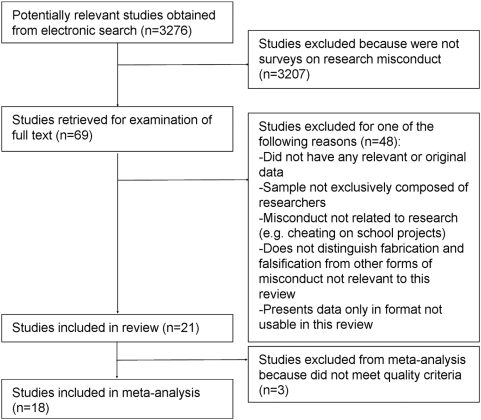
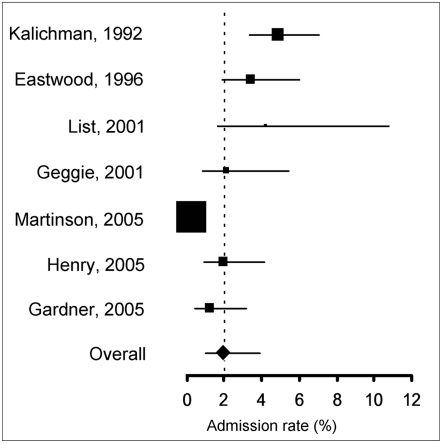
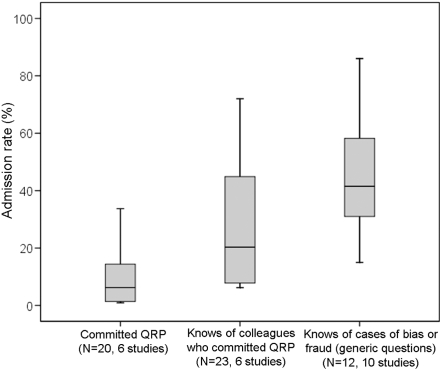
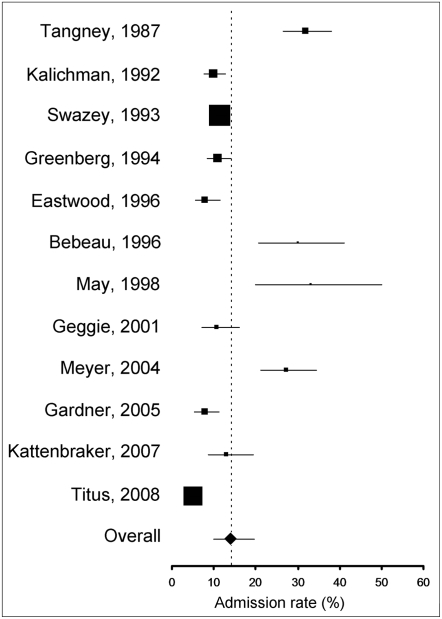
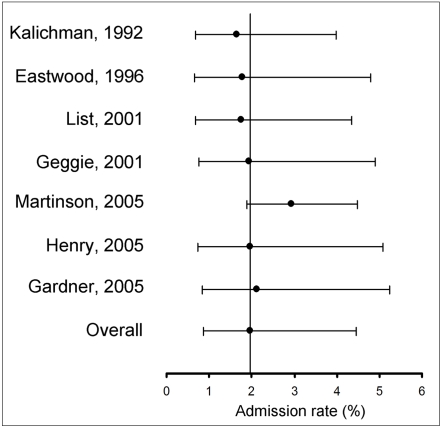
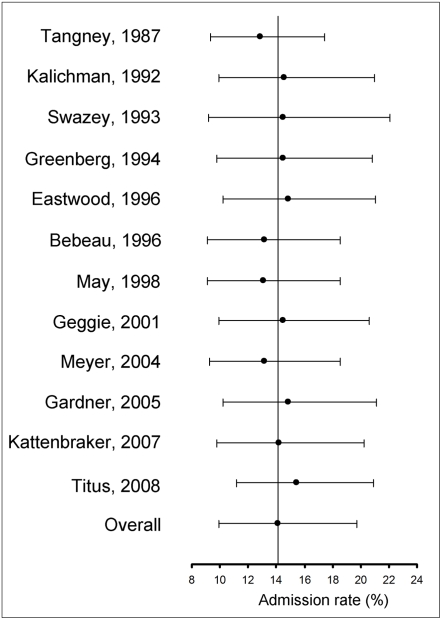
The frequency with which scientists fabricate and falsify data, or commit other forms of scientific misconduct is a matter of controversy. Many surveys have asked scientists directly whether they have committed or know of a colleague who committed research misconduct, but their results appeared difficult to compare and synthesize. This is the first meta-analysis of these surveys. To standardize outcomes, the number of respondents who recalled at least one incident of misconduct was calculated for each question, and the analysis was limited to behaviours that distort scientific knowledge: fabrication, falsification, "cooking" of data, etc... Survey questions on plagiarism and other forms of professional misconduct were excluded. The final sample consisted of 21 surveys that were included in the systematic review, and 18 in the meta-analysis. A pooled weighted average of 1.97% (N = 7, 95%CI: 0.86-4.45) of scientists admitted to have fabricated, falsified or modified data or results at least once--a serious form of misconduct by any standard--and up to 33.7% admitted other questionable research practices. In surveys asking about the behaviour of colleagues, admission rates were 14.12% (N = 12, 95% CI: 9.91-19.72) for falsification, and up to 72% for other questionable research practices. Meta-regression showed that self reports surveys, surveys using the words "falsification" or "fabrication", and mailed surveys yielded lower percentages of misconduct. When these factors were controlled for, misconduct was reported more frequently by medical/pharmacological researchers than others. Considering that these surveys ask sensitive questions and have other limitations, it appears likely that this is a conservative estimate of the true prevalence of scientific misconduct.
Overview
CoChat Summary
TL;DR
This systematic review and meta-analysis of survey data estimated that about 2% of scientists admitted to fabricating, falsifying, or modifying data or results at least once, while 14.12% reported knowing a colleague who did so. The paper argues these are conservative estimates and that methodological choices strongly shape the observed rates.
Key findings
- Across surveys explicitly asking whether scientists ever fabricated or falsified data or altered/modifed results, the pooled weighted estimate was 1.97% (95% CI 0.86–4.45; N = 7), with significant heterogeneity (Cochran’s Q = 61.7777, df = 6, P < 0.0001).
- When only questions explicitly using the words “fabrication” or “falsification” were included, the pooled estimate for self-reports was 1.06% (95% CI 0.31–3.51; N = 4).
- For reports about colleagues’ misconduct, the pooled weighted estimate was 14.12% (95% CI 9.91–19.72; N = 12); restricting to questions using “fabrication” or “falsification” gave 12.34% (95% CI 8.43–17.71; N = 11).
- Other questionable research practices were reported more often: up to 33.7% in self-reports and up to 72% when asking about colleagues.
Methods
- Systematic review and meta-analysis of quantitative surveys asking scientists whether they had committed or observed scientific misconduct in the past; plagiarism and other non-knowledge-distorting misconduct were excluded.
- Searches were run in the first two weeks of August 2008 across citation databases, journals, grey literature sources, and internet search engines; the final review included 21 studies, with 18 in the meta-analysis.
- Main analysis computed the proportion recalling at least one incident, logit-transformed and inverse-variance weighted in a random-effects meta-analysis; meta-regression tested methodological factors such as self vs. non-self reports, mailed vs. handed-out surveys, and use of the words “fabrication”/“falsification.”
Limitations
- The paper states that using the percentage of respondents recalling at least one incident is a rough measure of misconduct frequency; this can under- or overestimate prevalence depending on whether respondents committed multiple incidents or only one.
- The paper notes that non-response bias was recognized by most surveys as a limitation, and that the validity of self-reports may be affected by social expectations; the text also suggests self-reports likely underestimate misconduct.
- Evident from the text: the included studies were heterogeneous in methods and wording, and some outcomes were too diverse for meaningful meta-analysis, so only crude unweighted parameters were calculated for broader questionable research practices.
Model-written summary. Check it against the paper before relying on it.
Integrity signals
Registry
Cites
Statistics
Figures
Verification
Claims the paper makes
0 Valid · 0 Not valid · 14 Not checked · 61 Own results and interpretations
A result the paper reports from its own data — it cites no other source for it, so there is none to check. The quote shows it is in the paper.
In the paper
“When these factors were controlled for, misconduct was reported more frequently by medical/pharmacological researchers than others.”
§ How Many Scientists Fabricate and Falsify Research? A Systematic Review and Meta-Analysis of Survey Data > Abstract
plainstates an association- Asserted: passes — The authors put it forward as true.
- Checkable: passes — It can be checked against evidence.
- Load-bearing: passes — The paper’s conclusions depend on it.
- Based: passes — The paper gives a reason why it holds.
- Rests on 2 assumptions not shown here.
A result the paper reports from its own data — it cites no other source for it, so there is none to check. The quote shows it is in the paper.
In the paper
“A pooled weighted average of 1.97% (N = 7, 95%CI: 0.86–4.45) of scientists admitted to have fabricated, falsified or modified data or results at least once –a serious form of misconduct by any standard– and up to 33.7% admitted other questionable research practices.”
§ How Many Scientists Fabricate and Falsify Research? A Systematic Review and Meta-Analysis of Survey Data > Abstract
plainn = 7- Asserted: passes — The authors put it forward as true.
- Checkable: passes — It can be checked against evidence.
- Load-bearing: passes — The paper’s conclusions depend on it.
- Based: passes — The paper gives a reason why it holds.
- Rests on 2 assumptions not shown here.
A result the paper reports from its own data — it cites no other source for it, so there is none to check. The quote shows it is in the paper.
In the paper
“A pooled weighted average of 1.97% (N = 7, 95%CI: 0.86–4.45) of scientists admitted to have fabricated, falsified or modified data or results at least once –a serious form of misconduct by any standard– and up to 33.7% admitted other questionable research practices.”
§ How Many Scientists Fabricate and Falsify Research? A Systematic Review and Meta-Analysis of Survey Data > Abstract
plain- Asserted: passes — The authors put it forward as true.
- Checkable: passes — It can be checked against evidence.
- Load-bearing: passes — The paper’s conclusions depend on it.
- Based: passes — The paper gives a reason why it holds.
- Rests on 2 assumptions not shown here.
A result the paper reports from its own data — it cites no other source for it, so there is none to check. The quote shows it is in the paper.
In the paper
“In surveys asking about the behaviour of colleagues, admission rates were 14.12% (N = 12, 95% CI: 9.91–19.72) for falsification, and up to 72% for other questionable research practices.”
§ How Many Scientists Fabricate and Falsify Research? A Systematic Review and Meta-Analysis of Survey Data > Abstract
plainn = 12- Asserted: passes — The authors put it forward as true.
- Checkable: passes — It can be checked against evidence.
- Load-bearing: passes — The paper’s conclusions depend on it.
- Based: passes — The paper gives a reason why it holds.
- Rests on 2 assumptions not shown here.
A result the paper reports from its own data — it cites no other source for it, so there is none to check. The quote shows it is in the paper.
In the paper
“Meta-analysis yielded mean pooled estimates that are higher than most previous estimates.”
§ How Many Scientists Fabricate and Falsify Research? A Systematic Review and Meta-Analysis of Survey Data > Introduction
plain- Asserted: passes — The authors put it forward as true.
- Checkable: passes — It can be checked against evidence.
- Load-bearing: passes — The paper’s conclusions depend on it.
- Based: passes — The paper gives a reason why it holds.
- Rests on 2 assumptions not shown here.
31 more claims
Create a free account to see all 75 claims and to verify the 4 references still open.
- It may state two separate claims as one. 24
- Probably not a substantial claim. 25
Claims other papers make about this one
Each is checked against this paper’s own text: does it say what the citing paper says it does?
The cited source says what the claim attributes to it.
In the citing paper
“there are other more common sources of unreliability in the literature (41)(42)(43)(44)”
From Misconduct accounts for the majority of retracted scientific publications (2012) · cites this paper as [43]
The cited source says what the claim attributes to it.
In the citing paper
“The prevalence of researchers who have been involved in scientific misconduct is estimated to be around 2% [2]”
From Checklist to assess Trustworthiness in RAndomised Controlled Trials (TRACT checklist): concept proposal and pilot (2023) · cites this paper as [2]
The cited source says what the claim attributes to it.
In the citing paper
“This is how a small number of people 40 with flexible morals can pollute the scientific literature disproportionately.”
From Fraudulent studies are undermining the reliability of systematic reviews: on the prevalence of problematic images in preclinical depression studies (2025) · cites this paper as [40]
The cited source says what the claim attributes to it.
In the citing paper
“A meta-analysis by Fanelli, combining the results of 18 published surveys, found that 1.9% of researchers have admitted to modification, falsification, or fabrication of data (3).”
From The Prevalence of Inappropriate Image Duplication in Biomedical Research Publications (2016) · cites this paper as [3]
The cited source says what the claim attributes to it.
In the citing paper
“A systematic review and meta-analysis of survey data estimated that 1.97% of authors admitted to have fabricated, falsified, or modified data or results at least once and, in surveys asking about the behavior of colleagues, the admission rate was 14.12% for falsification [13].”
From No raw data, no science: another possible source of the reproducibility crisis (2020) · cites this paper as [13]
6 more claims about this paper
Create a free account to see every claim other papers make about this one.
Citations
Cites
(2000) · Cited by 9,198
The Sociology of Science: Theoretical and Empirical Investigations
Kaplan, N., Merton, R. K., & Storer, N. W. (1974) · Technology and Culture · doi:10.2307/3102264 · Cited by 4,005
The Normative Structure of Science
Merton, R. Κ. (1973) · Medical Entomology and Zoology · Cited by 2,315
The Hazards of Scoring the Quality of Clinical Trials for Meta-analysis
Jüni, P. (1999) · JAMA · doi:10.1001/jama.282.11.1054 · Cited by 1,981 · cited 1×
“All remaining papers were included, and were not graded on a quality scale, because the validity and use of quality measures in meta-analysis is controversial [21], [22].”
BackgroundScope and Impact of Financial Conflicts of Interest in Biomedical Research: A Systematic Review
Bekelman, J. E., Li, Y., & Gross, C. P. (2003) · JAMA · doi:10.1001/jama.289.4.454 · Cited by 1,816 · cited 1×
“This would support growing fears that the large financial interests that often drive medical research are severely biasing it [50], [51], [52].”
BackgroundTourangeau, R., & Smith, T. W. (1996) · Public Opinion Quarterly · doi:10.1086/297751 · Cited by 1,295 · cited 1×
“However, the accuracy of responses to sensitive questions is often independent of response rates, and depends strongly on respondents' perception of anonymity and confidentiality [43], [44].”
BackgroundA comparison of methods to detect publication bias in meta‐analysis
Macaskill, P., Walter, S. D., & Irwig, L. (2001) · Statistics in Medicine · doi:10.1002/sim.698 · Cited by 1,286 · cited 1×
“The popular funnel-plot-based methods to test for publication bias in meta-analysis are inappropriate and potentially misleading when the number of included studies is small and heterogeneity is large [25], [26].”
MethodMartinson, B. C., Anderson, M. S., & de Vries, R. (2005) · Nature · doi:10.1038/435737a · Cited by 1,096 · cited 9×
“All the above results were robust with respect to inclusion or exclusion of any particular study, with perhaps one exception: Martinson et al. (2005) [19], which is one of the largest and most frequently cited surveys on misconduct published to date.”
BackgroundMethodResultInfluentialAdjusting for publication bias in the presence of heterogeneity
Terrin, N., Schmid, C. H., Lau, J., & Olkin, I. (2003) · Statistics in Medicine · doi:10.1002/sim.1461 · Cited by 809 · cited 1×
“The popular funnel-plot-based methods to test for publication bias in meta-analysis are inappropriate and potentially misleading when the number of included studies is small and heterogeneity is large [25], [26].”
MethodIs Academic Medicine for Sale?
Angell, M. (2000) · New England Journal of Medicine · doi:10.1056/nejm200005183422009 · Cited by 582
Research works printed but not linked: 2
- Eastwood S Derish P Leash E Ordway S 1996 Ethical issues in biomedical research: perceptions and practices of postdoctoral research fellows responding to a survey. Science and Engineering Ethics 2 89 114 11657788 · DOI
- Kattenbraker MS 2007 Health education research and publication: ethical considerations and the response of health educators Carbondale Southern Illinois University.Doctoral dissertation
Cited by
Items 1,101–1,200 of 1,924
Interventions to promote medical research integrity: a scoping review
Liu, S., Yang, Y., & Li, M. (2025) · BMC Medical Ethics · doi:10.1186/s12910-025-01275-5 · Cited by 5
“About 2% of scientists admitted to falsifying, falsifying or modifying data or results at least once, and an average of more than 14% of scientists observed these behaviors among their colleagues, the study found [11].”
Bishop, D. (2025) · Quantitative Science Studies · doi:10.1162/qss.a.394 · Cited by 4
Romero-García, L. E., Aguilar-Gallegos, N., & Gallardo, Y. (2025) · Journal of Academic Ethics · doi:10.1007/s10805-025-09698-w · Cited by 4
“In addition, some authors (Bolland et al., 2024; Fanelli, 2009) have expressed that only a small amount of misconduct is declared and asserted; this can be due to persons not being aware of their actions or having an imprecise association with misconduct, while others have no guilt nor…”
Janero, D. R. (2021) · Expert Opinion on Drug Discovery · doi:10.1080/17460441.2021.1893690 · Cited by 3
Good Clinical Practice (GCP) – an alternative, unarticulated narrative
Malhotra, S. (2021) · Indian Journal of Medical Ethics · doi:10.20529/ijme.2021.064 · Cited by 3
P-hacking: A Strategic Analysis
MacCoun, R. J. (2022) · Oxford University Press eBooks · doi:10.1093/oso/9780190938550.003.0011 · Cited by 7
Developing ethical research behaviour in doctoral students
Furtak, A. (2022) · South African Journal of Bioethics and Law · doi:10.7196/sajbl.2022.v15i2.813 · Cited by 3
Factors affecting the independence and reliability of Science and how these are perceived
Florides, G., & Christodoulides, P. (2023) · SN Social Sciences · doi:10.1007/s43545-023-00628-4 · Cited by 2
“Such ‘misbehaviors’ could be indicated as ‘questionable research practices’ and their impact on research can be negative (Fanelli 2009).”
BackgroundGreco, F., Ceruti, S., Martini, S., Picozzi, M., Cosentino, M., & Marino, F. (2023) · Journal of Academic Ethics · doi:10.1007/s10805-023-09497-1 · Cited by 4
“It is also worth noting that, although research misconduct is a widespread phenomenon, involving researchers of all ages and at all career levels (Fanelli & Tregenza, 2009), according to recent studies, PhD students and junior researcher are involved in questionable research behaviour in a…”
Decatastrophizing research irreproducibility
Jarvis, M. F. (2024) · Biochemical Pharmacology · doi:10.1016/j.bcp.2024.116090 · Cited by 3
Di, D., & Ecklund, E. H. (2024) · Science and Engineering Ethics · doi:10.1007/s11948-024-00505-0 · Cited by 3
“A meta-analysis in the US, the UK, and Australia further revealed that only 1.97% of scientists had been involved in fabrication, falsification, or plagiarism, but 33.7% admitted to other ethically problematic research practices (Fanelli, 2009).”
BackgroundInfluentialConnecting the dots in neuroscience research: The future of evidence synthesis
Hair, K., Arroyo-Araujo, M., Vojvodić, S., Economou, M., Wong, C., Tinsdeall, F., Smith, S., Rackoll, T., Sena, E. S., & McCann, S. (2024) · Experimental Neurology · doi:10.1016/j.expneurol.2024.115047 · Cited by 5
“Between 1 and 5 % of researchers self-report that they have engaged in such practices (Fanelli, 2009; Gopalakrishna et al., 2022; Phogat et al., 2023).”
Scientific Ethics and Integrity in the Context of Artificial Intelligence
Хоружа, Л. Л. (2025) · Pedagogical education theory and practice Psychology Pedagogy · doi:10.28925/2311-2409.2025.431 · Cited by 7
How bad gatekeepers undermine good science
Brooks, P. (2025) · Synthese · doi:10.1007/s11229-025-05346-3 · Cited by 5
“Steneck ( 2006 ) suggests that 1% of researchers have engaged in serious misconduct, while Fanelli (2009) finds that 1.97% of scientists self-report engaging in such behaviors at least once.”
InfluentialCan you believe all that you read in the medical journals?
Marcovitch, H. (2012) · Bone and Joint 360 · doi:10.1302/2048-0105.14.360056 · Cited by 3
Communication de la fraude scientifique
Zeitoun, J., & Rouquette, S. (2012) · La Presse Médicale · doi:10.1016/j.lpm.2012.05.002 · Cited by 4
“Si les chercheurs en biomédecine sont peu nombreux à reconnaître anonymement avoir eux-mêmes fraudé, ils sont beaucoup plus à déclarer avoir déjà observé chez d’autres de telles pratiques déviantes [23].”
A personal philosophy of a radiation oncologist
Suit, H. D. (2011) · Radiotherapy and Oncology · doi:10.1016/j.radonc.2011.05.001 · Cited by 3
Hand Wringing in Paradise: Scholarly Communication and the Intimate Twinges of Conscience
Dillon, D. (2012) · Journal of Library Administration · doi:10.1080/01930826.2012.707957 · Cited by 3
“Recent research published in the Public Library of Science found that 2% of scientists admit to falsifying data and 34% admit to other questionable research practices (Fanaelli, 2009, p. e5738).”
BackgroundEditors' Perceptions of Ethical and Managerial Problems in Political Science Journals
Jordan, S. R., & HILL, K. Q. (2012) · PS Political Science & Politics · doi:10.1017/s1049096512000789 · Cited by 3
“Evidence from a meta-analysis of relevant survey data from scholars in a wide variety of scientific and humanities disciplines suggests that research misconduct such as data falsification or fabrication may occur in the work of as many as 1:10,000 scientists (Fanelli 2009, 2).”
BackgroundWhat can Asian editors contribute to European editors?
Huh, S. Y. (2016) · Science Editing · doi:10.6087/kcse.79 · Cited by 3
Vignette research on messy and confusing problems in primary mental healthcare
Smit, E., & Derksen, J. J. L. (2017) · Europe’s Journal of Psychology · doi:10.5964/ejop.v13i2.1212 · Cited by 4
“Then results are guaranteed and hypotheses can nearly always be confirmed (Fanelli, 2009; Fanelli, 2012).”
BackgroundMaintaining the Public Trust in Journals with Ethical Publishing
Mycyk, M. B. (2017) · Journal of Medical Toxicology · doi:10.1007/s13181-017-0635-3 · Cited by 3
“2% of published papers include some degree of fraudulent work or other misconduct [3]—that is, a staggering number when considering that over 28,000 journals publish over 2,000,000 new articles each year.”
BackgroundBranco, A. (2018) · Language Resources and Evaluation Conference (LREC) · doi:10.63317/4hkgqvka3hi7 · Cited by 3
“…get accepted even in respectable journals (e.g. Bohannon (2011)); that the expectation of researchers vis a vis misconduct, as revealed in inquiries to scientists on questionable practices, scores higher than one might expect or would be ready to accept (e.g. Fanelli (2009)); among several others.”
BackgroundLópez-Cantos, F., & Gasteazi, A. M. (2019) · Perspectivas de la comunicación · doi:10.4067/s0718-48672019000100209 · Cited by 3
Medical publication: An insight into the future
Papadakis, M., & Zirngibl, H. (2020) · Injury · doi:10.1016/j.injury.2020.04.009 · Cited by 3
Regulating Academic Pressure: From Fast to Slow
François, K., Coessens, K., Vinckier, N., & Bendegem, J. P. V. (2020) · Journal of Philosophy of Education · doi:10.1111/1467-9752.12493 · Cited by 3
Scientific Misconduct and Fraud
Herbst, M. (2021) · The European Legacy · doi:10.1080/10848770.2021.1923247 · Cited by 3
SCIENTIFIC FRAUD Part II: From Past to Present, Facts and Analyses
Carafoli, E., & Bucci, E. M. (2022) · European Review · doi:10.1017/s1062798722000047 · Cited by 4
“And a larger survey on 11,647 researchers had revealed that 2% of them had committed an act of scientific fraud at least once in their careers, but about one third had admitted to having committed various types of misconduct (Fanelli 2009) even if not of real fraud.”
BackgroundPeer Review in Scholarly Journal Publishing
Roberts, J., Overstreet, K., Hendrick, R., & Mahar, J. (2020) · Springer eBooks · doi:10.1007/978-3-030-16759-2_5 · Cited by 3
Research Misconduct in Developing Countries
Mohammed, Z., & AbdelSalam, E. M. (2022) · The Egyptian Journal of Intensive care and Emergency Medicine ./The Egyptian Journal of Intensive care and Emergency Medicine · doi:10.21608/jicem.2022.136048.1000 · Cited by 5
“A meta-analysis of the published data surveys about research misconduct were studied by Fanelli (9), he found that among 18 articles which addressed the problem of misconduct only one study were from Africa and specifically was Nigeria.”
MethodTendances de la recherche sur l'intégrité scientifique
Mansour, A., & Ruphy, S. (2022) · Lato Sensu Revue de la Société de philosophie des sciences · doi:10.20416/lsrsps.v9i1.1 · Cited by 3
Research Retraction and Its Communication
Xu, S. B., & Hu, G. (2023) · Advances in information quality and management · doi:10.4018/978-1-6684-7366-5.ch030 · Cited by 3
Reidelbach, M., Ferrer, E., & Weber, M. (2023) · Proceedings of the Conference on Research Data Infrastructure · doi:10.52825/cordi.v1i.254 · Cited by 3
“The reasons for reproducibility issues are manifold, including intentional misbehaviour [3], but also incomplete documentation of applied methodologies and software, missing parameters or conditions, and inconsistent naming schemes [2].”
BackgroundIvory, J., & Elson, M. (2023) · Current Psychology · doi:10.1007/s12144-023-05216-6 · Cited by 6
“Entire bodies of literature in psychology and related fields suffer from issues with methods and analysis that inflate the significance of findings (Fanelli, 2009; John et al., 2012; Martinson et al., 2005; Rosenberg, 2005; Rosen - thal, 1979; Simmons et al., 2011 ).”
Questionable research practices in competitive grant funding: A survey
Conix, S., Peuter, S. D., BLOCK, A. D., & Vaesen, K. (2023) · PLoS ONE · doi:10.1371/journal.pone.0293310 · Cited by 7
“These DAGs were made on the basis of existing literature on QRPs, which suggests that field, gender and seniority, unlike other demographic characteristics, may be associated with the prevalence of QRPs in scientific research [1,2].”
BackgroundMethodPeuter, S. D., Dierickx, K., Meganck, M., Lerouge, I., Vandevelde, W., & Storms, G. (2024) · Accountability in Research · doi:10.1080/08989621.2024.2318245 · Cited by 4
“…previous studies reporting a higher prevalence of research mis-conduct and other unacceptable research practices in the Biomedical Sciences (Fanelli 2009; Gopalakrishna et al. 2022; Ravn and Sørensen 2021), our questionnaire did not assess research misconduct nor other unacceptable…”
InfluentialMayta‐Tristán, P. (2024) · ACTA MEDICA PERUANA · doi:10.35663/amp.2024.412.3175 · Cited by 6
“Así mismo, según una revisión sistemática del 2009, aproximadamente el 2% de autores autorreportaron haber cometido fraude científico alguna vez en sus vidas [13] .”
BackgroundGomes, D. G. E. (2025) · Proceedings of the Royal Society B Biological Sciences · doi:10.1098/rspb.2024.1515 · Cited by 5
Remediation for Human Research Subjects Protections Non-Compliance: Concepts and Approaches
(2015) · Journal of Clinical Research & Bioethics · doi:10.4172/2155-9627.1000220 · Cited by 2
“The problem with estimating the true extent of non-compliance is that it-by definition-it is deviant behavior and therefore is hidden and can never be fully known [7,8].”
BackgroundTrends in science: successes and responsible research conduct
Nath, I. (2020) · Biologia Futura · doi:10.1007/s42977-020-00029-1 · Cited by 3
Bos, J. (2020) · Springer eBooks · doi:10.1007/978-3-030-48415-6_5 · Cited by 5
Montagni, I., Stahl-Timmins, W., Monneraud, L., & Kurth, T. (2020) · Les Enjeux de l information et de la communication · doi:10.3917/enic.027.0103 · Cited by 3
Forschungsethik und Forschungspraxis
Eisend, M., & Kuß, A. (2021) · Springer eBooks · doi:10.1007/978-3-658-32890-0_10 · Cited by 3
Hunsucker, R. L. (2013) · Evidence Based Library and Information Practice · doi:10.18438/b8tw39 · Cited by 3
PRINSIP PENTING PUBLIKASI ILMIAH DAN PENCEGAHAN FALSIFIKASI FABRIKASI
Aristya, V. E., & Taryono, T. (2021) · Refleksi Edukatika Jurnal Ilmiah Kependidikan · doi:10.24176/re.v11i2.5348 · Cited by 6
Critical Review on the Relationship between Glaucoma and Alzheimer's Disease
Rusciano, D. (2014) · Advances in Ophthalmology & Visual System · doi:10.15406/aovs.2014.01.00024 · Cited by 5
Ethical conundrums in research
LaChance, A., & Murphy, M. J. (2012) · Clinics in Dermatology · doi:10.1016/j.clindermatol.2011.06.011 · Cited by 3
When sorry seems to be the hardest word: CAM, free speech, and the British legal system
Milgrom, L. R. (2010) · Homeopathy · doi:10.1016/j.homp.2009.09.004 · Cited by 3
Beyond open access: the changing culture of producing and disseminating scientific knowledge
Laine, H., Lahti, L., Lehto, A., Ollila, O. H. S., & Miettinen, M. S. (2015) · International Academic Mindtrek Conference (Mindtrek) · doi:10.1145/2818187.2818282 · Cited by 6
Academic Research in Accounting: A Framework for Quality Reviews
Dickins, D. E., & Schneider, D. K. (2016) · Current Issues in Auditing · doi:10.2308/ciia-51423 · Cited by 3
“In his meta-analysis of survey data, Fanelli (2009) reports that nearly one in 50 scientists admits to fabricating or falsifying his/her work, and seven in 50 report observing research misconduct by their peers.”
BackgroundKim, K.-B.-W.-R., Kang, B., Ahn, N.-K., Choi, Y.-U., Bae, N.-Y., Park, J., Park, S.-H., Kim, M.-J., & Ahn, D.-H. (2015) · Journal of the Korean Society of Food Science and Nutrition · doi:10.3746/jkfn.2015.44.8.1121 · Cited by 3
Tallapragada, M., Eosco, G. M., & McComas, K. A. (2016) · Science and Engineering Ethics · doi:10.1007/s11948-016-9764-3 · Cited by 4
Rikkers, L. F. (2014) · Annals of Surgery · doi:10.1097/sla.0000000000000777 · Cited by 3
Indicaciones éticas en las revistas de educación indexadas en la WoS
Díaz-Campo, J., & Segado‐Boj, F. (2016) · El Profesional de la Informacion · doi:10.3145/epi.2016.sep.04 · Cited by 10
Vasconcelos, S. M. R., Watanabe, E. H., García, L. P., Duarte, E., Cassimiro, M. C., Diós-Borges, M. M. P., Soares, A. M., Silva, C. H. D., Rosa, A. A. P. S., Fófano, G. A., et al. (2017) · Research Integrity and Peer Review · doi:10.1186/s41073-017-0035-x · Cited by 4
Legal liability for data fraud
Guerra-Pujol, F. E. (2017) · Statistical Journal of the IAOS · doi:10.3233/sji-160303 · Cited by 3
“According to a meta-study of 21 surveys based on self-reports of research fraud, almost 2% of scientists admitted to have “fabricated, falsified or modified data or results at least once” [2].”
Működési zavarok és megújulási törekvések a tudományos pszichológiában, a 21. század elején
Szokolszky, Á. (2018) · Magyar Pszichológiai Szemle · doi:10.1556/0016.2018.73.4.3 · Cited by 3
Post‐normal science and the management of uncertainty in bioelectromagnetic controversies
Wood, A. (2019) · Bioelectromagnetics · doi:10.1002/bem.22168 · Cited by 3
“Regarding publication pressure, Saltelli and Funtowicz [2017] describe scientists resorting to “questionable research practices” including falsification of data [Fanelli, 2009].”
BackgroundResearch Ethics in Economics: What If Economists and Their Subjects Are Not Rational?
Yalçıntaş, A., & Kösel, E. S. (2020) · Virtues and Economics/Virtues and economics · doi:10.1007/978-3-030-52673-3_7 · Cited by 3
Les pratiques de recherche ouvertes en psychologie
Lantian, A. (2020) · Psychologie Française · doi:10.1016/j.psfr.2020.09.001 · Cited by 6
“Tout en reconnaissant les limites inhérentes aux études portant sur ces questions épineuses de fraudes scientifiques (Fanelli, 2009 ; Gardner et al., 2005), il faut garder à l’esprit que les cas avérés de fabrication de données sont relativement rares (Fidler & Wilcox, 2018 ; Stricker & Günther,…”
BackgroundPredictability in Contemporary Medicine
Ciulla, M. M. (2021) · Frontiers in Medicine · doi:10.3389/fmed.2021.510421 · Cited by 4
“If we look at research validity, it can vary considerably; in a meta-analysis of survey data published by PLoS in 2009, “misconducting research” seems to be a fairly common practice that has been self-admitted, regardless of the reasons why, by up to 34% of authors explicitly asked about “questionable research practic…”
BackgroundEnTIRE: Mapping Normative Frameworks for EThics and Integrity of REsearch
Evans, N., van Hoof, M., Hartman, L. A., Marušić, A., Gordijn, B., Dierickx, K., Bouter, L. M., & Widdershoven, G. A. M. (2021) · Research Ideas and Outcomes · doi:10.3897/rio.7.e76240 · Cited by 2
Misconduct in Bioscience Research: a 40-year perspective
Flier, J. S. (2021) · Perspectives in biology and medicine · doi:10.1353/pbm.2021.0035 · Cited by 3
Ten tips for teaching research integrity to early career students: A perspective over 20 years
Martinez-Campos, M. (2022) · Frontiers in Research Metrics and Analytics · doi:10.3389/frma.2022.989668 · Cited by 5
“Although fabrication, falsification and plagiarism are relatively rare (Fanelli, 2009), there are many questionable research practices (QRP), from using the wrong statistics to authorship conflicts (Flanagin et al., 1998; Martinson et al., 2005), which are much more frequent.”
BackgroundPlagiarism- Cut it at the roots.
Poduval, M. (2016) · PubMed · doi:10.13107/jocr.2250-0685.241 · Cited by 3
Research Integrity and Misconduct: First‐Hand Experiences of Plagiarism and Data Manufacture
Louw, Q. A., Grimmer, K. A., & Bialocerkowski, A. E. (2011) · Physiotherapy Research International · doi:10.1002/pri.511 · Cited by 3
Perception and Attitude Towards Data Cooking: A Perspective of LIS Research Scholars
Awasthi, S., & Mr., S. R. (2019) · San Jose State University Scholar Works (San Jose State University) · Cited by 3
Rushdi, A. M. A., & Serag, H. A. M. (2021) · International Journal of Pathogen Research · doi:10.9734/ijpr/2021/v6i230158 · Cited by 3
[Fraudulent publication in medical journals].
Becerril-Ángeles, M., & García-Gómez, F. (2014) · PubMed · Cited by 4
Dishonest Conformity in Peer ReviewPreprint
Shibayama, S., & Baba, Y. (2015) · SSRN Electronic Journal · doi:10.2139/ssrn.2550008 · Cited by 3
Fraud in biomedical research — The role of journal Editors
Caterina, R. D., Griffioen, A. W., & Porreca, F. (2011) · Vascular Pharmacology · doi:10.1016/j.vph.2011.09.004 · Cited by 3
Heurtebise, J. (2015) · doi:10.1002/9781118739044.ch27 · Cited by 3
Contracting for Research: Moral Hazard and the Incentive to Overstate SignificancePreprint
Häfner, S., & Taylor, C. R. (2018) · SSRN Electronic Journal · doi:10.2139/ssrn.3229927 · Cited by 3
Contributions towards understanding and building sustainable sciencePreprint
Hartgerink, C. H. J. (2019) · Thesis Commons (OSF Preprints) · doi:10.31237/osf.io/4wtpc · Cited by 3
Slattengren, E. (2020) · University of Minnesota Digital Conservancy (University of Minnesota) · Cited by 8
Sample size determination for Bayesian testing of informative hypothesis in linear regression modelsPreprint
Fu, Q. (2021) · PsyArXiv (OSF Preprints) · doi:10.31234/osf.io/3tr5f · Cited by 4
Probabilistic forecasting of replication studiesPreprint
Pawel, S., & Held, L. (2019) · PsyArXiv (OSF Preprints) · doi:10.31234/osf.io/fhwb7 · Cited by 4
Malički, M., Aalbersberg, I. J., Bouter, L. M., et al. (2022) · Research Square · doi:10.21203/rs.3.rs-1296644/v1 · Cited by 3
Knowledge in the Dark: Scientific Challenges and Ways ForwardPreprint
Jeschke, J. M., Lokatis, S., Bartram, I., & Tockner, K. (2018) · EarthArXiv (California Digital Library) · doi:10.31223/osf.io/qrt6p · Cited by 3
“Such practices of “data cooking” are unfortunately widespread (Fanelli 2009).”
BackgroundWho Should Do Replication Labor?Preprint
Romero, F. (2018) · doi:10.31234/osf.io/ab3y9 · Cited by 3
Bakker, M., Veldkamp, C. L. S., van den Akker, O. R., et al. (2019) · doi:10.31234/osf.io/b3uwd · Cited by 3
A Practical Guide to Registered Reports for EconomistsPreprint
Arpinon, T., & Espinosa, R. (2022) · SSRN Electronic Journal · doi:10.2139/ssrn.4110803 · Cited by 3
How to combine rules and commitment in fostering research integrity?Preprint
Labib, K., Tijdink, J. K., Sijtsma, K., et al. (2022) · doi:10.31222/osf.io/sx58q · Cited by 3
Joober, R. (2022) · Journal of Psychiatry and Neuroscience · doi:10.1503/jpn.220222 · Cited by 6
Investigating Issues with Reproducibility in Journal Articles Published in Psychological SciencePreprint
Homewood, C. (2023) · PsyArXiv (OSF Preprints) · doi:10.31234/osf.io/6d5nq · Cited by 3
UK Reproducibility Network open and transparent research practices survey dataset
Hughes-Noehrer, L., Bonn, N. A., Maria, M. D., Evans, T. R., Farran, E. K., Fortunato, L., Henderson, E. L., Jacobs, N., Munafo, M. R., Stewart, S., et al. (2024) · Scientific Data · doi:10.1038/s41597-024-03786-z · Cited by 7
“…research practices suggests that researchers are likely to under-report their own negative research practices (e.g., questionable research practices) 23 , and research on the incidence of responsible research practices has started using ’truth-telling’ incentives to address the problem 24 .”
BackgroundThe permanence paradox in decentralized storage and the mutable nature of scientific knowledge
Tamang, T. (2025) · Scientific Data · doi:10.1038/s41597-025-06335-4 · Cited by 5
“This is a powerful tool for reproducibility and mitigating data tampering—a documented risk across scientific disciplines 16 —that is of particular concern in high-stakes areas like pharmaceutical research or environmental modeling, where trust in data authenticity is paramount 17 .”
Death of the Hypothesis: Researchers Do Not Report A Priori Beliefs in General Medicine Journals
Chaitoff, A. M., Zheutlin, A. R., Roy, S., & Niforatos, J. D. (2021) · Journal of General Internal Medicine · doi:10.1007/s11606-021-06750-4 · Cited by 3
Developing Surveys on Questionable Research Practices: Four Challenging Design Problems
Berggren, C., Gerdin, B., & Karabağ, S. F. (2024) · Journal of Academic Ethics · doi:10.1007/s10805-024-09565-0 · Cited by 5
Horbach, S. P. J. M., Fishberg, R., Ulpts, S., & Degn, L. (2024) · Journal of Responsible Innovation · doi:10.1080/23299460.2024.2414500 · Cited by 8
“Studies of research misconduct have predominantly focused on the prevalence of such problematic practices, both in general (e.g. Fanelli 2009; Fang, Steen, and Casadevall 2012) and in specific national (e.g. Gopalakrishna et al. 2022) or disciplinary contexts (e.g. Butler, Delaney, and Spoelstra…”
BackgroundTrends in Retraction of Orthopaedic Research Articles
Guirguis, P. G., Punreddy, A., Botros, M., Raiford, M. E., Humphrey, C. A., Gorczyca, J. T., & Ketz, J. P. (2024) · Journal of Bone and Joint Surgery · doi:10.2106/jbjs.24.00591 · Cited by 2
“It is concerning that retracted articles, particularly those that are published in high-impact journals, may be dif fi cult for readers to distinguish from reliable research articles 23,27,28 .”
The Ulysses pact: An emic perspective on registered reports in applied linguistics
Liu, M., Sang, Y., Hiver, P. V., & Al‐Hoorie, A. H. (2025) · Journal of Second Language Studies · doi:10.1075/jsls.00045.liu · Cited by 3
Scientific Data Fabrication and AI—Pandora’s Box
Hua, H.-U. (2025) · JAMA Ophthalmology · doi:10.1001/jamaophthalmol.2025.0936 · Cited by 2
Scientific Accountability: Detecting Salient Features of Retracted Articles
Usman, M., & Balke, W. (2025) · ACM Web Science Conference (WebSci) · doi:10.1145/3717867.3717885 · Cited by 2
Academic Integrity in Crisis: A Systematic Analysis of Questionable Research Practices
Downer, F., Ferguson, S., Fisher, A., Tomek, R., Bolton, M. L., Scherer, W. T., Johnson, S., Koca, E., & King, O. C. (2025) · Systems and Information Engineering Design Symposium · doi:10.1109/sieds65500.2025.11021201 · Cited by 4
“These QRPs appear to be threatening scientific integrity as they have deeply infiltrated the knowledge base, with up to one in three scientists engaging in some kind of QRP [9].”
Developing a Criteria Framework for Peer Review: A Critical Interpretive Synthesis
Li, Y., Xu, X., Lyu, D., Zhang, Z., Xie, J., & Cheng, Y. (2025) · Learned Publishing · doi:10.1002/leap.2016 · Cited by 9
Cheng, M., Zhang, S., Zhao, C., Shen, X., & Wu, D. (2025) · SAGE Open · doi:10.1177/21582440251340475 · Cited by 2
“Survey-based systematic reviews and meta-analyses reveal that 2.0% of scientists have admitted to fabricating, falsifying, or modifying data, while up to 33.7% have engaged in other questionable research practices such as plagiarism and duplicate publication (Fanelli, 2009).”
InfluentialRedesigning Academia: A Citizens’ Perspective I. Diagnosis
Watve, M. (2025) · doi:10.29195/dsss.08.01.91 · Cited by 1
Exploring questionable research practices in applied linguistics mixed methods research studies
Farsani, M. A., & Riazi, A. M. (2025) · Journal of Second Language Studies · doi:10.1075/jsls.00051.far · Cited by 3
Expanding the scope of questionable research practices in applied linguistics
Plonsky, L., Sterling, S., Yaw, K., et al. (2025) · Journal of Second Language Studies · doi:10.1075/jsls.00060.plo · Cited by 2
Metadata
- Authors
- Fanelli, D.
- Affiliations
- University of Edinburgh (GB)
- Corresponding author
- Fanelli, Daniele
- ORCID
- Fanelli, Daniele
- Venue
- PLoS ONE
- Publisher
- Public Library of Science (PLoS)
- Published
- 2009-05-29
- Volume
- 4
- Issue
- 5
- Pages
- e5738
- ISSN
- 1932-6203 (ISSN-L)
- PMC
- PMC2685008
- OpenAlex
- W2152243616
- Cited by
- 1,911
- References
- 74
- Citations by year
- 2026: 77 · 2025: 110 · 2024: 128 · 2023: 136 · 2022: 157 · 2021: 145 · 2020: 163 · 2019: 166 · 2018: 125 · 2017: 125 · 2016: 119 · 2015: 106 · 2014: 82 · 2013: 93 · 2012: 84
- FWCI
- 19.42
- Type
- journal article
- Language
- en
- Open access
- gold
- doi.org
- Locations
- PLoS ONE (publishedVersion, cc-by)
- PubMed Central (publishedVersion, cc-by)
- PubMed (publishedVersion)
- Edinburgh Research Explorer (University of Edinburgh) (acceptedVersion, public-domain)
- RePEc: Research Papers in Economics (submittedVersion)
- DOAJ (DOAJ: Directory of Open Access Journals) (submittedVersion, cc-by-sa)
- Figshare (submittedVersion, cc-by)
- DigitalGeorgetown (Georgetown University Library) (submittedVersion)
- Funders
- European Commission (221441)
- Economic and Social Research Council (ES/F028180/1)
- Topics
- Social Sciences › Education › Academic integrity and plagiarism
- Physical Sciences › Mathematics › Statistics and Probability › Benford’s Law and Fraud Detection
- Social Sciences › Library and Information Sciences › Academic Publishing and Open Access
- Keywords
- research misconduct, scientific fraud, data fabrication, data falsification, questionable research practices, self-report questionnaire
- MeSH terms
- Data Collection, Regression Analysis, Research Personnel, Scientific Misconduct, Ethics, Research
About these checks
Registry, retraction, Cites and statistics results are computed, not judged, with one exception: a printed reference that no index lists is read once by a model before it counts as a citation error. Claims are extracted by a model and kept only when their quote appears verbatim in the text; each cited source is then checked, with a model’s help, for whether it says what the claim relies on. Those verdicts can be wrong — read the claim’s quote and the cited source before relying on one.
A language model drew the claims from the paper on 2026-10-10, under version 3 of the claim definition (model deepseek-v4.1-flash, prompt extract-v3).
A second model labelled each claim on 2026-10-10 (model jev-1.13-20260917, definition revision gold-guideline-v0.2).
Statistics and arithmetic are recomputed, not judged.
Confidence bands are shown only for fields calibrated on our annotated test set. None is calibrated yet, so no band is shown.
What counts as a claim ›How we measure confidence ›How we check this ›
Are you an author, or do you see a problem with this page? Request a review
Data sources
Bibliographic data: Semantic Scholar, OpenAlex, Crossref.
Contains information from the Semantic Scholar Academic Graph Datasets, made available under the ODC Attribution License (ODC-BY 1.0).
Semantic Scholar’s data is described in: Kinney, R., et al. (2023). The Semantic Scholar Open Data Platform. arXiv:2301.10140.
