

How Many Scientists Fabricate and Falsify Research? A Systematic Review and Meta-Analysis of Survey Data
Open accessThe DOI matches its Crossref record; 66 of the 74 references it cites were found in a registry or an index; none of the 21 sources its claims cite is checked for support yet.
Abstract
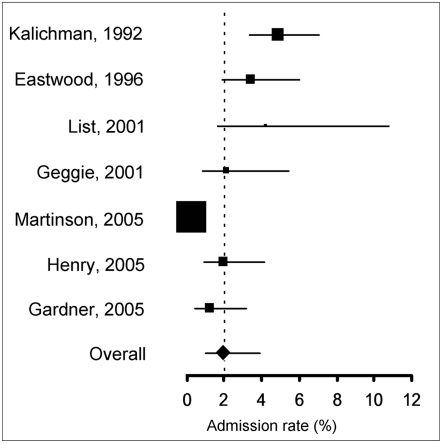
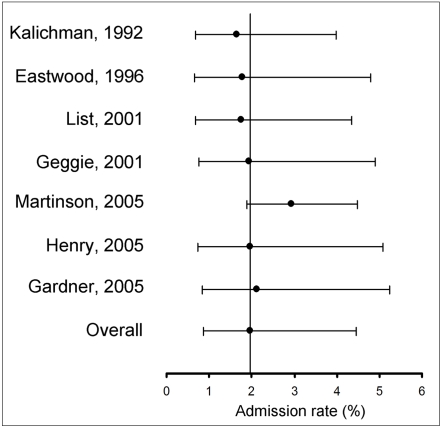
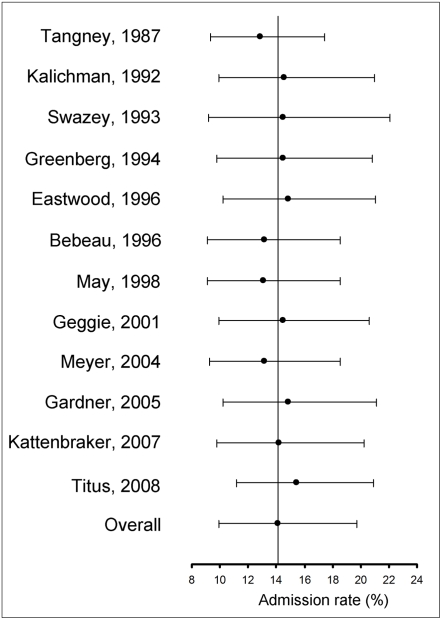
The frequency with which scientists fabricate and falsify data, or commit other forms of scientific misconduct is a matter of controversy. Many surveys have asked scientists directly whether they have committed or know of a colleague who committed research misconduct, but their results appeared difficult to compare and synthesize. This is the first meta-analysis of these surveys. To standardize outcomes, the number of respondents who recalled at least one incident of misconduct was calculated for each question, and the analysis was limited to behaviours that distort scientific knowledge: fabrication, falsification, "cooking" of data, etc... Survey questions on plagiarism and other forms of professional misconduct were excluded. The final sample consisted of 21 surveys that were included in the systematic review, and 18 in the meta-analysis. A pooled weighted average of 1.97% (N = 7, 95%CI: 0.86-4.45) of scientists admitted to have fabricated, falsified or modified data or results at least once--a serious form of misconduct by any standard--and up to 33.7% admitted other questionable research practices. In surveys asking about the behaviour of colleagues, admission rates were 14.12% (N = 12, 95% CI: 9.91-19.72) for falsification, and up to 72% for other questionable research practices. Meta-regression showed that self reports surveys, surveys using the words "falsification" or "fabrication", and mailed surveys yielded lower percentages of misconduct. When these factors were controlled for, misconduct was reported more frequently by medical/pharmacological researchers than others. Considering that these surveys ask sensitive questions and have other limitations, it appears likely that this is a conservative estimate of the true prevalence of scientific misconduct.
Overview
CoChat Summary
TL;DR
This systematic review and meta-analysis of survey data estimated that about 2% of scientists admitted to fabricating, falsifying, or modifying data or results at least once, while 14.12% reported knowing a colleague who did so. The paper argues these are conservative estimates and that methodological choices strongly shape the observed rates.
Key findings
- Across surveys explicitly asking whether scientists ever fabricated or falsified data or altered/modifed results, the pooled weighted estimate was 1.97% (95% CI 0.86–4.45; N = 7), with significant heterogeneity (Cochran’s Q = 61.7777, df = 6, P < 0.0001).
- When only questions explicitly using the words “fabrication” or “falsification” were included, the pooled estimate for self-reports was 1.06% (95% CI 0.31–3.51; N = 4).
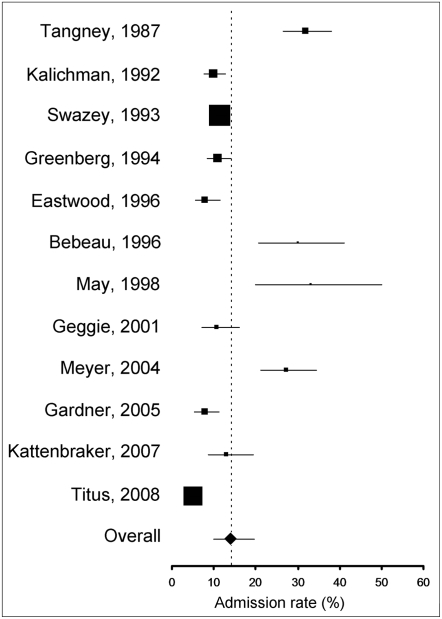
- For reports about colleagues’ misconduct, the pooled weighted estimate was 14.12% (95% CI 9.91–19.72; N = 12); restricting to questions using “fabrication” or “falsification” gave 12.34% (95% CI 8.43–17.71; N = 11).
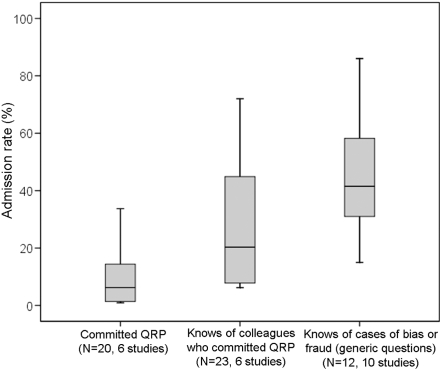
- Other questionable research practices were reported more often: up to 33.7% in self-reports and up to 72% when asking about colleagues.
Methods
- Systematic review and meta-analysis of quantitative surveys asking scientists whether they had committed or observed scientific misconduct in the past; plagiarism and other non-knowledge-distorting misconduct were excluded.
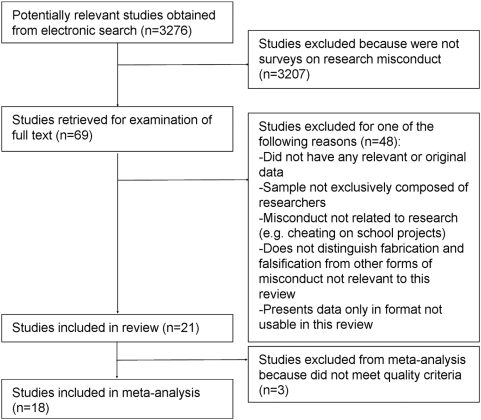
- Searches were run in the first two weeks of August 2008 across citation databases, journals, grey literature sources, and internet search engines; the final review included 21 studies, with 18 in the meta-analysis.
- Main analysis computed the proportion recalling at least one incident, logit-transformed and inverse-variance weighted in a random-effects meta-analysis; meta-regression tested methodological factors such as self vs. non-self reports, mailed vs. handed-out surveys, and use of the words “fabrication”/“falsification.”
Limitations
- The paper states that using the percentage of respondents recalling at least one incident is a rough measure of misconduct frequency; this can under- or overestimate prevalence depending on whether respondents committed multiple incidents or only one.
- The paper notes that non-response bias was recognized by most surveys as a limitation, and that the validity of self-reports may be affected by social expectations; the text also suggests self-reports likely underestimate misconduct.
- Evident from the text: the included studies were heterogeneous in methods and wording, and some outcomes were too diverse for meaningful meta-analysis, so only crude unweighted parameters were calculated for broader questionable research practices.
Model-written summary. Check it against the paper before relying on it.
Integrity signals
Registry
Cites
Statistics
Figures
Verification
Claims the paper makes
0 Valid · 0 Not valid · 14 Not checked · 61 Own results and interpretations
A result the paper reports from its own data — it cites no other source for it, so there is none to check. The quote shows it is in the paper.
In the paper
“When these factors were controlled for, misconduct was reported more frequently by medical/pharmacological researchers than others.”
§ How Many Scientists Fabricate and Falsify Research? A Systematic Review and Meta-Analysis of Survey Data > Abstract
plainstates an association- Asserted: passes — The authors put it forward as true.
- Checkable: passes — It can be checked against evidence.
- Load-bearing: passes — The paper’s conclusions depend on it.
- Based: passes — The paper gives a reason why it holds.
- Rests on 2 assumptions not shown here.
A result the paper reports from its own data — it cites no other source for it, so there is none to check. The quote shows it is in the paper.
In the paper
“A pooled weighted average of 1.97% (N = 7, 95%CI: 0.86–4.45) of scientists admitted to have fabricated, falsified or modified data or results at least once –a serious form of misconduct by any standard– and up to 33.7% admitted other questionable research practices.”
§ How Many Scientists Fabricate and Falsify Research? A Systematic Review and Meta-Analysis of Survey Data > Abstract
plainn = 7- Asserted: passes — The authors put it forward as true.
- Checkable: passes — It can be checked against evidence.
- Load-bearing: passes — The paper’s conclusions depend on it.
- Based: passes — The paper gives a reason why it holds.
- Rests on 2 assumptions not shown here.
A result the paper reports from its own data — it cites no other source for it, so there is none to check. The quote shows it is in the paper.
In the paper
“A pooled weighted average of 1.97% (N = 7, 95%CI: 0.86–4.45) of scientists admitted to have fabricated, falsified or modified data or results at least once –a serious form of misconduct by any standard– and up to 33.7% admitted other questionable research practices.”
§ How Many Scientists Fabricate and Falsify Research? A Systematic Review and Meta-Analysis of Survey Data > Abstract
plain- Asserted: passes — The authors put it forward as true.
- Checkable: passes — It can be checked against evidence.
- Load-bearing: passes — The paper’s conclusions depend on it.
- Based: passes — The paper gives a reason why it holds.
- Rests on 2 assumptions not shown here.
A result the paper reports from its own data — it cites no other source for it, so there is none to check. The quote shows it is in the paper.
In the paper
“In surveys asking about the behaviour of colleagues, admission rates were 14.12% (N = 12, 95% CI: 9.91–19.72) for falsification, and up to 72% for other questionable research practices.”
§ How Many Scientists Fabricate and Falsify Research? A Systematic Review and Meta-Analysis of Survey Data > Abstract
plainn = 12- Asserted: passes — The authors put it forward as true.
- Checkable: passes — It can be checked against evidence.
- Load-bearing: passes — The paper’s conclusions depend on it.
- Based: passes — The paper gives a reason why it holds.
- Rests on 2 assumptions not shown here.
A result the paper reports from its own data — it cites no other source for it, so there is none to check. The quote shows it is in the paper.
In the paper
“Meta-analysis yielded mean pooled estimates that are higher than most previous estimates.”
§ How Many Scientists Fabricate and Falsify Research? A Systematic Review and Meta-Analysis of Survey Data > Introduction
plain- Asserted: passes — The authors put it forward as true.
- Checkable: passes — It can be checked against evidence.
- Load-bearing: passes — The paper’s conclusions depend on it.
- Based: passes — The paper gives a reason why it holds.
- Rests on 2 assumptions not shown here.
31 more claims
Create a free account to see all 75 claims and to verify the 4 references still open.
- It may state two separate claims as one. 24
- Probably not a substantial claim. 25
Claims other papers make about this one
Each is checked against this paper’s own text: does it say what the citing paper says it does?
The cited source says what the claim attributes to it.
In the citing paper
“there are other more common sources of unreliability in the literature (41)(42)(43)(44)”
From Misconduct accounts for the majority of retracted scientific publications (2012) · cites this paper as [43]
The cited source says what the claim attributes to it.
In the citing paper
“The prevalence of researchers who have been involved in scientific misconduct is estimated to be around 2% [2]”
From Checklist to assess Trustworthiness in RAndomised Controlled Trials (TRACT checklist): concept proposal and pilot (2023) · cites this paper as [2]
The cited source says what the claim attributes to it.
In the citing paper
“This is how a small number of people 40 with flexible morals can pollute the scientific literature disproportionately.”
From Fraudulent studies are undermining the reliability of systematic reviews: on the prevalence of problematic images in preclinical depression studies (2025) · cites this paper as [40]
The cited source says what the claim attributes to it.
In the citing paper
“A meta-analysis by Fanelli, combining the results of 18 published surveys, found that 1.9% of researchers have admitted to modification, falsification, or fabrication of data (3).”
From The Prevalence of Inappropriate Image Duplication in Biomedical Research Publications (2016) · cites this paper as [3]
The cited source says what the claim attributes to it.
In the citing paper
“A systematic review and meta-analysis of survey data estimated that 1.97% of authors admitted to have fabricated, falsified, or modified data or results at least once and, in surveys asking about the behavior of colleagues, the admission rate was 14.12% for falsification [13].”
From No raw data, no science: another possible source of the reproducibility crisis (2020) · cites this paper as [13]
6 more claims about this paper
Create a free account to see every claim other papers make about this one.
Citations
Cites
(2000) · Cited by 9,198
The Sociology of Science: Theoretical and Empirical Investigations
Kaplan, N., Merton, R. K., & Storer, N. W. (1974) · Technology and Culture · doi:10.2307/3102264 · Cited by 4,005
The Normative Structure of Science
Merton, R. Κ. (1973) · Medical Entomology and Zoology · Cited by 2,315
The Hazards of Scoring the Quality of Clinical Trials for Meta-analysis
Jüni, P. (1999) · JAMA · doi:10.1001/jama.282.11.1054 · Cited by 1,981 · cited 1×
“All remaining papers were included, and were not graded on a quality scale, because the validity and use of quality measures in meta-analysis is controversial [21], [22].”
BackgroundScope and Impact of Financial Conflicts of Interest in Biomedical Research: A Systematic Review
Bekelman, J. E., Li, Y., & Gross, C. P. (2003) · JAMA · doi:10.1001/jama.289.4.454 · Cited by 1,816 · cited 1×
“This would support growing fears that the large financial interests that often drive medical research are severely biasing it [50], [51], [52].”
BackgroundTourangeau, R., & Smith, T. W. (1996) · Public Opinion Quarterly · doi:10.1086/297751 · Cited by 1,295 · cited 1×
“However, the accuracy of responses to sensitive questions is often independent of response rates, and depends strongly on respondents' perception of anonymity and confidentiality [43], [44].”
BackgroundA comparison of methods to detect publication bias in meta‐analysis
Macaskill, P., Walter, S. D., & Irwig, L. (2001) · Statistics in Medicine · doi:10.1002/sim.698 · Cited by 1,286 · cited 1×
“The popular funnel-plot-based methods to test for publication bias in meta-analysis are inappropriate and potentially misleading when the number of included studies is small and heterogeneity is large [25], [26].”
MethodMartinson, B. C., Anderson, M. S., & de Vries, R. (2005) · Nature · doi:10.1038/435737a · Cited by 1,096 · cited 9×
“All the above results were robust with respect to inclusion or exclusion of any particular study, with perhaps one exception: Martinson et al. (2005) [19], which is one of the largest and most frequently cited surveys on misconduct published to date.”
BackgroundMethodResultInfluentialAdjusting for publication bias in the presence of heterogeneity
Terrin, N., Schmid, C. H., Lau, J., & Olkin, I. (2003) · Statistics in Medicine · doi:10.1002/sim.1461 · Cited by 809 · cited 1×
“The popular funnel-plot-based methods to test for publication bias in meta-analysis are inappropriate and potentially misleading when the number of included studies is small and heterogeneity is large [25], [26].”
MethodIs Academic Medicine for Sale?
Angell, M. (2000) · New England Journal of Medicine · doi:10.1056/nejm200005183422009 · Cited by 582
Research works printed but not linked: 2
- Eastwood S Derish P Leash E Ordway S 1996 Ethical issues in biomedical research: perceptions and practices of postdoctoral research fellows responding to a survey. Science and Engineering Ethics 2 89 114 11657788 · DOI
- Kattenbraker MS 2007 Health education research and publication: ethical considerations and the response of health educators Carbondale Southern Illinois University.Doctoral dissertation
Cited by
Items 1,701–1,800 of 1,924
Reeg, N. (2022) · Science studies · doi:10.14361/9783839459669-006
Frisch, K., Hagenström, F., & Reeg, N. (2022) · Science studies · doi:10.14361/9783839459669-009
Czesnick, H. (2022) · Science studies · doi:10.14361/9783839459669-002
Frisch, K. (2022) · Science studies · doi:10.14361/9783839459669-007
Schlussüberlegungen - Faire Wissenschaft
Frisch, K., Hagenström, F., & Reeg, N. (2022) · Science studies · doi:10.14361/9783839459669-008
Frisch, K., Hagenström, F., & Reeg, N. (2022) · Science studies · doi:10.14361/9783839459669-001
Frisch, K., Hagenström, F., & Reeg, N. (2022) · Science studies · doi:10.14361/9783839459669-toc
Steckt die Wissenschaft in einer Krise?
Frisch, K., Hagenström, F., & Reeg, N. (2022) · Science studies · doi:10.14361/9783839459669-003
Kapitel 1: Zwischen Integrität und Fehlverhalten
Frisch, K., Hagenström, F., & Reeg, N. (2022) · Science studies · doi:10.14361/9783839459669-004
Frisch, K., Hagenström, F., & Reeg, N. (2022) · Science studies · doi:10.14361/9783839459669-fm
A case against social networks as the only means for recruitment in scientific studies with humansPreprint
Pastor, A. (2022) · OSF Preprints (OSF Preprints) · doi:10.31219/osf.io/84utm
Christina, E., Setiawan, D., Juwita, D. R., & Lianawati (2022) · JURNAL FARMASI DAN ILMU KEFARMASIAN INDONESIA · doi:10.20473/jfiki.v9i32022.314-322
“Besides, people can lose their sense of crisis, so they do not want to prevent, treat, or participate in vaccinations, and even lose trust in health workers and the government (Cha et al., 2021; Fanelli 2009).”
BackgroundPreregistration of Studies with Existing Data
Mertens, G., & Krypotos, A.-M. (2022) · Integrity of Scientific Research · doi:10.1007/978-3-030-99680-2_36
Ethical Evaluations of Clinical Trials in France: Towards European Standardization
Couderc, B. C. (2023) · Philosophy and medicine · doi:10.1007/978-3-031-12692-5_21
Changes in Scholars’ Ways of Knowledge Production Shaped by Systematic Measures
Peng, M.-T. (2023) · Gaziantep University Journal of Social Sciences · doi:10.21547/jss.1209134
(2021) · Royal Society of Chemistry eBooks · doi:10.1039/9781788017435-00133
Gundle, K. R. (2023) · Clinical Orthopaedics and Related Research · doi:10.1097/corr.0000000000002588
Aron, D. C. (2023) · Springer eBooks · doi:10.1007/978-3-031-19535-8_11
Who is to blame when we fly too close to the sun – academia or the individual?
Field, S. M., & Devine, S. (2021) · doi:10.36850/fwb9-mv20
Coevolution with artificial intelligence: are we at the start of a new era for academic publishing?Preprint
Vuong, Q., La, V., Nguyen, M., Jin, R., & Le, T.-T. (2023) · OSF Preprints (OSF Preprints) · doi:10.31219/osf.io/hsu5v
Extent of Violations of Research Ethics Norms
Slotfeldt‐Ellingsen, D. (2023) · Springer eBooks · doi:10.1007/978-3-031-25484-0_21
University Students’ Perceptions about Unethical Faculty Practices
Erdemir, B. (2023) · Uluslararası Yönetim Akademisi Dergisi · doi:10.33712/mana.1247554 · Cited by 1
Publicación científica, nuevos tiempos, nuevos desafíos
Morales, W. R. C. (2023) · Revista Psicólogos · doi:10.59205/rp.v8i22.168
Zuo, T., He, L., Lin, Z., Chen, J., & Li, N. (2023) · SSRN Electronic Journal · doi:10.2139/ssrn.4435866
Do men commit more scientific misconduct than women? Evidence from retracted articles
Zheng, E., Fu, H., & Fang, Z. (2023) · International Conference on Science, Technology and Innovation Indicators (STI) · doi:10.55835/643feae1d7c4812e2f078f27
Research Integrity and Research Misconduct
Israel, M. (2023) · Springer eBooks · doi:10.1007/978-3-030-22767-8_49
Barbour, V. M. (2023) · Springer eBooks · doi:10.1007/978-3-030-22767-8_48
Starren, J. B., Rasmussen, L. V., Schneider, D., Nannapaneni, P., & Michelson, K. N. (2023) · Journal of the Society for Clinical Data Management · doi:10.47912/jscdm.234
Assessing QRPs and RRPs in Psychology Masters’ ThesesPreprint
Augusteijn, H. E. M., van Assen, M. A. L. M., Sijtsma, K., & Wicherts, J. M. (2023) · doi:10.31219/osf.io/cwyk8
Understanding Contract Cheating and Essay Mills Through a Social Lens in the Era of Web 3.0
Khan, Z. R., Vel, P., Asylguzhna, E., & Mulani, V. (2023) · Springer eBooks · doi:10.1007/978-981-287-079-7_116-1
Ivory, J., & Elson, M. (2023) · PsyArXiv (OSF Preprints) · doi:10.31234/osf.io/hy45v · Cited by 1
Srivastava, S., & Jain, A. (2023) · Annals of the National Academy of Medical Sciences (India) · doi:10.1055/s-0043-1770903
Research integrity in a South African health sciences institution
Augustine, T. N., Libhaber, E. N., Hofmann, B., Nhlapho, M. D., & Kramer, B. (2023) · The Journal of Scientific Practice and Integrity · doi:10.35122/001c.73931
Ethics in scientific publishing
Yom, S. S. (2023) · Elsevier eBooks · doi:10.1016/b978-0-323-88423-5.00057-1 · Cited by 1
A manipulação de imagens em pesquisa científicas
Gonino, C. T. N., & de Araújo, G. M. (2023) · Revista Pesquisa Qualitativa · doi:10.33361/rpq.2023.v.11.n.27.606 · Cited by 1
Alavi, M., & Schmohl, T. (2023) · Hochschulbildung: Lehre und Forschung · doi:10.1515/9783839463475-031
Detection of Fabricated Survey Data using Clustering Analysis
Muhammed, L. A., & Mohammed, B. A. (2023) · doi:10.1109/icit58056.2023.10225779
“However, in some cases the survey data fraud come from scientific misconduct, scientists fabricate and falsify data [2].”
BackgroundMassari, S., Roversi, S., Finn, S., Jatwani, C., Fusco, A., Solimeo, E., Cavicchi, A., & Vignoli, M. (2023) · Hochschulbildung: Lehre und Forschung · doi:10.1515/9783839463475-019
REFLEXÕES EDUCATIVAS SOBRE A CRISE DE REPRODUTIBILIDADE DAS PESQUISAS BIOMÉDICAS
Ferrari, C. K. B. (2023) · LEOPOLDIANUM · doi:10.58422/releo2023.e1399
The complexity of mental healthcare and its consequences for doing good
Smit, E. H. (2023) · Utrecht University Repository (Utrecht University) · doi:10.33540/1907
Perspectives of Resident and Attending Ophthalmologists on Common Ethical Dilemmas in Research
Miller, S. C., Tsou, B. C., Fliotsos, M. J., Legault, G. L., Wang, J., Mondzelewski, T. J., Munson, P. D., Lorch, A., Green, L. K., Kim, W. I., et al. (2023) · Journal of Academic Ophthalmology · doi:10.1055/s-0043-1774394 · Cited by 1
Was bedeutet gute wissenschaftliche Praxis?
Christian, A. (2023) · Philosophische Bildung in Schule und Hochschule · doi:10.1007/978-3-662-67309-6_13
Scientific Misconduct in Scientific Publications
Amin, M. N. (2023) · Ibrahim Cardiac Medical Journal · doi:10.3329/icmj.v12i2.69850
“5 Fanelli cautions, however, that these findings might only be a modest estimate of the true prevalence of research misconduct.”
Forschungsethik und Forschungspraxis
Eisend, M., & Kuß, A. (2023) · Springer eBooks · doi:10.1007/978-3-658-42690-3_10
The Unwholesomeness of the Scientific Ecosystem in the Research Misconduct: A Breach of Duty
Ajaka, L. N., & Saab, J. (2023) · doi:10.60149/rdku3775
Mastroleo, I., & Bianchini, A. D. (2024) · Tempus Actas de Saúde Coletiva · doi:10.18569/tempus.v12i4.2560 · Cited by 1
Research Misconduct: A Comprehensive Examination of Retracted Publications in Biomedical Literature
Shimray, S. R. (2023) · Journal of Information and Knowledge · doi:10.17821/srels/2023/v60i6/171172
Kosmarski, A. (2023) · Law & Digital Technologies · doi:10.18254/s278229070028454-5
Witte, E. H., & Ponocny, I. (2024) · doi:10.31219/osf.io/w26sg
Rhodes, D., & Krenzer, W. (2024) · The Cognitive Psychology Bulletin · doi:10.53841/bpscog.2024.1.9.45
A Survey of Researcher Perceptions of Replication in GeographyPreprint
Kedron, P., Holler, J., & Bardin, S. (2024) · doi:10.31222/osf.io/cgvzp
„Psychologie – dass Gott erbarm‘, hälst du’s noch mit der?“
Frindte, W. (2024) · Springer eBooks · doi:10.1007/978-3-658-43713-8_14 · Cited by 1
Nature and Impact of Corruption on the Dysfunctionality of the South African Universities
Tshishonga, N. S. (2024) · Advances in human services and public health (AHSPH) book series · doi:10.4018/979-8-3693-2101-0.ch011 · Cited by 1
Simm, K., Parder, M.-L., Tammeleht, A., & Lees, K. (2024) · Research Ethics · doi:10.1177/17470161241239791 · Cited by 4
“There are, however, other practices that fall into the ‘grey area’, known as ‘questionable research practices’ (QRPs) (Fanelli, 2009).”
InfluentialBeuchert, T., Cayless, A., Darbellay, F., Dawid, R., Gustafsson, B., Jordan, S., Macnaghten, P., McLoughlin, E., Rossel, C., Russo, P., et al. (2024) · Institute of Physics eBooks · doi:10.1088/978-0-7503-6342-6ch8 · Cited by 1
Osteopathie und evidenzbasierte Medizin, Teil 2: Kritik an der EBM
Luthin, D. (2024) · DO - Deutsche Zeitschrift für Osteopathie · doi:10.1055/a-2220-8344
“In Befragun-gen von Wissenschaftlern gaben bis zu 4,5 % aller Befrag-ten zu, schon mindestens einmal Daten oder Ergebnisse in Studien manipuliert zu haben [34].”
A Note to the Reader about the Book’s Cover
Ballantyne, N. (2019) · Oxford University Press eBooks · doi:10.1093/oso/9780190847289.002.0008
Ballantyne, N. (2019) · Oxford University Press eBooks · doi:10.1093/oso/9780190847289.002.0003
Ballantyne, N. (2019) · Oxford University Press eBooks · doi:10.1093/oso/9780190847289.002.0005
Ballantyne, N. (2019) · Oxford University Press eBooks · doi:10.1093/oso/9780190847289.002.0004
How Researchers Use Open SciencePreprint
Permut, S., Saccardo, S., & Chapman, G. B. (2024) · SSRN Electronic Journal · doi:10.2139/ssrn.4838469 · Cited by 1
Comunicação e Ciência: iniciação à ciência, redação científica e oratória científica
Albuquerque, U. P. (2024) · doi:10.52050/9788579176548 · Cited by 1
Lam, C. H. (2024) · PsyArXiv (OSF Preprints) · doi:10.31234/osf.io/px8qb
Researchers’ Perceptions of the State of Social and Personality PsychologyPreprint
Schiavone, S. R., Vazire, S., & Rhemtulla, M. (2024) · PsyArXiv (OSF Preprints) · doi:10.31234/osf.io/ja4u2
Shamoo, A. E., & Resnik, D. B. (2022) · Oxford University Press eBooks · doi:10.1093/oso/9780197547090.002.0005
Shamoo, A. E., & Resnik, D. B. (2022) · Oxford University Press eBooks · doi:10.1093/oso/9780197547090.002.0003
Dos perspectivas perceptivas de la medicina basada en la evidencia
Cooperativa, U., Estrada-Mesa, D. A., Higuita‐Gutiérrez, L. F., & de Antioquia, U. (2024) · IATREIA · doi:10.17533/udea.iatreia.276
Le, V., Casey, M., Manswell, K., Goldsher, J. E., Nettleton, E., Nepal, D., Shah, S., Junek, M., & Putman, M. (2024) · SSRN Electronic Journal · doi:10.2139/ssrn.4872346
La academia vaciada: neoliberalismo, patriarcado y crisis del conocimiento crítico
Martín-Palomino, E. T., & Méndez, P. P. (2024) · En-claves del pensamiento · doi:10.46530/ecdp.v0i36.672
A Critical Analysis of Falsification as Fraud
Carroll, L. S. L. (2024) · ETHICS IN PROGRESS · doi:10.14746/eip.2024.1.9
“Fabrication (Fanelli 2009), falsification, and plagiarism (FFP) that comprise explicit definitions of research misconduct may each be considered to result in instances of fraud when these acts are perpetrated.”
BackgroundFreeing Social and Medical Scientists from the Replication CrisisPreprint
Hyman, M. R. (2024) · SSRN Electronic Journal · doi:10.2139/ssrn.4898637 · Cited by 3
‘Seven Deadly’ Author Sins that Subvert Scientific Progress
Houran, J., & Laythe, B. R. (2024) · Journal of Scientific Exploration · doi:10.31275/20243441 · Cited by 1
Plagiarism: Emerging Challenges and Potential Solutions
Patwardhan, K., Bhalerao, S. S., & Chakrabarti, S. S. (2024) · Springer eBooks · doi:10.1007/978-981-97-4060-4_4
Incentives in prescribing, dispensing and pharmaceutical spending: A scientometric mapping.
H, T.-A. L., Riascos-Ochoa, J., & Barbosa, W. G. J. (2024) · F1000Research · doi:10.12688/f1000research.156306.1
Text Mining Basics in Bioinformatics
Chiara, M. M., & Zucco, C. (2024) · Elsevier eBooks · doi:10.1016/b978-0-323-95502-7.00219-0
Fabrication, Falsification and Spin
Crombie, I. (2021) · Wiley eBooks · doi:10.1002/9781394322183.ch6
Ethical Issues in Psychological Science: Studying Humans, Analyzing Data, Publishing Findings
Crandall, C., Giner‐Sorolla, R., & Biernat, M. (2024) · Cambridge University Press eBooks · doi:10.1017/9781009170123.003
Study Quality in Applied Linguistics: Highlights from Dr. Luke Plonsky’s Public Talk
Beccia, A., & Chen, Z. (. (2024) · Studies in Applied Linguistics and TESOL · doi:10.52214/salt.v24i2.13239
Retracted articles in endodontic-related literature: an analysis of 60 cases
Mergoni, G., Ghezzi, B., Toffoli, A. S., & Manfredi, M. (2025) · Minerva Dental and Oral Science · doi:10.23736/s2724-6329.24.05043-5
RetractedEthical Issues in Research Practices in Economics
Siddiquee, M. S. H. (2024) · Springer eBooks · doi:10.1007/978-981-97-9881-0_10
Measuring the quality of experimental research
Ventura, R. (2025) · Synthese · doi:10.1007/s11229-024-04905-4
“Unsurpris - ingly, eradicating fraud and ethically questionable research practices could increase research quality as well (Fanelli, 2009 ).”
Incentives in prescribing, dispensing and pharmaceutical spending: A scientometric mapping.
H, T.-A. L., Riascos-Ochoa, J., & Barbosa, W. G. J. (2025) · F1000Research · doi:10.12688/f1000research.156306.2
Franc, J. M. (2025) · PLOS Digital Health · doi:10.1371/journal.pdig.0000741
“In a recent survey, 2% of scientists admitted to falsifying or fabricating data [15].”
Resnik, D. B. (2024) · The International Library of Bioethics · doi:10.1007/978-3-031-82757-0_9 · Cited by 1
Las prácticas cuestionables de investigación en la comunidad científica hispanohablante
García, A. M. R., Artigas, W., Romero, I. I. C., & Puga, J. L. (2025) · Revista española de Documentación Científica · doi:10.3989/redc.2025.1.1605
Quantifying the dynamics of peak disruption in scientific careers
Li, M., Livan, G., & Righi, S. (2025) · Scientific Reports · doi:10.1038/s41598-025-95264-8 · Cited by 5
Khalifa, A. A., & Farouk, O. A. (2024) · The Egyptian Orthopaedic Journal · doi:10.4103/eoj.eoj_61_24 · Cited by 1
Soiza, R. L., Cruz-Jentoft, A. J., & Ouslander, J. G. (2025) · Age and Ageing · doi:10.1093/ageing/afae294
The Grievance Studies Hoaxes in Retrospect
Hansen, C. M. (2021) · Northern Plains Ethics Journal · doi:10.5840/npej2021916
Soiza, R. L., Cruz-Jentoft, A. J., & Ouslander, J. G. (2025) · European Geriatric Medicine · doi:10.1007/s41999-025-01211-1
Soiza, R. L., Cruz-Jentoft, A. J., & Ouslander, J. G. (2025) · Journal of the American Geriatrics Society · doi:10.1111/jgs.19429
Pet, L. A., Tijdink, J. K., Veer, A. V. '., Smeets, I., Erkens, Y., Rosendaal, F. R., & Siegerink, B. (2026) · Research Integrity and Peer Review · doi:10.1186/s41073-026-00201-6
Research integrity in Spain: Great expectations, mediocre results
de Melo‐Martín, I. (2025) · Accountability in Research · doi:10.1080/08989621.2025.2511642 · Cited by 1
“Scholars have revealed a significant prevalence of grave misconduct practices such as falsification, fabrication, and plagiarism (Fanelli 2009; Phogat et al. 2023; Pupovac and Fanelli 2015; Xie, Wang, and Kong 2021).”
Why psychopathy might be present and prosperous in present-day psychological sciencePreprint
Aarts, A. A. (2025) · SSRN Electronic Journal · doi:10.2139/ssrn.5166553
“Publish and Cherish,” not “Publish or Perish”
Hegde, S. N. (2025) · APIK Journal of Internal Medicine · doi:10.4103/ajim.ajim_39_25
Chen, T., Johnson, T. P., Ma, J., Frandell, A., Michalegko, L., & Welch, E. W. (2025) · PLoS ONE · doi:10.1371/journal.pone.0326331 · Cited by 2
“In the face of declining survey response rates and politicization of science communication [4,30,40,41], understanding how to effectively engage STEM academic scientists in survey research and tailor surveys specifically to them becomes important.”
Patent Mill and Paper Mill: Can it Build the Scientific Career or Act as an Academic Barrier
(2025) · Acta Scientific Medical Sciences · doi:10.31080/asms.2025.09.2089
How Do “Ugly Science” and “Dirty Science” Affect the Practice of Clinical Science?
O’Donohue, W., & Basterfield, C. (2025) · International Journal of Clinical and Experimental Hypnosis · doi:10.1080/00207144.2025.2506449 · Cited by 1
“According to Fanelli (2009), around 2% of researchers have acknowledged falsifying data at least once during their careers.”
Bössel, N., Kluge, A., Leising, D., Mischkowski, D., Phan, L. V., Richter, F., Schmitt, M., & Stähl, J. (2025) · PsyArXiv (OSF Preprints) · doi:10.31234/osf.io/xj2m6_v2 · Cited by 1
Metadata
- Authors
- Fanelli, D.
- Affiliations
- University of Edinburgh (GB)
- Corresponding author
- Fanelli, Daniele
- ORCID
- Fanelli, Daniele
- Venue
- PLoS ONE
- Publisher
- Public Library of Science (PLoS)
- Published
- 2009-05-29
- Volume
- 4
- Issue
- 5
- Pages
- e5738
- ISSN
- 1932-6203 (ISSN-L)
- PMC
- PMC2685008
- OpenAlex
- W2152243616
- Cited by
- 1,911
- References
- 74
- Citations by year
- 2026: 77 · 2025: 110 · 2024: 128 · 2023: 136 · 2022: 157 · 2021: 145 · 2020: 163 · 2019: 166 · 2018: 125 · 2017: 125 · 2016: 119 · 2015: 106 · 2014: 82 · 2013: 93 · 2012: 84
- FWCI
- 19.42
- Type
- journal article
- Language
- en
- Open access
- gold
- doi.org
- Locations
- PLoS ONE (publishedVersion, cc-by)
- PubMed Central (publishedVersion, cc-by)
- PubMed (publishedVersion)
- Edinburgh Research Explorer (University of Edinburgh) (acceptedVersion, public-domain)
- RePEc: Research Papers in Economics (submittedVersion)
- DOAJ (DOAJ: Directory of Open Access Journals) (submittedVersion, cc-by-sa)
- Figshare (submittedVersion, cc-by)
- DigitalGeorgetown (Georgetown University Library) (submittedVersion)
- Funders
- European Commission (221441)
- Economic and Social Research Council (ES/F028180/1)
- Topics
- Social Sciences › Education › Academic integrity and plagiarism
- Physical Sciences › Mathematics › Statistics and Probability › Benford’s Law and Fraud Detection
- Social Sciences › Library and Information Sciences › Academic Publishing and Open Access
- Keywords
- research misconduct, scientific fraud, data fabrication, data falsification, questionable research practices, self-report questionnaire
- MeSH terms
- Data Collection, Regression Analysis, Research Personnel, Scientific Misconduct, Ethics, Research
About these checks
Registry, retraction, Cites and statistics results are computed, not judged, with one exception: a printed reference that no index lists is read once by a model before it counts as a citation error. Claims are extracted by a model and kept only when their quote appears verbatim in the text; each cited source is then checked, with a model’s help, for whether it says what the claim relies on. Those verdicts can be wrong — read the claim’s quote and the cited source before relying on one.
A language model drew the claims from the paper on 2026-10-10, under version 3 of the claim definition (model deepseek-v4.1-flash, prompt extract-v3).
A second model labelled each claim on 2026-10-10 (model jev-1.13-20260917, definition revision gold-guideline-v0.2).
Statistics and arithmetic are recomputed, not judged.
Confidence bands are shown only for fields calibrated on our annotated test set. None is calibrated yet, so no band is shown.
What counts as a claim ›How we measure confidence ›How we check this ›
Are you an author, or do you see a problem with this page? Request a review
Data sources
Bibliographic data: Semantic Scholar, OpenAlex, Crossref.
Contains information from the Semantic Scholar Academic Graph Datasets, made available under the ODC Attribution License (ODC-BY 1.0).
Semantic Scholar’s data is described in: Kinney, R., et al. (2023). The Semantic Scholar Open Data Platform. arXiv:2301.10140.
