

How Many Scientists Fabricate and Falsify Research? A Systematic Review and Meta-Analysis of Survey Data
Open accessThe DOI matches its Crossref record; 66 of the 74 references it cites were found in a registry or an index; none of the 21 sources its claims cite is checked for support yet.
Abstract
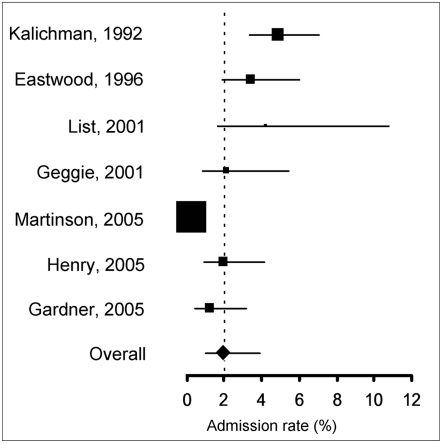
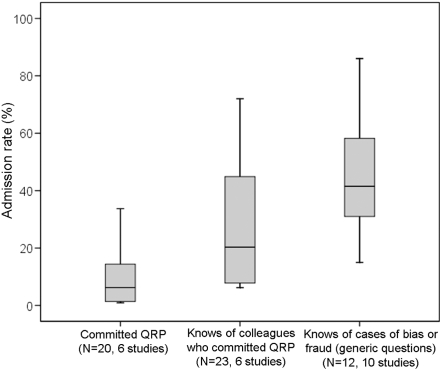
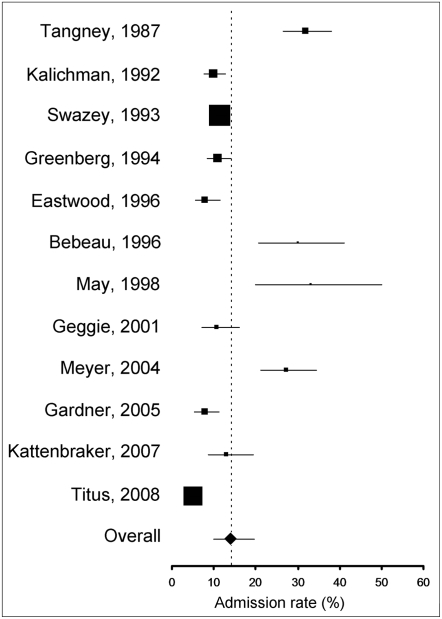
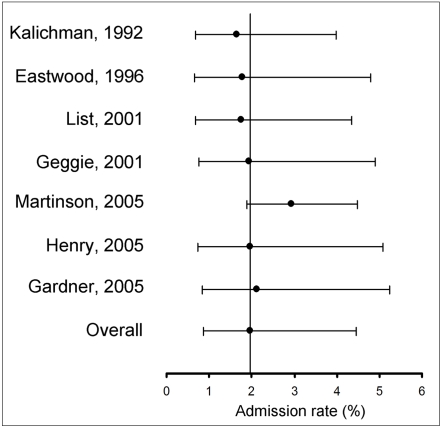
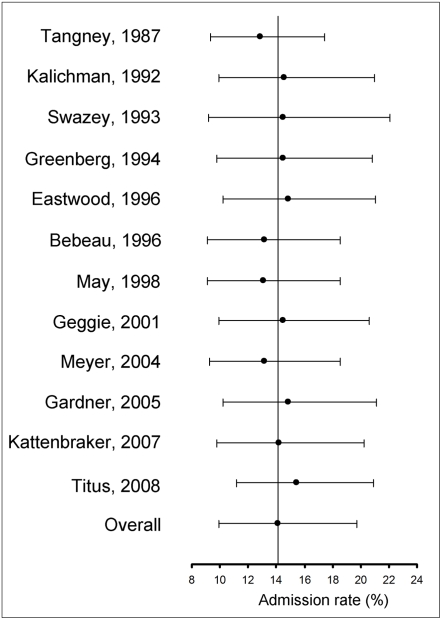
The frequency with which scientists fabricate and falsify data, or commit other forms of scientific misconduct is a matter of controversy. Many surveys have asked scientists directly whether they have committed or know of a colleague who committed research misconduct, but their results appeared difficult to compare and synthesize. This is the first meta-analysis of these surveys. To standardize outcomes, the number of respondents who recalled at least one incident of misconduct was calculated for each question, and the analysis was limited to behaviours that distort scientific knowledge: fabrication, falsification, "cooking" of data, etc... Survey questions on plagiarism and other forms of professional misconduct were excluded. The final sample consisted of 21 surveys that were included in the systematic review, and 18 in the meta-analysis. A pooled weighted average of 1.97% (N = 7, 95%CI: 0.86-4.45) of scientists admitted to have fabricated, falsified or modified data or results at least once--a serious form of misconduct by any standard--and up to 33.7% admitted other questionable research practices. In surveys asking about the behaviour of colleagues, admission rates were 14.12% (N = 12, 95% CI: 9.91-19.72) for falsification, and up to 72% for other questionable research practices. Meta-regression showed that self reports surveys, surveys using the words "falsification" or "fabrication", and mailed surveys yielded lower percentages of misconduct. When these factors were controlled for, misconduct was reported more frequently by medical/pharmacological researchers than others. Considering that these surveys ask sensitive questions and have other limitations, it appears likely that this is a conservative estimate of the true prevalence of scientific misconduct.
Overview
CoChat Summary
TL;DR
This systematic review and meta-analysis of survey data estimated that about 2% of scientists admitted to fabricating, falsifying, or modifying data or results at least once, while 14.12% reported knowing a colleague who did so. The paper argues these are conservative estimates and that methodological choices strongly shape the observed rates.
Key findings
- Across surveys explicitly asking whether scientists ever fabricated or falsified data or altered/modifed results, the pooled weighted estimate was 1.97% (95% CI 0.86–4.45; N = 7), with significant heterogeneity (Cochran’s Q = 61.7777, df = 6, P < 0.0001).
- When only questions explicitly using the words “fabrication” or “falsification” were included, the pooled estimate for self-reports was 1.06% (95% CI 0.31–3.51; N = 4).
- For reports about colleagues’ misconduct, the pooled weighted estimate was 14.12% (95% CI 9.91–19.72; N = 12); restricting to questions using “fabrication” or “falsification” gave 12.34% (95% CI 8.43–17.71; N = 11).
- Other questionable research practices were reported more often: up to 33.7% in self-reports and up to 72% when asking about colleagues.
Methods
- Systematic review and meta-analysis of quantitative surveys asking scientists whether they had committed or observed scientific misconduct in the past; plagiarism and other non-knowledge-distorting misconduct were excluded.
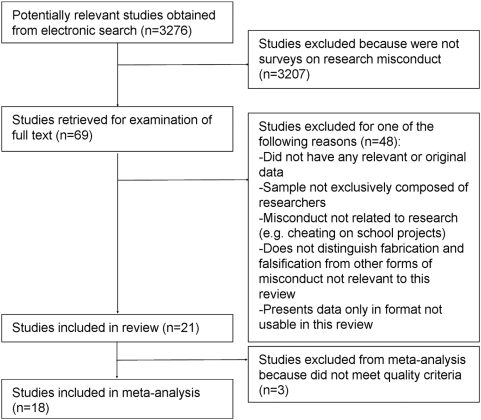
- Searches were run in the first two weeks of August 2008 across citation databases, journals, grey literature sources, and internet search engines; the final review included 21 studies, with 18 in the meta-analysis.
- Main analysis computed the proportion recalling at least one incident, logit-transformed and inverse-variance weighted in a random-effects meta-analysis; meta-regression tested methodological factors such as self vs. non-self reports, mailed vs. handed-out surveys, and use of the words “fabrication”/“falsification.”
Limitations
- The paper states that using the percentage of respondents recalling at least one incident is a rough measure of misconduct frequency; this can under- or overestimate prevalence depending on whether respondents committed multiple incidents or only one.
- The paper notes that non-response bias was recognized by most surveys as a limitation, and that the validity of self-reports may be affected by social expectations; the text also suggests self-reports likely underestimate misconduct.
- Evident from the text: the included studies were heterogeneous in methods and wording, and some outcomes were too diverse for meaningful meta-analysis, so only crude unweighted parameters were calculated for broader questionable research practices.
Model-written summary. Check it against the paper before relying on it.
Integrity signals
Registry
Cites
Statistics
Figures
Verification
Claims the paper makes
0 Valid · 0 Not valid · 14 Not checked · 61 Own results and interpretations
A result the paper reports from its own data — it cites no other source for it, so there is none to check. The quote shows it is in the paper.
In the paper
“When these factors were controlled for, misconduct was reported more frequently by medical/pharmacological researchers than others.”
§ How Many Scientists Fabricate and Falsify Research? A Systematic Review and Meta-Analysis of Survey Data > Abstract
plainstates an association- Asserted: passes — The authors put it forward as true.
- Checkable: passes — It can be checked against evidence.
- Load-bearing: passes — The paper’s conclusions depend on it.
- Based: passes — The paper gives a reason why it holds.
- Rests on 2 assumptions not shown here.
A result the paper reports from its own data — it cites no other source for it, so there is none to check. The quote shows it is in the paper.
In the paper
“A pooled weighted average of 1.97% (N = 7, 95%CI: 0.86–4.45) of scientists admitted to have fabricated, falsified or modified data or results at least once –a serious form of misconduct by any standard– and up to 33.7% admitted other questionable research practices.”
§ How Many Scientists Fabricate and Falsify Research? A Systematic Review and Meta-Analysis of Survey Data > Abstract
plainn = 7- Asserted: passes — The authors put it forward as true.
- Checkable: passes — It can be checked against evidence.
- Load-bearing: passes — The paper’s conclusions depend on it.
- Based: passes — The paper gives a reason why it holds.
- Rests on 2 assumptions not shown here.
A result the paper reports from its own data — it cites no other source for it, so there is none to check. The quote shows it is in the paper.
In the paper
“A pooled weighted average of 1.97% (N = 7, 95%CI: 0.86–4.45) of scientists admitted to have fabricated, falsified or modified data or results at least once –a serious form of misconduct by any standard– and up to 33.7% admitted other questionable research practices.”
§ How Many Scientists Fabricate and Falsify Research? A Systematic Review and Meta-Analysis of Survey Data > Abstract
plain- Asserted: passes — The authors put it forward as true.
- Checkable: passes — It can be checked against evidence.
- Load-bearing: passes — The paper’s conclusions depend on it.
- Based: passes — The paper gives a reason why it holds.
- Rests on 2 assumptions not shown here.
A result the paper reports from its own data — it cites no other source for it, so there is none to check. The quote shows it is in the paper.
In the paper
“In surveys asking about the behaviour of colleagues, admission rates were 14.12% (N = 12, 95% CI: 9.91–19.72) for falsification, and up to 72% for other questionable research practices.”
§ How Many Scientists Fabricate and Falsify Research? A Systematic Review and Meta-Analysis of Survey Data > Abstract
plainn = 12- Asserted: passes — The authors put it forward as true.
- Checkable: passes — It can be checked against evidence.
- Load-bearing: passes — The paper’s conclusions depend on it.
- Based: passes — The paper gives a reason why it holds.
- Rests on 2 assumptions not shown here.
A result the paper reports from its own data — it cites no other source for it, so there is none to check. The quote shows it is in the paper.
In the paper
“Meta-analysis yielded mean pooled estimates that are higher than most previous estimates.”
§ How Many Scientists Fabricate and Falsify Research? A Systematic Review and Meta-Analysis of Survey Data > Introduction
plain- Asserted: passes — The authors put it forward as true.
- Checkable: passes — It can be checked against evidence.
- Load-bearing: passes — The paper’s conclusions depend on it.
- Based: passes — The paper gives a reason why it holds.
- Rests on 2 assumptions not shown here.
31 more claims
Create a free account to see all 75 claims and to verify the 4 references still open.
- It may state two separate claims as one. 24
- Probably not a substantial claim. 25
Claims other papers make about this one
Each is checked against this paper’s own text: does it say what the citing paper says it does?
The cited source says what the claim attributes to it.
In the citing paper
“there are other more common sources of unreliability in the literature (41)(42)(43)(44)”
From Misconduct accounts for the majority of retracted scientific publications (2012) · cites this paper as [43]
The cited source says what the claim attributes to it.
In the citing paper
“The prevalence of researchers who have been involved in scientific misconduct is estimated to be around 2% [2]”
From Checklist to assess Trustworthiness in RAndomised Controlled Trials (TRACT checklist): concept proposal and pilot (2023) · cites this paper as [2]
The cited source says what the claim attributes to it.
In the citing paper
“This is how a small number of people 40 with flexible morals can pollute the scientific literature disproportionately.”
From Fraudulent studies are undermining the reliability of systematic reviews: on the prevalence of problematic images in preclinical depression studies (2025) · cites this paper as [40]
The cited source says what the claim attributes to it.
In the citing paper
“A meta-analysis by Fanelli, combining the results of 18 published surveys, found that 1.9% of researchers have admitted to modification, falsification, or fabrication of data (3).”
From The Prevalence of Inappropriate Image Duplication in Biomedical Research Publications (2016) · cites this paper as [3]
The cited source says what the claim attributes to it.
In the citing paper
“A systematic review and meta-analysis of survey data estimated that 1.97% of authors admitted to have fabricated, falsified, or modified data or results at least once and, in surveys asking about the behavior of colleagues, the admission rate was 14.12% for falsification [13].”
From No raw data, no science: another possible source of the reproducibility crisis (2020) · cites this paper as [13]
6 more claims about this paper
Create a free account to see every claim other papers make about this one.
Citations
Cites
(2000) · Cited by 9,198
The Sociology of Science: Theoretical and Empirical Investigations
Kaplan, N., Merton, R. K., & Storer, N. W. (1974) · Technology and Culture · doi:10.2307/3102264 · Cited by 4,005
The Normative Structure of Science
Merton, R. Κ. (1973) · Medical Entomology and Zoology · Cited by 2,315
The Hazards of Scoring the Quality of Clinical Trials for Meta-analysis
Jüni, P. (1999) · JAMA · doi:10.1001/jama.282.11.1054 · Cited by 1,981 · cited 1×
“All remaining papers were included, and were not graded on a quality scale, because the validity and use of quality measures in meta-analysis is controversial [21], [22].”
BackgroundScope and Impact of Financial Conflicts of Interest in Biomedical Research: A Systematic Review
Bekelman, J. E., Li, Y., & Gross, C. P. (2003) · JAMA · doi:10.1001/jama.289.4.454 · Cited by 1,816 · cited 1×
“This would support growing fears that the large financial interests that often drive medical research are severely biasing it [50], [51], [52].”
BackgroundTourangeau, R., & Smith, T. W. (1996) · Public Opinion Quarterly · doi:10.1086/297751 · Cited by 1,295 · cited 1×
“However, the accuracy of responses to sensitive questions is often independent of response rates, and depends strongly on respondents' perception of anonymity and confidentiality [43], [44].”
BackgroundA comparison of methods to detect publication bias in meta‐analysis
Macaskill, P., Walter, S. D., & Irwig, L. (2001) · Statistics in Medicine · doi:10.1002/sim.698 · Cited by 1,286 · cited 1×
“The popular funnel-plot-based methods to test for publication bias in meta-analysis are inappropriate and potentially misleading when the number of included studies is small and heterogeneity is large [25], [26].”
MethodMartinson, B. C., Anderson, M. S., & de Vries, R. (2005) · Nature · doi:10.1038/435737a · Cited by 1,096 · cited 9×
“All the above results were robust with respect to inclusion or exclusion of any particular study, with perhaps one exception: Martinson et al. (2005) [19], which is one of the largest and most frequently cited surveys on misconduct published to date.”
BackgroundMethodResultInfluentialAdjusting for publication bias in the presence of heterogeneity
Terrin, N., Schmid, C. H., Lau, J., & Olkin, I. (2003) · Statistics in Medicine · doi:10.1002/sim.1461 · Cited by 809 · cited 1×
“The popular funnel-plot-based methods to test for publication bias in meta-analysis are inappropriate and potentially misleading when the number of included studies is small and heterogeneity is large [25], [26].”
MethodIs Academic Medicine for Sale?
Angell, M. (2000) · New England Journal of Medicine · doi:10.1056/nejm200005183422009 · Cited by 582
Research works printed but not linked: 2
- Eastwood S Derish P Leash E Ordway S 1996 Ethical issues in biomedical research: perceptions and practices of postdoctoral research fellows responding to a survey. Science and Engineering Ethics 2 89 114 11657788 · DOI
- Kattenbraker MS 2007 Health education research and publication: ethical considerations and the response of health educators Carbondale Southern Illinois University.Doctoral dissertation
Cited by
Items 201–300 of 1,924
Fraud or flawed: adverse impact of fabricated or poor quality research
Moore, R. A., Derry, S., & McQuay, H. J. (2010) · Anaesthesia · doi:10.1111/j.1365-2044.2010.06295.x · Cited by 62
Research Misconduct in Business and Management Studies: Causes, Consequences, and Possible Remedies
Tourish, D., & Craig, R. (2018) · Journal of Management Inquiry · doi:10.1177/1056492618792621 · Cited by 73
Retracted publications and their citation in dental literature: A systematic review
Rapani, A., Lombardi, T., Berton, F., Del Lupo, V., Di Lenarda, R., & Stacchi, C. (2020) · Clinical and Experimental Dental Research · doi:10.1002/cre2.292 · Cited by 62
“…among scientists showed that approximately 2% admitted to having fabricated, falsified or modified data or results at least once, and 34% admitted other forms of intentional scientific misconduct, such as graph manipulation and unjustified removal of data from final analyses (Fanelli, 2009).”
BackgroundRetractedTong, Z., Li, F., Ogawa, Y., Watanabe, N., & Furukawa, T. A. (2018) · BMC Medical Research Methodology · doi:10.1186/s12874-018-0554-2 · Cited by 61
Novelty versus Replicability: Virtues and Vices in the Reward System of Science
Romero, F. (2017) · Philosophy of Science · doi:10.1086/694005 · Cited by 61
Global Research Integrity Training
Steneck, N. H. (2013) · Science · doi:10.1126/science.1236373 · Cited by 70
Tsui, A. S. (2016) · Cross Cultural & Strategic Management · doi:10.1108/ccsm-08-2015-0101 · Cited by 75
“However, based on social expectations, scientists should have the motivation to protect the reputation of their profession and minimize reporting of misconduct (Fanelli, 2009).”
BackgroundBiomedical text mining for research rigor and integrity: tasks, challenges, directions
Kilicoglu, H. (2017) · Briefings in Bioinformatics · doi:10.1093/bib/bbx057 · Cited by 61
Towards a Research Agenda for Promoting Responsible Research Practices
Tijdink, J. K., Horbach, S. P. J. M., Nuijten, M. B., & O’Neill, G. (2021) · Journal of Empirical Research on Human Research Ethics · doi:10.1177/15562646211018916 · Cited by 64
“In addition, ample attention has been paid to estimating the frequency of transgressions and analyzing individual cases (Fanelli, 2009; John et al., 2012; van der Heyden et al., 2009).”
BackgroundRetraction of global scientific publications from 2001 to 2010
He, T. (2012) · Scientometrics · doi:10.1007/s11192-012-0906-3 · Cited by 68
“Using metaanalysis method, Fanelli (2009) analyzed the scientists’ misconducts in a systematic review of 21 surveys.”
MethodExpanding Research Integrity: A Cultural-Practice Perspective
Valkenburg, G., Dix, G., Tijdink, J. K., & de Rijcke, S. (2021) · Science and Engineering Ethics · doi:10.1007/s11948-021-00291-z · Cited by 74
“2014; Fanelli 2009; Steneck 2006), Sloppy Science (Harris 2017), and fraud understood as Falsification, Fabrication and Plagiarism (FFP) (ALLEA 2017, p. 8; Breit and Forsberg 2016, p. 3; Al-Amad 2017).”
BackgroundBošnjak, L., & Marušić, A. (2012) · Scientometrics · doi:10.1007/s11192-012-0773-y · Cited by 62
“Misuse of authorship may not be a serious offence such as research misconduct of falsification, fabrication and plagiarism (Fanelli 2009; Steneck 2006), but the volume of authorship disputes and the importance of authorship for academic advancement makes it a growing concern for all stakeholders…”
BackgroundIrreproducible Experimental Results: Causes, (Mis)interpretations, and Consequences
Loscalzo, J. (2012) · Circulation · doi:10.1161/circulationaha.112.098244 · Cited by 59
“The precise prevalence of fraud in publications is not known, of course; however, a recent study by Fanelli raises concerning issues about its estimates (8).”
BackgroundLabbé, C., Grima, N., Gautier, T., Favier, B., & Byrne, J. A. (2019) · PLOS ONE · doi:10.1371/journal.pone.0213266 · Cited by 55
“While most incorrect research results likely arise through honest error, some incorrect results arise through different forms of research fraud [5, 6].”
ResultCriminalization of scientific misconduct
Bülow, W., & Helgesson, G. (2018) · Medicine Health Care and Philosophy · doi:10.1007/s11019-018-9865-7 · Cited by 72
“Although most universities have their own cases of fabrication, falsification and plagiarism to feel ashamed of, evidence suggests that the prevalence is nevertheless fairly low, although numbers vary (Fanelli 2009; George 2016).”
BackgroundBallantyne, N. (2019) · Oxford University Press eBooks · doi:10.1093/oso/9780190847289.003.0008 · Cited by 62
Roper, J. A., Kang, N., Ben, J., Cauraugh, J. H., Okun, M. S., & Hass, C. J. (2016) · Journal of Neurology · doi:10.1007/s00415-016-8129-9 · Cited by 62
“This conventional approach minimizes data biasing effects [15, 28, 29].”
BackgroundOpen Science Saves Lives: Lessons from the COVID-19 PandemicPreprint
Besançon, L., Peiffer‐Smadja, N., Ségalas, C., Jiang, H., Masuzzo, P., Smout, C., Billy, É., Déforet, M., & Leyrat, C. (2020) · bioRxiv (Cold Spring Harbor Laboratory) · doi:10.1101/2020.08.13.249847 · Cited by 59
Factors Associated with Research Wrongdoing in Nigeria
Adeleye, O. A., & Adebamowo, C. (2012) · Journal of Empirical Research on Human Research Ethics · doi:10.1525/jer.2012.7.5.15 · Cited by 64
“Cases of research wrongdoing are often unreported (Fanelli, 2009; Jessen et al., 2007; Katavic, 2010).”
BackgroundResultInfluentialPathogenic organization in science: Division of labor and retractions
Walsh, J. P., Lee, Y.-N., & Tang, L. (2019) · Research Policy · doi:10.1016/j.respol.2018.09.004 · Cited by 56
SILVERMAN, H. J., Edwards, H. A., Shamoo, A. E., & Matar, A. (2013) · Journal of Empirical Research on Human Research Ethics · doi:10.1525/jer.2013.8.5.40 · Cited by 59
“These results assessing attitudes are similar to the prevalence of falsification and fabrication of data reported in Western universities (Eastwood et al., 1996; Fanelli, 2009; Kalichman & Freidman, 1992).”
ResultArtal, R., & Rubenfeld, S. (2017) · Best Practice & Research Clinical Obstetrics & Gynaecology · doi:10.1016/j.bpobgyn.2016.12.006 · Cited by 111
Felaefel, M., Salem, M., Jaafar, R. F., Jassim, G., Edwards, H. A., Rashid‐Doubell, F., Yousri, R., Ali, N. M., & SILVERMAN, H. J. (2017) · Journal of Academic Ethics · doi:10.1007/s10805-017-9295-9 · Cited by 67
Mebane, C. A., Sumpter, J. P., Fairbrother, A., Augspurger, T. P., Canfield, T. J., Goodfellow, W. L., Guiney, P. D., LeHuray, A. P., Maltby, L., Mayfield, D. B., et al. (2019) · Integrated Environmental Assessment and Management · doi:10.1002/ieam.4119 · Cited by 62
“…metaanalysis of surveys suggested problems were more common, with close to 2% of scientists admitting to having been involved in serious misconduct, and more than 70% reporting that they personally knew of colleagues who committed less severe detrimental research practices (Fanelli 2009).”
BackgroundIs it time to revise the definition of research misconduct?
Resnik, D. B. (2019) · Accountability in Research · doi:10.1080/08989621.2019.1570156 · Cited by 63
“Sabotage may also threaten the integrity of science by undermining the social structure of science; however, it is not known how common sabotage is in science, because most surveys of misbehavior in science have focused on FFP and other unethical practices and not sabotage (Fanelli 2009).”
BackgroundMeasuring the Prevalence of Questionable Research Practices with Incentives for Truth-TellingPreprint
John, L. K., Loewenstein, G. F., & Prelec, D. (2012) · SSRN Electronic Journal · doi:10.2139/ssrn.1996631 · Cited by 59
Transparency, Reproducibility, and the Credibility of Economics Research
Christensen, G., & Miguel, E. (2017) · doi:10.31222/osf.io/9a3rw · Cited by 50
Reducing bias, increasing transparency, and calibrating confidence with preregistrationPreprint
Hardwicke, T. E., & Wagenmakers, E. (2021) · doi:10.31222/osf.io/d7bcu · Cited by 55
Data Fabrication and Falsification and Empiricist Philosophy of Science
Resnik, D. B. (2013) · Science and Engineering Ethics · doi:10.1007/s11948-013-9466-z · Cited by 55
“science (Fanelli, 2009), it draws considerable scrutiny from researchers, institutions, and sponsors because it can have far reaching negative consequences.”
BackgroundSadeghi Bahmani, D., Razazian, N., Farnia, V., Alikhani, M., Tatari, F., & Brand, S. (2019) · Multiple Sclerosis and Related Disorders · doi:10.1016/j.msard.2019.07.032 · Cited by 53
Hwang, S. Y., Yon, D. K., Lee, S. W., Kim, M. S., Kim, J. Y., Smith, L., Koyanagi, A., Solmi, M., Carvalho, A. F., Kim, E. Y., et al. (2023) · Journal of Korean Medical Science · doi:10.3346/jkms.2023.38.e333 · Cited by 76
“66 Not only misconduct, but the proportion of papers written by single-retraction authors increased from 46.0% in 1972–1992 to 63.1% in 1993–2012 of all retracted articles.”
BackgroundInfluentialA systematic review of context bias in invasion biology
Warren, R. J., King, J. R., Tarsa, C., Haas, B., & Henderson, J. S. (2017) · PLoS ONE · doi:10.1371/journal.pone.0182502 · Cited by 64
Scientific Misconduct and Medical Journals
Bauchner, H., Fontanarosa, P. B., Flanagin, A., & Thornton, J. (2018) · JAMA · doi:10.1001/jama.2018.14350 · Cited by 53
Krawczyk, M. W. (2015) · PLoS ONE · doi:10.1371/journal.pone.0127872 · Cited by 58
Komić, D., Marušić, S. L., & Marušić, A. (2015) · PLoS ONE · doi:10.1371/journal.pone.0133662 · Cited by 68
Registration practices for observational studies on ClinicalTrials.gov indicated low adherence
Boccia, S., Rothman, K. J., Panić, N., Flacco, M. E., Rosso, A., Pastorino, R., Manzoli, L., Vecchia, C. L., Villari, P., Boffetta, P., et al. (2015) · Journal of Clinical Epidemiology · doi:10.1016/j.jclinepi.2015.09.009 · Cited by 63
de Bruin, M., McCambridge, J., & Prins, J. M. (2015) · Psychology & Health · doi:10.1080/08870446.2014.953531 · Cited by 53
“Scientific malpractice Fanelli (2009) discusses three behaviours that amount to scientific malpractice that can bias trial results: the fabrication of data, the wilful distortion of data or results, and questionable research practices that ‘lie somewhere on a continuum between scientific fraud,…”
BackgroundInfluentialThe Weak Spots in Contemporary Science (and How to Fix Them)
Wicherts, J. M. (2017) · Animals · doi:10.3390/ani7120090 · Cited by 60
“in anonymous surveys around 2% of researchers admi to using this strategy [8].”
BackgroundStrengthening research integrity: which topic areas should organisations focus on?
Sørensen, M. P., Ravn, T., Marušić, A., Elizondo, A. R., Kavouras, P., Tijdink, J. K., & Bendtsen, A.-K. (2021) · Humanities and Social Sciences Communications · doi:10.1057/s41599-021-00874-y · Cited by 62
A Systems-Based Approach to Fostering Robust Science in Industrial-Organizational Psychology
Grand, J. A., Rogelberg, S. G., Allen, T. D., Landis, R. S., Reynolds, D. H., Scott, J. C., Tonidandel, S., & Truxillo, D. M. (2018) · Industrial and Organizational Psychology · doi:10.1017/iop.2017.55 · Cited by 52
“Virtually every discipline of science grapples with these issues and the implications they hold (e.g., Fanelli, 2009, 2011; Ioannidis, 2005a;Marcus, 2014; Rubin, 2011).”
BackgroundKrishna, A., & Peter, S. M. (2018) · PLoS ONE · doi:10.1371/journal.pone.0203470 · Cited by 53
Mermer, A., & Alyar, S. (2021) · Chemico-Biological Interactions · doi:10.1016/j.cbi.2021.109742 · Cited by 54
Plagiarism: An egregious form of misconduct
Juyal, D., Thawani, V., & Thaledi, S. (2015) · North American Journal of Medical Sciences · doi:10.4103/1947-2714.152084 · Cited by 56
“[8,9] In a meta analysis, it was found that medical researchers reported misconduct more frequently than respondents in other fi elds.[10] From 2001 to 2010, the number of manuscripts accepted by listed medical journals increased by 44%.”
BackgroundBordignon, F. (2020) · Scientometrics · doi:10.1007/s11192-020-03536-z · Cited by 51
“The frontier is sometimes hard to establish but the intention to deceive is the key aspect (Bar-Ilan and Halevi 2018; Fanelli 2009).”
BackgroundLeaving academia: PhD attrition and unhealthy research environments
Kis, A., Tur, E. M., Lakens, D., Vaesen, K., & Houkes, W. (2022) · PLoS ONE · doi:10.1371/journal.pone.0274976 · Cited by 88
“This is in line with earlier findings, where researchers report more wrongdoings when asked about (distant) others than themselves or their close environments as described in Fanelli’s [55] meta-analysis.”
ResultIncorrect results in software engineering experiments: How to improve research practices
Jørgensen, M., Dybå, T., Liestøl, K., & Sjøberg, D. I. K. (2015) · Journal of Systems and Software · doi:10.1016/j.jss.2015.03.065 · Cited by 70
Regional and institutional trends in assessment for academic promotion
Lim, B. H., D’Ippoliti, C., Dominik, M., Hernández-Mondragón, A. C., Vermeir, K., Chong, K. K., Hussein, H., Morales-Salgado, V. S., Cloete, K. J., Kimengsi, J. N., et al. (2025) · Nature · doi:10.1038/s41586-024-08422-9 · Cited by 53
“However, the pursuit of ‘excellence’ through quantitative metrics often drives unethical behaviour 24,25 .”
Susceptibility to Fraud in Systematic Reviews: Lessons from the Reuben Case
Marret, E., Elia, N., Dahl, J. B., McQuay, H. J., Møiniche, S., Moore, R. A., Straube, S., & Tramèr, M. R. (2009) · Anesthesiology · doi:10.1097/aln.0b013e3181c14c3d · Cited by 50
Byrne, J. A., & Labbé, C. (2017) · Scientometrics · doi:10.1007/s11192-016-2209-6 · Cited by 50
“This is in part because known instances of scientific fraud are likely to represent the tip of a much larger iceberg (Fanelli 2009).”
BackgroundHeneghan, C., Mahtani, K. R., Goldacre, B. M., Godlee, F., Macdonald, H., & Jarvies, D. (2017) · BMJ Evidence-Based Medicine · doi:10.1136/ebmed-2017-j2973rep · Cited by 55
Pathological publishing: A new psychological disorder with legal consequences?
Buela‐Casal, G. (2014) · The European Journal of Psychology Applied to Legal Context · doi:10.1016/j.ejpal.2014.06.005 · Cited by 56
“A meta-analysis conducted by Fanelli (2009) revealed that scientists admitted to have fabricated, falsified or modified data or results at least once - a serious form of misconduct by any standard - and up to 34% admitted other questionable research practices.”
MethodA Guide to Reproducibility in Preclinical Research
Samsa, G., & Samsa, L. A. (2018) · Academic Medicine · doi:10.1097/acm.0000000000002351 · Cited by 50
Büttner, F., Toomey, E., McClean, S., Roe, M., & Delahunt, E. (2020) · British Journal of Sports Medicine · doi:10.1136/bjsports-2019-101863 · Cited by 47
Guelmami, N., Ezzeddine, L. B., Ghouili, H., Trabelsi, O., Saad, H. B., Glenn, J. M., Omri, A. E., Chalghaf, N., Taheri, M., Bouassida, A., et al. (2024) · International journal of Sport Studies for Health · doi:10.61838/kman.intjssh.7.2.4 · Cited by 75
Woolley, K. L., Lew, R. A., Stretton, S., Ely, J. A., Bramich, N. J., Keys, J. R., Monk, J. A., & Woolley, M. J. (2011) · Current Medical Research and Opinion · doi:10.1185/03007995.2011.573546 · Cited by 48
“Variables considered as covariates in the multivariate analysis were (1) declared medical writer involvement; (2) declared pharmaceutical industry involvement; (3) journal type (general medicine or other); (4) number of authors (single or multiple); (5) the number of other retracted publications by the first author or…”
BackgroundInfluentialWhy research integrity matters and how it can be improved
Bouter, L. M. (2023) · Accountability in Research · doi:10.1080/08989621.2023.2189010 · Cited by 69
“Our findings are in line with the range of other surveys (Fanelli and Tregenza 2009; Xie, Wang, and Kong 2021).”
Additive conjoint measurement and the resistance toward falsifiability in psychology
Heene, M. (2013) · Frontiers in Psychology · doi:10.3389/fpsyg.2013.00246 · Cited by 55
“Consider Fanelli (2010, p. 4) who found that “. . . the odds of reporting a positive result were around five times higher for papers published in Psychology and Psychiatry and Economics and Business than in Space Science” (see also Fanelli, 2009, 2012; Bones, 2012).”
BackgroundInfluentialQuestionable Research Practices and Misconduct Among Norwegian Researchers
Kaiser, M., Drivdal, L. E., Hjellbrekke, J., Ingierd, H. C., & Rekdal, O. B. (2021) · Science and Engineering Ethics · doi:10.1007/s11948-021-00351-4 · Cited by 48
“A meta-study based on 21 international studies suggests that the prevalence of both FFP and QRPs generally is roughly of the same magnitude across national borders and disciplines (Fanelli, 2009).”
BackgroundMethodResultInfluentialMcDonald, J. M., Cox, A. E., & Siegal, G. P. (2012) · American Journal Of Pathology · doi:10.1016/j.ajpath.2012.07.004 · Cited by 47
Al-Kwifi, O. S., Farha, A. A., & Ahmed, Z. U. (2019) · International Journal of Emerging Markets · doi:10.1108/ijoem-11-2017-0486 · Cited by 81
Bonn, N. A., & Pinxten, W. (2021) · Research Integrity and Peer Review · doi:10.1186/s41073-020-00105-z · Cited by 53
A Framework for Improving the Quality of Research in the Biological Sciences
Casadevall, A., Ellis, L. M., Davies, E. W., McFall-Ngai, M., & Fang, F. C. (2016) · mBio · doi:10.1128/mbio.01256-16 · Cited by 46
“These indicators of concern include a marked increase in the number of retracted papers, with most retractions being caused by some form of misconduct (1); reports of low reproducibility for published studies (2–4); surveys showing a high prevalence of questionable research practices among scientists (5); and the find…”
BackgroundValue pluralism in research integrity
Peels, R., de Ridder, J., Haven, T. L., & Bouter, L. M. (2019) · Research Integrity and Peer Review · doi:10.1186/s41073-019-0076-4 · Cited by 51
Putative ATP-Binding Cassette Transporter Is Essential forBrucella ovisPathogenesis in Mice
Silva, T. M. A., da Paixão, T. A., Costa, É. A., Byndloss, M. X., Sousa, J. C. D. S., Moustacas, V. S., den Hartigh, A. B., Neta, A. V. C., Oliveira, S. C., Tsolis, R. M., et al. (2011) · Infection and Immunity · doi:10.1128/iai.01109-10 · Cited by 46
Irreproducibility of published bioscience research: Diagnosis, pathogenesis and therapy
Flier, J. S. (2016) · Molecular Metabolism · doi:10.1016/j.molmet.2016.11.006 · Cited by 49
“In one meta-analysis of such surveys [35], 1.”
BackgroundWho Believes in the Storybook Image of the Scientist?
Veldkamp, C. L. S., Hartgerink, C. H. J., van Assen, M. A. L. M., & Wicherts, J. M. (2017) · Accountability in Research · doi:10.1080/08989621.2016.1268922 · Cited by 47
“Second, a meta-analysis including studies from various fields of science showed that over 14% of scientists claimed that they had witnessed serious misconduct by their peers, and that up to 72% of scientists reported to have witnessed questionable research practices (Fanelli 2009).”
Kim, Y., & Nah, S. (2017) · Online Information Review · doi:10.1108/oir-10-2016-0313 · Cited by 61
Publish to earn incentives: how do Indonesian professors respond to the new policy?
Sandy, W., & Hong, S. (2018) · Higher Education · doi:10.1007/s10734-018-0271-0 · Cited by 53
An analysis of retractions of dental publications
Faggion Jr, C. M., Ware, R. S., Bakas, N., & Wasiak, J. (2018) · Journal of Dentistry · doi:10.1016/j.jdent.2018.09.002 · Cited by 46
Gerrits, R. G., Jansen, T., Mulyanto, J., van den Berg, M. J., Klazinga, N., & Kringos, D. S. (2019) · BMJ Open · doi:10.1136/bmjopen-2018-027903 · Cited by 51
“The term ‘questionable research practices’ is commonly used to describe practices such as selective publication of results, concealing of conflicts of interests and describing a hypothesis after finding significant results.(3) A questionable practice is not necessarily wrongful but does ‘raise questions’.”
InfluentialOn the use of blockchain-based mechanisms to tackle academic misconduct
Mohan, V. (2019) · Research Policy · doi:10.1016/j.respol.2019.103805 · Cited by 60
Knowledge in the dark: scientific challenges and ways forward
Jeschke, J. M., Lokatis, S., Bartram, I., & Tockner, K. (2019) · FACETS · doi:10.1139/facets-2019-0007 · Cited by 53
Team size and retracted citations reveal the patterns of retractions from 1981 to 2020
Sharma, K. (2021) · Scientometrics · doi:10.1007/s11192-021-04125-4 · Cited by 45
“There is a large number of authors who keep on publishing fraud research (Fanelli, 2009; Kuroki & Ukawa, 2018; Steen, 2011a).”
BackgroundParker, L., Boughton, S., Lawrence, R., & Bero, L. (2022) · Journal of Clinical Epidemiology · doi:10.1016/j.jclinepi.2022.07.006 · Cited by 45
Lehmkuhl, M., & Peters, H. P. (2016) · Public Understanding of Science · doi:10.1177/0963662516646047 · Cited by 45
“…also provides incentives for scientists to exaggerate the significance of outcomes or to overstate their scientific relevance, whether it is in the scientific publications themselves or in the scientists’ communication with the public (Fanelli, 2009; Gonon et al., 2011, 2012; Sumner et al., 2014).”
BackgroundResearch ethics in applied linguistics
Yaw, K., Plonsky, L., Larsson, T., Sterling, S., & Kytö, M. (2023) · Language Teaching · doi:10.1017/s0261444823000010 · Cited by 53
“2 This term refers to ethical grey areas that lie between SCIENTIFIC MISCONDUCT (e.g., fabrication, falsification, plagiarism; see Fanelli, 2009) and RESPONSIBLE CONDUCT OF RESEARCH (RCR; Steneck, 2007).”
Brameier, D. T., Alnasser, A. A., Carnino, J. M., Bhashyam, A. R., von Keudell, A. G., & Weaver, M. J. (2023) · Journal of Bone and Joint Surgery · doi:10.2106/jbjs.23.00473 · Cited by 46
European Universities’ Guidance on Research Integrity and Misconduct
Bonn, N. A., Godecharle, S., & Dierickx, K. (2017) · Journal of Empirical Research on Human Research Ethics · doi:10.1177/1556264616688980 · Cited by 46
“%) with this alarming self-report rate of serious misbehavior raises concerns about the efficacy of institution in monitoring academic integrity (Fanelli, 2009).”
BackgroundInfluentialLi, G., Kamel, M., Jin, Y., Xu, M., Mbuagbaw, L., Samaan, Z., Levine, M., & Thabane, L. (2018) · Journal of Multidisciplinary Healthcare · doi:10.2147/jmdh.s151745 · Cited by 45
“One study performed a meta-analysis of several surveys that asked researchers whether they had committed or observed misconduct.(10) It was found that 2% of scientists admitted having committed research misconduct and one in three scientists admitted having engaged in questionable research practices, ranging from simp…”
BackgroundEthics in Scientific Research: An Examination of Ethical Principles and Emerging Topics
Weinbaum, C., Landree, E., Blumenthal, M. S., Piquado, T., & Gutierrez, C. (2019) · RAND Corporation eBooks · doi:10.7249/rr2912 · Cited by 108
Horbach, S. P. J. M., Breit, E., Halffman, W., & Mamelund, S. (2020) · Science and Engineering Ethics · doi:10.1007/s11948-020-00202-8 · Cited by 57
“2016), including estimations of how often some of these forms occur (e.g. Hopp and Hoover 2017; Fanelli 2009).”
BackgroundTie funding to research integrity
Titus, S. L., & Bosch, X. (2010) · Nature · doi:10.1038/466436a · Cited by 41
Publish and Who Should Perish: You or Science?
Kun, Á. (2018) · Publications · doi:10.3390/publications6020018 · Cited by 44
“How many small manipulations and fabrications pass undetected? When 2% of the researchers admit that they have fabricated or manipulated data [82], then the problem is systemic rather than the act of some isolated “bad people”.”
Metascience as a Scientific Social Movement
Peterson, D., & Panofsky, A. L. (2023) · Minerva · doi:10.1007/s11024-023-09490-3 · Cited by 119
Reisig, M. D., Holtfreter, K., & Berzofsky, M. (2020) · Accountability in Research · doi:10.1080/08989621.2020.1772060 · Cited by 49
Research ethics: a profile of retractions from world class universities
Lievore, C., Rubbo, P., dos Santos, C. B., Picinin, C. T., & Pìlatti, L. A. (2021) · Scientometrics · doi:10.1007/s11192-021-03987-y · Cited by 58
“It is likely that the fraudulent articles discovered to date correspond to an insignificant portion of the scientific production with ethical problems, since almost 2% of scientists questioned in a previous study admitted to having falsified or manufactured data (Fanelli, 2009).”
BackgroundResearch fraud: a long-term problem exacerbated by the clamour for research grants
Harvey, L. (2020) · Quality in Higher Education · doi:10.1080/13538322.2020.1820126 · Cited by 53
Roje, R., Elizondo, A. R., Kaltenbrunner, W., Buljan, I., & Marušić, A. (2022) · Accountability in Research · doi:10.1080/08989621.2022.2073819 · Cited by 64
“Studies showed that researchers’ engagement in these practices is around 30% compared to fabrication, falsification, and plagiarism which is estimated to be around 2% (; Steneck 2006; Fanelli 2009; Martinson, Anderson, and de Vries 2009; Bouter 2015).”
Navigating ethical challenges in the development and translation of biomaterials research
Hunckler, M. D., & Levine, A. D. (2022) · Frontiers in Bioengineering and Biotechnology · doi:10.3389/fbioe.2022.949280 · Cited by 49
“Like almost all fields, biomaterials research has been caught up in research misconduct from time to time (Fanelli, 2009; Cyranoski, 2015).”
BackgroundBerhan, A., & Barker, A. (2014) · BMC Psychiatry · doi:10.1186/s12888-014-0276-x · Cited by 43
“This is because; when the number of the included studies in a meta-analysis is small and the heterogeneity is large, the robustness of the finding is best assessed with sensitivity analysis [21].”
BackgroundPupovac, V., Samaržija, S. P., & Petrovečki, M. (2016) · Science and Engineering Ethics · doi:10.1007/s11948-016-9767-0 · Cited by 49
“However, the meta-analysis included studies that were conducted in highly developed countries, such as USA and Western European countries which could explain the discrepancy in these results.”
BackgroundMethodInfluentialSacco, D. F., Bruton, S. V., & Brown, M. (2017) · Journal of Empirical Research on Human Research Ethics · doi:10.1177/1556264617743834 · Cited by 51
“A sample of research scientists indicated that 72% of respondents communicated that they had engaged in some kind of QRP behavior; perceptions of high normativity seem to accurately reflect actual researcher behavior (Fanelli, 2009).”
BackgroundKandeel, N. A., El-Nemer, A. M. R., Ali, N. M., Kassem, H. S., El‐Setouhy, M., Elgharieb, M. E., Darwish, M., Awadalla, N. J., Moni, M., & SILVERMAN, H. J. (2011) · Journal of Empirical Research on Human Research Ethics · doi:10.1525/jer.2011.6.4.99 · Cited by 45
“Finally, a recent meta-analysis of surveys involving scientists’ self-report of research misconduct yielded a pooled weighted estimate of almost 2% of the scientists replying that they had fabricated, falsified, or modified data at least once, with a range from 0.3% to 4.9% (Fanelli, 2009).”
BackgroundInfluentialNegativland - a home for all findings in psychology
Laws, K. R. (2013) · BMC Psychology · doi:10.1186/2050-7283-1-2 · Cited by 42
“Fanelli [33] found that 1.”
Roberts, D. L., & John, F. A. V. S. (2014) · PeerJ · doi:10.7717/peerj.562 · Cited by 49
“Misconduct by academics is reportedly increasing (Steen, Casadevall & Fang, 2013), and known cases represent only the “tip-of-the-iceberg” (Fanelli, 2009).”
InfluentialTamminen, K. A., & Poucher, Z. A. (2018) · Psychology of sport and exercise · doi:10.1016/j.psychsport.2017.12.010 · Cited by 56
Questionable research practices may have little effect on replicability
Ulrich, R., & Miller, J. O. (2020) · eLife · doi:10.7554/elife.58237 · Cited by 53
“However, surveys indicate that this is probably not a major cause because the prevalence of scientific fraud is low—probably smaller than 2% (see Fanelli, 2009; Gross, 2016; Stroebe et al., 2012).”
BackgroundResearch Misconduct in the Fields of Ethics and Philosophy: Researchers’ Perceptions in Spain
Feenstra, R. A., López‐Cózar, E. D., & Pallarés-Domínguez, D. (2021) · Science and Engineering Ethics · doi:10.1007/s11948-021-00278-w · Cited by 52
Campos-Varela, I., Villaverde-Castañeda, R., & Ruano-Raviña, A. (2020) · Gaceta Sanitaria · doi:10.1016/j.gaceta.2019.05.008 · Cited by 41
RetractedAssessing Research Misconduct in Randomized Controlled Trials
Li, W., Bordewijk, E. M., & Mol, B. W. (2021) · Obstetrics & Gynecology · doi:10.1097/aog.0000000000004513 · Cited by 37
Metadata
- Authors
- Fanelli, D.
- Affiliations
- University of Edinburgh (GB)
- Corresponding author
- Fanelli, Daniele
- ORCID
- Fanelli, Daniele
- Venue
- PLoS ONE
- Publisher
- Public Library of Science (PLoS)
- Published
- 2009-05-29
- Volume
- 4
- Issue
- 5
- Pages
- e5738
- ISSN
- 1932-6203 (ISSN-L)
- PMC
- PMC2685008
- OpenAlex
- W2152243616
- Cited by
- 1,911
- References
- 74
- Citations by year
- 2026: 77 · 2025: 110 · 2024: 128 · 2023: 136 · 2022: 157 · 2021: 145 · 2020: 163 · 2019: 166 · 2018: 125 · 2017: 125 · 2016: 119 · 2015: 106 · 2014: 82 · 2013: 93 · 2012: 84
- FWCI
- 19.42
- Type
- journal article
- Language
- en
- Open access
- gold
- doi.org
- Locations
- PLoS ONE (publishedVersion, cc-by)
- PubMed Central (publishedVersion, cc-by)
- PubMed (publishedVersion)
- Edinburgh Research Explorer (University of Edinburgh) (acceptedVersion, public-domain)
- RePEc: Research Papers in Economics (submittedVersion)
- DOAJ (DOAJ: Directory of Open Access Journals) (submittedVersion, cc-by-sa)
- Figshare (submittedVersion, cc-by)
- DigitalGeorgetown (Georgetown University Library) (submittedVersion)
- Funders
- European Commission (221441)
- Economic and Social Research Council (ES/F028180/1)
- Topics
- Social Sciences › Education › Academic integrity and plagiarism
- Physical Sciences › Mathematics › Statistics and Probability › Benford’s Law and Fraud Detection
- Social Sciences › Library and Information Sciences › Academic Publishing and Open Access
- Keywords
- research misconduct, scientific fraud, data fabrication, data falsification, questionable research practices, self-report questionnaire
- MeSH terms
- Data Collection, Regression Analysis, Research Personnel, Scientific Misconduct, Ethics, Research
About these checks
Registry, retraction, Cites and statistics results are computed, not judged, with one exception: a printed reference that no index lists is read once by a model before it counts as a citation error. Claims are extracted by a model and kept only when their quote appears verbatim in the text; each cited source is then checked, with a model’s help, for whether it says what the claim relies on. Those verdicts can be wrong — read the claim’s quote and the cited source before relying on one.
A language model drew the claims from the paper on 2026-10-10, under version 3 of the claim definition (model deepseek-v4.1-flash, prompt extract-v3).
A second model labelled each claim on 2026-10-10 (model jev-1.13-20260917, definition revision gold-guideline-v0.2).
Statistics and arithmetic are recomputed, not judged.
Confidence bands are shown only for fields calibrated on our annotated test set. None is calibrated yet, so no band is shown.
What counts as a claim ›How we measure confidence ›How we check this ›
Are you an author, or do you see a problem with this page? Request a review
Data sources
Bibliographic data: Semantic Scholar, OpenAlex, Crossref.
Contains information from the Semantic Scholar Academic Graph Datasets, made available under the ODC Attribution License (ODC-BY 1.0).
Semantic Scholar’s data is described in: Kinney, R., et al. (2023). The Semantic Scholar Open Data Platform. arXiv:2301.10140.
