

How Many Scientists Fabricate and Falsify Research? A Systematic Review and Meta-Analysis of Survey Data
Open accessThe DOI matches its Crossref record; 66 of the 74 references it cites were found in a registry or an index; none of the 21 sources its claims cite is checked for support yet.
Abstract
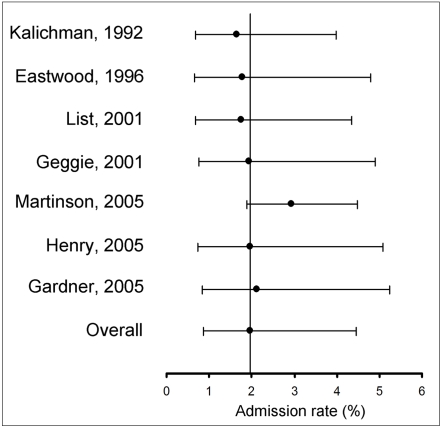
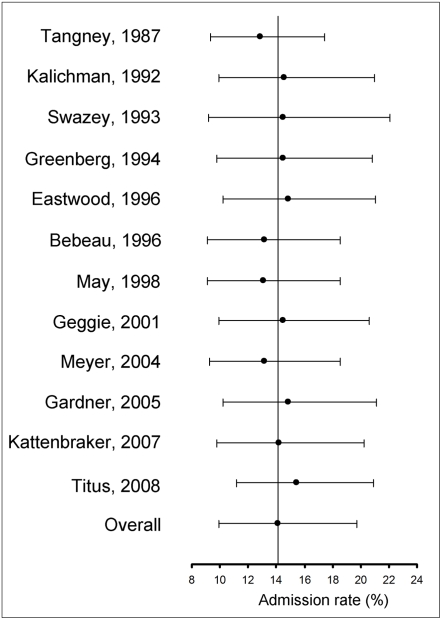
The frequency with which scientists fabricate and falsify data, or commit other forms of scientific misconduct is a matter of controversy. Many surveys have asked scientists directly whether they have committed or know of a colleague who committed research misconduct, but their results appeared difficult to compare and synthesize. This is the first meta-analysis of these surveys. To standardize outcomes, the number of respondents who recalled at least one incident of misconduct was calculated for each question, and the analysis was limited to behaviours that distort scientific knowledge: fabrication, falsification, "cooking" of data, etc... Survey questions on plagiarism and other forms of professional misconduct were excluded. The final sample consisted of 21 surveys that were included in the systematic review, and 18 in the meta-analysis. A pooled weighted average of 1.97% (N = 7, 95%CI: 0.86-4.45) of scientists admitted to have fabricated, falsified or modified data or results at least once--a serious form of misconduct by any standard--and up to 33.7% admitted other questionable research practices. In surveys asking about the behaviour of colleagues, admission rates were 14.12% (N = 12, 95% CI: 9.91-19.72) for falsification, and up to 72% for other questionable research practices. Meta-regression showed that self reports surveys, surveys using the words "falsification" or "fabrication", and mailed surveys yielded lower percentages of misconduct. When these factors were controlled for, misconduct was reported more frequently by medical/pharmacological researchers than others. Considering that these surveys ask sensitive questions and have other limitations, it appears likely that this is a conservative estimate of the true prevalence of scientific misconduct.
Overview
CoChat Summary
TL;DR
This systematic review and meta-analysis of survey data estimated that about 2% of scientists admitted to fabricating, falsifying, or modifying data or results at least once, while 14.12% reported knowing a colleague who did so. The paper argues these are conservative estimates and that methodological choices strongly shape the observed rates.
Key findings
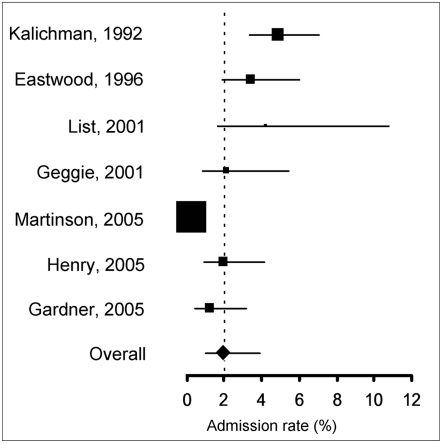
- Across surveys explicitly asking whether scientists ever fabricated or falsified data or altered/modifed results, the pooled weighted estimate was 1.97% (95% CI 0.86–4.45; N = 7), with significant heterogeneity (Cochran’s Q = 61.7777, df = 6, P < 0.0001).
- When only questions explicitly using the words “fabrication” or “falsification” were included, the pooled estimate for self-reports was 1.06% (95% CI 0.31–3.51; N = 4).
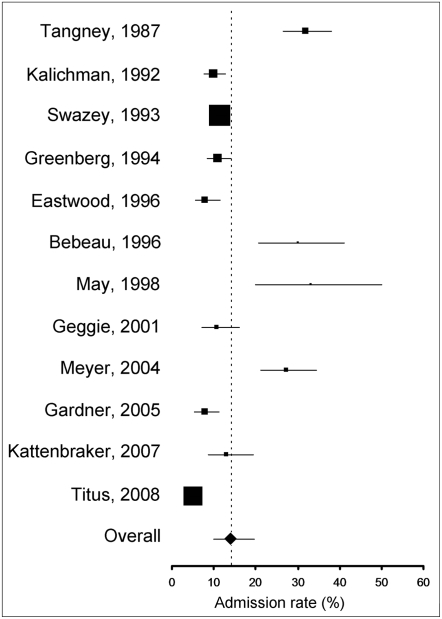
- For reports about colleagues’ misconduct, the pooled weighted estimate was 14.12% (95% CI 9.91–19.72; N = 12); restricting to questions using “fabrication” or “falsification” gave 12.34% (95% CI 8.43–17.71; N = 11).
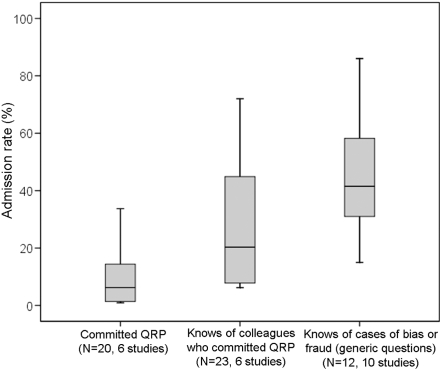
- Other questionable research practices were reported more often: up to 33.7% in self-reports and up to 72% when asking about colleagues.
Methods
- Systematic review and meta-analysis of quantitative surveys asking scientists whether they had committed or observed scientific misconduct in the past; plagiarism and other non-knowledge-distorting misconduct were excluded.
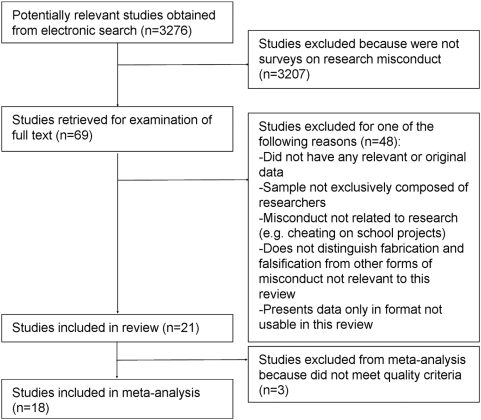
- Searches were run in the first two weeks of August 2008 across citation databases, journals, grey literature sources, and internet search engines; the final review included 21 studies, with 18 in the meta-analysis.
- Main analysis computed the proportion recalling at least one incident, logit-transformed and inverse-variance weighted in a random-effects meta-analysis; meta-regression tested methodological factors such as self vs. non-self reports, mailed vs. handed-out surveys, and use of the words “fabrication”/“falsification.”
Limitations
- The paper states that using the percentage of respondents recalling at least one incident is a rough measure of misconduct frequency; this can under- or overestimate prevalence depending on whether respondents committed multiple incidents or only one.
- The paper notes that non-response bias was recognized by most surveys as a limitation, and that the validity of self-reports may be affected by social expectations; the text also suggests self-reports likely underestimate misconduct.
- Evident from the text: the included studies were heterogeneous in methods and wording, and some outcomes were too diverse for meaningful meta-analysis, so only crude unweighted parameters were calculated for broader questionable research practices.
Model-written summary. Check it against the paper before relying on it.
Integrity signals
Registry
Cites
Statistics
Figures
Verification
Claims the paper makes
0 Valid · 0 Not valid · 14 Not checked · 61 Own results and interpretations
A result the paper reports from its own data — it cites no other source for it, so there is none to check. The quote shows it is in the paper.
In the paper
“When these factors were controlled for, misconduct was reported more frequently by medical/pharmacological researchers than others.”
§ How Many Scientists Fabricate and Falsify Research? A Systematic Review and Meta-Analysis of Survey Data > Abstract
plainstates an association- Asserted: passes — The authors put it forward as true.
- Checkable: passes — It can be checked against evidence.
- Load-bearing: passes — The paper’s conclusions depend on it.
- Based: passes — The paper gives a reason why it holds.
- Rests on 2 assumptions not shown here.
A result the paper reports from its own data — it cites no other source for it, so there is none to check. The quote shows it is in the paper.
In the paper
“A pooled weighted average of 1.97% (N = 7, 95%CI: 0.86–4.45) of scientists admitted to have fabricated, falsified or modified data or results at least once –a serious form of misconduct by any standard– and up to 33.7% admitted other questionable research practices.”
§ How Many Scientists Fabricate and Falsify Research? A Systematic Review and Meta-Analysis of Survey Data > Abstract
plainn = 7- Asserted: passes — The authors put it forward as true.
- Checkable: passes — It can be checked against evidence.
- Load-bearing: passes — The paper’s conclusions depend on it.
- Based: passes — The paper gives a reason why it holds.
- Rests on 2 assumptions not shown here.
A result the paper reports from its own data — it cites no other source for it, so there is none to check. The quote shows it is in the paper.
In the paper
“A pooled weighted average of 1.97% (N = 7, 95%CI: 0.86–4.45) of scientists admitted to have fabricated, falsified or modified data or results at least once –a serious form of misconduct by any standard– and up to 33.7% admitted other questionable research practices.”
§ How Many Scientists Fabricate and Falsify Research? A Systematic Review and Meta-Analysis of Survey Data > Abstract
plain- Asserted: passes — The authors put it forward as true.
- Checkable: passes — It can be checked against evidence.
- Load-bearing: passes — The paper’s conclusions depend on it.
- Based: passes — The paper gives a reason why it holds.
- Rests on 2 assumptions not shown here.
A result the paper reports from its own data — it cites no other source for it, so there is none to check. The quote shows it is in the paper.
In the paper
“In surveys asking about the behaviour of colleagues, admission rates were 14.12% (N = 12, 95% CI: 9.91–19.72) for falsification, and up to 72% for other questionable research practices.”
§ How Many Scientists Fabricate and Falsify Research? A Systematic Review and Meta-Analysis of Survey Data > Abstract
plainn = 12- Asserted: passes — The authors put it forward as true.
- Checkable: passes — It can be checked against evidence.
- Load-bearing: passes — The paper’s conclusions depend on it.
- Based: passes — The paper gives a reason why it holds.
- Rests on 2 assumptions not shown here.
A result the paper reports from its own data — it cites no other source for it, so there is none to check. The quote shows it is in the paper.
In the paper
“Meta-analysis yielded mean pooled estimates that are higher than most previous estimates.”
§ How Many Scientists Fabricate and Falsify Research? A Systematic Review and Meta-Analysis of Survey Data > Introduction
plain- Asserted: passes — The authors put it forward as true.
- Checkable: passes — It can be checked against evidence.
- Load-bearing: passes — The paper’s conclusions depend on it.
- Based: passes — The paper gives a reason why it holds.
- Rests on 2 assumptions not shown here.
31 more claims
Create a free account to see all 75 claims and to verify the 4 references still open.
- It may state two separate claims as one. 24
- Probably not a substantial claim. 25
Claims other papers make about this one
Each is checked against this paper’s own text: does it say what the citing paper says it does?
The cited source says what the claim attributes to it.
In the citing paper
“there are other more common sources of unreliability in the literature (41)(42)(43)(44)”
From Misconduct accounts for the majority of retracted scientific publications (2012) · cites this paper as [43]
The cited source says what the claim attributes to it.
In the citing paper
“The prevalence of researchers who have been involved in scientific misconduct is estimated to be around 2% [2]”
From Checklist to assess Trustworthiness in RAndomised Controlled Trials (TRACT checklist): concept proposal and pilot (2023) · cites this paper as [2]
The cited source says what the claim attributes to it.
In the citing paper
“This is how a small number of people 40 with flexible morals can pollute the scientific literature disproportionately.”
From Fraudulent studies are undermining the reliability of systematic reviews: on the prevalence of problematic images in preclinical depression studies (2025) · cites this paper as [40]
The cited source says what the claim attributes to it.
In the citing paper
“A meta-analysis by Fanelli, combining the results of 18 published surveys, found that 1.9% of researchers have admitted to modification, falsification, or fabrication of data (3).”
From The Prevalence of Inappropriate Image Duplication in Biomedical Research Publications (2016) · cites this paper as [3]
The cited source says what the claim attributes to it.
In the citing paper
“A systematic review and meta-analysis of survey data estimated that 1.97% of authors admitted to have fabricated, falsified, or modified data or results at least once and, in surveys asking about the behavior of colleagues, the admission rate was 14.12% for falsification [13].”
From No raw data, no science: another possible source of the reproducibility crisis (2020) · cites this paper as [13]
6 more claims about this paper
Create a free account to see every claim other papers make about this one.
Citations
Cites
(2000) · Cited by 9,198
The Sociology of Science: Theoretical and Empirical Investigations
Kaplan, N., Merton, R. K., & Storer, N. W. (1974) · Technology and Culture · doi:10.2307/3102264 · Cited by 4,005
The Normative Structure of Science
Merton, R. Κ. (1973) · Medical Entomology and Zoology · Cited by 2,315
The Hazards of Scoring the Quality of Clinical Trials for Meta-analysis
Jüni, P. (1999) · JAMA · doi:10.1001/jama.282.11.1054 · Cited by 1,981 · cited 1×
“All remaining papers were included, and were not graded on a quality scale, because the validity and use of quality measures in meta-analysis is controversial [21], [22].”
BackgroundScope and Impact of Financial Conflicts of Interest in Biomedical Research: A Systematic Review
Bekelman, J. E., Li, Y., & Gross, C. P. (2003) · JAMA · doi:10.1001/jama.289.4.454 · Cited by 1,816 · cited 1×
“This would support growing fears that the large financial interests that often drive medical research are severely biasing it [50], [51], [52].”
BackgroundTourangeau, R., & Smith, T. W. (1996) · Public Opinion Quarterly · doi:10.1086/297751 · Cited by 1,295 · cited 1×
“However, the accuracy of responses to sensitive questions is often independent of response rates, and depends strongly on respondents' perception of anonymity and confidentiality [43], [44].”
BackgroundA comparison of methods to detect publication bias in meta‐analysis
Macaskill, P., Walter, S. D., & Irwig, L. (2001) · Statistics in Medicine · doi:10.1002/sim.698 · Cited by 1,286 · cited 1×
“The popular funnel-plot-based methods to test for publication bias in meta-analysis are inappropriate and potentially misleading when the number of included studies is small and heterogeneity is large [25], [26].”
MethodMartinson, B. C., Anderson, M. S., & de Vries, R. (2005) · Nature · doi:10.1038/435737a · Cited by 1,096 · cited 9×
“All the above results were robust with respect to inclusion or exclusion of any particular study, with perhaps one exception: Martinson et al. (2005) [19], which is one of the largest and most frequently cited surveys on misconduct published to date.”
BackgroundMethodResultInfluentialAdjusting for publication bias in the presence of heterogeneity
Terrin, N., Schmid, C. H., Lau, J., & Olkin, I. (2003) · Statistics in Medicine · doi:10.1002/sim.1461 · Cited by 809 · cited 1×
“The popular funnel-plot-based methods to test for publication bias in meta-analysis are inappropriate and potentially misleading when the number of included studies is small and heterogeneity is large [25], [26].”
MethodIs Academic Medicine for Sale?
Angell, M. (2000) · New England Journal of Medicine · doi:10.1056/nejm200005183422009 · Cited by 582
Research works printed but not linked: 2
- Eastwood S Derish P Leash E Ordway S 1996 Ethical issues in biomedical research: perceptions and practices of postdoctoral research fellows responding to a survey. Science and Engineering Ethics 2 89 114 11657788 · DOI
- Kattenbraker MS 2007 Health education research and publication: ethical considerations and the response of health educators Carbondale Southern Illinois University.Doctoral dissertation
Cited by
Items 901–1,000 of 1,924
Using Statistics from Binary Variables to Detect Data Anomalies, Even Possibly Fraudulent Research
Schumm, W. R., Crawford, D. W., & Lockett, L. (2019) · Psychology Research and Applications · doi:10.22606/pra.2019.14004 · Cited by 9
Lelgemann, M., & Sauerland, S. (2010) · Zeitschrift für Evidenz Fortbildung und Qualität im Gesundheitswesen · doi:10.1016/j.zefq.2010.03.035 · Cited by 9
Responsible conduct of research: Do we need training in fraud-science?
Katavić, V. (2010) · Biochemia Medica · doi:10.11613/bm.2010.036 · Cited by 8
“Although most of the researchers can agree on the terms used to describe misconduct (F, F, P) and questionable research practices(usually within the same scientifi c fi eld – sometimes there is dissonance between the “hard” and “soft” sciences), it is still disputed how important they are for science in general, if su…”
BackgroundIrreconcilable Differences: The Corporatization of Canadian Universities
Brownlee, J. (2014) · Carleton University's Institutional Repository (MacOdrum Library, Carleton University) · doi:10.22215/etd/2014-10235 · Cited by 19
Tolk, A. (2017) · Wiley eBooks · doi:10.1002/9781119288091.ch3 · Cited by 7
Johnson, T. P. (2018) · Public Opinion Quarterly · doi:10.1093/poq/nfy029 · Cited by 7
Increasing the reproducibility of research will reduce the problem of apophenia (and more)
Jones, P. M., & Martin, J. E. (2021) · Canadian Journal of Anesthesia/Journal canadien d anesthésie · doi:10.1007/s12630-021-02006-1 · Cited by 8
“There is also a systematic review of survey results showing that approximately 12% of researchers had personal knowledge of a colleague who had fabricated or falsified data, and 2% admitted to doing it themselves.(33) These findings, due to the sensitivity of the survey questions, very”
BackgroundGibson, A. D., White, N. M., Collins, P. G. S., et al. (2026) · medRxiv · doi:10.64898/2026.02.24.26347028 · Cited by 7
Rastogi, C., Stelmakh, I., Beygelzimer, A., Dauphin, Y. N., Liang, P., Wortman Vaughan, J., Xue, Z., Daumé III, H., Pierson, E., & Shah, N. B. (2024) · PLOS ONE · doi:10.1371/journal.pone.0300710 · Cited by 4
Misconducts in research and methods to uphold research integrity
Rao, K. N., Mair, M. D., Arora, R. D., Dange, P., & Nagarkar, N. M. (2024) · Indian Journal of Cancer · doi:10.4103/ijc.ijc_4_23 · Cited by 10
Pharmaceutical product recall and educated hesitancy towards new drugs and novel vaccines
Rhodes, P., & Parry, P. I. (2024) · International Journal of Risk & Safety in Medicine · doi:10.1177/09246479241292008 · Cited by 7
Moving Open Repositories out of the Blind Spot of Initiatives to Correct the Scholarly Record
Bordignon, F. (2025) · Learned Publishing · doi:10.1002/leap.1655 · Cited by 9
Reckoning with Retractions in Research Funding Reviews: The Case of China
Xu, S. B., & Hu, G. (2025) · Publications · doi:10.3390/publications13030041 · Cited by 9
“Research funders should also recognize that the increasing number of retractions is likely only the tip of an iceberg of retractable publications (Ben‑Yehuda & Oliver‑Lumerman, 2017; Castillo, 2014; Fanelli, 2009; Oransky, 2022b; Xie et al., 2021).”
Levine, S. S. (2012) · Administrative Science Quarterly · doi:10.1177/0001839212462542 · Cited by 6
“Even in the sciences, which some see as a haven of the scientific method, between 10 and 20 percent of scientists report that ‘‘colleagues’’ fabricated or falsified data (Fanelli, 2009).”
BackgroundKrauskopf, E., & Salgado, M. (2023) · Investigación Bibliotecológica Archivonomía Bibliotecología e Información · doi:10.22201/iibi.24488321xe.2023.96.58784 · Cited by 12
Stockemer, D., & Reidy, T. (2023) · Learned Publishing · doi:10.1002/leap.1587 · Cited by 8
“In a meta-analysis of studies on research misconduct, Fanelli (2009) reported that close to 2% of scientists admitted having ‘ fabricated, falsi fi ed or modi-fi ed data or results at least once ’ .”
BackgroundPerception of Research Misconduct in a Spanish University
Feenstra, R. A., García, C. C., & Nicolau, E. G. (2024) · Journal of Academic Ethics · doi:10.1007/s10805-024-09526-7 · Cited by 7
“In response to this problem, the scientific literature is now exploring the extent of research misconduct in different research contexts (Fanelli, 2009; Pupovac & Fanelli, 2015; Pupovac et al., 2017; Xie et al., 2021).”
Tsuge, T., Yamamoto, N., Tomita, Y., Hagiyama, A., Shiratsuchi, D., Kato, Y., Taito, S., & Yorifuji, T. (2025) · Physical Therapy · doi:10.1093/ptj/pzaf032 · Cited by 11
Do male leading authors retract more articles than female leading authors?
Zheng, E., Fu, H., Thelwall, M. A., & Fang, Z. (2025) · Journal of Informetrics · doi:10.1016/j.joi.2025.101682 · Cited by 8
Santos-d’Amorim, K., Casado, E. S., & dos Santos, R. N. M. (2025) · Scientometrics · doi:10.1007/s11192-025-05343-w · Cited by 10
“…inadvertent (Vaisrub, 1978); (c) Image manipulation (Beck, 2021; Bik et al., 2016); (d) Fabrication/falsification of data (Fanelli, 2009); (e) Submissions without the consent of co-authors; (f) Errors: any inadvertent or neglectful error committed by the authors; (g)…”
InfluentialEtika vědecké práce a publikování pro mírně pokročilé
Knecht, P., & Dvořák, D. (2013) · Pedagogická orientace · doi:10.5817/pedor2013-4-554 · Cited by 6
Glasziou, P., Altman, D. G., Bossuyt, P. M., Boutron, I., Clarke, M. J., Julious, S. A., Michie, S., Moher, D., & Wager, E. (2014) · Cited by 6
Academic capacity building: holding up a mirror
der Stocken, T. V., Hugé, J., Deboelpaep, E., Vanhove, M. P. M., de Bisthoven, L. J., & Koedam, N. E. (2015) · Scientometrics · doi:10.1007/s11192-015-1811-3 · Cited by 9
“Much has been published about its metrics, its uses and abuses, its artefacts (e.g. Fanelli 2009; Marušić et al. 2011; Ana et al. 2013; Macilwain 2013; Beall 2015; Wilsdon 2015).”
BackgroundA Perspective on Education in Research Ethics for Entomology Graduate Students
Fryxell, R. T., Minteer, C. R., Pallipparambil, G. R., Magnus, R. M., & Wiedenmann, R. N. (2010) · American Entomologist · doi:10.1093/ae/56.4.198 · Cited by 5
The status of research ethics in social work
Ferguson, A., & Clark, J. J. (2018) · Journal of Evidence-Informed Social Work · doi:10.1080/23761407.2018.1478756 · Cited by 10
“…to specific research conduct, such as conflict of interest (e.g., Bekelman, Li, & Gross, 2003), publication bias (e.g., Dwan et al., 2008), and data falsification (e.g., Fanelli, 2009), these authors were unable to locate any studies which compared research ethics publications by discipline.”
BackgroundBeyond Data Collection: Ethical Issues in Minority Research
Talbert, E. (2018) · Ethics & Behavior · doi:10.1080/10508422.2018.1531005 · Cited by 11
“For example, studies show that male researchers find greater differences between men and women in conformity than female researchers (Eagly & Carli, 1981) and approximately one third of the researchers surveyed admitted to engaging in questionable research practices (Fanelli, 2009).”
ResultSorokowski, P., Groyecka-Bernard, A., Błaszczyński, K., Frąckowiak, T., & Kobylarek, A. (2019) · Journal of Education Culture and Society · doi:10.15503/jecs20192.67.75 · Cited by 8
Reliability of Inference: Analogs of Replication in Qualitative Research
Fairfield, T., & Charman, A. E. (2020) · Cambridge University Press eBooks · doi:10.1017/9781108762519.012 · Cited by 6
Sperling, D. (2021) · Journal of Empirical Research on Human Research Ethics · doi:10.1177/15562646211005253 · Cited by 8
“…also include changes in the research methodology, or findings in response to pressure from funding organizations and others, data falsification, plagiarism, and removing data from the analysis (Al-Marzouki et al., 2005; Bouter et al., 2016; Fanelli, 2009; Fang et al., 2012; Matrinson et al., 2005).”
BackgroundMcSweeney, B. (2021) · Journal of Organizational Change Management · doi:10.1108/jocm-04-2021-0118 · Cited by 20
Where Is Ethology Heading? An Invitation for Collective Metadisciplinary Discussion
Guerra, N. B. (2021) · Animals · doi:10.3390/ani11092520 · Cited by 7
“Strikingly, this opinion seems to be valid more than fifty years later, since Nature published again an Editorial entitled the same [82], albeit this time to warn about the amount of falsified or fabricated data that researchers were producing (and even admitting to produce, see [83,84]) due to this pushing system.”
BackgroundA Narrative on The Fabrication of Results in Science
Freitas, J., Esteves, D., & Neiva, H. P. (2021) · Current Science · doi:10.18520/cs/v121/i2/205-209 · Cited by 8
Hutmacher, F. (2022) · Theory & Psychology · doi:10.1177/09593543221122735 · Cited by 5
“Email: fabian.hutmacher@uni-wuerzburg.de might think or hope (Fanelli, 2009; John et al., 2012; Simmons et al., 2011), various countermeasures have been proposed, ranging from the introduction of new statistical tools (e.g., G*Power; Faul et al., 2007) and analysis procedures (e.g., Bayes factors;…”
MethodFernandez‐Guzman, D., Caira‐Chuquineyra, B., Olortegui-Rodriguez, J. J., et al. (2023) · Revista de la Facultad de Medicina · doi:10.15446/revfacmed.v71n3.103182 · Cited by 6
Krásničan, V., Gaižauskaitė, I., Bülow, W., et al. (2024) · Journal of Academic Ethics · doi:10.1007/s10805-023-09498-0 · Cited by 6
“For example, based on a widely cited meta-analysis of survey data, Daniele Fanelli (2009) concluded that about 2% of scientists admitted to having at least once fabricated, falsi-fied, or modified data or results, whereas 33.7% admitted to other questionable research practices.”
InfluentialJournal Combat: Initiating a Publication, Competing for Visibility, and Assuring Ethical Behavior
Brumback, R. A. (2012) · Journal of Evidence-Based Complementary & Alternative Medicine · doi:10.1177/2156587211428322 · Cited by 7
“Therefore, it is no wonder that the integrity of science is more often being questioned and that there has been heightened scrutiny of published literature along with a dramatic rise in the number of articles that must be retracted (Figure 1).(57-66) So, where does this leave a journal such as the Journal of Evidence-…”
BackgroundScientific Misconduct, Retractions, and Errata
DeMaria, A. N. (2012) · Journal of the American College of Cardiology · doi:10.1016/j.jacc.2012.03.005 · Cited by 6
Serotype Distribution of Human Respiratory Adenovirus Isolated in Gyeonggi Province
Lee, H.-K., Lee, M.-J., Mun, S.-K., Kim, W.-H., Cho, H.-G., Yoon, M., Lee, J.-B., & Cheong, H.-M. (2012) · The Korean Journal of Microbiology · doi:10.7845/kjm.2012.018 · Cited by 6
Scientific Misconduct: More Cops, More Robbers?
Macilwain, C. (2012) · Cell · doi:10.1016/j.cell.2012.06.001 · Cited by 6
“According to a widely quoted 2009 metastudy by Daniele Fanelli of the University of Edinburgh, 2% of researchers confess to FFP, and as many as one-third confess to lesser forms of misconduct (Fanelli, 2009).”
BackgroundForging success: Soviet managers and accounting fraud, 1943–1962
Harrison, M. (2010) · Journal of Comparative Economics · doi:10.1016/j.jce.2010.12.002 · Cited by 19
Accounting and Public Policy: The Importance of Credible Research
Denison, C. A., Ravenscroft, S., & Williams, P. F. (2014) · Accounting and the Public Interest · doi:10.2308/apin-51158 · Cited by 7
Don't ask too much from data literacy
Kayser-Bril, N. (2016) · The Journal of Community Informatics · doi:10.15353/joci.v12i3.3286 · Cited by 5
Understanding the complexities of retractions: Recommended resources
Riegelman, A., & Bakker, C. (2018) · College & Research Libraries News · doi:10.5860/crln.79.1.38 · Cited by 6
The Scientific Integrity of Journal Publications in the Age of ‘Fake News’
Collins, E. M., & Bassat, Q. (2018) · Journal of Tropical Pediatrics · doi:10.1093/tropej/fmy039 · Cited by 6
Plagiarism Education in Science: The Effect of Instruction on Student Attitudes
Welsh, K. (2019) · International Journal of Bahamian Studies · doi:10.15362/ijbs.v25i0.319 · Cited by 7
Carney, M., & Davies, B. (2020) · Journal of Computer Applications in Archaeology · doi:10.5334/jcaa.52 · Cited by 7
Tortosa, M., González‐Sala, F., de Oliver, J. S. P., & Bustamante, M. C. A. (2019) · Anales de Psicología · doi:10.6018/analesps.388691 · Cited by 7
“…Hicks, Wouters, Waltman, Rijcke, & Rafol, 2015), its possible detrimental effects regarding the integrity and good practices of those who publish (Fanelli, 2009; Fanelli, Costas, & Larivière, 2015; Fong & Wilhite, 2017; Grimes, Bauch, & Ioannidis, 2018; Wilhite & Fong, 2012), and over the…”
BackgroundGenopolitics: introductory remarks
Wajzer, M. (2020) · Interdisciplinary Science Reviews · doi:10.1080/03080188.2020.1791504 · Cited by 6
Antoni, A. (2021) · International journal of business economics & management · doi:10.31295/ijbem.v4n1.725 · Cited by 7
8% of researchers in Dutch survey have falsified or fabricated data
Chawla, D. S. (2021) · Nature · doi:10.1038/d41586-021-02035-2 · Cited by 8
Fanelli, D. (2022) · Oxford University Press eBooks · doi:10.1093/oso/9780190938550.003.0004 · Cited by 7
Self-citationKondakçı, Y., Zayim-Kurtay, M., Kaya-Kaşıkcı, S., & Önen, Ö. (2022) · Ethics & Behavior · doi:10.1080/10508422.2022.2149524 · Cited by 7
“Based on a meta-analysis of 18 studies, Fanelli (2009) showed that 33.7% of participants were involved in fraudulent acts in research, while 72% reported that other colleagues conducted questionable research practices.”
MethodInfluentialTARGETS FOR HONESTY: HOW PERFORMANCE INDICATORS SHAPE INTEGRITY IN DUTCH HIGHER EDUCATION
Overman, S., Akkerman, A., & Torenvlied, R. (2016) · Public Administration · doi:10.1111/padm.12282 · Cited by 7
Using Orphanage Spaces to Combat Envy and Stigma
Carpenter, K. (2014) · Children Youth and Environments · doi:10.7721/chilyoutenvi.24.1.0124 · Cited by 6
Distributed Anti-Plagiarism Checker for Biomedical Images Based on Sensor Noise
Bruno, A., Cattaneo, G., Petrillo, U. F., Narducci, F., & Roscigno, G. (2017) · Lecture notes in computer science · doi:10.1007/978-3-319-70742-6_32 · Cited by 6
Building Students' Emotional Quotient Through Religion Teaching in Public Higher Institution
Munawir, K. (2019) · Khalifa Journal of Islamic Education · doi:10.24036/kjie.v3i1.23 · Cited by 8
Responsible Conduct of Research (RCR): The Basic Tenet of the Chemical Sciences
DeShong, P. R. (2020) · Springer eBooks · doi:10.1007/978-3-030-16759-2_69 · Cited by 6
Vom Finanz- zum Wissenschaftsbetrug
Schüpfer, G., Hein, J., Casutt, M., Steiner, L., & Konrad, C. (2012) · Der Anaesthesist · doi:10.1007/s00101-012-2028-y · Cited by 8
Pontille, D., & Torny, D. (2012) · Revue d Épidémiologie et de Santé Publique · doi:10.1016/j.respe.2012.06.395 · Cited by 8
“It also responds to the high frequency of researchers declaring having observed colleagues involved in practices they deem contrary to scientific ethics (Fanelli 2009).”
Don't fall in common science pitfall!
Moustafa, K. (2014) · Frontiers in Plant Science · doi:10.3389/fpls.2014.00536 · Cited by 6
“While the incidence of research misconducts is unknown precisely at global level (Fanelli, 2009), multiple symptoms and consequences of these drifts are tangible.”
BackgroundThe Imperative of Ethical Communication Standards in an Era of Commercialized Medicine
Lyon, A. R., & Mirivel, J. C. (2010) · Management Communication Quarterly · doi:10.1177/0893318910370272 · Cited by 6
“For example, we need to understand the following: How do sales representatives communicate with physicians in naturally occurring encounters? How are they trained by their organizations to communicate with physicians? What ethical principles should guide physician–pharmaceutical representative encounters? A study by L…”
BackgroundInfluentialMenezes, R. G., Giri, S., Pant, S., Kharoshah, M. A. A., Madadin, M. S., & Nagaraja, S. B. (2014) · Medico-Legal Journal · doi:10.1177/0025817214526524 · Cited by 6
“A study can be selectively published only when it meets the researchers’ expectations.(11) Fanneli’s metaanalysis revealed that about 2% of scientists admitted to having fabricated, falsified, or modified data or results at least once.”
BackgroundInfluentialData management in systems biology I - Overview and bibliographyPreprint
Mayer, G. (2009) · arXiv (Cornell University) · doi:10.48550/arxiv.0908.0411 · Cited by 8
Scientific Misconduct, Plagiarism, and Institutional Control of Misconduct
Kalleberg, R. (2015) · Elsevier eBooks · doi:10.1016/b978-0-08-097086-8.03022-1 · Cited by 7
Towards a Taxonomy of Academic Misconduct: The Case of Business School ResearchPreprint
Hall, J. K., & Martin, B. R. (2018) · SSRN Electronic Journal · doi:10.2139/ssrn.3319860 · Cited by 6
“Such blatant misconduct can be addressed, for example, through legal mechanisms, whereas the “less flagrant, more subtle cases of potential misconduct”, or what Fanelli (2009) and John et al. (2012) call ‘questionable research practices’, remain poorly understood.”
BackgroundInfluentialWhy do ‘Trustworthy’ Living Systematic Reviews Matter?
Riley, S. P., Swanson, B. T., Shaffer, S. M., Flowers, D. W., Cook, C. E., & Brismée, J. (2023) · Journal of Manual & Manipulative Therapy · doi:10.1080/10669817.2023.2229610 · Cited by 7
Lendvai, G. F., & Sasvári, P. (2026) · Journal of Information Science · doi:10.1177/01655515251362383 · Cited by 6
“This can be traced back to the latency in academic misconduct [62], especially given that high-profile incidents might serve as ‘chilling effects’ in admitting scholarly mistakes, but the problem also lies in national policy reforms that may invertedly ‘force’ or ‘ignite’ researchers to be less…”
Ofem, U. J., Ajuluchukwu, E. N., Edam-Agbor, I. B., Orim, F. S., Aquah, P., Umo, U. A., Solomon, A., Ogochukwu, F. I., Osang, A. W., Atah, C. A., et al. (2025) · International Journal for Educational Integrity · doi:10.1007/s40979-025-00184-9 · Cited by 8
“Fabrication, in particular, is often seen as ethically unacceptable due to its repercussions for trust within academic and professional fields where decision-making relies on accurate information (Fanelli 2009).”
Tang, H., Wan, X., & Zeng, W. (2025) · BMC Medical Education · doi:10.1186/s12909-025-07444-9 · Cited by 6
Entradas, M., Feng, Y., & Sousa, I. C. (2026) · PLoS ONE · doi:10.1371/journal.pone.0339056 · Cited by 7
“According to a meta-analysis of surveys on research integrity (N = 18), an average of 2% of scientists admitted to having committed at least one serious form of misconduct (fabricated, falsified or modified data or results) – and up to 34% scientists admitted to other QRPs [25].”
Busch, C. A., Nadile, E. M., Mohammed, T. F., Gin, L. E., Brownell, S. E., & Cooper, K. M. (2024) · Journal of Research in Science Teaching · doi:10.1002/tea.21965 · Cited by 9
Butt, F., Núñez‐Núñez, M., Juhász, B., Bueno‐Cavanillas, A., & Khan, K. S. (2024) · Medicina de Familia SEMERGEN · doi:10.1016/j.semerg.2024.102333 · Cited by 8
¿Publicar o morir? El fraude en la investigación y las publicaciones científicas
Tudela, J., & Aznar, J. (2013) · Persona y Bioética · Cited by 5
Placebo and nocebo phenomena from the perspective of evidence based and person centered medicine
Jakovljević, M. (2017) · Hospital Pharmacology - International Multidisciplinary Journal · doi:10.5937/hpimj1702512j · Cited by 5
Cognitive Enhancement vs. Plagiarism: a Quantitative Study on the Attitudes of an Italian Sample
Palamenghi, L., & Bonfiglioli, C. (2019) · Neuroethics · doi:10.1007/s12152-019-09397-5 · Cited by 6
“practiced other forms of questionable research conducts, such as dropping data from analysis based on gut feeling [3].”
BackgroundSvare, B. B. (2020) · Psychology and Developing Societies · doi:10.1177/0971333619900043 · Cited by 5
Retos éticos para los administradores en salud en la época contemporánea
Medina, M. M. L. (2021) · Revista Facultad Nacional de Salud Pública · doi:10.17533/udea.rfnsp.e341003 · Cited by 18
Jumping with a parachute – is promoting research integrity meaningful?
Tauginienė, L., & Gaižauskaitė, I. (2022) · Accountability in Research · doi:10.1080/08989621.2022.2044318 · Cited by 5
“In the context of world-wide concerns about high levels of academic dishonesty faced by higher education institutions (e.g., Fanelli 2009), reporting and managing academic dishonesty becomes crucial.”
BackgroundHow research institutions can make the best of scandals – once they become unavoidable
Grolleau, G., & Mzoughi, N. (2022) · Prometheus · doi:10.13169/prometheus.38.3.0282 · Cited by 8
“…where the two scandal types interact.1 Scientific misconduct as a necessary but insufficient element for a scandal eruption has been studied extensively, notably to characterize, categorize and quantify it (e.g., Fanelli, 2009; Shibayama and Baba, 2015; Hall and Martin, 2019; Horbach et al., 2019).”
BackgroundEthics and Empirics: Essence of Ethics in Social Research
Ullah, A. A. (2022) · Springer eBooks · doi:10.1007/978-981-19-5441-2_34 · Cited by 5
Bharwani, A. M., Dyke, J. V., Santamaria-Plaza, C., Federer, J. P., & Jones, P. (2023) · International Journal of Environmental Research and Public Health · doi:10.3390/ijerph20146402 · Cited by 5
“Trust in science has declined [5] whether related to increased data falsification and fabrication [8]—or to the public’s discomfort with uncertainty, where science is expected to provide indisputable truths and when it presents uncertainties “people wonder how little difference there is between politics and science” […”
Virtues and vocation: An historical perspective on scientific integrity in the twenty-first century.
Theunissen, B. (2024) · Endeavour · doi:10.1016/j.endeavour.2024.100915 · Cited by 5
Karabağ, S. F., Berggren, C., Pielaszkiewicz, J., & Gerdin, B. (2024) · Journal of Academic Ethics · doi:10.1007/s10805-024-09520-z · Cited by 12
“• By addressing attitudes and behaviors in the respondents´ research group, the survey reduced the social desirability bias inherent in self-reports of norm-dissonant behaviors (Fanelli, 2009; Norwood et al., 2016).”
Scientific integrity in biomedical research is a global problem
Paryzhak, S., & Vari, S. G. (2024) · The Ukrainian Biochemical Journal · doi:10.15407/ubj96.02.012 · Cited by 8
“…Fanelli: 2% of respondents admitted to their own misconduct (fabrication or falsification) and 34% confessed to questionable research practices (QRP), while more than 14% acknowledged misconduct by their colleagues and about 72% reported witnessing colleagues engaging in questionable practices [5].”
BackgroundArtificial Intelligence and Submissions to Annals of Plastic Surgery
Bhandari, P. L., Drolet, B. C., James, A. J., & Lineaweaver, W. C. (2024) · Annals of Plastic Surgery · doi:10.1097/sap.0000000000003997 · Cited by 5
Testing the consistency of performance scores reported for binary classification problems
Fazekas, A., & Kovács, G. (2024) · Applied Soft Computing · doi:10.1016/j.asoc.2024.111993 · Cited by 8
Breaking down the relationship between disruption scores and citation counts
Li, M., Livan, G., & Righi, S. (2024) · PLoS ONE · doi:10.1371/journal.pone.0313268 · Cited by 12
“However, academic impact is a multifaceted concept encompassing various dimensions of scientific publications [22–25].”
Les sciences et la nature sexuée du psychisme au tournant du xxie siècle
Fillod, O. (2014) · Genre sexualité & société · doi:10.4000/gss.3205 · Cited by 9
Publication ethics: whose problem is it?
Wager, E. (2012) · Insights the UKSG journal · doi:10.1629/2048-7754.25.3.294 · Cited by 8
Lee, C. J. (2013) · Episteme · doi:10.1017/epi.2013.35 · Cited by 6
“7% of scientic researchers admit to using at least one questionable research practice (Fanelli 2009); a recent survey in psychology suggests that 94% have done so (John et al.”
BackgroundInfluentialScientific Misconduct: Falsification, Fabrication, and Misappropriation of Credit
Vaux, D. L. (2015) · Springer eBooks · doi:10.1007/978-981-287-079-7_26-1 · Cited by 6
Seven sins in publishing (but who's counting…)
Benson, P. J. (2015) · Annals of The Royal College of Surgeons of England · doi:10.1308/rcsann.2016.0046 · Cited by 5
“For example, a 2006 paper in the Journal of Cell Biology was retracted after Francis raised concerns years after publication about image manipulation, which were validated by the publisher.(2) But why does it happen? Why not? Researchers are human and subject to the same frailties as in other walks of life.”
BackgroundViews of postgraduate students regarding research ethics in Turkey
Koçak, F., & Özbek, O. (2016) · Journal of Human Sciences · doi:10.14687/jhs.v13i2.3780 · Cited by 4
“In Fanelli’s (2009) meta-analysis of 21 scientific articles, 1.”
BackgroundInfluentialLanglais, P. J., & Bent, B. J. (2017) · Ethics & Behavior · doi:10.1080/10508422.2016.1260014 · Cited by 7
“The growing number of reports of research misconduct (Fanelli, 2009) and questionable research practices (L.”
BackgroundDeveloping Standards for Research Practice: Some Issues for Consideration
Parry, J. M. (2017) · Emerald Group Publishing Limited eBooks · doi:10.1108/s2398-601820170000001008 · Cited by 5
Allam, R. M., Noaman, M. K., Moneer, M. M., & Elattar, I. A. (2017) · Europe PMC (PubMed Central) · doi:10.22034/apjcp.2017.18.1.231 · Cited by 5
“…review found that 33.7% of surveyed research admitted to questionable practices, including adjusting results to improve the outcome, questionable interpretation of data, concealment of methodological details and dropping observations based on “feeling they were inaccurate” (Fanelli , 2009).”
BackgroundInfluentialReproducibility in Biomedical Research
Mullane, K., Curtis, M. J., & Williams, M. J. (2017) · Elsevier eBooks · doi:10.1016/b978-0-12-804725-5.00001-x · Cited by 11
Qualitative features in clinical trials: coordinates for prevention of passive and active misconduct
Wajman, J. R., Marin, S. D. M. C., Bertolucci, P. H. F., Chaves, M. L. F., & Bromley, T. A. (2018) · International Journal of Clinical Trials · doi:10.18203/2349-3259.ijct20180125 · Cited by 5
Irreproducible results in preclinical cardiovascular research: opportunities in times of need
Sipido, K. R. (2019) · Cardiovascular Research · doi:10.1093/cvr/cvy312 · Cited by 5
Investigación en salud pública: independencia y libertad académica.
Hernández‐Aguado, I., & Chilet‐Rosell, E. (2019) · Revista de Bioética y Derecho · doi:10.1344/rbd2019.0.27792 · Cited by 4
Metadata
- Authors
- Fanelli, D.
- Affiliations
- University of Edinburgh (GB)
- Corresponding author
- Fanelli, Daniele
- ORCID
- Fanelli, Daniele
- Venue
- PLoS ONE
- Publisher
- Public Library of Science (PLoS)
- Published
- 2009-05-29
- Volume
- 4
- Issue
- 5
- Pages
- e5738
- ISSN
- 1932-6203 (ISSN-L)
- PMC
- PMC2685008
- OpenAlex
- W2152243616
- Cited by
- 1,911
- References
- 74
- Citations by year
- 2026: 77 · 2025: 110 · 2024: 128 · 2023: 136 · 2022: 157 · 2021: 145 · 2020: 163 · 2019: 166 · 2018: 125 · 2017: 125 · 2016: 119 · 2015: 106 · 2014: 82 · 2013: 93 · 2012: 84
- FWCI
- 19.42
- Type
- journal article
- Language
- en
- Open access
- gold
- doi.org
- Locations
- PLoS ONE (publishedVersion, cc-by)
- PubMed Central (publishedVersion, cc-by)
- PubMed (publishedVersion)
- Edinburgh Research Explorer (University of Edinburgh) (acceptedVersion, public-domain)
- RePEc: Research Papers in Economics (submittedVersion)
- DOAJ (DOAJ: Directory of Open Access Journals) (submittedVersion, cc-by-sa)
- Figshare (submittedVersion, cc-by)
- DigitalGeorgetown (Georgetown University Library) (submittedVersion)
- Funders
- European Commission (221441)
- Economic and Social Research Council (ES/F028180/1)
- Topics
- Social Sciences › Education › Academic integrity and plagiarism
- Physical Sciences › Mathematics › Statistics and Probability › Benford’s Law and Fraud Detection
- Social Sciences › Library and Information Sciences › Academic Publishing and Open Access
- Keywords
- research misconduct, scientific fraud, data fabrication, data falsification, questionable research practices, self-report questionnaire
- MeSH terms
- Data Collection, Regression Analysis, Research Personnel, Scientific Misconduct, Ethics, Research
About these checks
Registry, retraction, Cites and statistics results are computed, not judged, with one exception: a printed reference that no index lists is read once by a model before it counts as a citation error. Claims are extracted by a model and kept only when their quote appears verbatim in the text; each cited source is then checked, with a model’s help, for whether it says what the claim relies on. Those verdicts can be wrong — read the claim’s quote and the cited source before relying on one.
A language model drew the claims from the paper on 2026-10-10, under version 3 of the claim definition (model deepseek-v4.1-flash, prompt extract-v3).
A second model labelled each claim on 2026-10-10 (model jev-1.13-20260917, definition revision gold-guideline-v0.2).
Statistics and arithmetic are recomputed, not judged.
Confidence bands are shown only for fields calibrated on our annotated test set. None is calibrated yet, so no band is shown.
What counts as a claim ›How we measure confidence ›How we check this ›
Are you an author, or do you see a problem with this page? Request a review
Data sources
Bibliographic data: Semantic Scholar, OpenAlex, Crossref.
Contains information from the Semantic Scholar Academic Graph Datasets, made available under the ODC Attribution License (ODC-BY 1.0).
Semantic Scholar’s data is described in: Kinney, R., et al. (2023). The Semantic Scholar Open Data Platform. arXiv:2301.10140.
