

How Many Scientists Fabricate and Falsify Research? A Systematic Review and Meta-Analysis of Survey Data
Open accessThe DOI matches its Crossref record; 66 of the 74 references it cites were found in a registry or an index; none of the 21 sources its claims cite is checked for support yet.
Abstract
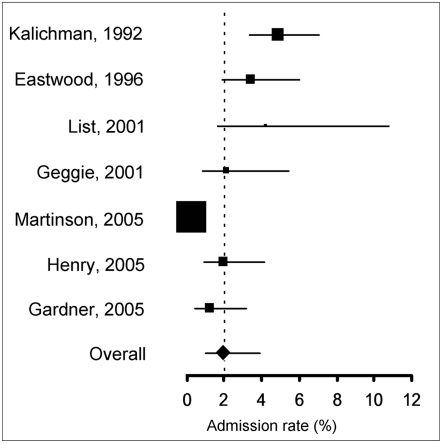
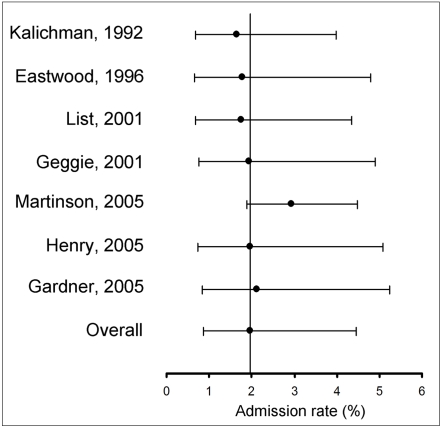
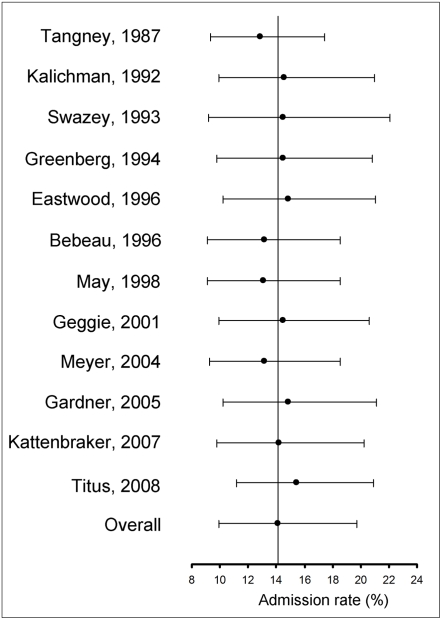
The frequency with which scientists fabricate and falsify data, or commit other forms of scientific misconduct is a matter of controversy. Many surveys have asked scientists directly whether they have committed or know of a colleague who committed research misconduct, but their results appeared difficult to compare and synthesize. This is the first meta-analysis of these surveys. To standardize outcomes, the number of respondents who recalled at least one incident of misconduct was calculated for each question, and the analysis was limited to behaviours that distort scientific knowledge: fabrication, falsification, "cooking" of data, etc... Survey questions on plagiarism and other forms of professional misconduct were excluded. The final sample consisted of 21 surveys that were included in the systematic review, and 18 in the meta-analysis. A pooled weighted average of 1.97% (N = 7, 95%CI: 0.86-4.45) of scientists admitted to have fabricated, falsified or modified data or results at least once--a serious form of misconduct by any standard--and up to 33.7% admitted other questionable research practices. In surveys asking about the behaviour of colleagues, admission rates were 14.12% (N = 12, 95% CI: 9.91-19.72) for falsification, and up to 72% for other questionable research practices. Meta-regression showed that self reports surveys, surveys using the words "falsification" or "fabrication", and mailed surveys yielded lower percentages of misconduct. When these factors were controlled for, misconduct was reported more frequently by medical/pharmacological researchers than others. Considering that these surveys ask sensitive questions and have other limitations, it appears likely that this is a conservative estimate of the true prevalence of scientific misconduct.
Overview
CoChat Summary
TL;DR
This systematic review and meta-analysis of survey data estimated that about 2% of scientists admitted to fabricating, falsifying, or modifying data or results at least once, while 14.12% reported knowing a colleague who did so. The paper argues these are conservative estimates and that methodological choices strongly shape the observed rates.
Key findings
- Across surveys explicitly asking whether scientists ever fabricated or falsified data or altered/modifed results, the pooled weighted estimate was 1.97% (95% CI 0.86–4.45; N = 7), with significant heterogeneity (Cochran’s Q = 61.7777, df = 6, P < 0.0001).
- When only questions explicitly using the words “fabrication” or “falsification” were included, the pooled estimate for self-reports was 1.06% (95% CI 0.31–3.51; N = 4).
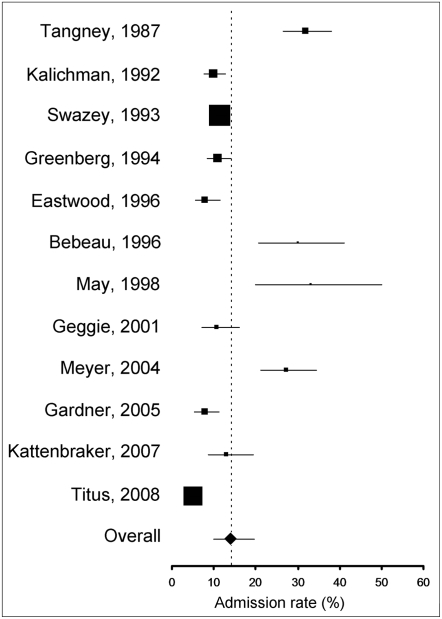
- For reports about colleagues’ misconduct, the pooled weighted estimate was 14.12% (95% CI 9.91–19.72; N = 12); restricting to questions using “fabrication” or “falsification” gave 12.34% (95% CI 8.43–17.71; N = 11).
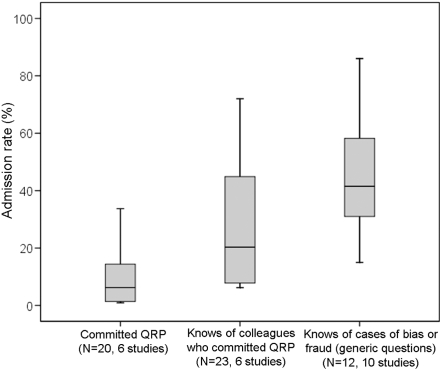
- Other questionable research practices were reported more often: up to 33.7% in self-reports and up to 72% when asking about colleagues.
Methods
- Systematic review and meta-analysis of quantitative surveys asking scientists whether they had committed or observed scientific misconduct in the past; plagiarism and other non-knowledge-distorting misconduct were excluded.
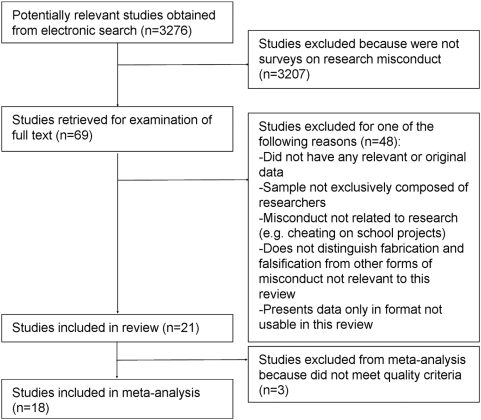
- Searches were run in the first two weeks of August 2008 across citation databases, journals, grey literature sources, and internet search engines; the final review included 21 studies, with 18 in the meta-analysis.
- Main analysis computed the proportion recalling at least one incident, logit-transformed and inverse-variance weighted in a random-effects meta-analysis; meta-regression tested methodological factors such as self vs. non-self reports, mailed vs. handed-out surveys, and use of the words “fabrication”/“falsification.”
Limitations
- The paper states that using the percentage of respondents recalling at least one incident is a rough measure of misconduct frequency; this can under- or overestimate prevalence depending on whether respondents committed multiple incidents or only one.
- The paper notes that non-response bias was recognized by most surveys as a limitation, and that the validity of self-reports may be affected by social expectations; the text also suggests self-reports likely underestimate misconduct.
- Evident from the text: the included studies were heterogeneous in methods and wording, and some outcomes were too diverse for meaningful meta-analysis, so only crude unweighted parameters were calculated for broader questionable research practices.
Model-written summary. Check it against the paper before relying on it.
Integrity signals
Registry
Cites
Statistics
Figures
Verification
Claims the paper makes
0 Valid · 0 Not valid · 14 Not checked · 61 Own results and interpretations
A result the paper reports from its own data — it cites no other source for it, so there is none to check. The quote shows it is in the paper.
In the paper
“When these factors were controlled for, misconduct was reported more frequently by medical/pharmacological researchers than others.”
§ How Many Scientists Fabricate and Falsify Research? A Systematic Review and Meta-Analysis of Survey Data > Abstract
plainstates an association- Asserted: passes — The authors put it forward as true.
- Checkable: passes — It can be checked against evidence.
- Load-bearing: passes — The paper’s conclusions depend on it.
- Based: passes — The paper gives a reason why it holds.
- Rests on 2 assumptions not shown here.
A result the paper reports from its own data — it cites no other source for it, so there is none to check. The quote shows it is in the paper.
In the paper
“A pooled weighted average of 1.97% (N = 7, 95%CI: 0.86–4.45) of scientists admitted to have fabricated, falsified or modified data or results at least once –a serious form of misconduct by any standard– and up to 33.7% admitted other questionable research practices.”
§ How Many Scientists Fabricate and Falsify Research? A Systematic Review and Meta-Analysis of Survey Data > Abstract
plainn = 7- Asserted: passes — The authors put it forward as true.
- Checkable: passes — It can be checked against evidence.
- Load-bearing: passes — The paper’s conclusions depend on it.
- Based: passes — The paper gives a reason why it holds.
- Rests on 2 assumptions not shown here.
A result the paper reports from its own data — it cites no other source for it, so there is none to check. The quote shows it is in the paper.
In the paper
“A pooled weighted average of 1.97% (N = 7, 95%CI: 0.86–4.45) of scientists admitted to have fabricated, falsified or modified data or results at least once –a serious form of misconduct by any standard– and up to 33.7% admitted other questionable research practices.”
§ How Many Scientists Fabricate and Falsify Research? A Systematic Review and Meta-Analysis of Survey Data > Abstract
plain- Asserted: passes — The authors put it forward as true.
- Checkable: passes — It can be checked against evidence.
- Load-bearing: passes — The paper’s conclusions depend on it.
- Based: passes — The paper gives a reason why it holds.
- Rests on 2 assumptions not shown here.
A result the paper reports from its own data — it cites no other source for it, so there is none to check. The quote shows it is in the paper.
In the paper
“In surveys asking about the behaviour of colleagues, admission rates were 14.12% (N = 12, 95% CI: 9.91–19.72) for falsification, and up to 72% for other questionable research practices.”
§ How Many Scientists Fabricate and Falsify Research? A Systematic Review and Meta-Analysis of Survey Data > Abstract
plainn = 12- Asserted: passes — The authors put it forward as true.
- Checkable: passes — It can be checked against evidence.
- Load-bearing: passes — The paper’s conclusions depend on it.
- Based: passes — The paper gives a reason why it holds.
- Rests on 2 assumptions not shown here.
A result the paper reports from its own data — it cites no other source for it, so there is none to check. The quote shows it is in the paper.
In the paper
“Meta-analysis yielded mean pooled estimates that are higher than most previous estimates.”
§ How Many Scientists Fabricate and Falsify Research? A Systematic Review and Meta-Analysis of Survey Data > Introduction
plain- Asserted: passes — The authors put it forward as true.
- Checkable: passes — It can be checked against evidence.
- Load-bearing: passes — The paper’s conclusions depend on it.
- Based: passes — The paper gives a reason why it holds.
- Rests on 2 assumptions not shown here.
31 more claims
Create a free account to see all 75 claims and to verify the 4 references still open.
- It may state two separate claims as one. 24
- Probably not a substantial claim. 25
Claims other papers make about this one
Each is checked against this paper’s own text: does it say what the citing paper says it does?
The cited source says what the claim attributes to it.
In the citing paper
“there are other more common sources of unreliability in the literature (41)(42)(43)(44)”
From Misconduct accounts for the majority of retracted scientific publications (2012) · cites this paper as [43]
The cited source says what the claim attributes to it.
In the citing paper
“The prevalence of researchers who have been involved in scientific misconduct is estimated to be around 2% [2]”
From Checklist to assess Trustworthiness in RAndomised Controlled Trials (TRACT checklist): concept proposal and pilot (2023) · cites this paper as [2]
The cited source says what the claim attributes to it.
In the citing paper
“This is how a small number of people 40 with flexible morals can pollute the scientific literature disproportionately.”
From Fraudulent studies are undermining the reliability of systematic reviews: on the prevalence of problematic images in preclinical depression studies (2025) · cites this paper as [40]
The cited source says what the claim attributes to it.
In the citing paper
“A meta-analysis by Fanelli, combining the results of 18 published surveys, found that 1.9% of researchers have admitted to modification, falsification, or fabrication of data (3).”
From The Prevalence of Inappropriate Image Duplication in Biomedical Research Publications (2016) · cites this paper as [3]
The cited source says what the claim attributes to it.
In the citing paper
“A systematic review and meta-analysis of survey data estimated that 1.97% of authors admitted to have fabricated, falsified, or modified data or results at least once and, in surveys asking about the behavior of colleagues, the admission rate was 14.12% for falsification [13].”
From No raw data, no science: another possible source of the reproducibility crisis (2020) · cites this paper as [13]
6 more claims about this paper
Create a free account to see every claim other papers make about this one.
Citations
Cites
(2000) · Cited by 9,198
The Sociology of Science: Theoretical and Empirical Investigations
Kaplan, N., Merton, R. K., & Storer, N. W. (1974) · Technology and Culture · doi:10.2307/3102264 · Cited by 4,005
The Normative Structure of Science
Merton, R. Κ. (1973) · Medical Entomology and Zoology · Cited by 2,315
The Hazards of Scoring the Quality of Clinical Trials for Meta-analysis
Jüni, P. (1999) · JAMA · doi:10.1001/jama.282.11.1054 · Cited by 1,981 · cited 1×
“All remaining papers were included, and were not graded on a quality scale, because the validity and use of quality measures in meta-analysis is controversial [21], [22].”
BackgroundScope and Impact of Financial Conflicts of Interest in Biomedical Research: A Systematic Review
Bekelman, J. E., Li, Y., & Gross, C. P. (2003) · JAMA · doi:10.1001/jama.289.4.454 · Cited by 1,816 · cited 1×
“This would support growing fears that the large financial interests that often drive medical research are severely biasing it [50], [51], [52].”
BackgroundTourangeau, R., & Smith, T. W. (1996) · Public Opinion Quarterly · doi:10.1086/297751 · Cited by 1,295 · cited 1×
“However, the accuracy of responses to sensitive questions is often independent of response rates, and depends strongly on respondents' perception of anonymity and confidentiality [43], [44].”
BackgroundA comparison of methods to detect publication bias in meta‐analysis
Macaskill, P., Walter, S. D., & Irwig, L. (2001) · Statistics in Medicine · doi:10.1002/sim.698 · Cited by 1,286 · cited 1×
“The popular funnel-plot-based methods to test for publication bias in meta-analysis are inappropriate and potentially misleading when the number of included studies is small and heterogeneity is large [25], [26].”
MethodMartinson, B. C., Anderson, M. S., & de Vries, R. (2005) · Nature · doi:10.1038/435737a · Cited by 1,096 · cited 9×
“All the above results were robust with respect to inclusion or exclusion of any particular study, with perhaps one exception: Martinson et al. (2005) [19], which is one of the largest and most frequently cited surveys on misconduct published to date.”
BackgroundMethodResultInfluentialAdjusting for publication bias in the presence of heterogeneity
Terrin, N., Schmid, C. H., Lau, J., & Olkin, I. (2003) · Statistics in Medicine · doi:10.1002/sim.1461 · Cited by 809 · cited 1×
“The popular funnel-plot-based methods to test for publication bias in meta-analysis are inappropriate and potentially misleading when the number of included studies is small and heterogeneity is large [25], [26].”
MethodIs Academic Medicine for Sale?
Angell, M. (2000) · New England Journal of Medicine · doi:10.1056/nejm200005183422009 · Cited by 582
Research works printed but not linked: 2
- Eastwood S Derish P Leash E Ordway S 1996 Ethical issues in biomedical research: perceptions and practices of postdoctoral research fellows responding to a survey. Science and Engineering Ethics 2 89 114 11657788 · DOI
- Kattenbraker MS 2007 Health education research and publication: ethical considerations and the response of health educators Carbondale Southern Illinois University.Doctoral dissertation
Cited by
Items 401–500 of 1,924
Abdulmuhsin, A. A., Değirmenci, B., Efendioğlu, İ. H., & Durmaz, Y. (2021) · International Journal of Emerging Markets · doi:10.1108/ijoem-11-2020-1308 · Cited by 36
Mahmud, S., & Ali, I. (2021) · Ethics & Behavior · doi:10.1080/10508422.2021.2015598 · Cited by 35
“As an illustration of the holistic nature of the issue across all academic work, the term ”research misconduct” includes plagiarism and refers to unethical behaviors by academics as FFP or fabrication, falsification, and plagiarism (Fanelli, 2009; Resnik et al., 2015; Steneck, 2007).”
BackgroundMalički, M., Aalbersberg, I. J., Bouter, L. M., Mulligan, A., & ter Riet, G. (2023) · PLoS ONE · doi:10.1371/journal.pone.0270054 · Cited by 38
“For example, previous surveys on falsification yielded higher estimates when the term ‘falsified’ was not used but researchers were instead asked if they had ever altered or modified their data [28].”
BackgroundResultManaging research misconduct: is anyone getting it right?
Tavare, A. N. (2011) · BMJ · doi:10.1136/bmj.d8212 · Cited by 35
Questionable research practices in academia: antecedents and consequences
Grant, D. B., Kovács, G., & Spens, K. M. (2018) · European Business Review · doi:10.1108/ebr-12-2016-0155 · Cited by 36
Retracted articles in surgery journals. What are surgeons doing wrong?
Cassão, B. D., Herbella, F. A. M., Schlottmann, F., & Patti, M. G. (2018) · Surgery · doi:10.1016/j.surg.2018.01.015 · Cited by 36
RetractedPre-registration and Results-Free Review in Observational and Qualitative Research
Jacobs, A. M. (2020) · Cambridge University Press eBooks · doi:10.1017/9781108762519.009 · Cited by 34
Retractions in medicine: the tip of the iceberg
Oransky, I., Fremes, S. E., Kurlansky, P., & Gaudino, M. (2021) · European Heart Journal · doi:10.1093/eurheartj/ehab398 · Cited by 30
Enhancing the trustworthiness of pain research: A call to action.
O'Connell, N. E., Belton, J. L., Crombez, G., Eccleston, C., Fisher, E., Ferraro, M. C., Hood, A., Keefe, F. J., Knaggs, R., Norris, E., et al. (2024) · Journal of Pain · doi:10.1016/j.jpain.2024.104736 · Cited by 37
Kenakin, T., Bylund, D. B., Toews, M. L., Mullane, K., Winquist, R. J., & Williams, M. J. (2013) · Biochemical Pharmacology · doi:10.1016/j.bcp.2013.10.024 · Cited by 28
Ending the citation of retracted papers
Cosentino, M., & Veríssimo, D. (2016) · Conservation Biology · doi:10.1111/cobi.12676 · Cited by 32
Associations between attitudes towards scientific misconduct and self-reported behavior
Holm, S., & Hofmann, B. (2018) · Accountability in Research · doi:10.1080/08989621.2018.1485493 · Cited by 32
“authorship misconduct and problematic data manipulation are even more prevalent ((de Vries, Anderson, and Martinson 2006; Martinson et al. 2006; Anderson, Martinson, and De Vries 2007; Redman, Yarandi, and Merz 2008; Marusic, Bosnjak, and Jeroncic 2011; Bozeman and Youtie 2016; Saurin 2016; Fanelli 2009; John, Loewens…”
BackgroundMessaging in Biological Psychiatry: Misrepresentations, Their Causes, and Potential Consequences
Dumas-Mallet, E., & Gonon, F. (2020) · Harvard Review of Psychiatry · doi:10.1097/hrp.0000000000000276 · Cited by 35
Airborne bacteria and particulate chemistry capture Phytoplankton bloom dynamics in an Arctic fjord
Feltracco, M., Barbaro, E., Hoppe, C. J. M., Wolf, K. K. E., Spolaor, A., Layton, R., Keuschnig, C., Barbante, C., Gambaro, A., & Larose, C. (2021) · Atmospheric Environment · doi:10.1016/j.atmosenv.2021.118458 · Cited by 33
Madikizela-Madiya, N. (2022) · Higher Education Research & Development · doi:10.1080/07294360.2022.2048634 · Cited by 42
“Similarly, Fanelli (2009) argues, ‘The image of scientists as objective seekers of truth is periodically jeopardized by the discovery of a major scientific fraud.’”
BackgroundHaven, T. L., Bouter, L. M., Mennen, L. I., & Tijdink, J. K. (2022) · Accountability in Research · doi:10.1080/08989621.2022.2071153 · Cited by 43
“Against increasing awareness of research misbehavior (Fanelli 2009; Xie, Wang, and Kong 2021), there is a growing interest in factors that foster research integrity.”
Pizzolato, D., & Dierickx, K. (2023) · Science and Engineering Ethics · doi:10.1007/s11948-023-00439-z · Cited by 43
“Fanelli (2009) already confirmed this in his study, reporting that 2% of researchers admit‑ ted serious misbehaviour and that 34% of them reported having been involved in QRPs.”
Translational semantics and infrastructure: another search for the emperor's new clothes?
Mullane, K., & Williams, M. J. (2012) · Drug Discovery Today · doi:10.1016/j.drudis.2012.01.004 · Cited by 30
Emotional Self-Medication and Addiction
Torres, C., & Papini, M. R. (2016) · Elsevier eBooks · doi:10.1016/b978-0-12-800213-1.00007-9 · Cited by 50
Hensel, P. G. (2018) · European Management Journal · doi:10.1016/j.emj.2018.03.004 · Cited by 29
“The evidence suggesting engagement in questionable research practices has been found in social and natural sciences (Fanelli, 2009, 2010, 2011) including biomedical sciences (Ioannidis, 2005), neuroscience (Vul, Harris, Winkielman, & Pashler, 2009), economics (Brodeur, L e, Sangnier, & Zylberberg,…”
BackgroundTiong, J. J. L., Kho, H. L., Mai, C., et al. (2018) · BMC Medical Education · doi:10.1186/s12909-018-1274-3 · Cited by 29
Enhancing reproducibility: Failures from Reproducibility Initiatives underline core challenges
Mullane, K., & Williams, M. (2017) · Biochemical Pharmacology · doi:10.1016/j.bcp.2017.04.008 · Cited by 28
Hensel, W. (2020) · European Journal for Philosophy of Science · doi:10.1007/s13194-020-00317-6
“…size (e.g., Ioannidis 2005; Button et al. 2013; David et al. 2013; Szucs & Ioannidis 2017, Stanley, Carter, & Doucouliagos 2018), the prevalence of various biases (e.g., Fanelli 2009, 2010, Scheel 2019), the flexibility of current research methods (e.g., Patel, Burford, & Ioannidis 2015), etc.”
BackgroundResearch Integrity Supervision Practices and Institutional Support: A Qualitative Study
Pizzolato, D., & Dierickx, K. (2022) · Journal of Academic Ethics · doi:10.1007/s10805-022-09468-y · Cited by 40
“When looking at the high percentage of researchers who admit research misconduct and questionable research practices (QRPs) (Fanelli, 2009 ; Gopalakrishna et al., 2022 ; Pupovac & Fanelli, 2015; Xie, Wang & Kong, 2021 ), one can understand why RI is gaining importance in science.”
Research integrity and publication ethics
Beisiegel†, U. (2010) · Atherosclerosis · doi:10.1016/j.atherosclerosis.2010.01.050 · Cited by 31
Risk Factors of Breast Cancer in Kyzylorda Oblast of Kazakhstan: a Case-Control Study
Toleutay, U., Резник, В. Л., Kalmatayeva, Z., & Šmigelskas, K. (2013) · Asian Pacific Journal of Cancer Prevention · doi:10.7314/apjcp.2013.14.10.5961 · Cited by 28
Evans, H. G., Heyl, D., & Liggit, P. (2016) · Journal of Chemical Education · doi:10.1021/acs.jchemed.5b00854 · Cited by 31
Maniadis, Z., Tufano, F., & List, J. A. (2015) · Emerald Group Publishing Limited eBooks · doi:10.1108/s0193-230620150000018008 · Cited by 33
Wyndham, J. M., Weisenberg, N., McCarty, C. A., Goldman, G. T., Brown, M., & Borenstein, J. (2022) · doi:10.1126/aaas.ade8203 · Cited by 32
Kim, J., Kim, C., Kim, K. H., Lee, Y., Yu, D. H., Yun, J., Baek, H., Park, R. W., & You, S. C. (2023) · Scientific Data · doi:10.1038/s41597-023-02580-7 · Cited by 31
“However, significantly high rates of data fabrication, falsification, and false-positive findings occur in healthcare research using big data for secondary use, further highlighting the necessity for more transparent research practices 19,20 .”
The Individual Participant Data Integrity Tool for assessing the integrity of randomised trials
Hunter, K. E., Aberoumand, M., Libesman, S., Sotiropoulos, J. X., Williams, J. G., Aagerup, J., Wang, R., Mol, B. W., Li, W., Barba, A., et al. (2024) · Research Synthesis Methods · doi:10.1002/jrsm.1738 · Cited by 28
Researchers on research integrity: a survey of European and American researchers
Allum, N., Reid, A., Bidoglia, M., GASKELL, G. D., Bonn, N. A., Buljan, I., Fuglsang, S., Horbach, S. P. J. M., Kavouras, P., Marušić, A., et al. (2023) · F1000Research · doi:10.12688/f1000research.128733.1 · Cited by 33
“Page 14 of 21 Our estimates of the frequency of QRPs exceed those in the meta-analyses of Fanelli and more recently of Xie et al. (Fanelli, 2009; Xie et al., 2021) but are more consistent with recent surveys carried out in the Netherlands and Norway (Gopalakrishna et al., 2022; Kaiser et al., 2021).”
ResultMisconduct in biomedical research: A meta-analysis and systematic review
Phogat, R., Manjunath, B., Sabbarwal, B., Bhatnagar, A., Reena, R., & Anand, D. (2023) · Journal of International Society of Preventive and Community Dentistry · doi:10.4103/jispcd.jispcd_220_22 · Cited by 36
“A prior meta-analysis of survey data on falsification and fabrication found comparable results that may be attributed to social desirability effects.[42] It may be concluded that surveys on scientific misconduct often provide logically coherent findings if admission rates correspond predictably with survey variables.”
ResultJohnson, D. R., & Ecklund, E. H. (2015) · Science and Engineering Ethics · doi:10.1007/s11948-015-9682-9 · Cited by 30
Ethical publishing in intensive care medicine: A narrative review
Wiedermann, C. J. (2016) · World Journal of Critical Care Medicine · doi:10.5492/wjccm.v5.i3.171 · Cited by 27
Kornfeld, D. S., & Titus, S. L. (2016) · Nature · doi:10.1038/537029a · Cited by 26
Hardy, M. C., Carter, A., & Bowden, N. A. (2016) · Humanities and Social Sciences Communications · doi:10.1057/palcomms.2016.93 · Cited by 29
“As recent examples have shown, a mentor can play a critical role in scientific fraud (Fanelli, 2009).”
BackgroundFigdor, C. (2017) · Frontiers in Communication · doi:10.3389/fcomm.2017.00003 · Cited by 47
“Other discussion in print include Fanelli (2010); Lehrer (2010); Schooler (2011, 2014); Nosek et al.”
BackgroundMalički, M., Katavić, V., Marković, D., Marušić, M., & Marušić, A. (2017) · Science and Engineering Ethics · doi:10.1007/s11948-017-9987-y · Cited by 27
“Research integrity and its negative counterpart—research misconduct—are often perceived as the result of an individual(‘s) action(s) (Fanelli 2009).”
BackgroundWho Should Do Replication Labor?
Romero, F. (2018) · Advances in Methods and Practices in Psychological Science · doi:10.1177/2515245918803619 · Cited by 29
“According to survey data, fraud (understood as conscious fabrication, falsification, or modification of data) is rare (Fanelli, 2009).”
BackgroundZhang, G., Zhang, W., Chen, Y., et al. (2019) · Orthopaedic Surgery · doi:10.1111/os.12572 · Cited by 27
Fraud in scientific publications in the European Union. An analysis through their retractions.
Cuenca, G. M., Oliván, J. A. S., & Avilés, R. A. (2021) · Scientometrics · doi:10.1007/s11192-021-03977-0 · Cited by 35
“Its effects, as indicated by Fanelli (2009), do not dis‑ tort scientific knowledge, although they have significant consequences on the careers of the people involved and the institutions implicated.”
BackgroundInfluentialHaven, T. L., Tijdink, J. K., Martinson, B. C., Bouter, L. M., & Oort, F. J. (2021) · Research Integrity and Peer Review · doi:10.1186/s41073-021-00110-w · Cited by 31
“Besides, people are generally more earnest when reporting about others’ misbehavior (and more lenient when it regards their own), also known as the Mohammed Ali effect [31], which could artificially inflate reported perceptions.”
BackgroundRoy, S., & Edwards, M. A. (2023) · Scientific Reports · doi:10.1038/s41598-023-32445-3 · Cited by 41
Vankelecom, L., Loeys, T., & Moerkerke, B. (2024) · Advances in Methods and Practices in Psychological Science · doi:10.1177/25152459231212128 · Cited by 40
“…obtained non-significance for their primary analysis (which often occurs when faced with low power) may resort more easily to questionable research practices, such as p-hacking, to manipulate the “unlucky” result into a significant one that can be published (Fanelli, 2009; John et al., 2012).”
BackgroundShould research fraud be a crime?
Bhutta, Z. A., & Crane, J. (2014) · BMJ · doi:10.1136/bmj.g4532 · Cited by 27
Wanting More, Getting Less: Gaming Performance Measurement as a Form of Deviant Workplace Behavior
Graf, L., Wendler, W. S., Stumpf-Wollersheim, J., & Welpe, I. M. (2017) · Journal of Business Ethics · doi:10.1007/s10551-017-3688-y · Cited by 32
Copiello, S. (2019) · Learned Publishing · doi:10.1002/leap.1235 · Cited by 33
“The topic is multifaceted and refers to a variety of malpractices (Zietman, 2013): from data falsification or fabrication (Fanelli, 2009; Pickett & Roche, 2018) to frauds committed in the peer review process (Ferguson, Marcus, & Oransky, 2014; Haug, 2015; Patel, 2018; Stigbrand, 2017), from…”
BackgroundProfessionalism in Science: Competence, Autonomy, and Service
Desmond, H. (2019) · Science and Engineering Ethics · doi:10.1007/s11948-019-00143-x · Cited by 31
Turvey, B. E. (2013) · e-publications@bond (Bond University) · Cited by 53
An A–Z of Applied Linguistics Research Methods
Loewen, S., & Plonsky, L. (2016) · doi:10.1007/978-1-137-40322-3_1 · Cited by 86
Prevalence of responsible research practices among academics in The Netherlands
Gopalakrishna, G., Wicherts, J. M., Vink, G., Stoop, I. A. L., van den Akker, O. R., ter Riet, G., & Bouter, L. M. (2022) · F1000Research · doi:10.12688/f1000research.110664.2 · Cited by 43
“1% response was within the range of similar research integrity surveys.(24,30) Given this response, onemay question the representativeness of the NSRI sample to its target population, i.”
The bumpy road to evidence: why many research findings are lost in translation
Lüscher, T. F. (2013) · European Heart Journal · doi:10.1093/eurheartj/eht396 · Cited by 29
Scientific Misconduct: Also an Issue in Nursing Science?
Fierz, K., Gennaro, S., Dierickx, K., van Achterberg, T., Morin, K. H., & Geest, S. D. (2014) · Journal of Nursing Scholarship · doi:10.1111/jnu.12082 · Cited by 32
“71) of researchers in this research environment (Fanelli, 2009), suggesting that, while the practice of misconduct is rather common, it is not a topic that people share with their colleagues.”
BackgroundKamali, N., Abadi, A. T. B., & Rahimi, F. (2020) · Science and Engineering Ethics · doi:10.1007/s11948-020-00274-6 · Cited by 35
“Fanelli (2009) reported that less than 2% of scientists had acknowledged fabrication, falsification, or modification of data, at least once.”
BackgroundFostering a research integrity culture: Actionable advice for institutions
Peuter, S. D., & Conix, S. (2022) · Science and Public Policy · doi:10.1093/scipol/scac059 · Cited by 29
The bias for statistical significance in sport and exercise medicine
Borg, D. N., Barnett, A. G., Caldwell, A. R., White, N. M., & Stewart, I. B. (2023) · Journal of science and medicine in sport · doi:10.1016/j.jsams.2023.03.002 · Cited by 42
Compliance Disengagement in Research: Development and Validation of a New Measure
DuBois, J. M., Chibnall, J. T., & Gibbs, J. C. (2015) · Science and Engineering Ethics · doi:10.1007/s11948-015-9681-x · Cited by 27
“A meta-analysis of self-report surveys found that 2 % of investigators admitted to engaging at least once in research misconduct defined as plagiarism or data fabrication or falsification (Fanelli 2009).”
BackgroundScientific misconduct: the dark side of science
Carafoli, E. (2015) · RENDICONTI LINCEI · doi:10.1007/s12210-015-0415-4 · Cited by 38
“A study on 11,647 researchers, not only from biomedicine, but also from other disciplines, has revealed that 2 % of them had been guilty of scientific fraud at least once in their career, and that up to a third admitted to have been guilty of other questionable behaviors (Fanelli 2009).”
BackgroundCommercialisation of Biomarker Tests for Mental Illnesses: Advances and Obstacles
Chan, M. K., Cooper, J. D., & Bahn, S. (2015) · Trends in biotechnology · doi:10.1016/j.tibtech.2015.09.010 · Cited by 30
Torrence, B. S., Watts, L. L., Mulhearn, T. J., Turner, M. R., Todd, E. M., Mumford, M. D., & Connelly, S. (2017) · Accountability in Research · doi:10.1080/08989621.2016.1276452 · Cited by 30
“Unfortunately, irresponsible research behavior is prevalent across different scientific fields (Fanelli 2009).”
BackgroundScientific fraud in 20 falsified anesthesia papers: Detection using financial auditing methods
Hein, J., Zobrist, R., Konrad, C., & Schuepfer, G. (2012) · Der Anaesthesist · doi:10.1007/s00101-012-2029-x · Cited by 25
Testing an active intervention to deter researchers’ use of questionable research practices
Bruton, S. V., Brown, M., Sacco, D. F., & DIDLAKE, R. H. (2019) · Research Integrity and Peer Review · doi:10.1186/s41073-019-0085-3 · Cited by 27
Bolland, M. J., Avenell, A., & Grey, A. B. (2024) · Journal of the Royal Society of New Zealand · doi:10.1080/03036758.2024.2325004 · Cited by 32
Preclinical data reproducibility for R&D—the challenge for neuroscience
Steckler, T. (2015) · Psychopharmacology · doi:10.1007/s00213-014-3836-3 · Cited by 25
“However, a meta-analysis and systematic review of survey data concluded that close to 2% of scientists admitted to have fabricated, falsified or modified data or results at least once (Fanelli 2009).”
BackgroundMutenherwa, F., Wassenaar, D. R., & de Oliveira, T. (2018) · Journal of Empirical Research on Human Research Ethics · doi:10.1177/1556264618809608 · Cited by 28
Bahji, A., & Altomare, J. (2019) · Canadian Medical Education Journal · doi:10.36834/cmej.57019 · Cited by 51
Than, M. M., Htike, H., & SILVERMAN, H. J. (2020) · Asian Bioethics Review · doi:10.1007/s41649-020-00148-w · Cited by 25
Do we achieve anything by teaching research integrity to starting PhD students?
Abdi, S., Fieuws, S., Nemery, B., & Dierickx, K. (2021) · Humanities and Social Sciences Communications · doi:10.1057/s41599-021-00908-5 · Cited by 30
“This sobering discovery and other evidence have led various institutions to take a range of initiatives, such as developing codes of conduct for responsible research and organising educational activities to promote research integrity (Fanelli, 2009; Mejlgaard et al. 2020).”
BackgroundKrefeld-Schwalb, A., & Scheibehenne, B. (2022) · Marketing Letters · doi:10.1007/s11002-022-09662-3 · Cited by 31
“, 2016), political science (Clinton, 2012), and survey research (Fanelli, 2009).”
BackgroundOlesen, A. P., Amin, L., & Mahadi, Z. (2017) · Science and Engineering Ethics · doi:10.1007/s11948-017-9997-9 · Cited by 31
Understanding and detecting data fabrication in large-scale assessments
Yamamoto, K., & Lennon, M. L. (2018) · Quality Assurance in Education · doi:10.1108/qae-07-2017-0038 · Cited by 25
Pitfalls and Misconducts in Medical Writing
Lazarides, M. K., Gougoudi, E., & Παπάνας, Ν. (2019) · The International Journal of Lower Extremity Wounds · doi:10.1177/1534734619870083 · Cited by 26
“A systematic review and meta-analysis on scientific research misconduct pooled 18 surveys mostly in biomedical, medical, and clinical sciences from the United Kingdom, the United States, and Australia.(1) It reported that 14% of scientists fabricated or falsified data, while 34% admitted other questionable research pr…”
BackgroundResultInfluentialRetractions of scientific publications: responsibility and accountability
Katavić, V. (2014) · Biochemia Medica · doi:10.11613/bm.2014.024 · Cited by 31
“Unfortunately, the depressing take home message is, also, that it is safe to assume that the fraudulent research far outweighs the research that is retracted (18).”
BackgroundA model of the interrelationship between research ethics and research integrity
Muthanna, A., Chaaban, Y., & Qadhi, S. M. (2023) · International Journal of Qualitative Studies on Health and Well-Being · doi:10.1080/17482631.2023.2295151 · Cited by 46
“While Fanelli and Tregenza (2009) claims that fabrication remains “the more problematic category” (p. 1), it should be emphasized that it is equally serious as other forms of misconduct.”
BackgroundInfluentialCharacterizing Dynamic Transitions Associated With Snap-Through: A Discrete System
Wiebe, R., Virgin, L. N., Stanciulescu, I., et al. (2012) · Journal of Computational and Nonlinear Dynamics · doi:10.1115/1.4006201 · Cited by 24
Life After Research Misconduct: Punishments and the Pursuit of Second Chances
Galbraith, K. L. (2016) · Journal of Empirical Research on Human Research Ethics · doi:10.1177/1556264616682568 · Cited by 27
“A systematic review and metaanalysis of survey data reveal that approximately 2% of scientists admit to fabricating, falsifying, or otherwise “cooking” research data, whereas 14% of researchers have observed colleagues engaged in those activities (Fanelli, 2009).”
BackgroundAcademic misconduct and criminal liability: Manipulating academic journal impact factors
Hickman, C., Fong, E. A., Wilhite, A. W., & Lee, Y. (2019) · Science and Public Policy · doi:10.1093/scipol/scz019 · Cited by 34
Behind the French controversy over the medical treatment of Covid-19: The role of the drug industry
Mucchielli, L. (2020) · Journal of Sociology · doi:10.1177/1440783320936740 · Cited by 26
“On scientific fraud and how to change the methods of calculation according to the results one wishes to obtain, see also Fanelli (2009).”
MethodAcademic Fraud: Solving the Crisis in Modern Academia
Wilson, P. F. (2020) · Exchanges The Interdisciplinary Research Journal · doi:10.31273/eirj.v7i3.546 · Cited by 37
Trust, Science Education and Vaccines
Reiss, M. J. (2022) · Science & Education · doi:10.1007/s11191-022-00339-x · Cited by 43
“One study found that 2% of scientists admitted to have fabricated, falsified or modified data or results at least once and argued that this figure was probably an underestimate (Fanelli, 2009).”
BackgroundEllis, R. J. (2022) · eNeuro · doi:10.1523/eneuro.0017-22.2022 · Cited by 30
“…agree with several other surveys of QRP engagement (for a summary, see Table S5 in a review by Nosek and colleagues; Nosek et al., 2021; see also Fanelli, 2009; Banks et al., 2016; Fiedler and Schwarz, 2016; Motyl et al., 2017; Krishna and Peter, 2018; Janke et al., 2019; Rabelo et al., 2020;…”
BackgroundDatos abiertos y repositorios de datos: nuevo reto para los bibliotecarios
Hernández-Pérez, T., & García-Moreno, M.-A. (2013) · El Profesional de la Informacion · doi:10.3145/epi.2013.may.10 · Cited by 24
“A esto hay que añadir el que algunos científicos falsifican los datos (Fanelli, 2009) que supuestamente demuestran sus hipótesis, como el famoso caso de las células madre del científico coreano Hwang Woo-Suk.”
BackgroundPerceptions of Work-Related Stress and Ethical Misconduct Amongst Non-tenured Researchers in Italy
Parlangeli, O., Guidi, S., Marchigiani, E., Bracci, M., & Liston, P. M. (2019) · Science and Engineering Ethics · doi:10.1007/s11948-019-00091-6 · Cited by 27
Responsible Universities in Context
Geschwind, L., Kekäle, J., Pinheiro, R. M., & Sørensen, M. P. (2019) · Springer eBooks · doi:10.1007/978-3-030-25646-3_1 · Cited by 31
Psychologists’ psychologies of psychologists in a time of crisis.
Morawski, J. G. (2020) · History of Psychology · doi:10.1037/hop0000140 · Cited by 23
Jordan, S. R., & Gray, P. W. (2012) · Developing World Bioethics · doi:10.1111/j.1471-8847.2012.00337.x · Cited by 26
Francis, D. P. (2012) · International Journal of Cardiology · doi:10.1016/j.ijcard.2011.12.018 · Cited by 24
“(In general, researchers report being 7 times less dishonest than colleagues [15].”
BackgroundStudent-supervisor-university expectation alignment in the undergraduate engineering thesis
Stappenbelt, B., & Basu, A. (2019) · Journal of Technology and Science Education · doi:10.3926/jotse.482 · Cited by 37
“The review by Fanelli (2009) reported that questionable research practices are contributing to as much as 75% of all research publications. The minority of these reported cases are a result of outright fraudulent behaviour. The vast majority, with academics under enormous time and other resource demands, are attribute…”
BackgroundAcademic research integrity: Exploring researchers’ perceptions of responsibilities and enablers
Huybers, T., Greene, B., & Rohr, D. H. (2020) · Accountability in Research · doi:10.1080/08989621.2020.1732824 · Cited by 29
“Previous research suggests that research misconduct is widespread in both developed and less developed countries (Ana et al. 2013; Fanelli 2009; Resnik and Master 2013).”
BackgroundLinder, C., & Farahbakhsh, S. (2020) · Business Ethics Quarterly · doi:10.1017/beq.2019.52 · Cited by 27
“Similarly, opinions differ about the point at which the selective manipulating or reporting of data becomes a moral issue (Bedeian, Taylor, & Miller, 2010; Fanelli, 2009). and structures that can be exclusively rooted neither in individual action nor at the collective level.”
BackgroundReplication in music psychology
Frieler, K., Müllensiefen, D., Fischinger, T., Schlemmer, K., Jakubowski, K., & Lothwesen, K. (2013) · Musicae Scientiae · doi:10.1177/1029864913495404 · Cited by 26
“Indeed, particularly in recent years, there have been spectacular cases of scientific fraud (see Stroebe et al., 2012, or Fanelli & Tregenza, 2009, for recent discussions).”
BackgroundMethodSwaen, G. M. H., Langendam, M. W., Weyler, J., Burger, H., Siesling, S., Atsma, W. J., & Bouter, L. M. (2018) · Journal of Clinical Epidemiology · doi:10.1016/j.jclinepi.2018.02.010 · Cited by 26
“In a meta-analysis of 21 surveys, Fanelli [5] reported that 33% of the scientists admitted to having been involved in detrimental research practices and 2% in research misconduct at least once in the last 3 years.”
BackgroundPeer review in a rapidly evolving publishing landscape
Hames, I. (2012) · Elsevier eBooks · doi:10.1016/b978-1-84334-669-2.50002-0 · Cited by 34
Methodological Rigor in Quantitative Research
Marquart, F. (2017) · Wiley eBooks · doi:10.1002/9781118901731.iecrm0221 · Cited by 36
Practices and attitudes toward replication in empirical translation and interpreting studies
Olalla-Soler, C. (2019) · Target International Journal of Translation Studies · doi:10.1075/target.18159.ola · Cited by 27
“In psychology, 2% of scientists admit to having falsified data at least once (Fanelli 2009).”
BackgroundMethodRotatory role-playing and role-models to enhance the research integrity culture
Prieß-Buchheit, J., Aro, A. R., Demirova, I., Lanzerath, D., Стоев, П., & Wilder, N. (2020) · Research Ideas and Outcomes · doi:10.3897/rio.6.e53921 · Cited by 21
Differing perceptions concerning research misconduct between China and Flanders: A qualitative study
Li, D., & CORNELIS, G. C. (2020) · Accountability in Research · doi:10.1080/08989621.2020.1802586 · Cited by 32
The Matter of Facts: Skepticism, Persuasion, and Evidence in Science
Leng, G., & Leng, R. (2020) · The MIT Press eBooks · doi:10.7551/mitpress/12228.001.0001 · Cited by 33
A Practical Guide to Registered Reports for Economists
Arpinon, T., & Espinosa, R. (2022) · Journal of the Economic Science Association · doi:10.1007/s40881-022-00123-1 · Cited by 39
Metadata
- Authors
- Fanelli, D.
- Affiliations
- University of Edinburgh (GB)
- Corresponding author
- Fanelli, Daniele
- ORCID
- Fanelli, Daniele
- Venue
- PLoS ONE
- Publisher
- Public Library of Science (PLoS)
- Published
- 2009-05-29
- Volume
- 4
- Issue
- 5
- Pages
- e5738
- ISSN
- 1932-6203 (ISSN-L)
- PMC
- PMC2685008
- OpenAlex
- W2152243616
- Cited by
- 1,911
- References
- 74
- Citations by year
- 2026: 77 · 2025: 110 · 2024: 128 · 2023: 136 · 2022: 157 · 2021: 145 · 2020: 163 · 2019: 166 · 2018: 125 · 2017: 125 · 2016: 119 · 2015: 106 · 2014: 82 · 2013: 93 · 2012: 84
- FWCI
- 19.42
- Type
- journal article
- Language
- en
- Open access
- gold
- doi.org
- Locations
- PLoS ONE (publishedVersion, cc-by)
- PubMed Central (publishedVersion, cc-by)
- PubMed (publishedVersion)
- Edinburgh Research Explorer (University of Edinburgh) (acceptedVersion, public-domain)
- RePEc: Research Papers in Economics (submittedVersion)
- DOAJ (DOAJ: Directory of Open Access Journals) (submittedVersion, cc-by-sa)
- Figshare (submittedVersion, cc-by)
- DigitalGeorgetown (Georgetown University Library) (submittedVersion)
- Funders
- European Commission (221441)
- Economic and Social Research Council (ES/F028180/1)
- Topics
- Social Sciences › Education › Academic integrity and plagiarism
- Physical Sciences › Mathematics › Statistics and Probability › Benford’s Law and Fraud Detection
- Social Sciences › Library and Information Sciences › Academic Publishing and Open Access
- Keywords
- research misconduct, scientific fraud, data fabrication, data falsification, questionable research practices, self-report questionnaire
- MeSH terms
- Data Collection, Regression Analysis, Research Personnel, Scientific Misconduct, Ethics, Research
About these checks
Registry, retraction, Cites and statistics results are computed, not judged, with one exception: a printed reference that no index lists is read once by a model before it counts as a citation error. Claims are extracted by a model and kept only when their quote appears verbatim in the text; each cited source is then checked, with a model’s help, for whether it says what the claim relies on. Those verdicts can be wrong — read the claim’s quote and the cited source before relying on one.
A language model drew the claims from the paper on 2026-10-10, under version 3 of the claim definition (model deepseek-v4.1-flash, prompt extract-v3).
A second model labelled each claim on 2026-10-10 (model jev-1.13-20260917, definition revision gold-guideline-v0.2).
Statistics and arithmetic are recomputed, not judged.
Confidence bands are shown only for fields calibrated on our annotated test set. None is calibrated yet, so no band is shown.
What counts as a claim ›How we measure confidence ›How we check this ›
Are you an author, or do you see a problem with this page? Request a review
Data sources
Bibliographic data: Semantic Scholar, OpenAlex, Crossref.
Contains information from the Semantic Scholar Academic Graph Datasets, made available under the ODC Attribution License (ODC-BY 1.0).
Semantic Scholar’s data is described in: Kinney, R., et al. (2023). The Semantic Scholar Open Data Platform. arXiv:2301.10140.
