

How Many Scientists Fabricate and Falsify Research? A Systematic Review and Meta-Analysis of Survey Data
Open accessThe DOI matches its Crossref record; 66 of the 74 references it cites were found in a registry or an index; none of the 21 sources its claims cite is checked for support yet.
Abstract
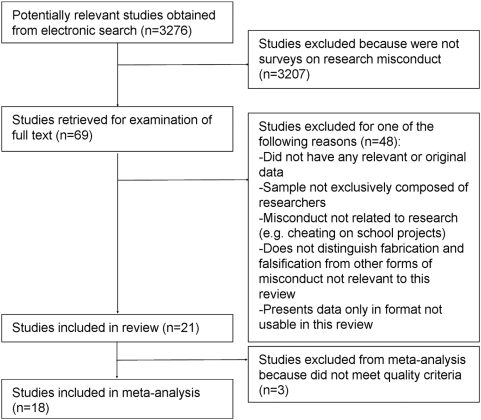
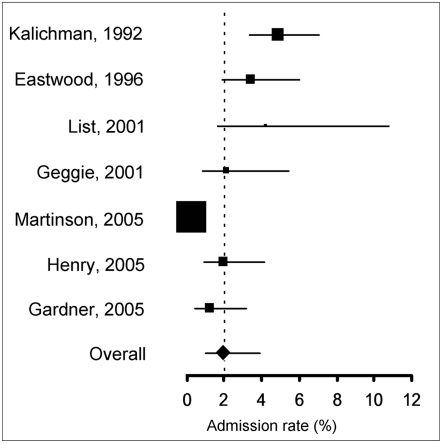
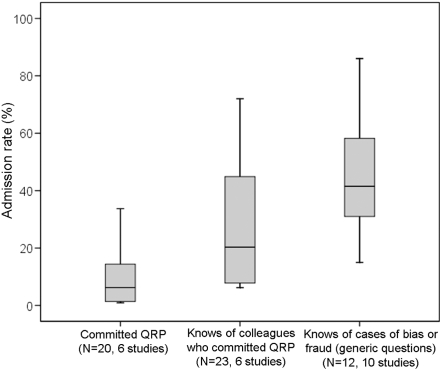
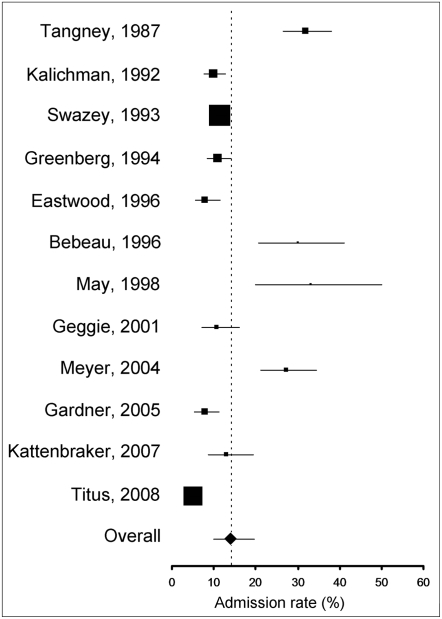
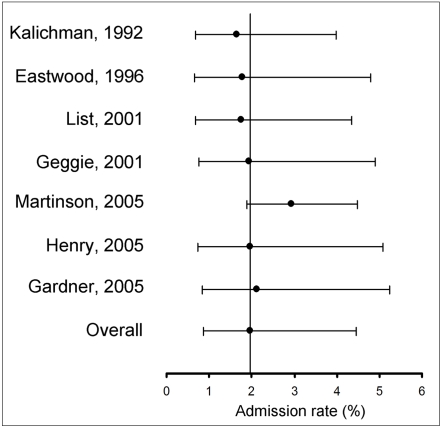
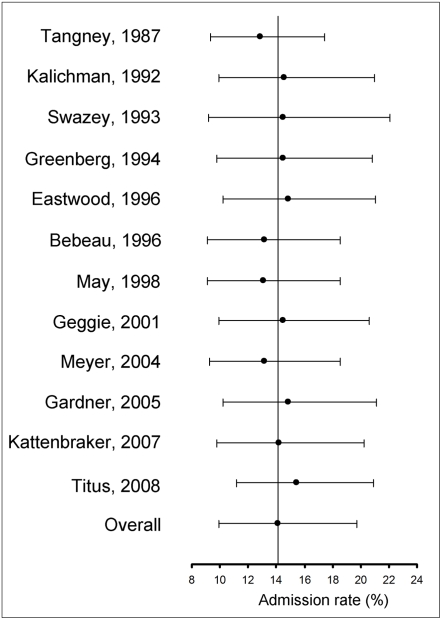
The frequency with which scientists fabricate and falsify data, or commit other forms of scientific misconduct is a matter of controversy. Many surveys have asked scientists directly whether they have committed or know of a colleague who committed research misconduct, but their results appeared difficult to compare and synthesize. This is the first meta-analysis of these surveys. To standardize outcomes, the number of respondents who recalled at least one incident of misconduct was calculated for each question, and the analysis was limited to behaviours that distort scientific knowledge: fabrication, falsification, "cooking" of data, etc... Survey questions on plagiarism and other forms of professional misconduct were excluded. The final sample consisted of 21 surveys that were included in the systematic review, and 18 in the meta-analysis. A pooled weighted average of 1.97% (N = 7, 95%CI: 0.86-4.45) of scientists admitted to have fabricated, falsified or modified data or results at least once--a serious form of misconduct by any standard--and up to 33.7% admitted other questionable research practices. In surveys asking about the behaviour of colleagues, admission rates were 14.12% (N = 12, 95% CI: 9.91-19.72) for falsification, and up to 72% for other questionable research practices. Meta-regression showed that self reports surveys, surveys using the words "falsification" or "fabrication", and mailed surveys yielded lower percentages of misconduct. When these factors were controlled for, misconduct was reported more frequently by medical/pharmacological researchers than others. Considering that these surveys ask sensitive questions and have other limitations, it appears likely that this is a conservative estimate of the true prevalence of scientific misconduct.
Overview
CoChat Summary
TL;DR
This systematic review and meta-analysis of survey data estimated that about 2% of scientists admitted to fabricating, falsifying, or modifying data or results at least once, while 14.12% reported knowing a colleague who did so. The paper argues these are conservative estimates and that methodological choices strongly shape the observed rates.
Key findings
- Across surveys explicitly asking whether scientists ever fabricated or falsified data or altered/modifed results, the pooled weighted estimate was 1.97% (95% CI 0.86–4.45; N = 7), with significant heterogeneity (Cochran’s Q = 61.7777, df = 6, P < 0.0001).
- When only questions explicitly using the words “fabrication” or “falsification” were included, the pooled estimate for self-reports was 1.06% (95% CI 0.31–3.51; N = 4).
- For reports about colleagues’ misconduct, the pooled weighted estimate was 14.12% (95% CI 9.91–19.72; N = 12); restricting to questions using “fabrication” or “falsification” gave 12.34% (95% CI 8.43–17.71; N = 11).
- Other questionable research practices were reported more often: up to 33.7% in self-reports and up to 72% when asking about colleagues.
Methods
- Systematic review and meta-analysis of quantitative surveys asking scientists whether they had committed or observed scientific misconduct in the past; plagiarism and other non-knowledge-distorting misconduct were excluded.
- Searches were run in the first two weeks of August 2008 across citation databases, journals, grey literature sources, and internet search engines; the final review included 21 studies, with 18 in the meta-analysis.
- Main analysis computed the proportion recalling at least one incident, logit-transformed and inverse-variance weighted in a random-effects meta-analysis; meta-regression tested methodological factors such as self vs. non-self reports, mailed vs. handed-out surveys, and use of the words “fabrication”/“falsification.”
Limitations
- The paper states that using the percentage of respondents recalling at least one incident is a rough measure of misconduct frequency; this can under- or overestimate prevalence depending on whether respondents committed multiple incidents or only one.
- The paper notes that non-response bias was recognized by most surveys as a limitation, and that the validity of self-reports may be affected by social expectations; the text also suggests self-reports likely underestimate misconduct.
- Evident from the text: the included studies were heterogeneous in methods and wording, and some outcomes were too diverse for meaningful meta-analysis, so only crude unweighted parameters were calculated for broader questionable research practices.
Model-written summary. Check it against the paper before relying on it.
Integrity signals
Registry
Cites
Statistics
Figures
Verification
Claims the paper makes
0 Valid · 0 Not valid · 14 Not checked · 61 Own results and interpretations
A result the paper reports from its own data — it cites no other source for it, so there is none to check. The quote shows it is in the paper.
In the paper
“When these factors were controlled for, misconduct was reported more frequently by medical/pharmacological researchers than others.”
§ How Many Scientists Fabricate and Falsify Research? A Systematic Review and Meta-Analysis of Survey Data > Abstract
plainstates an association- Asserted: passes — The authors put it forward as true.
- Checkable: passes — It can be checked against evidence.
- Load-bearing: passes — The paper’s conclusions depend on it.
- Based: passes — The paper gives a reason why it holds.
- Rests on 2 assumptions not shown here.
A result the paper reports from its own data — it cites no other source for it, so there is none to check. The quote shows it is in the paper.
In the paper
“A pooled weighted average of 1.97% (N = 7, 95%CI: 0.86–4.45) of scientists admitted to have fabricated, falsified or modified data or results at least once –a serious form of misconduct by any standard– and up to 33.7% admitted other questionable research practices.”
§ How Many Scientists Fabricate and Falsify Research? A Systematic Review and Meta-Analysis of Survey Data > Abstract
plainn = 7- Asserted: passes — The authors put it forward as true.
- Checkable: passes — It can be checked against evidence.
- Load-bearing: passes — The paper’s conclusions depend on it.
- Based: passes — The paper gives a reason why it holds.
- Rests on 2 assumptions not shown here.
A result the paper reports from its own data — it cites no other source for it, so there is none to check. The quote shows it is in the paper.
In the paper
“A pooled weighted average of 1.97% (N = 7, 95%CI: 0.86–4.45) of scientists admitted to have fabricated, falsified or modified data or results at least once –a serious form of misconduct by any standard– and up to 33.7% admitted other questionable research practices.”
§ How Many Scientists Fabricate and Falsify Research? A Systematic Review and Meta-Analysis of Survey Data > Abstract
plain- Asserted: passes — The authors put it forward as true.
- Checkable: passes — It can be checked against evidence.
- Load-bearing: passes — The paper’s conclusions depend on it.
- Based: passes — The paper gives a reason why it holds.
- Rests on 2 assumptions not shown here.
A result the paper reports from its own data — it cites no other source for it, so there is none to check. The quote shows it is in the paper.
In the paper
“In surveys asking about the behaviour of colleagues, admission rates were 14.12% (N = 12, 95% CI: 9.91–19.72) for falsification, and up to 72% for other questionable research practices.”
§ How Many Scientists Fabricate and Falsify Research? A Systematic Review and Meta-Analysis of Survey Data > Abstract
plainn = 12- Asserted: passes — The authors put it forward as true.
- Checkable: passes — It can be checked against evidence.
- Load-bearing: passes — The paper’s conclusions depend on it.
- Based: passes — The paper gives a reason why it holds.
- Rests on 2 assumptions not shown here.
A result the paper reports from its own data — it cites no other source for it, so there is none to check. The quote shows it is in the paper.
In the paper
“Meta-analysis yielded mean pooled estimates that are higher than most previous estimates.”
§ How Many Scientists Fabricate and Falsify Research? A Systematic Review and Meta-Analysis of Survey Data > Introduction
plain- Asserted: passes — The authors put it forward as true.
- Checkable: passes — It can be checked against evidence.
- Load-bearing: passes — The paper’s conclusions depend on it.
- Based: passes — The paper gives a reason why it holds.
- Rests on 2 assumptions not shown here.
31 more claims
Create a free account to see all 75 claims and to verify the 4 references still open.
- It may state two separate claims as one. 24
- Probably not a substantial claim. 25
Claims other papers make about this one
Each is checked against this paper’s own text: does it say what the citing paper says it does?
The cited source says what the claim attributes to it.
In the citing paper
“there are other more common sources of unreliability in the literature (41)(42)(43)(44)”
From Misconduct accounts for the majority of retracted scientific publications (2012) · cites this paper as [43]
The cited source says what the claim attributes to it.
In the citing paper
“The prevalence of researchers who have been involved in scientific misconduct is estimated to be around 2% [2]”
From Checklist to assess Trustworthiness in RAndomised Controlled Trials (TRACT checklist): concept proposal and pilot (2023) · cites this paper as [2]
The cited source says what the claim attributes to it.
In the citing paper
“This is how a small number of people 40 with flexible morals can pollute the scientific literature disproportionately.”
From Fraudulent studies are undermining the reliability of systematic reviews: on the prevalence of problematic images in preclinical depression studies (2025) · cites this paper as [40]
The cited source says what the claim attributes to it.
In the citing paper
“A meta-analysis by Fanelli, combining the results of 18 published surveys, found that 1.9% of researchers have admitted to modification, falsification, or fabrication of data (3).”
From The Prevalence of Inappropriate Image Duplication in Biomedical Research Publications (2016) · cites this paper as [3]
The cited source says what the claim attributes to it.
In the citing paper
“A systematic review and meta-analysis of survey data estimated that 1.97% of authors admitted to have fabricated, falsified, or modified data or results at least once and, in surveys asking about the behavior of colleagues, the admission rate was 14.12% for falsification [13].”
From No raw data, no science: another possible source of the reproducibility crisis (2020) · cites this paper as [13]
6 more claims about this paper
Create a free account to see every claim other papers make about this one.
Citations
Cites
(2000) · Cited by 9,198
The Sociology of Science: Theoretical and Empirical Investigations
Kaplan, N., Merton, R. K., & Storer, N. W. (1974) · Technology and Culture · doi:10.2307/3102264 · Cited by 4,005
The Normative Structure of Science
Merton, R. Κ. (1973) · Medical Entomology and Zoology · Cited by 2,315
The Hazards of Scoring the Quality of Clinical Trials for Meta-analysis
Jüni, P. (1999) · JAMA · doi:10.1001/jama.282.11.1054 · Cited by 1,981 · cited 1×
“All remaining papers were included, and were not graded on a quality scale, because the validity and use of quality measures in meta-analysis is controversial [21], [22].”
BackgroundScope and Impact of Financial Conflicts of Interest in Biomedical Research: A Systematic Review
Bekelman, J. E., Li, Y., & Gross, C. P. (2003) · JAMA · doi:10.1001/jama.289.4.454 · Cited by 1,816 · cited 1×
“This would support growing fears that the large financial interests that often drive medical research are severely biasing it [50], [51], [52].”
BackgroundTourangeau, R., & Smith, T. W. (1996) · Public Opinion Quarterly · doi:10.1086/297751 · Cited by 1,295 · cited 1×
“However, the accuracy of responses to sensitive questions is often independent of response rates, and depends strongly on respondents' perception of anonymity and confidentiality [43], [44].”
BackgroundA comparison of methods to detect publication bias in meta‐analysis
Macaskill, P., Walter, S. D., & Irwig, L. (2001) · Statistics in Medicine · doi:10.1002/sim.698 · Cited by 1,286 · cited 1×
“The popular funnel-plot-based methods to test for publication bias in meta-analysis are inappropriate and potentially misleading when the number of included studies is small and heterogeneity is large [25], [26].”
MethodMartinson, B. C., Anderson, M. S., & de Vries, R. (2005) · Nature · doi:10.1038/435737a · Cited by 1,096 · cited 9×
“All the above results were robust with respect to inclusion or exclusion of any particular study, with perhaps one exception: Martinson et al. (2005) [19], which is one of the largest and most frequently cited surveys on misconduct published to date.”
BackgroundMethodResultInfluentialAdjusting for publication bias in the presence of heterogeneity
Terrin, N., Schmid, C. H., Lau, J., & Olkin, I. (2003) · Statistics in Medicine · doi:10.1002/sim.1461 · Cited by 809 · cited 1×
“The popular funnel-plot-based methods to test for publication bias in meta-analysis are inappropriate and potentially misleading when the number of included studies is small and heterogeneity is large [25], [26].”
MethodIs Academic Medicine for Sale?
Angell, M. (2000) · New England Journal of Medicine · doi:10.1056/nejm200005183422009 · Cited by 582
Research works printed but not linked: 2
- Eastwood S Derish P Leash E Ordway S 1996 Ethical issues in biomedical research: perceptions and practices of postdoctoral research fellows responding to a survey. Science and Engineering Ethics 2 89 114 11657788 · DOI
- Kattenbraker MS 2007 Health education research and publication: ethical considerations and the response of health educators Carbondale Southern Illinois University.Doctoral dissertation
Cited by
Items 301–400 of 1,924
Perceptions of plagiarism by biomedical researchers: an online survey in Europe and China
Yi, N., Nemery, B., & Dierickx, K. (2020) · BMC Medical Ethics · doi:10.1186/s12910-020-00473-7 · Cited by 53
Guidelines for manuscript submission in the peer-reviewed pharmacological literature
Mullane, K., Enna, S. J., Piette, J. G., & Williams, M. J. (2015) · Biochemical Pharmacology · doi:10.1016/j.bcp.2015.06.023 · Cited by 44
Misconduct, Marginality and Editorial Practices in Management, Business and Economics Journals
Karabağ, S. F., & Berggren, C. (2016) · PLoS ONE · doi:10.1371/journal.pone.0159492 · Cited by 45
Carvalho, G. M. L., Rêgo, F. D., Tanure, A., Silva, A. C. P., Dias, T. A., Paz, G. F., & Filho, J. D. A. (2017) · Journal of Medical Entomology · doi:10.1093/jme/tjx051 · Cited by 38
Detecting academic fraud using Benford law: The case of Professor James Hunton
Horton, J., Kumar, D. K., & Wood, A. (2020) · Research Policy · doi:10.1016/j.respol.2020.104084 · Cited by 58
“Surveys of academics in various disciplines consistently reveal concerns of unethical behaviour by colleagues (Fanelli, 2009; John et al., 2012).”
BackgroundA cross-disciplinary and severity-based study of author-related reasons for retraction
Xu, S. B., & Hu, G. (2021) · Accountability in Research · doi:10.1080/08989621.2021.1952870 · Cited by 43
“Between honest error and the most grave forms of misconduct (e.g., fabrication, falsification, and plagiarism), there exists a widely discussed gray zone of misconduct (Artino, Driessen, and Maggio 2019; Butler, Delaney, and Spoelstra 2017; Fanelli 2009; John, Loewenstein, and Prelec 2012).”
BackgroundBoth Whistleblowers and the Scientists They Accuse Are Vulnerable and Deserve Protection
Bouter, L. M., & Hendrix, S. (2017) · Accountability in Research · doi:10.1080/08989621.2017.1327814 · Cited by 44
“These major forms of research misbehavior are the “deadly sins” of science which are typically committed intentionally and are believed to be quite rare (Fanelli 2009).”
BackgroundLove, P. E. D., Ika, L. A., & Ahiaga-Dagbui, D. D. (2019) · Transportation Research Part A Policy and Practice · doi:10.1016/j.tra.2019.06.013 · Cited by 41
Research integrity: environment, experience, or ethos?
Hofmann, B., & Holm, S. (2019) · Research Ethics · doi:10.1177/1747016119880844 · Cited by 43
“…more often (Ana et al., 2013; Anderson et al., 2007; Bakker and Wicherts, 2011; Bozeman and Youtie, 2016; Davis et al., 2007; De Vries et al., 2006; Fanelli, 2009; Fang et al., 2013; George, 2016; Hofmann et al., 2015; John et al., 2012; Komic et al., 2015; Lafollette, 2000; Martinson et al.,…”
BackgroundResultROCK-2-selective targeting and its therapeutic outcomes
Sharma, P., & Roy, K. (2019) · Drug Discovery Today · doi:10.1016/j.drudis.2019.11.017 · Cited by 43
Memon, A. R., & Mavrinac, M. (2020) · Science and Engineering Ethics · doi:10.1007/s11948-020-00198-1 · Cited by 52
Antiviral Susceptibility of Avian and Swine Influenza Virus of the N1 Neuraminidase Subtype
Stoner, T. D., Krauss, S. L., DuBois, R. M., Negovetich, N. J., Stallknecht, D. E., Senne, D. A., Gramer, M. R., Swafford, S. R., Deliberto, T., Govorkova, E. A., et al. (2010) · Journal of Virology · doi:10.1128/jvi.00296-10 · Cited by 40
Wong, W., Noreika, V., Móró, L., Revonsuo, A., Windt, J., Valli, K., & Tsuchiya, N. (2020) · Neuroscience of Consciousness · doi:10.1093/nc/niaa006 · Cited by 40
“Particularly in cognitive neuroscience and psychology, the high prevalence of unreplicable studies has been a serious issue (Fanelli 2009; Kriegeskorte et al. 2009; Vul et al. 2009; Schooler 2014).”
BackgroundRajah-Kanagasabai, C. J., & Roberts, L. D. (2015) · Frontiers in Psychology · doi:10.3389/fpsyg.2015.00535 · Cited by 48
“In a recent meta-analysis, Fanelli (2009) reported that ∼2% of scientists admitted to fabrication, falsification ormodification of data at least once, whereas approximately a third admitted to questionable research practices.”
BackgroundLehours, A., Cottrell, M. T., Dahan, O., Kirchman, D. L., & Jeanthon, C. (2010) · FEMS Microbiology Ecology · doi:10.1111/j.1574-6941.2010.00954.x · Cited by 46
Gossip as Social Control: Informal Sanctions on Ethical Violations in Scientific Workplaces
Vaidyanathan, B., Khalsa, S., & Ecklund, E. H. (2016) · Social Problems · doi:10.1093/socpro/spw022 · Cited by 63
da Silva, J. A. T., Al‐Khatib, A., & Dobránszki, J. (2016) · Science and Engineering Ethics · doi:10.1007/s11948-016-9854-2 · Cited by 42
Seeber, M. (2020) · Scientometrics · doi:10.1007/s11192-019-03343-1 · Cited by 43
“…C la rit y of th e re su lts (C ) 7 15 % 0% 0% 9% 42 % 25 % 0% 1 3 It is important to notice that only a handful of instructions relate to some crucial challenges of modern science, namely research ethical behaviours (e.g. Fanelli 2009) and the so-called ‘reproducibility crisis’ (Baker 2016).”
BackgroundBlatt, M. R. (2015) · PLANT PHYSIOLOGY · doi:10.1104/pp.15.01443 · Cited by 40
The credibility crisis in research: Can economics tools help?
Gall, T., Ioannidis, J. P. A., & Maniadis, Z. (2017) · PLoS Biology · doi:10.1371/journal.pbio.2001846 · Cited by 38
Conditional equivalence testing: An alternative remedy for publication bias
Campbell, H., & Gustafson, P. (2018) · PLoS ONE · doi:10.1371/journal.pone.0195145 · Cited by 46
“While not all agree with the extent of this conclusion, the argument raises concerns about the trustworthiness of science, amplified by a disturbing prevalence of scien-tific misconduct, Fanelli (2009).”
BackgroundIntegrity in Biomedical Research: A Systematic Review of Studies in China
Yi, N., Nemery, B., & Dierickx, K. (2018) · Science and Engineering Ethics · doi:10.1007/s11948-018-0057-x · Cited by 41
“As reported, research misconduct also exists in medical research, which is even more worrying than other areas (Fanelli 2009; Sabir et al. 2015; Steneck 2006).”
BackgroundResultInfluentialObjectivity, reproducibility and replicability in forecasting research
Makridakis, S., Assimakopoulos, V., & Spiliotis, E. (2018) · International Journal of Forecasting · doi:10.1016/j.ijforecast.2018.05.001 · Cited by 44
Haven, T. L., Tijdink, J. K., Pasman, H. R. W., Widdershoven, G. A. M., ter Riet, G., & Bouter, L. M. (2019) · Research Integrity and Peer Review · doi:10.1186/s41073-019-0081-7 · Cited by 48
The understanding of research ethics at health sciences schools in Jordan: a cross-sectional study
Tarboush, N. A., Alkayed, Z., Alzoubi, K. H., & Al‐Delaimy, W. K. (2020) · BMC Medical Education · doi:10.1186/s12909-020-02040-5 · Cited by 42
“of investigators agreeing that it is acceptable to fabricate data if it would improve the outcome of a study [1, 2].”
BackgroundEstimating the Replicability of Sports and Exercise Science Research
Murphy, J., Caldwell, A. R., Mesquida, C., Ladell, A. J. M., Martínez, A. E., Tual, A., Denys, A. T., Cameron, B., Hooren, B. V., Parr, B., et al. (2025) · Sports Medicine · doi:10.1007/s40279-025-02201-w · Cited by 60
“This exacerbated the “crisis of confidence” in scientific findings [8, 9], and there is also evidence of scientific misconduct, including fraud and questionable research practices e.g., p -hacking, multiple analyses and selective reporting of a desirable result [10–12].”
Hofmann, B., Helgesson, G., Juth, N., & Holm, S. (2015) · Journal of Empirical Research on Human Research Ethics · doi:10.1177/1556264615599686 · Cited by 37
“The results tentatively indicate less scientific dishonesty in Oslo and Stockholm than in other countries (Fanelli, 2009; Kalichman, 2005).”
BackgroundResultInfluentialAl-Kwifi, O. S. (2016) · Journal of Product & Brand Management · doi:10.1108/jpbm-12-2014-0774 · Cited by 50
Scientific rigor and credibility in the nutrition research landscape
Kroeger, C. M., Garza, C., Lynch, C. J., Myers, E. F., Rowe, S. B., Schneeman, B. O., Sharma, A. M., & Allison, D. B. (2018) · American Journal of Clinical Nutrition · doi:10.1093/ajcn/nqx067 · Cited by 45
“We hope and believe that fraud is quite rare, and although it is practiced (73), it can be difficult to detect empirically (74, 75).”
BackgroundYu, L., Miao, M., Liu, W., Zhang, B., & Zhang, P. (2021) · Accountability in Research · doi:10.1080/08989621.2020.1809386 · Cited by 37
Twomey, R., Harlley, S., Medina, C. R., Murphy, J., Atkins, W. C., McCrum, C. L., Schneider, C., Warne, J. P., Yingling, V. R., & Caldwell, A. R. (2021) · Communications in Kinesiology · doi:10.51224/cik.v1i3.43 · Cited by 43
Comparison of Recombinant Proteins fromSchistosoma japonicumfor Schistosomiasis Diagnosis
Jin, Y., Ke, L., Zhou, W., Fu, Z., Liu, J., Shi, Y., Li, H., & Lin, J. (2010) · Clinical and Vaccine Immunology · doi:10.1128/cvi.00418-09 · Cited by 40
Retractions in the Engineering Field: A Study on the Web of Science Database
Rubbo, P., Helmann, C. L., Bilynkievycz dos Santos, C., & Pilatti, L. A. (2019) · Ethics & Behavior · doi:10.1080/10508422.2017.1390667 · Cited by 37
“Even though statistics show that retractions have become more common, many cases of scientific misconduct will never be discovered (Fanelli, 2009), and not all articles that should be retracted are (Cokol, Iossifov, Rodriguez-Esteban, & Rzhetsky, 2007).”
BackgroundGopalakrishna, G., ter Riet, G., Vink, G., et al. (2021) · doi:10.31222/osf.io/vk9yt · Cited by 37
Automated scholarly paper review: Concepts, technologies, and challenges
Lin, J., Song, J., Zhou, Z., Chen, Y., & Shi, X. (2023) · Information Fusion · doi:10.1016/j.inffus.2023.101830 · Cited by 37
“Fanelli (2009) revealed that 1.97% of researchers admitted to fabricating, falsifying, or modifying data or results at least once. The admission rate of data falsification in the survey of the colleagues’ behavior stands at 14.12%. These statistics highlight the presence of data falsification, which is a serious form…”
BackgroundMethodInfluentialAn investigation of retracted articles in the biomedical literature
Budd, J. M., Coble, Z., & Abritis, A. (2016) · Proceedings of the Association for Information Science and Technology · doi:10.1002/pra2.2016.14505301055 · Cited by 36
Analytic Review as a Solution to the Misreporting of Statistical Results in Psychological Science
Sakaluk, J., Williams, A., & Biernat, M. (2014) · Perspectives on Psychological Science · doi:10.1177/1745691614549257 · Cited by 32
“Investigations into the frequency of misreporting statistical values have yielded varying estimates of the prevalence of misreporting (e.g., 1.0%–2.0% in Fanelli, 2009; 22.0%–23.3% in John, Loewenstein, & Prelec, 2012).”
BackgroundInfluentialInvestigating the veracity of a sample of divergent published trial data in spinal pain
O'Connell, N. E., Moore, R. A., Stewart, G., Fisher, E., Hearn, L., Eccleston, C., & Williams, A. C. D. C. (2023) · Pain · doi:10.1097/j.pain.0000000000002659 · Cited by 36
Harkrider, L. N., Tamborski, M., Wang, X., Brown, R. P., Mumford, M. D., Connelly, S., & Devenport, L. D. (2013) · Ethics & Behavior · doi:10.1080/10508422.2012.714246 · Cited by 37
“…problem among undergraduates (Crown & Spiller, 1998), engineering students (Harding, Carpenter, Montgomery, & Steneck, 2001), medical students (Baldwin, Daugherty, Rowley, & Schwarz, 1996), business professionals (Harris & Bromiley, 2007), and research scientists (Fanelli, 2009; Steen, 2011).”
Producing Sacredness and Defending Secularity: Faith in the Workplace of Taiwanese Scientists
Di, D., & Ecklund, E. H. (2017) · Socius Sociological Research for a Dynamic World · doi:10.1177/2378023117733739 · Cited by 37
Research Misconduct—Definitions, Manifestations and Extent
Bornmann, L. (2013) · Publications · doi:10.3390/publications1030087 · Cited by 35
“The meta-analysis of Fanelli [58] was limited to misconduct that distort scientific knowledge (e.”
InfluentialKombe, F. K., Anunobi, E. N., Tshifugula, N. P., Wassenaar, D. R., Njadingwe, D., Mwalukore, S., Chinyama, J., Randrianasolo, B. S., Akindeh, P., Dlamini, P. S., et al. (2013) · Developing World Bioethics · doi:10.1111/dewb.12024 · Cited by 50
Signori, C. N., Pellizari, V. H., Enrich‐Prast, A., & Sievert, S. M. (2017) · Deep Sea Research Part II Topical Studies in Oceanography · doi:10.1016/j.dsr2.2017.12.017 · Cited by 45
Stricker, J., & Günther, A. (2019) · Zeitschrift für Psychologie · doi:10.1027/2151-2604/a000356 · Cited by 48
“Survey studies on the prevalence of scientific misconduct have been criticized for providing varying estimates due to differences in item wording, survey distribution method, social desirability and other factors (Fanelli, 2009; Fiedler & Schwarz, 2016).”
BackgroundInfluentialForging success : Soviet managers and accounting fraud, 1943 to 1962 \n
Harrison, M. (2010) · Warwick Research Archive Portal (University of Warwick) · Cited by 36
Caldas, I. M., & Madureira-Carvalho, Á. (2021) · RevSALUS - Revista Científica da Rede Académica das Ciências da Saúde da Lusofonia · doi:10.51126/revsalus.v3i2.175 · Cited by 39
Ferreira, C., Bastille‐Rousseau, G., Bennett, A. M., Ellington, E. H., Terwissen, C., Austin, C., Borlestean, A., Boudreau, M. R., Chan, K., Forsythe, A., et al. (2016) · Biological Reviews · doi:10.1111/brv.12185 · Cited by 34
“…accounting for repeat offenders and increase in publication volume; Grieneisen & Zhang, 2012) due to combinations of scientific misconduct (e.g. Fanelli, 2009; Ferguson, Marcus & Oransky, 2014; Tanimoto et al., 2014), and questionable data or interpretations, which often go unnoticed during…”
BackgroundEnsuring PhD Development of Responsible Conduct of Research Behaviors: Who’s Responsible?
Titus, S. L., & Ballou, J. M. (2013) · Science and Engineering Ethics · doi:10.1007/s11948-013-9437-4 · Cited by 41
Berhan, A., & Berhan, Y. (2013) · BMC Endocrine Disorders · doi:10.1186/1472-6823-13-9 · Cited by 38
“This is because; when the number of included studies is small and heterogeneity is large, the robustness of the results is best assessed with a sensitivity analysis [30].”
MethodBranco, A., Cohen, K. B., Vossen, P. T. J. M., Ide, N., & Calzolari, N. (2017) · Language Resources and Evaluation · doi:10.1007/s10579-017-9380-0 · Cited by 35
Smith, S. M., Fava, M., Jensen, M. P., Mbowe, O. B., McDermott, M. P., Turk, D. C., & Dworkin, R. H. (2020) · Pain · doi:10.1097/j.pain.0000000000001849 · Cited by 42
Transparent, Open, and Reproducible Prevention Science
Grant, S., Wendt, K. E., Leadbeater, B. J. R., Supplee, L. H., Mayo‐Wilson, E., Gardner, F. E. M., & Bradshaw, C. P. (2022) · Prevention Science · doi:10.1007/s11121-022-01336-w · Cited by 47
“, 2013), prevents detection of unintentional errors and intentional misconduct (Fanelli, 2009), and exacerbates perverse incentives for career scientists (Smaldino & McElreath, 2016).”
BackgroundNegre, J. S., Sastre, A. C., & Forgas, R. C. (2022) · Learned Publishing · doi:10.1002/leap.1450 · Cited by 46
“The pressure to publish affects the quality of research (Anderson et al., 2007; Fanelli, 2009; Van-Dalen & Henkens, 2012), and is the breeding ground for scientific misconduct.”
BackgroundThe gaming of citation and authorship in academic journals: a warning from medicine
Macdonald, S. (2022) · Social Science Information · doi:10.1177/05390184221142218 · Cited by 59
“In medicine, peer review serves less to guarantee academic standards than to make even the most egregious publishing practices look respectable (see Bosch et al., 2012; Fanelli, 2009).”
BackgroundBig Little Lies: A Compendium and Simulation of p-Hacking StrategiesPreprint
Stefan, A. M., & Schönbrodt, F. D. (2022) · doi:10.31234/osf.io/xy2dk · Cited by 35
Byrne, J. A., Grima, N., Capes-Davis, A., & Labbé, C. (2019) · Biomarker Insights · doi:10.1177/1177271919829162 · Cited by 34
Three ‘Rs’ of Econometrics: Repetition, Reproduction and Replication
Camfield, L., & Palmer‐Jones, R. (2013) · The Journal of Development Studies · doi:10.1080/00220388.2013.807504 · Cited by 38
“Nevertheless errors in numerical calculations or statistical analysis are widely found (Donoho, 2010; Fanelli, 2009; Ioannidis, 2005; King, 1986; Peng, 2011), and replication can be motivated in several ways, including attempts to (i) understand and/or extend a work, (ii) learn the skills involved…”
BackgroundEthics in writing: Learning to stay away from plagiarism and scientific misconduct
Sharma, B., & Singh, V. (2011) · Lung India · doi:10.4103/0970-2113.80337 · Cited by 34
Anticipation of Action Intentions in Autism Spectrum Disorder
Hudson, M., Burnett, H. G., & Jellema, T. (2011) · Journal of Autism and Developmental Disorders · doi:10.1007/s10803-011-1410-y · Cited by 40
Translational paradigms in pharmacology and drug discovery
Mullane, K., Winquist, R. J., & Williams, M. J. (2013) · Biochemical Pharmacology · doi:10.1016/j.bcp.2013.10.019 · Cited by 35
“and perhaps the Public Library of Science (PLoS), which has become a major forum for the dissemination of meta-analyses related to bias [34,38,44] that was obscured by the sheer volume of data reported.”
BackgroundInfluentialVandsemb, E. N., Bertilsson, H., Abdollahi, P., et al. (2016) · Journal of Translational Medicine · doi:10.1186/s12967-016-0830-z · Cited by 34
Knowledge and attitudes of physicians toward research ethics and scientific misconduct in Lebanon
Azakir, B., Mobarak, H., Najjar, S. A., Naga, A. A. E., & Mashaal, N. (2020) · BMC Medical Ethics · doi:10.1186/s12910-020-00475-5 · Cited by 36
Hopp, C., & Speil, A. (2021) · Accountability in Research · doi:10.1080/08989621.2020.1804880 · Cited by 27
“In fact, work by Fanelli (2009) shows that self-report surveys generally return lower percentages of misconduct.”
BackgroundBakker, M., Veldkamp, C. L. S., van den Akker, O. R., van Assen, M. A. L. M., Crompvoets, E. A. V., Ong, H. H., & Wicherts, J. M. (2020) · PLoS ONE · doi:10.1371/journal.pone.0236079 · Cited by 45
Which journal ranking list? A case study in business and economics
Jaafar, R. H., Pereira, V. E., Saab, S. S., & El-Kassar, A.-N. (2020) · EuroMed Journal of Business · doi:10.1108/emjb-05-2020-0039 · Cited by 35
Peer Review and Quality Control
Funtowicz, S., & Ravetz, J. R. (2015) · Elsevier eBooks · doi:10.1016/b978-0-08-097086-8.85016-3 · Cited by 35
Probabilistic forecasting of replication studies
Pawel, S., & Held, L. (2020) · PLoS ONE · doi:10.1371/journal.pone.0231416 · Cited by 46
“This effect might be even more pronounced by the influence of publication bias [20, 21] or questionable research practices [22, 23].”
What’s in the brain for us: a systematic literature review of neuroeconomics and neurofinance
Srivastava, M., Sharma, G. D., Srivastava, A. K., & Kumaran, S. S. (2020) · Qualitative Research in Financial Markets · doi:10.1108/qrfm-10-2019-0127 · Cited by 41
Violation of research integrity principles occurs more often than we think
Li, W., Gurrin, L. C., & Mol, B. W. (2021) · Reproductive BioMedicine Online · doi:10.1016/j.rbmo.2021.11.022 · Cited by 35
“%) of scientists admitted to having fabricated, falsified, or modified data or results at least once (Fanelli, 2009).”
BackgroundSpiegelhalter, D. J. (2017) · Journal of the Royal Statistical Society Series A (Statistics in Society) · doi:10.1111/rssa.12302 · Cited by 49
“A review estimated that 2% of scientists admitted falsification of data (Fanelli, 2009), and the US National Science Foundation and Office of Research Integrity deal with a fairly small number of deliberately dishonest acts (Mervis, 2017), although substantial numbers of cases must go undetected as…”
BackgroundWhen beauty is but skin deep: dealing with problematic studies in systematic reviews
Boughton, S. L., Wilkinson, J., & Bero, L. (2021) · Cochrane Database of Systematic Reviews · doi:10.1002/14651858.ed000152 · Cited by 32
Data Audit as a Way to Prevent/Contain Misconduct
Shamoo, A. E. (2013) · Accountability in Research · doi:10.1080/08989621.2013.822259 · Cited by 34
“Fanelli (2009) published a meta-analysis of surveys to date, and his conclusion is that the frequency of misconduct is higher than the 2% for scientists admitting to falsification of research at least once, and up to 34% for other misconducts.”
BackgroundBiomedical retractions due to misconduct in Europe: characterization and trends in the last 20 years
Freijedo-Farinas, F., Ruano‐Raviña, A., Pérez‐Ríos, M., Ross, J. S., & Candal‐Pedreira, C. (2024) · Scientometrics · doi:10.1007/s11192-024-04992-7 · Cited by 51
“It is possible that southern European countries lead in terms of retractions due to duplication and plagiarism because they do not tend to perceive plagiarism as being a cause of research misconduct (Fanelli, 2009).”
InfluentialMcCormack, W. T., & GARVAN, C. W. (2013) · Accountability in Research · doi:10.1080/08989621.2013.822267 · Cited by 32
“The effectiveness of RCR training is called into question when one considers that ∼2% of scientists admit to committing at least one act of research misconduct and 33% admit to questionable research practices (Fanelli, 2009).”
BackgroundResearch: A standard for policy-relevant science
Boyd, I. L. (2013) · Nature · doi:10.1038/501159a · Cited by 35
Procedural Injustice in the System of Peer Review and Scientific Misconduct
Clair, J. A. (2014) · Academy of Management Learning and Education · doi:10.5465/amle.2013.0243 · Cited by 35
Research Misconduct: The Peril of Publish or Perish
Al‐Adawi, S., Ali, B. H., & Al-Zakwani, I. S. (2016) · Oman Medical Journal · doi:10.5001/omj.2016.02 · Cited by 33
The landscape of urological retractions: the prevalence of reported research misconduct
Mena, J. D., Ndoye, M., Cohen, A. J., Kamal, P., & Breyer, B. N. (2019) · British Journal of Urology · doi:10.1111/bju.14706 · Cited by 42
Scientific misconduct and accountability in teams
Hussinger, K., & Pellens, M. (2019) · PLoS ONE · doi:10.1371/journal.pone.0215962 · Cited by 37
“While there is evidence that scientists’ eminence and early career scientists are more likely to engage in scientific misconduct as they have more to gain and less to lose [36,37], the variables turn out to have limited explanatory power in our specific analysis and the main results do not change.”
BackgroundBraun, A. (2021) · Progress in Physical Geography Earth and Environment · doi:10.1177/0309133321991814 · Cited by 39
“With respect to MALM as showing poor scientific practice, first, we must admit that poor scientific practice does occur (Fanelli, 2009).”
BackgroundEngaging scientometrics in information systems
Hassan, N. R., & Loebbecke, C. (2017) · Journal of Information Technology · doi:10.1057/jit.2015.29 · Cited by 43
“When asked if they know of colleagues who commit the same behaviours, the percentages are much higher (Fanelli, 2009).”
BackgroundTransparency, Reproducibility, and the Credibility of Economics Research
Christensen, G., & Miguel, E. A. (2016) · National Bureau of Economic Research · doi:10.3386/w22989 · Cited by 49
Kadayam Guruswami, G., Mumtaz, S., Gopakumar, A., Khan, E., Abdullah, F., & Parahoo, S. K. (2023) · Journal of Academic Ethics · doi:10.1007/s10805-022-09452-6 · Cited by 31
“They may result in a waste of financial and human resources, and pose a risk to human health (Fanelli, 2009).”
BackgroundBioanalytical inaccuracy: A threat to the integrity and efficiency of research
Young, S. N., & Anderson, G. M. (2010) · Journal of Psychiatry and Neuroscience · doi:10.1503/jpn.090171 · Cited by 31
Ethical Considerations in the Publication of Scientific Articles
y, P. A., Bayés‐Genís, A., de Isla, L. P., Sanchís, J. M., & Heras, M. (2011) · Revista Española de Cardiología (English Edition) · doi:10.1016/j.rec.2011.02.005 · Cited by 33
Consideraciones éticas de la publicación de artículos científicos
y, P. A., Bayés‐Genís, A., de Isla, L. P., Sanchís, J. M., & Heras, M. (2011) · Revista Española de Cardiología · doi:10.1016/j.recesp.2011.02.006 · Cited by 38
Ulrich, R., Erdfelder, E., Deutsch, R., Strauss, B. M., Brüggemann, A., Hannover, B., Tuschen‐Caffier, B., Kirschbaum, C., Blickle, G., Møller, J., et al. (2016) · Psychologische Rundschau · doi:10.1026/0033-3042/a000296 · Cited by 39
Satalkar, P. P., & Shaw, D. (2018) · Accountability in Research · doi:10.1080/08989621.2018.1493577 · Cited by 34
“…Steen 2011; Titus, Wells, and Rhoades 2008), systematic reviews, and meta-analyses have investigated the reported incidence of engaging in scientific misconduct, witnessing, and reporting scientific misconduct by colleagues (Fanelli 2009; Pupovac and Fanelli 2015; Titus, Wells, and Rhoades 2008).”
BackgroundA theory and methodology to quantify knowledge
Fanelli, D. (2019) · Royal Society Open Science · doi:10.1098/rsos.181055 · Cited by 45
“This is a class of rather loosely defined behaviours such as “dropping outliers based on a 1196 feeling that they were inaccurate”, “failing to publish results that contracted one’s previous findings” 1197 that, by definition, may or may not be improper, depending on the context [49].”
BackgroundSelf-citationOrganisational responses to alleged scientific misconduct: Sensemaking, sensegiving, and sensehiding
Horbach, S. P. J. M., Breit, E., & Mamelund, S. (2018) · Science and Public Policy · doi:10.1093/scipol/scy068 · Cited by 41
“Although much uncertainty still exists, some QRP’s are expected to occur in substantial extent (John et al. 2012; Horbach and Halffman 2017), whereas the core sins of science, FFP, are thought to be less common (Fanelli 2009).”
BackgroundHofmann, B., Bredahl, L., Eriksen, M. B., Helgesson, G., Juth, N., & Holm, S. (2020) · Journal of Empirical Research on Human Research Ethics · doi:10.1177/1556264620929230 · Cited by 40
“Questionable research practices (QRPs), falling outside of fabrication, falsification, and plagiarism (FFP), are estimated to be even more prevalent; up to 34% in a meta-analysis of surveys (Fanelli, 2009).”
BackgroundInfluentialExplanations of Research Misconduct, and How They Hang Together
Haven, T. L., & van Woudenberg, R. (2021) · Journal for General Philosophy of Science · doi:10.1007/s10838-021-09555-5 · Cited by 41
“Plagiarism fails to connect the knowledge to its proper origin, but it need not distort scientific knowledge per se (Steneck 2006; Fanelli 2009).”
BackgroundThe vexing but persistent problem of authorship misconduct in research
Khezr, P., & Mohan, V. (2022) · Research Policy · doi:10.1016/j.respol.2021.104466 · Cited by 38
Fraude y conductas inapropiadas en las publicaciones científicas
Matías‐Guiu, J., & García-Ramos, R. (2010) · Neurología · doi:10.1016/s0213-4853(10)70015-3 · Cited by 38
The importance of being honest
Klein, N. A. (2016) · Theoretical Economics · doi:10.3982/te1913 · Cited by 29
“In a survey of appertaining investigations, Fanelli (2009) concludes that one out of seven scientists admitted to their colleagues’ having falsified data at least once, whereas only 1.”
BackgroundEthics and science: an introduction
(2013) · Choice Reviews Online · doi:10.5860/choice.50-4958 · Cited by 32
Ensuring the quality and specificity of preregistrationsPreprint
Bakker, M., Veldkamp, C. L. S., van Assen, M. A. L. M., et al. (2018) · doi:10.31234/osf.io/cdgyh · Cited by 31
Desafios da editoração de revistas científicas brasileiras da área da saúde
Barata, R. B. (2019) · Ciência & Saúde Coletiva · doi:10.1590/1413-81232018243.29952016 · Cited by 30
Reynders, R. M., ter Riet, G., Girolamo, N. D., Cavagnetto, D., & Malički, M. (2024) · Scientific Reports · doi:10.1038/s41598-024-54909-w · Cited by 39
“These pooled prevalences are lower than those mentioned above, which is not surprising, as meta-analyses of falsified, fabricated or plagiarized data have also shown that researchers perceive others to be more fallible to committing the same fallacies than they themselves 38,39 .”
Alba, S., Verdonck, K., Lenglet, A., Rumisha, S. F., Wienia, M., Teunissen, I., Straetemans, M., Mendoza, W., Jeannetot, D. Y. B., Weibel, D. M., et al. (2020) · BMJ Global Health · doi:10.1136/bmjgh-2020-003236 · Cited by 32
Metadata
- Authors
- Fanelli, D.
- Affiliations
- University of Edinburgh (GB)
- Corresponding author
- Fanelli, Daniele
- ORCID
- Fanelli, Daniele
- Venue
- PLoS ONE
- Publisher
- Public Library of Science (PLoS)
- Published
- 2009-05-29
- Volume
- 4
- Issue
- 5
- Pages
- e5738
- ISSN
- 1932-6203 (ISSN-L)
- PMC
- PMC2685008
- OpenAlex
- W2152243616
- Cited by
- 1,911
- References
- 74
- Citations by year
- 2026: 77 · 2025: 110 · 2024: 128 · 2023: 136 · 2022: 157 · 2021: 145 · 2020: 163 · 2019: 166 · 2018: 125 · 2017: 125 · 2016: 119 · 2015: 106 · 2014: 82 · 2013: 93 · 2012: 84
- FWCI
- 19.42
- Type
- journal article
- Language
- en
- Open access
- gold
- doi.org
- Locations
- PLoS ONE (publishedVersion, cc-by)
- PubMed Central (publishedVersion, cc-by)
- PubMed (publishedVersion)
- Edinburgh Research Explorer (University of Edinburgh) (acceptedVersion, public-domain)
- RePEc: Research Papers in Economics (submittedVersion)
- DOAJ (DOAJ: Directory of Open Access Journals) (submittedVersion, cc-by-sa)
- Figshare (submittedVersion, cc-by)
- DigitalGeorgetown (Georgetown University Library) (submittedVersion)
- Funders
- European Commission (221441)
- Economic and Social Research Council (ES/F028180/1)
- Topics
- Social Sciences › Education › Academic integrity and plagiarism
- Physical Sciences › Mathematics › Statistics and Probability › Benford’s Law and Fraud Detection
- Social Sciences › Library and Information Sciences › Academic Publishing and Open Access
- Keywords
- research misconduct, scientific fraud, data fabrication, data falsification, questionable research practices, self-report questionnaire
- MeSH terms
- Data Collection, Regression Analysis, Research Personnel, Scientific Misconduct, Ethics, Research
About these checks
Registry, retraction, Cites and statistics results are computed, not judged, with one exception: a printed reference that no index lists is read once by a model before it counts as a citation error. Claims are extracted by a model and kept only when their quote appears verbatim in the text; each cited source is then checked, with a model’s help, for whether it says what the claim relies on. Those verdicts can be wrong — read the claim’s quote and the cited source before relying on one.
A language model drew the claims from the paper on 2026-10-10, under version 3 of the claim definition (model deepseek-v4.1-flash, prompt extract-v3).
A second model labelled each claim on 2026-10-10 (model jev-1.13-20260917, definition revision gold-guideline-v0.2).
Statistics and arithmetic are recomputed, not judged.
Confidence bands are shown only for fields calibrated on our annotated test set. None is calibrated yet, so no band is shown.
What counts as a claim ›How we measure confidence ›How we check this ›
Are you an author, or do you see a problem with this page? Request a review
Data sources
Bibliographic data: Semantic Scholar, OpenAlex, Crossref.
Contains information from the Semantic Scholar Academic Graph Datasets, made available under the ODC Attribution License (ODC-BY 1.0).
Semantic Scholar’s data is described in: Kinney, R., et al. (2023). The Semantic Scholar Open Data Platform. arXiv:2301.10140.
