

How Many Scientists Fabricate and Falsify Research? A Systematic Review and Meta-Analysis of Survey Data
Open accessThe DOI matches its Crossref record; 66 of the 74 references it cites were found in a registry or an index; none of the 21 sources its claims cite is checked for support yet.
Abstract
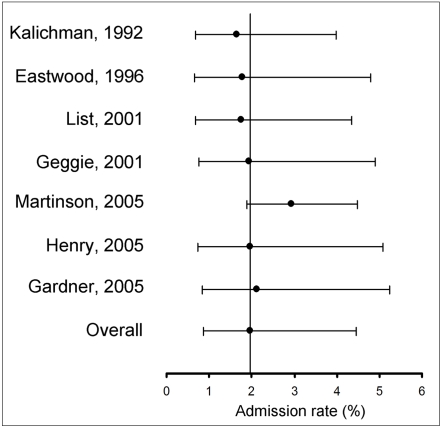
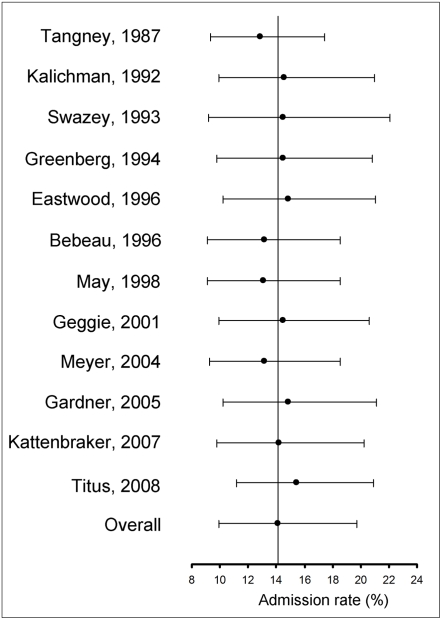
The frequency with which scientists fabricate and falsify data, or commit other forms of scientific misconduct is a matter of controversy. Many surveys have asked scientists directly whether they have committed or know of a colleague who committed research misconduct, but their results appeared difficult to compare and synthesize. This is the first meta-analysis of these surveys. To standardize outcomes, the number of respondents who recalled at least one incident of misconduct was calculated for each question, and the analysis was limited to behaviours that distort scientific knowledge: fabrication, falsification, "cooking" of data, etc... Survey questions on plagiarism and other forms of professional misconduct were excluded. The final sample consisted of 21 surveys that were included in the systematic review, and 18 in the meta-analysis. A pooled weighted average of 1.97% (N = 7, 95%CI: 0.86-4.45) of scientists admitted to have fabricated, falsified or modified data or results at least once--a serious form of misconduct by any standard--and up to 33.7% admitted other questionable research practices. In surveys asking about the behaviour of colleagues, admission rates were 14.12% (N = 12, 95% CI: 9.91-19.72) for falsification, and up to 72% for other questionable research practices. Meta-regression showed that self reports surveys, surveys using the words "falsification" or "fabrication", and mailed surveys yielded lower percentages of misconduct. When these factors were controlled for, misconduct was reported more frequently by medical/pharmacological researchers than others. Considering that these surveys ask sensitive questions and have other limitations, it appears likely that this is a conservative estimate of the true prevalence of scientific misconduct.
Overview
CoChat Summary
TL;DR
This systematic review and meta-analysis of survey data estimated that about 2% of scientists admitted to fabricating, falsifying, or modifying data or results at least once, while 14.12% reported knowing a colleague who did so. The paper argues these are conservative estimates and that methodological choices strongly shape the observed rates.
Key findings
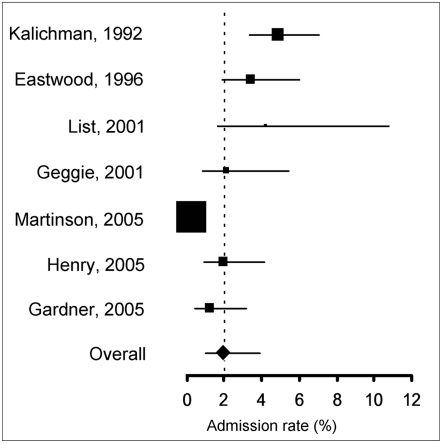
- Across surveys explicitly asking whether scientists ever fabricated or falsified data or altered/modifed results, the pooled weighted estimate was 1.97% (95% CI 0.86–4.45; N = 7), with significant heterogeneity (Cochran’s Q = 61.7777, df = 6, P < 0.0001).
- When only questions explicitly using the words “fabrication” or “falsification” were included, the pooled estimate for self-reports was 1.06% (95% CI 0.31–3.51; N = 4).
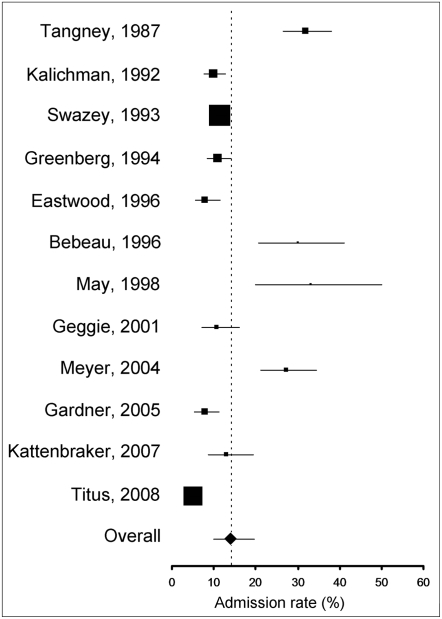
- For reports about colleagues’ misconduct, the pooled weighted estimate was 14.12% (95% CI 9.91–19.72; N = 12); restricting to questions using “fabrication” or “falsification” gave 12.34% (95% CI 8.43–17.71; N = 11).
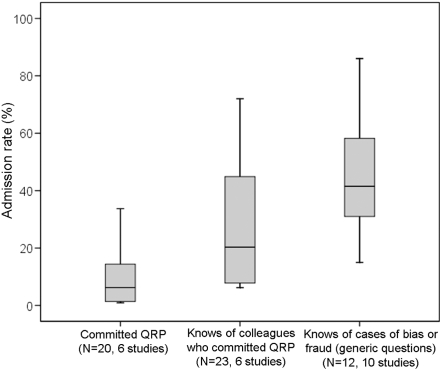
- Other questionable research practices were reported more often: up to 33.7% in self-reports and up to 72% when asking about colleagues.
Methods
- Systematic review and meta-analysis of quantitative surveys asking scientists whether they had committed or observed scientific misconduct in the past; plagiarism and other non-knowledge-distorting misconduct were excluded.
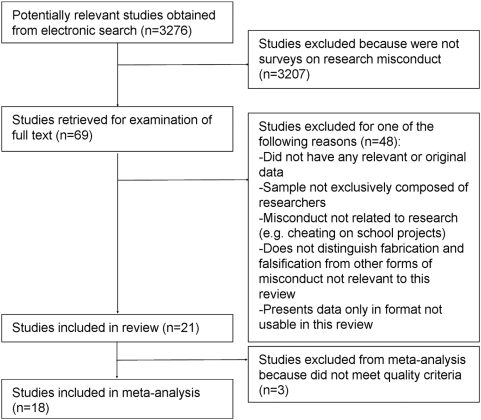
- Searches were run in the first two weeks of August 2008 across citation databases, journals, grey literature sources, and internet search engines; the final review included 21 studies, with 18 in the meta-analysis.
- Main analysis computed the proportion recalling at least one incident, logit-transformed and inverse-variance weighted in a random-effects meta-analysis; meta-regression tested methodological factors such as self vs. non-self reports, mailed vs. handed-out surveys, and use of the words “fabrication”/“falsification.”
Limitations
- The paper states that using the percentage of respondents recalling at least one incident is a rough measure of misconduct frequency; this can under- or overestimate prevalence depending on whether respondents committed multiple incidents or only one.
- The paper notes that non-response bias was recognized by most surveys as a limitation, and that the validity of self-reports may be affected by social expectations; the text also suggests self-reports likely underestimate misconduct.
- Evident from the text: the included studies were heterogeneous in methods and wording, and some outcomes were too diverse for meaningful meta-analysis, so only crude unweighted parameters were calculated for broader questionable research practices.
Model-written summary. Check it against the paper before relying on it.
Integrity signals
Registry
Cites
Statistics
Figures
Verification
Claims the paper makes
0 Valid · 0 Not valid · 14 Not checked · 61 Own results and interpretations
A result the paper reports from its own data — it cites no other source for it, so there is none to check. The quote shows it is in the paper.
In the paper
“When these factors were controlled for, misconduct was reported more frequently by medical/pharmacological researchers than others.”
§ How Many Scientists Fabricate and Falsify Research? A Systematic Review and Meta-Analysis of Survey Data > Abstract
plainstates an association- Asserted: passes — The authors put it forward as true.
- Checkable: passes — It can be checked against evidence.
- Load-bearing: passes — The paper’s conclusions depend on it.
- Based: passes — The paper gives a reason why it holds.
- Rests on 2 assumptions not shown here.
A result the paper reports from its own data — it cites no other source for it, so there is none to check. The quote shows it is in the paper.
In the paper
“A pooled weighted average of 1.97% (N = 7, 95%CI: 0.86–4.45) of scientists admitted to have fabricated, falsified or modified data or results at least once –a serious form of misconduct by any standard– and up to 33.7% admitted other questionable research practices.”
§ How Many Scientists Fabricate and Falsify Research? A Systematic Review and Meta-Analysis of Survey Data > Abstract
plainn = 7- Asserted: passes — The authors put it forward as true.
- Checkable: passes — It can be checked against evidence.
- Load-bearing: passes — The paper’s conclusions depend on it.
- Based: passes — The paper gives a reason why it holds.
- Rests on 2 assumptions not shown here.
A result the paper reports from its own data — it cites no other source for it, so there is none to check. The quote shows it is in the paper.
In the paper
“A pooled weighted average of 1.97% (N = 7, 95%CI: 0.86–4.45) of scientists admitted to have fabricated, falsified or modified data or results at least once –a serious form of misconduct by any standard– and up to 33.7% admitted other questionable research practices.”
§ How Many Scientists Fabricate and Falsify Research? A Systematic Review and Meta-Analysis of Survey Data > Abstract
plain- Asserted: passes — The authors put it forward as true.
- Checkable: passes — It can be checked against evidence.
- Load-bearing: passes — The paper’s conclusions depend on it.
- Based: passes — The paper gives a reason why it holds.
- Rests on 2 assumptions not shown here.
A result the paper reports from its own data — it cites no other source for it, so there is none to check. The quote shows it is in the paper.
In the paper
“In surveys asking about the behaviour of colleagues, admission rates were 14.12% (N = 12, 95% CI: 9.91–19.72) for falsification, and up to 72% for other questionable research practices.”
§ How Many Scientists Fabricate and Falsify Research? A Systematic Review and Meta-Analysis of Survey Data > Abstract
plainn = 12- Asserted: passes — The authors put it forward as true.
- Checkable: passes — It can be checked against evidence.
- Load-bearing: passes — The paper’s conclusions depend on it.
- Based: passes — The paper gives a reason why it holds.
- Rests on 2 assumptions not shown here.
A result the paper reports from its own data — it cites no other source for it, so there is none to check. The quote shows it is in the paper.
In the paper
“Meta-analysis yielded mean pooled estimates that are higher than most previous estimates.”
§ How Many Scientists Fabricate and Falsify Research? A Systematic Review and Meta-Analysis of Survey Data > Introduction
plain- Asserted: passes — The authors put it forward as true.
- Checkable: passes — It can be checked against evidence.
- Load-bearing: passes — The paper’s conclusions depend on it.
- Based: passes — The paper gives a reason why it holds.
- Rests on 2 assumptions not shown here.
31 more claims
Create a free account to see all 75 claims and to verify the 4 references still open.
- It may state two separate claims as one. 24
- Probably not a substantial claim. 25
Claims other papers make about this one
Each is checked against this paper’s own text: does it say what the citing paper says it does?
The cited source says what the claim attributes to it.
In the citing paper
“there are other more common sources of unreliability in the literature (41)(42)(43)(44)”
From Misconduct accounts for the majority of retracted scientific publications (2012) · cites this paper as [43]
The cited source says what the claim attributes to it.
In the citing paper
“The prevalence of researchers who have been involved in scientific misconduct is estimated to be around 2% [2]”
From Checklist to assess Trustworthiness in RAndomised Controlled Trials (TRACT checklist): concept proposal and pilot (2023) · cites this paper as [2]
The cited source says what the claim attributes to it.
In the citing paper
“This is how a small number of people 40 with flexible morals can pollute the scientific literature disproportionately.”
From Fraudulent studies are undermining the reliability of systematic reviews: on the prevalence of problematic images in preclinical depression studies (2025) · cites this paper as [40]
The cited source says what the claim attributes to it.
In the citing paper
“A meta-analysis by Fanelli, combining the results of 18 published surveys, found that 1.9% of researchers have admitted to modification, falsification, or fabrication of data (3).”
From The Prevalence of Inappropriate Image Duplication in Biomedical Research Publications (2016) · cites this paper as [3]
The cited source says what the claim attributes to it.
In the citing paper
“A systematic review and meta-analysis of survey data estimated that 1.97% of authors admitted to have fabricated, falsified, or modified data or results at least once and, in surveys asking about the behavior of colleagues, the admission rate was 14.12% for falsification [13].”
From No raw data, no science: another possible source of the reproducibility crisis (2020) · cites this paper as [13]
6 more claims about this paper
Create a free account to see every claim other papers make about this one.
Citations
Cites
(2000) · Cited by 9,198
The Sociology of Science: Theoretical and Empirical Investigations
Kaplan, N., Merton, R. K., & Storer, N. W. (1974) · Technology and Culture · doi:10.2307/3102264 · Cited by 4,005
The Normative Structure of Science
Merton, R. Κ. (1973) · Medical Entomology and Zoology · Cited by 2,315
The Hazards of Scoring the Quality of Clinical Trials for Meta-analysis
Jüni, P. (1999) · JAMA · doi:10.1001/jama.282.11.1054 · Cited by 1,981 · cited 1×
“All remaining papers were included, and were not graded on a quality scale, because the validity and use of quality measures in meta-analysis is controversial [21], [22].”
BackgroundScope and Impact of Financial Conflicts of Interest in Biomedical Research: A Systematic Review
Bekelman, J. E., Li, Y., & Gross, C. P. (2003) · JAMA · doi:10.1001/jama.289.4.454 · Cited by 1,816 · cited 1×
“This would support growing fears that the large financial interests that often drive medical research are severely biasing it [50], [51], [52].”
BackgroundTourangeau, R., & Smith, T. W. (1996) · Public Opinion Quarterly · doi:10.1086/297751 · Cited by 1,295 · cited 1×
“However, the accuracy of responses to sensitive questions is often independent of response rates, and depends strongly on respondents' perception of anonymity and confidentiality [43], [44].”
BackgroundA comparison of methods to detect publication bias in meta‐analysis
Macaskill, P., Walter, S. D., & Irwig, L. (2001) · Statistics in Medicine · doi:10.1002/sim.698 · Cited by 1,286 · cited 1×
“The popular funnel-plot-based methods to test for publication bias in meta-analysis are inappropriate and potentially misleading when the number of included studies is small and heterogeneity is large [25], [26].”
MethodMartinson, B. C., Anderson, M. S., & de Vries, R. (2005) · Nature · doi:10.1038/435737a · Cited by 1,096 · cited 9×
“All the above results were robust with respect to inclusion or exclusion of any particular study, with perhaps one exception: Martinson et al. (2005) [19], which is one of the largest and most frequently cited surveys on misconduct published to date.”
BackgroundMethodResultInfluentialAdjusting for publication bias in the presence of heterogeneity
Terrin, N., Schmid, C. H., Lau, J., & Olkin, I. (2003) · Statistics in Medicine · doi:10.1002/sim.1461 · Cited by 809 · cited 1×
“The popular funnel-plot-based methods to test for publication bias in meta-analysis are inappropriate and potentially misleading when the number of included studies is small and heterogeneity is large [25], [26].”
MethodIs Academic Medicine for Sale?
Angell, M. (2000) · New England Journal of Medicine · doi:10.1056/nejm200005183422009 · Cited by 582
Research works printed but not linked: 2
- Eastwood S Derish P Leash E Ordway S 1996 Ethical issues in biomedical research: perceptions and practices of postdoctoral research fellows responding to a survey. Science and Engineering Ethics 2 89 114 11657788 · DOI
- Kattenbraker MS 2007 Health education research and publication: ethical considerations and the response of health educators Carbondale Southern Illinois University.Doctoral dissertation
Cited by
Items 601–700 of 1,924
Detecting data fabrication in clinical trials from cluster analysis perspective.
Wu, X., & Carlsson, M. (2011) · Pharmaceutical Statistics · doi:10.1002/pst.462 · Cited by 16
“As suggested by a referee, another future direction is to detect the willful distortion of analysis results [19].”
BackgroundThe new normal? Redaction bias in biomedical science
Grimes, D. R., & Heathers, J. A. J. (2021) · Royal Society Open Science · doi:10.1098/rsos.211308 · Cited by 19
“One recent overview suggested that 1–3% of scientists commit fraud, while questionable research practices occur in as much as 75% of published science [7].”
BackgroundAssessing the Need for a Research Ethics Remediation Program
DuBois, J. M., Anderson, E. E., & Chibnall, J. T. (2013) · Clinical and Translational Science · doi:10.1111/cts.12033 · Cited by 18
Rise in retractions is a signal of integrity
Fanelli, D. (2014) · Nature · doi:10.1038/509033a · Cited by 18
Self-citationThe Problem of Biased Data and Potential Solutions for Health and Environmental Assessments
Suter, G. W., & Cormier, S. M. (2014) · Human and Ecological Risk Assessment An International Journal · doi:10.1080/10807039.2014.974499 · Cited by 17
“…21 surveys of scientists, 1.97% admitted to fabricating or falsifying data and 33.7% admitted to other questionable research practices; 14.12% said they know colleagues who fabricated or falsified data and 72% knew colleagues who had engaged in other questionable research practices (Fanelli 2009).”
BackgroundInfluentialKnowledge of scientific misconduct in publication among medical students
Mubeen, S. M., Qurrat-ul-Ain, Ghayas, R., Rizvi, S. A., & Khan, S. (2017) · Education for Health · doi:10.4103/efh.efh_221_16 · Cited by 18
“12% for falsification and up to 72% for questionable research practices.([18]) In our study, 97 (16.”
BackgroundSeven Reasons Why: A User’s Guide to Transparency and Reproducibility
Filho, D. B. F., Lins, R. G. P., Domingos, A. R. M., Janz, N., & Silva, L. (2019) · Brazilian Political Science Review · doi:10.1590/1981-3821201900020001 · Cited by 24
“From medicine to physics, from chemistry to biology, it is not hard to find cases of scientific misconduct (FANELLI, 2009).”
BackgroundSeeber, M. (2019) · Higher Education Quarterly · doi:10.1111/hequ.12245 · Cited by 30
Rigor and reproducibility for data analysis and design in the behavioral sciences
Hildebrandt, T., & Prenoveau, J. M. (2020) · Behaviour Research and Therapy · doi:10.1016/j.brat.2020.103552 · Cited by 19
Connectome-based machine learning models are vulnerable to subtle data manipulations
Rosenblatt, M., Rodriguez, R. X., Westwater, M. L., Dai, W., Horien, C. L., Greene, A. S., Constable, R. T., Noble, S., & Scheinost, D. (2023) · Patterns · doi:10.1016/j.patter.2023.100756 · Cited by 20
“32 As data manipulation can result in wasted grant money and misdirection of future research endeavors, determining the extent to which the prediction performance of connectome-based models can be falsely enhanced or diminished via data manipulations is crucial.”
BackgroundFunder interference in addiction research: An international survey of authors
Miller, P. G., Martino, F. P., Gross, S. R., Curtis, A., Mayshak, R., Droste, N., & Kypri, K. (2017) · Addictive Behaviors · doi:10.1016/j.addbeh.2017.03.026 · Cited by 19
Are You Sure You Want to Do That? Fostering the Responsible Conduct of Medical Education Research
Maggio, L. A., Artino, A. R., Picho, K., & Driessen, E. W. (2017) · Academic Medicine · doi:10.1097/acm.0000000000001805 · Cited by 19
The Meta-Science of Adult Statistical Word Segmentation: Part 1
Hartshorne, J. K., Skorb, L., Dietz, S. L., Garcia, C., Iozzo, G., Lamirato, K., Ledoux, J. R., Mu, J., Murdock, K., Ravid, J., et al. (2019) · Collabra Psychology · doi:10.1525/collabra.181 · Cited by 25
“How common is data falsification (Fanelli, 2009; Rhoades, 2004)?”
BackgroundUnder repair: A publication ethics and research record in the making
Jacob, M. (2019) · Social Studies of Science · doi:10.1177/0306312718824663 · Cited by 19
“More recently, studies of research integrity have strived to document quantitatively the incidence and motivations of researchers’ misbehaviors, delineated degrees of gravity in research misconduct, and made important contributions by fostering res ea ch integrity policies in institutions, (Fanelli, 2009; Godecharle e…”
BackgroundUnderstanding of researcher behavior is required to improve data reliability
Wass, M. N., Ray, L., & Michaelis, M. (2019) · GigaScience · doi:10.1093/gigascience/giz017 · Cited by 22
Scientific Misconduct: Tip of an Iceberg or the Elephant in the Room?
Luther, F. (2010) · Journal of Dental Research · doi:10.1177/0022034510384627 · Cited by 20
“However, based on previous reports (Martinson et al., 2005; Fanelli, 2009) and the 300% increase in the numbers of dentists being investigated for serious professional misconduct (2004– 2007) in the UK (Singh et al.”
BackgroundMethodInfluentialResponsible Conduct of Research
Al‐Amad, S. H. (2017) · Research ethics forum · doi:10.1007/978-3-319-65266-5_35 · Cited by 17
Gopalakrishna, G., Wicherts, J. M., Vink, G., Stoop, I. A. L., van den Akker, O. R., ter Riet, G., & Bouter, L. M. (2021) · doi:10.31222/osf.io/xsn94 · Cited by 15
An analysis of retracted papers in Computer Science
Shepperd, M., & Yousefi, L. (2023) · PLOS ONE · doi:10.1371/journal.pone.0285383 · Cited by 16
“What is unclear is whether the growth is due to rising misconduct or improvements in our abilities to detect such situations as argued by Fanelli [2].”
AI image generation technology in ophthalmology: Use, misuse and future applications
Phipps, B., Hadoux, X., Sheng, B., Campbell, J. P., Liu, T. Y. A., Keane, P. A., Cheung, C. Y.-L., Chung, T. Y., Wong, T. Y., & van Wijngaarden, P. (2025) · Progress in Retinal and Eye Research · doi:10.1016/j.preteyeres.2025.101353 · Cited by 22
“In fact, the prevalence of image fabrication in biomedical research publications is estimated to be between 1.9 and 3.9 % (Bik et al., 2016; Fanelli, 2009).”
InfluentialReliability and validation of an attitude scale regarding responsible conduct in research
ElHafeez, S. A., Salem, M., & SILVERMAN, H. J. (2022) · PLoS ONE · doi:10.1371/journal.pone.0265392 · Cited by 17
“These include inadequate training, commercial and academic conflicts of interest, institutional failures of oversight [10], negative personality traits [11], failure of the organizational research climate to foster research integrity [12,13], and career and funding pressures [1,14].”
BackgroundTesting the reproducibility and robustness of the cancer biology literature by robot
Roper, K., Abdel‐Rehim, A., Hubbard, S. A., Carpenter, M. R., Rzhetsky, A., Soldatova, L., & King, R. D. (2022) · Journal of The Royal Society Interface · doi:10.1098/rsif.2021.0821 · Cited by 23
“…may have been very specific and only true under specific circumstances or the original results may not have been described in sufficient detail to enable reproducibility, stochasticity in the results, etc. Scientific fraud is another possible reason, but this is probably relatively rare [12].”
BackgroundSciLedger: A Blockchain-based Scientific Workflow Provenance and Data Sharing Platform
Hoopes, R., Hardy, H., Long, M., & Dagher, G. G. (2022) · IEEE International Conference on Collaboration and Internet Computing (CIC) · doi:10.1109/cic56439.2022.00027 · Cited by 23
“These results are significantly higher than estimates from previous works by Fanelli [36] who analyzed academic fraudulency to be around 1.97% in 2009.”
ResultInfluentialKedron, P., Holler, J., & Bardin, S. (2023) · Annals of the American Association of Geographers · doi:10.1080/24694452.2023.2276115 · Cited by 15
“We developed the survey questions following a review of prior reproducibility surveys (e.g., Fanelli 2009; Baker 2016; Konkol, Kray, and Pfeiffer 2019) and our own reading of recurring issues in the reproducibility literature.”
BackgroundMethodResultHow false data affects machine learning models in electrochemistry?
Deshsorn, K., Lawtrakul, L., & Iamprasertkun, P. (2024) · Journal of Power Sources · doi:10.1016/j.jpowsour.2024.234127 · Cited by 18
Bonito, A. J., Titus, S. L., & Wright, D. E. (2011) · Science and Engineering Ethics · doi:10.1007/s11948-011-9274-2 · Cited by 15
“A recent meta-analysis of 12 studies found that 2% of scientists admitted that they had committed research misconduct—fabricated, falsified or modified data in some way—at least once (Fanelli 2009).”
BackgroundCan small journals provide leadership?
Marušić, A., & Marušić, M. (2012) · The Lancet · doi:10.1016/s0140-6736(11)61508-0 · Cited by 15
Improving biomedical journals’ ethical policies: the case of research misconduct
Bosch, X. (2014) · Journal of Medical Ethics · doi:10.1136/medethics-2013-101822 · Cited by 15
REES: A Registry of Efficacy and Effectiveness Studies in Education
Anderson, D., Spybrook, J. K., & Maynard, R. A. (2018) · Educational Researcher · doi:10.3102/0013189x18810513 · Cited by 16
Envisioning data sharing for the biocomputing community
Riccardi, E., Pantano, S., & Potestio, R. (2019) · Interface Focus · doi:10.1098/rsfs.2019.0005 · Cited by 17
Four erroneous beliefs thwarting more trustworthy research
Yarborough, M. A., Nadon, R., & Karlin, D. (2019) · eLife · doi:10.7554/elife.45261 · Cited by 17
“%) report having engaged in practices that contribute to irreproducible research (Fanelli, 2009); other studies report even higher percentages (John et al., 2012; Agnoli et al., 2017).”
BackgroundHandling Anomalous Data in the Lab: Students’ Perspectives on Deleting and Discarding
Johansen, M. W., & Christiansen, F. V. (2020) · Science and Engineering Ethics · doi:10.1007/s11948-020-00206-4 · Cited by 15
Standard Errors in Quantitative Criminology: Taking Stock and Looking Forward
Sweeten, G. (2020) · Journal of Quantitative Criminology · doi:10.1007/s10940-020-09463-9 · Cited by 19
“Estimates of lifetime prevalence of data falsification in psychology range from 2% based on self-disclosure (Fanelli 2009) to 10% based on estimates of prevalence among colleagues (John et al.”
BackgroundEvans, N., Marušić, A., Foeger, N., Löfstrôm, E., van Hoof, M., Vrijhoef-Welten, S., Inguaggiato, G., Dierickx, K., Bouter, L. M., & Widdershoven, G. A. M. (2021) · Research Ideas and Outcomes · doi:10.3897/rio.7.e68258 · Cited by 13
Ghost and Honorary Authorship in Ophthalmology: A Cross-Sectional Survey
Justin, G. A., Miller, S. C., Tsou, B. C., Li, X., Purt, B., Fliotsos, M. J., Zhao, J., Gardner, S., Legault, G. L., Yonekawa, Y., et al. (2022) · American Journal of Ophthalmology · doi:10.1016/j.ajo.2022.02.012 · Cited by 17
Scientific misconduct: how organizational culture plays its part
Faria, R. (2015) · Tijdschrift over Cultuur & Criminaliteit · doi:10.5553/tcc/221195072015005001003 · Cited by 15
Treonis, A. M., Sutton, K., Kavanaugh, B., et al. (2012) · Diversity · doi:10.3390/d4040363 · Cited by 15
MacIntosh, A. J. J., & Huffman, M. A. (2010) · Primatology monographs · doi:10.1007/978-4-431-53886-8_15 · Cited by 17
Fostering Integrity in Postgraduate Research: An Evidence-Based Policy and Support Framework
Mahmud, S., & Bretag, T. (2013) · Accountability in Research · doi:10.1080/08989621.2014.847668 · Cited by 18
Designing research in education: concepts and methodologies
Soufi, N. E. (2017) · Educational Research and Evaluation · doi:10.1080/13803611.2017.1382777 · Cited by 15
“Much has been written on this topic in the field of medicine (for more information, see the systematic review that has been conducted by Fanelli, 2009), but unfortunately in education, because children do not die due to poor research, the issue of quality and trustworthy research is generally not…”
BackgroundFifty Shades of QE: Conflicts of Interest in Economic ResearchPreprint
Fabo, B., Jančoková, M., Kempf, E., & Pástor, Ľ. (2020) · SSRN Electronic Journal · doi:10.2139/ssrn.3693196 · Cited by 15
“, Ioannidis (2005); Fanelli (2009), and Fanelli et al. (2017)).”
InfluentialRetractions in the Middle East from 1999 to 2018: a bibliometric analysis
Liu, W., & Lei, L. (2021) · Scientometrics · doi:10.1007/s11192-021-03919-w · Cited by 19
“Fanelli’s (2013) study shows that the researchers and editors have become more aware of and proactive to scientific misconducts.”
BackgroundResultInfluentialInterventions to prevent misconduct and promote integrity in research and publication
Marušić, A., Wager, E., Utrobičić, A., Sambunjak, D., Anderson, M. S., & Rothstein, H. R. (2013) · Cochrane Database of Systematic Reviews · doi:10.1002/14651858.mr000038 · Cited by 15
Drake, D. C., Maritz, B., Jacobs, S. M., Crous, C. J., Engelbrecht, A., Etale, A., Fourie, M. J., Furniss, D. G., Scott, S. L., Parusnath, S., et al. (2013) · Hydrobiologia · doi:10.1007/s10750-012-1392-6 · Cited by 14
“The worst examples of scientific misconduct involve fabrication or falsification of data (quantified by Fanelli, 2009).”
BackgroundResearch misconduct: A grand global challenge for the 21st Century
Farthing, M. J. G. (2013) · Journal of Gastroenterology and Hepatology · doi:10.1111/jgh.12500 · Cited by 18
When Shooting for the Stars Becomes Aiming for Asterisks: P -Hacking in Family Business Research
Brinkerink, J. (2021) · Entrepreneurship Theory and Practice · doi:10.1177/10422587211050354 · Cited by 16
“, 2018), QRPs may be more damaging to science’s long-term credibility given their greater prevalence and wider spread (Butler et al., 2017; Fanelli, 2009; Grant et al., 2018).”
BackgroundTempest in a teacup: An analysis of p-Hacking in organizational research
Gupta, A., & Bosco, F. A. (2023) · PLoS ONE · doi:10.1371/journal.pone.0281938 · Cited by 19
“Indeed, Xie et al. [6] report that 39.70% of researchers reported awareness of others who had used at least one QRP, a 39.15% increase from Fanelli’s [7] earlier estimate of 28.53%.”
BackgroundInfluentialWhere next for evidence based healthcare?
Heneghan, C. J., & Godlee, F. (2013) · BMJ · doi:10.1136/bmj.f766 · Cited by 15
Fraud and misconduct in scientific publications
Matías‐Guiu, J., & García-Ramos, R. (2010) · Neurología (English Edition) · doi:10.1016/s2173-5808(10)70001-8 · Cited by 20
The Goldman Dilemma is dead: what elite athletes really think about doping, winning, and death
Woolf, J., Mazanov, J., & Connor, J. (2016) · International Journal of Sport Policy and Politics · doi:10.1080/19406940.2016.1194875 · Cited by 18
“Given the apparent prevalence of research misconduct, including falsifying data, in the social (John et al. 2012) and medical sciences (Fanelli 2009), Goldman’s interest in promoting the anti-doping ideology creates a level of uncertainty about the validity of results.”
BackgroundContinuous Evaluation in Ethics Education: A Case Study
McIntosh, T. J., Higgs, C. A., Mumford, M. D., Connelly, S., & DuBois, J. M. (2017) · Science and Engineering Ethics · doi:10.1007/s11948-017-9927-x · Cited by 18
Stang, A., & Baethge, C. (2018) · Clinical Epidemiology · doi:10.2147/clep.s161508 · Cited by 14
“Fanelli has meta-analytically estimated that 1 in 50 scientists self-reported to have “fabricated, falsified or modified data or results at least once”.(16) In fact, the literature provides many examples where low CIPs were a sign of scientific misconduct.”
Theoretical Psychiatry as a Link Between Academic and Clinical Psychiatry
Jakovljević, M., & Jakovljević, I. (2019) · Advances in experimental medicine and biology · doi:10.1007/978-981-32-9721-0_19 · Cited by 18
Making Research Data Accessible
Kapiszewski, D., & Karcher, S. (2020) · Cambridge University Press eBooks · doi:10.1017/9781108762519.008 · Cited by 16
Salandra, R., Criscuolo, P., & Salter, A. J. (2020) · Research Policy · doi:10.1016/j.respol.2020.104130 · Cited by 16
Influence of accessibility (open and toll-based) of scholarly publications on retractions
Shah, T. A., Gul, S., Bashir, S., Ahmad, S., Huertas, A., Oliveira, A., Gulzar, F., Najar, A. H., & Chakraborty, K. (2021) · Scientometrics · doi:10.1007/s11192-021-03990-3 · Cited by 17
“One can notice not only naive but also highly prolific and seasoned researchers (Fanelli, 2009; Furman et al., 2012; Kennedy, 2006; Kowalczyk, 2009; Reich, 2009) bringing disgrace to the scholarly world.”
BackgroundAn immodest proposal – going “All in” on replication research in information systems
Brendel, B., Diederich, S., & Niederman, F. (2021) · European Journal of Information Systems · doi:10.1080/0960085x.2021.1944822 · Cited by 20
“(Scholar 4.1) Motivation for replication studies also refers to concern about IS research experiencing a crisis similar to the field of psychology where many very well accepted theories could not be replicated (Fanelli, 2009; APS, 2015; Stroebe & Strack, 2014).”
BackgroundResultInfluentialPupovac, V. (2021) · Scientometrics · doi:10.1007/s11192-021-04140-5 · Cited by 20
“What is more, the results are likely to be distorted due to people’s tendency to perceive themselves as more honest than others (Fanelli, 2009).”
BackgroundInfluentialHoughton, F. T. (2022) · Journal of the Medical Library Association JMLA · doi:10.5195/jmla.2022.1441 · Cited by 21
“A British Medical Journal survey revealed that 13% of respondents reported being aware of fraudulent data manipulation [62], with another similar study putting this figure at 14% [63].”
BackgroundIntegrity in Postgraduate Research: The Student Voice
Mahmud, S., & Bretag, T. (2014) · Science and Engineering Ethics · doi:10.1007/s11948-014-9616-y · Cited by 15
“Studies about integrity in research tend to focus on the misconduct of researchers (Martinson et al. 2005; Titus et al. 2008; Fanelli 2009), with understandings of”
BackgroundA test for reporting bias in trial networks: simulation and case studies
Trinquart, L., Ioannidis, J. P. A., Châtellier, G., & Ravaud, P. (2014) · BMC Medical Research Methodology · doi:10.1186/1471-2288-14-112 · Cited by 15
“Finally, an excess of significant results could reflect suppression of results of entire trials but also selective analysis and outcome reporting practices, or even fabrication of positive results (although this latter scenario is likely more rare for clinical trials) [43].”
BackgroundHolm, S., & Hofmann, B. (2017) · Journal of Empirical Research on Human Research Ethics · doi:10.1177/1556264617714658 · Cited by 15
“Introduction Scientific misconduct is increasingly being recognized as a problem across a range of sciences including biomedical science (Bedi, 2014; Fang, Steen, & Casadevall, 2012; Fanelli, 2009; Resnik & Dinse, 2013; Resnik & Shamoo, 2011; Roberts & St John, 2014; Shamoo & Resnik, 2014).”
BackgroundGodecharle, S., Nemery, B., & Dierickx, K. (2017) · Science and Engineering Ethics · doi:10.1007/s11948-017-9965-4 · Cited by 15
Seel, N. M., & Zierer, K. (2019) · Research in Comparative and International Education · doi:10.1177/1745499919846189 · Cited by 21
Unpublishable research: examining and organizing the ‘file drawer’
Tsou, A., Schickore, J., & Sugimoto, C. R. (2014) · Learned Publishing · doi:10.1087/20140404 · Cited by 15
Gallstone Etiopathogenesis, Lith and Mucin Genes and New Treatment Approaches
Göral, V. (2016) · Asian Pacific Journal of Cancer Prevention · doi:10.7314/apjcp.2016.17.2.467 · Cited by 14
The Open Science Framework: Improving Science by Making It Open and Accessible
Spies, J. R. (2013) · doi:10.18130/v35c6x · Cited by 18
Santos-d’Amorim, K., Wang, T., Lund, B. D., & dos Santos, R. N. M. (2022) · Ethics & Behavior · doi:10.1080/10508422.2022.2141747 · Cited by 22
“…between journals in a coordinated manner” (Cope Council, 2019a); (b) Data problems, such as data disputes, data fabrication, and data inconsistency (Fanelli, 2009; OSTP, 2000); (c) Duplicate publication, that means “[w]hen a published work (or substantial sections from a published work) is/are…”
BackgroundA taxonomy of questionable research practices in quantitative humanities
Plonsky, L., Larsson, T., Sterling, S., Kytö, M., Yaw, K., & Wood, M. (2024) · Research methods in applied linguistics · doi:10.1075/rmal.7.01plo · Cited by 13
The value of statistical tools to detect data fabrication
Hartgerink, C. H. J., Wicherts, J. M., & van Assen, M. A. L. M. (2016) · Research Ideas and Outcomes · doi:10.3897/rio.2.e8860 · Cited by 14
“2% of researchers admit to have either falsified or fabricated research data once in their professional career (Fanelli 2009), but only a dozen cases are discovered in the U.S. and the Netherlands per year, while combined they cover ~300,000 researchers.”
BackgroundA systems perspective on the role mentors play in the cultivation of virtue
Nakamura, J., & Condren, M. (2018) · Journal of Moral Education · doi:10.1080/03057240.2018.1444981 · Cited by 15
“A meta-analysis of research misconduct surveys found that 2% of scientists admitted to falsifying, fabricating or otherwise altering research data at least one time; 33.7% acknowledged committing other irregular research practices (Fanelli, 2009).”
BackgroundInfluentialTeaching graduate students how to review research articles and respond to reviewer comments
Banković, M., Filipović, V., Graovac, J., Hadži-Purić, J., Hurson, A. R., Kartelj, A., Kovačević, J. J., Korolija, N., Kotlar, M., Krdzavac, N. B., et al. (2019) · Advances in computers · doi:10.1016/bs.adcom.2019.07.001 · Cited by 14
Nicht replizieren: publizieren!?
Rost, D. H., & Bienefeld, M. A. (2019) · Zeitschrift für Pädagogische Psychologie · doi:10.1024/1010-0652/a000253 · Cited by 14
Computational chemistry experiments performed directly on a blockchain virtual computer
Hanson‐Heine, M. W. D., & Ashmore, A. P. (2020) · Chemical Science · doi:10.1039/d0sc01523g · Cited by 14
Jerke, J., Johann, D., Rauhut, H., Thomas, K., & Velicu, A. (2021) · Field Methods · doi:10.1177/1525822x20985629 · Cited by 15
“The LE and CM were designed to measure socially undesirable academic misconducts: (1) Submitting the same results without indicating it (self-plagiarism) and (2) intentionally altering the data to confirm the research question (data-manipulation) (Fanelli, 2009).”
BackgroundKALICHMAN, M. W. (2020) · Research Integrity and Peer Review · doi:10.1186/s41073-020-00103-1 · Cited by 15
The current phase of social sciences research: A thematic overview of the literature
Babalola, S. S., & Nwanzu, C. L. (2021) · Cogent Social Sciences · doi:10.1080/23311886.2021.1892263 · Cited by 19
“Findings like this have been suggested to be a result of what constitutes research misconduct (Fanelli, 2009), anonymity and confidentiality (Bates & Cox, 2008), and social expectation (Farrington, 1999).”
BackgroundNishimura, R., Takeuchi, J., Sakuma, M., Uchida, K., Higaonna, M., Kinjo, N., Sakakibara, F., Nakamura, T., Kosaka, S., Yoshimura, S., et al. (2021) · BMJ Open · doi:10.1136/bmjopen-2021-052351 · Cited by 14
Yeo-Teh, N. S. L., & Tang, B. L. (2022) · Research Ethics · doi:10.1177/17470161221125097 · Cited by 18
“The prevalence of misbehavior in science has also been estimated (Fanelli 2009; Godecharle et al. 2018; Martinson et al. 2005), with a recent meta-analysis indicating a self-confessed commitment rate of 2.9% for RM and 12.5% for QRP, as well as astute awareness of commitment by others (15.5% for RM…”
BackgroundInfluentialSardanelli, F., & Colarieti, A. (2022) · La radiologia medica · doi:10.1007/s11547-022-01582-6 · Cited by 13
“1 3 and 14% have witnessed fabrication or falsification of data [3].”
BackgroundFrank, F., Florens, N., Meyerowitz‐Katz, G., Barrière, J., Billy, É., Saada, V., Samuel, A., Robert, J., & Besançon, L. (2023) · Research Integrity and Peer Review · doi:10.1186/s41073-023-00134-4 · Cited by 31
“Previous investigations have shown that about 2% of scientists admitted to have fabricated, falsified or modified data or results at least once [1].”
Ethical Assurance Statements in Political Science Journals
Jordan, S. R., & HILL, K. Q. (2012) · Journal of Academic Ethics · doi:10.1007/s10805-012-9163-6 · Cited by 13
“…ethics literature (Bebeau and Monson 2011; Berquist 2010; Brice and Bligh 2005; Callaham 2003; Carlson and Ross 2010; Christakis and Rivara 2006; Fanelli 2009; Graf et al. 2007; Laflin et al. 2005; Marcovitch 2009; Marusic 2010; Norman and Griffiths 2008; Pitak-Arnnop et al. 2011; Wager 2007).”
BackgroundEthics in Scientific Publication: Plagiarism and other Scientific Misconduct
Lamki, L. A. (2013) · Oman Medical Journal · doi:10.5001/omj.2013.112 · Cited by 13
Science as a Matter of Honour: How Accused Scientists Deal with Scientific Fraud in Japan
Pellegrini, P. (2017) · Science and Engineering Ethics · doi:10.1007/s11948-017-9937-8 · Cited by 14
A Systems Approach to Understanding and Improving Research Integrity
Gorman, D. M., Elkins, A. D., & Lawley, M. (2017) · Science and Engineering Ethics · doi:10.1007/s11948-017-9986-z · Cited by 14
The Vital Role of Professionalism in Physical Medicine and Rehabilitation
Silver, J. K., Cuccurullo, S. J., Weiss, J. M., Visco, C. J., Oh‐Park, M., Karimi, D. P., Frontera, W. R., Fleming, T. K., Bosques, G., Bhatnagar, S., et al. (2019) · American Journal of Physical Medicine & Rehabilitation · doi:10.1097/phm.0000000000001322 · Cited by 13
Sur, U. K. (2013) · Advances in nano research · doi:10.12989/anr.2013.1.2.111 · Cited by 12
Zwart, H. A. E. (2017) · Library of ethics and applied philosophy · doi:10.1007/978-3-319-65554-3 · Cited by 28
Ausmaß und Risikofaktoren des Publication Bias in der deutschen Soziologie
Auspurg, K., Hinz, T., & Schneck, A. (2014) · KZfSS Kölner Zeitschrift für Soziologie und Sozialpsychologie · doi:10.1007/s11577-014-0284-3 · Cited by 21
The role of Cochrane Review authors in exposing research and publication misconduct
Vlassov, V., & Groves, T. (2010) · Cochrane Database of Systematic Reviews · doi:10.1002/14651858.ed000015 · Cited by 13
Fifty Shades of QE: Comparing Findings of Central Bankers and AcademicsPreprint
Fabo, B., Jančoková, M., Kempf, E., & Pástor, Ľ. (2020) · SSRN Electronic Journal · doi:10.2139/ssrn.3693344 · Cited by 14
Research accomplishments that are too good to be true
Ioannidis, J. P. A. (2014) · Intensive Care Medicine · doi:10.1007/s00134-013-3100-z · Cited by 12
“The frequency of fraud in science is difficult to estimate [6].”
BackgroundWilkinson, J., Heal, C., Antoniou, G. A., Flemyng, E., Avenell, A., Barbour, V., Bordewijk, E. M., Brown, N. J. L., Clarke, M., Dumville, J., et al. (2024) · Journal of Clinical Epidemiology · doi:10.1016/j.jclinepi.2024.111512 · Cited by 11
Retracted papers by Iranian authors: causes, journals, time lags, affiliations, collaborations
Ghorbi, A., Fazeli-Varzaneh, M., Ghaderi-Azad, E., Ausloos, M., & Kozak, M. (2021) · Figshare · Cited by 12
Grimes, D. R. (2022) · eLife · doi:10.7554/elife.79573 · Cited by 11
“By some estimates, up to three quarters of all biomedical science are affected by poor practice ( Fanelli, 2009 ), casting doubt on results to the detriment of science and the public, often a consequence of publish- or-perish pressure ( Grimes et al., 2018 ).”
How to improve assessments of publication integrity
Grey, A. B., Avenell, A., Klein, A. A., Byrne, J. A., Wilmshurst, P. T., & Bolland, M. J. (2024) · Nature · doi:10.1038/d41586-024-02449-8 · Cited by 12
Waller, L. (2012) · International Journal of Social Research Methodology · doi:10.1080/13645579.2012.687560 · Cited by 12
“What little research exists has focused on: (1) strategies to either detect and address curbstoning (AAPOR, 2003; Angoff, 1974; Bennett 1948a, 1948b; Biemer & Stokes, 1989; Elinson & Cisin, 1948; Johnson, Parker, & Clements, 2001; Reed & Reed, 1997; Schraepler & Wagner, 2003; Schreiner, Pennie, & Newbrough, 1988; Stok…”
BackgroundA New Growth Model for Aortic Valve Calcification
Halevi, R., Hamdan, A., Marom, G., Lavon, K., Ben‐Zekry, S., Raanani, E., & Haj-Ali, R. M. (2018) · Journal of Biomechanical Engineering · doi:10.1115/1.4040338 · Cited by 12
Stop blaming external factors: A historical-sociological argument
Schneider, J. W., Horbach, S. P. J. M., & Aagaard, K. (2021) · Social Science Information · doi:10.1177/05390184211018123 · Cited by 14
Information markets and nonmarkets
Bergemann, D., & Ottaviani, M. (2021) · Handbook of Industrial Organization · doi:10.1016/bs.hesind.2021.11.008 · Cited by 24
Metadata
- Authors
- Fanelli, D.
- Affiliations
- University of Edinburgh (GB)
- Corresponding author
- Fanelli, Daniele
- ORCID
- Fanelli, Daniele
- Venue
- PLoS ONE
- Publisher
- Public Library of Science (PLoS)
- Published
- 2009-05-29
- Volume
- 4
- Issue
- 5
- Pages
- e5738
- ISSN
- 1932-6203 (ISSN-L)
- PMC
- PMC2685008
- OpenAlex
- W2152243616
- Cited by
- 1,911
- References
- 74
- Citations by year
- 2026: 77 · 2025: 110 · 2024: 128 · 2023: 136 · 2022: 157 · 2021: 145 · 2020: 163 · 2019: 166 · 2018: 125 · 2017: 125 · 2016: 119 · 2015: 106 · 2014: 82 · 2013: 93 · 2012: 84
- FWCI
- 19.42
- Type
- journal article
- Language
- en
- Open access
- gold
- doi.org
- Locations
- PLoS ONE (publishedVersion, cc-by)
- PubMed Central (publishedVersion, cc-by)
- PubMed (publishedVersion)
- Edinburgh Research Explorer (University of Edinburgh) (acceptedVersion, public-domain)
- RePEc: Research Papers in Economics (submittedVersion)
- DOAJ (DOAJ: Directory of Open Access Journals) (submittedVersion, cc-by-sa)
- Figshare (submittedVersion, cc-by)
- DigitalGeorgetown (Georgetown University Library) (submittedVersion)
- Funders
- European Commission (221441)
- Economic and Social Research Council (ES/F028180/1)
- Topics
- Social Sciences › Education › Academic integrity and plagiarism
- Physical Sciences › Mathematics › Statistics and Probability › Benford’s Law and Fraud Detection
- Social Sciences › Library and Information Sciences › Academic Publishing and Open Access
- Keywords
- research misconduct, scientific fraud, data fabrication, data falsification, questionable research practices, self-report questionnaire
- MeSH terms
- Data Collection, Regression Analysis, Research Personnel, Scientific Misconduct, Ethics, Research
About these checks
Registry, retraction, Cites and statistics results are computed, not judged, with one exception: a printed reference that no index lists is read once by a model before it counts as a citation error. Claims are extracted by a model and kept only when their quote appears verbatim in the text; each cited source is then checked, with a model’s help, for whether it says what the claim relies on. Those verdicts can be wrong — read the claim’s quote and the cited source before relying on one.
A language model drew the claims from the paper on 2026-10-10, under version 3 of the claim definition (model deepseek-v4.1-flash, prompt extract-v3).
A second model labelled each claim on 2026-10-10 (model jev-1.13-20260917, definition revision gold-guideline-v0.2).
Statistics and arithmetic are recomputed, not judged.
Confidence bands are shown only for fields calibrated on our annotated test set. None is calibrated yet, so no band is shown.
What counts as a claim ›How we measure confidence ›How we check this ›
Are you an author, or do you see a problem with this page? Request a review
Data sources
Bibliographic data: Semantic Scholar, OpenAlex, Crossref.
Contains information from the Semantic Scholar Academic Graph Datasets, made available under the ODC Attribution License (ODC-BY 1.0).
Semantic Scholar’s data is described in: Kinney, R., et al. (2023). The Semantic Scholar Open Data Platform. arXiv:2301.10140.
