

The DOI matches its Crossref record; 54 of the 54 references it cites were found in a registry or an index.
Low-Load High Volume Resistance Exercise Stimulates Muscle Protein Synthesis More Than High-Load Low Volume Resistance Exercise in Young Men
Open accessAbstract
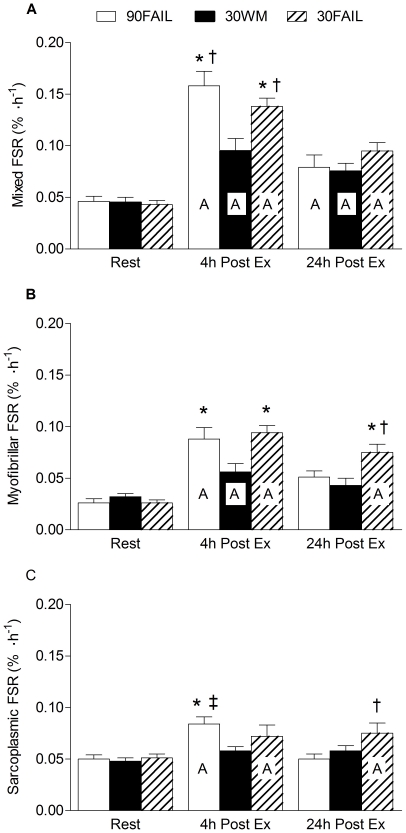
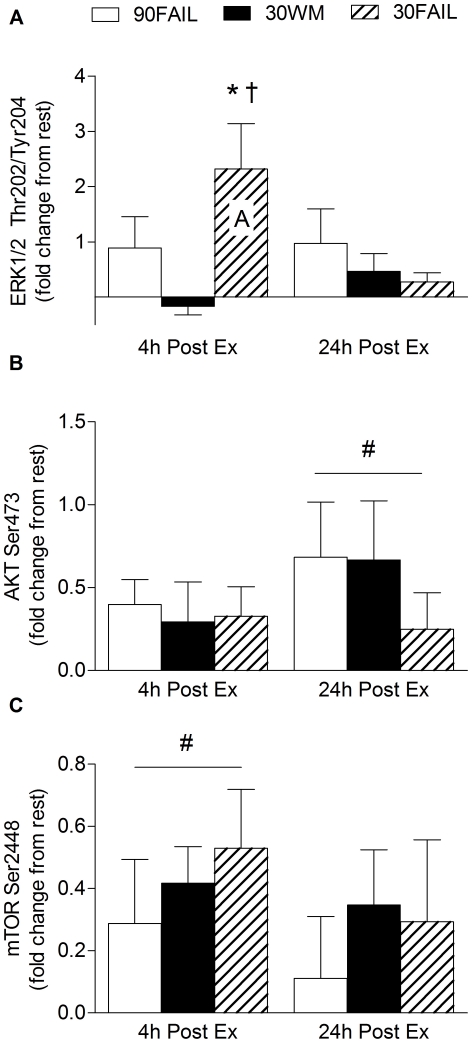
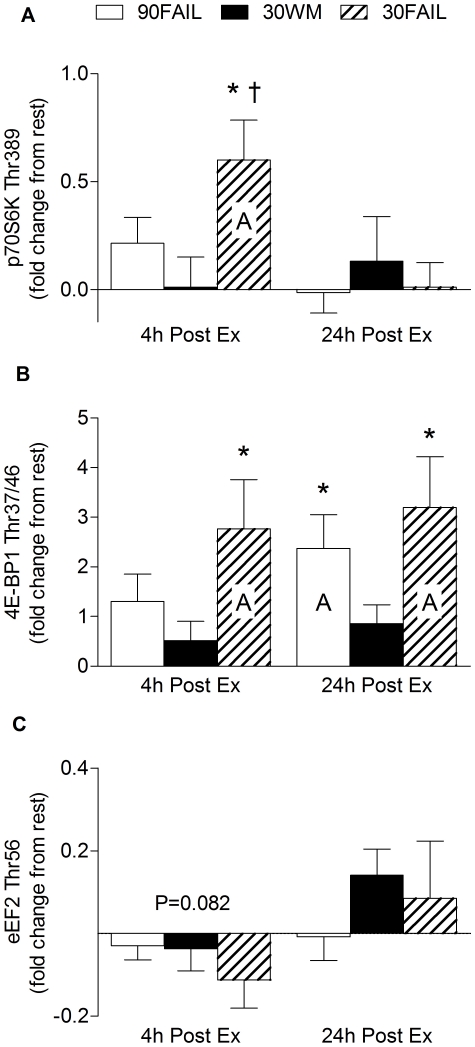
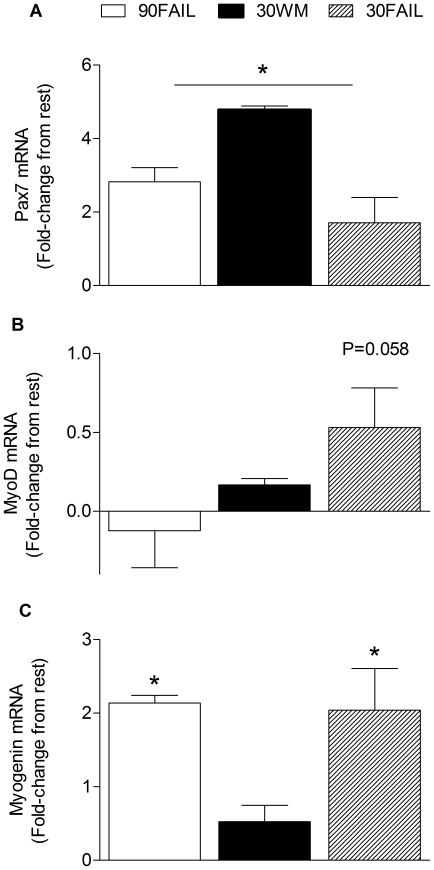
BACKGROUND: We aimed to determine the effect of resistance exercise intensity (%1 repetition maximum-1RM) and volume on muscle protein synthesis, anabolic signaling, and myogenic gene expression. METHODOLOGY/PRINCIPAL FINDINGS: Fifteen men (21+/-1 years; BMI=24.1+/-0.8 kg/m2) performed 4 sets of unilateral leg extension exercise at different exercise loads and/or volumes: 90% of repetition maximum (1RM) until volitional failure (90FAIL), 30% 1RM work-matched to 90%FAIL (30WM), or 30% 1RM performed until volitional failure (30FAIL). Infusion of [ring-13C6] phenylalanine with biopsies was used to measure rates of mixed (MIX), myofibrillar (MYO), and sarcoplasmic (SARC) protein synthesis at rest, and 4 h and 24 h after exercise. Exercise at 30WM induced a significant increase above rest in MIX (121%) and MYO (87%) protein synthesis at 4 h post-exercise and but at 24 h in the MIX only. The increase in the rate of protein synthesis in MIX and MYO at 4 h post-exercise with 90FAIL and 30FAIL was greater than 30WM, with no difference between these conditions; however, MYO remained elevated (199%) above rest at 24 h only in 30FAIL. There was a significant increase in AktSer473 at 24h in all conditions (P=0.023) and mTORSer2448 phosphorylation at 4 h post-exercise (P=0.025). Phosporylation of Erk1/2Tyr202/204, p70S6KThr389, and 4E-BP1Thr37/46 increased significantly (P<0.05) only in the 30FAIL condition at 4 h post-exercise, whereas, 4E-BP1Thr37/46 phosphorylation was greater 24 h after exercise than at rest in both 90FAIL (237%) and 30FAIL (312%) conditions. Pax7 mRNA expression increased at 24 h post-exercise (P=0.02) regardless of condition. The mRNA expression of MyoD and myogenin were consistently elevated in the 30FAIL condition. CONCLUSIONS/SIGNIFICANCE: These results suggest that low-load high volume resistance exercise is more effective in inducing acute muscle anabolism than high-load low volume or work matched resistance exercise modes.
Overview
The claims and statistics of this paper haven’t been checked yet.
Run the check — free, no account needed. It reads the open-access text and checks the sources it cites.
Integrity signals
Registry
Cites
Statistics
Figures
Verification
Claims the paper makes
The claims and statistics of this paper haven’t been checked yet.
Run the check — free, no account needed. It reads the open-access text and checks the sources it cites.
Claims other papers make about this one
Each is checked against this paper’s own text: does it say what the citing paper says it does?
The source backs part of the claim, not all of it — or backs it for a different population, condition or comparison.
In the citing paper
“This strongly indicates that the translational capacity bottleneck possesses a high activation threshold: a minimal mechanical volume is strictly required to sustain the Pol I transcription spark long enough to outpace the basal decay rate of existing ribosomes [35,87,88].”
From Ribosome Biogenesis as a Putative Bottleneck to Skeletal Muscle Hypertrophy: Mechanisms, Human Evidence, and Practical Modulators (2026) · cites this paper as [88]
Experimental — accuracy not yet measuredThe cited source says what the claim attributes to it.
In the citing paper
“Consistent with this line of evidence, research where participants expended a high level of effort suggests that the MPS response to low-load training is at least as robust as when training with heavier loads [39].”
From Loading recommendations for muscle strength, hypertrophy, and local endurance: a re-examination of the repetition continuum. (2021) · cites this paper as [39]
The cited source says what the claim attributes to it.
In the citing paper
“Some studies show an impaired acute MPS response when training with lower loads [37,38] while others report similar increases in mixed and myofibrillar protein synthesis rates [39].”
From Loading recommendations for muscle strength, hypertrophy, and local endurance: a re-examination of the repetition continuum. (2021) · cites this paper as [39]
The check wasn’t confident either way, so it gives no verdict — never disputed.
In the citing paper
“Figueiredo et al. showed that post-exercise cold-water immersion attenuated markers associated with ribosome biogenesis compared with active recovery [88].”
From Ribosome Biogenesis as a Putative Bottleneck to Skeletal Muscle Hypertrophy: Mechanisms, Human Evidence, and Practical Modulators (2026) · cites this paper as [88]
Experimental — accuracy not yet measured
Self-check
Percentages, sums and reported differences re-computed from the paper’s own numbers.
The self-check needs the paper’s full text.
Citations
Cites
Analysis of Relative Gene Expression Data Using Real-Time Quantitative PCR and the 2−ΔΔCT Method
Livak, K. J., & Schmittgen, T. D. (2001) · Methods · doi:10.1006/meth.2001.1262 · Cited by 180,860
American College of Sports Medicine position stand
Otis, C. L. (1997) · Medical Entomology and Zoology · Cited by 4,407
Progression Models in Resistance Training for Healthy Adults
(2009) · Medicine & Science in Sports & Exercise · doi:10.1249/mss.0b013e3181915670 · Cited by 4,332
Progression Models in Resistance Training for Healthy Adults
(2002) · Medicine and Science in Sports and Exercise · doi:10.1097/00005768-200202000-00027 · Cited by 2,979
Pax7 Is Required for the Specification of Myogenic Satellite Cells
Seale, P., Sabourin, L. A., Girgis-Gabardo, A., Mansouri, A., Gruß, P., & Rudnicki, M. A. (2000) · Cell · doi:10.1016/s0092-8674(00)00066-0 · Cited by 2,345
Relation between size of neurons and their susceptibility to discharge
Henneman, E. (1957) · Science · doi:10.1126/science.126.3287.1345 · Cited by 1,227
Anabolic signaling deficits underlie amino acid resistance of wasting, aging muscle
Cuthbertson, D., Smith, K., Babraj, J., Leese, G., Waddell, T., Atherton, P., Wackerhage, H., Taylor, P. M., & Rennie, M. J. (2005) · The FASEB Journal · doi:10.1096/fj.04-2640fje · Cited by 1,211
Self-citationMixed muscle protein synthesis and breakdown after resistance exercise in humans
Phillips, S. M., Tipton, K. D., Aarsland, A., Wolf, S. E., & Wolfe, R. R. (1997) · American Journal of Physiology-Endocrinology and Metabolism · doi:10.1152/ajpendo.1997.273.1.e99 · Cited by 1,132
Self-citationMoore, D. R., Robinson, M. J., Fry, J. L., Tang, J. E., Glover, E. I., Wilkinson, S. B., Prior, T., Tarnopolsky, M. A., & Phillips, S. M. (2009) · The American Journal of Clinical Nutrition · doi:10.3945/ajcn.2008.26401 · Cited by 973
Self-citationKumar, V., Selby, A., Rankin, D., Patel, R., Atherton, P., Hildebrandt, W., Williams, J., Smith, K., Seynnes, O., Hiscock, N., et al. (2009) · The Journal of Physiology · doi:10.1113/jphysiol.2008.164483 · Cited by 740
Self-citation
Cited by
Sorted by citations
Items 201–300 of 529
Ikeda, T., Aizawa, J., Nagasawa, H., Gomi, I., Kugota, H., Nanjo, K., Jinno, T., Masuda, T., & Morita, S. (2016) · Applied Physiology, Nutrition, and Metabolism · doi:10.1139/apnm-2015-0436 · Cited by 37
Dinyer, T. K., Byrd, M. T., Garver, M. J., Rickard, A. J., Miller, W. M., Burns, S. P., Clasey, J. L., & Bergstrom, H. C. (2019) · The Journal of Strength and Conditioning Research · doi:10.1519/jsc.0000000000003194 · Cited by 36
How to Incorporate Eccentric Training Into a Resistance Training Program
Mike, J., Kerksick, C. M., & Kravitz, L. R. (2015) · Strength and conditioning journal · doi:10.1519/ssc.0000000000000114 · Cited by 35
Upper body muscle activation during low- versus high-load resistance exercise in the bench press
Schoenfeld, B. J., Contreras, B., Vigotsky, A. D., Ogborn, D., Fontana, F., & Tiryaki-Sonmez, G. (2016) · Isokinetics and Exercise Science · doi:10.3233/ies-160620 · Cited by 35
Effect of different resistance-training regimens on the WNT-signaling pathway
Leal, M. L., Lamas, L., Aoki, M. S., Ugrinowitsch, C., Carneiro‐Ramos, M. S., Tricoli, V., & Moriscot, A. S. (2011) · European Journal of Applied Physiology · doi:10.1007/s00421-011-1874-7 · Cited by 35
Time under tension decreased with blood flow–restricted exercise
Loenneke, J. P., Wilson, J. M., Balapur, A., Thrower, A. D., Barnes, J., & Pujol, T. J. (2012) · Clinical Physiology and Functional Imaging · doi:10.1111/j.1475-097x.2012.01121.x · Cited by 35
Yue, F. (., Karsten, B., Larumbe‐Zabala, E., Seijo, M., & Naclerio, F. (2017) · Applied Physiology, Nutrition, and Metabolism · doi:10.1139/apnm-2017-0575 · Cited by 34
Equivalent Hypertrophy and Strength Gains in β-Hydroxy-β-Methylbutyrate- or Leucine-supplemented Men
JAKUBOWSKI, J. S., WONG, E. P. T., NUNES, E. A., NOGUCHI, K. S., VANDEWEERD, J. K., MURPHY, K. T., MORTON, R. W., MCGLORY, C., & PHILLIPS, S. M. (2019) · Medicine & Science in Sports & Exercise · doi:10.1249/mss.0000000000001752 · Cited by 34
Self-citationEpigenetic Responses to Acute Resistance Exercise in Trained vs. Sedentary Men
Bagley, J. R., Burghardt, K. J., McManus, R. T., Howlett, B. H., Costa, P. B., Coburn, J. W., Arevalo, J. A., Malek, M. H., & Galpin, A. J. (2019) · The Journal of Strength and Conditioning Research · doi:10.1519/jsc.0000000000003185 · Cited by 34
Effect of Intermittent Low-Frequency Electrical Stimulation on the Rat Gastrocnemius Muscle
Tsutaki, A., Ogasawara, R., Kobayashi, K., Lee, K., Kouzaki, K., & Nakazato, K. (2013) · BioMed Research International · doi:10.1155/2013/480620 · Cited by 34
Luk, H., Levitt, D. E., Boyett, J. C., Rojas, S., Flader, S. M., McFarlin, B. K., & Vingren, J. L. (2019) · American Journal of Physiology-Endocrinology and Metabolism · doi:10.1152/ajpendo.00473.2018 · Cited by 35
Fukaya, T., Kiyono, R., Sato, S., Yahata, K., Yasaka, K., Onuma, R., & Nakamura, M. (2020) · Frontiers in Physiology · doi:10.3389/fphys.2020.601912 · Cited by 33
Effects of Varied Versus Constant Loading Zones on Muscular Adaptations in Trained Men
Schoenfeld, B., Contreras, B., Ogborn, D., Galpin, A., Krieger, J., & Sonmez, G. (2016) · International Journal of Sports Medicine · doi:10.1055/s-0035-1569369 · Cited by 33
Hanson, E. D., Nelson, A. R., West, D. W. D., Violet, J. A., O’Keefe, L., Phillips, S. M., & Hayes, A. (2017) · The Journal of Clinical Endocrinology & Metabolism · doi:10.1210/jc.2016-3383 · Cited by 34
Self-citationZhu, W. G., Thomas, A. C. Q., Wilson, G. M., McGlory, C., Hibbert, J. E., Flynn, C. G. K., Sayed, R. K. A., Paez, H. G., Meinhold, M., Jorgenson, K. W., et al. (2025) · Nature Metabolism · doi:10.1038/s42255-025-01298-7 · Cited by 33
Self-citationExercise and Regulation of Protein Metabolism
Atherton, P. J., Phillips, B. E., & Wilkinson, D. J. (2015) · Progress in molecular biology and translational science · doi:10.1016/bs.pmbts.2015.06.015 · Cited by 36
Self-citationTakenami, E., Iwamoto, S., Shiraishi, N., Kato, A., Watanabe, Y., Yamada, Y., Yamada, S., & Ishii, N. (2018) · Journal of Diabetes Investigation · doi:10.1111/jdi.12926 · Cited by 32
Moderate vs high-load resistance training on muscular adaptations in rats
Padilha, C. S., Cella, P. S., Ribeiro, A. S., Voltarelli, F. A., Testa, M. T. J., Marinello, P. C., Iarosz, K. C., Guirro, P. B., & Deminice, R. (2019) · Life Sciences · doi:10.1016/j.lfs.2019.116964 · Cited by 32
High-intensity resistance exercise with low repetitions maintains endothelial function
Morishima, T., Tsuchiya, Y., Iemitsu, M., & Ochi, E. (2018) · American Journal of Physiology-Heart and Circulatory Physiology · doi:10.1152/ajpheart.00281.2018 · Cited by 32
Popov, D. V., Lysenko, E. A., Bachinin, A. V., Miller, T. F., Kurochkina, N. S., Kravchenko, I. V., Furalyov, V. A., & Vinogradova, O. L. (2015) · Muscle & Nerve · doi:10.1002/mus.24314 · Cited by 32
Skeletal Muscle Remodeling: Interconnections Between Stem Cells and Protein Turnover
Burd, N. A., & Lisio, M. D. (2017) · Exercise and Sport Sciences Reviews · doi:10.1249/jes.0000000000000117 · Cited by 34
Self-citationPostactivation Potentiation Improves Performance in a Resistance Training Session in Trained Men
Alves, R. R., Viana, R. B., Silva, M. H., Guimarães, T. C., Vieira, C. A., Santos, D. D. A. T., & Gentil, P. (2019) · The Journal of Strength and Conditioning Research · doi:10.1519/jsc.0000000000003367 · Cited by 31
Vann, C. G., Osburn, S. C., Mumford, P. W., Roberson, P. A., Fox, C. D., Sexton, C. L., Johnson, M.-R., Johnson, J. S., Shake, J., Moore, J. H., et al. (2020) · Frontiers in Physiology · doi:10.3389/fphys.2020.00259 · Cited by 34
Deane, C. S., Ely, I. A., Wilkinson, D. J., Smith, K., Phillips, B. E., & Atherton, P. J. (2020) · Proceedings of The Nutrition Society · doi:10.1017/s0029665120007879 · Cited by 38
Self-citationThe Connection Between Resistance Training, Climbing Performance, and Injury Prevention
Sæterbakken, A. H., Stien, N., Pedersen, H., Langer, K., Scott, S., Michailov, M. L., Grønhaug, G., Baláš, J., Solstad, T. E. J., & Andersen, V. S. (2024) · Sports Medicine - Open · doi:10.1186/s40798-024-00677-w · Cited by 40
Whey protein and high-volume resistance training in postmenopausal women
Weisgarber, K., Candow, D. G., & Farthing, J. P. (2015) · The journal of nutrition health & aging · doi:10.1007/s12603-015-0454-7 · Cited by 30
Lower Integrated Muscle Protein Synthesis in Masters Compared with Younger Athletes
Doering, T. M., Jenkins, D. G., Reaburn, P. R. J., Borges, N. R., Hohmann, E., & Phillips, S. M. (2016) · Medicine & Science in Sports & Exercise · doi:10.1249/mss.0000000000000935 · Cited by 34
Self-citationSpencer, S., Wolf, A., & Rushton, A. (2016) · Journal of Athletic Training · doi:10.4085/1062-6050-51.10.03 · Cited by 30
Vann, C. G., Sexton, C. L., Osburn, S. C., Smith, M. A., Haun, C. T., Rumbley, M. N., Mumford, P. W., Ferguson, B. K., Montgomery, N. T., Fox, C. D., et al. (2022) · Frontiers in Physiology · doi:10.3389/fphys.2022.857555 · Cited by 30
Self-citationOptimizing the measurement of mitochondrial protein synthesis in human skeletal muscle
Burd, N. A., Tardif, N., Rooyackers, O., & van Loon, L. J. C. (2014) · Applied Physiology, Nutrition, and Metabolism · doi:10.1139/apnm-2014-0211 · Cited by 28
Self-citationLambert, B. S., Hedt, C. A., Moreno, M. R., Harris, J. D., & McCulloch, P. C. (2018) · Techniques in Orthopaedics · doi:10.1097/bto.0000000000000275 · Cited by 27
Taniguchi, M., Yamada, Y., & Ichihashi, N. (2019) · Applied Physiology, Nutrition, and Metabolism · doi:10.1139/apnm-2018-0813 · Cited by 27
Trommelen, J., van Lieshout, G. A. A., Pabla, P., Nyakayiru, J., Hendriks, F. K., Senden, J. M., Goessens, J. P. B., van Kranenburg, J. M. X., Gijsen, A. P., Verdijk, L. B., et al. (2023) · Sports Medicine · doi:10.1007/s40279-023-01822-3 · Cited by 32
Aguiar, A. F., Buzzachera, C. F., Pereira, R. M., Sanches, V. C., Januário, R. S. B., da Silva, R. A., Rabelo, L. M., & Gil, A. W. D. O. (2015) · European Journal of Applied Physiology · doi:10.1007/s00421-015-3150-8 · Cited by 27
From molecular to physical function: The aging trajectory
Janssen, T., Lowisz, C. V., & Phillips, S. M. (2024) · Current Research in Physiology · doi:10.1016/j.crphys.2024.100138 · Cited by 31
Self-citationHalsberghe, B. T., Gordon-Ross, P. N., & Peterson, R. (2017) · Equine Veterinary Education · doi:10.1111/eve.12630 · Cited by 25
Effects of blood flow restriction during moderate-intensity eccentric knee extensions
Behringer, M., Heinke, L. N., Leyendecker, J., & Mester, J. (2017) · The Journal of Physiological Sciences · doi:10.1007/s12576-017-0568-2 · Cited by 26
Shaw, G., Serpell, B. G., & Baar, K. (2019) · Journal of Sports Sciences · doi:10.1080/02640414.2019.1594571 · Cited by 26
Shalaby, M. N., Saad, M. A., Akar, S., Reda, M. A. A., & Shalgham, A. I. (2012) · Journal of Human Kinetics · doi:10.2478/v10078-012-0080-y · Cited by 25
Angleri, V., Damas, F., Phillips, S. M., Selistre-de-Araújo, H. S., Cornachione, A. S., Stotzer, U. S., Santanielo, N., Soligon, S. D., Costa, L. A. R., Lixandrão, M. E., et al. (2022) · Scandinavian Journal of Medicine and Science in Sports · doi:10.1111/sms.14134 · Cited by 24
Self-citationScott, C. B. (2012) · Applied Physiology Nutrition and Metabolism · doi:10.1139/h11-158 · Cited by 24
Liu, T. C., Liu, Y., Wei, E.-X., & Fanghui, L. (2012) · International Journal of Photoenergy · doi:10.1155/2012/628649 · Cited by 25
Nunes, P. R. P., Barcelos, L. C., de Oliveira, A. A., Júnior, R. F., Martins, F. M., Resende, E. A. M. R., & Orsatti, F. L. (2017) · The Journal of Strength and Conditioning Research · doi:10.1519/jsc.0000000000001788 · Cited by 24
Sawan, S. A., Hodson, N. W., Malowany, J. M., West, D. W. D., Tinline‐Goodfellow, C. T., Brook, M. S., Smith, K., Atherton, P. J., Kumbhare, D. A., & Moore, D. R. (2022) · Medicine & Science in Sports & Exercise · doi:10.1249/mss.0000000000002878 · Cited by 24
Self-citationMarinik, E. L., Kelleher, S. A., Savla, J. T., Winett, R. A., & Davy, B. M. (2013) · Contemporary Clinical Trials · doi:10.1016/j.cct.2013.11.006 · Cited by 23
Jessee, M., Buckner, S. L., Mattocks, K. T., Dankel, S. J., Mouser, J. G., Bell, Z. W., Abe, T., & Loenneke, J. P. (2019) · Physiology International · doi:10.1556/2060.106.2019.15 · Cited by 23
Brandt, T., Schwandner, C. T. L., & Schmidt, A. (2024) · Frontiers in Public Health · doi:10.3389/fpubh.2024.1347825 · Cited by 23
Delgado‐Floody, P., Álvarez, C., Cadore, E. L., Flores‐Opazo, M., Navarrete, F. C., & Izquierdo, M. (2019) · Nutrition Metabolism and Cardiovascular Diseases · doi:10.1016/j.numecd.2019.07.002 · Cited by 22
Is muscle strength ratio a criterion for diagnosis of site-specific muscle loss?
Abe, T., Ogawa, M., Thiebaud, R. S., Loenneke, J. P., & Mitsukawa, N. (2013) · Geriatrics and gerontology international/Geriatrics & gerontology international · doi:10.1111/ggi.12179 · Cited by 22
Resistance Exercise–induced Regulation of Muscle Protein Synthesis to Intraset Rest
Salvador, A. F., Askow, A. T., McKenna, C. F., FANG, H.-Y., Skinner, S. K., Li, Z. A., ULANOV, A. V., Paluska, S. A., Petruzzello, S. J., Boppart, M. D., et al. (2019) · Medicine & Science in Sports & Exercise · doi:10.1249/mss.0000000000002213 · Cited by 27
Self-citationFlewwelling, L. D., Hannaian, S. J., Cao, V., Chaillou, T., Churchward‐Venne, T. A., & Cheng, A. J. (2024) · American Journal of Physiology-Cell Physiology · doi:10.1152/ajpcell.00266.2024 · Cited by 21
Beaudry, K. M., Surdi, J. C., Mari, A., & Devries, M. C. (2022) · Physiological Reports · doi:10.14814/phy2.15354 · Cited by 24
Bechshoeft, R. L., Dideriksen, K., Reitelseder, S., Scheike, T., Kjær, M., & Holm, L. (2012) · Clinical Nutrition · doi:10.1016/j.clnu.2012.06.015 · Cited by 21
Muscle Hypertrophy: A Narrative Review on Training Principles for Increasing Muscle Mass
Howe, L., Read, P. J., & Waldron, M. (2017) · Strength and conditioning journal · doi:10.1519/ssc.0000000000000330 · Cited by 23
Carneiro, M. A. S., de Oliveira, A. A., Martins, F. M., de Souza, A. P., Nunes, P. R. P., & Orsatti, F. L. (2018) · Science & Sports · doi:10.1016/j.scispo.2017.11.001 · Cited by 21
Bersiner, K., Park, S., Schaaf, K., Yang, W., Theis, C., Jacko, D., & Gehlert, S. (2023) · Physical Activity and Nutrition · doi:10.20463/pan.2023.0021 · Cited by 20
Cheng, F., Li, N., Yang, J., Yang, J., Yang, W., Ran, J., Sun, P., & Liao, Y. (2024) · Scientific Reports · doi:10.1038/s41598-024-79958-z · Cited by 27
Myocellular Adaptations to Low-Load Blood Flow Restricted Resistance Training
Vissing, K., Groennebaek, T., Wernbom, M., Aagaard, P., & Raastad, T. (2020) · Exercise and Sport Sciences Reviews · doi:10.1249/jes.0000000000000231 · Cited by 20
Jacko, D., Schaaf, K., Masur, L., Windoffer, H., Aussieker, T., Schiffer, T., Zacher, J., Bloch, W., & Gehlert, S. (2022) · International Journal of Molecular Sciences · doi:10.3390/ijms23105431 · Cited by 20
Jenkins, N. D. M., Housh, T. J., Buckner, S. L., Bergstrom, H. C., Smith, C. M., Cochrane, K. C., Hill, E. C., Miramonti, A. A., Schmidt, R. J., Johnson, G. O., et al. (2016) · PubMed Central · Cited by 20
The acute muscular response to blood flow‐restricted exercise with very low relative pressure
Jessee, M. B., Mattocks, K. T., Buckner, S. L., Mouser, J. G., Counts, B. R., Dankel, S. J., Laurentino, G. C., & Loenneke, J. P. (2017) · Clinical Physiology and Functional Imaging · doi:10.1111/cpf.12416 · Cited by 20
Pasiakos, S. M., McClung, H. L., Margolis, L. M., Murphy, N. E., Lin, G. G., Hydren, J. R., & Young, A. (2015) · PLoS ONE · doi:10.1371/journal.pone.0140863 · Cited by 18
Ato, S., Tsushima, D., Isono, Y., Suginohara, T., Maruyama, Y., Nakazato, K., & Ogasawara, R. (2019) · Frontiers in Physiology · doi:10.3389/fphys.2019.00406 · Cited by 19
Blood Flow Restriction Training in Rehabilitation: A Useful Adjunct or Lucy's Latest Trick?
Whiteley, R. J. (2019) · Journal of Orthopaedic and Sports Physical Therapy · doi:10.2519/jospt.2019.0608 · Cited by 19
Jaworska, J., Rodziewicz-Flis, E. A., Kortas, J. A., Flis, M., Micielska, K., Babińska, A., Laskowski, R., Lombardi, G., & Ziemann, E. (2020) · International Journal of Environmental Research and Public Health · doi:10.3390/ijerph17155496 · Cited by 19
Mitchell, C. J., D'Souza, R. F., Figueiredo, V. C., Chan, A., Aasen, K., Durainayagam, B., Mitchell, S., Sinclair, A. J., Egner, I. M., Raastad, T., et al. (2018) · Journal of Applied Physiology · doi:10.1152/japplphysiol.01100.2017 · Cited by 18
Effect of Resistance Exercise on Acquired Immunocytes in Cancer Survivors: A Pilot Study
Lee, J.-K., & Jee, Y. (2021) · International Neurourology Journal · doi:10.5213/inj.2142346.173 · Cited by 18
Marshall, R. N., Smeuninx, B., Seabright, A. P., Morgan, P. T., Atherton, P. J., Philp, A., & Breen, L. (2022) · Physiological Reports · doi:10.14814/phy2.15345 · Cited by 17
Self-citationBrauwers, B., Machado, F. V. C., Beijers, R. J. H. C. G., Spruit, M. A., & Franssen, F. M. E. (2023) · Nutrients · doi:10.3390/nu15245136 · Cited by 19
Effects of load on the acute response of muscles proximal and distal to blood flow restriction
Jessee, M. B., Mouser, J. G., Buckner, S. L., Dankel, S. J., Mattocks, K. T., Abe, T., & Loenneke, J. P. (2018) · The Journal of Physiological Sciences · doi:10.1007/s12576-018-0593-9 · Cited by 18
Carbohydrate mouth rinse improves resistance exercise capacity in the glycogen-lowered state
Durkin, M., Akeroyd, H., & Holliday, A. (2020) · Applied Physiology, Nutrition, and Metabolism · doi:10.1139/apnm-2020-0298 · Cited by 17
Agergaard, J., Bülow, J., Jensen, J. K., Reitelseder, S., Bornø, A., Drummond, M. J., Schjerling, P., & Holm, L. (2017) · Physiological Reports · doi:10.14814/phy2.13444 · Cited by 17
Physiological Responses to Agonist–Antagonist Superset Resistance Training
Fink, J. E., Schoenfeld, B. J., Sakamaki‐Sunaga, M., & Nakazato, K. (2020) · Journal of Science in Sport and Exercise · doi:10.1007/s42978-020-00092-z · Cited by 18
Yeom, D.-C., Hwang, D.-J., Lee, W.-B., Cho, J., & Koo, J. (2023) · International Journal of Molecular Sciences · doi:10.3390/ijms242317079 · Cited by 23
Jansen, J., Marshall, P. W., Benatar, J. R., Cross, R. L., Lindbom, T. K., & Kingsley, M. (2024) · Journal of Clinical Medicine · doi:10.3390/jcm13237338 · Cited by 18
Agergaard, J., Reitelseder, S., Pedersen, T. G., Doessing, S., Schjerling, P., Langberg, H., Miller, B. F., Aagaard, P., Kjær, M., & Holm, L. (2012) · Muscle & Nerve · doi:10.1002/mus.23667 · Cited by 17
Physiological stimuli necessary for muscle hypertrophy
Ozaki, H., Abe, T., Mikesky, A. E., Sakamoto, A., Machida, S., & Naıto, H. (2015) · The Journal of Physical Fitness and Sports Medicine · doi:10.7600/jpfsm.4.43 · Cited by 17
Bell, K. E., Brook, M. S., Snijders, T., Kumbhare, D. A., Parise, G., Smith, K., Atherton, P. J., & Phillips, S. M. (2019) · Frontiers in Nutrition · doi:10.3389/fnut.2019.00040 · Cited by 19
Self-citationMechanical Characteristics of Heavy vs. Light Load Ballistic Resistance Training in Older Adults
Rodríguez-López, C., Alcázar, J., Sánchez-Martín, C., Ara, I., Csapo, R., & Alegre, L. M. (2020) · The Journal of Strength and Conditioning Research · doi:10.1519/jsc.0000000000003826 · Cited by 14
Marshall, R., Campbell, E., Ho, F. K. W., Banger, M. S., Ireland, J. L., Rowe, P. J., McAlpine, C. H., McArthur, K., Quinn, T. J., & Gray, S. R. (2021) · Experimental Gerontology · doi:10.1016/j.exger.2021.111496 · Cited by 16
Mallinson, J. E., Wardle, S. L., O’Leary, T. J., Greeves, J. P., Cegielski, J., Bass, J., Brook, M. S., Wilkinson, D. J., Smith, K., Atherton, P. J., et al. (2023) · Scandinavian Journal of Medicine and Science in Sports · doi:10.1111/sms.14506 · Cited by 18
Self-citationBrunelli, D. T., Finardi, E. A. R., Bonfante, I. L. P., Gáspari, A. F., Sardeli, A. V., de Souza, T. M. F., Chacon‐Mikahil, M. P. T., & Cavaglieri, C. R. (2019) · PLoS ONE · doi:10.1371/journal.pone.0224801 · Cited by 16
Kotani, T., Takegaki, J., Tamura, Y., Kouzaki, K., Nakazato, K., & Ishii, N. (2021) · Experimental Physiology · doi:10.1113/ep089699 · Cited by 16
A Comparison of Increases in Volume Load Over 8 Weeks of Low-Versus High-Load Resistance Training
Schoenfeld, B. J., Ogborn, D. I., Contreras, B. M., Cappaert, T., Ribeiro, A. S., Alvar, B. A., & Vigotsky, A. D. (2016) · Asian Journal of Sports Medicine · doi:10.5812/asjsm.29247 · Cited by 16
Ikeda, T., Jinno, T., Masuda, T., Aizawa, J., Ninomiya, K., Suzuki, K. A. O., & Hirakawa, K. (2018) · Hong Kong Physiotherapy Journal · doi:10.1142/s1013702518500038 · Cited by 16
Commentaries on Viewpoint: Rejuvenation of the term sarcopenia.
Langer, H., Mossakowski, A., Baar, K., Alcazar, J., Martin-Rincon, M., Alegre, L., Ara, I., Calbet, J., Hinkley, J., Coen, P. M., et al. (2019) · Journal of applied physiology · doi:10.1152/japplphysiol.00816.2018 · Cited by 13
de Almeida, F. N., Lopes, C. R., da Conceição, R. M., Col, L. O., Crisp, A. H., de Sousa, N. M. F., Trindade, T. B., Willardson, J. M., & Prestes, J. (2019) · Frontiers in Physiology · doi:10.3389/fphys.2019.00579 · Cited by 15
Hill, E. C. (2020) · Physical Therapy in Sport · doi:10.1016/j.ptsp.2020.01.013 · Cited by 15
Rodríguez-López, C., Alcázar, J., Losa‐Reyna, J., Espinosa, N. M. M., Baltasar‐Fernandez, I., Ara, I., Csapo, R., & Alegre, L. M. (2021) · Frontiers in Physiology · doi:10.3389/fphys.2021.635094 · Cited by 15
Vocal Conversion from Speaking Voice to Singing Voice Using STRAIGHT
Saitou, T., Goto, M., Unoki, M., & Akagi, M. (2007) · Cited by 15
Mukaimoto, T., & Ohno, M. (2011) · Journal of Sports Sciences · doi:10.1080/02640414.2011.616950 · Cited by 16
Rahnert, J. A., & Burkholder, T. J. (2013) · Journal of Experimental Biology · doi:10.1242/jeb.080705 · Cited by 16
The effect of blood flow occlusion during acute low-intensity isometric elbow flexion exercise
Copithorne, D. B., & Rice, C. L. (2019) · European Journal of Applied Physiology · doi:10.1007/s00421-019-04088-8 · Cited by 15
McDonald, C. J., Bauer, J. D., Capra, S. M., & Coll, J. R. (2014) · BMC Cancer · doi:10.1186/1471-2407-14-264 · Cited by 15
Load-induced human skeletal muscle hypertrophy: Mechanisms, myths, and misconceptions
Every, D. W. V., Lees, M. J., Wilson, B., Nippard, J., & Phillips, S. M. (2025) · Journal of sport and health science/Journal of Sport and Health Science · doi:10.1016/j.jshs.2025.101104 · Cited by 23
Self-citationThe Role of Fatigue in the Aging Swallow: A Review
Brates, D., Troche, M. S., & Molfenter, S. M. (2021) · OBM Geriatrics · doi:10.21926/obm.geriatr.2102166 · Cited by 14
Viecelli, C., & Aguayo, D. (2022) · Frontiers in Physiology · doi:10.3389/fphys.2021.686119 · Cited by 14
Horwath, O., Moberg, M., Hodson, N. W., Edman, S., Johansson, M., Andersson, E. A., van Hall, G., Rooyackers, O., Philp, A., & Apró, W. (2024) · Journal of Cachexia Sarcopenia and Muscle · doi:10.1002/jcsm.13613 · Cited by 15
Understanding the sensitivity of muscle protein synthesis to dairy protein in middle-aged men
Mitchell, C. J., D’Souza, R. F., Zeng, N., McGregor, R. A., Fanning, A. C., Poppitt, S. D., & Cameron‐Smith, D. (2016) · International Dairy Journal · doi:10.1016/j.idairyj.2016.07.008 · Cited by 14
Krentz, J. R., Chilibeck, P. D., & Farthing, J. P. (2017) · European Journal of Applied Physiology · doi:10.1007/s00421-017-3700-3 · Cited by 15
Metadata
- Authors
- Burd, N. A., West, D. W. D., Staples, A. W., Atherton, P. J., Baker, J. M., Moore, D. R., Holwerda, A. M., Parise, G., Rennie, M. J., Baker, S. K., & Phillips, S. M.
- Affiliations
- McMaster University (CA)
- University of Nottingham (GB)
- Corresponding author
- Phillips, Stuart M.
- ORCID
- Venue
- PLoS ONE
- Publisher
- Public Library of Science (PLoS)
- Published
- 2010-08-09
- Volume
- 5
- Issue
- 8
- Pages
- e12033
- ISSN
- 1932-6203 (ISSN-L)
- PMC
- PMC2918506
- OpenAlex
- W2160436389
- Cited by
- 531
- References
- 54
- Citations by year
- 2026: 18 · 2025: 29 · 2024: 37 · 2023: 21 · 2022: 40 · 2021: 31 · 2020: 37 · 2019: 45 · 2018: 30 · 2017: 37 · 2016: 44 · 2015: 38 · 2014: 34 · 2013: 26 · 2012: 37
- FWCI
- 12.45
- Type
- journal article
- Language
- en
- Open access
- gold
- doi.org
- Locations
- PLoS ONE (publishedVersion, cc-by)
- PubMed Central (publishedVersion, cc-by)
- PubMed (publishedVersion)
- DOAJ (DOAJ: Directory of Open Access Journals) (submittedVersion, cc-by-sa)
- Funders
- Natural Sciences and Engineering Research Council of Canada
- Topics
- Health Sciences › Nursing › Nutrition and Dietetics › Muscle metabolism and nutrition
- Life Sciences › Biochemistry, Genetics and Molecular Biology › Molecular Biology › Muscle Physiology and Disorders
- Health Sciences › Medicine › Physiology (medical) › Cardiovascular and exercise physiology
- Keywords
- resistance training, exercise intensity, exercise volume, muscle protein synthesis, myofibrillar protein synthesis, Akt signaling, mTOR signaling, ERK1/2, p70S6K, 4E-BP1, Pax7, myogenic gene expression, leg extension, young men
- MeSH terms
- Gene Expression Regulation, Humans, Male, Muscle Proteins, Phenylalanine, RNA, Messenger, Signal Transduction, Exercise, Weight-Bearing, Myogenic Regulatory Factors, Muscle Fibers, Skeletal, Intracellular Space, PAX7 Transcription Factor, Resistance Training, Young Adult
About these checks
Registry, retraction, Cites and statistics results are computed, not judged, with one exception: a printed reference that no index lists is read once by a model before it counts as a citation error. Claims are extracted by a model and kept only when their quote appears verbatim in the text; each cited source is then checked, with a model’s help, for whether it says what the claim relies on. Those verdicts can be wrong — read the claim’s quote and the cited source before relying on one.
Statistics and arithmetic are recomputed, not judged.
Confidence bands are shown only for fields calibrated on our annotated test set. None is calibrated yet, so no band is shown.
What counts as a claim ›How we measure confidence ›How we check this ›
Are you an author, or do you see a problem with this page? Request a review
