

The DOI matches its Crossref record; 54 of the 54 references it cites were found in a registry or an index.
Low-Load High Volume Resistance Exercise Stimulates Muscle Protein Synthesis More Than High-Load Low Volume Resistance Exercise in Young Men
Open accessAbstract
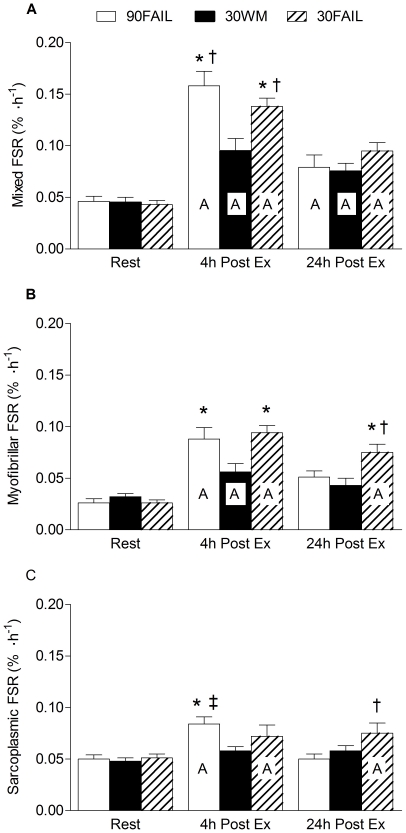
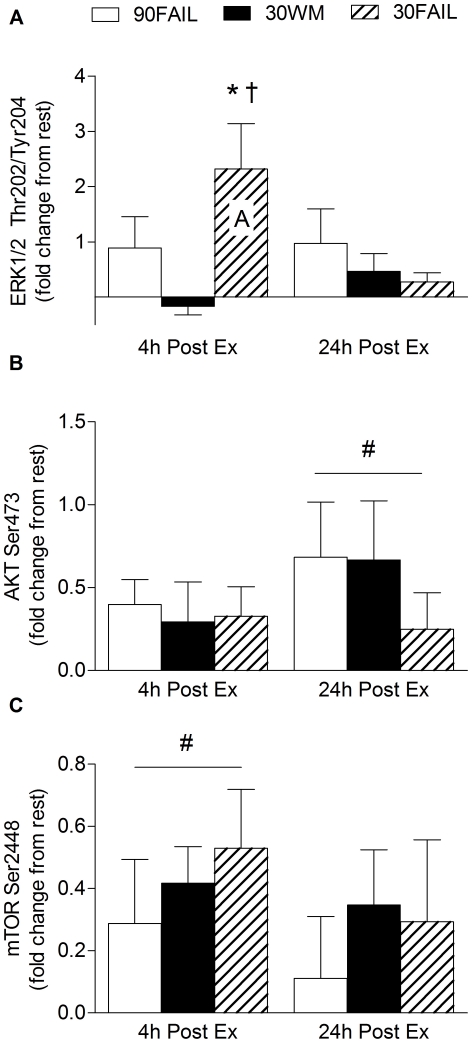
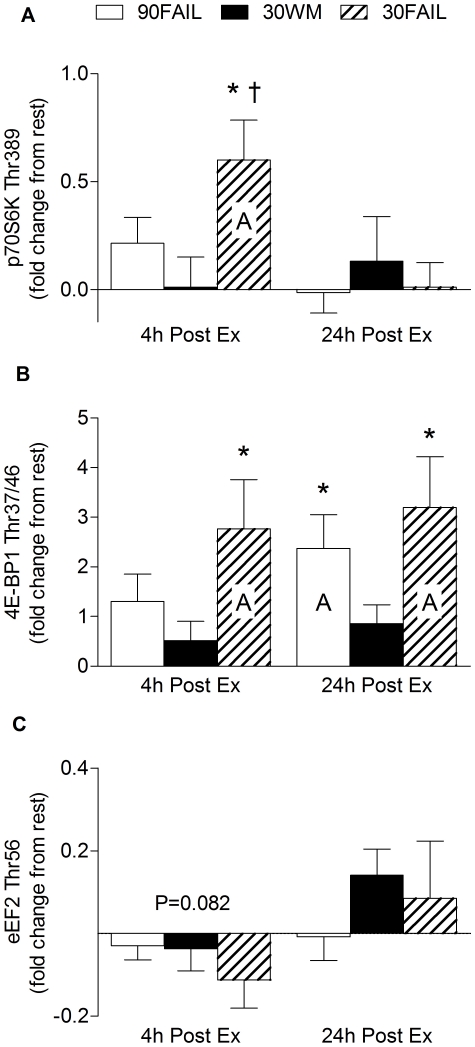
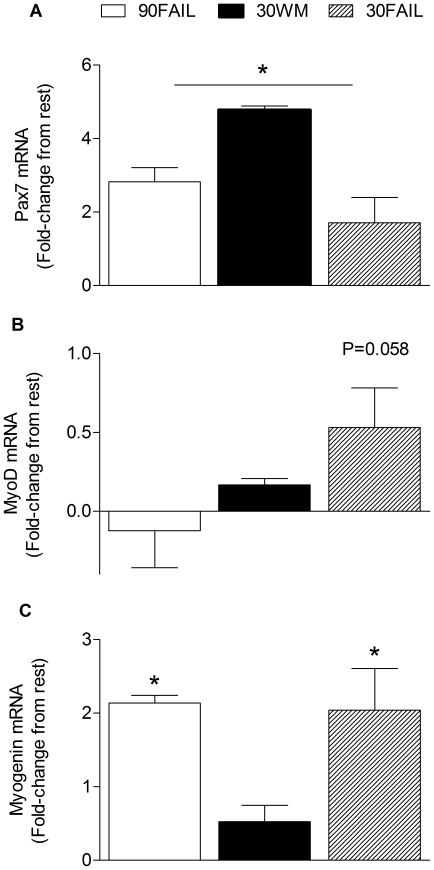
BACKGROUND: We aimed to determine the effect of resistance exercise intensity (%1 repetition maximum-1RM) and volume on muscle protein synthesis, anabolic signaling, and myogenic gene expression. METHODOLOGY/PRINCIPAL FINDINGS: Fifteen men (21+/-1 years; BMI=24.1+/-0.8 kg/m2) performed 4 sets of unilateral leg extension exercise at different exercise loads and/or volumes: 90% of repetition maximum (1RM) until volitional failure (90FAIL), 30% 1RM work-matched to 90%FAIL (30WM), or 30% 1RM performed until volitional failure (30FAIL). Infusion of [ring-13C6] phenylalanine with biopsies was used to measure rates of mixed (MIX), myofibrillar (MYO), and sarcoplasmic (SARC) protein synthesis at rest, and 4 h and 24 h after exercise. Exercise at 30WM induced a significant increase above rest in MIX (121%) and MYO (87%) protein synthesis at 4 h post-exercise and but at 24 h in the MIX only. The increase in the rate of protein synthesis in MIX and MYO at 4 h post-exercise with 90FAIL and 30FAIL was greater than 30WM, with no difference between these conditions; however, MYO remained elevated (199%) above rest at 24 h only in 30FAIL. There was a significant increase in AktSer473 at 24h in all conditions (P=0.023) and mTORSer2448 phosphorylation at 4 h post-exercise (P=0.025). Phosporylation of Erk1/2Tyr202/204, p70S6KThr389, and 4E-BP1Thr37/46 increased significantly (P<0.05) only in the 30FAIL condition at 4 h post-exercise, whereas, 4E-BP1Thr37/46 phosphorylation was greater 24 h after exercise than at rest in both 90FAIL (237%) and 30FAIL (312%) conditions. Pax7 mRNA expression increased at 24 h post-exercise (P=0.02) regardless of condition. The mRNA expression of MyoD and myogenin were consistently elevated in the 30FAIL condition. CONCLUSIONS/SIGNIFICANCE: These results suggest that low-load high volume resistance exercise is more effective in inducing acute muscle anabolism than high-load low volume or work matched resistance exercise modes.
Overview
The claims and statistics of this paper haven’t been checked yet.
Run the check — free, no account needed. It reads the open-access text and checks the sources it cites.
Integrity signals
Registry
Cites
Statistics
Figures
Verification
Claims the paper makes
The claims and statistics of this paper haven’t been checked yet.
Run the check — free, no account needed. It reads the open-access text and checks the sources it cites.
Claims other papers make about this one
Each is checked against this paper’s own text: does it say what the citing paper says it does?
The source backs part of the claim, not all of it — or backs it for a different population, condition or comparison.
In the citing paper
“This strongly indicates that the translational capacity bottleneck possesses a high activation threshold: a minimal mechanical volume is strictly required to sustain the Pol I transcription spark long enough to outpace the basal decay rate of existing ribosomes [35,87,88].”
From Ribosome Biogenesis as a Putative Bottleneck to Skeletal Muscle Hypertrophy: Mechanisms, Human Evidence, and Practical Modulators (2026) · cites this paper as [88]
Experimental — accuracy not yet measuredThe cited source says what the claim attributes to it.
In the citing paper
“Consistent with this line of evidence, research where participants expended a high level of effort suggests that the MPS response to low-load training is at least as robust as when training with heavier loads [39].”
From Loading recommendations for muscle strength, hypertrophy, and local endurance: a re-examination of the repetition continuum. (2021) · cites this paper as [39]
The cited source says what the claim attributes to it.
In the citing paper
“Some studies show an impaired acute MPS response when training with lower loads [37,38] while others report similar increases in mixed and myofibrillar protein synthesis rates [39].”
From Loading recommendations for muscle strength, hypertrophy, and local endurance: a re-examination of the repetition continuum. (2021) · cites this paper as [39]
The check wasn’t confident either way, so it gives no verdict — never disputed.
In the citing paper
“Figueiredo et al. showed that post-exercise cold-water immersion attenuated markers associated with ribosome biogenesis compared with active recovery [88].”
From Ribosome Biogenesis as a Putative Bottleneck to Skeletal Muscle Hypertrophy: Mechanisms, Human Evidence, and Practical Modulators (2026) · cites this paper as [88]
Experimental — accuracy not yet measured
Self-check
Percentages, sums and reported differences re-computed from the paper’s own numbers.
The self-check needs the paper’s full text.
Citations
Cites
Analysis of Relative Gene Expression Data Using Real-Time Quantitative PCR and the 2−ΔΔCT Method
Livak, K. J., & Schmittgen, T. D. (2001) · Methods · doi:10.1006/meth.2001.1262 · Cited by 180,860
American College of Sports Medicine position stand
Otis, C. L. (1997) · Medical Entomology and Zoology · Cited by 4,407
Progression Models in Resistance Training for Healthy Adults
(2009) · Medicine & Science in Sports & Exercise · doi:10.1249/mss.0b013e3181915670 · Cited by 4,332
Progression Models in Resistance Training for Healthy Adults
(2002) · Medicine and Science in Sports and Exercise · doi:10.1097/00005768-200202000-00027 · Cited by 2,979
Pax7 Is Required for the Specification of Myogenic Satellite Cells
Seale, P., Sabourin, L. A., Girgis-Gabardo, A., Mansouri, A., Gruß, P., & Rudnicki, M. A. (2000) · Cell · doi:10.1016/s0092-8674(00)00066-0 · Cited by 2,345
Relation between size of neurons and their susceptibility to discharge
Henneman, E. (1957) · Science · doi:10.1126/science.126.3287.1345 · Cited by 1,227
Anabolic signaling deficits underlie amino acid resistance of wasting, aging muscle
Cuthbertson, D., Smith, K., Babraj, J., Leese, G., Waddell, T., Atherton, P., Wackerhage, H., Taylor, P. M., & Rennie, M. J. (2005) · The FASEB Journal · doi:10.1096/fj.04-2640fje · Cited by 1,211
Self-citationMixed muscle protein synthesis and breakdown after resistance exercise in humans
Phillips, S. M., Tipton, K. D., Aarsland, A., Wolf, S. E., & Wolfe, R. R. (1997) · American Journal of Physiology-Endocrinology and Metabolism · doi:10.1152/ajpendo.1997.273.1.e99 · Cited by 1,132
Self-citationMoore, D. R., Robinson, M. J., Fry, J. L., Tang, J. E., Glover, E. I., Wilkinson, S. B., Prior, T., Tarnopolsky, M. A., & Phillips, S. M. (2009) · The American Journal of Clinical Nutrition · doi:10.3945/ajcn.2008.26401 · Cited by 973
Self-citationKumar, V., Selby, A., Rankin, D., Patel, R., Atherton, P., Hildebrandt, W., Williams, J., Smith, K., Seynnes, O., Hiscock, N., et al. (2009) · The Journal of Physiology · doi:10.1113/jphysiol.2008.164483 · Cited by 740
Self-citation
Cited by
Sorted by citations
Resistance exercise load does not determine training-mediated hypertrophic gains in young men
Mitchell, C. J., Churchward-Venne, T. A., West, D. W. D., Burd, N. A., Breen, L., Baker, S. K., & Phillips, S. M. (2012) · Journal of Applied Physiology · doi:10.1152/japplphysiol.00307.2012 · Cited by 627
Self-citationEffective fiber hypertrophy in satellite cell-depleted skeletal muscle
McCarthy, J. J., Mula, J., Miyazaki, M., Erfani, R., Garrison, K., Farooqui, A. B., Srikuea, R., Lawson, B. A., Grimes, B., Keller, C., et al. (2011) · Development · doi:10.1242/dev.068858 · Cited by 616
Breen, L., & Phillips, S. M. (2011) · Nutrition & Metabolism · doi:10.1186/1743-7075-8-68 · Cited by 576
Self-citationNarici, M. V., VITO, G. D., Franchi, M. V., Paoli, A., Moro, T., Marcolin, G., Grassi, B., Baldassarre, G., Zuccarelli, L., Biolo, G., et al. (2020) · European Journal of Sport Science · doi:10.1080/17461391.2020.1761076 · Cited by 494
Schoenfeld, B. J., Peterson, M. D., Ogborn, D., Contreras, B., & Sonmez, G. T. (2015) · Journal of Strength and Conditioning Research · doi:10.1519/jsc.0000000000000958 · Cited by 418
Morton, R. W., Oikawa, S. Y., Wavell, C. G., Mazara, N., McGlory, C., Quadrilatero, J., Baechler, B. L., Baker, S. K., & Phillips, S. M. (2016) · Journal of Applied Physiology · doi:10.1152/japplphysiol.00154.2016 · Cited by 404
“Taken together with previous data (4, 28) the findings of the present 315 study, along with a recent meta-analysis (35), do not support the assertion that higher load RT is 316 a prerequisite to maximize RT-induced muscle hypertrophy especially when lower load exercises 317 are performed to volitional failure.”
BackgroundMethodResultInfluentialSelf-citationMuscle protein synthesis in response to nutrition and exercise
Atherton, P. J., & Smith, K. (2012) · The Journal of Physiology · doi:10.1113/jphysiol.2011.225003 · Cited by 401
Self-citationDamas, F., Phillips, S. M., Libardi, C. A., Vechin, F. C., Lixandrão, M. E., Jannig, P. R., Costa, L. A. R., Bacurau, A. V., Snijders, T., Parise, G., et al. (2016) · The Journal of Physiology · doi:10.1113/jp272472 · Cited by 353
Self-citationBurd, N. A., Andrews, R. J., West, D. W. D., Little, J. P., Cochran, A. J. R., Hector, A. J., Cashaback, J. G. A., Gibala, M. J., Potvin, J. R., Baker, S. K., et al. (2011) · The Journal of Physiology · doi:10.1113/jphysiol.2011.221200 · Cited by 369
Self-citationLOPEZ, P., RADAELLI, R., TAAFFE, D. R., NEWTON, R. U., GALVÃO, D. A., TRAJANO, G. S., TEODORO, J. L., KRAEMER, W. J., HÄKKINEN, K., & PINTO, R. S. (2021) · Medicine & Science in Sports & Exercise · doi:10.1249/mss.0000000000002585 · Cited by 340
Schoenfeld, B. J., Grgic, J., Van Every, D. W., & Plotkin, D. L. (2021) · Sports · doi:10.3390/sports9020032 · Cited by 334
Burd, N. A., West, D. W. D., Moore, D. R., Atherton, P. J., Staples, A. W., Prior, T., Tang, J. E., Rennie, M. J., Baker, S. K., & Phillips, S. M. (2011) · The Journal of Nutrition · doi:10.3945/jn.110.135038 · Cited by 325
Self-citationChurchward‐Venne, T. A., Burd, N. A., Mitchell, C. J., West, D. W. D., Philp, A., Marcotte, G. R., Baker, S. K., Baar, K., & Phillips, S. M. (2012) · The Journal of Physiology · doi:10.1113/jphysiol.2012.228833 · Cited by 314
Self-citationChurchward-Venne, T. A., Breen, L., Di Donato, D. M., Hector, A. J., Mitchell, C. J., Moore, D. R., Stellingwerff, T., Breuille, D., Offord, E. A., Baker, S. K., et al. (2014) · The American Journal of Clinical Nutrition · doi:10.3945/ajcn.113.068775 · Cited by 290
Self-citationImpact of Resistance Training in Cancer Survivors
Strasser, B., Steindorf, K., Wiskemann, J., & Ulrich, C. M. (2013) · Medicine & Science in Sports & Exercise · doi:10.1249/mss.0b013e31829a3b63 · Cited by 305
Burd, N. A., Yang, Y., Moore, D. R., Tang, J. E., Tarnopolsky, M. A., & Phillips, S. M. (2012) · British Journal of Nutrition · doi:10.1017/s0007114511006271 · Cited by 276
Self-citationLive strong and prosper: the importance of skeletal muscle strength for healthy ageing
McLeod, M., Breen, L., Hamilton, D. L., & Philp, A. (2016) · Biogerontology · doi:10.1007/s10522-015-9631-7 · Cited by 274
Nielsen, J. L., Aagaard, P., Bech, R. D., Nygaard, T., Hvid, L. G., Wernbom, M., Suetta, C., & Frandsen, U. (2012) · The Journal of Physiology · doi:10.1113/jphysiol.2012.237008 · Cited by 268
Egan, B., & Sharples, A. P. (2023) · Physiological Reviews · doi:10.1152/physrev.00054.2021 · Cited by 278
Krzysztofik, M., Wilk, M., Wojdała, G., & Gołaś, A. (2019) · International Journal of Environmental Research and Public Health · doi:10.3390/ijerph16244897 · Cited by 329
West, D. W., Burd, N. A., Coffey, V. G., Baker, S. K., Burke, L. M., Hawley, J. A., Moore, D. R., Stellingwerff, T., & Phillips, S. M. (2011) · The American Journal of Clinical Nutrition · doi:10.3945/ajcn.111.013722 · Cited by 264
Self-citationMuscular adaptations in low- versus high-load resistance training: a meta-analysis.
Schoenfeld, B. J., Wilson, J. M., Lowery, R. P., & Krieger, J. W. (2016) · European Journal of Sport Science · doi:10.1080/17461391.2014.989922 · Cited by 249
Csapo, R., & Alegre, L. M. (2016) · Scandinavian Journal of Medicine & Science in Sports · doi:10.1111/sms.12536 · Cited by 239
Influence of relative blood flow restriction pressure on muscle activation and muscle adaptation
Counts, B. R., Dankel, S. J., Barnett, B. E., Kim, D., Mouser, J. G., Allen, K. M., Thiebaud, R. S., Abe, T., Bemben, M. G., & Loenneke, J. P. (2015) · Muscle & Nerve · doi:10.1002/mus.24756 · Cited by 238
Nutritional interventions to augment resistance training-induced skeletal muscle hypertrophy
Morton, R. W., McGlory, C., & Phillips, S. M. (2015) · Frontiers in Physiology · doi:10.3389/fphys.2015.00245 · Cited by 234
Self-citationDoes Exercise-Induced Muscle Damage Play a Role in Skeletal Muscle Hypertrophy?
Schoenfeld, B. J. (2012) · The Journal of Strength and Conditioning Research · doi:10.1519/jsc.0b013e31824f207e · Cited by 258
Khodabukus, A., Madden, L. R., Prabhu, N. K., Koves, T. R., Jackman, C. P., Muoio, D. M., & Bursac, N. (2018) · Biomaterials · doi:10.1016/j.biomaterials.2018.08.058 · Cited by 227
The molecular athlete: exercise physiology from mechanisms to medals
Furrer, R., Hawley, J. A., & Handschin, C. (2023) · Physiological Reviews · doi:10.1152/physrev.00017.2022 · Cited by 248
Roberts, M. D., McCarthy, J. J., Hornberger, T. A., Phillips, S. M., Mackey, A. L., Nader, G. A., Boppart, M. D., Kavazis, A. N., Reidy, P. T., Ogasawara, R., et al. (2023) · Physiological Reviews · doi:10.1152/physrev.00039.2022 · Cited by 214
Self-citationMeex, R. C. R., Blaak, E. E., & van Loon, L. J. C. (2019) · Obesity Reviews · doi:10.1111/obr.12862 · Cited by 224
Mitchell, C. J., Churchward-Venne, T. A., Parise, G., Bellamy, L., Baker, S. K., Smith, K., Atherton, P. J., & Phillips, S. M. (2014) · PLoS ONE · doi:10.1371/journal.pone.0089431 · Cited by 212
Self-citationNutritional modulation of training-induced skeletal muscle adaptations
Hawley, J. A., Burke, L. M., Phillips, S. M., & Spriet, L. L. (2011) · Journal of Applied Physiology · doi:10.1152/japplphysiol.00949.2010 · Cited by 205
Self-citationDamas, F., Phillips, S., Vechin, F. C., & Ugrinowitsch, C. (2015) · Sports Medicine · doi:10.1007/s40279-015-0320-0 · Cited by 225
Self-citationPasiakos, S. M., McLellan, T. M., & Lieberman, H. R. (2015) · Sports Medicine · doi:10.1007/s40279-014-0242-2 · Cited by 202
Greater neural adaptations following high- vs. low-load resistance training
Jenkins, N. D. M., Miramonti, A. A., Hill, E. C., Smith, C. M., Cochrane-Snyman, K. C., Housh, T. J., & Cramer, J. T. (2017) · Frontiers in Physiology · doi:10.3389/fphys.2017.00331 · Cited by 197
Damas, F., Phillips, S. M., Lixandrão, M. E., Vechin, F. C., Libardi, C. A., Roschel, H., Tricoli, V., & Ugrinowitsch, C. (2016) · European Journal of Applied Physiology · doi:10.1007/s00421-015-3243-4 · Cited by 202
Farup, J., de Paoli, F., Bjerg, K., Riis, S., Ringgard, S., & Vissing, K. (2015) · Scandinavian Journal of Medicine & Science in Sports · doi:10.1111/sms.12396 · Cited by 195
Skeletal muscle homeostasis and plasticity in youth and ageing: impact of nutrition and exercise
Brook, M. S., Wilkinson, D. J., Phillips, B. E., Pérez‐Schindler, J., Philp, A., Smith, K., & Atherton, P. J. (2015) · Acta Physiologica · doi:10.1111/apha.12532 · Cited by 212
Self-citationBlood flow restriction: The metabolite/volume threshold theory
Loenneke, J. P., Fahs, C. A., Wilson, J. M., & Bemben, M. G. (2011) · Medical Hypotheses · doi:10.1016/j.mehy.2011.07.029 · Cited by 190
Scott, A., Docking, S., Vicenzino, B., Alfredson, H., Zwerver, J., Lundgreen, K., Finlay, O. J. A., Pollock, N., Cook, J. L., Fearon, A., et al. (2013) · British Journal of Sports Medicine · doi:10.1136/bjsports-2013-092329 · Cited by 186
Churchward-Venne, T. A., Burd, N. A., & Phillips, S. M. (2012) · Nutrition & Metabolism · doi:10.1186/1743-7075-9-40 · Cited by 186
Self-citationMuscular and Systemic Correlates of Resistance Training-Induced Muscle Hypertrophy
Mitchell, C. J., Churchward‐Venne, T. A., Bellamy, L. M., Parise, G., Baker, S. K., & Phillips, S. M. (2013) · PLoS ONE · doi:10.1371/journal.pone.0078636 · Cited by 193
Self-citationLasevicius, T., Ugrinowitsch, C., Schoenfeld, B. J., Roschel, H., Tavares, L. D., De Souza, E. O., Laurentino, G., & Tricoli, V. (2018) · European Journal of Sport Science · doi:10.1080/17461391.2018.1450898 · Cited by 180
Theoretical and Practical Aspects of Different Cluster Set Structures: A Systematic Review
Tufano, J. J., Brown, L. E., & Haff, G. G. (2016) · The Journal of Strength and Conditioning Research · doi:10.1519/jsc.0000000000001581 · Cited by 192
Malnutrition, fatigue, frailty, vulnerability, sarcopenia and cachexia: overlap of clinical features
Jeejeebhoy, K. N. (2012) · Current Opinion in Clinical Nutrition and Metabolic Care · doi:10.1097/mco.0b013e328352694f · Cited by 226
Carbohydrate Does Not Augment Exercise-Induced Protein Accretion versus Protein Alone
STAPLES, A. W., BURD, N. A., WEST, D. W. D., CURRIE, K. D., ATHERTON, P. J., MOORE, D. R., RENNIE, M. J., MACDONALD, M. J., BAKER, S. K., & PHILLIPS, S. M. (2011) · Medicine & Science in Sports & Exercise · doi:10.1249/mss.0b013e31820751cb · Cited by 162
Self-citationImpact of Resistance Training on Skeletal Muscle Mitochondrial Biogenesis, Content, and Function
Groennebaek, T., & Vissing, K. (2017) · Frontiers in Physiology · doi:10.3389/fphys.2017.00713 · Cited by 162
Babault, N., Païzis, C., Deley, G., Guérin-Deremaux, L., Saniez, M.-H., Lefranc-Millot, C., & Allaert, F. A. (2015) · Journal of the International Society of Sports Nutrition · doi:10.1186/s12970-014-0064-5 · Cited by 151
Donato, D. M. D., West, D. W. D., Churchward‐Venne, T. A., Breen, L., Baker, S. K., & Phillips, S. M. (2014) · American Journal of Physiology-Endocrinology and Metabolism · doi:10.1152/ajpendo.00487.2013 · Cited by 141
Self-citationMechanisms Behind Blood Flow–Restricted Training and its Effect Toward Muscle Growth
Hwang, P. S., & Willoughby, D. S. (2017) · The Journal of Strength and Conditioning Research · doi:10.1519/jsc.0000000000002384 · Cited by 140
Ogasawara, R., Loenneke, J. P., Thiebaud, R. S., & Abe, T. (2013) · International Journal of Clinical Medicine · doi:10.4236/ijcm.2013.42022 · Cited by 139
Muscle activation during three sets to failure at 80 vs. 30 % 1RM resistance exercise
Jenkins, N. D. M., Housh, T. J., Bergstrom, H. C., Cochrane, K. C., Hill, E. C., Smith, C. M., Johnson, G. O., Schmidt, R. J., & Cramer, J. T. (2015) · European Journal of Applied Physiology · doi:10.1007/s00421-015-3214-9 · Cited by 140
Murphy, C. H., Saddler, N. I., Devries, M. C., McGlory, C., Baker, S. K., & Phillips, S. M. (2016) · The American Journal of Clinical Nutrition · doi:10.3945/ajcn.116.136424 · Cited by 133
Self-citationERK and Akt signaling pathways function through parallel mechanisms to promote mTORC1 signaling
Winter, J. N., Jefferson, L. S., & Kimball, S. R. (2011) · American Journal of Physiology-Cell Physiology · doi:10.1152/ajpcell.00504.2010 · Cited by 130
Exercise-induced skeletal muscle signaling pathways and human athletic performance
Camera, D. M., Smiles, W. J., & Hawley, J. A. (2016) · Free Radical Biology and Medicine · doi:10.1016/j.freeradbiomed.2016.02.007 · Cited by 128
Reidy, P. T., & Rasmussen, B. B. (2016) · The Journal of Nutrition · doi:10.3945/jn.114.203208 · Cited by 128
Schoenfeld, B. J., Fisher, J. P., Grgić, J., Haun, C. T., Helms, E. R., Phillips, S. M., Steele, J., & Vigotsky, A. D. (2021) · International Journal of Strength and Conditioning · doi:10.47206/ijsc.v1i1.81 · Cited by 141
Self-citationOptimising the ‘Mid-Stage’ Training and Testing Process After ACL Reconstruction
Buckthorpe, M. W., & Villa, F. D. (2019) · Sports Medicine · doi:10.1007/s40279-019-01222-6 · Cited by 124
Murphy, C. H., Churchward-Venne, T. A., Mitchell, C. J., Kolar, N. M., Kassis, A., Karagounis, L. G., Burke, L. M., Hawley, J. A., & Phillips, S. M. (2015) · American Journal of Physiology-Endocrinology and Metabolism · doi:10.1152/ajpendo.00550.2014 · Cited by 124
Self-citationSatellite Cells Contribution to Exercise Mediated Muscle Hypertrophy and Repair.
Bazgir, B., Fathi, R., Valojerdi, M. R., Mozdziak, P. E., & Asgari, A. (2017) · PubMed Central · doi:10.22074/cellj.2016.4714 · Cited by 124
Noone, J., Mucinski, J. M., DeLany, J. P., Sparks, L. M., & Goodpaster, B. H. (2024) · Cell Metabolism · doi:10.1016/j.cmet.2023.12.025 · Cited by 128
Nutrient-rich meat proteins in offsetting age-related muscle loss
Phillips, S. M. (2012) · Meat Science · doi:10.1016/j.meatsci.2012.04.027 · Cited by 122
Self-citationBell, K. E., Séguin, C., Parise, G., Baker, S. K., & Phillips, S. M. (2015) · The Journals of Gerontology Series A: Biological Sciences and Medical Sciences · doi:10.1093/gerona/glu313 · Cited by 118
Self-citationSong, Z., Moore, D. R., Hodson, N. W., Ward, C., Dent, J. R., O’Leary, M. F., Shaw, A. M., Hamilton, D. L., Sarkar, S., Gangloff, Y., et al. (2017) · Scientific Reports · doi:10.1038/s41598-017-05483-x · Cited by 120
Self-citationO’Bryan, S. J., Giuliano, C., Woessner, M. N., Vogrin, S., Smith, C., Duque, G., & Levinger, I. (2022) · Sports Medicine · doi:10.1007/s40279-022-01675-2 · Cited by 140
Churchward‐Venne, T. A., Breen, L., & Phillips, S. M. (2013) · BioFactors · doi:10.1002/biof.1138 · Cited by 121
Self-citationTraining to Fatigue: The Answer for Standardization When Assessing Muscle Hypertrophy?
Dankel, S. J., Jessee, M. B., Mattocks, K. T., Mouser, J. G., Counts, B. R., Buckner, S. L., & Loenneke, J. P. (2017) · Sports Medicine · doi:10.1007/s40279-016-0633-7 · Cited by 115
Donges, C. E., Burd, N. A., Duffield, R., Smith, G. C., West, D. W. D., Short, M. J., Mackenzie, R., Plank, L. D., Shepherd, P. R., Phillips, S. M., et al. (2012) · Journal of Applied Physiology · doi:10.1152/japplphysiol.00166.2012 · Cited by 115
Self-citationReturning to Play after Prolonged Training Restrictions in Professional Collision Sports
Stokes, K., Jones, B. L., Bennett, M., Close, G. L., Gill, N., Hull, J. H., Kasper, A. M., Kemp, S. P. T., Mellalieu, S. D., Peirce, N. S., et al. (2020) · International Journal of Sports Medicine · doi:10.1055/a-1180-3692 · Cited by 122
Frequency: The overlooked resistance training variable for inducing muscle hypertrophy?
Dankel, S. J., Mattocks, K. T., Jessee, M. B., Buckner, S. L., Mouser, J. G., Counts, B. R., Laurentino, G. C., & Loenneke, J. P. (2017) · Sports Medicine · doi:10.1007/s40279-016-0640-8 · Cited by 114
MacInnis, M. J., McGlory, C., Gibala, M. J., & Phillips, S. M. (2017) · Applied Physiology, Nutrition, and Metabolism · doi:10.1139/apnm-2016-0645 · Cited by 121
Self-citationWest, D., Abou Sawan, S., Mazzulla, M., Williamson, E., & Moore, D. (2017) · Nutrients · doi:10.3390/nu9070735 · Cited by 112
Self-citationIs repetition failure critical for the development of muscle hypertrophy and strength?
Sampson, J. A., & Groeller, H. (2016) · Scandinavian Journal of Medicine & Science in Sports · doi:10.1111/sms.12445 · Cited by 111
Dideriksen, K., Reitelseder, S., & Holm, L. (2013) · Nutrients · doi:10.3390/nu5030852 · Cited by 110
Time course for arm and chest muscle thickness changes following bench press training
Ogasawara, R., Thiebaud, R. S., Loenneke, J. P., Loftin, M., & Abe, T. (2012) · Interventional Medicine and Applied Science · doi:10.1556/imas.4.2012.4.7 · Cited by 111
Watanabe, Y., Madarame, H., Ogasawara, R., Nakazato, K., & Ishii, N. (2014) · Clinical Physiology and Functional Imaging · doi:10.1111/cpf.12117 · Cited by 110
Mechanisms of Blood Flow Restriction: The New Testament
Jessee, M. B., Mattocks, K. T., Buckner, S. L., Dankel, S. J., Mouser, J. G., Abe, T., & Loenneke, J. P. (2018) · Techniques in Orthopaedics · doi:10.1097/bto.0000000000000252 · Cited by 109
The Molecular Basis for Load-Induced Skeletal Muscle Hypertrophy
Marcotte, G. R., West, D. W. D., & Baar, K. (2014) · Calcified Tissue International · doi:10.1007/s00223-014-9925-9 · Cited by 123
Self-citationBuckthorpe, M. W., Rosa, G. L., & Villa, F. D. (2019) · International Journal of Sports Physical Therapy · doi:10.26603/ijspt20190159 · Cited by 118
Devries, M. C., Breen, L., Von Allmen, M., MacDonald, M. J., Moore, D. R., Offord, E. A., Horcajada, M.-N., Breuillé, D., & Phillips, S. M. (2015) · Physiological Reports · doi:10.14814/phy2.12493 · Cited by 107
Self-citationHome-based resistance training for older adults: a systematic review.
Thiebaud, R. S., Funk, M. D., & Abe, T. (2014) · Geriatrics & Gerontology International · doi:10.1111/ggi.12326 · Cited by 105
Schuenke, M. D., Herman, J. R., Gliders, R. M., Hagerman, F. C., Hikida, R. S., Rana, S. R., Ragg, K. E., & Staron, R. S. (2012) · European Journal of Applied Physiology · doi:10.1007/s00421-012-2339-3 · Cited by 102
Gundermann, D. M., Fry, C. S., Dickinson, J. M., Walker, D. K., Timmerman, K. L., Drummond, M. J., Volpi, E., & Rasmussen, B. B. (2012) · Journal of Applied Physiology · doi:10.1152/japplphysiol.01267.2011 · Cited by 103
Jenkins, N. D. M., Housh, T. J., Buckner, S. L., Bergstrom, H. C., Cochrane, K. C., Hill, E. C., Smith, C. M., Schmidt, R. J., Johnson, G. O., & Cramer, J. T. (2015) · The Journal of Strength and Conditioning Research · doi:10.1519/jsc.0000000000001308 · Cited by 100
Burd, N. A., Mitchell, C. J., Churchward-Venne, T. A., & Phillips, S. M. (2012) · Applied Physiology Nutrition and Metabolism · doi:10.1139/h2012-022 · Cited by 99
Self-citationNóbrega, S. R., Ugrinowitsch, C., Pintanel, L., Barcelos, C., & Libardi, C. A. (2018) · Journal of Strength and Conditioning Research · doi:10.1519/jsc.0000000000001787 · Cited by 97
The Challenge of Maintaining Metabolic Health During a Global Pandemic
King, A. J., Burke, L. M., Halson, S. L., & Hawley, J. A. (2020) · Sports Medicine · doi:10.1007/s40279-020-01295-8 · Cited by 96
Optimising the Early-Stage Rehabilitation Process Post-ACL Reconstruction
Buckthorpe, M. W., Gokeler, A., Herrington, L. C., Hughes, M., Grassi, A., Wadey, R., Patterson, S. D., Compagnin, A., Rosa, G. L., & Villa, F. D. (2023) · Sports Medicine · doi:10.1007/s40279-023-01934-w · Cited by 98
Is There a Minimum Intensity Threshold for Resistance Training-Induced Hypertrophic Adaptations?
Schoenfeld, B. J. (2013) · Sports Medicine · doi:10.1007/s40279-013-0088-z · Cited by 97
Lasevicius, T., Schoenfeld, B. J., Silva-Batista, C., Barros, T. D. S., Aihara, A. Y., Brendon, H., Longo, A. R., Tricoli, V., Peres, B. D. A., & Teixeira, E. L. (2022) · Journal of Strength & Conditioning Research · doi:10.1519/jsc.0000000000003454 · Cited by 95
Angleri, V., Ugrinowitsch, C., & Libardi, C. A. (2017) · European Journal of Applied Physiology · doi:10.1007/s00421-016-3529-1 · Cited by 96
Keeping Older Muscle “Young” through Dietary Protein and Physical Activity
Moore, D. R. (2014) · Advances in Nutrition · doi:10.3945/an.113.005405 · Cited by 94
Self-citationBlood flow restriction: An evidence based progressive model (Review)
Loenneke, J. P., Abe, T., Wilson, J. M., Thiebaud, R. S., Fahs, C. A., Rossow, L., & Bemben, M. G. (2012) · Acta Physiologica Hungarica · doi:10.1556/aphysiol.99.2012.3.1 · Cited by 93
Gonzalez, A. M., Hoffman, J. R., Stout, J. R., Fukuda, D. H., & Willoughby, D. S. (2015) · Sports Medicine · doi:10.1007/s40279-015-0450-4 · Cited by 97
Ozaki, H., Loenneke, J. P., Buckner, S. L., & Abe, T. (2016) · Medical Hypotheses · doi:10.1016/j.mehy.2015.12.026 · Cited by 93
Regulation of muscle protein synthesis in humans
Phillips, B. E., Hill, D. S., & Atherton, P. J. (2012) · Current Opinion in Clinical Nutrition and Metabolic Care · doi:10.1097/mco.0b013e32834d19bc · Cited by 91
Self-citationMaximizing Post-exercise Anabolism: The Case for Relative Protein Intakes
Moore, D. R. (2019) · Frontiers in Nutrition · doi:10.3389/fnut.2019.00147 · Cited by 106
Self-citationYasuda, T., Fukumura, K., Iida, H., & Nakajima, T. (2014) · European Journal of Applied Physiology · doi:10.1007/s00421-014-3073-9 · Cited by 90
Hunt, J. E. A., Stodart, C., & Ferguson, R. A. (2016) · European Journal of Applied Physiology · doi:10.1007/s00421-016-3399-6 · Cited by 90
Gwin, J. A., Church, D. D., Wolfe, R. R., Ferrando, A. A., & Pasiakos, S. M. (2020) · Nutrients · doi:10.3390/nu12082457 · Cited by 93
Metadata
- Authors
- Burd, N. A., West, D. W. D., Staples, A. W., Atherton, P. J., Baker, J. M., Moore, D. R., Holwerda, A. M., Parise, G., Rennie, M. J., Baker, S. K., & Phillips, S. M.
- Affiliations
- McMaster University (CA)
- University of Nottingham (GB)
- Corresponding author
- Phillips, Stuart M.
- ORCID
- Venue
- PLoS ONE
- Publisher
- Public Library of Science (PLoS)
- Published
- 2010-08-09
- Volume
- 5
- Issue
- 8
- Pages
- e12033
- ISSN
- 1932-6203 (ISSN-L)
- PMC
- PMC2918506
- OpenAlex
- W2160436389
- Cited by
- 531
- References
- 54
- Citations by year
- 2026: 18 · 2025: 29 · 2024: 37 · 2023: 21 · 2022: 40 · 2021: 31 · 2020: 37 · 2019: 45 · 2018: 30 · 2017: 37 · 2016: 44 · 2015: 38 · 2014: 34 · 2013: 26 · 2012: 37
- FWCI
- 12.45
- Type
- journal article
- Language
- en
- Open access
- gold
- doi.org
- Locations
- PLoS ONE (publishedVersion, cc-by)
- PubMed Central (publishedVersion, cc-by)
- PubMed (publishedVersion)
- DOAJ (DOAJ: Directory of Open Access Journals) (submittedVersion, cc-by-sa)
- Funders
- Natural Sciences and Engineering Research Council of Canada
- Topics
- Health Sciences › Nursing › Nutrition and Dietetics › Muscle metabolism and nutrition
- Life Sciences › Biochemistry, Genetics and Molecular Biology › Molecular Biology › Muscle Physiology and Disorders
- Health Sciences › Medicine › Physiology (medical) › Cardiovascular and exercise physiology
- Keywords
- resistance training, exercise intensity, exercise volume, muscle protein synthesis, myofibrillar protein synthesis, Akt signaling, mTOR signaling, ERK1/2, p70S6K, 4E-BP1, Pax7, myogenic gene expression, leg extension, young men
- MeSH terms
- Gene Expression Regulation, Humans, Male, Muscle Proteins, Phenylalanine, RNA, Messenger, Signal Transduction, Exercise, Weight-Bearing, Myogenic Regulatory Factors, Muscle Fibers, Skeletal, Intracellular Space, PAX7 Transcription Factor, Resistance Training, Young Adult
About these checks
Registry, retraction, Cites and statistics results are computed, not judged, with one exception: a printed reference that no index lists is read once by a model before it counts as a citation error. Claims are extracted by a model and kept only when their quote appears verbatim in the text; each cited source is then checked, with a model’s help, for whether it says what the claim relies on. Those verdicts can be wrong — read the claim’s quote and the cited source before relying on one.
Statistics and arithmetic are recomputed, not judged.
Confidence bands are shown only for fields calibrated on our annotated test set. None is calibrated yet, so no band is shown.
What counts as a claim ›How we measure confidence ›How we check this ›
Are you an author, or do you see a problem with this page? Request a review
