

The DOI matches its Crossref record; 63 of the 63 references it cites were found in a registry or an index.
Transcranial Electrical Currents to Probe EEG Brain Rhythms and Memory Consolidation during Sleep in Humans
Open accessAbstract
Previously the application of a weak electric anodal current oscillating with a frequency of the sleep slow oscillation (∼0.75 Hz) during non-rapid eye movement sleep (NonREM) sleep boosted endogenous slow oscillation activity and enhanced sleep-associated memory consolidation. The slow oscillations occurring during NonREM sleep and theta oscillations present during REM sleep have been considered of critical relevance for memory formation. Here transcranial direct current stimulation (tDCS) oscillating at 5 Hz, i.e., within the theta frequency range (theta-tDCS) is applied during NonREM and REM sleep. Theta-tDCS during NonREM sleep produced a global decrease in slow oscillatory activity conjoint with a local reduction of frontal slow EEG spindle power (8-12 Hz) and a decrement in consolidation of declarative memory, underlining the relevance of these cortical oscillations for sleep-dependent memory consolidation. In contrast, during REM sleep theta-tDCS appears to increase global gamma (25-45 Hz) activity, indicating a clear brain state-dependency of theta-tDCS. More generally, results demonstrate the suitability of oscillating-tDCS as a tool to analyze functions of endogenous EEG rhythms and underlying endogenous electric fields as well as the interactions between EEG rhythms of different frequencies.
Overview
The claims and statistics of this paper haven’t been checked yet.
Run the check — free, no account needed. It reads the open-access text and checks the sources it cites.
Integrity signals
Registry
Cites
Statistics
Figures
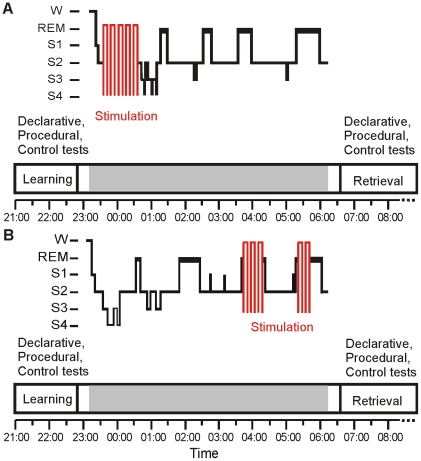
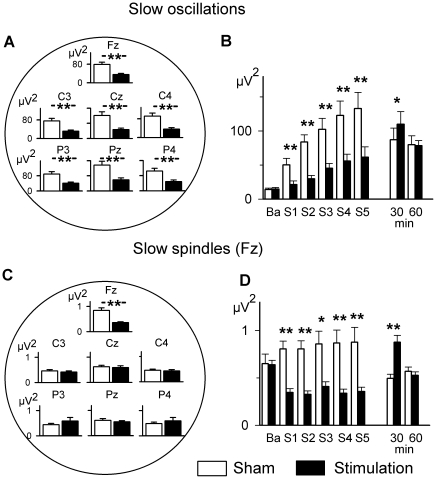
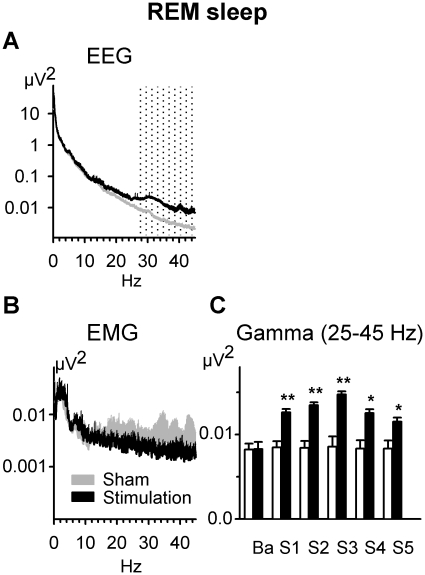
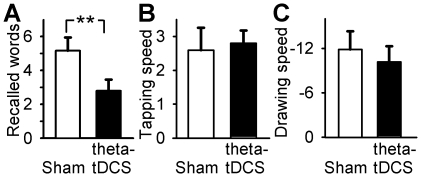
Verification
Claims the paper makes
The claims and statistics of this paper haven’t been checked yet.
Run the check — free, no account needed. It reads the open-access text and checks the sources it cites.
Claims other papers make about this one
Each is checked against this paper’s own text: does it say what the citing paper says it does?
The source backs part of the claim, not all of it — or backs it for a different population, condition or comparison.
In the citing paper
“Marshall et al. (2011) found that theta transcranial direct current stimulation (theta-tDCS) applied during REM sleep increases fast beta/gamma EEG oscillations”
From The Functional Role of Dreaming in Emotional Processes (2019) · cites this paper as Marshall et al., 2011
Experimental — accuracy not yet measuredThe source backs part of the claim, not all of it — or backs it for a different population, condition or comparison.
In the citing paper
“The theta-tDCS condition was associated with worse mood (i.e., as measured by Positive and Negative Affect Scale negative scores) on the morning after awakening from sleep, compared to sham”
From The Functional Role of Dreaming in Emotional Processes (2019) · cites this paper as Marshall et al., 2011
Experimental — accuracy not yet measuredThe cited source says what the claim attributes to it.
In the citing paper
“In addition, there is evidence that toDCS only at 0.75 Hz (not at 5 Hz) and applied only during sleep leads to an increase of memory consolidation [32,52,53].”
The cited source says what the claim attributes to it.
In the citing paper
“the widespread increase in gamma activity with theta-tDCS provided evidence for the functional coupling between these two rhythms”
From The Functional Role of Dreaming in Emotional Processes (2019) · cites this paper as Marshall et al., 2011
The cited source says what the claim attributes to it.
In the citing paper
“tDCS at the 5 Hz theta frequency during early non-REM sleep had an immediate suppressing rather than enhancing effect on endogenous slow oscillation and frontal slow spindle activity, and impaired overnight retention of word pairs (784).”
From About Sleep's Role in Memory (2013) · cites this paper as [784]
The cited source says what the claim attributes to it.
In the citing paper
“C:in contrast, tDCS oscillating at 5 Hz (theta-tDCS) decreased slow oscillation activity at all recording sites and slow frontal spindle activity, and these effects were associated with an impaired retention of declarative memory across sleep.”
From About Sleep's Role in Memory (2013) · cites this paper as [784]
Self-check
Percentages, sums and reported differences re-computed from the paper’s own numbers.
The self-check needs the paper’s full text.
Citations
Cites
Development and validation of brief measures of positive and negative affect: The PANAS scales.
Watson, D., Clark, L. A., & Tellegen, A. (1988) · Journal of Personality and Social Psychology · doi:10.1037/0022-3514.54.6.1063 · Cited by 32,433
Rechtschaffen, A. (1968) · Medical Entomology and Zoology · Cited by 11,772
Hobson, J. A. (1969) · Electroencephalography and Clinical Neurophysiology · doi:10.1016/0013-4694(69)90021-2 · Cited by 5,215
Diekelmann, S., & Born, J. (2010) · Nature Reviews Neuroscience · doi:10.1038/nrn2762 · Cited by 3,760
Theta oscillations in the hippocampus
Buzsáki, G. (2002) · Neuron · doi:10.1016/s0896-6273(02)00586-x · Cited by 3,332
Wechsler Adult Intelligence Scale--Third Edition
Wechsler, D. (2019) · PsycTESTS Dataset · doi:10.1037/t49755-000 · Cited by 2,327
Neural synchrony in brain disorders: Relevance for cognitive dysfunctions and pathophysiology
Uhlhaas, P. J., & Singer, W. (2006) · Neuron · doi:10.1016/j.neuron.2006.09.020 · Cited by 2,194
Boosting slow oscillations during sleep potentiates memory
Marshall, L., Helgadóttir, H., Mölle, M., & Born, J. (2006) · Nature · doi:10.1038/nature05278 · Cited by 1,792
Self-citationDijk, D., & Czeisler, C. (1995) · The Journal of Neuroscience · doi:10.1523/jneurosci.15-05-03526.1995 · Cited by 1,356
Practice with Sleep Makes Perfect
Walker, M. P., Brakefield, T., Morgan, A., Hobson, J. A., & Stickgold, R. (2002) · Neuron · doi:10.1016/s0896-6273(02)00746-8 · Cited by 1,307
Research works printed but not linked: 1
- MS Doran, 2003, The Dynamic Topography of Individual Sleep Spindles., Sleep Research Online, 5, 133
Cited by
Sorted by citations
Rasch, B., & Born, J. (2013) · Physiological Reviews · doi:10.1152/physrev.00032.2012 · Cited by 2,783
“Further controls ensured that the effects depended on the frequency of the oscillating stimulation and on the brain state (FIGURE 5C): tDCS at the 5 Hz theta frequency during early non-REM sleep had an immediate suppressing rather than enhancing effect on endogenous slow oscillation and frontal slow spindle activity,…”
BackgroundHerrmann, C. S., Rach, S., Neuling, T., & Strüber, D. (2013) · Frontiers in Human Neuroscience · doi:10.3389/fnhum.2013.00279 · Cited by 851
Horvath, J. C., Forte, J. D., & Carter, O. (2015) · Brain Stimulation · doi:10.1016/j.brs.2015.01.400 · Cited by 609
Immediate neurophysiological effects of transcranial electrical stimulation
Liu, A. A., Vöröslakos, M., Kronberg, G., Henin, S. E., Krause, M. R., Huang, Y., Opitz, A., Mehta, A. D., Pack, C. C., Krekelberg, B., et al. (2018) · Nature Communications · doi:10.1038/s41467-018-07233-7 · Cited by 604
Peterchev, A. V., Wagner, T. A., Miranda, P. C., Nitsche, M. A., Paulus, W., Lisanby, S. H., Pascual‐Leone, Á., & Bikson, M. (2011) · Brain stimulation · doi:10.1016/j.brs.2011.10.001 · Cited by 444
Functions and Mechanisms of Sleep
Zielinski, M. R., McKenna, J. T., & McCarley, R. W. (2016) · AIMS neuroscience · doi:10.3934/neuroscience.2016.1.67 · Cited by 392
Effects of transcranial electrical stimulation on cognition
Kuo, M.-F., & Nitsche, M. A. (2012) · Clinical EEG and Neuroscience · doi:10.1177/1550059412444975 · Cited by 319
“sleep.(51,52) For naturally available material, Fiori and colleagues describe a positive effect of anodal tDCS over Wernicke’s area on picture naming.”
BackgroundThe Critical Role of Sleep Spindles in Hippocampal-Dependent Memory: A Pharmacology Study
Mednick, S. C., McDevitt, E. A., Walsh, J. K., Wamsley, E. J., Paulus, M. P., Kanady, J. C., & Drummond, S. P. A. (2013) · Journal of Neuroscience · doi:10.1523/jneurosci.3127-12.2013 · Cited by 336
Sleep and its importance in adolescence and in common adolescent somatic and psychiatric conditions
Brand, S., & Kirov, R. (2011) · International Journal of General Medicine · doi:10.2147/ijgm.s11557 · Cited by 322
Animal models of transcranial direct current stimulation: Methods and mechanisms
Jackson, M. P., Rahman, A., Lafon, B., Kronberg, G., Ling, D., Parra, L. C., & Bikson, M. (2016) · Clinical Neurophysiology · doi:10.1016/j.clinph.2016.08.016 · Cited by 310
Slow oscillations orchestrating fast oscillations and memory consolidation
Mölle, M., & Born, J. (2011) · Progress in Brain Research · doi:10.1016/b978-0-444-53839-0.00007-7 · Cited by 270
Self-citationSleep for Preserving and Transforming Episodic Memory
Inostroza, M., & Jan Born, A. (2013) · Annual Review of Neuroscience · doi:10.1146/annurev-neuro-062012-170429 · Cited by 279
Differential Effects of Non-REM and REM Sleep on Memory Consolidation?
Ackermann, S., & Rasch, B. (2014) · Current Neurology and Neuroscience Reports · doi:10.1007/s11910-013-0430-8 · Cited by 297
State-dependent effects of neural stimulation on brain function and cognition
Bradley, C., Nydam, A. S., Dux, P. E., & Mattingley, J. B. (2022) · Nature reviews. Neuroscience · doi:10.1038/s41583-022-00598-1 · Cited by 263
Guleyupoglu, B., Schestatsky, P., Edwards, D. J., Fregni, F., & Bikson, M. (2013) · Journal of Neuroscience Methods · doi:10.1016/j.jneumeth.2013.07.016 · Cited by 239
Ladenbauer, J., Ladenbauer, J., Külzow, N., de Boor, R., Avramova, E., Grittner, U., & Flöel, A. (2017) · Journal of Neuroscience · doi:10.1523/jneurosci.0260-17.2017 · Cited by 227
Manoach, D. S., Pan, J. Q., Purcell, S., & Stickgold, R. (2015) · Biological Psychiatry · doi:10.1016/j.biopsych.2015.10.003 · Cited by 216
Sleep for cognitive enhancement
Diekelmann, S. (2014) · Frontiers in Systems Neuroscience · doi:10.3389/fnsys.2014.00046 · Cited by 226
Sleeping on the motor engram: The multifaceted nature of sleep-related motor memory consolidation
King, B. R., Hoedlmoser, K., Hirschauer, F., Dolfen, N., & Albouy, G. (2017) · Neuroscience & Biobehavioral Reviews · doi:10.1016/j.neubiorev.2017.04.026 · Cited by 216
Veniero, D., Vossen, A. Y., Groß, J., & Thut, G. (2015) · Frontiers in Cellular Neuroscience · doi:10.3389/fncel.2015.00477 · Cited by 223
Lafon, B., Henin, S. E., Huang, Y., Friedman, D. J., Melloni, L., Thesen, T., Doyle, W., Buzsáki, G., Devinsky, O., Parra, L. C., et al. (2017) · Nature Communications · doi:10.1038/s41467-017-01045-x · Cited by 216
The Functional Role of Dreaming in Emotional Processes
Scarpelli, S., Bartolacci, C., D'Atri, A., Gorgoni, M., & De Gennaro, L. (2019) · Frontiers in Psychology · doi:10.3389/fpsyg.2019.00459 · Cited by 190
Noury, N., Hipp, J. F., & Siegel, M. (2016) · NeuroImage · doi:10.1016/j.neuroimage.2016.03.065 · Cited by 191
Prehn-Kristensen, A., Munz, M., Göder, R., Wilhelm, I., Korr, K., Vahl, W., Wiesner, C. D., & Baving, L. (2014) · Brain Stimulation · doi:10.1016/j.brs.2014.07.036 · Cited by 176
Sleep and memory in mammals, birds and invertebrates
Vorster, A. P., & Born, J. (2015) · Neuroscience & Biobehavioral Reviews · doi:10.1016/j.neubiorev.2014.09.020 · Cited by 169
Involvement of spindles in memory consolidation is slow wave sleep-specific
Cox, R., Hofman, W. F., & Talamini, L. M. (2012) · Learning & Memory · doi:10.1101/lm.026252.112 · Cited by 163
“Indeed, a few reports suggest that the benefits of sleep for declarative memory performance are specifically related to slow (,1.5 Hz) oscillations, the hallmark oscillatory events during SWS (Marshall et al. 2006, 2011).”
BackgroundInfluentialAcetylcholine bidirectionally regulates learning and memory
Huang, Q., Liao, C., Ge, F., Ao, J., & Liu, T. (2022) · Journal of Neurorestoratology · doi:10.1016/j.jnrt.2022.100002 · Cited by 181
Memory improvement via slow-oscillatory stimulation during sleep in older adults
Westerberg, C. E., Florczak, S. M., Weıntraub, S., Mesulam, M. M., Marshall, L., Zee, P. C., & Paller, K. A. (2015) · Neurobiology of Aging · doi:10.1016/j.neurobiolaging.2015.05.014 · Cited by 171
Abnormal sleep spindles, memory consolidation, and schizophrenia
Manoach, D. S., & Stickgold, R. (2019) · Annual Review of Clinical Psychology · doi:10.1146/annurev-clinpsy-050718-095754 · Cited by 157
Is neuroenhancement by noninvasive brain stimulation a net zero-sum proposition?
Brem, A., Fried, P. J., Horvath, J. C., Robertson, E. M., & Pascual‐Leone, Á. (2013) · NeuroImage · doi:10.1016/j.neuroimage.2013.07.038 · Cited by 138
Roy, A. V., Baxter, B., & He, B. (2014) · IEEE Transactions on Biomedical Engineering · doi:10.1109/tbme.2014.2311071 · Cited by 131
Sleep and the processing of emotions
Deliens, G., Gilson, M., & Peigneux, P. (2014) · Experimental Brain Research · doi:10.1007/s00221-014-3832-1 · Cited by 119
Eggert, T., Dorn, H., Sauter, C., Nitsche, M. A., Bajbouj, M., & Danker-Hopfe, H. (2013) · Brain stimulation · doi:10.1016/j.brs.2013.05.006 · Cited by 125
State-dependencies of learning across brain scales
Ritter, P., Jan Born, A., Brecht, M., Dinse, H. R., Heinemann, U., Pleger, B., Schmitz, D., Schreiber, S., Villringer, A., & Kempter, R. (2015) · Frontiers in Computational Neuroscience · doi:10.3389/fncom.2015.00001 · Cited by 123
NREM Sleep Oscillations and Brain Plasticity in Aging
Fogel, S. M., Martin, N. G., Lafortune, M., Barakat, M., Debas, K., Laventure, S., Latreille, V., Gagnon, J., Doyon, J., & Carrier, J. (2012) · Frontiers in Neurology · doi:10.3389/fneur.2012.00176 · Cited by 134
Scheffzük, C., Kukushka, V. I., Vyssotski, A. L., Draguhn, A., Tort, A. B. L., & Brankačk, J. (2011) · PLoS ONE · doi:10.1371/journal.pone.0028489 · Cited by 132
Targeting the neurophysiology of cognitive systems with transcranial alternating current stimulation
Frӧhlich, F., Sellers, K. K., & Cordle, A. L. (2014) · Expert Review of Neurotherapeutics · doi:10.1586/14737175.2015.992782 · Cited by 107
Fehér, K. D., Wunderlin, M., Maier, J. G., Hertenstein, E., Schneider, C. L., Mikutta, C. A., Züst, M. A., Klöppel, S., & Nissen, C. (2021) · Sleep Medicine Reviews · doi:10.1016/j.smrv.2021.101438 · Cited by 107
Sleep spindles as facilitators of memory formation and learning
Ulrich, D. (2016) · Neural Plasticity · doi:10.1155/2016/1796715 · Cited by 94
Sara, S. J. (2017) · Journal of Neuroscience · doi:10.1523/jneurosci.0297-16.2017 · Cited by 107
Munz, M. T., Prehn-Kristensen, A., Thielking, F., Mölle, M., Göder, R., & Baving, L. (2015) · Frontiers in Cellular Neuroscience · doi:10.3389/fncel.2015.00307 · Cited by 95
Ladenbauer, J., Külzow, N., Paßmann, S., Antonenko, D., Grittner, U., Tamm, S., & Flöel, A. (2016) · NeuroImage · doi:10.1016/j.neuroimage.2016.06.057 · Cited by 102
Demanuele, C., Bartsch, U., Baran, B., Khan, S., Vangel, M. G., Cox, R., Hämäläinen, M., Jones, M. W., Stickgold, R., & Manoach, D. S. (2016) · SLEEP · doi:10.1093/sleep/zsw013 · Cited by 96
Lustenberger, C., Wehrle, F. M., Tüshaus, L., Achermann, P., & Huber, R. (2015) · SLEEP · doi:10.5665/sleep.4820 · Cited by 97
Noninvasive and Invasive Neuromodulation for the Treatment of Tinnitus: An Overview
Vanneste, S., & Ridder, D. D. (2012) · Neuromodulation (Malden, Mass.) · doi:10.1111/j.1525-1403.2012.00447.x · Cited by 88
Top-down control of arousal and sleep: Fundamentals and clinical implications
Krone, L. B., Frase, L., Piosczyk, H., Selhausen, P., Zittel, S., Jahn, F., Kühn, M., Feige, B., Mainberger, F., Klöppel, S., et al. (2016) · Sleep Medicine Reviews · doi:10.1016/j.smrv.2015.12.005 · Cited by 96
Schilling, C., Schlipf, M., Spietzack, S., Rausch, F., Eisenacher, S., Englisch, S., Reinhard, I., Haller, L., Grimm, O., Deuschle, M., et al. (2016) · European Archives of Psychiatry and Clinical Neuroscience · doi:10.1007/s00406-016-0725-2 · Cited by 84
Gorgoni, M., D’Atri, A., Lauri, G., Rossini, P. M., Ferlazzo, F., & Gennaro, L. D. (2013) · Neural Plasticity · doi:10.1155/2013/103949 · Cited by 95
Brem, A., Ran, K., & Pascual‐Leone, Á. (2013) · Handbook of clinical neurology · doi:10.1016/b978-0-444-53497-2.00055-3 · Cited by 102
Simultaneous EEG Monitoring During Transcranial Direct Current Stimulation
Schestatsky, P., Morales-Quezada, L., & Fregni, F. (2013) · Journal of Visualized Experiments · doi:10.3791/50426 · Cited by 75
Barham, M. P., Enticott, P. G., Conduit, R., & Lum, J. A. G. (2016) · Neuroscience & Biobehavioral Reviews · doi:10.1016/j.neubiorev.2016.01.009 · Cited by 74
Sleeping Worries Away or Worrying Away Sleep? Physiological Evidence on Sleep-Emotion Interactions
Talamini, L. M., Bringmann, L. F., de Boer, M., & Hofman, W. F. (2013) · PLoS ONE · doi:10.1371/journal.pone.0062480 · Cited by 80
Garside, P., Arizpe, J. M., Lau, C. I., Goh, C. C. W., & Walsh, V. (2015) · Brain stimulation · doi:10.1016/j.brs.2014.12.010 · Cited by 76
After-effects of 10 Hz tACS over the prefrontal cortex on phonological word decisions
Moliadze, V., Sierau, L., Lyzhko, E., Stenner, T., Werchowski, M., Siniatchkin, M., & Hartwigsen, G. (2019) · Brain stimulation · doi:10.1016/j.brs.2019.06.021 · Cited by 71
Mylonas, D., Baran, B., Demanuele, C., Cox, R., Vuper, T. C., Seicol, B. J., Fowler, R., Correll, D., Parr, E., Callahan, C. E., et al. (2020) · Neuropsychopharmacology · doi:10.1038/s41386-020-00833-2 · Cited by 65
Adaptive Plasticity in the Healthy Language Network: Implications for Language Recovery after Stroke
Hartwigsen, G. (2016) · Neural Plasticity · doi:10.1155/2016/9674790 · Cited by 62
Caveats on psychological models of sleep and memory: A compass in an overgrown scenario
Conte, F., & Ficca, G. (2012) · Sleep Medicine Reviews · doi:10.1016/j.smrv.2012.04.001 · Cited by 62
Bikson, M., Paneri, B., Mourdoukoutas, A. P., Esmaeilpour, Z., Badran, B. W., Azzam, R., Adair, D., Datta, A., Fang, X. H., Wingeier, B., et al. (2017) · Brain stimulation · doi:10.1016/j.brs.2017.10.012 · Cited by 63
Annarumma, L., D’Atri, A., Alfonsi, V., & Gennaro, L. D. (2018) · Brain Sciences · doi:10.3390/brainsci8070137 · Cited by 62
How to become an expert: a new perspective on the role of sleep in the mastery of procedural skills
Fogel, S. M., Ray, L. B., Binnie, L., & Owen, A. M. (2015) · Neurobiology of Learning and Memory · doi:10.1016/j.nlm.2015.10.004 · Cited by 55
Llewellyn, S. (2013) · Behavioral and Brain Sciences · doi:10.1017/s0140525x12003135 · Cited by 95
Sleep spindles and cognitive performance across adolescence: A meta‐analytic review☆
Reynolds, C. M., Short, M. A., & Gradisar, M. (2018) · Journal of Adolescence · doi:10.1016/j.adolescence.2018.04.003 · Cited by 58
Wörsching, J., Padberg, F., Ertl-Wagner, B. B., Kumpf, U., Kirsch, B., & Keeser, D. (2016) · Neuroscience & Biobehavioral Reviews · doi:10.1016/j.neubiorev.2016.08.001 · Cited by 56
Brain Rhythms During Sleep and Memory Consolidation: Neurobiological Insights
Marshall, L., Cross, N. E., Binder, S., & Dang‐Vu, T. T. (2019) · Physiology · doi:10.1152/physiol.00004.2019 · Cited by 52
Feld, G. B., Besedovsky, L., Kaida, K., Münte, T. F., & Jan Born, A. (2014) · Journal of Cognitive Neuroscience · doi:10.1162/jocn_a_00629 · Cited by 51
Brain oscillations reflecting pain-related behavior in freely moving rats
Peng, W., Xia, X., Yi, M., Huang, G., Zhang, Z., Iannetti, G. D., & Hu, L. (2017) · Pain · doi:10.1097/j.pain.0000000000001069 · Cited by 49
Jones, A. P., Choe, J., Bryant, N. B., Robinson, C. S. H., Ketz, N., Skorheim, S. W., Combs, A., Lamphere, M. L., Robert, B. M., Gill, H. A., et al. (2018) · Frontiers in Neuroscience · doi:10.3389/fnins.2018.00867 · Cited by 54
Hsu, W., Zanto, T. P., van Schouwenburg, M. R., & Gazzaley, A. H. (2017) · PLoS ONE · doi:10.1371/journal.pone.0178579 · Cited by 47
Oscillatory Reinstatement Enhances Declarative Memory
Javadi, A., Glen, J. C., Halkiopoulos, S., Schulz, M., & Spiers, H. J. (2017) · Journal of Neuroscience · doi:10.1523/jneurosci.0265-17.2017 · Cited by 49
The Treatment of Sleep Dysfunction in Neurodegenerative Disorders
Voysey, Z. J., Barker, R. A., & Lázár, A. S. (2020) · Neurotherapeutics · doi:10.1007/s13311-020-00959-7 · Cited by 47
Katsuki, F., Gerashchenko, D., & Brown, R. E. (2022) · Brain Research Bulletin · doi:10.1016/j.brainresbull.2022.07.002 · Cited by 50
Bueno‐Lopez, A., Eggert, T., Dorn, H., & Danker‐Hopfe, H. (2019) · Brain stimulation · doi:10.1016/j.brs.2019.02.012 · Cited by 50
Stimulating the sleeping brain: Current approaches to modulating memory-related sleep physiology
Cellini, N., & Mednick, S. C. (2018) · Journal of Neuroscience Methods · doi:10.1016/j.jneumeth.2018.11.011 · Cited by 45
Memory Processing in Relation to Sleep
Peigneux, P., & Smith, C. T. (2011) · Elsevier eBooks · doi:10.1016/b978-1-4160-6645-3.00029-3 · Cited by 45
Binder, S., Rawohl, J., Jan Born, A., & Marshall, L. (2014) · Frontiers in Behavioral Neuroscience · doi:10.3389/fnbeh.2013.00220 · Cited by 50
Marshall, L., & Binder, S. (2013) · Frontiers in Human Neuroscience · doi:10.3389/fnhum.2013.00614 · Cited by 42
Electrical stimulation of the frontal cortex enhances slow-frequency EEG activity and sleepiness
D’Atri, A., Simoni, E. D., Gorgoni, M., Ferrara, M., Ferlazzo, F., Rossini, P. M., & Gennaro, L. D. (2016) · Neuroscience · doi:10.1016/j.neuroscience.2016.03.007 · Cited by 42
Accornero, N., Capozza, M., Pieroni, L., Stefano, P. R. O., Davì, L., & Mecarelli, O. (2014) · Journal of Neurophysiology · doi:10.1152/jn.00088.2014 · Cited by 42
Wake and Sleep EEG in Patients With Huntington Disease
Piano, C., Mazzucchi, E., Bentivoglio, A. R., Losurdo, A., Buonaura, G. C., Imperatori, C., Cortelli, P., & Marca, G. D. (2016) · Clinical EEG and Neuroscience · doi:10.1177/1550059416632413 · Cited by 40
Mechanisms of Acute and After Effects of Transcranial Direct Current Stimulation
Bikson, M., Paulus, W., Esmaeilpour, Z., Kronberg, G., & Nitsche, M. A. (2019) · Springer eBooks · doi:10.1007/978-3-319-95948-1_3 · Cited by 41
Scarpelli, S., Marzano, C., D’Atri, A., Gorgoni, M., Ferrara, M., & De Gennaro, L. (2015) · Frontiers in Psychology · doi:10.3389/fpsyg.2015.00928 · Cited by 38
Vulić, K., Bjekić, J., Paunović, D., Jovanović, M., Milanović, S., & Filipović, S. R. (2021) · Scientific Reports · doi:10.1038/s41598-021-82577-7 · Cited by 38
The Effects of Transcranial Electrical Stimulation of the Brain on Sleep: A Systematic Review
Dondé, C., Brunelin, J., Micoulaud‐Franchi, J., Maruani, J., Lejoyeux, M., Polosan, M., & Geoffroy, P. A. (2021) · Frontiers in Psychiatry · doi:10.3389/fpsyt.2021.646569 · Cited by 38
D’Atri, A., Romano, C., Gorgoni, M., Scarpelli, S., Alfonsi, V., Ferrara, M., Ferlazzo, F., Rossini, P. M., & Gennaro, L. D. (2017) · Scientific Reports · doi:10.1038/s41598-017-16003-2 · Cited by 39
Targeting sleep oscillations to improve memory in schizophrenia
Manoach, D. S., Mylonas, D., & Baxter, B. (2020) · Schizophrenia Research · doi:10.1016/j.schres.2020.01.010 · Cited by 36
Quantitative Electroencephalography Characteristics for Parkinson’s Disease: A Systematic Review
Shirahige, L., Berenguer-Rocha, M., Mendonça, S., Rocha, S., Rodrigues, M. C. A., & Monte-Silva, K. K. (2020) · Journal of Parkinson s Disease · doi:10.3233/jpd-191840 · Cited by 42
Salfi, F., D’Atri, A., Tempesta, D., De Gennaro, L., & Ferrara, M. (2020) · Brain Sciences · doi:10.3390/brainsci10050300 · Cited by 36
Greenberg, A., Abadchi, J. K., Dickson, C. T., & Mohajerani, M. H. (2018) · NeuroImage · doi:10.1016/j.neuroimage.2018.03.019 · Cited by 38
Ambrus, G. G., Pisoni, A., Primaßin, A., Turi, Z., Paulus, W., & Antal, A. (2015) · Frontiers in Cellular Neuroscience · doi:10.3389/fncel.2015.00374 · Cited by 36
What is the State-of-the-Art on Lucid Dreaming?
Voss, U., & Hobson, A. J. (2015) · doi:10.15502/9783958570306 · Cited by 33
Investigation on Neurobiological Mechanisms of Dreaming in the New Decade
Scarpelli, S., Alfonsi, V., Gorgoni, M., Giannini, A. M., & Gennaro, L. D. (2021) · Brain Sciences · doi:10.3390/brainsci11020220 · Cited by 33
Yeh, J., Peng, C., Lo, M., Yeh, C.-H., Chen, S.-C., Wang, C.-Y., Lee, P., & Kang, J. (2013) · Journal of Neuroscience Methods · doi:10.1016/j.jneumeth.2013.08.008 · Cited by 27
Cellular and Network Effects of Transcranial Direct Current Stimulation
Bikson, M., Reato, D., & Rahman, A. (2012) · Frontiers in neuroscience · doi:10.1201/b14174-5 · Cited by 28
Luu, P., Arumugam, E. M. E., Anderson, E. W., Gunn, A., Rech, D., Turovets, S. I., & Tucker, D. M. (2016) · Frontiers in Human Neuroscience · doi:10.3389/fnhum.2016.00377 · Cited by 25
Lu, H.-C., Pollack, H., Lefante, J. J., Mills, A. A., & Tian, D. (2019) · Sleep · doi:10.1093/sleep/zsy253 · Cited by 22
Krawinkel, L. A., Engel, A. K., & Hummel, F. C. (2015) · Frontiers in Systems Neuroscience · doi:10.3389/fnsys.2015.00033 · Cited by 24
Diminished Nap Effects on Memory Consolidation Are Seen Under Oral Contraceptive Use
Genzel, L., Bäurle, A., Potyka, A., Wehrle, R., Adamczyk, M., Frieß, E., Steiger, A., & Dresler, M. (2014) · Neuropsychobiology · doi:10.1159/000369022 · Cited by 25
The role of the right parietal lobe in the perception of causality: a tDCS study
Straube, B., Wolk, D. A., & Chatterjee, A. K. (2011) · Experimental Brain Research · doi:10.1007/s00221-011-2899-1 · Cited by 24
Johnson, J. M., & Durrant, S. J. (2018) · Royal Society Open Science · doi:10.1098/rsos.172353 · Cited by 20
Towards Optimization of Oscillatory Stimulation During Sleep
Ladenbauer, J., Khakimova, L., Malinowski, R., Obst, D., Tönnies, E., Antonenko, D., Obermayer, K., Hanna, J., & Flöel, A. (2022) · Neuromodulation Technology at the Neural Interface · doi:10.1016/j.neurom.2022.05.006 · Cited by 18
Metadata
- Authors
- Marshall, L., Kirov, R., Brade, J., Mölle, M., & Born, J.
- Affiliations
- University of Lübeck (DE)
- Bulgarian Academy of Sciences (BG)
- Corresponding author
- Marshall, Lisa
- Venue
- PLoS ONE
- Publisher
- Public Library of Science (PLoS)
- Published
- 2011-02-14
- Volume
- 6
- Issue
- 2
- Pages
- e16905
- ISSN
- 1932-6203 (ISSN-L)
- PMC
- PMC3038929
- OpenAlex
- W1966385969
- Cited by
- 188
- References
- 63
- Citations by year
- 2026: 3 · 2025: 7 · 2024: 4 · 2023: 7 · 2022: 8 · 2021: 13 · 2020: 14 · 2019: 12 · 2018: 11 · 2017: 16 · 2016: 22 · 2015: 18 · 2014: 16 · 2013: 18 · 2012: 12
- FWCI
- 9.37
- Type
- journal article
- Language
- en
- Open access
- gold
- doi.org
- Locations
- PLoS ONE (publishedVersion, cc-by)
- PubMed Central (publishedVersion, cc-by)
- PubMed (publishedVersion)
- DOAJ (DOAJ: Directory of Open Access Journals) (submittedVersion, cc-by-sa)
- Funders
- Deutsche Forschungsgemeinschaft (SFB654)
- Universität zu Lübeck
- Topics
- Life Sciences › Neuroscience › Neurology › Transcranial Magnetic Stimulation Studies
- Life Sciences › Neuroscience › Cognitive Neuroscience › Sleep and Wakefulness Research
- Life Sciences › Neuroscience › Cognitive Neuroscience › Neural dynamics and brain function
- Keywords
- transcranial direct current stimulation, sleep slow oscillations, REM sleep, NREM sleep, memory consolidation, declarative memory, theta oscillations, gamma oscillations, EEG spindles, endogenous electric fields, sleep-dependent memory
- MeSH terms
- Adolescent, Adult, Biological Clocks, Brain, Electric Stimulation, Electroencephalography, Female, Humans, Male, Memory, Neuropsychological Tests, Sleep, Task Performance and Analysis, Deep Brain Stimulation, Young Adult
About these checks
Registry, retraction, Cites and statistics results are computed, not judged, with one exception: a printed reference that no index lists is read once by a model before it counts as a citation error. Claims are extracted by a model and kept only when their quote appears verbatim in the text; each cited source is then checked, with a model’s help, for whether it says what the claim relies on. Those verdicts can be wrong — read the claim’s quote and the cited source before relying on one.
Statistics and arithmetic are recomputed, not judged.
Confidence bands are shown only for fields calibrated on our annotated test set. None is calibrated yet, so no band is shown.
What counts as a claim ›How we measure confidence ›How we check this ›
Are you an author, or do you see a problem with this page? Request a review
