

ApoE Receptor 2 Regulates Synapse and Dendritic Spine Formation
Open accessThe DOI matches its Crossref record; 45 of the 45 references it cites were found in a registry or an index.
Abstract
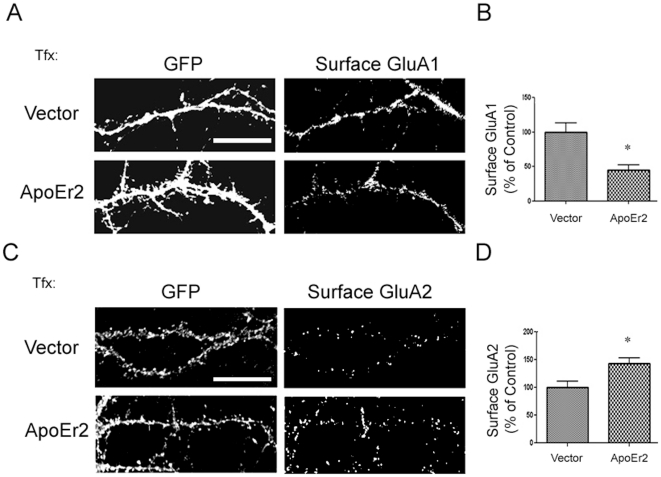
BACKGROUND: Apolipoprotein E receptor 2 (ApoEr2) is a postsynaptic protein involved in long-term potentiation (LTP), learning, and memory through unknown mechanisms. We examined the biological effects of ApoEr2 on synapse and dendritic spine formation-processes critical for learning and memory. METHODOLOGY/PRINCIPAL FINDINGS: In a heterologous co-culture synapse assay, overexpression of ApoEr2 in COS7 cells significantly increased colocalization with synaptophysin in primary hippocampal neurons, suggesting that ApoEr2 promotes interaction with presynaptic structures. In primary neuronal cultures, overexpression of ApoEr2 increased dendritic spine density. Consistent with our in vitro findings, ApoEr2 knockout mice had decreased dendritic spine density in cortical layers II/III at 1 month of age. We also tested whether the interaction between ApoEr2 and its cytoplasmic adaptor proteins, specifically X11α and PSD-95, affected synapse and dendritic spine formation. X11α decreased cell surface levels of ApoEr2 along with synapse and dendritic spine density. In contrast, PSD-95 increased cell surface levels of ApoEr2 as well as synapse and dendritic spine density. CONCLUSIONS/SIGNIFICANCE: These results suggest that ApoEr2 plays important roles in structure and function of CNS synapses and dendritic spines, and that these roles are modulated by cytoplasmic adaptor proteins X11α and PSD-95.
Overview
The claims and statistics of this paper haven’t been checked yet.
Free: it reads the open-access text and checks the first 5 claims that cite a source we can check. Create a free account to check every claim.
Integrity signals
Registry
Cites
Statistics
Figures




Verification
Claims the paper makes
The claims and statistics of this paper haven’t been checked yet.
Free: it reads the open-access text and checks the first 5 claims that cite a source we can check. Create a free account to check every claim.
Claims other papers make about this one
Each is checked against this paper’s own text: does it say what the citing paper says it does?
The source backs part of the claim, not all of it — or backs it for a different population, condition or comparison.
In the citing paper
“Our observation that IDOL bidirectionally regulate spine density through ApoER2 is consistent with previous studies showing that spine density is decreased in ApoER2 KO mice and increased in the setting of ApoER2 overexpression (Dumanis et al., 2011; Wasser et al., 2014).”
From The E3 ubiquitin ligase IDOL regulates synaptic ApoER2 levels and is important for plasticity and learning (2017) · cites this paper as Dumanis et al., 2011
Experimental — accuracy not yet measuredThe cited source says what the claim attributes to it.
In the citing paper
“suggesting a critical role of the receptor in promoting synaptogenesis (16).”
From Reelin: Neurodevelopmental Architect and Homeostatic Regulator of Excitatory Synapses (2017) · cites this paper as [16]
The cited source says what the claim attributes to it.
In the citing paper
“Our observation that IDOL bidirectionally regulate spine density through ApoER2 is consistent with previous studies showing that spine density is decreased in ApoER2 KO mice and increased in the setting of ApoER2 overexpression (Dumanis et al., 2011; Wasser et al., 2014).”
From The E3 ubiquitin ligase IDOL regulates synaptic ApoER2 levels and is important for plasticity and learning (2017) · cites this paper as Dumanis et al., 2011
In the citing paper
“Intriguingly, overexpression of the Reelin receptor ApoER2 in dissociated hippocampal neuron cultures can dramatically increase dendritic spine numbers in wild-type neuron cultures, suggesting a critical role of the receptor in promoting synaptogenesis (16).”
From Reelin: Neurodevelopmental Architect and Homeostatic Regulator of Excitatory Synapses (2017) · cites this paper as [16]
Self-check
Percentages, sums and reported differences re-computed from the paper’s own numbers.
The self-check needs the paper’s full text.
Citations
Cites
AMPA Receptor Trafficking and Synaptic Plasticity
Malinow, R., & Malenka, R. C. (2002) · Annual Review of Neuroscience · doi:10.1146/annurev.neuro.25.112701.142758 · Cited by 2,588 · cited 2×
“For example, GluA1 has been suggested to require activity-dependent stimulation for acute delivery, whereas GluA2 may undergo constitutive trafficking and turnover [28,45].”
BackgroundMatsuzaki, M., Ellis-Davies, G. C. R., Nemoto, T., Miyashita, Y., Iino, M., & Kasai, H. (2001) · Nature Neuroscience · doi:10.1038/nn736 · Cited by 1,802 · cited 1×
“Because AMPA receptors are important for synaptic plasticity and dendritic spine formation, we examined whether ApoEr2 affected total levels of AMPA receptor subunits by infecting neurons with ApoEr2 or GFP [28,29,30].”
BackgroundPDZ domain proteins of synapses
Kim, E., & Sheng, M. (2004) · Nature Reviews Neuroscience · doi:10.1038/nrn1517 · Cited by 1,577 · cited 1×
“Additionally, PSD-95 increased dendritic spine density by 21% compared to GFP – consistent with previous reports [31].”
ResultTrommsdorff, M., Gotthardt, M., Hiesberger, T., Shelton, J., Stockinger, W., Nimpf, J., Hammer, R. E., Richardson, J. A., & Herz, J. (1999) · Cell · doi:10.1016/s0092-8674(00)80782-5 · Cited by 1,261
Neuroligin Expressed in Nonneuronal Cells Triggers Presynaptic Development in Contacting Axons
Scheiffele, P., Fan, J., Choih, J., Fetter, R., & Serafini, T. (2000) · Cell · doi:10.1016/s0092-8674(00)80877-6 · Cited by 1,218
Regulation of distinct AMPA receptor phosphorylation sites during bidirectional synaptic plasticity
Lee, H.-K., Barbarosie, M., Kameyama, K., Bear, M. F., & Huganir, R. L. (2000) · Nature · doi:10.1038/35016089 · Cited by 1,116 · cited 5×
“These ApoE receptors are involved in neuronal migration during brain development [2], influx of calcium through NMDA channels [3], neurite outgrowth [4], LTP and memory [5].”
BackgroundInfluentialShi, S.-H., Hayashi, Y., Esteban, J. A., & Malinow, R. (2001) · Cell · doi:10.1016/s0092-8674(01)00321-x · Cited by 1,094 · cited 1×
“For example, GluA1 has been suggested to require activity-dependent stimulation for acute delivery, whereas GluA2 may undergo constitutive trafficking and turnover [28,45].”
BackgroundEvidence for multiple AMPA receptor complexes in hippocampal CA1/CA2 neurons
Wenthold, R., Petralia, R., Blahos J, II, & Niedzielski, A. (1996) · The Journal of Neuroscience · doi:10.1523/jneurosci.16-06-01982.1996 · Cited by 850 · cited 1×
“These results are somewhat surprising given that GluA1/A2 heteromers comprise the predominant AMPA receptor population in the hippocampus [41,42].”
Reelin Is a Ligand for Lipoprotein Receptors
D'Arcangelo, G., Homayouni, R., Keshvara, L., Rice, D. S., Sheldon, M., & Curran, T. (1999) · Neuron · doi:10.1016/s0896-6273(00)80860-0 · Cited by 808 · cited 1×
“One possible compensatory mechanism is modulation of extracellular ligands for ApoEr2, such as apolipoprotein E (apoE) or Reelin, which are known to be important for dendritic spine formation [22,37,38,39].”
BackgroundImportance of AMPA Receptors for Hippocampal Synaptic Plasticity But Not for Spatial Learning
Zamanillo, D., Sprengel, R., Hvalby, Ø., Jensen, V., Burnashev, N., Rozov, A., Kaiser, K. M. M., Köster, H. J., Borchardt, T., Worley, P., et al. (1999) · Science · doi:10.1126/science.284.5421.1805 · Cited by 791 · cited 1×
“While neither GluA1 nor GluA2 is absolutely required for normal dendritic spine formation or morphogenesis in vivo [43,44], GluA2 overexpression has been shown to enhance dendritic spine formation in hippocampal cultured neurons [30].”
BackgroundCarlin, R. K., Grab, D. J., Cohen, R. S., & Siekevitz, P. (1980) · The Journal of cell biology · doi:10.1083/jcb.86.3.831 · Cited by 787 · cited 1×
“Synaptosome fractionation was performed as described [21], with minor modifications.”
MethodSubunit Composition of Synaptic AMPA Receptors Revealed by a Single-Cell Genetic Approach
Lu, W., Shi, Y., Jackson, A. C., Bjorgan, K., During, M. J., Sprengel, R., Seeburg, P. H., & Nicoll, R. A. (2009) · Neuron · doi:10.1016/j.neuron.2009.02.027 · Cited by 660 · cited 1×
“These results are somewhat surprising given that GluA1/A2 heteromers comprise the predominant AMPA receptor population in the hippocampus [41,42].”
Reelin and ApoE receptors cooperate to enhance hippocampal synaptic plasticity and learning
Weeber, E. J., Beffert, U., Jones, C., Christian, J. M., Förster, E., Sweatt, J. D., & Herz, J. (2002) · Journal of Biological Chemistry · doi:10.1074/jbc.m205147200 · Cited by 623 · cited 1×
“ApoEr2 plays an important role in induction of LTP, learning and memory, and synaptic transmission in adult brain [5,32].”
BackgroundSelf-citationReelin Binds α3β1 Integrin and Inhibits Neuronal Migration
Dulabon, L., Olson, E. C., Taglienti, M. G., Eisenhuth, S., McGrath, B., Walsh, C. A., Kreidberg, J. A., & Anton, E. S. (2000) · Neuron · doi:10.1016/s0896-6273(00)00007-6 · Cited by 577
Ca2+-permeable AMPA receptors in synaptic plasticity and neuronal death
Liu, S. J., & Zukin, R. S. (2007) · Trends in Neurosciences · doi:10.1016/j.tins.2007.01.006 · Cited by 530 · cited 1×
“Furthermore, the great majority of GluA2 exists in a calcium impermeable isoform, such that regulation of GluA2 levels can serve as a mechanism to limit calcium permeability of AMPA receptors [47].”
BackgroundBeffert, U., Weeber, E. J., Durudas, A., Qiu, S., Masiulis, I., Sweatt, J. D., Li, W.-P., Adelmann, G., Frotscher, M., Hammer, R. E., et al. (2005) · Neuron · doi:10.1016/j.neuron.2005.07.007 · Cited by 497
Self-citationLipoprotein receptors in the nervous system
Herz, J., & Bock, H. H. (2002) · Annual Review of Biochemistry · doi:10.1146/annurev.biochem.71.110601.135342 · Cited by 457 · cited 1×
“ApoE receptors are a family of transmembrane proteins that mediate endocytosis of ligands and are then recycled back to the cell surface [1].”
BackgroundTrommsdorff, M., Borg, J.-P., Margolis, B., & Herz, J. (1998) · Journal of Biological Chemistry · doi:10.1074/jbc.273.50.33556 · Cited by 453 · cited 1×
“ApoEr2 interacts with PSD-95 [5,6,7,8], a major postsynaptic density protein important for synapse formation and function [9], through a domain encoded by the alternatively spliced ApoEr2 exon 19 [10].”
BackgroundRegulation of Dendritic Spine Morphology by SPAR, a PSD-95-Associated RapGAP
Pak, D. T. S., Yang, S., Rudolph-Correia, S., Kim, E., & Sheng, M. (2001) · Neuron · doi:10.1016/s0896-6273(01)00355-5 · Cited by 384
Self-citationA balance between excitatory and inhibitory synapses is controlled by PSD-95 and neuroligin
Prange, O., Wong, T. P., Gerrow, K., Wang, Y. T., & El-Husseini, A. (2004) · Proceedings of the National Academy of Sciences · doi:10.1073/pnas.0405939101 · Cited by 369
Induction of dendritic spines by an extracellular domain of AMPA receptor subunit GluR2
Passafaro, M., Nakagawa, T., Sala, C., & Sheng, M. (2003) · Nature · doi:10.1038/nature01781 · Cited by 303
Targeted Protein Degradation and Synapse Remodeling by an Inducible Protein Kinase
Pak, D. T. S., & Sheng, M. (2003) · Science · doi:10.1126/science.1082475 · Cited by 299 · cited 1×
“Additionally, ApoEr2 overexpression increased protein levels of SPAR, a Rapspecific GAP that promotes spine formation (data not shown) [23,40].”
BackgroundSelf-citationThe Reelin signaling pathway promotes dendritic spine development in hippocampal neurons
Niu, S., Yabut, O., & D'Arcangelo, G. (2008) · The Journal of Neuroscience · doi:10.1523/jneurosci.1917-08.2008 · Cited by 266 · cited 5×
“One possible compensatory mechanism is modulation of extracellular ligands for ApoEr2, such as apolipoprotein E (apoE) or Reelin, which are known to be important for dendritic spine formation [22,37,38,39].”
BackgroundInfluentialSynaptic transmission and plasticity in the absence of AMPA glutamate receptor GluR2 and GluR3
Meng, Y., Zhang, Y., & Jia, Z. (2003) · Neuron · doi:10.1016/s0896-6273(03)00368-4 · Cited by 251 · cited 1×
“While neither GluA1 nor GluA2 is absolutely required for normal dendritic spine formation or morphogenesis in vivo [43,44], GluA2 overexpression has been shown to enhance dendritic spine formation in hippocampal cultured neurons [30].”
BackgroundWang, Z., Wang, B., Yang, L., Guo, Q., Aithmitti, N., Songyang, Z., & Zheng, H. (2009) · The Journal of Neuroscience · doi:10.1523/jneurosci.2132-09.2009 · Cited by 242 · cited 1×
“This recruitment is often due to a trans-synaptic interaction involving either a homophilic or heterophilic adhesion [33].”
BackgroundBiederer, T., & Südhof, T. C. (2000) · Journal of Biological Chemistry · doi:10.1074/jbc.c000656200 · Cited by 238 · cited 2×
“Presynaptically, X11a plays essential roles in vesicle docking and exocytosis via interactions with munc and CASK:Veli [14,15].”
BackgroundMay, P., Rohlmann, A., Bock, H. H., Zurhove, K., Marth, J. D., Schomburg, E. D., Noebels, J. L., Beffert, U., Sweatt, J. D., Weeber, E. J., et al. (2004) · Molecular and Cellular Biology · doi:10.1128/mcb.24.20.8872-8883.2004 · Cited by 236 · cited 1×
“ApoEr2 interacts with PSD-95 [5,6,7,8], a major postsynaptic density protein important for synapse formation and function [9], through a domain encoded by the alternatively spliced ApoEr2 exon 19 [10].”
BackgroundSelf-citationHo, A., & Südhof, T. C. (2004) · Proceedings of the National Academy of Sciences · doi:10.1073/pnas.0308655100 · Cited by 224 · cited 1×
“There may also be extracellular molecules, such as F-spondin [26,36] or Reelin [22], that affect the trans-synaptic interaction between ApoEr2 and pre-synaptic proteins to further regulate synapse formation.”
BackgroundApoE4 Decreases Spine Density and Dendritic Complexity in Cortical Neurons In Vivo
Dumanis, S. B., Tesoriero, J. A., Babus, L. W., Nguyen, M. T., Trotter, J. H., Ladu, M. J., Weeber, E. J., Turner, R. S., Xu, B., Rebeck, G. W., et al. (2009) · The Journal of Neuroscience · doi:10.1523/jneurosci.4026-09.2009 · Cited by 220 · cited 1×
“One possible compensatory mechanism is modulation of extracellular ligands for ApoEr2, such as apolipoprotein E (apoE) or Reelin, which are known to be important for dendritic spine formation [22,37,38,39].”
BackgroundSelf-citationInteraction of Reelin with Amyloid Precursor Protein Promotes Neurite Outgrowth
Hoe, H.-S., Lee, K. J., Carney, R. S. E., Lee, J., Markova, A., Lee, J.-Y., Howell, B. W., Hyman, B. T., Pak, D. T. S., Bu, G., et al. (2009) · Journal of Neuroscience · doi:10.1523/jneurosci.4872-08.2009 · Cited by 219
Self-citationBorg, J.-P., Straight, S. W., Kaech, S. M., de Taddéo-Borg, M., Kroon, D. E., Karnak, D., Turner, R. S., Kim, S. K., & Margolis, B. (1998) · Journal of Biological Chemistry · doi:10.1074/jbc.273.48.31633 · Cited by 192 · cited 1×
“Presynaptically, X11a plays essential roles in vesicle docking and exocytosis via interactions with munc and CASK:Veli [14,15].”
BackgroundSelf-citationAshley, J., Packard, M., Ataman, B., & Budnik, V. (2005) · The Journal of Neuroscience · doi:10.1523/jneurosci.1144-05.2005 · Cited by 164 · cited 1×
“X11a is also involved in synapse formation and neuroligation [15,16].”
BackgroundBacskai, B. J., Xia, M. Q., Strickland, D. K., Rebeck, G. W., & Hyman, B. T. (2000) · Proceedings of the National Academy of Sciences · doi:10.1073/pnas.200238297 · Cited by 163 · cited 1×
“These ApoE receptors are involved in neuronal migration during brain development [2], influx of calcium through NMDA channels [3], neurite outgrowth [4], LTP and memory [5].”
BackgroundSelf-citationHoe, H.-S., Wessner, D., Beffert, U., Becker, A. G., Matsuoka, Y., & Rebeck, G. W. (2005) · Molecular and Cellular Biology · doi:10.1128/mcb.25.21.9259-9268.2005 · Cited by 122 · cited 3×
“To test this, we used deletion constructs of ApoEr2, as previously described (Fig 3A) [25,26].”
BackgroundMethodSelf-citationThe Effects of Amyloid Precursor Protein on Postsynaptic Composition and Activity
Hoe, H.-S., Fu, Z., Makarova, A., Lee, J.-Y., Lu, C., Feng, L., Pajoohesh-Ganji, A., Matsuoka, Y., Hyman, B. T., Ehlers, M. D., et al. (2009) · Journal of Biological Chemistry · doi:10.1074/jbc.m900141200 · Cited by 115 · cited 1×
“Since we observed that ApoEr2 induced synapse formation, we hypothesize that presynaptic Amyloid Precursor Protein (APP), which is expressed pre-and postsynaptically and known to associate with ApoEr2 [26,34,35], or other presynaptic proteins may form trans-synaptic interactions with postsynaptic ApoEr2 to regulate sy…”
BackgroundSelf-citationHe, X., Cooley, K., Chung, C. H. Y., Dashti, N., & Tang, J. (2007) · The Journal of Neuroscience · doi:10.1523/jneurosci.3993-06.2007 · Cited by 107
Qiu, Z., Hyman, B. T., & Rebeck, G. W. (2004) · Journal of Biological Chemistry · doi:10.1074/jbc.m401055200 · Cited by 94 · cited 1×
“These ApoE receptors are involved in neuronal migration during brain development [2], influx of calcium through NMDA channels [3], neurite outgrowth [4], LTP and memory [5].”
BackgroundSelf-citationHoe, H.-S., Cooper, M. J., Burns, M. P., Lewis, P. A., van der Brug, M., Chakraborty, G., Cartagena, C. M., Pak, D. T. S., Cookson, M. R., & Rebeck, G. W. (2007) · The Journal of Neuroscience · doi:10.1523/jneurosci.3135-07.2007 · Cited by 90 · cited 1×
“Cell surface expression levels of ApoEr2 were performed as described [19].”
MethodSelf-citationApolipoprotein E Receptor 2 Interactions with the N-Methyl-D-aspartate Receptor
Hoe, H.-S., Pocivavsek, A., Chakraborty, G., Fu, Z., Vicini, S., Ehlers, M. D., & Rebeck, G. W. (2006) · Journal of Biological Chemistry · doi:10.1074/jbc.m509380200 · Cited by 89 · cited 1×
“ApoEr2 interacts with PSD-95 [5,6,7,8], a major postsynaptic density protein important for synapse formation and function [9], through a domain encoded by the alternatively spliced ApoEr2 exon 19 [10].”
BackgroundSelf-citationRegulation of ApoE receptor proteolysis by ligand binding
Hoe, H.-S., & Rebeck, G. W. (2005) · Molecular Brain Research · doi:10.1016/j.molbrainres.2005.02.013 · Cited by 85 · cited 1×
“To test this, we used deletion constructs of ApoEr2, as previously described (Fig 3A) [25,26].”
MethodSelf-citationExpression and alternate splicing of apolipoprotein E receptor 2 in brain
Clatworthy, A. E., Stockinger, W., Christie, R. H., Schneider, W. J., Nimpf, J., Hyman, B. T., & Rebeck, G. W. (1999) · Neuroscience · doi:10.1016/s0306-4522(98)00489-8 · Cited by 63 · cited 1×
“ApoEr2 is expressed in neurons throughout the mammalian brain [24].”
BackgroundSelf-citationUltrastructural localization of mint1 at synapses in mouse hippocampus
Okamoto, M., Matsuyama, T., & Sugita, M. (2000) · European Journal of Neuroscience · doi:10.1046/j.1460-9568.2000.00200.x · Cited by 31 · cited 1×
“X11 family members (X11a, b and c, also referred to as mint-1, -2, and -3 for munc interaction) are present at both presynaptic and postsynaptic membranes [13].”
BackgroundMinami, S. S., Sung, Y. M., Dumanis, S. B., Chi, S. H., Burns, M. P., Ann, E.-J., Suzuki, T., Turner, R. S., Park, H.-S., Pak, D. T. S., et al. (2010) · The FASEB Journal · doi:10.1096/fj.09-138123 · Cited by 28
Self-citationAlpár, A., Ueberham, U., Brückner, M. K., Arendt, T., & Gärtner, U. (2005) · International Journal of Developmental Neuroscience · doi:10.1016/j.ijdevneu.2005.11.008 · Cited by 25 · cited 1×
“Because spine density may vary within both the dendritic field of a single neuron and between different neurons [27], the spines of the pyramidal neurons were counted as apical oblique (AO), basal shaft (BS), and total (AO+BS) dendrites (Fig.”
BackgroundRegulated Proteolysis of APP and ApoE Receptors
Hoe, H., & Rebeck, G. W. (2008) · Molecular Neurobiology · doi:10.1007/s12035-008-8017-0 · Cited by 24 · cited 1×
“Since we observed that ApoEr2 induced synapse formation, we hypothesize that presynaptic Amyloid Precursor Protein (APP), which is expressed pre-and postsynaptically and known to associate with ApoEr2 [26,34,35], or other presynaptic proteins may form trans-synaptic interactions with postsynaptic ApoEr2 to regulate sy…”
BackgroundSelf-citation
Research works printed but not linked: 2
- Hoe HS Pocivavsek A Chakraborty G Fu Z Vicini S 2006 Apolipoprotein E Receptor 2 Interactions with the N-Methyl-D-aspartate Receptor. J Biol Chem 281 3425 3431 16332682 · DOI · Paper page
- Pak DT Yang S Rudolph-Correia S Kim E Sheng M 2001 Regulation of dendritic spine morphology by SPAR, a PSD-95-associated RapGAP. Neuron 31 289 303 11502259 · DOI · Paper page
Cited by
Achariyar, T. M., Li, B., Peng, W., Verghese, P. B., Shi, Y., McConnell, E., Benraiss, A., Kasper, T., Song, W., Takano, T., et al. (2016) · Molecular Neurodegeneration · doi:10.1186/s13024-016-0138-8 · Cited by 252
What are lipoproteins doing in the brain?
Wang, H., & Eckel, R. H. (2014) · Trends in Endocrinology & Metabolism · doi:10.1016/j.tem.2013.10.003 · Cited by 234
Jossin, Y. (2020) · Biomolecules · doi:10.3390/biom10060964 · Cited by 202
Shaping Synapses by the Neural Extracellular Matrix
Ferrer-Ferrer, M., & Dityatev, A. (2018) · Frontiers in Neuroanatomy · doi:10.3389/fnana.2018.00040 · Cited by 169
“Significantly, it was shown that overexpression of ApoER2 in hippocampal neuron cultures increased dendritic spine density, suggesting a crucial role of this receptor in promoting spinogenesis (Dumanis et al., 2011).”
BackgroundKumar, A. (2011) · Frontiers in Aging Neuroscience · doi:10.3389/fnagi.2011.00007 · Cited by 165
Metadata
- Authors
- Dumanis, S. B., Cha, H.-J., Song, J. M., Trotter, J. H., Spitzer, M., Lee, J.-Y., Weeber, E. J., Turner, R. S., Pak, D. T. S., Rebeck, G. W., & Hoe, H.-S.
- Affiliations
- Georgetown University Medical Center (US)
- University of South Florida (US)
- Corresponding author
- Hoe, Hyang-Sook
- ORCID
- Venue
- PLoS ONE
- Publisher
- Public Library of Science (PLoS)
- Published
- 2011-02-15
- Volume
- 6
- Issue
- 2
- Pages
- e17203
- ISSN
- 1932-6203 (ISSN-L)
- PMC
- PMC3039666
- OpenAlex
- W2045877537
- Cited by
- 45
- References
- 45
- Citations by year
- 2026: 1 · 2025: 1 · 2024: 1 · 2023: 3 · 2022: 3 · 2021: 1 · 2020: 2 · 2019: 4 · 2018: 2 · 2017: 5 · 2016: 4 · 2015: 3 · 2014: 6 · 2013: 5 · 2012: 3
- FWCI
- 1.99
- Type
- journal article
- Language
- en
- Open access
- gold
- doi.org
- Locations
- PLoS ONE (publishedVersion, cc-by)
- PubMed Central (publishedVersion, cc-by)
- PubMed (publishedVersion)
- DOAJ (DOAJ: Directory of Open Access Journals) (submittedVersion, cc-by-sa)
- Figshare (submittedVersion, cc-by)
- Funders
- National Science Foundation
- Department of Transportation of Sichuan Province
- National Institutes of Health
- National Institute on Aging (R01AG026478, P01AG030128, AG032330-02S1, R03AG034253, R03AG032330, AG032330, AG034253, AG026478)
- National Institute of Neurological Disorders and Stroke (R01NS048085, NS048085)
- Topics
- Life Sciences › Neuroscience › Cellular and Molecular Neuroscience › Neuroscience and Neuropharmacology Research
- Life Sciences › Biochemistry, Genetics and Molecular Biology › Genetics › Genetics and Neurodevelopmental Disorders
- Life Sciences › Neuroscience › Cellular and Molecular Neuroscience › Alzheimer's disease research and treatments
- Keywords
- synaptogenesis, dendritic spine formation, PSD-95, synaptophysin, hippocampal neurons, ApoE-deficient mice, learning and memory, long-term potentiation
- MeSH terms
- Disks Large Homolog 4 Protein, Animals, Chlorocebus aethiops, Cytoplasm, Extracellular Space, Hippocampus, Humans, Membrane Proteins, Nerve Tissue Proteins, Synapses, Protein Structure, Tertiary, Receptors, AMPA, Coculture Techniques, COS Cells, LDL-Receptor Related Proteins, Adaptor Proteins, Signal Transducing, Dendritic Spines, Mice, Guanylate Kinases
About these checks
Registry, retraction, Cites and statistics results are computed, not judged, with one exception: a printed reference that no index lists is read once by a model before it counts as a citation error. Claims are extracted by a model and kept only when their quote appears verbatim in the text; each cited source is then checked, with a model’s help, for whether it says what the claim relies on. Those verdicts can be wrong — read the claim’s quote and the cited source before relying on one.
Statistics and arithmetic are recomputed, not judged.
Confidence bands are shown only for fields calibrated on our annotated test set. None is calibrated yet, so no band is shown.
What counts as a claim ›How we measure confidence ›How we check this ›
Are you an author, or do you see a problem with this page? Request a review
Data sources
Bibliographic data: Semantic Scholar, OpenAlex, Crossref.
Contains information from the Semantic Scholar Academic Graph Datasets, made available under the ODC Attribution License (ODC-BY 1.0).
Semantic Scholar’s data is described in: Kinney, R., et al. (2023). The Semantic Scholar Open Data Platform. arXiv:2301.10140.
