

Accelerated Telomere Attrition Is Associated with Relative Household Income, Diet and Inflammation in the pSoBid Cohort
Open accessThe DOI matches its Crossref record; 44 of the 45 references it cites were found in a registry or an index.
Abstract
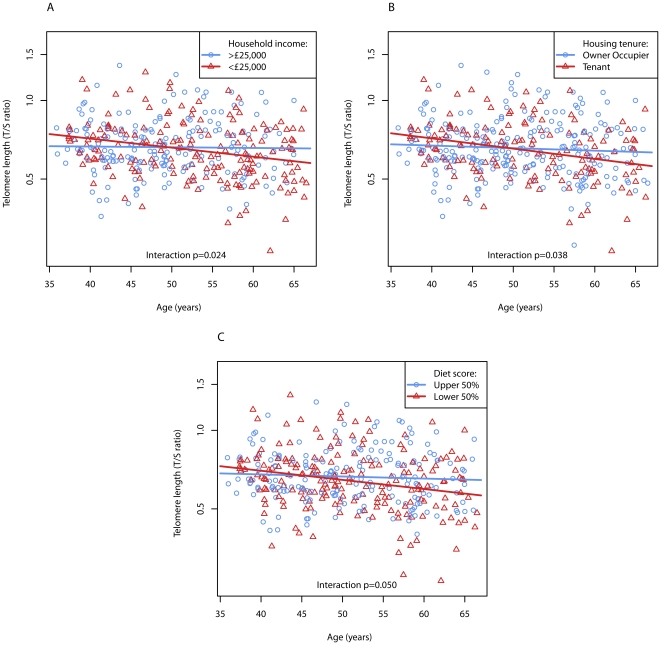
BACKGROUND: It has previously been hypothesized that lower socio-economic status can accelerate biological ageing, and predispose to early onset of disease. This study investigated the association of socio-economic and lifestyle factors, as well as traditional and novel risk factors, with biological-ageing, as measured by telomere length, in a Glasgow based cohort that included individuals with extreme socio-economic differences. METHODS: A total of 382 blood samples from the pSoBid study were available for telomere analysis. For each participant, data was available for socio-economic status factors, biochemical parameters and dietary intake. Statistical analyses were undertaken to investigate the association between telomere lengths and these aforementioned parameters. RESULTS: The rate of age-related telomere attrition was significantly associated with low relative income, housing tenure and poor diet. Notably, telomere length was positively associated with LDL and total cholesterol levels, but inversely correlated to circulating IL-6. CONCLUSIONS: These data suggest lower socio-economic status and poor diet are relevant to accelerated biological ageing. They also suggest potential associations between elevated circulating IL-6, a measure known to predict cardiovascular disease and diabetes with biological ageing. These observations require further study to tease out potential mechanistic links.
Overview
The claims and statistics of this paper haven’t been checked yet.
Free: it reads the open-access text and checks the first 5 claims that cite a source we can check. Create a free account to check every claim.
Integrity signals
Registry
Cites
Statistics
Figures
Verification
Claims the paper makes
The claims and statistics of this paper haven’t been checked yet.
Free: it reads the open-access text and checks the first 5 claims that cite a source we can check. Create a free account to check every claim.
Claims other papers make about this one
Each is checked against this paper’s own text: does it say what the citing paper says it does?
The source backs part of the claim, not all of it — or backs it for a different population, condition or comparison.
In the citing paper
“cumulative social deprivation was biologically embedded via inflammatory, epigenetic and microbiome‐related pathways that accelerated ageing and resulted in earlier onset of age‐related disease in deprived communities [11, 22, 23, 24, 25, 26, 27].”
From Ignoring the planet: A critical blind spot for research on ageing (2025) · cites this paper as [11]
Experimental — accuracy not yet measuredThe source backs part of the claim, not all of it — or backs it for a different population, condition or comparison.
In the citing paper
“We have growing evidence, however, that age‐related healthspan is directly linked to bio‐psychosocial factors, in particular, socioeconomic position [11].”
From Ignoring the planet: A critical blind spot for research on ageing (2025) · cites this paper as [11]
Experimental — accuracy not yet measuredThe source backs part of the claim, not all of it — or backs it for a different population, condition or comparison.
In the citing paper
“increasing evidence has underscored the crucial role of environmental inputs across the life course and across generations, in shaping both individual and intergenerational trajectories of age‐related health.”
From Ignoring the planet: A critical blind spot for research on ageing (2025) · cites this paper as [11]
Experimental — accuracy not yet measured
Self-check
Percentages, sums and reported differences re-computed from the paper’s own numbers.
The self-check needs the paper’s full text.
Citations
Cites
Social determinants of health inequalities
Marmot, M. (2005) · The Lancet · doi:10.1016/s0140-6736(05)71146-6 · Cited by 5,086
Cellular senescence: when bad things happen to good cells
Campisi, J., & d'Adda di Fagagna, F. (2007) · Nature Reviews Molecular Cell Biology · doi:10.1038/nrm2233 · Cited by 4,441 · cited 1×
“Telomere attrition is thought to represent a molecular clock, at least at the cellular level, where it has been hypothesised to act as an anti-neoplastic mechanism [16], proposed to function by countering the accumulation of mutations over successive cell divisions, which potentially could produce neoplastic cells.”
Gompertz, B. (1825) · Philosophical Transactions of the Royal Society of London · doi:10.1098/rstl.1825.0026 · Cited by 3,816 · cited 2×
“Gompertz (1825) first described ageing as an increase in the likelihood of mortality with increasing chronological age [1].”
Telomere measurement by quantitative PCR
Cawthon, R. M. (2002) · Nucleic Acids Research · doi:10.1093/nar/30.10.e47 · Cited by 3,487 · cited 2×
“Telomere length determination DNA was extracted from PBLs following standard procedures and telomere lengths in the DNA samples were determined by QPCR, following the method of Cawthon [44] as described previously [11,33].”
Accelerated telomere shortening in response to life stress
Epel, E. S., Blackburn, E. H., Lin, J., Dhabhar, F. S., Adler, N. E., Morrow, J. D., & Cawthon, R. M. (2004) · Proceedings of the National Academy of Sciences · doi:10.1073/pnas.0407162101 · Cited by 3,002
Persistent DNA damage signalling triggers senescence-associated inflammatory cytokine secretion
Rodier, F., Coppé, J.-P., Patil, C. K., Hoeijmakers, W. A. M., Muñoz, D. P., Raza, S. R., Freund, A., Campeau, E., Davalos, A. R., & Campisi, J. (2009) · Nature Cell Biology · doi:10.1038/ncb1909 · Cited by 2,232
Kirkwood, T. B. L., & Austad, S. N. (2000) · Nature · doi:10.1038/35041682 · Cited by 1,774 · cited 1×
“. In man, this equates to a corresponding, progressive loss of metabolic and physiological functions, though the trajectory for this is not uniform, indicative of underlying inter-individual variation in the biology of ageing”
Telomeres and human disease: ageing, cancer and beyond
Blasco, M. A. (2005) · Nature Reviews Genetics · doi:10.1038/nrg1656 · Cited by 1,434
Leukocyte Telomere Length and Cardiovascular Disease in the Cardiovascular Health Study
Fitzpatrick, A. L., Kronmal, R. A., Gardner, J. P., Psaty, B. M., Jenny, N. S., Tracy, R. P., Walston, J., Kimura, M., & Aviv, A. (2006) · American Journal of Epidemiology · doi:10.1093/aje/kwj346 · Cited by 773 · cited 1×
“Recent human data have now established telomere attrition as a major risk factor for numerous diseases, including cardiovascular disease (CVD), hypertension, diabetes and end stage renal disease [11,20–22] as well as being associated with elevated psychological stresses [23].”
Brouilette, S. W., Moore, J. S., McMahon, A. D., Thompson, J. R., Ford, I., Shepherd, J., Packard, C. J., & Samani, N. J. (2007) · The Lancet · doi:10.1016/s0140-6736(07)60071-3 · Cited by 745 · cited 1×
“Recent human data have now established telomere attrition as a major risk factor for numerous diseases, including cardiovascular disease (CVD), hypertension, diabetes and end stage renal disease [11,20–22] as well as being associated with elevated psychological stresses [23].”
Self-citation
Cited by
Gender and telomere length: Systematic review and meta-analysis
Gardner, M., Bann, D., Wiley, L., Cooper, R., Hardy, R., Nitsch, D., Martin-Ruiz, C., Shiels, P., Sayer, A. A., Barbieri, M., et al. (2014) · Experimental Gerontology · doi:10.1016/j.exger.2013.12.004 · Cited by 513
“…has been associated with cardiovascular risk factors (Benetos et al., 2001; Bekaert et al., 2007; Fitzpatrick et al., 2007; Nordfjall et al., 2008b; Shiels et al., 2011) and cardiovascular disease (Brouilette et al., 2007; Fitzpatrick et al., 2007), it did not predict risk for enhanced cancer…”
BackgroundInfluentialSelf-citationShalev, I., Moffitt, T. E., Sugden, K., Williams, B., Houts, R. M., Danese, A., Mill, J., Arseneault, L., & Caspi, A. (2013) · Molecular Psychiatry · doi:10.1038/mp.2012.32 · Cited by 489
Understanding how we age: insights into inflammaging
Baylis, D., Bartlett, D. B., Patel, H. P., & Roberts, H. C. (2013) · Longevity & Healthspan · doi:10.1186/2046-2395-2-8 · Cited by 411
“Negative relationships with telomere length have also been demonstrated with CRP [29] and IL-6 [30].”
BackgroundChronic kidney disease and premature ageing
Kooman, J. P., Kotanko, P., Schols, A. M. W. J., Shiels, P. G., & Stenvinkel, P. (2014) · Nature Reviews Nephrology · doi:10.1038/nrneph.2014.185 · Cited by 376
Self-citationNeedham, B. L., Adler, N., Gregorich, S., Rehkopf, D., Lin, J., Blackburn, E. H., & Epel, E. S. (2013) · Social Science & Medicine · doi:10.1016/j.socscimed.2013.02.023 · Cited by 321
“, 2012) but inconsistent with others (Adams et al., 2007; Batty et al., 2009; Carroll et al., 2013; Cherkas et al., 2006; Shiels et al., 2011).”
BackgroundResultInfluentialTelomere Length and All-Cause Mortality: A Meta-analysis
Wang, Q., Zhan, Y., Pedersen, N. L., Fang, F., & Hägg, S. (2018) · Ageing Research Reviews · doi:10.1016/j.arr.2018.09.002 · Cited by 318
Chronic Kidney Disease: A Clinical Model of Premature Aging
Stenvinkel, P., & Larsson, T. E. (2013) · American Journal of Kidney Diseases · doi:10.1053/j.ajkd.2012.11.051 · Cited by 296
Physical activity and telomere length: Impact of aging and potential mechanisms of action
Arsenis, N. C., You, T., Ogawa, E. F., Tinsley, G. M., & Zuo, L. (2017) · Oncotarget · doi:10.18632/oncotarget.16726 · Cited by 288
“Evidence supports an inverse relationship between telomere length and chronic pain [33, 34] and various psychological stresses [35-39].”
BackgroundDiscrimination, Racial Bias, and Telomere Length in African-American Men
Chae, D. H., Nuru-Jeter, A. M., Adler, N. E., Brody, G. H., Lin, J., Blackburn, E. H., & Epel, E. S. (2014) · American Journal of Preventive Medicine · doi:10.1016/j.amepre.2013.10.020 · Cited by 263
Inflammation and premature aging in advanced chronic kidney disease
Kooman, J. P., Dekker, M. J., Usvyat, L. A., Kotanko, P., van der Sande, F. M., Schalkwijk, C. G., Shiels, P. G., & Stenvinkel, P. (2017) · American Journal of Physiology-Renal Physiology · doi:10.1152/ajprenal.00256.2017 · Cited by 240
“Notably, in an epidemiological cohort, 10% of the variability in IL-6 expression in the circulation could be explained on the basis of cellular aging, expressed by telomere length (127).”
BackgroundSelf-citationFood as medicine: targeting the uraemic phenotype in chronic kidney disease
Mafra, D., Borges, N. A., Lindholm, B., Shiels, P. G., Evenepoel, P., & Stenvinkel, P. (2021) · Nature Reviews Nephrology · doi:10.1038/s41581-020-00345-8 · Cited by 238
Self-citationTheall, K. P., Brett, Z. H., Shirtcliff, E. A., Dunn, E. C., & Drury, S. S. (2013) · Social Science & Medicine · doi:10.1016/j.socscimed.2013.02.030 · Cited by 175
“Additionally, many studies find a hybrid of both positive and null associations depending on the SEP marker utilized (Batty et al., 2009; Cherkas et al., 2006; Shiels et al., 2011; Steptoe et al., 2011).”
Accelerated biological ageing in HIV-infected individuals in South Africa: a case–control study
Pathai, S., Lawn, S. D., Gilbert, C. E., McGuinness, D., McGlynn, L. M., Weiss, H. A., Port, J., Christ, T., Barclay, K., Wood, R., et al. (2013) · AIDS · doi:10.1097/qad.0b013e328363bf7f · Cited by 176
“Moreover, lower socioeconomic status and poor diet are also associated with accelerated biological ageing [4].”
BackgroundInfluentialSelf-citationPhysical activity and telomere length in U.S. men and women: An NHANES investigation
Tucker, L. A. (2017) · Preventive Medicine · doi:10.1016/j.ypmed.2017.04.027 · Cited by 172
“For example, obesity (Mundstock et al., 2015b), smoking (Huzen et al., 2014), poor diet (Lian et al., 2015; Marcon et al., 2012; Lee et al., 2015), type 2 diabetes (Zhao et al., 2013), and low socioeconomic levels (Shiels et al., 2011) are all predictive of shorter telomeres in adults.”
BackgroundPuterman, E., Lin, J., Krauss, J., Blackburn, E. H., & Epel, E. S. (2015) · Molecular Psychiatry · doi:10.1038/mp.2014.70 · Cited by 150
Social Inequalities and Mortality in Europe – Results from a Large Multi-National Cohort
Gallo, V., Mackenbach, J. P., Ezzati, M., Menvielle, G., Kunst, A. E., Rohrmann, S., Kaaks, R., Teucher, B., Boeing, H., Bergmann, M. M., et al. (2012) · PLoS ONE · doi:10.1371/journal.pone.0039013 · Cited by 140
“The biological pathway linking socio-economic status and mortality could be further explored using selected biomarkers; a recent study showed an inverse association between socio-economic status and age-related telomere attrition, suggesting a process of accelerated ageing among most deprived [26].”
Is Socioeconomic Status Associated With Biological Aging as Measured by Telomere Length?
Robertson, T., Batty, G. D., Der, G., Fenton, C., Shiels, P. G., & Benzeval, M. (2013) · Epidemiologic Reviews · doi:10.1093/epirev/mxs001 · Cited by 122
“Contemporaneous measures included social class based on occupation (18, 19, 21, 22, 39, 45, 51–53, 57), income (18, 21, 34, 36, 47, 51, 52, 54), employment status (16, 43, 50), area deprivation (16), self-rated social status (20), and housing tenure (51).”
BackgroundInfluentialSelf-citationTelomere Shortening and Alzheimer’s Disease
Cai, Z., Yan, L., & Ratka, A. (2012) · NeuroMolecular Medicine · doi:10.1007/s12017-012-8207-9 · Cited by 128
The Link Between Inflammaging and Degenerative Joint Diseases
Rezuş, E., Cardoneanu, A., Burlui, A., Luca, A., Codreanu, C., Tamba, B.-I., Stanciu, G. D., Dima, N., Badescu, C. M., & Rezuș, C. (2019) · International Journal of Molecular Sciences · doi:10.3390/ijms20030614 · Cited by 129
“Other studies however, found that the correlation between shorter telomeres and increased levels of IL-6 becomes non-significant when other factors such as age, gender, diet, or income were included in the a alysis, r that high levels of CRP were not accompanied necessarily by shortening of the telomeres [55,56].”
BackgroundLeung, C. W., Laraia, B. A., Needham, B. L., Rehkopf, D. H., Adler, N. E., Lin, J., Blackburn, E. H., & Epel, E. S. (2014) · American Journal of Public Health · doi:10.2105/ajph.2014.302151 · Cited by 115
“To date, the associations between dietary intake and telomere length have been examined in only a few studies; results for most food groups and nutrients have been mixed.(13,29,30)”
Effects of physical activity in telomere length: Systematic review and meta-analysis
Mundstock, E., Zatti, H., Louzada, F. M., Oliveira, S. G., Guma, F. T. C. R., Paris, M. M., Rueda, A. M. B., Machado, D. G., Stein, R. T., Jones, M. H., et al. (2015) · Ageing Research Reviews · doi:10.1016/j.arr.2015.02.004 · Cited by 117
The role of epigenetics in renal ageing
Shiels, P. G., McGuinness, D., Eriksson, M., Kooman, J. P., & Stenvinkel, P. (2017) · Nature Reviews Nephrology · doi:10.1038/nrneph.2017.78 · Cited by 114
Self-citationEducational attainment and late life telomere length in the Health, Aging and Body Composition Study
Adler, N., Pantell, M. S., O’Donovan, A., Blackburn, E., Cawthon, R., Koster, A., Opresko, P., Newman, A., Harris, T. B., & Epel, E. (2013) · Brain Behavior and Immunity · doi:10.1016/j.bbi.2012.08.014 · Cited by 113
“All-cause mortality and rates of cardiovascular disease, stroke, arthritis, diabetes, and some forms of cancer are higher among socially disadvantaged populations (Braveman et al., 2010; Centers for Disease Control and Prevention, 2011; Singh and Hiatt, 2006).”
BackgroundTelomere Length Among Older U.S. Adults: Differences by Race/Ethnicity, Gender, and Age
Brown, L., Needham, B. L., & Ailshire, J. (2016) · Journal of Aging and Health · doi:10.1177/0898264316661390 · Cited by 122
“Yet, some studies have reported longer TL in men (Adams et al., 2007; Martin-Ruiz et al., 2011), or no gender differences in TL (Hunt et al., 2008; Needham et al., 2013; Shiels et al., 2011).”
BackgroundPuterman, E., & Epel, E. (2012) · Social and Personality Psychology Compass · doi:10.1111/j.1751-9004.2012.00465.x · Cited by 106
“…Wolkowitz et al., 2011) as is lower socioeconomic position in several studies (Batty et al., 2009; Cherkas et al., 2006; Diez-Roux et al., 2009; Shiels et al., 2011; Steptoe et al., 2011; Surtees et al., 2012). ª 2012 Blackwell Publishing Ltd Social and Personality Psychology Compass 6/11…”
BackgroundInfluentialStress-related telomere length in children: a systematic review
Coimbra, B. M., Carvalho, C. M., Moretti, P. N., Mello, M. F., & Belangero, S. I. (2017) · Journal of Psychiatric Research · doi:10.1016/j.jpsychires.2017.03.023 · Cited by 99
“Predominant consumption of high calorie foods (usually cheaper and more easily accessed in low-income households) over a diet of nutrient-rich products (e.g. fruit and vegetables) may speed telomere decline (Shiels et al., 2011).”
BackgroundAgeing and mesenchymal stem cells derived exosomes: Molecular insight and challenges
Ahmadi, M., & Rezaie, J. (2020) · Cell Biochemistry and Function · doi:10.1002/cbf.3602 · Cited by 106
“Different strategies have been introduced to reduce ageing process and age-related morbidities, including improving lifestyle factors, exercise, and nutrition, improving health and life span.(29) In some cases, the organs transplantation may be lifesaving for patients with ageassociated organ damage.”
Telomeres, Telomerase and Ageing
Saretzki, G. (2018) · Subcellular Biochemistry · doi:10.1007/978-981-13-2835-0_9 · Cited by 93
Aging and immunity – Impact of behavioral intervention
Müller, L., & Pawelec, G. (2013) · Brain Behavior and Immunity · doi:10.1016/j.bbi.2013.11.015 · Cited by 110
“It has also been demonstrated that psychosocial stress may be responsible for accelerated telomere attrition, with shorter leukocyte telomere lengths in persons with lower socioeconomic status (Shiels et al., 2011).”
Telomere Length Maintenance and Cardio-Metabolic Disease Prevention Through Exercise Training
Denham, J., O’Brien, B. J., & Charchar, F. J. (2016) · Sports Medicine · doi:10.1007/s40279-016-0482-4 · Cited by 90
“While not discussed here, it is important to emphasise that shorter average leukocyte telomeres are found in individuals with elevated psychological stress [11, 12, 70] and those consuming poor diets [71, 72]—lifestyle factors that contribute to an increased risk of many cardio-metabolic diseases.”
BackgroundHoen, P. W., Rosmalen, J. G. M., Schoevers, R. A., Huzen, J., van der Harst, P., & de Jonge, P. (2013) · Psychological Medicine · doi:10.1017/s0033291712001766 · Cited by 88
Prescott, J., Du, M., Wong, J. Y. Y., Han, J., & Vivo, I. D. (2012) · Human Reproduction · doi:10.1093/humrep/des314 · Cited by 94
“Others did not find a relationship between adult telomere length and indicators of SES at the time of blood collection (Adams et al., 2007; Batty et al., 2009; Kananen et al., 2010; Shiels et al., 2011; Steptoe et al., 2011; Surtees et al., 2012).”
BackgroundInfluentialInflammatory Co-morbidities in HIV+ Individuals: Learning Lessons from Healthy Ageing
Hearps, A. C., Martin, G. E., Rajasuriar, R., & Crowe, S. M. (2014) · Current HIV/AIDS Reports · doi:10.1007/s11904-013-0190-8 · Cited by 91
COPD as a Disease of Immunosenescence
Cho, W., Lee, C. G., & Kim, L. K. (2019) · Yonsei Medical Journal · doi:10.3349/ymj.2019.60.5.407 · Cited by 82
Savolainen, K., Eriksson, J. G., Kananen, L., Kajantie, E., Pesonen, A., Heinonen, K., & Räikkönen, K. (2014) · Biological Psychology · doi:10.1016/j.biopsycho.2014.02.002 · Cited by 74
Enlow, M. B., Bollati, V., Sideridis, G. D., Flom, J. D., Hoxha, M., Hacker, M. R., & Wright, R. J. (2018) · Psychoneuroendocrinology · doi:10.1016/j.psyneuen.2018.05.025 · Cited by 72
“, maternal smoking and BMI in pregnancy; maternal SES; maternal stress and internalizing symptoms/disorders in pregnancy) has been associated with mechanisms hypothesized to contribute to telomere length erosion, including elevated oxidative stress, inflammation, and hypothalamic-pituitary-adrenal axis [HPAA] activity…”
BackgroundDenham, J., O’Brien, B. J., Prestes, P. R., Brown, N. J., & Charchar, F. J. (2015) · Journal of Applied Physiology · doi:10.1152/japplphysiol.00587.2015 · Cited by 76
The link between discrimination and telomere length in African American adults.
Lee, D. B., Kim, E. S., & Neblett, E. W. (2017) · Health Psychology · doi:10.1037/hea0000450 · Cited by 65
“, wealth, education) were not associated with LT, and these findings run contrary to studies that have found associations between SES indicators and LTL (e.g., Adler & Stewart, 2010; Shiels et al., 2011).”
ResultInflammation, Telomere Length, and Grip Strength: A 10-year Longitudinal Study
Baylis, D., Ntani, G., Edwards, M. H., Syddall, H. E., Bartlett, D. B., Dennison, E. M., Martin-Ruiz, C., von Zglinicki, T., Kuh, D., Lord, J. M., et al. (2014) · Calcified Tissue International · doi:10.1007/s00223-014-9862-7 · Cited by 63
“Inflammaging (particularly elevations in levels of tumor necrosis factor a [TNF-a], IL-6, IL-1b, and C-reactive protein) is associated with morbidity and mortality in older people.”
BackgroundInfluentialO'Toole, P. W., & Shiels, P. G. (2020) · Journal of Internal Medicine · doi:10.1111/joim.13021 · Cited by 62
Self-citationMcClelland, R., Christensen, K., Mohammed, S., McGuinness, D., Cooney, J., Bakshi, A., Demou, E., MacDonald, E., Caslake, M., Stenvinkel, P., et al. (2016) · Aging · doi:10.18632/aging.100948 · Cited by 60
“This remarkable difference is one of the largest reported in the developed world, despite common risk factors for age-associated morbidities [1-4], despite the most and least deprived living within a 15 km geographical radius.”
InfluentialSelf-citationAllostatic load and ageing: linking the microbiome and nutrition with age-related health
Shiels, P. G., Buchanan, S., Selman, C., & Stenvinkel, P. (2019) · Biochemical Society Transactions · doi:10.1042/bst20190110 · Cited by 60
Self-citationSong, Y., You, N. Y., Song, Y., Kang, M., Hou, L., Wallace, R. B., Eaton, C. B., Tinker, L. F., & Liu, S. (2013) · Journal of Nutrition · doi:10.3945/jn.113.175422 · Cited by 58
“Several reports have associated ‘‘dietary scores’’ with TL (4,5), including a recent cross-sectional study in 1942 European men that linked intakes of total fat and SFAs to TL (6).”
BackgroundCarroll, J. E., Diez-Roux, A. V., Adler, N. E., & Seeman, T. E. (2013) · Brain, Behavior, and Immunity · doi:10.1016/j.bbi.2012.10.024 · Cited by 56
Circulating markers of ageing and allostatic load: A slow train coming
Shiels, P. G., Stenvinkel, P., Kooman, J. P., & McGuinness, D. (2017) · Practical Laboratory Medicine · doi:10.1016/j.plabm.2016.04.002 · Cited by 54
Self-citationGarcía-Calzón, S., Martínez‐González, M. Á., Razquín, C., Corella, D., Salas‐Salvadó, J., Martínez, J. A., Zalba, G., & Martí, A. (2014) · Circulation Cardiovascular Genetics · doi:10.1161/circgenetics.114.000635 · Cited by 67
“With regard to this, oxidative stress and inflammation might be proposed as the underlying causes of accelerated telomere shortening.(5) Interestingly, the Ala allele has been associated with lower levels of inflammation and oxidative stress(24,25) On the other hand, activation of PPARγ2 can inhibit telomerase activit…”
BackgroundGuan, L., Crasta, K., & Maier, A. B. (2022) · Ageing Research Reviews · doi:10.1016/j.arr.2022.101634 · Cited by 57
“biological ageing as revealed by telomere attrition in leukocytes (Shiels et al., 2011).”
BackgroundSharpe, K. H., McMahon, A. D., RAAB, G. M., Brewster, D., & Conway, D. I. (2014) · PLoS ONE · doi:10.1371/journal.pone.0089513 · Cited by 57
“Various studies have explored the predictive potential of telomere length for cancer risk [56–58] and its association with different socioeconomic variables [59;60] such as low relative household income, renting a home and life style factors including poor diet [59] or adverse early life experiences [61].”
BackgroundTelomere Homeostasis: Interplay with Magnesium
Maguire, D., Neytchev, O., Talwar, D., McMillan, D., & Shiels, P. (2018) · International Journal of Molecular Sciences · doi:10.3390/ijms19010157 · Cited by 50
“These observations are in keeping with the finding that telomere length has been shown to negatively correlate with increased cortisol responsiveness [93], anxiety and depression [94,95], lower socio-economic status [96], chronic low-grade inflammation, a higher frequency of adverse early life events [97,98], and adul…”
Self-citationThe eye as a model of ageing in translational research – Molecular, epigenetic and clinical aspects
Pathai, S., Shiels, P. G., Lawn, S. D., Cook, C., & Gilbert, C. E. (2012) · Ageing Research Reviews · doi:10.1016/j.arr.2012.11.002 · Cited by 54
Self-citationGingell-Littlejohn, M., McGuinness, D., McGlynn, L. M., Kingsmore, D., Stevenson, K. S., Koppelstaetter, C., Clancy, M. J., & Shiels, P. G. (2013) · PLoS ONE · doi:10.1371/journal.pone.0068133 · Cited by 49
“[6,8,14] Our data are consistent with those of Koppelstaetter et al [6], who previously demonstrated that telomere length was inferior to CDKN2A in determining variability on post-transplant serum creatinine levels in renal allografts.”
BackgroundResultSelf-citationKrishnadas, R., McLean, J., Batty, G. D., Burns, H., Deans, K. A., Ford, I., McConnachie, A., McLean, J. S., Millar, K., Sattar, N., et al. (2013) · Psychosomatic Medicine · doi:10.1097/psy.0b013e3182a151a7 · Cited by 48
“Details of the design of psychological, social and biological determinants of ill health have been described elsewhere (18,19,33,34).”
BackgroundSelf-citationLeung, C. W., Fung, T. T., McEvoy, C. T., Lin, J., & Epel, E. S. (2018) · American Journal of Epidemiology · doi:10.1093/aje/kwy124 · Cited by 50
“Telomere length is impacted by inflammation, insulin resistance, and oxidative stress (39-41), all of which can be affected by specific dietary behaviors.”
BackgroundTelomere length associations with cognition depend on Alzheimer's disease biomarkers
Mahoney, E. R., Dumitrescu, L., Seto, M., Nudelman, K. N. H., Buckley, R. F., Gifford, K. A., Saykin, A. J., Jefferson, A. J., Hohman, T. J., & Initiative, A. D. N. (2019) · Alzheimer's & Dementia: Translational Research & Clinical Interventions · doi:10.1016/j.trci.2019.11.003 · Cited by 42
“Additionally, we were unable to control for environmental factors like socioeconomic status or lifestyle which may impact telomere length [49,50].”
BackgroundFretts, A. M., Howard, B. V., Siscovick, D. S., Best, L. G., Beresford, S. A. A., Méte, M., Eilat-Adar, S., Sotoodehnia, N., & Zhao, J. (2016) · Journal of Nutrition · doi:10.3945/jn.116.234922 · Cited by 47
Older adults with higher income or marriage have longer telomeres
Yen, Y.-C., & Lung, F.-W. (2013) · Age and Ageing · doi:10.1093/ageing/afs122 · Cited by 41
Extracellular Vesicles, Ageing, and Therapeutic Interventions
Panagiotou, N., Neytchev, O., Selman, C., & Shiels, P. G. (2018) · Cells · doi:10.3390/cells7080110 · Cited by 45
“A number of strategies appear capable of mitigating against the effects of age-related morbidities, with lifestyle factors such as nutrition, exercise, and other psychosocial factors impacting positively on health and ageing [29].”
BackgroundSelf-citationYu, R., Tang, N. L. S., Leung, J. C. S., & Woo, J. (2015) · Mechanisms of Ageing and Development · doi:10.1016/j.mad.2015.10.002 · Cited by 40
Nomura, S. J. O., Robien, K., & Zota, A. R. (2017) · Journal of Nutrition · doi:10.3945/jn.116.243162 · Cited by 40
Willis, M. M., Reid, S., Calvo, E., Staudinger, U. M., & Factor-Litvak, P. R. (2018) · Ageing Research Reviews · doi:10.1016/j.arr.2018.07.006 · Cited by 44
Krishnadas, R., McLean, J., Batty, D. G., Burns, H., Deans, K. A., Ford, I., McConnachie, A., McGinty, A., McLean, J. S., Millar, K., et al. (2013) · NeuroImage: Clinical · doi:10.1016/j.nicl.2013.04.012 · Cited by 37
“uk/work_programmes/psobid)(Knox et al., 2012; McGuinness et al., 2012; McLean et al., 2012; Packard et al., 2011; Shiels et al., 2011; Velupillai et al., 2008).”
Self-citationIs Telomere Length Socially Patterned? Evidence from the West of Scotland Twenty-07 Study
Robertson, T., Batty, G. D., Der, G., Green, M. J., McGlynn, L. M., McIntyre, A., Shiels, P. G., & Benzeval, M. (2012) · PLoS ONE · doi:10.1371/journal.pone.0041805 · Cited by 36
“Studies including markers of various contemporaneous SES measures have predominantly found null associations [4,18– 19,22–26,29–34], while a smaller number have found positive (higher SES and longer telomeres) [12,31,34] or negative associations [16–17].”
BackgroundResultInfluentialSelf-citationAcculturative stress, telomere length, and postpartum depression in Latinx mothers
Rodriguez, A. C. I., Polcari, J. J., Nephew, B. C., Harris, R., Zhang, C., Murgatroyd, C., & Junior, H. P. D. O. S. (2022) · Journal of Psychiatric Research · doi:10.1016/j.jpsychires.2022.01.063 · Cited by 40
Successful aging, cognitive function, socioeconomic status, and leukocyte telomere length
Huang, Y., Yim, O. S., Lai, P. S., Yu, R., Chew, S. H., Gwee, X., Nyunt, M. S. Z., Gao, Q., Ng, T. P., Ebstein, R. P., et al. (2019) · Psychoneuroendocrinology · doi:10.1016/j.psyneuen.2019.01.015 · Cited by 37
Cavanagh, J., Krishnadas, R., Batty, G. D., Burns, H., Deans, K. A., Ford, I., McConnachie, A., McGinty, A., McLean, J. S., Millar, K., et al. (2013) · The Cerebellum · doi:10.1007/s12311-013-0497-4 · Cited by 42
“Details of the design of PSoBiD have been described elsewhere [19–22].”
MethodSelf-citationFujishiro, K., Roux, A. V. D., Landsbergis, P. A., Jenny, N. S., & Seeman, T. E. (2013) · Occupational and Environmental Medicine · doi:10.1136/oemed-2012-101296 · Cited by 34
Packard, C. J., Cavanagh, J., McLean, J. S., McConnachie, A., Messow, C., Batty, G. D., Burns, H., Deans, K. A., Sattar, N. A., Shiels, P. G., et al. (2012) · Journal of Public Health · doi:10.1093/pubmed/fds030 · Cited by 40
Self-citationEffects of Inflammation and Depression on Telomere Length in Young Adults in the United States
Shin, D., Shin, J., & Lee, K. W. (2019) · Journal of Clinical Medicine · doi:10.3390/jcm8050711 · Cited by 35
“Previous research on the mechanisms of telomere erosion identified inflammation as having an important influence on telomere length [21,22].”
BackgroundBarros, P. R., Costa, T. J. D., Akamine, E. H., & Tostes, R. C. (2021) · Frontiers in Aging · doi:10.3389/fragi.2021.727604 · Cited by 34
Lu, L., Johnman, C., McGlynn, L. M., Mackay, D., Shiels, P. G., & Pell, J. P. (2017) · International Journal of Epidemiology · doi:10.1093/ije/dyx212 · Cited by 30
“Telomere length in the DNA samples was determined by quantitative-polymerase chain reaction (Q-PCR) blindly using a Roche Light Cycler LC480 (Roche Diagnostics, Indianapolis, IN, USA).(29) Analyses were performed in triplicate for each sample, using a single-copy gene amplicon primer set (acidic ribosomal phosphoprote…”
MethodSelf-citationHuang, Z., Liu, C., Ruan, Y., Guo, Y., Sun, S., Shi, Y., & Wu, F. (2021) · GeroScience · doi:10.1007/s11357-020-00320-y · Cited by 32
Surtees, P. G., Wainwright, N. W. J., Pooley, K. A., Luben, R., Khaw, K., Easton, D. F., & Dunning, A. M. (2011) · Brain Behavior and Immunity · doi:10.1016/j.bbi.2011.11.009 · Cited by 32
Maternal psychosocial functioning, obstetric health history, and newborn telomere length
Enlow, M. B., Petty, C. R., Hacker, M. R., & Burris, H. H. (2020) · Psychoneuroendocrinology · doi:10.1016/j.psyneuen.2020.105043 · Cited by 30
“dysfunction, and changes in telomerase production (Entringer et al., 2011; Entringer et al., 2013; Lupien, McEwen, Gunnar, & Heim, 2009; Shiels et al., 2011; Steptoe et al., 2011; Van den Bergh et al., 2017).”
BackgroundMcLean, J., Krishnadas, R., Batty, G. D., Burns, H., Deans, K. A., Ford, I., McConnachie, A., McGinty, A., McLean, J. S., Millar, K., et al. (2012) · Behavioural Brain Research · doi:10.1016/j.bbr.2012.08.013 · Cited by 28
Self-citationIn utero exposure to endocrine-disrupting chemicals and telomere length at birth
Michels, K. B., Vivo, I. D., Calafat, A. M., & Binder, A. M. (2019) · Environmental Research · doi:10.1016/j.envres.2019.109053 · Cited by 28
“, 2004) (Shiels et al., 2011) (von Zglinicki, 2000) (Zhang et al.”
Keng, S., Looi, P. S., Tan, E. L. Y., Yim, O. S., Lai, P. S., Chew, S. H., & Ebstein, R. P. (2020) · Behavior Therapy · doi:10.1016/j.beth.2020.01.005 · Cited by 33
Hagman, M., Werner, C. M., Kamp, K., Fristrup, B., Hornstrup, T., Meyer, T., Böhm, M., Laufs, U., & Krustrup, P. (2020) · Progress in Cardiovascular Diseases · doi:10.1016/j.pcad.2020.05.009 · Cited by 25
Liu, Q., Li, Z., Huang, L., Zhou, D., Fu, J., Duan, H., Wang, Z., Yang, T., Zhao, J., Li, W., et al. (2023) · Immunity & Ageing · doi:10.1186/s12979-022-00326-4 · Cited by 25
“Accelerated telomere attrition with age might be due to the increased inflammation level [11].”
BackgroundFoods, Dietary Patterns and Occupational Class and Leukocyte Telomere Length in the Male Population
Karimi, B., Nabizadeh, R., Yunesian, M., Mehdipour, P., Rastkari, N., & Aghaie, A. (2017) · American Journal of Men s Health · doi:10.1177/1557988317743385 · Cited by 26
“Concerning conflicting reports on the effect of the food groups on TL in different communities (Cassidy et al., 2010; Crous-Bou et al., 2014; Nettleton et al., 2008; Tiainen et al., 2012), a part of this conflict can be related to occupational type (Shiels et al., 2011).”
BackgroundRej, P. H., Gravlee, C. C., & Mulligan, C. J. (2019) · American Journal of Human Biology · doi:10.1002/ajhb.23375 · Cited by 23
“…strain, education years completed, and household income are some of the most commonly tested SES measures, and all have been associated with either shorter TL or increased telomere attrition in African American cohort studies (Needham et al., 2013; Schrock et al., 2018; Shiels et al., 2011).”
BackgroundSocioeconomic position links circulatory microbiota differences with biological age
Craven, H., McGuinness, D., Buchanan, S., Galbraith, N., McGuinness, D. H., Jones, B., Combet, E., Mafra, D., Bergman, P., Ellaway, A., et al. (2021) · Scientific Reports · doi:10.1038/s41598-021-92042-0 · Cited by 21
Self-citationMarra, M. V., Drazba, M. A., Holásková, I., & Belden, W. J. (2019) · Nutrients · doi:10.3390/nu11030508 · Cited by 19
Aitken, E., Dempster, N. J., Ceresa, C. D. L., Daly, C., & Kingsmore, D. B. (2013) · Transplantation Proceedings · doi:10.1016/j.transproceed.2012.12.031 · Cited by 19
Ellaway, A., Dundas, R., Robertson, T., & Shiels, P. G. (2019) · PLoS ONE · doi:10.1371/journal.pone.0214380 · Cited by 20
Self-citationFrank, N., Herrmann, M. J., Lauer, M., & Förster, C. Y. (2024) · Biomolecules · doi:10.3390/biom14020167 · Cited by 21
“For example, a study from the Health, Ageing and Body Composition Study [97] showed a correlation between shorter telomere lengths and inflammatory markers such as increased IL-6 and TNF [97,98].”
BackgroundLaganović, M., Bendix, L., Rubelj, I., Kirhmajer, M. V., Slade, N., Lela, I. V., Premužić, V., Nilsson, P. M., & Jelaković, B. (2014) · Journal of Hypertension · doi:10.1097/hjh.0000000000000217 · Cited by 17
“should be taken into account since they strongly influence telomere attrition in human populations including young children [35,36].”
BackgroundStress Responsive Biochemical Anabolic/Catabolic Ratio and Telomere Length in Older Adults
Vasunilashorn, S. M., & Cohen, A. A. (2014) · Biodemography and Social Biology · doi:10.1080/19485565.2014.950722 · Cited by 21
“The relationship between elevated circulating IL6 levels and telomere attrition has been previously reported (Shiels et al. 2011), but our reported link between the A/C imbalance summary measure and telomere length is a new contribution to the literature.”
Telomere Length Variation in Juvenile Acute Myocardial Infarction
RUSSO, A. E., Palumbo, L., Fornengo, C., Gaetano, C. D., Ricceri, F., Guarrera, S., Critelli, R., Anselmino, M., Piazza, A., Gaïta, F., et al. (2012) · PLoS ONE · doi:10.1371/journal.pone.0049206 · Cited by 18
“These results are consistent with a recent study in which total cholesterol was positively associated with LTL [28], as well as reduced HDL levels have been described associated with shorter LTL in healthy young adults [29].”
ResultBiological ageing is a key determinant in systemic sclerosis
Shiels, P. G., Broen, J. C. A., McGlynn, L. M., Thomson, J., Chee, M. M., Madhok, R., & Radstake, T. R. D. J. (2011) · Journal of Translational Medicine · doi:10.1186/1479-5876-9-s2-i7 · Cited by 16
“Proteinaceous components of the associatedtelosome arecomplicit in the sensing, signaling and repair of DNA damage [3].”
Self-citationTarik, M., Ramakrishnan, L., Sachdev, H. S., Tandon, N., Roy, A., Bhargava, S. K., & Pandey, R. M. (2018) · Future Science OA · doi:10.4155/fsoa-2017-0115 · Cited by 16
Goswami, A., Huda, N., Yasmin, T., Hosen, M. I., Hasan, A. K. M. M., & Nabi, A. N. (2021) · Molecular Biology Reports · doi:10.1007/s11033-020-06045-7 · Cited by 17
The impact of neighborhood context on telomere length: A systematic review
Coimbra, B. M., Carvalho, C. M., van Zuiden, M., Williamson, R. E., Ota, V., Mello, A. F., Belangero, S. I., Olff, M., & Mello, M. F. (2022) · Health & Place · doi:10.1016/j.healthplace.2022.102746 · Cited by 17
Savolainen, K., Eriksson, J. G., Kajantie, E., Pesonen, A., & Räikkönen, K. (2015) · Journal of Psychosomatic Research · doi:10.1016/j.jpsychores.2015.04.011 · Cited by 14
“Shorter LTL is also associated with oxidative stress [54] and inflammation [55,56], and with chronic caregiver stress [57], stressful life events [58,59], smoking, physical inactivity, unhealthy diet [60,61] but not with higher intake of alcohol [61].”
BackgroundSchrock, J. M., Adler, N. E., Epel, E. S., Nuru‐Jeter, A., Lin, J., Blackburn, E. H., Taylor, R. J., & Chae, D. H. (2017) · Journal of Racial and Ethnic Health Disparities · doi:10.1007/s40615-017-0388-3 · Cited by 17
Telomere length is maternally inherited and associated with lipid metabolism in Chinese population
Guo, L., Chen, Y., Li, H., Yin, F., Ge, M., Li, H., Zi, M., Qin, Z., & He, Y. (2022) · Aging · doi:10.18632/aging.203810 · Cited by 13
“TL was dynamically attritted with age and affected by a variety of environmental factors, such as occupational exposures [37], household income [35], and lifestyle (dietary patterns, drinking, smoking, and physical activity) [38–40].”
BackgroundAla‐Mursula, L., Buxton, J. L., Ek, E., Koiranen, M., Taanila, A. M., Blakemore, A. I. F., & Järvelin, M. (2013) · PLoS ONE · doi:10.1371/journal.pone.0080094 · Cited by 16
“Among UK female twins [18], short telomeres were associated with low occupational level, but this finding has not been replicated in other studies [19,20,21,22].”
ResultTelomere Length Shows No Association with BRCA1 and BRCA2 Mutation Status
Killick, E., Tymrakiewicz, M., Cieza-Borrella, C., Smith, P. L., Thompson, D. J., Pooley, K. A., Easton, D. F., Bancroft, E. K., Page, E. C., Leongamornlert, D. A., et al. (2014) · PLoS ONE · doi:10.1371/journal.pone.0086659 · Cited by 13
“Various studies have shown other factors associated with TL including smoking [5], inflammatory processes, socio-economic status, diet [6], BMI [7], diabetes mellitus [8], coronary artery disease, ulcerative colitis [9], physical activity and psychological stress [10].”
BackgroundFujishiro, K., Needham, B. L., Landsbergis, P. A., Seeman, T. E., Jenny, N. S., & Roux, A. V. D. (2018) · PLoS ONE · doi:10.1371/journal.pone.0204704 · Cited by 9
CDKN2A might be better than telomere length in determining individual health status
Shiels, P. G. (2012) · BMJ · doi:10.1136/bmj.e1415 · Cited by 10
Self-citationWestergaard, D., Li, J., Jensen, K., Kouskoumvekaki, I. A., & Panagiotou, G. (2014) · BMC Genomics · doi:10.1186/1471-2164-15-380 · Cited by 10
Metadata
- Authors
- Shiels, P. G., McGlynn, L. M., MacIntyre, A., Johnson, P. C. D., Batty, G. D., Burns, H., Cavanagh, J., Deans, K. A., Ford, I., McConnachie, A., McGinty, A., McLean, J. S., Millar, K., Sattar, N., Tannahill, C., Velupillai, Y. N., & Packard, C. J.
- Affiliations
- University of Glasgow (GB)
- MRC/CSO Social and Public Health Sciences Unit (GB)
- Scottish Government (GB)
- NHS Greater Glasgow and Clyde (GB)
- Glasgow Centre for Population Health (GB)
- University College Cork (IE)
- Corresponding author
- Shiels, Paul G.
- ORCID
- Venue
- PLoS ONE
- Publisher
- Public Library of Science (PLoS)
- Published
- 2011-07-27
- Volume
- 6
- Issue
- 7
- Pages
- e22521
- ISSN
- 1932-6203 (ISSN-L)
- PMC
- PMC3144896
- OpenAlex
- W2077449065
- Cited by
- 143
- References
- 45
- Citations by year
- 2026: 2 · 2025: 6 · 2024: 9 · 2023: 3 · 2022: 4 · 2021: 7 · 2020: 13 · 2019: 12 · 2018: 11 · 2017: 11 · 2016: 5 · 2015: 5 · 2014: 17 · 2013: 17 · 2012: 19
- FWCI
- 12.00
- Type
- journal article
- Language
- en
- Open access
- gold
- doi.org
- Locations
- PLoS ONE (publishedVersion, cc-by)
- Europe PMC (PubMed Central) (publishedVersion, cc-by)
- PubMed Central (publishedVersion, cc-by)
- PubMed (publishedVersion)
- Arrow@dit (Dublin Institute of Technology) (acceptedVersion)
- ENLIGHTEN (Jurnal Bimbingan dan Konseling Islam) (acceptedVersion)
- University of Limerick Institutional Repository (University of Limerick) (acceptedVersion, cc-by-nc-sa)
- RePEc: Research Papers in Economics (submittedVersion)
- DOAJ (DOAJ: Directory of Open Access Journals) (submittedVersion, cc-by-sa)
- UCL Discovery (University College London) (submittedVersion)
- Figshare (submittedVersion, cc-by)
- University of Limerick Institutional Repository (University of Limerick) (submittedVersion, cc-by-nc-sa)
- University of Limerick Institutional Repository (University of Limerick)
- Funders
- NHS Greater Glasgow and Clyde
- Scottish Government
- Glasgow Centre for Population Health
- University of Glasgow
- Topics
- Life Sciences › Biochemistry, Genetics and Molecular Biology › Cell Biology › Telomeres, Telomerase, and Senescence
- Social Sciences › Health › Health disparities and outcomes
- Life Sciences › Biochemistry, Genetics and Molecular Biology › Aging › Genetics, Aging, and Longevity in Model Organisms
- Keywords
- telomere length, biological aging, accelerated aging, socioeconomic status, relative income, housing tenure, diet, inflammation, interleukin-6, cholesterol, cardiovascular risk
- MeSH terms
- Adult, Diet, Family Characteristics, Female, Housing, Humans, Income, Inflammation, Life Style, Male, Middle Aged, Regression Analysis, Cohort Studies, Biomarkers, Interleukin-6, Telomere
About these checks
Registry, retraction, Cites and statistics results are computed, not judged, with one exception: a printed reference that no index lists is read once by a model before it counts as a citation error. Claims are extracted by a model and kept only when their quote appears verbatim in the text; each cited source is then checked, with a model’s help, for whether it says what the claim relies on. Those verdicts can be wrong — read the claim’s quote and the cited source before relying on one.
Statistics and arithmetic are recomputed, not judged.
Confidence bands are shown only for fields calibrated on our annotated test set. None is calibrated yet, so no band is shown.
What counts as a claim ›How we measure confidence ›How we check this ›
Are you an author, or do you see a problem with this page? Request a review
Data sources
Bibliographic data: Semantic Scholar, OpenAlex, Crossref.
Contains information from the Semantic Scholar Academic Graph Datasets, made available under the ODC Attribution License (ODC-BY 1.0).
Semantic Scholar’s data is described in: Kinney, R., et al. (2023). The Semantic Scholar Open Data Platform. arXiv:2301.10140.
