

The DOI matches its Crossref record; 30 of the 31 references it cites were found in a registry or an index.
Origin and Spread of Bos taurus: New Clues from Mitochondrial Genomes Belonging to Haplogroup T1
Open accessAbstract
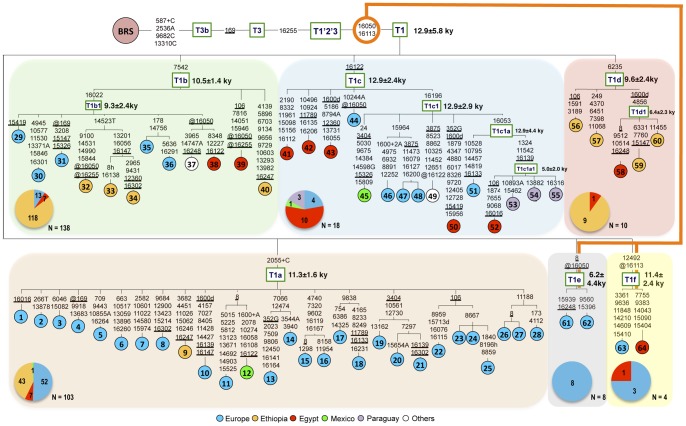
BACKGROUND: Most genetic studies on modern cattle have established a common origin for all taurine breeds in the Near East, during the Neolithic transition about 10 thousand years (ka) ago. Yet, the possibility of independent and/or secondary domestication events is still debated and is fostered by the finding of rare mitochondrial DNA (mtDNA) haplogroups like P, Q and R. Haplogroup T1, because of its geographic distribution, has been the subject of several investigations pointing to a possible independent domestication event in Africa and suggesting a genetic contribution of African cattle to the formation of Iberian and Creole cattle. Whole mitochondrial genome sequence analysis, with its proven effectiveness in improving the resolution of phylogeographic studies, is the most appropriate tool to investigate the origin and structure of haplogroup T1. METHODOLOGY: A survey of >2200 bovine mtDNA control regions representing 28 breeds (15 European, 10 African, 3 American) identified 281 subjects belonging to haplogroup T1. Fifty-four were selected for whole mtDNA genome sequencing, and combined with ten T1 complete sequences from previous studies into the most detailed T1 phylogenetic tree available to date. CONCLUSIONS: Phylogenetic analysis of the 64 T1 mitochondrial complete genomes revealed six distinct sub-haplogroups (T1a-T1f). Our data support the overall scenario of a Near Eastern origin of the T1 sub-haplogroups from as much as eight founding T1 haplotypes. However, the possibility that one sub-haplogroup (T1d) arose in North Africa, in domesticated stocks, shortly after their arrival from the Near East, can not be ruled out. Finally, the previously identified "African-derived American" (AA) haplotype turned out to be a sub-clade of T1c (T1c1a1). This haplotype was found here for the first time in Africa (Egypt), indicating that it probably originated in North Africa, reached the Iberian Peninsula and sailed to America, with the first European settlers.
Overview
The claims and statistics of this paper haven’t been checked yet.
Run the check — free, no account needed. It reads the open-access text and checks the sources it cites.
Integrity signals
Registry
Cites
Statistics
Figures
Verification
Claims the paper makes
The claims and statistics of this paper haven’t been checked yet.
Run the check — free, no account needed. It reads the open-access text and checks the sources it cites.
Claims other papers make about this one
Each is checked against this paper’s own text: does it say what the citing paper says it does?
The source backs part of the claim, not all of it — or backs it for a different population, condition or comparison.
In the citing paper
“Approximately 7000 years ago, taurine cattle were distributed in southern Egypt and across the African continent, established by the T1 mtDNA lineage, which is now characteristic of African cattle [26,37,38,45].”
From The Genomic Landscape of Cattle: Domestication, Dispersal, and Adaptive Evolution (2026) · cites this paper as [38]
Experimental — accuracy not yet measuredThe source backs part of the claim, not all of it — or backs it for a different population, condition or comparison.
In the citing paper
“A study on mtDNA indicates that all African cattle breeds analyzed so far carried taurine mtDNA haplotypes which suggests that these waves of indicine arrival into Africa were male-mediated (Bradley et al., 1996; Bonfiglio et al., 2012).”
From Identification of Candidate Signature Genes and Key Regulators Associated With Trypanotolerance in the Sheko Breed (2019) · cites this paper as Bonfiglio et al., 2012
Experimental — accuracy not yet measured
Self-check
Percentages, sums and reported differences re-computed from the paper’s own numbers.
The self-check needs the paper’s full text.
Citations
Cites
Evolution, consequences and future of plant and animal domestication
Diamond, J. M. (2002) · Nature · doi:10.1038/nature01019 · Cited by 1,772
Anderson, S., de Bruijn, M. H. L., Coulson, A. R., Eperon, I. C., Sanger, F., & Young, I. G. (1982) · Journal of Molecular Biology · doi:10.1016/0022-2836(82)90137-1 · Cited by 1,472
Genetic diversity in farm animals – a review
Groeneveld, L. F., Lenstra, J. A., Eding, H., Toro, M. Á., Scherf, B., Pilling, D., Negrini, R., Finlay, E. K., Jianlin, H., Groeneveld, E., et al. (2010) · Animal Genetics · doi:10.1111/j.1365-2052.2010.02038.x · Cited by 680
Tablet-next generation sequence assembly visualization.
Milne, I., Bayer, M., Cardle, L., Shaw, P., Stephen, G., Wright, F., & Marshall, D. (2010) · Bioinformatics · doi:10.1093/bioinformatics/btp666 · Cited by 666
Genetic Evidence for Near-Eastern Origins of European Cattle
Troy, C. S., MacHugh, D. E., Bailey, J. F., Magee, D. A., Loftus, R. T., Cunningham, P., Chamberlain, A. T., Sykes, B. C., & Bradley, D. G. (2001) · Nature · doi:10.1038/35074088 · Cited by 627
Mitochondrial diversity and the origins of African and European cattle
Bradley, D. G., MacHugh, D. E., Cunningham, P., & Loftus, R. T. (1996) · Proceedings of the National Academy of Sciences · doi:10.1073/pnas.93.10.5131 · Cited by 584
Harvesting the fruit of the human mtDNA tree
Torroni, A., Achilli, A., Macaulay, V. A., Richards, M. B., & Bandelt, H. (2006) · Trends in Genetics · doi:10.1016/j.tig.2006.04.001 · Cited by 501
Self-citationThe Origin of European Cattle: Evidence from Modern and Ancient DNA
Beja-Pereira, A., Caramelli, D., Lalueza-Fox, C., Vernesi, C., Ferrand, N., Casoli, A., Goyache, F., Royo, L. J., Conti, S., Lari, M., et al. (2006) · Proceedings of the National Academy of Sciences · doi:10.1073/pnas.0509210103 · Cited by 342
Mitochondrial Genomes of Extinct Aurochs Survive in Domestic Cattle
Achilli, A., Olivieri, A., Pellecchia, M., Uboldi, C., Colli, L., Al-Zahery, N., Accetturo, M., Pala, M., Kashani, B. H., Perego, U. A., et al. (2008) · Current Biology · doi:10.1016/j.cub.2008.01.019 · Cited by 290
Self-citationOn the Origin of Cattle: How Aurochs Became Cattle and Colonized the World
Ajmone‐Marsan, P., Garcia, J. F., & Lenstra, J. A. (2010) · Evolutionary Anthropology Issues News and Reviews · doi:10.1002/evan.20267 · Cited by 287
Self-citation
Cited by
Sorted by citations
Worldwide Patterns of Ancestry, Divergence, and Admixture in Domesticated Cattle
Decker, J. E., McKay, S. D., Rolf, M. M., Kim, J., Molina Alcalá, A., Sonstegard, T. S., Hanotte, O., Götherström, A., Seabury, C. M., Praharani, L., et al. (2014) · PLoS Genetics · doi:10.1371/journal.pgen.1004254 · Cited by 521
Retrospective and prospective perspectives on zoonotic brucellosis
Moreno, E. (2014) · Frontiers in Microbiology · doi:10.3389/fmicb.2014.00213 · Cited by 340
- Invited Review - African Indigenous Cattle: Unique Genetic Resources in a Rapidly Changing World
Mwai, O., Hanotte, O., Kwon, Y.-J., & Cho, S. (2015) · Asian-Australasian Journal of Animal Sciences · doi:10.5713/ajas.15.0002r · Cited by 300
The Genome Landscape of Indigenous African Cattle
Kim, J., Hanotte, O., Mwai, O. A., Dessie, T., Bashir, S., Diallo, B., Agaba, M., Kim, K., Kwak, W., Sung, S., et al. (2017) · Genome biology · doi:10.1186/s13059-017-1153-y · Cited by 271
Ancient Cattle Genomics, Origins, and Rapid Turnover in the Fertile Crescent
Verdugo, M. P., Mullin, V. E., Scheu, A., Mattiangeli, V., Daly, K. G., Maisano Delser, P., Hare, A. J., Burger, J., Collins, M. J., Kehati, R., et al. (2019) · Science · doi:10.1126/science.aav1002 · Cited by 227
Park, S. D. E., Magee, D. A., McGettigan, P., Teasdale, M. D., Edwards, C. J., Lohan, A. J., Murphy, A., Braud, M., Donoghue, M. T. A., Liu, Y., et al. (2015) · Genome biology · doi:10.1186/s13059-015-0790-2 · Cited by 234
Domestication of Cattle: Two or Three Events?
Pitt, D., Sevane, N., Nicolazzi, E. L., MacHugh, D. E., Park, S. D. E., Colli, L., Martinez, R., Bruford, M. W., & Orozco‐terWengel, P. (2019) · Evolutionary Applications · doi:10.1111/eva.12674 · Cited by 195
Self-citationOn the History of Cattle Genetic Resources
Felius, M., Beerling, M.-L., Buchanan, D., Theunissen, B., Koolmees, P., & Lenstra, J. (2014) · Diversity · doi:10.3390/d6040705 · Cited by 176
The Mosaic Genome of Indigenous African Cattle as a Unique Genetic Resource for African Pastoralism
Kim, K., Kwon, T., Dessie, T., Yoo, D., Mwai, O. A., Jang, J., Sung, S., Lee, S., Salim, B., Jung, J., et al. (2020) · Nature Genetics · doi:10.1038/s41588-020-0694-2 · Cited by 140
Domestication Genomics: Evidence from Animals
Wang, G., Xie, H., Peng, M., Irwin, D. M., & Zhang, Y. (2013) · Annual Review of Animal Biosciences · doi:10.1146/annurev-animal-022513-114129 · Cited by 122
Whole mitochondrial genomes unveil the impact of domestication on goat matrilineal variability
Colli, L., Lancioni, H., Cardinali, I., Olivieri, A., Capodiferro, M. R., Pellecchia, M., Rzepus, M., Zamani, W., Naderi, S., Gandini, F., et al. (2015) · BMC Genomics · doi:10.1186/s12864-015-2342-2 · Cited by 98
Self-citationEvolution and Domestication of the Bovini Species
Zhang, K., Lenstra, J. A., Zhang, S., Liu, W., & Liu, J. (2020) · Animal Genetics · doi:10.1111/age.12974 · Cited by 82
DomeTree: a canonical toolkit for mitochondrial DNA analyses in domesticated animals
Peng, M., Fan, L., Shi, N., Ning, T., Yao, Y., Murphy, R. W., Wang, W., & Zhang, Y. (2015) · Molecular Ecology Resources · doi:10.1111/1755-0998.12386 · Cited by 79
Ginja, C., Gama, L. T., Cortés, O., Burriel, I. M., Vega-Pla, J. L., Penedo, C., Sponenberg, P., Cañón, J., Sanz, A., do Egito, A. A., et al. (2019) · Scientific Reports · doi:10.1038/s41598-019-47636-0 · Cited by 71
Self-citationLenstra, J. A., Ajmone‐Marsan, P., Beja‐Pereira, A., Bollongino, R., Bradley, D. G., Colli, L., Gaetano, A. D., Edwards, C. J., Felius, M., Ferretti, L., et al. (2014) · Diversity · doi:10.3390/d6010178 · Cited by 69
Self-citationEarly North African Cattle Domestication and Its Ecological Setting: A Reassessment
Brass, M. J. (2017) · Journal of World Prehistory · doi:10.1007/s10963-017-9112-9 · Cited by 68
Signatures of positive selection in African Butana and Kenana dairy zebu cattle
Bahbahani, H., Salim, B., Almathen, F., Al Enezi, F., Mwacharo, J. M., & Hanotte, O. (2018) · PLOS ONE · doi:10.1371/journal.pone.0190446 · Cited by 67
Mbole-Kariuki, M. N., Sonstegard, T., Orth, A., Thumbi, S. M., Bronsvoort, B. M. D. C., Kiara, H., Toye, P., Conradie, I., Jennings, A., Coetzer, K., et al. (2014) · Heredity · doi:10.1038/hdy.2014.31 · Cited by 69
Olivieri, A., Gandini, F., Achilli, A., Fichera, A., Rizzi, E., Bonfiglio, S., Battaglia, V., Brandini, S., Gaetano, A. D., Elbeltagy, A. R., et al. (2015) · PLoS ONE · doi:10.1371/journal.pone.0141170 · Cited by 60
Self-citationThe characterization of goat genetic diversity: Towards a genomic approach
Ajmone‐Marsan, P., Colli, L., Han, J., Achilli, A., Lancioni, H., Joost, S., Crepaldi, P., Pilla, F., Stella, A., Taberlet, P., et al. (2014) · Small Ruminant Research · doi:10.1016/j.smallrumres.2014.06.010 · Cited by 63
Self-citationMitochondrial DNA variants of Podolian cattle breeds testify for a dual maternal origin
Lorenzo, P. D., Lancioni, H., Ceccobelli, S., Colli, L., Cardinali, I., Karslı, T., Capodiferro, M. R., Şahin, E., Ferretti, L., Ajmone‐Marsan, P., et al. (2018) · PLoS ONE · doi:10.1371/journal.pone.0192567 · Cited by 58
Self-citationMcTavish, E. J., & Hillis, D. M. (2015) · BMC Genomics · doi:10.1186/s12864-015-1469-5 · Cited by 59
Finkelstein, I., Langgut, D., Meiri, M., & Sapir-Hen, L. (2017) · Ägypten und Levante · doi:10.1553/aeundl27s249 · Cited by 53
Meiri, M., Stockhammer, P. W., Marom, N., Bar-Oz, G., Sapir-Hen, L., Morgenstern, P., Macheridis, S., Rosen, B., Huchon, D., Maran, J., et al. (2017) · Scientific Reports · doi:10.1038/s41598-017-00701-y · Cited by 51
Horsburgh, K. A., Beckett, D. B., & Gosling, A. L. (2022) · Biology · doi:10.3390/biology11030428 · Cited by 43
Horsburgh, K. A., Prost, S., Gosling, A. L., Stanton, J. L., Rand, C. J., & Matisoo-Smith, E. A. (2013) · PLoS ONE · doi:10.1371/journal.pone.0071956 · Cited by 42
Mekonnen, Y. A., Gültas, M., Effa, K., Hanotte, O., & Schmitt, A. O. (2019) · Frontiers in Genetics · doi:10.3389/fgene.2019.01095 · Cited by 37
Bahbahani, H. M., Afana, A., & Wragg, D. (2018) · PLoS ONE · doi:10.1371/journal.pone.0202479 · Cited by 38
Xia, X., Achilli, A., Lenstra, J. A., Tong, B., Ma, Y., Huang, Y., Han, J., Sun, Z., Chen, H., Lei, C., et al. (2021) · Heredity · doi:10.1038/s41437-021-00428-7 · Cited by 33
Self-citationAbundant Genetic Diversity of Yunling Cattle Based on Mitochondrial Genome
Xia, X., Qu, K., Li, F., Jia, P., Chen, Q., Chen, N., Zhang, J., Chen, H., Huang, B., & Lei, C. (2019) · Animals · doi:10.3390/ani9090641 · Cited by 33
Lorenzo, P. D., Lancioni, H., Ceccobelli, S., Curcio, L., Panella, F., & Lasagna, E. (2016) · Electronic Journal of Biotechnology · doi:10.1016/j.ejbt.2016.07.001 · Cited by 32
Mitochondrial genomes of domestic animals need scrutiny
Shi, N., Fan, L., Yao, Y., Peng, M., & Zhang, Y. (2014) · Molecular Ecology · doi:10.1111/mec.12955 · Cited by 28
da Fonseca, R. R., Ureña, I., Afonso, S., Pires, A. E., Jørsboe, E., Chikhi, L., & Ginja, C. (2019) · BMC Genomics · doi:10.1186/s12864-019-5685-2 · Cited by 26
Self-citationGinja, C., Guimarães, S. M. F., da Fonseca, R. R., Rasteiro, R., Rodríguez-Varela, R., Simões, L. G., Sarmento, C. D., Belarte, M. C., Kallala, N., Torres, J. R., et al. (2023) · iScience · doi:10.1016/j.isci.2023.107196 · Cited by 27
Self-citationThe evolution of contemporary livestock species: Insights from mitochondrial genome
Jain, K., Panigrahi, M., Nayak, S. S., Rajawat, D., Sharma, A., Sahoo, S. P., Bhushan, B., & Dutt, T. (2024) · Gene · doi:10.1016/j.gene.2024.148728 · Cited by 25
Inference of Admixture Origins in Indigenous African Cattle
Kim, K., Kim, D., Hanotte, O., Lee, C., Kim, H., & Jeong, C. (2023) · Molecular Biology and Evolution · doi:10.1093/molbev/msad257 · Cited by 24
Mannen, H., Yonezawa, T., Murata, K., Noda, A., Kawaguchi, F., Sasazaki, S., Olivieri, A., Achilli, A., & Torroni, A. (2020) · Scientific Reports · doi:10.1038/s41598-020-78040-8 · Cited by 25
Self-citationHorsburgh, K. A., Moreno-Mayar, J. V., & Gosling, A. L. (2016) · Azania Archaeological Research in Africa · doi:10.1080/0067270x.2016.1169041 · Cited by 27
The mtDNA haplogroup P of modern Asian cattle: A genetic legacy of Asian aurochs?
Noda, A., Yonesaka, R., Sasazaki, S., & Mannen, H. (2018) · PLoS ONE · doi:10.1371/journal.pone.0190937 · Cited by 23
Mitonuclear incompatibility as a hidden driver behind the genome ancestry of African admixed cattle
Kwon, T., Kim, K., Caetano-Anollés, K., Sung, S., Cho, S., Jeong, C., Hanotte, O., & Kim, H. (2022) · BMC Biology · doi:10.1186/s12915-021-01206-x · Cited by 22
Colominas, L., Edwards, C. J., Beja‐Pereira, A., Vigne, J., Silva, R. M., Castanyer, P., Trilla, J. T. I., Saña, M., Ripoll, M. P., Goyache, F., et al. (2015) · Journal of Archaeological Science · doi:10.1016/j.jas.2015.04.014 · Cited by 24
Evolution and Legacy of East Asian Aurochs
Hou, J., Guan, X., Xia, X., Lyu, Y., Liu, X., Mazei, Y., Xie, P., Chang, F., Zhang, X., Chen, J., et al. (2024) · Science Bulletin · doi:10.1016/j.scib.2024.09.016 · Cited by 22
Self-citationArbizu, C. I., Ferro-Mauricio, R. D., Chávez-Galarza, J. C., Vásquez, H. V., Maicelo, J. L., Poemape, C., Gonzales, J., Quilcate, C., & Corredor, F.-A. (2022) · Data · doi:10.3390/data7060076 · Cited by 23
Salim, B., Taha, K. M., Hanotte, O., & Mwacharo, J. M. (2014) · Animal Genetics · doi:10.1111/age.12225 · Cited by 20
Tropically adapted cattle of Africa: perspectives on potential role of copy number variations
Wang, M. D., Dzama, K., Rees, D. J. G., & Muchadeyi, F. C. (2015) · Animal Genetics · doi:10.1111/age.12391 · Cited by 20
Hristov, P. I., Spassov, N., Iliev, N., & Radoslavov, G. (2015) · Mitochondrial DNA Part A · doi:10.3109/19401736.2015.1127361 · Cited by 20
A Genomic Approach for Distinguishing between Recent and Ancient Admixture as Applied to Cattle
McTavish, E. J., & Hillis, D. M. (2014) · Journal of Heredity · doi:10.1093/jhered/esu001 · Cited by 21
Dorji, J., Jagt, C. J. V., Chamberlain, A. J., Cocks, B. G., MacLeod, I. M., & Daetwyler, H. D. (2022) · Scientific Reports · doi:10.1038/s41598-022-09427-y · Cited by 21
Kindstedt, P. S. (2017) · Wiley eBooks · doi:10.1002/9781119046165.ch0a · Cited by 20
Speller, C., Burley, D. V., Woodward, R. P., & Yang, D. Y. (2013) · PLoS ONE · doi:10.1371/journal.pone.0069584 · Cited by 18
Niemi, M., Bläuer, A., Iso‐Touru, T., Harjula, J., Nyström, V., Rannamäe, E., Lõugas, L., Sajantila, A., Lidén, K., & Taavitsainen, J. (2015) · PLoS ONE · doi:10.1371/journal.pone.0123821 · Cited by 19
Ancient DNA Confirms Diverse Origins of Early Post-Columbian Cattle in the Americas
Delsol, N., Stucky, B. J., Oswald, J. A., Cobb, C. R., Emery, K. F., & Guralnick, R. (2023) · Scientific Reports · doi:10.1038/s41598-023-39518-3 · Cited by 17
Alternative Stories of Agricultural Origins: The Neolithic Spread in the Iberian Peninsula
Pardo-Gordó, S., Bergin, S. M., Aubán, J. B., & Barton, C. M. (2017) · Fundamental issues in archaeology · doi:10.1007/978-3-319-52939-4_5 · Cited by 16
Tracing the genetic roots of the indigenous White Park Cattle
Ludwig, A., Alderson, L., Fandrey, E., Lieckfeldt, D., Soederlund, T. K., & Froelich, K. (2013) · Animal Genetics · doi:10.1111/age.12026 · Cited by 16
Vai, S., Vilaça, S. T., Romandini, M., Benazzo, A., Visentini, P., Modolo, M., Bertolini, M., Macqueen, P., Austin, J. J., Cooper, A., et al. (2015) · Scientific Reports · doi:10.1038/srep16514 · Cited by 15
Genetic variation of Nigerian cattle inferred from maternal and paternal genetic markers
Mauki, D. H., Adeola, A. C., Ng’ang’a, S. I., Tijjani, A., Akanbi, I. M., Sanke, O. J., Abdussamad, A. M., Olaogun, S. C., Ibrahim, J., Dawuda, P. M., et al. (2021) · PeerJ · doi:10.7717/peerj.10607 · Cited by 16
Solodneva, E. V., Svishcheva, G. R., Smolnikov, R., Bazhenov, S., Konorov, E. A., Mukhina, V., & Stolpovsky, Y. A. (2023) · International Journal of Molecular Sciences · doi:10.3390/ijms24055061 · Cited by 15
Selection Increases Mitonuclear DNA Discordance but Reconciles Incompatibility in African Cattle
Shi, X., Ma, C., Chen, N., Xu, M., Kambal, S., Cai, Z., Yang, Q., Adeola, A. C., Liu, L.-S., Wang, J., et al. (2025) · Molecular Biology and Evolution · doi:10.1093/molbev/msaf039 · Cited by 13
Kyselý, R. (2016) · Archaeofauna · doi:10.15366/archaeofauna2016.25.003 · Cited by 12
Mitochondrial DNA diversity of the Sardinian local cattle stock
Petretto, E., Dettori, M. L., Pazzola, M., Manca, F., Amills, M., & Vacca, G. M. (2022) · Scientific Reports · doi:10.1038/s41598-022-06420-3 · Cited by 12
Saliari, K., Amory, C., Draganits, E., Ramsl, P. C., Tóbiás, B., Pucher, E., & Parson, W. (2023) · Journal of Archaeological Science Reports · doi:10.1016/j.jasrep.2023.103842 · Cited by 9
Álvarez, I., Pérez-Pardal, L., Traoré, A., Koudandé, D. O., Fernández, I., Soudré, A., Diarra, S., Sanou, M., Boussini, H., & Goyache, F. (2017) · Journal of Animal Breeding and Genetics · doi:10.1111/jbg.12278 · Cited by 9
Balkan brachicerous cattle – the first domesticated cattle in Europe
Hristov, P. I., Sirakova, D., Mitkov, I., Spassov, N., & Radoslavov, G. (2016) · Mitochondrial DNA Part A · doi:10.1080/24701394.2016.1238901 · Cited by 10
Delsol, N., Stucky, B. J., Oswald, J. A., Reitz, E. J., Emery, K. F., & Guralnick, R. (2022) · PLoS ONE · doi:10.1371/journal.pone.0270600 · Cited by 10
Mitogenome Diversity and Evolution of Bos indicus Cattle in India
Sarath Kumar, T., Singh, S., Ganguly, I., & Dixit, S. P. (2025) · Gene · doi:10.1016/j.gene.2024.149096 · Cited by 7
ElHefnawi, M., Hegazy, E., Elfiky, A. M., Jeon, Y., Jeon, S., Bhak, J., Metwally, F. M., Sugano, S., Horiuchi, T., Abe, K., et al. (2020) · Gene · doi:10.1016/j.gene.2020.145237 · Cited by 7
Davidescu, M. A., Simeanu, D., Gorgan, L., Ciorpac, M., & Creangă, Ș. (2022) · Agriculture · doi:10.3390/agriculture12122059 · Cited by 9
Resistance of zebu cattle (Bos indicus) to colonization by major ruminant hoof pathogens
Kuhnert, P., Loosli, N., Brodard, I., Lindtke, D., & Jores, J. (2024) · Veterinary Microbiology · doi:10.1016/j.vetmic.2024.110184 · Cited by 6
Migliore, N. R., Bigi, D., Milanesi, M., Zambonelli, P., Negrini, R., Morabito, S., Supplizi, A. V., Liotta, L., Chegdani, F., Agha, S., et al. (2024) · PLoS ONE · doi:10.1371/journal.pone.0307511 · Cited by 6
Self-citationComparative Study on the Genetic Diversity ofGHRGene in Tibetan Cattle and Holstein Cows
Deng, F., Xia, C., Jia, X., Song, T., Liu, J., Lai, S., & Chen, S. (2015) · Animal Biotechnology · doi:10.1080/10495398.2014.993082 · Cited by 6
Ancient Mongolian aurochs genomes reveal sustained introgression and management in East AsiaPreprint
Brunson, K., Witt, K. E., MONGE, S., Williams, S. R., Peede, D., Odsuren, D., Bukhchuluun, D., Cameron, A., Szpak, P., Amartuvshin, C., et al. (2023) · bioRxiv (Cold Spring Harbor Laboratory) · doi:10.1101/2023.08.10.552443 · Cited by 6
Davidescu, M. A., Pânzaru, C., Mădescu, B. M., Radu-Rusu, R. M., Doliş, M. G., Simeanu, C., Usturoi, A., Ciobanu, A., & Creangă, Ș. (2024) · Agriculture · doi:10.3390/agriculture14122234 · Cited by 7
Mitochondrial DNA: a tool for elucidating molecular phylogenetics and population
Sodhi, M., Sobti, R. C., & Mukesh, M. (2021) · Elsevier eBooks · doi:10.1016/b978-0-323-90583-1.00031-3 · Cited by 5
Arya, M., Ghosh, A., Tyagi, K., Tyagi, I., Bisht, S. S., & Kumar, V. (2024) · Biochemical Genetics · doi:10.1007/s10528-024-10691-y · Cited by 6
A fluid past: Socio‐hydrological systems of the West African Sahel across the long durée
Coutros, P. R. (2019) · Wiley Interdisciplinary Reviews Water · doi:10.1002/wat2.1365 · Cited by 5
Cattle Maternal Diversity Inferred From 1,883 Taurine And Indicine MitogenomesPreprint
Dorji, J., Jagt, C. V., Chamberlain, A. J., Cocks, B. G., MacLeod, I. M., & Daetwyler, H. D. (2021) · Research Square · doi:10.21203/rs.3.rs-957964/v1 · Cited by 4
Leary, N. (2021) · Arts · doi:10.3390/arts10010013 · Cited by 3
Genetic diversity and origin of Namchi cattle breed inferred by matrilineage analyses
Ema, P. J. N., Meutchieye, F., Tiambo, C. K., & Manjeli, Y. (2018) · Genetics and Biodiversity Journal · doi:10.46325/gabj.v2i2.119 · Cited by 3
Kumar, S., Kumari, R., SHARMA, V., & Yadav, M. (2016) · The Indian Journal of Animal Sciences · doi:10.56093/ijans.v86i12.68482 · Cited by 3
Revisiting Aurochs Haplogroup C: Paleogenomic Perspectives from Northeastern China
Zhu, Y., Hou, X., Zhao, J., Xiao, B., Song, S., Zou, X., Liu, S., Hofreiter, M., & Lai, X. (2025) · Genes · doi:10.3390/genes16060639 · Cited by 2
Cattle (Bos taurus) as colonists in South Carolina’s Lowcountry (USA), CE 1670–1900
Reitz, E. J., Walker, C. C., Hadden, C. S., Pavão-Zuckerman, B., Smith, H. R., & Zierden, M. A. (2023) · Journal of Archaeological Science Reports · doi:10.1016/j.jasrep.2023.104285 · Cited by 2
Estrada, R., Figueroa, D., Romero, Y., Alvarez-García, W. Y., Rojas, D., Alvarado, W., Maicelo, J. L., Quilcate, C., & Arbizu, C. I. (2024) · Current Issues in Molecular Biology · doi:10.3390/cimb46060320 · Cited by 2
Iwaszczuk, U., Niderla‐Bielińska, J., & Ścieżyńska, A. (2019) · PLoS ONE · doi:10.1371/journal.pone.0212423 · Cited by 2
The Genomic Landscape of Cattle: Domestication, Dispersal, and Adaptive Evolution
Liu, Y., Dao, W., Gao, R., Fan, X., Yang, R., & Miao, Y. (2026) · Animals · doi:10.3390/ani16050776 · Cited by 3
Zhu, L., & Bau, T. (2024) · Journal of Fungi · doi:10.3390/jof10120835 · Cited by 1
The History, Geography, and Characteristics of Indigenous African Taurine Cattle
Rege, J. E. O., Tawah, C. L., Houaga, I., & Ibeagha-Awemu, E. M. (2025) · Sustainable development goals series · doi:10.1007/978-3-031-92076-9_3 · Cited by 1
Démoulins, T., Yimthin, T., Zhang, J., Leonard, A. S., Eggerschwiler, L., Siegenthaler, R., Kuhnert, P., Gross, J. J., Pausch, H., & Jores, J. (2026) · Communications Biology · doi:10.1038/s42003-026-09804-7 · Cited by 2
African Dairy Animals’ Genetic Diversity
Pastrana, C. I., Gaouar, S. B. S., Adoligbe, C. M., & Zibi, M. A. M. (2026) · Springer eBooks · doi:10.1007/978-3-032-15624-2_7 · Cited by 1
Yensookjai, P., Prachumsarn, S., Sangtubsorn, N., Katanyuphan, Y., Boonleang, P., Krajaejun, P., Wattanapituksakul, A., & Surat, W. (2026) · Animals · doi:10.3390/ani16121904 · Cited by 1
Mitochondrial DNA D-loop Sequence Analysis of Busha Cattle
Margeta, P., & Margeta, V. (2019) · Acta Universitatis Agriculturae et Silviculturae Mendelianae Brunensis · doi:10.11118/actaun201967051159 · Cited by 1
MtDNA d-loop variation in Prespa dwarf cattle ( Bos taurus ) from AlbaniaPreprint
Schlumbaum, A., Granado, J. D., Hans-Peter, G., & Schibler, J. (2023) · bioRxiv (Cold Spring Harbor Laboratory) · doi:10.1101/2023.03.30.534932 · Cited by 1
Ginja, C., Guimarães, S. M. F., da Fonseca, R. R., Rasteiro, R., Rodríguez-Varela, R., Simões, L. G., FRANCO, M. D. C. B., Kallala, N., Torres, J. R., Grego, J. S., et al. (2022) · SSRN Electronic Journal · doi:10.2139/ssrn.4135722
Self-citationGranado, J. D., Wright, E., Blatter, R. H. E., Lange, J., Turgay, M., Bañuelos, L., Deschler-Erb, S., Stopp, B., Marti-Grädel, E., Schäfer, M., et al. (2023) · Diversity · doi:10.3390/d15050687 · Cited by 2
Basiladze, G., Tabatadze, L. V., Gabashvili, E., Osepashvili, M., Murskhvaladze, M., & Kotetishvili, M. (2023) · Research Square · doi:10.21203/rs.3.rs-3499073/v1
Shabtay, A., Soller, M., Sölkner, J., Mészáros, G., Sonstegard, T. S., Ünal, E. Ö., Huson, H. J., Utsunomiya, Y. T., Agmon, R., Cohen-Zinder, M., et al. (2026) · BMC Genomics · doi:10.1186/s12864-026-12895-5
Cattle Ancestry, Domestication and Carnivores
Campbell, M. O. (2025) · Springer eBooks · doi:10.1007/978-3-031-97363-5_3
Metadata
- Authors
- Bonfiglio, S., Ginja, C., De Gaetano, A., Achilli, A., Olivieri, A., Colli, L., Tesfaye, K., Agha, S. H., Gama, L. T., Cattonaro, F., Penedo, M. C. T., Ajmone-Marsan, P., Torroni, A., & Ferretti, L.
- Affiliations
- University of Pavia (IT)
- University of Lisbon (PT)
- University of Perugia (IT)
- Università Cattolica del Sacro Cuore (IT)
- Addis Ababa University (ET)
- Ain Shams University (EG)
- Universidade Técnica de Lisboa (PT)
- Istituto di Genomica Applicata (IT)
- University of California, Davis (US)
- Corresponding author
- Ferretti, Luca
- ORCID
- Venue
- PLoS ONE
- Publisher
- Public Library of Science (PLoS)
- Published
- 2012-06-07
- Volume
- 7
- Issue
- 6
- Pages
- e38601
- ISSN
- 1932-6203 (ISSN-L)
- PMC
- PMC3369859
- OpenAlex
- W1995568032
- Cited by
- 106
- References
- 31
- Citations by year
- 2026: 9 · 2025: 5 · 2024: 9 · 2023: 10 · 2022: 9 · 2021: 9 · 2020: 4 · 2019: 8 · 2018: 6 · 2017: 7 · 2016: 5 · 2015: 12 · 2014: 9 · 2013: 4
- FWCI
- 4.82
- Type
- journal article
- Language
- en
- Open access
- gold
- doi.org
- Locations
- PLoS ONE (publishedVersion, cc-by)
- Europe PMC (PubMed Central) (publishedVersion, cc-by)
- PubMed Central (publishedVersion, cc-by)
- PubMed (publishedVersion)
- DOAJ (DOAJ: Directory of Open Access Journals) (submittedVersion, cc-by-sa)
- Figshare (submittedVersion, cc-by)
- PubliCatt (Università Cattolica del Sacro Cuore) (submittedVersion, other-oa)
- Greater South Information System
- Funders
- Ministero dell’Istruzione, dell’Università e della Ricerca
- Topics
- Life Sciences › Biochemistry, Genetics and Molecular Biology › Genetics › Genetic and phenotypic traits in livestock
- Life Sciences › Biochemistry, Genetics and Molecular Biology › Genetics › Forensic and Genetic Research
- Life Sciences › Biochemistry, Genetics and Molecular Biology › Genetics › Genetic diversity and population structure
- Keywords
- cattle, cattle domestication, mitochondrial genome, phylogeography, African cattle, Iberian cattle, Creole cattle, Neolithic Near East
- MeSH terms
- Africa, Americas, Animals, Cattle, DNA, Mitochondrial, Europe, Haplotypes, Molecular Sequence Data, Phylogeny, Species Specificity, Time Factors, Genetic Variation, Sequence Analysis, DNA, Evolution, Molecular, Genome, Mitochondrial
About these checks
Registry, retraction, Cites and statistics results are computed, not judged, with one exception: a printed reference that no index lists is read once by a model before it counts as a citation error. Claims are extracted by a model and kept only when their quote appears verbatim in the text; each cited source is then checked, with a model’s help, for whether it says what the claim relies on. Those verdicts can be wrong — read the claim’s quote and the cited source before relying on one.
Statistics and arithmetic are recomputed, not judged.
Confidence bands are shown only for fields calibrated on our annotated test set. None is calibrated yet, so no band is shown.
What counts as a claim ›How we measure confidence ›How we check this ›
Are you an author, or do you see a problem with this page? Request a review
