

The DOI matches its Crossref record; 50 of the 52 references it cites were found in a registry or an index.
Evaluating amazon’s mechanical turk as a tool for experimental behavioral research
Open accessAbstract
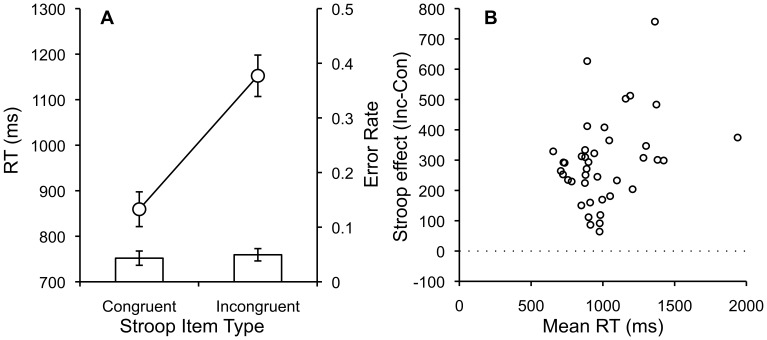
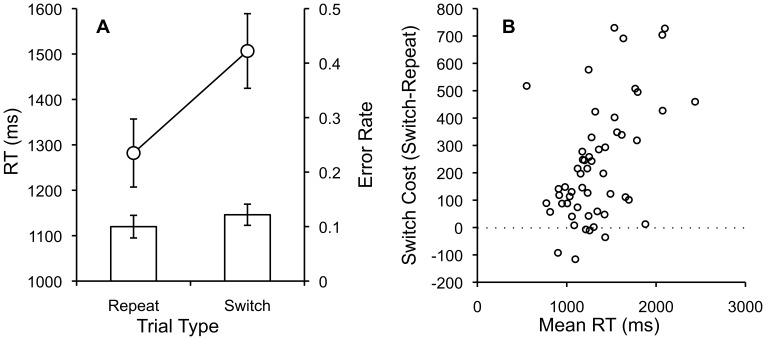
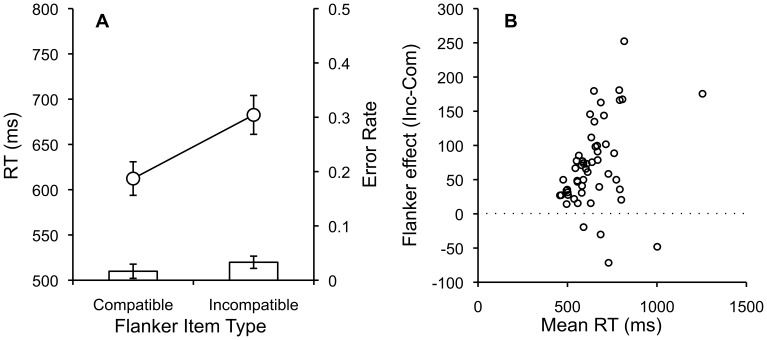
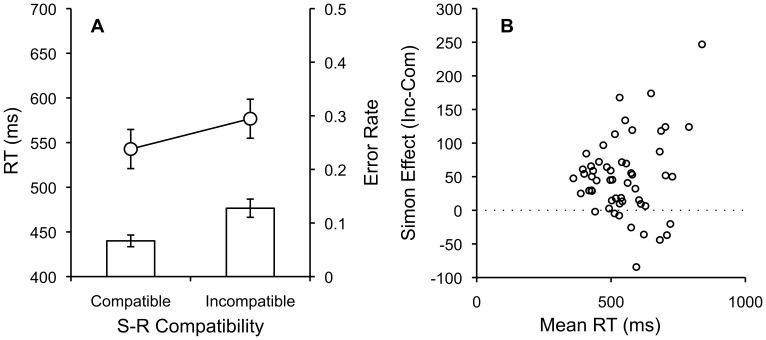
Amazon Mechanical Turk (AMT) is an online crowdsourcing service where anonymous online workers complete web-based tasks for small sums of money. The service has attracted attention from experimental psychologists interested in gathering human subject data more efficiently. However, relative to traditional laboratory studies, many aspects of the testing environment are not under the experimenter's control. In this paper, we attempt to empirically evaluate the fidelity of the AMT system for use in cognitive behavioral experiments. These types of experiment differ from simple surveys in that they require multiple trials, sustained attention from participants, comprehension of complex instructions, and millisecond accuracy for response recording and stimulus presentation. We replicate a diverse body of tasks from experimental psychology including the Stroop, Switching, Flanker, Simon, Posner Cuing, attentional blink, subliminal priming, and category learning tasks using participants recruited using AMT. While most of replications were qualitatively successful and validated the approach of collecting data anonymously online using a web-browser, others revealed disparity between laboratory results and online results. A number of important lessons were encountered in the process of conducting these replications that should be of value to other researchers.
Overview
The claims and statistics of this paper haven’t been checked yet.
Run the check — free, no account needed. It reads the open-access text and checks the sources it cites.
Integrity signals
Registry
Cites
Statistics
Figures
Verification
Claims the paper makes
The claims and statistics of this paper haven’t been checked yet.
Run the check — free, no account needed. It reads the open-access text and checks the sources it cites.
Claims other papers make about this one
Each is checked against this paper’s own text: does it say what the citing paper says it does?
In the citing paper
“Regarding online experiments in general, Crump et al. [32] showed that the data collected online using a web-browser seemed mostly in line with laboratory results, so long as the experiment methods were solid.”
From Adaptive trust calibration for human-AI collaboration (2020) · cites this paper as [32]
Self-check
Percentages, sums and reported differences re-computed from the paper’s own numbers.
The self-check needs the paper’s full text.
Citations
Cites
Studies of interference in serial verbal reactions
Stroop, J. R. (1935) · Journal of Experimental Psychology · doi:10.1037/h0054651 · Cited by 18,622
Amazon's Mechanical Turk: A New Source of Inexpensive, Yet High-Quality, Data?
Buhrmester, M., Kwang, T., & Gosling, S. D. (2011) · Perspectives on Psychological Science · doi:10.1177/1745691610393980 · Cited by 9,996
Effects of noise letters upon the identification of a target letter in a nonsearch task
Eriksen, B. A., & Eriksen, C. W. (1974) · Perception & Psychophysics · doi:10.3758/bf03203267 · Cited by 7,230
Simmons, J. P., Nelson, L. D., & Simonsohn, U. (2011) · Psychological Science · doi:10.1177/0956797611417632 · Cited by 6,567
Half a century of research on the Stroop effect: An integrative review.
MacLeod, C. M. (1991) · Psychological Bulletin · doi:10.1037/0033-2909.109.2.163 · Cited by 5,500
Running experiments on Amazon Mechanical Turk
Paolacci, G., Chandler, J., & Ipeirotis, P. G. (2010) · Judgment and Decision Making · doi:10.1017/s1930297500002205 · Cited by 3,767
Instructional manipulation checks: Detecting satisficing to increase statistical power
Oppenheimer, D. M., Meyvis, T., & Davidenko, N. (2009) · Journal of Experimental Social Psychology · doi:10.1016/j.jesp.2009.03.009 · Cited by 3,493
Conducting behavioral research on Amazon’s Mechanical Turk
Mason, W., & Suri, S. (2012) · Behavior Research Methods · doi:10.3758/s13428-011-0124-6 · Cited by 3,172
Monsell, S. (2003) · Trends in Cognitive Sciences · doi:10.1016/s1364-6613(03)00028-7 · Cited by 2,984
Components of visual orienting
Posner, M. I. (1984) · Attention and performance · Cited by 2,980
Research works printed but not linked: 1
- Ipeirotis PG (2010) Demographics of Mechanical Turk (Tech. Rep. No. CeDER-10-01). New York: New York University. Available: http://hdl.handle.net/2451/29585. Accessed 2012 Jun 1.
Cited by
Sorted by citations
Items 901–1,000 of 1,000
Within-person adaptivity in frugal judgments from memory
Filevich, E., Horn, S. S., & Kühn, S. (2017) · Psychological Research · doi:10.1007/s00426-017-0962-7 · Cited by 11
Cognitive and Emotional Outcomes of Latino Threat Narratives in News Media: An Exploratory Study
Wei, K., Booth, J. M., & Fusco, R. A. (2019) · Journal of the Society for Social Work and Research · doi:10.1086/703265 · Cited by 8
Fear of a Black (and Poor) School: Race, Class, and School Safety Policy Preferences
Dunbar, A., Kupchik, A., Hughes, C., & Lewis, R. A. (2019) · Race and Justice · doi:10.1177/2153368719881679 · Cited by 8
New measures of agency from an adaptive sensorimotor task
Wang, S., Rajananda, S., Lau, H. C., & Knotts, J. D. (2020) · PLoS ONE · doi:10.1371/journal.pone.0244113 · Cited by 8
Hocus Pocus: using comics to promote skepticism about the paranormal
Wiseman, R., Collver, J., Worth, R., & Watt, C. (2021) · Journal of Science Communication · doi:10.22323/2.20020204 · Cited by 3
Bardeen, J. R., Gorday, J. Y., & Clauss, K. E. (2021) · Psychological Reports · doi:10.1177/00332941211025260 · Cited by 8
Designing Nudge Agents that Promote Human Altruism
Hang, C., Ono, T., & Yamada, S. (2021) · Lecture notes in computer science · doi:10.1007/978-3-030-90525-5_32 · Cited by 9
Sensitivity to orientation is not unique to social attention cueing
Vestner, T., Gray, K. L. H., & Cook, R. (2022) · Scientific Reports · doi:10.1038/s41598-022-09011-4 · Cited by 7
Bejjani, C., Hoyle, R. H., & Egner, T. (2022) · Cognitive Psychology · doi:10.1016/j.cogpsych.2022.101474 · Cited by 11
Evaluating the Effect of Semantic Congruency and Valence on Multisensory Integration
Letts, E., Basharat, A., & Barnett‐Cowan, M. (2022) · Multisensory Research · doi:10.1163/22134808-bja10073 · Cited by 8
Precise display time measurement in JavaScript for web-based experiments
Lukács, G., & Gartus, A. (2022) · Behavior Research Methods · doi:10.3758/s13428-022-01835-2 · Cited by 8
Chuyin, Z., Koh, Z. H., Gallagher, R., Nishimoto, S., & Tsuchiya, N. (2022) · F1000Research · doi:10.12688/f1000research.75364.2 · Cited by 8
Spatial biases in inhibition of return
Soballa, P., Schöpper, L.-M., Frings, C., & Merz, S. (2022) · Visual Cognition · doi:10.1080/13506285.2023.2188336 · Cited by 8
Seesjärvi, E., Laine, M., Kasteenpohja, K., & Salmi, J. (2023) · Frontiers in Virtual Reality · doi:10.3389/frvir.2023.1138240 · Cited by 11
Recall and response time norms for English–Swahili word pairs and facts about Kenya
Bangert, A. S., & Heydarian, N. M. (2016) · Behavior Research Methods · doi:10.3758/s13428-015-0701-1 · Cited by 9
Kelman, A. R., Stanley, M., Barrera, A. Z., Cree, M., Heineberg, Y., & Gilbert, P. (2016) · JMIR Research Protocols · doi:10.2196/resprot.5332 · Cited by 11
Financial Surrogate Decision Making: Lessons from Applied Experimental Philosophy
Feltz, A. (2016) · The Spanish Journal of Psychology · doi:10.1017/sjp.2016.54 · Cited by 8
Training of Verbal Working Memory at Sentence Level Fails to Show Transfer
Fellman, D., Soveri, A., Waris, O., & Laine, M. (2017) · Frontiers in Communication · doi:10.3389/fcomm.2017.00014 · Cited by 8
User Perception of Numeric Contribution Semantics for Goal Models: An Exploratory Experiment
Alothman, N., Zhian, M., & Liaskos, S. (2017) · Lecture notes in computer science · doi:10.1007/978-3-319-69904-2_34 · Cited by 8
The Influence of Social Information and Self-expertise on Emergent Task Allocation in Virtual Groups
Nakayama, S., Diner, D., Holland, J. G., Bloch, G., Porfiri, M., & Nov, O. (2018) · Frontiers in Ecology and Evolution · doi:10.3389/fevo.2018.00016 · Cited by 8
Stress impacts the fidelity but not strength of emotional memories
Shermohammed, M., Davidow, J. Y., Somerville, L. H., & Murty, V. P. (2018) · Brain and Cognition · doi:10.1016/j.bandc.2018.09.001 · Cited by 8
An Eye Gaze Model for Controlling the Display of Social Status in Believable Virtual Humans
Nixon, M., DiPaola, S., & Bernardet, U. (2018) · IEEE Conference on Computational Intelligence and Games (CIG) · doi:10.1109/cig.2018.8490373 · Cited by 8
Self-other asymmetries in the perceived validity of the Implicit Association Test.
Mendonça, C., Mata, A., & Vohs, K. D. (2019) · Journal of Experimental Psychology Applied · doi:10.1037/xap0000214 · Cited by 8
It’s only rock ‘n roll (but I like it): Chord perception and rock’s liberal harmonic palette
Craton, L. G., Lee, J. H., & Krahe, P. M. (2019) · Musicae Scientiae · doi:10.1177/1029864919845023 · Cited by 8
Revisiting and extending a response latency measure of inclusion of the other in the self
Zickfeld, J., & Schubert, T. W. (2016) · Comprehensive Results in Social Psychology · doi:10.1080/23743603.2017.1298356 · Cited by 10
Evaluating the Sunk Cost Effect
Ronayne, D., Sgroi, D., & Tuckwell, A. (2021) · Journal of Economic Behavior & Organization · doi:10.1016/j.jebo.2021.03.029 · Cited by 9
Scontras, G., Badecker, W., & Fedorenko, E. G. (2017) · Cognitive Science · doi:10.1111/cogs.12495 · Cited by 8
Newall, P. W. S., Russell, A. M. T., Sharman, S., & Walasek, L. (2020) · doi:10.31234/osf.io/72uav · Cited by 8
Can You Hear Me Now? Sensitive Comparisons of Human and Machine Perception
Lepori, M. A., & Firestone, C. (2022) · Cognitive Science · doi:10.1111/cogs.13191 · Cited by 7
Input device matters for measures of behaviour in online experiments
Warburton, M., Campagnoli, C., Mon-Williams, M. A., Mushtaq, F., & Morehead, J. R. (2024) · Psychological Research · doi:10.1007/s00426-024-02065-1 · Cited by 7
Michael Man Him, I. P., & Chark, R. (2025) · International Journal of Hospitality Management · doi:10.1016/j.ijhm.2025.104118 · Cited by 9
Taub, G., Elmalech, A., & Aharony, N. (2025) · Computers in Human Behavior Reports · doi:10.1016/j.chbr.2025.100726 · Cited by 9
Training human super-recognizers’ detection and discrimination of AI-generated faces
Gray, K. L. H., Davis, J. P., Bunce, C., Noyes, E., & Ritchie, K. L. (2025) · Royal Society Open Science · doi:10.1098/rsos.250921 · Cited by 7
Boob-Engel, K. (2025) · Journal of Decision System · doi:10.1080/12460125.2025.2594620 · Cited by 9
Rethinking Representation from a Communal Perspective
Costa, M., Johnson, K. T., & Schaffner, B. F. (2017) · Political Behavior · doi:10.1007/s11109-017-9393-9 · Cited by 7
Attentional Focus Instructions Do Not Affect Choice Reaction Time
Ziv, G., & Lidor, R. (2021) · Frontiers in Psychology · doi:10.3389/fpsyg.2021.675641 · Cited by 7
Viewing Cute Images Does Not Affect Performance of Computerized Reaction Time Tasks
Ziv, G., & Fox, O. (2022) · Frontiers in Psychology · doi:10.3389/fpsyg.2021.800543 · Cited by 8
Cristaldi, F. D. P., Granziol, U., Bariletti, I., & Mento, G. (2022) · Brain Sciences · doi:10.3390/brainsci12081061 · Cited by 7
David, M. E., & Roberts, J. A. (2022) · International Journal of Human-Computer Interaction · doi:10.1080/10447318.2022.2144833 · Cited by 7
Freis, S. M., Alexander, J. D., Anderson, J. E., Corley, R. P., de la Vega, A. I., Gustavson, D. E., Vrieze, S. I., & Friedman, N. P. (2023) · Journal of Experimental Psychology General · doi:10.1037/xge0001471 · Cited by 10
A Case Study of the Validity of Web-based Visuomotor Rotation Experiments
Shyr, M. C., & Joshi, S. S. (2023) · Journal of Cognitive Neuroscience · doi:10.1162/jocn_a_02080 · Cited by 7
Betting on the House: Subjective Expectations and Market Choices
Bottan, N. L., & Truglia, R. N. P. (2024) · American Economic Journal Applied Economics · doi:10.1257/app.20230641 · Cited by 7
Surf & Turf: Effects of Ground Substrate on Perceived Threat, Enclosure, and Perceived Walkability
Stamps, A. E. (2013) · Perceptual and Motor Skills · doi:10.2466/24.26.pms.117x26z3 · Cited by 7
On informing jurors of potential sanctions.
Teitcher, J. E. F., & Scurich, N. (2017) · Law and Human Behavior · doi:10.1037/lhb0000261 · Cited by 7
On Cognitive Preferences and the Interpretability of Rule-based Models.
Fürnkranz, J., Kliegr, T., & Paulheim, H. (2018) · Cited by 7
Does it actually feel right? A replication attempt of the rounded price effect
Harms, C., Genau, H. A., Meschede, C., & Beauducel, A. (2018) · Royal Society Open Science · doi:10.1098/rsos.171127 · Cited by 10
Yu, M. S., Fischhoff, B., & Krishnamurti, T. (2019) · MDM Policy & Practice · doi:10.1177/2381468319839315 · Cited by 7
Vize, C. E., & Lynam, D. R. (2020) · European Journal of Personality · doi:10.1002/per.2241 · Cited by 8
Eyewitness identification performance is not affected by time-of-day optimality
Yaremenko, S., Sauerland, M., & Hope, L. (2021) · Scientific Reports · doi:10.1038/s41598-021-82628-z · Cited by 8
Reasons for Pack Size Purchase among US Adults Who Purchase Cigars
King, J. L., Bilić, A., & Merten, J. W. (2021) · International Journal of Environmental Research and Public Health · doi:10.3390/ijerph18157790 · Cited by 7
Memory advantage for untrustworthy faces: Replication across lab- and web-based studies
Giraudier, M., Ventura‐Bort, C., Wendt, J., Lischke, A., & Weymar, M. (2022) · PLoS ONE · doi:10.1371/journal.pone.0264034 · Cited by 11
Distributed Neural Systems Support Flexible Attention Updating during Category Learning
Weichart, E. R., Evans, D. G., Galdo, M., Bahg, G., & Turner, B. M. (2022) · Journal of Cognitive Neuroscience · doi:10.1162/jocn_a_01882 · Cited by 10
Reaction time and working memory in middle-aged gamers and non-gamers
Ziv, G., Lidor, R., & Levin, O. (2022) · Acta Psychologica · doi:10.1016/j.actpsy.2022.103666 · Cited by 8
Seeing is not Feeling the Touch from a Robot
Kunold, L. (2022) · IEEE RO-MAN · doi:10.1109/ro-man53752.2022.9900788 · Cited by 7
Willingness to Consume Fewer Animal Products: A Latent Profile Analysis
Hoang, U., Feltz, S., Offer-Westort, T., & Feltz, A. (2023) · Anthrozoös · doi:10.1080/08927936.2023.2204640 · Cited by 8
To pay or not to pay? handling crowdsourced participants who drop out from a research study
Benbunan‐Fich, R. (2023) · Ethics and Information Technology · doi:10.1007/s10676-023-09708-8 · Cited by 7
Benger, M., Wood, D. A., Kafiabadi, S., Busaidi, A. A., Guilhem, E., Lynch, J., Townend, M., Montvila, A., Siddiqui, J., Gadapa, N., et al. (2023) · Frontiers in Radiology · doi:10.3389/fradi.2023.1251825 · Cited by 7
Security auctions with cash- and equity-bids: An experimental study
Bajoori, E., Peeters, R. J. A. P., & Wolk, L. (2024) · European Economic Review · doi:10.1016/j.euroecorev.2024.104702 · Cited by 7
Neuhoff, J. G., Wayand, J. F., Ndiaye, M. C., Berkow, A. B., Bertacchi, B. R., & Benton, C. A. (2015) · Attention Perception & Psychophysics · doi:10.3758/s13414-015-0871-z · Cited by 7
Wallsten, K. J., & Tarsi, M. R. (2015) · Journalism Practice · doi:10.1080/17512786.2015.1102607 · Cited by 7
Effects of Culture and Gender on Judgments of Intent and Responsibility
Plaks, J. E., Fortune, J. L., Liang, L. H., & Robinson, J. S. (2016) · PLoS ONE · doi:10.1371/journal.pone.0154467 · Cited by 7
Sensibilité éthique : conceptualisation et proposition d’un instrument de mesure
Toti, J.-F., & Moulins, J. (2017) · Recherche et Applications en Marketing (French Edition) · doi:10.1177/0767370116689242 · Cited by 7
Jang, W., Kwak, D. H., & Ko, Y. J. (2019) · European Sport Management Quarterly · doi:10.1080/16184742.2019.1618889 · Cited by 7
Attentional priming does not enable observers to ignore salient distractors
Ásgeirsson, Á. G., & Kristjansson, A. K. (2019) · Visual Cognition · doi:10.1080/13506285.2019.1657215 · Cited by 7
Study on Patterns and Effect of Task Diversity in Software Crowdsourcing
Mejorado, D. A. M., Saremi, R., Yang, Y., & Ramírez-Márquez, J. E. (2020) · Proceedings of the ... ACM-IEEE International Symposium on Empirical Software Engineering and Measurement/International Symposium on Empirical Software Engineering and Measurement · doi:10.1145/3382494.3410689 · Cited by 7
Chadi, N., Winickoff, J. P., & Drouin, O. (2020) · International Journal of Environmental Research and Public Health · doi:10.3390/ijerph17176181 · Cited by 7
Ward, E. J., & Scholl, B. J. (2015) · Journal of Experimental Psychology Human Perception & Performance · doi:10.1037/a0038709 · Cited by 7
On the Use of Crowdsourcing Labor Markets in Research
Marinova, D. M. (2016) · Perspectives on Politics · doi:10.1017/s1537592716000104 · Cited by 7
The Effects of Categorization on Perceptual Judgment are Robust across Different Assessment Tasks
de Leeuw, J. R., Andrews, J., Livingston, K. R., & Chin, B. M. (2016) · Collabra · doi:10.1525/collabra.32 · Cited by 7
Schroeder, P. A., Dignath, D., & Janczyk, M. (2018) · Experimental Psychology (formerly Zeitschrift für Experimentelle Psychologie) · doi:10.1027/1618-3169/a000408 · Cited by 7
Investigating Properties of Phonotactic Knowledge Through Web-Based Experimentation
Pizzo, P. (2021) · Scholarworks (University of Massachusetts Amherst) · doi:10.7275/7516391.0 · Cited by 7
Empirical Evaluation of Real World TournamentsPreprint
Mattei, N., & Walsh, T. (2016) · arXiv (Cornell University) · doi:10.48550/arxiv.1608.01039 · Cited by 7
Kalimeri, K., Beiró, M. G., Bonanomi, A. G., Rosina, A., & Cattuto, C. (2019) · arXiv (Cornell University) · doi:10.48550/arxiv.1901.07876 · Cited by 7
Fordsham, N., Moss, A. J., Krumholtz, S., Roggina, T., Robinson, J., & Litman, L. (2019) · doi:10.31234/osf.io/p8bns · Cited by 7
Yun, N., & Yamada, S. (2024) · IEEE Access · doi:10.1109/access.2024.3516782 · Cited by 6
Puentes, C. P. A., & Trujillo, C. A. (2025) · International Journal of Consumer Studies · doi:10.1111/ijcs.70033 · Cited by 6
Virtual Reality experiments in the field
Quirós-Ramírez, M. A., Feineisen, A., Streuber, S., & Reips, U. (2025) · PLoS ONE · doi:10.1371/journal.pone.0318688 · Cited by 8
Grange, J. A. (2022) · Journal of Psychiatric Research · doi:10.1016/j.jpsychires.2021.12.057 · Cited by 6
Chujo, R., Suzuki, A., & Hautasaari, A. (2024) · IEICE Transactions on Information and Systems · doi:10.1587/transinf.2023hcp0009 · Cited by 6
Komatsu, T., Xie, C., & Yamada, S. (2024) · CHI Conference on Human Factors in Computing Systems · doi:10.1145/3613904.3641942 · Cited by 6
A jsPsych touchscreen extension for behavioral research on touch-enabled interfaces
Strittmatter, Y., Spitzer, M., Ging-Jehli, N. R., & Musslick, S. (2024) · Behavior Research Methods · doi:10.3758/s13428-024-02454-9 · Cited by 7
Untapped Potential: Designed Digital Trace Data in Online Survey Experiments
Macke, E., Daviss, C., & Williams-Baron, E. (2024) · Sociological Methods & Research · doi:10.1177/00491241241268770 · Cited by 7
Whitaker, M. M., Hansen, R. C., Creem-Regehr, S. H., & Stefanucci, J. K. (2024) · Attention Perception & Psychophysics · doi:10.3758/s13414-024-02942-2 · Cited by 6
Use of Mechanical Turk as a MapReduce Framework for Macular OCT Segmentation
Lee, A., Lee, C. S., Keane, P. A., & Tufail, A. (2016) · Journal of Ophthalmology · doi:10.1155/2016/6571547 · Cited by 6
The Controlled, Large Online Social Experimentation Platform (CLOSE)
Lakkaraju, K., Medina, B. E. S., Rogers, A., Trumbo, D., Speed, A., & McClain, J. T. (2015) · Lecture notes in computer science · doi:10.1007/978-3-319-16268-3_40 · Cited by 6
Anchoring effects on early autobiographical memories
Greenberg, D. L., Bishara, A. J., & Mugayar-Baldocchi, M. (2017) · Memory · doi:10.1080/09658211.2017.1297833 · Cited by 6
West, M. P., Yelderman, L. A., & Miller, M. K. (2018) · Psychology Crime and Law · doi:10.1080/1068316x.2018.1438432 · Cited by 6
Can Carelessness Be Captured? Assessing Careless Responding in Attitudes Toward Novel Stimuli
Conway, M. A., O'Shea, B., Redford, L., Pogge, G. C., Klein, R. A., & Ratliff, K. A. (2019) · Social Cognition · doi:10.1521/soco.2019.37.5.468 · Cited by 6
Grove, L., & Kukucka, J. (2020) · Psychiatry Psychology and Law · doi:10.1080/13218719.2020.1767717 · Cited by 6
Gibson, B. S., Pauszek, J. R., Trost, J. M., & Wenger, M. J. (2020) · Attention Perception & Psychophysics · doi:10.3758/s13414-020-02145-5 · Cited by 5
Barriers to emergency department usage during the COVID‐19 pandemic
Niforatos, J. D., Chaitoff, A. M., Zheutlin, A. R., Feinstein, M. M., & Raja, A. S. (2020) · Journal of the American College of Emergency Physicians Open · doi:10.1002/emp2.12316 · Cited by 6
Scalable Behavioral Authentication
Islam, M. M., Safavi–Naini, R., & Kneppers, M. (2021) · IEEE Access · doi:10.1109/access.2021.3065921 · Cited by 6
Stefanopoulos, L., Kim, B.-W., Sheppard, J., Azcona, E. A., Vike, N. L., Bari, S., Lalvani, S., Woodward, S., Maglaveras, N., Block, M., et al. (2024) · Cognitive Processing · doi:10.1007/s10339-024-01250-9 · Cited by 7
Blomberg, M. (2022) · Journal of Media Literacy Education · doi:10.23860/jmle-2022-14-1-4 · Cited by 7
Perspective-taking of Virtual Agents for Promoting Prosocial Behaviors
Hang, C., Ono, T., & Yamada, S. (2022) · International Conference on Human-Agent Interaction (HAI) · doi:10.1145/3527188.3563932 · Cited by 7
A Comparative Study on Line Bisection and Landmark Task Performance Using a Hybrid Online Setting
Strappini, F., Ben-Nun, A., & Pecchinenda, A. (2023) · Symmetry · doi:10.3390/sym15030729 · Cited by 7
Loetscher, T., Jurkovic, N. S., Michalski, S. C., Billinghurst, M., & Lee, G. (2023) · Multimodal Technologies and Interaction · doi:10.3390/mti7030032 · Cited by 6
Using Rational Choice Theory to Explore Factors Impacting Contact Tracing Application Adoption
Johnson, V., Esfahani, S. M., & Mohit, H. (2023) · Information Systems Management · doi:10.1080/10580530.2023.2196454 · Cited by 6
Uddenberg, S., Thompson, B., Vlasceanu, M., Griffiths, T. L., & Todorov, A. T. (2023) · Cognition · doi:10.1016/j.cognition.2023.105452 · Cited by 6
On the State of Reporting in Crowdsourcing Experiments and a Checklist to Aid Current Practices
Ramírez, J., Sayin, B., Baez, M., Casati, F., Cernuzzi, L., Benatallah, B., & Demartini, G. (2021) · Proceedings of the ACM on Human-Computer Interaction · doi:10.1145/3479531 · Cited by 4
Metadata
- Authors
- Crump, M. J. C., McDonnell, J. V., & Gureckis, T. M.
- Affiliations
- City University of New York (US)
- New York University (US)
- Corresponding author
- Crump, Matthew J. C.
- Venue
- PLoS ONE
- Publisher
- Public Library of Science (PLoS)
- Published
- 2013-03-13
- Volume
- 8
- Issue
- 3
- Pages
- e57410
- ISSN
- 1932-6203 (ISSN-L)
- PMC
- PMC3596391
- OpenAlex
- W2080211902
- Semantic Scholar
- d59101076dd96b6b39f58c3d3e3747e5cf5f98ab
- Cited by
- 1,617
- References
- 52
- Citations by year
- 2026: 25 · 2025: 63 · 2024: 83 · 2023: 108 · 2022: 162 · 2021: 171 · 2020: 164 · 2019: 138 · 2018: 164 · 2017: 155 · 2016: 146 · 2015: 129 · 2014: 86 · 2013: 20
- FWCI
- 192.44
- Type
- journal article
- Language
- en
- Open access
- gold
- doi.org
- Locations
- PLoS ONE (publishedVersion, cc-by)
- Europe PMC (PubMed Central) (publishedVersion, cc-by)
- PubMed Central (publishedVersion, cc-by)
- PubMed (publishedVersion)
- CUNY Academic Works (City University of New York) (submittedVersion)
- RePEc: Research Papers in Economics (submittedVersion)
- DOAJ (DOAJ: Directory of Open Access Journals) (submittedVersion, cc-by-sa)
- Topics
- Physical Sciences › Computer Science › Computer Science Applications › Mobile Crowdsensing and Crowdsourcing
- Life Sciences › Neuroscience › Cognitive Neuroscience › Neural and Behavioral Psychology Studies
- Social Sciences › Economics, Econometrics and Finance › Economics and Econometrics › Experimental Behavioral Economics Studies
- Keywords
- Amazon Mechanical Turk, online crowdsourcing, replication, Stroop task, attentional blink, subliminal priming, category learning, Simon task, flanker task, stimulus presentation
- MeSH terms
- Attention, Cues, Humans, Learning, Reaction Time, Internet, Behavioral Research, Learning Curve
About these checks
Registry, retraction, Cites and statistics results are computed, not judged, with one exception: a printed reference that no index lists is read once by a model before it counts as a citation error. Claims are extracted by a model and kept only when their quote appears verbatim in the text; each cited source is then checked, with a model’s help, for whether it says what the claim relies on. Those verdicts can be wrong — read the claim’s quote and the cited source before relying on one.
Statistics and arithmetic are recomputed, not judged.
Confidence bands are shown only for fields calibrated on our annotated test set. None is calibrated yet, so no band is shown.
What counts as a claim ›How we measure confidence ›How we check this ›
Are you an author, or do you see a problem with this page? Request a review
