

The DOI matches its Crossref record; 50 of the 52 references it cites were found in a registry or an index.
Evaluating amazon’s mechanical turk as a tool for experimental behavioral research
Open accessAbstract
Amazon Mechanical Turk (AMT) is an online crowdsourcing service where anonymous online workers complete web-based tasks for small sums of money. The service has attracted attention from experimental psychologists interested in gathering human subject data more efficiently. However, relative to traditional laboratory studies, many aspects of the testing environment are not under the experimenter's control. In this paper, we attempt to empirically evaluate the fidelity of the AMT system for use in cognitive behavioral experiments. These types of experiment differ from simple surveys in that they require multiple trials, sustained attention from participants, comprehension of complex instructions, and millisecond accuracy for response recording and stimulus presentation. We replicate a diverse body of tasks from experimental psychology including the Stroop, Switching, Flanker, Simon, Posner Cuing, attentional blink, subliminal priming, and category learning tasks using participants recruited using AMT. While most of replications were qualitatively successful and validated the approach of collecting data anonymously online using a web-browser, others revealed disparity between laboratory results and online results. A number of important lessons were encountered in the process of conducting these replications that should be of value to other researchers.
Overview
The claims and statistics of this paper haven’t been checked yet.
Run the check — free, no account needed. It reads the open-access text and checks the sources it cites.
Integrity signals
Registry
Cites
Statistics
Figures
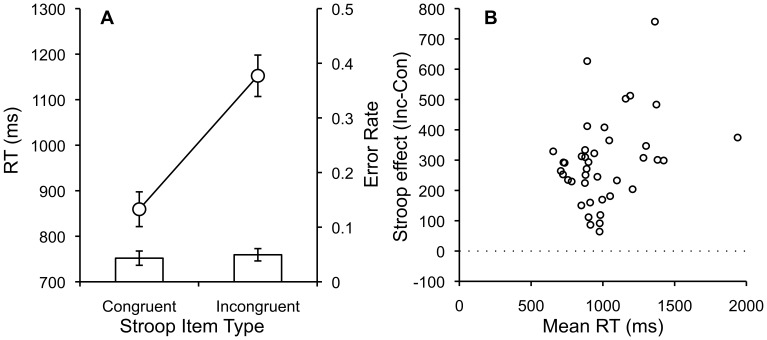
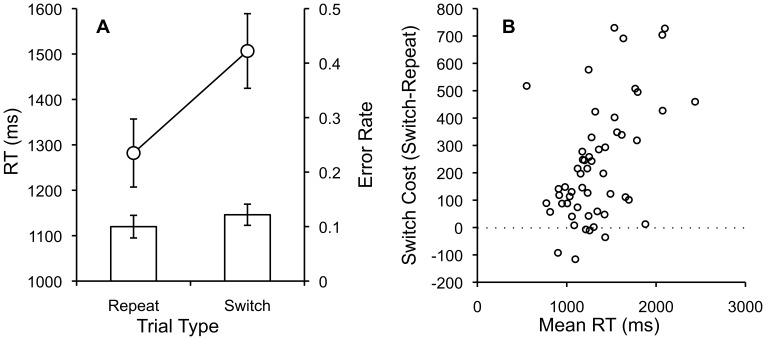
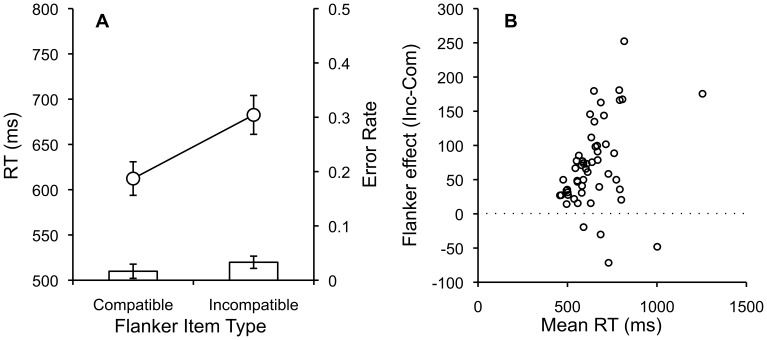
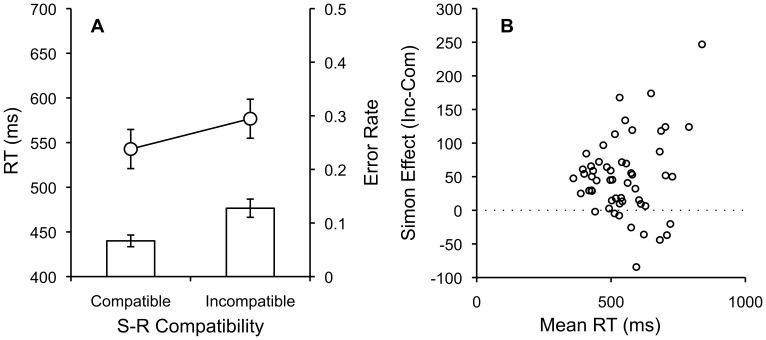
Verification
Claims the paper makes
The claims and statistics of this paper haven’t been checked yet.
Run the check — free, no account needed. It reads the open-access text and checks the sources it cites.
Claims other papers make about this one
Each is checked against this paper’s own text: does it say what the citing paper says it does?
In the citing paper
“Regarding online experiments in general, Crump et al. [32] showed that the data collected online using a web-browser seemed mostly in line with laboratory results, so long as the experiment methods were solid.”
From Adaptive trust calibration for human-AI collaboration (2020) · cites this paper as [32]
Self-check
Percentages, sums and reported differences re-computed from the paper’s own numbers.
The self-check needs the paper’s full text.
Citations
Cites
Studies of interference in serial verbal reactions
Stroop, J. R. (1935) · Journal of Experimental Psychology · doi:10.1037/h0054651 · Cited by 18,622
Amazon's Mechanical Turk: A New Source of Inexpensive, Yet High-Quality, Data?
Buhrmester, M., Kwang, T., & Gosling, S. D. (2011) · Perspectives on Psychological Science · doi:10.1177/1745691610393980 · Cited by 9,996
Effects of noise letters upon the identification of a target letter in a nonsearch task
Eriksen, B. A., & Eriksen, C. W. (1974) · Perception & Psychophysics · doi:10.3758/bf03203267 · Cited by 7,230
Simmons, J. P., Nelson, L. D., & Simonsohn, U. (2011) · Psychological Science · doi:10.1177/0956797611417632 · Cited by 6,567
Half a century of research on the Stroop effect: An integrative review.
MacLeod, C. M. (1991) · Psychological Bulletin · doi:10.1037/0033-2909.109.2.163 · Cited by 5,500
Running experiments on Amazon Mechanical Turk
Paolacci, G., Chandler, J., & Ipeirotis, P. G. (2010) · Judgment and Decision Making · doi:10.1017/s1930297500002205 · Cited by 3,767
Instructional manipulation checks: Detecting satisficing to increase statistical power
Oppenheimer, D. M., Meyvis, T., & Davidenko, N. (2009) · Journal of Experimental Social Psychology · doi:10.1016/j.jesp.2009.03.009 · Cited by 3,493
Conducting behavioral research on Amazon’s Mechanical Turk
Mason, W., & Suri, S. (2012) · Behavior Research Methods · doi:10.3758/s13428-011-0124-6 · Cited by 3,172
Monsell, S. (2003) · Trends in Cognitive Sciences · doi:10.1016/s1364-6613(03)00028-7 · Cited by 2,984
Components of visual orienting
Posner, M. I. (1984) · Attention and performance · Cited by 2,980
Research works printed but not linked: 1
- Ipeirotis PG (2010) Demographics of Mechanical Turk (Tech. Rep. No. CeDER-10-01). New York: New York University. Available: http://hdl.handle.net/2451/29585. Accessed 2012 Jun 1.
Cited by
Sorted by citations
The Unreasonable Effectiveness of Deep Features as a Perceptual Metric
Zhang, R., Isola, P., Efros, A. A., Shechtman, E., & Wang, O. (2018) · 2018 IEEE/CVF Conference on Computer Vision and Pattern Recognition · doi:10.1109/cvpr.2018.00068 · Cited by 14,623
Prolific.ac—A subject pool for online experiments
Palan, S., & Schitter, C. (2018) · Journal of Behavioral and Experimental Finance · doi:10.1016/j.jbef.2017.12.004 · Cited by 3,450
Beyond the Turk: Alternative platforms for crowdsourcing behavioral research
Peer, E., Brandimarte, L., Samat, S., & Acquisti, A. (2017) · Journal of Experimental Social Psychology · doi:10.1016/j.jesp.2017.01.006 · Cited by 2,957
Human-level concept learning through probabilistic program induction
Lake, B. M., Salakhutdinov, R., & Tenenbaum, J. B. (2015) · Science · doi:10.1126/science.aab3050 · Cited by 2,817
Research Methods in Applied Linguistics
(2021) · Research methods in applied linguistics · doi:10.1075/rmal · Cited by 2,782
Inside the Turk: Understanding Mechanical Turk as a Participant Pool
Paolacci, G., & Chandler, J. (2014) · Current Directions in Psychological Science · doi:10.1177/0963721414531598 · Cited by 2,136
Gorilla in our midst: An online behavioral experiment builder
Anwyl-Irvine, A. L., Massonnié, J., Flitton, A., Kirkham, N. Z., & Evershed, J. K. (2019) · Behavior Research Methods · doi:10.3758/s13428-019-01237-x · Cited by 2,087
jsPsych: A JavaScript library for creating behavioral experiments in a Web browser
de Leeuw, J. R. (2014) · Behavior Research Methods · doi:10.3758/s13428-014-0458-y · Cited by 1,899
Hauser, D. J., & Schwarz, N. (2016) · Behavior Research Methods · doi:10.3758/s13428-015-0578-z · Cited by 1,739
Conducting Clinical Research Using Crowdsourced Convenience Samples
Chandler, J., & Shapiro, D. (2016) · Annual Review of Clinical Psychology · doi:10.1146/annurev-clinpsy-021815-093623 · Cited by 1,072
MTurk Research: Review and Recommendations
Aguinis, H., Villamor, I., & Ramani, R. S. (2020) · Journal of Management · doi:10.1177/0149206320969787 · Cited by 1,098
Kees, J., Berry, C., Burton, S., & Sheehan, K. (2017) · Journal of Advertising · doi:10.1080/00913367.2016.1269304 · Cited by 902
Age and gender differences in self-esteem—A cross-cultural window.
(2015) · doi:10.1037/pspp0000078 · Cited by 684
Are samples drawn from Mechanical Turk valid for research on political ideology?
Clifford, S., Jewell, R., & Waggoner, P. (2015) · Research & Politics · doi:10.1177/2053168015622072 · Cited by 714
The Value of Direct Replication
Simons, D. J. (2014) · Perspectives on Psychological Science · doi:10.1177/1745691613514755 · Cited by 630
Validity and Mechanical Turk: An assessment of exclusion methods and interactive experiments
Thomas, K. A., & Clifford, S. (2017) · Computers in Human Behavior · doi:10.1016/j.chb.2017.08.038 · Cited by 625
Crowdsourcing Consumer Research
Goodman, J. K., & Paolacci, G. (2017) · Journal of Consumer Research · doi:10.1093/jcr/ucx047 · Cited by 597
Characterizing a psychiatric symptom dimension related to deficits in goal-directed control
Gillan, C. M., Kosinski, M., Whelan, R., Phelps, E. A., & Daw, N. D. (2016) · eLife · doi:10.7554/elife.11305 · Cited by 586
Large-scale analysis of test–retest reliabilities of self-regulation measures
Enkavi, A. Z., Eisenberg, I. W., Bissett, P. G., Mazza, G. L., MacKinnon, D. P., Marsch, L. A., & Poldrack, R. A. (2019) · Proceedings of the National Academy of Sciences · doi:10.1073/pnas.1818430116 · Cited by 489
Abbey, J. D., & Meloy, M. G. (2017) · Journal of Operations Management · doi:10.1016/j.jom.2017.06.001 · Cited by 522
The development and initial validation of the Decent Work Scale.
Duffy, R. D., Allan, B. A., England, J. W., Blustein, D. L., Autin, K. L., Douglass, R. P., Ferreira, J. A., & Santos, E. J. R. (2017) · Journal of Counseling Psychology · doi:10.1037/cou0000191 · Cited by 577
Lange, K., Kühn, S., & Filevich, E. (2015) · PLoS ONE · doi:10.1371/journal.pone.0130834 · Cited by 481
Internet Research in Psychology
Gosling, S. D., & Mason, W. (2015) · Annual Review of Psychology · doi:10.1146/annurev-psych-010814-015321 · Cited by 458
Amazon mechanical Turk in organizational psychology: an evaluation and practical recommendations
Cheung, J. H., Burns, D. K., Sinclair, R. R., & Sliter, M. (2017) · Journal of Business and Psychology · doi:10.1007/s10869-016-9458-5 · Cited by 474
Johnson, V., Kiser, A. I. T., Washington, R., & Torres, R. (2017) · Computers in Human Behavior · doi:10.1016/j.chb.2017.10.035 · Cited by 464
A review of experiments in tourism and hospitality
(2020) · doi:10.1016/j.annals.2020.102858 · Cited by 455
Headphone screening to facilitate web-based auditory experiments
Woods, K. J. P., Siegel, M., Traer, J. A., & McDermott, J. H. (2017) · Attention Perception & Psychophysics · doi:10.3758/s13414-017-1361-2 · Cited by 471
Inflation Expectations, Learning, and Supermarket Prices: Evidence from Survey Experiments
Cavallo, A. F., Cruces, G., & Truglia, R. N. P. (2017) · American Economic Journal Macroeconomics · doi:10.1257/mac.20150147 · Cited by 424
From Patches to Pictures (PaQ-2-PiQ): Mapping the Perceptual Space of Picture Quality
Ying, Z., Niu, H., Gupta, P., Mahajan, D., Ghadiyaram, D., & Bovik, A. (2020) · 2020 IEEE/CVF Conference on Computer Vision and Pattern Recognition (CVPR) · doi:10.1109/cvpr42600.2020.00363 · Cited by 406
Meta-analysis of emotion recognition deficits in major depressive disorder
Dalili, M. N., Penton-Voak, I. S., Harmer, C. J., & Munafò, M. R. (2015) · Psychological Medicine · doi:10.1017/s0033291714002591 · Cited by 349
The Use of Online Panel Data in Management Research: A Review and Recommendations
Porter, C. O. L. H., Outlaw, R., Gale, J., & Cho, T. S. (2018) · Journal of Management · doi:10.1177/0149206318811569 · Cited by 368
Keith, M. G., Tay, L., & Harms, P. D. (2017) · Frontiers in Psychology · doi:10.3389/fpsyg.2017.01359 · Cited by 319
Kim, J., Giroux, M., & Lee, J. C. (2021) · Psychology & Marketing · doi:10.1002/mar.21498 · Cited by 353
Crowdsourcing—Harnessing the Masses to Advance Health and Medicine, a Systematic Review
Ranard, B. L., Ha, Y. P., Meisel, Z. F., Asch, D. A., Hill, S. S., Becker, L. B., Seymour, A. K., & Merchant, R. M. (2013) · Journal of General Internal Medicine · doi:10.1007/s11606-013-2536-8 · Cited by 331
Conducting perception research over the internet: A tutorial review
Woods, A. T., Velasco, C., Levitan, C. A., Wan, X., & Spence, C. (2015) · PeerJ · doi:10.7717/peerj.1058 · Cited by 301
lab.js: A free, open, online study builder
Henninger, F., Shevchenko, Y., Mertens, U. K., Kieslich, P. J., & Hilbig, B. E. (2021) · Behavior Research Methods · doi:10.3758/s13428-019-01283-5 · Cited by 307
How supply chain analytics enables operational supply chain transparency
Zhu, S., Song, J., Hazen, B. T., Lee, K., & Cegielski, C. G. (2018) · International Journal of Physical Distribution & Logistics Management · doi:10.1108/ijpdlm-11-2017-0341 · Cited by 307
Model-based learning protects against forming habits
Gillan, C. M., Otto, A. R., Phelps, E. A., & Daw, N. D. (2015) · Cognitive, Affective, & Behavioral Neuroscience · doi:10.3758/s13415-015-0347-6 · Cited by 283
Scoundrels or Stars? Theory and Evidence on the Quality of Workers in Online Labor Markets
Farrell, A. M., Grenier, J. H., & Leiby, J. (2016) · The Accounting Review · doi:10.2308/accr-51447 · Cited by 279
No Harm in Checking: Using Factual Manipulation Checks to Assess Attentiveness in Experiments
Kane, J., & Barabas, J. (2018) · American Journal of Political Science · doi:10.1111/ajps.12396 · Cited by 276
Effect of tourist photographs on attitudes towards destination: Manifest and latent content
Kim, H., & Stepchenkova, S. O. (2015) · Tourism Management · doi:10.1016/j.tourman.2015.02.004 · Cited by 298
Laupichler, M. C., Aster, A., Haverkamp, N., & Raupach, T. (2023) · Computers in Human Behavior Reports · doi:10.1016/j.chbr.2023.100338 · Cited by 269
psiTurk: An open-source framework for conducting replicable behavioral experiments online
Gureckis, T. M., Martin, J. B., McDonnell, J. V., Rich, A. S., Markant, D. B., Coenen, A., Halpern, D., Hamrick, J. B., & Chan, P. (2015) · Behavior Research Methods · doi:10.3758/s13428-015-0642-8 · Cited by 263
de Leeuw, J. R., & Motz, B. A. (2015) · Behavior Research Methods · doi:10.3758/s13428-015-0567-2 · Cited by 242
The use of crowdsourcing in addiction science research: Amazon Mechanical Turk.
Strickland, J. C., & Stoops, W. W. (2018) · Experimental and Clinical Psychopharmacology · doi:10.1037/pha0000235 · Cited by 258
Sacrifice One For the Good of Many?: People Apply Different Moral Norms to Human and Robot Agents
Malle, B. F., Scheutz, M., Arnold, T., Voiklis, J., & Cusimano, C. (2015) · Proceedings of the Tenth Annual ACM/IEEE International Conference on Human-Robot Interaction · doi:10.1145/2696454.2696458 · Cited by 246
Adaptive trust calibration for human-AI collaboration
Okamura, K., & Yamada, S. (2020) · PLOS ONE · doi:10.1371/journal.pone.0229132 · Cited by 239
Reaction time effects in lab- versus Web-based research: Experimental evidence
Hilbig, B. E. (2015) · Behavior Research Methods · doi:10.3758/s13428-015-0678-9 · Cited by 224
Crowdsourcing Samples in Cognitive Science
Stewart, N., Chandler, J., & Paolacci, G. (2017) · Trends in Cognitive Sciences · doi:10.1016/j.tics.2017.06.007 · Cited by 233
Franklin, J. C., Fox, K. R., Franklin, C. R., Kleiman, E. M., Ribeiro, J. D., Jaroszewski, A. C., Hooley, J. M., & Nock, M. K. (2016) · Journal of Consulting and Clinical Psychology · doi:10.1037/ccp0000093 · Cited by 217
Self-Affirmation Reduces Delay Discounting of the Financially Deprived
Moeini‐Jazani, M., Albalooshi, S., & Seljeseth, I. M. (2019) · Frontiers in Psychology · doi:10.3389/fpsyg.2019.01729 · Cited by 221
Robinson, J., Rosenzweig, C., Moss, A. J., & Litman, L. (2019) · PLoS ONE · doi:10.1371/journal.pone.0226394 · Cited by 203
Boss phubbing, trust, job satisfaction and employee performance
Roberts, J. A., & David, M. E. (2019) · Personality and Individual Differences · doi:10.1016/j.paid.2019.109702 · Cited by 225
Perceptions and Price: Evidence from CEO Presentations at IPO Roadshows
Blankespoor, E., Hendricks, B. E., & Miller, G. S. (2017) · Journal of Accounting Research · doi:10.1111/1475-679x.12164 · Cited by 192
Artificial Intelligence and Declined Guilt: Retailing Morality Comparison Between Human and AI
Giroux, M., Kim, J., Lee, J. C., & Park, J. (2022) · Journal of Business Ethics · doi:10.1007/s10551-022-05056-7 · Cited by 194
Presentation and response timing accuracy in Adobe Flash and HTML5/JavaScript Web experiments
Reimers, S., & Stewart, N. (2014) · Behavior Research Methods · doi:10.3758/s13428-014-0471-1 · Cited by 171
Metacognitive Failure as a Feature of Those Holding Radical Beliefs
Rollwage, M., Dolan, R. J., & Fleming, S. M. (2018) · Current Biology · doi:10.1016/j.cub.2018.10.053 · Cited by 193
Spontaneous synchronization to speech reveals neural mechanisms facilitating language learning
Assaneo, M. F., Ripollés, P., Orpella, J., Lin, W. M., de Diego‐Balaguer, R., & Poeppel, D. (2019) · Nature Neuroscience · doi:10.1038/s41593-019-0353-z · Cited by 199
Prosocial Conformity: Prosocial Norms Generalize Across Behavior and Empathy
Nook, E. C., Ong, D. C., Morelli, S. A., Mitchell, J. P., & Zaki, J. (2016) · Personality and Social Psychology Bulletin · doi:10.1177/0146167216649932 · Cited by 186
Cognitive Control Predicts Use of Model-based Reinforcement Learning
Otto, A. R., Skatova, A., Madlon‐Kay, S., & Daw, N. D. (2014) · Journal of Cognitive Neuroscience · doi:10.1162/jocn_a_00709 · Cited by 202
Li, Q., Joo, S. J., Yeatman, J. D., & Reinecke, K. (2020) · Scientific Reports · doi:10.1038/s41598-019-57204-1 · Cited by 185
Inferring word meanings by assuming that speakers are informative
Frank, M. C., & Goodman, N. D. (2014) · Cognitive Psychology · doi:10.1016/j.cogpsych.2014.08.002 · Cited by 179
Stritch, J. M., Pedersen, M. J., & Taggart, G. (2017) · International Public Management Journal · doi:10.1080/10967494.2016.1276493 · Cited by 181
Miller, J. D., Crowe, M., Weiss, B., Maples-Keller, J. L., & Lynam, D. R. (2017) · Personality Disorders Theory Research and Treatment · doi:10.1037/per0000191 · Cited by 179
Noyes, E., Davis, J. P., Petrov, N., Gray, K. L. H., & Ritchie, K. L. (2021) · Royal Society Open Science · doi:10.1098/rsos.201169 · Cited by 185
QRTEngine: An easy solution for running online reaction time experiments using Qualtrics
Barnhoorn, J. S., Haasnoot, E., Bocanegra, B. R., & van Steenbergen, H. (2015) · Behavior Research Methods · doi:10.3758/s13428-014-0530-7 · Cited by 166
Using Crowdsourcing Websites for Sociological Research: The Case of Amazon Mechanical Turk
Shank, D. B. (2015) · The American Sociologist · doi:10.1007/s12108-015-9266-9 · Cited by 176
Mueller, M. L., Dunlosky, J. T., Tauber, S. K., & Rhodes, M. G. (2013) · Journal of Memory and Language · doi:10.1016/j.jml.2013.09.007 · Cited by 173
Visual working memory directly alters perception
Teng, C., & Kravitz, D. J. (2019) · Nature Human Behaviour · doi:10.1038/s41562-019-0640-4 · Cited by 169
Strategic offloading of delayed intentions into the external environment
Gilbert, S. J. (2015) · Quarterly Journal of Experimental Psychology · doi:10.1080/17470218.2014.972963 · Cited by 164
Lukasik, K. M., Waris, O., Soveri, A., Lehtonen, M., & Laine, M. (2019) · Frontiers in Psychology · doi:10.3389/fpsyg.2019.00004 · Cited by 177
Gilbert, S. J. (2015) · Consciousness and Cognition · doi:10.1016/j.concog.2015.01.006 · Cited by 170
A Note on the Use of Survey Research Firms to Enable Empirical Data Collection
Schoenherr, T., Ellram, L. M., & Tate, W. L. (2015) · Journal of Business Logistics · doi:10.1111/jbl.12092 · Cited by 169
Studying determinants of crowd-shipping use
Punel, A., Ermagun, A., & Stathopoulos, A. (2018) · Travel Behaviour and Society · doi:10.1016/j.tbs.2018.03.005 · Cited by 166
Building, Hosting and Recruiting: A Brief Introduction to Running Behavioral Experiments Online
Sauter, M., Draschkow, D., & Mack, W. (2020) · Brain Sciences · doi:10.3390/brainsci10040251 · Cited by 164
Online psychophysics: reaction time effects in cognitive experiments
Semmelmann, K., & Weigelt, S. (2016) · Behavior Research Methods · doi:10.3758/s13428-016-0783-4 · Cited by 180
Mechanical Turk data collection in addiction research: utility, concerns and best practices
Mellis, A. M., & Bickel, W. K. (2020) · Addiction · doi:10.1111/add.15032 · Cited by 175
A High Bar or a Double Standard? Gender, Competence, and Information in Political Campaigns
Ditonto, T. (2016) · Political Behavior · doi:10.1007/s11109-016-9357-5 · Cited by 165
Why women don’t run: Experimental evidence on gender differences in political competition aversion
Preece, J., & Stoddard, O. B. (2015) · Journal of Economic Behavior & Organization · doi:10.1016/j.jebo.2015.04.019 · Cited by 161
Necka, E. A., Cacioppo, S., Norman, G. J., & Cacioppo, J. T. (2016) · PLoS ONE · doi:10.1371/journal.pone.0157732 · Cited by 183
Serving You Depletes Me? A Leader-Centric Examination of Servant Leadership Behaviors
Liao, C., Lee, H. W., Johnson, R. E., & Lin, S. (2020) · Journal of Management · doi:10.1177/0149206320906883 · Cited by 181
Batching smartphone notifications can improve well-being
Fitz, N., Kushlev, K., Jagannathan, R., Lewis, T., Paliwal, D., & Ariely, D. (2019) · Computers in Human Behavior · doi:10.1016/j.chb.2019.07.016 · Cited by 195
The role of a “common is moral” heuristic in the stability and change of moral norms.
Lindström, B., Jangard, S., Selbing, I., & Olsson, A. (2017) · Journal of Experimental Psychology General · doi:10.1037/xge0000365 · Cited by 162
Improving the Efficacy of Games for Change Using Personalization Models
Orji, R., Mandryk, R. L., & Vassileva, J. (2017) · ACM Transactions on Computer-Human Interaction · doi:10.1145/3119929 · Cited by 177
Comparing attentional disengagement between prolific and MTurk samples
Albert, D. A., & Smilek, D. (2023) · Scientific Reports · doi:10.1038/s41598-023-46048-5 · Cited by 166
Common Concerns with MTurk as a Participant Pool: Evidence and SolutionsPreprint
Hauser, D., Paolacci, G., & Chandler, J. (2018) · doi:10.31234/osf.io/uq45c · Cited by 162
Atoms of recognition in human and computer vision
Ullman, S., Assif, L., Fetaya, E., & Harari, D. (2016) · Proceedings of the National Academy of Sciences · doi:10.1073/pnas.1513198113 · Cited by 158
Jack, A. I., Friedman, J. P., Boyatzis, R. E., & Taylor, S. N. (2016) · PLoS ONE · doi:10.1371/journal.pone.0149989 · Cited by 166
The racially diverse affective expression (RADIATE) face stimulus set
Conley, M. I., Dellarco, D. V., Rubien-Thomas, E., Cohen, A. O., Cervera, A., Tottenham, N., & Casey, B. J. (2018) · Psychiatry Research · doi:10.1016/j.psychres.2018.04.066 · Cited by 174
The opportunity cost of time modulates cognitive effort
Otto, A. R., & Daw, N. D. (2019) · Neuropsychologia · doi:10.1016/j.neuropsychologia.2018.05.006 · Cited by 138
Mapping of Crowdsourcing in Health: Systematic Review
Créquit, P., Mansouri, G., Benchoufi, M., Vivot, A., & Ravaud, P. (2018) · Journal of Medical Internet Research · doi:10.2196/jmir.9330 · Cited by 135
Determinants of congruency sequence effects without learning and memory confounds.
Weissman, D. H., Jiang, J., & Egner, T. (2014) · Journal of Experimental Psychology Human Perception & Performance · doi:10.1037/a0037454 · Cited by 153
Episodic memories predict adaptive value-based decision-making.
Murty, V. P., FeldmanHall, O., Hunter, L. E., Phelps, E. A., & Davachi, L. (2016) · Journal of Experimental Psychology General · doi:10.1037/xge0000158 · Cited by 149
Influencing climate change attitudes in the United States: A systematic review and meta-analysis
Rode, J. B., Dent, A. L., Benedict, C. N., Brosnahan, D., Martinez, R. L., & Ditto, P. H. (2021) · Journal of Environmental Psychology · doi:10.1016/j.jenvp.2021.101623 · Cited by 164
Advantages and Disadvantages of Using Internet-Based Survey Methods in Aviation-Related Research
Rice, S. C., Winter, S. R., Doherty, S. M., & Milner, M. N. (2017) · Journal of Aviation Technology and Engineering · doi:10.7771/2159-6670.1160 · Cited by 185
Saravi, B., Hassel, F., Ülkümen, S., Zink, A., Shavlokhova, V., Couillard‐Després, S., Boeker, M., Obid, P., & Lang, G. M. (2022) · Journal of Personalized Medicine · doi:10.3390/jpm12040509 · Cited by 146
Jones, D. N. (2014) · Personality and Individual Differences · doi:10.1016/j.paid.2014.01.030 · Cited by 137
The smarter, the better?! Customer well-being, engagement, and perceptions in smart service systems
Henkens, B., Verleye, K., & Larivière, B. (2020) · International Journal of Research in Marketing · doi:10.1016/j.ijresmar.2020.09.006 · Cited by 164
Formalizing Neurath’s ship: approximate algorithms for online causal learning.
Bramley, N. R., Dayan, P., Griffiths, T. L., & Lagnado, D. A. (2017) · Psychological Review · doi:10.1037/rev0000061 · Cited by 136
Using MTurk to Distribute a Survey or Experiment: Methodological Considerations
Hunt, N. C., & Scheetz, A. M. (2018) · Journal of Information Systems · doi:10.2308/isys-52021 · Cited by 141
Metadata
- Authors
- Crump, M. J. C., McDonnell, J. V., & Gureckis, T. M.
- Affiliations
- City University of New York (US)
- New York University (US)
- Corresponding author
- Crump, Matthew J. C.
- Venue
- PLoS ONE
- Publisher
- Public Library of Science (PLoS)
- Published
- 2013-03-13
- Volume
- 8
- Issue
- 3
- Pages
- e57410
- ISSN
- 1932-6203 (ISSN-L)
- PMC
- PMC3596391
- OpenAlex
- W2080211902
- Semantic Scholar
- d59101076dd96b6b39f58c3d3e3747e5cf5f98ab
- Cited by
- 1,617
- References
- 52
- Citations by year
- 2026: 25 · 2025: 63 · 2024: 83 · 2023: 108 · 2022: 162 · 2021: 171 · 2020: 164 · 2019: 138 · 2018: 164 · 2017: 155 · 2016: 146 · 2015: 129 · 2014: 86 · 2013: 20
- FWCI
- 192.44
- Type
- journal article
- Language
- en
- Open access
- gold
- doi.org
- Locations
- PLoS ONE (publishedVersion, cc-by)
- Europe PMC (PubMed Central) (publishedVersion, cc-by)
- PubMed Central (publishedVersion, cc-by)
- PubMed (publishedVersion)
- CUNY Academic Works (City University of New York) (submittedVersion)
- RePEc: Research Papers in Economics (submittedVersion)
- DOAJ (DOAJ: Directory of Open Access Journals) (submittedVersion, cc-by-sa)
- Topics
- Physical Sciences › Computer Science › Computer Science Applications › Mobile Crowdsensing and Crowdsourcing
- Life Sciences › Neuroscience › Cognitive Neuroscience › Neural and Behavioral Psychology Studies
- Social Sciences › Economics, Econometrics and Finance › Economics and Econometrics › Experimental Behavioral Economics Studies
- Keywords
- Amazon Mechanical Turk, online crowdsourcing, replication, Stroop task, attentional blink, subliminal priming, category learning, Simon task, flanker task, stimulus presentation
- MeSH terms
- Attention, Cues, Humans, Learning, Reaction Time, Internet, Behavioral Research, Learning Curve
About these checks
Registry, retraction, Cites and statistics results are computed, not judged, with one exception: a printed reference that no index lists is read once by a model before it counts as a citation error. Claims are extracted by a model and kept only when their quote appears verbatim in the text; each cited source is then checked, with a model’s help, for whether it says what the claim relies on. Those verdicts can be wrong — read the claim’s quote and the cited source before relying on one.
Statistics and arithmetic are recomputed, not judged.
Confidence bands are shown only for fields calibrated on our annotated test set. None is calibrated yet, so no band is shown.
What counts as a claim ›How we measure confidence ›How we check this ›
Are you an author, or do you see a problem with this page? Request a review
