

The DOI matches its Crossref record; 50 of the 52 references it cites were found in a registry or an index.
Evaluating amazon’s mechanical turk as a tool for experimental behavioral research
Open accessAbstract
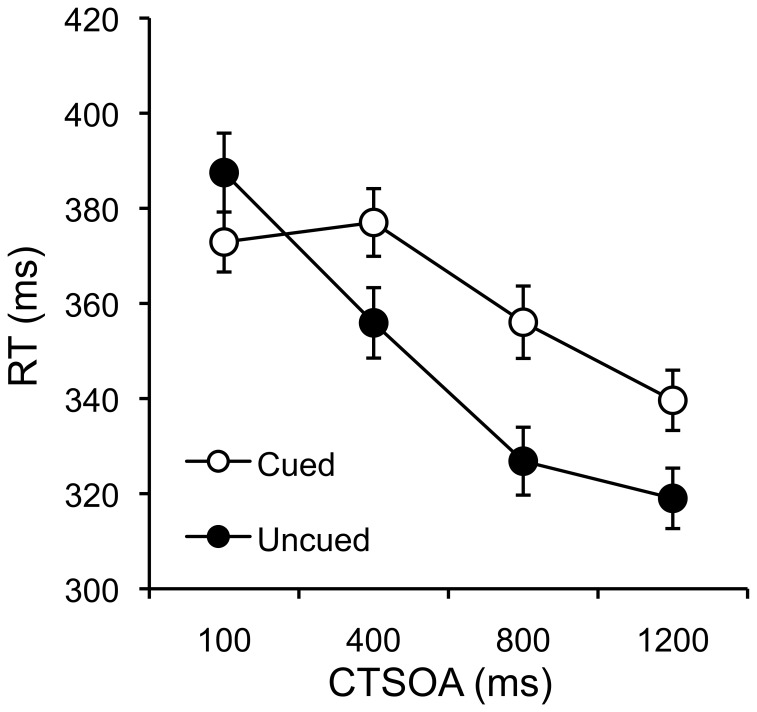
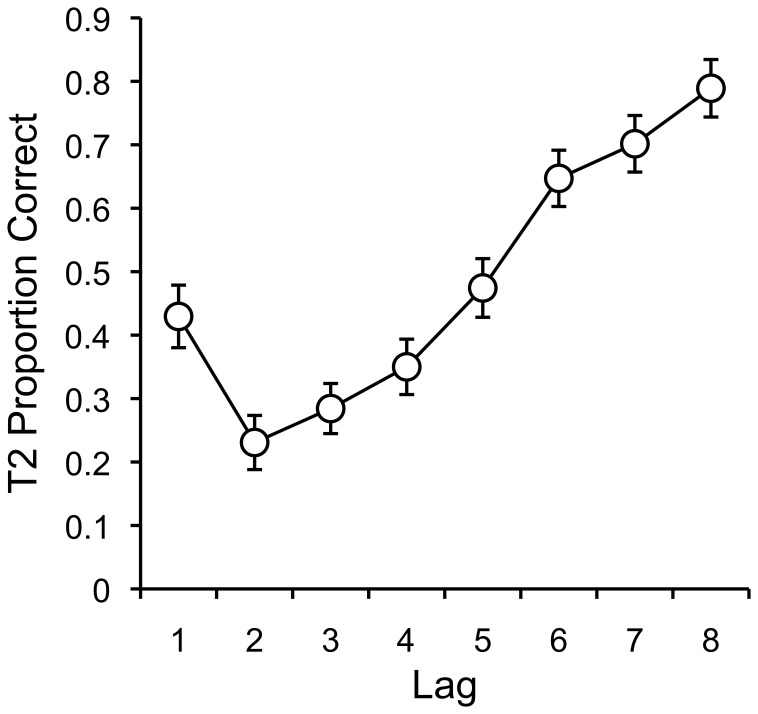
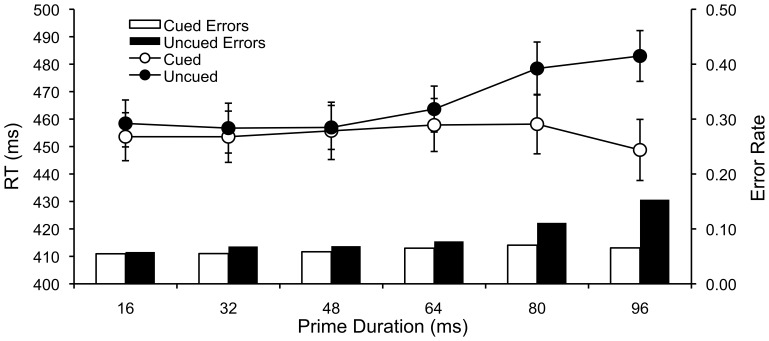
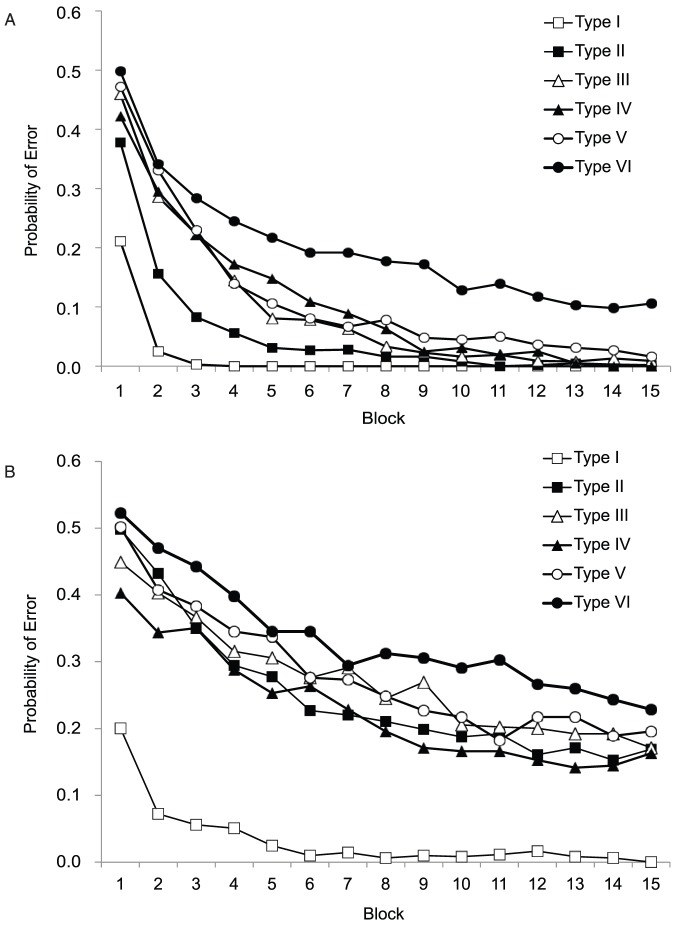
Amazon Mechanical Turk (AMT) is an online crowdsourcing service where anonymous online workers complete web-based tasks for small sums of money. The service has attracted attention from experimental psychologists interested in gathering human subject data more efficiently. However, relative to traditional laboratory studies, many aspects of the testing environment are not under the experimenter's control. In this paper, we attempt to empirically evaluate the fidelity of the AMT system for use in cognitive behavioral experiments. These types of experiment differ from simple surveys in that they require multiple trials, sustained attention from participants, comprehension of complex instructions, and millisecond accuracy for response recording and stimulus presentation. We replicate a diverse body of tasks from experimental psychology including the Stroop, Switching, Flanker, Simon, Posner Cuing, attentional blink, subliminal priming, and category learning tasks using participants recruited using AMT. While most of replications were qualitatively successful and validated the approach of collecting data anonymously online using a web-browser, others revealed disparity between laboratory results and online results. A number of important lessons were encountered in the process of conducting these replications that should be of value to other researchers.
Overview
The claims and statistics of this paper haven’t been checked yet.
Run the check — free, no account needed. It reads the open-access text and checks the sources it cites.
Integrity signals
Registry
Cites
Statistics
Figures
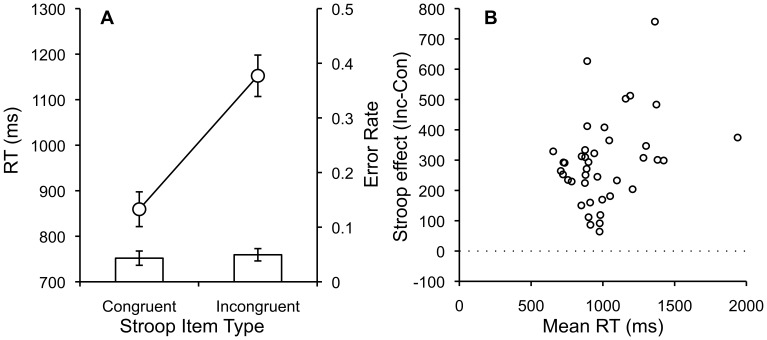
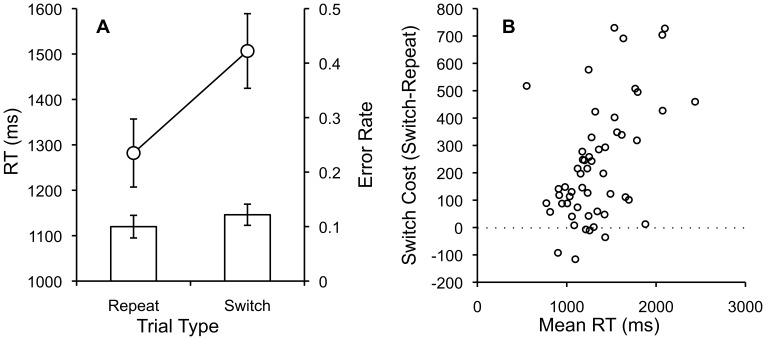
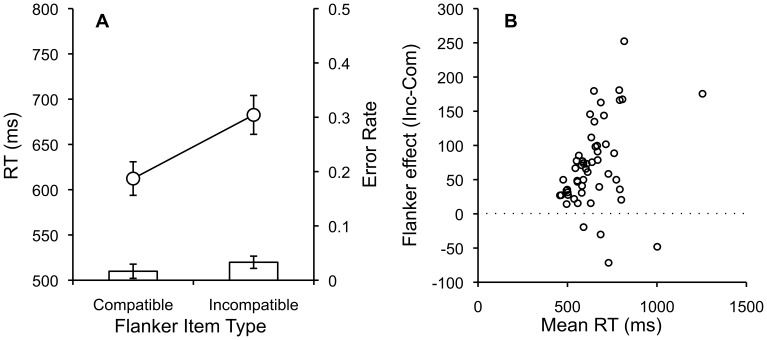
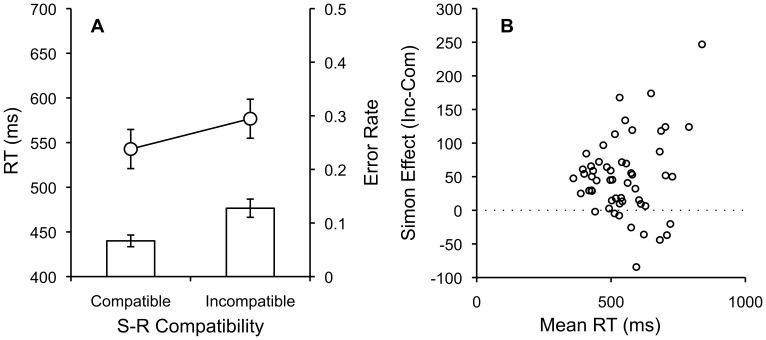
Verification
Claims the paper makes
The claims and statistics of this paper haven’t been checked yet.
Run the check — free, no account needed. It reads the open-access text and checks the sources it cites.
Claims other papers make about this one
Each is checked against this paper’s own text: does it say what the citing paper says it does?
In the citing paper
“Regarding online experiments in general, Crump et al. [32] showed that the data collected online using a web-browser seemed mostly in line with laboratory results, so long as the experiment methods were solid.”
From Adaptive trust calibration for human-AI collaboration (2020) · cites this paper as [32]
Self-check
Percentages, sums and reported differences re-computed from the paper’s own numbers.
The self-check needs the paper’s full text.
Citations
Cites
Studies of interference in serial verbal reactions
Stroop, J. R. (1935) · Journal of Experimental Psychology · doi:10.1037/h0054651 · Cited by 18,622
Amazon's Mechanical Turk: A New Source of Inexpensive, Yet High-Quality, Data?
Buhrmester, M., Kwang, T., & Gosling, S. D. (2011) · Perspectives on Psychological Science · doi:10.1177/1745691610393980 · Cited by 9,996
Effects of noise letters upon the identification of a target letter in a nonsearch task
Eriksen, B. A., & Eriksen, C. W. (1974) · Perception & Psychophysics · doi:10.3758/bf03203267 · Cited by 7,230
Simmons, J. P., Nelson, L. D., & Simonsohn, U. (2011) · Psychological Science · doi:10.1177/0956797611417632 · Cited by 6,567
Half a century of research on the Stroop effect: An integrative review.
MacLeod, C. M. (1991) · Psychological Bulletin · doi:10.1037/0033-2909.109.2.163 · Cited by 5,500
Running experiments on Amazon Mechanical Turk
Paolacci, G., Chandler, J., & Ipeirotis, P. G. (2010) · Judgment and Decision Making · doi:10.1017/s1930297500002205 · Cited by 3,767
Instructional manipulation checks: Detecting satisficing to increase statistical power
Oppenheimer, D. M., Meyvis, T., & Davidenko, N. (2009) · Journal of Experimental Social Psychology · doi:10.1016/j.jesp.2009.03.009 · Cited by 3,493
Conducting behavioral research on Amazon’s Mechanical Turk
Mason, W., & Suri, S. (2012) · Behavior Research Methods · doi:10.3758/s13428-011-0124-6 · Cited by 3,172
Monsell, S. (2003) · Trends in Cognitive Sciences · doi:10.1016/s1364-6613(03)00028-7 · Cited by 2,984
Components of visual orienting
Posner, M. I. (1984) · Attention and performance · Cited by 2,980
Research works printed but not linked: 1
- Ipeirotis PG (2010) Demographics of Mechanical Turk (Tech. Rep. No. CeDER-10-01). New York: New York University. Available: http://hdl.handle.net/2451/29585. Accessed 2012 Jun 1.
Cited by
Sorted by citations
Items 301–400 of 1,000
Validation of the Beneficial and Harmful Work-Related Social Media Behavioral Taxonomies
Landers, R. N., & Callan, R. C. (2014) · Social Science Computer Review · doi:10.1177/0894439314524891 · Cited by 50
SNAP Judgments: A Small n Acceptability Paradigm (SNAP) for Linguistic Acceptability Judgments
Mahowald, K., Graff, P., Hartman, J., & Gibson, E. A. F. (2016) · Language · doi:10.1353/lan.2016.0052 · Cited by 50
Fast or frugal, but not both: Decision heuristics under time pressure.
Bobadilla-Suarez, S., & Love, B. C. (2017) · Journal of Experimental Psychology Learning Memory and Cognition · doi:10.1037/xlm0000419 · Cited by 53
Affect toward the self and self-injury stimuli as potential risk factors for nonsuicidal self-injury
Fox, K. R., Ribeiro, J. D., Kleiman, E. M., Hooley, J. M., Nock, M. K., & Franklin, J. C. (2017) · Psychiatry Research · doi:10.1016/j.psychres.2017.11.083 · Cited by 54
Task duration and task order do not matter: no effect on self-control performance
Wolff, W., Sieber, V., Bieleke, M., & Englert, C. (2019) · Psychological Research · doi:10.1007/s00426-019-01230-1 · Cited by 51
It’s all relative: Reward-induced cognitive control modulation depends on context.
Otto, A. R., & Vassena, E. (2020) · Journal of Experimental Psychology General · doi:10.1037/xge0000842 · Cited by 50
Semantic influences on episodic memory distortions.
Tompary, A., & Thompson‐Schill, S. L. (2021) · Journal of Experimental Psychology General · doi:10.1037/xge0001017 · Cited by 51
Péer, E., Samat, S., Brandimarte, L., & Acquisti, A. (2016) · SSRN Electronic Journal · doi:10.2139/ssrn.2594183 · Cited by 44
Hagen, T., & Laeng, B. (2017) · i-Perception · doi:10.1177/2041669517735542 · Cited by 49
Resilience vs. Adaptation: Framing and action
Wong‐Parodi, G., Fischhoff, B., & Strauss, B. (2015) · Climate Risk Management · doi:10.1016/j.crm.2015.07.002 · Cited by 59
“Natural” labeling and consumers’ sentimental pastoral notion
Amos, C., Pentina, I., Hawkins, T. G., & Davis, N. M. (2014) · Journal of Product & Brand Management · doi:10.1108/jpbm-03-2014-0516 · Cited by 49
Conducting Online Behavioral Research Using Crowdsourcing Services in Japan
Majima, Y., Nishiyama, K., Nishihara, A., & Hata, R. (2017) · Frontiers in Psychology · doi:10.3389/fpsyg.2017.00378 · Cited by 51
Time in causal structure learning.
Bramley, N. R., Gerstenberg, T., Mayrhofer, R., & Lagnado, D. A. (2018) · Journal of Experimental Psychology Learning Memory and Cognition · doi:10.1037/xlm0000548 · Cited by 52
Cross-Domain Association in Metacognitive Efficiency Depends on First-Order Task Types
Lee, A., Ruby, E., Giles, N., & Lau, H. C. (2018) · Frontiers in Psychology · doi:10.3389/fpsyg.2018.02464 · Cited by 49
Expectations affect physical causation judgments.
Gerstenberg, T., & Icard, T. (2019) · Journal of Experimental Psychology General · doi:10.1037/xge0000670 · Cited by 50
Scarampi, C., & Gilbert, S. J. (2020) · Memory · doi:10.1080/09658211.2020.1764974 · Cited by 51
Perin, S., Buckley, R. F., Pase, M. P., Yassi, N., Lavale, A., Wilson, P. H., Schembri, A. J., Maruff, P. T., & Lim, Y. Y. (2020) · Alzheimer s & Dementia Translational Research & Clinical Interventions · doi:10.1002/trc2.12043 · Cited by 49
Growing evidence for separate neural mechanisms for attention and consciousness
Maier, A., & Tsuchiya, N. (2020) · Attention Perception & Psychophysics · doi:10.3758/s13414-020-02146-4 · Cited by 47
The credibility of exposure therapy: Does the theoretical rationale matter?
Arch, J. J., Twohig, M. P., Deacon, B. J., Landy, L. N., & Bluett, E. J. (2015) · Behaviour Research and Therapy · doi:10.1016/j.brat.2015.05.008 · Cited by 47
Attitudes Toward Robots as Equipment and Coworkers and the Impact of Robot Autonomy Level
Latikka, R., Savela, N., Koivula, A., & Oksanen, A. (2021) · International Journal of Social Robotics · doi:10.1007/s12369-020-00743-9 · Cited by 50
Briones, E. M., & Benham, G. (2017) · Behavior Research Methods · doi:10.3758/s13428-016-0710-8 · Cited by 48
Diminished Control in Crowdsourcing
Gould, S. J. J., Cox, A. L., & Brumby, D. P. (2016) · ACM Transactions on Computer-Human Interaction · doi:10.1145/2928269 · Cited by 51
Wallsten, K., Nteta, T., McCarthy, L. A., & Tarsi, M. R. (2017) · Political Research Quarterly · doi:10.1177/1065912916685186 · Cited by 42
Strickland, J. C., & Stoops, W. W. (2018) · Journal of the Experimental Analysis of Behavior · doi:10.1002/jeab.445 · Cited by 47
Crowdsourcing visual perception experiments: a case of contrast threshold
Sasaki, K., & Yamada, Y. (2019) · PeerJ · doi:10.7717/peerj.8339 · Cited by 54
Evaluating the sunk cost effect
Ronayne, D., Sgroi, D., & Tuckwell, A. (2020) · Warwick Research Archive Portal (University of Warwick) · doi:10.82444/warw.33805390 · Cited by 53
Torous, J. B., Staples, P. C., Fenstermacher, E., Dean, J., & Keshavan, M. S. (2016) · Frontiers in Human Neuroscience · doi:10.3389/fnhum.2016.00180 · Cited by 46
Which Information Matters? Measuring Landlord Assessment of Tenant Screening Reports
So, W. (2022) · Housing Policy Debate · doi:10.1080/10511482.2022.2113815 · Cited by 50
A Random-Dot Kinematogram for Web-Based Vision Research
Rajananda, S., Lau, H. C., & Odegaard, B. (2018) · Journal of Open Research Software · doi:10.5334/jors.194 · Cited by 47
Believing What You're Told: Politeness and Scalar Inferences
Mazzarella, D., Trouche, E., Mercier, H., & Noveck, I. A. (2018) · Frontiers in Psychology · doi:10.3389/fpsyg.2018.00908 · Cited by 45
Woestehoff, S. A., & Meissner, C. A. (2016) · Law and Human Behavior · doi:10.1037/lhb0000201 · Cited by 46
A thousand studies for the price of one: Accelerating psychological science with Pushkin
Hartshorne, J. K., de Leeuw, J. R., Goodman, N. D., Jennings, M. V., & O’Donnell, T. J. (2019) · Behavior Research Methods · doi:10.3758/s13428-018-1155-z · Cited by 44
Examining broad intellectual abilities obtained within an mTurk internet sample
Merz, Z. C., Lace, J. W., & Eisenstein, A. M. (2020) · Current Psychology · doi:10.1007/s12144-020-00741-0 · Cited by 52
Woods, A. T., Spence, C. J., Butcher, N. L., & Deroy, O. D. (2013) · i-Perception · doi:10.1068/i0586 · Cited by 46
A theoretical framework to improve the quality of manually acquired data
Haegemans, T., Snoeck, M., & Lemahieu, W. (2018) · Information & Management · doi:10.1016/j.im.2018.05.014 · Cited by 47
Malle, B. F., Scheutz, M. J., Forlizzi, J., & Voiklis, J. (2016) · doi:10.5555/2906831.2906854 · Cited by 45
The emergence of linguistic structure in an online iterated learning task
Beckner, C., Pierrehumbert, J. B., & Hay, J. B. (2017) · Journal of Language Evolution · doi:10.1093/jole/lzx001 · Cited by 44
Improving the Replicability of Psychological Science Through Pedagogy
Hawkins, R. X. D., Smith, E. N., Au, C., Arias, J. M., Catapano, R., Hermann, E., Keil, M., Lampinen, A. K., Raposo, S., Reynolds, J., et al. (2018) · Advances in Methods and Practices in Psychological Science · doi:10.1177/2515245917740427 · Cited by 46
Cuskley, C. F., Dingemanse, M., Kirby, S., & van Leeuwen, T. M. (2019) · Behavior Research Methods · doi:10.3758/s13428-019-01203-7 · Cited by 47
Taube, O., Ranney, M. A., Henn, L., & Kaiser, F. G. (2021) · Journal of Environmental Psychology · doi:10.1016/j.jenvp.2021.101549 · Cited by 63
Female Economic Dependence and the Morality of Promiscuity
Price, M. E., Pound, N., & Scott, I. M. L. (2014) · Archives of Sexual Behavior · doi:10.1007/s10508-014-0320-4 · Cited by 44
What accounts for individual differences in susceptibility to the McGurk effect?
Brown, V. A., Hedayati, M., Zanger, A., Mayn, S., Ray, L., Dillman-Hasso, N. H., & Strand, J. F. (2018) · PLoS ONE · doi:10.1371/journal.pone.0207160 · Cited by 43
Saeri, A. K., Iyer, A., & Louis, W. R. (2015) · Analyses of Social Issues and Public Policy · doi:10.1111/asap.12081 · Cited by 35
Exploratory decision-making as a function of lifelong experience, not cognitive decline.
Blanco, N. J., Love, B. C., Ramscar, M., Otto, A. R., Smayda, K., & Maddox, W. T. (2016) · Journal of Experimental Psychology General · doi:10.1037/xge0000133 · Cited by 45
Categories of Large Numbers in Line Estimation
Landy, D. H., Charlesworth, A., & Ottmar, E. (2016) · Cognitive Science · doi:10.1111/cogs.12342 · Cited by 45
A general account of peripheral encoding also predicts scene perception performance
Ehinger, K. A., & Rosenholtz, R. E. (2016) · Journal of Vision · doi:10.1167/16.2.13 · Cited by 45
The Support for Economic Inequality Scale: Development and adjudication
Wiwad, D., Mercier, B., Maraun, M. D., Robinson, A. R., Piff, P. K., Aknin, L. B., & Shariff, A. (2019) · PLoS ONE · doi:10.1371/journal.pone.0218685 · Cited by 45
Is an Apple Like a Fruit? A Study on Comparison and Categorisation Statements
Rubio‐Fernández, P., Geurts, B., & Cummins, C. (2016) · Review of Philosophy and Psychology · doi:10.1007/s13164-016-0305-4 · Cited by 42
Bae, M. (2022) · Internet Research · doi:10.1108/intr-05-2021-0269 · Cited by 52
The Burden for High-Quality Online Data Collection Lies With Researchers, Not Recruitment Platforms
Cuskley, C. F., & Sulik, J. (2024) · Perspectives on Psychological Science · doi:10.1177/17456916241242734 · Cited by 48
Robinson, E., Aveyard, P. N., & Jebb, S. A. (2014) · Obesity · doi:10.1002/oby.20976 · Cited by 43
U Can Touch This: How Tablets Can Be Used to Study Cognitive Development
Semmelmann, K., Nordt, M., Sommer, K., Röhnke, R., Mount, L., Prüfer, H., Terwiel, S., Meissner, T. W., Koldewyn, K., & Weigelt, S. (2016) · Frontiers in Psychology · doi:10.3389/fpsyg.2016.01021 · Cited by 42
Analyzing crowdsourced ratings of speech-based take-over requests for automated driving
Bazilinskyy, P., & de Winter, J. (2017) · Applied Ergonomics · doi:10.1016/j.apergo.2017.05.001 · Cited by 48
Flowe, H. D., Colloff, M. F., Karoğlu, N., Zelek, K., Ryder, H., Humphries, J. E., & Takarangi, M. K. T. (2017) · Applied Cognitive Psychology · doi:10.1002/acp.3332 · Cited by 43
Fox, K. R., Hooley, J. M., Smith, D. M. Y., Ribeiro, J. D., Huang, X., Nock, M. K., & Franklin, J. C. (2017) · Behavior Therapy · doi:10.1016/j.beth.2017.11.009 · Cited by 42
Chasson, G. S., Guy, A. A., Bates, S., & Corrigan, P. W. (2017) · Journal of Obsessive-Compulsive and Related Disorders · doi:10.1016/j.jocrd.2017.12.006 · Cited by 42
Observing Robot Touch in Context
Arnold, T., & Scheutz, M. J. (2018) · ACM/IEEE International Conference on Human-Robot Interaction (HRI) · doi:10.1145/3171221.3171263 · Cited by 42
Armstrong, B. F., Nitschke, J. P., Bilash, U., & Zuroff, D. C. (2020) · Personality and Individual Differences · doi:10.1016/j.paid.2019.109670 · Cited by 47
Angele, B., Baciero, A., Gómez, P., & Perea, M. (2022) · Behavior Research Methods · doi:10.3758/s13428-021-01742-y · Cited by 46
Looming sounds are perceived as faster than receding sounds
Neuhoff, J. G. (2016) · Cognitive Research Principles and Implications · doi:10.1186/s41235-016-0017-4 · Cited by 41
Jylkkä, J., Soveri, A., Wahlström, J., Lehtonen, M., Rodríguez‐Fornells, A., & Laine, M. (2017) · Journal of Cognitive Psychology · doi:10.1080/20445911.2017.1282489 · Cited by 41
Miller, R. E., Schmidt, K., Kirschbaum, C., & Enge, S. (2018) · Behavior Research Methods · doi:10.3758/s13428-018-1036-5 · Cited by 41
Brauner, P., Philipsen, R., Valdez, A. S. C., & Ziefle, M. (2019) · Behaviour and Information Technology · doi:10.1080/0144929x.2019.1581258 · Cited by 41
Testing enhances learning across a range of episodic memory abilities
Pan, S. C., Pashler, H., Potter, Z. E., & Rickard, T. C. (2015) · Journal of Memory and Language · doi:10.1016/j.jml.2015.04.001 · Cited by 41
Johnson, D. R. (2017) · Journal of Environmental Psychology · doi:10.1016/j.jenvp.2017.04.008 · Cited by 42
Mandatory disclosure of standardized sustainability metrics: The case of the EU Taxonomy Regulation
Nipper, M., Ostermaier, A., & Theis, J. C. (2024) · Corporate Social Responsibility and Environmental Management · doi:10.1002/csr.3046 · Cited by 40
A streamlined approach to online linguistic surveys
Erlewine, M. Y., & Kotek, H. (2015) · Natural Language & Linguistic Theory · doi:10.1007/s11049-015-9305-9 · Cited by 40
A big data analysis of the relationship between future thinking and decision-making
Thorstad, R., & Wolff, P. (2018) · Proceedings of the National Academy of Sciences · doi:10.1073/pnas.1706589115 · Cited by 43
Public knowledge of late-life cognitive decline and dementia in an international sample
Van Patten, R., & Tremont, G. (2020) · Dementia · doi:10.1177/1471301218805923 · Cited by 40
Mixed Reality Deictic Gesture for Multi-Modal Robot Communication
Williams, T., Bussing, M., Cabrol, S., Boyle, E. A., & Tran, N. (2019) · ACM/IEEE International Conference on Human-Robot Interaction (HRI) · doi:10.1109/hri.2019.8673275 · Cited by 40
Lu, Z., Mo, W., Dilkina, B., Gardner, K., Stang, S., Huang, J., & Foreman, M. C. (2019) · Water Research · doi:10.1016/j.watres.2019.115134 · Cited by 40
Hoyt, E., Roberto, K. A., & Savla, J. (2019) · Aging & Mental Health · doi:10.1080/13607863.2020.1758909 · Cited by 37
Three‐level meta‐analysis of the other‐race bias in facial identification
Lee, J., & Penrod, S. (2022) · Applied Cognitive Psychology · doi:10.1002/acp.3997 · Cited by 47
Measuring nonvisual knowledge about object categories: The Semantic Vanderbilt Expertise Test
Gulick, A. E. V., McGugin, R. W., & Gauthier, L. (2015) · Behavior Research Methods · doi:10.3758/s13428-015-0637-5 · Cited by 40
Mays, D. M., & Zhao, X. (2015) · Health Psychology · doi:10.1037/hea0000253 · Cited by 39
Crump, M. J. C., Brosowsky, N. P., & Milliken, B. (2016) · Quarterly Journal of Experimental Psychology · doi:10.1080/17470218.2016.1206130 · Cited by 47
Self-citationGu, Y., Mol, L., Hoetjes, M., & Swerts, M. G. J. (2017) · Language Cognition and Neuroscience · doi:10.1080/23273798.2017.1283425 · Cited by 45
The role of semantic representations in verbal working memory.
Loaiza, V. M., & Camos, V. (2018) · Journal of Experimental Psychology Learning Memory and Cognition · doi:10.1037/xlm0000475 · Cited by 39
Chang, C. (2020) · Journal of Advertising · doi:10.1080/00913367.2020.1806153 · Cited by 39
Conducting Unsupervised Virtual Reality User Studies Online
Mottelson, A., Petersen, G. B., Lilija, K., & Makransky, G. (2021) · Frontiers in Virtual Reality · doi:10.3389/frvir.2021.681482 · Cited by 44
Chen, X. J., Affourtit, J., Ryskin, R. A., Regev, T. I., Norman-Haignere, S., Jouravlev, O., Malik-Moraleda, S., Kean, H., Varley, R. A., & Fedorenko, E. G. (2021) · bioRxiv (Cold Spring Harbor Laboratory) · doi:10.1101/2021.06.01.446439 · Cited by 39
Cross-Cultural Differences in Emotional Selection on Transmission of Information
Eriksson, K., Coultas, J. C., & de Barra, M. (2016) · Journal of Cognition and Culture · doi:10.1163/15685373-12342171 · Cited by 38
A pragmatic account of the processing of negative sentences
Nordemeyer, A., & Frank, M. (2014) · eScholarship (California Digital Library) · Cited by 38
Susilo, T., Rezlescu, C., & Duchaine, B. (2013) · Journal of Vision · doi:10.1167/13.13.14 · Cited by 38
Crowdsourcing Versus the Laboratory: Towards Human-Centered Experiments Using the Crowd
Gadiraju, U., Möller, S., Nöllenburg, M., Saupe, D., Egger-Lampl, S., Archambault, D., & Fisher, B. (2017) · Lecture notes in computer science · doi:10.1007/978-3-319-66435-4_2 · Cited by 38
Destination Extension: A Faster Route to Fame for the Emerging Destination Brands?
Kim, H., Stepchenkova, S. O., & Yilmaz, S. S. (2018) · Journal of Travel Research · doi:10.1177/0047287518754407 · Cited by 38
Conducting Web-Based Experiments for Numerical Cognition Research
Kochari, A. R. (2019) · Journal of Cognition · doi:10.5334/joc.85 · Cited by 40
Gaze deflection reveals how gaze cueing is tuned to extract the mind behind the eyes
Colombatto, C., Chen, Y.-C., & Scholl, B. J. (2020) · Proceedings of the National Academy of Sciences · doi:10.1073/pnas.2010841117 · Cited by 38
Le, H., Jiang, Z., & Radford, K. (2020) · Personnel Review · doi:10.1108/pr-02-2020-0065 · Cited by 42
Hettiachchi, D., van Berkel, N., Kostakos, V., & Gonçalves, J. (2020) · Proceedings of the ACM on Human-Computer Interaction · doi:10.1145/3415181 · Cited by 38
Adult Regularization of Inconsistent Input Depends on Pragmatic Factors
Perfors, A. (2016) · Language Learning and Development · doi:10.1080/15475441.2015.1052449 · Cited by 43
Inflation Expectations, Learning and Supermarket Prices: Evidence from Survey ExperimentsPreprint
Cavallo, A. F., Cruces, G., & Truglia, R. N. P. (2014) · SSRN Electronic Journal · doi:10.2139/ssrn.2484887 · Cited by 38
Herrero, E. M., Singer, N., Ferreri, L., McPhee, M., Zatorre, R. J., & Ripollés, P. (2020) · doi:10.31234/osf.io/x5upn · Cited by 38
Scheduling Human Intelligence Tasks in Multi-Tenant Crowd-Powered Systems
Difallah, D. E., Demartini, G., & Cudré-Mauroux, P. (2016) · International World Wide Web Conference (WWW) · doi:10.1145/2872427.2883030 · Cited by 37
On the priming of risk preferences: The role of fear and general affect
Alempaki, D., Starmer, C., & Tufano, F. (2019) · Journal of Economic Psychology · doi:10.1016/j.joep.2018.12.011 · Cited by 38
Barnby, J. M., Deeley, Q., Robinson, O. J., Raihani, N., Bell, V., & Mehta, M. A. (2020) · Royal Society Open Science · doi:10.1098/rsos.191525 · Cited by 37
Benefits of being ambivalent: The relationship between trait ambivalence and attribution biases
Schneider, I. K., Novin, S., van Harreveld, F., & Genschow, O. (2020) · British Journal of Social Psychology · doi:10.1111/bjso.12417 · Cited by 37
The influence of hardiness and habit on security behaviour intention
Aigbefo, Q. A., Blount, Y., & Marrone, M. (2020) · Behaviour and Information Technology · doi:10.1080/0144929x.2020.1856928 · Cited by 40
Fairs, A., & Strijkers, K. (2021) · PLoS ONE · doi:10.1371/journal.pone.0258908 · Cited by 37
Auditory presentation and synchronization in Adobe Flash and HTML5/JavaScript Web experiments
Reimers, S., & Stewart, N. (2016) · Behavior Research Methods · doi:10.3758/s13428-016-0758-5 · Cited by 43
Metadata
- Authors
- Crump, M. J. C., McDonnell, J. V., & Gureckis, T. M.
- Affiliations
- City University of New York (US)
- New York University (US)
- Corresponding author
- Crump, Matthew J. C.
- Venue
- PLoS ONE
- Publisher
- Public Library of Science (PLoS)
- Published
- 2013-03-13
- Volume
- 8
- Issue
- 3
- Pages
- e57410
- ISSN
- 1932-6203 (ISSN-L)
- PMC
- PMC3596391
- OpenAlex
- W2080211902
- Semantic Scholar
- d59101076dd96b6b39f58c3d3e3747e5cf5f98ab
- Cited by
- 1,617
- References
- 52
- Citations by year
- 2026: 25 · 2025: 63 · 2024: 83 · 2023: 108 · 2022: 162 · 2021: 171 · 2020: 164 · 2019: 138 · 2018: 164 · 2017: 155 · 2016: 146 · 2015: 129 · 2014: 86 · 2013: 20
- FWCI
- 192.44
- Type
- journal article
- Language
- en
- Open access
- gold
- doi.org
- Locations
- PLoS ONE (publishedVersion, cc-by)
- Europe PMC (PubMed Central) (publishedVersion, cc-by)
- PubMed Central (publishedVersion, cc-by)
- PubMed (publishedVersion)
- CUNY Academic Works (City University of New York) (submittedVersion)
- RePEc: Research Papers in Economics (submittedVersion)
- DOAJ (DOAJ: Directory of Open Access Journals) (submittedVersion, cc-by-sa)
- Topics
- Physical Sciences › Computer Science › Computer Science Applications › Mobile Crowdsensing and Crowdsourcing
- Life Sciences › Neuroscience › Cognitive Neuroscience › Neural and Behavioral Psychology Studies
- Social Sciences › Economics, Econometrics and Finance › Economics and Econometrics › Experimental Behavioral Economics Studies
- Keywords
- Amazon Mechanical Turk, online crowdsourcing, replication, Stroop task, attentional blink, subliminal priming, category learning, Simon task, flanker task, stimulus presentation
- MeSH terms
- Attention, Cues, Humans, Learning, Reaction Time, Internet, Behavioral Research, Learning Curve
About these checks
Registry, retraction, Cites and statistics results are computed, not judged, with one exception: a printed reference that no index lists is read once by a model before it counts as a citation error. Claims are extracted by a model and kept only when their quote appears verbatim in the text; each cited source is then checked, with a model’s help, for whether it says what the claim relies on. Those verdicts can be wrong — read the claim’s quote and the cited source before relying on one.
Statistics and arithmetic are recomputed, not judged.
Confidence bands are shown only for fields calibrated on our annotated test set. None is calibrated yet, so no band is shown.
What counts as a claim ›How we measure confidence ›How we check this ›
Are you an author, or do you see a problem with this page? Request a review
