

The DOI matches its Crossref record; 50 of the 52 references it cites were found in a registry or an index.
Evaluating amazon’s mechanical turk as a tool for experimental behavioral research
Open accessAbstract
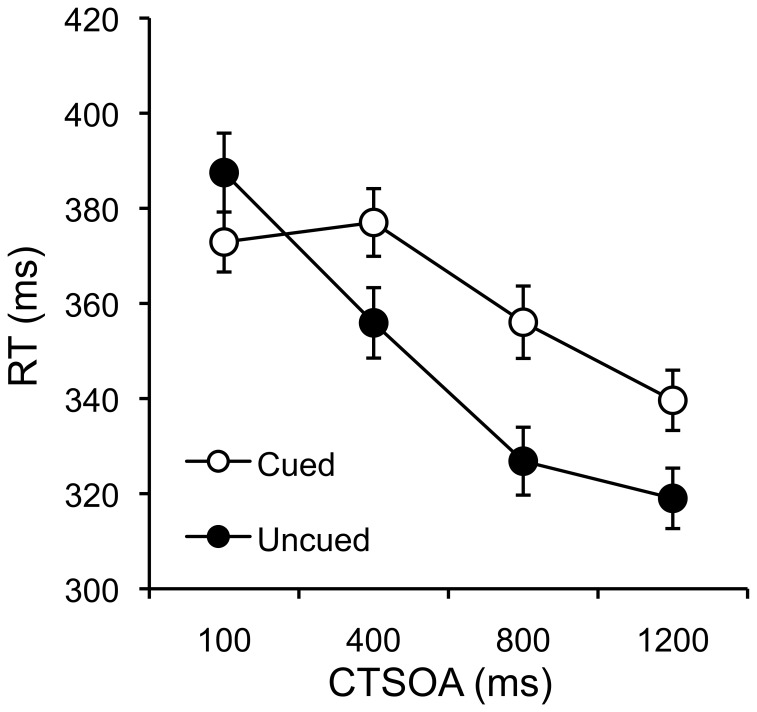
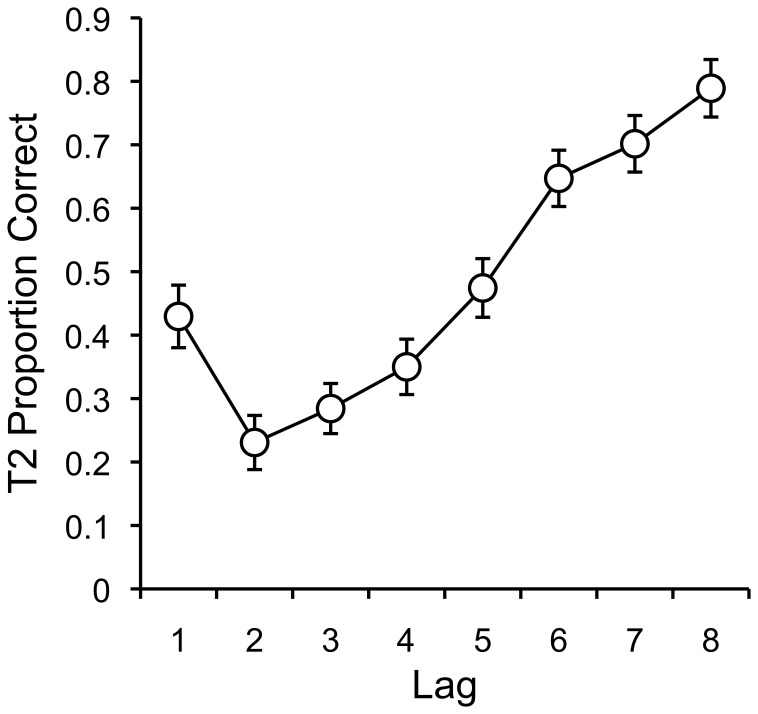
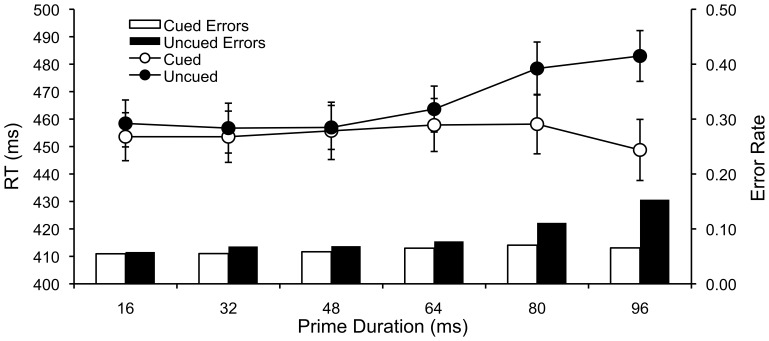
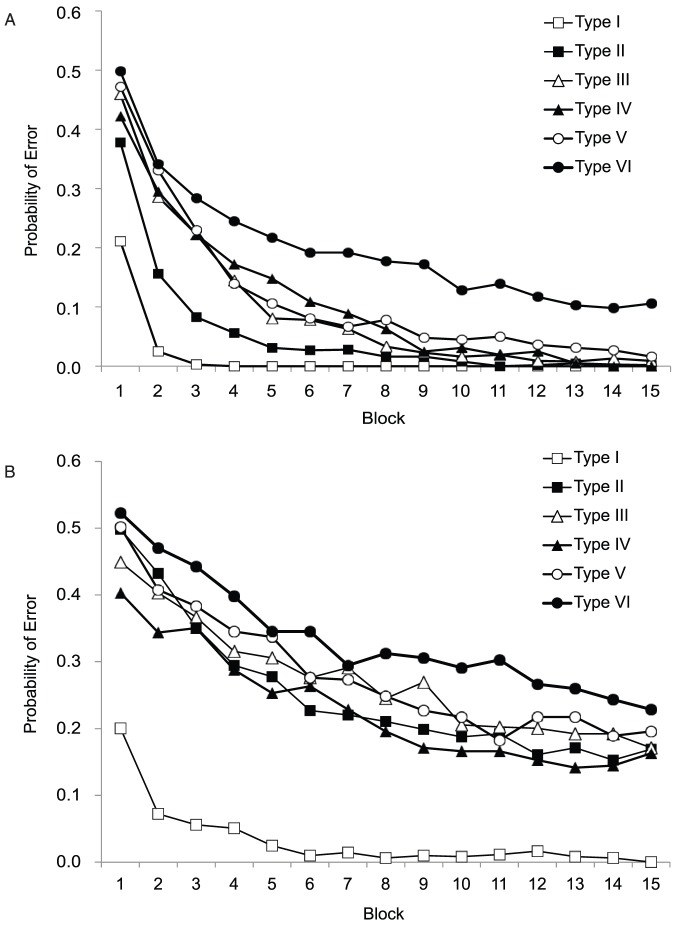
Amazon Mechanical Turk (AMT) is an online crowdsourcing service where anonymous online workers complete web-based tasks for small sums of money. The service has attracted attention from experimental psychologists interested in gathering human subject data more efficiently. However, relative to traditional laboratory studies, many aspects of the testing environment are not under the experimenter's control. In this paper, we attempt to empirically evaluate the fidelity of the AMT system for use in cognitive behavioral experiments. These types of experiment differ from simple surveys in that they require multiple trials, sustained attention from participants, comprehension of complex instructions, and millisecond accuracy for response recording and stimulus presentation. We replicate a diverse body of tasks from experimental psychology including the Stroop, Switching, Flanker, Simon, Posner Cuing, attentional blink, subliminal priming, and category learning tasks using participants recruited using AMT. While most of replications were qualitatively successful and validated the approach of collecting data anonymously online using a web-browser, others revealed disparity between laboratory results and online results. A number of important lessons were encountered in the process of conducting these replications that should be of value to other researchers.
Overview
The claims and statistics of this paper haven’t been checked yet.
Run the check — free, no account needed. It reads the open-access text and checks the sources it cites.
Integrity signals
Registry
Cites
Statistics
Figures
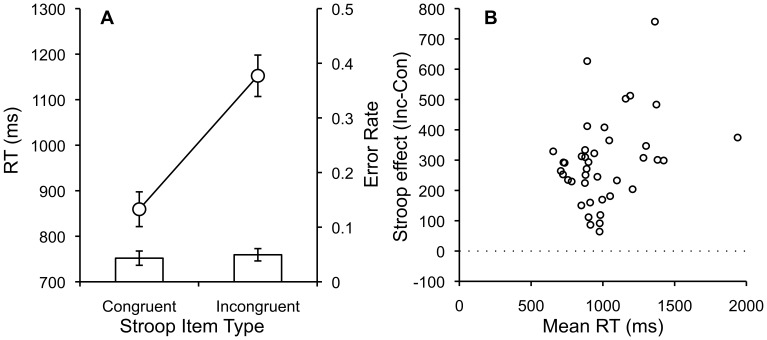
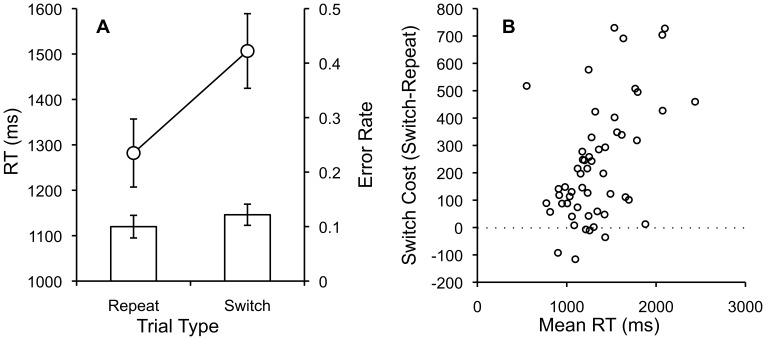
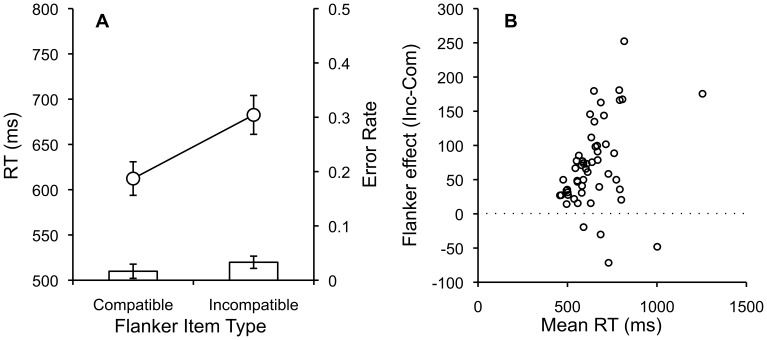
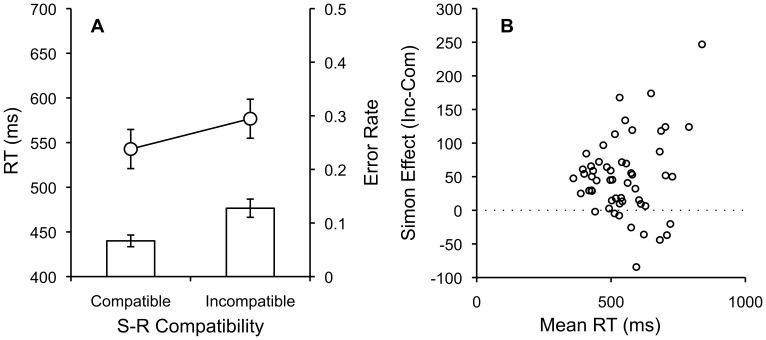
Verification
Claims the paper makes
The claims and statistics of this paper haven’t been checked yet.
Run the check — free, no account needed. It reads the open-access text and checks the sources it cites.
Claims other papers make about this one
Each is checked against this paper’s own text: does it say what the citing paper says it does?
In the citing paper
“Regarding online experiments in general, Crump et al. [32] showed that the data collected online using a web-browser seemed mostly in line with laboratory results, so long as the experiment methods were solid.”
From Adaptive trust calibration for human-AI collaboration (2020) · cites this paper as [32]
Self-check
Percentages, sums and reported differences re-computed from the paper’s own numbers.
The self-check needs the paper’s full text.
Citations
Cites
Studies of interference in serial verbal reactions
Stroop, J. R. (1935) · Journal of Experimental Psychology · doi:10.1037/h0054651 · Cited by 18,622
Amazon's Mechanical Turk: A New Source of Inexpensive, Yet High-Quality, Data?
Buhrmester, M., Kwang, T., & Gosling, S. D. (2011) · Perspectives on Psychological Science · doi:10.1177/1745691610393980 · Cited by 9,996
Effects of noise letters upon the identification of a target letter in a nonsearch task
Eriksen, B. A., & Eriksen, C. W. (1974) · Perception & Psychophysics · doi:10.3758/bf03203267 · Cited by 7,230
Simmons, J. P., Nelson, L. D., & Simonsohn, U. (2011) · Psychological Science · doi:10.1177/0956797611417632 · Cited by 6,567
Half a century of research on the Stroop effect: An integrative review.
MacLeod, C. M. (1991) · Psychological Bulletin · doi:10.1037/0033-2909.109.2.163 · Cited by 5,500
Running experiments on Amazon Mechanical Turk
Paolacci, G., Chandler, J., & Ipeirotis, P. G. (2010) · Judgment and Decision Making · doi:10.1017/s1930297500002205 · Cited by 3,767
Instructional manipulation checks: Detecting satisficing to increase statistical power
Oppenheimer, D. M., Meyvis, T., & Davidenko, N. (2009) · Journal of Experimental Social Psychology · doi:10.1016/j.jesp.2009.03.009 · Cited by 3,493
Conducting behavioral research on Amazon’s Mechanical Turk
Mason, W., & Suri, S. (2012) · Behavior Research Methods · doi:10.3758/s13428-011-0124-6 · Cited by 3,172
Monsell, S. (2003) · Trends in Cognitive Sciences · doi:10.1016/s1364-6613(03)00028-7 · Cited by 2,984
Components of visual orienting
Posner, M. I. (1984) · Attention and performance · Cited by 2,980
Research works printed but not linked: 1
- Ipeirotis PG (2010) Demographics of Mechanical Turk (Tech. Rep. No. CeDER-10-01). New York: New York University. Available: http://hdl.handle.net/2451/29585. Accessed 2012 Jun 1.
Cited by
Sorted by citations
Items 801–900 of 1,000
Samsel, F., Klaassen, S., Petersen, M. R., Turton, T. L., Abram, G. D., Rogers, D., & Ahrens, J. P. (2016) · CHI Conference Extended Abstracts on Human Factors in Computing Systems (CHI EA) · doi:10.1145/2851581.2851587 · Cited by 11
Person-Centered Sexual Expression: Determining Preferences of Future Nursing Home Residents
Syme, M. L., Johnson, P. E., & Fager, M. (2019) · The Gerontologist · doi:10.1093/geront/gnz016 · Cited by 11
Reliability and validity of a temporal distancing emotion regulation task in adolescence.
Suksasilp, C., The SCALES Team, Griffiths, S., Sebastian, C. L., & Norbury, C. (2020) · Emotion · doi:10.1037/emo0000744 · Cited by 13
Wuschke, K., Henning, K., & Stewart, G. (2021) · Policing & Society · doi:10.1080/10439463.2021.1874950 · Cited by 11
Exposure to Literary Fiction Is Associated With Lower Psychological Essentialism
Castano, E., Paladino, M. P., Cadwell, O. G., Cuccio, V., & Perconti, P. (2021) · Frontiers in Psychology · doi:10.3389/fpsyg.2021.662940 · Cited by 15
Trust Miscalibration Is Sometimes Necessary: An Empirical Study and a Computational Model
Collins, M. G., & Juvina, I. (2021) · Frontiers in Psychology · doi:10.3389/fpsyg.2021.690089 · Cited by 12
Yamamoto, H. W., Kawahara, M., & Tanaka, A. (2021) · Frontiers in Psychology · doi:10.3389/fpsyg.2021.702106 · Cited by 11
Smith, L. K. M., & Wolfe, S. E. (2023) · People and Nature · doi:10.1002/pan3.10505 · Cited by 12
Optimism Bias in Fans and Sports Reporters
Love, B. C., Kopeć, Ł., & Guest, O. (2015) · PLoS ONE · doi:10.1371/journal.pone.0137685 · Cited by 11
Reporting in Experimental Philosophy: Current Standards and Recommendations for Future Practice
Polonioli, A., Vega‐Mendoza, M., Blankinship, B., & Carmel, D. (2018) · Review of Philosophy and Psychology · doi:10.1007/s13164-018-0414-3 · Cited by 12
Chasing Animals With Split Attention: Are Animals Prioritized in Visual Tracking?
Hagen, T., Espeseth, T., & Laeng, B. (2018) · i-Perception · doi:10.1177/2041669518795932 · Cited by 12
Dato, S., Feess, E., & Nieken, P. (2019) · Games and Economic Behavior · doi:10.1016/j.geb.2019.08.014 · Cited by 11
The Design Method of the Virtual Teacher
Matsui, T., & Yamada, S. (2019) · International Conference on Human-Agent Interaction (HAI) · doi:10.1145/3349537.3351906 · Cited by 11
Petri, J. M., Weathers, F. W., Witte, T. K., & Silverstein, M. W. (2019) · Assessment · doi:10.1177/1073191119880963 · Cited by 12
Altruism and Structure of Values: An Experimental Investigation
Gandullia, L., Lezzi, E., Parciasepe, P., & Siri, L. (2020) · Journal of Interdisciplinary Economics · doi:10.1177/0260107919897219 · Cited by 11
Pedagogic prestidigitation: using magic tricks to enhance educational videos
Wiseman, R. J., Houstoun, W., & Watt, C. A. (2020) · PeerJ · doi:10.7717/peerj.9610 · Cited by 11
Computational modelling of attentional selectivity in depression reveals perceptual deficits
Grange, J. A., & Rydon‐Grange, M. (2020) · Psychological Medicine · doi:10.1017/s0033291720002652 · Cited by 12
Keating, C. F., Boateng, F. A., Loiacono, H., Sherwood, W. H., Atwater, K., & Hutchison, J. (2020) · Frontiers in Psychology · doi:10.3389/fpsyg.2020.526288 · Cited by 11
Worm, T. W., & Stine‐Morrow, E. A. L. (2021) · Journal of Adult Development · doi:10.1007/s10804-021-09375-3 · Cited by 13
Does self‐esteem inflation mitigate mortality salience effects on suicide attitudes?
Kheibari, A., & Cerel, J. (2021) · Suicide and Life-Threatening Behavior · doi:10.1111/sltb.12759 · Cited by 11
Psychopathy and Victim Selection: Does Nonverbal Decoding or Empathy Impact Vulnerability Ratings?
Roney, J. L. D., Falkenbach, D. M., & Aveson, O. (2018) · Journal of Interpersonal Violence · doi:10.1177/0886260517742914 · Cited by 11
Open Information Extraction on Scientific Text: An EvaluationPreprint
Groth, P., Lauruhn, M., Scerri, A., & Daniel, R. (2018) · arXiv (Cornell University) · doi:10.48550/arxiv.1802.05574 · Cited by 11
What Does a Job Candidate's Age Signal to Employers?Preprint
Borm, H. V., & Baert, S. (2020) · SSRN Electronic Journal · doi:10.2139/ssrn.3513691 · Cited by 11
Lock-In Effects in Online Labor MarketsPreprint
Ciotti, F., Hornuf, L., & Stenzhorn, E. (2021) · SSRN Electronic Journal · doi:10.2139/ssrn.3953015 · Cited by 11
When Is Retaliation Respected? Status and Vengefulness in Intergroup and Interpersonal Contexts
Benard, S., & Doan, L. (2020) · Socius Sociological Research for a Dynamic World · doi:10.1177/2378023120967199 · Cited by 10
Emotion and anxiety interact to bias spatial attention.
Bachmann, H. P., JAPEE, S. A., Merriam, E. P., & Liu, T. T. (2023) · Emotion · doi:10.1037/emo0001322 · Cited by 10
Byrne, E. M., Gilbert, R. A., Kievit, R., & Holmes, J. (2024) · Memory · doi:10.1080/09658211.2024.2393388 · Cited by 12
Cutting In Line: Discontinuities in the Use of Large Numbers by Adults.
Landy, D. H., Charlesworth, A., & Ottmar, E. (2014) · eScholarship (California Digital Library) · Cited by 10
Perspectives of Americans and Canadians on the use and function of sex offender registries
Jung, S. Y., Allison, M., & Martin, E. E. (2017) · International journal of law, crime and justice · doi:10.1016/j.ijlcj.2017.10.003 · Cited by 10
Deadline-Aware Fair Scheduling for Multi-Tenant Crowd-Powered Systems
Difallah, D. E., Checco, A., Demartini, G., & Cudré-Mauroux, P. (2019) · ACM Transactions on Social Computing · doi:10.1145/3301003 · Cited by 10
Transitivity, agency, mind style: What’s the lowest common denominator?
Nuttall, L. (2019) · Language and Literature International Journal of Stylistics · doi:10.1177/0963947019839851 · Cited by 10
Elder sexual abuse and implicit agism: examining the warm-incompetent bias among mock jurors
Syme, M. L., & Cohn, T. J. (2019) · Journal of Elder Abuse & Neglect · doi:10.1080/08946566.2019.1695696 · Cited by 10
Measuring objective knowledge of potable recycled water
Mahmoud‐Elhaj, D., Tanner, B., Sabatini, D. A., & Feltz, A. (2020) · Journal of Community Psychology · doi:10.1002/jcop.22402 · Cited by 10
Clarifying the association of eating disorder features to suicide ideation and attempts
Shahnaz, A., & Klonsky, E. D. (2021) · Journal of Clinical Psychology · doi:10.1002/jclp.23266 · Cited by 10
Bringing Home Baby Euclid: Testing Infants’ Basic Shape Discrimination Online
Bochyńska, A., & Dillon, M. R. (2021) · Frontiers in Psychology · doi:10.3389/fpsyg.2021.734592 · Cited by 10
Can monetized carbon information increase pro-environmental behavior? Experimental evidence
Schöller, V., & Ulmer, C. (2022) · Ecological Economics · doi:10.1016/j.ecolecon.2023.107759 · Cited by 9
Temporal Orientation and Destination Selection
Loda, M. D., & Amos, C. (2014) · Journal of Hospitality Marketing & Management · doi:10.1080/19368623.2014.891963 · Cited by 10
Coppens, L. C., Verkoeijen, P. P. J. L., Bouwmeester, S., & Rikers, R. M. J. P. (2016) · BMC Psychology · doi:10.1186/s40359-016-0127-2 · Cited by 10
Haug, M. C. (2017) · Review of Philosophy and Psychology · doi:10.1007/s13164-017-0374-z · Cited by 10
Age-related differential item functioning in tests of face and car recognition ability
Sunday, M. A., Lee, W., & Gauthier, L. (2018) · Journal of Vision · doi:10.1167/18.1.2 · Cited by 10
Art or Confession?: Evaluating Rap Lyrics as Evidence in Criminal Cases
Dunbar, A. (2018) · Race and Justice · doi:10.1177/2153368717749879 · Cited by 14
Explanation classification depends on understanding: extending the epistemic side-effect effect
Wilkenfeld, D. A., & Lombrozo, T. (2018) · Synthese · doi:10.1007/s11229-018-1835-3 · Cited by 10
Coordination and Common Knowledge on Communication Networks
Korkmaz, G., Capra, C. M., Kraig, A., Lakkaraju, K., Kuhlman, C. J., & Vega‐Redondo, F. (2018) · Adaptive Agents and Multi-Agents Systems · doi:10.65109/jkmo2181 · Cited by 10
Loneliness and social monitoring: A conceptual replication of Knowles et al.
Floyd, K., & Woo, N. T. (2020) · Personal Relationships · doi:10.1111/pere.12304 · Cited by 12
Salmon, M. M., & Wohl, M. J. A. (2020) · Frontiers in Psychology · doi:10.3389/fpsyg.2020.01794 · Cited by 11
Scarpina, F. (2020) · Frontiers in Psychology · doi:10.3389/fpsyg.2020.02252 · Cited by 10
Crowley, J. P., Burke, T. J., Denes, A., Allred, R., & Carberry, E. G. (2020) · Personal Relationships · doi:10.1111/pere.12335 · Cited by 10
Implicit Communication Through Social Distancing
Banisetty, S. B., & Williams, T. (2021) · ACM/IEEE International Conference on Human-Robot Interaction (HRI) · doi:10.1145/3434074.3447222 · Cited by 10
Conspiracy Stress or Relief? Learned Helplessness and Conspiratorial Thinking
Farhart, C. E., Miller, J. M., & Saunders, K. L. (2022) · doi:10.1093/oso/9780197578384.003.0011 · Cited by 10
Experimental philosophy of actual and counterfactual free will intuitions
Feltz, A. (2015) · Consciousness and Cognition · doi:10.1016/j.concog.2015.06.001 · Cited by 10
Event boundaries and anaphoric reference
Thompson, A. N., & Radvansky, G. A. (2015) · Psychonomic Bulletin & Review · doi:10.3758/s13423-015-0961-x · Cited by 11
Harman, E., & Azzam, T. (2018) · Evaluation and Program Planning · doi:10.1016/j.evalprogplan.2018.08.004 · Cited by 10
Detainee and layperson’s expectations and preferences regarding police interview rooms
Hoogesteyn, K., Meijer, E. H., & Vrij, A. (2020) · PLoS ONE · doi:10.1371/journal.pone.0241683 · Cited by 10
Pedulla, D. S., Muñoz, J., Wullert, K. E., & Dias, F. A. (2021) · Sociology of Race and Ethnicity · doi:10.1177/23326492211029336 · Cited by 10
Discovering linguistic structures in speech : models and applications
Lee, C.-Y. (2014) · DSpace@MIT (Massachusetts Institute of Technology) · Cited by 10
Reference-dependent preferences arise from structure learningPreprint
Hunter, L. E., & Gershman, S. J. (2018) · bioRxiv (Cold Spring Harbor Laboratory) · doi:10.1101/252692 · Cited by 10
The Social Dilemma of Big Data: Donating Personal Data to Promote Social WelfarePreprint
Hillebrand, K., & Hornuf, L. (2021) · SSRN Electronic Journal · doi:10.2139/ssrn.3801476 · Cited by 10
Parks, K. M. A., & Stevenson, R. A. (2018) · Frontiers in Psychology · doi:10.3389/fpsyg.2018.02502 · Cited by 11
Graf, A. S., Cohn, T. J., & Syme, M. L. (2020) · Clinical Gerontologist · doi:10.1080/07317115.2020.1825584 · Cited by 9
Hswen, Y., Nguemdjo, U., Yom‐Tov, E., Marcus, G. M., & Ventelou, B. (2022) · Humanities and Social Sciences Communications · doi:10.1057/s41599-022-01338-7 · Cited by 10
Reliability of gamified reinforcement learning in densely sampled longitudinal assessments
Neuser, M. P., Kühnel, A., Kräutlein, F., Teckentrup, V., Svaldi, J., & Kroemer, N. B. (2023) · PLOS Digital Health · doi:10.1371/journal.pdig.0000330 · Cited by 11
McConnell, K., Hintz, F., & Meyer, A. S. (2024) · Behavior Research Methods · doi:10.3758/s13428-024-02533-x · Cited by 9
Lin, S. Q., & Stutts, L. A. (2019) · Psychology Health & Medicine · doi:10.1080/13548506.2019.1653484 · Cited by 9
Human-in-the-Loop AI for Analysis of Free Response Facial Expression Label Sets
Butler, C., Oster, H., & Togelius, J. (2020) · ACM International Conference on Intelligent Virtual Agents (IVA) · doi:10.1145/3383652.3423892 · Cited by 9
Framing Effects on Decision-Making for Diagnostic Genetic Testing: Results from a Randomized Trial
Dwyer, A. A., Shen, H., Zeng, Z., Gregas, M., & Zhao, M. (2021) · Genes · doi:10.3390/genes12060941 · Cited by 9
Shevorykin, A., Bickel, W. K., Carl, E. M., & Sheffer, C. E. (2021) · International Journal of Environmental Research and Public Health · doi:10.3390/ijerph18168717 · Cited by 10
Research Ethics in the Age of Digital Platforms
Molina, J. L., Tubaro, P., Casilli, A. A., & Ortega, A. S. (2023) · Science and Engineering Ethics · doi:10.1007/s11948-023-00437-1 · Cited by 9
Theis, J. C., Nipper, M., & Meier, M. (2023) · Corporate Social Responsibility and Environmental Management · doi:10.1002/csr.2584 · Cited by 11
Childhood maltreatment history and trauma‐specific predictors of parenting stress in new fathers
Granner, J. R., Lee, S. J., Burns, J. C., Herrenkohl, T. I., Miller, A. L., & Seng, J. S. (2023) · Infant Mental Health Journal · doi:10.1002/imhj.22084 · Cited by 9
Elevator music as a tool for the quantitative characterization of reward
Abrams, E. B., Namballa, R., He, R., Poeppel, D., & Ripollés, P. (2024) · Annals of the New York Academy of Sciences · doi:10.1111/nyas.15131 · Cited by 9
Cusack, M., Vezenkova, N., Gottschalk, C., & Calin-Jageman, R. J. (2015) · PLoS ONE · doi:10.1371/journal.pone.0140806 · Cited by 9
How the demographic makeup of our community influences speech perception.
Lev-Ari, S., & Peperkamp, S. (2016) · Journal of the Acoustical Society of America · doi:10.1121/1.4950811 · Cited by 8
Crowdsourcing Design: A Synthesis of Literatures
Liu, H. K. (2017) · Hawaii International Conference on System Sciences (HICSS) · doi:10.24251/hicss.2017.332 · Cited by 9
An Examination of Gain- and Loss-Framed Messaging on Smart Home Security Training Programs
Plachkinova, M., & Menard, P. (2019) · Information Systems Frontiers · doi:10.1007/s10796-019-09970-6 · Cited by 9
Guang, C., Lefkowitz, E., Dillman-Hasso, N. H., Brown, V. A., & Strand, J. F. (2020) · Auditory Perception & Cognition · doi:10.1080/25742442.2021.1896908 · Cited by 9
Normal colour perception in developmental prosopagnosia
Smith, C. B., & Susilo, T. (2021) · Scientific Reports · doi:10.1038/s41598-021-92840-6 · Cited by 9
Šaban, I., & Schmidt, J. R. (2021) · Acta Psychologica · doi:10.1016/j.actpsy.2021.103360 · Cited by 14
Chuyin, Z., Koh, Z. H., Gallagher, R., Nishimoto, S., & Tsuchiya, N. (2022) · F1000Research · doi:10.12688/f1000research.75364.1 · Cited by 12
Impaired grouping of ambient facial images in autism
Gehdu, B. K., Gray, K. L. H., & Cook, R. (2022) · Scientific Reports · doi:10.1038/s41598-022-10630-0 · Cited by 9
Sketching the Landscape of Speech Perception Research (2000–2020): A Bibliometric Study
Chen, J., & Chang, H. (2022) · Frontiers in Psychology · doi:10.3389/fpsyg.2022.822241 · Cited by 9
Aridi, Y. S., Walker, J. L., Roura, E., & Wright, O. R. L. (2022) · Dietetics · doi:10.3390/dietetics1020013 · Cited by 10
Kowitt, S. D., Sheeran, P., Jarman, K. L., Ranney, L. M., Schmidt, A. M., Huang, L., & Goldstein, A. O. (2016) · Nicotine & Tobacco Research · doi:10.1093/ntr/ntw317 · Cited by 9
Stimulus discriminability may bias value-based probabilistic learning
Schutte, I., Slagter, H. A., Collins, A. G. E., Frank, M. J., & Kenemans, J. L. (2017) · PLoS ONE · doi:10.1371/journal.pone.0176205 · Cited by 9
Traun, C., Schreyer, M. L., & Wallentin, G. (2021) · ISPRS International Journal of Geo-Information · doi:10.3390/ijgi10040208 · Cited by 8
Schlagwein, D., & Daneshgar, F. (2014) · Victoria University Research Repository (Victoria University) · doi:10.26190/unsworks/25656 · Cited by 9
Schütt, E., Mackenzie, I. G., Kaup, B., & Dudschig, C. (2022) · Psychological Research · doi:10.1007/s00426-022-01650-6 · Cited by 9
On the convergent validity of risk sensitivity measuresPreprint
Radulescu, A., Holmes, K., & Niv, Y. (2020) · PsyArXiv (OSF Preprints) · doi:10.31234/osf.io/qdhx4 · Cited by 8
Time in causal structure learningPreprint
Bramley, N. R., Gerstenberg, T., Mayrhofer, R., & Lagnado, D. A. (2018) · PsyArXiv (OSF Preprints) · doi:10.31234/osf.io/uvfsr · Cited by 13
Jeffirs, S. M., Petri, J. M., Camden, A. A., Jackson, B. N., & Weathers, F. W. (2023) · European Journal of Trauma & Dissociation · doi:10.1016/j.ejtd.2023.100324 · Cited by 8
Scholman, M., Marchal, M., & Demberg, V. (2024) · Discourse Processes · doi:10.1080/0163853x.2024.2325262 · Cited by 8
Influence of surprise on reinforcement learning in younger and older adults
Koch, C., Zika, O., Bruckner, R., & Schuck, N. W. (2024) · PLoS Computational Biology · doi:10.1371/journal.pcbi.1012331 · Cited by 9
Partner perceptions during brief online interactions shape partner selection and cooperation
Hrkalović, T. M., Dudzik, B., Hung, H., & Balliet, D. P. (2025) · PLoS ONE · doi:10.1371/journal.pone.0318137 · Cited by 9
Hojo, N., Shinoda, K., Yamazaki, Y., Suzuki, K., Sugiyama, H., Nishida, K., & Saito, K. (2025) · CHI Conference Extended Abstracts on Human Factors in Computing Systems (CHI EA) · doi:10.1145/3706599.3719743 · Cited by 8
Stratton, C. M., Krumrei-Mancuso, E. J., & Miller‐Perrin, C. (2022) · Psi Chi Journal of Psychological Research · doi:10.24839/2325-7342.jn27.2.113 · Cited by 9
When will AI misclassify? Intuiting failures on natural images
Nartker, M. S., Zhou, Z., & Firestone, C. (2023) · Journal of Vision · doi:10.1167/jov.23.4.4 · Cited by 8
When 2 become 1: Autistic simultaneity judgements about asynchronous audiovisual speech
Poole, D., Gowen, E., Poliakoff, E., Lambrechts, A., & Jones, L. A. (2023) · Quarterly Journal of Experimental Psychology · doi:10.1177/17470218231197518 · Cited by 9
On generosity in public good and charitable dictator games
Chan, N. W., Knowles, S., Peeters, R. J. A. P., & Wolk, L. (2024) · Journal of Economic Behavior & Organization · doi:10.1016/j.jebo.2024.05.027 · Cited by 8
Talking about Relations: Factors Influencing the Production of Relational Descriptions
Baltaretu, A., Krahmer, E., van Wijk, C., & Maes, A. (2016) · Frontiers in Psychology · doi:10.3389/fpsyg.2016.00103 · Cited by 9
Effects of “hotspots” as a function of intrinsic neighborhood attractiveness
Blaison, C., Gollwitzer, M., & Heß, U. (2017) · Journal of Environmental Psychology · doi:10.1016/j.jenvp.2017.03.005 · Cited by 8
Metadata
- Authors
- Crump, M. J. C., McDonnell, J. V., & Gureckis, T. M.
- Affiliations
- City University of New York (US)
- New York University (US)
- Corresponding author
- Crump, Matthew J. C.
- Venue
- PLoS ONE
- Publisher
- Public Library of Science (PLoS)
- Published
- 2013-03-13
- Volume
- 8
- Issue
- 3
- Pages
- e57410
- ISSN
- 1932-6203 (ISSN-L)
- PMC
- PMC3596391
- OpenAlex
- W2080211902
- Semantic Scholar
- d59101076dd96b6b39f58c3d3e3747e5cf5f98ab
- Cited by
- 1,617
- References
- 52
- Citations by year
- 2026: 25 · 2025: 63 · 2024: 83 · 2023: 108 · 2022: 162 · 2021: 171 · 2020: 164 · 2019: 138 · 2018: 164 · 2017: 155 · 2016: 146 · 2015: 129 · 2014: 86 · 2013: 20
- FWCI
- 192.44
- Type
- journal article
- Language
- en
- Open access
- gold
- doi.org
- Locations
- PLoS ONE (publishedVersion, cc-by)
- Europe PMC (PubMed Central) (publishedVersion, cc-by)
- PubMed Central (publishedVersion, cc-by)
- PubMed (publishedVersion)
- CUNY Academic Works (City University of New York) (submittedVersion)
- RePEc: Research Papers in Economics (submittedVersion)
- DOAJ (DOAJ: Directory of Open Access Journals) (submittedVersion, cc-by-sa)
- Topics
- Physical Sciences › Computer Science › Computer Science Applications › Mobile Crowdsensing and Crowdsourcing
- Life Sciences › Neuroscience › Cognitive Neuroscience › Neural and Behavioral Psychology Studies
- Social Sciences › Economics, Econometrics and Finance › Economics and Econometrics › Experimental Behavioral Economics Studies
- Keywords
- Amazon Mechanical Turk, online crowdsourcing, replication, Stroop task, attentional blink, subliminal priming, category learning, Simon task, flanker task, stimulus presentation
- MeSH terms
- Attention, Cues, Humans, Learning, Reaction Time, Internet, Behavioral Research, Learning Curve
About these checks
Registry, retraction, Cites and statistics results are computed, not judged, with one exception: a printed reference that no index lists is read once by a model before it counts as a citation error. Claims are extracted by a model and kept only when their quote appears verbatim in the text; each cited source is then checked, with a model’s help, for whether it says what the claim relies on. Those verdicts can be wrong — read the claim’s quote and the cited source before relying on one.
Statistics and arithmetic are recomputed, not judged.
Confidence bands are shown only for fields calibrated on our annotated test set. None is calibrated yet, so no band is shown.
What counts as a claim ›How we measure confidence ›How we check this ›
Are you an author, or do you see a problem with this page? Request a review
