

The DOI matches its Crossref record; 44 of the 44 references it cites were found in a registry or an index.
Low- and High-Volume of Intensive Endurance Training Significantly Improves Maximal Oxygen Uptake after 10-Weeks of Training in Healthy Men
Open accessAbstract
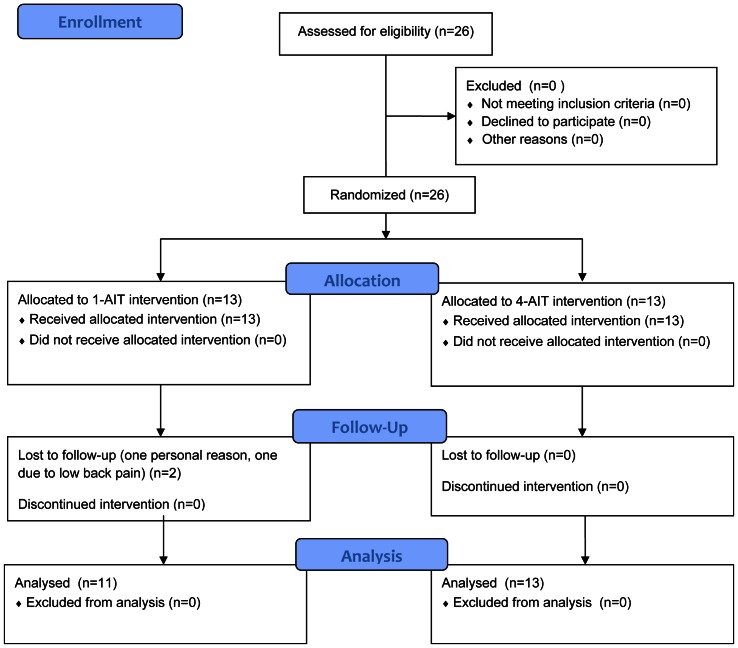
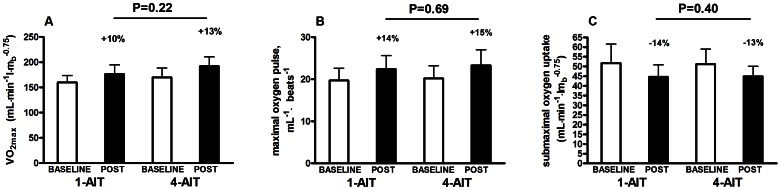
UNLABELLED: Regular exercise training improves maximal oxygen uptake (VO2max), but the optimal intensity and volume necessary to obtain maximal benefit remains to be defined. A growing body of evidence suggests that exercise training with low-volume but high-intensity may be a time-efficient means to achieve health benefits. In the present study, we measured changes in VO2max and traditional cardiovascular risk factors after a 10 wk. training protocol that involved three weekly high-intensity interval sessions. One group followed a protocol which consisted of 4×4 min at 90% of maximal heart rate (HRmax) interspersed with 3 min active recovery at 70% HRmax (4-AIT), the other group performed a single bout protocol that consisted of 1×4 min at 90% HRmax (1-AIT). Twenty-six inactive but otherwise healthy overweight men (BMI: 25-30, age: 35-45 y) were randomized to either 1-AIT (n = 11) or 4-AIT (n = 13). After training, VO2max increased by 10% (∼5.0 mL⋅kg(-1)⋅min(-1)) and 13% (∼6.5 mL⋅kg(-1)⋅min(-1)) after 1-AIT and 4-AIT, respectively (group difference, p = 0.08). Oxygen cost during running at a sub-maximal workload was reduced by 14% and 13% after 1-AIT and 4-AIT, respectively. Systolic blood pressure decreased by 7.1 and 2.6 mmHg after 1-AIT and 4-AIT respectively, while diastolic pressure decreased by 7.7 and 6.1 mmHg (group difference, p = 0.84). Both groups had a similar ∼5% decrease in fasting glucose. Body fat, total cholesterol, LDL-cholesterol, and ox-LDL cholesterol only were significantly reduced after 4-AIT. Our data suggest that a single bout of AIT performed three times per week may be a time-efficient strategy to improve VO2max and reduce blood pressure and fasting glucose in previously inactive but otherwise healthy middle-aged individuals. The 1-AIT type of exercise training may be readily implemented as part of activities of daily living and could easily be translated into programs designed to improve public health. TRIAL REGISTRATION: ClinicalTrials.govNCT00839579.
Overview
The claims and statistics of this paper haven’t been checked yet.
Run the check — free, no account needed. It reads the open-access text and checks the sources it cites.
Integrity signals
Registry
Cites
Statistics
Figures
Verification
Claims the paper makes
The claims and statistics of this paper haven’t been checked yet.
Run the check — free, no account needed. It reads the open-access text and checks the sources it cites.
Claims other papers make about this one
Each is checked against this paper’s own text: does it say what the citing paper says it does?
In the citing paper
“The present work, and recent studies by others [10]–[12], [27], confirm that very brief bouts of all-out exercise, performed a few times per week, is a very time efficient strategy to improve VO2 peak”
From Three minutes of all-out intermittent exercise per week increases skeletal muscle oxidative capacity and improves cardiometabolic health (2014) · cites this paper as [27]
Self-check
Percentages, sums and reported differences re-computed from the paper’s own numbers.
The self-check needs the paper’s full text.
Citations
Cites
Diagnosis and Classification of Diabetes Mellitus
American Diabetes Association (2010) · Diabetes Care · doi:10.2337/dc11-s062 · Cited by 14,094
(2014) · Medical Entomology and Zoology · Cited by 9,400
Corretti, M. C., Anderson, T. J., Benjamin, E. J., Celermajer, D. S., Charbonneau, F., Creager, M. A., Deanfield, J. E., Drexler, H., Gerhard‐Herman, M. D., Herrington, D. M., et al. (2002) · Journal of the American College of Cardiology · doi:10.1016/s0735-1097(01)01746-6 · Cited by 4,606
Exercise capacity and mortality among men referred for exercise testing
Myers, J., Prakash, M., Froelicher, V., Do, D., Partington, S., & Atwood, J. E. (2002) · New England Journal of Medicine · doi:10.1056/nejmoa011858 · Cited by 4,114
Correlates of adults??? participation in physical activity: review and update
TROST, S. G., OWEN, N., BAUMAN, A. E., SALLIS, J. F., & BROWN, W. (2002) · Medicine & Science in Sports & Exercise · doi:10.1097/00005768-200212000-00020 · Cited by 3,040
Endothelial Function and Dysfunction: Testing and Clinical Relevance
Deanfield, J. E., Halcox, J. P., & Rabelink, T. J. (2007) · Circulation · doi:10.1161/circulationaha.106.652859 · Cited by 2,710
Wisløff, U., Støylen, A., Loennechen, J. P., Bruvold, M., Rognmo, Ø., Haram, P. M., Tjønna, A. E., Helgerud, J., Slørdahl, S. A., Lee, S. J., et al. (2007) · Circulation · doi:10.1161/circulationaha.106.675041 · Cited by 1,996
Self-citationFletcher, G. F., Balady, G. J., Amsterdam, E. A., Chaitman, B., Eckel, R., Fleg, J., Froelicher, V. F., Leon, A. S., Piña, I. L., Rodney, R., et al. (2001) · Circulation · doi:10.1161/hc3901.095960 · Cited by 1,923
Wen, C. P., Wai, J. P. M., Tsai, M. K., Yang, Y. C., Cheng, T. Y. D., Lee, M.-C., Chan, H. T., Tsao, C. K., Tsai, S. P., & Wu, X. (2011) · The Lancet · doi:10.1016/s0140-6736(11)60749-6 · Cited by 1,908
Cited by
Sorted by citations
Physiological adaptations to interval training and the role of exercise intensity
MacInnis, M. J., & Gibala, M. J. (2017) · The Journal of Physiology · doi:10.1113/jp273196 · Cited by 1,124
Batacan, R. B., Duncan, M. J., Dalbo, V. J., Tucker, P. S., & Fenning, A. S. (2017) · British Journal of Sports Medicine · doi:10.1136/bjsports-2015-095841 · Cited by 799
Jelleyman, C., Yates, T., O'Donovan, G., Gray, L. J., King, J. A., Khunti, K., & Davies, M. J. (2015) · Obesity Reviews · doi:10.1111/obr.12317 · Cited by 588
Physical Activity and the Prevention of Hypertension
Diaz, K. M., & Shimbo, D. (2013) · Current Hypertension Reports · doi:10.1007/s11906-013-0386-8 · Cited by 528
Maillard, F., Pereira, B., & Boisseau, N. (2017) · Sports Medicine · doi:10.1007/s40279-017-0807-y · Cited by 379
Muscle fiber type diversification during exercise and regeneration
Qaisar, R., Bhaskaran, S., & Van Remmen, H. (2016) · Free Radical Biology and Medicine · doi:10.1016/j.freeradbiomed.2016.03.025 · Cited by 283
Wen, D., Utesch, T., Wu, J., Robertson, S., Liu, J., Hu, G., & Chen, H. (2019) · Journal of Science and Medicine in Sport · doi:10.1016/j.jsams.2019.01.013 · Cited by 295
Sultana, R. N., Sabag, A., Keating, S. E., & Johnson, N. A. (2019) · Sports Medicine · doi:10.1007/s40279-019-01167-w · Cited by 286
ATAKAN, M. M., Li, Y., Koşar, Ş. N., Turnagöl, H. H., & Yan, X. (2021) · International Journal of Environmental Research and Public Health · doi:10.3390/ijerph18137201 · Cited by 334
Taylor, J. L., Holland, D. J., Spathis, J. G., Beetham, K. S., Wisløff, U., Keating, S. E., & Coombes, J. S. (2019) · Progress in Cardiovascular Diseases · doi:10.1016/j.pcad.2019.01.004 · Cited by 220
Gillen, J. B., Percival, M. E., Skelly, L. E., Martin, B. J., Tan, R. B., Tarnopolsky, M. A., & Gibala, M. J. (2014) · PLoS ONE · doi:10.1371/journal.pone.0111489 · Cited by 181
Self-citationMicroRNAs as Important Regulators of Exercise Adaptation
da Silva, G. J. J., Bye, A., el Azzouzi, H., & Wisløff, U. (2017) · Progress in Cardiovascular Diseases · doi:10.1016/j.pcad.2017.06.003 · Cited by 158
Lunt, H., Draper, N., Marshall, H. C., Logan, F. J., Hamlin, M. J., Shearman, J. P., Cotter, J. D., Kimber, N. E., Blackwell, G., & FRAMPTON, C. M. A. (2014) · PLoS ONE · doi:10.1371/journal.pone.0083256 · Cited by 153
Scribbans, T. D., Vecsey, S. P., Hankinson, P. B., Foster, W. S., & Gurd, B. J. (2016) · International journal of exercise science · doi:10.70252/hhbr9374 · Cited by 144
Low‐volume high‐intensity interval training for cardiometabolic health
Sabag, A., Little, J. P., & Johnson, N. A. (2021) · The Journal of Physiology · doi:10.1113/jp281210 · Cited by 145
McGlory, C., Devries, M. C., & Phillips, S. M. (2017) · Journal of Applied Physiology · doi:10.1152/japplphysiol.00613.2016 · Cited by 135
Andreato, L. V., Esteves, J. V., Coimbra, D. R., Moraes, A. J. P., & de Carvalho, T. (2019) · Obesity Reviews · doi:10.1111/obr.12766 · Cited by 131
Scribbans, T. D., Edgett, B. A., Vorobej, K., Mitchell, A. S., Joanisse, S., Matusiak, J. B. L., Parise, G., Quadrilatero, J., & Gurd, B. J. (2014) · PLoS ONE · doi:10.1371/journal.pone.0098119 · Cited by 138
Martins, C., Kazakova, I., Ludviksen, M., Mehus, I., Wisløff, U., Kulseng, B. E., Morgan, L., & King, N. A. (2015) · International Journal of Sport Nutrition and Exercise Metabolism · doi:10.1123/ijsnem.2015-0078 · Cited by 128
Cochran, A. J. R., Percival, M. E., Tricarico, S., Little, J. P., Cermak, N. M., Gillen, J. B., Tarnopolsky, M. A., & Gibala, M. J. (2014) · Experimental Physiology · doi:10.1113/expphysiol.2013.077453 · Cited by 131
Cullen, T., Thomas, A. W., Webb, R., & Hughes, M. G. (2016) · Applied Physiology, Nutrition, and Metabolism · doi:10.1139/apnm-2015-0640 · Cited by 109
High Intensity Interval Training Improves Physical Performance and Frailty in Aged Mice
Seldeen, K. L., Lasky, G., Leiker, M. M., Pang, M., Personius, K. E., & Troen, B. R. (2018) · The Journals of Gerontology Series A · doi:10.1093/gerona/glx120 · Cited by 104
Metcalfe, R. S., Koumanov, F., Ruffino, J. S., Stokes, K., Holman, G. D., Thompson, D., & Vollaard, N. B. J. (2015) · European Journal of Applied Physiology · doi:10.1007/s00421-015-3217-6 · Cited by 114
Reljic, D., Lampe, D., Wolf, F., Zopf, Y., Herrmann, H. J., & Fischer, J. E. (2019) · Scandinavian Journal of Medicine and Science in Sports · doi:10.1111/sms.13452 · Cited by 106
Running sprint interval training induces fat loss in women
Hazell, T. J., Hamilton, C. D., Olver, T. D., & Lemon, P. W. R. (2014) · Applied Physiology, Nutrition, and Metabolism · doi:10.1139/apnm-2013-0503 · Cited by 90
Comparison of Three Popular Exercise Modalities on V˙O2max in Overweight and Obese
Bækkerud, F. H., Solberg, F. A., Leinan, I. M., Wisløff, U., Karlsen, T., & Rognmo, Ø. (2015) · Medicine & Science in Sports & Exercise · doi:10.1249/mss.0000000000000777 · Cited by 91
High-intensity Interval Training Frequency: Cardiometabolic Effects and Quality of Life
Stavrinou, P. S., Bogdanis, G. C., Giannaki, C. D., Terzis, G. D., & Hadjicharalambous, M. (2018) · International Journal of Sports Medicine · doi:10.1055/s-0043-125074 · Cited by 90
Bruseghini, P., Calabria, E., Tam, E., Milanese, C., Oliboni, E. S., Pezzato, A., Pogliaghi, S., Salvagno, G. L., Schena, F. F., Mucelli, R. P., et al. (2015) · Oncotarget · doi:10.18632/oncotarget.4031 · Cited by 83
Sabag, A., Way, K. L., Sultana, R. N., Keating, S. E., Gerofi, J. A., Chuter, V., Byrne, N. M., Baker, M. K., George, J., Caterson, I. D., et al. (2020) · Diabetes Care · doi:10.2337/dc19-2523 · Cited by 67
Ramos, J. S., Dalleck, L. C., Borrani, F., Beetham, K. S., Wallen, M. P., Mallard, A. R., Clark, B., Gomersall, S. R., Keating, S. E., Fassett, R. G., et al. (2017) · Metabolic Syndrome and Related Disorders · doi:10.1089/met.2017.0042 · Cited by 69
Manresa‐Rocamora, A., Sarabia, J. M., Javaloyes, A., Flatt, A. A., & Moya‐Ramón, M. (2021) · International Journal of Environmental Research and Public Health · doi:10.3390/ijerph181910299 · Cited by 71
de Mello, M. B., Righi, N. C., Schuch, F. B., Signori, L. U., & da Silva, A. M. V. (2022) · Annals of Physical and Rehabilitation Medicine · doi:10.1016/j.rehab.2021.101586 · Cited by 63
Stanković, M. N., Djordjević, D. D., Trajković, N., & Milanović, Z. (2023) · Sports Medicine - Open · doi:10.1186/s40798-023-00623-2 · Cited by 84
Dohlmann, T. L., HINDSØ, M. G., Dela, F., Helge, J. W., & Larsen, S. (2018) · Physiological Reports · doi:10.14814/phy2.13857 · Cited by 62
Ramos, J. S., Dalleck, L. C., Borrani, F., Mallard, A. R., Clark, B., Keating, S. E., Fassett, R. G., & Coombes, J. S. (2016) · Diabetologia · doi:10.1007/s00125-016-4064-7 · Cited by 58
Effects of low-volume high-intensity interval training in a community setting: a pilot study
Reljic, D., Wittmann, F., & Fischer, J. E. (2018) · European Journal of Applied Physiology · doi:10.1007/s00421-018-3845-8 · Cited by 56
Lunde, L.-K., Skare, Ø., Mamen, A., Sirnes, P. A., Aass, H. C. D., Øvstebø, R., Goffeng, E. M., Matre, D., Nielsen, P., Heglum, H. S. A., et al. (2020) · International Journal of Environmental Research and Public Health · doi:10.3390/ijerph17020589 · Cited by 63
Effects of Different Types of Exercise on Kidney Diseases
Arazi, H., Mohabbat, M., Saidie, P., Falahati, A., & Suzuki, K. (2022) · Sports · doi:10.3390/sports10030042 · Cited by 52
Groussard, C., Maillard, F., Vazeille, E., Barnich, N., Sirvent, P., Otero, Y. F., Combaret, L., Madeuf, E., Sourdrille, A., Delcros, G., et al. (2019) · Oxidative Medicine and Cellular Longevity · doi:10.1155/2019/1965364 · Cited by 49
Verdú, E., Homs, J., & Boadas‐Vaello, P. (2021) · International Journal of Environmental Research and Public Health · doi:10.3390/ijerph182413333 · Cited by 57
Hernández-Lepe, M. A., López‐Díaz, J. A., Juárez-Oropeza, M. A., Hernández‐Torres, R. P., Wall‐Medrano, A., & Ramos‐Jiménez, A. (2018) · Marine Drugs · doi:10.3390/md16100364 · Cited by 46
Grace, F., Herbert, P., Ratcliffe, J. W., New, K. J., Baker, J. S., & Sculthorpe, N. F. (2015) · Physiological Reports · doi:10.14814/phy2.12234 · Cited by 47
Physical Activity and Health: What Is the Best Dose?
Kaminsky, L. A., & Montoye, A. H. K. (2014) · Journal of the American Heart Association · doi:10.1161/jaha.114.001430 · Cited by 49
Hodgkiss, D. D., Bhangu, G. S., Lunny, C., Jutzeler, C. R., Chiou, S., Walter, M., Lucas, S. J. E., Krassioukov, A. V., & Nightingale, T. E. (2023) · PLoS Medicine · doi:10.1371/journal.pmed.1004082 · Cited by 45
Serna, V. H. A., Feito, Y., Villada, F. A. P., Vargas-Romero, A. V., & Vélez, E. F. A. (2019) · Biomédica · doi:10.7705/biomedica.4451 · Cited by 54
Popowczak, M., Rokita, A., Koźlenia, D., & Domaradzki, J. (2022) · Scientific Reports · doi:10.1038/s41598-022-06017-w · Cited by 39
Smilios, I., Myrkos, A., Zafeiridis, A., Toubekis, A. G., Spassis, A. T., & Tokmakidis, S. P. (2017) · The Journal of Strength and Conditioning Research · doi:10.1519/jsc.0000000000001904 · Cited by 38
Ramos, J. S., Dalleck, L. C., Borrani, F., Beetham, K. S., Mielke, G. I., Dias, K. A., Wallen, M. P., Keating, S. E., Fassett, R. G., & Coombes, J. S. (2017) · International Journal of Cardiology · doi:10.1016/j.ijcard.2017.07.063 · Cited by 38
Giudice, M. D., Bonafiglia, J. T., Islam, H., Preobrazenski, N., Amato, A., & Gurd, B. J. (2019) · Journal of science and medicine in sport · doi:10.1016/j.jsams.2019.09.007 · Cited by 40
Thomsen, R. S., Nilsen, T. I. L., Haugeberg, G., Bye, A., Kavanaugh, A., & Hoff, M. (2018) · RMD Open · doi:10.1136/rmdopen-2018-000729 · Cited by 35
Hu, M., Kong, Z., Sun, S., Zou, L., Shi, Q., Chow, B. C., & Nie, J. (2021) · Journal of Sports Sciences · doi:10.1080/02640414.2021.1892946 · Cited by 35
Panteleimon Ekkekakis, A., Swinton, P. A., & Tiller, N. B. (2023) · Sports Medicine · doi:10.1007/s40279-023-01880-7 · Cited by 39
High-intensity Interval Training and Obesity
Alahmadi, M. A. (2014) · Journal of Novel Physiotherapies · doi:10.4172/2165-7025.1000211 · Cited by 35
Li, M., Li, J., Xu, Y., Gao, J., Cao, Q., Ding, Y., Xin, Z., Lu, M., Li, X.-T., Song, H., et al. (2024) · Diabetes Care · doi:10.2337/dc24-0241 · Cited by 36
Review of High-intensity Interval Training in Cardiac Rehabilitation
Ito, S., Mizoguchi, T., & Saeki, T. (2016) · Internal Medicine · doi:10.2169/internalmedicine.55.6068 · Cited by 30
Ramos, J. S., Dalleck, L. C., Ramos, M. V., Borrani, F., Roberts, L. A., Gomersall, S. R., Beetham, K. S., Dias, K. A., Keating, S. E., Fassett, R. G., et al. (2016) · Journal of Hypertension · doi:10.1097/hjh.0000000000001034 · Cited by 30
Winett, R. A., & Ogletree, A. M. (2019) · Innovation in Aging · doi:10.1093/geroni/igz020 · Cited by 31
Zheng, J., Pan, T., Jiang, Y., & Shen, Y. (2022) · BioMed Research International · doi:10.1155/2022/2130993 · Cited by 40
Hierarchical framework to improve individualised exercise prescription in adults: a critical review
Lehtonen, E., Gagnon, D. D., Eklund, D., Kaseva, K., & Peltonen, J. E. (2022) · BMJ Open Sport & Exercise Medicine · doi:10.1136/bmjsem-2022-001339 · Cited by 36
Monje, C., Rada, I., Castro‐Sepúlveda, M., Peñailillo, L., Deldicque, L., & Zbinden‐Foncea, H. (2020) · PubMed Central · Cited by 26
Ahmad, A., Mahmoud, A. M., Serry, Z. M. H., Mohamed, M. M., & Elghaffar, H. A. A. (2023) · Journal of Exercise Science & Fitness · doi:10.1016/j.jesf.2023.08.003 · Cited by 31
Stavrinou, P. S., Astorino, T. A., Giannaki, C. D., Aphamis, G., & Bogdanis, G. C. (2025) · Frontiers in Physiology · doi:10.3389/fphys.2025.1553846 · Cited by 27
Viken, H., Aspvik, N. P., Ingebrigtsen, J. E., Zisko, N., Wisløff, U., & Stensvold, D. (2015) · Journal of Aging and Physical Activity · doi:10.1123/japa.2015-0148 · Cited by 25
Meyler, S., Swinton, P. A., Bottoms, L. M., Dalleck, L. C., Hunter, B., Sarzynski, M. A., Wellsted, D. M., Williams, C. J., & Muniz‐Pumares, D. (2024) · Sports Medicine · doi:10.1007/s40279-024-02125-x · Cited by 30
Tjønna, A. E., Ramos, J. S., Preßler, A., Halle, M., Rodriguez, K. J., Ermacora, E., Salvesen, Ø. O., Rodrigues, J. A. L., Júnior, C. R. B., Munk, P. S., et al. (2018) · BMC Public Health · doi:10.1186/s12889-018-5343-7 · Cited by 24
Self-citationAlfieri, A., Martone, D., Randers, M. B., Labruna, G., Mancini, A., Nielsen, J., Bangsbo, J., Krustrup, P., & Buono, P. (2014) · Molecular and Cellular Probes · doi:10.1016/j.mcp.2014.11.003 · Cited by 23
Cooke, M. B., Deasy, W. J., Ritenis, E. J., Wilson, R. A., & Stathis, C. G. (2022) · International Journal of Environmental Research and Public Health · doi:10.3390/ijerph19137969 · Cited by 28
Bhati, P., Bansal, V., & Moiz, J. A. (2017) · International Journal of Adolescent Medicine and Health · doi:10.1515/ijamh-2017-0073 · Cited by 22
Effects of Aerobic Exercise Versus High-Intensity Interval Training on V̇O2max and Blood Pressure
Acosta, J. T., Gomez, A. E. S., Samuel, S., Pelenyi, S. S., Acosta, R. E., & Acosta, M. (2022) · Cureus · doi:10.7759/cureus.30322 · Cited by 27
Tucker, P. S., Scanlan, A. T., & Dalbo, V. J. (2015) · BioMed Research International · doi:10.1155/2015/156584 · Cited by 21
Hyodo, K., Suwabe, K., Yamaguchi, D., Soya, H., & Arao, T. (2021) · Frontiers in Aging Neuroscience · doi:10.3389/fnagi.2021.723243 · Cited by 23
The magnitude and time‐course of physiological responses to 9 weeks of incremental ramp testing
Zinner, C., Gerspitzer, A., Düking, P., Boone, J., Schiffer, T., Holmberg, H., & Sperlich, B. (2023) · Scandinavian Journal of Medicine and Science in Sports · doi:10.1111/sms.14347 · Cited by 20
OLSON, M. S. (2014) · ACSMʼs Health & Fitness Journal · doi:10.1249/fit.0000000000000065 · Cited by 22
Kiel, I. A., Lionett, S., Parr, E. B., Jones, H., Røset, M. A., Salvesen, Ø. O., Hawley, J. A., Vanky, E., & Moholdt, T. T. (2022) · PubMed · doi:10.1249/mss.0000000000002849 · Cited by 5
Tsirigkakis, S., Mastorakos, G. P., Koutedakis, Y., Mougios, V., Nevill, A. M., Pafili, Z., & Bogdanis, G. C. (2021) · Nutrients · doi:10.3390/nu13041096 · Cited by 22
Winett, R. A., Davy, B. M., Savla, J. T., Marinik, E. L., Winett, S. G., Baugh, M. E., & Flack, K. D. (2014) · Translational Behavioral Medicine · doi:10.1007/s13142-014-0263-2 · Cited by 18
Relevance of Cardiovascular Exercise in Cancer and Cancer Therapy-Related Cardiac Dysfunction
Wernhart, S., & Rassaf, T. (2024) · Current Heart Failure Reports · doi:10.1007/s11897-024-00662-0 · Cited by 19
Reuveny, R., DiMenna, F. J., Gunaratnam, C., Arad, A. D., McElvaney, N. G., Susta, D., Peled, M., & Moyna, N. M. (2020) · BMC Sports Science Medicine and Rehabilitation · doi:10.1186/s13102-020-0159-z · Cited by 16
Li, W., Park, H., Guo, E., Jo, W., Sim, K. M., & Lee, S. K. (2020) · Biomedicines · doi:10.3390/biomedicines8040092 · Cited by 17
Exercise Is Medicine…and the Dose Matters
Langan, S. P., & Grosicki, G. J. (2021) · Frontiers in Physiology · doi:10.3389/fphys.2021.660818 · Cited by 16
Ahmad, A. (2019) · Journal of Exercise Rehabilitation · doi:10.12965/jer.1836648.324 · Cited by 20
Panteleimon Ekkekakis, A., Hartman, M. E., & Ladwig, M. A. (2023) · Journal of Sport and Exercise Psychology · doi:10.1123/jsep.2022-0027 · Cited by 17
Lim, C., Yoon, J.-R., Jeong, C.-S., & Kim, Y. (2018) · Exercise Science · doi:10.15857/ksep.2018.27.1.62 · Cited by 15
Short Session High Intensity Interval Training and Treadmill Assessment in Aged Mice
Seldeen, K. L., Redae, Y. Z., Thiyagarajan, R., Berman, R. N., Leiker, M., & Troen, B. R. (2019) · Journal of Visualized Experiments · doi:10.3791/59138 · Cited by 18
Serna, V. H. A., Vélez, E. F. A., Arias, R. D. G., & Feito, Y. (2016) · Trials · doi:10.1186/s13063-016-1522-y · Cited by 17
Megahed, M., Al-Torbany, M., Al-Ghool, M., & Tarek, Z. (2023) · Journal of Human Sport and Exercise · doi:10.14198/jhse.2023.184.09 · Cited by 15
Ramos, J. S., Dalleck, L. C., Stennett, R., Mielke, G. I., Keating, S. E., Murray, L. S., Hasnain, S. Z., Fassett, R. G., McGuckin, M. A., Croci, I., et al. (2020) · Diabetes Metabolic Syndrome and Obesity · doi:10.2147/dmso.s251567 · Cited by 13
Zisko, N., Stensvold, D., Slagsvold, K. H., Rognmo, Ø., Nauman, J., Wisløff, U., & Karlsen, T. (2015) · The Open Cardiovascular Medicine Journal · doi:10.2174/1874192401509010050 · Cited by 13
Physiological adaptation following four-weeks of high-intensity functional training
Kliszczewicz, B. M., McKenzie, M., & Nickerson, B. S. (2017) · Vojnosanitetski pregled · doi:10.2298/vsp170228095k · Cited by 13
Bogdanis, G. C., Stavrinou, P. S., TSIRIGKAKIS, S., MOUGIOS, V., ASTORINO, T. A., & MASTORAKOS, G. (2022) · Medicine & Science in Sports & Exercise · doi:10.1249/mss.0000000000002905 · Cited by 13
Ramos, J. S., Dalleck, L. C., Fennell, M., Martini, A. D., Welmans, T. R., Stennett, R., Keating, S. E., Fassett, R. G., & Coombes, J. S. (2021) · Sports Medicine - Open · doi:10.1186/s40798-021-00395-7 · Cited by 14
miRNAs as markers for the development of individualized training regimens: A pilot study
Widmann, M., Maturana, F. M., Burgstahler, C., Erz, G., Schellhorn, P., Fragasso, A., Schmitt, A., Niess, A. M., & Munz, B. (2022) · Physiological Reports · doi:10.14814/phy2.15217 · Cited by 11
Willems, M. E. T., & Briggs, A. R. (2022) · Journal of Functional Morphology and Kinesiology · doi:10.3390/jfmk7040104 · Cited by 11
Developing a new treatment paradigm for disease prevention and healthy aging
Winett, R. A., Davy, B. M., Marinik, E. L., Savla, J. T., Winett, S. G., Phillips, S. M., & Lutes, L. D. (2013) · Translational Behavioral Medicine · doi:10.1007/s13142-013-0225-0 · Cited by 13
How Arch Support Insoles Help Persons with Flatfoot on Uphill and Downhill Walking
Huang, Y.-P., Kim, K., Song, C., Chen, Y.-H., & Peng, H. (2017) · Journal of Healthcare Engineering · doi:10.1155/2017/9342789 · Cited by 11
Four Weeks of Off-Season Training Improves Peak Oxygen Consumption in Female Field Hockey Players
Funch, L., Lind, E., True, L. K., Langen, D. V., Foley, J. T., & Hokanson, J. F. (2017) · Sports · doi:10.3390/sports5040089 · Cited by 12
Four Weeks of Sprint Interval Training Improves 5-km Run Performance
Denham, J., Feros, S. A., & O’Brien, B. J. (2015) · The Journal of Strength and Conditioning Research · doi:10.1519/jsc.0000000000000862 · Cited by 11
Marcotte‐Chénard, A., Tremblay, R., Deslauriers, L., Geraldes, P., Gayda, M., Christou, D., Mampuya, W. M., Little, J. P., & Riesco, É. (2023) · Applied Physiology, Nutrition, and Metabolism · doi:10.1139/apnm-2023-0326 · Cited by 9
Arif, A. C., Maksum, A., & Kristiyandaru, A. (2021) · Budapest International Research and Critics in Linguistics and Education (BirLE) Journal · doi:10.33258/birle.v4i2.2082 · Cited by 14
Abdelkarim, O., El-Gyar, N., Shalaby, A. M., & Aly, M. (2024) · Children · doi:10.3390/children11070842 · Cited by 9
Metadata
- Authors
- Tjønna, A. E., Leinan, I. M., Bartnes, A. T., Jenssen, B. M., Gibala, M. J., Winett, R. A., & Wisløff, U.
- Affiliations
- Norwegian University of Science and Technology (NO)
- McMaster University (CA)
- Virginia Tech (US)
- Corresponding author
- Tjønna, Arnt Erik
- Venue
- PLoS ONE
- Publisher
- Public Library of Science (PLoS)
- Published
- 2013-05-29
- Volume
- 8
- Issue
- 5
- Pages
- e65382
- ISSN
- 1932-6203 (ISSN-L)
- PMC
- PMC3667025
- OpenAlex
- W2045717221
- Cited by
- 167
- References
- 44
- Citations by year
- 2026: 3 · 2025: 5 · 2024: 10 · 2023: 12 · 2022: 17 · 2021: 18 · 2020: 9 · 2019: 12 · 2018: 14 · 2017: 12 · 2016: 19 · 2015: 16 · 2014: 16 · 2013: 4
- FWCI
- 43.48
- Type
- journal article
- Language
- en
- Open access
- gold
- doi.org
- Locations
- PLoS ONE (publishedVersion, cc-by)
- Europe PMC (PubMed Central) (publishedVersion, cc-by)
- PubMed Central (publishedVersion, cc-by)
- PubMed (publishedVersion)
- BIBSYS Brage (BIBSYS (Norway)) (acceptedVersion)
- DOAJ (DOAJ: Directory of Open Access Journals) (submittedVersion)
- Figshare (submittedVersion, cc-by)
- NORA - Norwegian Open Research Archives (submittedVersion, cc-by)
- VTechWorks (Virginia Tech) (submittedVersion, cc-by)
- Funders
- Norges Forskningsråd
- St. Olavs Hospital Universitetssykehuset i Trondheim
- Topics
- Health Sciences › Medicine › Physiology (medical) › Cardiovascular and exercise physiology
- Health Sciences › Medicine › Orthopedics and Sports Medicine › Sports Performance and Training
- Health Sciences › Medicine › Public Health, Environmental and Occupational Health › Physical Activity and Health
- Keywords
- high-intensity interval training, VO2max, training volume, cardiovascular risk factors, blood pressure, fasting blood glucose, oxidized LDL, fat mass, overweight men, time-efficient exercise
- MeSH terms
- Adipose Tissue, Adult, Blood Glucose, Blood Pressure, Cholesterol, Exercise Therapy, Fasting, Humans, Cholesterol, LDL, Male, Middle Aged, Oxygen Consumption, Running, Time Factors, Exercise, Treatment Outcome, Overweight
About these checks
Registry, retraction, Cites and statistics results are computed, not judged, with one exception: a printed reference that no index lists is read once by a model before it counts as a citation error. Claims are extracted by a model and kept only when their quote appears verbatim in the text; each cited source is then checked, with a model’s help, for whether it says what the claim relies on. Those verdicts can be wrong — read the claim’s quote and the cited source before relying on one.
Statistics and arithmetic are recomputed, not judged.
Confidence bands are shown only for fields calibrated on our annotated test set. None is calibrated yet, so no band is shown.
What counts as a claim ›How we measure confidence ›How we check this ›
Are you an author, or do you see a problem with this page? Request a review
