

The DOI matches its Crossref record; 76 of the 76 references it cites were found in a registry or an index.
Family Poverty Affects the Rate of Human Infant Brain Growth
Open accessAbstract
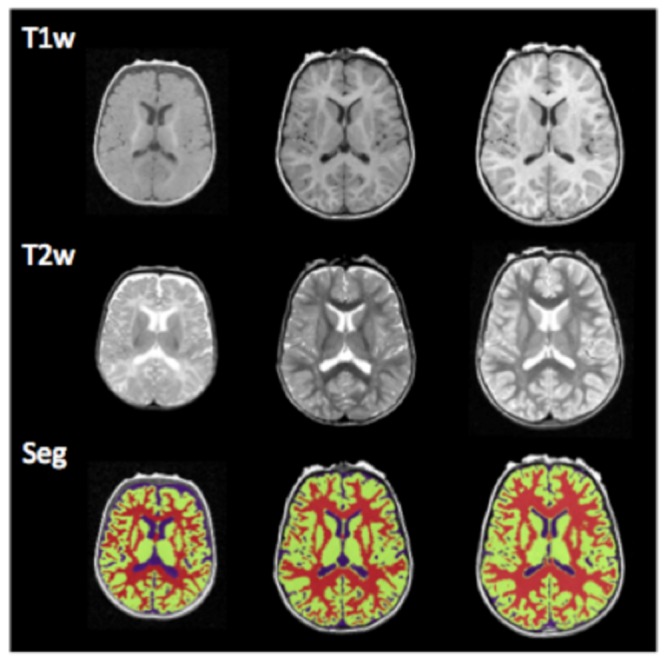
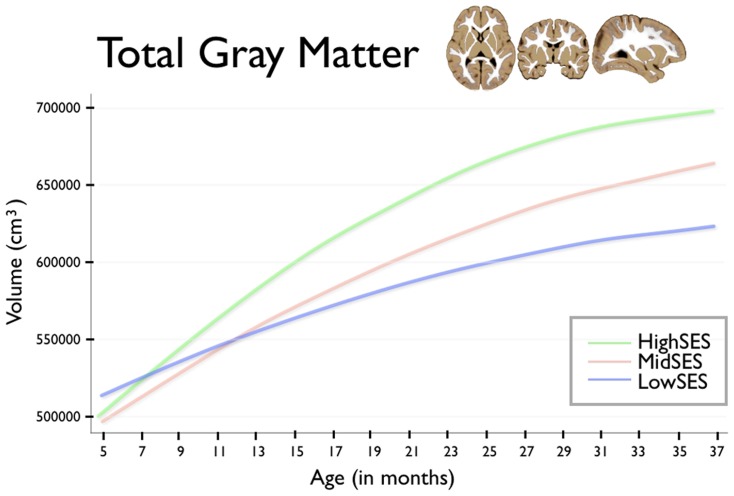
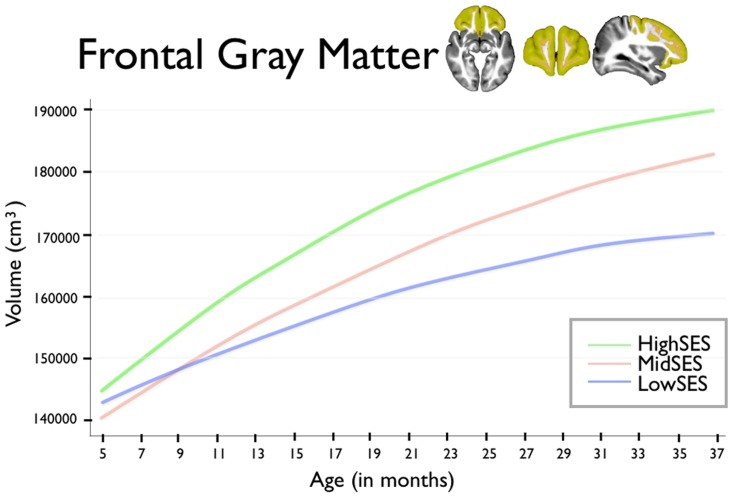
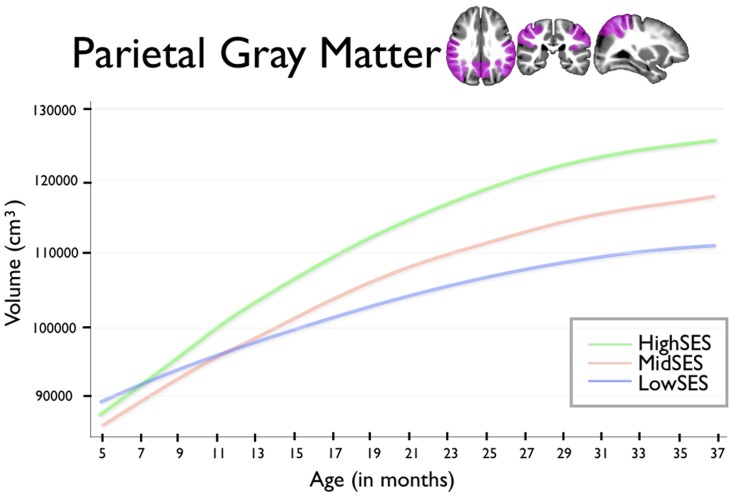
Living in poverty places children at very high risk for problems across a variety of domains, including schooling, behavioral regulation, and health. Aspects of cognitive functioning, such as information processing, may underlie these kinds of problems. How might poverty affect the brain functions underlying these cognitive processes? Here, we address this question by observing and analyzing repeated measures of brain development of young children between five months and four years of age from economically diverse backgrounds (n = 77). In doing so, we have the opportunity to observe changes in brain growth as children begin to experience the effects of poverty. These children underwent MRI scanning, with subjects completing between 1 and 7 scans longitudinally. Two hundred and three MRI scans were divided into different tissue types using a novel image processing algorithm specifically designed to analyze brain data from young infants. Total gray, white, and cerebral (summation of total gray and white matter) volumes were examined along with volumes of the frontal, parietal, temporal, and occipital lobes. Infants from low-income families had lower volumes of gray matter, tissue critical for processing of information and execution of actions. These differences were found for both the frontal and parietal lobes. No differences were detected in white matter, temporal lobe volumes, or occipital lobe volumes. In addition, differences in brain growth were found to vary with socioeconomic status (SES), with children from lower-income households having slower trajectories of growth during infancy and early childhood. Volumetric differences were associated with the emergence of disruptive behavioral problems.
Overview
The claims and statistics of this paper haven’t been checked yet.
Run the check — free, no account needed. It reads the open-access text and checks the sources it cites.
Integrity signals
Registry
Cites
Statistics
Figures
Verification
Claims the paper makes
The claims and statistics of this paper haven’t been checked yet.
Run the check — free, no account needed. It reads the open-access text and checks the sources it cites.
Claims other papers make about this one
Each is checked against this paper’s own text: does it say what the citing paper says it does?
In the citing paper
“neonates carrying the ε4 allele of APOE (which encodes apolipoprotein E), a major susceptibility allele for late-onset Alzheimer disease, have reduced volumes in temporal cortex, highly similar to those reported in the elderly.”
From Imaging structural and functional brain development in early childhood (2018) · cites this paper as [171]
In the citing paper
“white-matter volume does not seem to be affected by SES169, 171”
From Imaging structural and functional brain development in early childhood (2018) · cites this paper as [171]
In the citing paper
“Common variants in psychiatric risk genes are associated with individual differences in brain tissue volumes in neonates171.”
From Imaging structural and functional brain development in early childhood (2018) · cites this paper as [171]
In the citing paper
“The influence of SES on brain structure seems to become greater with age in early childhood171”
From Imaging structural and functional brain development in early childhood (2018) · cites this paper as [171]
In the citing paper
“neonates homozygous for the rs4680 valine allele of COMT (which encodes catechol-O-methyltransferase) exhibit reduced grey matter in the temporal cortex and hippocampus, mirroring findings in adults.”
From Imaging structural and functional brain development in early childhood (2018) · cites this paper as [171]
In the citing paper
“neonates homozygous for the rs821616 serine allele of DISC1 (which encodes disrupted-in schizophrenia 1) exhibit numerous large areas of reduced grey matter in the frontal lobes.”
From Imaging structural and functional brain development in early childhood (2018) · cites this paper as [171]
Self-check
Percentages, sums and reported differences re-computed from the paper’s own numbers.
The self-check needs the paper’s full text.
Citations
Cites
Tzourio-Mazoyer, N., Landeau, B., Papathanassiou, D., Crivello, F., Etard, O., Delcroix, N., Mazoyer, B., & Joliot, M. (2002) · NeuroImage · doi:10.1006/nimg.2001.0978 · Cited by 16,319
Neighborhoods and Violent Crime: A Multilevel Study of Collective Efficacy
Sampson, R. J., Raudenbush, S. W., & Earls, F. (1997) · Science · doi:10.1126/science.277.5328.918 · Cited by 11,999
Ashburner, J., & Friston, K. J. (2005) · NeuroImage · doi:10.1016/j.neuroimage.2005.02.018 · Cited by 7,507
Effects of stress throughout the lifespan on the brain, behaviour and cognition
Lupien, S. J., McEwen, B. S., Gunnar, M. R., & Heim, C. (2009) · Nature Reviews Neuroscience · doi:10.1038/nrn2639 · Cited by 6,256
Socioeconomic status and child development
Bradley, R. H., & Corwyn, R. F. (2002) · Annual Review of Psychology · doi:10.1146/annurev.psych.53.100901.135233 · Cited by 5,484
A nonparametric method for automatic correction of intensity nonuniformity in MRI data
Sled, J. G., Zijdenbos, A. P., & Evans, A. C. (1998) · IEEE Transactions on Medical Imaging · doi:10.1109/42.668698 · Cited by 4,731
Meaningful Differences in the Everyday Experience of Young American Children
Panagos, R. J. (1998) · Remedial and Special Education · doi:10.1177/074193259801900609 · Cited by 4,183
Stress signalling pathways that impair prefrontal cortex structure and function
Arnsten, A. F. T. (2009) · Nature Reviews Neuroscience · doi:10.1038/nrn2648 · Cited by 3,299
The environment of childhood poverty
Evans, G. W. (2004) · American Psychologist · doi:10.1037/0003-066x.59.2.77 · Cited by 2,396
Economic Deprivation and Early Childhood Development
Duncan, G. J., Jeanne Brooks-gunn, B., & Klebanov, P. K. (1994) · Child Development · doi:10.1111/j.1467-8624.1994.tb00752.x · Cited by 2,127
Nigg, J. T. (2000) · Psychological Bulletin · doi:10.1037/0033-2909.126.2.220 · Cited by 1,941 · cited 1×
“Given the importance of the frontal lobe in behavioral regulation [50], we also hypothesized that variations in this brain area (both in regards to lower volume and slower growth) would be related to greater disruptive behavioral problems in children (as measured by the Child Behavior Checklist, CBCL).”
BackgroundEconomic Status and Health in Childhood: The Origins of the Gradient
Case, A. C., Lubotsky, D. H., & Paxson, C. H. (2002) · American Economic Review · doi:10.1257/000282802762024520 · Cited by 1,753
The Determinants of Children's Attainments: A Review of Methods and Findings
HAVEMAN, R. H., & Wolfe, B. L. (1995) · RePEc: Research Papers in Economics · Cited by 1,691
Self-citationPlasticity in gray and white: neuroimaging changes in brain structure during learning
Zatorre, R. J., Fields, R. D., & Johansen-Berg, H. (2012) · Nature Neuroscience · doi:10.1038/nn.3045 · Cited by 1,685
Socioeconomic status and the developing brain
Hackman, D. A., & Farah, M. J. (2009) · Trends in Cognitive Sciences · doi:10.1016/j.tics.2008.11.003 · Cited by 1,681
How Much Does Childhood Poverty Affect the Life Chances of Children?
Duncan, G. J., Yeung, W. J., Jeanne Brooks-gunn, B., & Smith, J. R. (1998) · American Sociological Review · doi:10.2307/2657556 · Cited by 1,616
Economic Deprivation and Early Childhood Development
Duncan, G. J., Brooks‐Gunn, J., & Klebanov, P. K. (1994) · Child Development · doi:10.2307/1131385 · Cited by 1,231
A Structural MRI Study of Human Brain Development from Birth to 2 Years
Knickmeyer, R. C., Gouttard, S., Kang, C., Evans, D., Wilber, K., Smith, J. K., Hamer, R. M., Lin, W., Gerig, G., & Gilmore, J. H. (2008) · The Journal of Neuroscience · doi:10.1523/jneurosci.3479-08.2008 · Cited by 1,151
Self-citationSocioeconomic gradients predict individual differences in neurocognitive abilities.
Noble, K. G., McCandliss, B. D., & Farah, M. J. (2007) · Developmental Science · doi:10.1111/j.1467-7687.2007.00600.x · Cited by 1,041
Neurocognitive correlates of socioeconomic status in kindergarten children
Noble, K. G., Norman, M. F., & Farah, M. J. (2005) · Developmental Science · doi:10.1111/j.1467-7687.2005.00394.x · Cited by 1,038
Gershoff, E. T., Aber, J. L., Raver, C. C., & Lennon, M. C. (2007) · Child Development · doi:10.1111/j.1467-8624.2007.00986.x · Cited by 939
Toga, A. W., Thompson, P. M., & Sowell, E. R. (2006) · Trends in Neurosciences · doi:10.1016/j.tins.2006.01.007 · Cited by 872
Childhood poverty: specific associations with neurocognitive development
Farah, M. J., Shera, D. M., Savage, J. H., Betancourt, L., Giannetta, J. M., Brodsky, N. L., Malmud, E. K., & Hurt, H. (2006) · Brain Research · doi:10.1016/j.brainres.2006.06.072 · Cited by 835 · cited 1×
“Exposure to poverty has been associated with decrements in attentional processes, working memory, and inhibitory control during infancy [35,36], childhood and adolescence [37–39], and also in adulthood [40,41].”
BackgroundThe Impact of Family Income on Child Achievement: Evidence from the Earned Income Tax Credit
Dahl, G. B., & Lochner, L. (2012) · American Economic Review · doi:10.1257/aer.102.5.1927 · Cited by 832
Functions of the Frontal Lobes: Relation to Executive Functions
Stuss, D. T. (2011) · Journal of the International Neuropsychological Society · doi:10.1017/s1355617711000695 · Cited by 784
Childhood poverty, chronic stress, and adult working memory
Evans, G. W., & Schamberg, M. A. (2009) · Proceedings of the National Academy of Sciences · doi:10.1073/pnas.0811910106 · Cited by 724
Gertler, P. (2004) · American Economic Review · doi:10.1257/0002828041302109 · Cited by 703
Fernald, L. C., Gertler, P. J., & Neufeld, L. M. (2008) · The Lancet · doi:10.1016/s0140-6736(08)60382-7 · Cited by 596
Mezzacappa, E. (2004) · Child Development · doi:10.1111/j.1467-8624.2004.00746.x · Cited by 587
Duncan, G. J., Morris, P., & Rodrigues, C. A. G. (2011) · Developmental Psychology · doi:10.1037/a0023875 · Cited by 551
Childhood Externalizing Behavior: Theory and Implications
Liu, J. (2004) · Journal of Child and Adolescent Psychiatric Nursing · doi:10.1111/j.1744-6171.2004.tb00003.x · Cited by 542
Infant Brain Atlases from Neonates to 1- and 2-Year-Olds
Shi, F., Yap, P., Guorong Wu, A., Jia, H., Gilmore, J. H., Lin, W., & Shen, D. G. (2011) · PLoS ONE · doi:10.1371/journal.pone.0018746 · Cited by 530
Self-citationThe NIH MRI study of normal brain development
Evans, A. C. (2006) · NeuroImage · doi:10.1016/j.neuroimage.2005.09.068 · Cited by 526
Experience-dependent structural plasticity in the adult human brain
May, A. (2011) · Trends in Cognitive Sciences · doi:10.1016/j.tics.2011.08.002 · Cited by 512
Rosenzweig, M. R., Krech, D., Bennett, E. L., & Diamond, M. C. (1962) · Journal of Comparative and Physiological Psychology · doi:10.1037/h0041137 · Cited by 505
Socioeconomic Disparities Affect Prefrontal Function in Children
Kishiyama, M. M., Boyce, W. T., Jimenez, A. M., Perry, L. M., & Knight, R. T. (2008) · Journal of Cognitive Neuroscience · doi:10.1162/jocn.2009.21101 · Cited by 466
The Impact of Family Income on Child Achievement: Evidence from the Earned Income Tax Credit: Reply
Dahl, G. B., & Lochner, L. (2017) · American Economic Review · doi:10.1257/aer.20161329 · Cited by 444
Variation in neural development as a result of exposure to institutionalization early in childhood
Sheridan, M. A., Fox, N. A., Zeanah, C. H., McLaughlin, K. A., & Nelson, C. A. (2012) · Proceedings of the National Academy of Sciences · doi:10.1073/pnas.1200041109 · Cited by 432
The learning brain: Lessons for education.
Blakemore, S., & Frith, U. (2005) · Cited by 421
Teicher, M. H., Tomoda, A., & Andersen, S. L. (2006) · Annals of the New York Academy of Sciences · doi:10.1196/annals.1364.024 · Cited by 405
Evans, G. W., & Kim, P. (2010) · Annals of the New York Academy of Sciences · doi:10.1111/j.1749-6632.2009.05336.x · Cited by 375
Stevens, C. J., Lauinger, B., & Neville, H. J. (2009) · Developmental Science · doi:10.1111/j.1467-7687.2009.00807.x · Cited by 369
Dynamical consequences of lesions in cortical networks
Honey, C. J., & Sporns, O. (2008) · Human Brain Mapping · doi:10.1002/hbm.20579 · Cited by 353
Association between Income and the Hippocampus
Hanson, J., Chandra, A., Wolfe, B., & Pollak, S. (2011) · PLoS ONE · doi:10.1371/journal.pone.0018712 · Cited by 341
Self-citationProgress for children: a report card on adolescents
Cappa, C., Wardlaw, T., Langevin-Falcon, C., & Diers, J. (2012) · The Lancet · doi:10.1016/s0140-6736(12)60531-5 · Cited by 319
Leroy, J. L., Ruel, M. T., & Verhofstadt, E. (2009) · Journal of Development Effectiveness · doi:10.1080/19439340902924043 · Cited by 273
The anatomy of a memory: convergence of results across a diversity of tests
Greenough, W. T., & Bailey, C. H. (1988) · Trends in Neurosciences · doi:10.1016/0166-2236(88)90139-7 · Cited by 266
The Impact of Family Income on Child Achievement: Evidence from the Earned Income Tax Credit
Dahl, G. B., & Lochner, L. (2008) · National Bureau of Economic Research · doi:10.3386/w14599 · Cited by 258
Genetics of white matter development: A DTI study of 705 twins and their siblings aged 12 to 29
Chiang, M.-C., McMahon, K. L., de Zubicaray, G. I., Martin, N. G., Hickie, I. B., Toga, A. W., Wright, M. J., & Thompson, P. M. (2010) · NeuroImage · doi:10.1016/j.neuroimage.2010.10.015 · Cited by 255
Glewwe, P. W., & Kassouf, A. L. (2011) · Journal of Development Economics · doi:10.1016/j.jdeveco.2011.05.008 · Cited by 252
Raizada, R. D. S., Richards, T. L., Meltzoff, A., & Kuhl, P. K. (2008) · NeuroImage · doi:10.1016/j.neuroimage.2008.01.021 · Cited by 246
Socioeconomic Position Across the Lifecourse and Cognitive Function in Late Middle Age
Turrell, G., Lynch, J. W., Kaplan, G. A., Everson‐Rose, S. A., Helkala, E., Kauhanen, J., & Salonen, J. T. (2002) · The Journals of Gerontology Series B · doi:10.1093/geronb/57.1.s43 · Cited by 242
The Social Costs of Unemployment: Implications for Social Support
Atkinson, T., Liem, R., & Liem, J. H. (1986) · Journal of Health and Social Behavior · doi:10.2307/2136947 · Cited by 228
Automated graph-based analysis and correction of cortical volume topology
Shattuck, D. W., & Leahy, R. M. (2001) · IEEE Transactions on Medical Imaging · doi:10.1109/42.963819 · Cited by 215
Perigenual anterior cingulate morphology covaries with perceived social standing
Gianaros, P. J., Horenstein, J. A., Cohen, S., Matthews, K. A., Brown, S. M., Flory, J. D., Critchley, H. D., Manuck, S. B., & Hariri, A. R. (2007) · Social Cognitive and Affective Neuroscience · doi:10.1093/scan/nsm013 · Cited by 214
Huston, A. C., Duncan, G. J., Granger, R., Bos, J. M., McLoyd, V. C., Mistry, R. S., Crosby, D. A., Gibson, C. M., Magnuson, K., Romich, J. L., et al. (2001) · Child Development · doi:10.1111/1467-8624.00281 · Cited by 207
Neonatal brain image segmentation in longitudinal MRI studies
Shi, F., Yong Fan, A., Songyuan, T., Gilmore, J. H., Lin, W., & Shen, D. G. (2009) · NeuroImage · doi:10.1016/j.neuroimage.2009.07.066 · Cited by 202
Self-citationD’Angiulli, A., Herdman, A. T., Stapells, D. R., & Hertzman, C. (2008) · Neuropsychology · doi:10.1037/0894-4105.22.3.293 · Cited by 193
Almli, C. R., Rivkin, M. J., & McKinstry, R. C. (2007) · NeuroImage · doi:10.1016/j.neuroimage.2006.08.058 · Cited by 193
Poverty-alleviation program participation and salivary cortisol in very low-income children
Fernald, L. C. H., & Gunnar, M. R. (2009) · Social Science & Medicine · doi:10.1016/j.socscimed.2009.03.032 · Cited by 189
Experience effects on brain development: possible contributions to psychopathology
Grossman, A. W., Churchill, J. D., McKinney, B. C., Kodish, I. M., Otte, S. L., & Greenough, W. T. (2002) · Journal of Child Psychology and Psychiatry · doi:10.1111/1469-7610.t01-1-00102 · Cited by 187
Higher ground: new hope for the working poor and their children
(2008) · Choice Reviews Online · doi:10.5860/choice.45-3503 · Cited by 180
The learning brain: Lessons for education: a précis
Blakemore, S., & Frith, U. (2005) · Developmental Science · doi:10.1111/j.1467-7687.2005.00434.x · Cited by 164
LABEL: Pediatric brain extraction using learning-based meta-algorithm
Shi, F., Wang, L., Dai, Y., Gilmore, J. H., Lin, W., & Shen, D. G. (2012) · NeuroImage · doi:10.1016/j.neuroimage.2012.05.042 · Cited by 160
Self-citationSeven Years Old in the Home Environment
Newson, J. (2017) · Routledge eBooks · doi:10.4324/9781315142500 · Cited by 152
Tomarken, A. J., Dichter, G. S., Garber, J., & Simien, C. (2004) · Biological Psychology · doi:10.1016/j.biopsycho.2004.03.011 · Cited by 150
Genetic and environmental contributions to neonatal brain structure: A twin study
Gilmore, J. H., Schmitt, J. E., Knickmeyer, R. C., Smith, J. K., Lin, W., Styner, M., Gerig, G., & Neale, M. C. (2010) · Human Brain Mapping · doi:10.1002/hbm.20926 · Cited by 136
Self-citationSocioeconomic Position across the Lifecourse: How Does it Relate to Cognitive Function in Mid-life?
Singh‐Manoux, A., Richards, M., & Marmot, M. G. (2005) · Annals of Epidemiology · doi:10.1016/j.annepidem.2004.10.007 · Cited by 121
Lipina, S. J., Martelli, M. I., Vuelta, B., & Colombo, J. A. (2005) · DOAJ (DOAJ: Directory of Open Access Journals) · Cited by 111
Huston, A. C., Duncan, G. J., McLoyd, V. C., Crosby, D. A., Ripke, M. N., Weisner, T. S., & Eldred, C. A. (2005) · Developmental Psychology · doi:10.1037/0012-1649.41.6.902 · Cited by 97
Studies of brain weight and RNA content after short periods of exposure to environmental complexity
Ferchmin, P. A., Eterović, V. A., & Caputto, R. (1970) · Brain Research · doi:10.1016/0006-8993(70)90153-8 · Cited by 92
EEG development in children with sociocultural disadvantages: a follow-up study
Otero, G. A., Pliego-Rivero, F. B., Fernández, T., & Ricardo, J. (2003) · Clinical Neurophysiology · doi:10.1016/s1388-2457(03)00173-1 · Cited by 91
Anderson, B. J. (2011) · Developmental Psychobiology · doi:10.1002/dev.20563 · Cited by 87
Poverty, cultural disadvantage and brain development: a study of pre-school children in Mexico
Otero, G. A. (1997) · Electroencephalography and Clinical Neurophysiology · doi:10.1016/s0013-4694(97)95213-9 · Cited by 65
Cognitive and Emotional Outcomes for Children in Poverty
Barajas-Gonzalez, R. G., Hetzner, N. P., & Jeanne Brooks-gunn, B. (2013) · Sage eBooks · doi:10.4135/9781412976596.n18 · Cited by 32
Recent Developments for Poverty Measurement in U.S. Official Statistics
Betson, D. M., Citro, C. F., & Michael, R. T. (2000) · Journal of Official Statistics · Cited by 8
Cited by
Sorted by citations
Family income, parental education and brain structure in children and adolescents
Noble, K. G., Houston, S. M., Brito, N. H., Bartsch, H., Kan, E., Kuperman, J. M., Akshoomoff, N., Amaral, D. G., Bloss, C. S., Libiger, O., et al. (2015) · Nature Neuroscience · doi:10.1038/nn.3983 · Cited by 1,423
Imaging structural and functional brain development in early childhood
Gilmore, J. H., Knickmeyer, R. C., & Gao, W. (2018) · Nature Reviews Neuroscience · doi:10.1038/nrn.2018.1 · Cited by 1,013
Self-citationAssociation of Child Poverty, Brain Development, and Academic Achievement
Hair, N. L., Hanson, J. L., Wolfe, B. L., & Pollak, S. D. (2015) · Archives of Pediatrics and Adolescent Medicine · doi:10.1001/jamapediatrics.2015.1475 · Cited by 1,017
Self-citationDimensions of early experience and neural development: deprivation and threat
Sheridan, M. A., & McLaughlin, K. A. (2014) · Trends in Cognitive Sciences · doi:10.1016/j.tics.2014.09.001 · Cited by 697
Nusslock, R., & Miller, G. E. (2016) · Biological Psychiatry · doi:10.1016/j.biopsych.2015.05.017 · Cited by 672
Metadata
- Authors
- Hanson, J. L., Hair, N., Shen, D. G., Shi, F., Gilmore, J. H., Wolfe, B. L., & Pollak, S. D.
- Affiliations
- University of Wisconsin–Madison (US)
- University of North Carolina at Chapel Hill (US)
- Corresponding author
- Hanson, Jamie L.
- ORCID
- Venue
- PLoS ONE
- Publisher
- Public Library of Science (PLoS)
- Published
- 2013-12-11
- Volume
- 8
- Issue
- 12
- Pages
- e80954
- ISSN
- 1932-6203 (ISSN-L)
- PMC
- PMC3859472
- OpenAlex
- W2018329895
- Cited by
- 430
- References
- 76
- Citations by year
- 2026: 18 · 2025: 16 · 2024: 25 · 2023: 29 · 2022: 31 · 2021: 43 · 2020: 65 · 2019: 34 · 2018: 38 · 2017: 44 · 2016: 39 · 2015: 30 · 2014: 17
- FWCI
- 26.60
- Type
- journal article
- Language
- en
- Update notices
- correction (2015-12-30)
- Open access
- gold
- doi.org
- Licence
- Locations
- PLoS ONE (publishedVersion, cc-by)
- Europe PMC (PubMed Central) (publishedVersion, cc-by)
- PubMed Central (publishedVersion, cc-by)
- PubMed (publishedVersion)
- Carolina Digital Repository (University of North Carolina at Chapel Hill) (submittedVersion)
- RePEc: Research Papers in Economics (submittedVersion)
- DOAJ (DOAJ: Directory of Open Access Journals) (submittedVersion, cc-by-sa)
- UNC Libraries
- Funders
- U.S. Department of Health and Human Services
- Russell Sage Foundation
- Sage Foundation
- University of Wisconsin-Madison
- McGill University
- National Institutes of Health (n01hd23343-8-0-0, MH61285, MH100217)
- National Institute on Aging (R01AG042599, R01AG041721, AG041721)
- National Institute of Mental Health (MH100217, MH61285, T32MH018029, R01MH100217, N01-NS-9-2314, R01MH068858, N01-MH 90002, MH018029, MH 68858, R01MH061285)
- National Institute on Drug Abuse (F31DA028087, N01-MH9-0002, DA028087)
- National Institute of Neurological Disorders and Stroke (N01-NS-9-2317, N01-NS-92314, N01-HD02–3343, N01-MH9-0002, N01-NS-92319, N01-NS 92315, N01‐NS‐9‐2314, ‐2315, ‐2316, ‐2317, ‐2319 and ‐2320, N01-NS 92316, N01 NS-9-2320)
- National Institute of Biomedical Imaging and Bioengineering (EB006733, EB009634, EB008374, R01EB008374, R01EB009634, R01EB006733)
- National Institute of Child Health and Human Development (N01‐HD02‐3343)
- U.S. Children's Bureau
- Eunice Kennedy Shriver National Institute of Child Health and Human Development (P30HD003352, N01-HD023343)
- Topics
- Health Sciences › Nursing › Nutrition and Dietetics › Child Nutrition and Water Access
- Social Sciences › Psychology › Clinical Psychology › Child Abuse and Trauma
- Health Sciences › Medicine › Public Health, Environmental and Occupational Health › Food Security and Health in Diverse Populations
- Keywords
- household poverty, socioeconomic status, infant brain development, gray matter volume, white matter volume, frontal lobe, parietal lobe, low-income children, disruptive behavior problems, cognitive development, brain growth trajectories
- MeSH terms
- Adolescent, Brain, Child, Child, Preschool, Female, Frontal Lobe, Humans, Image Processing, Computer-Assisted, Infant, Infant, Newborn, Magnetic Resonance Imaging, Male, Occipital Lobe, Parietal Lobe, Poverty, Socioeconomic Factors, Temporal Lobe
About these checks
Registry, retraction, Cites and statistics results are computed, not judged, with one exception: a printed reference that no index lists is read once by a model before it counts as a citation error. Claims are extracted by a model and kept only when their quote appears verbatim in the text; each cited source is then checked, with a model’s help, for whether it says what the claim relies on. Those verdicts can be wrong — read the claim’s quote and the cited source before relying on one.
Statistics and arithmetic are recomputed, not judged.
Confidence bands are shown only for fields calibrated on our annotated test set. None is calibrated yet, so no band is shown.
What counts as a claim ›How we measure confidence ›How we check this ›
Are you an author, or do you see a problem with this page? Request a review
