

The DOI matches its Crossref record; 60 of the 60 references it cites were found in a registry or an index.
Chronic Exposure to Perfluorooctane Sulfonate Induces Behavior Defects and Neurotoxicity through Oxidative Damages, In Vivo and In Vitro
Open accessAbstract
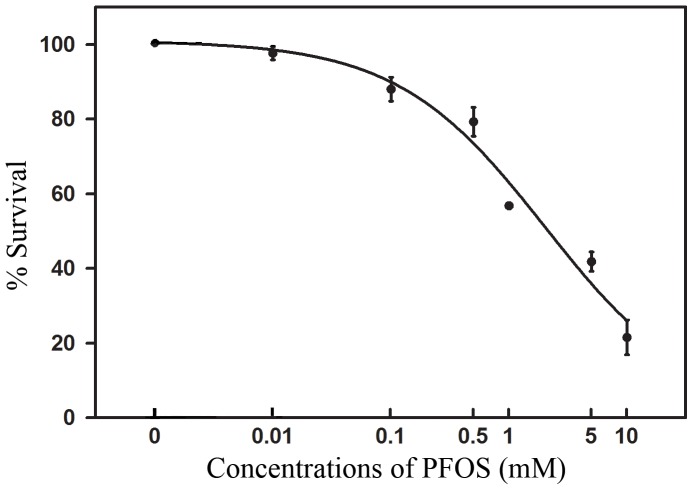
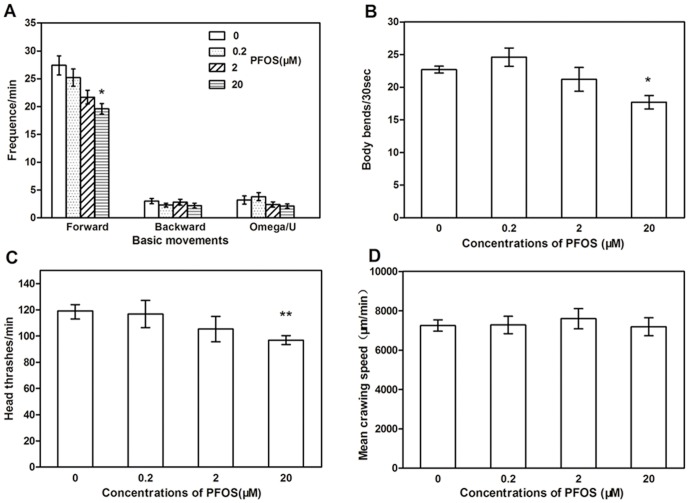
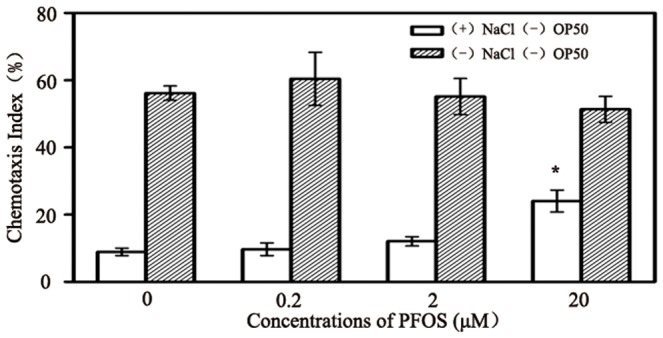
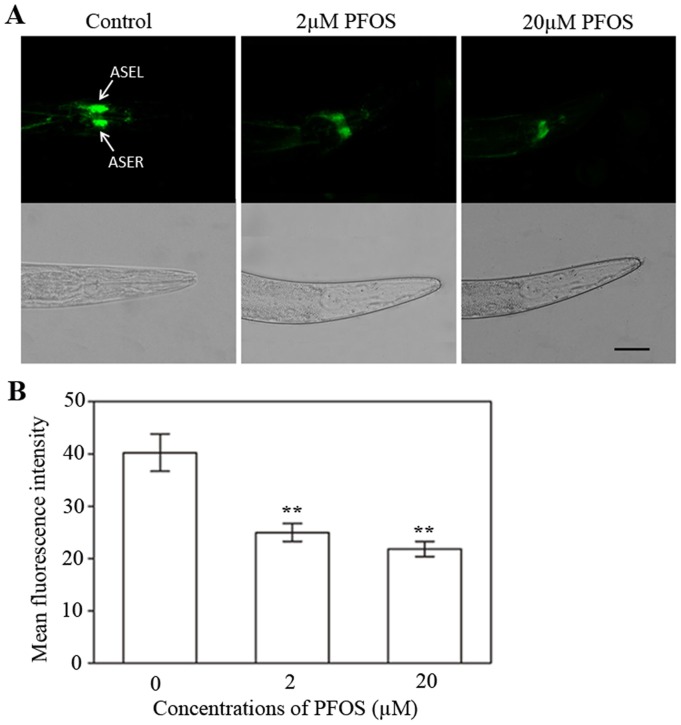
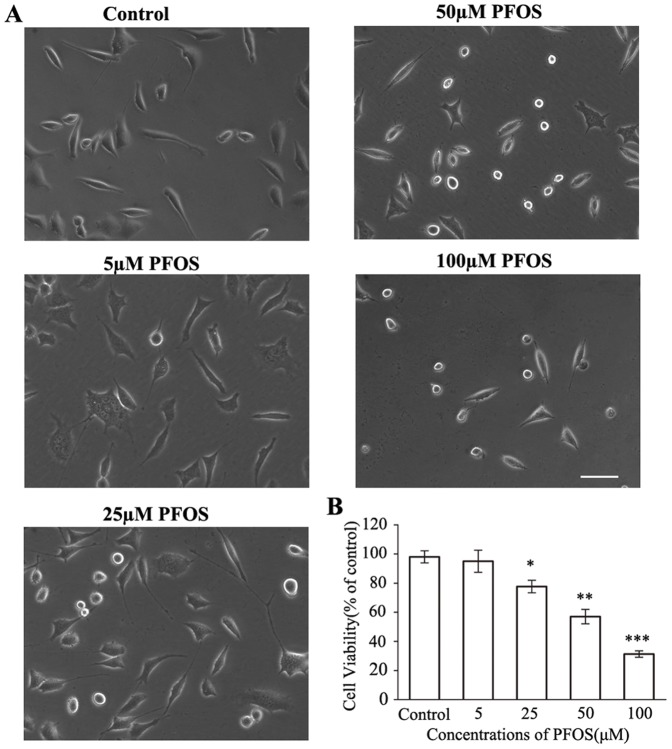
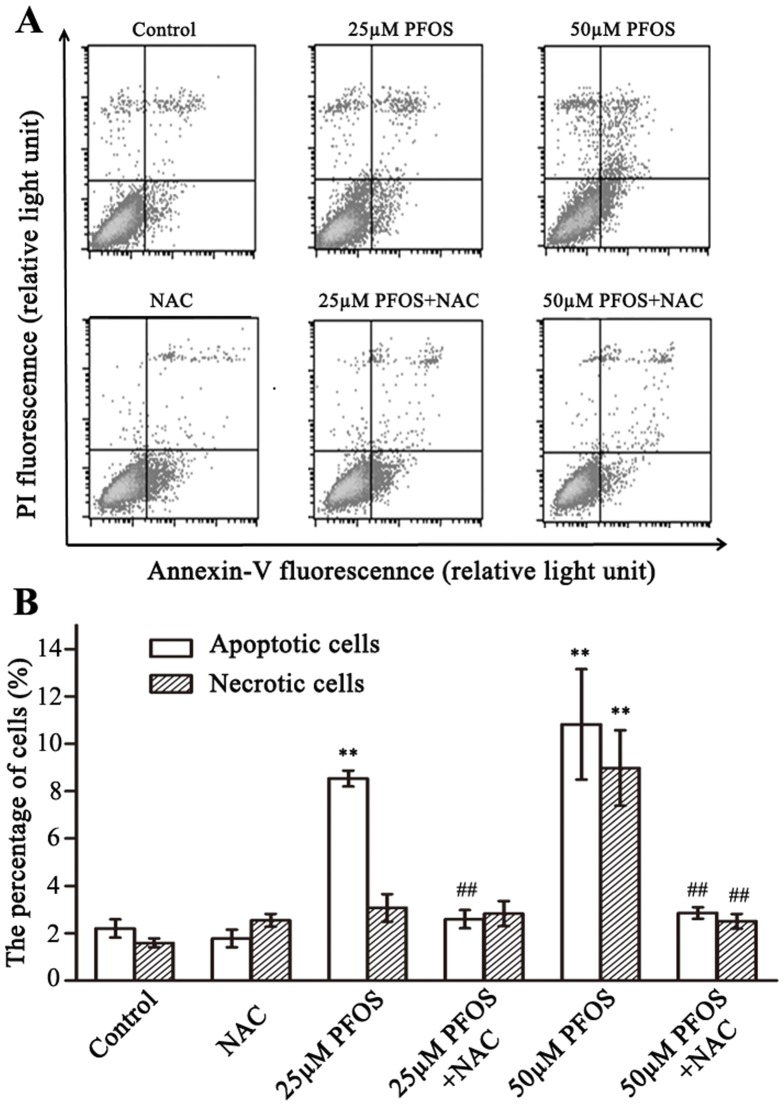
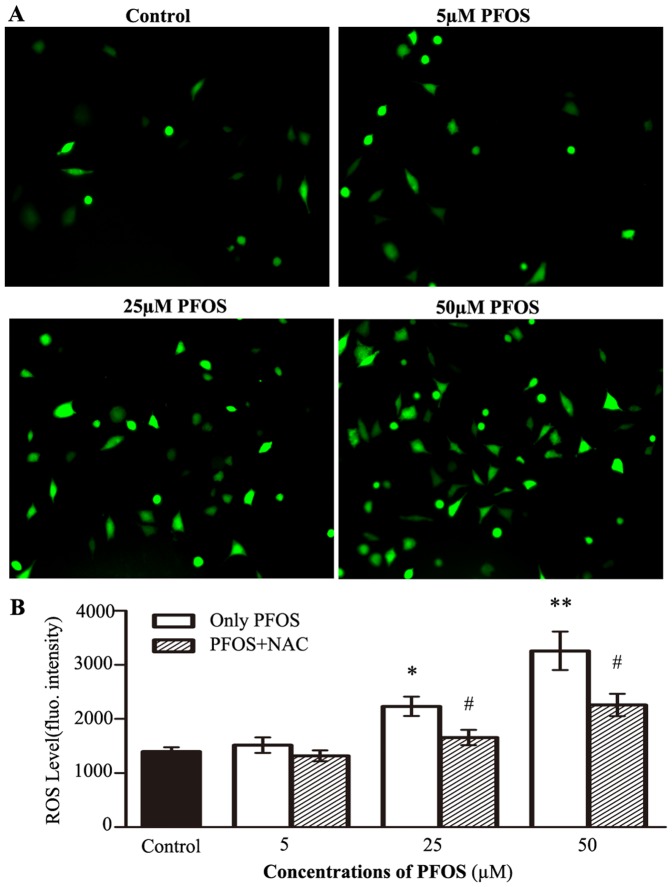
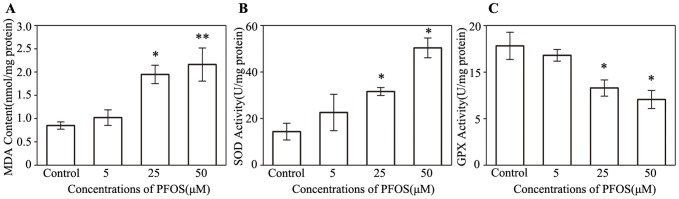
Perfluorooctane sulfonate (PFOS) is an emerging persistent pollutant which shows multiple adverse health effects. However, the neurotoxicity of PFOS and its mechanisms have not been fully elucidated. Using a combination of in vivo and in vitro methods, the present study provides a detailed description of PFOS-induced neurotoxicity. Results showed that the median lethal concentration of PFOS was 2.03 mM in Caenorhabditis elegans for 48 h exposure. 20 µM PFOS caused decrease of locomotor behaviors including forward movement, body bend and head thrash. Additionally, PFOS exposure reduced chemotaxis index of C. elegans, which indicates the decline of chemotaxis learning ability. Using green fluorescent protein (GFP) labelled transgenic strains, we found that PFOS caused down-regulated expression of a chemoreceptor gene, gcy-5, in ASE chemosensory neurons, but did not affect cholinergic neurons and dopaminergic neurons. In SH-SY5Y cells, 48 h exposure to 25 µM and 50 µM PFOS induced cell damage, apoptosis and the reactive oxygen species (ROS) generation. PFOS caused significant increases of lipid peroxidation and superoxide dismutase activity, but an actual decrease of glutathione peroxidase activity. Furthermore, antioxidant N-acetylcysteine rescued cells from PFOS-induced apoptosis via blocking ROS. Our results demonstrate that chronic exposure to PFOS can cause obvious neurotoxicity and behavior defects. Oxidative damage and anti-oxidative deficit are crucial mechanisms in neurotoxicity of PFOS.
Overview
The claims and statistics of this paper haven’t been checked yet.
Run the check — free, no account needed. It reads the open-access text and checks the sources it cites.
Integrity signals
Registry
Cites
Statistics
Figures
Verification
Claims the paper makes
The claims and statistics of this paper haven’t been checked yet.
Run the check — free, no account needed. It reads the open-access text and checks the sources it cites.
Claims other papers make about this one
Each is checked against this paper’s own text: does it say what the citing paper says it does?
The source backs part of the claim, not all of it — or backs it for a different population, condition or comparison.
In the citing paper
“Whereas this actin filament remodeling has only been demonstrated in response to PFOS exposure, several other in vitro studies have also demonstrated the ability of PFOS, PFOA, and PFOSA, to generate ROS in neurons and astrocytes (Lee et al., 2012; Reistad et al., 2013; Chen et al., 2014; Li Z. et al., 2017).”
From A Critical Review and Meta-Analysis of Impacts of Per- and Polyfluorinated Substances on the Brain and Behavior (2022) · cites this paper as Chen et al., 2014
Experimental — accuracy not yet measuredThe source backs part of the claim, not all of it — or backs it for a different population, condition or comparison.
In the citing paper
“finding that 20 μM PFOS in culture medium reduced learning ability (Chen et al., 2014).”
From A Critical Review and Meta-Analysis of Impacts of Per- and Polyfluorinated Substances on the Brain and Behavior (2022) · cites this paper as Chen et al., 2014
Experimental — accuracy not yet measuredThe cited source says what the claim attributes to it.
In the citing paper
“Furthermore, PFOS exposure caused down-regulation of gcy-5, a gene that encodes chemoreceptors in amphidial chemosensory (ASE) neurons, which are essential for the assayed chemotaxis behavior (Chen et al., 2014).”
From A Critical Review and Meta-Analysis of Impacts of Per- and Polyfluorinated Substances on the Brain and Behavior (2022) · cites this paper as Chen et al., 2014
Self-check
Percentages, sums and reported differences re-computed from the paper’s own numbers.
The self-check needs the paper’s full text.
Citations
Cites
THE GENETICS OF CAENORHABDITIS ELEGANS
Brenner, S. (1974) · Genetics · doi:10.1093/genetics/77.1.71 · Cited by 15,220
Global Distribution of Perfluorooctane Sulfonate in Wildlife
Giesy, J. P., & Kannan, K. (2001) · Environmental Science & Technology · doi:10.1021/es001834k · Cited by 2,750
Perfluoroalkyl Acids: A Review of Monitoring and Toxicological Findings
Lau, C., Anitole, K., Hodes, C., Lai, D., Pfahles-Hutchens, A., & Seed, J. (2007) · Toxicological Sciences · doi:10.1093/toxsci/kfm128 · Cited by 2,620
Finding function in novel targets: C. elegans as a model organism
Kaletta, T., & Hengartner, M. O. (2006) · Nature Reviews Drug Discovery · doi:10.1038/nrd2031 · Cited by 1,152
Caenorhabditis elegans: An Emerging Model in Biomedical and Environmental Toxicology
Leung, M. C. K., Williams, P. L., Benedetto, A., Au, C., Helmcke, K. J., Aschner, M., & Meyer, J. N. (2008) · Toxicological Sciences · doi:10.1093/toxsci/kfn121 · Cited by 1,055
Bargmann, C. I., & Horvitz, H. R. (1991) · Neuron · doi:10.1016/0896-6273(91)90276-6 · Cited by 740
Identification of Long-Chain Perfluorinated Acids in Biota from the Canadian Arctic
Martin, J. W., Smithwick, M., Braune, B. M., Hoekstra, P. F., Muir, D. C. G., & Mabury, S. A. (2003) · Environmental Science & Technology · doi:10.1021/es034727+ · Cited by 675
Quantitative Characterization of Trace Levels of PFOS and PFOA in the Tennessee River
Hansen, K. J., Johnson, H. O., Eldridge, J. S., Butenhoff, J. L., & Dick, L. A. (2002) · Environmental Science & Technology · doi:10.1021/es010780r · Cited by 546
Calafat, A., Kuklenyik, Z., Reidy, J., Caudill, S., Tully, J. S., & Needham, L. (2007) · Environmental Science and Technology · doi:10.1021/es062686m · Cited by 468
Basic Caenorhabditis elegans Methods: Synchronization and Observation
Porta-de-la-Riva, M., Fontrodona, L., Villanueva, A., & Cerón, J. (2012) · Journal of Visualized Experiments · doi:10.3791/4019 · Cited by 464
Johansson, N., Fredriksson, A., & Eriksson, P. (2008) · NeuroToxicology · doi:10.1016/j.neuro.2007.10.008 · Cited by 463
Aquatic toxicity testing using the nematode,Caenorhabditis elegans
Williams, P. L., & Dusenbery, D. B. (1990) · Environmental Toxicology and Chemistry · doi:10.1002/etc.5620091007 · Cited by 448
Kannan, K., Corsolini, S., Falandysz, J., Oehme, G., Focardi, S. E., & Giesy, J. P. (2002) · Environmental Science & Technology · doi:10.1021/es020519q · Cited by 437
Neurotoxin-induced degeneration of dopamine neurons in Caenorhabditis elegans
Nass, R., Hall, D. H., Miller, D. M., & Blakely, R. (2002) · Proceedings of the National Academy of Sciences · doi:10.1073/pnas.042497999 · Cited by 423
Barata, C., Varó, I., Navarro, J. C., Arun, S., & Porte, C. (2005) · Comparative Biochemistry and Physiology Part C Toxicology & Pharmacology · doi:10.1016/j.cca.2005.01.013 · Cited by 418
Growing Concern Over Perfluorinated Chemicals
Renner, R. (2001) · Environmental Science & Technology · doi:10.1021/es012317k · Cited by 417
Functional mapping of neurons that control locomotory behavior in Caenorhabditis elegans
Tsalik, E. L., & Hobert, O. (2003) · Journal of Neurobiology · doi:10.1002/neu.10245 · Cited by 411
Cui, L., Zhou, Q.-F., Liao, C.-Y., Fu, J.-J., & Jiang, G.-B. (2009) · Archives of Environmental Contamination and Toxicology · doi:10.1007/s00244-008-9194-6 · Cited by 368
Haug, L. S., Thomsen, C., & Becher, G. (2009) · Environmental Science & Technology · doi:10.1021/es802827u · Cited by 307
Johansson, N., Eriksson, P., & Viberg, H. (2009) · Toxicological Sciences · doi:10.1093/toxsci/kfp029 · Cited by 292
Saeki, S., Yamamoto, M. P., & Iino, Y. (2001) · Journal of Experimental Biology · doi:10.1242/jeb.204.10.1757 · Cited by 272
ASSESSMENT OF SUBLETHAL ENDPOINTS FOR TOXICITY TESTING WITH THE NEMATODE CAENORHABDITIS ELEGANS
Anderson, G. L., Boyd, W. A., & Williams, P. L. (2001) · Environmental Toxicology and Chemistry · doi:10.1002/etc.5620200419 · Cited by 241
Temporal Trends of Perfluoroalkyl Concentrations in American Red Cross Adult Blood Donors, 2000–2010
Olsen, G. W., Lange, C. C., Ellefson, M. E., Mair, D. C., Church, T. R., Goldberg, C. L., Herron, R., Medhdizadehkashi, Z., Nobiletti, J. B., Rios, J. A., et al. (2012) · Environmental Science & Technology · doi:10.1021/es300604p · Cited by 226
Andersen, M. E., M.A., H. J. C. I., Tan, Y., Butenhoff, J. L., & Olsen, G. W. (2006) · Toxicology · doi:10.1016/j.tox.2006.08.004 · Cited by 210
Neurotoxic Effects of Perfluoroalkylated Compounds: Mechanisms of Action and Environmental Relevance
Mariussen, E. (2012) · Archives of Toxicology · doi:10.1007/s00204-012-0822-6 · Cited by 204
Direct Conversion of C. elegans Germ Cells into Specific Neuron Types
Tursun, B., Patel, T., Kratsios, P., & Hobert, O. (2010) · Science · doi:10.1126/science.1199082 · Cited by 203
Xing, H., Li, S., Wang, Z., Gao, X., Xu, S., & Wang, X. (2012) · Chemosphere · doi:10.1016/j.chemosphere.2012.02.049 · Cited by 190
Comparative pharmacokinetics of perfluorooctanesulfonate (PFOS) in rats, mice, and monkeys
Chang, S., Noker, P. E., Gorman, G. S., Gibson, S. J., Hart, J. A., Ehresman, D. J., & Butenhoff, J. L. (2011) · Reproductive Toxicology · doi:10.1016/j.reprotox.2011.07.002 · Cited by 181
Comparative pharmacokinetics of perfluorohexanesulfonate (PFHxS) in rats, mice, and monkeys
Sundström, M., Chang, S., Noker, P. E., Gorman, G. S., Hart, J. A., Ehresman, D. J., Bergman, Å., & Butenhoff, J. L. (2011) · Reproductive Toxicology · doi:10.1016/j.reprotox.2011.07.004 · Cited by 178
Coordinated regulation of cholinergic motor neuron traits through a conserved terminal selector gene
Kratsios, P., Stolfi, A., Levine, M., & Hobert, O. (2011) · Nature Neuroscience · doi:10.1038/nn.2989 · Cited by 177
Aliev, G., Smith, M. A., Seyidova, D., Neal, M. L., Lamb, B. T., Nunomura, A., Gasimov, E. K., Vinters, H. V., Perry, G. L., LaManna, J. C., et al. (2002) · Brain Pathology · doi:10.1111/j.1750-3639.2002.tb00419.x · Cited by 169
Jadiya, P., Khan, A., Sammi, S. R., Kaur, S., Mir, S. S., & Nazir, A. (2011) · Biochemical and Biophysical Research Communications · doi:10.1016/j.bbrc.2011.09.010 · Cited by 168
Effects of perfluorooctanoate and perfluorooctane sulfonate exposure on hepatoma Hep G2 cells
Hu, X., & Hu, D. (2009) · Archives of Toxicology · doi:10.1007/s00204-009-0441-z · Cited by 152
Prenatal Exposure to PFOS or PFOA Alters Motor Function in Mice in a Sex-Related Manner
Onishchenko, N., Fischer, C., Ibrahim, W. N. W., Negri, S., Spulber, S., Cottica, D., & Ceccatelli, S. (2011) · Neurotoxicity research · doi:10.1007/s12640-010-9200-4 · Cited by 152
Ortiz, C. O., Etchberger, J. F., Posy, S., Frøkjær‐Jensen, C., Lockery, S. R., Honig, B. H., & Hobert, O. (2006) · Genetics · doi:10.1534/genetics.106.055749 · Cited by 133
Chang, S.-C., Ehresman, D. J., Bjork, J. A., Wallace, K. B., Parker, G. A., Stump, D. G., & Butenhoff, J. L. (2009) · Reproductive Toxicology · doi:10.1016/j.reprotox.2009.01.005 · Cited by 118
Modeling Single and Repeated Dose Pharmacokinetics of PFOA in Mice
Lou, I., Wambaugh, J. F., Lau, C. S., Hanson, R. G., Lindstrom, A. B., Strynar, M. J., ZEHR, R. D. J., Setzer, R. W., & Barton, H. A. (2008) · Toxicological Sciences · doi:10.1093/toxsci/kfn234 · Cited by 115
Kumsta, C., Thamsen, M., & Jakob, U. (2010) · Antioxidants and Redox Signaling · doi:10.1089/ars.2010.3203 · Cited by 114
Murakami, H., Bessinger, K., Hellmann, J. L., & Murakami, S. (2005) · Journal of Neuroscience · doi:10.1523/jneurosci.3600-04.2005 · Cited by 114
Harada, K. H., Yang, H.-R., Moon, C.-S., Hung, N. N., Hitomi, T., Inoue, K., Niisoe, T., Watanabe, T., Kamiyama, S., Takenaka, K., et al. (2010) · Chemosphere · doi:10.1016/j.chemosphere.2010.01.027 · Cited by 102
Lee, H.-G., Lee, Y. J., & Yang, J.-H. (2012) · NeuroToxicology · doi:10.1016/j.neuro.2012.01.017 · Cited by 97
Oda, S., Tomioka, M., & Iino, Y. (2011) · Journal of Neurophysiology · doi:10.1152/jn.01029.2010 · Cited by 92
Behavioral effects in adult mice exposed to perfluorooctane sulfonate (PFOS)
Fuentes, S., Vicens, P., Colomina, M. T., & Domingo, J. L. (2007) · Toxicology · doi:10.1016/j.tox.2007.09.012 · Cited by 90
Tseng, I.-L., Yang, Y., Yu, C., Li, W.-H., & Liao, V. H. (2013) · PLoS ONE · doi:10.1371/journal.pone.0082657 · Cited by 87
The effects of aging and oxidative stress on learning behavior in C. elegans
Murakami, S., & Murakami, H. (2004) · Neurobiology of Aging · doi:10.1016/j.neurobiolaging.2004.08.007 · Cited by 86
Ankley, G. T., Kuehl, D. W., Kahl, M. D., Jensen, K. M., Butterworth, B. C., & Nichols, J. W. (2004) · Environmental Toxicology and Chemistry · doi:10.1897/03-667 · Cited by 81
Cis-regulatory mechanisms of left/right asymmetric neuron-subtype specification in C. elegans
Etchberger, J. F., Flowers, E. B., Poole, R. J., Bashllari, E., & Hobert, O. (2008) · Development · doi:10.1242/dev.030064 · Cited by 75
Chen, J., Das, S. R., La Du, J., Corvi, M. M., Bai, C., Chen, Y., Liu, X., Zhu, G., Tanguay, R. L., Dong, Q., et al. (2013) · Environmental Toxicology and Chemistry · doi:10.1002/etc.2031 · Cited by 70
Mao, Z., Xia, W., Wang, J., Chen, T., Zeng, Q., Xu, B., Li, W., Chen, X., & Xu, S. (2012) · Journal of Applied Toxicology · doi:10.1002/jat.2785 · Cited by 69
Wang, S. J., & Wang, Z. (2013) · PLoS ONE · doi:10.1371/journal.pone.0069653 · Cited by 68
Dorts, J., Kestemont, P., Marchand, P.-A., D’Hollander, W., Thezenas, M.-L., Raes, M. J., & Silvestre, F. (2011) · Aquatic Toxicology · doi:10.1016/j.aquatox.2011.01.015 · Cited by 62
Neurotoxicity of perfluorooctane sulfonate (PFOS) in rats and mice after single oral exposure
Sato, I., Kawamoto, K., Nishikawa, Y., Tsuda, S., Yoshida, M., Yaegashi, K., Saito, N., Liu, W., & Jin, Y. (2009) · The Journal of Toxicological Sciences · doi:10.2131/jts.34.569 · Cited by 62
Per- and Polyfluoro Toxicity (LC50 Inhalation) Study in Rat and Mouse Using QSAR Modeling
Bhhatarai, B., & Gramatica, P. (2010) · Chemical Research in Toxicology · doi:10.1021/tx900252h · Cited by 53
Wilhelm, M., Angerer, J., Fromme, H., & Hölzer, J. (2008) · International Journal of Hygiene and Environmental Health · doi:10.1016/j.ijheh.2007.11.002 · Cited by 35
Perfluorooctane Sulfonate Induces Apoptosis in N9 Microglial Cell Line
Zhang, L., Li, Y., Zeng, H., Li, M., Wan, Y., Schluesener, H. J., Zhang, Z., & Xu, S. (2010) · International Journal of Toxicology · doi:10.1177/1091581810387832 · Cited by 29
Xing, X., Du, M., Zhang, Y., & Wang, D. (2009) · Journal of Environmental Sciences · doi:10.1016/s1001-0742(08)62474-2 · Cited by 28
Modeling single and repeated dose pharmacokinetics of PFOA in mice
Wambaugh, J. F., Lou, I., Lau, C. S., Hanson, R. G., Lindstrom, A. B., Strynar, M. J., ZEHR, R. D. J., Setzer, R. W., & Barton, H. A. (2009) · Reproductive Toxicology · doi:10.1016/j.reprotox.2008.11.083 · Cited by 23
Toxicological Effects of PFOS and PFOA on Earthworm, Eisenia fetida
Joung, K. E., Jo, E., Kim, H.-M., Choi, K., & Yoon, J. (2010) · Environmental Health and Toxicology · Cited by 16
Effects of Perfluoro Organic Compound Toxicity on Nematode Caenorhabditis elegans Fecundity
Tominaga, N., Kohra, S., Iguchi, T., & Arizono, K. (2004) · Eisei kagaku · doi:10.1248/jhs.50.545 · Cited by 15
Xing, Xiaojuan, Du, Min, Zhang, C., Yan-fen, Wang, & Dayong (2009) · Journal of Environmental Sciences · Cited by 14
Cited by
Sorted by citations
Assessing the human health risks of perfluorooctane sulfonate by in vivo and in vitro studies
Zeng, Z., Song, B., Xiao, R., Zeng, G., Gong, J., Chen, M., Xu, P., Zhang, P., Shen, M., & Yi, H. (2019) · Environment International · doi:10.1016/j.envint.2019.03.002 · Cited by 306
Environmental impacts, exposure pathways, and health effects of PFOA and PFOS
Wee, S. Y., & Aris, A. Z. (2023) · Ecotoxicology and Environmental Safety · doi:10.1016/j.ecoenv.2023.115663 · Cited by 301
Lopez-Suarez, L., Awabdh, S. A., Coumoul, X., & Chauvet, C. (2022) · NeuroToxicology · doi:10.1016/j.neuro.2022.07.008 · Cited by 265
Ojo, A. F., Peng, C., & Ng, J. C. (2021) · Journal of Hazardous Materials · doi:10.1016/j.jhazmat.2020.124863 · Cited by 221
Neurodevelopmental Disorders and Environmental Toxicants: Epigenetics as an Underlying Mechanism
Tran, N. Q. V., & Miyake, K. (2017) · International Journal of Genomics · doi:10.1155/2017/7526592 · Cited by 189
Metadata
- Authors
- Chen, N., Li, J., Li, D., Yang, Y., & He, D.
- Affiliations
- East China Normal University (CN)
- Shanghai Key Laboratory for Urban Ecological Processes and Eco-Restoration (CN)
- Corresponding author
- He, Defu
- Venue
- PLoS ONE
- Publisher
- Public Library of Science (PLoS)
- Published
- 2014-11-20
- Volume
- 9
- Issue
- 11
- Pages
- e113453
- ISSN
- 1932-6203 (ISSN-L)
- PMC
- PMC4239059
- OpenAlex
- W2009384525
- Cited by
- 105
- References
- 60
- Citations by year
- 2026: 4 · 2025: 17 · 2024: 10 · 2023: 10 · 2022: 9 · 2021: 10 · 2020: 9 · 2019: 10 · 2018: 3 · 2017: 8 · 2016: 7 · 2015: 8
- FWCI
- 5.83
- Type
- journal article
- Language
- en
- Open access
- gold
- doi.org
- Locations
- PLoS ONE (publishedVersion, cc-by)
- PubMed Central (publishedVersion, cc-by)
- PubMed (publishedVersion)
- DOAJ (DOAJ: Directory of Open Access Journals) (submittedVersion, cc-by-sa)
- Figshare (submittedVersion, cc-by)
- Funders
- National Science and Technology Major Project
- Topics
- Physical Sciences › Environmental Science › Environmental Chemistry › Per- and polyfluoroalkyl substances research
- Physical Sciences › Environmental Science › Health, Toxicology and Mutagenesis › Toxic Organic Pollutants Impact
- Life Sciences › Pharmacology, Toxicology and Pharmaceutics › Toxicology › Pesticide Exposure and Toxicity
- Keywords
- PFOS, persistent organic pollutants, SH-SY5Y cells, apoptosis, reactive oxygen species, lipid peroxidation, superoxide dismutase, glutathione peroxidase, N-acetylcysteine, oxidative stress, Caenorhabditis elegans
- MeSH terms
- Acetylcysteine, Animals, Behavior, Animal, Environmental Exposure, Environmental Pollutants, Fluorocarbons, Glutathione Peroxidase, Humans, Locomotion, Sensory Receptor Cells, Superoxide Dismutase, Lipid Peroxidation, Caenorhabditis elegans, Apoptosis, Reactive Oxygen Species, Alkanesulfonic Acids, Oxidative Stress, Caenorhabditis elegans Proteins, Animals, Genetically Modified, Cell Line, Tumor
About these checks
Registry, retraction, Cites and statistics results are computed, not judged, with one exception: a printed reference that no index lists is read once by a model before it counts as a citation error. Claims are extracted by a model and kept only when their quote appears verbatim in the text; each cited source is then checked, with a model’s help, for whether it says what the claim relies on. Those verdicts can be wrong — read the claim’s quote and the cited source before relying on one.
Statistics and arithmetic are recomputed, not judged.
Confidence bands are shown only for fields calibrated on our annotated test set. None is calibrated yet, so no band is shown.
What counts as a claim ›How we measure confidence ›How we check this ›
Are you an author, or do you see a problem with this page? Request a review
