

The DOI matches its Crossref record; 39 of the 39 references it cites were found in a registry or an index.
Regulation of gut luminal serotonin by commensal microbiota in mice
Open accessAbstract
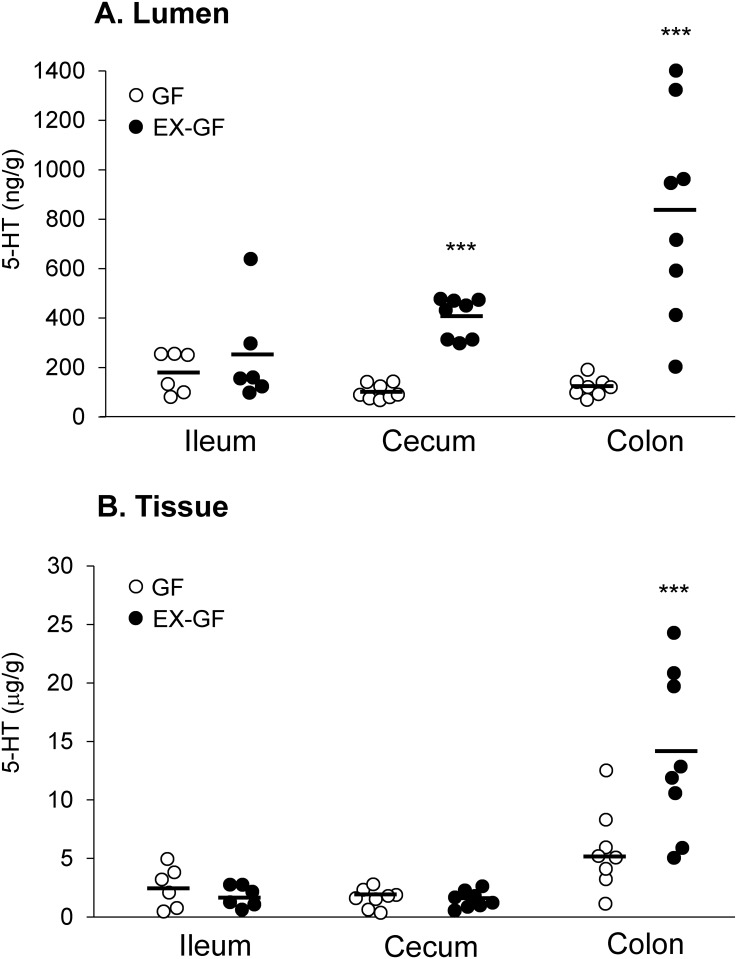
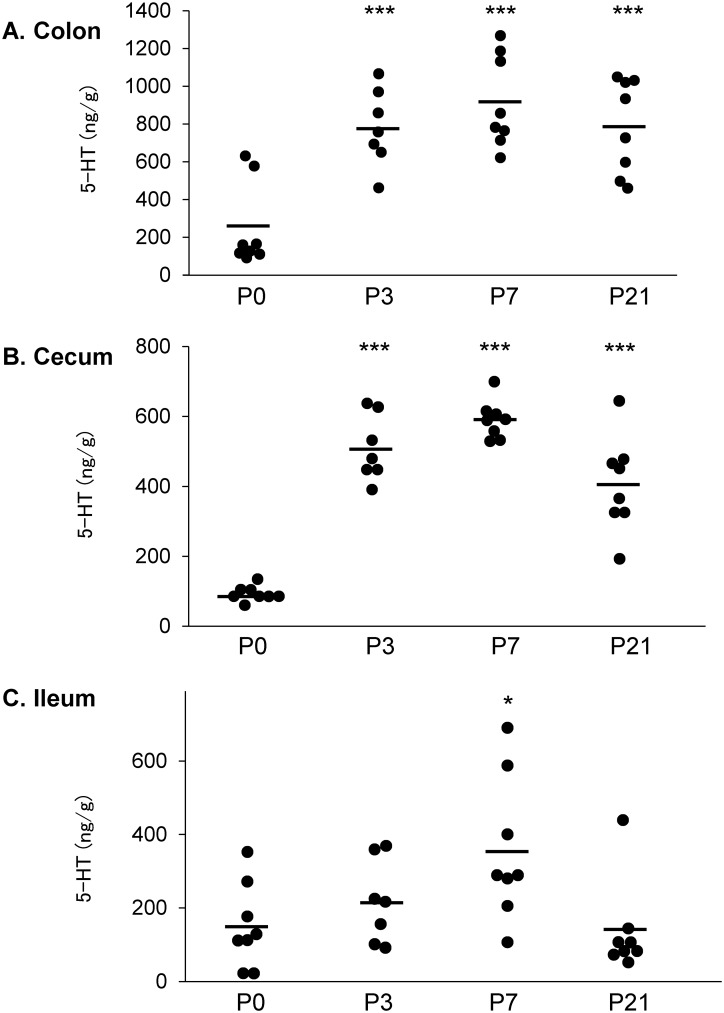
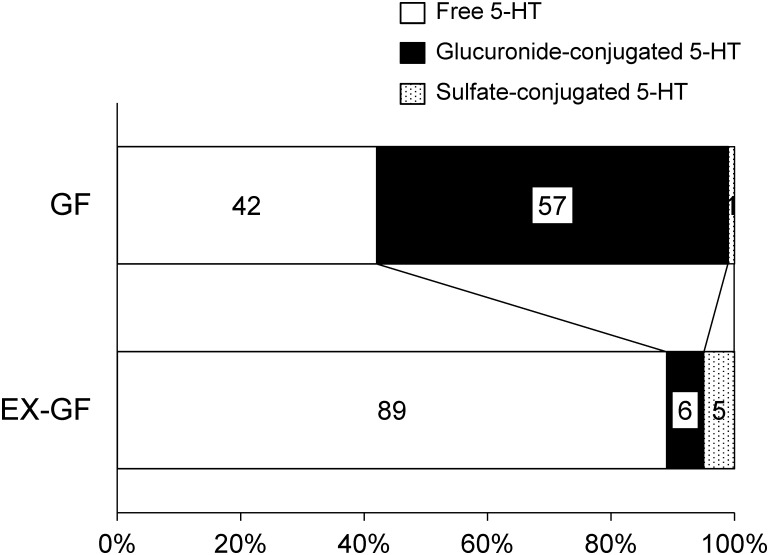
Gut lumen serotonin (5-hydroxytryptamine: 5-HT) contributes to several gastrointestinal functions such as peristaltic reflexes. 5-HT is released from enterochromaffin (EC) cells in response to a number of stimuli, including signals from the gut microbiota. However, the specific mechanism by which the gut microbiota regulates 5-HT levels in the gut lumen has not yet been clarified. Our previous work with gnotobiotic mice showed that free catecholamines can be produced by the deconjugation of conjugated catecholamines; hence, we speculated that deconjugation by bacterial enzymes may be one of the mechanisms whereby gut microbes can produce free 5-HT in the gut lumen. In this study, we tested this hypothesis using germ-free (GF) mice and gnotobiotic mice recolonized with specific pathogen-free (SPF) fecal flora (EX-GF). The 5-HT levels in the lumens of the cecum and colon were significantly lower in the GF mice than in the EX-GF mice. Moreover, these levels were rapidly increased, within only 3 days after exposure to SPF microbiota. The majority of 5-HT was in an unconjugated, free form in the EX-GF mice, whereas approximately 50% of the 5-HT was found in the conjugated form in the GF mice. These results further support the current view that the gut microbiota plays a crucial role in promoting the production of biologically active, free 5-HT. The deconjugation of glucuronide-conjugated 5-HT by bacterial enzymes is likely one of the mechanisms contributing to free 5-HT production in the gut lumen.
Overview
The claims and statistics of this paper haven’t been checked yet.
Run the check — free, no account needed. It reads the open-access text and checks the sources it cites.
Integrity signals
Registry
Cites
Statistics
Figures
Verification
Claims the paper makes
The claims and statistics of this paper haven’t been checked yet.
Run the check — free, no account needed. It reads the open-access text and checks the sources it cites.
Claims other papers make about this one
Each is checked against this paper’s own text: does it say what the citing paper says it does?
The source backs part of the claim, not all of it — or backs it for a different population, condition or comparison.
In the citing paper
“gut bacteria were shown to deconjugate host-produced catecholamines via the β-glucuronidase enzyme pathway, and thus generate free luminal 5-HT (Asano et al., 2012;Hata et al., 2017).”
From The Microbiota-Gut-Brain Axis (2019) · cites this paper as Hata et al., 2017
Experimental — accuracy not yet measuredThe cited source says what the claim attributes to it.
In the citing paper
“Likewise, 5-HT concentrations in the cecal and colonic lumens are significantly reduced in GF mice (Hata et al., 2017).”
From The Microbiota-Gut-Brain Axis (2019) · cites this paper as Hata et al., 2017
The cited source says what the claim attributes to it.
In the citing paper
“Moreover, in the same study, the conjugated, biologically inactive form of 5-HT was found at a higher percentage in GF mice, whereas the unconjugated, biologically-active form of 5-HT was found in greater concentration in conventionalized GF mice.”
From The Microbiota-Gut-Brain Axis (2019) · cites this paper as Hata et al., 2017
The cited source says what the claim attributes to it.
In the citing paper
“the gut microbiota are understood to impact the host GI serotonergic system (Hata et al., 2017;O'Mahony et al., 2015).”
From The Microbiota-Gut-Brain Axis (2019) · cites this paper as Hata et al., 2017
The cited source says what the claim attributes to it.
In the citing paper
“The conventionalization of GF mice with a microbiota resulted in increased concentrations of intestinal luminal 5-HT.”
From The Microbiota-Gut-Brain Axis (2019) · cites this paper as Hata et al., 2017
In the citing paper
“In a rodent study, it was found that mice without an enteric microbiome had only half the amount of serotonin in the circulation when compared to mice with normal gut microbiota [48].”
From Role of diet and its effects on the gut microbiome in the pathophysiology of mental disorders (2022) · cites this paper as [48]
Self-check
Percentages, sums and reported differences re-computed from the paper’s own numbers.
The self-check needs the paper’s full text.
Citations
Cites
Indigenous bacteria from the gut microbiota regulate host serotonin biosynthesis
Yano, J. M., Yu, K., Donaldson, G. P., Shastri, G. G., Ann, P., Ma, L., Nagler, C. R., Ismagilov, R. F., Mazmanian, S. K., & Hsiao, E. Y. (2015) · Cell · doi:10.1016/j.cell.2015.02.047 · Cited by 3,614
Sudo, N., Chida, Y., Aiba, Y., Sonoda, J., Oyama, N., Yu, X., Kubo, C., & Koga, Y. (2004) · The Journal of Physiology · doi:10.1113/jphysiol.2004.063388 · Cited by 2,735
Self-citationMetabolomics analysis reveals large effects of gut microflora on mammalian blood metabolites
Wikoff, W. R., Anfora, A. T., Liu, J., Schultz, P. G., Lesley, S. A., Peters, E. C., & Siuzdak, G. (2009) · Proceedings of the National Academy of Sciences · doi:10.1073/pnas.0812874106 · Cited by 2,677
Serotonin, tryptophan metabolism and the brain-gut-microbiome axis
O’Mahony, S. M., Clarke, G., Borre, Y. E., Dinan, T. G., & Cryan, J. F. (2015) · Behavioural Brain Research · doi:10.1016/j.bbr.2014.07.027 · Cited by 2,012
The interplay between the intestinal microbiota and the brain
Collins, S. M., Surette, M., & Bercik, P. (2012) · Nature Reviews Microbiology · doi:10.1038/nrmicro2876 · Cited by 1,611
Induction of Protective IgA by Intestinal Dendritic Cells Carrying Commensal Bacteria
Macpherson, A. J., & Uhr, T. (2004) · Science · doi:10.1126/science.1091334 · Cited by 1,584
Principles and clinical implications of the brain-gut-enteric microbiota axis
Rhee, S. H., Pothoulakis, C., & Mayer, E. A. (2009) · Nature Reviews Gastroenterology & Hepatology · doi:10.1038/nrgastro.2009.35 · Cited by 1,342
Reigstad, C. S., Salmonson, C. E., III, J. F. R., Szurszewski, J. H., Linden, D. R., Sonnenburg, J. L., Farrugia, G., & Kashyap, P. C. (2015) · The FASEB Journal · doi:10.1096/fj.14-259598 · Cited by 1,335
Sudo, N., Sawamura, S., Tanaka, K., Aiba, Y., Kubo, C., & Koga, Y. (1997) · The Journal of Immunology · doi:10.4049/jimmunol.159.4.1739 · Cited by 1,070
Self-citationCoates, M. D., Mahoney, C. R., Linden, D. R., Sampson, J. E., Chen, J. C., Blaszyk, H., Crowell, M. D., Sharkey, K. A., Gershon, M. D., & Mawe, G. M. (2004) · Gastroenterology · doi:10.1053/j.gastro.2004.03.013 · Cited by 761
Cited by
Sorted by citations
Cryan, J. F., O'Riordan, K. J., Cowan, C. S. M., Sandhu, K. V., Bastiaanssen, T. F. S., Boehme, M., Codagnone, M. G., Cussotto, S., Fulling, C., Golubeva, A. V., et al. (2019) · Physiological Reviews · doi:10.1152/physrev.00018.2018 · Cited by 5,286
Tryptophan Metabolism: A Link Between the Gut Microbiota and Brain
Gao, K., Mu, C.-L., Farzi, A., & Zhu, W.-Y. (2020) · Advances in Nutrition · doi:10.1093/advances/nmz127 · Cited by 1,029
Cannabinoids and the expanded endocannabinoid system in neurological disorders
Cristino, L., Bisogno, T., & Di Marzo, V. (2020) · Nature Reviews Neurology · doi:10.1038/s41582-019-0284-z · Cited by 970
Anxiety, depression, and the microbiome: A role for gut peptides
Lach, G., Schellekens, H., Dinan, T. G., & Cryan, J. F. (2018) · Neurotherapeutics · doi:10.1007/s13311-017-0585-0 · Cited by 573
Tryptophan metabolism and gut-brain homeostasis
Roth, W., Zadeh, K., Vekariya, R., Ge, Y., & Mohamadzadeh, M. (2021) · International Journal of Molecular Sciences · doi:10.3390/ijms22062973 · Cited by 519
Gut Bacteria and Neurotransmitters
Dicks, L. M. T. (2022) · Microorganisms · doi:10.3390/microorganisms10091838 · Cited by 482
Intestinal serotonin and fluoxetine exposure modulate bacterial colonization in the gut
Fung, T. C., Vuong, H. E., Luna, C. G. G., Pronovost, G. N., Aleksandrova, A. A., Riley, N. G., Vavilina, A., McGinn, J., Rendon, T. K., Forrest, L. R., et al. (2019) · Nature Microbiology · doi:10.1038/s41564-019-0540-4 · Cited by 492
The Role of the Canine Gut Microbiome and Metabolome in Health and Gastrointestinal Disease
Pilla, R., & Suchodolski, J. S. (2020) · Frontiers in Veterinary Science · doi:10.3389/fvets.2019.00498 · Cited by 520
Signalling cognition: The gut microbiota and hypothalamic-pituitary-adrenal axis
Rusch, J. A., Layden, B. T., & Dugas, L. R. (2023) · Frontiers in Endocrinology · doi:10.3389/fendo.2023.1130689 · Cited by 415
Parker, A., Romano, S., Ansorge, R., Aboelnour, A., Le Gall, G., Savva, G. M., Pontifex, M. G., Telatin, A., Baker, D., Jones, E., et al. (2022) · Microbiome · doi:10.1186/s40168-022-01243-w · Cited by 368
Gut reactions: Breaking down xenobiotic–microbiome interactions
Clarke, G., Sandhu, K. V., Griffin, B. T., Dinan, T. G., Cryan, J. F., & Hyland, N. P. (2019) · Pharmacological Reviews · doi:10.1124/pr.118.015768 · Cited by 319
The Gut Microbiome Influences Host Endocrine Functions
Rastelli, M., Cani, P. D., & Knauf, C. (2019) · Endocrine Reviews · doi:10.1210/er.2018-00280 · Cited by 331
The microbiota-gut-brain axis in sleep disorders
Wang, Z., Wang, Z., Lu, T., Chen, W., Yan, W., Yuan, K., Shi, L., Liu, X., Zhou, X., Shi, J., et al. (2022) · Sleep Medicine Reviews · doi:10.1016/j.smrv.2022.101691 · Cited by 302
Microbiota Metabolites in Health and Disease
McCarville, J. L., Chen, G. Y., Cuevas, V. D., Troha, K., & Ayres, J. S. (2020) · Annual Review of Immunology · doi:10.1146/annurev-immunol-071219-125715 · Cited by 255
The Mechanism of Secretion and Metabolism of Gut-Derived 5-Hydroxytryptamine
Liu, N., Sun, S., Wang, P., Sun, Y., Hu, Q., & Wang, X. (2021) · International Journal of Molecular Sciences · doi:10.3390/ijms22157931 · Cited by 228
Bosi, A., Banfi, D., Bistoletti, M., Giaroni, C., & Baj, A. (2020) · International Journal of Tryptophan Research · doi:10.1177/1178646920928984 · Cited by 221
Antidepressive Mechanisms of Probiotics and Their Therapeutic Potential
Yong, S. J., Tong, T., Chew, J., & Lim, W. L. (2020) · Frontiers in Neuroscience · doi:10.3389/fnins.2019.01361 · Cited by 222
Focus on the essentials: tryptophan metabolism and the microbiome-gut-brain axis
Gheorghe, C. E., Martin, J. A., Manriquez, F. V., Dinan, T. G., Cryan, J. F., & Clarke, G. (2019) · Current Opinion in Pharmacology · doi:10.1016/j.coph.2019.08.004 · Cited by 212
Role of diet and its effects on the gut microbiome in the pathophysiology of mental disorders
Horn, J., Mayer, D. E., Chen, S., & Mayer, E. A. (2022) · Translational Psychiatry · doi:10.1038/s41398-022-01922-0 · Cited by 193
The aryl hydrocarbon receptor as a mediator of host-microbiota interplay
Dong, F., & Perdew, G. H. (2020) · Gut Microbes · doi:10.1080/19490976.2020.1859812 · Cited by 202
Human-Derived Bifidobacterium dentium Modulates the Mammalian Serotonergic System and Gut–Brain Axis
Engevik, M. A., Luck, B., Visuthranukul, C., Ihekweazu, F. D., Engevik, A. C., Shi, Z., Danhof, H. A., Chang-Graham, A. L., Hall, A., Endres, B. T., et al. (2021) · Cellular and Molecular Gastroenterology and Hepatology · doi:10.1016/j.jcmgh.2020.08.002 · Cited by 164
Checa-Ros, A., Jeréz-Calero, A., Molina-Carballo, A., Campoy, C., & Muñoz-Hoyos, A. (2021) · Nutrients · doi:10.3390/nu13010249 · Cited by 164
Clostridium ramosum regulates enterochromaffin cell development and serotonin release
Mandić, A. D., Woting, A., Jaenicke, T., Sander, A., Sabrowski, W., Rolle-Kampcyk, U., von Bergen, M., & Blaut, M. (2019) · Scientific Reports · doi:10.1038/s41598-018-38018-z · Cited by 150
Microbiota–neuroepithelial signalling across the gut–brain axis
Ohara, T. E., & Hsiao, E. Y. (2025) · Nature Reviews Microbiology · doi:10.1038/s41579-024-01136-9 · Cited by 147
Microbiota‐gut‐brain axis as a regulator of reward processes
García‐Cabrerizo, R., Carbia, C., O’Riordan, K. J., Schellekens, H., & Cryan, J. F. (2020) · Journal of Neurochemistry · doi:10.1111/jnc.15284 · Cited by 150
Suda, K., & Matsuda, K. (2022) · International Journal of Molecular Sciences · doi:10.3390/ijms23031172 · Cited by 154
Bile acids: a communication channel in the gut-brain axis
Monteiro-Cardoso, V. F., Corlianò, M., & Singaraja, R. R. (2021) · NeuroMolecular Medicine · doi:10.1007/s12017-020-08625-z · Cited by 145
Balasubramanian, R., Schneider, E., Gunnigle, E., Cotter, P. D., & Cryan, J. F. (2024) · Neuroscience & Biobehavioral Reviews · doi:10.1016/j.neubiorev.2024.105562 · Cited by 143
The role of the microbiome in the neurobiology of social behaviour
Sarkar, A., Harty, S., Johnson, K. V. ‐., Moeller, A. H., Carmody, R. N., Lehto, S. M., Erdman, S. E., Dunbar, R. I. M., & Burnet, P. W. J. (2020) · Biological Reviews · doi:10.1111/brv.12603 · Cited by 135
Biogenic Amines: Signals Between Commensal Microbiota and Gut Physiology
Sudo, N. (2019) · Frontiers in Endocrinology · doi:10.3389/fendo.2019.00504 · Cited by 138
Self-citationWang, J., Xu, W., Wang, R., Cheng, R., Tang, Z., & Zhang, M. (2021) · Food & Function · doi:10.1039/d1fo00115a · Cited by 132
The Relationship Between the Serotonin Metabolism, Gut-Microbiota and the Gut-Brain Axis
Stasi, C., Sadalla, S., & Milani, S. (2019) · Current Drug Metabolism · doi:10.2174/1389200220666190725115503 · Cited by 129
Gut microbes in neurocognitive and mental health disorders
Halverson, T., & Alagiakrishnan, K. (2020) · Annals of Medicine · doi:10.1080/07853890.2020.1808239 · Cited by 125
Li, X., Zhang, Z., Zabed, H. M., Yun, J., Zhang, G., & Qi, X. (2020) · Molecular Nutrition & Food Research · doi:10.1002/mnfr.202000461 · Cited by 129
The role of the gut microbiome in the development of schizophrenia
Kelly, J. R., Minuto, C., Cryan, J. F., Clarke, G. A., & Dinan, T. G. (2020) · Schizophrenia Research · doi:10.1016/j.schres.2020.02.010 · Cited by 121
Hata, T., Miyata, N., Takakura, S., Yoshihara, K., Asano, Y., Kimura-Todani, T., Yamashita, M., Zhang, X.-T., Watanabe, N., Mikami, K., et al. (2019) · Endocrinology · doi:10.1210/en.2019-00408 · Cited by 116
Self-citationIntestinal Sensing by Gut Microbiota: Targeting Gut Peptides
Covașă, M., Stephens, R. W., Toderean, R., & Cobuz, C. (2019) · Frontiers in Endocrinology · doi:10.3389/fendo.2019.00082 · Cited by 117
The Multifaceted Role of Serotonin in Intestinal Homeostasis
Koopman, N., Katsavelis, D., ten Hove, A. S., Brul, S., de Jonge, W. J., & Seppen, J. (2021) · International Journal of Molecular Sciences · doi:10.3390/ijms22179487 · Cited by 112
Modulation of immunity by tryptophan microbial metabolites
Li, S. (2023) · Frontiers in Nutrition · doi:10.3389/fnut.2023.1209613 · Cited by 104
Visceral pain: gut microbiota, a new hope?
Pusceddu, M. M., & Gareau, M. G. (2018) · Journal of Biomedical Science · doi:10.1186/s12929-018-0476-7 · Cited by 102
Busnelli, M., Manzini, S., & Chiesa, G. (2019) · Nutrients · doi:10.3390/nu12010079 · Cited by 92
Impact of contaminants on microbiota: linking the gut–brain axis with neurotoxicity
Balaguer-Trias, J., Deepika, D., Schuhmacher, M., & Kumar, V. (2022) · International Journal of Environmental Research and Public Health · doi:10.3390/ijerph19031368 · Cited by 88
Enteroendocrine cell regulation of the gut-brain axis
Barton, J. R., Londregan, A., Alexander, T. D., Entezari, A. A., Covarrubias, M., & Waldman, S. A. (2023) · Frontiers in Neuroscience · doi:10.3389/fnins.2023.1272955 · Cited by 95
The microbiota-gut-brain axis: Focus on the fundamental communication pathways
Bistoletti, M., Bosi, A., Banfi, D., Giaroni, C., & Baj, A. (2020) · Progress in molecular biology and translational science · doi:10.1016/bs.pmbts.2020.08.012 · Cited by 91
Damiani, F., Cornuti, S., & Tognini, P. (2023) · Neuropharmacology · doi:10.1016/j.neuropharm.2023.109491 · Cited by 95
Gut Microbiota as an Endocrine Organ: Unveiling Its Role in Human Physiology and Health
Pires, L., Gonzaléz‐Paramás, A. M., Heleno, S. A., & Calhelha, R. C. (2024) · Applied Sciences · doi:10.3390/app14209383 · Cited by 89
The gut microbiome influences the bioavailability of olanzapine in rats
Cussotto, S., Walsh, J., Golubeva, A. V., Zhdanov, A. V., Strain, C., Fouhy, F., Stanton, C., Dinan, T. G., Hyland, N. P., Clarke, G. A., et al. (2021) · EBioMedicine · doi:10.1016/j.ebiom.2021.103307 · Cited by 81
Ağagündüz, D., Bingöl, F. G., Çelik, E., Cemali, Ö., Özenir, Ç., Özoğul, F., & Capasso, R. (2022) · Journal of Translational Medicine · doi:10.1186/s12967-022-03609-y · Cited by 80
Gut-brain axis serotonergic responses to acute stress exposure are microbiome-dependent
Lyte, J. M., Gheorghe, C. E., Goodson, M. S., Kelley‐Loughnane, N., Dinan, T. G., Cryan, J. F., & Clarke, G. (2020) · Neurogastroenterology & Motility · doi:10.1111/nmo.13881 · Cited by 77
Kundi, Z. M., Lee, J. C., Pihlajamäki, J., Chan, C. B., Leung, K. S., So, S. S. Y., Nordlund, E., Kolehmainen, M., & El-Nezami, H. S. (2020) · Molecular Nutrition & Food Research · doi:10.1002/mnfr.201900580 · Cited by 77
Human gut bacterial β-glucuronidase inhibition: An emerging approach to manage medication therapy
Wang, P., Jia, Y., Wu, R., Chen, Z., & Yan, R. (2021) · Biochemical Pharmacology · doi:10.1016/j.bcp.2021.114566 · Cited by 76
Regulation of endocrine systems by the microbiome: Perspectives from comparative animal models
Williams, C. L., García‐Reyero, N., Martyniuk, C. J., Tubbs, C. W., & Bisesi, J. H. (2020) · General and Comparative Endocrinology · doi:10.1016/j.ygcen.2020.113437 · Cited by 75
Ranuh, R. G., Athiyyah, A. F., Darma, A., Risky, V. P., Riawan, W., SURONO, I. S., & Sudarmo, S. M. (2019) · Iranian Journal of Microbiology · doi:10.18502/ijm.v11i2.1077 · Cited by 75
The gut microbiota and colorectal surgery outcomes: facts or hype? A narrative review
Agnes, A., Puccioni, C., D’Ugo, D., Gasbarrini, A., Biondi, A., & Persiani, R. (2021) · BMC Surgery · doi:10.1186/s12893-021-01087-5 · Cited by 74
Simpson, J. B., Walker, M. E., Sekela, J. J., Ivey, S. M., Jariwala, P. B., Storch, C. M., Kowalewski, M. E., Graboski, A. L., Lietzan, A. D., Walton, W. G., et al. (2024) · Cell Host & Microbe · doi:10.1016/j.chom.2024.04.018 · Cited by 75
Gut Microbiota in Ischemic Stroke: Role of Gut Bacteria-Derived Metabolites
Zhang, W., Dong, X. Y., & Huang, R. (2022) · Translational Stroke Research · doi:10.1007/s12975-022-01096-3 · Cited by 68
Gut microbiota and sleep: Interaction mechanisms and therapeutic prospects
Lin, Z., Jiang, T., Chen, M., Ji, X., & Wang, Y. (2024) · Open Life Sciences · doi:10.1515/biol-2022-0910 · Cited by 68
Chen, C.-M., Wu, C.-C., Huang, C.-L., Chang, M.-Y., Cheng, S.-H., Lin, C.-T., & Tsai, Y.-C. (2021) · Probiotics and Antimicrobial Proteins · doi:10.1007/s12602-021-09814-3 · Cited by 67
Layunta, E., Buey, B., Mesonero, J. E., & Latorre, E. (2021) · Frontiers in Endocrinology · doi:10.3389/fendo.2021.748254 · Cited by 70
The Osteoporosis/Microbiota Linkage: The Role of miRNA
Martinis, M. D., Ginaldi, L., Allegra, A., Sirufo, M. M., Pioggia, G., Tonacci, A., & Gangemi, S. (2020) · International Journal of Molecular Sciences · doi:10.3390/ijms21238887 · Cited by 65
Shaw, C. A., Hess, M., & Weimer, B. C. (2023) · Microorganisms · doi:10.3390/microorganisms11071825 · Cited by 73
Biosensing in Smart Engineered Probiotics
Rottinghaus, A. G., Amrofell, M. B., & Moon, T. S. (2019) · Biotechnology Journal · doi:10.1002/biot.201900319 · Cited by 63
Lyte, M., & Brown, D. R. (2018) · PLoS ONE · doi:10.1371/journal.pone.0191037 · Cited by 63
Drugs and Bugs: The Gut-Brain Axis and Substance Use Disorders
Simpson, S., Mclellan, R., Wellmeyer, E., Matalon, F., & George, O. (2021) · Journal of Neuroimmune Pharmacology · doi:10.1007/s11481-021-10022-7 · Cited by 63
Glioma induced alterations in fecal short-chain fatty acids and neurotransmitters
Dono, A., Patrizz, A., McCormack, R., Putluri, N., Ganesh, B. P., Kaur, B., McCullough, L. D., Ballester, L. Y., & Esquenazi, Y. (2020) · CNS Oncology · doi:10.2217/cns-2020-0007 · Cited by 60
Davies, C., Mishra, D., Eshraghi, R. S., Mittal, J., Sinha, R., Bulut, E., Mittal, R., & Eshraghi, A. A. (2021) · Neuroscience & Biobehavioral Reviews · doi:10.1016/j.neubiorev.2021.07.001 · Cited by 61
Remodeling of microbiota gut-brain axis using psychobiotics in depression
Palepu, M. S. K., & Dandekar, M. P. (2022) · European Journal of Pharmacology · doi:10.1016/j.ejphar.2022.175171 · Cited by 62
Al-Khafaji, A. H., Jepsen, S. D., Christensen, K. R., & Vigsnæs, L. K. (2020) · Journal of Functional Foods · doi:10.1016/j.jff.2020.104176 · Cited by 62
Relationship between diet, the gut microbiota, and brain function
Tengeler, A. C., Kozicz, T., & Kiliaan, A. J. (2018) · Nutrition Reviews · doi:10.1093/nutrit/nuy016 · Cited by 61
Xu, M., Zhou, E. Y., & Shi, H. (2025) · Cells · doi:10.3390/cells14050384 · Cited by 58
Eshraghi, R. S., Deth, R. C., Mittal, R., Aranke, M., Kay, S.-I. S., Moshiree, B., & Eshraghi, A. A. (2018) · Frontiers in Cellular Neuroscience · doi:10.3389/fncel.2018.00256 · Cited by 58
Gut Microbial-Derived Metabolomics of Asthma
Lee‐Sarwar, K. A., Lasky-Su, J. A., Kelly, R. S., Litonjua, A. A., & Weiss, S. T. (2020) · Metabolites · doi:10.3390/metabo10030097 · Cited by 58
Gut Microbiome and Modulation of CNS Function
Osadchiy, V., Martin, C. R., & Mayer, E. A. (2019) · Comprehensive Physiology · doi:10.1002/cphy.c180031 · Cited by 53
Physiology of Electrolyte Transport in the Gut: Implications for Disease
Rao, M. C. (2019) · Comprehensive physiology · doi:10.1002/cphy.c180011 · Cited by 54
Walsh, J., Olavarría‐Ramírez, L., Lach, G., Boehme, M., Dinan, T. G., Cryan, J. F., Griffin, B. T., Hyland, N. P., & Clarke, G. A. (2020) · American Journal of Physiology-Gastrointestinal and Liver Physiology · doi:10.1152/ajpgi.00026.2020 · Cited by 55
Wilmes, L., Collins, J. M., O’Riordan, K. J., O’Mahony, S. M., Cryan, J. F., & Clarke, G. A. (2021) · Neurogastroenterology & Motility · doi:10.1111/nmo.14095 · Cited by 52
Microbial regulation of enteroendocrine cells
Arora, T., Vanslette, A. M., Hjorth, S. A., & Bäckhed, F. (2021) · Med · doi:10.1016/j.medj.2021.03.018 · Cited by 52
Exploring the gut-brain Axis: Potential therapeutic impact of Psychobiotics on mental health
Cocean, A.-M., & Vodnar, D. C. (2024) · Progress in Neuro-Psychopharmacology and Biological Psychiatry · doi:10.1016/j.pnpbp.2024.111073 · Cited by 52
Herselman, M. F., Bailey, S., & Bobrovskaya, L. (2022) · International Journal of Molecular Sciences · doi:10.3390/ijms23042013 · Cited by 51
Agnihotri, N., & Mohajeri, M. H. (2022) · International Journal of Molecular Sciences · doi:10.3390/ijms232415934 · Cited by 47
The Microbiota-Gut Axis in Premature Infants: Physio-Pathological Implications
Bresesti, I., Salvatore, S., Valetti, G., Baj, A., Giaroni, C., & Agosti, M. A. (2022) · Cells · doi:10.3390/cells11030379 · Cited by 51
Rewiring the Brain Through the Gut: Insights into Microbiota–Nervous System Interactions
Săvulescu-Fiedler, I., Benea, S. N., Căruntu, C., Nancoff, A.-S., Homentcovschi, C., & Bucurica, S. (2025) · Current Issues in Molecular Biology · doi:10.3390/cimb47070489 · Cited by 51
Linking serotonin homeostasis to gut function: Nutrition, gut microbiota and beyond
Jiang, L., Han, D., Hao, Y., Song, Z., Sun, Z., & Dai, Z. (2023) · Critical Reviews in Food Science and Nutrition · doi:10.1080/10408398.2023.2183935 · Cited by 45
Updates on the biology of serotonin and tryptophan hydroxylase
Swami, T., & Weber, H. C. (2017) · Current Opinion in Endocrinology Diabetes and Obesity · doi:10.1097/med.0000000000000383 · Cited by 43
The role of gut microbiota in depression: an analysis of the gut-brain axis
Irum, N., Afzal, T., Faraz, M. H., Aslam, Z., & Rasheed, F. (2023) · Frontiers in Behavioral Neuroscience · doi:10.3389/fnbeh.2023.1185522 · Cited by 42
Wang, H., He, Y., Dang, D., Zhao, Y., Zhao, J., & Lu, W. (2024) · Foods · doi:10.3390/foods13091336 · Cited by 41
Neurodevelopmental Disorders Associated with Gut Microbiome Dysbiosis in Children
Borrego-Ruiz, A., & Borrego, J. J. (2024) · Children · doi:10.3390/children11070796 · Cited by 42
Keski‐Rahkonen, P., Kolehmainen, M., Lappi, J., Micard, V., Jokkala, J., Rosa‐Sibakov, N., Pihlajamäki, J., Kirjavainen, P. V., Mykkänen, H. M., Poutanen, K. S., et al. (2019) · American Journal of Clinical Nutrition · doi:10.1093/ajcn/nqy394 · Cited by 38
Koo, A., Fothergill, L. J., Kuramoto, H., & Furness, J. B. (2021) · Histochemistry and Cell Biology · doi:10.1007/s00418-021-01972-3 · Cited by 38
Tiwari, S., & Paramanik, V. (2025) · Molecular Neurobiology · doi:10.1007/s12035-025-04708-9 · Cited by 37
Gut-Brain Axis and Neurological Disorders-How Microbiomes Affect our Mental Health
Bhatia, N. Y., Jalgaonkar, M. P., Hargude, A. B., Sherje, A. P., Oza, M. J., & Doshi, G. (2022) · CNS & Neurological Disorders - Drug Targets · doi:10.2174/1871527321666220822172039 · Cited by 38
Murakami, Y., Imamura, Y., Kasahara, Y., Yoshida, C., Momono, Y., Fang, K., Sakai, D., Konishi, Y., & Nishiyama, T. (2023) · Cells · doi:10.3390/cells12071087 · Cited by 36
Oral and intestinal dysbiosis in Parkinson's disease
Berthouzoz, E., Lazarević, V., Zekeridou, A., Jiménez, M. C., Debove, I., Aybek, S., Schrenzel, J., Burkhard, P. R., & Fleury, V. (2023) · Revue Neurologique · doi:10.1016/j.neurol.2022.12.010 · Cited by 37
Lyte, J. M. (2019) · Frontiers in Endocrinology · doi:10.3389/fendo.2018.00796 · Cited by 35
Gut microbiome in neuroendocrine and neuroimmune interactions: The case of genistein
Guo, T. L., Chen, Y., Xu, H. S., McDonough, C. M., & Huang, G. (2020) · Toxicology and Applied Pharmacology · doi:10.1016/j.taap.2020.115130 · Cited by 35
Regulation of serotonin production by specific microbes from piglet gut
Liu, Z., Ling, Y., Peng, Y., Han, S., Ren, Y., Jing, Y., Fan, W., Su, Y., Mu, C., & Zhu, W. (2023) · Journal of Animal Science and Biotechnology/Journal of animal science and biotechnology · doi:10.1186/s40104-023-00903-7 · Cited by 35
Influence of the Gut Microbiome on Feed Intake of Farm Animals
Wessels, A. G. (2022) · Microorganisms · doi:10.3390/microorganisms10071305 · Cited by 35
Li, K., Jiang, Y., Wang, N., Lai, L., Xu, S., Xia, T., Yue, X., & Xin, H. (2023) · The American Journal of Chinese Medicine · doi:10.1142/s0192415x23500866 · Cited by 34
Assessment of gut microbiota fecal metabolites by chromatographic targeted approaches
Fiori, J., Turroni, S., Candela, M., & Gotti, R. (2019) · Journal of Pharmaceutical and Biomedical Analysis · doi:10.1016/j.jpba.2019.112867 · Cited by 34
A novel serotonin-containing tuft cell subpopulation in mouse intestine
Cheng, X., Voss, U., & Ekblad, E. (2019) · Cell and Tissue Research · doi:10.1007/s00441-018-02988-3 · Cited by 29
Metadata
- Authors
- Hata, T., Asano, Y., Yoshihara, K., Kimura-Todani, T., Miyata, N., Zhang, X.-T., Takakura, S., Aiba, Y., Koga, Y., & Sudo, N.
- Affiliations
- Kyushu University (JP)
- Tokai University (JP)
- Corresponding author
- Sudo, Nobuyuki
- Venue
- PLOS ONE
- Publisher
- Public Library of Science (PLoS)
- Published
- 2017-07-06
- Volume
- 12
- Issue
- 7
- Pages
- e0180745
- ISSN
- 1932-6203 (ISSN-L)
- PMC
- PMC5500371
- OpenAlex
- W2725296099
- Cited by
- 211
- References
- 39
- Citations by year
- 2026: 5 · 2025: 19 · 2024: 26 · 2023: 22 · 2022: 30 · 2021: 35 · 2020: 33 · 2019: 30 · 2018: 9 · 2017: 2
- FWCI
- 8.26
- Type
- journal article
- Language
- en
- Open access
- gold
- doi.org
- Licence
- Locations
- PLoS ONE (publishedVersion, cc-by)
- PubMed Central (publishedVersion, cc-by)
- PubMed (publishedVersion)
- Kyushu University Institutional Repository (QIR) (Kyushu University) (submittedVersion, cc-by)
- DOAJ (DOAJ: Directory of Open Access Journals) (submittedVersion, cc-by-sa)
- Funders
- Japan Society for the Promotion of Science (16H05278, 16K15413)
- Topics
- Life Sciences › Biochemistry, Genetics and Molecular Biology › Molecular Biology › Gut microbiota and health
- Health Sciences › Medicine › Gastroenterology › Gastrointestinal motility and disorders
- Life Sciences › Agricultural and Biological Sciences › Food Science › Probiotics and Fermented Foods
- Keywords
- commensal microbiota, enterochromaffin cells, serotonin, glucuronidation, bacterial enzymes, gnotobiotic mice, germ-free mice, fecal microbiota transplantation, gut-brain axis, peristalsis
- MeSH terms
- Animals, Chromatography, High Pressure Liquid, Germ-Free Life, Intestinal Mucosa, Intestines, Mice, Inbred BALB C, Serotonin, Reverse Transcriptase Polymerase Chain Reaction, Mice, Microbiota
About these checks
Registry, retraction, Cites and statistics results are computed, not judged, with one exception: a printed reference that no index lists is read once by a model before it counts as a citation error. Claims are extracted by a model and kept only when their quote appears verbatim in the text; each cited source is then checked, with a model’s help, for whether it says what the claim relies on. Those verdicts can be wrong — read the claim’s quote and the cited source before relying on one.
Statistics and arithmetic are recomputed, not judged.
Confidence bands are shown only for fields calibrated on our annotated test set. None is calibrated yet, so no band is shown.
What counts as a claim ›How we measure confidence ›How we check this ›
Are you an author, or do you see a problem with this page? Request a review
