

Single-nucleus and single-cell transcriptomes compared in matched cortical cell types
Open accessPublished version of a preprint
The DOI matches its Crossref record; 58 of the 58 references it cites were found in a registry or an index.
Abstract
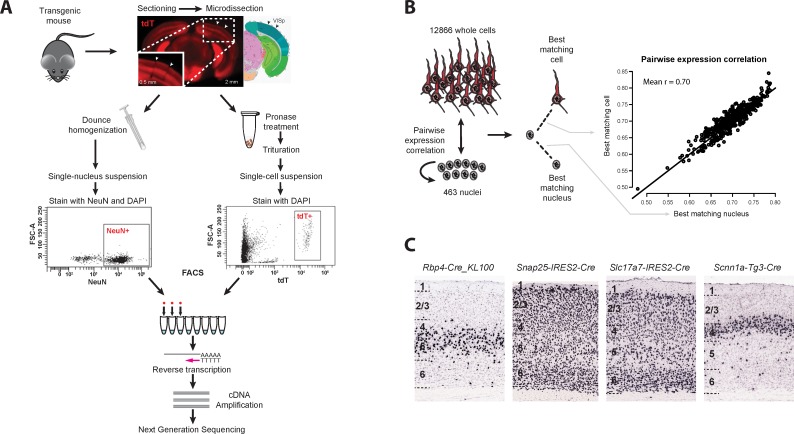
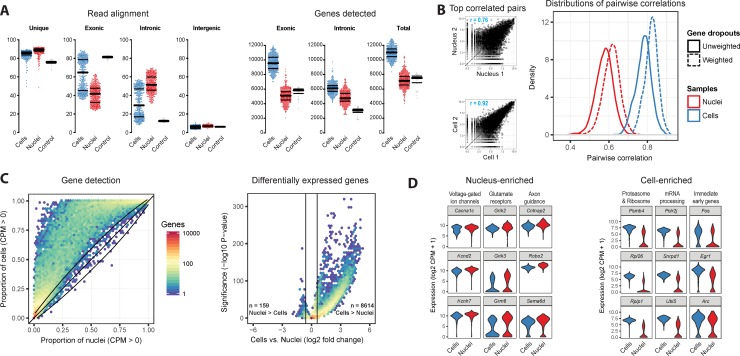
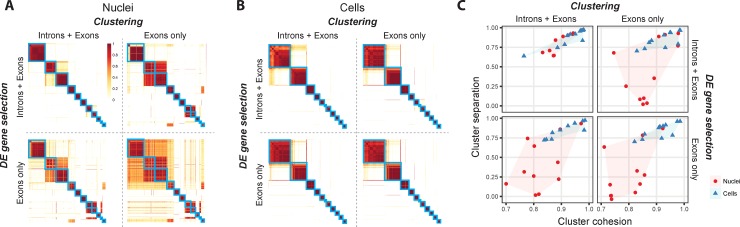
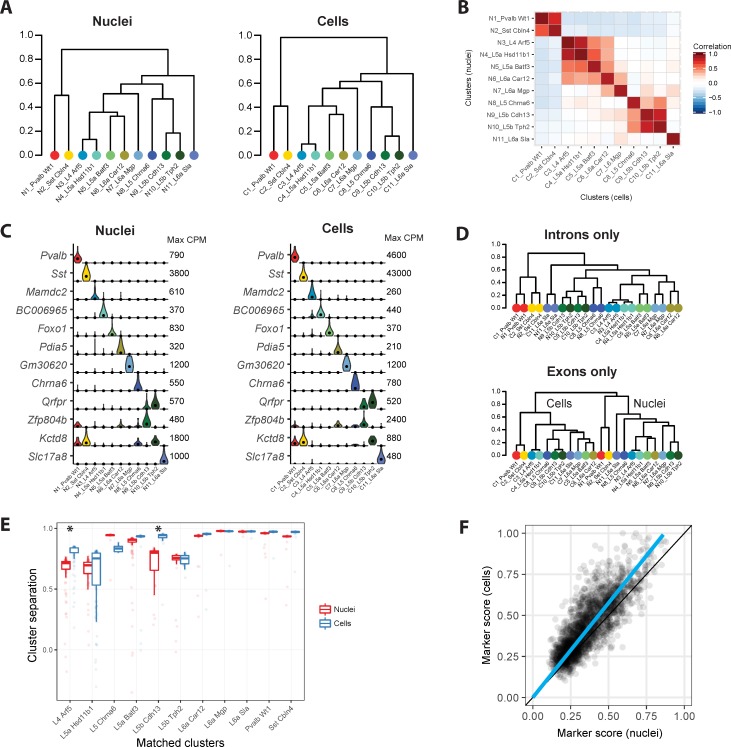
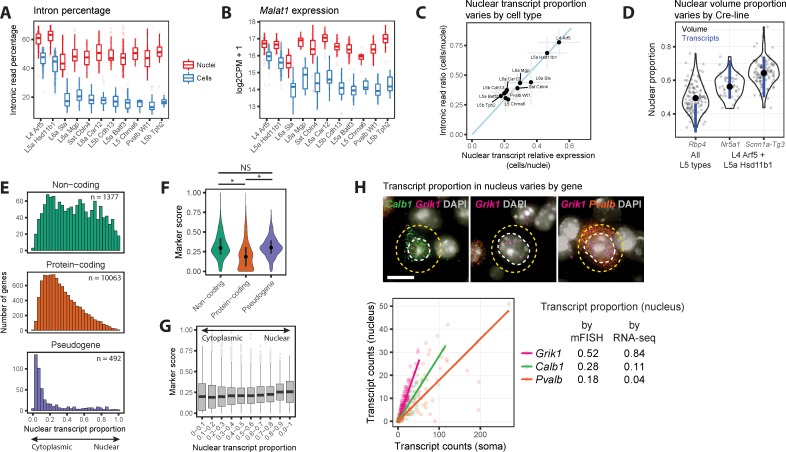
Transcriptomic profiling of complex tissues by single-nucleus RNA-sequencing (snRNA-seq) affords some advantages over single-cell RNA-sequencing (scRNA-seq). snRNA-seq provides less biased cellular coverage, does not appear to suffer cell isolation-based transcriptional artifacts, and can be applied to archived frozen specimens. We used well-matched snRNA-seq and scRNA-seq datasets from mouse visual cortex to compare cell type detection. Although more transcripts are detected in individual whole cells (~11,000 genes) than nuclei (~7,000 genes), we demonstrate that closely related neuronal cell types can be similarly discriminated with both methods if intronic sequences are included in snRNA-seq analysis. We estimate that the nuclear proportion of total cellular mRNA varies from 20% to over 50% for large and small pyramidal neurons, respectively. Together, these results illustrate the high information content of nuclear RNA for characterization of cellular diversity in brain tissues.
Overview
The claims and statistics of this paper haven’t been checked yet.
Free: it reads the open-access text and checks the first 5 claims that cite a source we can check. Create a free account to check every claim.
Integrity signals
Registry
Cites
Statistics
Figures
Verification
Claims the paper makes
The claims and statistics of this paper haven’t been checked yet.
Free: it reads the open-access text and checks the first 5 claims that cite a source we can check. Create a free account to check every claim.
Claims other papers make about this one
Each is checked against this paper’s own text: does it say what the citing paper says it does?
The source backs part of the claim, not all of it — or backs it for a different population, condition or comparison.
In the citing paper
“While scRNA-seq data are analyzed by mapping sequenced fragments to exons, snRNA-seq data analysis should also consider the abundance of intronic reads from pre-mRNA, which may account for >75% of fragments (Bakken et al., 2018; Gaidatzis et al., 2015).”
From Single-Cell Sequencing of Brain Cell Transcriptomes and Epigenomes (2021) · cites this paper as Bakken et al., 2018
Experimental — accuracy not yet measuredThe source backs part of the claim, not all of it — or backs it for a different population, condition or comparison.
In the citing paper
“Nuclear transcripts comprise ~20%−50% of all the RNA in the cell (Bakken et al., 2018), including immature and unspliced RNA molecules containing introns (Fig. 2a).”
From Single-Cell Sequencing of Brain Cell Transcriptomes and Epigenomes (2021) · cites this paper as Bakken et al., 2018
Experimental — accuracy not yet measuredThe source backs part of the claim, not all of it — or backs it for a different population, condition or comparison.
In the citing paper
“Fresh tissue samples are deemed appropriate for single-cell sequencing, whereas freeze-thaw samples are generally recommended for snRNA-seq [242, 243].”
From Single-cell sequencing to multi-omics: technologies and applications (2024) · cites this paper as [243]
Experimental — accuracy not yet measuredThe source backs part of the claim, not all of it — or backs it for a different population, condition or comparison.
In the citing paper
“Differential expression analysis comparing individual cell types profiled by snRNA-seq and scRNA-seq suggested higher expression of long noncoding RNAs in snRNA-seq libraries and higher expression of genes related to mitochondrial and ribosomal functions in scRNA-seq, in agreement with previous reports [24, 26]”
From Systematic assessment of tissue dissociation and storage biases in single-cell and single-nucleus RNA-seq workflows (2020) · cites this paper as [24]
Experimental — accuracy not yet measuredThe source backs part of the claim, not all of it — or backs it for a different population, condition or comparison.
In the citing paper
“whereas longer CDSs were enriched (NES = 1.91, padj = 3.6e-05), as already observed in earlier snRNA-seq studies (Bakken et al., 2018).”
From Single-Nucleus RNA-Seq Is Not Suitable for Detection of Microglial Activation Genes in Humans (2020) · cites this paper as Bakken et al., 2018
Experimental — accuracy not yet measured
6 more claims about this paper
Create a free account to see every claim other papers make about this one.
Self-check
Percentages, sums and reported differences re-computed from the paper’s own numbers.
The self-check needs the paper’s full text.
Citations
Cites
STAR: ultrafast universal RNA-seq aligner
Dobin, A., Davis, C. A., Schlesinger, F., Drenkow, J., Zaleski, C., Jha, S., Batut, P., Chaisson, M., & Gingeras, T. R. (2013) · Bioinformatics · doi:10.1093/bioinformatics/bts635 · Cited by 51,709
limma powers differential expression analyses for RNA-sequencing and microarray studies
Ritchie, M. E., Phipson, B., Wu, D., Hu, Y., Law, C. W., Shi, W., & Smyth, G. K. (2015) · Nucleic Acids Research · doi:10.1093/nar/gkv007 · Cited by 40,458
ggplot2: Elegant Graphics for Data Analysis
Wickham, H. (2009) · doi:10.1007/978-0-387-98141-3 · Cited by 14,447
Highly parallel genome-wide expression profiling of individual cells using nanoliter droplets.
Macosko, E. Z., Basu, A., Satija, R., Nemesh, J., Shekhar, K., Goldman, M., Tirosh, I., Bialas, A. R., Kamitaki, N., Martersteck, E. M., et al. (2015) · Cell · doi:10.1016/j.cell.2015.05.002 · Cited by 7,110
A robust and high-throughput Cre reporting and characterization system for the whole mouse brain
Madisen, L., Zwingman, T. A., Sunkin, S. M., Oh, S. W., Zariwala, H. A., Gu, H., Ng, L. L., Palmiter, R. D., Hawrylycz, M. J., Jones, A. R., et al. (2010) · Nature Neuroscience · doi:10.1038/nn.2467 · Cited by 6,907
Self-citationREVIGO summarizes and visualizes long lists of gene ontology terms
Supek, F., Bošnjak, M., Škunca, N., & Šmuc, T. (2011) · PLoS ONE · doi:10.1371/journal.pone.0021800 · Cited by 6,264
Genome-wide atlas of gene expression in the adult mouse brain
Lein, E. S., Hawrylycz, M. J., Ao, N., Ayres, M., Bensinger, A., Bernard, A., Boe, A. F., Boguski, M. S., Brockway, K. S., Byrnes, E. J., et al. (2007) · Nature · doi:10.1038/nature05453 · Cited by 5,572
Self-citationLandscape of transcription in human cells
Djebali, S., Davis, C. A., Merkel, A., Dobin, A., Lassmann, T., Mortazavi, A., Tanzer, A., Lagarde, J., Lin, W., Schlesinger, F., et al. (2012) · Nature · doi:10.1038/nature11233 · Cited by 5,187
Software for Computing and Annotating Genomic Ranges
Lawrence, M., Huber, W., Pagès, H., Aboyoun, P., Carlson, M., Gentleman, R., Morgan, M. T., & Carey, V. J. (2013) · PLoS Computational Biology · doi:10.1371/journal.pcbi.1003118 · Cited by 4,398
Cell types in the mouse cortex and hippocampus revealed by single-cell RNA-seq
Zeisel, A., Muñoz-Manchado, A. B., Codeluppi, S., Lönnerberg, P., La Manno, G., Juréus, A., Marques, S., Munguba, H., He, L., Betsholtz, C., et al. (2015) · Science · doi:10.1126/science.aaa1934 · Cited by 3,124
Research works printed but not linked: 1
- Aronesty E. “ ea-utils: Command-line tools for processing biological sequencing data.” Expr Anal. 2011; http://code.google.com/p/ea-utils
Cited by
Items 201–300 of 629
Single-Nucleus RNA-Seq: Open the Era of Great Navigation for FFPE Tissue
Guo, Y., Wang, W., Ye, K., He, L., Ge, Q., Huang, Y., & Zhao, X. (2023) · International Journal of Molecular Sciences · doi:10.3390/ijms241813744 · Cited by 27
“In addition, snRNA-seq reduces bias in cell coverage and can be applied to archived frozen specimens [2], and is less susceptible to perturbations in gene expression that occur during cell separation, such as increased expression of direct early genes that mask transcriptional signatures of neuronal activity [3].”
BackgroundDevelopment and application of transcriptomics technologies in plant science
Wang, H., Xu, Y., Zhang, Z., Zhang, G., Tan, C., & Ye, L. (2024) · Crop Design · doi:10.1016/j.cropd.2024.100057 · Cited by 35
Zhu, Y., Zhang, Y., He, S., Yi, S., Feng, H., Xia, X., Fang, X., Gong, X., & Zhao, P. (2024) · Journal of Neuroinflammation · doi:10.1186/s12974-024-03161-0 · Cited by 36
“Single nucleus suspensions were prepared as previously described [31].”
Methodvan den Hurk, M., & Bardy, C. (2019) · Journal of Neuroscience Methods · doi:10.1016/j.jneumeth.2019.108350 · Cited by 28
Astrocyte Heterogeneity in Multiple Sclerosis: Current Understanding and Technical Challenges
Lo, C. H., Skarica, M., Mansoor, M., Bhandarkar, S., Toro, S., & Pitt, D. (2021) · Frontiers in Cellular Neuroscience · doi:10.3389/fncel.2021.726479 · Cited by 27
“It was subsequently established that nuclei can be confidently matched to their representing cells, that transcriptomes from single nuclei and whole cells correlate highly, albeit with an abundance of nascent transcripts in nuclei (Lake et al., 2017; Bakken et al., 2018).”
BackgroundSt‐Pierre, M., VanderZwaag, J., Loewen, S. M., & Tremblay, M. (2022) · Frontiers in Cellular Neuroscience · doi:10.3389/fncel.2022.932572 · Cited by 29
New technologies to study helminth development and host-parasite interactions
Britton, C., Laing, R., McNeilly, T. N., Pérez, M. G., Otto, T. D., Hildersley, K. A., Maizels, R. M., Devaney, E., & Gillan, V. (2023) · International Journal for Parasitology · doi:10.1016/j.ijpara.2022.11.012 · Cited by 28
Rastogi, M., Bartolucci, M., Nanni, M., Aloisio, M., Vozzi, D., Petretto, A., Contestabile, A., & Cancedda, L. (2024) · Neuron · doi:10.1016/j.neuron.2024.05.002 · Cited by 26
Advances in single-cell transcriptomics in animal research
Yan, Y., Zhu, S., Jia, M., Chen, X., Qi, W., Gu, F., Valencak, T. G., Liu, J., & Sun, H. (2024) · Journal of Animal Science and Biotechnology/Journal of animal science and biotechnology · doi:10.1186/s40104-024-01063-y · Cited by 30
“1 The workflow of single‑cell/nucleus RNA sequencing single cells before isolating and labelling the nuclei, making it possible to detect nuclear gene expression at the single-cell level [9, 10].”
MethodGenomic, proteomic, and systems biology approaches in biomarker discovery for multiple sclerosis
Huizar, C. C., Raphael, I., & Forsthuber, T. G. (2020) · Cellular Immunology · doi:10.1016/j.cellimm.2020.104219 · Cited by 28
Single cell analyses to understand the immune continuum in atherosclerosis
Hill, C. A., Fernandez, D. M., & Giannarelli, C. (2021) · Atherosclerosis · doi:10.1016/j.atherosclerosis.2021.04.003 · Cited by 28
Atmanli, A., Chai, A. C., Cui, M., Wang, Z., Nishiyama, T., Bassel‐Duby, R., & Olson, E. N. (2021) · Circulation Research · doi:10.1161/circresaha.121.319579 · Cited by 29
Advancing root developmental research through single-cell technologies
Minne, M., Ke, Y., Saura-Sánchez, M., & Rybel, B. D. (2021) · Current Opinion in Plant Biology · doi:10.1016/j.pbi.2021.102113 · Cited by 29
Dugger, S. A., Dhindsa, R. S., Sampaio, G. L. D. A., Ressler, A. K., Rafikian, E. E., Petri, S., Letts, V. A., Teoh, J. J., Ye, J., Colombo, S., et al. (2023) · PLoS Genetics · doi:10.1371/journal.pgen.1010952 · Cited by 30
Neuronal–glial communication perturbations in murine SOD1G93A spinal cord
MacLean, M., López‐Díez, R., Vásquez, C., Gugger, P. F., & Schmidt, A. M. (2022) · Communications Biology · doi:10.1038/s42003-022-03128-y · Cited by 27
Cell-type specific transcriptional adaptations of nucleus accumbens interneurons to amphetamine
Gallegos, D. A., Minto, M. S., Liu, F., Hazlett, M. F., Yousefzadeh, S. A., Bartelt, L. C., & West, A. E. (2022) · Molecular Psychiatry · doi:10.1038/s41380-022-01466-1 · Cited by 24
Wiegleb, G., Reinhardt, S., Dahl, A., & Posnien, N. (2022) · Frontiers in Zoology · doi:10.1186/s12983-022-00472-x · Cited by 26
“(4) In line with previous reports [80, 82, 83, 89, 90, 107, 109, 110], our snRNAseq dataset contained sufficient expression information to unravel almost all major cell types expected in eye-antennal imaginal discs.”
BackgroundResultCeramides and Acute Kidney Injury
Nicholson, R. J., Holland, W. L., & Summers, S. A. (2022) · Seminars in Nephrology · doi:10.1016/j.semnephrol.2022.10.007 · Cited by 27
Yang, M., Wu, Z.-C., Chen, R., Abbas, F., Hu, G., Huang, X., Guan, W.-S., Xu, Y.-S., & Wang, H. (2023) · Journal of Experimental Botany · doi:10.1093/jxb/erad103 · Cited by 27
Nuclei multiplexing with barcoded antibodies for single-nucleus genomics
Gaublomme, J. T., Li, B., McCabe, C., Knecht, A., Drokhlyansky, E., Wittenberghe, N. V., Waldman, J., Dionne, D., Nguyen, L., Jager, P. D., et al. (2018) · bioRxiv (Cold Spring Harbor Laboratory) · doi:10.1101/476036 · Cited by 25
CUB and Sushi Multiple Domains 1 (CSMD1) opposes the complement cascade in neural tissuesPreprint
Baum, M. L., Wilton, D. K., Muthukumar, A. K., Fox, R. G., Carey, A. E., Crotty, W., Scott‐Hewitt, N., Bien, E., Sabatini, D. A., Lanser, T. B., et al. (2020) · bioRxiv (Cold Spring Harbor Laboratory) · doi:10.1101/2020.09.11.291427 · Cited by 26
“Such variation could in principle alter global, regional, cell-type, or developmental regulation of CSMD1 expression; nuclear retention of transcript, which is common for long genes (Bakken et al., 2018; Tuffery-Giraud et al., 2017); or susceptibility to double-stranded DNA breaks known to occur at this locus (Wei et…”
BackgroundA transcriptomic atlas of astrocyte heterogeneity across space and time in mouse and marmoset
Schroeder, M. E., McCormack, D. M., Metzner, L. R., Kang, J., Li, K. X., Yu, E., Melamed, L., Levandowski, K. M., Zaniewski, H., Zhang, Q., et al. (2025) · Neuron · doi:10.1016/j.neuron.2025.09.011 · Cited by 33
Practical Considerations for Single‐Cell Genomics
Regan, C., & Preall, J. B. (2022) · Current Protocols · doi:10.1002/cpz1.498 · Cited by 27
“(2018). Single-nucleus and single-cell transcriptomes compared in matched cortical cell types.”
BackgroundMethodInfluentialToskas, K., Salmani, B. Y., Skiteva, O., Pasławski, W., Gillberg, L., Skara, V., Antoniou, E., Södersten, E., Svenningsson, P., Chergui, K., et al. (2022) · Science Advances · doi:10.1126/sciadv.abo1543 · Cited by 29
Gutiérrez-Franco, A., Ake, F. A., Hassan, M. N., Cayuela, N. C., Mularoni, L., & Plass, M. (2023) · Communications Biology · doi:10.1038/s42003-023-04834-x · Cited by 28
“In this case, we would expect lower library complexity and a higher fraction of reads coming from intronic regions, which mainly come from pre-mRNAs and are enriched in nuclei 26,27 .”
Salmani, B. Y., Lahti, L., Gillberg, L., Jacobsen, J. K., Mantas, I., Svenningsson, P., & Perlmann, T. (2023) · eLife · doi:10.7554/elife.89482 · Cited by 53
Application of single-cell multi-omics approaches in horticulture research
Zhang, J., Ahmad, M., & Gao, H. (2023) · Molecular Horticulture · doi:10.1186/s43897-023-00067-y · Cited by 25
“…have shown that snRNA-seq provides an alternative and effective means to identify different cell types, demonstrating conserved representation of the transcriptome in the cytoplasm and nucleus (Bakken et al. 2018; Ding et al. 2020; Farmer et al. 2021; Kulkarni et al. 2019; Mereu et al. 2020).”
BackgroundIslam, M., Chen, B., Spraggins, J. M., Kelly, R., & Lau, K. S. (2020) · Gastroenterology · doi:10.1053/j.gastro.2020.04.073 · Cited by 23
Evaluating microglial phenotypes using single-cell technologies
Sankowski, R., Monaco, G., & Prinz, M. (2021) · Trends in Neurosciences · doi:10.1016/j.tins.2021.11.001 · Cited by 26
Hippocampal neuropathology in suicide: Gaps in our knowledge and opportunities for a breakthrough
Zhang, L., Lucassen, P. J., Salta, E., Verhaert, P. D. E. M., & Swaab, D. F. (2021) · Neuroscience & Biobehavioral Reviews · doi:10.1016/j.neubiorev.2021.12.023 · Cited by 24
“, 2020), studies directly comparing gene expression data from single nuclei versus single whole cells have demonstrated a high degree of concordance (Bakken et al., 2018; Lake et al., 2017; Olah et al., 2020), while diseasespecific cellular states in the human brain also have been reported (Davila-Velderrain et al.”
BackgroundTruong, D. D., Lamhamedi-Cherradi, S.-E., Porter, R. W., Krishnan, S., Swaminathan, J., Gibson, A., Lazar, A. J., Livingston, J. A., Gopalakrishnan, V., Gordon, N. B., et al. (2023) · BMC Cancer · doi:10.1186/s12885-023-10977-1 · Cited by 28
Hopkins, B. R., Barmina, O. Y., & Kopp, A. (2023) · PLoS Biology · doi:10.1371/journal.pbio.3002148 · Cited by 25
Missing cell types in single-cell references impact deconvolution of bulk data but are detectable
Ivich, A., Davidson, N. R., Grieshober, L., Li, W., Hicks, S. C., Doherty, J. A., & Greene, C. S. (2025) · Genome biology · doi:10.1186/s13059-025-03506-9 · Cited by 32
Yu, Y., Wei, X., Deng, Q., Lan, Q., Guo, Y., Han, L., Yuan, Y., Fan, P., Wu, P.-Y., Shangguan, S., et al. (2021) · Frontiers in Molecular Neuroscience · doi:10.3389/fnmol.2021.651355 · Cited by 22
“Nuclei were isolated from the frozen cortex according to an established protocol with minor modifications (Bakken et al., 2018; Thrupp et al., 2020).”
MethodLiu, B., He, J., Zhong, L., Huang, L., Gong, B., Hu, J., Qian, H., & Yang, Z. (2022) · Frontiers in Neuroscience · doi:10.3389/fnins.2022.1079498 · Cited by 23
“The distorted glia-to-neuron ratio would be explained by that some neuronal cell types are more vulnerable to the enzyme-dependent dissociation process (Bakken et al., 2018).”
BackgroundMethods for isolation and transcriptional profiling of individual cells from the human heart
Pimpalwar, N., Czuba, T., Smith, M. L., Nilsson, J., Gidlöf, O., & Smith, J. G. (2020) · Heliyon · doi:10.1016/j.heliyon.2020.e05810 · Cited by 26
Current and future perspectives of single-cell multi-omics technologies in cardiovascular research
Tan, W. L. W., Seow, W. Q., Zhang, A., Rhee, S., Wong, W. H., Greenleaf, W. J., & Wu, J. C. (2023) · Nature Cardiovascular Research · doi:10.1038/s44161-022-00205-7 · Cited by 23
Dissecting the mechanisms of MASLD fibrosis in the era of single-cell and spatial omics
Colella, F., Henderson, N. C., & Ramachandran, P. (2025) · Journal of Clinical Investigation · doi:10.1172/jci186421 · Cited by 31
Retinoic Acid-Regulated Target Genes During Development: Integrative Genomics Analysis
Rochette‐Egly, C. (2020) · Sub-cellular biochemistry/Subcellular biochemistry · doi:10.1007/978-3-030-42282-0_3 · Cited by 24
An optimised method for intact nuclei isolation from diatoms
Annunziata, R., Balestra, C., Marotta, P., Ruggiero, A., Manfellotto, F., Benvenuto, G., Biffali, E., & Ferrante, M. I. (2021) · Scientific Reports · doi:10.1038/s41598-021-81238-z · Cited by 32
Single-Cell and Single-Nucleus RNAseq Analysis of Adult Neurogenesis
Kalinina, A., & Lagace, D. C. (2022) · Cells · doi:10.3390/cells11101633 · Cited by 25
“The use of sc-RNAseq compared to sn-RNAseq in adult brain studies appears to provide better results, capturing more transcripts per cell, as well as resulting in a more successful mapping of the transcriptome [22,38,39].”
MethodNuclei on the Rise: When Nuclei-Based Methods Meet Next-Generation Sequencing
Butto, T., Mungikar, K., Baumann, P., Winter, J., Lutz, B., & Gerber, S. (2023) · Cells · doi:10.3390/cells12071051 · Cited by 24
Gene panel selection for targeted spatial transcriptomics
Zhang, Y., Petukhov, V., Biederstedt, E., Que, R. A., Zhang, K., & Kharchenko, P. V. (2024) · Genome biology · doi:10.1186/s13059-024-03174-1 · Cited by 27
“Platform effects have been previously noted when comparing gene expression measurements from single-cell and single-nucleus RNA-seq on the same biological sample [46].”
BackgroundCortical cellular diversity and development in schizophrenia
Price, A. J., Jaffe, A. E., & Weinberger, D. R. (2020) · Molecular Psychiatry · doi:10.1038/s41380-020-0775-8 · Cited by 25
Single-cell Transcriptional Changes in Neurodegenerative Diseases
Ahmadi, A., Gispert, J. D., Navarro, A., Vilor‐Tejedor, N., & Sadeghi, I. (2021) · Neuroscience · doi:10.1016/j.neuroscience.2021.10.025 · Cited by 22
“…when cells cannot be harvested Please cite this article in press as: Ahmadi A et al. Single-cell Transcriptional Changes in Neurodegenerative Dis intact and viable, which is often true for preserved tissues, and always true for some cell types (e.g. neurons, adipocytes) (Bakken et al., 2018).”
BackgroundPei, G., Wang, Y., Simon, L. M., Dai, Y., Zhao, Z., & Jia, P. (2020) · Genome Research · doi:10.1101/gr.265769.120 · Cited by 17
“Moreover, our application of deconvolution algorithms (Newman et al. 2015) to recent scRNA-seq data (Bakken et al. 2018; Wu et al. 2019) enabled us to systematically investigate brain CTC from both prenatal (range from 12 pcw to 38 pcw) and postnatal (4 mo to 40 yr) stages.”
MethodTuddenham, J. F., Taga, M. F., Haage, V. C., Roostaei, T., White, C. C., Lee, A., Fujita, M., Khairallah, A., Green, G., Hyman, B. T., et al. (2022) · bioRxiv (Cold Spring Harbor Laboratory) · doi:10.1101/2022.06.04.494709 · Cited by 20
“A range of numbers of differentially expressed genes (3000-6000) and components (20-40) were tested, and 4500 differentially expressed genes and 40 was not certified by peer review) is the author/funder.”
BackgroundComparative Analysis of Commercial Single-Cell RNA Sequencing TechnologiesPreprint
Simone, M. C. D., Hoover, J., Lau, J., Bennet, H., Wu, B., Chen, C., Menon, H., Au‐Yeung, A., Lear, S. P., Vaidya, S., et al. (2024) · bioRxiv (Cold Spring Harbor Laboratory) · doi:10.1101/2024.06.18.599579 · Cited by 21
The use of single-cell RNA-seq to study heterogeneity at varying levels of virus–host interactions
Swaminath, S., & Russell, A. B. (2024) · PLoS Pathogens · doi:10.1371/journal.ppat.1011898 · Cited by 22
Shi, R., Chen, H., Zhang, W., Leak, R. K., Lou, D., Chen, K., & Chen, J. (2024) · Journal of Cerebral Blood Flow & Metabolism · doi:10.1177/0271678x241305914 · Cited by 24
“14,16 128 Besides sample dissociation-induced cellular stress, scRNA-seq only focuses on a few thousand unique transcripts from a single cell—far less than the whole transcriptomic profile captured by bulk RNA-seq.”
Multi-omics profiling of single nuclei from frozen archived postmortem human pituitary tissue
Mendelev, N., Zamojski, M., Amper, M. A. S., Cheng, W. S., Pinças, H., Nair, V. D., Zaslavsky, E., Sealfon, S. C., & Ruf-Zamojski, F. M. (2022) · STAR Protocols · doi:10.1016/j.xpro.2022.101446 · Cited by 19
“Whole-cell extracts contain cytoplasmic and nuclear transcripts, whereas in nuclei extracts only nuclear transcripts are detected (Bakken et al., 2018).”
BackgroundMethodDecoding brain memory formation by single-cell RNA sequencing
Sardoo, A. M., Zhang, S., Ferraro, T. N., Keck, T. M., & Chen, Y. (2022) · Briefings in Bioinformatics · doi:10.1093/bib/bbac412 · Cited by 21
“Importantly, scRNA-seq and snRNA-seq identify the same cell subtype profiles in brain tissue [54].”
BackgroundMethodKim, B. I., Kim, D., Schulmann, A., Patel, Y., Caban-Rivera, C., Kim, P., Jambhale, A. D., Johnson, K. R., Feng, N., Xu, Q., et al. (2023) · Journal of Neuroscience · doi:10.1523/jneurosci.0830-22.2023 · Cited by 23
Serafin, E. K., Paranjpe, A., Brewer, C. L., & Baccei, M. L. (2020) · Pain · doi:10.1097/j.pain.0000000000002007 · Cited by 21
“dance in the overall transcriptional profile between the 2 approaches.(7,8,33) Injured and naive nuclei were run as separate samples on the”
MethodMolecular and cellular pathology of monogenic Alzheimer’s disease at single cell resolution
Marinaro, F., Haneklaus, M., Zhang, Z., Strano, A., Evans, L., Handfield, L.-F., Ryan, N. S., Fox, N. C., Hemberg, M., Ramanathan, S., et al. (2020) · bioRxiv (Cold Spring Harbor Laboratory) · doi:10.1101/2020.07.14.202317 · Cited by 19
Transcriptomic architecture of nuclei in the marmoset CNS
Lin, J., Kelly, H. M., Song, Y., Kawaguchi, R., Geschwind, D. H., Jacobson, S., & Reich, D. S. (2022) · Nature Communications · doi:10.1038/s41467-022-33140-z · Cited by 16
Ghasemi, D. R., Okonechnikov, K., Rademacher, A., Tirier, S. M., Maaß, K. K., Schumacher, H., Joshi, P. K., Gold, M. P., Sundheimer, J. K., Statz, B., et al. (2024) · Nature Communications · doi:10.1038/s41467-023-44117-x · Cited by 20
“For gene expression counts computations exons were merged with introns due to single nuclei protocol speci fi city 92 .”
Renaut, S., Armero, V. E. S., Boudreau, D. K., Gaudreault, N., Desmeules, P., Thériault, S., Mathieu, P., Joubert, P., & Bossé, Y. (2024) · PLoS Genetics · doi:10.1371/journal.pgen.1011301 · Cited by 21
“The numbers of positive cells were determined using the automated cell detection tool and then visually validated by a pathologist (P.J.) for each marker.”
BackgroundMethodSingle-cell genomic analysis of human cerebral organoids
Kanton, S., Treutlein, B., & Camp, J. G. (2020) · Methods in cell biology · doi:10.1016/bs.mcb.2020.03.013 · Cited by 19
Chamberlin, J., Lee, Y., Marth, G., & Quinlan, A. R. (2024) · Genome Research · doi:10.1101/gr.278253.123 · Cited by 20
Nimkar, K., Tsai, N. Y., Zhao, M., Yi, Y., Lum, M. R., Garrett, T. R., Wang, Y., Toma, K., Caval-Holme, F. S., Reddy, N., et al. (2025) · Neuron · doi:10.1016/j.neuron.2025.07.025 · Cited by 23
Drug targeting in psychiatric disorders — how to overcome the loss in translation?
Khodosevich, K., Dragičević, K., & Howes, O. D. (2023) · Nature Reviews Drug Discovery · doi:10.1038/s41573-023-00847-7 · Cited by 22
“…has been widely implemented for application to the brain for practical reasons (easy storage, collection and transportation of snap-frozen samples) and for reasons of transcriptome preservation (isolating healthy whole-cell neurons is very challenging in the adult brain) 30,38,124,125 .”
Plant biotechnology research with single-cell transcriptome: recent advancements and prospects
Ali, M., Yang, T., He, H. Y., & Zhang, Y. (2024) · Plant Cell Reports · doi:10.1007/s00299-024-03168-0 · Cited by 19
“However, it captures a lower number of transcripts compared with scRNA-seq and often detects more immature mRNAs (Bakken et al. 2018).”
Evolutionary and biomedical implications of sex differences in the primate brain transcriptome
DeCasien, A. R., Chiou, K. L., Testard, C., Mercer, A., Valle, J. E. N.-D., Bauman, S. E., González, O., Stock, M. K., Ruiz-Lambides, A. V., Martínez, M. I., et al. (2024) · Cell Genomics · doi:10.1016/j.xgen.2024.100589 · Cited by 20
Zhang, C., Gou, X., Lai, G., Li, K., Zhu, X., Liu, N., Kuang, Y., Ren, K., Xie, Y., Xu, Y., et al. (2024) · Cancer Letters · doi:10.1016/j.canlet.2024.217259 · Cited by 20
Single cell RNA-sequencing: replicability of cell types
Crow, M., & Gillis, J. (2019) · Current Opinion in Neurobiology · doi:10.1016/j.conb.2018.12.002 · Cited by 18
Cell Type–Specific Expression Analysis of the Inner Ear: A Technical Report
Hertzano, R. P., Gwilliam, K., Rose, K. P., Milon, B. C., & Matern, M. S. (2020) · The Laryngoscope · doi:10.1002/lary.28765 · Cited by 21
“Alternatively, single nuclei preparations can be employed to avoid transcriptional artifacts from dissociation and can be used for transcriptomic profiling of difficult to dissociate time-points, such as adult inner ear tissues.(39) This approach may be particularly useful for analysis of inner ear tissues from human,…”
BackgroundSingle‐Cell RNA Sequencing Analysis of the Drosophila Larval Ventral Cord
Nguyen, T. H., Vicidomini, R., Choudhury, S. D., Coon, S. L., Iben, J., Brody, T., & Serpe, M. (2021) · Current Protocols · doi:10.1002/cpz1.38 · Cited by 16
Self-citationSchmidt, H. W., Conde, D., Pereira, W. J., Triozzi, P. M., Balmant, K. M., Dervinis, C., & Kirst, M. (2025) · Genome biology · doi:10.1186/s13059-025-03728-x · Cited by 20
Byeon, S., du Toit‐Thompson, T., Gillson, J., Gill, A. J., Samra, J. S., Mittal, A., & Sahni, S. (2023) · Cancer Medicine · doi:10.1002/cam4.6407 · Cited by 18
Wang, J., Wu, C., Lian, Y., Cao, X., Wang, Z., Dong, J., Wu, Q., Liu, L., Sun, L., Chen, W., et al. (2023) · Cell Reports · doi:10.1016/j.celrep.2023.113551 · Cited by 19
Schwalbe, D. C., Stornetta, D. S., Abraham‐Fan, R., Souza, G. M. P. R., Jalil, M., Crook, M. E., Campbell, J. N., & Abbott, S. B. G. (2024) · Journal of Neuroscience · doi:10.1523/jneurosci.2211-23.2024 · Cited by 20
Transcriptomic cell-type specificity of local cortical circuits
Patiño, M., Rossa, M., Lagos, W. N., Patne, N. S., & Callaway, E. M. (2024) · Neuron · doi:10.1016/j.neuron.2024.09.003 · Cited by 21
Zhang, Y., Aevermann, B. D., Bakken, T. E., Miller, J. A., Hodge, R. D., Lein, E. S., & Scheuermann, R. H. (2020) · Briefings in Bioinformatics · doi:10.1093/bib/bbaa339 · Cited by 19
“partitioning produced nodes where cells were consistently co-clustered across 100 bootstrap 702 iterations for clustering and curated by domain expert knowledge [13, 28].”
BackgroundMethodInfluentialSelf-citationStrategies for cellular deconvolution in human brain RNA sequencing data
Sosina, O. A., Tran, M. N., Maynard, K. R., Tao, R., Taub, M. A., Martinowich, K., Semick, S. A., Quach, B. C., Weinberger, D. R., Hyde, T. M., et al. (2021) · F1000Research · doi:10.12688/f1000research.50858.1 · Cited by 15
Gorin, G., Chari, T., Carilli, M., Vastola, J. J., & Pachter, L. S. (2022) · bioRxiv (Cold Spring Harbor Laboratory) · doi:10.1101/2022.06.11.495771 · Cited by 16
scDLC: a deep learning framework to classify large sample single-cell RNA-seq data
Zhou, Y., Peng, M., Yang, B., Tong, T., Zhang, B., & Tang, N. (2022) · BMC Genomics · doi:10.1186/s12864-022-08715-1 · Cited by 16
“The second dataset GSE123454 illustrates the high information content of nuclear RNA for characterization of cellular diversity in brain tissues [32].”
BackgroundChoi, J. S., Ayupe, A. C., Beckedorff, F., Catanuto, P., McCartan, R., Levay, K., & Park, K. K. (2023) · Cell Reports · doi:10.1016/j.celrep.2023.113037 · Cited by 20
“18 Indeed, studies have revealed that snRNA-seq profiling can provide an unbiased survey of neural cell types, and, as a result, snRNA-seq has become a popular choice for profiling susceptible cells such as neurons.”
BackgroundSingle‐Nucleus RNA‐Sequencing in Brain Tissue
Waag, R., & Bohacek, J. (2023) · Current Protocols · doi:10.1002/cpz1.919 · Cited by 15
“Obtaining high quality viable cells from the brain has proven difficult, and current protocols are limited by major drawbacks (Bakken et al., 2018).”
BackgroundNeural cell diversity in the light of single-cell transcriptomics
Moya, S. M. F., Ganesh, A. J., & Plass, M. (2023) · Transcription · doi:10.1080/21541264.2023.2295044 · Cited by 14
“Recent studies have shown that snRNA-seq provides enough transcriptional information to define cell types with a resolution similar to scRNA-seq, despite profiling different RNA species [16,17].”
BackgroundCell Heterogeneity and Variability in Peripheral Nerve after Injury
Ren, Z., Tan, Y., & Zhao, L. (2024) · International Journal of Molecular Sciences · doi:10.3390/ijms25063511 · Cited by 17
“Although snRNA-seq technology can solve the problem of cell type preference of scRNA-seq, it also loses part of the transcriptome information, the detected genes are always much smaller than that of scRNA-seq [55].”
BackgroundMethodLiao, Z., Zhang, Q., Ren, N., Zhao, H., & Zheng, X. (2024) · Frontiers in Immunology · doi:10.3389/fimmu.2024.1418939 · Cited by 17
Single-Cell Transcriptomics of Liver Cancer: Hype or Insights?
Zhang, Q., Ho, D. W., Tsui, Y., & Ng, I. O. (2022) · Cellular and Molecular Gastroenterology and Hepatology · doi:10.1016/j.jcmgh.2022.04.014 · Cited by 18
Yang, M., Wu, Z., Huang, L.-L., Abbas, F., & Wang, H. (2022) · Cells · doi:10.3390/cells11233919 · Cited by 17
“Recently, studies on mouse visual cortex and kidney revealed that single-nucleus RNA sequencing (SnRNA-seq) provides comparable gene expression quantitation as well as significant advantages over single-cell RNA sequencing (ScRNA-seq) [12,13].”
BackgroundSex effects on gene expression across the human cerebral cortex at cell type resolution
DeCasien, A. R., Auluck, P. K., Liu, S., Feng, N., Elkahloun, A. G., Xu, Q., Marenco, S., Cookson, M., & Raznahan, A. (2026) · Science · doi:10.1126/science.aea9063 · Cited by 28
Sambo, D. O., Gohel, C., Yuan, Q., Sukumar, G., Alba, C., Dalgard, C. L., & Goldman, D. A. (2022) · Frontiers in Cell and Developmental Biology · doi:10.3389/fcell.2022.1011974 · Cited by 15
“Nuclei were isolated from frozen tissue using a previously validated protocol (Bakken et al., 2018).”
MethodSingle-cell transcriptomics dissecting the development and evolution of nervous system in insects
Liu, W., & Li, Q. (2024) · Current Opinion in Insect Science · doi:10.1016/j.cois.2024.101201 · Cited by 15
Advanced sequencing-based high-throughput and long-read single-cell transcriptome analysis
Huang, S., Shi, W., Li, S., Fan, Q., Yang, C. J., Cao, J., & Wu, L. (2024) · Lab on a Chip · doi:10.1039/d4lc00105b · Cited by 17
Single-cell transcriptome atlas of lamprey exploring Natterin- induced white adipose tissue browning
Pang, Y., Qin, Y., Du, Z., Liu, Q., Zhang, J., Han, K., Lu, J., Yuan, Z., Li, J., Pan, S., et al. (2025) · Nature Communications · doi:10.1038/s41467-025-56153-w · Cited by 18
“Tissues were sampled from Lampreys larvae ( L. reissneri ) and brain, supraneural body, notochord, spin cord were immediately frozen in liquid nitrogen for single-nucleus preparation, which were following the protocol described in Bakken et al. 41 .”
A robust method to isolate Drosophila fat body nuclei for transcriptomic analysis
Gupta, V., & Lazzaro, B. P. (2021) · Fly · doi:10.1080/19336934.2021.1978776 · Cited by 14
Wendt, S., Lin, A. J., Ebert, S. N., Brennan, D. J., Cai, W., Bai, Y., Kong, D. Y., Sorrentino, S., Groten, C. J., Lee, C., et al. (2025) · Journal of Neuroinflammation · doi:10.1186/s12974-025-03433-3 · Cited by 14
“This highlights possible limitations of snRNA-seq, as it only captures mRNA still inside the nuclei at the time of tissue collection, not the full transcriptome [102].”
Single-cell transcriptome atlas of Drosophila gastrula 2.0
Sakaguchi, S., Mizuno, S., Okochi, Y., Tanegashima, C., Nishimura, O., Uemura, T., Kadota, M., Naoki, H., & Kondo, T. (2023) · Cell Reports · doi:10.1016/j.celrep.2023.112707 · Cited by 14
Golan, N., Ehrlich, D. B., Bonanno, J., O’Brien, R., Murillo, M., Kauer, S. D., Ravindra, N. G., van Dijk, D., & Cafferty, W. B. J. (2023) · Journal of Neuroscience · doi:10.1523/jneurosci.0811-22.2023 · Cited by 14
What Have Advances in Transcriptomic Technologies Taught us About Human White Matter Pathologies?
Jäkel, S., & Williams, A. (2020) · Frontiers in Cellular Neuroscience · doi:10.3389/fncel.2020.00238 · Cited by 13
“This tissue source may even protect from immediate changes in the transcriptome resulting from cell stress during cell isolation and the proportional representation of the in vivo situation may be more preserved, as, during live isolation, vulnerable cells are more likely to die resulting in their underrepresentation…”
BackgroundRevolutionizing Cancer Immunology: The Power of Next-Generation Sequencing Technologies
Singer, M., & Anderson, A. C. (2019) · Cancer Immunology Research · doi:10.1158/2326-6066.cir-18-0281 · Cited by 14
Matson, K. J. E., Russ, D. E., Kathe, C., Maric, D., Hua, I., Krynitsky, J., Pursley, R. H., Sathyamurthy, A., Squair, J. W., Courtine, G., et al. (2021) · bioRxiv (Cold Spring Harbor Laboratory) · doi:10.1101/2021.04.28.441862 · Cited by 13
Wang, W., Li, T., Wang, Z., Yin, Y., Zhang, S., Wang, C., Hu, X., & Lu, S. (2023) · iScience · doi:10.1016/j.isci.2023.107833 · Cited by 14
Dirice, E., Basile, G., Kahraman, S., Diegisser, D., Hu, J., & Kulkarni, R. N. (2022) · JCI Insight · doi:10.1172/jci.insight.153877 · Cited by 12
“is suitable for archived frozen specimens compared with scRNA-Seq procedures (11, 33, 34).”
MethodWang, S., Ding, P., Yuan, J., Wang, H., Zhang, X., Chen, D., Ma, D., Zhang, X., & Wang, F. (2022) · Scientific Reports · doi:10.1038/s41598-022-21496-7 · Cited by 14
Gaunt, J. R., Zainolabidin, N., Yip, A. K. K., Tan, J. M., Low, A. Y. T., Chen, A. I., & Ch’ng, T. H. (2023) · Journal of Neuroinflammation · doi:10.1186/s12974-023-02913-8 · Cited by 14
“To enhance read depth and improve cell type characterisation, we aligned reads to a pre-mRNA reference genome as a relatively high proportion of nuclear RNA reads originate from intronic regions [23].”
Method
Metadata
- Authors
- Bakken, T. E., Hodge, R. D., Miller, J. A., Yao, Z., Nguyen, T. N., Aevermann, B., Barkan, E., Bertagnolli, D., Casper, T., Dee, N., Garren, E., Goldy, J., Graybuck, L. T., Kroll, M., Lasken, R. S., Lathia, K., Parry, S., Rimorin, C., Scheuermann, R. H., Schork, N. J., Shehata, S. I., Tieu, M., Phillips, J. W., Bernard, A., Smith, K. A., Zeng, H., Lein, E. S., & Tasic, B.
- Affiliations
- Allen Institute for Brain Science (US)
- J. Craig Venter Institute (US)
- Corresponding author
- Bakken, Trygve E.
- Hodge, Rebecca D.
- Miller, Jeremy A.
- Yao, Zizhen
- Nguyen, Thuc Nghi
- Aevermann, Brian
- Barkan, Eliza
- Bertagnolli, Darren
- Casper, Tamara
- Dee, Nick
- Garren, Emma
- Goldy, Jeff
- Graybuck, Lucas T.
- Kroll, Matthew
- Lasken, Roger S.
- Lathia, Kanan
- Parry, Sheana
- Rimorin, Christine
- Scheuermann, Richard H.
- Schork, Nicholas J.
- Shehata, Soraya I.
- Tieu, Michael
- Phillips, John W.
- Bernard, Amy
- Smith, Kimberly A.
- Zeng, Hongkui
- Lein, Ed S.
- Tasic, Bosiljka
- ORCID
- Bakken, Trygve E.
- Hodge, Rebecca D.
- Miller, Jeremy A.
- Yao, Zizhen
- Nguyen, Thuc Nghi
- Aevermann, Brian
- Barkan, Eliza
- Bertagnolli, Darren
- Casper, Tamara
- Dee, Nick
- Goldy, Jeff
- Graybuck, Lucas T.
- Kroll, Matthew
- Lathia, Kanan
- Rimorin, Christine
- Scheuermann, Richard H.
- Schork, Nicholas J.
- Shehata, Soraya I.
- Tieu, Michael
- Phillips, John W.
- Bernard, Amy
- Smith, Kimberly A.
- Zeng, Hongkui
- Lein, Ed S.
- Tasic, Bosiljka
- Venue
- PLoS ONE
- Publisher
- Public Library of Science (PLoS)
- Published
- 2018-12-26
- Volume
- 13
- Issue
- 12
- Pages
- e0209648
- ISSN
- 1932-6203 (ISSN-L)
- PMC
- PMC6306246
- OpenAlex
- W2906213364
- Cited by
- 608
- References
- 57
- Citations by year
- 2026: 75 · 2025: 78 · 2024: 86 · 2023: 86 · 2022: 89 · 2021: 84 · 2020: 80 · 2019: 24 · 2018: 5
- FWCI
- 17.25
- Type
- journal article
- Language
- en
- Open access
- gold
- doi.org
- Licence
- Locations
- PLoS ONE (publishedVersion, cc-by)
- bioRxiv (Cold Spring Harbor Laboratory) (acceptedVersion)
- Europe PMC (PubMed Central) (publishedVersion, cc-by)
- PubMed Central (publishedVersion, cc-by)
- PubMed (publishedVersion)
- DOAJ (DOAJ: Directory of Open Access Journals) (submittedVersion, cc-by-sa)
- Figshare (submittedVersion, cc-by)
- Funders
- National Institute of Mental Health (U01MH105982)
- National Eye Institute (R01EY023173)
- Topics
- Life Sciences › Biochemistry, Genetics and Molecular Biology › Molecular Biology › Single-cell and spatial transcriptomics
- Life Sciences › Biochemistry, Genetics and Molecular Biology › Molecular Biology › Genomics and Phylogenetic Studies
- Life Sciences › Biochemistry, Genetics and Molecular Biology › Molecular Biology › Genomics and Chromatin Dynamics
- Keywords
- single-nucleus RNA sequencing, single-cell RNA sequencing, cell type annotation, mouse visual cortex, nuclear RNA, introns, pyramidal neurons, neuronal cell types, transcriptome comparison
- MeSH terms
- Animals, Cell Nucleus, Neurons, Visual Cortex, Sequence Analysis, RNA, Cell Lineage, Gene Expression Profiling, Mice, Single-Cell Analysis, Transcriptome
About these checks
Registry, retraction, Cites and statistics results are computed, not judged, with one exception: a printed reference that no index lists is read once by a model before it counts as a citation error. Claims are extracted by a model and kept only when their quote appears verbatim in the text; each cited source is then checked, with a model’s help, for whether it says what the claim relies on. Those verdicts can be wrong — read the claim’s quote and the cited source before relying on one.
Statistics and arithmetic are recomputed, not judged.
Confidence bands are shown only for fields calibrated on our annotated test set. None is calibrated yet, so no band is shown.
What counts as a claim ›How we measure confidence ›How we check this ›
Are you an author, or do you see a problem with this page? Request a review
Data sources
Bibliographic data: Semantic Scholar, OpenAlex, Crossref.
Contains information from the Semantic Scholar Academic Graph Datasets, made available under the ODC Attribution License (ODC-BY 1.0).
Semantic Scholar’s data is described in: Kinney, R., et al. (2023). The Semantic Scholar Open Data Platform. arXiv:2301.10140.
