

Single-nucleus and single-cell transcriptomes compared in matched cortical cell types
Open accessPublished version of a preprint
The DOI matches its Crossref record; 58 of the 58 references it cites were found in a registry or an index.
Abstract
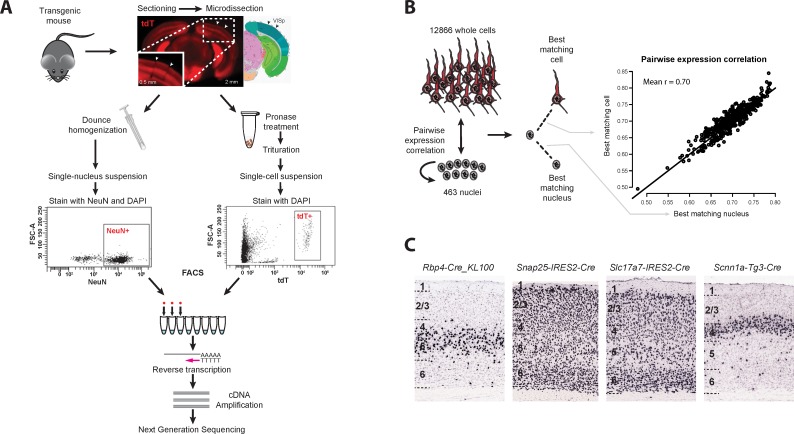
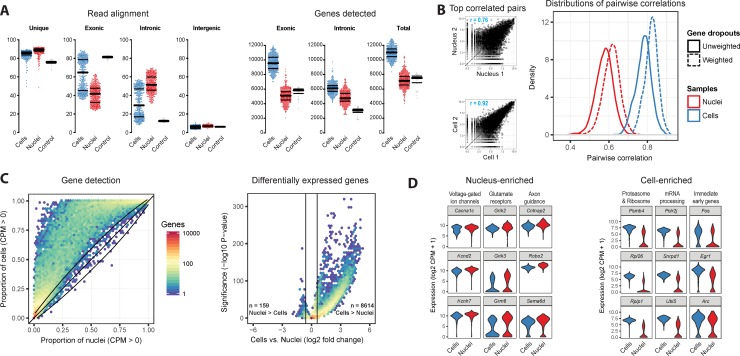
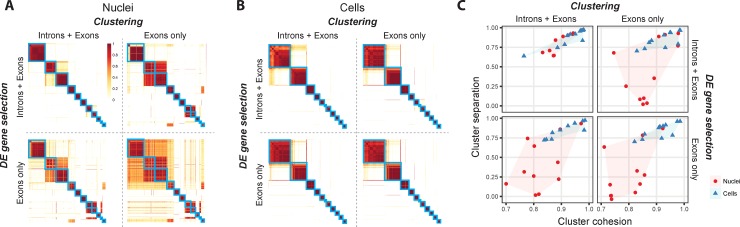
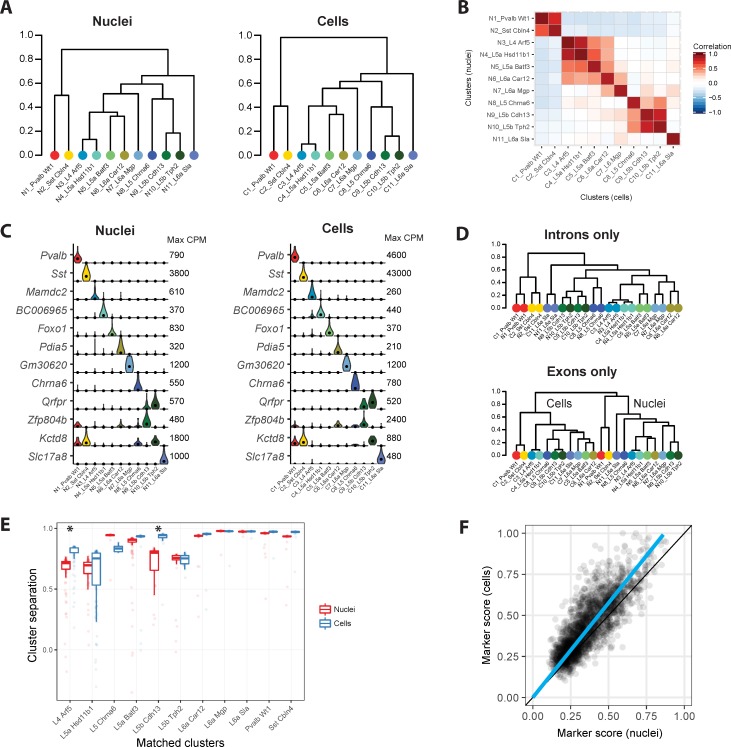
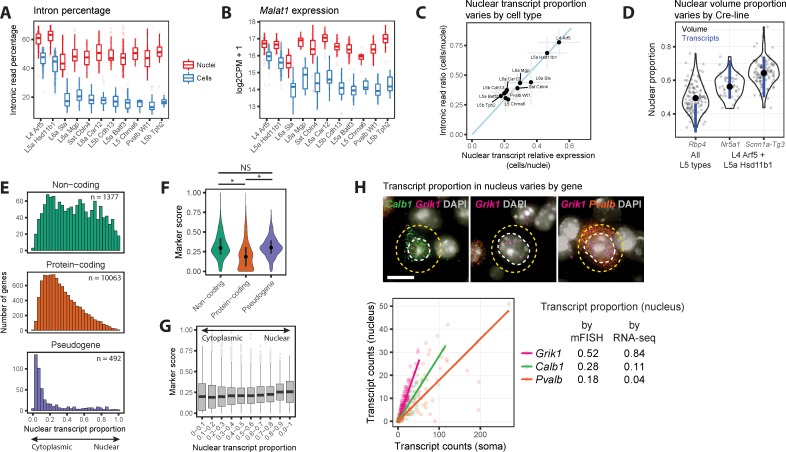
Transcriptomic profiling of complex tissues by single-nucleus RNA-sequencing (snRNA-seq) affords some advantages over single-cell RNA-sequencing (scRNA-seq). snRNA-seq provides less biased cellular coverage, does not appear to suffer cell isolation-based transcriptional artifacts, and can be applied to archived frozen specimens. We used well-matched snRNA-seq and scRNA-seq datasets from mouse visual cortex to compare cell type detection. Although more transcripts are detected in individual whole cells (~11,000 genes) than nuclei (~7,000 genes), we demonstrate that closely related neuronal cell types can be similarly discriminated with both methods if intronic sequences are included in snRNA-seq analysis. We estimate that the nuclear proportion of total cellular mRNA varies from 20% to over 50% for large and small pyramidal neurons, respectively. Together, these results illustrate the high information content of nuclear RNA for characterization of cellular diversity in brain tissues.
Overview
The claims and statistics of this paper haven’t been checked yet.
Free: it reads the open-access text and checks the first 5 claims that cite a source we can check. Create a free account to check every claim.
Integrity signals
Registry
Cites
Statistics
Figures
Verification
Claims the paper makes
The claims and statistics of this paper haven’t been checked yet.
Free: it reads the open-access text and checks the first 5 claims that cite a source we can check. Create a free account to check every claim.
Claims other papers make about this one
Each is checked against this paper’s own text: does it say what the citing paper says it does?
The source backs part of the claim, not all of it — or backs it for a different population, condition or comparison.
In the citing paper
“While scRNA-seq data are analyzed by mapping sequenced fragments to exons, snRNA-seq data analysis should also consider the abundance of intronic reads from pre-mRNA, which may account for >75% of fragments (Bakken et al., 2018; Gaidatzis et al., 2015).”
From Single-Cell Sequencing of Brain Cell Transcriptomes and Epigenomes (2021) · cites this paper as Bakken et al., 2018
Experimental — accuracy not yet measuredThe source backs part of the claim, not all of it — or backs it for a different population, condition or comparison.
In the citing paper
“Nuclear transcripts comprise ~20%−50% of all the RNA in the cell (Bakken et al., 2018), including immature and unspliced RNA molecules containing introns (Fig. 2a).”
From Single-Cell Sequencing of Brain Cell Transcriptomes and Epigenomes (2021) · cites this paper as Bakken et al., 2018
Experimental — accuracy not yet measuredThe source backs part of the claim, not all of it — or backs it for a different population, condition or comparison.
In the citing paper
“Fresh tissue samples are deemed appropriate for single-cell sequencing, whereas freeze-thaw samples are generally recommended for snRNA-seq [242, 243].”
From Single-cell sequencing to multi-omics: technologies and applications (2024) · cites this paper as [243]
Experimental — accuracy not yet measuredThe source backs part of the claim, not all of it — or backs it for a different population, condition or comparison.
In the citing paper
“Differential expression analysis comparing individual cell types profiled by snRNA-seq and scRNA-seq suggested higher expression of long noncoding RNAs in snRNA-seq libraries and higher expression of genes related to mitochondrial and ribosomal functions in scRNA-seq, in agreement with previous reports [24, 26]”
From Systematic assessment of tissue dissociation and storage biases in single-cell and single-nucleus RNA-seq workflows (2020) · cites this paper as [24]
Experimental — accuracy not yet measuredThe source backs part of the claim, not all of it — or backs it for a different population, condition or comparison.
In the citing paper
“whereas longer CDSs were enriched (NES = 1.91, padj = 3.6e-05), as already observed in earlier snRNA-seq studies (Bakken et al., 2018).”
From Single-Nucleus RNA-Seq Is Not Suitable for Detection of Microglial Activation Genes in Humans (2020) · cites this paper as Bakken et al., 2018
Experimental — accuracy not yet measured
6 more claims about this paper
Create a free account to see every claim other papers make about this one.
Self-check
Percentages, sums and reported differences re-computed from the paper’s own numbers.
The self-check needs the paper’s full text.
Citations
Cites
STAR: ultrafast universal RNA-seq aligner
Dobin, A., Davis, C. A., Schlesinger, F., Drenkow, J., Zaleski, C., Jha, S., Batut, P., Chaisson, M., & Gingeras, T. R. (2013) · Bioinformatics · doi:10.1093/bioinformatics/bts635 · Cited by 51,709
limma powers differential expression analyses for RNA-sequencing and microarray studies
Ritchie, M. E., Phipson, B., Wu, D., Hu, Y., Law, C. W., Shi, W., & Smyth, G. K. (2015) · Nucleic Acids Research · doi:10.1093/nar/gkv007 · Cited by 40,458
ggplot2: Elegant Graphics for Data Analysis
Wickham, H. (2009) · doi:10.1007/978-0-387-98141-3 · Cited by 14,447
Highly parallel genome-wide expression profiling of individual cells using nanoliter droplets.
Macosko, E. Z., Basu, A., Satija, R., Nemesh, J., Shekhar, K., Goldman, M., Tirosh, I., Bialas, A. R., Kamitaki, N., Martersteck, E. M., et al. (2015) · Cell · doi:10.1016/j.cell.2015.05.002 · Cited by 7,110
A robust and high-throughput Cre reporting and characterization system for the whole mouse brain
Madisen, L., Zwingman, T. A., Sunkin, S. M., Oh, S. W., Zariwala, H. A., Gu, H., Ng, L. L., Palmiter, R. D., Hawrylycz, M. J., Jones, A. R., et al. (2010) · Nature Neuroscience · doi:10.1038/nn.2467 · Cited by 6,907
Self-citationREVIGO summarizes and visualizes long lists of gene ontology terms
Supek, F., Bošnjak, M., Škunca, N., & Šmuc, T. (2011) · PLoS ONE · doi:10.1371/journal.pone.0021800 · Cited by 6,264
Genome-wide atlas of gene expression in the adult mouse brain
Lein, E. S., Hawrylycz, M. J., Ao, N., Ayres, M., Bensinger, A., Bernard, A., Boe, A. F., Boguski, M. S., Brockway, K. S., Byrnes, E. J., et al. (2007) · Nature · doi:10.1038/nature05453 · Cited by 5,572
Self-citationLandscape of transcription in human cells
Djebali, S., Davis, C. A., Merkel, A., Dobin, A., Lassmann, T., Mortazavi, A., Tanzer, A., Lagarde, J., Lin, W., Schlesinger, F., et al. (2012) · Nature · doi:10.1038/nature11233 · Cited by 5,187
Software for Computing and Annotating Genomic Ranges
Lawrence, M., Huber, W., Pagès, H., Aboyoun, P., Carlson, M., Gentleman, R., Morgan, M. T., & Carey, V. J. (2013) · PLoS Computational Biology · doi:10.1371/journal.pcbi.1003118 · Cited by 4,398
Cell types in the mouse cortex and hippocampus revealed by single-cell RNA-seq
Zeisel, A., Muñoz-Manchado, A. B., Codeluppi, S., Lönnerberg, P., La Manno, G., Juréus, A., Marques, S., Munguba, H., He, L., Betsholtz, C., et al. (2015) · Science · doi:10.1126/science.aaa1934 · Cited by 3,124
Research works printed but not linked: 1
- Aronesty E. “ ea-utils: Command-line tools for processing biological sequencing data.” Expr Anal. 2011; http://code.google.com/p/ea-utils
Cited by
Items 301–400 of 629
Single nucleus sequencing fails to detect microglial activation in human tissue
Thrupp, N., Frigerio, C. S., Wolfs, L., Skene, N. G., Poovathingal, S., Fourne, Y., Matthews, P. M., Theys, T., Mancuso, R., de Strooper, B., et al. (2020) · bioRxiv (Cold Spring Harbor Laboratory) · doi:10.1101/2020.04.13.035386 · Cited by 9
“As demonstrated in previous studies (Bakken et al., 2018; Gerrits et al., 2019; Habib et al., 2017; Lake et al., 2017), the majority of genes showed similar normalized abundance levels in cells and nuclei, with 98.6% of genes falling along the diagonal in Fig.”
BackgroundResultInfluentialSchneeberger, S., Kim, S. J., Eede, P., Boltengagen, A., Braeuning, C., Andreadou, M., Becher, B., Karaiskos, N., Kocks, C., Rajewsky, N., et al. (2021) · bioRxiv (Cold Spring Harbor Laboratory) · doi:10.1101/2021.04.25.441313 · Cited by 11
Cochlear transcriptome analysis of an outbred mouse population (CFW)
Boussaty, E. C., Tedeschi, N., Novotny, M. A., Ninoyu, Y., Du, E. Y., Draf, C., Zhang, Y., Manor, U., Scheuermann, R. H., & Friedman, R. A. (2023) · Frontiers in Cellular Neuroscience · doi:10.3389/fncel.2023.1256619 · Cited by 10
Self-citationThe evolution of gene regulation in mammalian cerebellum development
Sarropoulos, I., Sepp, M., Yamada, T., Schäfer, P. S. L., Trost, N., Schmidt, J., Schneider, C., Drummer, C., Mißbach, S., Taskiran, I. I., et al. (2026) · Science · doi:10.1126/science.adw9154 · Cited by 17
The Application of Single-Cell Technologies in Cardiovascular Research
Chen, Y., Liu, Y., & Gao, X. (2021) · Frontiers in Cell and Developmental Biology · doi:10.3389/fcell.2021.751371 · Cited by 12
Single-nuclei transcriptomics enable detection of somatic variants in patient brain tissue
Townsend, S. E., Westfall, J. J., Navarro, J. B., Koboldt, D. C., Mardis, E. R., Miller, K. E., & Bedrosian, T. A. (2023) · Scientific Reports · doi:10.1038/s41598-023-27700-6 · Cited by 11
Resources for functional genomic studies of health and development in nonhuman primates
Jasinska, A. J. (2020) · American Journal of Physical Anthropology · doi:10.1002/ajpa.24051 · Cited by 10
Isolation of Adipose Tissue Nuclei for Single-Cell Genomic Applications
Benitez, G. J., & Shinoda, K. (2020) · Journal of Visualized Experiments · doi:10.3791/61230 · Cited by 12
Ernst, K., Okonechnikov, K., Bageritz, J., Mallm, J., Wittmann, A., Maaß, K. K., Leible, S., Boutros, M., Pfister, S. M., Zuckermann, M., et al. (2020) · bioRxiv (Cold Spring Harbor Laboratory) · doi:10.1101/2020.10.23.351809 · Cited by 11
Cross‐species single‐cell landscape of vertebrate pineal gland
Zheng, J., Song, W., Zhou, Y., Li, X., Wang, M., & Zhang, C. (2023) · Journal of Pineal Research · doi:10.1111/jpi.12927 · Cited by 10
Kimble, A. L., Silva, J., Omar, O. M., Murphy, M. D., Hensel, J. A., Nicholas, S.-A. E., Jellison, E. R., Reese, B., & Murphy, P. A. (2021) · Laboratory Investigation · doi:10.1038/s41374-021-00698-z · Cited by 13
Whytock, K. L., Divoux, A., Sun, Y., Hopf, M. E., Yeo, R. X., Pino, M. F., Yu, G., Smith, S. R., Walsh, M. J., & Sparks, L. M. (2023) · STAR Protocols · doi:10.1016/j.xpro.2023.102054 · Cited by 10
Quantification and statistical modeling of droplet-based single-nucleus RNA-sequencing data
Kuo, A., Hansen, K. D., & Hicks, S. C. (2023) · Biostatistics · doi:10.1093/biostatistics/kxad010 · Cited by 12
Functional genomics and systems biology in human neuroscience
Konopka, G., & Bhaduri, A. (2023) · Nature · doi:10.1038/s41586-023-06686-1 · Cited by 16
“For example, the advent of single-nucleus sequencing 43 has enabled the study of tissues that are difficult to dissociate, such as human adult brain samples and banked human specimens.”
BackgroundIt Is Not Just Fat: Dissecting the Heterogeneity of Adipose Tissue Function
Efthymiou, V., & Patti, M. (2022) · Current Diabetes Reports · doi:10.1007/s11892-022-01455-2 · Cited by 10
Systematic bias assessment in solid tissue 10x scRNA-seq workflowsPreprint
Denisenko, E., Guo, B. B., Jones, M., Hou, R., de Kock, L., Lassmann, T., Poppe, D., Clément, O., Simmons, R. K., Lister, R., et al. (2020) · UWA Profiles and Research Repository (University of Western Australia) · Cited by 10
Magrath, J. W., Goldberg, I. N., Truong, D. D., Hartono, A. B., Sampath, S. S., Jackson, C. E., Ghosh, A., Cardin, D. L., Zhang, H., Ludwig, J. A., et al. (2024) · Communications Biology · doi:10.1038/s42003-024-06003-0 · Cited by 12
“ReadsweremappedwithbothintronsandexonsinCellRanger 5.0usingtheinclude-intronsoptionforcountingintronicreads 44 .”
Ning, M., Lu, D., Liang, D., & Ren, P. (2025) · Frontiers in Molecular Biosciences · doi:10.3389/fmolb.2025.1513993 · Cited by 11
Ianevski, A., Cámara-Quílez, M., Wang, W., Suganthan, R., Hildrestrand, G. A., Grini, J. V., Døskeland, D. S., Ye, J., & Bjørås, M. (2025) · Acta Neuropathologica Communications · doi:10.1186/s40478-025-02062-4 · Cited by 12
“Unlike single-cell RNA sequencing (scRNA-seq), which requires dissociating intact cells—a process particularly challenging for neurons—snRNA-seq isolates nuclei, making it suitable for profiling hard-to-dissociate fresh/frozen tissues as well as cryopreserved clinical samples [4, 38, 63].”
Ikeda-Yorifuji, I., Tsujioka, H., Sakata, Y., & Yamashita, T. (2022) · Neuroscience Research · doi:10.1016/j.neures.2022.04.006 · Cited by 11
Gene Expression at the Tripartite Synapse: Bridging the Gap Between Neurons and Astrocytes
Imrie, G., Gray, M. B., Raghuraman, V., & Farhy-Tselnicker, I. (2024) · Advances in neurobiology · doi:10.1007/978-3-031-64839-7_5 · Cited by 8
Selective isolation of mouse glial nuclei optimized for reliable downstream omics analyses
Peña-Ortiz, M. Á., Shafiq, S., Rowland, M. E., & Bérubé, N. G. (2022) · Journal of Neuroscience Methods · doi:10.1016/j.jneumeth.2022.109480 · Cited by 7
Standardization and Interpretation of RNA-sequencing for Transplantation
Thareja, G., Suryawanshi, H., Luo, X., & Muthukumar, T. (2023) · Transplantation · doi:10.1097/tp.0000000000004558 · Cited by 12
“69,70 A study of adult kidney tissues showed that snRNA-seq had significantly reduced or no reads mapping to mitochondrial genes.”
BackgroundMechanisms of increased Alzheimer’s disease pathology with R47H and R62H TREM2 variants
Fancy, N. N., Willumsen, N., Chau, V. M. N., Boulger, S. L., Whitwell, H. J., Wang, W., Avot, B., Thomas, M., Talbot-Martin, J., Tsartsalis, S., et al. (2026) · Acta Neuropathologica · doi:10.1007/s00401-026-03036-z · Cited by 9
“As we were limited to relatively small amounts of frozen tissue, we employed snRNAseq, which is sparse and biased compared to whole cell transcriptomics, with a lower representation of glial inflammatory responses [2, 58], which may limit overlap with proteins.”
Winkel, F., Voigt, M. B., Didio, G., Matéo, S., Jetsonen, E., Pou, M. L., Steinzeig, A., Ryazantseva, M., Harkki, J., Englund, J., et al. (2020) · bioRxiv (Cold Spring Harbor Laboratory) · doi:10.1101/2020.04.27.063503 · Cited by 9
Farmer, A. D., Thibivilliers, S., Ryu, K. H., Schiefelbein, J., & Libault, M. (2020) · bioRxiv (Cold Spring Harbor Laboratory) · doi:10.1101/2020.07.27.223156 · Cited by 9
Trevisan, A. J., Han, K., Chapman, P., Kulkarni, A. S., Hinton, J. M., Ramirez, C., Klein, I., Gatto, G., Gabitto, M. I., Menon, V., et al. (2024) · bioRxiv (Cold Spring Harbor Laboratory) · doi:10.1101/2024.09.18.613279 · Cited by 9
Comparative analysis of nuclei isolation methods for brain single-nucleus RNA sequencing
Kersey, H. N., Acri, D. J., Dabin, L. C., Hartigan, K. A., Mustaklem, R., Park, J. H., & Kim, J. (2026) · Cell Reports Methods · doi:10.1016/j.crmeth.2026.101337 · Cited by 15
Technical and biological sources of noise confound multiplexed enhancer AAV screening
Hunker, A. C., Mich, J. K., Taskin, N., Torkelson, A., Cardenas, T., Lalanne, J., Mahoney, J. T., Bertagnolli, D., Chakka, A. B., Chakrabarty, R., et al. (2026) · Nature Communications · doi:10.1038/s41467-026-72147-8 · Cited by 10
“Both whole cell and nuclear iso-lations are used widely in RNA sequencing 24 , although nuclei are often preferred due to simpler homogenization procedures and compatibility with frozen tissues.”
Self-citationOcular surface health and disease: insight from single-cell RNA sequencing
Ou, S., Cai, M., Feng, Y., Lin, S., Zheng, X., Zhao, S. J., Gu, H., & Wu, Y. (2025) · Frontiers in Genetics · doi:10.3389/fgene.2025.1683167 · Cited by 10
“…tissues, single-nucleus RNA-seq can avoid enzymatic and mechanical dissociation and better preserve native signatures (Machado et al., 2021); however, it has trade-offs such as lower transcript capture, loss of cytoplasmic RNAs, and underrepresentation of certain cell types (Bakken et al., 2018).”
Osório, T. G., Pavesi, E., Abou‐El‐Ardat, K., Qureshi, N., Cassidy, L., John, T. L. S., Sirotin, N., & Piechowski‐Jóźwiak, B. (2025) · Frontiers in Aging · doi:10.3389/fragi.2025.1656727 · Cited by 13
Sharma, K., Habibey, R., Ribeiro, M. M., Cui, B., Siwicki, R. A., Striebel, J., Pawlick, J. S., Zorn, J., Utz, L., Renner, M., et al. (2026) · Cell stem cell · doi:10.1016/j.stem.2025.12.013 · Cited by 12
Loh, L. S., Hanly, J. J., Carter, A., Chatterjee, M., Tsimba, M., Shodja, D. N., Livraghi, L., Day, C. R., Reed, R. D., McMillan, W. O., et al. (2025) · PLoS Biology · doi:10.1371/journal.pbio.3003233 · Cited by 9
Yim, K., Baumgartner, M., Krenzer, M., Larios, M. F. R., Hill-Terán, G., Nottoli, T., Muhle, R., & Noonan, J. P. (2025) · Cell Genomics · doi:10.1016/j.xgen.2025.100986 · Cited by 15
“75,76 Summary data for all samples are presented in Figures S23–S26 and Table S27 (STAR Methods).”
Deleanu, R., Ceafalan, L. C., & Dricu, A. (2021) · International Journal of Molecular Sciences · doi:10.3390/ijms222413211 · Cited by 9
“The deep sequences of single cells or nuclei combined with bioinformatics tools provide the scale for an unbiased survey of molecular expression [9].”
Glyoxal as an alternative fixative for single-cell RNA sequencing
Bageritz, J., Krausse, N., Yousefian, S., Leible, S., Valentini, E., & Boutros, M. (2023) · G3 Genes Genomes Genetics · doi:10.1093/g3journal/jkad160 · Cited by 9
Reading the heart at single-cell resolution
Zhou, B., & Wang, L. (2020) · Journal of Molecular and Cellular Cardiology · doi:10.1016/j.yjmcc.2020.08.010 · Cited by 9
Cell population characterization and discovery using single-cell technologies in endocrine systems
Cheung, L., & Rizzoti, K. (2020) · Journal of Molecular Endocrinology · doi:10.1530/jme-19-0276 · Cited by 8
Dugger, S. A., Dhindsa, R. S., Sampaio, G. L. D. A., Ressler, A. K., Rafikian, E. E., Petri, S., Letts, V. A., Teoh, J. J., Ye, J., Colombo, S., et al. (2020) · bioRxiv (Cold Spring Harbor Laboratory) · doi:10.1101/2020.05.01.072512 · Cited by 8
Aevermann, B. D., Zhang, Y., Novotny, M. A., Bakken, T. E., Miller, J. A., Hodge, R. D., Lelieveldt, B. P. F., Lein, E. S., & Scheuermann, R. H. (2020) · bioRxiv (Cold Spring Harbor Laboratory) · doi:10.1101/2020.09.23.308932 · Cited by 9
Self-citationScaled, high fidelity electrophysiological, morphological, and transcriptomic cell characterizationPreprint
Lee, B. R., Budzillo, A., Hadley, K., Miller, J. A., Jarsky, T., Baker, K. S., Hill, D. D., Kim, L., Mann, R., Ng, L., et al. (2020) · bioRxiv (Cold Spring Harbor Laboratory) · doi:10.1101/2020.11.04.369082 · Cited by 9
Self-citationAyupe, A., Choi, J. S., Beckedorff, F., Catanuto, P., McCartan, R., Levay, K., & Park, K. K. (2023) · bioRxiv · doi:10.1101/2023.02.01.526254 · Cited by 3
“In contrast to whole cells, nuclei are more resistant to mechanical assaults and can be isolated from frozen tissue (Bakken et al., 2018).”
BackgroundHuman HYPOMAP: A comprehensive spatio-cellular map of the human hypothalamusPreprint
Tadross, J. A., Steuernagel, L., Dowsett, G. K. C., Kentistou, K. A., Lundh, S. H., Porniece, M., Klemm, P., Rainbow, K., Hvid, H., Kania, K., et al. (2023) · bioRxiv (Cold Spring Harbor Laboratory) · doi:10.1101/2023.09.15.557967 · Cited by 8
Astrocyte Regional Specialization is Shaped by Postnatal DevelopmentPreprint
Schroeder, M. E., McCormack, D. M., Metzner, L. R., Kang, J., Li, K. X., Yu, E., Melamed, L., Levandowski, K. M., Zaniewski, H., Zhang, Q., et al. (2024) · SSRN Electronic Journal · doi:10.1101/2024.10.11.617802 · Cited by 10
Liang, G., Tan, J., Chen, C., Liu, Y., Ye, Y., Pan, X., Zheng, Q., Chang, Y., & Lyu, F. (2025) · Clinical and Translational Medicine · doi:10.1002/ctm2.70370 · Cited by 10
Distinct mechanisms of transcriptomic habituation to repeated stress in the mouse hippocampus
Waag, R., von Ziegler, L., Sonder, E., Sturman, O., Leonardi, J., Frei, S., Longster, R., Gapp, K., Germain, P., & Bohacek, J. (2025) · Nature Communications · doi:10.1038/s41467-025-67825-y · Cited by 15
“While this approach prevents dissociation-induced transcriptional artifacts 44 , the resulting data is dominated by nascent transcripts 66 .”
Leveraging Single-Cell Technologies to Advance Understanding of Myocardial Disease
Gardner, R. S., Tucker, N. R., & Amancherla, K. V. (2026) · Circulation Research · doi:10.1161/circresaha.125.326002 · Cited by 10
Zhang, Y., Tan, J., Yang, K., Fan, W., Yu, B., & Shi, W. (2023) · Journal of Neuroinflammation · doi:10.1186/s12974-023-02831-9 · Cited by 7
“On the other hand, accumulating evidence has shown concordance between snRNA-seq data and scRNA-seq, despite the former solely capturing nuclear mRNA [1, 3, 4].”
BackgroundNance, R. L., Wang, X., Sandey, M., Matz, B. M., Thomas, A., & Smith, B. F. (2023) · International Journal of Molecular Sciences · doi:10.3390/ijms242216365 · Cited by 9
“Despite these differences, single-nuclei sequencing has been shown to provide equivalent gene detection signatures and accurate cell identification while minimizing bias compared to single-cell sequencing [6,7,9,10].”
MethodSingle Cell Sequencing Technology and Its Application in Alzheimer’s Disease
Han, Y., Huang, C., Pan, Y., & Gu, X. (2024) · Journal of Alzheimer s Disease · doi:10.3233/jad-230861 · Cited by 7
Liao, K., Xiang, Y., Huang, F., Huang, M., Xu, W., Lin, Y., Liao, P., Wang, Z., Yang, L., Tian, X., et al. (2024) · iScience · doi:10.1016/j.isci.2024.109009 · Cited by 8
“75 In brief, frozen brain tissue samples from birds were placed in a Dounce homogenizer containing 2 mL of pre-chilled homogenization buffer, and the homogenizer was kept on ice during the grinding process.”
MethodInforming disease modelling with brain-relevant functional genomic annotations
Reynolds, R. H., Hardy, J., Ryten, M., & Taliun, S. A. G. (2019) · Brain · doi:10.1093/brain/awz295 · Cited by 8
Price, K. M., Wigg, K. G., Nigam, A., Feng, Y., Blokland, K., Wilkinson, M., Kerr, E. N., Guger, S., Lovett, M. W., Strug, L. J., et al. (2023) · Molecular Psychiatry · doi:10.1038/s41380-023-01970-y · Cited by 8
Wang, J., Roeder, K., & Devlin, B. (2020) · bioRxiv (Cold Spring Harbor Laboratory) · doi:10.1101/2020.08.05.238949 · Cited by 7
“Nuclear RNA accounts for only 20-50% of the RNA molecules in the whole cell, and this fraction varies across cell types (Bakken et al., 2018).”
BackgroundSalmani, B. Y., Lahti, L., Gillberg, L., Jacobsen, J. K., Mantas, I., Svenningsson, P., & Perlmann, T. (2023) · bioRxiv (Cold Spring Harbor Laboratory) · doi:10.1101/2023.06.05.543445 · Cited by 7
“However, compared to other methods, the detection is even higher in snRNA-seq due to its nuclear localization and therefore Malat1 expression is used to estimate the nuclear proportion of total mRNA (Bakken et al., 2018).”
A scATAC-seq atlas of chromatin accessibility in axolotl brain regions
Feng, W., Liu, S., Deng, Q., Fu, S., Yang, Y., Dai, X., Wang, S., Wang, Y., Liu, Y., Lin, X., et al. (2023) · Scientific Data · doi:10.1038/s41597-023-02533-0 · Cited by 7
“In brief, nuclei from the frozen brain regions were isolated 21,22 .”
BackgroundSpatially resolved molecular and cellular atlas of the mouse brainPreprint
Han, L., Liu, Z., Jing, Z., Liu, Y., Chang, H., Lei, J., Peng, Y., Wang, K., Xu, Y., Liu, W., et al. (2023) · bioRxiv (Cold Spring Harbor Laboratory) · doi:10.1101/2023.12.03.569501 · Cited by 7
Shin, D., Urbanek, M. E., Larson, H. H., Moussa, A. J., Lee, K. Y., Baker, D. L., Standen-Bloom, E., Ramachandran, S., Bogdanoff, D., Cadwell, C. R., et al. (2024) · bioRxiv (Cold Spring Harbor Laboratory) · doi:10.1101/2024.10.01.616167 · Cited by 9
Berson, E., Perna, A., Bukhari, S. A., Kim, Y., Xue, L., Seong, D., Mataraso, S. J., Ghanem, M., Chang, A. L., Montine, K. S., et al. (2025) · Brain · doi:10.1093/brain/awaf285 · Cited by 9
“3 Finally, snRNA-seq is more prone to technical challenges such as dropout and cell type-specific sensitivity to nuclear dissociation, potentially confounding data analysis and increasing the likelihood of false discoveries.”
Hurler, C.-A., Liebscher, S., Arzberger, T., & Jäkel, S. (2024) · Brain Communications · doi:10.1093/braincomms/fcae430 · Cited by 9
“9 10-12 This offers the advantage of being more frequently available, of higher tissue stability with conserved cellular tissue morphology, especially for methods that require extensive pre-treatment, as well as easier storage possibilities.”
Detecting gene expression in Caenorhabditis elegans
Calarco, J. A., Taylor, S. R., & Miller, D. M. (2024) · Genetics · doi:10.1093/genetics/iyae167 · Cited by 11
“Studies in other organisms have shown that snRNA-seq results in less bias in tissue sampling than scRNA-seq (Bakken et al .”
Functional genomics and epigenomics of atrial fibrillation
Victorino, J., Álvarez, A., & Manzanares, M. (2021) · Journal of Molecular and Cellular Cardiology · doi:10.1016/j.yjmcc.2021.04.003 · Cited by 7
Single cell RNA-seq analysis of the flexor digitorum brevis mouse myofibers
Verma, R., Kannan, S., Lin, B. L., Fomchenko, K. M., Nieuwenhuis, T. O., Patil, A. H., Lukban, C., Yang, X., Fox-Talbot, K., McCall, M. N., et al. (2021) · Skeletal Muscle · doi:10.1186/s13395-021-00269-2 · Cited by 6
“Also of note, Malat1, a known nuclear lncRNA, was the most abundant transcript in the nuc-seq data, consistent with a prior report [35].”
MethodResultTranscriptomic Profile of the Mouse Postnatal Liver Development by Single-Nucleus RNA Sequencing
Xu, J., Hao, S., Shi, Q., Deng, Q., Jiang, Y., Guo, P., Yuan, Y., Shi, X., Shangguan, S., Zheng, H., et al. (2022) · Frontiers in Cell and Developmental Biology · doi:10.3389/fcell.2022.833392 · Cited by 7
Huang, T., Xiao, Y., Zhang, Y., Ge, Y., & Gao, J. (2023) · Frontiers in Immunology · doi:10.3389/fimmu.2023.1174008 · Cited by 6
“Through functional analysis, this gene expression information can be linked with cell function, and the use of spatial mapping can locate cells in a certain tissue or organ and finally obtain a map of different types of cells (15, 16).”
BackgroundSorek, G., Haim, Y., Caspi, V. C., Lazarescu, O., Ziv, M., Hagemann, T., Nankam, P. A. N., Blüher, M., Liberty, I. F., Dukhno, O., et al. (2024) · iScience · doi:10.1016/j.isci.2024.110368 · Cited by 9
“8,12,13 On the other hand, snRNA-seq advantages over scRNA-seq have alsobeen noted,in particular,theability to use flash-frozen(andevenformaldehyde-fixed)samples,and avoidingthe possibletranscrip-tome changes occurring during tissue disintegration into isolated cells.”
Nuclei Isolation from Whole Tissue using a Detergent and Enzyme-Free Method
Eski, S. E., Dubois, C., & Singh, S. P. (2020) · Journal of Visualized Experiments · doi:10.3791/61471 · Cited by 7
Recent Progress in Cardiovascular Research Involving Single-Cell Omics Approaches
Dai, Z., & Nomura, S. (2021) · Frontiers in Cardiovascular Medicine · doi:10.3389/fcvm.2021.783398 · Cited by 7
“However, scRNA-seq captures more genes than snRNA-seq, represented by mitochondrial and ribosomal genes, while snRNA-seq detects more non-coding RNA and more reads that are mapped to intronic regions (11, 13).”
BackgroundGolan, N., Kauer, S. D., Ehrlich, D. B., Ravindra, N. G., van Dijk, D., & Cafferty, W. B. J. (2021) · bioRxiv (Cold Spring Harbor Laboratory) · doi:10.1101/2021.06.02.446653 · Cited by 6
“Therefore, it was critical to maintain plasma membrane integrity to achieve maximal quality of whole-cell sequencing.(23) To that end, we refined established adult neuronal dissociation protocols (methods) to develop a novel pipeline for labeling, extracting, dissociating, and sequencing neurons with long-distance axo…”
MethodMa, P., Duan, S., Ma, W., Deng, Q., Yu, Y., Gao, P., Yuan, Y., & Liu, C. (2025) · Scientific Data · doi:10.1038/s41597-025-04432-y · Cited by 7
Chang, M., Waldeck, J. B., Stephan, M., Kannaiyan, N. R., de Almeida, V., Boudriot, E., Karali, T., Röll, L., Fischer, L. E., Demetriou, D., et al. (2025) · Translational Psychiatry · doi:10.1038/s41398-025-03509-x · Cited by 7
“Postmortem and whole mouse brain tissues can only be processed for snRNAseq but not scRNAseq, because it is technically impossible to dissociate intact cells from postmortem brain tissues [55].”
Plant Nuclei Isolation for Single-Nucleus RNA Sequencing
Xin, X., Du, F., & Jiao, Y. (2023) · Methods in molecular biology · doi:10.1007/978-1-0716-3299-4_15 · Cited by 8
Single-cell transcriptomics in thyroid eye disease
Ahsanuddin, S., & Wu, A. Y. (2023) · Taiwan Journal of Ophthalmology · doi:10.4103/tjo.tjo-d-23-00096 · Cited by 8
“[49,50] Furthermore, insights regarding the functional significance of genes that are expressed at low levels cannot be made using existing analytical approaches.”
Xie, G., Toledo, M. P., Hu, X., Yong, H. J., Sanchez, P. S., Liu, C., Naji, A., Irianto, J., & Wang, Y. J. (2024) · BMC Genomics · doi:10.1186/s12864-024-10335-w · Cited by 5
“The differences in the percentage of spliced/unspliced transcripts in the two modalities are similar to what was reported in the brain tissues [59] and reflect the differences in transcripts’ subcellular origins.”
Gliko, O., Mallory, M., Dalley, R. A., Gala, R., Gornet, J., Zeng, H., Sorensen, S. A., & Sümbül, U. (2024) · Nature Communications · doi:10.1038/s41467-024-50728-9 · Cited by 10
“We also used the β score, a published measure to evaluate the degree to which gene expression is exclusive to t-types 67 , to exclude genes expressed broadly across t-types.”
MethodSelf-citationErnst, K., Okonechnikov, K., Bageritz, J., Perera, A. A., Mallm, J., Wittmann, A., Maaß, K. K., Leible, S., Boutros, M., Pfister, S. M., et al. (2025) · Scientific Reports · doi:10.1038/s41598-025-97053-9 · Cited by 21
“While some of these only features detection of few high quality cells using labor intensive protocols 20,21 , some more recent reports highlighted detection of multiple cell types, significantly increasing the utility 20–27 .”
Diverse cell types establish a pathogenic immune environment in peripheral neuropathy
Choi, J. Y., Strickland, A. M., Loo, H. Q., Dong, W., Barbar, L., Bloom, A. J., Sasaki, Y., Jin, S. C., DiAntonio, A., & Milbrandt, J. (2025) · Journal of Neuroinflammation · doi:10.1186/s12974-025-03459-7 · Cited by 6
“Combining single cell and single nucleus approaches minimized method-dependent differences in cell type recovery, an important consideration in peripheral nerve containing myelinating glia and immune cells [31, 32].”
Efficient pheromone navigation via antagonistic detectors in Caenorhabditis elegans male
Wan, X., Zhou, T., Susoy, V., Groaz, A., Park, C. F., Brady, J. F., Samuel, A. D. T., & Sternberg, P. W. (2026) · Nature Communications · doi:10.1038/s41467-026-69392-2 · Cited by 7
Baratta, A. M., Brandner, A. J., Plasil, S. L., Rice, R. C., & Farris, S. P. (2022) · Frontiers in Molecular Neuroscience · doi:10.3389/fnmol.2022.905328 · Cited by 7
Kang, H., Liu, Q., Seim, I., Zhang, W., Li, H., Gao, H., Lin, W., Lin, M., Zhang, P., Zhang, Y., et al. (2023) · Molecular Ecology Resources · doi:10.1111/1755-0998.13775 · Cited by 5
Huo, Y., Cao, Y., Hu, X., Yang, Y., Shao, P., Sun, J., & Lv, A. (2024) · Aquaculture · doi:10.1016/j.aquaculture.2024.740898 · Cited by 6
Postnatal neuronalBace1deletion impairs neuroblast and oligodendrocyte maturation
Benoit, M., Darboe, M., Das, B., Ge, Y., Zhou, J., Yao, A. Y., He, W., Yan, R., & Hu, X. (2022) · Human Molecular Genetics · doi:10.1093/hmg/ddac282 · Cited by 6
Mahadevan, V., Peltekian, A., & McBain, C. J. (2020) · Current Protocols in Neuroscience · doi:10.1002/cpns.93 · Cited by 7
Rodrigues, P. M., & Bañales, J. M. (2020) · Cellular and Molecular Gastroenterology and Hepatology · doi:10.1016/j.jcmgh.2020.09.005 · Cited by 6
A map of bat virus receptors derived from single-cell multiomics
Lv, T., Wang, X., Yu, C., Wang, Z., Xiang, R., Li, L., Yuan, Y., Wang, Y., Wei, X., Yu, Y., et al. (2022) · Scientific Data · doi:10.1038/s41597-022-01447-7 · Cited by 5
Inter-individual variation in human cortical cell type abundance and expressionPreprint
Johansen, N., Somasundaram, S., Travaglini, K. J., Yanny, A. M., Shumyatcher, M., Casper, T., Cobbs, C., Dee, N., Ellenbogen, R. G., Ferreira, M. L., et al. (2022) · bioRxiv (Cold Spring Harbor Laboratory) · doi:10.1101/2022.10.07.511366 · Cited by 5
Self-citationJiang, A., Lehnert, K., Reid, S. J., Handley, R. R., Jacobsen, J. C., Rudiger, S. R., McLaughlan, C. J., Verma, P. J., Bawden, C. S., & Snell, R. G. (2023) · bioRxiv (Cold Spring Harbor Laboratory) · doi:10.1101/2023.02.19.529150 · Cited by 7
Preparation of High-Viability Single-Cell Suspensions from African Turquoise Killifish Brain TissuePreprint
Mariën, V., Arckens, L., & houcke, J. V. (2023) · Cold Spring Harbor Protocols · doi:10.1101/pdb.prot107829 · Cited by 6
Zhang, G., Xia, S., Zhang, N. K., Gao, F., Zloković, B. V., Zhang, L. I., Zhao, Z., & Tao, H. W. (2023) · bioRxiv (Cold Spring Harbor Laboratory) · doi:10.1101/2023.05.07.539389 · Cited by 5
“…(scRNA-seq) technique to characterize the transcriptomic changes in patients diagnosed with AD (Mathys et al. 2019; Liu-Lin Xiong et al. 2021; Trygve E. Bakken et al. 2018; Marta Olah et al. 2020; Blue B. Lake et al. 2016; Jorge L. Del-Aguila et al. 2019), as well as in animal models such as…”
Bergendorf, A. M., Park, J. H., Ball, B. K., & Brubaker, D. K. (2025) · bioRxiv (Cold Spring Harbor Laboratory) · doi:10.1101/2025.02.07.637100 · Cited by 5
“Furthermore, the datasets are restricted to only the nucleus, with no expression values coming from the cytoplasm as both studies performed single-nuclei RNA-sequencing on the brain samples, in which might limit biological signal captured, encapsulating full microglia characteristics (76).”
Hes, C., Tomlinson, A. J., Michielsen, L., Murdoch, H. J., Soltani, F., Kokoeva, M. V., & Sabatini, P. V. (2025) · eLife · doi:10.7554/elife.106217 · Cited by 9
Sex effects on gene expression across the human cerebral cortex at single cell resolutionPreprint
DeCasien, A. R., Auluck, P. K., Liu, S., Marenco, S., Cookson, M., & Raznahan, A. (2025) · bioRxiv (Cold Spring Harbor Laboratory) · doi:10.1101/2025.06.30.661781 · Cited by 5
“Most other Y-linked lncRNAs were more cell-type specific (e.g., LINC00278 was expressed across glia, LINC00266-4P/SEPTIN14P23 was expressed astrocytes), consistent with prior findings that lncRNAs tend to exhibit greater cell type specificity than protein-coding genes [61,62].”
Wang, H., Lyu, W., Sun, Y., Jia, X., Bi, J., Wei, R., Du, Z., Meng, F., He, J., Wang, S., et al. (2025) · Life Medicine · doi:10.1093/lifemedi/lnaf025 · Cited by 4
“Single-nucleus isolation was performed following a previously established protocol [85].”
Yang, L., Tao, Y., Pan, Q., Cai, T., Ye, Y., Liu, J., Zhou, Y., Shao, Y., Yi, Q., Lu, Z. H., et al. (2025) · Human Genomics · doi:10.1186/s40246-025-00796-9 · Cited by 5
“Compared to scRNA-seq, snRNA-seq can be performed on frozen or archived retinal tissues, which is particularly useful where the availability of unfrozen human retinal tissue is limited [16].”
Engström, K. S., Nilsson, Å. L., Ofori, J. K., Wierup, N., Bacos, K., & Ling, C. (2025) · Scientific Reports · doi:10.1038/s41598-025-21595-1 · Cited by 7
“Additional factors that may contribute to differences in detected transcripts between the two methods include transcriptional degradation and nuclear transcript localization 19,31 .”
Recent advances and applications of single-cell sequencing in insects
Nayyar, N., Arya, S. K., Harrison, D. A., & Palli, S. R. (2025) · Current Opinion in Insect Science · doi:10.1016/j.cois.2025.101455 · Cited by 8
Zhang, T., Chen, Y., Chen, W., Chen, H., Zhang, Y., Yan, J., Zhou, Y., & Zhang, G. (2026) · Journal of Agricultural and Food Chemistry · doi:10.1021/acs.jafc.5c15391 · Cited by 4
New biological insights into osteosarcoma—lessons from single cell sequencing studies
Zehenter, J. I., Kager, L., Eder, S. K., Taschner‐Mandl, S., & Hinić, S. (2026) · Cancer and Metastasis Reviews · doi:10.1007/s10555-026-10336-z · Cited by 4
“While this method reduces dissociation-related artifacts and expands access to clinical samples, it often provides lower sensitivity for cytoplasmic transcripts [101].”
Wang, X., Rong, Z., & Xue, F. (2026) · International Journal of Molecular Sciences · doi:10.3390/ijms27115020 · Cited by 7
“Notably, comparative studies of the mouse visual cortex suggest that while snRNA-seq detects fewer total transcripts per sample than scRNA-seq, the inclusion of intronic reads enables the identification of closely related neuronal cell types with a resolution comparable to whole-cell analysis [47].”
Cre driver mouse lines for thalamocortical circuit mapping
Sokhadze, G. E., Campbell, P. W., Charalambakis, N., Govindaiah, G., Guido, W., & McGee, A. W. (2021) · The Journal of Comparative Neurology · doi:10.1002/cne.25248 · Cited by 3
Metadata
- Authors
- Bakken, T. E., Hodge, R. D., Miller, J. A., Yao, Z., Nguyen, T. N., Aevermann, B., Barkan, E., Bertagnolli, D., Casper, T., Dee, N., Garren, E., Goldy, J., Graybuck, L. T., Kroll, M., Lasken, R. S., Lathia, K., Parry, S., Rimorin, C., Scheuermann, R. H., Schork, N. J., Shehata, S. I., Tieu, M., Phillips, J. W., Bernard, A., Smith, K. A., Zeng, H., Lein, E. S., & Tasic, B.
- Affiliations
- Allen Institute for Brain Science (US)
- J. Craig Venter Institute (US)
- Corresponding author
- Bakken, Trygve E.
- Hodge, Rebecca D.
- Miller, Jeremy A.
- Yao, Zizhen
- Nguyen, Thuc Nghi
- Aevermann, Brian
- Barkan, Eliza
- Bertagnolli, Darren
- Casper, Tamara
- Dee, Nick
- Garren, Emma
- Goldy, Jeff
- Graybuck, Lucas T.
- Kroll, Matthew
- Lasken, Roger S.
- Lathia, Kanan
- Parry, Sheana
- Rimorin, Christine
- Scheuermann, Richard H.
- Schork, Nicholas J.
- Shehata, Soraya I.
- Tieu, Michael
- Phillips, John W.
- Bernard, Amy
- Smith, Kimberly A.
- Zeng, Hongkui
- Lein, Ed S.
- Tasic, Bosiljka
- ORCID
- Bakken, Trygve E.
- Hodge, Rebecca D.
- Miller, Jeremy A.
- Yao, Zizhen
- Nguyen, Thuc Nghi
- Aevermann, Brian
- Barkan, Eliza
- Bertagnolli, Darren
- Casper, Tamara
- Dee, Nick
- Goldy, Jeff
- Graybuck, Lucas T.
- Kroll, Matthew
- Lathia, Kanan
- Rimorin, Christine
- Scheuermann, Richard H.
- Schork, Nicholas J.
- Shehata, Soraya I.
- Tieu, Michael
- Phillips, John W.
- Bernard, Amy
- Smith, Kimberly A.
- Zeng, Hongkui
- Lein, Ed S.
- Tasic, Bosiljka
- Venue
- PLoS ONE
- Publisher
- Public Library of Science (PLoS)
- Published
- 2018-12-26
- Volume
- 13
- Issue
- 12
- Pages
- e0209648
- ISSN
- 1932-6203 (ISSN-L)
- PMC
- PMC6306246
- OpenAlex
- W2906213364
- Cited by
- 608
- References
- 57
- Citations by year
- 2026: 75 · 2025: 78 · 2024: 86 · 2023: 86 · 2022: 89 · 2021: 84 · 2020: 80 · 2019: 24 · 2018: 5
- FWCI
- 17.25
- Type
- journal article
- Language
- en
- Open access
- gold
- doi.org
- Licence
- Locations
- PLoS ONE (publishedVersion, cc-by)
- bioRxiv (Cold Spring Harbor Laboratory) (acceptedVersion)
- Europe PMC (PubMed Central) (publishedVersion, cc-by)
- PubMed Central (publishedVersion, cc-by)
- PubMed (publishedVersion)
- DOAJ (DOAJ: Directory of Open Access Journals) (submittedVersion, cc-by-sa)
- Figshare (submittedVersion, cc-by)
- Funders
- National Institute of Mental Health (U01MH105982)
- National Eye Institute (R01EY023173)
- Topics
- Life Sciences › Biochemistry, Genetics and Molecular Biology › Molecular Biology › Single-cell and spatial transcriptomics
- Life Sciences › Biochemistry, Genetics and Molecular Biology › Molecular Biology › Genomics and Phylogenetic Studies
- Life Sciences › Biochemistry, Genetics and Molecular Biology › Molecular Biology › Genomics and Chromatin Dynamics
- Keywords
- single-nucleus RNA sequencing, single-cell RNA sequencing, cell type annotation, mouse visual cortex, nuclear RNA, introns, pyramidal neurons, neuronal cell types, transcriptome comparison
- MeSH terms
- Animals, Cell Nucleus, Neurons, Visual Cortex, Sequence Analysis, RNA, Cell Lineage, Gene Expression Profiling, Mice, Single-Cell Analysis, Transcriptome
About these checks
Registry, retraction, Cites and statistics results are computed, not judged, with one exception: a printed reference that no index lists is read once by a model before it counts as a citation error. Claims are extracted by a model and kept only when their quote appears verbatim in the text; each cited source is then checked, with a model’s help, for whether it says what the claim relies on. Those verdicts can be wrong — read the claim’s quote and the cited source before relying on one.
Statistics and arithmetic are recomputed, not judged.
Confidence bands are shown only for fields calibrated on our annotated test set. None is calibrated yet, so no band is shown.
What counts as a claim ›How we measure confidence ›How we check this ›
Are you an author, or do you see a problem with this page? Request a review
Data sources
Bibliographic data: Semantic Scholar, OpenAlex, Crossref.
Contains information from the Semantic Scholar Academic Graph Datasets, made available under the ODC Attribution License (ODC-BY 1.0).
Semantic Scholar’s data is described in: Kinney, R., et al. (2023). The Semantic Scholar Open Data Platform. arXiv:2301.10140.
