

Single-nucleus and single-cell transcriptomes compared in matched cortical cell types
Open accessPublished version of a preprint
The DOI matches its Crossref record; 58 of the 58 references it cites were found in a registry or an index.
Abstract
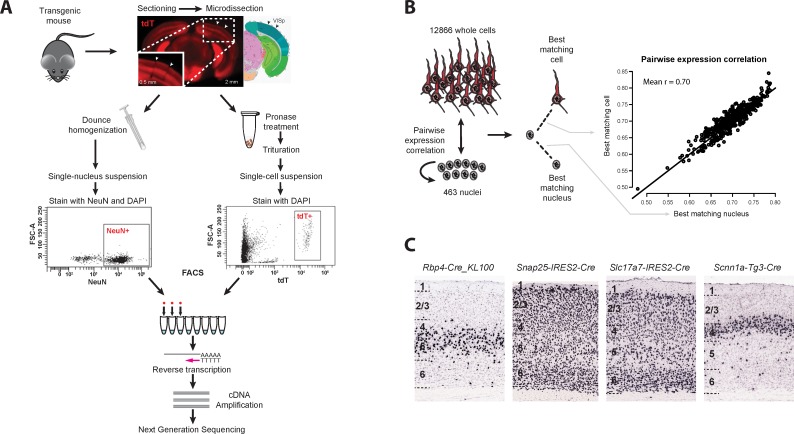
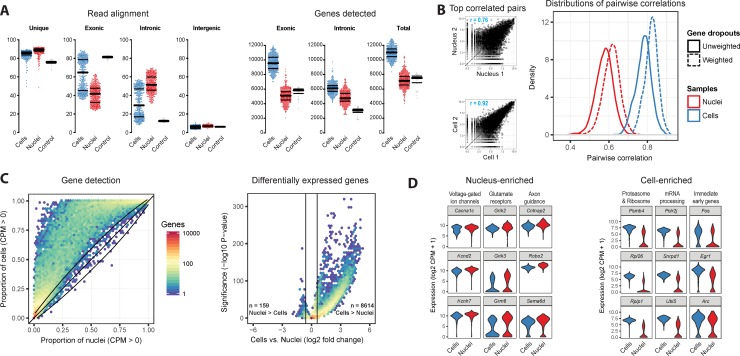
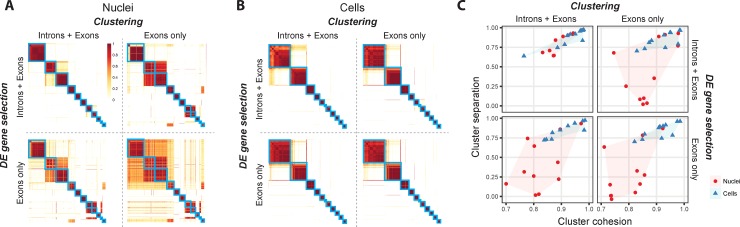
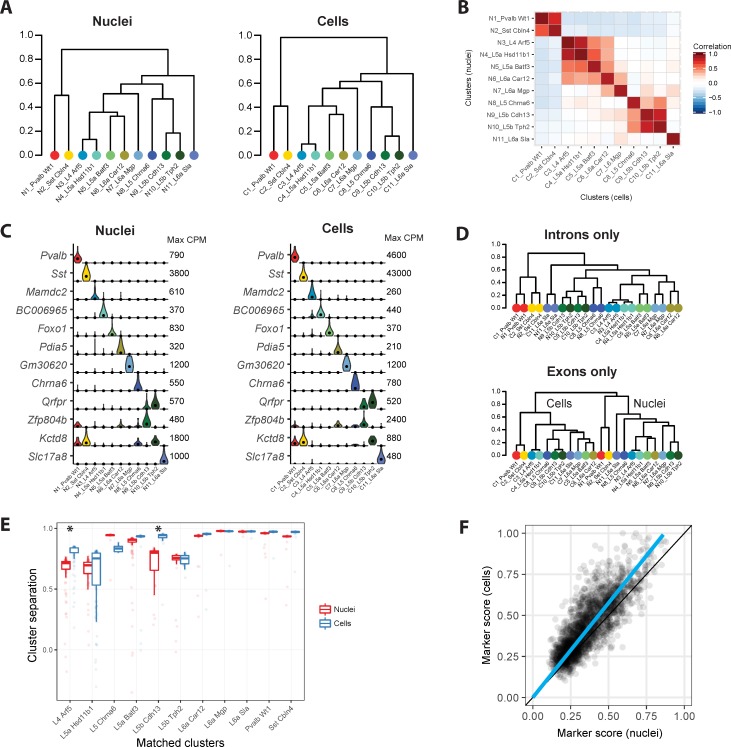
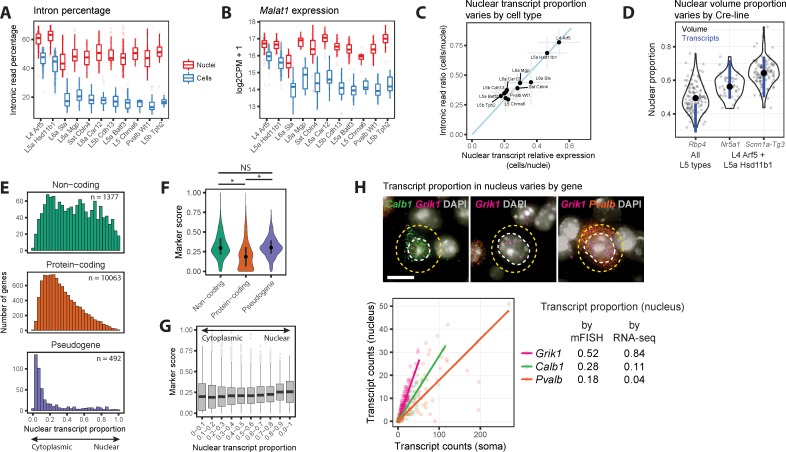
Transcriptomic profiling of complex tissues by single-nucleus RNA-sequencing (snRNA-seq) affords some advantages over single-cell RNA-sequencing (scRNA-seq). snRNA-seq provides less biased cellular coverage, does not appear to suffer cell isolation-based transcriptional artifacts, and can be applied to archived frozen specimens. We used well-matched snRNA-seq and scRNA-seq datasets from mouse visual cortex to compare cell type detection. Although more transcripts are detected in individual whole cells (~11,000 genes) than nuclei (~7,000 genes), we demonstrate that closely related neuronal cell types can be similarly discriminated with both methods if intronic sequences are included in snRNA-seq analysis. We estimate that the nuclear proportion of total cellular mRNA varies from 20% to over 50% for large and small pyramidal neurons, respectively. Together, these results illustrate the high information content of nuclear RNA for characterization of cellular diversity in brain tissues.
Overview
The claims and statistics of this paper haven’t been checked yet.
Free: it reads the open-access text and checks the first 5 claims that cite a source we can check. Create a free account to check every claim.
Integrity signals
Registry
Cites
Statistics
Figures
Verification
Claims the paper makes
The claims and statistics of this paper haven’t been checked yet.
Free: it reads the open-access text and checks the first 5 claims that cite a source we can check. Create a free account to check every claim.
Claims other papers make about this one
Each is checked against this paper’s own text: does it say what the citing paper says it does?
The source backs part of the claim, not all of it — or backs it for a different population, condition or comparison.
In the citing paper
“While scRNA-seq data are analyzed by mapping sequenced fragments to exons, snRNA-seq data analysis should also consider the abundance of intronic reads from pre-mRNA, which may account for >75% of fragments (Bakken et al., 2018; Gaidatzis et al., 2015).”
From Single-Cell Sequencing of Brain Cell Transcriptomes and Epigenomes (2021) · cites this paper as Bakken et al., 2018
Experimental — accuracy not yet measuredThe source backs part of the claim, not all of it — or backs it for a different population, condition or comparison.
In the citing paper
“Nuclear transcripts comprise ~20%−50% of all the RNA in the cell (Bakken et al., 2018), including immature and unspliced RNA molecules containing introns (Fig. 2a).”
From Single-Cell Sequencing of Brain Cell Transcriptomes and Epigenomes (2021) · cites this paper as Bakken et al., 2018
Experimental — accuracy not yet measuredThe source backs part of the claim, not all of it — or backs it for a different population, condition or comparison.
In the citing paper
“Fresh tissue samples are deemed appropriate for single-cell sequencing, whereas freeze-thaw samples are generally recommended for snRNA-seq [242, 243].”
From Single-cell sequencing to multi-omics: technologies and applications (2024) · cites this paper as [243]
Experimental — accuracy not yet measuredThe source backs part of the claim, not all of it — or backs it for a different population, condition or comparison.
In the citing paper
“Differential expression analysis comparing individual cell types profiled by snRNA-seq and scRNA-seq suggested higher expression of long noncoding RNAs in snRNA-seq libraries and higher expression of genes related to mitochondrial and ribosomal functions in scRNA-seq, in agreement with previous reports [24, 26]”
From Systematic assessment of tissue dissociation and storage biases in single-cell and single-nucleus RNA-seq workflows (2020) · cites this paper as [24]
Experimental — accuracy not yet measuredThe source backs part of the claim, not all of it — or backs it for a different population, condition or comparison.
In the citing paper
“whereas longer CDSs were enriched (NES = 1.91, padj = 3.6e-05), as already observed in earlier snRNA-seq studies (Bakken et al., 2018).”
From Single-Nucleus RNA-Seq Is Not Suitable for Detection of Microglial Activation Genes in Humans (2020) · cites this paper as Bakken et al., 2018
Experimental — accuracy not yet measured
6 more claims about this paper
Create a free account to see every claim other papers make about this one.
Self-check
Percentages, sums and reported differences re-computed from the paper’s own numbers.
The self-check needs the paper’s full text.
Citations
Cites
STAR: ultrafast universal RNA-seq aligner
Dobin, A., Davis, C. A., Schlesinger, F., Drenkow, J., Zaleski, C., Jha, S., Batut, P., Chaisson, M., & Gingeras, T. R. (2013) · Bioinformatics · doi:10.1093/bioinformatics/bts635 · Cited by 51,709
limma powers differential expression analyses for RNA-sequencing and microarray studies
Ritchie, M. E., Phipson, B., Wu, D., Hu, Y., Law, C. W., Shi, W., & Smyth, G. K. (2015) · Nucleic Acids Research · doi:10.1093/nar/gkv007 · Cited by 40,458
ggplot2: Elegant Graphics for Data Analysis
Wickham, H. (2009) · doi:10.1007/978-0-387-98141-3 · Cited by 14,447
Highly parallel genome-wide expression profiling of individual cells using nanoliter droplets.
Macosko, E. Z., Basu, A., Satija, R., Nemesh, J., Shekhar, K., Goldman, M., Tirosh, I., Bialas, A. R., Kamitaki, N., Martersteck, E. M., et al. (2015) · Cell · doi:10.1016/j.cell.2015.05.002 · Cited by 7,110
A robust and high-throughput Cre reporting and characterization system for the whole mouse brain
Madisen, L., Zwingman, T. A., Sunkin, S. M., Oh, S. W., Zariwala, H. A., Gu, H., Ng, L. L., Palmiter, R. D., Hawrylycz, M. J., Jones, A. R., et al. (2010) · Nature Neuroscience · doi:10.1038/nn.2467 · Cited by 6,907
Self-citationREVIGO summarizes and visualizes long lists of gene ontology terms
Supek, F., Bošnjak, M., Škunca, N., & Šmuc, T. (2011) · PLoS ONE · doi:10.1371/journal.pone.0021800 · Cited by 6,264
Genome-wide atlas of gene expression in the adult mouse brain
Lein, E. S., Hawrylycz, M. J., Ao, N., Ayres, M., Bensinger, A., Bernard, A., Boe, A. F., Boguski, M. S., Brockway, K. S., Byrnes, E. J., et al. (2007) · Nature · doi:10.1038/nature05453 · Cited by 5,572
Self-citationLandscape of transcription in human cells
Djebali, S., Davis, C. A., Merkel, A., Dobin, A., Lassmann, T., Mortazavi, A., Tanzer, A., Lagarde, J., Lin, W., Schlesinger, F., et al. (2012) · Nature · doi:10.1038/nature11233 · Cited by 5,187
Software for Computing and Annotating Genomic Ranges
Lawrence, M., Huber, W., Pagès, H., Aboyoun, P., Carlson, M., Gentleman, R., Morgan, M. T., & Carey, V. J. (2013) · PLoS Computational Biology · doi:10.1371/journal.pcbi.1003118 · Cited by 4,398
Cell types in the mouse cortex and hippocampus revealed by single-cell RNA-seq
Zeisel, A., Muñoz-Manchado, A. B., Codeluppi, S., Lönnerberg, P., La Manno, G., Juréus, A., Marques, S., Munguba, H., He, L., Betsholtz, C., et al. (2015) · Science · doi:10.1126/science.aaa1934 · Cited by 3,124
Research works printed but not linked: 1
- Aronesty E. “ ea-utils: Command-line tools for processing biological sequencing data.” Expr Anal. 2011; http://code.google.com/p/ea-utils
Cited by
Items 401–500 of 629
Liu, C., Hong, T., Yu, L., Chen, Y., Dong, X., & Ren, Z. (2024) · International Journal of Biological Macromolecules · doi:10.1016/j.ijbiomac.2024.135050 · Cited by 6
Conserved spatial patterning of gene expression in independent lineages of C 4 plants
Sun, T., Bonthala, V. S., Stich, B., Luginbuehl, L. H., & Hibberd, J. M. (2025) · New Phytologist · doi:10.1111/nph.70475 · Cited by 7
Cell Type–Specific Nuclei Markers: The Need for Human Brain Research to Go Nuclear
Wiseman, J. A., Dragunow, M., & Park, T. (2021) · The Neuroscientist · doi:10.1177/10738584211037351 · Cited by 5
O’Sullivan, S. J., McIntosh-Clarke, D., Park, J. S., Vadigepalli, R., & Schwaber, J. S. (2021) · Frontiers in Systems Neuroscience · doi:10.3389/fnsys.2021.739790 · Cited by 8
Multiplexed Single‐Nucleus RNA Sequencing Using Lipid‐Oligo Barcodes
Zhang, Q., Kim, S. W., Gorham, J., DeLaughter, D. M., Ward, T. L., Seidman, C. E., & Seidman, J. G. (2022) · Current Protocols · doi:10.1002/cpz1.579 · Cited by 4
“An advantage of using single-nucleus RNA sequencing (snRNA-seq) is the ability to process frozen tissues with no limit for cell size and gather substantial information using small amounts of mRNA (Bakken et al., 2018; Denisenko et al., 2020; Nadelmann et al., 2021; Slyper et al., 2020).”
BackgroundHatai, D., Levenson, M. T., Rehan, V. K., & Allard, P. (2024) · Current Opinion in Toxicology · doi:10.1016/j.cotox.2024.100465 · Cited by 6
Abramson, B. W., Novotny, M. A., Hartwick, N. T., Colt, K., Aevermann, B. D., Scheuermann, R. H., & Michael, T. P. (2021) · bioRxiv (Cold Spring Harbor Laboratory) · doi:10.1101/2021.06.03.446947 · Cited by 4
Self-citationManivannan, S., & Garg, V. (2021) · bioRxiv (Cold Spring Harbor Laboratory) · doi:10.1101/2021.06.17.448424 · Cited by 3
Remaki, L. (1997) · Cited by 8
Truong, D. D., Lamhamedi-Cherradi, S.-E., Porter, R. W., Krishnan, S., Swaminathan, J., Gibson, A., Lazar, A. J., Livingston, J. A., Gopalakrishnan, V., Gordon, N. B., et al. (2022) · bioRxiv (Cold Spring Harbor Laboratory) · doi:10.1101/2022.01.21.476982 · Cited by 4
Quantification and statistical modeling of Chromium-based single-nucleus RNA-sequencing dataPreprint
Kuo, A., Hansen, K. D., & Hicks, S. C. (2022) · bioRxiv (Cold Spring Harbor Laboratory) · doi:10.1101/2022.05.20.492835 · Cited by 4
“For example, previous work has shown these choices need to be carefully considered for RNA velocity with scRNA-seq (Soneson et al., 2021) and may be also necessary for obtaining high-quality results downstream with snRNA-seq data (Bakken et al., 2018).”
BackgroundNeural networks reveal novel gene signatures in Parkinson disease from single-nuclei transcriptomes
Fiorini, M. R., Li, J., Fon, E. A., Farhan, S. M. K., & Thomas, R. A. (2025) · npj Parkinson s Disease · doi:10.1038/s41531-025-01147-0 · Cited by 9
“This underrepresentation of DaNeurons may be attributed to their sparsity in the substantia nigra and the vulnerability of neurons to loss during enzymatic or mechanical dissociation in preparation of the single-cell suspension for sequencing 20,21 Fig.2C).”
Immune involvement in neuropsychiatric disorders: Insights from single‐cell transcriptomic studies
Takeda, T., Toritsuka, M., Tamakoshi, H., Iwata, N., & Makinodan, M. (2025) · Psychiatry and Clinical Neurosciences · doi:10.1111/pcn.70018 · Cited by 5
Single‐cell insights into plant growth, adaptation, and evolution
Wang, F., Wang, F., Wu, Y., Pu, L., & Le, L. (2026) · Journal of Integrative Plant Biology · doi:10.1111/jipb.70272 · Cited by 7
Fu, W., Xie, Q., Yu, P., Liu, S., Xu, L., Ye, X., Zhao, W., Wang, Q., Pan, Y., Zhang, Z., et al. (2025) · Frontiers in Immunology · doi:10.3389/fimmu.2025.1530214 · Cited by 6
Triesch, S. S., Reichel-Deland, V., Valderrama‐Martín, J. M., Melzer, M., Schlüter, U., & Weber, A. P. M. (2025) · Journal of Experimental Botany · doi:10.1093/jxb/eraf245 · Cited by 6
Paoletti, L., Clerck, K. D., Coster, E. D., Matricardi, P., Remaut, K., & Peynshaert, K. (2025) · Drug Delivery and Translational Research · doi:10.1007/s13346-025-01921-w · Cited by 4
“In our case the percentage was somewhat higher than expected, which might be explained by the loss of neu - ronal cell types that are more susceptible to the enzyme-dependent dissociation process [46, 47 ].”
Nuthikattu, S., Norman, J., Milenković, D., & Villablanca, A. C. (2025) · American Journal of Physiology-Heart and Circulatory Physiology · doi:10.1152/ajpheart.00193.2025 · Cited by 4
SAREV : A review on statistical analytics of single‐cell RNA sequencing data
Ellis, D. D., Wu, D., & Datta, S. (2021) · Wiley Interdisciplinary Reviews Computational Statistics · doi:10.1002/wics.1558 · Cited by 4
“Neuronal cells do not survive scRNA-seq data extraction as well as non-neuronal cells, so since nuclei are more robust to sequencing and freezing, snRNA-seq data better represent the expression profiles of cells from frozen brain tissues (Bakken et al., 2018).”
BackgroundSingle-Cell RNAseq Analysis of lncRNAs
Cagnin, S., Alessio, E., Bonadio, R. S., & Sales, G. (2021) · Methods in molecular biology · doi:10.1007/978-1-0716-1581-2_5 · Cited by 3
Meso-seq for in-depth transcriptomics in ultra-low amounts of FACS-purified neuronal nuclei
Apelblat, D., Roethler, O., Bitan, L., Keren‐Shaul, H., & Spiegel, I. (2022) · Cell Reports Methods · doi:10.1016/j.crmeth.2022.100259 · Cited by 4
Utkina, M. V., Shcherbakova, A. S., Deviatiiarov, R. M., Ryabova, A., Loguinova, M. Y., Trofimov, V., Kuznetsova, A. A., Petropavlovskiy, M., Salimkhanov, R. K., Maksimov, D. O., et al. (2025) · Frontiers in Cell and Developmental Biology · doi:10.3389/fcell.2024.1469955 · Cited by 5
“…including those associated with cellular metabolism (Gaedcke et al., 2022), protein synthesis and mRNA processing (Santiago et al., 2023; Bakken et al., 2018), the processes being particularly important for tumorigenesis (Venit et al., 2023; Zhang et al., 2021), with a proper…”
New techniques for studying neurodevelopment
Escalante, A., González-Martínez, R., & Herrera, E. (2020) · Faculty Reviews · doi:10.12703/r/9-17 · Cited by 3
The importance of genomics in advancing the diagnosis and treatment of dementia
Decourt, B., & Sabbagh, M. N. (2022) · The Lancet Neurology · doi:10.1016/s1474-4422(22)00234-4 · Cited by 3
Deciphering Adult Neural Stem Cells with Single-Cell Sequencing
Liu, Y., Zhu, Y., Shi, Y., Liu, X., Su, W., & Zhuo, Y. (2023) · Stem Cells and Development · doi:10.1089/scd.2022.0234 · Cited by 3
“In addition, it may also reduce the skewing of gene expression, particularly in tissues that are difficult to dissociate, such as the heavily myelinated brain [17].”
Single nucleus multi-omics regulatory atlas of the murine pituitaryPreprint
Ruf-Zamojski, F. M., Zhang, Z., Zamojski, M., Smith, G. R., Mendelev, N., Liu, H., Nudelman, G., Moriwaki, M., Pinças, H., Castanon, R., et al. (2020) · bioRxiv (Cold Spring Harbor Laboratory) · doi:10.1101/2020.06.06.138024 · Cited by 3
Single cell analysis of the aging female hypothalamusPreprint
Hajdarovic, K. H., Yu, D., Hassell, L.-A., Evans, S. A., Packer, S., Neretti, N., & Webb, A. E. (2021) · bioRxiv (Cold Spring Harbor Laboratory) · doi:10.1101/2021.03.07.434282 · Cited by 3
Gupta, A., Shamsi, F., Altemose, N., Dorlhiac, G., Cypess, A. M., White, A. P., Patti, M., Tseng, Y., & Streets, A. (2021) · bioRxiv (Cold Spring Harbor Laboratory) · doi:10.1101/2021.03.24.435852 · Cited by 3
Landscape of human spinal cord cell type diversity at midgestationPreprint
Andersen, J., Thom, N., Shadrach, J. L., Chen, X., Amin, N. D., Yoon, S., Greenleaf, W. J., Müller, F., Pașca, A. M., Kaltschmidt, J. A., et al. (2021) · bioRxiv (Cold Spring Harbor Laboratory) · doi:10.1101/2021.12.29.473693 · Cited by 5
“Single cell and single nucleus samples displayed some differences, as reported (Bakken et al., 2018).”
BackgroundGliko, O., Mallory, M., Dalley, R. A., Gala, R., Gornet, J., Zeng, H., Sorensen, S. A., & Sümbül, U. (2022) · bioRxiv (Cold Spring Harbor Laboratory) · doi:10.1101/2022.03.07.482900 · Cited by 3
Self-citationKrizay, D. K., Goldstein, D. B., & Boland, M. J. (2022) · bioRxiv (Cold Spring Harbor Laboratory) · doi:10.1101/2022.12.11.519959 · Cited by 2
“These genes were then used to annotate and merge clusters based on expression of known canonical marker genes from previous single-cell publications[48, 73-76].”
MethodSalmani, B. Y., Lahti, L., Gillberg, L., Jacobsen, J. K., Mantas, I., Svenningsson, P., & Perlmann, T. (2024) · eLife · doi:10.7554/elife.89482.2 · Cited by 3
Distinct molecular mechanisms of stress habituation in the mouse hippocampusPreprint
Waag, R., von Ziegler, L., Sturman, O., Sonder, E., Leonardi, J., Frei, S., Gapp, K., Germain, P., & Bohacek, J. (2025) · bioRxiv (Cold Spring Harbor Laboratory) · doi:10.1101/2025.03.04.641433 · Cited by 3
“While this approach prevents dissociation-induced transcriptional artifacts (Waag and Bohacek, 2023), the resulting data is dominated by nascent transcripts (Bakken et al., 2018).”
Single-Cell and Spatial Transcriptomic Analysis of Maize Embryo Development
Wu, H., & Scanlon, M. J. (2025) · Cold Spring Harbor Protocols · doi:10.1101/pdb.top108468 · Cited by 4
Travaglini, K. J., Gabitto, M. I., Ding, Y., Agrawal, A., Postupna, N. O., Mahoney, J. T., Kaplan, E. S., Melief, E. J., Goldy, J., Chakka, A. B., et al. (2026) · bioRxiv (Cold Spring Harbor Laboratory) · doi:10.64898/2026.07.01.734821 · Cited by 9
Self-citationGenome-wide quantitative dissection of an arthropod segmented body plan at single-cell resolution
Akaiwa, T., Oda, H., & Akiyama‐Oda, Y. (2025) · Communications Biology · doi:10.1038/s42003-025-08335-x · Cited by 3
“In general, snRNA-seq may detect fewer genes than scRNA-seq if the scale of the data is comparable 69 .”
A practical guide to sequencing in neuropsychiatric research
Minerva, A. R., DeBerardine, M., Lin, R., Kim, H. J. J., Rogers, F. D., Rashford, R. L., & Peña, C. J. (2025) · NPP—Digital Psychiatry and Neuroscience · doi:10.1038/s44277-025-00041-0 · Cited by 2
“Despite these differences, nuclei provide comparable gene expression information to whole cells [13, 14].”
Chen, Z., Wang, Q., Xiang, R., Ding, R., Tao, J., Peng, Q., Wang, S., Cheng, N., Zhao, M., Li, J., et al. (2025) · Clinical and Translational Medicine · doi:10.1002/ctm2.70486 · Cited by 5
Tao, R., Liu, S., Crawford, J. A., Kramer, P. R., Bender, S., & Tao, F. (2026) · International Journal of Oral Science · doi:10.1038/s41368-026-00432-9 · Cited by 2
“33,34 Using the In the snATAC-seq, we identi fi ed 127 genes that showed increased activity after intra-TMJ injection of CFA and decreased activity following tributyrin treatment (red), and we also identi fi ed 114 genes that showed decreased activity by CFA injection and restored with tributyrin…”
EWS::WT1 isoform-dependent regulation of neogenes in desmoplastic small round cell tumors
Truong, D. D., Magrath, J. W., Murgas, K. A., Fan, J., Shamsutdinova, D. D., Ingram, D., Wani, K., Lazar, A. J., Lee, S. B., & Ludwig, J. A. (2026) · Communications Biology · doi:10.1038/s42003-026-11068-0 · Cited by 4
The glucocorticoid-mediated genomic stress response
Claydon, M. D. B., & Conway-Campbell, B. L. (2022) · Current Opinion in Endocrine and Metabolic Research · doi:10.1016/j.coemr.2022.100363 · Cited by 4
Single‐cell analytical technologies: uncovering the mechanisms behind variations in immune responses
Kashima, Y., Reteng, P., Haga, Y., Yamagishi, J., & Suzuki, Y. (2022) · FEBS Journal · doi:10.1111/febs.16622 · Cited by 2
“However, it should be noted that snRNA-seq differs from scRNA-seq biologically. scRNA-seq utilizes nuclear and cytoplasmic transcripts as a sample, whereas snRNA-seq mainly uses nuclear transcripts [17].”
BackgroundCardiovascular utility of single cell RNA-Seq
Safabakhsh, S., Feng, W., Miller, C. L., & Laksman, Z. (2022) · Current Opinion in Cardiology · doi:10.1097/hco.0000000000001014 · Cited by 2
Stalder, L., Köchl, F., Hahn, K., Sultan, M., & Prasad, M. K. (2023) · Journal of Visualized Experiments · doi:10.3791/65611 · Cited by 4
Recent progress in co-detection of single-cell transcripts and proteins
Huang, S., Fan, Q., Wang, Y., Huang, Z., Shi, W., Gong, Y., Yang, T., Wang, J., Wu, L., & Yang, C. J. (2023) · Nano Research · doi:10.1007/s12274-023-5924-3 · Cited by 2
Liu, C., Tingting, H. O. N. G., Chengcheng, Z. H. A. O., Tao, X. U. E., Shuhui, W. A. N. G., & Ren, Z. (2024) · Integrative Zoology · doi:10.1111/1749-4877.12823 · Cited by 5
Cardiac Development at a Single-Cell Resolution
Wei, N., Lee, C., Duan, L., Galdos, F. X., Samad, T., Raissadati, A., Goodyer, W. R., & Wu, S. M. (2024) · Advances in experimental medicine and biology · doi:10.1007/978-3-031-44087-8_14 · Cited by 2
Verstappe, B., & Scott, C. L. (2024) · Clinical & Experimental Immunology · doi:10.1093/cei/uxae077 · Cited by 3
“This consideration is crucial during read mapping to the reference genome as it can affect downstream clustering [41].”
BackgroundTranscriptomic Correlates of State Modulation in GABAergic Interneurons: A Cross-Species Analysis
Keijser, J., Hertäg, L., & Sprekeler, H. (2024) · Journal of Neuroscience · doi:10.1523/jneurosci.2371-23.2024 · Cited by 2
Prater, K. E., & Lin, K. (2024) · Glia · doi:10.1002/glia.24633 · Cited by 2
Segovia, C., Desrosiers, V., Khadangi, F., Robitaille, K., Armero, V. E. S., D’Astous, M., Khelifi, G., Bergeron, A., Hussein, S. M. I., Richer, M., et al. (2025) · Scientific Reports · doi:10.1038/s41598-025-90070-8 · Cited by 3
Perlman, K., Curto, E., Barnett-Burns, S., Davoli, M. A., Yerko, V., Merza, R., Papadakis, A. I., Spatz, A., Pryce, C. R., Turecki, G., et al. (2025) · Psychiatry Research · doi:10.1016/j.psychres.2025.116653 · Cited by 3
de Sande, A. H., Turunen, T., Bouvy‐Liivrand, M., Örd, T., Palani, S., Lahnalampi, M., Tundidor-Centeno, C., Liljenbäck, H., Virta, J., Niskanen, H., et al. (2025) · Genome Medicine · doi:10.1186/s13073-025-01530-9 · Cited by 3
“For this reason, previous miRNA gene analysis have focused on scRNA-seq profiles generated from nuclei that provide higher capture of intronic reads [130] and thereby improve miRNA gene detection [131].”
de Carvalho, S. S., McNinch, C. M., Barletta, A. B. F., & Barillas-Mury, C. V. (2026) · Nature Communications · doi:10.1038/s41467-026-69806-1 · Cited by 2
“Previous studies have demonstrated that the nuclear transcriptome correlates with the cytoplasmic mRNA composition 26,27 , making snRNA-seq a viable alternative for transcriptomic pro fi ling when whole-cell isolation is not feasible.”
Single-cell spatial map of cis-regulatory elements for disease-related genes in the macaque cortex
Meng, J., Chen, C., Zhu, Z., Sun, Y., Huang, Y., Hu, K., Fu, J., Wu, L., Li, L., Bai, Y., et al. (2026) · Nature Communications · doi:10.1038/s41467-026-70497-x · Cited by 3
Retina cell atlases of multiple species and an online platform for retina cell-type markers
Xu, Z., Wang, C., Chen, M., Yuan, Y., Li, L., Huang, Z. J., Yuan, Y., Yang, H., Wang, Q., & Zhang, X. (2021) · Journal of genetics and genomics/Journal of Genetics and Genomics · doi:10.1016/j.jgg.2021.10.008 · Cited by 2
Long Non-coding RNAs in a Single-Cell Type: Function and Subcellular Localization
Bonadio, R. S., Alessio, E., & Cagnin, S. (2020) · RNA technologies · doi:10.1007/978-3-030-44743-4_4 · Cited by 2
Teefy, B. B., Adler, A., Bhala, R., & Benayoun, B. A. (2022) · Journal of Visualized Experiments · doi:10.3791/64165 · Cited by 4
Probing glioblastoma and its microenvironment using single-nucleus and single-cell sequencing
Peng, S., Rath, S., Vuong, C., Bollam, S., Eschbacher, J. M., Dong, X., Mehta, S. V., Sanai, N., Berens, M. E., Kim, S., et al. (2019) · IEEE International Conference on Bioinformatics and Biomedicine (BIBM) · doi:10.1109/bibm47256.2019.8983321 · Cited by 1
Wallace, M. L., Huang, K. W., Hochbaum, D. R., Hyun, M., Radeljic, G., & Sabatini, B. L. (2019) · bioRxiv (Cold Spring Harbor Laboratory) · doi:10.1101/743401 · Cited by 2
Wang, S., Xie, J., Zou, X., Pan, T., Zhuang, Z., Wang, Z., Yuan, Y., Liu, L., Liu, S., & Wu, L. L. (2020) · bioRxiv (Cold Spring Harbor Laboratory) · doi:10.1101/2020.11.03.367532 · Cited by 2
Whole-Cell Dissociated Suspension Analysis in Human Brain Neurodegenerative Disease: A Pilot StudyPreprint
Serrano, G. E., Walker, J. E., Intorcia, A. J., Glass, M. J., Arce, R. A., Piras, I. S., Talboom, J. S., Nelson, C. M., Cutler, B., Sue, L. I., et al. (2021) · medRxiv · doi:10.1101/2021.01.08.21249455 · Cited by 2
“…(Darmanis et al., 2015; Guez-Barber et al., 2012; Otero-Garcia et al., 2020) or single nuclei isolation from solid fixed, fresh or frozen tissue (Bakken et al., 2018; Blue B. Lake et al., 2016; B. B. Lake et al., 2017; Srinivasan et al., 2020) followed by the analysis of phenotypically-defined…”
BackgroundInfluentialKang, R. B., Li, Y., Rosselot, C., Zhang, T., Siddiq, M. M., Rajbhandari, P., Stewart, A. F., Scott, D. K., Garcı́a-Ocaña, A., & Lu, G. (2022) · bioRxiv (Cold Spring Harbor Laboratory) · doi:10.1101/2022.05.22.492974 · Cited by 2
“However, snRNA-seq does not require cell dissociation from the fresh tissue and can be applied to stored tissues as well (39-41).”
BackgroundSalmani, B. Y., Lahti, L., Gillberg, L., Jacobsen, J. K., Mantas, I., Svenningsson, P., & Perlmann, T. (2023) · eLife · doi:10.7554/elife.89482.1 · Cited by 6
Tsai, H., Piya, S., Wang, J., Zhu, J. K., Hu, W., Gehrke, A. R., Cao, S., Guise, A. J., Chan, S. J., Sheehan, M. J., et al. (2025) · bioRxiv (Cold Spring Harbor Laboratory) · doi:10.1101/2025.02.07.637125 · Cited by 2
NodoMap: a spatio-cellular map of the mouse nodose gangliaPreprint
Cheng, S., Dowsett, G. K. C., Rainbow, K., Norton, M., Roberts, A. G., Phuah, P., Bewick, G. A., Lam, B., Yeo, G. S. H., & Murphy, K. G. (2025) · bioRxiv (Cold Spring Harbor Laboratory) · doi:10.1101/2025.05.11.653249 · Cited by 4
Persistent cortical excitatory neuron dysregulation in adult Chd8 haploinsufficient micePreprint
Canales, C. P., Lozano, S. A., Frost, N. A., Cichewicz, K., Amaral, W. Z., Seban, N., Fenton, E., Wade, A. A., Chu, N., Smith, E. M., et al. (2025) · Research Square · doi:10.1101/2025.06.04.657776 · Cited by 5
A cell type-resolved proteomic atlas of the human bodyPreprint
Weiss, C. A. M., Sjöstedt, E., Debnath, A., Ben‐Moshe, S., Diedrich, L., Zwahlen, M., Oeller, M., Wahle, M., Skarwan, E., Heymann, T., et al. (2026) · bioRxiv (Cold Spring Harbor Laboratory) · doi:10.64898/2026.05.26.727663 · Cited by 5
Liharska, L. E., & Charney, A. W. (2024) · Current topics in behavioral neurosciences · doi:10.1007/7854_2024_466 · Cited by 1
Simmons, S., Adiconis, X., Haywood, N., Parker, J. J., Lin, Z., Liao, Z., Tuncali, I., Al’Khafaji, A. M., Shin, A., Jagadeesh, K. A., et al. (2026) · Genome biology · doi:10.1186/s13059-026-04062-6 · Cited by 5
“Second, snRNA-seq has a higher fraction of intronic reads than scRNA-seq [22], which is a potential advantage because there is more genetic variation in introns, thus increasing the ability to identify the allele for a given RNA-seq read.”
Deconvolving Bulk Transcriptomics Samples to Obtain Cell Type Proportion Estimates
Menon, V. (2025) · Methods in molecular biology · doi:10.1007/978-1-0716-4276-4_15 · Cited by 1
A Single-Cell Omics Technical Guide for Advancing Neuropsychiatric Research
Casmey, K., Zimmermann, M., Xie, Y., Codeluppi-Arrowsmith, S. A., & Turecki, G. (2025) · Genes · doi:10.3390/genes16121394 · Cited by 3
“As previously discussed, brain cells are highly interconnected, and dissociation of brain tissue can damage cells and alter transcription profiles [91,92].”
Influentialde Carvalho, S., McNinch, C., & Barillas-Mury, C. V. (2025) · BIO-PROTOCOL · doi:10.21769/bioprotoc.5564 · Cited by 1
Transcriptomics in oilseed breeding: A genomic approach to crop enhancement
Gawande, N. D., Kaushal, C., & Sankaranarayanan, S. K. R. S. (2026) · Elsevier eBooks · doi:10.1016/b978-0-443-36457-0.00006-7 · Cited by 1
Embalabala, R., Masters, H., Ziehm, E. M., Pouncey, J., Kim, H., & Lippmann, E. S. (2026) · Fluids and Barriers of the CNS · doi:10.1186/s12987-026-00766-w · Cited by 1
“To circumvent this challenge, many labs turn to single-nucleus sequencing when profiling endothelial cells at the transcriptomic level, sacrificing overall assay sensitivity [61].”
Decoding Alzheimer's Disease One Cell Class at a Time
Darvas, M., Cook, D. G., & Scimemi, A. (2026) · Cellular and Molecular Neurobiology · doi:10.1007/s10571-026-01685-y · Cited by 2
“We need to remember, however, that snRNA-seq only recapitulates ∼ 20%–50% of the cellular tran - scriptome, and does not include extranuclear content (e.g., synaptic profiling) (Bakken et al. 2018; Berson et al. 2025 ).”
Single-Cell Transcriptomic Analysis of Macaque LGN Neurons Reveals Novel Subpopulations
Sun, S. H., Renshaw, K. T., & Pezaris, J. S. (2026) · Molecular Neurobiology · doi:10.1007/s12035-025-05361-y · Cited by 2
Cultured ex vivo human brain tissue maintains cell-type transcriptional identities
McGinnis, J. P., Mallannagari, S., Guevara, M. C., Ortiz‐Guzman, J., Belfort, B. D. W., Bao, S., Srivastava, S., Morkas, M., Ji, E., Katlowitz, K. A., et al. (2026) · Brain Communications · doi:10.1093/braincomms/fcag073 · Cited by 3
“11,12 We chose day 14 as a time point since that duration would permit basic molecular interventions but ideally still retain important molecular and cellular features.”
Decoding neurodegeneration one cell at a time
Gautier, O., Nguyen, T. P., & Gitler, A. D. (2026) · Journal of Clinical Investigation · doi:10.1172/jci199841 · Cited by 4
“These artifacts are substantially reduced with nuclei isolation, which avoids enzymatic digestion, enables the use of frozen postmortem CNS tissue, and better preserves the native diversity of cell types (12, 99, 103).”
Self-citationMejia, J., & Horner, P. J. (2026) · Glia · doi:10.1002/glia.70139 · Cited by 2
“For example, it has been shown that whole-cell sequencing detects a higher number of genes and unique molecular identifiers than nuclei sequencing (Bakken et al. 2018).”
InfluentialDostalova, D., Abaffy, P., Rohlová, E., Kriška, J., Knotek, T., Turečková, J., Kirdajová, D., Anděrová, M., & Valihrach, L. (2026) · Cellular and Molecular Neurobiology · doi:10.1007/s10571-026-01743-5 · Cited by 1
“Since previ - ous benchmarks have demonstrated that single-nuclei and single-cell datasets show high transcriptomic concordance, they provide a comparable level of reliability for inferring signaling potential (Bakken et al. 2018; Wu et al. 2019).”
Mu, C., Ding, Y., Weiss, A., Rosenfeld, S., Li, F., & Geng, X. (2026) · Biomolecules · doi:10.3390/biom16071054 · Cited by 1
Bhaduri, A., Andrews, M. G., & Kriegstein, A. R. (2020) · Elsevier eBooks · doi:10.1016/b978-0-12-814405-3.00029-1 · Cited by 1
Teefy, B. B., Adler, A., Bhala, R., & Benayoun, B. A. (2022) · Journal of Visualized Experiments · doi:10.3791/64165-v · Cited by 1
Extraction and Purification of Single Nuclei from Frozen Human Brain Tissue
Palmer, C. R., & Chun, J. J. M. (2022) · Methods in molecular biology · doi:10.1007/978-1-0716-2655-9_2 · Cited by 2
Yang, S., Lan, T., Wei, R., Zhang, L., Lin, L., Du, H., Huang, Y., Zhang, G., HUANG, S. H., Shi, M., et al. (2023) · BMC Biology · doi:10.1186/s12915-023-01691-2 · Cited by 1
Nuclear Isolation from Cryopreserved In Vitro Derived Blood Cells
Qiu, R., Petit, C., & Thom, C. S. (2024) · Journal of Visualized Experiments · doi:10.3791/66490 · Cited by 1
Parab, S., Sarlo, V., Capellero, S., Palmiotto, L., Bartolini, A., Cantarella, D., Turi, M., Gullà, A., Grassi, E., Lazzari, C., et al. (2024) · International Journal of Molecular Sciences · doi:10.3390/ijms252011228 · Cited by 2
“Despite these differences, single-nuclei sequencing has been shown to provide equivalent gene detection signatures and accurate cell identification while minimizing bias compared to single-cell sequencing [9,10,44,45].”
MethodSingle-Cell Genomic and Epigenomic DNA Analyses
Geurs, S., Lefevre, T., & Voet, T. (2022) · Neuromethods · doi:10.1007/978-1-0716-2525-5_2 · Cited by 1
Charting the development of Drosophila leg sensory organs at single-cell resolutionPreprint
Hopkins, B. R., Barmina, O. Y., & Kopp, A. (2022) · bioRxiv (Cold Spring Harbor Laboratory) · doi:10.1101/2022.10.07.511357 · Cited by 1
“Although single-nuclei RNA-seq methods have been used in such tissues (e.g. Li et al., 2022), scRNA-seq approaches generally offer substantially greater read and gene detection with reduced ‘gene dropout’ and lower expression variability between cells (Bakken et al., 2018).”
Methodde Sande, A. H., Turunen, T., Bouvy‐Liivrand, M., Örd, T., Palani, S., Tundidor-Centeno, C., Liljenbäck, H., Virta, J., Smålander, O.-P., Sinkkonen, L., et al. (2023) · bioRxiv (Cold Spring Harbor Laboratory) · doi:10.1101/2023.10.09.561173 · Cited by 1
Wang, P., Wang, L., Tao, Q., Guo, Z., Luo, T., Xu, Z. P., He, Y., Yu, J., Liu, Y., Wu, Z., et al. (2023) · medRxiv · doi:10.1101/2023.12.06.23299593 · Cited by 1
“The procedure for single-nucleus isolation was executed following the method described previously 53 .”
MethodYao, J., Shang, N., Chen, H., Hu, Y., Zhu, Q., Fan, L., Ye, C., & Chu, Q. (2024) · bioRxiv (Cold Spring Harbor Laboratory) · doi:10.1101/2024.12.14.628512 · Cited by 3
Perlman, K., Curto, E., Barnett-Burns, S., Davoli, M. A., Yerko, V., Merza, R., Papadakis, A. I., Spatz, A., Pryce, C. R., Turecki, G., et al. (2025) · bioRxiv (Cold Spring Harbor Laboratory) · doi:10.1101/2025.01.09.631560 · Cited by 1
“While we believe this to be representative of the biological activity of the cell, there are many transcripts from the nucleus and the cell body that were not examined (Bakken et al., 2018).”
Single-cell spatial transcriptome reveals pathological features of human hippocampus with sclerosisPreprint
Wang, L., Li, X., Liu, Y., Jin, B., Wei, Y., He, Y., Ma, Y., Wu, Z.-H., Gong, X., An, Y., et al. (2025) · bioRxiv (Cold Spring Harbor Laboratory) · doi:10.1101/2025.01.21.633854 · Cited by 1
Hes, C., Tomlinson, A. J., Michielsen, L., Murdoch, H. J., Soltani, F., Kokoeva, M. V., & Sabatini, P. V. (2025) · eLife · doi:10.7554/elife.106217.1 · Cited by 2
Improving RNA-seq protocolsPreprint
Pförtner, F., Briem, E., Enard, W., & Richter, D. (2025) · bioRxiv (Cold Spring Harbor Laboratory) · doi:10.1101/2025.08.20.671269 · Cited by 1
Daher, U., Vallone, V. B. F., Baumgardt, M., Obermayer, B., Wiese, N., Kirsch, A. K., Fisch, T., Löwa, A., Schmueck‐Henneresse, M., Hocke, A. C., et al. (2025) · bioRxiv (Cold Spring Harbor Laboratory) · doi:10.1101/2025.09.16.676521 · Cited by 1
Comprehensive assessment of alternative splicing analysis methods for single-cell RNA-seq
Jiang, Q., Li, G., Xing, L., Zhang, D., & Sun, J. (2026) · iScience · doi:10.1016/j.isci.2026.116090 · Cited by 1
“61 For DASE detection, scQuint consistently outperformed the other methods.”
Single-Cell Technologies in Parkinson׳s Disease
Kee, N., & Papathanou, M. (2020) · Elsevier eBooks · doi:10.1016/b978-0-12-801238-3.11613-7
Metadata
- Authors
- Bakken, T. E., Hodge, R. D., Miller, J. A., Yao, Z., Nguyen, T. N., Aevermann, B., Barkan, E., Bertagnolli, D., Casper, T., Dee, N., Garren, E., Goldy, J., Graybuck, L. T., Kroll, M., Lasken, R. S., Lathia, K., Parry, S., Rimorin, C., Scheuermann, R. H., Schork, N. J., Shehata, S. I., Tieu, M., Phillips, J. W., Bernard, A., Smith, K. A., Zeng, H., Lein, E. S., & Tasic, B.
- Affiliations
- Allen Institute for Brain Science (US)
- J. Craig Venter Institute (US)
- Corresponding author
- Bakken, Trygve E.
- Hodge, Rebecca D.
- Miller, Jeremy A.
- Yao, Zizhen
- Nguyen, Thuc Nghi
- Aevermann, Brian
- Barkan, Eliza
- Bertagnolli, Darren
- Casper, Tamara
- Dee, Nick
- Garren, Emma
- Goldy, Jeff
- Graybuck, Lucas T.
- Kroll, Matthew
- Lasken, Roger S.
- Lathia, Kanan
- Parry, Sheana
- Rimorin, Christine
- Scheuermann, Richard H.
- Schork, Nicholas J.
- Shehata, Soraya I.
- Tieu, Michael
- Phillips, John W.
- Bernard, Amy
- Smith, Kimberly A.
- Zeng, Hongkui
- Lein, Ed S.
- Tasic, Bosiljka
- ORCID
- Bakken, Trygve E.
- Hodge, Rebecca D.
- Miller, Jeremy A.
- Yao, Zizhen
- Nguyen, Thuc Nghi
- Aevermann, Brian
- Barkan, Eliza
- Bertagnolli, Darren
- Casper, Tamara
- Dee, Nick
- Goldy, Jeff
- Graybuck, Lucas T.
- Kroll, Matthew
- Lathia, Kanan
- Rimorin, Christine
- Scheuermann, Richard H.
- Schork, Nicholas J.
- Shehata, Soraya I.
- Tieu, Michael
- Phillips, John W.
- Bernard, Amy
- Smith, Kimberly A.
- Zeng, Hongkui
- Lein, Ed S.
- Tasic, Bosiljka
- Venue
- PLoS ONE
- Publisher
- Public Library of Science (PLoS)
- Published
- 2018-12-26
- Volume
- 13
- Issue
- 12
- Pages
- e0209648
- ISSN
- 1932-6203 (ISSN-L)
- PMC
- PMC6306246
- OpenAlex
- W2906213364
- Cited by
- 608
- References
- 57
- Citations by year
- 2026: 75 · 2025: 78 · 2024: 86 · 2023: 86 · 2022: 89 · 2021: 84 · 2020: 80 · 2019: 24 · 2018: 5
- FWCI
- 17.25
- Type
- journal article
- Language
- en
- Open access
- gold
- doi.org
- Licence
- Locations
- PLoS ONE (publishedVersion, cc-by)
- bioRxiv (Cold Spring Harbor Laboratory) (acceptedVersion)
- Europe PMC (PubMed Central) (publishedVersion, cc-by)
- PubMed Central (publishedVersion, cc-by)
- PubMed (publishedVersion)
- DOAJ (DOAJ: Directory of Open Access Journals) (submittedVersion, cc-by-sa)
- Figshare (submittedVersion, cc-by)
- Funders
- National Institute of Mental Health (U01MH105982)
- National Eye Institute (R01EY023173)
- Topics
- Life Sciences › Biochemistry, Genetics and Molecular Biology › Molecular Biology › Single-cell and spatial transcriptomics
- Life Sciences › Biochemistry, Genetics and Molecular Biology › Molecular Biology › Genomics and Phylogenetic Studies
- Life Sciences › Biochemistry, Genetics and Molecular Biology › Molecular Biology › Genomics and Chromatin Dynamics
- Keywords
- single-nucleus RNA sequencing, single-cell RNA sequencing, cell type annotation, mouse visual cortex, nuclear RNA, introns, pyramidal neurons, neuronal cell types, transcriptome comparison
- MeSH terms
- Animals, Cell Nucleus, Neurons, Visual Cortex, Sequence Analysis, RNA, Cell Lineage, Gene Expression Profiling, Mice, Single-Cell Analysis, Transcriptome
About these checks
Registry, retraction, Cites and statistics results are computed, not judged, with one exception: a printed reference that no index lists is read once by a model before it counts as a citation error. Claims are extracted by a model and kept only when their quote appears verbatim in the text; each cited source is then checked, with a model’s help, for whether it says what the claim relies on. Those verdicts can be wrong — read the claim’s quote and the cited source before relying on one.
Statistics and arithmetic are recomputed, not judged.
Confidence bands are shown only for fields calibrated on our annotated test set. None is calibrated yet, so no band is shown.
What counts as a claim ›How we measure confidence ›How we check this ›
Are you an author, or do you see a problem with this page? Request a review
Data sources
Bibliographic data: Semantic Scholar, OpenAlex, Crossref.
Contains information from the Semantic Scholar Academic Graph Datasets, made available under the ODC Attribution License (ODC-BY 1.0).
Semantic Scholar’s data is described in: Kinney, R., et al. (2023). The Semantic Scholar Open Data Platform. arXiv:2301.10140.
