

Systematic Phenotyping of a Large-Scale Candida glabrata Deletion Collection Reveals Novel Antifungal Tolerance Genes
Open accessThe DOI matches its Crossref record; 135 of the 135 references it cites were found in a registry or an index.
Abstract
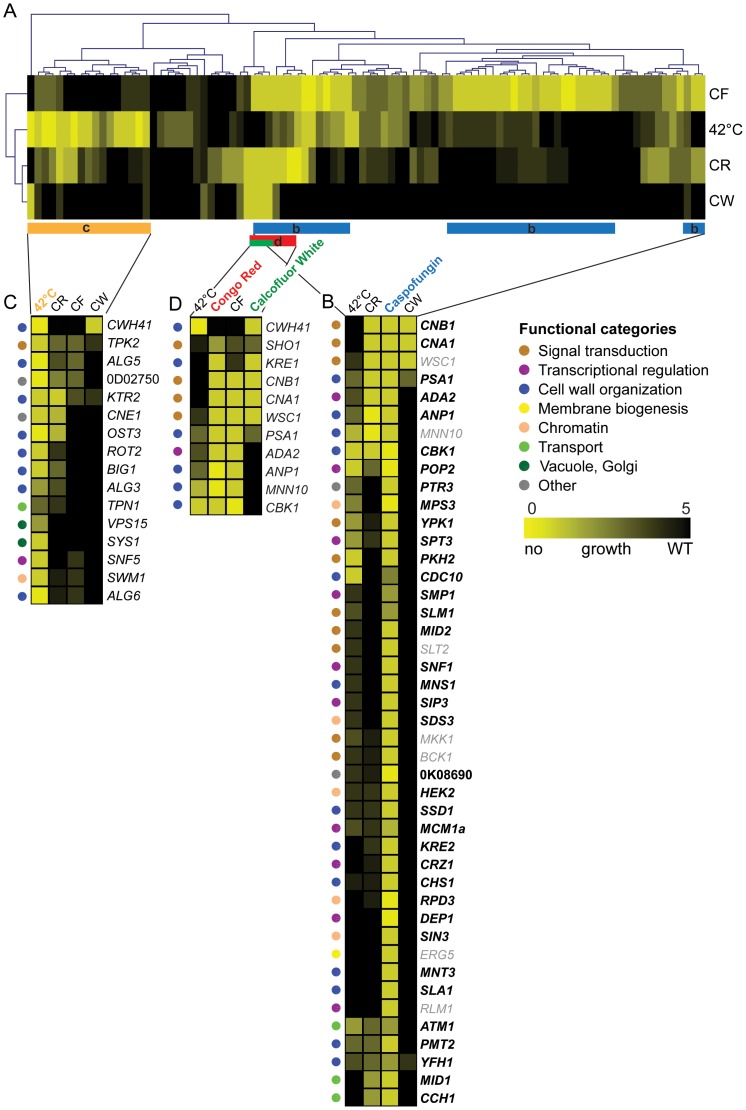
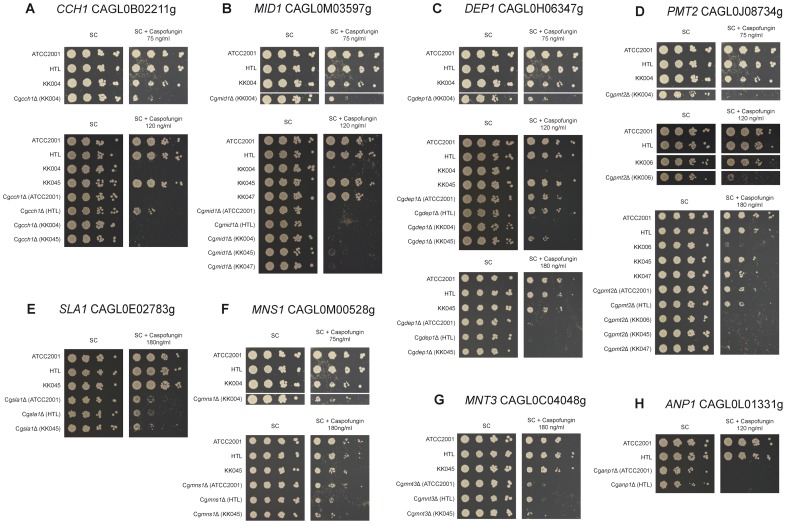
The opportunistic fungal pathogen Candida glabrata is a frequent cause of candidiasis, causing infections ranging from superficial to life-threatening disseminated disease. The inherent tolerance of C. glabrata to azole drugs makes this pathogen a serious clinical threat. To identify novel genes implicated in antifungal drug tolerance, we have constructed a large-scale C. glabrata deletion library consisting of 619 unique, individually bar-coded mutant strains, each lacking one specific gene, all together representing almost 12% of the genome. Functional analysis of this library in a series of phenotypic and fitness assays identified numerous genes required for growth of C. glabrata under normal or specific stress conditions, as well as a number of novel genes involved in tolerance to clinically important antifungal drugs such as azoles and echinocandins. We identified 38 deletion strains displaying strongly increased susceptibility to caspofungin, 28 of which encoding proteins that have not previously been linked to echinocandin tolerance. Our results demonstrate the potential of the C. glabrata mutant collection as a valuable resource in functional genomics studies of this important fungal pathogen of humans, and to facilitate the identification of putative novel antifungal drug target and virulence genes.
Overview
The claims and statistics of this paper haven’t been checked yet.
Free: it reads the open-access text and checks the first 5 claims that cite a source we can check. Create a free account to check every claim.
Integrity signals
Registry
Cites
Statistics
Figures
Verification
Claims the paper makes
The claims and statistics of this paper haven’t been checked yet.
Free: it reads the open-access text and checks the first 5 claims that cite a source we can check. Create a free account to check every claim.
Claims other papers make about this one
Each is checked against this paper’s own text: does it say what the citing paper says it does?
The source backs part of the claim, not all of it — or backs it for a different population, condition or comparison.
In the citing paper
“The genetic ablation of mannoproteins and other cell wall-related genes modulates CSP susceptibility in C. albicans and C. glabrata (43, 45).”
From Transcriptomics and Phenotyping Define Genetic Signatures Associated with Echinocandin Resistance in Candida auris (2022) · cites this paper as [43]
Experimental — accuracy not yet measuredThe cited source says what the claim attributes to it.
In the citing paper
“Both these signaling cascades are also required to survive the azole and echinocandin antifungal stress [54,91,99,100].”
From Candida glabrata: A Lot More Than Meets the Eye (2019) · cites this paper as [54]
The cited source says what the claim attributes to it.
In the citing paper
“The protein kinase C (PKC)-mediated signaling pathway safeguards the cell wall in C. glabrata, and its terminal mitogen-activated protein kinase (MAPK) CgSlt2, along with other cascade components, is required for survival of the cell wall stress [54,90,91].”
From Candida glabrata: A Lot More Than Meets the Eye (2019) · cites this paper as [54]
The cited source says what the claim attributes to it.
In the citing paper
“Genetic (Ueno et al., 2011; Schwarzmuller et al., 2014) or chemical (Miyazaki et al., 2010a) targeting of chitin synthase has been shown to increase C. glabrata susceptibility to echinocandins in vitro.”
From Genetic Drivers of Multidrug Resistance in Candida glabrata (2016) · cites this paper as Schwarzmuller et al., 2014
The cited source says what the claim attributes to it.
In the citing paper
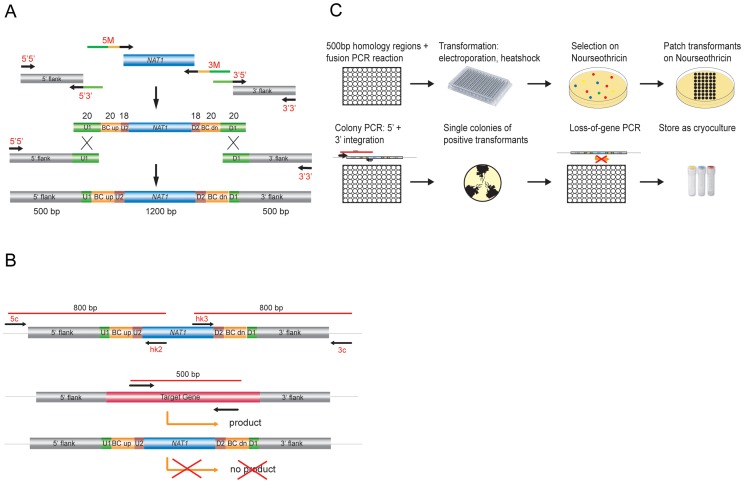
“Colony PCR with OneTaq 2X master mix (NEB - M0482) was used to control for loss of gene as well as correct genomic integration64.”
From Candida auris skin tropism and antifungal resistance are mediated by carbonic anhydrase Nce103 (2025) · cites this paper as [64]
3 more claims about this paper
Create a free account to see every claim other papers make about this one.
Self-check
Percentages, sums and reported differences re-computed from the paper’s own numbers.
The self-check needs the paper’s full text.
Citations
Cites
EMBOSS: the European molecular biology open software suite.
Rice, P., Longden, I., & Bleasby, A. (2000) · Trends in Genetics · doi:10.1016/s0168-9525(00)02024-2 · Cited by 9,466 · cited 2×
“PrimerList utilizes Bioperl to read and process nucleotide sequences and uses the EMBOSS [130] programs eprimer 3 and stssearch to find suitable primersets.”
MethodFunctional profiling of the Saccharomyces cerevisiae genome
Giaever, G., Chu, A. M., Ni, L., Connelly, C., Riles, L., Véronneau, S., Dow, S., Lucau-Danila, A., Anderson, K., André, B., et al. (2002) · Nature · doi:10.1038/nature00935 · Cited by 4,316 · cited 2×
“cerevisiae genome deletion project [43,49].”
BackgroundFunctional Characterization of the S. cerevisiae Genome by Gene Deletion and Parallel Analysis
Winzeler, E. A., Shoemaker, D. D., Astromoff, A., Liang, H., Anderson, K., Andre, B., Bangham, R., Benito, R., Boeke, J. D., Bussey, H., et al. (1999) · Science · doi:10.1126/science.285.5429.901 · Cited by 3,953 · cited 1×
“cerevisiae genome deletion project [43,49].”
The Genetic Landscape of a Cell
Costanzo, M., Baryshnikova, A., Bellay, J., Kim, Y., Spear, E. D., Sevier, C. S., Ding, H., Koh, J. L. Y., Toufighi, K., Mostafavi, S., et al. (2010) · Science · doi:10.1126/science.1180823 · Cited by 2,162 · cited 1×
“These approaches also unraveled stress response mechanisms and provided new insights into drug susceptibility and morphogenesis [42–49].”
BackgroundGlobal Mapping of the Yeast Genetic Interaction Network
Tong, A. H. Y., Lesage, G., Bader, G. D., Ding, H., Xu, H., Xin, X., Young, J., Berriz, G. F., Brost, R. L., Chang, M., et al. (2004) · Science · doi:10.1126/science.1091317 · Cited by 2,095
Methods in Yeast Genetics: A Laboratory Course Manual
Rose, M. D., Winston, F., & Hieter, P. (1990) · Medical Entomology and Zoology · Cited by 1,894
Dujon, B., Sherman, D., Fischer, G., Durrens, P., Casaregola, S., Lafontaine, I., de Montigny, J., Marck, C., Neuvéglise, C., Talla, E., et al. (2004) · Nature · doi:10.1038/nature02579 · Cited by 1,623 · cited 3×
“glabrata strain ATCC2001 [54] using Phusion High-Fidelity DNA Polymerase (New England Biolabs) and 30 cycles of amplification with elongation times varying from 1 to 3 min.”
BackgroundMethodInfluentialCandida Infections of Medical Devices
Kojic, E. M., & Darouiche, R. O. (2004) · Clinical Microbiology Reviews · doi:10.1128/cmr.17.2.255-267.2004 · Cited by 1,055 · cited 1×
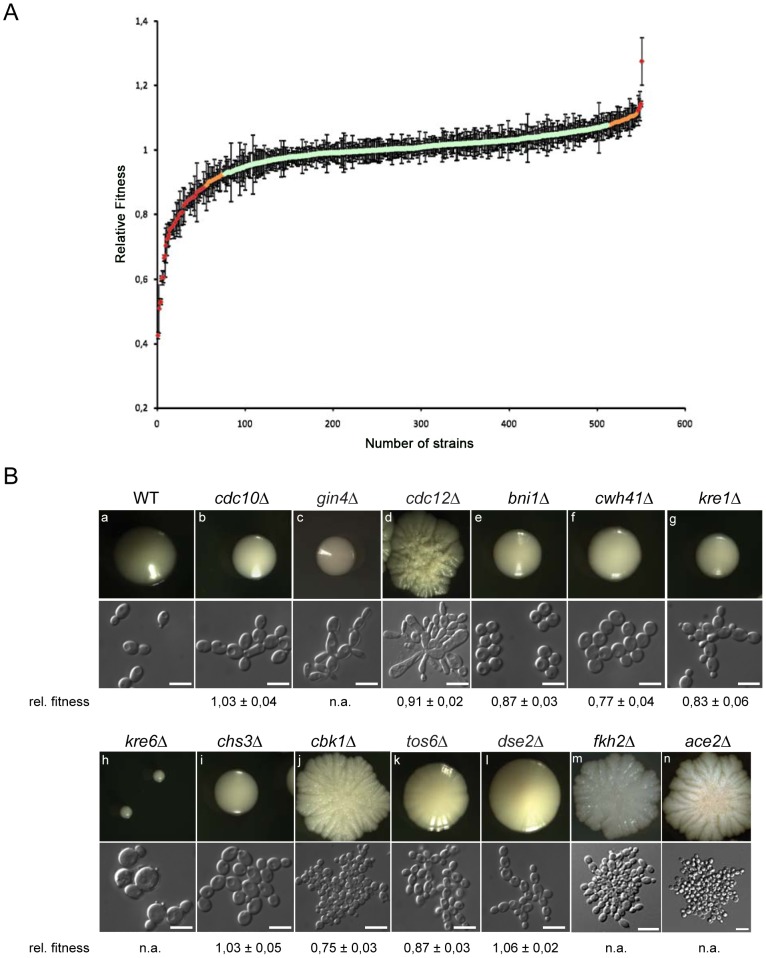
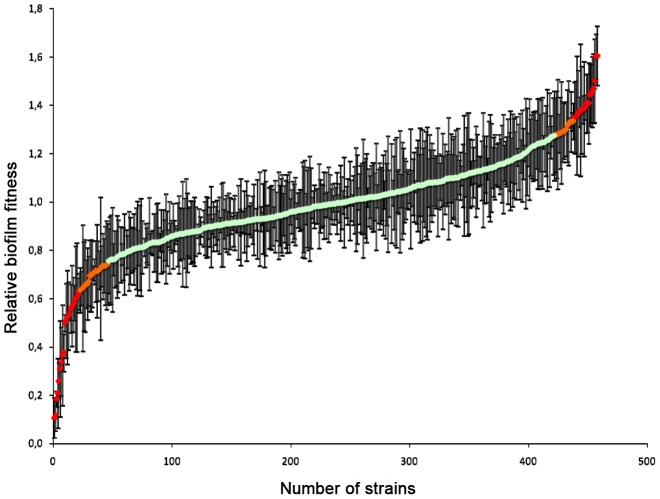
“The deletion collection was subjected to extensive phenotypic profiling, with a particular emphasis on susceptibility to major antifungal drugs, growth and morphology phenotypes, stress response pathways, cell wall biogenesis as well as biofilm formation, which has been associated with the initiation and development o…”
MethodThe Chemical Genomic Portrait of Yeast: Uncovering a Phenotype for All Genes
Hillenmeyer, M. E., Fung, E., Wildenhain, J., Pierce, S. E., Hoon, S., Lee, W., Proctor, M., St.Onge, R. P., Tyers, M., Koller, D., et al. (2008) · Science · doi:10.1126/science.1150021 · Cited by 1,003 · cited 1×
“As the number of chemical-genetic and genomic data in baker’s yeast [45,46] is steadily increasing, our data add novel information concerning the function of related genes in an important human fungal pathogen.”
BackgroundCandida albicans morphogenesis and host defence: discriminating invasion from colonization
Gow, N. A. R., van de Veerdonk, F. L., Brown, A. J. P., & Netea, M. G. (2012) · Nature Reviews Microbiology · doi:10.1038/nrmicro2711 · Cited by 888 · cited 1×
“albicans [5], C.”
Research works printed but not linked: 1
- Alexander BD, Johnson MD, Pfeiffer CD, Jimenez-Ortigosa C, Catania J, et al (2013) Increasing echinocandin resistance in Candida glabrata: clinical failure correlates with presence of FKS mutations and elevated minimum inhibitory concentrations. Clin Infect Dis 56: 1724– 1732. 23487382 PMC3658363 · DOI · Paper page
Cited by
de Oliveira Santos, G. C., Vasconcelos, C. C., Lopes, A. J. O., de Sousa Cartágenes, M. D. S., Filho, A. K. D. B., do Nascimento, F. R. F., Ramos, R. M., Pires, E. R. R. B., de Andrade, M. S., Rocha, F. M. G., et al. (2018) · Frontiers in Microbiology · doi:10.3389/fmicb.2018.01351 · Cited by 350
Systematic functional profiling of transcription factor networks in Cryptococcus neoformans
Jung, K.-W., Yang, D.-H., Maeng, S., Lee, K.-T., So, Y.-S., Hong, J., Choi, J., Byun, H.-J., Kim, H., Bang, S., et al. (2015) · Nature Communications · doi:10.1038/ncomms7757 · Cited by 203
“Schwarzmüller et al. constructed 619 deletion mutants containing 177 TF deletion mutants in Candida glabrata and found that about 32% of them exhibited at least one discernible phenotypic trait 35 .”
Fungal resistance to echinocandins and the MDR phenomenon in Candida glabrata
Healey, K., & Perlin, D. S. (2018) · doi:10.20944/preprints201808.0306.v1 · Cited by 194
Fungal Resistance to Echinocandins and the MDR Phenomenon in Candida glabrata
Healey, K. R., & Perlin, D. S. (2018) · Journal of Fungi · doi:10.3390/jof4030105 · Cited by 194
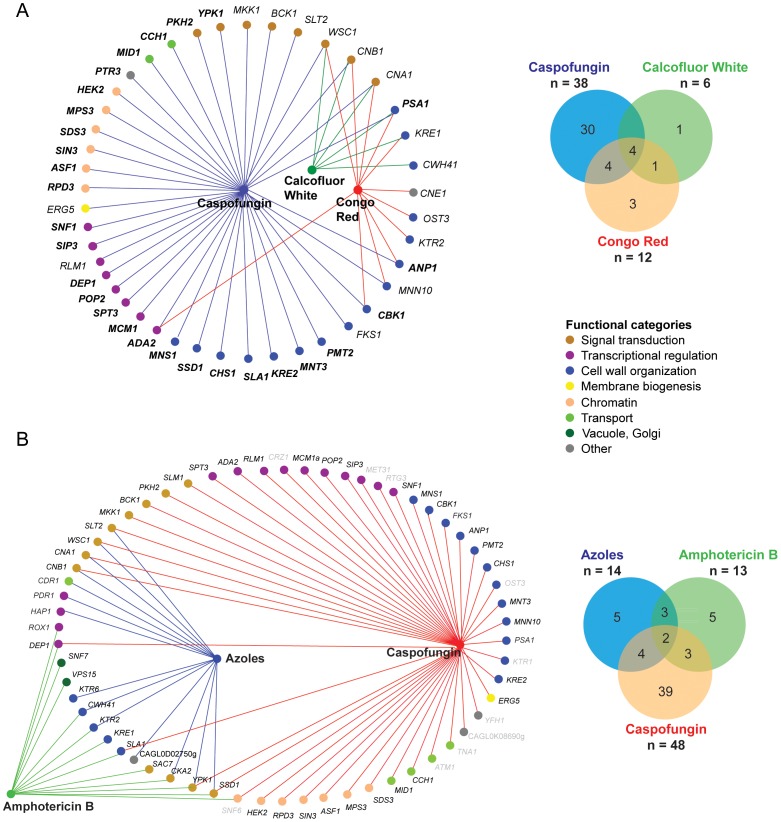
“Multiple gene knockouts, including those involved in cell wall organization, chromatin assembly, transcriptional regulation, and signal transduction, were associated with caspofungin hypersensitivity [44].”
BackgroundCandida glabrata: pathogenicity and resistance mechanisms for adaptation and survival
Hassan, Y., Chew, S. Y., & Than, L. T. L. (2021) · Journal of Fungi · doi:10.3390/jof7080667 · Cited by 170
“The stress conditions including disturbed cellular integrity, osmostress, elevated temperature, and the presence of antifungal drug resistance are commonly observed in clinical isolates [22].”
Background
Metadata
- Authors
- Schwarzmüller, T., Ma, B., Hiller, E., Istel, F., Tscherner, M., Brunke, S., Ames, L., Firon, A., Green, B., Cabral, V., Marcet-Houben, M., Jacobsen, I. D., Quintin, J., Seider, K., Frohner, I., Glaser, W., Jungwirth, H., Bachellier-Bassi, S., Chauvel, M., Zeidler, U., Ferrandon, D., Gabaldón, T., Hube, B., d'Enfert, C., Rupp, S., Cormack, B., Haynes, K., & Kuchler, K.
- Affiliations
- Max Perutz Labs (AT)
- Johns Hopkins University (US)
- Fraunhofer Institute for Interfacial Engineering and Biotechnology (DE)
- Jena University Hospital (DE)
- University of Exeter (GB)
- Institut Pasteur (FR)
- Centre National de la Recherche Scientifique (FR)
- Leibniz-Institut für Naturstoff-Forschung und Infektionsbiologie e. V. - Hans-Knöll-Institut (HKI) (DE)
- University of Graz (AT)
- Universitat Pompeu Fabra (ES)
- Corresponding author
- Rupp, Steffen
- Cormack, Brendan
- Haynes, Ken
- Kuchler, Karl
- ORCID
- Venue
- PLoS Pathogens
- Publisher
- Public Library of Science (PLoS)
- Published
- 2014-06-19
- Volume
- 10
- Issue
- 6
- Pages
- e1004211
- ISSN
- 1553-7366 (ISSN-L)
- 1553-7374
- PMC
- PMC4063973
- OpenAlex
- W2088309256
- Cited by
- 191
- References
- 135
- Citations by year
- 2026: 11 · 2025: 14 · 2024: 14 · 2023: 10 · 2022: 13 · 2021: 19 · 2020: 17 · 2019: 19 · 2018: 22 · 2017: 17 · 2016: 10 · 2015: 21 · 2014: 4
- FWCI
- 12.19
- Type
- journal article
- Language
- en
- Open access
- gold
- doi.org
- Locations
- PLoS Pathogens (publishedVersion, cc-by)
- Europe PMC (PubMed Central) (publishedVersion, cc-by)
- PubMed Central (publishedVersion, cc-by)
- PubMed (publishedVersion)
- Repositori digital de la UPF (Universitat Pompeu Fabra) (publishedVersion, cc-by)
- HAL (submittedVersion, cc-by)
- DOAJ (DOAJ: Directory of Open Access Journals) (submittedVersion, cc-by-sa)
- Figshare (submittedVersion, cc-by)
- Fraunhofer-Publica (Fraunhofer-Gesellschaft) (submittedVersion)
- Funders
- Agence Nationale de la Recherche (ANR-06-PATH-0005)
- Bundesministerium für Bildung und Forschung (01EO1002, FKZ 01EO1002)
- Austrian Science Fund
- Centre National de la Recherche Scientifique
- Ministerio de Ciencia e Innovación
- National Institutes of Health
- Biotechnology and Biological Sciences Research Council (BBS/B/10331, BB/F005210/2, BB/F005210/1)
- National Institute of Allergy and Infectious Diseases (R56AI046223, R01AI046223, R01AI46223)
- Topics
- Health Sciences › Medicine › Infectious Diseases › Antifungal resistance and susceptibility
- Life Sciences › Biochemistry, Genetics and Molecular Biology › Molecular Biology › Fungal and yeast genetics research
- Life Sciences › Immunology and Microbiology › Microbiology › Yeasts and Rust Fungi Studies
- Keywords
- Candida glabrata, antifungal drug tolerance, azole resistance, echinocandin resistance, caspofungin, candidiasis, opportunistic fungal pathogens, antifungal drug targets, virulence genes, phenotypic profiling
- MeSH terms
- Caspofungin, Antifungal Agents, Azoles, Candidiasis, Cell Wall, Fungal Proteins, Microbial Sensitivity Tests, Osmotic Pressure, Phenotype, Gene Library, Gene Deletion, Biofilms, Drug Resistance, Fungal, Candida glabrata, Echinocandins, Lipopeptides, Gene Knockout Techniques
About these checks
Registry, retraction, Cites and statistics results are computed, not judged, with one exception: a printed reference that no index lists is read once by a model before it counts as a citation error. Claims are extracted by a model and kept only when their quote appears verbatim in the text; each cited source is then checked, with a model’s help, for whether it says what the claim relies on. Those verdicts can be wrong — read the claim’s quote and the cited source before relying on one.
Statistics and arithmetic are recomputed, not judged.
Confidence bands are shown only for fields calibrated on our annotated test set. None is calibrated yet, so no band is shown.
What counts as a claim ›How we measure confidence ›How we check this ›
Are you an author, or do you see a problem with this page? Request a review
How to cite
Cite CoChat for the checks on this page, and the paper for its own findings.
- This page
- CoChat. (2026). Citation check: Systematic Phenotyping of a Large-Scale Candida glabrata Deletion Collection Reveals Novel Antifungal Tolerance Genes. https://app.cochat.ai/papers/10.1371/journal.ppat.1004211
- The paper
- Schwarzmüller, T., Ma, B., Hiller, E., Istel, F., Tscherner, M., Brunke, S., Ames, L., Firon, A., Green, B., Cabral, V., Marcet-Houben, M., Jacobsen, I. D., Quintin, J., Seider, K., Frohner, I., Glaser, W., Jungwirth, H., Bachellier-Bassi, S., Chauvel, M., . . . Kuchler, K. (2014). Systematic Phenotyping of a Large-Scale Candida glabrata Deletion Collection Reveals Novel Antifungal Tolerance Genes. PLoS Pathogens. https://doi.org/10.1371/journal.ppat.1004211
Data sources
Bibliographic data: Semantic Scholar, OpenAlex, Crossref.
Contains information from the Semantic Scholar Academic Graph Datasets, made available under the ODC Attribution License (ODC-BY 1.0).
Semantic Scholar’s data is described in: Kinney, R., et al. (2023). The Semantic Scholar Open Data Platform. arXiv:2301.10140.
