

Systematic Phenotyping of a Large-Scale Candida glabrata Deletion Collection Reveals Novel Antifungal Tolerance Genes
Open accessThe DOI matches its Crossref record; 135 of the 135 references it cites were found in a registry or an index.
Abstract
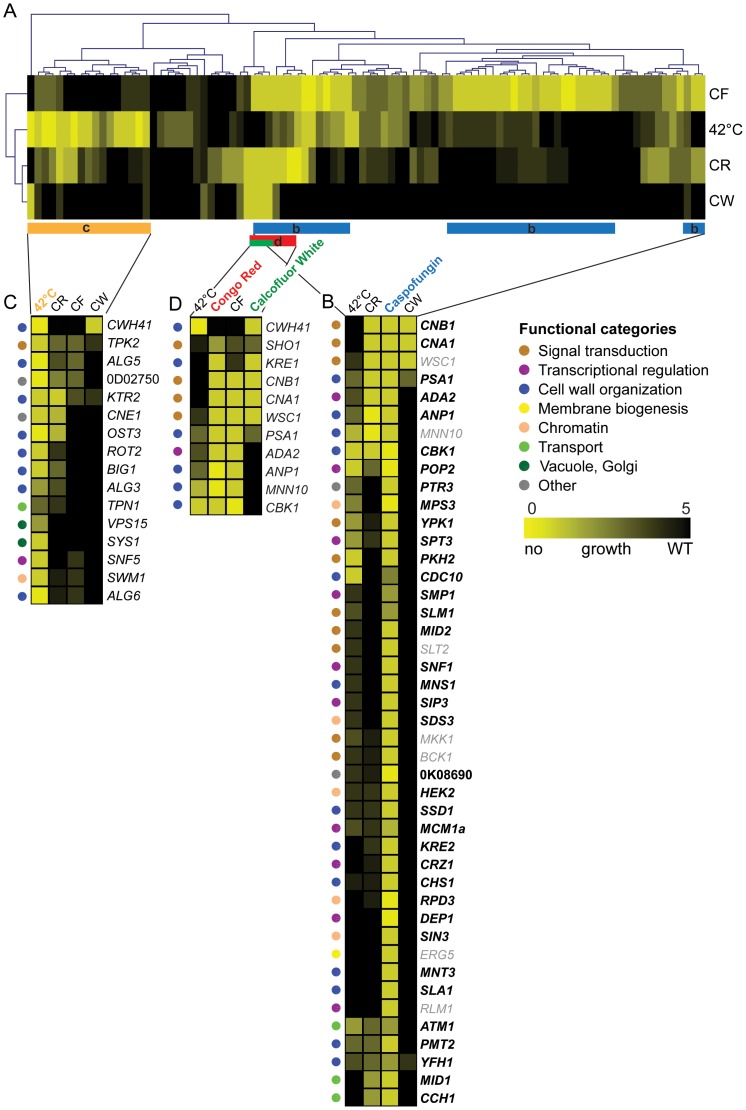
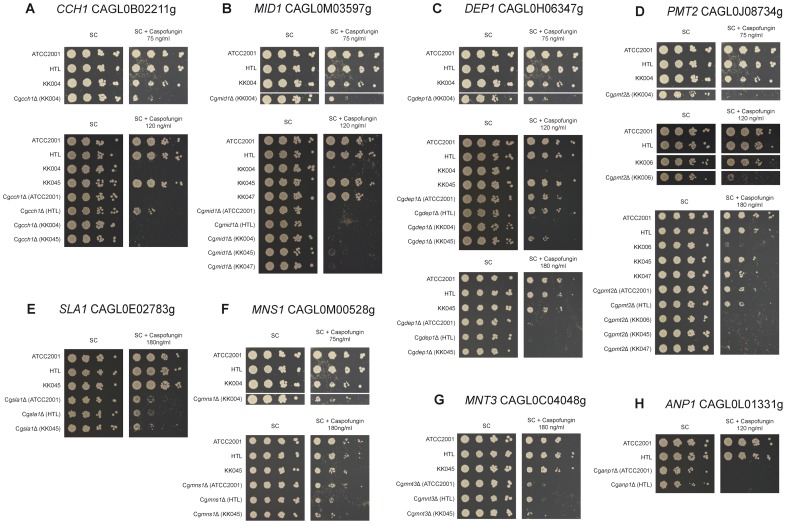
The opportunistic fungal pathogen Candida glabrata is a frequent cause of candidiasis, causing infections ranging from superficial to life-threatening disseminated disease. The inherent tolerance of C. glabrata to azole drugs makes this pathogen a serious clinical threat. To identify novel genes implicated in antifungal drug tolerance, we have constructed a large-scale C. glabrata deletion library consisting of 619 unique, individually bar-coded mutant strains, each lacking one specific gene, all together representing almost 12% of the genome. Functional analysis of this library in a series of phenotypic and fitness assays identified numerous genes required for growth of C. glabrata under normal or specific stress conditions, as well as a number of novel genes involved in tolerance to clinically important antifungal drugs such as azoles and echinocandins. We identified 38 deletion strains displaying strongly increased susceptibility to caspofungin, 28 of which encoding proteins that have not previously been linked to echinocandin tolerance. Our results demonstrate the potential of the C. glabrata mutant collection as a valuable resource in functional genomics studies of this important fungal pathogen of humans, and to facilitate the identification of putative novel antifungal drug target and virulence genes.
Overview
The claims and statistics of this paper haven’t been checked yet.
Free: it reads the open-access text and checks the first 5 claims that cite a source we can check. Create a free account to check every claim.
Integrity signals
Registry
Cites
Statistics
Figures
Verification
Claims the paper makes
The claims and statistics of this paper haven’t been checked yet.
Free: it reads the open-access text and checks the first 5 claims that cite a source we can check. Create a free account to check every claim.
Claims other papers make about this one
Each is checked against this paper’s own text: does it say what the citing paper says it does?
The source backs part of the claim, not all of it — or backs it for a different population, condition or comparison.
In the citing paper
“The genetic ablation of mannoproteins and other cell wall-related genes modulates CSP susceptibility in C. albicans and C. glabrata (43, 45).”
From Transcriptomics and Phenotyping Define Genetic Signatures Associated with Echinocandin Resistance in Candida auris (2022) · cites this paper as [43]
Experimental — accuracy not yet measuredThe cited source says what the claim attributes to it.
In the citing paper
“Both these signaling cascades are also required to survive the azole and echinocandin antifungal stress [54,91,99,100].”
From Candida glabrata: A Lot More Than Meets the Eye (2019) · cites this paper as [54]
The cited source says what the claim attributes to it.
In the citing paper
“The protein kinase C (PKC)-mediated signaling pathway safeguards the cell wall in C. glabrata, and its terminal mitogen-activated protein kinase (MAPK) CgSlt2, along with other cascade components, is required for survival of the cell wall stress [54,90,91].”
From Candida glabrata: A Lot More Than Meets the Eye (2019) · cites this paper as [54]
The cited source says what the claim attributes to it.
In the citing paper
“Genetic (Ueno et al., 2011; Schwarzmuller et al., 2014) or chemical (Miyazaki et al., 2010a) targeting of chitin synthase has been shown to increase C. glabrata susceptibility to echinocandins in vitro.”
From Genetic Drivers of Multidrug Resistance in Candida glabrata (2016) · cites this paper as Schwarzmuller et al., 2014
The cited source says what the claim attributes to it.
In the citing paper
“Colony PCR with OneTaq 2X master mix (NEB - M0482) was used to control for loss of gene as well as correct genomic integration64.”
From Candida auris skin tropism and antifungal resistance are mediated by carbonic anhydrase Nce103 (2025) · cites this paper as [64]
3 more claims about this paper
Create a free account to see every claim other papers make about this one.
Self-check
Percentages, sums and reported differences re-computed from the paper’s own numbers.
The self-check needs the paper’s full text.
Citations
Cites
EMBOSS: the European molecular biology open software suite.
Rice, P., Longden, I., & Bleasby, A. (2000) · Trends in Genetics · doi:10.1016/s0168-9525(00)02024-2 · Cited by 9,466 · cited 2×
“PrimerList utilizes Bioperl to read and process nucleotide sequences and uses the EMBOSS [130] programs eprimer 3 and stssearch to find suitable primersets.”
MethodFunctional profiling of the Saccharomyces cerevisiae genome
Giaever, G., Chu, A. M., Ni, L., Connelly, C., Riles, L., Véronneau, S., Dow, S., Lucau-Danila, A., Anderson, K., André, B., et al. (2002) · Nature · doi:10.1038/nature00935 · Cited by 4,316 · cited 2×
“cerevisiae genome deletion project [43,49].”
BackgroundFunctional Characterization of the S. cerevisiae Genome by Gene Deletion and Parallel Analysis
Winzeler, E. A., Shoemaker, D. D., Astromoff, A., Liang, H., Anderson, K., Andre, B., Bangham, R., Benito, R., Boeke, J. D., Bussey, H., et al. (1999) · Science · doi:10.1126/science.285.5429.901 · Cited by 3,953 · cited 1×
“cerevisiae genome deletion project [43,49].”
The Genetic Landscape of a Cell
Costanzo, M., Baryshnikova, A., Bellay, J., Kim, Y., Spear, E. D., Sevier, C. S., Ding, H., Koh, J. L. Y., Toufighi, K., Mostafavi, S., et al. (2010) · Science · doi:10.1126/science.1180823 · Cited by 2,162 · cited 1×
“These approaches also unraveled stress response mechanisms and provided new insights into drug susceptibility and morphogenesis [42–49].”
BackgroundGlobal Mapping of the Yeast Genetic Interaction Network
Tong, A. H. Y., Lesage, G., Bader, G. D., Ding, H., Xu, H., Xin, X., Young, J., Berriz, G. F., Brost, R. L., Chang, M., et al. (2004) · Science · doi:10.1126/science.1091317 · Cited by 2,095
Methods in Yeast Genetics: A Laboratory Course Manual
Rose, M. D., Winston, F., & Hieter, P. (1990) · Medical Entomology and Zoology · Cited by 1,894
Dujon, B., Sherman, D., Fischer, G., Durrens, P., Casaregola, S., Lafontaine, I., de Montigny, J., Marck, C., Neuvéglise, C., Talla, E., et al. (2004) · Nature · doi:10.1038/nature02579 · Cited by 1,623 · cited 3×
“glabrata strain ATCC2001 [54] using Phusion High-Fidelity DNA Polymerase (New England Biolabs) and 30 cycles of amplification with elongation times varying from 1 to 3 min.”
BackgroundMethodInfluentialCandida Infections of Medical Devices
Kojic, E. M., & Darouiche, R. O. (2004) · Clinical Microbiology Reviews · doi:10.1128/cmr.17.2.255-267.2004 · Cited by 1,055 · cited 1×
“The deletion collection was subjected to extensive phenotypic profiling, with a particular emphasis on susceptibility to major antifungal drugs, growth and morphology phenotypes, stress response pathways, cell wall biogenesis as well as biofilm formation, which has been associated with the initiation and development o…”
MethodThe Chemical Genomic Portrait of Yeast: Uncovering a Phenotype for All Genes
Hillenmeyer, M. E., Fung, E., Wildenhain, J., Pierce, S. E., Hoon, S., Lee, W., Proctor, M., St.Onge, R. P., Tyers, M., Koller, D., et al. (2008) · Science · doi:10.1126/science.1150021 · Cited by 1,003 · cited 1×
“As the number of chemical-genetic and genomic data in baker’s yeast [45,46] is steadily increasing, our data add novel information concerning the function of related genes in an important human fungal pathogen.”
BackgroundCandida albicans morphogenesis and host defence: discriminating invasion from colonization
Gow, N. A. R., van de Veerdonk, F. L., Brown, A. J. P., & Netea, M. G. (2012) · Nature Reviews Microbiology · doi:10.1038/nrmicro2711 · Cited by 888 · cited 1×
“albicans [5], C.”
Research works printed but not linked: 1
- Alexander BD, Johnson MD, Pfeiffer CD, Jimenez-Ortigosa C, Catania J, et al (2013) Increasing echinocandin resistance in Candida glabrata: clinical failure correlates with presence of FKS mutations and elevated minimum inhibitory concentrations. Clin Infect Dis 56: 1724– 1732. 23487382 PMC3658363 · DOI · Paper page
Cited by
de Oliveira Santos, G. C., Vasconcelos, C. C., Lopes, A. J. O., de Sousa Cartágenes, M. D. S., Filho, A. K. D. B., do Nascimento, F. R. F., Ramos, R. M., Pires, E. R. R. B., de Andrade, M. S., Rocha, F. M. G., et al. (2018) · Frontiers in Microbiology · doi:10.3389/fmicb.2018.01351 · Cited by 350
Systematic functional profiling of transcription factor networks in Cryptococcus neoformans
Jung, K.-W., Yang, D.-H., Maeng, S., Lee, K.-T., So, Y.-S., Hong, J., Choi, J., Byun, H.-J., Kim, H., Bang, S., et al. (2015) · Nature Communications · doi:10.1038/ncomms7757 · Cited by 203
“Schwarzmüller et al. constructed 619 deletion mutants containing 177 TF deletion mutants in Candida glabrata and found that about 32% of them exhibited at least one discernible phenotypic trait 35 .”
Fungal resistance to echinocandins and the MDR phenomenon in Candida glabrata
Healey, K., & Perlin, D. S. (2018) · doi:10.20944/preprints201808.0306.v1 · Cited by 194
Fungal Resistance to Echinocandins and the MDR Phenomenon in Candida glabrata
Healey, K. R., & Perlin, D. S. (2018) · Journal of Fungi · doi:10.3390/jof4030105 · Cited by 194
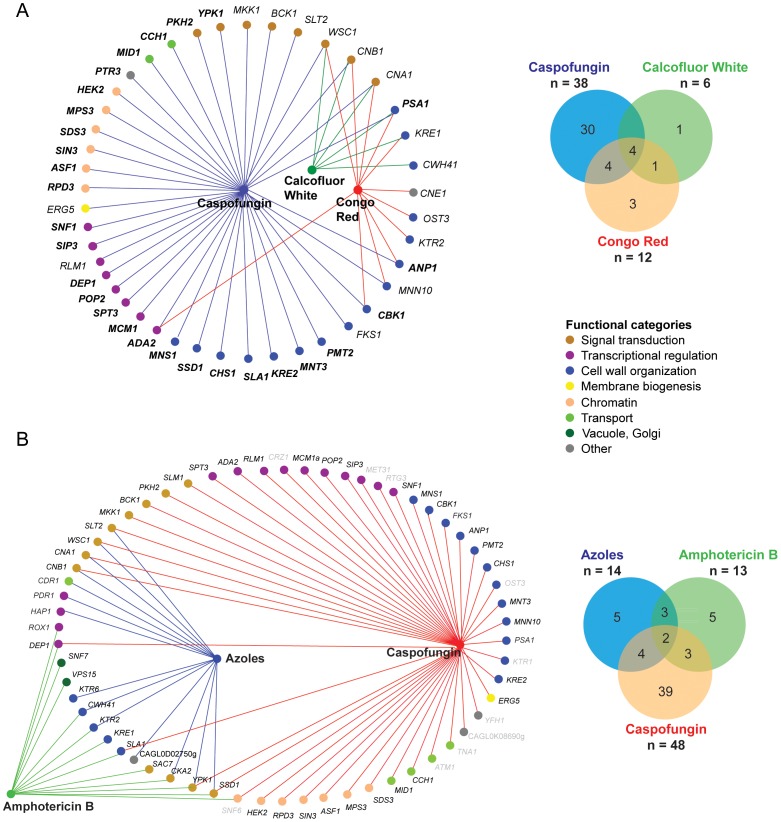
“Multiple gene knockouts, including those involved in cell wall organization, chromatin assembly, transcriptional regulation, and signal transduction, were associated with caspofungin hypersensitivity [44].”
BackgroundCandida glabrata: pathogenicity and resistance mechanisms for adaptation and survival
Hassan, Y., Chew, S. Y., & Than, L. T. L. (2021) · Journal of Fungi · doi:10.3390/jof7080667 · Cited by 170
“The stress conditions including disturbed cellular integrity, osmostress, elevated temperature, and the presence of antifungal drug resistance are commonly observed in clinical isolates [22].”
BackgroundCandida glabrata: A Lot More Than Meets the Eye
Kumar, K., Askari, F., Sahu, M. S., & Kaur, R. (2019) · Microorganisms · doi:10.3390/microorganisms7020039 · Cited by 128
“Both these signaling cascades are also required to survive the azole and echinocandin antifungal stress [54,91,99,100].”
BackgroundFungal Endocarditis: Pathophysiology, Epidemiology, Clinical Presentation, Diagnosis, and Management
Thompson, G. R., Jenks, J. D., Baddley, J. W., Lewis, J. S., Egger, M., Schwartz, I. S., Boyer, J., Patterson, T. F., Chen, S. C. ‐., Pappas, P. G., et al. (2023) · Clinical Microbiology Reviews · doi:10.1128/cmr.00019-23 · Cited by 167
Defining the frontiers between antifungal resistance, tolerance and the concept of persistence
Delarze, E., & Sanglard, D. (2015) · Drug Resistance Updates · doi:10.1016/j.drup.2015.10.001 · Cited by 118
Intracellular survival of Candida glabrata in macrophages: immune evasion and persistence
Kasper, L., Seider, K., & Hube, B. (2015) · FEMS Yeast Research · doi:10.1093/femsyr/fov042 · Cited by 113
Self-citationKsiezopolska, E., Schikora-Tamarit, M. À., Beyer, R., Nunez-Rodriguez, J. C., Schüller, C., & Gabaldón, T. (2021) · Current Biology · doi:10.1016/j.cub.2021.09.084 · Cited by 107
Self-citationGenome engineering in the yeast pathogen Candida glabrata using the CRISPR-Cas9 system
Enkler, L., Richer, D., Marchand, A. L., Ferrandon, D., & Jossinet, F. (2016) · Scientific Reports · doi:10.1038/srep35766 · Cited by 105
“To get effective homologous recombination (HR) in C. glabrata routinely, inserted DNA fragments need to bear a minimum of 500 bp of homology domain (HD) at both 5 ′ and 3 ′ ends of the sequence 18 .”
InfluentialSelf-citationGabaldón, T., & Carreté, L. (2016) · FEMS Yeast Research · doi:10.1093/femsyr/fov110 · Cited by 99
“glabrata (Schwarzmüller et al. 2014).”
BackgroundSelf-citationResistance to Antifungal Drugs
Ben‐Ami, R., & Kontoyiannis, D. P. (2021) · Infectious Disease Clinics of North America · doi:10.1016/j.idc.2021.03.003 · Cited by 122
Genetic Drivers of Multidrug Resistance in Candida glabrata
Healey, K. R., Jimenez Ortigosa, C., Shor, E., & Perlin, D. S. (2016) · Frontiers in Microbiology · doi:10.3389/fmicb.2016.01995 · Cited by 93
“Genetic (Ueno et al., 2011; Schwarzmuller et al., 2014) or chemical (Miyazaki et al., 2010a) targeting of chitin synthase has been shown to increase C. glabrata susceptibility to echinocandins in vitro.”
BackgroundBartender: a fast and accurate clustering algorithm to count barcode reads
Zhao, L. H., Liu, Z., Levy, S. F., & Wu, S. (2017) · Bioinformatics · doi:10.1093/bioinformatics/btx655 · Cited by 97
Drug resistance mechanisms and their regulation in non-albicans Candida species
Kołaczkowska, A., & Kołaczkowski, M. (2016) · Journal of Antimicrobial Chemotherapy · doi:10.1093/jac/dkv445 · Cited by 87
Phytotherapy as an alternative to conventional antimicrobials: combating microbial resistance
Enioutina, E. Y., Teng, L., Fateeva, T. V., Brown, J. C. S., Job, K. M., Бортникова, В. В., Krepkova, L. V., Gubarev, M. I., & Sherwin, C. M. T. (2017) · Expert Review of Clinical Pharmacology · doi:10.1080/17512433.2017.1371591 · Cited by 91
Dominguez, E., Zarnowski, R., Sanchez, H., Covelli, A. S., Westler, W. M., Azadi, P., Nett, J., Mitchell, A. P., & Andes, D. R. (2018) · mBio · doi:10.1128/mbio.00451-18 · Cited by 77
“glabrata transformations were conducted using auxotrophic background strain HTL (HIS3, LEU2, TRP1) (63).”
MethodGenomes shed light on the secret life of Candida glabrata: not so asexual, not so commensal
Gabaldón, T., & Fairhead, C. (2019) · Current Genetics · doi:10.1007/s00294-018-0867-z · Cited by 75
Self-citationCharlet, R., Pruvost, Y., Tumba, G., Istel, F., Poulain, D., Kuchler, K., Sendid, B., & Jawhara, S. (2018) · Scientific Reports · doi:10.1038/s41598-018-21422-w · Cited by 74
Self-citationJanbon, G., Quintin, J., Lanternier, F., & d’Enfert, C. (2019) · Genes and Immunity · doi:10.1038/s41435-019-0071-2 · Cited by 102
“Moreover, knowledge of these genomes has paved the way for functional genomics approaches in the main fungal pathogens of humans, with the development of approaches based on transcript profiling (microarrays and now RNA-Seq), proteomics as well as the establishment of collections of knock-out mutants (29-31).”
Self-citationMultiple roles of ABC transporters in yeast
Kumari, S., Kumar, M., Gaur, N. A., & Prasad, R. (2021) · Fungal Genetics and Biology · doi:10.1016/j.fgb.2021.103550 · Cited by 70
Riedelberger, M., Penninger, P., Tscherner, M., Seifert, M., Jenull, S., Brunnhofer, C., Scheidl, B., Tsymala, I., Bourgeois, C., Petryshyn, A., et al. (2020) · Cell Host & Microbe · doi:10.1016/j.chom.2020.01.023 · Cited by 64
Self-citationShahina, Z., Homsi, R. A., Price, J. D. W., Whiteway, M. S., Sultana, T., & Dahms, T. E. S. (2022) · PLoS ONE · doi:10.1371/journal.pone.0277097 · Cited by 86
Pârvu, M., Moţ, C. A., Pârvu, A. E., Mircea, C., Stoeber, L., Roşca-Casian, O., & Ţigu, A. B. (2019) · Molecules · doi:10.3390/molecules24213958 · Cited by 66
“are proved to be important pathogens as well [7].”
BackgroundThe CRISPR toolbox in medical mycology: State of the art and perspectives
Morio, F., Lombardi, L., & Butler, G. (2020) · PLoS Pathogens · doi:10.1371/journal.ppat.1008201 · Cited by 70
“glabrata, this method was used successfully to insert either short (57 bp) or large (1,202 bp) cassettes by HDR using only 20-bp or 200-bp homology arms, though 200-bp homology arms performed better for the small insert [43].”
MethodBrunke, S., Seider, K., Fischer, D., Jacobsen, I. D., Kasper, L., Jablonowski, N., Wartenberg, A., Bader, O., Enache-Angoulvant, A., Schaller, M., et al. (2014) · PLoS Pathogens · doi:10.1371/journal.ppat.1004478 · Cited by 64
“To exclude that these differences are because of a better survival of the Evo strain due to its small aggregates in the inoculum, we compared it to a strain (cbk1D, [26]) with a similar phenotype and similarly sized aggregates (Fig.”
BackgroundMethodResultInfluentialSelf-citationWambaugh, M. A., Shakya, V. P. S., Lewis, A. J., Mulvey, M. A., & Brown, J. C. S. (2017) · PLOS Biology · doi:10.1371/journal.pbio.2001644 · Cited by 63
Janbon, G., Quintin, J., Lanternier, F., & d’Enfert, C. (2019) · Microbes and Infection · doi:10.1016/j.micinf.2019.06.011 · Cited by 74
Self-citationShivarathri, R., Jenull, S., Stoiber, A., Chauhan, M., Mazumdar, R., Singh, A., Nogueira, F., Kuchler, K., Chowdhary, A., & Chauhan, N. (2020) · mSphere · doi:10.1128/msphere.00973-20 · Cited by 59
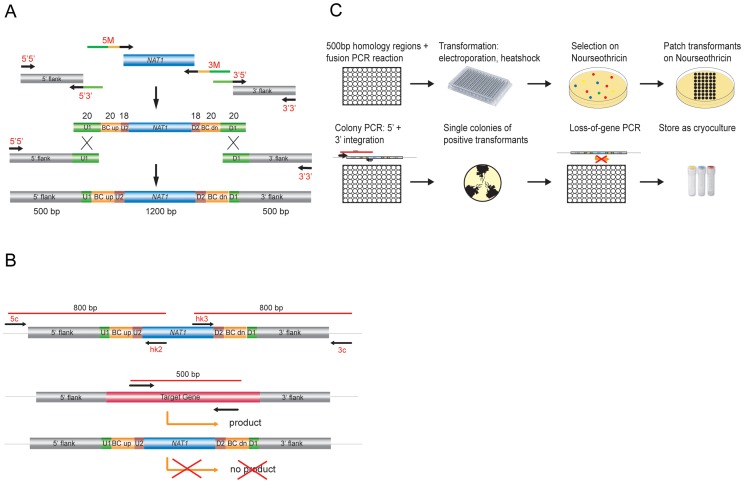
“We slightly modified the fusion PCR method (29) to generate deletion constructs containing 500 bp of homologous upstream (5= untranslated region [UTR]) and downstream (3= UTR) homologous flanking regions, fused to the dominant marker NAT1 and flanked by constant overlapping sequences U1 and D1, respectively (Fig.”
MethodSelf-citationGalleria mellonella as a host model to study Candida glabrata virulence and antifungal efficacy
Ames, L., Duxbury, S. J. N., Pawlowska, B. J., Ho, H.-L., Haynes, K., & Bates, S. (2017) · Virulence · doi:10.1080/21505594.2017.1347744 · Cited by 70
Self-citationGale, A. N., Sakhawala, R. M., Levitan, A., Sharan, R., Berman, J., Timp, W., & Cunningham, K. W. (2020) · G3 Genes|Genomes|Genetics · doi:10.1534/g3.120.401595 · Cited by 56
Beyond Candida albicans: Mechanisms of immunity to non-albicans Candida species
Whibley, N., & Gaffen, S. L. (2015) · Cytokine · doi:10.1016/j.cyto.2015.07.025 · Cited by 78
Garnaud, C., Botterel, F., Sertour, N., Bougnoux, M.-E., Dannaoui, E., Larrat, S., Hennequin, C., Guinea, J., Cornet, M., & Maubon, D. (2015) · Journal of Antimicrobial Chemotherapy · doi:10.1093/jac/dkv139 · Cited by 55
Khunweeraphong, N., & Kuchler, K. (2021) · International Journal of Molecular Sciences · doi:10.3390/ijms22094806 · Cited by 53
Self-citationIn vivo Candida glabrata biofilm development on foreign bodies in a rat subcutaneous model
Kucharíková, S., Neirinck, B., Sharma, N., Vleugels, J., Lagrou, K., & Van Dijck, P. (2015) · Journal of Antimicrobial Chemotherapy · doi:10.1093/jac/dku447 · Cited by 53
Biofilm formation in Candida glabrata: What have we learnt from functional genomics approaches?
d'Enfert, C., & Janbon, G. (2016) · FEMS Yeast Research · doi:10.1093/femsyr/fov111 · Cited by 53
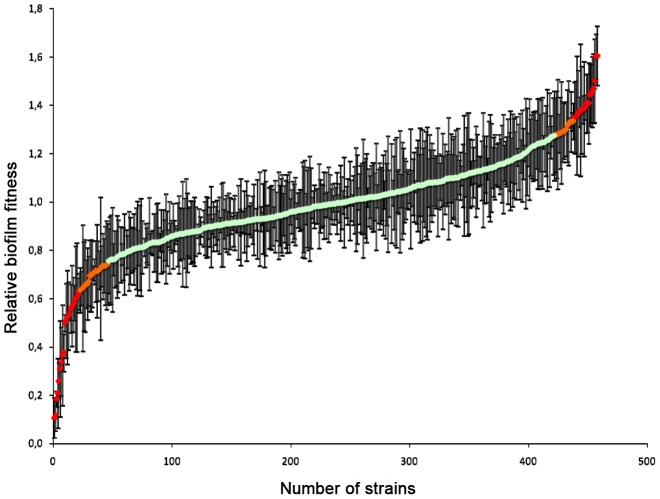
“This has led to the identification of 14 gene deletions associated with significantly decreased biofilm formation and 11 gene deletions associated with significantly increased biofilm formation (Schwarzmuller et al. 2014).”
BackgroundMethodInfluentialSelf-citationCandida glabrata susceptibility to antifungals and phagocytosis is modulated by acetate
Mota, S., Alves, R., Carneiro, C., Silva, S., Brown, A. J., Istel, F., Kuchler, K., Sampaio, P., Casal, M., Henriques, M., et al. (2015) · Frontiers in Microbiology · doi:10.3389/fmicb.2015.00919 · Cited by 49
“Of note, previous studies reported an ADY2a upregulation in C. glabrata cells upon macrophage phagocytosis (Kaur et al., 2007; Seider et al., 2011).”
BackgroundSelf-citationChew, S. Y., Ho, K. L., Cheah, Y. K., Ng, T. S., Sandai, D., Brown, A. J. P., & Than, L. T. L. (2019) · Scientific Reports · doi:10.1038/s41598-019-39117-1 · Cited by 49
“…glabrata strains Genotype Reference ATCC 2001 Reference strain American Type Culture Collection (ATCC) HTL Derived from ATCC 2001his::FRT, leu2::FRT, trp1::FRT Jacobsen et al., 2010 icl1∆_a icl1∆_b icl1∆_c Derived from HTL icl1::NAT1 Schwarzmüller et al., 2014 Table 1.”
BackgroundCRISPR-Based Genetic Manipulation of Candida Species: Historical Perspectives and Current Approaches
Uthayakumar, D., Sharma, J., Wensing, L. F., & Shapiro, R. S. (2021) · Frontiers in Genome Editing · doi:10.3389/fgeed.2020.606281 · Cited by 57
“For instance, several Candidamutant libraries are already constructed and are publicly available, and thus, many research groups continue to use these useful, pre-existing libraries and mutants for functional genomic studies (Schwarzmüller et al., 2014; Brunke et al., 2015; Ho and Haynes, 2015).”
BackgroundMethodA novel hybrid iron regulation network combines features from pathogenic and nonpathogenic yeasts
Gerwien, F., Safyan, A., Wisgott, S., Hille, F., Kaemmer, P., Linde, J., Brunke, S., Kasper, L., & Hube, B. (2016) · mBio · doi:10.1128/mbio.01782-16 · Cited by 47
Self-citationOf mice, flies – and men? Comparing fungal infection models for large-scale screening efforts
Brunke, S., Quintin, J., Kasper, L., Jacobsen, I. D., Richter, M. E., Hiller, E., Schwarzmüller, T., d'Enfert, C., Kuchler, K., Rupp, S., et al. (2015) · Disease Models & Mechanisms · doi:10.1242/dmm.019901 · Cited by 47
Self-citationKämmer, P., McNamara, S., Wolf, T., Conrad, T., Allert, S., Gerwien, F., Hünniger, K., Kurzai, O., Guthke, R., Hube, B., et al. (2020) · mBio · doi:10.1128/mbio.02435-20 · Cited by 47
“glabrata in minimal media (85), but growth was likely not a relevant factor in our experiment.”
BackgroundSelf-citationCosta, C., Ponte, A., Pais, P., Santos, R., Cavalheiro, M., Yaguchi, T., Chibana, H., & Teixeira, M. C. (2015) · PLOS ONE · doi:10.1371/journal.pone.0135110 · Cited by 46
“Although a large-scale knockout collection was recently constructed for Candida glabrata [12], the genes deleted in this collection only cover around one third of this yeast’s genome, thus leading us to select the S.”
BackgroundModeling Microbial Growth Curves with GCAT
Bukhman, Y. V., DiPiazza, N. W., Piotrowski, J. S., Shao, J., Halstead, A. G. W., Bui, M. D., Xie, E., & Sato, T. K. (2015) · BioEnergy Research · doi:10.1007/s12155-015-9584-3 · Cited by 48
Can Saccharomyces cerevisiae keep up as a model system in fungal azole susceptibility research?
Demuyser, L., & Dijck, P. V. (2019) · Drug Resistance Updates · doi:10.1016/j.drup.2019.02.002 · Cited by 46
Mülleder, M., Campbell, K., Matsarskaia, O., Eckerstorfer, F., & Ralser, M. (2016) · F1000Research · doi:10.12688/f1000research.9606.1 · Cited by 44
New and Improved Techniques for the Study of Pathogenic Fungi
Cairns, T. C., Studholme, D. J., Talbot, N. J., & Haynes, K. (2015) · Trends in Microbiology · doi:10.1016/j.tim.2015.09.008 · Cited by 48
Self-citationSanglard, D. (2019) · PLoS Pathogens · doi:10.1371/journal.ppat.1007478 · Cited by 43
Advances in fungal chemical genomics for the discovery of new antifungal agents
Xue, A., Robbins, N., & Cowen, L. E. (2020) · Annals of the New York Academy of Sciences · doi:10.1111/nyas.14484 · Cited by 43
Garcia-Rubio, R., Hernandez, R. Y., Clear, A., Healey, K. R., Shor, E., & Perlin, D. S. (2021) · Frontiers in Microbiology · doi:10.3389/fmicb.2021.702779 · Cited by 35
“These mutants were chosen because they were sensitive to cell wall damaging agents (some to caspofungin) (Schwarzmüller et al., 2014; Rosenwald et al., 2016) and/or because these genes or their orthologs in Saccharomyces cerevisiae were known to function in cell wall maintenance (Table 1).”
BackgroundSprenger, M., Hartung, T. S., Allert, S., Wisgott, S., Niemiec, M. J., Graf, K., Jacobsen, I. D., Kasper, L., & Hube, B. (2020) · Cellular Microbiology · doi:10.1111/cmi.13197 · Cited by 35
Self-citationJenull, S., Shivarathri, R., Tsymala, I., Penninger, P., Trinh, P.-C., Nogueira, F., Chauhan, M., Singh, A., Petryshyn, A., Stoiber, A., et al. (2022) · mBio · doi:10.1128/mbio.00799-22 · Cited by 32
Self-citationGerwien, F., Safyan, A., Wisgott, S., Brunke, S., Kasper, L., & Hube, B. (2017) · Frontiers in Microbiology · doi:10.3389/fmicb.2017.01055 · Cited by 33
“For the double mutant Cgfre61fre81, CgFRE6 was deleted in an ATCC 2001 his31 background strain (Schwarzmüller et al., 2014) as described above, followed by CgFRE8 deletion using CgHIS3 as an auxotrophy selection marker (including 861 bp promoter sequence and 232 bp terminator sequence): A HIS3…”
MethodSelf-citationInvestigation of Candida parapsilosis virulence regulatory factors during host-pathogen interaction
Tóth, R., Cabral, V., Thuer, E., Bohner, F., Németh, T., Papp, C., Nimrichter, L., Attila, M. G., Vágvölgyi, C., Gabaldón, T., et al. (2018) · Scientific Reports · doi:10.1038/s41598-018-19453-4 · Cited by 40
Self-citationPDR-like ABC systems in pathogenic fungi
Moréno, A., Banerjee, A., Prasad, R., & Falson, P. (2019) · Research in Microbiology · doi:10.1016/j.resmic.2019.09.002 · Cited by 37
Transcriptome Signatures Predict Phenotypic Variations of Candida auris
Jenull, S., Tscherner, M., Kashko, N., Shivarathri, R., Stoiber, A., Chauhan, M., Petryshyn, A., Chauhan, N., & Kuchler, K. (2021) · Frontiers in Cellular and Infection Microbiology · doi:10.3389/fcimb.2021.662563 · Cited by 32
“5.5 (Sedlazeck et al., 2013) (settings: -b).”
InfluentialSelf-citationMachine learning to design antimicrobial combination therapies: Promises and pitfalls
Cantrell, J. M., Chung, C. H., & Chandrasekaran, S. (2022) · Drug Discovery Today · doi:10.1016/j.drudis.2022.04.006 · Cited by 35
Jaber, Q. Z., Bibi, M., Księżopolska, E., Gabaldón, T., Berman, J. G., & Fridman, M. (2020) · ACS Central Science · doi:10.1021/acscentsci.0c00813 · Cited by 35
Self-citationKumari, S., Kumar, M., Khandelwal, N., Kumari, P., Varma, M., Vishwakarma, P., Shahi, G., Sharma, S., Lynn, A. M., Prasad, R., et al. (2018) · PLoS ONE · doi:10.1371/journal.pone.0202993 · Cited by 32
Salazar, S. B., Wang, C., Münsterkötter, M., Okamoto, M., Takahashi-Nakaguchi, A., Chibana, H., Lopes, M. M., Güldener, U., Butler, G., & Mira, N. P. (2018) · FEMS Yeast Research · doi:10.1093/femsyr/fox079 · Cited by 31
“…to voriconazole and fluconazole in FFUL887 was largely dependent on the expression of CgPdr1; however, this is not likely to underlie the higher tolerance of this strain to caspofungin since CgPdr1 expression is dispensable for C. glabrata tolerance to echinocandinds (Schwarzmuller et al., 2014).”
BackgroundBernardo, R. T., Cunha, D. V., Wang, C., Pereira, L., Silva, S., Salazar, S. B., Schröder, M. S., Okamoto, M., Takahashi-Nakaguchi, A., Chibana, H., et al. (2017) · G3 Genes|Genomes|Genetics · doi:10.1534/g3.116.034660 · Cited by 30
“Acetic acid has been demonstrated to induce oxidative stress in yeast (Semchyshyn et al. 2011) and to drastically reduce the methionine pool in Escherichia Volume 7 January 2017 | CgHaa1-Dependent Response to Acetic Acid | 7 n Table 2 C. glabrata genes whose acetic acid-induced transcriptional…”
Sanchez, M. R., Payen, C., Cheong, F., Hovde, B. T., Bissonnette, S. A., Arkin, A. P., Skerker, J. M., Brem, R. B., Caudy, A. A., & Dunham, M. J. (2019) · Genome Research · doi:10.1101/gr.232330.117 · Cited by 31
Candida glabrata : new tools and technologies—expanding the toolkit
Ho, H.-L., & Haynes, K. (2015) · FEMS Yeast Research · doi:10.1093/femsyr/fov066 · Cited by 29
“Evidence of the usefulness of this deletion collection can already be seen in recent published work by Schwarzmüller et al. (2014), who described large-scale phenotypic screens that identified novel genes encoding functions implicated in azole tolerance, including YPK1 and KTR2 where the null…”
BackgroundInfluentialSelf-citationGeraniol eradicates Candida glabrata biofilm by targeting multiple cellular pathways
Gupta, P., Gupta, H., & Poluri, K. M. (2021) · Applied Microbiology and Biotechnology · doi:10.1007/s00253-021-11397-6 · Cited by 40
Chemogenomic Profiling of the Fungal Pathogen Candida albicans
Chen, Y., Mallick, J., Maqnas, A., Sun, Y., Choudhury, B. I., Côte, P., Yan, L., Ni, T.-J.-H., Li, Y., Zhang, D., et al. (2018) · Antimicrobial Agents and Chemotherapy · doi:10.1128/aac.02365-17 · Cited by 29
“Schizosaccharomyces pombe disruption collections have also been applied to the analysis of chemical interactions (17), and smaller or more focused disruption collections of other fungi have also been investigated (18, 19).”
Gale, A. N., Pavesic, M. W., Nickels, T. J., Xu, Z., Cormack, B. P., & Cunningham, K. W. (2023) · mSphere · doi:10.1128/msphere.00254-23 · Cited by 27
“The ssk1∆::NATr locus with ~500 bp flanking homology was PCR amplified from a CBS138-derived strain (38) and transformed into strains BG14, CGM1094, and CGM1096.”
BackgroundMethodInfluentialSelf-citationThiébaut, A., Delaveau, T., Benchouaia, M., Boeri, J., Garcia, M., Lelandais, G., & Devaux, F. (2017) · Scientific Reports · doi:10.1038/s41598-017-03750-5 · Cited by 29
Tripathi, S., Feng, Q. F., Liu, L., Levin, D. E., Roy, K. K., Doerksen, R. J., Baerson, S. R., Shi, X., Pan, X., Xu, W., et al. (2020) · mSphere · doi:10.1128/msphere.00818-19 · Cited by 29
Persyn, A., Rogiers, O., Brock, M., Velde, G. V., Lamkanfi, M., Jacobsen, I. D., Himmelreich, U., Lagrou, K., Dijck, P. V., & Kucharíková, S. (2018) · Antimicrobial Agents and Chemotherapy · doi:10.1128/aac.01555-18 · Cited by 30
Self-citationSnyder, N. A., Kim, A., Kester, L., Gale, A. N., Studer, C., Hoepfner, D., Roggo, S. P., Helliwell, S. B., & Cunningham, K. W. (2019) · G3 Genes Genomes Genetics · doi:10.1534/g3.118.200748 · Cited by 23
Ennis, C. L., Hernday, A. D., & Nobile, C. J. (2021) · Microbiology Spectrum · doi:10.1128/spectrum.01820-21 · Cited by 23
Healey, K. R., Paderu, P., Hou, X., Jimenez Ortigosa, C., Bagley, N., Patel, B., Zhao, Y., & Perlin, D. S. (2020) · Journal of Fungi · doi:10.3390/jof6030143 · Cited by 23
“Disruption of the RNA-binding protein, Ssd1, yielded minor increases in echinocandin susceptibility (Table 1), as others have also noted [31].”
BackgroundResultRapid in vitro evolution of flucytosine resistance in Candida auris
Phan-Canh, T., Nguyen-Le, D.-M., Luu, P., Khunweeraphong, N., & Kuchler, K. (2025) · mSphere · doi:10.1128/msphere.00977-24 · Cited by 30
“The NAT1 marker, including its promoter and terminator, was amplified from the plasmid pTS50 (67).”
Self-citationWhite-Brown switching controls phenotypic plasticity and virulence of Candida auris
Phan-Canh, T., Jenull, S., Bitencourt, T. A., Seiser, S., Moser, D., Motamedi, M., Chowdhary, A., Elbe‐Bürger, A., & Kuchler, K. (2025) · Cell Reports · doi:10.1016/j.celrep.2025.115976 · Cited by 24
Self-citationRosenwald, A. G., Arora, G., Ferrandino, R., Gerace, E. L., Mohammednetej, M., Nosair, W., Rattila, S., Subic, A. Z., & Rolfes, R. (2016) · G3 Genes|Genomes|Genetics · doi:10.1534/g3.116.032490 · Cited by 23
“…MNN10 , which encodes a subunit of the Golgi apparatus mannosyltransferase complex, was found to result in sensitivity to caspofungin in S. cerevisiae (Lesage et al. 2004; Markovich et al. 2004), as well as in our study, and the deletion collection screen in C. glabrata (Schwarzmuller et al. 2014).”
Genetic Modification of Closely Related Candida Species
Mancera, E., Frazer, C., Porman, A. M., Ruiz‐Castro, S., Johnson, A. D., & Bennett, R. J. (2019) · Frontiers in Microbiology · doi:10.3389/fmicb.2019.00357 · Cited by 24
“…above, the CTG clade comprises other species that are rarer etiological disease agents such as Candida dubliniensis, C. guilliermondii, C. lusitaniae, and C. auris, with the latter associated with multidrug resistant infections (Moran et al., 2011; Gabaldon et al., 2016; Sears and Schwartz, 2017).”
BackgroundCalcineurin-dependent contributions to fitness in the opportunistic pathogen Candida glabrata
Pavesic, M. W., Gale, A. N., Nickels, T. J., Harrington, A. A., Bussey, M., & Cunningham, K. W. (2024) · mSphere · doi:10.1128/msphere.00554-23 · Cited by 22
“A inp52∆ knockout mutant previously constructed in the CBS138-HTL strain background (37) exhibited strong hypersensitivity to the calcineurin inhibitors FK506 and cyclosporin A (Fig.”
BackgroundCen, Y., Timmermans, B., Souffriau, B., Thevelein, J. M., & Dijck, P. V. (2017) · Fungal Genetics and Biology · doi:10.1016/j.fgb.2017.08.004 · Cited by 24
Jjj1 Is a Negative Regulator of Pdr1-Mediated Fluconazole Resistance in Candida glabrata
Whaley, S. G., Caudle, K. E., Simonicova, L., Zhang, Q., Moye-Rowley, W. S., & Rogers, P. D. (2018) · mSphere · doi:10.1128/msphere.00466-17 · Cited by 22
“We screened 217 strains from a previously published collection of mutants deleted for genes encoding putative transcription factors and DNA binding proteins for increased resistance to fluconazole (8).”
BackgroundMethodInfluentialSharma, V., Purushotham, R., & Kaur, R. (2016) · Journal of Biological Chemistry · doi:10.1074/jbc.m116.751529 · Cited by 22
“glabrata deletion strain library (51) for growth reduction in the high-iron medium, and identified five (CgKdx1, CgMkk2, CgRom2, CgSlg1, and CgRlm1) and four (CgPbs2, CgSho1, CgSte20, and CgSte50) putative components of PKC and HOG pathways, respectively, in addition to the PI3K regulatory subunit CgVps15, and six con…”
BackgroundCandida glabrata: A Tale of Stealth and Endurance
Askari, F., & Kaur, R. (2024) · ACS Infectious Diseases · doi:10.1021/acsinfecdis.4c00477 · Cited by 25
The involvement of the Candida glabrata trehalase enzymes in stress resistance and gut colonization
Ende, M. V., Timmermans, B., Vanreppelen, G., Siscar-Lewin, S., Fischer, D., Wijnants, S., Romero, C. L., Yazdani, S., Rogiers, O., Demuyser, L., et al. (2021) · Virulence · doi:10.1080/21505594.2020.1868825 · Cited by 23
“The trehalase deletion strains were constructed in the ATCC2001 his3∆ trp1∆ leu2∆ background (Fig S2) [59].”
BackgroundSelf-citationNaranjo-Ortíz, M. A., Brock, M., Brunke, S., Hube, B., Marcet‐Houben, M., & Gabaldón, T. (2016) · Frontiers in Microbiology · doi:10.3389/fmicb.2016.02001 · Cited by 25
“D-amino acids are substrates for the synthesis of some complex secondary metabolites, such as many non-ribosomal peptides (von Döhren et al., 1999; Schwarzer et al., 2003; Marahiel, 2009; Strieker et al., 2010; Hur et al., 2012) or alkaloids (Mootz and Marahiel, 1997) that are produced by many…”
BackgroundSelf-citationMoirangthem, R., Kumar, K., & Kaur, R. (2021) · Antimicrobial Agents and Chemotherapy · doi:10.1128/aac.02415-20 · Cited by 20
“Acetylation and deacetylation of lysines in proteins, including histones, have been shown to be important for antifungal resistance (28, 30).”
BackgroundOverexpression approaches to advance understanding of Candida albicans
Rai, L. S., van Wijlick, L., Chauvel, M., d’Enfert, C., Legrand, M., & Bachellier‐Bassi, S. (2021) · Molecular Microbiology · doi:10.1111/mmi.14818 · Cited by 20
“Additional applications of overexpression approaches, for example, taking advantage of partial ORFeomes and Gateway- adapted expression vectors have been reported for Candida glabrata (Schwarzmüller et al., 2014) and Candida parapsilosis (Pál et al., 2021).”
BackgroundSelf-citationHuman albumin enhances the pathogenic potential of Candida glabrata on vaginal epithelial cells
Pekmezovic, M. G., Kaune, A.-K., Austermeier, S., Hitzler, S. U. J., Mogavero, S., Hovhannisyan, H., Gabaldón, T., Gresnigt, M. S., & Hube, B. (2021) · PLoS Pathogens · doi:10.1371/journal.ppat.1010037 · Cited by 24
“glabrata deletion-mutant strains described in [29] and the corresponding isogenic wild type (c_WT; triple auxotrophic his3Δ leu2Δ trp1Δ ATCC 2001), and C.”
BackgroundInfluentialSelf-citationPost-transcriptional control of fungal cell wall synthesis
Hall, R. A., & Wallace, E. W. J. (2022) · The Cell Surface · doi:10.1016/j.tcsw.2022.100074 · Cited by 24
Usher, J., Ribeiro, G. F., & Childers, D. S. (2023) · Microbiology Spectrum · doi:10.1128/spectrum.03724-22 · Cited by 17
“antifungal tolerance and macrophage survival (30, 31).”
Gregor, J. B., Gutierrez-Schultz, V. A., Hoda, S., Baker, K. M., Saha, D., Burghaze, M. G., Vazquez, C., Burgei, K. E., & Briggs, S. D. (2023) · mSphere · doi:10.1128/msphere.00311-23 · Cited by 25
“CRISPR-mediated or non-CRISPR-based methods generally rely on large flanking homology regions ranging from 500 to 1,000 base pairs (bp) for efficient gene replace ment in Candida glabrata (21, 22).”
MethodTome, M., Zupan, J., Tomičić, Z., Matos, T., & Raspor, P. (2018) · PeerJ · doi:10.7717/peerj.4999 · Cited by 21
“In addition, to 148 explore the antagonistic mechanism of MPA and azole antifungals, we used C. glabrata ATCC 149 2001 and Cgpdr1∆ (CAGL0K10780gΔ::NAT1) mutant, provided by Karl Kuchler’s laboratory, 150 Medical University of Vienna, from their deletion library (Schwarzmüller et al., 2014).”
BackgroundMethodPasquali, M., Pallez-Barthel, M., & Beyer, M. (2020) · Pesticide Biochemistry and Physiology · doi:10.1016/j.pestbp.2020.02.006 · Cited by 22
Cen, Y., Fiori, A., & Dijck, P. V. (2015) · Eukaryotic Cell · doi:10.1128/ec.00281-14 · Cited by 21
Acton, E., Lee, A. H., Zhao, P., Flibotte, S., Neira, M., Sinha, S., Chiang, J., Flaherty, P., Nislow, C., & Giaever, G. N. (2017) · Open Biology · doi:10.1098/rsob.160330 · Cited by 18
“We hope that these results encourage systematic comparative genomics of more divergent yeast collections such as those described for pseudo-filamentous or enological strains [53,54] and closely related human pathogens [55].”
Candida auris skin tropism and antifungal resistance are mediated by carbonic anhydrase Nce103
Phan-Canh, T., Coman, C., Lackner, M., Troppmair, N., Müller, C., Cerbu, D., Seiser, S., Penninger, P., Tsymala, I., Khunweeraphong, N., et al. (2025) · Nature Microbiology · doi:10.1038/s41564-025-02189-z · Cited by 16
“The NAT1 or NeoR selection marker flanked by the TEP promoter and terminator was amplified from plasmid pTS50 64 or pTO149 33 .”
InfluentialSelf-citationHsp90 interaction networks in fungi—tools and techniques
Crunden, J. L., & Diezmann, S. (2021) · FEMS Yeast Research · doi:10.1093/femsyr/foab054 · Cited by 18
Multiple Intermolecular Interactions Facilitate Rapid Evolution of Essential Genes
Lai, H.-Y., Yu, Y.-H., Jhou, Y., Liao, C., & Leu, J. (2018) · Nature Ecology & Evolution · doi:10.1038/s41559-023-02029-5 · Cited by 17
MF, N., F, I., S, J., LA, W., NA, G., & T, L. (2017) · Journal of Microbiology and Modern Techniques · doi:10.15744/2575-5498.2.101 · Cited by 16
Self-citationGenome-Wide Response to Drugs and Stress in the Pathogenic Yeast Candida glabrata
Pais, P., Galocha, M., & Teixeira, M. C. (2019) · Progress in molecular and subcellular biology · doi:10.1007/978-3-030-13035-0_7 · Cited by 18
Bhakt, P., Raney, M., & Kaur, R. (2022) · Journal of Biological Chemistry · doi:10.1016/j.jbc.2022.102485 · Cited by 17
“glabrata is beginning to be elucidated (28, 38, 56).”
Background
Metadata
- Authors
- Schwarzmüller, T., Ma, B., Hiller, E., Istel, F., Tscherner, M., Brunke, S., Ames, L., Firon, A., Green, B., Cabral, V., Marcet-Houben, M., Jacobsen, I. D., Quintin, J., Seider, K., Frohner, I., Glaser, W., Jungwirth, H., Bachellier-Bassi, S., Chauvel, M., Zeidler, U., Ferrandon, D., Gabaldón, T., Hube, B., d'Enfert, C., Rupp, S., Cormack, B., Haynes, K., & Kuchler, K.
- Affiliations
- Max Perutz Labs (AT)
- Johns Hopkins University (US)
- Fraunhofer Institute for Interfacial Engineering and Biotechnology (DE)
- Jena University Hospital (DE)
- University of Exeter (GB)
- Institut Pasteur (FR)
- Centre National de la Recherche Scientifique (FR)
- Leibniz-Institut für Naturstoff-Forschung und Infektionsbiologie e. V. - Hans-Knöll-Institut (HKI) (DE)
- University of Graz (AT)
- Universitat Pompeu Fabra (ES)
- Corresponding author
- Rupp, Steffen
- Cormack, Brendan
- Haynes, Ken
- Kuchler, Karl
- ORCID
- Venue
- PLoS Pathogens
- Publisher
- Public Library of Science (PLoS)
- Published
- 2014-06-19
- Volume
- 10
- Issue
- 6
- Pages
- e1004211
- ISSN
- 1553-7366 (ISSN-L)
- 1553-7374
- PMC
- PMC4063973
- OpenAlex
- W2088309256
- Cited by
- 191
- References
- 135
- Citations by year
- 2026: 11 · 2025: 14 · 2024: 14 · 2023: 10 · 2022: 13 · 2021: 19 · 2020: 17 · 2019: 19 · 2018: 22 · 2017: 17 · 2016: 10 · 2015: 21 · 2014: 4
- FWCI
- 12.19
- Type
- journal article
- Language
- en
- Open access
- gold
- doi.org
- Locations
- PLoS Pathogens (publishedVersion, cc-by)
- Europe PMC (PubMed Central) (publishedVersion, cc-by)
- PubMed Central (publishedVersion, cc-by)
- PubMed (publishedVersion)
- Repositori digital de la UPF (Universitat Pompeu Fabra) (publishedVersion, cc-by)
- HAL (submittedVersion, cc-by)
- DOAJ (DOAJ: Directory of Open Access Journals) (submittedVersion, cc-by-sa)
- Figshare (submittedVersion, cc-by)
- Fraunhofer-Publica (Fraunhofer-Gesellschaft) (submittedVersion)
- Funders
- Agence Nationale de la Recherche (ANR-06-PATH-0005)
- Bundesministerium für Bildung und Forschung (01EO1002, FKZ 01EO1002)
- Austrian Science Fund
- Centre National de la Recherche Scientifique
- Ministerio de Ciencia e Innovación
- National Institutes of Health
- Biotechnology and Biological Sciences Research Council (BBS/B/10331, BB/F005210/2, BB/F005210/1)
- National Institute of Allergy and Infectious Diseases (R56AI046223, R01AI046223, R01AI46223)
- Topics
- Health Sciences › Medicine › Infectious Diseases › Antifungal resistance and susceptibility
- Life Sciences › Biochemistry, Genetics and Molecular Biology › Molecular Biology › Fungal and yeast genetics research
- Life Sciences › Immunology and Microbiology › Microbiology › Yeasts and Rust Fungi Studies
- Keywords
- Candida glabrata, antifungal drug tolerance, azole resistance, echinocandin resistance, caspofungin, candidiasis, opportunistic fungal pathogens, antifungal drug targets, virulence genes, phenotypic profiling
- MeSH terms
- Caspofungin, Antifungal Agents, Azoles, Candidiasis, Cell Wall, Fungal Proteins, Microbial Sensitivity Tests, Osmotic Pressure, Phenotype, Gene Library, Gene Deletion, Biofilms, Drug Resistance, Fungal, Candida glabrata, Echinocandins, Lipopeptides, Gene Knockout Techniques
About these checks
Registry, retraction, Cites and statistics results are computed, not judged, with one exception: a printed reference that no index lists is read once by a model before it counts as a citation error. Claims are extracted by a model and kept only when their quote appears verbatim in the text; each cited source is then checked, with a model’s help, for whether it says what the claim relies on. Those verdicts can be wrong — read the claim’s quote and the cited source before relying on one.
Statistics and arithmetic are recomputed, not judged.
Confidence bands are shown only for fields calibrated on our annotated test set. None is calibrated yet, so no band is shown.
What counts as a claim ›How we measure confidence ›How we check this ›
Are you an author, or do you see a problem with this page? Request a review
Data sources
Bibliographic data: Semantic Scholar, OpenAlex, Crossref.
Contains information from the Semantic Scholar Academic Graph Datasets, made available under the ODC Attribution License (ODC-BY 1.0).
Semantic Scholar’s data is described in: Kinney, R., et al. (2023). The Semantic Scholar Open Data Platform. arXiv:2301.10140.
