

Prevalence and Characteristics of Autism Spectrum Disorder Among Children Aged 8 Years — Autism and Developmental Disabilities Monitoring Network, 11 Sites, United States, 2020
Open accessThe DOI matches its Crossref record; 30 of the 30 references it cites were found in a registry or an index.
Abstract
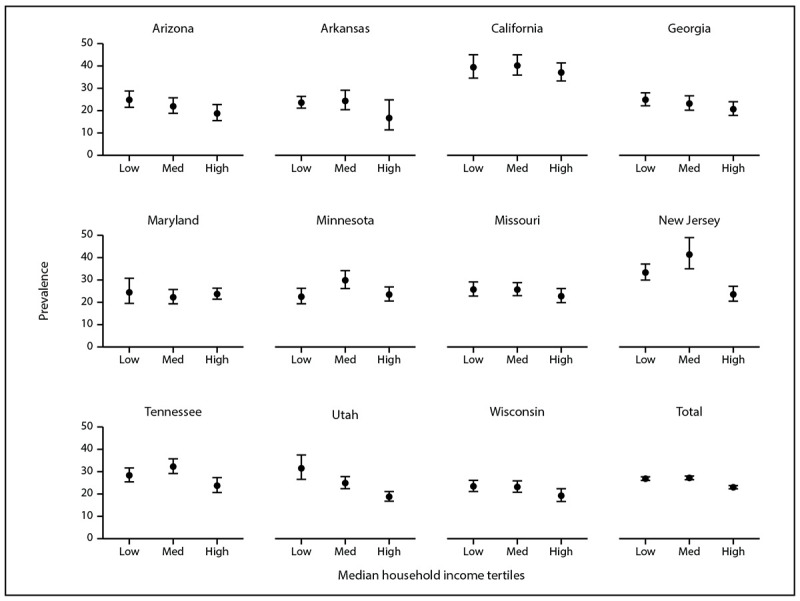
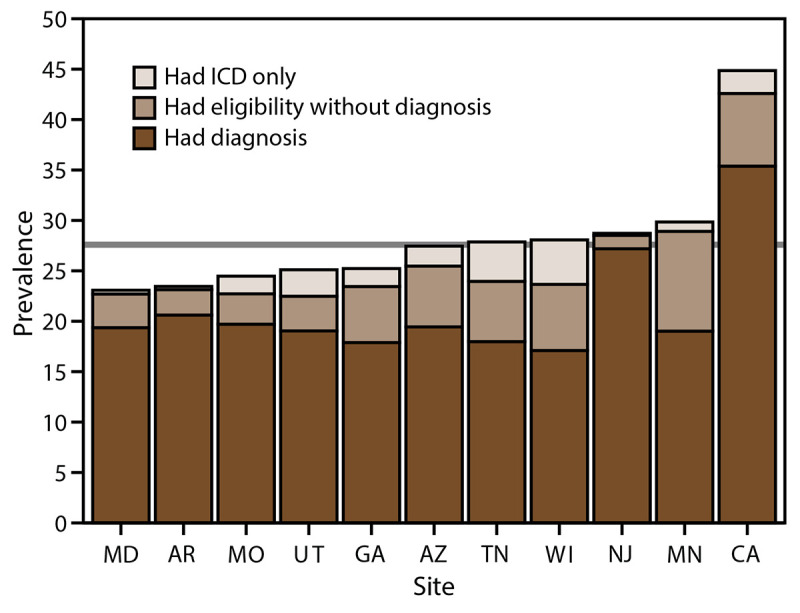
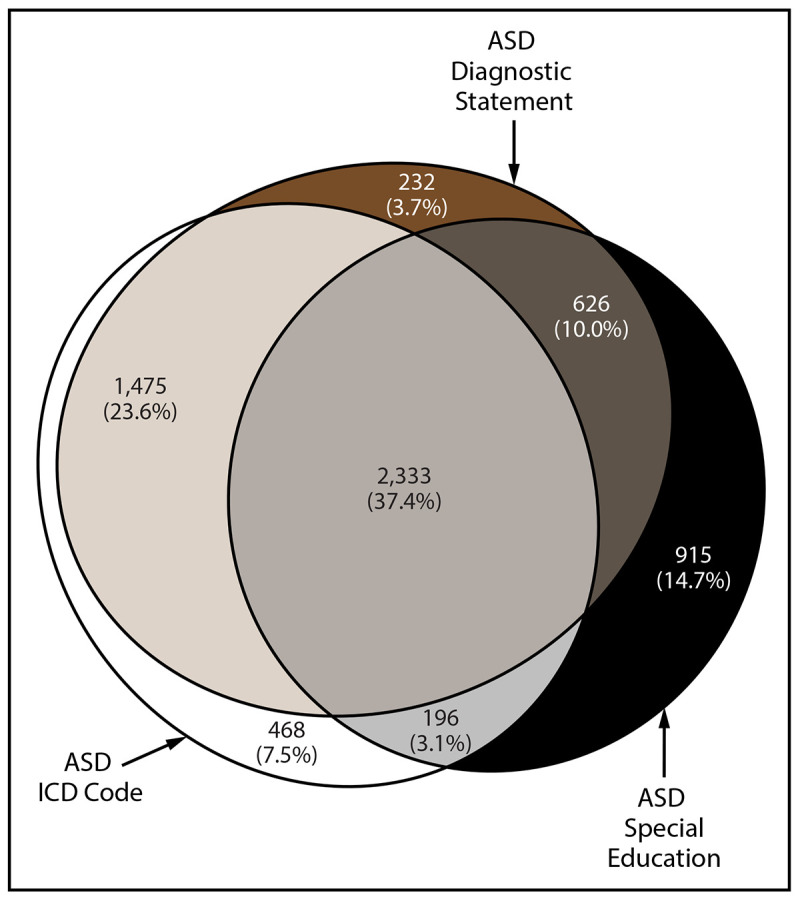
Problem/Condition: Autism spectrum disorder (ASD). Period Covered: 2020. Description of System: The Autism and Developmental Disabilities Monitoring (ADDM) Network is an active surveillance program that provides estimates of the prevalence of ASD among children aged 8 years. In 2020, there were 11 ADDM Network sites across the United States (Arizona, Arkansas, California, Georgia, Maryland, Minnesota, Missouri, New Jersey, Tennessee, Utah, and Wisconsin). To ascertain ASD among children aged 8 years, ADDM Network staff review and abstract developmental evaluations and records from community medical and educational service providers. A child met the case definition if their record documented 1) an ASD diagnostic statement in an evaluation, 2) a classification of ASD in special education, or 3) an ASD International Classification of Diseases (ICD) code. Results: For 2020, across all 11 ADDM sites, ASD prevalence per 1,000 children aged 8 years ranged from 23.1 in Maryland to 44.9 in California. The overall ASD prevalence was 27.6 per 1,000 (one in 36) children aged 8 years and was 3.8 times as prevalent among boys as among girls (43.0 versus 11.4). Overall, ASD prevalence was lower among non-Hispanic White children (24.3) and children of two or more races (22.9) than among non-Hispanic Black or African American (Black), Hispanic, and non-Hispanic Asian or Pacific Islander (A/PI) children (29.3, 31.6, and 33.4 respectively). ASD prevalence among non-Hispanic American Indian or Alaska Native (AI/AN) children (26.5) was similar to that of other racial and ethnic groups. ASD prevalence was associated with lower household income at three sites, with no association at the other sites.Across sites, the ASD prevalence per 1,000 children aged 8 years based exclusively on documented ASD diagnostic statements was 20.6 (range = 17.1 in Wisconsin to 35.4 in California). Of the 6,245 children who met the ASD case definition, 74.7% had a documented diagnostic statement of ASD, 65.2% had a documented ASD special education classification, 71.6% had a documented ASD ICD code, and 37.4% had all three types of ASD indicators. The median age of earliest known ASD diagnosis was 49 months and ranged from 36 months in California to 59 months in Minnesota.Among the 4,165 (66.7%) children with ASD with information on cognitive ability, 37.9% were classified as having an intellectual disability. Intellectual disability was present among 50.8% of Black, 41.5% of A/PI, 37.8% of two or more races, 34.9% of Hispanic, 34.8% of AI/AN, and 31.8% of White children with ASD. Overall, children with intellectual disability had earlier median ages of ASD diagnosis (43 months) than those without intellectual disability (53 months). Interpretation: For 2020, one in 36 children aged 8 years (approximately 4% of boys and 1% of girls) was estimated to have ASD. These estimates are higher than previous ADDM Network estimates during 2000-2018. For the first time among children aged 8 years, the prevalence of ASD was lower among White children than among other racial and ethnic groups, reversing the direction of racial and ethnic differences in ASD prevalence observed in the past. Black children with ASD were still more likely than White children with ASD to have a co-occurring intellectual disability. Public Health Action: The continued increase among children identified with ASD, particularly among non-White children and girls, highlights the need for enhanced infrastructure to provide equitable diagnostic, treatment, and support services for all children with ASD. Similar to previous reporting periods, findings varied considerably across network sites, indicating the need for additional research to understand the nature of such differences and potentially apply successful identification strategies across states.
Overview
The claims and statistics of this paper haven’t been checked yet.
Free: it reads the open-access text and checks the first 5 claims that cite a source we can check. Create a free account to check every claim.
Integrity signals
Registry
Cites
Statistics
Figures
Verification
Claims the paper makes
The claims and statistics of this paper haven’t been checked yet.
Free: it reads the open-access text and checks the first 5 claims that cite a source we can check. Create a free account to check every claim.
Claims other papers make about this one
Each is checked against this paper’s own text: does it say what the citing paper says it does?
The source backs part of the claim, not all of it — or backs it for a different population, condition or comparison.
In the citing paper
“Previous research reported that autism diagnosis occurs at a boy-to-girl ratio of 3.8:1, with the mother typically serving as the primary caregiver (Herrero et al., 2024;Maenner et al., 2023).”
From Mindfulness and parenting stress among parents of autistic children: The mediation of resilience and psychological flexibility (2025) · cites this paper as Maenner et al., 2023
Experimental — accuracy not yet measuredThe source backs part of the claim, not all of it — or backs it for a different population, condition or comparison.
In the citing paper
“Understanding differential outcomes based on race, ethnicity, gender, sex, age, and socioeconomic factors173,174 is highly limited.”
From Executive function deficits in attention-deficit/hyperactivity disorder and autism spectrum disorder (2024) · cites this paper as [174]
Experimental — accuracy not yet measuredThe source backs part of the claim, not all of it — or backs it for a different population, condition or comparison.
In the citing paper
“California has had the highest prevalence among children aged 4 years and 8 years since joining the ADDM Network in 2018 (6,10,11,13)”
From Prevalence and Early Identification of Autism Spectrum Disorder Among Children Aged 4 and 8 Years — Autism and Developmental Disabilities Monitoring Network, 16 Sites, United States, 2022 (2025) · cites this paper as [6]
Experimental — accuracy not yet measuredThe source backs part of the claim, not all of it — or backs it for a different population, condition or comparison.
In the citing paper
“The male-to-female ratio among children aged 4 years was similar across sites, but the ratio was lower than among children aged 8 years (11).”
From Early Identification of Autism Spectrum Disorder Among Children Aged 4 Years — Autism and Developmental Disabilities Monitoring Network, 11 Sites, United States, 2020 (2023) · cites this paper as [11]
Experimental — accuracy not yet measuredThe source backs part of the claim, not all of it — or backs it for a different population, condition or comparison.
In the citing paper
“All sites had access to health and education records in 2020 (11).”
From Early Identification of Autism Spectrum Disorder Among Children Aged 4 Years — Autism and Developmental Disabilities Monitoring Network, 11 Sites, United States, 2020 (2023) · cites this paper as [11]
Experimental — accuracy not yet measured
15 more claims about this paper
Create a free account to see every claim other papers make about this one.
Self-check
Percentages, sums and reported differences re-computed from the paper’s own numbers.
The self-check needs the paper’s full text.
Citations
Cites
1 retracted
Christensen, D. L., Baio, J., Braun, K. V. N., Bilder, D., Charles, J., Constantino, J. N., Daniels, J., Durkin, M. S., Fitzgerald, R. T., Kurzius-Spencer, M., et al. (2016) · MMWR. Surveillance Summaries · doi:10.15585/mmwr.ss6503a1 · Cited by 1,964
Self-citationRetractedDiagnostic and Statistical Manual of Mental Disorders
American Psychiatric Association (2013) · doi:10.1176/appi.books.9780890425596 · Cited by 116,369
Baio, J., Wiggins, L., Christensen, D. L., Maenner, M. J., Daniels, J., Warren, Z., Kurzius-Spencer, M., Zahorodny, W., Robinson, C., Rosenberg, et al. (2018) · MMWR. Surveillance Summaries · doi:10.15585/mmwr.ss6706a1 · Cited by 6,078
Self-citationMaenner, M. J., Shaw, K. A., Baio, J., EdS1, Washington, A., Patrick, M., DiRienzo, M., Christensen, D. L., Wiggins, L. D., Pettygrove, S., et al. (2020) · MMWR. Surveillance Summaries · doi:10.15585/mmwr.ss6904a1 · Cited by 3,780 · cited 2×
“2 3 US Department of Health and Human Services/Centers for Disease Control and Prevention necessitate record review if those codes closely aligned with program-recommended ICD codes (11).”
BackgroundSelf-citationMaenner, M. J., Shaw, K. A., Bakian, A. V., Bilder, D. A., Durkin, M. S., Esler, A., Furnier, S. M., Hallas, L., Hall-Lande, J., Hudson, A., et al. (2021) · MMWR. Surveillance Summaries · doi:10.15585/mmwr.ss7011a1 · Cited by 1,818 · cited 5×
“These gaps narrowed over time until ASD prevalence among Black and Hispanic matched prevalence among White children for the first time in 2016 and 2018, respectively (11,12).”
BackgroundMethodInfluentialSelf-citationPrevalence of Autism in a US Metropolitan Area
Yeargin-Allsopp, M., Rice, C., Karapurkar, T., Doernberg, N., Boyle, C., & Murphy, C. (2003) · JAMA · doi:10.1001/jama.289.1.49 · Cited by 1,248 · cited 2×
“CDC began monitoring the prevalence of ASD in metropolitan Atlanta, Georgia, in 1996 as part of its Metropolitan Atlanta Developmental Disabilities Surveillance Program (2).”
Background(2009) · PubMed · Cited by 804
Research works printed but not linked: 2
- Autism and Developmental Disabilities Monitoring Network Surveillance Year 2006 Principal Investigators. Prevalence of autism spectrum disorders—Autism and Developmental Disabilities Monitoring Network, United States, 2006. MMWR Surveill Summ 2009; 58(No. SS–10). 20023608
- Shaw KA, Maenner MJ, Bakian AV, Early identification of autism spectrum disorder among children aged 4 years—Autism and Developmental Disabilities Monitoring Network, 11 sites, United States, 2018. MMWR Surveill Summ 2021; 70(No. SS–10): 1– 14. 10.15585/mmwr.ss7010a1 34855727 PMC8639027 · DOI · Paper page
Cited by
Items 901–1,000 of 1,000
Klinepeter, E., Choate, J. D., Hall, T. N., & Gibbs, K. D. (2024) · Journal of Autism and Developmental Disorders · doi:10.1007/s10803-024-06573-2 · Cited by 10
“Current estimates suggest one in 36 children are diagnosed with ASD (Maenner et al., 2023).”
Assessment of Autism in Young Children
Hong, J. S., Goodwin, R., & Fagan, A. (2024) · Child and Adolescent Psychiatric Clinics of North America · doi:10.1016/j.chc.2024.08.007 · Cited by 5
Impact of an Auditory Processing Training Program on Individuals With Autism Spectrum Disorder
Schafer, E. C., Gopal, K. V., Mathews, L., Miller, S. E., & Lam, B. P. W. (2024) · American Journal of Audiology · doi:10.1044/2024_aja-24-00134 · Cited by 4
Tong, J., Xu, C., Wang, B., Wang, T., Wang, X., Ma, S., Shi, D., Wang, X., & Yan, D. (2024) · Frontiers in Psychiatry · doi:10.3389/fpsyt.2024.1454004 · Cited by 4
Rivelis, E., & Valicenti-McDermott, M. (2024) · Journal of Child and Adolescent Psychopharmacology · doi:10.1089/cap.2024.0034 · Cited by 7
“According to a recent report from the Centers for Disease Control and Prevention, 1 in 36 children, 8 years of age, has ASD (Maenner et al., 2023) and about 70% of individuals with ASD have a comorbid diagnosis (American Psychiatric Association, 2013), with high rates of anxiety (Kerns et al.,…”
Sousamli, A. E., Dragioti, E., Metallinou, D., Lykeridou, A., Dourou, P. D., Athanasiadou, C. R., Anagnostopoulos, D., & Sarantaki, A. (2024) · Healthcare · doi:10.3390/healthcare12202057 · Cited by 6
Sun, B., Xu, Y., Kat, S., Sun, A., Yin, T., Zhao, L., Su, X., Chen, J., Wang, H., Gong, X., et al. (2024) · Frontiers in Psychiatry · doi:10.3389/fpsyt.2024.1463654 · Cited by 7
Karrit, M., & Coetzee, B. (2024) · South African Journal of Psychology · doi:10.1177/00812463241295491 · Cited by 6
“More recent estimates suggest that 1 in 36 children aged 8 have ASD (Maenner et al., 2023).”
Brito, A., Tocantins, F. R., Brentani, H., Fujita, A., Taddei, C. R., & Beltrão-Braga, P. C. B. (2024) · Autism Research · doi:10.1002/aur.3263 · Cited by 4
“Regarding sex in the ASD Group, most participants were males, which was 4.5 times more common than females; these findings are similar to what has been described in the scientific literature (Brito et al., 2023; Maenner et al., 2023).”
InfluentialBreece, E., Moreno, R. J., Azzam, Y. W., Rogers, S. J., & Ashwood, P. (2024) · Brain Behavior and Immunity · doi:10.1016/j.bbi.2024.12.151 · Cited by 5
Human pluripotent stem cell (hPSC)-derived models for autism spectrum disorder drug discovery
Nie, L., Irwin, C. L., Geahchan, S., & Singh, K. K. (2024) · Expert Opinion on Drug Discovery · doi:10.1080/17460441.2024.2416484 · Cited by 4
“According to the latest finding from the Autism and Developmental Disabilities Monitoring Network, the estimated prevalence of ASD is one in 36 children and one in 45 adults in the United States [3,4].”
Lyle, T. T., & Verpeut, J. L. (2025) · Journal of Neuroscience · doi:10.1523/jneurosci.2182-23.2024 · Cited by 5
Liu, W.-X., Shan, L., Li, C.-L., Liu, Y.-M., Xue, Y., OuYang, Y.-L., & Jia, F. (2025) · BMC Pediatrics · doi:10.1186/s12887-024-05299-5 · Cited by 6
Ferrini, L., Bartolini, E., Mancini, A., Tancredi, R., Ferrari, A. R., & Calderoni, S. (2025) · Journal of Clinical Medicine · doi:10.3390/jcm14020529 · Cited by 4
Fisher, P. W., Litwin, H. D., Riddle, M. A., & Margolis, A. E. (2025) · Journal of the American Academy of Child & Adolescent Psychiatry · doi:10.1016/j.jaac.2025.01.007 · Cited by 5
Teixeira, A. L. S., da Costa, M. R. B., Sorato, G. B., Manjabosco, F. D. M., de Bem, É. B., Dellazari, L., Falcão, A. B., Cia, L. D. O., Bezerra, O. S., Borges, R. B., et al. (2025) · JMIR Research Protocols · doi:10.2196/58031 · Cited by 4
Verdes, A., Bhattachan, S., Kolevzon, A., King, B. H., McDougle, C. J., Sanders, K. B., Kim, S., Spanos, M., Chandrasekhar, T., Rockhill, C., et al. (2025) · Journal of Child and Adolescent Psychopharmacology · doi:10.1089/cap.2024.0131 · Cited by 6
Telehealth Interventions for Autism Spectrum Disorder Communities
Wong, S., & Chua, J. D. (2025) · JAACAP Connect · doi:10.62414/001c.129957 · Cited by 4
Wang, J., Kawata, N. Y. S., Cao, X., Zhang, J., Fujisawa, T. X., Zhang, X., Fan, L., Xia, W., Wu, L., & Tomoda, A. (2025) · NeuroImage · doi:10.1016/j.neuroimage.2025.121109 · Cited by 6
Ju, X., Zhang, P.-H., Li, Q., Bai, Q.-Y., Hu, B., Xu, J., & Lu, C. F. (2025) · Research on Child and Adolescent Psychopathology · doi:10.1007/s10802-025-01303-3 · Cited by 4
“In the United States, the prevalence of ASD among eight-year-olds increased from 1.45% in 2012 to 2.76% in 2020, while ADHD affected more than 5% of the population (Maenner et al., 2023).”
InfluentialTseng, A., Francis, S. M., Rawls, E., Conelea, C. A., Grissom, N. M., Kummerfeld, E., Ma, S., & Jacob, S. (2025) · Psychological Medicine · doi:10.1017/s0033291725000571 · Cited by 6
“While a strong male bias (~4 male:1 female ratio) in ASD prevalence has been reported consistently (Maenner et al., 2023), researchers have yet to reach consensus on the mechanisms and clinical features that underlie these sex (at-birth) discrepancies (Halladay et al., 2015).”
Arzuaga, A. L., Teneqexhi, P., Amodeo, K., Larson, J. R., & Ragozzino, M. E. (2025) · Physiology & Behavior · doi:10.1016/j.physbeh.2025.114891 · Cited by 5
Tabolacci, C., Caruso, A., Micai, M., Galati, G., Lintas, C., Pisanu, M. E., & Scattoni, M. L. (2025) · Biomolecules · doi:10.3390/biom15040539 · Cited by 7
“According to the CDC’s Autism and Developmental Disabilities Monitoring (ADDM) Network, approximately 1 in 36 children is diagnosed with ASD, with a prevalence nearly four times higher in boys than in girls [5].”
Wang, J., Li, Y., Zhang, D., Sun, W., & Li, J. (2025) · Frontiers in Psychiatry · doi:10.3389/fpsyt.2024.1396716 · Cited by 4
Srinath, S., Kalal, A. A., Anand, P., Mohapatra, S., & Chakraborty, P. (2025) · International Journal of Developmental Neuroscience · doi:10.1002/jdn.70016 · Cited by 7
“In 2020, the prevalence of ASD among 8- year-olds in the United States was 27.6 per 1000 (1 in 36) at the ratio of 4 boys/1 girl, and racial and ethnic minorities had a higher prevalence than white children (Maenner 2023).”
InfluentialWu, Q. Z., Wang, W., Liu, Q., Zhang, R., Pai, Y. S., Billinghurst, M., & Nanayakkara, S. C. (2025) · International Journal of Human-Computer Studies · doi:10.1016/j.ijhcs.2025.103517 · Cited by 6
Artificial intelligence in autism spectrum disorder: A path to early detection and improved outcomes
Pokhrel, P., Joshi, S., & Fatima, L. (2025) · Asian Journal of Psychiatry · doi:10.1016/j.ajp.2025.104530 · Cited by 4
Coles‐White, D., Abubakare, O., Alexander, S. H., & Fannin, D. K. (2025) · Perspectives of the ASHA Special Interest Groups · doi:10.1044/2024_persp-24-00172 · Cited by 7
The effect of omega-3 fatty acid supplementation on autism spectrum disorder: A meta-analysis
Jia, S.-J., Jing, J.-Q., Yi, L., & Yang, C.-J. (2025) · Research in Autism · doi:10.1016/j.reia.2025.202642 · Cited by 6
Borbélyová, V., Szabó, J., Sušienková, P., Potvin, J., Belvončíková, P., Groß, T., Jančovičová, A., Bačová, Z., Rašková, B., Szadvári, I., et al. (2025) · International Journal of Molecular Sciences · doi:10.3390/ijms26135927 · Cited by 5
“Boys are diagnosed with ASD four times more often than girls [1].”
Kilmer, M., Hong, M., Akakpo, V., Hawley, T., Randolph, D., Huetter, S., Reichel, A., & Bowden, M. (2025) · PLoS ONE · doi:10.1371/journal.pone.0326085 · Cited by 9
“As the prevalence of ASD continues to increase [8], early intervention to address developmental delays, social deficits, and emotional regulation is recommended [2].”
Jara, R. L. R., Franco, N. M., Jara, L. R. R., Franco, F., Leiva, E. G., Salinas, D. V., Chromey, N., Torales, J. C., & Báez, D. (2023) · Revista científica ciencias de la salud · doi:10.53732/rccsalud/2023.e5108 · Cited by 7
Early Detection of Autism Spectrum Disorder Using Non-Invasive EEG
Antunes, M. P., Rosa, J. L. G., Sabai, F. J., & Neto, F. S. D. A. (2023) · Wearable and Implantable Body Sensor Networks · doi:10.1109/bsn58485.2023.10331452 · Cited by 4
Transtorno do espectro autista e envelhecimento: uma revisão narrativa
Lin, J., Gaiato, M. H. B., Zotesso, M. C., Silveira, R. D. R., & Ferreira, L. (2023) · Revista Remecs - Revista Multidisciplinar de Estudos Científicos em Saúde · doi:10.24281/rremecs2023.8.14.3-11 · Cited by 13
Mishra, A. (2024) · Journal of Speech Language and Hearing Research · doi:10.1044/2024_jslhr-23-00390 · Cited by 4
Mullin, L. J., Rutsohn, J., Gross, J. L., Caravella, K. E., Grzadzinski, R., Weisenfeld, L. A. H., Flake, L., Botteron, K. N., Dager, S. R., Estes, A. M., et al. (2024) · Journal of Neurodevelopmental Disorders · doi:10.1186/s11689-024-09519-y · Cited by 5
“Younger biological siblings of children with autism spectrum disorder (ASD) have higher-than-typical likelihood of receiving an ASD diagnosis, with approximately 20% of younger siblings meeting diagnostic criteria in toddlerhood [1], compared to the population prevalence of 2.8% [2].”
BackgroundInfluentialIntegrating Structural and Experiential Family Therapy in Neurodivergent Families: A Case Study
Sohn, A., Zhao, J., & Tadros, E. (2024) · Issues in Mental Health Nursing · doi:10.1080/01612840.2024.2328260 · Cited by 8
“The prevalence of ASD in the United States has shown an alarming increase, with Maenner et al. (2023) study covering 2020, reporting a rate of 1 in 36 children, a significant rise from the 1 in 44 which was also reported by Maenner et al. (2021) during 2018 (ADDM, 2014; Maenner et al., 2021, 2023).”
BackgroundAmritashanti, I. G. A. A., & Hartanti, H. (2023) · Murhum Jurnal Pendidikan Anak Usia Dini · doi:10.37985/murhum.v4i1.190 · Cited by 15
Stafford, A. (2023) · Psychotherapy and Counselling Journal of Australia · doi:10.59158/001c.77496 · Cited by 4
Current Directions in Research on Virtual Reality for Mental Healthcare
Ong, T., Soni, H., Ivanova, J., Wilczewski, H., Cummins, M. R., Barrera, J. F., Welch, B. M., & Bunnell, B. E. (2025) · Wiley eBooks · doi:10.1002/9781394278480.ch2 · Cited by 4
Definition, Diagnosis, and Prevalence of Autism Spectrum Disorder
Bertelli, M. O., Bianco, A., Boniotti, V., & Chaplin, E. (2025) · Springer eBooks · doi:10.1007/978-3-031-40858-8_229-1 · Cited by 8
Spellun, A. H., Herlihy, M., Taketa, E., Graham, A. A., Fasano-McCarron, M. E., Hasenbalg, S., Clark, T. A., Linnea, K. S., Isquith, P. Κ., & Landsman, R. A. (2023) · Research on Child and Adolescent Psychopathology · doi:10.1007/s10802-023-01115-3 · Cited by 3
Sayar, K., Gülboy, E., Özkan, Ş. Y., & Baran, M. S. (2024) · Behavioral Disorders · doi:10.1177/01987429231224044 · Cited by 5
Harrington, C. N., Morales, A., Bernstein, J. A., & Calderwood, L. (2024) · Journal of Autism and Developmental Disorders · doi:10.1007/s10803-024-06423-1 · Cited by 5
“Interestingly, when looking at individuals with both autism and intellectual disability the ratio decreases (some studies report 2:1), suggesting females are more likely than males to have a syndromic or severe ASD presentation (Jaquemont et al., 2014; Leow et al., 2024; Maenner et al., 2023).”
Gatica‐Bahamonde, G., Méndez-Fadol, A., Sánchez-Sepúlveda, F., Peñailillo-Diaz, C., van Kessel, R., Czabanowska, K., & Román-Urrestarazu, A. (2024) · Frontiers in Psychiatry · doi:10.3389/fpsyt.2024.1363976 · Cited by 4
“Autism is of increasing epidemiological importance: recent studies show prevalence between 1.76% (UK) (2) and 2.77% (US) (3).”
BackgroundInfluentialSEPHS1 Gene: A new master key for neurodevelopmental disorders
Mohamed, Z. A., Yang, J., Wen, J., Jia, F., & Banerjee, S. (2024) · Clinica Chimica Acta · doi:10.1016/j.cca.2024.119844 · Cited by 3
Martin, A. M., Keehn, B., Paxton, A., Ciccarelli, M. R., & Keehn, R. M. (2024) · Journal of Developmental & Behavioral Pediatrics · doi:10.1097/dbp.0000000000001298 · Cited by 3
Rashidi, H. H., Sadeghian, E., Shamsaei, F., Tapak, L., & Seyedi, M. (2024) · Journal of Psychiatric and Mental Health Nursing · doi:10.1111/jpm.13088 · Cited by 3
Fantozzi, P., Billeci, L., Muratori, P., Maestro, S., Muratori, F., Chakrabarti, B., & Calderoni, S. (2024) · Journal of Eating Disorders · doi:10.1186/s40337-024-01075-z · Cited by 6
“ASD is a neuro-developmental disorder with a higher prevalence in males [5, 6], characterized by persistent deficits in social interaction and communication, as well as patterns of restricted and repetitive patterns of behaviors [7].”
BackgroundAssociation between Autism Spectrum Disorder and Environmental Quality in the United States
Wu, J., McLain, A. C., Rosile, P. A., & Hood, D. B. (2024) · ISPRS International Journal of Geo-Information · doi:10.3390/ijgi13090308 · Cited by 4
Sevin, İ. B., Doğan, N., & Özbaran, B. (2024) · Early Intervention in Psychiatry · doi:10.1111/eip.13617 · Cited by 6
“Over the years, the frequency of this disorder has been on the rise, and according to prevalence data from 2020, it has increased to a rate of 1 in 36 individuals (Maenner et al. 2023).”
Jenabi, E., Maleki, A., Ayubi, E., Bashirian, S., Seyedi, M., & Abdoli, S. (2024) · Heliyon · doi:10.1016/j.heliyon.2024.e41136 · Cited by 4
Overactivation of Microglia as a Shared Pathophysiology in Different Neuropsychiatric Disorders
Eltokhi, A. (2024) · Integrated science · doi:10.1007/978-3-031-72079-6_11 · Cited by 4
Improving Access to Early Developmental Evaluation in Academic Primary Care Centers
Samaan, Z. M., Williams‐Arya, P., Copeland, K. A., Burkhardt, M. C., Schumacher, J. B., Hardie, J., White, C., Reyner, A., Taylor, M., & Ehrhardt, J. (2025) · Pediatric Quality and Safety · doi:10.1097/pq9.0000000000000789 · Cited by 3
A narrative approach to career identity construction of autistic adults
Goldfarb, Y., Golan, O., & Gal, E. (2025) · Journal of Vocational Behavior · doi:10.1016/j.jvb.2025.104092 · Cited by 3
Two pores instead of one: Gating pore current and the electrical leak in autism and epilepsy
Eltokhi, A., & El-Din, T. M. G. (2025) · Progress in Neuro-Psychopharmacology and Biological Psychiatry · doi:10.1016/j.pnpbp.2025.111291 · Cited by 3
Altered monocyte subpopulations and their association with autism spectrum disorder risk in children
Li, W., Zhang, L., Xu, Y., Li, H., Li, B., Sun, S., Zhang, X., Duan, G., Chen, Y., Zhang, J., et al. (2025) · Brain Behavior and Immunity · doi:10.1016/j.bbi.2025.02.028 · Cited by 6
Ünveren, Y., Sarıcaoğlu, M., Karakulak, E. Z., & Hanoğlu, L. (2025) · Brain and Behavior · doi:10.1002/brb3.70349 · Cited by 4
“Earlier views portrayed ASD individuals as overly self-focused, while recent studies suggest this as a struggle to navigate their social environment or distinguish themselves from others (Uddin 2011; Kanner 1968; Maenner et al. 2023).”
Qu, L., Liu, Q., Zheng, S., Zhou, A., Yin, T., Zhang, Y., Wang, X., Colombi, C., & Ulrich, D. A. (2025) · Research in Autism · doi:10.1016/j.reia.2025.202544 · Cited by 4
ASiDentify (ASiD): a machine learning model to predict new autism spectrum disorder risk genes
Rynard, K. M., Han, K., Wainberg, M., Calarco, J. A., Lee, H. O., Lipshitz, H. D., Smibert, C. A., & Tripathy, S. J. (2025) · Genetics · doi:10.1093/genetics/iyaf040 · Cited by 4
Kinlin, L. M., Saunders, N. R., Carsley, S., Keown‐Stoneman, C. D. G., Tu, K., Zwaigenbaum, L., & Birken, C. S. (2025) · Pediatric Obesity · doi:10.1111/ijpo.70000 · Cited by 3
André, T. G., Moreira, N. G., de Lucca, M., Dutra, H. S., Carlos, D. M., Fernandez-Garcia, A. O., & Nascimento, L. C. (2025) · Journal of Pediatric Nursing · doi:10.1016/j.pedn.2025.04.006 · Cited by 11
Wang, X., Wang, C., Lin, L., Bao, W., Liu, B., Lin, B., Zhang, L., & Xu, G. (2025) · Journal of Autism and Developmental Disorders · doi:10.1007/s10803-025-06834-8 · Cited by 6
“Furthermore, age-related differences in symptom expression and sex-based disparities can further complicate findings (Maenner et al., 2023).”
Pagán, A. F., & Loveland, K. A. (2025) · Hispanic Journal of Behavioral Sciences · doi:10.1177/07399863251333030 · Cited by 3
Hoidy, W. H., Al-Saadi, M. H. A., Clegg, S. R., & Chyad, D. H. (2025) · Journal of Molecular Neuroscience · doi:10.1007/s12031-025-02359-y · Cited by 3
“Psychosocial constructs of the world today associate ASD with a global prevalence estimate of 1–2%, with a male-to-female ratio of roughly 4:1 (Maenner et al. 2023).”
A bibliometric analysis of the current state of research on family interventions for ASD
Meng, X., Zhou, X. J., Luo, J., Li, J., Zhou, L., & Zhang, Y. (2025) · Frontiers in Psychiatry · doi:10.3389/fpsyt.2025.1435612 · Cited by 4
Inclusion Practices for Elementary Autistic Students: A Systematic Review
Granieri, J. E., Mulcahy, C. A., Grosso, M., & Mattson, J. G. (2025) · Inclusion · doi:10.1352/2326-6988-13.2.63 · Cited by 4
Neurodevelopmental Disabilities: Conceptual Framework
Aravamuthan, B. R., Turnacioglu, S. O., & Gropman, A. L. (2024) · Elsevier eBooks · doi:10.1016/b978-0-443-10944-7.00068-8 · Cited by 3
The Role of Gender and Strong Interests in Self-Reported Camouflaging of Autistic Adults
Putnam, O. C., Swisher, M., McFayden, T. C., Chan, D. V., & Harrop, C. (2025) · Neurodiversity · doi:10.1177/27546330251351732 · Cited by 15
“These differences have the potential to camou fl age a girl ’ s autism-related dif fi culties, leading them to be overlooked for a diagnosis despite often having similar levels of autism traits (Dworzynski et al., 2012).”
Willems, K., Loveall, S. J., Goodrich, J. M., & Lang, D. (2025) · Language Speech and Hearing Services in Schools · doi:10.1044/2025_lshss-24-00108 · Cited by 4
Hu, J., Fu, P., Qiao, S., & Yan, X. (2025) · PLoS ONE · doi:10.1371/journal.pone.0320033 · Cited by 5
“The Centers for Disease Control and Prevention (CDC) estimated in 2023 that one in every 36 children is diagnosed with ASD [13].”
Kerth, J.-L., Bischops, A., Hagemeister, M., Reinhart, L., Konrad, K., Heinrichs, B., & Meißner, T. (2025) · Bundesgesundheitsblatt - Gesundheitsforschung - Gesundheitsschutz · doi:10.1007/s00103-025-04096-4 · Cited by 5
Experiences and Strategies of Competent Smart ABA Therapists in Treating Children with Autism
Arneliza, A., Rahmawati, S., Sutadi, R., Alsa, A., & Yunanto, K. T. (2025) · Pakistan Journal of Psychological Research · doi:10.33824/pjpr.2025.40.2.21 · Cited by 6
Autism spectrum disorders and childhood caries: a comprehensive Mendelian randomization study
Jin, Q., He, Z., Xu, D., Lin, R., Zhang, T., Lv, B., & Zhao, Y. (2025) · BMC Pediatrics · doi:10.1186/s12887-025-05839-7 · Cited by 3
“The Centers for Disease Control and Prevention in the United States has released findings indicating that the prevalence of ASD among children aged 0–8 years has risen from 1 in 54 in 2018 [5] to 1 in 36 in 2020 [6].”
O'Fallon, M., Jacobs, O., Rulewicz, E., Christopulos, T. T., Curtiss, S. L., & Horne, A. O. V. (2025) · Language Speech and Hearing Services in Schools · doi:10.1044/2025_lshss-24-00118 · Cited by 3
DIAGNÓSTICO DO TRANSTORNO DO ESPECTRO AUTISTA DE ALTA FUNCIONALIDADE: REVISÃO DE ESCOPO1
OLIVEIRA, F. G., Sugita, B. M., Jamus, D. R., KIMURA, E. C., OLIVEIRA, P. N. P., & Mello, R. G. (2025) · Revista Brasileira de Educação Especial · doi:10.1590/1980-54702025v31e0093 · Cited by 11
Fractalkine and Neuroinflammation in Autism Spectrum Disorder: A Novel Perspective
Kırşan, F. Z., Doğan, Ö., Yaylacı, M., & Öztop, D. B. (2025) · Clinical Psychopharmacology and Neuroscience · doi:10.9758/cpn.25.1296 · Cited by 6
“According to the United States Centers for Disease Control and Prevention data for 2023, the prevalence of ASD was reported as 1/36 [2].”
Brain functional connectivity correlates of autism diagnosis and familial liability in 24-month-olds
Pruett, J. R., Todorov, A. A., Hawks, Z., Talović, M., Nishino, T., Petersen, S. E., Davis, S. C., Stahl, L., Botteron, K. N., Constantino, J. N., et al. (2025) · Journal of Neurodevelopmental Disorders · doi:10.1186/s11689-025-09621-9 · Cited by 6
“Sex ratios were consistent with longstanding reports of male > female sex ratio in ASD: HLP (78% male), HLN (57% male), LLN (59% male) [32].”
Tanner, S., Drummond, K. D., Thomson, S. M., Vacy, K., Symeonides, C., Novakovic, B., Mansell, T., O’Hely, M., Saffery, R., Tang, M. L. K., et al. (2026) · Environmental Epigenetics · doi:10.1093/eep/dvag027 · Cited by 3
Rea, C. J., Lesch, K., Hernández, B., Sprecher, E., Hauptman, M., Epee-Bounya, A., Wilson, K., & Shah, S. N. (2025) · Journal of Developmental & Behavioral Pediatrics · doi:10.1097/dbp.0000000000001399 · Cited by 4
Mao, H., Qi, K., Meng, S., Cai, K., Zhu, L., Zhang, W.-K., Qiao, Z., Yang, Y., & Chen, A. (2025) · Frontiers in Pediatrics · doi:10.3389/fped.2025.1590666 · Cited by 4
The Misclassification of Autistic Writing as AI-Generated
Chambers, S., & Kelley, M. C. (2025) · Lecture notes in computer science · doi:10.1007/978-3-031-98420-4_7 · Cited by 5
“3% of the US population have an autism diagnosis, according to figures from 2020 [28].”
FaithfulNet: An explainable deep learning framework for autism diagnosis using structural MRI
Sujana, D. S., & Augustine, D. P. (2025) · Brain Research · doi:10.1016/j.brainres.2025.149904 · Cited by 3
de Oliveira, M. T., Gonzalez, M. A. B. S., Boiate, J. V. R., Mesa, V., Gonçalves, D. H., Pinto, M. G., Pinto, C. R. D. S., Filho, J. O. A., & Sivieri, K. (2025) · Annals of Human Biology · doi:10.1080/03014460.2025.2535430 · Cited by 10
“In our study, no statistically significant differences were found between the dietary intake of neuro-typical children and children with ASD, except for sodium ( p = 0.02), where children with ASD consumed much more sodium than typically developing children and the recommended intake by the Food and Nutrition Committe…”
InfluentialChoroid plexus alterations in autism spectrum disorder: A PET-MRI study
Lila, Y., Tseng, C.-E. J., Johnston, E. G., Canales, C., McDougle, C. J., Hooker, J. M., & Zürcher, N. R. (2025) · Brain Behavior and Immunity · doi:10.1016/j.bbi.2025.106110 · Cited by 3
Shahawy, O. E., Salehi, M., Saeidi, M., Jaka, S., López, J., Yakhchalian, P., Abbasi‐Kangevari, M., & Gunturu, S. (2025) · Journal of Clinical Medicine · doi:10.3390/jcm14186513 · Cited by 5
“According to the latest report from the ADDM Network, ASD affected one in 36 8-year-olds in 2020, compared to one in 150 in 2000 and one in 44 in 2018 [69].”
Corbett, B. A., Calvosa, R., Tamaroff, J. G., Muscatello, R. A., McGonigle, T., & Vandekar, S. (2025) · Hormones and Behavior · doi:10.1016/j.yhbeh.2025.105837 · Cited by 3
Narducci, C., Donno, F., Milone, A., Placini, F., Glennon, J. C., Masi, G., Coghill, D., Zuddas, A., Carucci, S., & Balia, C. (2025) · Journal of Psychiatric Research · doi:10.1016/j.jpsychires.2025.09.066 · Cited by 3
AutisTikTok: Analyzing top autism hashtags for creator, content, and persistence over time
Karpinsky, M., McFayden, T. C., Waycaster, A., Neal, A. J., & Harrop, C. (2025) · Research in Autism · doi:10.1016/j.reia.2025.202720 · Cited by 3
Demir, G., Sevri, M., Hacıosmanoğlu, C. D., Büyüktaşkın, D., & Özaslan, A. (2025) · Gazi Medical Journal · doi:10.12996/gmj.2025.4451 · Cited by 6
Identification of autistic Māori in Aotearoa New Zealand: A national cross-sectional study
Tupou, J., Kewene, F., Morrison-Young, I., Wi-Hongi, A., Sporle, A. A., Diamond, T., Theodore, R. F., & Bowden, N. (2025) · Autism · doi:10.1177/13623613251380927 · Cited by 7
“…of Health, 2025) and international evidence suggesting improved identification rates among minority groups (Baio et al., 2018; Lau et al., 2024; Maenner et al., 2020, 2021, 2023; Shaw et al., 2025), it seems valuable to examine how identification rates among Māori may have shifted in the two…”
Zhang, J., Han, Y., Li, W., Zhang, Q., Chen, D., & Bao, C. (2025) · Journal of Affective Disorders · doi:10.1016/j.jad.2025.120453 · Cited by 3
Amraoui, N., Dali-Sahi, M., Salmi, T., Kachekouche, Y., Harek, Y., Benguella-Benmansour, M., Berrahoui, S., Dib, J., Benosman, C., & Dennouni-Medjati, N. (2025) · Biological Trace Element Research · doi:10.1007/s12011-025-04833-5 · Cited by 3
A 3-hit metabolic signaling model for the core symptoms of autism spectrum disorder
Naviaux, R. K. (2025) · Mitochondrion · doi:10.1016/j.mito.2025.102096 · Cited by 4
Lyu, B., Ba, Y., Ma, D., Liu, N., Fu, L., & Xue, Y. (2025) · Frontiers in Psychiatry · doi:10.3389/fpsyt.2025.1623149 · Cited by 10
Song, J., & Kim, Y. (2025) · Cellular and Molecular Neurobiology · doi:10.1007/s10571-025-01638-x · Cited by 4
Quetsch, L. B., Shah, E. N., Kiefer, J. L., & Family and Community Intervention Lab: Autism Community Advisory Board (2025) · Research Involvement and Engagement · doi:10.1186/s40900-025-00825-w · Cited by 4
“Promisingly, a growing desire to learn about autism and autistic individuals mirrors the prevalence rates of increased autism diagnoses [45].”
Campanale, A., Mir, H.-D., Dumais, E., Inserra, A., Flamand, N., Chakravarty, M. M., Gantois, I., Siddiqui, N., Sonenberg, N., Gobbi, G., et al. (2025) · Progress in Neuro-Psychopharmacology and Biological Psychiatry · doi:10.1016/j.pnpbp.2025.111575 · Cited by 3
Association Between Age-Specific Sleep Sufficiency and Autism Spectrum Disorder in U.S. Children
Ahmmad, M. R., Pantazopoulos, H., Faruque, F., Zhang, X., & Puri, R. (2025) · Journal of Autism and Developmental Disorders · doi:10.1007/s10803-025-07175-2 · Cited by 5
A Systematic Review of Autistic Adults’ Experiences of Anxiety From a Qualitative Perspective
Silva, A. B. D., Berry, E., Craig, S., & Doumas, M. (2025) · Journal of Autism and Developmental Disorders · doi:10.1007/s10803-025-07025-1 · Cited by 5
Metadata
- Authors
- Maenner, M. J., Warren, Z., Williams, A. R., Amoakohene, E., Bakian, A. V., Bilder, D. A., Durkin, M. S., Fitzgerald, R. T., Furnier, S. M., Hughes, M. M., Ladd-Acosta, C. M., McArthur, D., Pas, E. T., Salinas, A., Vehorn, A., Williams, S., Esler, A., Grzybowski, A., Hall-Lande, J., Nguyen, R. H. N., Pierce, K., Zahorodny, W., Hudson, A., Hallas, L., Mancilla, K. C., Patrick, M., Shenouda, J., Sidwell, K., DiRienzo, M., Gutierrez, J., Spivey, M. H., Lopez, M., Pettygrove, S., Schwenk, Y. D., Washington, A., & Shaw, K. A.
- Affiliations
- Centers for Disease Control and Prevention (US)
- Vanderbilt University Medical Center (US)
- University of Minnesota (US)
- University of Utah (US)
- University of Wisconsin–Madison (US)
- Washington University in St. Louis (US)
- Johns Hopkins University (US)
- University of California San Diego (US)
- Rutgers New Jersey Medical School (US)
- University of Arkansas for Medical Sciences (US)
- National Center on Birth Defects and Developmental Disabilities (US)
- University of Arizona (US)
- Corresponding author
- Maenner, Matthew J.
- ORCID
- Maenner, Matthew J.
- Warren, Zachary
- Williams, Ashley Robinson
- Bakian, Amanda V.
- Bilder, Deborah A.
- Durkin, Maureen S.
- Fitzgerald, Robert T.
- Furnier, Sarah M.
- Hughes, Michelle M.
- Ladd-Acosta, Christine M.
- McArthur, Dedria
- Pas, Elise T.
- Esler, Amy
- Nguyen, Ruby H.N.
- Pierce, Karen
- Zahorodny, Walter
- Patrick, Mary
- Shenouda, Josephine
- DiRienzo, Monica
- Lopez, Maya
- Pettygrove, Sydney
- Washington, Anita
- Venue
- MMWR. Surveillance Summaries
- Published
- 2023-03-24
- Volume
- 72
- Issue
- 2
- Pages
- 1-14
- ISSN
- 1545-8636 (ISSN-L)
- 1546-0738
- PMC
- PMC10042614
- OpenAlex
- W4360600181
- Cited by
- 2,706
- References
- 30
- Citations by year
- 2026: 568 · 2025: 900 · 2024: 896 · 2023: 306
- FWCI
- 400.11
- Type
- journal article
- Language
- en
- Open access
- diamond
- doi.org
- Licence
- public-domain
- Locations
- MMWR Surveillance Summaries (publishedVersion, public-domain)
- PubMed Central (publishedVersion, public-domain)
- PubMed (publishedVersion)
- UA Campus Repository (The University of Arizona) (submittedVersion, public-domain)
- Funders
- Eunice Kennedy Shriver National Institute of Child Health and Human Development (P50HD103537)
- Topics
- Life Sciences › Neuroscience › Cognitive Neuroscience › Autism Spectrum Disorder Research
- Health Sciences › Medicine › Psychiatry and Mental health › Child Nutrition and Feeding Issues
- Social Sciences › Psychology › Clinical Psychology › Family and Disability Support Research
- Keywords
- autism spectrum disorder, autism prevalence, sex differences, racial and ethnic disparities, household income, special education classification, developmental disabilities, ICD-10-CM codes
- MeSH terms
- Autism Spectrum Disorder, Autistic Disorder, Child, Developmental Disabilities, Child, Preschool, Female, Humans, Male, Maryland, Intellectual Disability, Population Surveillance, United States, Prevalence
About these checks
Registry, retraction, Cites and statistics results are computed, not judged, with one exception: a printed reference that no index lists is read once by a model before it counts as a citation error. Claims are extracted by a model and kept only when their quote appears verbatim in the text; each cited source is then checked, with a model’s help, for whether it says what the claim relies on. Those verdicts can be wrong — read the claim’s quote and the cited source before relying on one.
Statistics and arithmetic are recomputed, not judged.
Confidence bands are shown only for fields calibrated on our annotated test set. None is calibrated yet, so no band is shown.
What counts as a claim ›How we measure confidence ›How we check this ›
Are you an author, or do you see a problem with this page? Request a review
Data sources
Bibliographic data: Semantic Scholar, OpenAlex, Crossref.
Contains information from the Semantic Scholar Academic Graph Datasets, made available under the ODC Attribution License (ODC-BY 1.0).
Semantic Scholar’s data is described in: Kinney, R., et al. (2023). The Semantic Scholar Open Data Platform. arXiv:2301.10140.
