

Prevalence and Characteristics of Autism Spectrum Disorder Among Children Aged 8 Years — Autism and Developmental Disabilities Monitoring Network, 11 Sites, United States, 2020
Open accessThe DOI matches its Crossref record; 30 of the 30 references it cites were found in a registry or an index.
Abstract
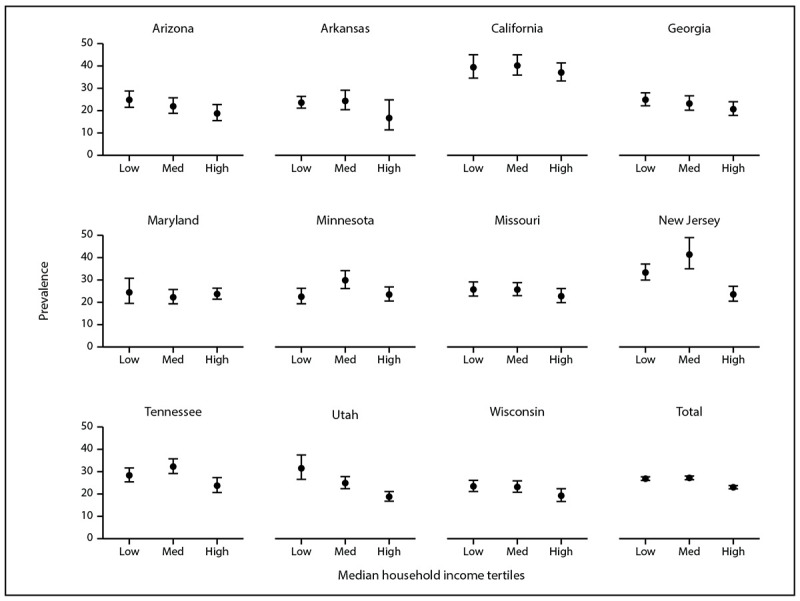
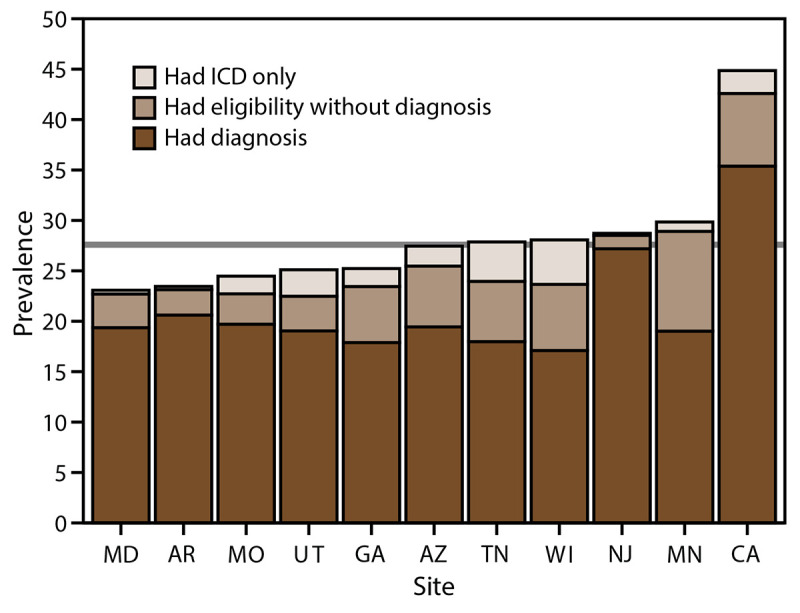
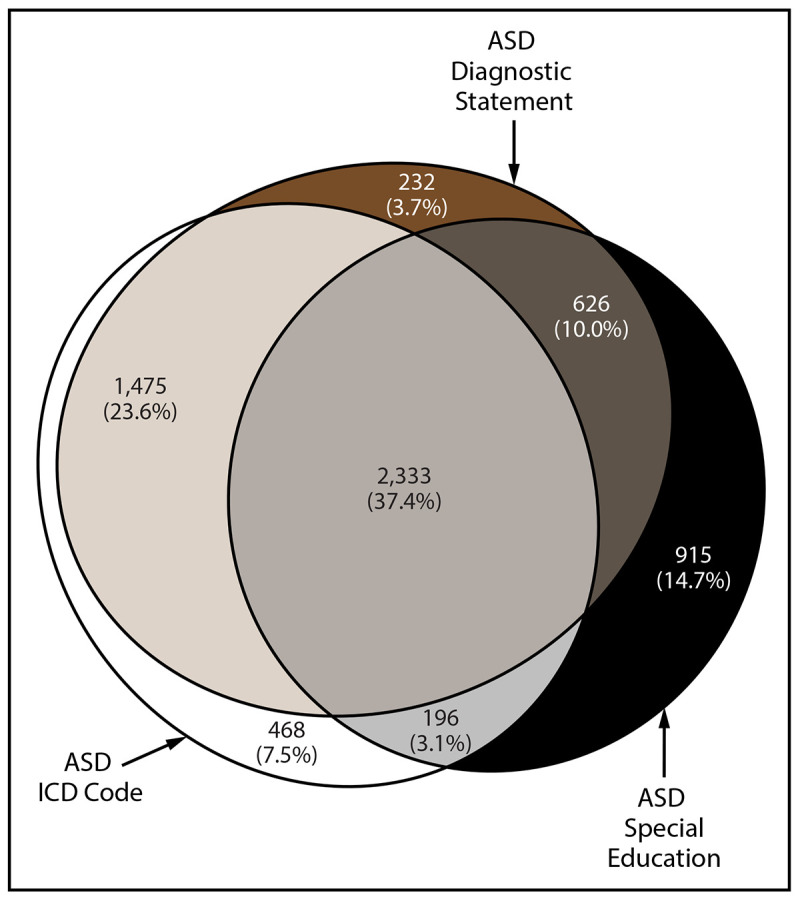
Problem/Condition: Autism spectrum disorder (ASD). Period Covered: 2020. Description of System: The Autism and Developmental Disabilities Monitoring (ADDM) Network is an active surveillance program that provides estimates of the prevalence of ASD among children aged 8 years. In 2020, there were 11 ADDM Network sites across the United States (Arizona, Arkansas, California, Georgia, Maryland, Minnesota, Missouri, New Jersey, Tennessee, Utah, and Wisconsin). To ascertain ASD among children aged 8 years, ADDM Network staff review and abstract developmental evaluations and records from community medical and educational service providers. A child met the case definition if their record documented 1) an ASD diagnostic statement in an evaluation, 2) a classification of ASD in special education, or 3) an ASD International Classification of Diseases (ICD) code. Results: For 2020, across all 11 ADDM sites, ASD prevalence per 1,000 children aged 8 years ranged from 23.1 in Maryland to 44.9 in California. The overall ASD prevalence was 27.6 per 1,000 (one in 36) children aged 8 years and was 3.8 times as prevalent among boys as among girls (43.0 versus 11.4). Overall, ASD prevalence was lower among non-Hispanic White children (24.3) and children of two or more races (22.9) than among non-Hispanic Black or African American (Black), Hispanic, and non-Hispanic Asian or Pacific Islander (A/PI) children (29.3, 31.6, and 33.4 respectively). ASD prevalence among non-Hispanic American Indian or Alaska Native (AI/AN) children (26.5) was similar to that of other racial and ethnic groups. ASD prevalence was associated with lower household income at three sites, with no association at the other sites.Across sites, the ASD prevalence per 1,000 children aged 8 years based exclusively on documented ASD diagnostic statements was 20.6 (range = 17.1 in Wisconsin to 35.4 in California). Of the 6,245 children who met the ASD case definition, 74.7% had a documented diagnostic statement of ASD, 65.2% had a documented ASD special education classification, 71.6% had a documented ASD ICD code, and 37.4% had all three types of ASD indicators. The median age of earliest known ASD diagnosis was 49 months and ranged from 36 months in California to 59 months in Minnesota.Among the 4,165 (66.7%) children with ASD with information on cognitive ability, 37.9% were classified as having an intellectual disability. Intellectual disability was present among 50.8% of Black, 41.5% of A/PI, 37.8% of two or more races, 34.9% of Hispanic, 34.8% of AI/AN, and 31.8% of White children with ASD. Overall, children with intellectual disability had earlier median ages of ASD diagnosis (43 months) than those without intellectual disability (53 months). Interpretation: For 2020, one in 36 children aged 8 years (approximately 4% of boys and 1% of girls) was estimated to have ASD. These estimates are higher than previous ADDM Network estimates during 2000-2018. For the first time among children aged 8 years, the prevalence of ASD was lower among White children than among other racial and ethnic groups, reversing the direction of racial and ethnic differences in ASD prevalence observed in the past. Black children with ASD were still more likely than White children with ASD to have a co-occurring intellectual disability. Public Health Action: The continued increase among children identified with ASD, particularly among non-White children and girls, highlights the need for enhanced infrastructure to provide equitable diagnostic, treatment, and support services for all children with ASD. Similar to previous reporting periods, findings varied considerably across network sites, indicating the need for additional research to understand the nature of such differences and potentially apply successful identification strategies across states.
Overview
The claims and statistics of this paper haven’t been checked yet.
Free: it reads the open-access text and checks the first 5 claims that cite a source we can check. Create a free account to check every claim.
Integrity signals
Registry
Cites
Statistics
Figures
Verification
Claims the paper makes
The claims and statistics of this paper haven’t been checked yet.
Free: it reads the open-access text and checks the first 5 claims that cite a source we can check. Create a free account to check every claim.
Claims other papers make about this one
Each is checked against this paper’s own text: does it say what the citing paper says it does?
The source backs part of the claim, not all of it — or backs it for a different population, condition or comparison.
In the citing paper
“Previous research reported that autism diagnosis occurs at a boy-to-girl ratio of 3.8:1, with the mother typically serving as the primary caregiver (Herrero et al., 2024;Maenner et al., 2023).”
From Mindfulness and parenting stress among parents of autistic children: The mediation of resilience and psychological flexibility (2025) · cites this paper as Maenner et al., 2023
Experimental — accuracy not yet measuredThe source backs part of the claim, not all of it — or backs it for a different population, condition or comparison.
In the citing paper
“Understanding differential outcomes based on race, ethnicity, gender, sex, age, and socioeconomic factors173,174 is highly limited.”
From Executive function deficits in attention-deficit/hyperactivity disorder and autism spectrum disorder (2024) · cites this paper as [174]
Experimental — accuracy not yet measuredThe source backs part of the claim, not all of it — or backs it for a different population, condition or comparison.
In the citing paper
“California has had the highest prevalence among children aged 4 years and 8 years since joining the ADDM Network in 2018 (6,10,11,13)”
From Prevalence and Early Identification of Autism Spectrum Disorder Among Children Aged 4 and 8 Years — Autism and Developmental Disabilities Monitoring Network, 16 Sites, United States, 2022 (2025) · cites this paper as [6]
Experimental — accuracy not yet measuredThe source backs part of the claim, not all of it — or backs it for a different population, condition or comparison.
In the citing paper
“The male-to-female ratio among children aged 4 years was similar across sites, but the ratio was lower than among children aged 8 years (11).”
From Early Identification of Autism Spectrum Disorder Among Children Aged 4 Years — Autism and Developmental Disabilities Monitoring Network, 11 Sites, United States, 2020 (2023) · cites this paper as [11]
Experimental — accuracy not yet measuredThe source backs part of the claim, not all of it — or backs it for a different population, condition or comparison.
In the citing paper
“All sites had access to health and education records in 2020 (11).”
From Early Identification of Autism Spectrum Disorder Among Children Aged 4 Years — Autism and Developmental Disabilities Monitoring Network, 11 Sites, United States, 2020 (2023) · cites this paper as [11]
Experimental — accuracy not yet measured
15 more claims about this paper
Create a free account to see every claim other papers make about this one.
Self-check
Percentages, sums and reported differences re-computed from the paper’s own numbers.
The self-check needs the paper’s full text.
Citations
Cites
1 retracted
Christensen, D. L., Baio, J., Braun, K. V. N., Bilder, D., Charles, J., Constantino, J. N., Daniels, J., Durkin, M. S., Fitzgerald, R. T., Kurzius-Spencer, M., et al. (2016) · MMWR. Surveillance Summaries · doi:10.15585/mmwr.ss6503a1 · Cited by 1,964
Self-citationRetractedDiagnostic and Statistical Manual of Mental Disorders
American Psychiatric Association (2013) · doi:10.1176/appi.books.9780890425596 · Cited by 116,369
Baio, J., Wiggins, L., Christensen, D. L., Maenner, M. J., Daniels, J., Warren, Z., Kurzius-Spencer, M., Zahorodny, W., Robinson, C., Rosenberg, et al. (2018) · MMWR. Surveillance Summaries · doi:10.15585/mmwr.ss6706a1 · Cited by 6,078
Self-citationMaenner, M. J., Shaw, K. A., Baio, J., EdS1, Washington, A., Patrick, M., DiRienzo, M., Christensen, D. L., Wiggins, L. D., Pettygrove, S., et al. (2020) · MMWR. Surveillance Summaries · doi:10.15585/mmwr.ss6904a1 · Cited by 3,780 · cited 2×
“2 3 US Department of Health and Human Services/Centers for Disease Control and Prevention necessitate record review if those codes closely aligned with program-recommended ICD codes (11).”
BackgroundSelf-citationMaenner, M. J., Shaw, K. A., Bakian, A. V., Bilder, D. A., Durkin, M. S., Esler, A., Furnier, S. M., Hallas, L., Hall-Lande, J., Hudson, A., et al. (2021) · MMWR. Surveillance Summaries · doi:10.15585/mmwr.ss7011a1 · Cited by 1,818 · cited 5×
“These gaps narrowed over time until ASD prevalence among Black and Hispanic matched prevalence among White children for the first time in 2016 and 2018, respectively (11,12).”
BackgroundMethodInfluentialSelf-citationPrevalence of Autism in a US Metropolitan Area
Yeargin-Allsopp, M., Rice, C., Karapurkar, T., Doernberg, N., Boyle, C., & Murphy, C. (2003) · JAMA · doi:10.1001/jama.289.1.49 · Cited by 1,248 · cited 2×
“CDC began monitoring the prevalence of ASD in metropolitan Atlanta, Georgia, in 1996 as part of its Metropolitan Atlanta Developmental Disabilities Surveillance Program (2).”
Background(2009) · PubMed · Cited by 804
Research works printed but not linked: 2
- Autism and Developmental Disabilities Monitoring Network Surveillance Year 2006 Principal Investigators. Prevalence of autism spectrum disorders—Autism and Developmental Disabilities Monitoring Network, United States, 2006. MMWR Surveill Summ 2009; 58(No. SS–10). 20023608
- Shaw KA, Maenner MJ, Bakian AV, Early identification of autism spectrum disorder among children aged 4 years—Autism and Developmental Disabilities Monitoring Network, 11 sites, United States, 2018. MMWR Surveill Summ 2021; 70(No. SS–10): 1– 14. 10.15585/mmwr.ss7010a1 34855727 PMC8639027 · DOI · Paper page
Cited by
Items 501–600 of 1,000
Emerging roles for E3 ubiquitin ligases in neural development and disease
Hale, M., & Bashaw, G. J. (2025) · Frontiers in Cell and Developmental Biology · doi:10.3389/fcell.2025.1557653 · Cited by 11
Molecular basis of autism spectrum disorders
Desai, R., Reddy, S., Truong, M., & Thankam, F. G. (2025) · Molecular Biology Reports · doi:10.1007/s11033-025-10604-1 · Cited by 13
Alkhunini, A. (2025) · SAGE Open · doi:10.1177/21582440251340769 · Cited by 15
“In the United States, the Centers for Disease Control and Prevention (CDC) reported approximately 1 in 36 children is diagnosed with ASD, with boys being four times more likely to be identified as having the disorder than girls (Maenner et al., 2023).”
Szabó, D., Otrokocsi, L., & Sperlágh, B. (2025) · Journal of Neuroinflammation · doi:10.1186/s12974-025-03509-0 · Cited by 12
“Autism spectrum disorder affects approximately 1 in 36 children [220], while the lifetime prevalence of schizophrenia is estimated at around 1 in 300 people globally [221].”
Molecular and Genetic Mechanisms in Autism Spectrum Disorder
Pruitt, A., Gupta, A. R., & Hoffman, E. J. (2025) · Annals of Neurology · doi:10.1002/ana.70013 · Cited by 12
“28 Increased prevalence among under-represented minority groups may be indicative of increased awareness of ASD behaviors and access to diagnostic screening.”
InfluentialYan, W., Zhai, T., Li, Y., Jiang, W., Chen, J., Sun, Z., Lin, Y., Zhang, X., & Du, Y.-S. (2025) · Frontiers in Psychiatry · doi:10.3389/fpsyt.2025.1570437 · Cited by 15
Diagnosis of autism spectrum disorder using EEG microstates and chaos game representation
Han, L., Huang, Z., Li, C., & Chen, J. (2025) · Biomedical Signal Processing and Control · doi:10.1016/j.bspc.2025.108722 · Cited by 9
Aljead, M., Qashta, A., Jalal, Z., & Jones, A. M. (2025) · Pharmaceuticals · doi:10.3390/ph18111644 · Cited by 15
“In the three studies conducted in Saudi Arabia, the UK, and the USA by AlBatti et al. (2022) [41], O’Nions et al. (2023) [42], and Maenner (2023) [43], respectively, the prevalence of ASD in male children was found to be three to four times higher than in females, with a significant difference in…”
Prenatal Glucose Intolerance and Child Neurodevelopmental Disorders
Grosvenor, L. P., Gunderson, E. P., Qian, Y., Alexeeff, S., Ames, J., Weiss, L. A., Sahagún, E., Ashwood, P., Yolken, R. H., Zhu, Y., et al. (2025) · JAMA Network Open · doi:10.1001/jamanetworkopen.2025.41657 · Cited by 7
Roth, N. M., Delgado‐López, C., Wiggins, L. D., Muñoz, N. N., Mulkey, S. B., Nieves-Ferrer, L., Woodworth, K. R., Rosario, G. M., Huertas, M. M., Moore, C. A., et al. (2023) · MMWR Morbidity and Mortality Weekly Report · doi:10.15585/mmwr.mm7229a5 · Cited by 10
The Role of SNAP-25 in Autism Spectrum Disorders Onset Patterns
Bolognesi, E., Guerini, F. R., Carta, A., Chiappedi, M. A., Sotgiu, S., Mensi, M. M., Agliardi, C., Zanzottera, M., & Clerici, M. (2023) · International Journal of Molecular Sciences · doi:10.3390/ijms241814042 · Cited by 11
Stephenson, K. G., Levine, A. S., Russell, N. C. C., Horack, J. M., & Butter, E. M. (2023) · Autism Research · doi:10.1002/aur.3034 · Cited by 12
Schmidt, M., Glaser, N. J., Palmer, H., Schmidt, C. T., & Xing, W. (2023) · Computers & Education X Reality · doi:10.1016/j.cexr.2023.100041 · Cited by 16
Ghiotti, N., Clulow, D., Cheon, S., Cui, K., & Kang, H. (2023) · ACM Conference on Computer Supported Cooperative Work (CSCW) · doi:10.1145/3584931.3606958 · Cited by 13
Daniels, A. M., Law, K., Snyder, L. G., Diehl, K., Goin‐Kochel, R. P., Feliciano, P., & Chung, W. K. (2023) · Journal of Clinical and Translational Science · doi:10.1017/cts.2023.697 · Cited by 10
Hsieh, C. C., Lo, Y., Wang, H., Shen, H.-Y., Chen, Y., & Lee, Y. (2024) · Translational Psychiatry · doi:10.1038/s41398-024-02752-y · Cited by 9
Britsch, E. R., & Iverson, J. M. (2024) · Journal of Autism and Developmental Disorders · doi:10.1007/s10803-024-06331-4 · Cited by 13
“The younger siblings of autistic children have an elevated likelihood (EL) of developing ASD, with about 1 in 5 receiving an ASD diagnosis (Ozonoff et al., 2011) in contrast to about 1 in 36 children in the general population (Maenner et al., 2023).”
Autism Knowledge Assessments: A Closer Examination of Validity by Autism Experts
McMahon, C. M., McClain, M. B., Wells, S., Thompson, S., & Shahidullah, J. D. (2024) · Journal of Autism and Developmental Disorders · doi:10.1007/s10803-024-06293-7 · Cited by 10
“As another example, a question asking about frequency and timing of diagnosis across racial and ethnic groups should consider that current prevalence data does not seem to be consistent with historical diagnostic trends (Maenner et al., 2023; #4 on McClain et al., 2020).”
Seeing beyond words: Visualizing autism spectrum disorder biomarker insights
Xie, X., Zhou, R., Fang, Z., Zhang, Y., Wang, Q., & Liu, X. (2024) · Heliyon · doi:10.1016/j.heliyon.2024.e30420 · Cited by 9
Anderson, C., Wood, C. I., Franklin, L., Iampieri, A., & Sarsony, C. (2024) · Journal of Autism and Developmental Disorders · doi:10.1007/s10803-024-06353-y · Cited by 15
“According to Maenner et al. (2023), roughly 38% of 8-year-old autistic children in the U.S. are intellectually disabled (IQ ≤ 70), with about 39% in the average or high range (IQ > 85) and another 23% in between.”
Pagán, A. F., Vanderburg, J. L., & Loveland, K. A. (2024) · Rehabilitation counselors & educators journal · doi:10.52017/001c.120542 · Cited by 10
Wang, L., Clark, E. A., Hanratty, L., Koblan, K. S., Foley, A., Dedic, N., & Bristow, L. J. (2024) · Pharmacology Biochemistry and Behavior · doi:10.1016/j.pbb.2024.173862 · Cited by 10
Saeliw, T., Kanlayaprasit, S., Thongkorn, S., Songsritaya, K., Sanannam, B., Jindatip, D., Hu, V. W., & Sarachana, T. (2024) · Scientific Reports · doi:10.1038/s41598-024-72334-x · Cited by 8
Herrera, G., Vera, L., Pérez-Fuster, P., López-Fernández, A., López, Á., Taşkesen, Ü. S., & Newbutt, N. A. (2024) · Educational Technology Research and Development · doi:10.1007/s11423-024-10422-5 · Cited by 15
“%) are autistic (Maenner et al., 2023).”
InfluentialGuastello, A. D., Lieneman, C. C., Bailey, B., Munson, M. S., Barthle-Herrera, M. A., Higham, M., Druskin, L. R., & McNeil, C. B. (2023) · Frontiers in Psychiatry · doi:10.3389/fpsyt.2023.1072645 · Cited by 8
Prenatal Metal Exposures and Child Social Responsiveness Scale Scores in 2 Prospective Studies
Yu, X., Dou, J., Volk, H. E., Bakulski, K. M., Benke, K. S., Hertz‐Picciotto, I., Schmidt, R. J., Newschaffer, C. J., Feinberg, J. I., Daniels, J. A., et al. (2024) · Environmental Health Insights · doi:10.1177/11786302231225313 · Cited by 9
Self-citationFurnier, S. M., Gangnon, R. E., Daniels, J. L., Weismer, S. E., Nadler, C. B., Pazol, K., Reyes, N., Rosenberg, S. A., Rubenstein, E., Wiggins, L. D., et al. (2024) · Autism Research · doi:10.1002/aur.3107 · Cited by 11
Self-citationAutism in India: Time for a national programme
Chakrabarti, B. (2023) · International Journal of Microbiology Research · doi:10.4103/ijmr.ijmr_506_23 · Cited by 20
Transcriptomic convergence and the female protective effect in autism
Andersen, R., Talukdar, M., Sakamoto, T., Exposito-Alonso, D., Song, J. H. T., Qian, X., Lee, S., Murugan, N., Delgado, R. N., Zhao, S., et al. (2026) · Nature · doi:10.1101/2025.01.20.634000 · Cited by 11
Hernandez, A. M., Michael, O. G., Canning, G., Joshi, M., Osuna, A., & Locke, J. J. (2023) · Implementation Research and Practice · doi:10.1177/26334895231189197 · Cited by 9
Kıyat, E., Aktepe, E., Doğuç, D. K., Bedir, M., Ertürk, E., & Işık, Ü. (2024) · International Journal of Developmental Disabilities · doi:10.1080/20473869.2023.2301185 · Cited by 8
Validation of the autism behavior checklist in Egyptian children with autism spectrum disorder
Abdelmageed, R. I., Youssef, A. M., Rihan, L. S., & Abdelaziz, A. W. (2024) · Child Neuropsychology · doi:10.1080/09297049.2024.2309016 · Cited by 9
Pickard, K. E., Hendrix, N. M., Greenfield, E. S., & Yohannes, M. (2024) · Administration and Policy in Mental Health and Mental Health Services Research · doi:10.1007/s10488-024-01346-6 · Cited by 7
Teo, T., Koh, H. C., Zambri, N. M., Zaccario, M. L., Sossin, K. M., & Wong, C. M. (2024) · Journal of Racial and Ethnic Health Disparities · doi:10.1007/s40615-024-01957-7 · Cited by 8
Du, X., Sun, L., & Dong, Q. (2024) · BMC Psychology · doi:10.1186/s40359-024-01786-7 · Cited by 10
“Recently, the incidence of autism in the United States was reported as high as 1 in 36 children [2].”
BackgroundMazurek, M. O., Nevill, R. E. A., Orlando, K. G., Page, K. D., Howard, M., & Davis, B. E. (2024) · Journal of Autism and Developmental Disorders · doi:10.1007/s10803-024-06445-9 · Cited by 10
“…in the first two years of life (Zwaigenbaum et al., 2015), the average age at autism diagnosis in the US ranges from 3 to 5 years of age (Hanley et al., 2021; Maenner et al., 2023 ), with considerable delays between caregivers’ first concerns and ultimate diagnosis (MacKenzie et al., 2022).”
Carty, A., Green, R. R., Goodman, C. V., McLaughlin, J. R., Hu, H., Lanphear, B. P., Muckle, G., & Till, C. (2024) · Journal of Autism and Developmental Disorders · doi:10.1007/s10803-024-06487-z · Cited by 8
“Further, the ADDM Network reported in 2020 that ASD prevalence is associated with lower socioeconomic status (Maenner et al., 2023).”
InfluentialBrown, T. R., Jansen, M. O., Zhou, A. N., Moog, D., Xie, H., Liebesny, K. V., Xu, K. Y., Lin, B. Y., & Deng, W. (2024) · Frontiers in Psychiatry · doi:10.3389/fpsyt.2024.1402312 · Cited by 11
Sex heterogeneity of dynamic brain activity and functional connectivity in autism spectrum disorder
Lu, H., Dong, Q., Gao, L., Xue, Z., Niu, X., Zhou, R., & Guo, X. (2024) · Autism Research · doi:10.1002/aur.3227 · Cited by 8
“It is reported that the prevalence of ASD is estimated to be 1 in 36 children, with an increasing trend year-by-year (Maenner et al., 2023).”
Qi, K., Wang, X., Xu, Q., Hu, B., Wang, Z., & Białas, M. (2024) · Heliyon · doi:10.1016/j.heliyon.2024.e39053 · Cited by 15
Zhou, P., Peng, S., Wen, S., Lan, Q., Zhuang, Y., Li, X., Shi, M., & Zhang, C. (2024) · Neuropsychiatric Disease and Treatment · doi:10.2147/ndt.s485487 · Cited by 8
Uldbjerg, C. S., Leader, J. E., Mínguez‐Alarcón, L., Chagnon, O., Dadd, R., Ford, J. B., Fleury, E. S., Williams, P. L., Juul, A., Bellinger, D. C., et al. (2024) · Environmental Research · doi:10.1016/j.envres.2024.120253 · Cited by 11
Autism, intelligence, language, and adaptive behavior, disentangling a complex relationship
Failla, C., Scarcella, I., Vetrano, N., Previti, G., Mangano, R. M., Tartarisco, G., Vagni, D., Pioggia, G., & Marino, F. (2024) · Frontiers in Psychiatry · doi:10.3389/fpsyt.2024.1411783 · Cited by 10
Conti, E., Calderoni, S., Guerrera, S., Guzzetta, A., Palermo, G., GIACOMO, A. D., Tancredi, R., Vicari, S., & Turi, M. (2024) · Children · doi:10.3390/children11121474 · Cited by 9
An Update on Microbial Interventions in Autism Spectrum Disorder with Gastrointestinal Symptoms
Moreno, R. J., & Ashwood, P. (2024) · International Journal of Molecular Sciences · doi:10.3390/ijms252313078 · Cited by 21
Fadeev, K. A., Reyes, I. V. R., Goiaeva, D. E., Obukhova, T. S., Ovsiannikova, T. M., Prokofyev, A. O., Rytikova, A. M., Novikov, A. Y., Kozunov, V. V., Stroganova, T. A., et al. (2024) · Journal of Neurodevelopmental Disorders · doi:10.1186/s11689-024-09585-2 · Cited by 9
Cui, J. J., Li, H., Hu, C., Zhang, F., Li, Y., Weng, Y., Yang, L., Li, Y. Q., Yao, M., Li, H., et al. (2024) · Neurobiology of Disease · doi:10.1016/j.nbd.2024.106763 · Cited by 12
Newbutt, N. A., & Bradley, R. (2024) · Journal of Responsible Technology · doi:10.1016/j.jrt.2024.100102 · Cited by 11
Tusa, B. S., Alati, R., Betts, K. S., Ayano, G., & Dachew, B. A. (2025) · Australian & New Zealand Journal of Psychiatry · doi:10.1177/00048674251315641 · Cited by 11
“Among these outcomes, autism spectrum disorder (ASD) is a particularly severe outcome and can affect approximately 1 in 44 children aged 8 years old worldwide (Maenner et al., 2023).”
Gestational autoantibody exposure impacts early brain development in a rat model of MAR autism
McLellan, J., Iosif, A., Cichewicz, K., Canales, C. P., Rahbarian, D., Corea, M., Bauman, M. D., Nord, A. S., & de Water, J. V. (2025) · Molecular Psychiatry · doi:10.1038/s41380-025-02907-3 · Cited by 7
“As the incidence of autism continues to rise, with a nearly 90% increase from 1 in 68 children in 2010 to 1 in 36 in 2020 [6], understanding how maternally derived exposures in fl uence an autism diagnosis and behavioral severity is of the utmost importance.”
InfluentialAttention-Deficit/Hyperactivity Disorder in Medicaid-Enrolled Autistic Adults
Yerys, B. E., Tao, S., Shea, L., & Wallace, G. L. (2025) · JAMA Network Open · doi:10.1001/jamanetworkopen.2024.53402 · Cited by 8
Zhang, Y., Li, H., Li, B., Li, Y., Chai, X., Li, S., Xia, X., Li, H., Zhao, Y., Tang, Y., et al. (2025) · Frontiers in Microbiology · doi:10.3389/fmicb.2025.1535451 · Cited by 11
Su, W. C., Srinivasan, S. M., & Bhat, A. N. (2025) · Disability and Rehabilitation · doi:10.1080/09638288.2025.2465600 · Cited by 7
“Although our study sample reflected high prevalence of ASD in autistic males (male:female = 4:1) [54], we are limited in generalizing our study findings to autistic females.”
Kougias, D. G., Atillasoy, E. O., Southall, M. D., Scialli, A. R., Ejaz, S., Chu, C. S., Jeminiwa, B. O., Massarsky, A., Unice, K. M., Schaeffer, T. H., et al. (2025) · Critical Reviews in Toxicology · doi:10.1080/10408444.2024.2442344 · Cited by 8
Patrick, M., Williams, A. R., Shaw, K. A., Durkin, M. S., Hall‐Lande, J., Vehorn, A. C., & Hughes, M. M. (2025) · Annals of Epidemiology · doi:10.1016/j.annepidem.2025.02.014 · Cited by 10
Self-citationNurse participation in detecting signs of childhood autism in Primary Health Care
de Oliveira, A. R. P., da Silva, L. F., de Souza, T. V., Góes, F. G. B., & de Moraes, J. R. M. M. (2025) · Revista Brasileira de Enfermagem · doi:10.1590/0034-7167-2023-0530 · Cited by 14
“In the United States of America, a recent study showed that there is one child with ASD for every 36 children (2) .”
Davis, L. K., Ince, L. M., Gullapalli, S., & Fonken, L. K. (2025) · Brain Behavior and Immunity · doi:10.1016/j.bbi.2025.03.005 · Cited by 8
Are Universities Ready to Support Autistic Students? A Call to Increase Coordinated Campus Efforts
Blaskowitz, M., Pustorino-Clevenger, A., Killion, M., & Shirlow, C. (2025) · Autism in Adulthood · doi:10.1089/aut.2024.0293 · Cited by 12
Missed Early Intervention Opportunities for Children With Autism Spectrum Disorder
Lidstone, D. E. (2025) · Autism Research · doi:10.1002/aur.70043 · Cited by 12
“Autism spectrum disorder (ASD) is one of the most common neurodevelopmental disorders in the United States, with an estimated prevalence of 1 in 36 children (Maenner et al. 2023).”
Girault, J. B., Nishino, T., Talović, M., Nebel, M. B., Reynolds, M., Burrows, C. A., Elison, J. T., Lee, C.-M., Snyder, A. Z., Shen, M. D., et al. (2025) · Journal of Neurodevelopmental Disorders · doi:10.1186/s11689-025-09613-9 · Cited by 7
“Autism spectrum disorder (ASD) is a highly heritable and clinically heterogeneous developmental disorder affecting 1–2% of the population [1, 2].”
Lecciso, F., Martis, C., & Levante, A. (2025) · Brain Sciences · doi:10.3390/brainsci15050506 · Cited by 8
“Indeed, the Centres for Disease Control revealed that 1 in 36 newborns [41] will be diagnosed with autism at 8–9 years.”
Ames, J., Ferrara, A. M., Feng, J., Alexeeff, S., Avalos, L. A., Barrett, E. S., Bastain, T. M., Bennett, D. H., Buckley, J. P., Carignan, C. C., et al. (2025) · Environmental Health Perspectives · doi:10.1021/ehp.6c00247 · Cited by 9
Zhu, L., Zhang, H., Wang, L., & Yang, X. (2025) · Risk Management and Healthcare Policy · doi:10.2147/rmhp.s510506 · Cited by 7
Muscarà, C., Gugliandolo, A., Mazzon, E., & Calì, G. (2025) · Antioxidants · doi:10.3390/antiox14070818 · Cited by 9
Choi, H. M., Huybrechts, K. F., Hernández–Díaz, S., Qiu, X., Leung, M., James, P., Shupler, M. S., Huang, W., Wei, Y., Zanobetti, A., et al. (2025) · Environment International · doi:10.1016/j.envint.2025.109666 · Cited by 10
“( Maenner, 2023; QuickStats, 2024) Among Medicaid enrollees, the cumulative incidence of ASD and ADHD is estimated to be 1.6 % and 14.5 %, respectively, by age eight.”
InfluentialWong, O. W. H., Chan, S. S. M., Chau, S. W. H., Chu, C. W., Ho, C. S., Ho, S. W., Hung, S. F., Hussain, S., Lai, K. Y. C., Lam, A. M. W., et al. (2025) · Autism · doi:10.1177/13623613251360269 · Cited by 8
Profiling brain morphology for autism spectrum disorder with two cross-culture large-scale consortia
Fan, X.-R., He, Y., Wang, Y.-S., Li, L., Adamson, C. L., Adler, S., Alexander‐Bloch, A. F., Anagnostou, E. A., Anderson, K. M., Gonzalez, A. A., et al. (2025) · Communications Biology · doi:10.1038/s42003-025-08573-z · Cited by 12
Huang, Z., Wei, A., Yuan, H., Huang, S., Chen, X., Han, Y., & Li, X. (2025) · BMC Pediatrics · doi:10.1186/s12887-025-05922-z · Cited by 11
“Prevalence rates of ASD vary widely across regions, with notable increased in the US from 6.7‰ in 2000 to 23.0‰ in 2018 [1, 2], particularly prevalent in Korea (26.4‰) [3].”
InfluentialYang, R., Xu, Y., Xu, J., Huang, C., Zhu, F., Wang, T., Kong, R., Xiao, J., He, B., Gu, X., et al. (2025) · npj Biofilms and Microbiomes · doi:10.1038/s41522-025-00808-5 · Cited by 8
“The worldwide prevalence of ASD continues to rise in recent years, with estimates ranging between 1 and 3% according to various sources 3 – 5 , whichaffectsmalesfourtimesmorethanfemales 6 .”
Lin, D., Shi, Z., Hao, Z., Xie, X., Fang, J., Li, M., Zhang, W., Luo, S., & Xue, A. (2025) · Frontiers in Public Health · doi:10.3389/fpubh.2025.1681565 · Cited by 7
“Although incidence has reportedly plateaued – or risen only modestly – in several high-income countries in recent years (15), geographical disparities remain pronounced (2).”
Hanson, K. L., Avino, T. A., Taylor, S. L., Murray, K. D., & Schumann, C. M. (2025) · Molecular Autism · doi:10.1186/s13229-025-00684-y · Cited by 12
Kopańska, M., Łucka, I., Siegel, M., Trojniak, J., & Pąchalska, M. (2025) · Nutrients · doi:10.3390/nu17233714 · Cited by 8
“In a 2020 study conducted by the Centers for Disease Control and Prevention in the USA among 8-year-old children, the prevalence of ASD was estimated at an average of 27.6 per 1000, which corresponds to one in 36 children, with the prevalence among boys being 3.8 times higher than among girls [11].”
InfluentialMontiel‐Nava, C., Montenegro, M. C., Ramírez, A. C., Villareal, V., Chacko, L. M., Dixon, P. J., & Dababnah, S. (2025) · Autism · doi:10.1177/13623613251406399 · Cited by 8
“Despite consistent autism prevalence across races/eth-nicities (Maenner et al., 2023; Nowell et al., 2015; Zeidan et al., 2022), disparities in diagnosis and service access persist, particularly in low-and middle-income countries (LMICs) (Montiel-Nava et al., 2020).”
Varnas, D., Kunevičius, A., Burokas, A., & Urbonas, V. (2025) · Medicina · doi:10.3390/medicina62010065 · Cited by 7
Cui, T., Zhang, J., Han, Y., Su, Y., Li, Z., & Zhang, X. (2023) · European Journal of Clinical Nutrition · doi:10.1038/s41430-023-01365-w · Cited by 7
Exploring Factors of Diagnostic Timing Among Black Autistic Youth
Onovbiona, H., Quetsch, L. B., & del Rosario, E.-A. (2024) · Journal of Autism and Developmental Disorders · doi:10.1007/s10803-024-06283-9 · Cited by 12
“This is an important factor to consider as Black autistic youth are nearly twice as likely to be diagnosed with an intellectual disability than their white counterparts (Maenner et al., 2023).”
Szechy, K. A., & O’Donnell, L. A. (2024) · Frontiers in Organizational Psychology · doi:10.3389/forgp.2024.1328559 · Cited by 9
Williams, A. R., Amoakohene, E., Maenner, M. J., Zahorodny, W. M., DiRienzo, M., Grzybowski, A., Hall‐Lande, J., Pas, E. T., Bakian, A. V., Lopez, M. L. C., et al. (2024) · Paediatric and Perinatal Epidemiology · doi:10.1111/ppe.13077 · Cited by 8
Self-citationLocke, J. J., Michael, O. G., Holt, T., Drahota, A., & Dickson, K. S. (2024) · School Mental Health · doi:10.1007/s12310-024-09657-7 · Cited by 7
“One in 36 youth in the USA has autism, a pervasive developmental disorder that has increased in prevalence by 64% since 2014 (APA, 2013; Maenner, 2023).”
Kissel, L. T., Pochareddy, S., An, J., Šestan, N., Sanders, S., Wang, X., & Werling, D. M. (2024) · Biological Psychiatry Global Open Science · doi:10.1016/j.bpsgos.2024.100321 · Cited by 13
Abnormal Development of the Corpus Callosum in Autism Spectrum Disorder: An MRI Study
Badhe, S., Nivins, S., Kulkarni, P., Jose, A., Manek, D., Badhe, S. B., Sane, H. M., Gokulchandran, N., Badhe, P. B., & Sharma, A. K. (2024) · Topics in Magnetic Resonance Imaging · doi:10.1097/rmr.0000000000000312 · Cited by 9
A cross‐dataset study on automatic detection of autism spectrum disorder from text data
Wawer, A., Chojnicka, I., Sarzyńska‐Wawer, J., & Krawczyk, M. (2024) · Acta Psychiatrica Scandinavica · doi:10.1111/acps.13737 · Cited by 7
Gevezova, M., Ivanov, Z., Pacheva, I., Timova, E., Kazakova, M., Kovacheva, E., Ivanov, I. S., & Sarafian, V. S. (2024) · International Journal of Molecular Sciences · doi:10.3390/ijms25158211 · Cited by 10
Parent Facilitation of Child Emotion Regulation in ASD: An Ecological Momentary Assessment Study
Rovane, A. K., Hock, R., Yang, C., & Hills, K. J. (2024) · Journal of Autism and Developmental Disorders · doi:10.1007/s10803-024-06541-w · Cited by 8
“Autism Spectrum Disorder (ASD) is a neurodevelopmental disorder affecting 1 in 36 school-aged children in the U.S. (Maenner et al., 2023).”
Longitudinal study for the early detection of autism in children with very preterm birth
Soro, M. M., Gisbert, L., Alonso, H. B., Martínez-Maldonado, S., & Coronado, R. (2024) · Brain and Development · doi:10.1016/j.braindev.2024.08.006 · Cited by 11
“This is consistent with the prevalence found in other studies with very premature populations [6], significantly higher than that found in premature populations and the general population [2].”
BackgroundResultInfluentialFrancis, K., Alshammari, N., Al-Sulaihim, N., Aboukhamseen, S. M., Dardiri, M. E., AlRashidi, F., Ridha, H. A., Al-Hassan, M. A., & Terzi, A. (2024) · Autism Research · doi:10.1002/aur.3237 · Cited by 7
“…binomial test for proportion, was found to be strongly statistically significantly higher ( p = 0.001) than the latest CDC reported USA national average of 2.76% (Maenner et al., 2023), and that of the culturally similar regional neighbor state of Qatar of 1.14% (Alshaban et al., 2019).”
InfluentialChoi, J. W., Oh, J., Bennett, D. H., Kannan, K., Tancredi, D. J., Miller, M. R., Schmidt, R. J., & Shin, H. (2024) · Environmental Research · doi:10.1016/j.envres.2024.120141 · Cited by 8
Delgado, D., Crowley, S., Simmons, G. L., Heinly, J. M., Shepherd, W. S., Kiernan, B., Brookman-Frazee, L. I., Storch, E. A., & Maddox, B. B. (2024) · Journal of Autism and Developmental Disorders · doi:10.1007/s10803-024-06574-1 · Cited by 11
Pedroche, A. S., Aguilar-Mediavilla, E. M., Valera-Pozo, M., Adrover‐Roig, D., & Valverde-Gómez, M. (2025) · Frontiers in Psychology · doi:10.3389/fpsyg.2025.1472646 · Cited by 7
The developing visual system: A building block on the path to autism
Girault, J. B. (2025) · Developmental Cognitive Neuroscience · doi:10.1016/j.dcn.2025.101547 · Cited by 7
Autism spectrum disorder and congenital heart disease: a narrative review of the literature
Nayar, K., Katz, L., Heinrich, K. P., & Berger, N. I. (2023) · Cardiology in the Young · doi:10.1017/s1047951123000598 · Cited by 7
McFayden, T. C., Culbertson, S. R., DeRamus, M., Kramer, C., Roush, J., & Mankowski, J. (2023) · Perspectives on Psychological Science · doi:10.1177/17456916231178711 · Cited by 14
Hamsho, N. F., Eisenhower, A., Galligan, M. R. L., Collier‐Meek, M. A., Bolourian, Y., Levinson, S., & Blacher, J. (2023) · Journal of Educational and Psychological Consultation · doi:10.1080/10474412.2023.2262450 · Cited by 12
Punatar, R., Angkustsiri, K., Kair, L. R., Tancredi, D. J., Harvey, D. J., & Schmidt, R. J. (2024) · Child Psychiatry & Human Development · doi:10.1007/s10578-024-01700-7 · Cited by 6
Early Play Behaviors of Infants at Elevated Likelihood for Autism Spectrum Disorder
Flanagan, J. E., Demchick, B. B., Landa, R. J., DeLany, J. V., & Reinoso, G. (2024) · American Journal of Occupational Therapy · doi:10.5014/ajot.2024.050438 · Cited by 7
“Althougha diagnosis of ASD is not often made before the child is 4 yr of age (Maenner et al., 2023), studies have reported divergence from expected developmental trajectories and emergence of ASD features from late infancy to 2 yr of age among children later diagnosed with ASD (Chawarska et al.,…”
BackgroundFord, A., Walum, H., Brice, B., Patel, H., Kunnikuru, S., Jones, W., Berman, G. J., & Shultz, S. (2024) · Proceedings of the Royal Society B Biological Sciences · doi:10.1098/rspb.2023.2494 · Cited by 7
Diagnosing Autism Spectrum Disorders in Primary Care: When You Know, You Know
Hyman, S. L., & Kroening, A. L. H. (2023) · PEDIATRICS · doi:10.1542/peds.2023-062279 · Cited by 9
Bragg, M. G., Gorski, I., Song, A., Chavarro, J. E., Hart, J. E., Tabb, L. P., Weisskopf, M. G., Volk, H. E., Lyall, K., & the Early Autism Risk Longitudinal Investigation (EARLI) Team (2024) · Environmental Epidemiology · doi:10.1097/ee9.0000000000000316 · Cited by 7
Muffels, I. J. J., Sadek, M., Kozicz, T., & Morava, É. (2024) · Journal of Inherited Metabolic Disease · doi:10.1002/jimd.12769 · Cited by 7
Diagnosing Autism in Adults: Clinically Focused Recommendations
Pagán, A. F., Flint, D. D., & Loveland, K. A. (2024) · Journal of Health Service Psychology · doi:10.1007/s42843-024-00108-0 · Cited by 8
“While the diagnosis of autism is increasing in prevalence in the United Stated overall (Maenner et al., 2023), autistic adults remain an understudied and undertreated group.”
Metadata
- Authors
- Maenner, M. J., Warren, Z., Williams, A. R., Amoakohene, E., Bakian, A. V., Bilder, D. A., Durkin, M. S., Fitzgerald, R. T., Furnier, S. M., Hughes, M. M., Ladd-Acosta, C. M., McArthur, D., Pas, E. T., Salinas, A., Vehorn, A., Williams, S., Esler, A., Grzybowski, A., Hall-Lande, J., Nguyen, R. H. N., Pierce, K., Zahorodny, W., Hudson, A., Hallas, L., Mancilla, K. C., Patrick, M., Shenouda, J., Sidwell, K., DiRienzo, M., Gutierrez, J., Spivey, M. H., Lopez, M., Pettygrove, S., Schwenk, Y. D., Washington, A., & Shaw, K. A.
- Affiliations
- Centers for Disease Control and Prevention (US)
- Vanderbilt University Medical Center (US)
- University of Minnesota (US)
- University of Utah (US)
- University of Wisconsin–Madison (US)
- Washington University in St. Louis (US)
- Johns Hopkins University (US)
- University of California San Diego (US)
- Rutgers New Jersey Medical School (US)
- University of Arkansas for Medical Sciences (US)
- National Center on Birth Defects and Developmental Disabilities (US)
- University of Arizona (US)
- Corresponding author
- Maenner, Matthew J.
- ORCID
- Maenner, Matthew J.
- Warren, Zachary
- Williams, Ashley Robinson
- Bakian, Amanda V.
- Bilder, Deborah A.
- Durkin, Maureen S.
- Fitzgerald, Robert T.
- Furnier, Sarah M.
- Hughes, Michelle M.
- Ladd-Acosta, Christine M.
- McArthur, Dedria
- Pas, Elise T.
- Esler, Amy
- Nguyen, Ruby H.N.
- Pierce, Karen
- Zahorodny, Walter
- Patrick, Mary
- Shenouda, Josephine
- DiRienzo, Monica
- Lopez, Maya
- Pettygrove, Sydney
- Washington, Anita
- Venue
- MMWR. Surveillance Summaries
- Published
- 2023-03-24
- Volume
- 72
- Issue
- 2
- Pages
- 1-14
- ISSN
- 1545-8636 (ISSN-L)
- 1546-0738
- PMC
- PMC10042614
- OpenAlex
- W4360600181
- Cited by
- 2,706
- References
- 30
- Citations by year
- 2026: 568 · 2025: 900 · 2024: 896 · 2023: 306
- FWCI
- 400.11
- Type
- journal article
- Language
- en
- Open access
- diamond
- doi.org
- Licence
- public-domain
- Locations
- MMWR Surveillance Summaries (publishedVersion, public-domain)
- PubMed Central (publishedVersion, public-domain)
- PubMed (publishedVersion)
- UA Campus Repository (The University of Arizona) (submittedVersion, public-domain)
- Funders
- Eunice Kennedy Shriver National Institute of Child Health and Human Development (P50HD103537)
- Topics
- Life Sciences › Neuroscience › Cognitive Neuroscience › Autism Spectrum Disorder Research
- Health Sciences › Medicine › Psychiatry and Mental health › Child Nutrition and Feeding Issues
- Social Sciences › Psychology › Clinical Psychology › Family and Disability Support Research
- Keywords
- autism spectrum disorder, autism prevalence, sex differences, racial and ethnic disparities, household income, special education classification, developmental disabilities, ICD-10-CM codes
- MeSH terms
- Autism Spectrum Disorder, Autistic Disorder, Child, Developmental Disabilities, Child, Preschool, Female, Humans, Male, Maryland, Intellectual Disability, Population Surveillance, United States, Prevalence
About these checks
Registry, retraction, Cites and statistics results are computed, not judged, with one exception: a printed reference that no index lists is read once by a model before it counts as a citation error. Claims are extracted by a model and kept only when their quote appears verbatim in the text; each cited source is then checked, with a model’s help, for whether it says what the claim relies on. Those verdicts can be wrong — read the claim’s quote and the cited source before relying on one.
Statistics and arithmetic are recomputed, not judged.
Confidence bands are shown only for fields calibrated on our annotated test set. None is calibrated yet, so no band is shown.
What counts as a claim ›How we measure confidence ›How we check this ›
Are you an author, or do you see a problem with this page? Request a review
Data sources
Bibliographic data: Semantic Scholar, OpenAlex, Crossref.
Contains information from the Semantic Scholar Academic Graph Datasets, made available under the ODC Attribution License (ODC-BY 1.0).
Semantic Scholar’s data is described in: Kinney, R., et al. (2023). The Semantic Scholar Open Data Platform. arXiv:2301.10140.
